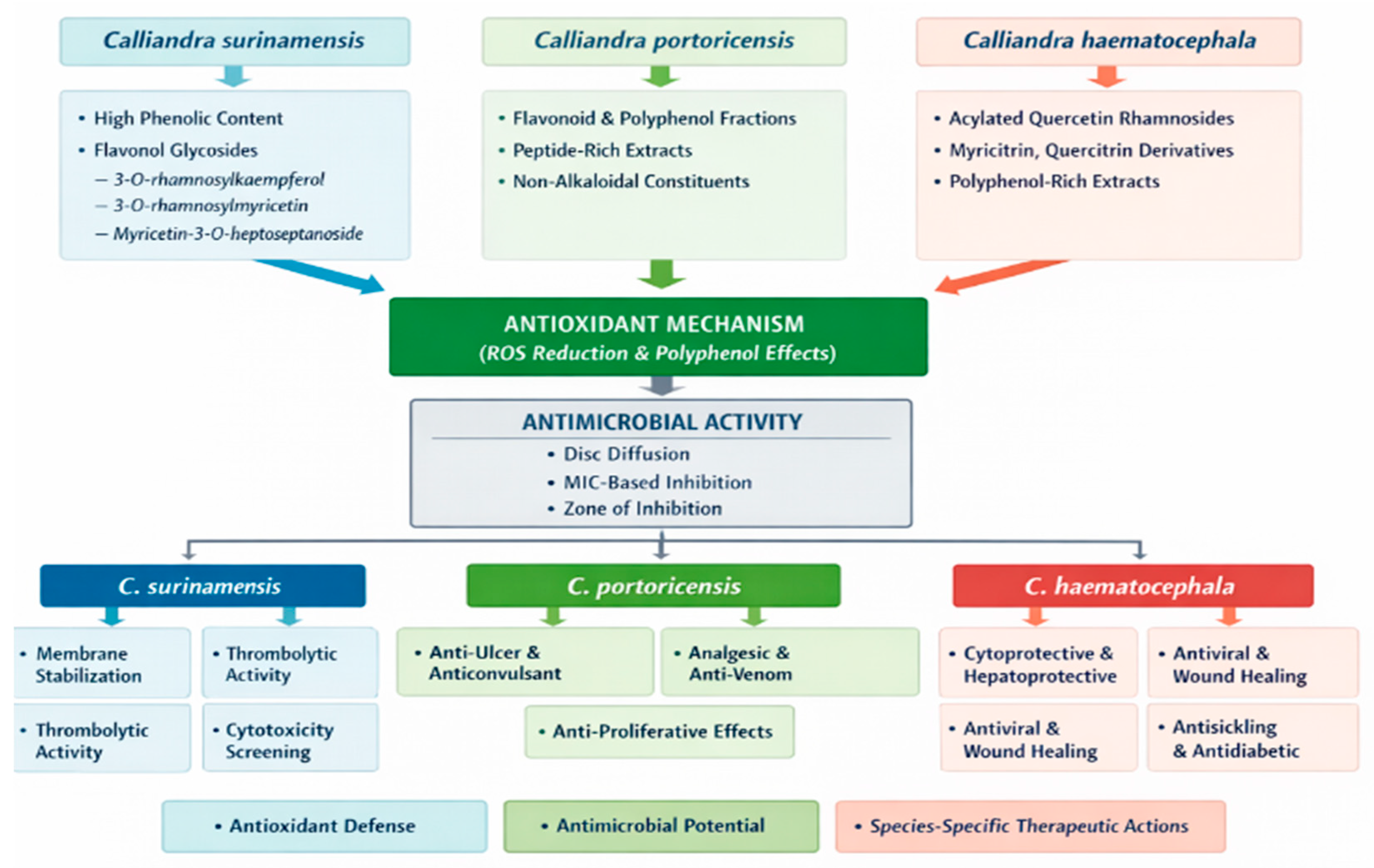
Genus Calliandra—Calliandra portoricensis, Calliandra haematocephala, Calliandra surinamensis: A Journey from Traditional Knowledge to Modern Experimental Studies in Disease Prevention and Treatment

 , ,
, ,
Abstract
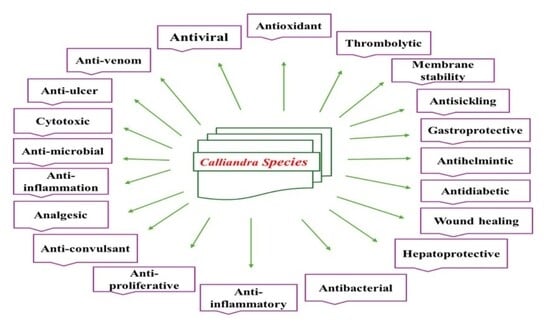
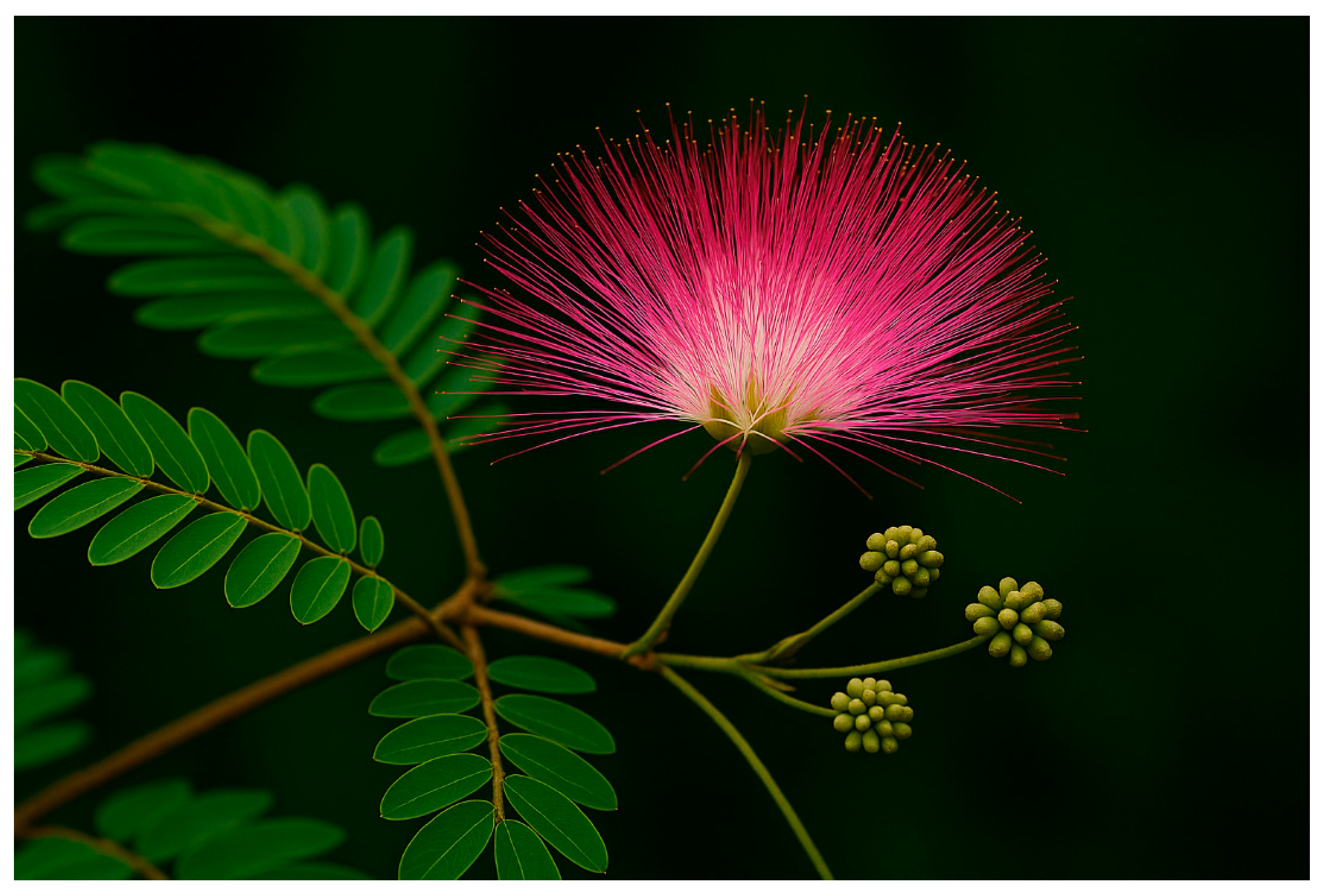
1. General Introduction, Distribution, Taxonomy, and Utility
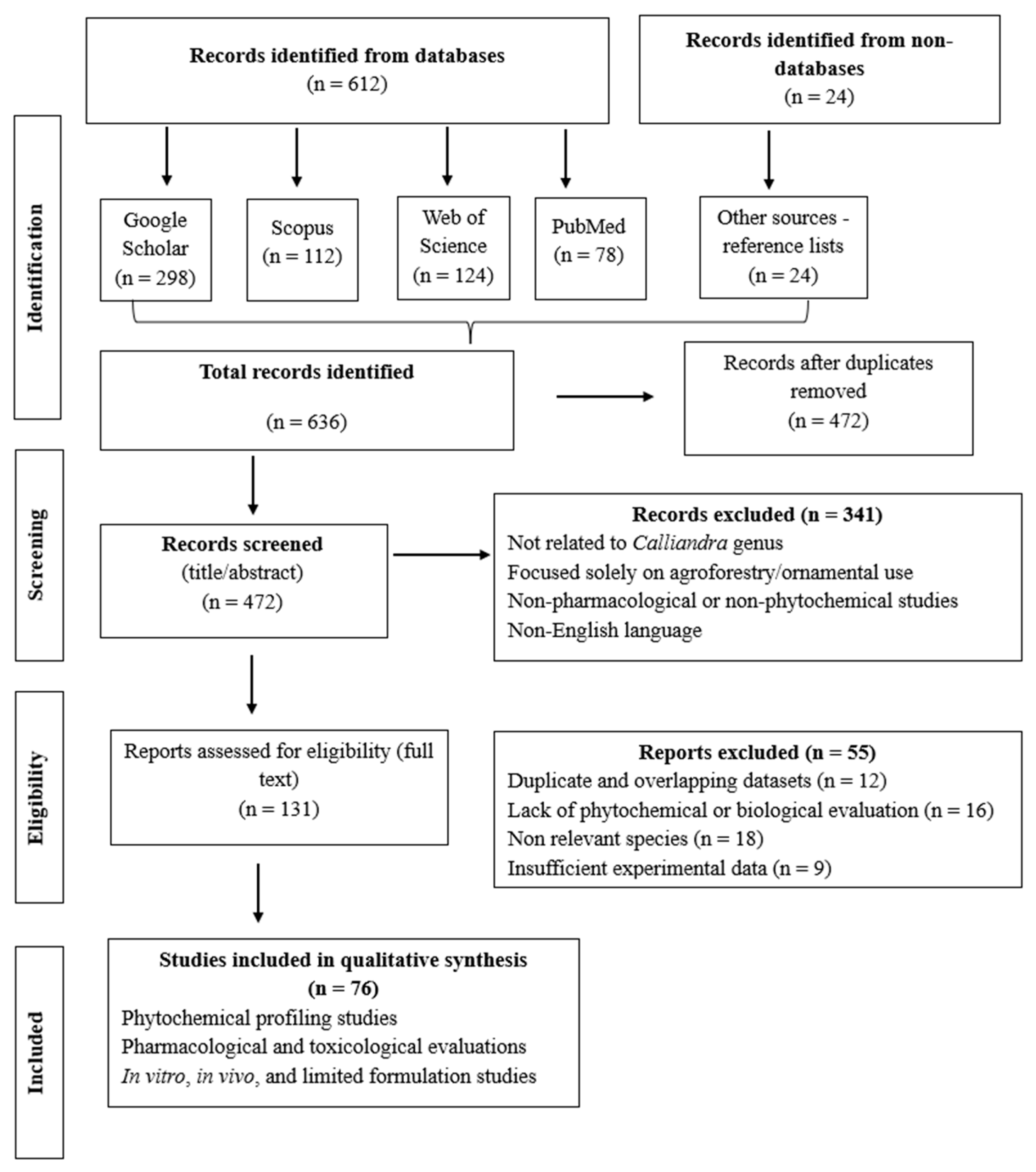
1.1. Methodology and Review Scope
1.2. Traditional Uses of Calliandra Genera
1.3. Bioactive Phytochemicals Present in C. portoricensis, C. hematocephela and C. surinamensis
2. Calliandra portoricensis
2.1. Morphological Description and Distribution
2.2. Phytochemistry of Calliandra portoricensis
2.3. Biological Activities of Calliandra portoricensis
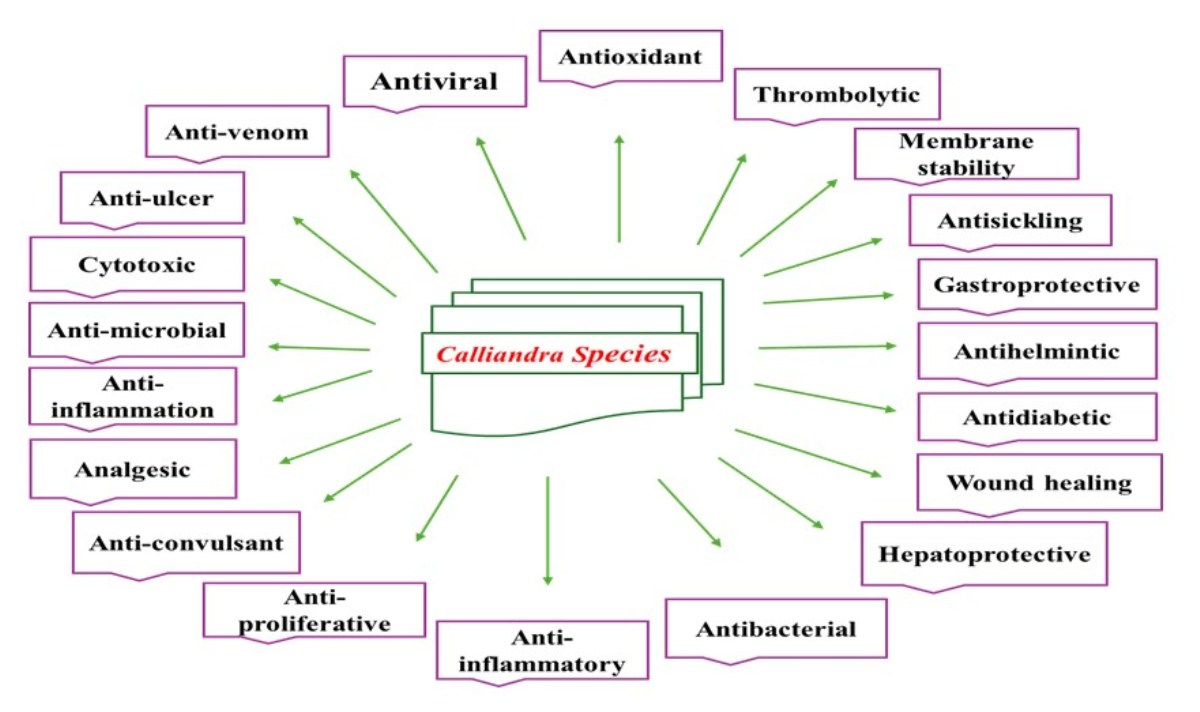
2.3.1. Antimicrobial and Anti-Ulcer Activities
2.3.2. Anticonvulsant and Analgesic Activities
2.3.3. Antioxidant and Anti-Venom Properties
2.3.4. Anti-Proliferative and Cytotoxic Effects
2.3.5. Safety and Toxicity of Calliandra portoricensis
3. Calliandra haematocephala
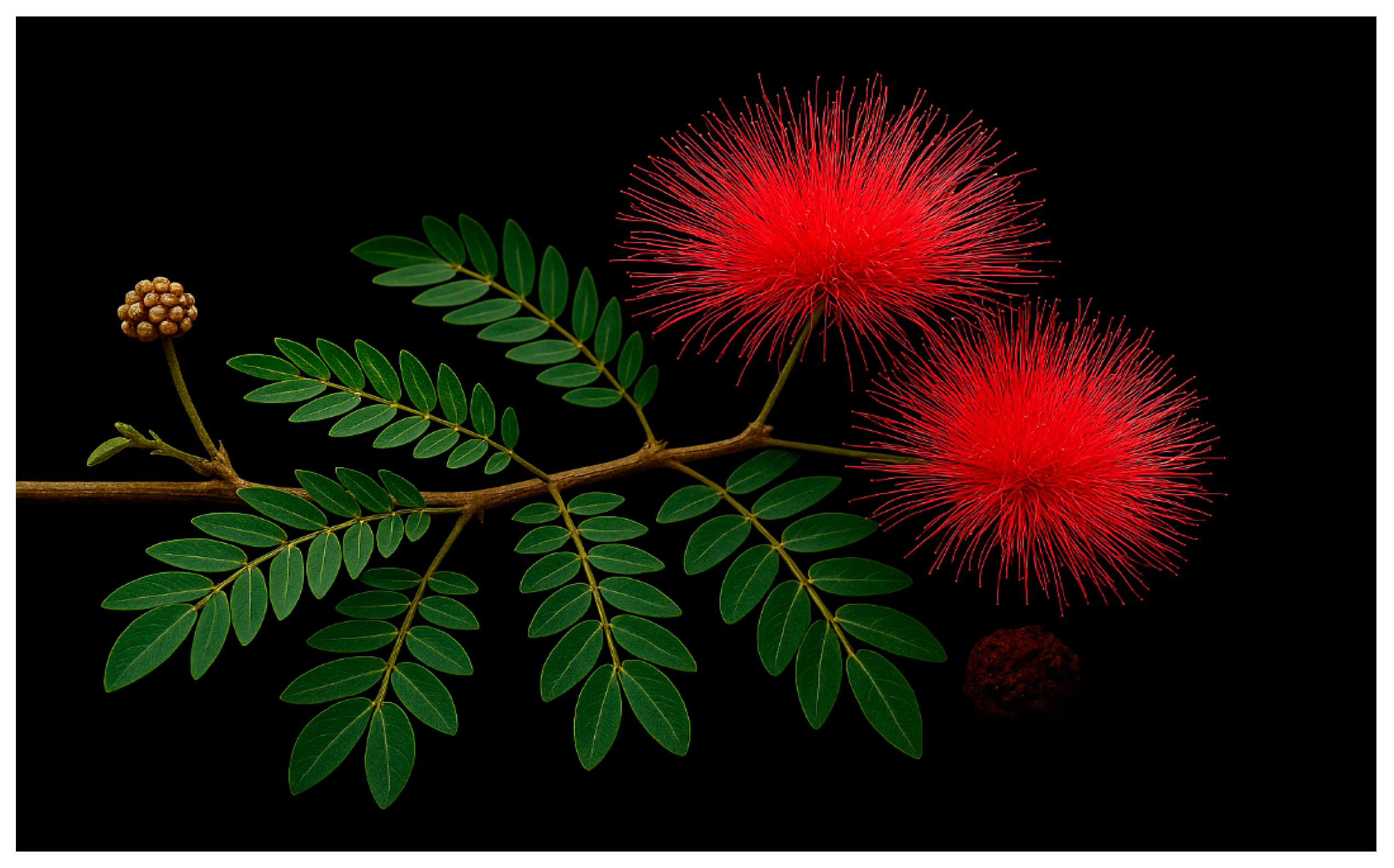
3.1. Morphological Description and Distribution
3.2. Phytochemical Constituents Calliandra haematocephala
3.3. Biological Activities of Calliandra haematocephala
3.3.1. Phytochemical Constituents, Cytoprotective, Antioxidant and Antimicrobial Potential of C. haematocephala
3.3.2. Antiviral, Antihelmintic, and Hepatoprotective Activities
3.3.3. Wound-Healing, Antisickling, and Antidiabetic Potentials
3.3.4. Nanotechnological Applications and Anti-Inflammatory Properties
3.3.5. Pharmaceutical Formulation Potential and Future Research
4. Calliandra surinamensis
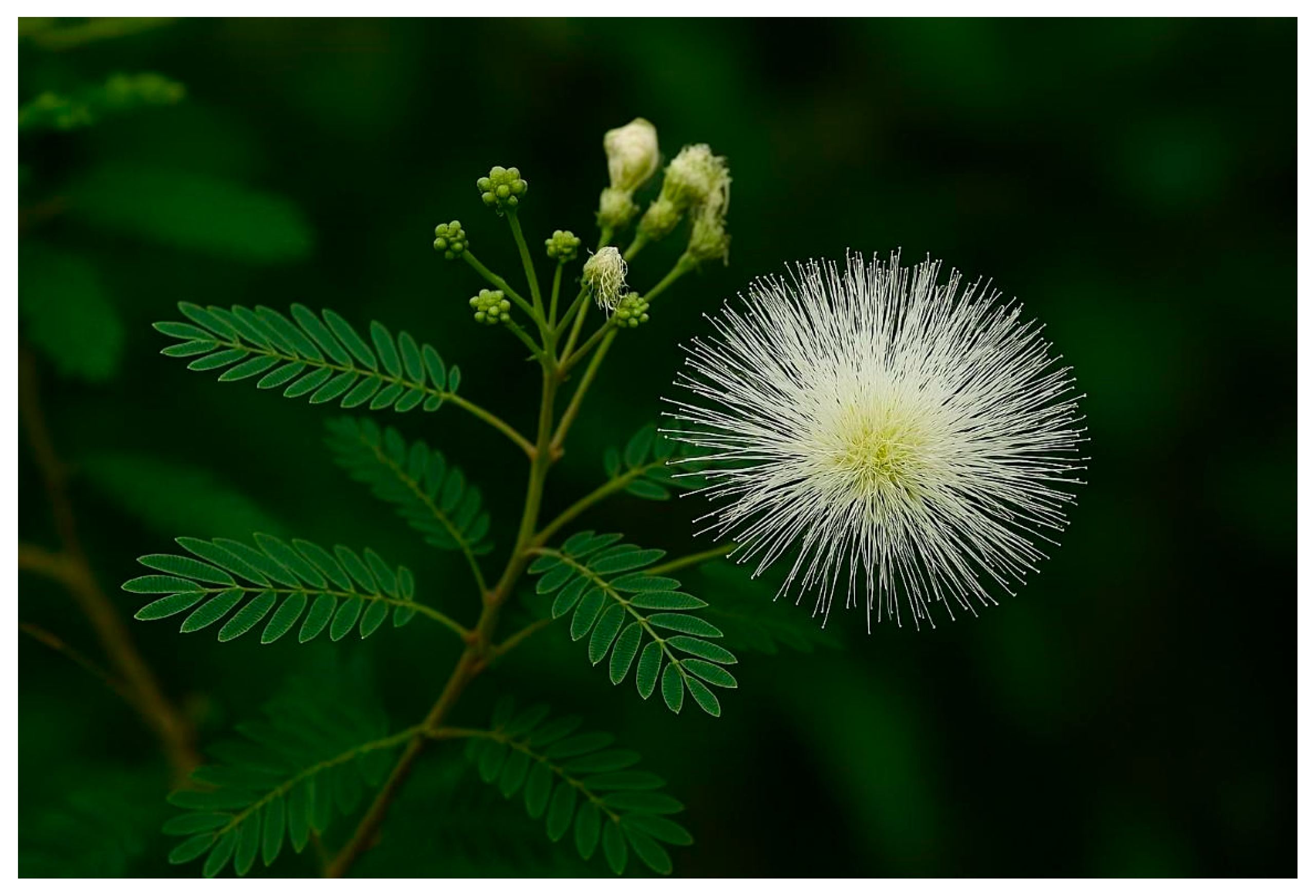
4.1. Morphological Description and Distribution
4.2. Biological Activities Calliandra surinamensis
4.2.1. Membrane-Stabilizing Activity and Brine Shrimp Lethality Bioassay
4.2.2. Thrombolytic and Antimicrobial Activities
4.2.3. Antioxidant Activity and Phytochemical Investigation
5. Discussion
6. Future Perspectives
7. General Conclusions
Author Contributions
Funding
Data Availability Statement
Acknowledgments
Conflicts of Interest
Abbreviations
References
- Mabberley, D.J. The Plant-Book: A Portable Dictionary of Vascular Plants; Cambridge University Press: Cambridge, UK, 1997. [Google Scholar]
- Arias, T.; Saldarriaga, J.D.; Arenas-Castro, H.; Idárraga-Piedrahita, Á.; López-Alvarez, N.; Tovar Luque, E.; Soto-Calderón, I.D. Reconstructing the Phylogeny of Calliandra sect. Androcallis (Fabaceae): Inclusion of Colombian Species, focusing on the Enigmatic Taxon Calliandra medellinensis. Syst. Bot. 2024, 49, 364–380. [Google Scholar] [CrossRef]
- Omar, S.M.; Ahmat, N.; Azmin, N.F.N. Three flavonol glycosides from Calliandra surinamensis Benth. Malays. J. Anal. Sci. 2016, 20, 1530–1534. [Google Scholar]
- Ueda, M.; Ishimaru, Y.; Takeuchi, Y.; Muraoka, Y. Plant nyctinasty—Who will decode the ‘Rosetta Stone’? New Phytol. 2019, 223, 107–112. [Google Scholar] [CrossRef]
- Hernández-Conrique, D.; Ornelas, J.F.; García-Franco, J.G.; Vargas, C.F. Nectar Production of Calliandra longipedicellata (Fabaceae: Mimosoideae), an Endemic Mexican Shrub with Multiple Potential Pollinators. Biotropica 2007, 39, 459–467. [Google Scholar] [CrossRef]
- Chamberlain, J.R. Calliandra calothyrsus: An Agroforestry Tree for the Humid Tropics; Oxford Forestry Institute: Oxford, UK, 2001; Volume 40, p. 100. [Google Scholar]
- Orwa, C.; Mutua, A.; Kindt, R.; Jamnadass, R.; Simons, A. Calliandra calothyrsus—Multipurpose Tree Species. Feedipedia. 2009. Available online: https://www.feedipedia.org/node/586 (accessed on 25 December 2025).
- Ogbole, O.O.; Ndabai, N.C.; Akinleye, T.E.; Attah, A.F. Evaluation of peptide-rich root extracts of Calliandria portoriscensis (Jacq.) Benth (Mimosaceae) for in vitro antimicrobial activity and brine shrimp lethality. BMC Complement. Med. Ther. 2020, 20, 30. [Google Scholar] [CrossRef]
- Akah, P.A.; Nwaiwu, J.I. Anticonvulsant activity of root and stem extracts of Calliandra portoricensis. J. Ethnopharmacol. 1988, 22, 205–210. [Google Scholar] [CrossRef]
- Enwuru, V.N.; Ogbonnia, S.O.; Mbaka, G.O.; Emordi, J.E.; Ota, D.A.; Onyebuchi, P. Evaluation of Histomorphological, toxicological and antimicrobial activities of Ethanolic extract of Calliandra portoricensis root in rodents. J. Pharm. Res. Int. 2017, 1, 1–13. [Google Scholar] [CrossRef]
- Agunu, A.; Abdurahmam, E.M.; Shok, M.; Yusuf, S.A. Analgesic activity of the roots and leaves extract of Calliandra portoricensis. Fitoterapia 2005, 76, 442–445. [Google Scholar] [CrossRef]
- Orishadipe, A.T.; Okogun, J.I.; Mishelia, E. Gas chromatography-mass spectrometry analysis of the hexane extract of Calliandra portoricensis and its antimicrobial activity. Afr. J. Pure Appl. Chem. 2010, 4, 131–134. [Google Scholar]
- Oyebode, O.T.; Owumi, S.E.; Oyelere, A.K.; Olorunsogo, O.O. Calliandra portoricensis Benth exhibits anticancer effects via alteration of Bax/Bcl-2 ratio and growth arrest in prostate LNCaP cells. J. Ethnopharmacol. 2019, 233, 64–72. [Google Scholar] [CrossRef] [PubMed]
- Adefisan, A.O.; Madu, J.C.; Owumi, S.E.; Adaramoye, O.A. Calliandra portoricensis ameliorates ovarian and uterine oxido-inflammatory responses in N-methyl-N-nitrosourea and benzo [a] pyrene-treated rats. Expt. Biol. Med. 2020, 245, 1490–1503. [Google Scholar] [CrossRef] [PubMed]
- Amujoyegbe, O.O.; Agbedahunsi, J.M.; Akanmu, M.A. Antisickling properties of two Calliandra Genera: C. portoricensis and C. haematocephala (Fabaceae). Eur. J. Med. Plants 2014, 4, 206–2019. [Google Scholar] [CrossRef]
- Adaramoye, O.; Erguen, B.; Oyebode, O.; Nitzsche, B.; Höpfner, M.; Jung, K.; Rabien, A. Antioxidant, antiangiogenic and antiproliferative activities of root methanol extract of Calliandra portoricensis in human prostate cancer cells. J. Integr. Med. 2015, 13, 185–193. [Google Scholar] [CrossRef]
- Adefisan, A.; Owumi, S.; Adaramoye, O. Root bark extract of Calliandra portoricensis (Jacq.) Benth. chemoprevents N-methyl-N-nitrosourea-induced mammary gland toxicity in rats. J. Ethnopharmacol. 2019, 233, 22–33. [Google Scholar] [CrossRef] [PubMed]
- Nvau, J.B.; Alenezi, S.; Ungogo, M.A.; Alfayez, I.A.; Natto, M.J.; Gray, A.I.; Igoli, J.O. Antiparasitic and cytotoxic activity of bokkosin, a novel diterpene-substituted chromanyl benzoquinone from Calliandra portoricensis. Front. Chem. 2020, 8, 574103. [Google Scholar] [CrossRef] [PubMed]
- Oguegbulu, N.E.; Abo, A.K.; Afieroho, O.E. Comparative Study of Antimicrobial Potentials of Leaf and Root Extracts of Calliandra portoricensis (Jacq.) Benth (Fabaceae) on Some Human Pathogens. Eur. J. Med. Plants 2020, 31, 141–151. [Google Scholar] [CrossRef]
- Ofokansi, M.N.; Akah, P.A. An Insight into the Ethnopharmacology and Pharmacological Properties of Calliandra portoricensis (Jacq.) Benth. Trends Nat. Prod. Res. 2025, 6, 54–59. [Google Scholar] [CrossRef]
- Sharaibi, O.J.; Oluwa, O.K.; Omolokun, K.T.; Ogbe, A.A.; Adebayo, A.O. Checklist of medicinal plants used by traditional women for maternal health care in Lagos State, Nigeria. J. Med. Herbs Ethnomed. 2024, 10, 1–6. [Google Scholar] [CrossRef]
- Burkill, H.M. The Useful Plants of West Tropical Africa, 2nd ed.; Royal Botanic Gardens, Kew: Richmond, UK, 1995; Volume 3, pp. 67–69. [Google Scholar]
- Gill, L.S. Ethnomedicinal Uses of Plants in Nigeria; University of Benin Press: Benin City, Nigeria, 1992; pp. 121–122. [Google Scholar]
- Sofowora, A. Medicinal Plants and Traditional Medicine in Africa, 3rd ed.; Spectrum Books Ltd.: Ibadan, Nigeria, 2008; pp. 238–239. [Google Scholar]
- Abbiw, D.K. Useful Plants of Ghana; Intermediate Technology Publications: London, UK, 1990; pp. 143–144. [Google Scholar]
- Onyeama, H.P.; Igile, G.O.; Mgbeje, B.I.; Eteng, M.U.; Ebong, P.E. Evaluation of the biochemical and anti-snake venom effects of Calliandra portoricensis extract fractions in wistar rat models challenged with venom of carpet viper (Echis ocellatus). Biochemistry 2013, 3, 441–449. [Google Scholar]
- Adefisan-Adeoye, A.O.; Akinleye, T.E.; Adewumi, O.M.; Adeniji, J.A.; Adaramoye, O.A. Antimammary Tumour Effects of Calliandra portoricensis Fraction via Pro-Apoptotic and Anti-Inflammatory Actions in Female Wistar Rats. Saudi J. Biomed. Res. 2024, 9, 182–196. [Google Scholar] [CrossRef]
- Hassan, B.O.; Ese, S.O.; Kehinde, A.J. Assessment of cytotoxicity, antioxidant and free radical scavenging activities of the ethylacetate extract of Calliandra portoricensis root bark. Int. J. Pharm. Sci. Res. 2013, 4, 1800–1807. [Google Scholar]
- Akah, P.A.; Nwambie, A.I.; Gamaniel, K.S.; Wambebe, C. Experimental study of the anticonvulsant plants used for treatment of infantile convulsion in Nigeria. Brain Res. Bull. 1997, 44, 611–613. [Google Scholar] [CrossRef] [PubMed]
- Brenner, S.A.; Romeo, J.T. Fungitoxic effects of nonprotein imino acids on growth of saprophytic fungi isolated from the leaf surface of Calliandra haematocephala. Appl. Environ. Microbiol. 1986, 51, 690–693. [Google Scholar] [CrossRef]
- Calliandra haematocephala Hassk.: Ornamental Shrub Profile. Flora Tropical. 2020. Available online: https://www.floratropical.com/wp-content/uploads/2020/08/Ornamental-Plants-Overall-Template-Shrub-Calliandra-haematocephala-1.pdf (accessed on 25 December 2025).
- Calliandra haematocephala (Red Powder Puff): Plant Profile. Au Bois Vert Botanical Garden, Madagascar. Available online: https://auboisvert.com/en/plantes/pink-powder-puff/ (accessed on 25 December 2025).
- Punnagai, K.; Muthiah, N.S. In vitro antibacterial activity of ethanolic extract of ‘Calliandra haematocephala’ against selected bacterial strains. Biomed. Pharmacol. J. 2017, 10, 1279–1284. [Google Scholar] [CrossRef]
- Iftikhar, K.; Luqman, M.; Mahmood, M.S. Phytochemical analysis of leaf extract of Calliandra haematocephala and in vitro antibacterial activity against food borne bacteria. J. Glob. Innov. Agric. Soc. Sci. 2020, 8, 26–29. [Google Scholar] [CrossRef]
- Nia, R.; Adesanya, S.A.; Okeke, I.N.; Illoh, H.C.; Adesina, S.J. Antibacterial constituents of Calliandra haematocephala. Niger. J. Nat. Prod. Med. 1999, 3, 58–60. [Google Scholar] [CrossRef]
- Raja, S.; Ramesh, V.; Thivaharan, V. Green biosynthesis of silver nanoparticles using Calliandra haematocephala leaf extract, their antibacterial activity and hydrogen peroxide sensing capability. Arab. J. Chem. 2017, 10, 253–261. [Google Scholar] [CrossRef]
- Gupta, R.; Garg, A.; Sharma, P.; Pandey, P. Wound healing and antioxidant effect of leaves on incision Calliandra haematocephala and excision wound models. Asian J. Pharm. Pharmacol. 2016, 2, 34–39. [Google Scholar]
- Deshmukh, S.; Jadhav, R.; Deshmukh, M.; Deshmukh, D. A Comprehensive Review on the Therapeutic Potential of Calliandra haematocephala Hassk (Red Powder Puff). Int. J. Nov. Res. Dev. 2024, 9, 567–575. [Google Scholar]
- Punnagai, K.; Glory Josephine, I. Alpha-Amylase and Alpha-Glucosidase Inhibitory Effects of Calliandra haematocephala and its Potential Role in Diabetes mellitus. Asian J. Pharm. Clin. Res. 2018, 11, 429–432. [Google Scholar]
- Gupta, R.; Garg, A.; Sharma, P.; Pandey, P. Formulation and Evaluation of Calliandra haematocephala Effervescent Granules for Treatment of Gastric Ulcer. Int. J. Pharm. Sci. Res. 2013, 4, 3585–3590. [Google Scholar]
- de Paula, A.C.B.; Fonseca, M.J.V.; Saad, M.J.A.; Vilela, L.; Cunha, F.Q.; Silva, R.M. Gastroprotective Activity of the Butanolic Extract of Calliandra haematocephala Leaves in Acute Gastric Lesion Models. J. Ethnopharmacol. 2012, 141, 330–335. [Google Scholar]
- Nevling, L.I.; Elias, T.S. Calliandra haematocephala: History, morphology, and taxonomy. J. Arnold Arbor. 1971, 52, 69–85. [Google Scholar] [CrossRef]
- Duke, J.A. Handbook of Medicinal Herbs, 2nd ed.; CRC Press: Boca Raton, FL, USA, 2002. [Google Scholar]
- Sikder, M.A.A.; Kaisar, M.A.; Rashid, M.A.; Millat, M.S.; Sultana, A. In vitro membrane stabilizing activity, total phenolic content, cytotoxic, thrombolytic and antimicrobial activities of Calliandra surinamensis (Wall.). J. Pharmacog. Phytochem. 2012, 1, 45–50. [Google Scholar]
- Fabricant, D.S.; Farnsworth, N.R. The value of plants used in traditional medicine for drug discovery. Environ. Health Perspect. 2001, 109, 69–75. [Google Scholar]
- Abou Zeid, A.H.S.; Hifnawy, M.S.; Sleem, A.A.; Mohamed, R.S. Chemical constituents and anti-inflammatory activity of the aerial parts of Calliandra haematocephala Hassk. Planta Medica 2007, 73, P_009. [Google Scholar] [CrossRef]
- Alenezi, S.; Igoli, N.P.; Gray, A.I.; Oaikhena, E.E.; Alfayez, I.A.; de Koning, H.P.; Igoli, J.O. Antitrypanosomal and antileishmanial activity of compounds from some Nigerian plants. Exp. Parasitol. 2024, 266, 108844. [Google Scholar] [CrossRef]
- Moharram, F.A.; Marzouk, M.S.A.; Ibrahim, M.T.; Mabry, T.J. Antioxidant galloylated flavonol glycosides from Calliandra haematocephala. Nat. Prod. Res. 2006, 20, 927–934. [Google Scholar] [CrossRef] [PubMed]
- Wei, S.; Chen, H.; Lin, Y. Comparison of chemical compositions and antioxidant activities of condensed tannins from different parts of Calliandra haematocephala. J. Wood Chem. Technol. 2015, 35, 193–206. [Google Scholar] [CrossRef]
- Lawal, B.A.; Moody, J.O. Evaluation of the antisickling potentials of Calliandra portoricensis (Jacq) Benth (Mimosaceae) root: Hemoglobin polymerization inhibition activity. Niger. J. Pharm. Res. 2015, 11, 66–72. [Google Scholar]
- Gbadamosi, I.T.; Erinoso, S.M. A review of twenty ethnobotanicals used in the management of breast cancer in Abeokuta, Ogun State, Nigeria. Afri. J. Pharm. Pharmacol. 2016, 10, 546–564. [Google Scholar] [CrossRef]
- Siemuri, E.O.; Akintunde, J.K.; Salemcity, A.J. Effects of sub-acute methanol extract treatment of Calliandra portoricensis root bark on antioxidant defence capacity in an experimental rat model. J. Basic Clin. Physiol. Pharmacol. 2015, 26, 375–382. [Google Scholar] [CrossRef]
- Aguwa, C.N.; Lawal, A.M. Pharmacologic studies on the active principles of Calliandra portoricensis leaf extracts. J. Ethnopharmacol. 1988, 22, 63–71. [Google Scholar] [CrossRef]
- Oguegbulu, E.N.; Abo, A.K.; Afieroho, O.E. Comparative Evaluation of the Antimicrobial Activities of some plants used in Natural Medicine–Spondiasmombin, Calliaidra portoricensiss, Dennettia tripetala, Anthocleista djalonensis and Cronton zambesicus. Saudi J. Pathol. Microbiol. 2020, 5, 257–262. [Google Scholar]
- Adefisan, A.O.; Owumi, S.E.; Soetan, K.O.; Adaramoye, O.A. Chloroform extract of Calliandra portoricensis inhibits tumourigenic effect of N-methyl-N-nitrosourea and benzo (a) pyrene in breast experimental cancer. Drug Chem. Toxicol. 2022, 45, 2424–2438. [Google Scholar] [CrossRef] [PubMed]
- Ese, S.O.; Oyewale, A.A.; Omolara, K.R.; Nyiam, E.B. Cardioprotective activity of Calliandra portoricensis leaf ethanol extract against kerosene vapour induced cardiotoxicity in male albino rats. Univers. J. Pharm. Res. 2023, 8, 39–46. [Google Scholar] [CrossRef]
- Kosemani, S.O.; Bakare, A.A.; Adaramoye, O.A. Fraction from Calliandra portoricensis reduces 7, 12 dimethylbenz (a) anthracene-induced mammary tumors in Wistar rats. Avicenna J. Phytomed. 2022, 12, 131–144. [Google Scholar]
- Shaheen, M.; Mostafa, S.; El-Esnawy, N. Anti-rotaviral effects of Calliandra haematocephala leaf extracts in-vitro and in-vivo. J. Virol. Antivir. Res. 2015, 4, 1–7. [Google Scholar] [CrossRef]
- Ashour, H.A.; Heider, S.M.; Soliman, M.M. Morphological and physiological responses of Calliandra haematocephala to water salinity stress and vermicompost. Ornam. Hortic. 2023, 29, 150–162. [Google Scholar] [CrossRef]
- Barbosa, A.D.P. Gastroprotective and immunoadjuvant activities of butanolic extract of Calliandra haematocephala. J. Med. Plant Res. 2014, 8, 727–730. [Google Scholar]
- Srishti, M.; Shubhi, G.; Shashank, A.; Tripti, B. Antibacterial effects of Callistemon lanceolatus and Calliandra haematocephala on acne vulgaris. Eur. J. Biomed. Pharm. Sci. 2017, 4, 631–635. [Google Scholar]
- Abo-Elhamd, A.M.; Aboul-Enein, A.M.; Mohamed, S.M.; Shalaby, A.S.; Konsowa, U.; Hassan, E.M.; Metwally, N.S. Chemical characterization, antioxidant, and antihepatotoxic activities of Calliandra haematocephala (Hassk.), growing in Egypt. CABI Digit. Libr. 2016, 8, 828–845. [Google Scholar]
- Tiwari, J.; Rai, G. In vitro investigation of anti-microbial and anti-helmintic activitiy of extract obtained from flowers of the shrub Calliandra haematocephala. Environ. Microbiol. 1986, 51, 690–693. [Google Scholar]
- Shukla, A.K.; Shukla, R.; Pandey, V. Evaluation of antimicrobial activity of Selaginella bryopteris. Asian J. Pharm. Pharmacol. 2017, 3, 50–52. [Google Scholar]
- Ramesh, V.; Raja, S.; Thivaharan, V. Green synthesis of zinc oxide nanoflowers using Calliandra haematocephala extract and evaluation of their photocatalytic dye degradation efficiency. Mater. Today Proc. 2020, 22, 1036–1041. [Google Scholar]
- Alzahrani, A.; Abbott, G.; Young, L.C.; Igoli, J.; Gray, A.I.; Ferro, V.A. Phytochemical and biological investigation of Calliandra surinamensis as a potential treatment for diabetes. Planta Medica 2016, 82, P385. [Google Scholar] [CrossRef]
- Falodun, A.; Uzoekwe, A.S.; Shengxiang, Q. Phytochemical, Anticancer and Antioxidant Evaluation of Potential Chemical Consituents of Calliandria surinamensis. Niger. J. Biotech. 2010, 21, 55–59. [Google Scholar]
- Shinde, U.A.; Phadke, A.S.; Nair, A.M.; Mungantiwar, A.A.; Dikshit, V.J.; Saraf, M.N. Membrane stabilizing activity, a possible mechanism of action for the anti-inflammatory activity of Cedrus deodara wood oil. Fitoterapia 1999, 70, 251–257. [Google Scholar] [CrossRef]
- Prasad, S.; Kashyap, R.S.; Deopujari, J.Y.; Purohit, H.J.; Taori, G.M.; Daginawala, H.F. Development of an in vitro model to study clot lysis activity of thrombolytic drugs. Thromb. J. 2006, 4, 14. [Google Scholar] [CrossRef]
- Maurya, S.R.; Haji, A.S.; Shah, N. Solvent-based comparative analysis of antioxidant and antimicrobial activities in Calliandra haematocephala extracts. Plants Sci. J. 2024, 12, 318–324. [Google Scholar] [CrossRef]
- Skerget, M.; Kotnik, P.; Hadolin, M.; Hraš, A.R.; Simonič, M.; Knez, Z. Phenols, proanthocyanidins, flavones and flavonols in some plant materials and their antioxidant activities. Food Chem. 2005, 89, 191–198. [Google Scholar] [CrossRef]
- Falodun, J.A.; Obafemi, T.O.; Akinmoladun, A.C.; Olaleye, M.T.; Boligon, A.A.; Athayde, M.L. High-performance liquid chromatography (HPLC) fingerprinting and comparative antioxidant properties of root bark and leaf extracts of Calliandra portoricensis. Pharmacology 2018, 9, 24–44. [Google Scholar]
- Naveed, M.; Ali, I.; Aziz, T.; Javed, K.; Saleem, A.; Hanif, N.; Alharbi, M. Investigating the anti-cancer compounds from Calliandra harrisii for precision medicine in pancreatic cancer via in-silico drug design and GC-MS analysis. Z. Naturforschung C 2024, 79, 209–220. [Google Scholar] [CrossRef] [PubMed]




| Compound Number | Compound Name | Chemical Class | Plant Part | Extraction Solvent | Identification Method | References |
|---|---|---|---|---|---|---|
| Fatty Acids and Derivatives | ||||||
| C-1 | Hexadecanoic acid (Palmitic acid) | Fatty Acid | Leaves, Root & Bark | Hexane | Confirmed (GC-MS vs. Standard) | [26,46] |
| C-2 | Hexadecanoic acid, methyl ester | Fatty Acid Ester | Root bark | Methanol | Tentative (GC-MS/NIST) | [17] |
| C-3 | Hexadecanoic acid ethyl ester | Fatty Acid Ester | Root & Bark | Hexane | Tentative (GC-MS/NIST) | [26] |
| C-4 | Tetradecanoic acid | Fatty Acid | Root | Chloroform | Tentative (GC-MS/NIST) | [27] |
| C-5 | Methyl tetradecanoate | Fatty Acid Ester | Root bark | Methanol | Tentative (GC-MS/NIST) | [17] |
| C-6 | Linoleic Acid | Fatty Acid | Root, Leaves | Hexane, Ethyl acetate, Methanol | Confirmed (GC-MS vs. Standard) | [46,47] |
| C-7 | Linolenic acid | Fatty Acid | Leaves | Hexane | Confirmed (GC-MS vs. Standard) | [46] |
| C-8 | Oleic acid | Fatty Acid | Leaves | Hexane | Confirmed (GC-MS vs. Standard) | [46] |
| C-9 | cis-13-Octadecenoic acid | Fatty Acid | Root bark | Methanol | Tentative (GC-MS/NIST) | [17] |
| C-10 | Methyl 9-cis, 11-trans-octadecadienoate | Fatty Acid Ester | Root bark | Methanol | Tentative (GC-MS/NIST) | [17] |
| C-11 | 9-Hexadecenoic acid methyl ester | Fatty Acid Ester | Root & Bark | Hexane | Tentative (GC-MS/NIST) | [26] |
| C-12 | 6-Octadecenoic acid methyl ester | Fatty Acid Ester | Root | Chloroform | Tentative (GC-MS/NIST) | [27] |
| C-13 | Z-7-Tetradecenoic acid | Fatty Acid | Root | Chloroform | Tentative (GC-MS/NIST) | [27] |
| C-14 | 14-Methylpentadecanoic acid methyl ester | Fatty Acid Ester | Root & Bark | Hexane | Tentative (GC-MS/NIST) | [26] |
| C-15 | 14-Methylhexadecanoic acid methyl ester | Fatty Acid Ester | Root & Bark | Hexane | Tentative (GC-MS/NIST) | [26] |
| C-16 | Methyl stearate | Fatty Acid Ester | Root bark | Methanol | Tentative (GC-MS/NIST) | [17] |
| Phenolic Acids | ||||||
| C-17 | Gallic acid | Phenolic Acid | Root bark, Stem, Leaves | Methanol, Ethyl Acetate | Confirmed (NMR/HPLC) | [13,48] |
| C-18 | Methyl gallate | Phenolic Acid Ester | Stem, Leaves | Ethyl Acetate | Confirmed (NMR) | [48] |
| C-19 | p-Hydroxybenzoic acid | Phenolic Acid | Bark | Ethyl Acetate | Confirmed (NMR/HPLC) | [35] |
| C-20 | Protocatechuic acid | Phenolic Acid | Bark | Ethyl Acetate | Confirmed (NMR/HPLC) | [35] |
| C-21 | Caffeic acid | Phenolic Acid | Bark | Ethyl Acetate | Confirmed (NMR/HPLC) | [35,48] |
| C-22 | Ferulic Acid | Hydroxycinnamic Acid | Root bark | Methanol | Tentative (GC-MS/NIST) | [13] |
| Flavonoids & Tannins | ||||||
| C-23 | Catechin | Flavan-3-ol | Twigs, Stem bark | Acetone | Confirmed (NMR) | [49] |
| C-24 | Epicatechin | Flavan-3-ol | Twigs, Stem bark | Acetone | Confirmed (NMR) | [49] |
| C-25 | Epigallocatechin | Flavan-3-ol | Leaves | Acetone | Confirmed (NMR) | [49] |
| C-26 | Epigallocatechin-3-O-gallate | Flavan-3-ol Gallate | Leaves, Twigs, Stem bark | Acetone | Confirmed (NMR) | [49] |
| C-27 | Afzelechin | Flavan-3-ol | Root bark | Methanol | Tentative (GC-MS/NIST) | [13] |
| C-28 | Quercitrin (Quercetin-3-O-rhamnoside) | Flavonol Glycoside | Stem, Leaves, Aerial parts | Ethyl Acetate | Confirmed (NMR) | [46,48] |
| C-29 | Myricitrin (Myricetin-3-O-rhamnoside) | Flavonol Glycoside | Stem, Leaves | Ethyl Acetate | Confirmed (NMR) | [48] |
| C-30 | Isoquercitrin (Quercetin-3-O-glucoside) | Flavonol Glycoside | Stem, Leaves | Ethyl Acetate | Confirmed (NMR) | [48] |
| C-31 | Afzelin (Kaempferol-3-O-rhamnoside) | Flavonol Glycoside | Stem, Leaves | Ethyl Acetate | Confirmed (NMR) | [48] |
| C-32 | Astilbin | Flavanone Glycoside | Bark | Ethyl Acetate | Confirmed (NMR) | [35] |
| C-33 | Neoisoastilbin | Flavanone Glycoside | Bark Ethyl | Acetate | Confirmed (NMR) | [35] |
| C-34 | Catechin-3-O-rhamnoside | Flavan-3-ol Glycoside | Bark Ethyl | Acetate | Confirmed (NMR) | [35] |
| C-35 | Myricetin | Flavonol | Aerial parts | Ethyl Acetate | Confirmed (NMR/HPLC) | [46] |
| C-36 | Kaempferol | Flavonol | Aerial parts | Ethyl Acetate | Confirmed (NMR/HPLC) | [46] |
| C-37 | Quercetin 3-O-methyl ether | Flavonol | Stem, Leaves | Ethyl Acetate | Confirmed (NMR) | [48] |
| C-38 | Myricetin 3-O-β-D-glucopyranoside | Flavonol Glycoside | Stem, Leaves | Ethyl Acetate | Confirmed (NMR) | [48] |
| Galloylated Flavonoids—A key feature | ||||||
| C-39 | Myricitrin 2″-O-gallate | Galloylated Flavonol | Stem, Leaves | Ethyl Acetate | Confirmed (NMR) | [48] |
| C-40 | Myricitrin 3″-O-gallate | Galloylated Flavonol | Stem, Leaves | Ethyl Acetate | Confirmed (NMR) | [48] |
| C-41 | Myricitrin 2″,3″-di-O-gallate | Galloylated Flavonol | Stem, Leaves | Ethyl Acetate | Confirmed (NMR) | [48] |
| C-42 | Quercitrin 2″-O-gallate | Galloylated Flavonol | Stem, Leaves | Ethyl Acetate | Confirmed (NMR) | [48] |
| C-43 | Quercitrin 2″,3″-di-O-gallate | Galloylated Flavonol | Stem, Leaves | Ethyl Acetate | Confirmed (NMR) | [48] |
| C-44 | Afzelin 2″-O-gallate | Galloylated Flavonol | Stem, Leaves | Ethyl Acetate | Confirmed (NMR) | [48] |
| C-45 | Afzelin 3″-O-gallate | Galloylated Flavonol | Stem, Leaves | Ethyl Acetate | Confirmed (NMR) | [48] |
| C-46 | Myricetin-3-O-(2″,3″-di-O-galloyl)-rhamnopyranoside | Galloylated Flavonol | Aerial parts | Ethyl Acetate | Confirmed (NMR) | [46] |
| C-47 | Keampferol-3-O-(2″-O-galloyl)-rhamnopyranoside | Galloylated Flavonol | Aerial parts | Ethyl Acetate | Confirmed (NMR) | [46] |
| C-48 | 1,2,3,4,6-penta-O-galloyl-β-D-glucopyranose | Hydrolyzable Tannin | Stem, Leaves | Ethyl Acetate | Confirmed (NMR) | [48] |
| Terpenes & Steroids | ||||||
| C-49 | Lupeol | Triterpenoid | Root, Leaves | Hexane, Ethyl acetate, Methanol | Confirmed (NMR) | [46,47] |
| C-50 | Spinasterone | Steroid | Root | Hexane, Ethyl acetate, Methanol | Confirmed (NMR) | [47] |
| C-51 | Squalene | Triterpenoid | Root | Chloroform | Tentative (GC-MS/NIST) | [27] |
| Other Compounds | ||||||
| C-52 | Zapotin | Benzopyran | Root bark | Methanol | Tentative (GC-MS/NIST) | [13] |
| C-53 | Lunularin | Dihydrostilbenoid | Root bark | Methanol | Tentative (GC-MS/NIST) | [13] |
| C-54 | Equol | Isoflavan | Root bark | Methanol | Tentative (GC-MS/NIST) | [13] |
| C-55 | 1-Methyl-3-phenylindole | Indole Derivative | Root bark | Methanol | Tentative (GC-MS/NIST) | [17] |
| C-56 | Hydroxymethyl anthraquinone | Anthraquinone | Root, Leaves | Crude Methanol | Tentative (Color Test/GC-MS) | [26] |
| Aliphatic Hydrocarbons | ||||||
| C-57 | Undecane | Hydrocarbon | Root & Bark | Hexane | Tentative (GC-MS/NIST) | [26] |
| C-58 | Dodecane | Hydrocarbon | Root & Bark | Hexane | Tentative (GC-MS/NIST) | [26] |
| C-59 | Tetradecane | Hydrocarbon | Root & Bark | Hexane | Tentative (GC-MS/NIST) | [26] |
| C-60 | 1-Octadecene | Hydrocarbon | Root bark | Methanol | Tentative (GC-MS/NIST) | [17] |
| C-61 | 1,8,11-Heptadecatriene | Hydrocarbon | Root | Chloroform | Tentative (GC-MS/NIST) | [27] |
| C-62 | 1,19-Eicosadiene | Hydrocarbon | Root | Chloroform | Tentative (GC-MS/NIST) | [27] |
| Calliandra Genus | Key Phytochemicals | Biological Activity |
|---|---|---|
| C. portoricensis | Fatty Acids & Esters: Hexadecanoic acid (Palmitic acid), Methyl stearate, Linoleic acid, Oleic acid, cis-13-Octadecenoic acid. Phenolic Acids: Gallic acid, Ferulic Acid. Flavonoids & Tannins: Catechin, Epicatechin, Afzelechin. Terpenes & Steroids: Squalene. Other Compounds: Zapotin, Lunularin, Equol, 1-Methyl-3-phenylindole, Hydroxymethyl anthraquinone. Aliphatic Hydrocarbons: 1-Octadecene, Undecane, Dodecane, Tetradecane |
|
| C. haematocephala | Phenolic Acids: Gallic acid, Methyl gallate, p-Hydroxybenzoic acid, Protocatechuic acid, Caffeic acid. Flavonoids & Tannins: Quercitrin, Myricitrin, Isoquercitrin, Afzelin, Myricetin, Kaempferol, Catechin, Epicatechin, Epigallocatechin. Galloylated Flavonoids: Quercitrin 2″-O-gallate, Myricitrin 2″,3″-di-O-gallate, Afzelin 2″-O-gallate, 1,2,3,4,6-penta-O-galloyl-β-D-glucopyranose. Terpenes & Steroids: Lupeol, Betulinic acid. |
|
| C. surinamensis | Flavonoids & Tannins: 3-O-Rhamnosylkaempferol, 3-O-Rhamnosylmyricetin, Myricetin-3-O-heptoseptanoside, Astilbin, Neoisoastilbin, Catechin-3-O-rhamnoside. | Thrombolytic—Shows notable clot-dissolving activity.
|
Disclaimer/Publisher’s Note: The statements, opinions and data contained in all publications are solely those of the individual author(s) and contributor(s) and not of MDPI and/or the editor(s). MDPI and/or the editor(s) disclaim responsibility for any injury to people or property resulting from any ideas, methods, instructions or products referred to in the content. |
© 2026 by the authors. Licensee MDPI, Basel, Switzerland. This article is an open access article distributed under the terms and conditions of the Creative Commons Attribution (CC BY) license.
Share and Cite
Adefisan-Adeoye, A.O.; Kosemani, S.O.; Adebayo, O.A.; Adeoye, T.D.; Unuofin, J.O.; Lebelo, S.L.; Adaramoye, O.A. Genus Calliandra—Calliandra portoricensis, Calliandra haematocephala, Calliandra surinamensis: A Journey from Traditional Knowledge to Modern Experimental Studies in Disease Prevention and Treatment. Int. J. Mol. Sci. 2026, 27, 1840. https://doi.org/10.3390/ijms27041840
Adefisan-Adeoye AO, Kosemani SO, Adebayo OA, Adeoye TD, Unuofin JO, Lebelo SL, Adaramoye OA. Genus Calliandra—Calliandra portoricensis, Calliandra haematocephala, Calliandra surinamensis: A Journey from Traditional Knowledge to Modern Experimental Studies in Disease Prevention and Treatment. International Journal of Molecular Sciences. 2026; 27(4):1840. https://doi.org/10.3390/ijms27041840
Chicago/Turabian StyleAdefisan-Adeoye, Adedoyin O., Samson O. Kosemani, Olayinka A. Adebayo, Temitope D. Adeoye, Jeremiah O. Unuofin, Sogolo L. Lebelo, and Oluwatosin A. Adaramoye. 2026. "Genus Calliandra—Calliandra portoricensis, Calliandra haematocephala, Calliandra surinamensis: A Journey from Traditional Knowledge to Modern Experimental Studies in Disease Prevention and Treatment" International Journal of Molecular Sciences 27, no. 4: 1840. https://doi.org/10.3390/ijms27041840
APA StyleAdefisan-Adeoye, A. O., Kosemani, S. O., Adebayo, O. A., Adeoye, T. D., Unuofin, J. O., Lebelo, S. L., & Adaramoye, O. A. (2026). Genus Calliandra—Calliandra portoricensis, Calliandra haematocephala, Calliandra surinamensis: A Journey from Traditional Knowledge to Modern Experimental Studies in Disease Prevention and Treatment. International Journal of Molecular Sciences, 27(4), 1840. https://doi.org/10.3390/ijms27041840