The Role of TNF-α in Ischemic Stroke

 , , , and
Abstract
1. Introduction
2. TNF-α Biology: Sources, Receptors, Signaling Pathways
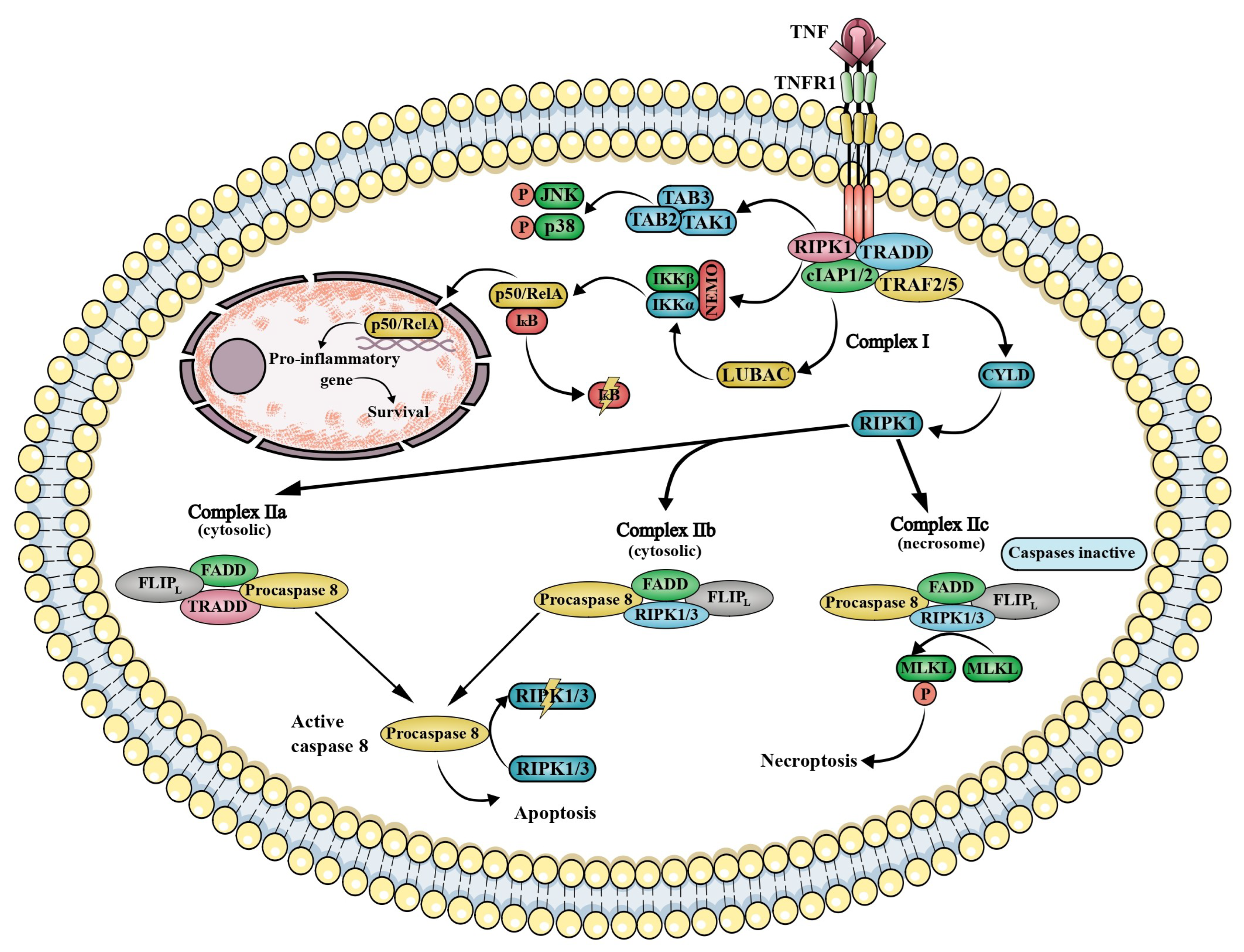
2.1. TNFR1 Signaling
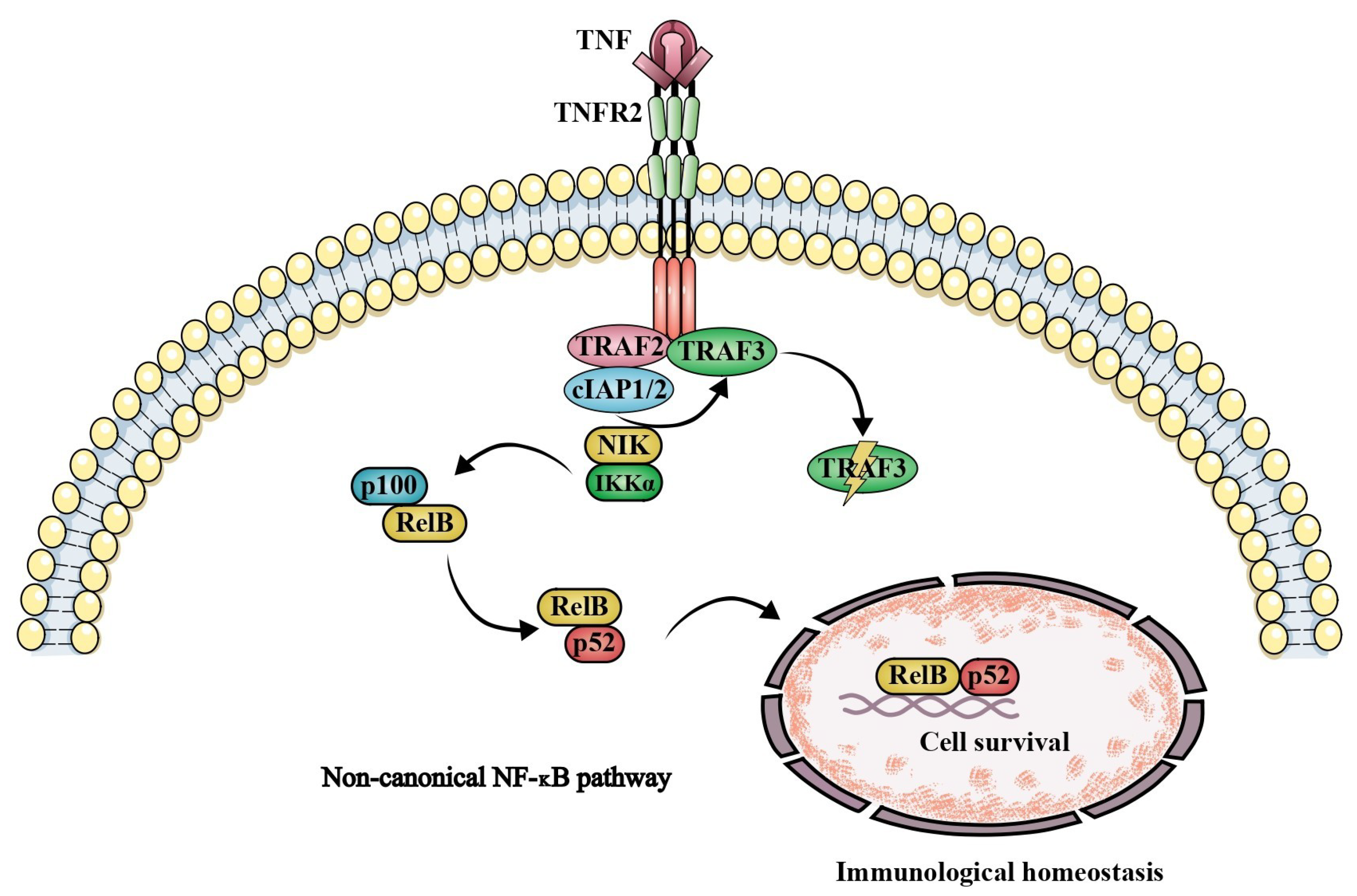
2.2. TNFR2 Signaling
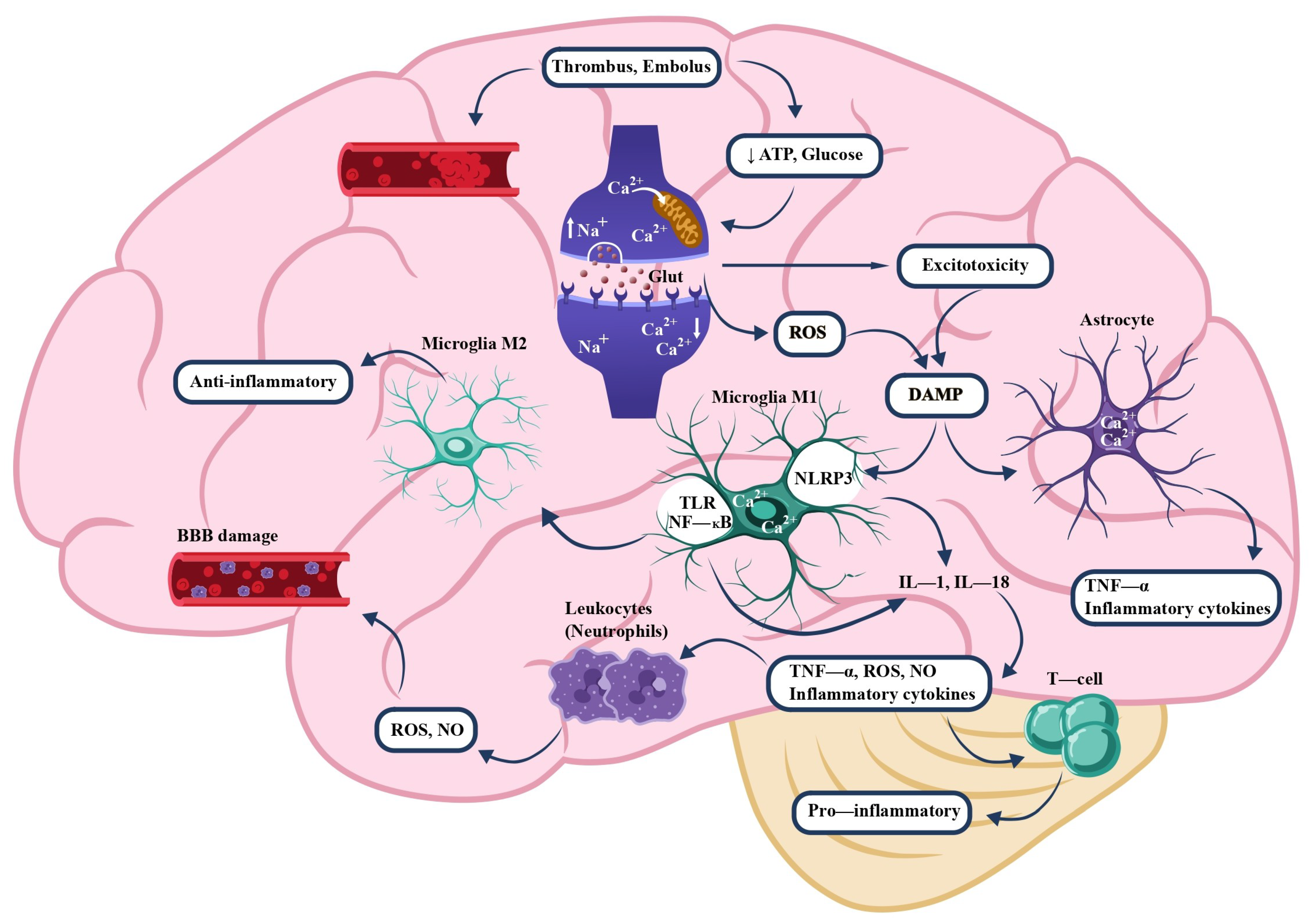
3. The Role of TNF-α in the Pathomechanism of Stroke
4. TNF-α as a Biomarker in Ischemic Stroke

| Biological Material/Collection Time After Stroke | Average Concentration | Control | Results | Conclusions | Ref. |
|---|---|---|---|---|---|
| CSF/within 24 h Serum/within 24 h | 9.1 ± 5.8 pg/mL 14.0 ± 10.2 pg/mL p < 0.05 (n = 23) | 6.6 ± 0.5 pg/mL 9.1 ± 1.6 pg/mL p < 0.05 (n = 15) | The levels of TNF-α in CSF were inversely correlated with the SSS-1 scores (r = −0.77; p < 0.0001, the SSS-2 scores (r = −0.80; p < 0.00001), and the SSS-3 scores (r = −0.82; p < 0.00001). The levels of TNF-α in serum were inversely correlated with the SSS-1 scores (r = −0.76; p < 0.0001), the SSS-2 scores (r = −0.77; p < 0.0001), and the SSS-3 scores (r = −0.77; p < 0.0001). The levels of TNF-α in CSF were inversely correlated with the BI-1 scores (r = −0.84; p < 0.00001), the BI-2 scores (r = −0.85; p < 0.000001), and the BI-3 scores (r = −0.87; p < 0.000001). The levels of TNF-α in serum were inversely correlated with the BI-1 scores (r = −0.81; p < 0.00001), the BI-2 scores (r = −0.82; p < 0.00001), and the BI-3 scores (r = −0.83; p < 0.00001). | An increase in TNF-α levels in CSF and serum of stroke patients within the first 24 h after the onset of stroke was observed. These results demonstrated that initial TNF-α concentrations in CSF and serum reflect the early severity of neurological symptoms and functional disability in stroke patients. | [94] |
| CSF/on admission | 22.8 (15.4) pg/mL p = 0.001 (n = 83, neurological worsening) | no data | Eighty-three patients (35.9%) worsened within the first 48 h after stroke onset: 41 (17.7%) worsened by 1 point, 24 (10.4%) by 2 points, and 18 (7.8%) by ≥3 points. In 69 patients (29.9%), no changes were detected in the CSS score. Seventy-nine patients (34.2%) improved their CSS score within the first 48 h: 54 (23.4%) improved by 1 point, 21 (9.1%) by 2 points, and 4 by ≥3 points. | Even though TNF-a was higher in patients with early clinical worsening, the relationship was confounded by other factors, because it did not remain statistically significant on multivariate testing. | [95] |
| 11.1 (11.1) pg/mL p = 0.001 (n = 148, no neurological worsening) | |||||
| Serum/on admission | 21.1 (8.1) pg/mL p < 0.0001 (n = 83, neurological worsening) | ||||
| 15.1 (6.1) pg/mL p < 0.0001 (n = 148, no neurological worsening) | |||||
| CSF/6 h | 44 ± 5.4 pg/mL (Group 1, n = 44) 39.4 ± 9.4 pg/mL (Group 2, n = 51) p < 0.05 | 14 ± 2.3 pg/mL p < 0.05 (n = 25) | Group 1: NIHSS score at admission 20.2 (4.1); NIHSS score on 7th day 18.5 (3.2), p < 0.001. Group 2: NIHSS score at admission 8.6 (4.9); NIHSS score on 7th day 7.3 (3.5), p < 0.001. | The study did not show any significant group differences in the TNF-α CSF levels at 6 h of ischemic stroke. However, the absolute number of these cytokines was elevated in the severe stroke group, suggesting that they are of the first pro-inflammatory response and may trigger the subsequent proinflammatory cascade. | [96] |
| Serum/within 24 h | 8.2 (6.4, 15.3) pg/mL p = 0.001 (n = 113) | 7.0 (5.7, 8.4) pg/mL p = 0.001 (n = 43) | TNF-α [11.5 pg/mL (7.8 and 16.2 pg/mL) versus 7.6 pg/mL (6.2 and 13.3 pg/mL), p < 0.01] concentrations were significantly higher in patients with lacunar infarctions located at the basal ganglia and brainstem than in those with normal CT/MRI or lacunar infarctions located at the white matter. Plasma TNF-α > 14 pg/mL (OR, 3.0; 95% CI, 1.0 to 8.5; p = 0.042) and baseline CSS score (OR, 0.48; 95% CI, 0.29 to 0.79; p = 0.004) were independently associated with poor outcome at 3 months. | Plasma TNF-α concentrations were significantly higher in patients with lacunar infarctions than in the control group. Logistic regression analysis revealed that plasma TNF-α levels greater than 14 pg/mL were significantly associated with neurological deterioration, independent of a history of arterial hypertension, leukocyte count, and infarct location. | [97] |
| Serum/within 20 h | 75 (37.4; 137.9) pg/mL p = 0.001 (n = 66) | 37.9 (36.1; 47.2) pg/mL p = 0.001 (OND, n = 32) | TNF-α concentration at study entry correlated better with NIHSS than GCS and GOS scales; in particular TNF-α directly correlated with NIHSS scores (r Ľ 0.82, p < 0.001), especially in the subgroup with worse outcome (median 90, percentiles 36 and 518 pg/mL) when compared with the subgroup with better outcome (median 37.9, percentiles 35.6 and 150 pg/mL; p Ľ 0.002). As for the infarct size, a direct correlation was also found (r ¼ 0.92 in patients with a worse outcome and 0.77 in those with a better outcome, p ¼ 0.04 and 0.0002, respectively). | Elevated TNF-α levels showed a significant correlation with the clinical severity and the extent of the brain infarct. | [98] |
| Serum/24–72 h | 37.5 (10.25–41) pg/mL p < 0.001 (n = 60) 27.5 (13.4–40.5) pg/mL p < 0.0001 (LAAS, n = 50) 19.4 (9–23) pg/mL p < 0.0001 (Lacunar, n = 46) 38.5 (22.2–46) pg/mL p < 0.0001 (CEI, n = 20) 29 (10.4–39.0) pg/mL p < 0.0001 (ODE, n = 4) | 3.7 (1.1–4.3) pg/mL p < 0.001 (n = 123) | Patients with lacunar stroke in comparison with subjects with non-lacunar stroke exhibited, 24–72 h after stroke onset, lower plasma levels of TNF-α [21.8 pg/mL (18–30) vs. 33.5 pg/mL (15.25–40), p = 0.001]. At 7–10 days after stroke onset, TNF-α [21.8 pg/mL (18–30) vs. 33.5 pg/mL (25.25–38), p = 0.001] plasma levels remained lower in patients with lacunar stroke. In diabetic patients with lacunar stroke, 7–10 days after stroke onset, plasma levels of TNF-α [24.5 pg/mL (10.5–31.2) vs. 35.2 pg/mL (22–41.5) vs. 26.7 pg/mL (21.2–33.0) vs. 31.4 pg/mL (21.7–34.77), p = 0.001] remained significantly lower in comparison with non-diabetic patients with lacunar stroke and with diabetics and non-diabetics with non-lacunar stroke. It was found a significant association between SSS score at admission and diagnostic subtype: lacunar (b = 3.206; p = 0.0338) or cardioembolic (b = −7.819; p = 0.0006) and some inflammatory variable TNF-α (b = −0.013; p < 0.0001) or IL-6 (b = −0.074; p < 0.0001). | Higher plasma TNF-α levels were observed in stroke patients in comparison with control subjects without acute ischemic stroke. | [100,101,102] |
| Serum/0–16 days (56% within 48 h) | 6 (0.79–17.38) pg/mL (n = 75) | no data | For small-vessel disease or lacunar infarct, lower NIHSS scores were observed, indicating less neurological damage (p = 0.044). With the modified Rankin scale, the etiology with the poorest prognosis at discharge was atherothrombosis (p = 0.041), and small vessel disease again had the best functional prognosis, i.e., lower mRS values (p = 0.003). At 3 months, the etiology with the poorest prognosis was cardioembolic (p = 0.001), and the etiology with the best prognosis was small vessel disease (p < 0.0001). | Lacunar stroke was characterized by significantly lower levels of TNF-α, but this was not associated with better functional prognosis at hospital discharge and at follow-up at 3 months. An association between higher levels of TNF alpha and carotid intima-media thickness of more than 1 mm was found. The Authors claimed that more prospective studies with larger patient numbers are needed to validate these results. | [103] |
| 6.13 (0.9–17.38) pg/mL (Atherothrombotic, n = 29) | |||||
| 4.79 (0.91–16.12) pg/mL (Lacunar, n = 20) p = 0.048 | |||||
| 7.37 (1.75–13.99) pg/mL (CEI, n = 20) | |||||
| 6.64 (1.96–15.56) pg/mL (Indeterminate origin, n = 15) | |||||
| Serum/on 7 day | 55.9 ± 40.3 pg/mL p = 0.069 (n = 41) | 29.0 ± 13.9 pg/mL p = 0.069 (n = 40) | Mean baseline TNF-α levels in the stroke group: 30.1 ± 12.5 pg/mL, p = 0.746. TNF-α levels on day 10: 48.0 ± 24.1 pg/mL. In male compared to female subjects, higher values of TNF-α were observed at admission: 34.5 ± 16.8 vs. 24.7 ± 9.59 pg/mL, p = 0.079; and on day 10: 56.4 ± 30.7 vs. 40.9 ± 13.9 pg/mL, p = 0.056. TNF-α levels in patients with infectious complications and those without infectious complications: 47.1 ± 16.8 vs. 63.4 ± 52.0 pg/mL). | Serum TNF-α levels showed an early and prolonged increase after stroke onset, unrelated to lesion size, neurological impairment, age, sex, vascular risk factors, or infectious complications. The serum increase in TNF-α may be part of the acute-phase response observed in stroke patients. | [104] |
| 57.5 ± 21.2 pg/mL (Lacunar, n = 10) p = 0.069 | |||||
| 66.9 ± 53.8 pg/mL (Subcortical, n = 14) p = 0.069 | |||||
| 44.4 ± 35.3 pg/mL (Cortical, n = 17) p = 0.069 | |||||
| Serum/on 1 day, on 7 days | 7.39 (4.9–10.96) pg/mL (n = 56) p = 0.01 on 1 day | no data | The mean NIHSS score at admission was 14, indicating a moderate to severe stroke population. On day 7, the average NIHSS score dropped to 10.2. A positive correlation was observed between TNF-α level and mRS scores at discharge (on 1 day, r = 0.719, p < 0.001, on 7 days, r = 0.823, p < 0.001). The ROC analysis: TNF-α on 1 day showed an AUC of 0.907 (95% CI: 0.819–0.995). | Significant correlations were observed between IL-6 and TNF-α, stroke severity as measured by the NIHSS, and disability outcomes as assessed by the modified Rankin Scale, highlighting their potential as reliable predictors of both acute stroke and long-term recovery. | [107] |
| 5.12 (3.9–9.34) pg/mL p < 0.05 on 7 day | |||||
| Serum/within 4.5 h, within 24 h, within 7 days | 42.4 (32.2–50.9) pg/mL (n = 125) p < 0.001 within 4.5 h | 29.8 (27.8–31.8) pg/mL (n = 28) p < 0.001 within 4.5 h | The relationship between the TNF-α levels measured during onset and the NIHSS on admission (r = 0.4, p = 0.02) as well as mRS values assessed on admission (r = 0.33, p = 0.01) and in the 3rd month since the stroke (r = 0.47, p < 0.01) was observed. Good sensitivity and specificity were found in the TNF-α levels’ assessment < 4.5 h and on the 1st day since the stroke during evaluation of the patients’ neurologic disability; after 3 months (<4.5 h: cut-off point = 39.94 pg/mL, sensitivity = 62.8%, specificity = 100%, AUC = 0.840; after a day: cut-off point = 60.14 pg/mL, sensitivity = 96.7%, specificity = 50.0%, AUC = 0.733) and 1 year (<4.5 h: cut-off point = 42.54 pg/mL, sensitivity = 62.8%, specificity = 100%, AUC = 0.832; after a day: cut-off point = 60.14 pg/mL, sensitivity = 60.14%, specificity = 100%, AUC = 0.966) since the stroke. | A relationship between TNF-α level and the severity of the neurological deficit was observed. An association between TNF-α and functional outcomes was demonstrated in a group of patients without prior infection and other chronic inflammatory diseases, indicating that TNF-α is an inflammatory marker of acute ischemic brain injury. | [109] |
| 46.2 (34.0–52.3) pg/mL (n = 125) p < 0.001 within 24 h | |||||
| 33.9 (31.5–50.0) pg/mL (n = 125) p < 0.001 within 7 days | |||||
| Plasma/within 72 h | 0.0 (0.0–0.0) pg/mL (n = 15) p = 0.0036 | 0.23 (0.0–2.4) pg/mL (n = 20) p = 0.0036 | sTNFR2 was positively correlated with infarct size (r = 0.689, p = 0.018), therefore the higher the levels of circulating sTNFR2, the worse the infarct size. | The results indicate that the plasma levels of some cytokines may be associated with changes in the acute phase of stroke; therefore, sTNFR2 level can be considered a potential biomarker of infarct size. | [112] |
| sTNFR1 499.3 (293.2–580.9) pg/mL (n = 15) p = 0.581 | sTNFR1 517.1 (293.5–702.2) pg/mL (n = 20) p = 0.581 | ||||
| sTNFR2 525.8 (450.3–626.8) pg/mL (n = 15) p = 0.773 | sTNFR2 526.6 (415.5–676.1) pg/mL (n = 20) p = 0.773 | ||||
| Plasma/within 8 h | 2.0 (0.7–2.6) pg/mL (n = 34) p = 0.57 | 1.9 (1.6–2.6) pg/mL (n = 28) p = 0.57 | TNF IR was initially found in neurons located in I/PI and NAT, but increased in glia in older infarcts. TNF IR increased in macrophages in all specimens. TNFR1 IR was found in neurons and glia and macrophages, while TNFR2 was expressed only by glia in I/PI and NAT, and by macrophages in I/PI. These results suggest that TNF and IL-1 are expressed by subsets of cells and that TNFR2 is expressed in areas with increased astrocytic reactivity. | The findings of increased brain cytokines and plasma TNFR1 and TNFR1 support the hypothesis that targeting poststroke inflammation could be a promising add-on therapy in ischemic stroke patients. | [115] |
| sTNFR1 376.4 (146.8–320.2) pg/mL (n = 34) p = 0.006 | sTNFR1 131.9 (118.5–158.7) pg/mL (n = 28) p = 0.006 | ||||
| sTNFR2 413.8 (251.3–709.0) pg/mL (n = 34) p = 0.04 | sTNFR2 276.7 (236.7–357.8) pg/mL (n = 28) p = 0.04 | ||||
| Plasma/72 h | 2.0 (1.8–3.1) pg/mL (n = 9) p = 0.57 | 1.9 (1.6–2.6) pg/mL (n = 28) p = 0.57 | |||
| sTNFR1 303.3 (141.0–193.6) pg/mL (n = 9) p = 0.006 | sTNFR1 131.9 (118.5–158.7) pg/mL (n = 28) p = 0.006 | ||||
| sTNFR2 518.7 (266.7–660.5) pg/mL (n = 9) p = 0.04 | sTNFR2 276.7 (236.7–357.8) pg/mL (n = 28) p = 0.04 |
5. TNF-α as a Therapeutic Target
6. Clinical and Translational Considerations
7. Conclusions
Author Contributions
Funding
Data Availability Statement
Conflicts of Interest
Abbreviations
| BBB | blood–brain barrier |
| TNF-α | tumor necrosis factor alpha |
| NF-κB | nuclear factor kappa-light-chain-enhancer of activated B cells |
| ROS | reactive oxygen species |
| TNFR1; TNFRSF1A; CD120a; p55 | tumor necrosis factor receptor 1 |
| TNFR2; TNFRSF1B; CD120b; p75 | tumor necrosis factor receptor 2 |
| LPS | lipopolysaccharide |
| IL-1 | interleukin 1 |
| IL-6 | interleukin 6 |
| Munc13-4 | mammalian uncoordinated-13 homolog 4 |
| AP-1 | activator protein-1 |
| C/EBP | CCAAT/enhancer-binding protein |
| mTNF | transmembrane TNF |
| sTNF | soluble TNF |
| ADAM17 | disintegrin and metalloproteinase domain-containing protein 17 |
| TACE | TNF-α converting enzyme |
| DD | death domain |
| TRADD | TNF receptor-associated death domain protein |
| RIPK1/3 | receptor-interacting protein kinase 1/3 |
| TRAF2/5 | TNF receptor–associated factors 2 and 5 |
| cIAP1 | cellular inhibitor of apoptosis protein-1 |
| cIAP2 | cellular inhibitor of apoptosis protein-2 |
| LUBAC | linear ubiquitin chain assembly complex |
| IKK | IkappaB kinase |
| IKKα | inhibitor of nuclear factor κB kinase subunit alpha |
| IKKβ | inhibitor of nuclear factor κB kinase subunit beta |
| IκBα | Kappa light polypeptide gene enhancer in B-cells inhibitor alpha |
| IκBβ | Kappa light polypeptide gene enhancer in B-cells inhibitor beta |
| NEMO/IKKγ | nuclear factor κB essential modulator |
| MAP3K7 | mitogen-activated protein kinase kinase kinase 7 |
| TAK1 | transforming growth factor beta–activated kinase 1 |
| TAB1 | TAK1-binding protein 1 |
| TAB2 | TAK1-binding protein 2 |
| TAB3 | TAK1-binding protein 3 |
| JNK | c-Jun N-terminal kinase |
| p38 MAPK | p38 mitogen-activated protein kinase |
| FADD | Fas-associated death domain protein |
| FLIPL | FLICE-like inhibitory protein long isoform |
| MLKL | mixed lineage kinase domain like pseudokinase |
| CYLD | CYLD lysine 63 deubiquitinase |
| p50 | NF-κB subunit p50 |
| RelA | RELA proto-oncogene, NF-κB subunit p65 |
| p100 | kappa light polypeptide gene enhancer in B-cells inhibitor delta |
| NIK | NF-κB-inducing kinase |
| p52 | NF-κB p52 subunit |
| RElB | RelB proto-oncogene, NF-κB subunit |
| TRAF2/3 | TNF receptor–associated factors 2 and 3 |
| ATP | adenosine triphosphate |
| RNS | reactive nitrogen species |
| NO | nitric oxide |
| CXCL1 | neutrophil-recruiting chemokine |
| CCL2 | monocyte-chemoattractant chemokine |
| MMPs | matrix metalloproteinases |
| DAMPs | damage-associated molecular patterns |
| HMGB1 | high mobility group box 1 |
| nNOS | neuronal NO synthase |
| eNOS | endothelial NO synthase |
| iNOS | inducible NO synthase |
| O2•− | superoxide |
| ONOO− | peroxynitrite |
| ZO-1 | tight-junction protein |
| MPO | myeloperoxidase |
| gelatinase B/MMP-9 | matrix metalloproteinase-9 |
| gelatinase A/MMP-2 | matrix metalloproteinase-2 |
| stromelysin-1/MMP-3 | matrix metalloproteinase-3 |
| NLRP3 | NOD-like receptor family, pyrin domain containing 3 |
| IL-18 | interleukin 18 |
| IL-10 | interleukin 10 |
| IL-4 | interleukin 4 |
| TGF-β | transforming growth factor beta |
| T cell | T lymphocyte |
| TLR | toll-like receptor |
| MAPK | mitogen-activated protein kinase |
| CSF | cerebrospinal fluid |
| SSS | Scandinavian Stroke Scale |
| BI | Barthel Index |
| CSS | Canadian Stroke Scale |
| NIHSS | National Institutes of Health Stroke Scale |
| LACI | lacunar infarction |
| CT | computed tomography |
| MRI | magnetic resonance imaging |
| OND | other neurological diseases |
| TOAST | Trial of Org 10172 in Acute Stroke Treatment |
| SI | small-vessel infarction |
| LaI | large-artery infarction |
| mRS | modified Rankin Scale |
| POCI | posterior circulation infarction |
| CEI | cardioembolic infarct |
| GCS | Glasgow Coma Scale |
| GOS | Glasgow Outcome Scale |
| ODE | other determined etiology |
| I/PI | ipsilateral/peripheral infarction |
| LAAS | large artery atherosclerosis |
| NAT | neuroaxonal damage |
| CNS | central nervous system |
| EAE | experimental autoimmune encephalomyelitis |
| IgG1 | immunoglobulin G1 |
| NMDA | N-methyl-D-aspartate |
References
- Feigin, V.L.; Brainin, M.; Norrving, B.; Martins, S.O.; Pandian, J.; Lindsay, P.; Grupper, M.F.; Rautalin, I. World Stroke Organization: Global Stroke Fact Sheet 2025. Int. J. Stroke 2025, 20, 132–144. [Google Scholar] [CrossRef] [Scilit]
- Roth, G.A.; Mensah, G.A.; Johnson, C.O.; Addolorato, G.; Ammirati, E.; Baddour, L.M.; Barengo, N.C.; Beaton, A.; Benjamin, E.J.; Benziger, C.P.; et al. Global Burden of Cardiovascular Diseases and Risk Factors, 1990–2019: Update from the GBD 2019 Study. J. Am. Coll. Cardiol. 2020, 76, 2982–3021, Correction in J. Am. Coll. Cardiol. 2021, 77, 1958–1959. [Google Scholar] [CrossRef] [Scilit]
- O’Donnell, M.J.; Xavier, D.; Liu, L.; Zhang, H.; Chin, S.L.; Rao-Melacini, P.; Rangarajan, S.; Islam, S.; Pais, P.; McQueen, M.J.; et al. Risk Factors for Ischaemic and Intracerebral Haemorrhagic Stroke in 22 Countries (the INTERSTROKE Study): A Case-Control Study. Lancet 2010, 376, 112–123. [Google Scholar] [CrossRef] [Scilit] [PubMed]
- Campbell, B.C.V.; Khatri, P. Stroke. Lancet 2020, 396, 129–142. [Google Scholar] [CrossRef] [Scilit] [PubMed]
- Iadecola, C.; Anrather, J. The Immunology of Stroke: From Mechanisms to Translation. Nat. Med. 2012, 17, 796–808. [Google Scholar] [CrossRef] [Scilit] [PubMed]
- Jiang, X.; Andjelkovic, A.V.; Zhu, L.; Yang, T.; Bennett, M.V.L.; Chen, J.; Keep, R.F.; Shi, Y. Blood-Brain Barrier Dysfunction and Recovery After Ischemic Stroke. Prog. Neurobiol. 2018, 163–164, 144–171. [Google Scholar] [CrossRef] [Scilit]
- Xiao, L.; Huang, Y.; Wu, L.; Zeng, S.; Qiu, C.; Li, X.; Xie, L.; Wu, D. The Role of Inflammation in Ischemic Stroke: From Biomarker to Treatment. Front. Immunol. 2025, 16, 1608353. [Google Scholar] [CrossRef] [Scilit]
- Fanzhou, R.; Yuding, L.; Pingchuan, L.; Hai, X.; Xu, L.; Jian, W. The Role of TNF Signaling Pathway in Post-Stroke Cognitive Impairment: A Systematic Review. Ann. Med. 2025, 57, 2543519. [Google Scholar] [CrossRef] [Scilit]
- Xue, Y.; Zeng, X.; Tu, W.J.; Zhao, J. Tumor Necrosis Factor-α: The Next Marker of Stroke. Dis. Markers 2022, 2022, 2395269. [Google Scholar] [CrossRef] [Scilit]
- Lv, Q.K.; Tao, K.X.; Yao, X.Y.; Pang, M.Z.; Cao, B.E.; Liu, C.F.; Wang, F. Melatonin MT1 Receptors Regulate the Sirt1/Nrf2/Ho-1/Gpx4 Pathway to Prevent α-Synuclein-Induced Ferroptosis in Parkinson’s Disease. J. Pineal Res. 2024, 76, e12948. [Google Scholar] [CrossRef] [Scilit]
- Brás, J.P.; Bravo, J.; Freitas, J.; Barbosa, M.A.; Santos, S.G.; Summavielle, T.; Almeida, M.I. TNF-Alpha-Induced Microglia Activation Requires MiR-342: Impact on NF-KB Signaling and Neurotoxicity. Cell Death Dis. 2020, 11, 415. [Google Scholar] [CrossRef] [Scilit]
- Doll, D.N.; Rellick, S.L.; Barr, T.L.; Ren, X.; Simpkins, J.W. Rapid Mitochondrial Dysfunction Mediates TNF-Alpha-Induced Neurotoxicity. J. Neurochem. 2015, 132, 443–451. [Google Scholar] [CrossRef] [Scilit] [PubMed]
- Matys, P.; Mirończuk, A.; Starosz, A.; Grubczak, K.; Kochanowicz, J.; Kułakowska, A.; Kapica-Topczewska, K. Expanding Role of Interleukin-1 Family Cytokines in Acute Ischemic Stroke. Int. J. Mol. Sci. 2024, 25, 10515. [Google Scholar] [CrossRef] [Scilit]
- Huang, Y.; Wang, Z.; Huang, Z.X.; Liu, Z. Biomarkers and the Outcomes of Ischemic Stroke. Front. Mol. Neurosci. 2023, 16, 1171101. [Google Scholar] [CrossRef] [Scilit]
- Papazian, I.; Tsoukala, E.; Boutou, A.; Karamita, M.; Kambas, K.; Iliopoulou, L.; Fischer, R.; Kontermann, R.E.; Denis, M.C.; Kollias, G.; et al. Fundamentally Different Roles of Neuronal TNF Receptors in CNS Pathology: TNFR1 and IKKβ Promote Microglial Responses and Tissue Injury in Demyelination While TNFR2 Protects Against Excitotoxicity in Mice. J. Neuroinflamm. 2021, 18, 222. [Google Scholar] [CrossRef] [Scilit]
- Brenner, D.; Blaser, H.; Mak, T.W. Regulation of Tumour Necrosis Factor Signalling: Live or Let Die. Nat. Rev. Immunol. 2015, 15, 362–374. [Google Scholar] [CrossRef] [Scilit]
- Chédotal, H.; Narayanan, D.; Povlsen, K.; Gotfredsen, C.H.; Brambilla, R.; Gajhede, M.; Bach, A.; Clausen, M.H. Small-Molecule Modulators of Tumor Necrosis Factor Signaling. Drug Discov. Today 2023, 28, 103575. [Google Scholar] [CrossRef] [Scilit] [PubMed]
- Lobito, A.A.; Gabriel, T.L.; Medema, J.P.; Kimberley, F.C. Disease Causing Mutations in the TNF and TNFR Superfamilies: Focus on Molecular Mechanisms Driving Disease. Trends Mol. Med. 2011, 17, 494–505. [Google Scholar] [CrossRef] [Scilit] [PubMed]
- Halim, S.A.; Sikandari, A.G.; Khan, A.; Wadood, A.; Fatmi, M.Q.; Csuk, R.; Al-Harrasi, A. Structure-Based Virtual Screening of Tumor Necrosis Factor-α Inhibitors by Cheminformatics Approaches and Bio-Molecular Simulation. Biomolecules 2021, 11, 329. [Google Scholar] [CrossRef] [Scilit] [PubMed]
- Turner, M.D.; Nedjai, B.; Hurst, T.; Pennington, D.J. Cytokines and Chemokines: At the Crossroads of Cell Signalling and Inflammatory Disease. Biochim. Biophys. Acta Mol. Cell Res. 2014, 1843, 2563–2582. [Google Scholar] [CrossRef] [Scilit]
- Qu, Y.; Zhao, G.; Li, H. Forward and Reverse Signaling Mediated by Transmembrane Tumor Necrosis Factor-Alpha and TNF Receptor 2: Potential Roles in an Immunosuppressive Tumor Microenvironment. Front. Immunol. 2017, 8, 1675. [Google Scholar] [CrossRef] [Scilit] [PubMed]
- Juhász, K.; Buzás, K.; Duda, E. Importance of Reverse Signaling of the TNF Superfamily in Immune Regulation. Expert Rev. Clin. Immunol. 2013, 9, 335–348. [Google Scholar] [CrossRef] [Scilit]
- Ruiz, A.; Palacios, Y.; Garcia, I.; Chavez-Galan, L. Transmembrane Tnf and Its Receptors Tnfr1 and Tnfr2 in Mycobacterial Infections. Int. J. Mol. Sci. 2021, 22, 5461. [Google Scholar] [CrossRef] [Scilit]
- Loetscher, H.; Schlaeger, E.J.; Lahm, H.W.; Pan, Y.C.E.; Lesslauer, W.; Brockhaus, M. Purification and Partial Amino Acid Sequence Analysis of Two Distinct Tumor Necrosis Factor Receptors from HL60 Cells. J. Biol. Chem. 1990, 265, 20131–20138. [Google Scholar] [CrossRef] [Scilit]
- Webster, J.D.; Vucic, D. The Balance of TNF Mediated Pathways Regulates Inflammatory Cell Death Signaling in Healthy and Diseased Tissues. Front. Cell Dev. Biol. 2020, 8, 365. [Google Scholar] [CrossRef] [Scilit]
- Gaeta, M.L.; Johnson, D.R.; Kluger, M.S.; Pober, J.S. The Death Domain of Tumor Necrosis Factor Receptor 1 Is Necessary but Not Sufficient for Golgi Retention of the Receptor and Mediates Receptor Desensitization. Lab. Investig. 2000, 80, 1185–1194. [Google Scholar] [CrossRef] [Scilit]
- Locksley, R.M.; Killeen, N.; Lenardo, M.J. The TNF and TNF Receptor Superfamilies: Integrating Mammalian Biology. Cell 2001, 104, 487–501. [Google Scholar] [CrossRef] [Scilit] [PubMed]
- Canault, M.; Peiretti, F.; Kopp, F.; Bonardo, B.; Bonzi, M.F.; Coudeyre, J.C.; Alessi, M.C.; Juhan-Vague, I.; Nalbone, G. The TNF Alpha Converting Enzyme (TACE/ADAM17) Is Expressed in the Atherosclerotic Lesions of Apolipoprotein E-Deficient Mice: Possible Contribution to Elevated Plasma Levels of Soluble TNF Alpha Receptors. Atherosclerosis 2006, 187, 82–91. [Google Scholar] [CrossRef] [Scilit] [PubMed]
- Magliozzi, R.; Howell, O.W.; Durrenberger, P.; Aricò, E.; James, R.; Cruciani, C.; Reeves, C.; Roncaroli, F.; Nicholas, R.; Reynolds, R. Meningeal Inflammation Changes the Balance of TNF Signalling in Cortical Grey Matter in Multiple Sclerosis. J. Neuroinflamm. 2019, 16, 259. [Google Scholar] [CrossRef] [Scilit] [PubMed]
- Gough, P.; Myles, I.A. Tumor Necrosis Factor Receptors: Pleiotropic Signaling Complexes and Their Differential Effects. Front. Immunol. 2020, 11, 585880. [Google Scholar] [CrossRef] [Scilit]
- Vince, J.E.; Pantaki, D.; Feltham, R.; Mace, P.D.; Cordier, S.M.; Schmukle, A.C.; Davidson, A.J.; Callus, B.A.; Wong, W.W.L.; Gentle, I.E.; et al. TRAF2 Must Bind to Cellular Inhibitors of Apoptosis for Tumor Necrosis Factor (TNF) to Efficiently Activate NF-ΚB and to Prevent TNF-Induced Apoptosis. J. Biol. Chem. 2009, 284, 35906–35915. [Google Scholar] [CrossRef] [Scilit]
- Dynek, J.N.; Goncharov, T.; Dueber, E.C.; Fedorova, A.V.; Izrael-Tomasevic, A.; Phu, L.; Helgason, E.; Fairbrother, W.J.; Deshayes, K.; Kirkpatrick, D.S.; et al. C-IAP1 and UbcH5 Promote K11-Linked Polyubiquitination of RIP1 in TNF Signalling. EMBO J. 2010, 29, 4198–4209. [Google Scholar] [CrossRef] [Scilit]
- Liu, T.; Zhang, L.; Joo, D.; Sun, S.C. NF-κB Signaling in Inflammation. Signal Transduct. Target. Ther. 2017, 2, 17023. [Google Scholar] [CrossRef] [Scilit]
- Sun, S.-C.; Ley, S.C. New Insights into NF-κB Regulation and Function. Trends Immunol. 2008, 29, 469–478. [Google Scholar] [CrossRef] [Scilit]
- Hayden, M.S.; Ghosh, S. Shared Principles in NF-ΚB Signaling. Cell 2008, 132, 344–362. [Google Scholar] [CrossRef] [Scilit] [PubMed]
- Guo, Q.; Jin, Y.; Chen, X.; Ye, X.; Shen, X.; Lin, M.; Zeng, C.; Zhou, T.; Zhang, J. NF-ΚB in Biology and Targeted Therapy: New Insights and Translational Implications. Signal Transduct. Target. Ther. 2024, 9, 53. [Google Scholar] [CrossRef] [Scilit] [PubMed]
- Alim, L.F.; Keane, C.; Souza-Fonseca-Guimaraes, F. Molecular Mechanisms of Tumour Necrosis Factor Signalling via TNF Receptor 1 and TNF Receptor 2 in the Tumour Microenvironment. Curr. Opin. Immunol. 2024, 86, 102409. [Google Scholar] [CrossRef] [Scilit]
- Varfolomeev, E.; Blankenship, J.W.; Wayson, S.M.; Fedorova, A.V.; Kayagaki, N.; Garg, P.; Zobel, K.; Dynek, J.N.; Elliott, L.O.; Wallweber, H.J.A.; et al. IAP Antagonists Induce Autoubiquitination of C-IAPs, NF-κB Activation, and TNFα-Dependent Apoptosis. Cell 2007, 131, 669–681. [Google Scholar] [CrossRef] [Scilit] [PubMed]
- Hira, S.K.; Mondal, I.; Bhattacharya, D.; Gupta, K.K.; Manna, P.P. Downregulation of STAT3 Phosphorylation Enhances Tumoricidal Effect of IL-15-Activated Dendritic Cell Against Doxorubicin-Resistant Lymphoma and Leukemia via TNF-α. Int. J. Biochem. Cell Biol. 2015, 67, 1–13. [Google Scholar] [CrossRef] [Scilit]
- Wang, H.; Sun, L.; Su, L.; Rizo, J.; Liu, L.; Wang, L.F.; Wang, F.S.; Wang, X. Mixed Lineage Kinase Domain-like Protein MLKL Causes Necrotic Membrane Disruption upon Phosphorylation by RIP3. Mol. Cell 2014, 54, 133–146. [Google Scholar] [CrossRef] [Scilit]
- Rauert, H.; Wicovsky, A.; Müller, N.; Siegmund, D.; Spindler, V.; Waschke, J.; Kneitz, C.; Wajant, H. Membrane Tumor Necrosis Factor (TNF) Induces P100 Processing via TNF Receptor-2 (TNFR2). J. Biol. Chem. 2010, 285, 7394–7404. [Google Scholar] [CrossRef] [Scilit]
- Dostert, C.; Grusdat, M.; Letellier, E.; Brenner, D. The TNF Family of Ligands and Receptors: Communication Modules in the Immune System and Beyond. Physiol. Rev. 2019, 99, 115–160. [Google Scholar] [CrossRef] [Scilit]
- Sun, S.C. Non-Canonical NF-ΚB Signaling Pathway. Cell Res. 2011, 21, 71–85. [Google Scholar] [CrossRef] [Scilit]
- Hostager, B.S.; Bishop, G.A. CD40-Mediated Activation of the NF-ΚB2 Pathway. Front. Immunol. 2013, 4, 376. [Google Scholar] [CrossRef] [Scilit] [PubMed]
- Cabal-Hierro, L.; Lazo, P.S. Signal Transduction by Tumor Necrosis Factor Receptors. Cell. Signal. 2012, 24, 1297–1305. [Google Scholar] [CrossRef] [Scilit] [PubMed]
- Vidale, S.; Consoli, A.; Arnaboldi, M.; Consoli, D. Postischemic Inflammation in Acute Stroke. J. Clin. Neurol. 2017, 13, 1–9. [Google Scholar] [CrossRef] [Scilit] [PubMed]
- Barber, P.A.; Auer, R.N.; Buchan, A.M.; Sutherland, G.R. Understanding and Managing Ischemic Stroke. Can. J. Physiol. Pharmacol. 2001, 79, 283–296. [Google Scholar] [CrossRef]
- Pawluk, H.; Woźniak, A.; Grześk, G.; Kołodziejska, R.; Kozakiewicz, M.; Kopkowska, E.; Grzechowiak, E.; Kozera, G. The Role of Selected Pro-Inflammatory Cytokines in Pathogenesis of Ischemic Stroke. Clin. Interv. Aging 2020, 15, 469–484. [Google Scholar] [CrossRef] [Scilit]
- Jarvis, C.R.; Anderson, T.R.; Andrew, R.D. Anoxic Depolarization Mediates Acute Damage Independent of Glutamate in Neocortical Brain Slices. Cereb. Cortex 2001, 11, 249–259. [Google Scholar] [CrossRef] [Scilit]
- Kim, D.; Gagolewicz, P.; McQueen, S.; Latour, H.; Tresidder, K.; Jarvis, C.R.; Andrew, R.D. Simulated Ischemia in Live Cerebral Slices Is Mimicked by Opening the Na+/K+ Pump: Clues to the Generation of Spreading Depolarization. J. Neurophysiol. 2025, 133, 1649–1664. [Google Scholar] [CrossRef] [Scilit]
- Kohno, K.; Hoehn-Berlage, M.; Mies, G.; Back, T.; Hossmann, K.A. Relationship Between Diffusion-Weighted MR Images, Cerebral Blood Flow, and Energy State in Experimental Brain Infarction. Magn. Reson. Imaging 1995, 13, 73–80. [Google Scholar] [CrossRef] [Scilit]
- Chau, L.; Davis, H.T.; Jones, T.; Greene-Chandos, D.; Torbey, M.; Shuttleworth, C.W.; Carlson, A.P. Spreading Depolarization as a Therapeutic Target in Severe Ischemic Stroke: Physiological and Pharmacological Strategies. J. Pers. Med. 2022, 12, 1447. [Google Scholar] [CrossRef] [Scilit]
- Zhang, Q.G.; Xu, Y.L.; Li, H.C.; Han, D.; Zhang, G.Y. NMDA Receptor/L-VGCC-Dependent Expression and AMPA/KA Receptor-Dependent Activation of c-Jun Induced by Cerebral Ischemia in Rat Hippocampus. Neurosci. Lett. 2006, 398, 268–273. [Google Scholar] [CrossRef] [Scilit]
- Li, X.M.; Yang, J.M.; Hu, D.H.; Hou, F.Q.; Zhao, M.; Zhu, X.H.; Wang, Y.; Li, J.G.; Hu, P.; Chen, L.; et al. Contribution of Downregulation of L-Type Calcium Currents to Delayed Neuronal Death in Rat Hippocampus After Global Cerebral Ischemia and Reperfusion. J. Neurosci. 2007, 27, 5249–5259. [Google Scholar] [CrossRef] [Scilit]
- Kahlert, S.; Zündorf, G.; Reiser, G. Glutamate-Mediated Influx of Extracellular Ca2+ Is Coupled with Reactive Oxygen Species Generation in Cultured Hippocampal Neurons but Not in Astrocytes. J. Neurosci. Res. 2005, 79, 262–271. [Google Scholar] [CrossRef] [Scilit] [PubMed]
- Dash, U.C.; Bhol, N.K.; Swain, S.K.; Samal, R.R.; Nayak, P.K.; Raina, V.; Panda, S.K.; Kerry, R.G.; Duttaroy, A.K.; Jena, A.B. Oxidative Stress and Inflammation in the Pathogenesis of Neurological Disorders: Mechanisms and Implications. Acta Pharm. Sin. B 2025, 15, 15–34. [Google Scholar] [CrossRef] [Scilit] [PubMed]
- Ramiro, L.; Simats, A.; García-Berrocoso, T.; Montaner, J. Inflammatory Molecules Might Become Both Biomarkers and Therapeutic Targets for Stroke Management. Ther. Adv. Neurol. Disord. 2018, 11, 1756286418789340. [Google Scholar] [CrossRef] [Scilit] [PubMed]
- Watters, O.; O’Connor, J.J. A Role for Tumor Necrosis Factor-α in Ischemia and Ischemic Preconditioning. J. Neuroinflamm. 2011, 8, 87. [Google Scholar] [CrossRef] [Scilit]
- Simats, A.; García-Berrocoso, T.; Montaner, J. Neuroinflammatory Biomarkers: From Stroke Diagnosis and Prognosis to Therapy. Biochim. Biophys. Acta Mol. Basis Dis. 2016, 1862, 411–424. [Google Scholar] [CrossRef] [Scilit]
- Famakin, B.M.; Tsymbalyuk, O.; Tsymbalyuk, N.; Ivanova, S.; Woo, S.K.; Kwon, M.S.; Gerzanich, V.; Simard, J.M. HMGB1 Is a Potential Mediator of Astrocytic TLR4 Signaling Activation Following Acute and Chronic Focal Cerebral Ischemia. Neurol. Res. Int. 2020, 2020, 3929438. [Google Scholar] [CrossRef] [Scilit]
- Parada, E.; Casas, A.I.; Palomino-Antolin, A.; Gómez-Rangel, V.; Rubio-Navarro, A.; Farré-Alins, V.; Narros-Fernandez, P.; Guerrero-Hue, M.; Moreno, J.A.; Rosa, J.M.; et al. Early Toll-like Receptor 4 Blockade Reduces ROS and Inflammation Triggered by Microglial pro-Inflammatory Phenotype in Rodent and Human Brain Ischaemia Models. Br. J. Pharmacol. 2019, 176, 2764–2779. [Google Scholar] [CrossRef] [Scilit]
- Abdullahi, W.; Tripathi, D.; Ronaldson, P.T. Blood-Brain Barrier Dysfunction in Ischemic Stroke: Targeting Tight Junctions and Transporters for Vascular Protection. Am. J. Physiol. Cell Physiol. 2018, 315, C343–C356. [Google Scholar] [CrossRef] [Scilit]
- Sugiyama, S.; Sasaki, T.; Tanaka, H.; Yan, H.; Ikegami, T.; Kanki, H.; Nishiyama, K.; Beck, G.; Gon, Y.; Okazaki, S.; et al. The Tight Junction Protein Occludin Modulates Blood–Brain Barrier Integrity and Neurological Function After Ischemic Stroke in Mice. Sci. Rep. 2023, 13, 2892. [Google Scholar] [CrossRef] [Scilit]
- Lakhan, S.E.; Kirchgessner, A.; Hofer, M. Inflammatory Mechanisms in Ischemic Stroke: Therapeutic Approaches. J. Transl. Med. 2009, 7, 97. [Google Scholar] [CrossRef] [Scilit]
- Candelario-Jalil, E.; González-Falcón, A.; García-Cabrera, M.; León, O.S.; Fiebich, B.L. Post-Ischaemic Treatment with the Cyclooxygenase-2 Inhibitor Nimesulide Reduces Blood-Brain Barrier Disruption and Leukocyte Infiltration Following Transient Focal Cerebral Ischaemia in Rats. J. Neurochem. 2007, 100, 1108–1120. [Google Scholar] [CrossRef] [Scilit] [PubMed]
- Yang, C.; Hawkins, K.E.; Doré, S.; Candelario-Jalil, E. Neuroinflammatory Mechanisms of Blood-Brain Barrier Damage in Ischemic Stroke. Am. J. Physiol. Cell Physiol. 2019, 316, C135–C153. [Google Scholar] [CrossRef] [Scilit] [PubMed]
- Doyle, S.; Ozaki, E.; Campbell, M. Targeting the NLRP3 Inflammasome in Chronic Inflammatory Diseases: Current Perspectives. J. Inflamm. Res. 2015, 8, 15–27. [Google Scholar] [CrossRef] [Scilit]
- Hong, P.; Gu, R.N.; Li, F.X.; Xiong, X.X.; Liang, W.B.; You, Z.J.; Zhang, H.F. NLRP3 Inflammasome as a Potential Treatment in Ischemic Stroke Concomitant with Diabetes. J. Neuroinflamm. 2019, 16, 121. [Google Scholar] [CrossRef] [Scilit]
- Yang, Y.; Wang, H.; Kouadir, M.; Song, H.; Shi, F. Recent Advances in the Mechanisms of NLRP3 Inflammasome Activation and Its Inhibitors. Cell Death Dis. 2019, 10, 128. [Google Scholar] [CrossRef] [Scilit] [PubMed]
- Bustamante, A.; Simats, A.; Vilar-Bergua, A.; García-Berrocoso, T.; Montaner, J. Blood/Brain Biomarkers of Inflammation After Stroke and Their Association with Outcome: From C-Reactive Protein to Damage-Associated Molecular Patterns. Neurotherapeutics 2016, 13, 671–684. [Google Scholar] [CrossRef] [Scilit]
- Bourne, J.H.; Suthya, A.R.; Wanrooy, B.J.; Wilson, J.L.; Wen, S.W.; Bastow, C.R.; Zheng, G.; Rank, M.; Hickey, M.J.; Wong, C.H.Y. Microglia Are Prominent Producers of Inflammatory Cytokines During the Hyperacute Phase of Ischemic Stroke. Commun. Biol. 2025, 8, 1193. [Google Scholar] [CrossRef] [Scilit] [PubMed]
- Lambertsen, K.L.; Biber, K.; Finsen, B. Inflammatory Cytokines in Experimental and Human Stroke. J. Cereb. Blood Flow Metab. 2012, 32, 1677–1698. [Google Scholar] [CrossRef] [Scilit]
- Otxoa-de-Amezaga, A.; Miró-Mur, F.; Pedragosa, J.; Gallizioli, M.; Justicia, C.; Gaja-Capdevila, N.; Ruíz-Jaen, F.; Salas-Perdomo, A.; Bosch, A.; Calvo, M.; et al. Microglial Cell Loss After Ischemic Stroke Favors Brain Neutrophil Accumulation. Acta Neuropathol. 2019, 137, 321–341. [Google Scholar] [CrossRef] [Scilit]
- Krams, M.; Lees, K.R.; Hacke, W.; Grieve, A.P.; Orgogozo, J.M.; Ford, G.A. Acute Stroke Therapy by Inhibition of Neutrophils (ASTIN): An Adaptive Dose-Response Study of UK-279,276 in Acute Ischemic Stroke. Stroke 2003, 34, 2543–2548. [Google Scholar] [CrossRef] [Scilit]
- Veltkamp, R.; Gill, D. Clinical Trials of Immunomodulation in Ischemic Stroke. Neurotherapeutics 2016, 13, 791–800. [Google Scholar] [CrossRef] [Scilit]
- Mizuma, A.; Yenari, M.A. Anti-Inflammatory Targets for the Treatment of Reperfusion Injury in Stroke. Front. Neurol. 2017, 8, 467. [Google Scholar] [CrossRef] [Scilit] [PubMed]
- Faustman, D.L.; Davis, M.; Kuhtreiber, W.M. TNFR2 Agonism: Basic Science and Promising Treatment for Multiple Sclerosis and Related Diseases. Int. J. Mol. Sci. 2025, 26, 7839. [Google Scholar] [CrossRef] [Scilit] [PubMed]
- Yli-Karjanmaa, M.; Clausen, B.H.; Degn, M.; Novrup, H.G.; Ellman, D.G.; Toft-Jensen, P.; Szymkowski, D.E.; Stensballe, A.; Meyer, M.; Brambilla, R.; et al. Topical Administration of a Soluble TNF Inhibitor Reduces Infarct Volume After Focal Cerebral Ischemia in Mice. Front. Neurosci. 2019, 13, 781. [Google Scholar] [CrossRef] [Scilit]
- Pradillo, J.M.; Romera, C.; Hurtado, O.; Cárdenas, A.; Moro, M.A.; Leza, J.C.; Dávalos, A.; Castillo, J.; Lorenzo, P.; Lizasoain, I. TNFR1 Upregulation Mediates Tolerance After Brain Ischemic Preconditioning. J. Cereb. Blood Flow Metab. 2005, 25, 193–203. [Google Scholar] [CrossRef] [Scilit]
- Shohami, E.; Ginis, I.; Hallenbeck, J.M. Dual Role of Tumor Necrosis Factor Alpha in Brain Injury. Cytokine Growth Factor Rev. 1999, 10, 119–130. [Google Scholar] [CrossRef] [Scilit]
- Clausen, B.H.; Degn, M.; Sivasaravanaparan, M.; Fogtmann, T.; Andersen, M.G.; Trojanowsky, M.D.; Gao, H.; Hvidsten, S.; Baun, C.; Deierborg, T.; et al. Conditional Ablation of Myeloid TNF Increases Lesion Volume After Experimental Stroke in Mice, Possibly via Altered ERK1/2 Signaling. Sci. Rep. 2016, 6, 29291. [Google Scholar] [CrossRef] [Scilit]
- Probert, L. TNF and Its Receptors in the CNS: The Essential, the Desirable and the Deleterious Effects. Neuroscience 2015, 302, 2–22. [Google Scholar] [CrossRef] [Scilit]
- Lambertsen, K.L.; Clausen, B.H.; Babcock, A.A.; Gregersen, R.; Fenger, C.; Nielsen, H.H.; Haugaard, L.S.; Wirenfeldt, M.; Nielsen, M.; Dagnaes-Hansen, F.; et al. Microglia Protect Neurons Against Ischemia by Synthesis of Tumor Necrosis Factor. J. Neurosci. 2009, 29, 1319–1330. [Google Scholar] [CrossRef] [Scilit]
- Nawashiro, H.; Tasaki, K.; Ruetzler, C.A.; Hallenbeck, J.M. TNF-α Pretreatment Induces Protective Effects Against Focal Cerebral Ischemia in Mice. J. Cereb. Blood Flow Metab. 1997, 17, 483–490. [Google Scholar] [CrossRef] [Scilit] [PubMed]
- Clausen, B.H.; Degn, M.; Martin, N.A.; Couch, Y.; Karimi, L.; Ormhøj, M.; Mortensen, M.-L.B.; Gredal, H.B.; Gardiner, C.; Sargent, I.I.L.; et al. Systemically Administered Anti-TNF Therapy Ameliorates Functional Outcomes After Focal Cerebral Ischemia. J. Neuroinflamm. 2014, 11, 203. [Google Scholar] [CrossRef]
- Madsen, P.M.; Clausen, B.H.; Degn, M.; Thyssen, S.; Kristensen, L.K.; Svensson, M.; Ditzel, N.; Finsen, B.; Deierborg, T.; Brambilla, R.; et al. Genetic Ablation of Soluble Tumor Necrosis Factor with Preservation of Membrane Tumor Necrosis Factor Is Associated with Neuroprotection After Focal Cerebral Ischemia. J. Cereb. Blood Flow Metab. 2016, 36, 1553–1569. [Google Scholar] [CrossRef] [Scilit]
- Arango-Dávila, C.A.; Vera, A.; Londoño, A.C.; Echeverri, A.F.; Cañas, F.; Cardozo, C.F.; Orozco, J.L.; Rengifo, J.; Cañas, C.A. Soluble or Soluble/Membrane TNF-± Inhibitors Protect the Brain from Focal Ischemic Injury in Rats. Int. J. Neurosci. 2015, 125, 936–940. [Google Scholar] [CrossRef] [Scilit] [PubMed]
- Steeland, S.; Libert, C.; Vandenbroucke, R.E. A New Venue of TNF Targeting. Int. J. Mol. Sci. 2018, 19, 1442. [Google Scholar] [CrossRef] [Scilit] [PubMed]
- Liu, P.; Chen, Y.; Zhang, Z.; Yuan, Z.; Sun, J.-G.; Xia, S.; Cao, X.; Chen, J.; Zhang, C.-J.; Chen, Y.; et al. Noncanonical Contribution of Microglial Transcription Factor NR4A1 to Post-Stroke Recovery through TNF MRNA Destabilization. PLoS Biol. 2023, 21, e3002199. [Google Scholar] [CrossRef] [Scilit]
- Plantone, D.; Pardini, M.; Righi, D.; Manco, C.; Colombo, B.M.; De Stefano, N. The Role of TNF-α in Alzheimer’s Disease: A Narrative Review. Cells 2023, 13, 54. [Google Scholar] [CrossRef] [Scilit]
- Gonzalez Caldito, N. Role of Tumor Necrosis Factor-Alpha in the Central Nervous System: A Focus on Autoimmune Disorders. Front. Immunol. 2023, 14, 1213448. [Google Scholar] [CrossRef] [Scilit]
- McCoy, M.K.; Tansey, M.G. TNF Signaling Inhibition in the CNS: Implications for Normal Brain Function and Neurodegenerative Disease. J. Neuroinflamm. 2008, 5, 45. [Google Scholar] [CrossRef] [Scilit] [PubMed]
- Doll, D.N.; Barr, T.L.; Simpkins, J.W. Cytokines: Their Role in Stroke and Potential Use as Biomarkers and Therapeutic Targets. Aging Dis. 2014, 5, 294–306. [Google Scholar] [CrossRef] [Scilit] [PubMed]
- Zaremba, J.; Losy, J. Early TNF-α Levels Correlate with Ischaemic Stroke Severity. Acta Neurol. Scand. 2001, 104, 288–295. [Google Scholar] [CrossRef] [Scilit]
- Vila, N.; Castillo, J.; Dávalos, A.; Chamorro, Á. Proinflammatory Cytokines and Early Neurological Worsening in Ischemic Stroke. Stroke 2000, 31, 2325–2329. [Google Scholar] [CrossRef] [Scilit]
- Beridze, M.; Sanikidze, T.; Shakarishvilil, R.; Intskirveli, N.; Bornstein, N.M. Selected Acute Phase CSF Factors in Ischemic Stroke: Findings and Prognostic Value. BMC Neurol. 2011, 11, 41. [Google Scholar] [CrossRef] [Scilit]
- Castellanos, M.; Castillo, J.; García, M.M.; Leira, R.; Serena, J.; Chamorro, A.; Dávalos, A. Inflammation-Mediated Damage in Progressing Lacunar Infarctions. Stroke 2002, 33, 982–987. [Google Scholar] [CrossRef] [Scilit]
- Sotgiu, S.; Zanda, B.; Marchetti, B.; Fois, M.L.; Arru, G.; Pes, G.M.; Salaris, F.S.; Arru, A.; Pirisi, A.; Rosati, G. Inflammatory Biomarkers in Blood of Patients with Acute Brain Ischemia. Eur. J. Neurol. 2006, 13, 505–513. [Google Scholar] [CrossRef] [Scilit] [PubMed]
- Licata, G.; Tuttolomondo, A.; Corrao, S.; Di Raimondo, D.; Fernandez, P.; Caruso, C.; Avellone, G.; Pinto, A. Immunoinflammatory Activation During the Acute Phase of Lacunar and Non-Lacunar Ischemic Stroke: Association with Time of Onset and Diabetic State. Int. J. Immunopathol. Pharmacol. 2006, 19, 639–646. [Google Scholar] [CrossRef] [Scilit]
- Tuttolomondo, A.; Di Raimondo, D.; di Sciacca, R.; Pinto, A.; Licata, G. Inflammatory Cytokines in Acute Ischemic Stroke. Curr. Pharm. Des. 2008, 14, 3574–3589. [Google Scholar] [CrossRef] [Scilit]
- Tuttolomondo, A.; Di Sciacca, R.; Di Raimondo, D.; Serio, A.; D’Aguanno, G.; La Placa, S.; Pecoraro, R.; Arnao, V.; Marino, L.; Monaco, S.; et al. Plasma Levels of Inflammatory and Thrombotic/Fibrinolytic Markers in Acute Ischemic Strokes: Relationship with TOAST Subtype, Outcome and Infarct Site. J. Neuroimmunol. 2009, 215, 84–89. [Google Scholar] [CrossRef] [Scilit]
- Licata, G.; Tuttolomondo, A.; Di Raimondo, D.; Corrao, S.; Di Sciacca, R.; Pinto, A. Immuno-Inflammatory Activation in Acute Cardio-Embolic Strokes in Comparison with Other Subtypes of Ischaemic Stroke. Thromb. Haemost. 2009, 101, 929–937. [Google Scholar] [CrossRef] [Scilit]
- Flores-Cantú, H.; Góngora-Rivera, F.; Lavalle-González, F.; Villarreal-Pérez, J.Z.; Cantú-Sánchez, D.; Anaya-Escamilla, A.; Villarreal-Montemayor, H.J.; Villarreal-Velázquez, H.J. Tumor Necrosis Factor Alpha, Prognosis and Stroke Subtype Etiology. Med. Univ. 2016, 18, 194–200. [Google Scholar] [CrossRef] [Scilit]
- Intiso, D.; Zarrelli, M.M.; Lagioia, G.; Di Rienzo, F.; Checchia De Ambrosio, C.; Simone, P.; Tonali, P.; Cioffi, R.P. Tumor Necrosis Factor Alpha Serum Levels and Inflammatory Response in Acute Ischemic Stroke Patients. Neurol. Sci. 2004, 24, 390–396. [Google Scholar] [CrossRef] [Scilit]
- Nakashidze, I.; Shaikh, N.; Nakashidze, S.; Shaikh, A.; Ahmad, S.; Nakashidze, I. Evaluation of TNF-α Levels in Male Patients with Stroke: Prognostic Implications. Georg. Med. News 2025, 1, 29–32. [Google Scholar]
- Corcoran, M.P.; Meydani, M.; Lichtenstein, A.H.; Schaefer, E.J.; Dillard, A.; Lamon-Fava, S. Sex Hormone Modulation of Proinflammatory Cytokine and C-Reactive Protein Expression in Macrophages from Older Men and Postmenopausal Women. J. Endocrinol. 2010, 206, 217–224. [Google Scholar] [CrossRef] [Scilit]
- Băcilă, C.-I.; Vlădoiu, M.-G.; Văleanu, M.; Moga, D.-F.-C.; Pumnea, P.-M. The Role of IL-6 and TNF-Alpha Biomarkers in Predicting Disability Outcomes in Acute Ischemic Stroke Patients. Life 2025, 15, 47. [Google Scholar] [CrossRef] [Scilit]
- Nayak, A.; Kashyap, R.; Kabra, D.; Purohit, H.; Taori, G.; Daginawala, H. Time Course of Inflammatory Cytokines in Acute Ischemic Stroke Patients and Their Relation to Inter-Alfa Trypsin Inhibitor Heavy Chain 4 and Outcome. Ann. Indian Acad. Neurol. 2012, 15, 181–185. [Google Scholar] [CrossRef] [Scilit] [PubMed]
- Pawluk, H.; Kołodziejska, R.; Grześk, G.; Kozakiewicz, M.; Woźniak, A.; Pawluk, M.; Kosinska, A.; Grześk, M.; Wojtasik, J.; Kozera, G. Selected Mediators of Inflammation in Patients with Acute Ischemic Stroke. Int. J. Mol. Sci. 2022, 23, 10614. [Google Scholar] [CrossRef] [Scilit] [PubMed]
- Tuttolomondo, A.; Di Raimondo, D.; Pecoraro, R.; Arnao, V.; Pinto, A.; Licata, G. Inflammation in Ischemic Stroke Subtypes. Curr. Pharm. Des. 2012, 18, 4289–4310. [Google Scholar] [CrossRef] [Scilit]
- Rudilosso, S.; Rodríguez-Vázquez, A.; Urra, X.; Arboix, A. The Potential Impact of Neuroimaging and Translational Research on the Clinical Management of Lacunar Stroke. Int. J. Mol. Sci. 2022, 23, 1497. [Google Scholar] [CrossRef] [Scilit]
- Bitencourt, A.C.S.; Timóteo, R.P.; Bazan, R.; Silva, M.V.; da Silveira Filho, L.G.; Ratkevicius, C.M.A.; de Assunção, T.S.F.; de Oliveira, A.P.S.; Luvizutto, G.J. Association of Proinflammatory Cytokine Levels with Stroke Severity, Infarct Size, and Muscle Strength in the Acute Phase of Stroke. J. Stroke Cerebrovasc. Dis. 2022, 31, 106187. [Google Scholar] [CrossRef] [Scilit]
- Emsley, H.C.; Smith, C.J.; Gavin, C.M.; Georgiou, R.F.; Vail, A.; Barberan, E.M.; Illingworth, K.; Scarth, S.; Wickramasinghe, V.; Hoadley, M.E.; et al. Clinical Outcome Following Acute Ischaemic Stroke Relates to Both Activation and Autoregulatory Inhibition of Cytokine Production. BMC Neurol. 2007, 7, 5. [Google Scholar] [CrossRef] [Scilit] [PubMed]
- Fassbender, K.; Rossol, S.; Kammer, T.; Daffertshofer, M.; Wirth, S.; Dollman, M.; Hennerici, M. Proinflammatory Cytokines in Serum of Patients with Acute Cerebral Ischemia: Kinetics of Secretion and Relation to the Extent of Brain Damage and Outcome of Disease. J. Neurol. Sci. 1994, 122, 135–139. [Google Scholar] [CrossRef] [Scilit]
- Clausen, B.H.; Wirenfeldt, M.; Høgedal, S.S.; Frich, L.H.; Nielsen, H.H.; Schrøder, H.D.; Østergaard, K.; Finsen, B.; Kristensen, B.W.; Lambertsen, K.L. Characterization of the TNF and IL-1 Systems in Human Brain and Blood After Ischemic Stroke. Acta Neuropathol. Commun. 2020, 8, 81. [Google Scholar] [CrossRef] [Scilit]
- Rahmig, J.; Chanpura, A.; Schultz, A.; Barone, F.C.; Gustafson, D.; Baird, A.E. Blood-Based Protein Biomarkers During the Acute Ischemic Stroke Treatment Window: A Systematic Review. Front. Neurol. 2024, 15, 1411307. [Google Scholar] [CrossRef] [Scilit]
- Hansen, R.B.; Laursen, C.C.H.; Nawaz, N.; Madsen, J.S.; Nielsen, H.H.; Kruuse, C.; Møller, A.; Degn, M.; Lambertsen, K.L. Leukocyte TNFR1 and TNFR2 Expression Contributes to the Peripheral Immune Response in Cases with Ischemic Stroke. Cells 2021, 10, 861. [Google Scholar] [CrossRef] [Scilit] [PubMed]
- Fernández-Real, J.M.; Ricart, W. Insulin Resistance and Chronic Cardiovascular Inflammatory Syndrome. Endocr. Rev. 2003, 24, 278–301. [Google Scholar] [CrossRef] [Scilit]
- Kosmas, C.E.; Bousvarou, M.D.; Kostara, C.E.; Papakonstantinou, E.J.; Salamou, E.; Guzman, E. Insulin Resistance and Cardiovascular Disease. J. Int. Med. Res. 2023, 51, 03000605231164548. [Google Scholar] [CrossRef] [Scilit] [PubMed]
- Li, Y.; Ye, R.; Dai, H.; Lin, J.; Cheng, Y.; Zhou, Y.; Lu, Y. Exploring TNFR1: From Discovery to Targeted Therapy Development. J. Transl. Med. 2025, 23, 71. [Google Scholar] [CrossRef] [Scilit]
- Olmos, G.; Lladó, J. Tumor Necrosis Factor Alpha: A Link Between Neuroinflamm. and Excitotoxicity. Mediat. Inflamm. 2014, 2014, 861231. [Google Scholar] [CrossRef] [Scilit]
- Wiens, A.; Correr, C.J.; Pontarolo, R.; Venson, R.; Quinalha, J.V.; Otuki, M.F. A Systematic Review and Meta-analysis of the Efficacy and Safety of Etanercept for Treating Rheumatoid Arthritis. Scand. J. Immunol. 2009, 70, 337–344. [Google Scholar] [CrossRef] [Scilit]
- Hanauer, S.B.; Feagan, B.G.; Lichtenstein, G.R.; Mayer, L.F.; Schreiber, S.; Colombel, J.F.; Rachmilewitz, D.; Wolf, D.C.; Olson, A.; Bao, W.; et al. Maintenance Infliximab for Crohn’s Disease: The ACCENT I Randomised Trial. Lancet 2002, 359, 1541–1549. [Google Scholar] [CrossRef] [Scilit]
- Rutgeerts, P.; Sandborn, W.J.; Feagan, B.G.; Reinisch, W.; Olson, A.; Johanns, J.; Travers, S.; Rachmilewitz, D.; Hanauer, S.B.; Lichtenstein, G.R.; et al. Infliximab for Induction and Maintenance Therapy for Ulcerative Colitis. N. Engl. J. Med. 2005, 353, 2462–2476, Erratum in N. Engl. J. Med. 2006, 354, 2200. [Google Scholar] [CrossRef] [Scilit]
- Nguyen, Q.D.; Merrill, P.T.; Jaffe, G.J.; Dick, A.D.; Kurup, S.K.; Sheppard, J.; Schlaen, A.; Pavesio, C.; Cimino, L.; Van Calster, J.; et al. Adalimumab for Prevention of Uveitic Flare in Patients with Inactive Non-Infectious Uveitis Controlled by Corticosteroids (VISUAL II): A Multicentre, Double-Masked, Randomised, Placebo-Controlled Phase 3 Trial. Lancet 2016, 388, 1183–1192, Correction in Lancet 2016, 288, 1160. [Google Scholar] [CrossRef] [Scilit]
- Launois, R.; Avouac, B.; Berenbaum, F.; Blin, O.; Bru, I.; Fautrel, B.; Joubert, J.-M.; Sibilia, J.; Combe, B. Comparison of Certolizumab Pegol with Other Anticytokine Agents for Treatment of Rheumatoid Arthritis: A Multiple-Treatment Bayesian Metaanalysis. J. Rheumatol. 2011, 38, 835–845. [Google Scholar] [CrossRef] [Scilit] [PubMed]
- Keystone, E.C.; Genovese, M.C.; Klareskog, L.; Hsia, E.C.; Hall, S.T.; Miranda, P.C.; Pazdur, J.; Bae, S.-C.; Palmer, W.; Zrubek, J.; et al. Golimumab, a Human Antibody to Tumour Necrosis Factor α given by Monthly Subcutaneous Injections, in Active Rheumatoid Arthritis despite Methotrexate Therapy: The GO-FORWARD Study. Ann. Rheum. Dis. 2009, 68, 789–796, Correction in Ann. Rheum. Dis. 2025, 70, 238. [Google Scholar] [CrossRef] [Scilit] [PubMed]
- Ortí-Casañ, N.; Boerema, A.S.; Köpke, K.; Ebskamp, A.; Keijser, J.; Zhang, Y.; Chen, T.; Dolga, A.M.; Broersen, K.; Fischer, R.; et al. The TNFR1 Antagonist Atrosimab Reduces Neuronal Loss, Glial Activation and Memory Deficits in an Acute Mouse Model of Neurodegeneration. Sci. Rep. 2023, 13, 10622. [Google Scholar] [CrossRef] [Scilit] [PubMed]
- Habbas, S.; Santello, M.; Becker, D.; Stubbe, H.; Zappia, G.; Liaudet, N.; Klaus, F.R.; Kollias, G.; Fontana, A.; Pryce, C.R.; et al. Neuroinflammatory TNFα Impairs Memory via Astrocyte Signaling. Cell 2015, 163, 1730–1741. [Google Scholar] [CrossRef] [Scilit]
- MacPherson, K.P.; Sompol, P.; Kannarkat, G.T.; Chang, J.; Sniffen, L.; Wildner, M.E.; Norris, C.M.; Tansey, M.G. Peripheral Administration of the Soluble TNF Inhibitor XPro1595 Modifies Brain Immune Cell Profiles, Decreases Beta-Amyloid Plaque Load, and Rescues Impaired Long-Term Potentiation in 5xFAD Mice. Neurobiol. Dis. 2017, 102, 81–95. [Google Scholar] [CrossRef] [Scilit]
- Valentin-Torres, A.; Savarin, C.; Barnett, J.; Bergmann, C.C. Blockade of Sustained Tumor Necrosis Factor in a Transgenic Model of Progressive Autoimmune Encephalomyelitis Limits Oligodendrocyte Apoptosis and Promotes Oligodendrocyte Maturation. J. Neuroinflamm. 2018, 15, 121. [Google Scholar] [CrossRef] [Scilit] [PubMed]
- Madsen, P.M.; Motti, D.; Karmally, S.; Szymkowski, D.E.; Lambertsen, K.L.; Bethea, J.R.; Brambilla, R. Oligodendroglial TNFR2 Mediates Membrane TNF-Dependent Repair in Experimental Autoimmune Encephalomyelitis by Promoting Oligodendrocyte Differentiation and Remyelination. J. Neurosci. 2016, 36, 5128–5143. [Google Scholar] [CrossRef] [Scilit]
- Magliozzi, R.; Howell, O.W.; Reeves, C.; Roncaroli, F.; Nicholas, R.; Serafini, B.; Aloisi, F.; Reynolds, R. A Gradient of Neuronal Loss and Meningeal Inflammation in Multiple Sclerosis. Ann. Neurol. 2010, 68, 477–493. [Google Scholar] [CrossRef] [Scilit]
- Dong, Y.; Fischer, R.; Naudé, P.J.W.; Maier, O.; Nyakas, C.; Duffey, M.; Van der Zee, E.A.; Dekens, D.; Douwenga, W.; Herrmann, A.; et al. Essential Protective Role of Tumor Necrosis Factor Receptor 2 in Neurodegeneration. Proc. Natl. Acad. Sci. USA 2016, 113, 12304–12309. [Google Scholar] [CrossRef] [Scilit] [PubMed]
- Brambilla, R.; Ashbaugh, J.J.; Magliozzi, R.; Dellarole, A.; Karmally, S.; Szymkowski, D.E.; Bethea, J.R. Inhibition of Soluble Tumour Necrosis Factor Is Therapeutic in Experimental Autoimmune Encephalomyelitis and Promotes Axon Preservation and Remyelination. Brain 2011, 134, 2736–2754. [Google Scholar] [CrossRef] [Scilit]
- Bonetti, N.R.; Diaz-Cañestro, C.; Liberale, L.; Crucet, M.; Akhmedov, A.; Merlini, M.; Reiner, M.F.; Gobbato, S.; Stivala, S.; Kollias, G.; et al. Tumour Necrosis Factor-α Inhibition Improves Stroke Outcome in a Mouse Model of Rheumatoid Arthritis. Sci. Rep. 2019, 9, 2173. [Google Scholar] [CrossRef] [Scilit] [PubMed]
- Hersh, A.M.; Alomari, S.; Tyler, B.M. Crossing the Blood-Brain Barrier: Advances in Nanoparticle Technology for Drug Delivery in Neuro-Oncology. Int. J. Mol. Sci. 2022, 23, 4153. [Google Scholar] [CrossRef] [Scilit]
- Pardridge, W.M. A Historical Review of Brain Drug Delivery. Pharmaceutics 2022, 14, 1283. [Google Scholar] [CrossRef] [Scilit]
- Teleanu, R.I.; Preda, M.D.; Niculescu, A.-G.; Vladâcenco, O.; Radu, C.I.; Grumezescu, A.M.; Teleanu, D.M. Current Strategies to Enhance Delivery of Drugs across the Blood–Brain Barrier. Pharmaceutics 2022, 14, 987. [Google Scholar] [CrossRef] [Scilit]
- Holst, M.R.; de Wit, N.M.; Ozgür, B.; Brachner, A.; Hyldig, K.; Appelt-Menzel, A.; Sleven, H.; Cader, Z.; de Vries, H.E.; Neuhaus, W.; et al. Subcellular Trafficking and Transcytosis Efficacy of Different Receptor Types for Therapeutic Antibody Delivery at the Blood–brain Barrier. Fluids Barriers CNS 2023, 20, 82. [Google Scholar] [CrossRef] [Scilit]
- Fishman, P.S.; Fischell, J.M. Focused Ultrasound Mediated Opening of the Blood-Brain Barrier for Neurodegenerative Diseases. Front. Neurol. 2021, 12, 749047. [Google Scholar] [CrossRef] [Scilit] [PubMed]
- Teleanu, D.M.; Negut, I.; Grumezescu, V.; Grumezescu, A.M.; Teleanu, R.I. Nanomaterials for Drug Delivery to the Central Nervous System. Nanomaterials 2019, 9, 371. [Google Scholar] [CrossRef] [Scilit] [PubMed]
- Zhang, Z.; Fan, W.; Yang, G.; Xu, Z.; Wang, J.; Cheng, Q.; Yu, M. Risk of Tuberculosis in Patients Treated with TNF-α Antagonists: A Systematic Review and Meta-Analysis of Randomised Controlled Trials. BMJ Open 2017, 7, e012567. [Google Scholar] [CrossRef] [Scilit] [PubMed]
- Kaltsonoudis, E.; Zikou, A.K.; Voulgari, P.V.; Konitsiotis, S.; Argyropoulou, M.I.; Drosos, A.A. Neurological Adverse Events in Patients Receiving Anti-TNF Therapy: A Prospective Imaging and Electrophysiological Study. Arthritis Res. Ther. 2014, 16, R125. [Google Scholar] [CrossRef] [Scilit]


Disclaimer/Publisher’s Note: The statements, opinions and data contained in all publications are solely those of the individual author(s) and contributor(s) and not of MDPI and/or the editor(s). MDPI and/or the editor(s) disclaim responsibility for any injury to people or property resulting from any ideas, methods, instructions or products referred to in the content. |
© 2026 by the authors. Licensee MDPI, Basel, Switzerland. This article is an open access article distributed under the terms and conditions of the Creative Commons Attribution (CC BY) license.
Share and Cite
Kołodziejska, R.; Pawluk, H.; Tafelska-Kaczmarek, A.; Pawluk, M.; Koper, K.; Godlewski, A.; Kuk, J.; Sergot, K.; Kurhaluk, N.; Woźniak, A. The Role of TNF-α in Ischemic Stroke. Int. J. Mol. Sci. 2026, 27, 1424. https://doi.org/10.3390/ijms27031424
Kołodziejska R, Pawluk H, Tafelska-Kaczmarek A, Pawluk M, Koper K, Godlewski A, Kuk J, Sergot K, Kurhaluk N, Woźniak A. The Role of TNF-α in Ischemic Stroke. International Journal of Molecular Sciences. 2026; 27(3):1424. https://doi.org/10.3390/ijms27031424
Chicago/Turabian StyleKołodziejska, Renata, Hanna Pawluk, Agnieszka Tafelska-Kaczmarek, Mateusz Pawluk, Krzysztof Koper, Antoni Godlewski, Julia Kuk, Krzysztof Sergot, Natalia Kurhaluk, and Alina Woźniak. 2026. "The Role of TNF-α in Ischemic Stroke" International Journal of Molecular Sciences 27, no. 3: 1424. https://doi.org/10.3390/ijms27031424
APA StyleKołodziejska, R., Pawluk, H., Tafelska-Kaczmarek, A., Pawluk, M., Koper, K., Godlewski, A., Kuk, J., Sergot, K., Kurhaluk, N., & Woźniak, A. (2026). The Role of TNF-α in Ischemic Stroke. International Journal of Molecular Sciences, 27(3), 1424. https://doi.org/10.3390/ijms27031424