Natural Products Targeting Key Molecular Hallmarks in Gastric Cancer: Focus on Apoptosis, Inflammation, and Chemoresistance

 , ,
, ,
Abstract
1. Introduction
2. The Molecular Underpinnings of Gastric Carcinogenesis
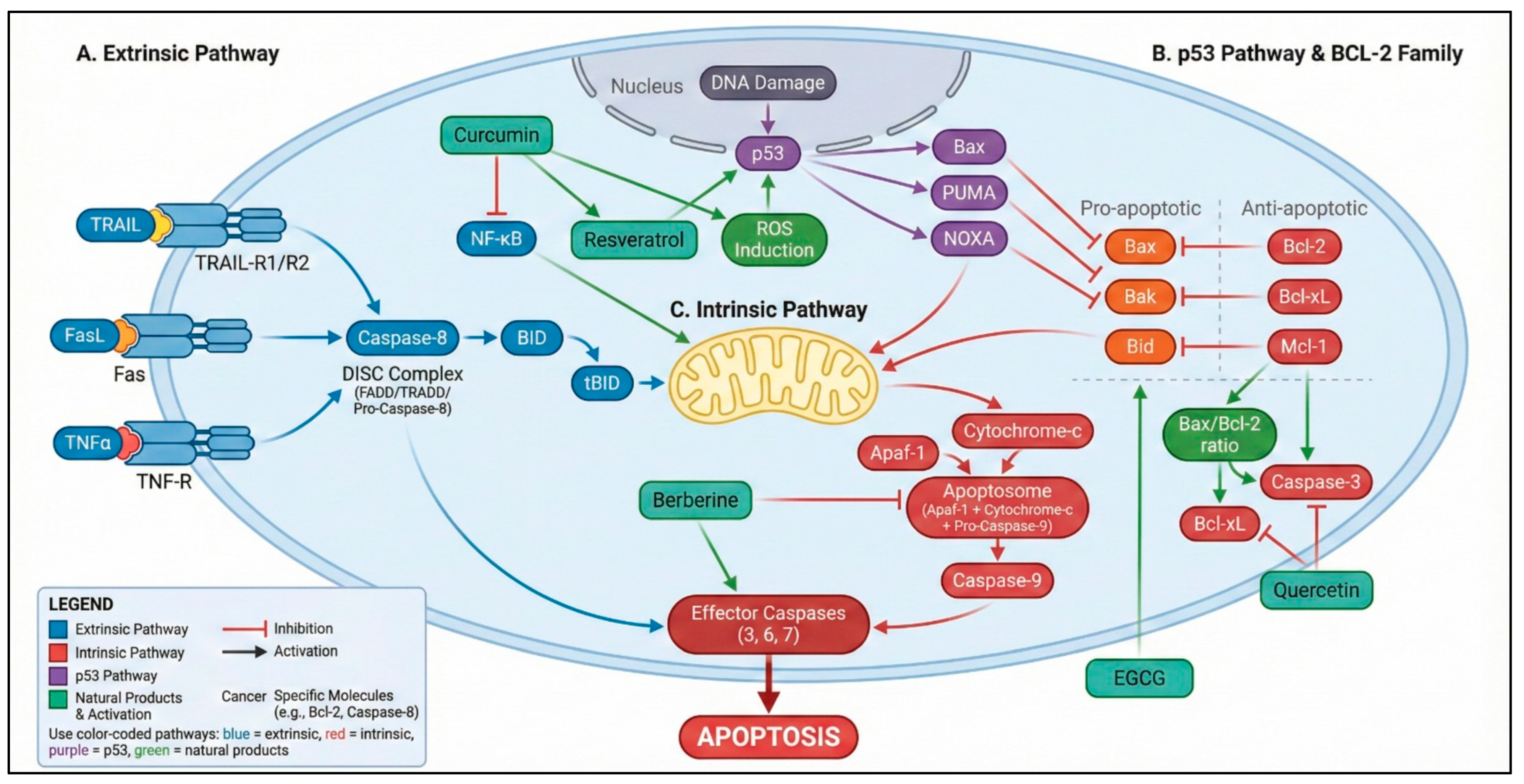
2.1. Evasion of Apoptosis: Bcl-2 Family Imbalance and Caspase Disruption
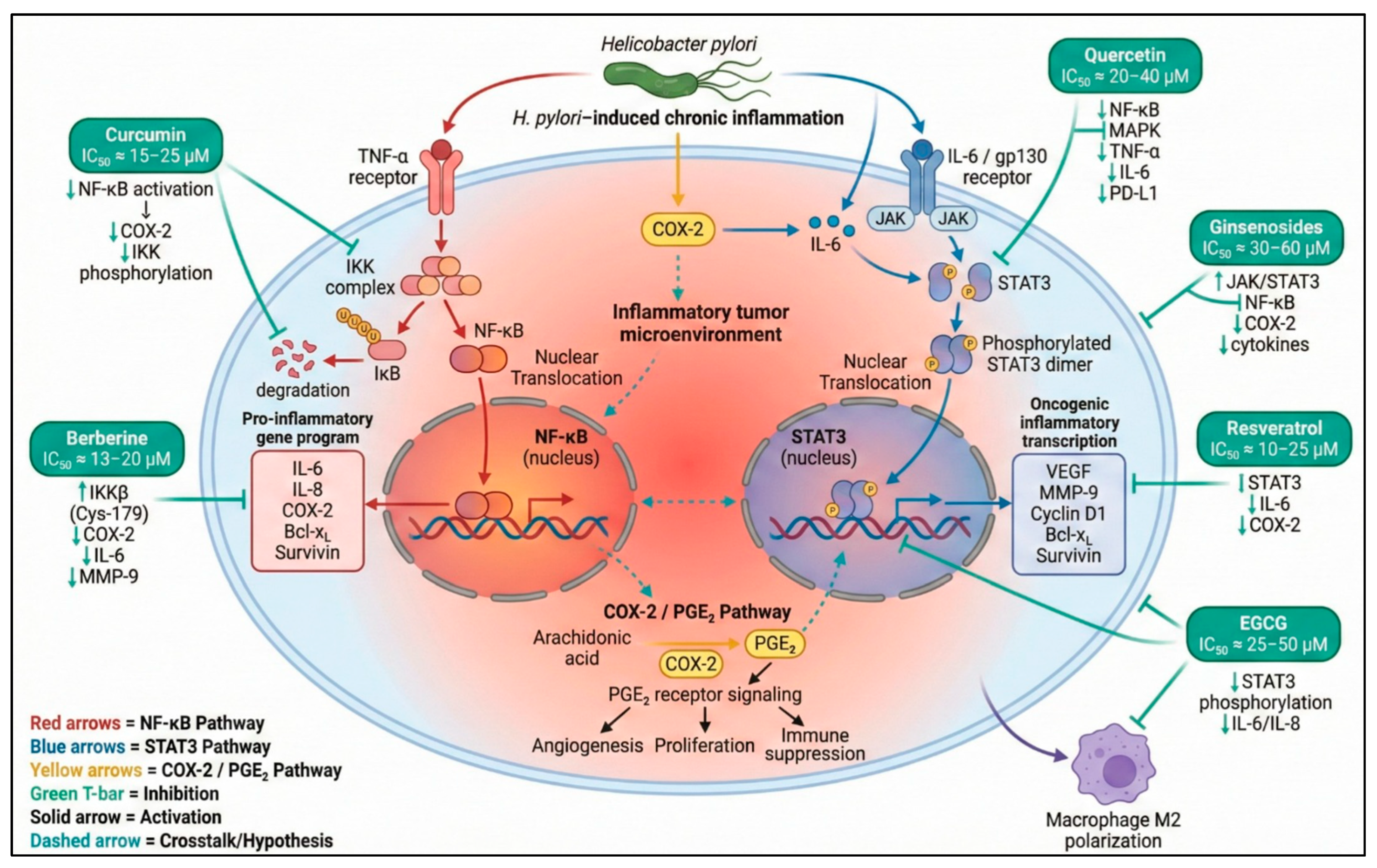
2.2. The Inflammatory Milieu: NF-κB, Cytokine Networks, and Helicobacter pylori
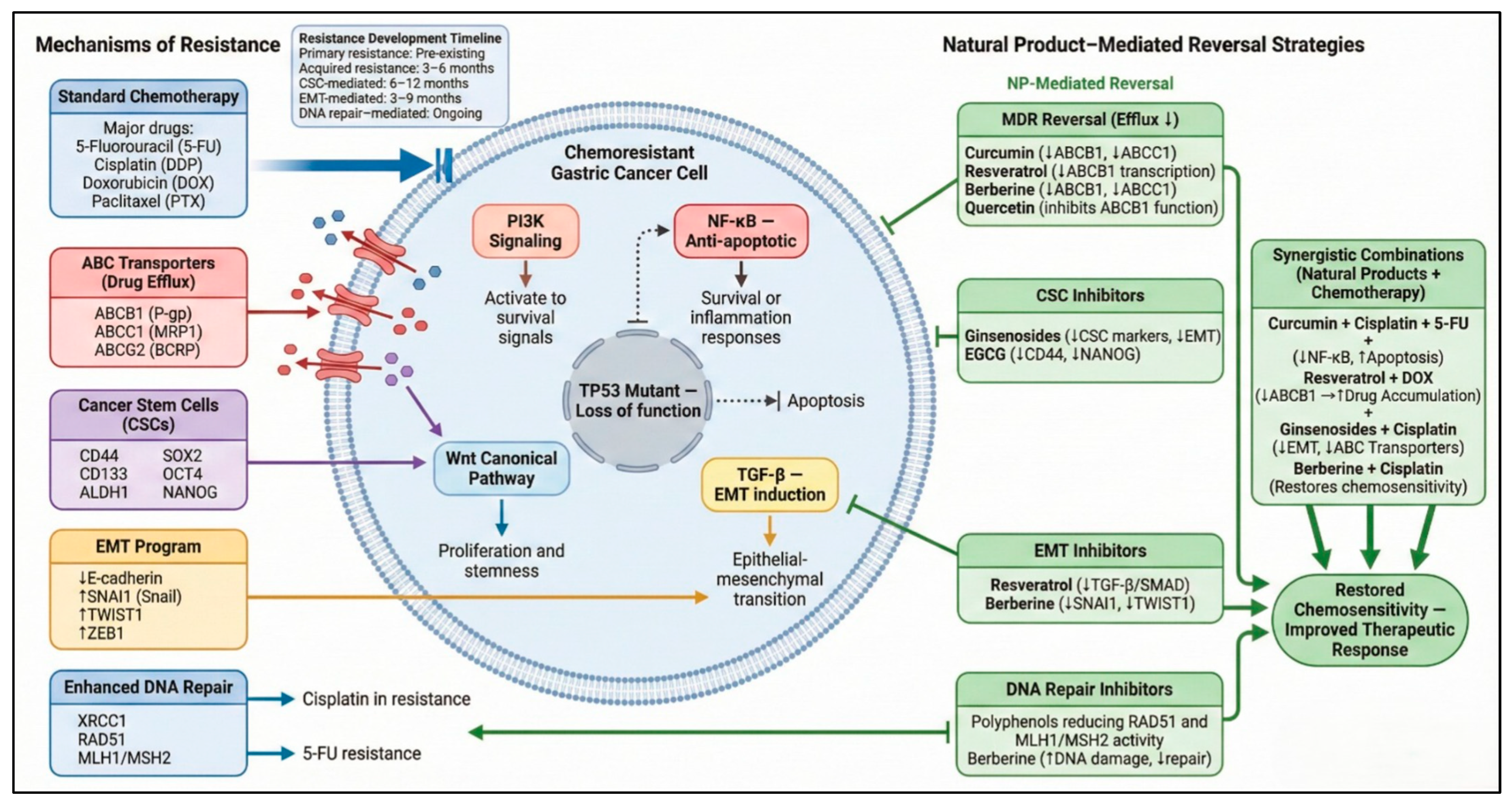
2.3. The Challenge of Chemoresistance: ABC Transporters, Hypoxia, and EMT
2.4. Intersecting Oncogenic Drivers: PI3K/AKT/mTOR and Wnt/β-Catenin Signaling
3. Natural Products as Modulators of Apoptosis in Gastric Cancer

| Natural Product | Chemical Class | Hallmarks Targeted | Key Mechanistic Actions | Key References |
|---|---|---|---|---|
| Curcumin | Polyphenol | Apoptosis, Inflammation, Chemoresistance | Bax/Bcl-2 modulation; MOMP induction; caspase-9/3 activation; NF-κB inhibition; MDR1 suppression | Yang et al. (2024) [78]; W Liu (2024) [79]; Ren et al. (2025) [80] |
| Resveratrol | Stilbenoid | Apoptosis, Inflammation, Chemoresistance | p53 activation; Bax/Bcl-2 modulation; PI3K/AKT inhibition; NF-κB suppression | Warias et al. (2024) [81] |
| Betulinic Acid | Triterpenoid | Apoptosis | Mitochondrial depolarization; cytochrome-c release; caspase-9/3 activation | Chen et al. (2020) [82] |
| Ginsenosides | Triterpenoid Saponins | Apoptosis, Chemoresistance | MMP loss; Bax translocation; cytochrome-c release; caspases activation; EMT attenuation | Cui (2025) [83] |
| Oridonin | Diterpenoid | Apoptosis, Cell Cycle Arrest | Bax/Bcl-2 modulation; cytochrome-c release; caspase activation; G0/G1 or G2/M arrest | Fakhri et al. (2022) [84] |
| Berberine | Alkaloid | Apoptosis, Inflammation, Chemoresistance | NF-κB inhibition; caspase-3/8/9 activation; MDR1 suppression | Xu et al. (2022) [85]; Kou et al. (2020) [86] |
| Quercetin | Flavonoid | Apoptosis, Inflammation, Chemoresistance | Mitochondrial dysfunction; JNK/p38 activation; COX-2 reduction; HIF-1α inhibition | Xie et al. (2025) [87] |
| EGCG | Flavonoid | Apoptosis, Inflammation | STAT3 inhibition; NF-κB suppression; decreased VEGF; mitochondrial ROS induction | Cui (2025) [83] |
| Celastrol | Triterpenoid | Apoptosis, Inflammation | ROS–JNK activation; cytokine suppression (TNF-α, IL-8) | Fakhri et al. (2022) [84] |

3.1. Curcumin: Targeting Mitochondrial Vulnerabilities
3.2. Resveratrol: Dual Engagement of p53 and Mitochondrial Pathways
3.3. Betulinic Acid and Ginsenosides: Direct Mitochondrial Initiators
3.4. Oridonin: Threshold-Dependent Cell Death Induction
4. Countering the Inflammatory Tumor Microenvironment with Natural Compounds
4.1. Curcumin and Berberine: Targeting the NF-κB-Driven Inflammatory and Immunosuppressive Axis
4.2. Flavonoids (Quercetin, EGCG): Immunomodulatory Reprogramming of the Tumor Microenvironment
4.3. Celastrol: Disrupting Cytokine Networks and the Inflammatory–Immune Interface
5. Overcoming Chemoresistance: The Role of Natural Products as Chemo-Sensitizers
5.1. Mechanisms of Action: Disrupting the Architecture of Chemoresistance
- Inhibition of ABC Transporters: Overexpression of ATP-binding cassette (ABC) efflux pumps—particularly P-glycoprotein (P-gp/MDR1) and MRP1—is a dominant mechanism of multidrug resistance. Flavonoids, alkaloids, and terpenoids have been shown to (i) Directly inhibit ATPase activity of P-gp/MDR1, (ii) block drug efflux, (iii) downregulate MDR1/MRP1 transcription, leading to increased intracellular drug accumulation and restoration of cytotoxicity [146].
- Restoration of Apoptotic Sensitivity: Chemoresistant cells typically display heightened thresholds for apoptosis due to elevated Bcl-2 expression or impaired mitochondrial signaling. Many natural products reverse this state by (i) Shifting the Bax/Bcl-2 ratio, (ii) promoting cytochrome-c release, (iii) activating caspase-3/8/9, thereby lowering the apoptotic threshold and enabling chemotherapeutic agents to trigger cell death more effectively [70].
- Targeting EMT and Cancer Stem Cells: EMT contributes to invasiveness, survival, and drug resistance, while CSCs act as reservoirs for tumor regrowth. Natural compounds have demonstrated the ability to: (i) Reverse EMT by upregulating E-cadherin and suppressing Snail/Twist/ZEB1, (ii) reduce CSC markers such as CD44, ALDH1, and CD133, (iii) impair sphere formation and self-renewal capacity [147]. Berberine, in particular, has shown capacity to reduce CSC-like populations in various cancer models [54].
- Suppression of Pro-survival Signaling: Hyperactivation of pathways such as PI3K/AKT/mTOR provides survival cues that blunt chemotherapy-induced damage. Natural products including berberine and resveratrol inhibit these pathways, dismantling the signaling support that sustains resistance [86].
5.2. Synergistic Interactions: Enhancing Conventional Chemotherapy
- Curcumin reverses 5-FU resistance by inhibiting NF-κB, thereby restoring apoptosis and significantly enhancing cytotoxicity. When combined with the FP regimen (5-FU + cisplatin), curcumin displays potent synergy in MGC-803 cells—most pronounced at lower chemotherapy doses—suggesting its utility in dose reduction strategies. This synergy is mediated through (i) Caspase-3/8 activation, (ii) downregulation of Bcl-2, (iii) mitochondrial depolarization [148].
- In AGS cells, resveratrol enhances doxorubicin sensitivity by downregulating MDR1 and MRP1 expression, effectively targeting the efflux-driven mechanism of resistance [149]. This is consistent with its broader capacity to modulate PI3K/AKT and NF-κB pathways.
- Ginsenosides demonstrate consistent synergy with platinum agents: Ginsenoside Rk1 significantly enhances cisplatin and oxaliplatin efficacy in vivo by inhibiting tumor growth [150]. Ginsenoside Rg3, in combination with a STING agonist, reverses cisplatin resistance by suppressing EMT and downregulating resistance-associated proteins [151]. These findings support the inclusion of ginsenosides in combination regimens aimed at reversing EMT-driven chemoresistance.
- Berberine exhibits some of the strongest chemo-sensitizing effects among natural compounds. In cisplatin-resistant GC cells, berberine restores sensitivity by (i) Downregulating MDR1/MRP1, (ii) inducing mitochondrial apoptosis, (iii) inhibiting PI3K/AKT/mTOR signaling [86]. These effects have been validated both in vitro and in vivo, positioning berberine as one of the most clinically promising natural sensitizers.
6. Translational Barriers and Future Directions
6.1. Persistent Barriers to Clinical Translation
6.2. Delivery-Related Challenges: A Brief Perspective
6.3. Integrating Natural Products into Precision Oncology Frameworks
6.4. From Preclinical Promise to Clinical Validation
7. Conclusions
Author Contributions
Funding
Data Availability Statement
Conflicts of Interest
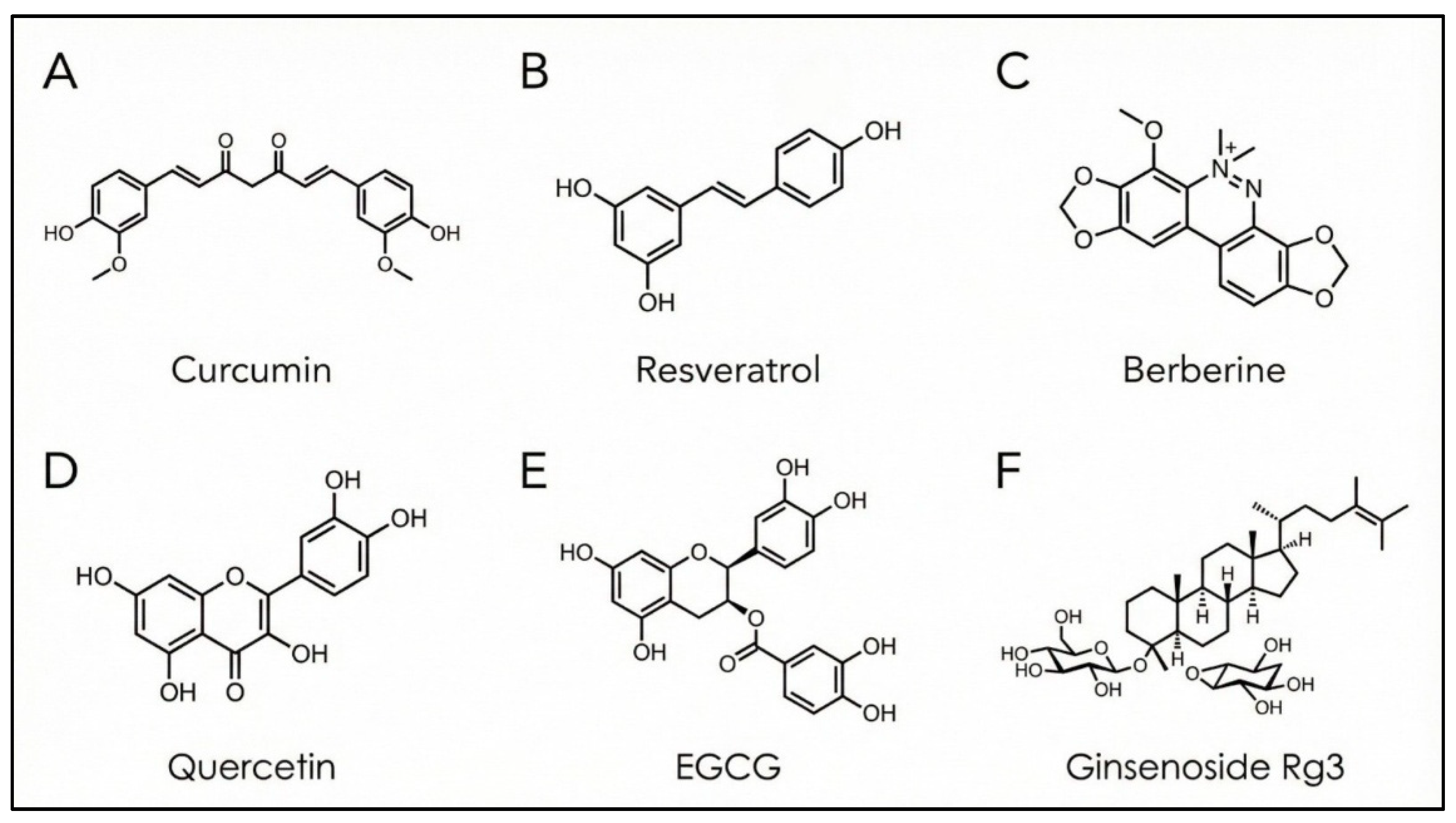
Appendix A. Chemical Structures of Representative Natural Products

Appendix B. Preclinical Evidence Supporting the Anticancer Activity of Natural Products in Gastric Cancer
| Natural Product | Experimental Model (Cell Line/Animal) | Dose/Concentration | Main Effects | Molecular Pathways | Reference |
|---|---|---|---|---|---|
| Curcumin | Gastric cancer cell lines (in vitro); preclinical animal models | Micromolar concentrations in vitro; various dosing in vivo (see source) | Inhibits proliferation, invasion, migration; induces apoptosis; modulates lncRNA and signaling pathways | PI3K/Akt/mTOR; NF-κB; modulation of lncRNAs | Wang B et al. (2024) [92] |
| Resveratrol | Gastric cancer cell models (in vitro) | Micromolar range (dose–response reported) | Suppresses proliferation; induces apoptosis; modulates pro-survival pathways | Inhibition of PI3K/AKT and associated pathways | Rojo D et al. (2022) [177] |
| Betulinic acid | Gastric cancer cells (in vitro); xenograft mouse model (in vivo) | Dose–response concentrations in vitro; in vivo administration schemes reported | Decreases proliferation; induces apoptosis; reduces EMT and metastatic potential | Mitochondrial apoptosis; EMT-associated signaling | Che Y et al. [82] |
| Ginsenoside Rg3 | Cisplatin-resistant gastric cancer cells (SGC-7901/DDP) in vitro + in vivo assays | Dosing varied (e.g., c-di-AMP + RG3 in combination; see study) | Synergistic inhibition of proliferation, migration, invasion, and EMT; reversal of chemoresistance | EMT suppression; stemness reduction; immune pathway modulation | Lu Z et al. [178] |
| Oridonin | GC cell lines (in vitro) | Micromolar concentrations (effective range reported) | Induces apoptosis; reduces proliferation; alters expression of apoptosis-associated genes | Caspase-dependent apoptosis, transcriptomic effects | Ren D et al. [179] |
| Berberine | BGC-823 gastric cancer cells (in vitro) | 5–40 μM in typical cellular assays | Suppresses proliferation and invasion; impacts survival and inflammatory signaling | NF-κB inhibition; apoptosis modulation | Tian Y et al. [180] |
| Quercetin | AGS and HGC-27 gastric cancer cell lines (in vitro) | 50–200 μM (AGS); 100–300 μM (HGC-27) | Reduces migration and invasion; inhibits EMT; suppresses proliferative signaling | MAPK/ERK; EMT regulation | Deng H et al. [90] |
| EGCG | Gastric cancer cells (in vitro); mouse tumor models (in vivo) | 5–40 μM (in vitro); 1.5 mg/day/mouse (in vivo) in some studies | Inhibits proliferation; increases apoptosis; reduces tumor growth in vivo | Apoptosis regulation; proliferative signaling pathways | Jang J et al. [181] |
| Celastrol | HGC-27, AGS gastric cancer cell models (in vitro) | 0.5 μM for 24 h (effective in cited study) | Suppresses cytokine release (TNF-α/IL-8); anti-inflammatory and cytotoxic effects | Biglycan (BGN) axis; inflammation–cell death interface | Guo D et al. [134] |
Appendix C. Preclinical Evidence Supporting the Anticancer Activity of Natural Products in Gastric Cancer
| Natural Product | Trial ID | Phase | Population | Intervention | Outcomes (Primary/Key) | Status |
|---|---|---|---|---|---|---|
| Curcumin | NCT02782949 | Phase IIb | Adults with chronic atrophic gastritis and/or gastric intestinal metaplasia (GC prevention setting) | Curcumin vs. placebo (with biomarker/lab assessments; QoL components reported in registry descriptions) | Prevention-oriented endpoints and biomarker/lesion-related assessments (registry-described) | Active, not recruiting |
| Berberine | NCT07129460 | Phase IV | Patients with gastric intestinal metaplasia (risk/precancer context) | Berberine hydrochloride vs. placebo | Efficacy and safety outcomes for gastric intestinal metaplasia (registry-described) | Not yet recruiting |
| Ginsenoside Rg3 | NCT01757366 | Phase II | Advanced gastric cancer (treatment setting) | Ginsenoside Rg3 + first-line chemotherapy vs. chemotherapy (as described in registry summaries/aggregators) | Safety and efficacy endpoints (registry-described); no results posted page identified | Unknown/no results posted |
| Curcumin (supportive care/cachexia context including GC) | NCT05856500 | (Not clearly displayed in public snippets; described as prospective controlled study in available documents) | Patients with advanced upper GI tumors including gastric cancer (III–IV) with early cachexia | Creatine + curcumin (oral) on top of basic nutritional support | Inflammation/metabolic and nutrition-related outcomes; QoL/prognosis-related endpoints (per protocol/ICF text) | Not yet recruiting (reported in curated summaries of GC-related curcumin trials) |
References
- Lin, J.-L.; Lin, J.-X.; Lin, G.-T.; Huang, C.-M.; Zheng, C.-H.; Xie, J.-W.; Lu, J.; Chen, Q.-Y.; Li, P. Global incidence and mortality trends of gastric cancer and predicted mortality of gastric cancer by 2035. BMC Public Health 2024, 24, 1763. [Google Scholar] [CrossRef] [PubMed]
- Singh, A. Global burden of five major types of gastrointestinal cancer. Gastroenterol. Rev. 2024, 19, 236–254. [Google Scholar] [CrossRef]
- Ilic, M.; Ilic, I. Epidemiology of stomach cancer. World J. Gastroenterol. 2022, 28, 1187–1203. [Google Scholar] [CrossRef]
- Zhang, Z.; Wang, J.; Song, N.; Shi, L.; Du, J. The global, regional, and national burden of stomach cancer among adolescents and young adults in 204 countries and territories, 1990–2019: A population-based study. Front. Public Health 2023, 11, 1079248. [Google Scholar] [CrossRef] [PubMed]
- The Cancer Genome Atlas Research Network. Comprehensive molecular characterization of gastric adenocarcinoma. Nature 2014, 513, 202–209. [Google Scholar] [CrossRef]
- Cristescu, R.; Lee, J.; Nebozhyn, M.; Kim, K.-M.; Ting, J.C.; Wong, S.S.; Liu, J.; Yue, Y.G.; Wang, J.; Yu, K.; et al. Molecular analysis of gastric cancer identifies subtypes associated with distinct clinical outcomes. Nat. Med. 2015, 21, 449–456. [Google Scholar] [CrossRef]
- Wang, Q.; Liu, G.; Hu, C. Molecular Classification of Gastric Adenocarcinoma. Gastroenterol. Res. 2019, 12, 275–282. [Google Scholar] [CrossRef]
- Ma, Y.; Jiang, Z.; Pan, L.; Zhou, Y.; Xia, R.; Liu, Z.; Yuan, L. Current development of molecular classifications of gastric cancer based on omics (Review). Int. J. Oncol. 2024, 65, 89. [Google Scholar] [CrossRef] [PubMed]
- Shi, D.; Yang, Z.; Cai, Y.; Li, H.; Lin, L.; Wu, D.; Zhang, S.; Guo, Q. Research advances in the molecular classification of gastric cancer. Cell. Oncol. 2024, 47, 1523–1536. [Google Scholar] [CrossRef]
- Zhang, W. TCGA divides gastric cancer into four molecular subtypes: Implications for individualized therapeutics. Chin. J. Cancer 2014, 33, 469. [Google Scholar] [CrossRef]
- Guan, W.-L.; He, Y.; Xu, R.-H. Gastric cancer treatment: Recent progress and future perspectives. J. Hematol. Oncol. 2023, 16, 57. [Google Scholar] [CrossRef]
- Ajani, J.A.; D’Amico, T.A.; Bentrem, D.J.; Chao, J.; Cooke, D.; Corvera, C.; Das, P.; Enzinger, P.C.; Enzler, T.; Fanta, P.; et al. Gastric Cancer, Version 2.2022, NCCN Clinical Practice Guidelines in Oncology. J. Natl. Compr. Cancer Netw. 2022, 20, 167–192. [Google Scholar] [CrossRef] [PubMed]
- Zhang, J.; Wang, G.; Xie, X.; Pan, W.; Dong, Q.; Zhang, N.; Dong, J.; Zhou, L.; Zhou, C.; Li, J.; et al. Treatment patterns and outcomes in advanced or metastatic gastric/gastroesophageal junction adenocarcinoma in China. Future Oncol. 2025, 21, 1179–1188. [Google Scholar] [CrossRef] [PubMed]
- Li, Z.; Shu, X.; Liu, X.; Li, Q.; Hu, Y.; Jia, B.; Song, M. Cellular and Molecular Mechanisms of Chemoresistance for Gastric Cancer. Int. J. Gen. Med. 2024, 17, 3779–3788. [Google Scholar] [CrossRef]
- Huang, W.-J.; Ruan, S.; Wen, F.; Lu, X.-N.; Gu, S.-P.; Chen, X.-X.; Liu, M.; Shu, P. Multidrug Resistance of Gastric Cancer: The Mechanisms and Chinese Medicine Reversal Agents. Cancer Manag. Res. 2020, 12, 12385–12394. [Google Scholar] [CrossRef]
- Chu, X.; Tian, W.; Ning, J.; Xiao, G.; Zhou, Y.; Wang, Z.; Zhai, Z.; Tanzhu, G.; Yang, J.; Zhou, R. Cancer stem cells: Advances in knowledge and implications for cancer therapy. Signal Transduct. Target. Ther. 2024, 9, 170. [Google Scholar] [CrossRef]
- Wang, M.; Xie, C. DNA Damage Repair and Current Therapeutic Approaches in Gastric Cancer: A Comprehensive Review. Front. Genet. 2022, 13, 931866. [Google Scholar] [CrossRef]
- Liu, J.; Yuan, Q.; Guo, H.; Guan, H.; Hong, Z.; Shang, D. Deciphering drug resistance in gastric cancer: Potential mechanisms and future perspectives. Biomed. Pharmacother. 2024, 173, 116310. [Google Scholar] [CrossRef]
- Lordick, F.; Carneiro, F.; Cascinu, S.; Fleitas, T.; Haustermans, K.; Piessen, G.; Vogel, A.; Smyth, E. Gastric cancer: ESMO Clinical Practice Guideline for diagnosis, treatment and follow-up. Ann. Oncol. 2022, 33, 1005–1020. [Google Scholar] [CrossRef]
- Morgagni, P.; Bencivenga, M.; Carneiro, F.; Cascinu, S.; Derks, S.; Di Bartolomeo, M.; Donohoe, C.; Eveno, C.; Gisbertz, S.; Grimminger, P.; et al. International consensus on the management of metastatic gastric cancer: Step by step in the foggy landscape. Gastric Cancer 2024, 27, 649–671, Erratum in Gastric Cancer 2024, 27, 672–674. [Google Scholar] [CrossRef] [PubMed]
- Kalidindi, A.V.; Dubashi, B.; Jayanthi, M.; Shewade, D. Efficacy and safety of capecitabine and oxaliplatin (CAPOX) treatment in colorectal cancer: An observational study from a tertiary cancer center in South India. Indian J. Cancer 2022, 59, 73–79. [Google Scholar] [CrossRef]
- Janjigian, Y.Y.; Shitara, K.; Moehler, M.; Garrido, M.; Salman, P.; Shen, L.; Wyrwicz, L.; Yamaguchi, K.; Skoczylas, T.; Campos Bragagnoli, A.; et al. First-line nivolumab plus chemotherapy versus chemotherapy alone for advanced gastric, gastro-oesophageal junction, and oesophageal adenocarcinoma (CheckMate 649): A randomised, open-label, phase 3 trial. Lancet 2021, 398, 27–40. [Google Scholar] [CrossRef]
- Hanahan, D. Hallmarks of Cancer: New Dimensions. Cancer Discov. 2022, 12, 31–46. [Google Scholar] [CrossRef] [PubMed]
- Shi, W.-J.; Gao, J.-B. Molecular mechanisms of chemoresistance in gastric cancer. World J. Gastrointest. Oncol. 2016, 8, 673. [Google Scholar] [CrossRef]
- Parang, K.; Paydary, K. Inflammation and detection: Rethinking the biomarker landscape in gastric cancer. World J. Clin. Oncol. 2025, 16, 109717. [Google Scholar] [CrossRef]
- Li, F.; Li, S.; Wang, X.; Liu, C.; Li, X.; Li, Y.; Liu, Y. To investigate the prognostic factors of stage Ⅰ-Ⅱ gastric cancer based on P53 mutation and tumor budding. Pathol. Res. Pract. 2022, 240, 154195. [Google Scholar] [CrossRef]
- Qian, S.; Wei, Z.; Yang, W.; Huang, J.; Yang, Y.; Wang, J. The role of BCL-2 family proteins in regulating apoptosis and cancer therapy. Front. Oncol. 2022, 12, 985363. [Google Scholar] [CrossRef]
- Yusufu, A.; Tuerdi, R.; Redati, D.; Rehemutula, A.; Zhao, Z.-L.; Wang, H.-J. Expression and clinical correlation of Survivin and PTEN in gastric cancer patients. Oncol. Lett. 2020, 20, 297. [Google Scholar] [CrossRef] [PubMed]
- Peng, F.; Liao, M.; Qin, R.; Zhu, S.; Peng, C.; Fu, L.; Chen, Y.; Han, B. Regulated cell death (RCD) in cancer: Key pathways and targeted therapies. Signal Transduct. Target. Ther. 2022, 7, 286. [Google Scholar] [CrossRef]
- Duan, Y.; Xu, Y.; Dou, Y.; Xu, D. Helicobacter pylori and gastric cancer: Mechanisms and new perspectives. J. Hematol. Oncol. 2025, 18, 10. [Google Scholar] [CrossRef] [PubMed]
- Chaithongyot, S.; Jantaree, P.; Sokolova, O.; Naumann, M. NF-κB in Gastric Cancer Development and Therapy. Biomedicines 2021, 9, 870. [Google Scholar] [CrossRef]
- Echizen, K.; Hirose, O.; Maeda, Y.; Oshima, M. Inflammation in gastric cancer: Interplay of the COX-2/prostaglandin E2 and Toll-like receptor/MyD88 pathways. Cancer Sci. 2016, 107, 391–397, Erratum in Cancer Sci. 2016, 107, 1059. [Google Scholar] [CrossRef] [PubMed]
- Cho, Y.; Kim, Y.K. Cancer Stem Cells as a Potential Target to Overcome Multidrug Resistance. Front. Oncol. 2020, 10, 764. [Google Scholar] [CrossRef]
- Xiong, J.; Zhang, T.; Lan, P.; Zhang, S.; Fu, L. Insight into the molecular mechanisms of gastric cancer stem cell in drug resistance of gastric cancer. Cancer Drug Resist. 2022, 5, 794–813. [Google Scholar] [CrossRef]
- Chen, X.; Chen, S.; Yu, D. Metabolic Reprogramming of Chemoresistant Cancer Cells and the Potential Significance of Metabolic Regulation in the Reversal of Cancer Chemoresistance. Metabolites 2020, 10, 289. [Google Scholar] [CrossRef]
- Duvivier, L.; Gerard, L.; Diaz, A.; Gillet, J.-P. Linking ABC transporters to the hallmarks of cancer. Trends Cancer 2024, 10, 124–134. [Google Scholar] [CrossRef]
- Newman, D.J.; Cragg, G.M. Natural Products as Sources of New Drugs from 1981 to 2014. J. Nat. Prod. 2016, 79, 629–661. [Google Scholar] [CrossRef] [PubMed]
- Newman, D.J.; Cragg, G.M. Natural Products as Sources of New Drugs over the Nearly Four Decades from 01/1981 to 09/2019. J. Nat. Prod. 2020, 83, 770–803. [Google Scholar] [CrossRef]
- Atanasov, A.G.; Zotchev, S.B.; Dirsch, V.M.; International Natural Product Sciences Taskforce; Supuran, C.T. Natural products in drug discovery: Advances and opportunities. Nat. Rev. Drug Discov. 2021, 20, 200–216. [Google Scholar] [CrossRef]
- Noor, F.; Tahir ul Qamar, M.; Ashfaq, U.A.; Albutti, A.; Alwashmi, A.S.S.; Aljasir, M.A. Network Pharmacology Approach for Medicinal Plants: Review and Assessment. Pharmaceuticals 2022, 15, 572. [Google Scholar] [CrossRef] [PubMed]
- Mao, Q.-Q.; Xu, X.-Y.; Shang, A.; Gan, R.-Y.; Wu, D.-T.; Atanasov, A.G.; Li, H.-B. Phytochemicals for the Prevention and Treatment of Gastric Cancer: Effects and Mechanisms. Int. J. Mol. Sci. 2020, 21, 570. [Google Scholar] [CrossRef]
- Islam, F.; Mitra, S.; Emran, T.B.; Khan, Z.; Nath, N.; Das, R.; Sharma, R.; Al Awadh, A.A.; Park, M.N.; Kim, B. Natural Small Molecules in Gastrointestinal Tract and Associated Cancers: Molecular Insights and Targeted Therapies. Molecules 2022, 27, 5686. [Google Scholar] [CrossRef]
- Zhao, M.; Wei, F.; Sun, G.; Wen, Y.; Xiang, J.; Su, F.; Zhan, L.; Nian, Q.; Chen, Y.; Zeng, J. Natural compounds targeting glycolysis as promising therapeutics for gastric cancer: A review. Front. Pharmacol. 2022, 13, 1004383. [Google Scholar] [CrossRef]
- Liang, Z.; Xu, Y.; Zhang, Y.; Zhang, X.; Song, J.; Qian, H.; Jin, J. Anticancer applications of phytochemicals in gastric cancer: Effects and molecular mechanism. Front. Pharmacol. 2023, 13, 1078090, Erratum in Front Pharmacol. 2024, 15, 1405513. [Google Scholar] [CrossRef]
- Nelson, A.; Karageorgis, G. Natural product-informed exploration of chemical space to enable bioactive molecular discovery. RSC Med. Chem. 2021, 12, 353–362. [Google Scholar] [CrossRef]
- Grigalunas, M.; Brakmann, S.; Waldmann, H. Chemical Evolution of Natural Product Structure. J. Am. Chem. Soc. 2022, 144, 3314–3329. [Google Scholar] [CrossRef] [PubMed]
- Harvey, A.L.; Edrada-Ebel, R.; Quinn, R.J. The re-emergence of natural products for drug discovery in the genomics era. Nat. Rev. Drug Discov. 2015, 14, 111–129. [Google Scholar] [CrossRef]
- Maeda, H.; Nakamura, H.; Fang, J. The EPR effect for macromolecular drug delivery to solid tumors: Improvement of tumor uptake, lowering of systemic toxicity, and distinct tumor imaging in vivo. Adv. Drug Deliv. Rev. 2013, 65, 71–79. [Google Scholar] [CrossRef] [PubMed]
- Wu, J. The Enhanced Permeability and Retention (EPR) Effect: The Significance of the Concept and Methods to Enhance Its Application. J. Pers. Med. 2021, 11, 771. [Google Scholar] [CrossRef] [PubMed]
- An, X.; Yu, W.; Liu, J.; Tang, D.; Yang, L.; Chen, X. Oxidative cell death in cancer: Mechanisms and therapeutic opportunities. Cell Death Dis. 2024, 15, 556. [Google Scholar] [CrossRef]
- Stine, Z.E.; Schug, Z.T.; Salvino, J.M.; Dang, C.V. Targeting cancer metabolism in the era of precision oncology. Nat. Rev. Drug Discov. 2022, 21, 141–162. [Google Scholar] [CrossRef]
- Ucaryilmaz Metin, C.; Ozcan, G. The HIF-1α as a Potent Inducer of the Hallmarks in Gastric Cancer. Cancers 2022, 14, 2711. [Google Scholar] [CrossRef] [PubMed]
- Tufail, M.; Hu, J.-J.; Liang, J.; He, C.-Y.; Wan, W.-D.; Huang, Y.-Q.; Jiang, C.-H.; Wu, H.; Li, N. Hallmarks of cancer resistance. iScience 2024, 27, 109979. [Google Scholar] [CrossRef]
- Zhou, C.; Wu, K.; Gu, M.; Yang, Y.; Tu, J.; Huang, X. Reversal of chemotherapy resistance in gastric cancer with traditional Chinese medicine as sensitizer: Potential mechanism of action. Front. Oncol. 2025, 15, 1524182. [Google Scholar] [CrossRef]
- Amjad, E.; Sokouti, B.; Asnaashari, S. A systematic review of anti-cancer roles and mechanisms of kaempferol as a natural compound. Cancer Cell Int. 2022, 22, 260. [Google Scholar] [CrossRef] [PubMed]
- Xu, Y.; Wang, J.; He, Z.; Rao, Z.; Zhang, Z.; Zhou, J.; Zhou, T.; Wang, H. A review on the effect of COX-2-mediated mechanisms on development and progression of gastric cancer induced by nicotine. Biochem. Pharmacol. 2024, 220, 115980. [Google Scholar] [CrossRef]
- Yu, B.; de Vos, D.; Guo, X.; Peng, S.; Xie, W.; Peppelenbosch, M.P.; Fu, Y.; Fuhler, G.M. IL-6 facilitates cross-talk between epithelial cells and tumor- associated macrophages in Helicobacter pylori-linked gastric carcinogenesis. Neoplasia 2024, 50, 100981. [Google Scholar] [CrossRef]
- Albano, F.; Severini, F.L.; Calice, G.; Zoppoli, P.; Falco, G.; Notarangelo, T. The role of the tumor microenvironment and inflammatory pathways in driving drug resistance in gastric cancer: A systematic review and meta-analysis. Biochim. Biophys. Acta (BBA)-Mol. Basis Dis. 2025, 1871, 167821. [Google Scholar] [CrossRef]
- Morgos, D.-T.; Stefani, C.; Miricescu, D.; Greabu, M.; Stanciu, S.; Nica, S.; Stanescu-Spinu, I.-I.; Balan, D.G.; Balcangiu-Stroescu, A.-E.; Coculescu, E.-C.; et al. Targeting PI3K/AKT/mTOR and MAPK Signaling Pathways in Gastric Cancer. Int. J. Mol. Sci. 2024, 25, 1848. [Google Scholar] [CrossRef] [PubMed]
- Lei, Z.-N.; Teng, Q.-X.; Tian, Q.; Chen, W.; Xie, Y.; Wu, K.; Zeng, Q.; Zeng, L.; Pan, Y.; Chen, Z.-S.; et al. Signaling pathways and therapeutic interventions in gastric cancer. Signal Transduct. Target. Ther. 2022, 7, 358. [Google Scholar] [CrossRef]
- Ozyerli-Goknar, E.; Bagci-Onder, T. Epigenetic Deregulation of Apoptosis in Cancers. Cancers 2021, 13, 3210. [Google Scholar] [CrossRef]
- Campbell, K.J.; Tait, S.W.G. Targeting BCL-2 regulated apoptosis in cancer. Open Biol. 2018, 8, 180002. [Google Scholar] [CrossRef]
- Tsamandas, A.C.; Kardamakis, D.; Tsiamalos, P.; Liava, A.; Tzelepi, V.; Vassiliou, V.; Petsas, T.; Vagenas, K.; Zolota, V.; Scopa, C.D. The potential role of Bcl-2 expression, apoptosis and cell proliferation (Ki-67 expression) in cases of gastric carcinoma and correlation with classic prognostic factors and patient outcome. Anticancer Res. 2009, 29, 703–709. [Google Scholar]
- Neophytou, C.M.; Trougakos, I.P.; Erin, N.; Papageorgis, P. Apoptosis Deregulation and the Development of Cancer Multi-Drug Resistance. Cancers 2021, 13, 4363. [Google Scholar] [CrossRef]
- Kazemi, N.; Beigi Shahrestani, S. Effect of Saffron Extract on Expression of Bax and Bcl-2 Genes in Gastric Adenocarcinoma Cell Line (AGS). Gene Cell Tissue 2018, 5, e63608. [Google Scholar] [CrossRef]
- Ida, S.; Watanabe, M.; Baba, H. Chronic inflammation and gastrointestinal cancer. J. Cancer Metastasis Treat. 2015, 1, 138. [Google Scholar] [CrossRef]
- Jaroenlapnopparat, A.; Bhatia, K.; Coban, S. Inflammation and Gastric Cancer. Diseases 2022, 10, 35. [Google Scholar] [CrossRef]
- Mao, H.; Zhao, X.; Sun, S. NF-κB in inflammation and cancer. Cell. Mol. Immunol. 2025, 22, 811–839. [Google Scholar] [CrossRef] [PubMed]
- Hashem, S.; Ali, T.A.; Akhtar, S.; Nisar, S.; Sageena, G.; Ali, S.; Al-Mannai, S.; Therachiyil, L.; Mir, R.; Elfaki, I.; et al. Targeting cancer signaling pathways by natural products: Exploring promising anti-cancer agents. Biomed. Pharmacother. 2022, 150, 113054. [Google Scholar] [CrossRef] [PubMed]
- Wang, Q.; Xue, F.; Assaraf, Y.G.; Lin, Y. Harnessing Natural Products to Surmount Drug Resistance in Gastric Cancer: Mechanisms and Therapeutic Perspectives. Int. J. Biol. Sci. 2025, 21, 4604–4628. [Google Scholar] [CrossRef]
- Zheng, H.-C. The molecular mechanisms of chemoresistance in cancers. Oncotarget 2017, 8, 59950–59964. [Google Scholar] [CrossRef] [PubMed]
- Jiang, M.; Zhang, K.; Zhang, Z.; Zeng, X.; Huang, Z.; Qin, P.; Xie, Z.; Cai, X.; Ashrafizadeh, M.; Tian, Y.; et al. PI3K/AKT/mTOR Axis in Cancer: From Pathogenesis to Treatment. MedComm 2025, 6, e70295. [Google Scholar] [CrossRef]
- Baghery Saghchy Khorasani, A.; Pourbagheri-Sigaroodi, A.; Pirsalehi, A.; Safaroghli-azar, A.; Zali, M.R.; Bashash, D. The PI3K/Akt/mTOR signaling pathway in gastric cancer; from oncogenic variations to the possibilities for pharmacologic interventions. Eur. J. Pharmacol. 2021, 898, 173983. [Google Scholar] [CrossRef]
- Chiurillo, M.A. Role of the Wnt/β-catenin pathway in gastric cancer: An in-depth literature review. World J. Exp. Med. 2015, 5, 84. [Google Scholar] [CrossRef]
- Lecarpentier, Y.; Schussler, O.; Hébert, J.-L.; Vallée, A. Multiple Targets of the Canonical WNT/β-Catenin Signaling in Cancers. Front. Oncol. 2019, 9, 1248. [Google Scholar] [CrossRef]
- Song, Y.; Li, Z.; Liu, X.; Wang, R.; Li, L.; Zhang, Q. The Wnt/β-catenin and PI3K/Akt signaling pathways promote EMT in gastric cancer by epigenetic regulation via H3 lysine 27 acetylation. Tumor Biol. 2017, 39, 101042831771261. [Google Scholar] [CrossRef]
- Vogler, M.; Braun, Y.; Smith, V.M.; Westhoff, M.-A.; Pereira, R.S.; Pieper, N.M.; Anders, M.; Callens, M.; Vervliet, T.; Abbas, M.; et al. The BCL2 family: From apoptosis mechanisms to new advances in targeted therapy. Signal Transduct. Target. Ther. 2025, 10, 91. [Google Scholar] [CrossRef] [PubMed]
- Yang, P.-H.; Wei, Y.-N.; Xiao, B.-J.; Li, S.-Y.; Li, X.-L.; Yang, L.-J.; Pan, H.-F.; Chen, G.-X. Curcumin for gastric cancer: Mechanism prediction via network pharmacology, docking, and in vitro experiments. World J. Gastrointest. Oncol. 2024, 16, 3635–3650. [Google Scholar] [CrossRef]
- Liu, W.; Wang, Y.; Xia, L.; Li, J. Research Progress of Plant-Derived Natural Products against Drug-Resistant Cancer. Nutrients 2024, 16, 797. [Google Scholar] [CrossRef] [PubMed]
- Ren, J.; Yan, G.; Yang, L.; Kong, L.; Guan, Y.; Sun, H.; Liu, C.; Liu, L.; Han, Y.; Wang, X. Cancer chemoprevention: Signaling pathways and strategic approaches. Signal Transduct. Target. Ther. 2025, 10, 113. [Google Scholar] [CrossRef]
- Warias, P.; Plewa, P.; Poniewierska-Baran, A. Resveratrol, Piceatannol, Curcumin, and Quercetin as Therapeutic Targets in Gastric Cancer—Mechanisms and Clinical Implications for Natural Products. Molecules 2024, 30, 3. [Google Scholar] [CrossRef] [PubMed]
- Chen, Y.; Wu, X.; Liu, C.; Zhou, Y. Betulinic acid triggers apoptosis and inhibits migration and invasion of gastric cancer cells by impairing EMT progress. Cell Biochem. Funct. 2020, 38, 702–709. [Google Scholar] [CrossRef] [PubMed]
- Cui, D.; Zhang, C.; Zhang, L.; Zheng, J.; Wang, J.; He, L.; Jin, H.; Kang, Q.; Zhang, Y.; Li, N.; et al. Natural anti-cancer products: Insights from herbal medicine. Chin. Med. 2025, 20, 82. [Google Scholar] [CrossRef] [PubMed]
- Fakhri, S.; Moradi, S.Z.; Yarmohammadi, A.; Narimani, F.; Wallace, C.E.; Bishayee, A. Modulation of TLR/NF-κB/NLRP Signaling by Bioactive Phytocompounds: A Promising Strategy to Augment Cancer Chemotherapy and Immunotherapy. Front. Oncol. 2022, 12, 834072. [Google Scholar] [CrossRef]
- Xu, M.; Ren, L.; Fan, J.; Huang, L.; Zhou, L.; Li, X.; Ye, X. Berberine inhibits gastric cancer development and progression by regulating the JAK2/STAT3 pathway and downregulating IL-6. Life Sci. 2022, 290, 120266. [Google Scholar] [CrossRef]
- Kou, Y.; Tong, B.; Wu, W.; Liao, X.; Zhao, M. Berberine Improves Chemo-Sensitivity to Cisplatin by Enhancing Cell Apoptosis and Repressing PI3K/AKT/mTOR Signaling Pathway in Gastric Cancer. Front. Pharmacol. 2020, 11, 616251. [Google Scholar] [CrossRef]
- Xie, X.; Wei, Y. A review on anti-cancer properties of quercetin in gastric cancer. Front. Pharmacol. 2025, 16, 1563229. [Google Scholar] [CrossRef]
- Li, Y.; Zhao, B.; Peng, J.; Tang, H.; Wang, S.; Peng, S.; Ye, F.; Wang, J.; Ouyang, K.; Li, J.; et al. Inhibition of NF-κB signaling unveils novel strategies to overcome drug resistance in cancers. Drug Resist. Updates 2024, 73, 101042. [Google Scholar] [CrossRef]
- Jiang, Y.; Fang, B.; Xu, B.; Chen, L. The RAS-PI3K-AKT-NF-κB pathway transcriptionally regulates the expression of BCL2 family and IAP family genes and inhibits apoptosis in fibrous epulis. J. Clin. Lab. Anal. 2020, 34, e23102. [Google Scholar] [CrossRef]
- Deng, H.; Xiao, Q.; Xu, X.; Zhang, L.; Zhang, Y. Quercetin Inhibits Gastric Cancer Progression via FAM198B/MAPK Pathway Modulation. Pharmgenomics Pers. Med. 2025, 18, 115–141. [Google Scholar] [CrossRef]
- Li, W.; Zhou, Y.; Yang, J.; Li, H.; Zhang, H.; Zheng, P. Curcumin induces apoptotic cell death and protective autophagy in human gastric cancer cells. Oncol. Rep. 2017, 37, 3459–3466. [Google Scholar] [CrossRef]
- Wang, B.-S.; Zhang, C.-L.; Cui, X.; Li, Q.; Yang, L.; He, Z.-Y.; Yang, Z.; Zeng, M.-M.; Cao, N. Curcumin inhibits the growth and invasion of gastric cancer by regulating long noncoding RNA AC022424.2. World J. Gastrointest. Oncol. 2024, 16, 1437–1452. [Google Scholar] [CrossRef]
- Xue, X.; Yu, J.-L.; Sun, D.-Q.; Kong, F.; Qu, X.-J.; Zou, W.; Wu, J.; Wang, R.-M. Curcumin Induces Apoptosis in SGC-7901 Gastric Adenocarcinoma Cells via Regulation of Mitochondrial Signaling Pathways. Asian Pac. J. Cancer Prev. 2014, 15, 3987–3992. [Google Scholar] [CrossRef]
- Imran, M.; Saeed, F.; Alsagaby, S.A.; Imran, A.; Ahmad, I.; El Ghorab, A.H.; Abdelgawad, M.A.; Qaisrani, T.B.; Mehmood, T.; Umar, M.; et al. Curcumin: Recent updates on gastrointestinal cancers. CyTA-J. Food 2023, 21, 502–513. [Google Scholar] [CrossRef]
- Zhou, S.; Yao, D.; Guo, L.; Teng, L. Curcumin suppresses gastric cancer by inhibiting gastrin-mediated acid secretion. FEBS Open Bio 2017, 7, 1078–1084. [Google Scholar] [CrossRef] [PubMed]
- Yu, L.-L. Curcumin reverses chemoresistance of human gastric cancer cells by downregulating the NF-κB transcription factor. Oncol. Rep. 2011, 26, 1197–1203. [Google Scholar] [CrossRef]
- Ren, M.; Zhou, X.; Gu, M.; Jiao, W.; Yu, M.; Wang, Y.; Liu, S.; Yang, J.; Ji, F. Resveratrol synergizes with cisplatin in antineoplastic effects against AGS gastric cancer cells. Oncol. Rep. 2020, 44, 1605–1615. [Google Scholar] [CrossRef]
- Brockmueller, A.; Buhrmann, C.; Shayan, P.; Shakibaei, M. Resveratrol induces apoptosis by modulating the reciprocal crosstalk between p53 and Sirt-1 in the CRC tumor microenvironment. Front. Immunol. 2023, 14, 1225530. [Google Scholar] [CrossRef] [PubMed]
- Wu, X.; Xu, Y.; Zhu, B.; Liu, Q.; Yao, Q.; Zhao, G. Resveratrol induces apoptosis in SGC-7901 gastric cancer cells. Oncol. Lett. 2018, 16, 2949–2956. [Google Scholar] [CrossRef]
- Zhang, X.; Hu, J.; Chen, Y. Betulinic acid and the pharmacological effects of tumor suppression. Mol. Med. Rep. 2016, 14, 4489–4495. [Google Scholar] [CrossRef]
- Rzeski, W.; Stepulak, A.; Szymański, M.; Sifringer, M.; Kaczor, J.; Wejksza, K.; Zdzisińska, B.; Kandefer-Szerszeń, M. Betulinic acid decreases expression of bcl-2 and cyclin D1, inhibits proliferation, migration and induces apoptosis in cancer cells. Naunyn-Schmiedeb. Arch. Pharmacol. 2006, 374, 11–20. [Google Scholar] [CrossRef]
- Sun, M.; Ye, Y.; Xiao, L.; Duan, X.; Zhang, Y.; Zhang, H. Anticancer effects of ginsenoside Rg3 (Review). Int. J. Mol. Med. 2017, 39, 507–518. [Google Scholar] [CrossRef]
- Wang, X.; Ding, M.; Zhao, H.; Zhou, M.; Lu, X.; Sun, Y.; Zhang, Q.; Zhao, Y.; Wang, R. Stereospecificity of Ginsenoside AD-1 and AD-2 Showed Anticancer Activity via Inducing Mitochondrial Dysfunction and Reactive Oxygen Species Mediate Cell Apoptosis. Molecules 2023, 28, 6698. [Google Scholar] [CrossRef]
- Lv, S.; Chen, X.; Chen, Y.; Gong, D.; Mao, G.; Shen, C.; Xia, T.; Cheng, J.; Luo, Z.; Cheng, Y.; et al. Ginsenoside Rg3 induces apoptosis and inhibits proliferation by down-regulating TIGAR in rats with gastric precancerous lesions. BMC Complement. Med. Ther. 2022, 22, 188, Erratum in BMC Complement. Med. Ther. 2023, 23, 65. [Google Scholar] [CrossRef] [PubMed]
- Wang, Y.; Lv, H.; Dai, C.; Wang, X.; Yin, Y.; Chen, Z. Oridonin Dose-Dependently Modulates the Cell Senescence and Apoptosis of Gastric Cancer Cells. Evid.-Based Complement. Altern. Med. 2021, 2021, 5023536. [Google Scholar] [CrossRef]
- Sun, K.-W. Oridonin induces apoptosis in gastric cancer through Apaf-1, cytochrome c and caspase-3 signaling pathway. World J. Gastroenterol. 2012, 18, 7166. [Google Scholar] [CrossRef]
- Liu, H.; Qian, C.; Shen, Z. Anti-tumor activity of oridonin on SNU-5 subcutaneous xenograft model via regulation of c-Met pathway. Tumor Biol. 2014, 35, 9139–9146. [Google Scholar] [CrossRef]
- Zubair, H.; Khan, M.A.; Anand, S.; Srivastava, S.K.; Singh, S.; Singh, A.P. Modulation of the tumor microenvironment by natural agents: Implications for cancer prevention and therapy. Semin. Cancer Biol. 2022, 80, 237–255. [Google Scholar] [CrossRef]
- Roy, S.; Shaw, R.; Pandey, A.; Trigun, S.K. Natural products as therapeutic interventions for inflammation-mediated cancer. Discov. Oncol. 2025, 16, 2305. [Google Scholar] [CrossRef] [PubMed]
- Pennel, K.A.F.; Park, J.H.; McMillan, D.C.; Roseweir, A.K.; Edwards, J. Signal interaction between the tumour and inflammatory cells in patients with gastrointestinal cancer: Implications for treatment. Cell. Signal. 2019, 54, 81–90. [Google Scholar] [CrossRef] [PubMed]
- Hao, M.; Zhang, C. Pre-clinical study of curcumin in the treatment of gastric Cancer. J. Funct. Foods 2025, 125, 106677. [Google Scholar] [CrossRef]
- Zhu, B.-H. (-)-Epigallocatechin-3-gallate inhibits VEGF expression induced by IL-6 бvia Stat3 in gastric cancer. World J. Gastroenterol. 2011, 17, 2315. [Google Scholar] [CrossRef]
- Hsieh, H.-L.; Yu, M.-C.; Cheng, L.-C.; Chu, M.-Y.; Huang, T.-H.; Yeh, T.-S.; Tsai, M.-M. Quercetin exerts anti-inflammatory effects via inhibiting tumor necrosis factor-α-induced matrix metalloproteinase-9 expression in normal human gastric epithelial cells. World J. Gastroenterol. 2022, 28, 1139–1158. [Google Scholar] [CrossRef]
- Kang, Y.; Hu, W.; Bai, E.; Zheng, H.; Liu, Z.; Wu, J.; Jin, R.; Zhao, C.; Liang, G. Curcumin sensitizes human gastric cancer cells to 5-fluorouracil through inhibition of the NFκB survival-signaling pathway. Onco. Targets Ther. 2016, 9, 7373–7384. [Google Scholar] [CrossRef] [PubMed]
- Zhu, Y.; Xie, N.; Chai, Y.; Nie, Y.; Liu, K.; Liu, Y.; Yang, Y.; Su, J.; Zhang, C. Apoptosis Induction, a Sharp Edge of Berberine to Exert Anti-Cancer Effects, Focus on Breast, Lung, and Liver Cancer. Front. Pharmacol. 2022, 13, 803717. [Google Scholar] [CrossRef]
- Zhang, W.; Cui, N.; Ye, J.; Yang, B.; Sun, Y.; Kuang, H. Curcumin’s prevention of inflammation-driven early gastric cancer and its molecular mechanism. Chin. Herb. Med. 2022, 14, 244–253. [Google Scholar] [CrossRef] [PubMed]
- Bianchi, G.; Ravera, S.; Traverso, C.; Amaro, A.; Piaggio, F.; Emionite, L.; Bachetti, T.; Pfeffer, U.; Raffaghello, L. Curcumin induces a fatal energetic impairment in tumor cells in vitro and in vivo by inhibiting ATP-synthase activity. Carcinogenesis 2018, 39, 1141–1150. [Google Scholar] [CrossRef]
- Peng, Y.; Ao, M.; Dong, B.; Jiang, Y.; Yu, L.; Chen, Z.; Hu, C.; Xu, R. Anti-Inflammatory Effects of Curcumin in the Inflammatory Diseases: Status, Limitations and Countermeasures. Drug Des. Dev. Ther. 2021, 15, 4503–4525. [Google Scholar] [CrossRef]
- Hasanzadeh, S.; Read, M.I.; Bland, A.R.; Majeed, M.; Jamialahmadi, T.; Sahebkar, A. Curcumin: An inflammasome silencer. Pharmacol. Res. 2020, 159, 104921. [Google Scholar] [CrossRef] [PubMed]
- Tu, S.P.; Jin, H.; Shi, J.D.; Zhu, L.M.; Suo, Y.; Lu, G.; Liu, A.; Wang, T.C.; Yang, C.S. Curcumin Induces the Differentiation of Myeloid-Derived Suppressor Cells and Inhibits Their Interaction with Cancer Cells and Related Tumor Growth. Cancer Prev. Res. 2012, 5, 205–215. [Google Scholar] [CrossRef]
- Tian, S.; Liao, L.; Zhou, Q.; Huang, X.; Zheng, P.; Guo, Y.; Deng, T.; Tian, X. Curcumin inhibits the growth of liver cancer by impairing myeloid-derived suppressor cells in murine tumor tissues. Oncol. Lett. 2021, 21, 286. [Google Scholar] [CrossRef]
- Pandey, M.K.; Sung, B.; Kunnumakkara, A.B.; Sethi, G.; Chaturvedi, M.M.; Aggarwal, B.B. Berberine Modifies Cysteine 179 of IκBα Kinase, Suppresses Nuclear Factor-κB–Regulated Antiapoptotic Gene Products, and Potentiates Apoptosis. Cancer Res. 2008, 68, 5370–5379. [Google Scholar] [CrossRef]
- Wang, Y.; Zhou, M.; Shang, D. Berberine inhibits human gastric cancer cell growth via deactivation of p38/JNK pathway, induction of mitochondrial-mediated apoptosis, caspase activation and NF-κB inhibition. J. Buon 2020, 25, 314–318. [Google Scholar]
- Liu, Y.; Liu, X.; Zhang, N.; Yin, M.; Dong, J.; Zeng, Q.; Mao, G.; Song, D.; Liu, L.; Deng, H. Berberine diminishes cancer cell PD-L1 expression and facilitates antitumor immunity via inhibiting the deubiquitination activity of CSN5. Acta Pharm. Sin. B 2020, 10, 2299–2312. [Google Scholar] [CrossRef]
- Almatroodi, S.A.; Alsahli, M.A.; Rahmani, A.H. Berberine: An Important Emphasis on Its Anticancer Effects through Modulation of Various Cell Signaling Pathways. Molecules 2022, 27, 5889. [Google Scholar] [CrossRef]
- Li, D.; Cao, D.; Sun, Y.; Cui, Y.; Zhang, Y.; Jiang, J.; Cao, X. The roles of epigallocatechin gallate in the tumor microenvironment, metabolic reprogramming, and immunotherapy. Front. Immunol. 2024, 15, 1331641. [Google Scholar] [CrossRef] [PubMed]
- Yan, C.; Wang, G. Advances in research on flavonoids in tumor immunotherapy (Review). Mol. Med. Rep. 2025, 31, 150. [Google Scholar] [CrossRef] [PubMed]
- Deng, H.; Wei, F.; Han, W.; Li, Y.; Xu, X.; Zhang, L.; Zhang, Y. Synergistic chemotherapy and immunomodulatory effects of Quercetin in cancer: A review. Front. Immunol. 2025, 16, 1547992. [Google Scholar] [CrossRef] [PubMed]
- Aghababaei, F.; Hadidi, M. Recent Advances in Potential Health Benefits of Quercetin. Pharmaceuticals 2023, 16, 1020. [Google Scholar] [CrossRef]
- Jing, L.; Lin, J.; Yang, Y.; Tao, L.; Li, Y.; Liu, Z.; Zhao, Q.; Diao, A. Quercetin inhibiting the PD-1/PD-L1 interaction for immune-enhancing cancer chemopreventive agent. Phytother. Res. 2021, 35, 6441–6451. [Google Scholar] [CrossRef]
- Zheng, H.; Wang, G.; Liu, M.; Cheng, H. Traditional Chinese medicine inhibits PD-1/PD-L1 axis to sensitize cancer immunotherapy: A literature review. Front. Oncol. 2023, 13, 1168226. [Google Scholar] [CrossRef] [PubMed]
- Talib, W.H.; Awajan, D.; Alqudah, A.; Alsawwaf, R.; Althunibat, R.; Abu AlRoos, M.; Al Safadi, A.; Abu Asab, S.; Hadi, R.W.; Al Kury, L.T. Targeting Cancer Hallmarks with Epigallocatechin Gallate (EGCG): Mechanistic Basis and Therapeutic Targets. Molecules 2024, 29, 1373. [Google Scholar] [CrossRef] [PubMed]
- Chen, S.-R.; Dai, Y.; Zhao, J.; Lin, L.; Wang, Y.; Wang, Y. A Mechanistic Overview of Triptolide and Celastrol, Natural Products from Tripterygium wilfordii Hook F. Front. Pharmacol. 2018, 9, 104. [Google Scholar] [CrossRef]
- Guo, D.; Zhang, W.; Yang, H.; Bi, J.; Xie, Y.; Cheng, B.; Wang, Y.; Chen, S. Celastrol Induces Necroptosis and Ameliorates Inflammation via Targeting Biglycan in Human Gastric Carcinoma. Int. J. Mol. Sci. 2019, 20, 5716. [Google Scholar] [CrossRef] [PubMed]
- Berdiaki, A.; Giatagana, E.-M.; Tzanakakis, G.; Nikitovic, D. The Landscape of Small Leucine-Rich Proteoglycan Impact on Cancer Pathogenesis with a Focus on Biglycan and Lumican. Cancers 2023, 15, 3549. [Google Scholar] [CrossRef]
- Wang, C.; Dai, S.; Zhao, X.; Zhang, Y.; Gong, L.; Fu, K.; Ma, C.; Peng, C.; Li, Y. Celastrol as an emerging anticancer agent: Current status, challenges and therapeutic strategies. Biomed. Pharmacother. 2023, 163, 114882. [Google Scholar] [CrossRef]
- Yokoo, H.; Koma, Y.-I.; Nomura, N.; Torigoe, R.; Omori, M.; Nakanishi, T.; Miyako, S.; Nakanishi, T.; Kodama, T.; Shigeoka, M.; et al. BGN Secreted by Cancer-Associated Fibroblasts Promotes Esophageal Squamous Cell Carcinoma Progression via Activation of TLR4-Mediated Erk and NF-κB Signaling Pathways. Int. J. Mol. Sci. 2025, 26, 12024. [Google Scholar] [CrossRef]
- Reytor-González, C.; Jiménez-Flores, E.; González, N.; Simancas-Racines, D. Redefining Chemoresistance: Natural Bioactives as Molecular Modulators at the Cancer–Tumor Microenvironment Interface. Int. J. Mol. Sci. 2025, 26, 8037. [Google Scholar] [CrossRef]
- Zou, J.-Y.; Chen, Q.-L.; Luo, X.-C.; Damdinjav, D.; Abdelmohsen, U.R.; Li, H.-Y.; Battulga, T.; Chen, H.-B.; Wang, Y.-Q.; Zhang, J.-Y. Natural products reverse cancer multidrug resistance. Front. Pharmacol. 2024, 15, 1348076. [Google Scholar] [CrossRef]
- Xiao, H.; Zheng, Y.; Ma, L.; Tian, L.; Sun, Q. Clinically-Relevant ABC Transporter for Anti-Cancer Drug Resistance. Front. Pharmacol. 2021, 12, 648407. [Google Scholar] [CrossRef]
- Otaegi-Ugartemendia, M.; Matheu, A.; Carrasco-Garcia, E. Impact of Cancer Stem Cells on Therapy Resistance in Gastric Cancer. Cancers 2022, 14, 1457. [Google Scholar] [CrossRef]
- Huang, D.; Duan, H.; Huang, H.; Tong, X.; Han, Y.; Ru, G.; Qu, L.; Shou, C.; Zhao, Z. Cisplatin resistance in gastric cancer cells is associated with HER2 upregulation-induced epithelial-mesenchymal transition. Sci. Rep. 2016, 6, 20502. [Google Scholar] [CrossRef] [PubMed]
- Rocha, C.R.R.; Silva, M.M.; Quinet, A.; Cabral-Neto, J.B.; Menck, C.F.M. DNA repair pathways and cisplatin resistance: An intimate relationship. Clinics 2018, 73, e478s. [Google Scholar] [CrossRef]
- Singh, S.S. Targeting the PI3K/Akt signaling pathway in gastric carcinoma: A reality for personalized medicine? World J. Gastroenterol. 2015, 21, 12261. [Google Scholar] [CrossRef]
- Keyvani-Ghamsari, S.; Khorsandi, K.; Gul, A. Curcumin effect on cancer cells’ multidrug resistance: An update. Phytother. Res. 2020, 34, 2534–2556. [Google Scholar] [CrossRef]
- Yang, C.; Mai, Z.; Liu, C.; Yin, S.; Cai, Y.; Xia, C. Natural Products in Preventing Tumor Drug Resistance and Related Signaling Pathways. Molecules 2022, 27, 3513. [Google Scholar] [CrossRef]
- Kozak, J.; Forma, A.; Czeczelewski, M.; Kozyra, P.; Sitarz, R.; Radzikowska-Büchner, E.; Sitarz, M.; Baj, J. Inhibition or Reversal of the Epithelial-Mesenchymal Transition in Gastric Cancer: Pharmacological Approaches. Int. J. Mol. Sci. 2020, 22, 277. [Google Scholar] [CrossRef]
- He, B.; Wei, W.; Liu, J.; Xu, Y.; Zhao, G. Synergistic anticancer effect of curcumin and chemotherapy regimen FP in human gastric cancer MGC-803 cells. Oncol. Lett. 2017, 14, 3387–3394. [Google Scholar] [CrossRef]
- Ghorbani, H.; Amini, K.; Jamali, B.; Tarighi, S.; Nabiee, M.; Esfandi, A.; Damrodi, Z. Resveratrol Enhances Chemosensitivity of AGS Gastric Cancer Cells to Doxorubicin: Focus on Drug Resistance Mechanisms. Compr. Health Biomed. Stud. 2025, 3, e163408. [Google Scholar] [CrossRef]
- Huang, Y.; Wu, J.; Zheng, L.; Huang, G.; Li, B.; Gan, L.; Yao, L. Ginsenoside Rk1 Enhances Chemosensitivity of Gastric Cancer Through Activating the AMPK/mTOR Pathway. Dose-Response 2025, 23, 15593258251349653. [Google Scholar] [CrossRef] [PubMed]
- Macarthur, M.; Hold, G.L.; El-Omar, E.M. Inflammation and Cancer II. Role of chronic inflammation and cytokine gene polymorphisms in the pathogenesis of gastrointestinal malignancy. Am. J. Physiol.-Gastrointest. Liver Physiol. 2004, 286, G515–G520. [Google Scholar] [CrossRef]
- Shan, J.; Rodgers, K.; Lai, C.-T.; Sutherland, S. Challenges in natural health product research: The importance of standardization. Proc. West. Pharmacol. Soc. 2007, 50, 24–30. [Google Scholar]
- Paller, C.J.; Denmeade, S.R.; Carducci, M.A. Challenges of Conducting Clinical Trials of Natural Products to Combat Cancer. Clin. Adv. Hematol. Oncol. 2016, 14, 447. [Google Scholar] [PubMed]
- Li, X.; Zhang, C.-T.; Ma, W.; Xie, X.; Huang, Q. Oridonin: A Review of Its Pharmacology, Pharmacokinetics and Toxicity. Front. Pharmacol. 2021, 12, 645824. [Google Scholar] [CrossRef]
- Orzetti, S.; Baldo, P. Toxicity Derived from Interaction between Natural Compounds and Cancer Therapeutic Drugs Metabolized by CYP3A4: Lessons Learned from Two Clinical Case Reports. Int. J. Mol. Sci. 2023, 24, 15976. [Google Scholar] [CrossRef]
- Wong, C.N.; Bin Liew, K.; Lim, Y.M.; Chew, Y.-L.; Chua, A.-L.; Yang, S.-B.; Lee, S.-K. Development and Characterization of EGCG-Loaded TPGS/Poloxamer 407 Micelles with Evaluation of In Vitro Drug Release and In Vivo Pharmacokinetics and Tolerability Observations Following Oral Administration. Pharmaceutics 2025, 17, 1441. [Google Scholar] [CrossRef]
- Wang, Y.; Mou, C.; Hu, Y.; He, Z.; Cho, J.Y.; Kim, J.H. In vivo metabolism, pharmacokinetics, and pharmacological activities of ginsenosides from ginseng. J. Ginseng Res. 2025, 49, 479–487. [Google Scholar] [CrossRef] [PubMed]
- Salla, M.; Karaki, N.; El Kaderi, B.; Ayoub, A.J.; Younes, S.; Chahla, M.N.A.; Baksh, S.; El Khatib, S. Enhancing the Bioavailability of Resveratrol: Combine It, Derivatize It, or Encapsulate It? Pharmaceutics 2024, 16, 569. [Google Scholar] [CrossRef]
- Kroon, M.A.G.M.; van Laarhoven, H.W.M.; Swart, E.L.; van Tellingen, O.; Kemper, E.M. A pharmacokinetic study and critical reappraisal of curcumin formulations enhancing bioavailability. iScience 2025, 28, 112575. [Google Scholar] [CrossRef] [PubMed]
- Kroon, M.A.G.M.; Berbee, J.K.; Majait, S.; Swart, E.L.; van Tellingen, O.; van Laarhoven, H.W.M.; Kemper, E.M. Non-therapeutic plasma levels in individuals utilizing curcumin supplements in daily life. Front. Nutr. 2023, 10, 1267035. [Google Scholar] [CrossRef]
- Krzyżek, P.; Marinacci, B.; Vitale, I.; Grande, R. Extracellular Vesicles of Probiotics: Shedding Light on the Biological Activity and Future Applications. Pharmaceutics 2023, 15, 522. [Google Scholar] [CrossRef] [PubMed]
- Breden, S.; Hinterwimmer, F.; Consalvo, S.; Neumann, J.; Knebel, C.; von Eisenhart-Rothe, R.; Burgkart, R.H.; Lenze, U. Deep Learning-Based Detection of Bone Tumors around the Knee in X-rays of Children. J. Clin. Med. 2023, 12, 5960. [Google Scholar] [CrossRef]
- Micklus, A.; Muntner, S. Biopharma deal-making in 2016. Nat. Rev. Drug Discov. 2017, 16, 161–162. [Google Scholar] [CrossRef] [PubMed]
- Alanazi, J.S.; Alqahtani, F.Y.; Aleanizy, F.S.; Radwan, A.A.; Bari, A.; Alqahtani, Q.H.; Abdelhady, H.G.; Alsarra, I. MicroRNA-539-5p-Loaded PLGA Nanoparticles Grafted with iRGD as a Targeting Treatment for Choroidal Neovascularization. Pharmaceutics 2022, 14, 243. [Google Scholar] [CrossRef] [PubMed]
- Han, H.S.; Koo, S.Y.; Choi, K.Y. Emerging nanoformulation strategies for phytocompounds and applications from drug delivery to phototherapy to imaging. Bioact. Mater. 2022, 14, 182–205. [Google Scholar] [CrossRef]
- Ligarda-Samanez, C.A.; Huamán-Carrión, M.L.; Romero Plasencia, J.M.; Calderón Huamaní, D.F.; Vivanco Garfias, B.; Muñoz-Saenz, J.C.; Gómez, M.M.B.; Martinez-Hernandez, J.A.; Calsina-Ponce, W.C. Innovations in the Delivery of Bioactive Compounds for Cancer Prevention and Therapy: Advances, Challenges, and Future Perspectives. Pharmaceuticals 2025, 19, 60. [Google Scholar] [CrossRef]
- Pallares, R.M.; Barmin, R.A.; Wang, A.; Kiessling, F.; Lammers, T. Clinical cancer nanomedicines. J. Control. Release 2025, 385, 113991. [Google Scholar] [CrossRef]
- Milano, G.; Innocenti, F.; Minami, H. Liposomal irinotecan (Onivyde): Exemplifying the benefits of nanotherapeutic drugs. Cancer Sci. 2022, 113, 2224–2231. [Google Scholar] [CrossRef]
- Sun, Y.; Puspanathan, P.; Lim, T.; Lin, D. Advances and challenges in gastric cancer testing: The role of biomarkers. Cancer Biol. Med. 2025, 22, 212–230. [Google Scholar] [CrossRef]
- Petrelli, A.; Valabrega, G. Multitarget drugs: The present and the future of cancer therapy. Expert. Opin. Pharmacother. 2009, 10, 589–600. [Google Scholar] [CrossRef]
- Ranzato, E.; Martinotti, S.; Calabrese, C.M.; Calabrese, G. Role of Nutraceuticals in Cancer Therapy. J. Food Res. 2014, 3, 18. [Google Scholar] [CrossRef]
- Röcken, C. Predictive biomarkers in gastric cancer. J. Cancer Res. Clin. Oncol. 2023, 149, 467–481. [Google Scholar] [CrossRef]
- Opara, J.K.; Sanchez, S.; Thomas, S.M.; Anant, S. Natural products targeting cancer stem cells: A promising therapeutic approach. Explor. Drug Sci. 2025, 3, 1008106. [Google Scholar] [CrossRef]
- Moselhy, J.; Srinivasan, S.; Ankem, M.K.; Damodaran, C. Natural Products That Target Cancer Stem Cells. Anticancer Res. 2015, 35, 5773–5788. [Google Scholar]
- Rezvan, M.; Hossini, S.E.; Sarmast, K.; Khamesipour, F. The Efficiency of Plant Extracts in the Prevention of Gastric Cancer: A Systematic Review. Health. Sci. Rep. 2025, 8, e71251. [Google Scholar] [CrossRef]
- Rojas, A.; González, I.; Morales, M.A. Natural products and cancer: The urgent need to bridge the gap between preclinical and clinical research. World J. Gastrointest. Oncol. 2025, 17, 100484. [Google Scholar] [CrossRef] [PubMed]
- Rojo, D.; Madrid, A.; Martín, S.S.; Párraga, M.; Silva Pinhal, M.A.; Villena, J.; Valenzuela-Valderrama, M. Resveratrol Decreases the Invasion Potential of Gastric Cancer Cells. Molecules 2022, 27, 3047. [Google Scholar] [CrossRef]
- Lu, Z.; Fu, Y.; Fu, Q.; Chang, Y.; Zhang, M.; Jin, T. Ginsenoside RG3 Synergizes with STING Agonist to Reverse Cisplatin Resistance in Gastric Cancer. Food Sci. Nutr. 2025, 13, e4744. [Google Scholar] [CrossRef] [PubMed]
- Ren, D.; Ghoorun, R.; Wu, X.; Chen, H.; Zhou, Q.; Wu, X. Oridonin induces apoptosis in HGC-27 cells by activating the JNK signaling pathway. Oncol. Lett. 2019, 19, 255–260. [Google Scholar] [CrossRef] [PubMed]
- Tian, Y.; Lei, Y.; Wang, Y.; Lai, J.; Wang, J.; Xia, F. Mechanism of multidrug resistance to chemotherapy mediated by P-glycoprotein (Review). Int. J. Oncol. 2023, 63, 119. [Google Scholar] [CrossRef]
- Jang, J.-Y.; Lee, J.-K.; Jeon, Y.-K.; Kim, C.-W. Exosome derived from epigallocatechin gallate treated breast cancer cells suppresses tumor growth by inhibiting tumor-associated macrophage infiltration and M2 polarization. BMC Cancer 2013, 13, 421. [Google Scholar] [CrossRef] [PubMed]


| Molecular Target | Protein Family/Type | Primary Function in Gastric Cancer | Associated Hallmark(s) | Key References |
|---|---|---|---|---|
| Bcl-2 | Anti-apoptotic Bcl-2 family | Sequesters pro-apoptotic proteins; maintains mitochondrial integrity; promotes survival and chemoresistance. | Apoptosis evasion; chemoresistance | Zhou et al. (2025) [54] |
| Bax | Pro-apoptotic Bcl-2 family | Promotes mitochondrial outer membrane permeabilization (MOMP) and cytochrome c release; often downregulated or inhibited. | Apoptosis evasion | Amjad et al. (2022) [55] |
| Caspase-9/Caspase-3 | Initiator/executioner caspases | Execute apoptotic cascade; their inactivation blocks programmed cell death and enhances resistance to therapy. | Apoptosis evasion | Amjad et al. (2022) [55] |
| NF-κB | Transcription factor | Induces pro-inflammatory cytokines (IL-6, TNF-α), COX-2, and anti-apoptotic genes; central driver of tumor-promoting inflammation. | Inflammation; apoptosis evasion; chemoresistance | Chaithongyot et al. (2021) [31] |
| COX-2 | Cyclooxygenase enzyme | Produces prostaglandins that promote inflammation, angiogenesis, and inhibit apoptosis; overexpressed in GC. | Inflammation | Xu et al. (2024) [56] |
| IL-6 | Cytokine | Activates STAT3 and promotes proliferation, angiogenesis, and immune evasion. | Inflammation; tumor progression | Yu et al. (2024) [57] |
| P-gp (MDR1/ABCB1) | ABC transporter | Effluxes chemotherapeutic agents, reducing intracellular drug accumulation; major mediator of multidrug resistance. | Chemoresistance | Li et al. (2024) [14] |
| HIF-1α | Transcription factor | Mediates hypoxia response; upregulates genes promoting angiogenesis, glycolysis, and MDR1 expression. | Chemoresistance; metastasis | Albano et al. (2025) [58] |
| PI3K/AKT | Kinase signaling cascade | Central survival pathway; inhibits apoptosis, enhances proliferation, and induces MDR1 expression. | Apoptosis evasion; chemoresistance | Morgos et al. (2024) [59] |
| β-catenin | Transcriptional co-activator | Drives Wnt-mediated transcription promoting proliferation, EMT, and cancer stemness. | Chemoresistance; apoptosis evasion | Lei et al. (2022) [60] |
Disclaimer/Publisher’s Note: The statements, opinions and data contained in all publications are solely those of the individual author(s) and contributor(s) and not of MDPI and/or the editor(s). MDPI and/or the editor(s) disclaim responsibility for any injury to people or property resulting from any ideas, methods, instructions or products referred to in the content. |
© 2026 by the authors. Licensee MDPI, Basel, Switzerland. This article is an open access article distributed under the terms and conditions of the Creative Commons Attribution (CC BY) license.
Share and Cite
Simancas-Racines, D.; Cagua-Ordoñez, J.; Angamarca-Iguago, J.; Parise-Vasco, J.M.; Reytor-González, C. Natural Products Targeting Key Molecular Hallmarks in Gastric Cancer: Focus on Apoptosis, Inflammation, and Chemoresistance. Int. J. Mol. Sci. 2026, 27, 1347. https://doi.org/10.3390/ijms27031347
Simancas-Racines D, Cagua-Ordoñez J, Angamarca-Iguago J, Parise-Vasco JM, Reytor-González C. Natural Products Targeting Key Molecular Hallmarks in Gastric Cancer: Focus on Apoptosis, Inflammation, and Chemoresistance. International Journal of Molecular Sciences. 2026; 27(3):1347. https://doi.org/10.3390/ijms27031347
Chicago/Turabian StyleSimancas-Racines, Daniel, Jaen Cagua-Ordoñez, Jaime Angamarca-Iguago, Juan Marcos Parise-Vasco, and Claudia Reytor-González. 2026. "Natural Products Targeting Key Molecular Hallmarks in Gastric Cancer: Focus on Apoptosis, Inflammation, and Chemoresistance" International Journal of Molecular Sciences 27, no. 3: 1347. https://doi.org/10.3390/ijms27031347
APA StyleSimancas-Racines, D., Cagua-Ordoñez, J., Angamarca-Iguago, J., Parise-Vasco, J. M., & Reytor-González, C. (2026). Natural Products Targeting Key Molecular Hallmarks in Gastric Cancer: Focus on Apoptosis, Inflammation, and Chemoresistance. International Journal of Molecular Sciences, 27(3), 1347. https://doi.org/10.3390/ijms27031347