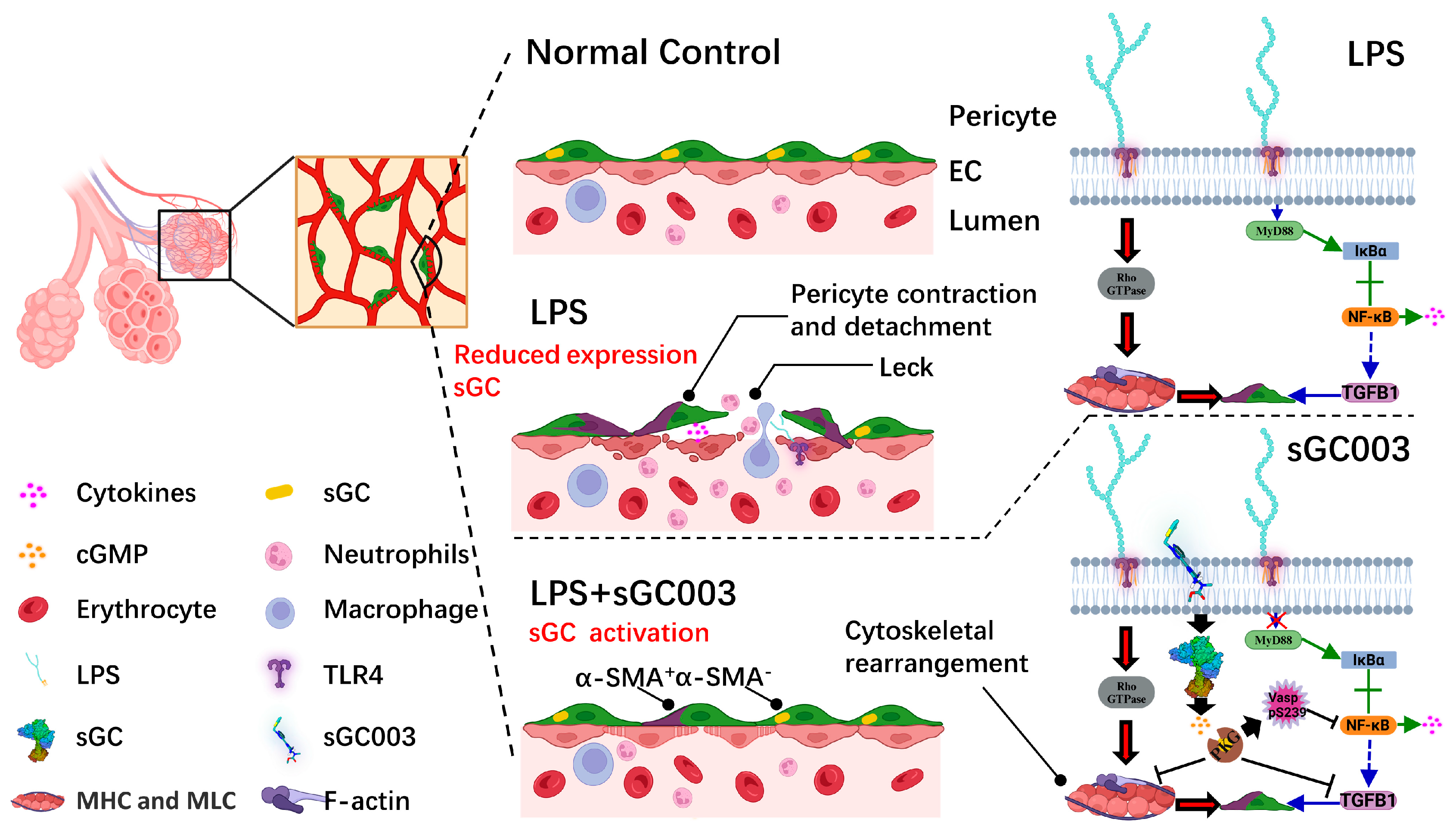
The Novel Soluble Guanylate Cyclase Stimulator Attenuates Acute Lung Injury via Inhibiting Pericyte Phenotypic Transition

 , ,
, ,
Abstract
1. Introduction
2. Results
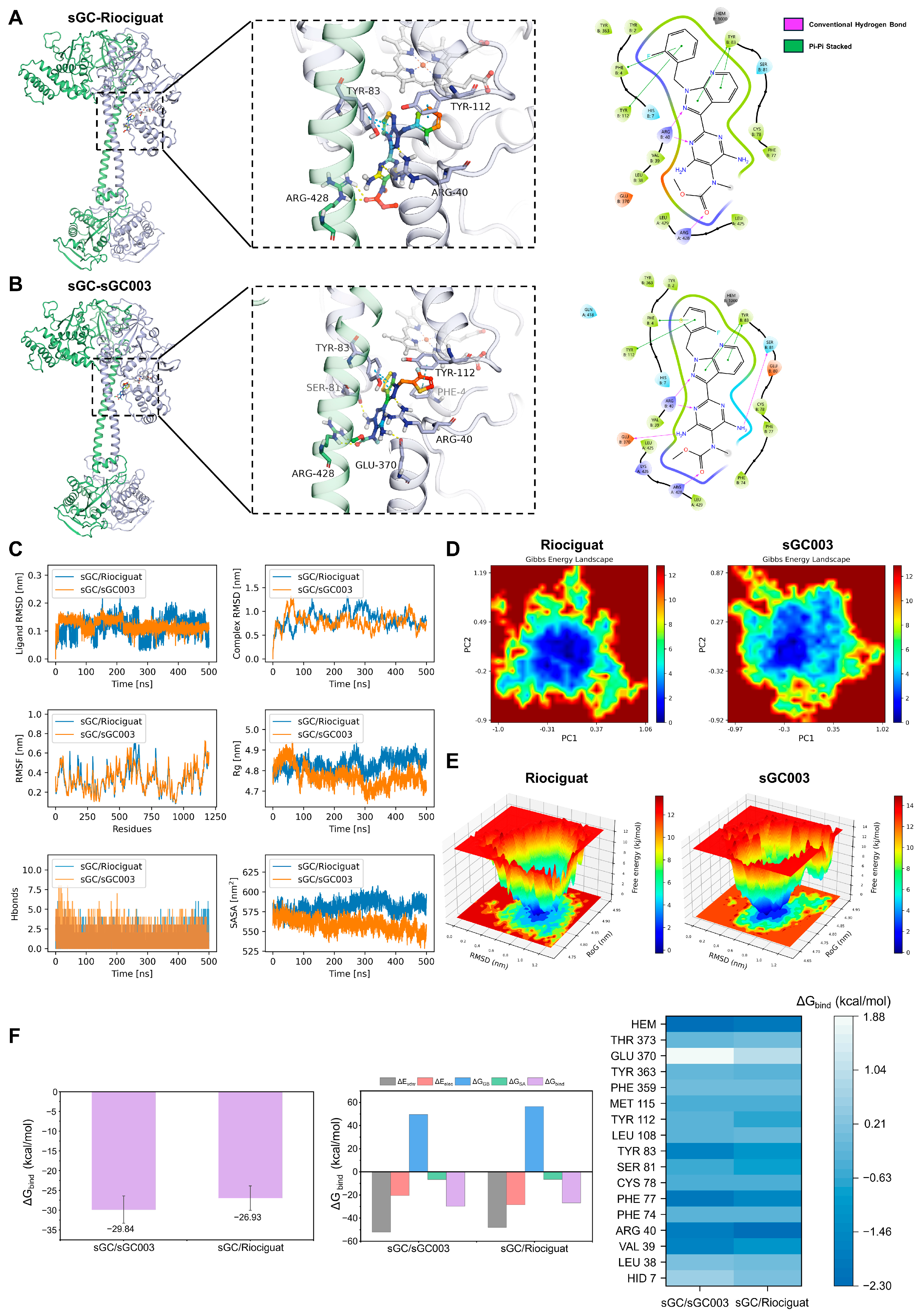
2.1. Molecular Dynamics Simulations Analysis
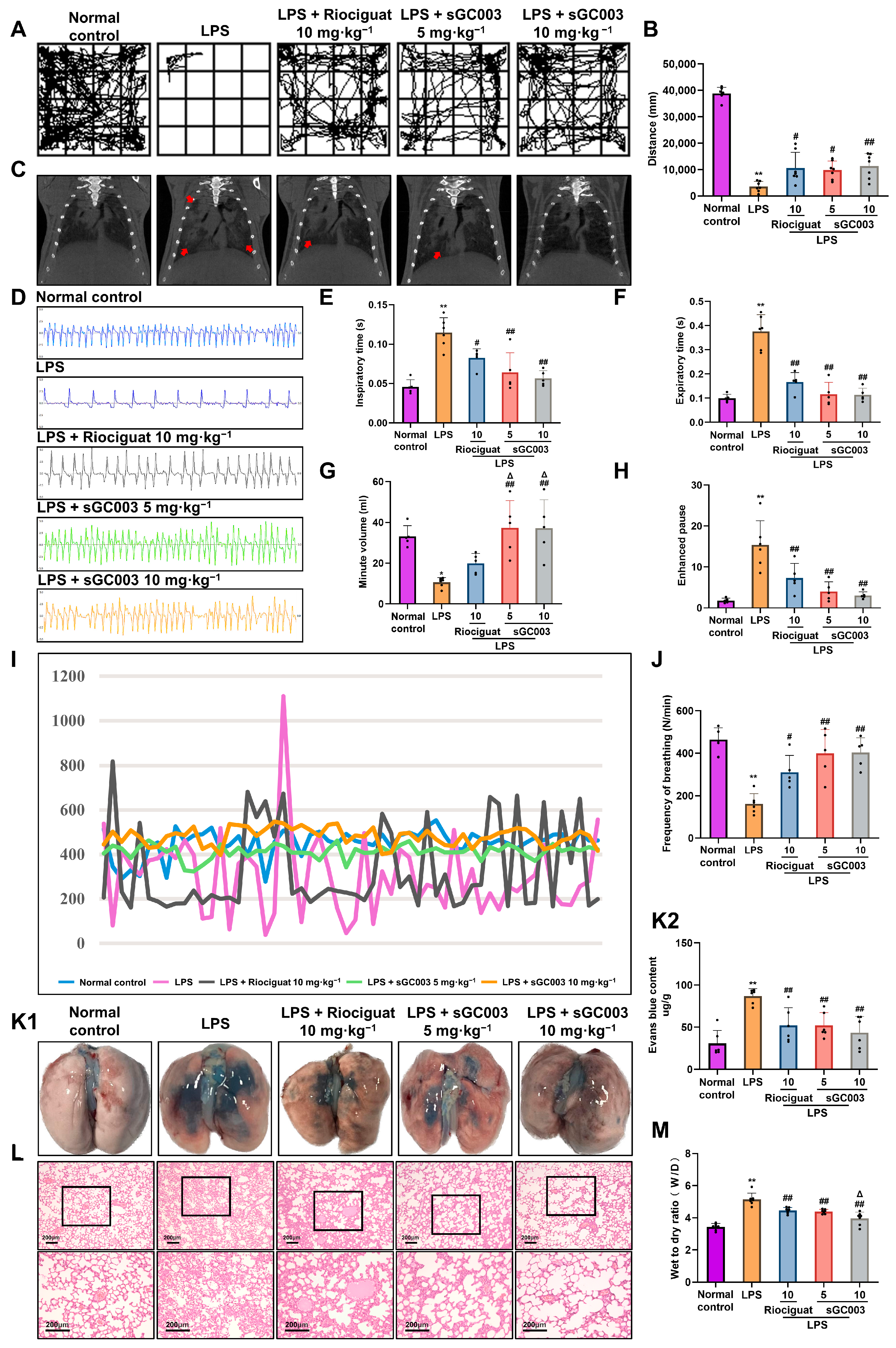
2.2. Effects of sGC003 on the Phenotype of LPS-Induced ALI in Mice
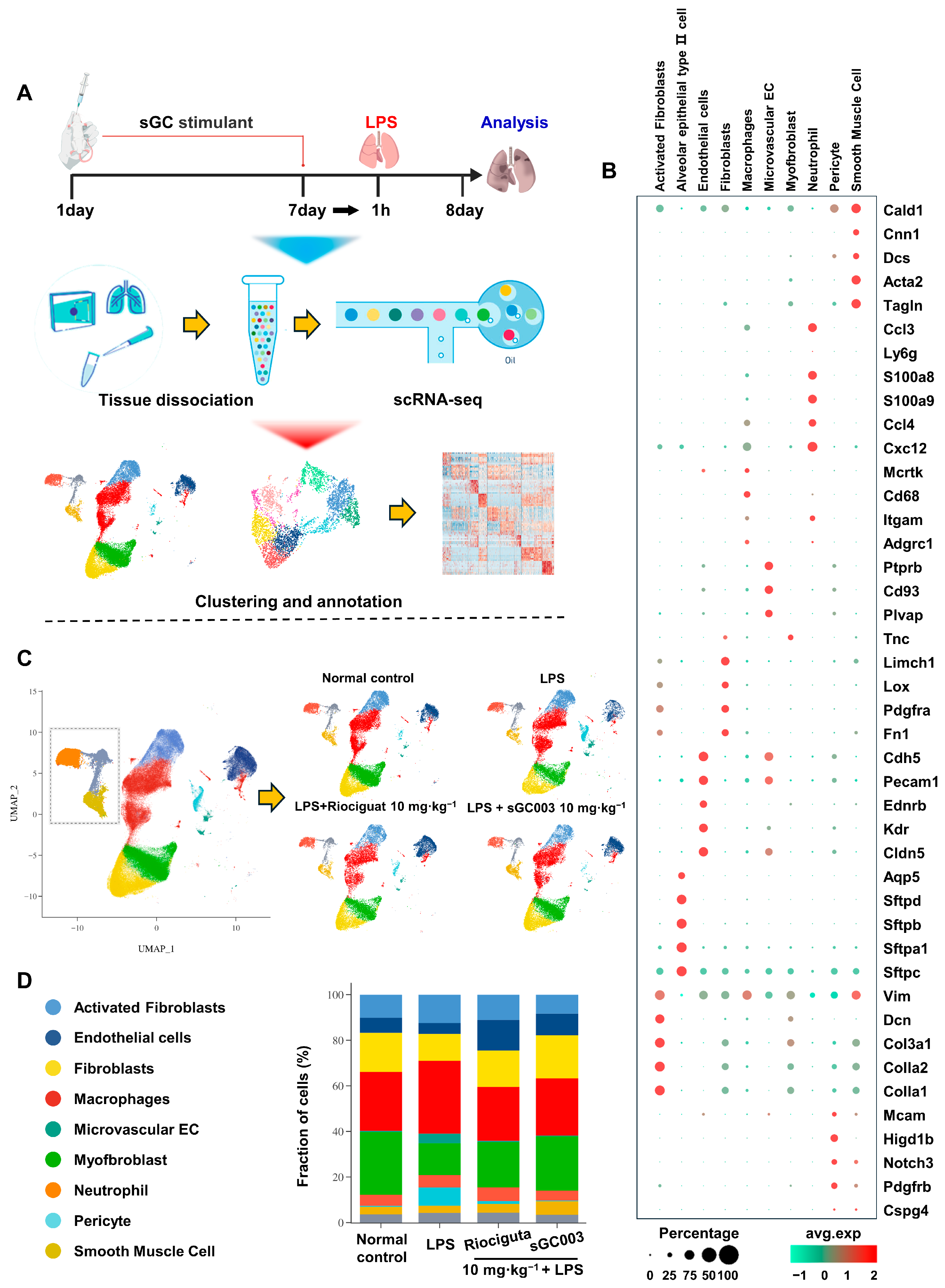
2.3. Single-Cell RNA Sequencing Analysis and Annotation of Lung Tissues from ALI Mice
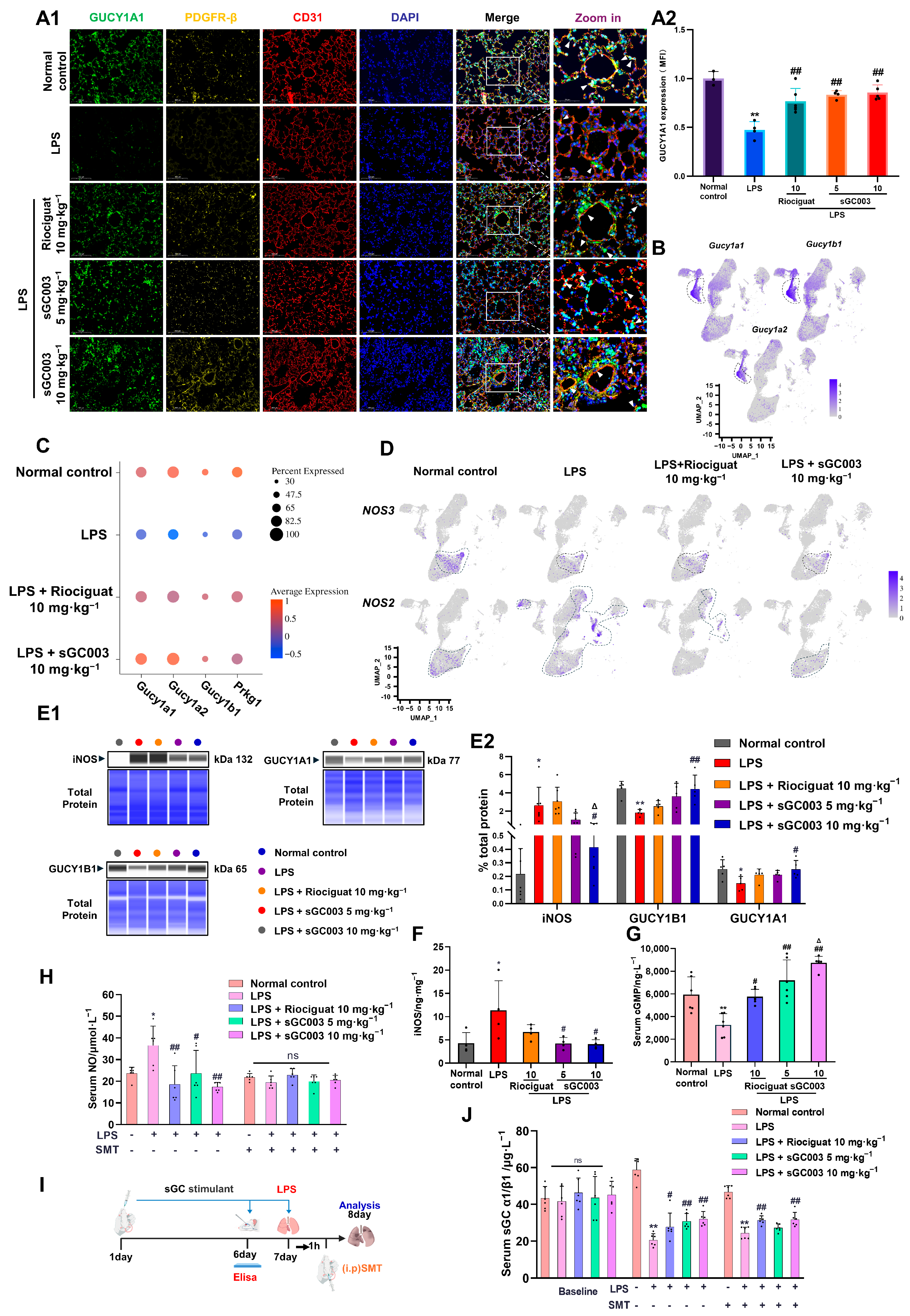
2.4. NO-sGC-Cyclic Guanosine Monophosphate Signaling Between ECs and Pericytes Is Restored by sGC003 in Mice with ALI
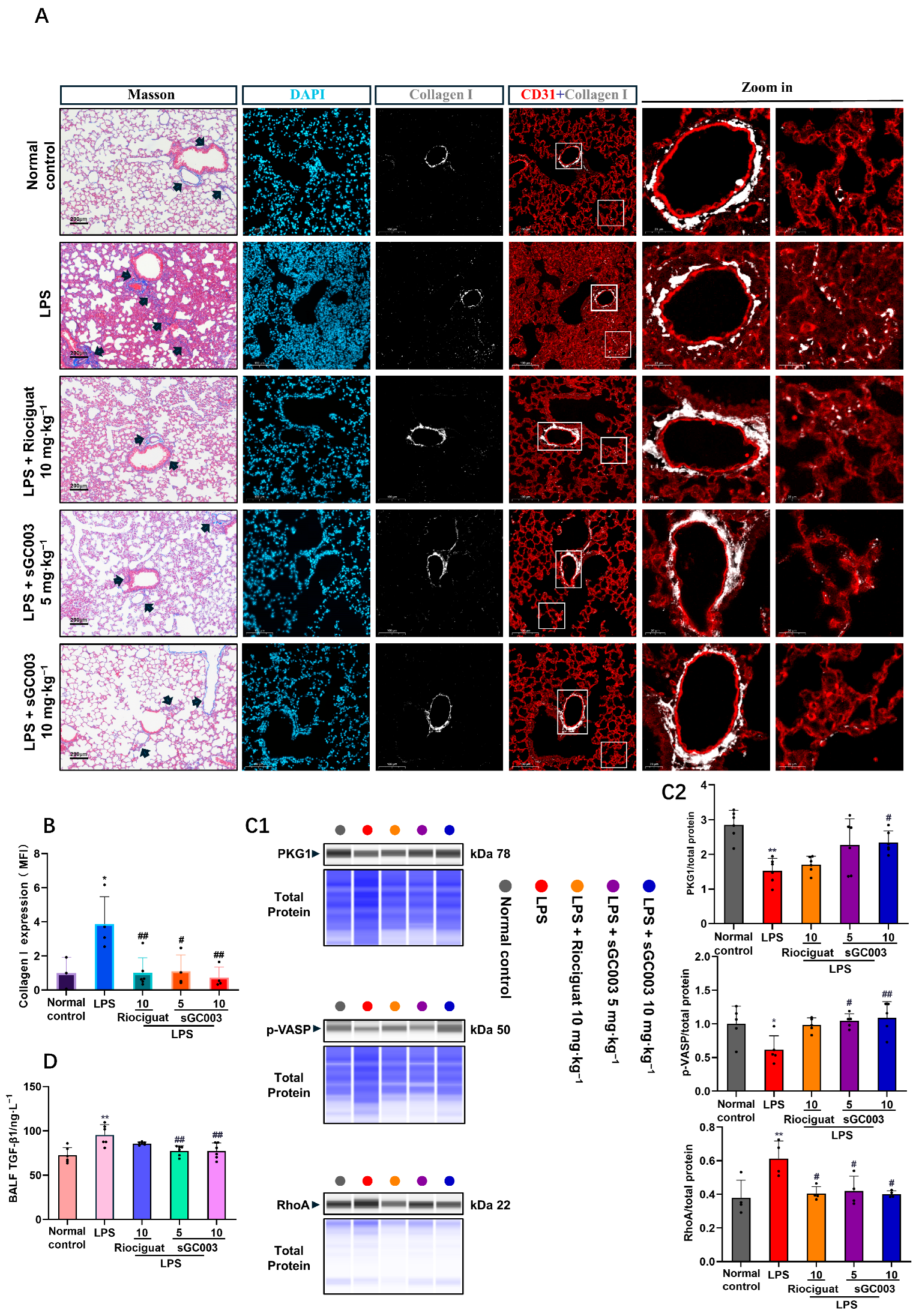
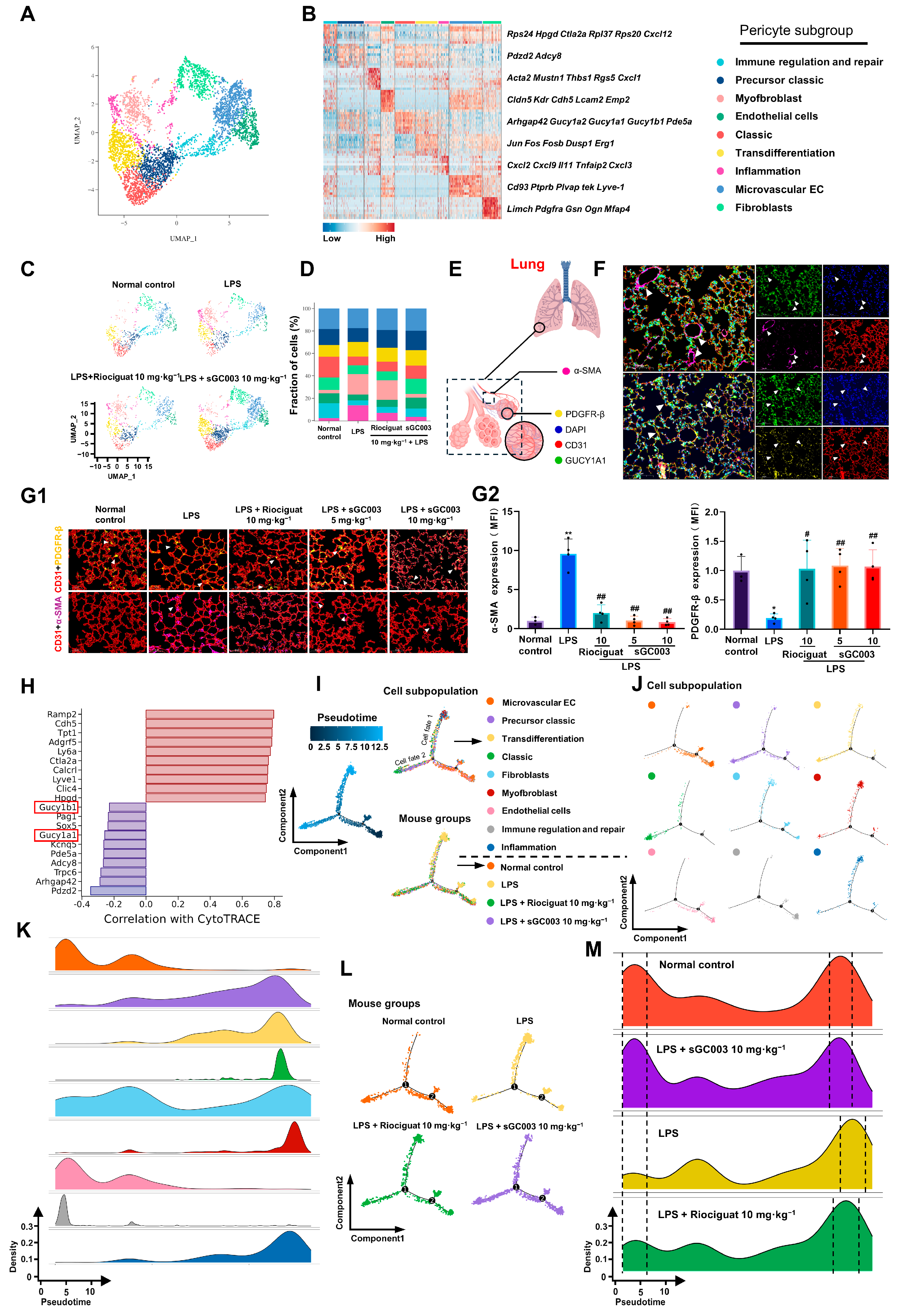
2.5. Reversal of the Phenotypic Transformation of Pericytes by sGC003
- Immunoregulatory repair pericyte subgroup, characterized by high expression levels of cytotoxic T-lymphocyte associated protein 2α (Ctla2a), C-X-C motif chemokine ligand 12 (Cxcl12), and ribosomal proteins (Rps24, Rpl37, Rpl20), as well as others immune regulation and repair related genes.
- Precursor classical pericyte subgroup, exhibits a gene expression profile akin to classical pericytes, with notable upregulation of specific genes.
- Myofibroblast pericyte subgroup, characterized by high expression levels of alpha smooth muscle actin (Acta2), musculoskeletal embryonic nuclear protein 1 (Mustn1), thrombospondin-1 (Thbs1), and other genes associated with myofibroblast function.
- Endothelial cells (EC) pericyte subgroup, exhibit high expression levels of genes related to vascular endothelial function, such as Claudin 5 (Cldn5), kinase insert domain receptor (Kdr), and Cadherin 5 (Cdh5).
- Classical pericyte subgroup, identified by their high expression of pericyte-specific genes including Rho GTPase activating protein 42 (Arhgap42), Gucy1a2, Gucy1a1, and Gucy1b1.
- Transdifferentiation pericyte subgroup, characterized by high expression of genes like Jun proto-oncogene (Jun), Fos proto-oncogene (Fos), FosB proto-oncogene (Fosb), and other transdifferentiation-related genes.
- Inflammatory pericyte subgroup demonstrates high expression levels of genes associated with inflammatory responses, such as chemokines (Cxcl2, Cxcl9), interleukin 11 (IL11), and tumor necrosis factor α-induced protein 2 (Tnfaip2).
- Microvascular ECs pericyte subgroup, exhibits high expression levels of microvascular endothelium-related genes, including CD93, protein tyrosine phosphatase receptor type B (Ptprb), and plasma vesicle-associated protein (Plvap) and other Microvascular EC-related genes.
- Fibroblast pericyte subgroup exhibits elevated expression of fibroblast-associated genes such as LIM and calponin homologous domains containing 1 (Limch1), platelet-derived growth factor receptor α (Pdgfra), gelsolin (Gsn), and other fibroblast-related genes (Figure 5B).
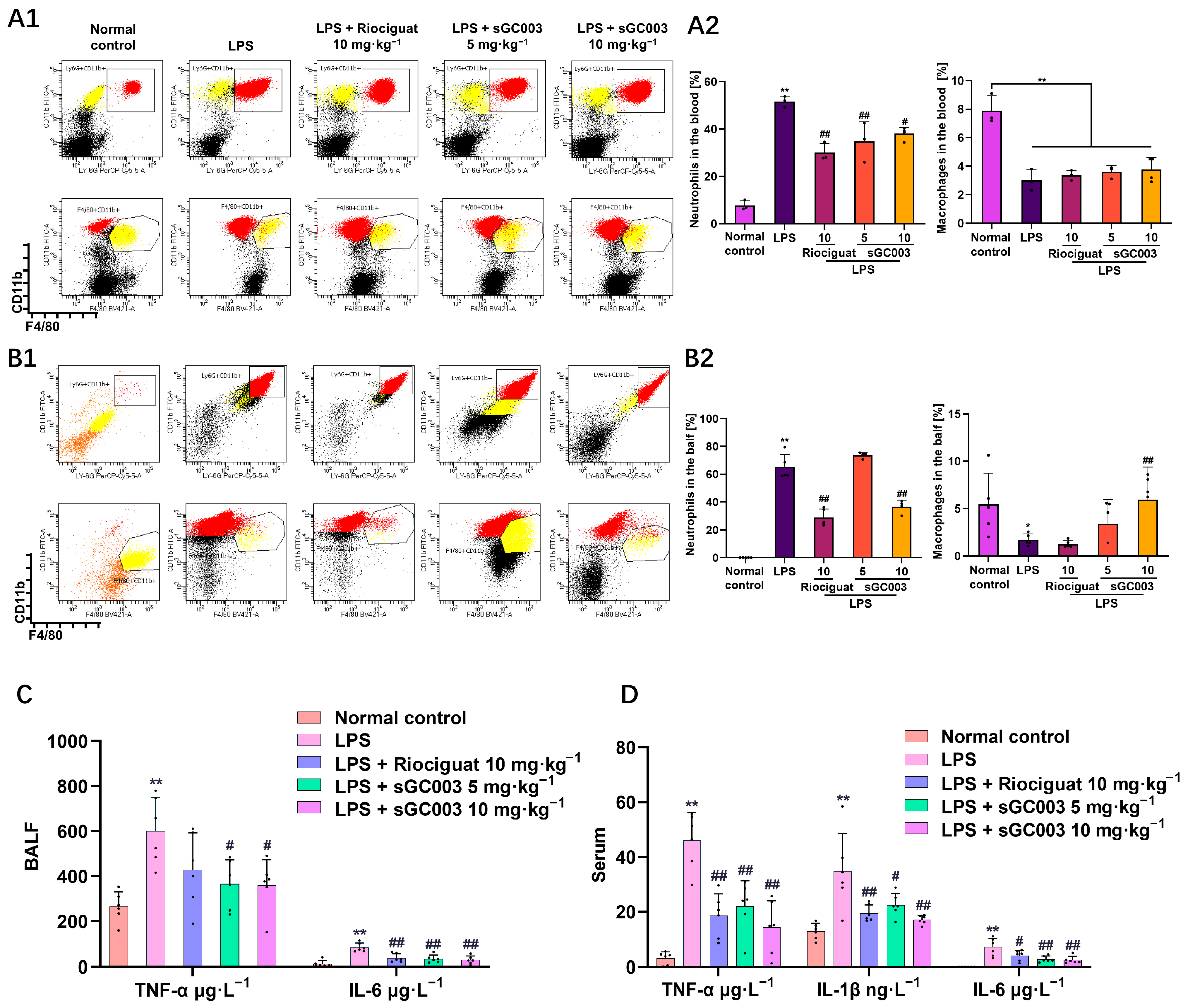
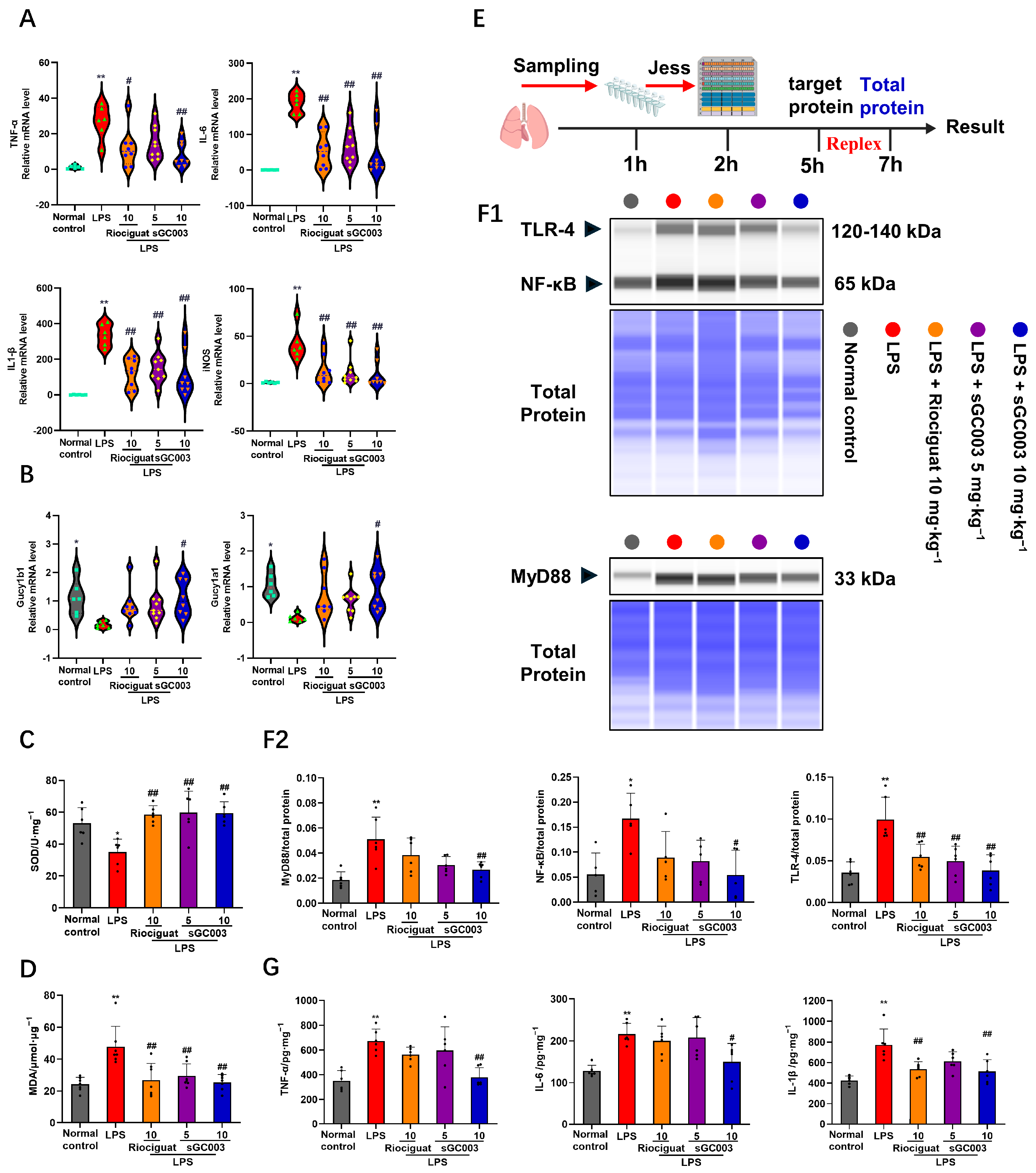
2.6. Activation of sGC Signaling Inhibits ALI-Induced Inflammation
3. Discussion
4. Materials and Methods
4.1. Mouse Experiments
4.2. Material
4.3. Pharmacological Treatment Regimen
4.4. Intratracheal LPS Instillation-Induced Lung Injury Model
4.5. Spontaneous Activity Test
4.6. CT Examination
4.7. Pulmonary Function Test
4.8. Lung Wet/Dry Weight Ratio
4.9. Lung Tissue Staining with Hematoxylin and Eosin (H&E)
4.10. Evans Blue Detection of Lung Permeability in Mice
4.11. Molecular Docking
4.12. Molecule Dynamics Simulation
4.13. MM/GBSA Binding Free Energy Calculation
4.14. Principal Component Analysis
4.15. Single-Cell RNA Sequencing and Data Analysis
4.16. Immunofluorescence Staining
4.17. Jess Capillary-Based Electrophoresis Immunoblot Assays
4.18. Enzyme Linked Immunosorbent Assay (ELISA)
4.19. S-Methylisothiourea Sulfate Treatment
4.20. Quantitative Real-Time Polymerase Chain Reaction (qRT-PCR)
4.21. Flow Cytometry (FCM) Analysis
4.22. Statistical Analysis
5. Conclusions
Supplementary Materials
Author Contributions
Funding
Institutional Review Board Statement
Informed Consent Statement
Data Availability Statement
Conflicts of Interest
References
- Matthay, M.A.; Zemans, R.L.; Zimmerman, G.A.; Arabi, Y.M.; Beitler, J.R.; Mercat, A.; Herridge, M.; Randolph, A.G.; Calfee, C.S. Acute respiratory distress syndrome. Nat. Rev. Dis. Prim. 2019, 5, 18. [Google Scholar] [CrossRef] [Scilit] [PubMed]
- Bos, L.D.J.; Ware, L.B. Acute respiratory distress syndrome: Causes, pathophysiology, and phenotypes. Lancet 2022, 400, 1145–1156. [Google Scholar] [CrossRef] [Scilit] [PubMed]
- Su, Y.; Lucas, R.; Fulton, D.J.R.; Verin, A.D. Mechanisms of pulmonary endothelial barrier dysfunction in acute lung injury and acute respiratory distress syndrome. Chin. Med. J. Pulm. Crit. Care Med. 2024, 2, 80–87. [Google Scholar] [CrossRef] [Scilit] [PubMed]
- Liu, J.; Dean, D.A. Gene transfer of MRCKα rescues lipopolysaccharide-induced acute lung injury by restoring alveolar capillary barrier function. Sci. Rep. 2021, 11, 20862. [Google Scholar] [CrossRef] [Scilit]
- Mokra, D.; Kosutova, P. Biomarkers in acute lung injury. Respir. Physiol. Neurobiol. 2015, 209, 52–58. [Google Scholar] [CrossRef] [Scilit]
- He, H.; Yang, W.; Su, N.; Zhang, C.; Dai, J.; Han, F.; Singhal, M.; Bai, W.; Zhu, X.; Zhu, J.; et al. Activating NO-sGC crosstalk in the mouse vascular niche promotes vascular integrity and mitigates acute lung injury. J. Exp. Med. 2023, 220, e20211422. [Google Scholar] [CrossRef] [Scilit]
- Parthasarathi, K. The Pulmonary Vascular Barrier: Insights into Structure, Function, and Regulatory Mechanisms. In Advances in Anatomy, Embryology and Cell Biology; Springer: Cham, Switzerland, 2018; Volume 228, pp. 41–61. [Google Scholar] [CrossRef] [Scilit]
- Hung, C.F.; Wilson, C.L.; Schnapp, L.M. Pericytes in the Lung. In Advances in Anatomy, Embryology and Cell Biology; Springer: Cham, Switzerland, 2019; Volume 1122, pp. 41–58. [Google Scholar] [CrossRef] [Scilit]
- Huang, T.; Chen, D.; Ye, W.; Chen, W.; Zhang, M.; Hao, J.; Xu, L.; Bai, X.; Mao, S. Effect and mechanism of apelin on lipopolysaccharide induced acute pulmonary vascular endothelial barrier dysfunction. Sci. Rep. 2023, 13, 1560. [Google Scholar] [CrossRef] [Scilit]
- Thompson, B.T.; Chambers, R.C.; Liu, K.D. Acute Respiratory Distress Syndrome. N. Engl. J. Med. 2017, 377, 562–572. [Google Scholar] [CrossRef] [Scilit]
- Pan, C.; Liu, L.; Xie, J.F.; Qiu, H.B. Acute Respiratory Distress Syndrome: Challenge for Diagnosis and Therapy. Chin. Med. J. 2018, 131, 1220–1224. [Google Scholar] [CrossRef] [Scilit]
- Máca, J.; Jor, O.; Holub, M.; Sklienka, P.; Burša, F.; Burda, M.; Janout, V.; Ševčík, P. Past and Present ARDS Mortality Rates: A Systematic Review. Respir. Care 2017, 62, 113–122. [Google Scholar] [CrossRef] [Scilit]
- Zhang, J.; Ge, P.; Liu, J.; Luo, Y.; Guo, H.; Zhang, G.; Xu, C.; Chen, H. Glucocorticoid Treatment in Acute Respiratory Distress Syndrome: An Overview on Mechanistic Insights and Clinical Benefit. Int. J. Mol. Sci. 2023, 24, 12138. [Google Scholar] [CrossRef] [Scilit]
- Washington, A.V.; Esponda, O.; Gibson, A. Platelet biology of the rapidly failing lung. Br. J. Haematol. 2020, 188, 641–651. [Google Scholar] [CrossRef] [Scilit]
- Zeng, H.; He, X.; Tuo, Q.H.; Liao, D.F.; Zhang, G.Q.; Chen, J.X. LPS causes pericyte loss and microvascular dysfunction via disruption of Sirt3/angiopoietins/Tie-2 and HIF-2α/Notch3 pathways. Sci. Rep. 2016, 6, 20931. [Google Scholar] [CrossRef] [Scilit]
- Stasi, A.; Franzin, R.; Divella, C.; Gesualdo, L.; Stallone, G.; Castellano, G. Double Labeling of PDGFR-β and α-SMA in Swine Models of Acute Kidney Injury to Detect Pericyte-to-Myofibroblast Transdifferentation as Early Marker of Fibrosis. Bio. Protocol. 2020, 10, e3779. [Google Scholar] [CrossRef] [Scilit]
- El Agha, E.; Moiseenko, A.; Kheirollahi, V.; De Langhe, S.; Crnkovic, S.; Kwapiszewska, G.; Szibor, M.; Kosanovic, D.; Schwind, F.; Schermuly, R.T.; et al. Two-Way Conversion between Lipogenic and Myogenic Fibroblastic Phenotypes Marks the Progression and Resolution of Lung Fibrosis. Cell Stem Cell 2017, 20, 261–273.e3, Erratum in Cell Stem Cell 2017, 20, 571. https://doi.org/10.1016/j.stem.2017.03.011. [Google Scholar] [CrossRef] [Scilit]
- Wu, C.F.; Chiang, W.C.; Lai, C.F.; Chang, F.C.; Chen, Y.T.; Chou, Y.H.; Wu, T.H.; Linn, G.R.; Ling, H.; Wu, K.D.; et al. Transforming growth factor β-1 stimulates profibrotic epithelial signaling to activate pericyte-myofibroblast transition in obstructive kidney fibrosis. Am. J. Pathol. 2013, 182, 118–131. [Google Scholar] [CrossRef] [Scilit] [PubMed]
- Mu, E.; Ding, R.; An, X.; Li, X.; Chen, S.; Ma, X. Heparin attenuates lipopolysaccharide-induced acute lung injury by inhibiting nitric oxide synthase and TGF-β/Smad signaling pathway. Thromb. Res. 2012, 129, 479–485. [Google Scholar] [CrossRef] [Scilit]
- Luo, Y.; Pang, X.X.; Ansari, A.R.; Wu, X.T.; Li, H.Z.; Zhang, Z.W.; Song, H. Visfatin Exerts Immunotherapeutic Effects in Lipopolysaccharide-Induced Acute Lung Injury in Murine Model. Inflammation 2020, 43, 109–122. [Google Scholar] [CrossRef] [Scilit] [PubMed]
- Wang, Y.C.; Xie, H.; Zhang, Y.C.; Meng, Q.H.; Xiong, M.M.; Jia, M.W.; Peng, F.; Tang, D.L. Exosomal miR-107 antagonizes profibrotic phenotypes of pericytes by targeting a pathway involving HIF-1α/Notch1/PDGFRβ/YAP1/Twist1 axis in vitro. Am. J. Physiol. Heart Circ. Physiol. 2021, 320, H520–H534. [Google Scholar] [CrossRef] [Scilit] [PubMed]
- Mierzejewski, B.; Różycka, J.; Stremińska, W.; Brągiel-Pieczonka, A.; Sidor, K.; Hoser, G.; Bartoszewicz, Z.; Gewartowska, M.; Frontczak-Baniewicz, M.; Ciemerych, M.A.; et al. The Role of Pericytes in Lipopolysaccharide-Induced Murine Acute Respiratory Distress Syndrome. Am. J. Pathol. 2024, 194, 1443–1457. [Google Scholar] [CrossRef] [Scilit]
- Yuan, D.; Yang, F.; Hou, L.; Zhang, Y.; Pang, X.; Du, Y.; Yan, H.; Zhu, H.; Cheng, Y.; Wu, Y.; et al. PFKFB2-Driven Glycolysis Promotes Dendritic Cell Maturation and Exacerbates Acute Lung Injury. Adv. Sci. 2025, 12, e02428. [Google Scholar] [CrossRef] [Scilit]
- Ruan, T.; Han, J.; Xue, C.; Wang, F.; Lin, J. Mesenchymal stem cells protect the integrity of the alveolar epithelial barrier through extracellular vesicles by inhibiting MAPK-mediated necroptosis. Stem Cell Res. Ther. 2025, 16, 250. [Google Scholar] [CrossRef] [Scilit] [PubMed]
- Gao, L.; Zheng, F.; Fu, Z.; Wang, W. Dual-responsive nanoparticles targeting ACE-II senescence for therapeutic mitigation of acute lung injury. J. Nanobiotechnol. 2025, 23, 339, Correction in J. Nanobiotechnol. 2025, 23, 778. https://doi.org/10.1186/s12951-025-03812-1. [Google Scholar] [CrossRef] [Scilit]
- Zhu, J.; Yang, W.; Ma, J.; He, H.; Liu, Z.; Zhu, X.; He, X.; He, J.; Chen, Z.; Jin, X.; et al. Pericyte signaling via soluble guanylate cyclase shapes the vascular niche and microenvironment of tumors. Embo J. 2024, 43, 1519–1544. [Google Scholar] [CrossRef] [Scilit] [PubMed]
- Ayloo, S.; Lazo, C.G.; Sun, S.; Zhang, W.; Cui, B.; Gu, C. Pericyte-to-endothelial cell signaling via vitronectin-integrin regulates blood-CNS barrier. Neuron 2022, 110, 1641–1655.e6. [Google Scholar] [CrossRef] [Scilit]
- Li, W.; Zhang, A.; Cai, Y.; Sun, H.; Teng, Y.; Meng, Z.; Zhou, W.; Liu, R.; Zhang, Z.; Tian, J.; et al. Jinbei Decoction Attenuates LPS-Induced Acute Lung Injury via Suppression of TRAF6-Dependent Inflammatory Response in Macrophage. J. Cell Mol. Med. 2025, 29, e70944. [Google Scholar] [CrossRef] [Scilit] [PubMed]
- Glynos, C.; Kotanidou, A.; Orfanos, S.E.; Zhou, Z.; Simoes, D.C.; Magkou, C.; Roussos, C.; Papapetropoulos, A. Soluble guanylyl cyclase expression is reduced in LPS-induced lung injury. Am. J. Physiol. Regul. Integr. Comp. Physiol. 2007, 292, R1448–R1455. [Google Scholar] [CrossRef] [Scilit]
- Glynos, C.; Toumpanakis, D.; Loverdos, K.; Karavana, V.; Zhou, Z.; Magkou, C.; Dettoraki, M.; Perlikos, F.; Pavlidou, A.; Kotsikoris, V.; et al. Guanylyl cyclase activation reverses resistive breathing-induced lung injury and inflammation. Am. J. Respir. Cell Mol. Biol. 2015, 52, 762–771. [Google Scholar] [CrossRef] [Scilit]
- Bayarri, M.A.; Milara, J.; Estornut, C.; Cortijo, J. Nitric Oxide System and Bronchial Epithelium: More Than a Barrier. Front. Physiol. 2021, 12, 687381. [Google Scholar] [CrossRef] [Scilit]
- Lian, T.Y.; Jiang, X.; Jing, Z.C. Riociguat: A soluble guanylate cyclase stimulator for the treatment of pulmonary hypertension. Drug Des. Dev. Ther. 2017, 11, 1195–1207. [Google Scholar] [CrossRef] [Scilit]
- Ahluwalia, A.; Foster, P.; Scotland, R.S.; McLean, P.G.; Mathur, A.; Perretti, M.; Moncada, S.; Hobbs, A.J. Antiinflammatory activity of soluble guanylate cyclase: cGMP-dependent down-regulation of P-selectin expression and leukocyte recruitment. Proc. Natl. Acad. Sci. USA 2004, 101, 1386–1391. [Google Scholar] [CrossRef] [Scilit] [PubMed]
- Tchernychev, B.; Li, H.; Lee, S.K.; Gao, X.; Ramanarasimhaiah, R.; Liu, G.; Hall, K.C.; Bernier, S.G.; Jones, J.E.; Feil, S.; et al. Olinciguat, a stimulator of soluble guanylyl cyclase, attenuates inflammation, vaso-occlusion and nephropathy in mouse models of sickle cell disease. Br. J. Pharmacol. 2021, 178, 3463–3475. [Google Scholar] [CrossRef] [Scilit] [PubMed]
- Wang, W.Z.; Jones, A.W.; Wang, M.; Durante, W.; Korthuis, R.J. Preconditioning with soluble guanylate cyclase activation prevents postischemic inflammation and reduces nitrate tolerance in heme oxygenase-1 knockout mice. Am. J. Physiol. Heart Circ. Physiol. 2013, 305, H521–H532. [Google Scholar] [CrossRef] [Scilit]
- Flores-Costa, R.; Alcaraz-Quiles, J.; Titos, E.; López-Vicario, C.; Casulleras, M.; Duran-Güell, M.; Rius, B.; Diaz, A.; Hall, K.; Shea, C.; et al. The soluble guanylate cyclase stimulator IW-1973 prevents inflammation and fibrosis in experimental non-alcoholic steatohepatitis. Br. J. Pharmacol. 2018, 175, 953–967. [Google Scholar] [CrossRef] [Scilit] [PubMed]
- Cauwels, A.; Buys, E.S.; Thoonen, R.; Geary, L.; Delanghe, J.; Shiva, S.; Brouckaert, P. Nitrite protects against morbidity and mortality associated with TNF- or LPS-induced shock in a soluble guanylate cyclase-dependent manner. J. Exp. Med. 2009, 206, 2915–2924. [Google Scholar] [CrossRef] [Scilit]
- Li, S.; Zheng, Z.B.; Li, L.Z.; Wang, L.L.; Chen, W.; Wang, X.K. Substituted thiazolyl pyrazolo pyridine compound and medicinal use thereof. CN102485724A, 6 June 2012. [Google Scholar]
- Jiang, S.; Li, H.; Zhang, L.; Mu, W.; Zhang, Y.; Chen, T.; Wu, J.; Tang, H.; Zheng, S.; Liu, Y.; et al. Generic Diagramming Platform (GDP): A comprehensive database of high-quality biomedical graphics. Nucleic Acids Res. 2025, 53, D1670–D1676. [Google Scholar] [CrossRef] [Scilit]
- Mu, S.; Liu, Y.; Jiang, J.; Ding, R.; Li, X.; Li, X.; Ma, X. Unfractionated heparin ameliorates pulmonary microvascular endothelial barrier dysfunction via microtubule stabilization in acute lung injury. Respir. Res. 2018, 19, 220. [Google Scholar] [CrossRef] [Scilit]
- Hu, Q.; Zhang, S.; Yang, Y.; Yao, J.Q.; Tang, W.F.; Lyon, C.J.; Hu, T.Y.; Wan, M.H. Extracellular vesicles in the pathogenesis and treatment of acute lung injury. Mil. Med. Res. 2022, 9, 61. [Google Scholar] [CrossRef] [Scilit]
- Kim, Y.Y.; Lee, S.; Kim, M.J.; Kang, B.C.; Dhakal, H.; Choi, Y.A.; Park, P.H.; Choi, H.; Shin, T.Y.; Choi, H.G.; et al. Tyrosol attenuates lipopolysaccharide-induced acute lung injury by inhibiting the inflammatory response and maintaining the alveolar capillary barrier. Food Chem. Toxicol. 2017, 109, 526–533. [Google Scholar] [CrossRef] [Scilit]
- Kang, Y.; Liu, R.; Wu, J.X.; Chen, L. Structural insights into the mechanism of human soluble guanylate cyclase. Nature 2019, 574, 206–210. [Google Scholar] [CrossRef] [Scilit]
- Gillich, A.; Zhang, F.; Farmer, C.G.; Travaglini, K.J.; Tan, S.Y.; Gu, M.; Zhou, B.; Feinstein, J.A.; Krasnow, M.A.; Metzger, R.J. Capillary cell-type specialization in the alveolus. Nature 2020, 586, 785–789. [Google Scholar] [CrossRef] [Scilit] [PubMed]
- Randi, A.M.; Smith, K.E.; Castaman, G. von Willebrand factor regulation of blood vessel formation. Blood 2018, 132, 132–140. [Google Scholar] [CrossRef] [Scilit]
- Kemp, S.S.; Aguera, K.N.; Cha, B.; Davis, G.E. Defining Endothelial Cell-Derived Factors That Promote Pericyte Recruitment and Capillary Network Assembly. Arterioscler. Thromb. Vasc. Biol. 2020, 40, 2632–2648. [Google Scholar] [CrossRef] [Scilit] [PubMed]
- Kemp, S.S.; Lin, P.K.; Sun, Z.; Castaño, M.A.; Yrigoin, K.; Penn, M.R.; Davis, G.E. Molecular basis for pericyte-induced capillary tube network assembly and maturation. Front. Cell Dev. Biol. 2022, 10, 943533. [Google Scholar] [CrossRef] [Scilit]
- Smyth, L.C.D.; Highet, B.; Jansson, D.; Wu, J.; Rustenhoven, J.; Aalderink, M.; Tan, A.; Li, S.; Johnson, R.; Coppieters, N.; et al. Characterisation of PDGF-BB:PDGFRβ signalling pathways in human brain pericytes: Evidence of disruption in Alzheimer’s disease. Commun. Biol. 2022, 5, 235. [Google Scholar] [CrossRef] [Scilit] [PubMed]
- Guo, L.; Yang, Q.; Wei, R.; Zhang, W.; Yin, N.; Chen, Y.; Xu, C.; Li, C.; Carney, R.P.; Li, Y.; et al. Enhanced pericyte-endothelial interactions through NO-boosted extracellular vesicles drive revascularization in a mouse model of ischemic injury. Nat. Commun. 2023, 14, 7334. [Google Scholar] [CrossRef] [Scilit]
- Hung, C.F.; Holton, S.; Chow, Y.H.; Liles, W.C.; Gharib, S.A.; Altemeier, W.A. Pericyte-like cells undergo transcriptional reprogramming and distinct functional adaptations in acute lung injury. Faseb J. 2021, 35, e21323. [Google Scholar] [CrossRef] [Scilit]
- Stern, S.; Hilton, B.J.; Burnside, E.R.; Dupraz, S.; Handley, E.E.; Gonyer, J.M.; Brakebusch, C.; Bradke, F. RhoA drives actin compaction to restrict axon regeneration and astrocyte reactivity after CNS injury. Neuron 2021, 109, 3436–3455.e9. [Google Scholar] [CrossRef] [Scilit]
- Zhou, Q.; Jiang, J.; Chen, G.; Qian, C.; Sun, G. Inflammatory Immune Cytokine TNF-α Modulates Ezrin Protein Activation via FAK/RhoA Signaling Pathway in PMVECs Hyperpermeability. Front. Pharmacol. 2021, 12, 676817. [Google Scholar] [CrossRef] [Scilit]
- Bai, X.; Lenhart, K.C.; Bird, K.E.; Suen, A.A.; Rojas, M.; Kakoki, M.; Li, F.; Smithies, O.; Mack, C.P.; Taylor, J.M. The smooth muscle-selective RhoGAP GRAF3 is a critical regulator of vascular tone and hypertension. Nat. Commun. 2013, 4, 2910. [Google Scholar] [CrossRef] [Scilit]
- Hsu, G.C.; Wang, Y.; Lu, A.Z.; Gomez-Salazar, M.A.; Xu, J.; Li, D.; Meyers, C.; Negri, S.; Wangsiricharoen, S.; Broderick, K.; et al. TIAM1 acts as an actin organization regulator to control adipose tissue-derived pericyte cell fate. JCI Insight 2023, 8, e159141. [Google Scholar] [CrossRef] [Scilit] [PubMed]
- Khaddaj-Mallat, R.; Aldib, N.; Bernard, M.; Paquette, A.S.; Ferreira, A.; Lecordier, S.; Saghatelyan, A.; Flamand, L.; ElAli, A. SARS-CoV-2 deregulates the vascular and immune functions of brain pericytes via Spike protein. Neurobiol. Dis. 2021, 161, 105561. [Google Scholar] [CrossRef] [Scilit]
- Yemisci, M.; Gursoy-Ozdemir, Y.; Vural, A.; Can, A.; Topalkara, K.; Dalkara, T. Pericyte contraction induced by oxidative-nitrative stress impairs capillary reflow despite successful opening of an occluded cerebral artery. Nat. Med. 2009, 15, 1031–1037. [Google Scholar] [CrossRef] [Scilit]
- Birukova, A.A.; Smurova, K.; Birukov, K.G.; Kaibuchi, K.; Garcia, J.G.; Verin, A.D. Role of Rho GTPases in thrombin-induced lung vascular endothelial cells barrier dysfunction. Microvasc. Res. 2004, 67, 64–77. [Google Scholar] [CrossRef] [Scilit]
- Hoang, M.V.; Whelan, M.C.; Senger, D.R. Rho activity critically and selectively regulates endothelial cell organization during angiogenesis. Proc. Natl. Acad. Sci. USA 2004, 101, 1874–1879. [Google Scholar] [CrossRef] [Scilit]
- Vighi, E.; Rentsch, A.; Henning, P.; Comitato, A.; Hoffmann, D.; Bertinetti, D.; Bertolotti, E.; Schwede, F.; Herberg, F.W.; Genieser, H.G.; et al. New cGMP analogues restrain proliferation and migration of melanoma cells. Oncotarget 2018, 9, 5301–5320. [Google Scholar] [CrossRef] [Scilit] [PubMed]
- Cao, Y.; Su, H.; Zeng, J.; Xie, Y.; Liu, Z.; Liu, F.; Qiu, Y.; Yi, F.; Lin, J.; Hammes, H.P.; et al. Integrin β8 prevents pericyte-myofibroblast transition and renal fibrosis through inhibiting the TGF-β1/TGFBR1/Smad3 pathway in diabetic kidney disease. Transl. Res. 2024, 265, 36–50. [Google Scholar] [CrossRef] [Scilit]
- Wang, Y.; Chen, D.; Xie, H.; Zhou, S.; Jia, M.; He, X.; Guo, F.; Lai, Y.; Tang, X.X. LncRNA GAS5 suppresses TGF-β1-induced transformation of pulmonary pericytes into myofibroblasts by recruiting KDM5B and promoting H3K4me2/3 demethylation of the PDGFRα/β promoter. Mol. Med. 2023, 29, 32. [Google Scholar] [CrossRef] [Scilit]
- Sun, L.; Xiu, M.; Wang, S.; Brigstock, D.R.; Li, H.; Qu, L.; Gao, R. Lipopolysaccharide enhances TGF-β1 signalling pathway and rat pancreatic fibrosis. J. Cell Mol. Med. 2018, 22, 2346–2356. [Google Scholar] [CrossRef] [Scilit] [PubMed]
- Hu, H.; Fu, Y.; Li, M.; Xia, H.; Liu, Y.; Sun, X.; Hu, Y.; Song, F.; Cheng, X.; Li, P.; et al. Interleukin-35 pretreatment attenuates lipopolysaccharide-induced heart injury by inhibition of inflammation, apoptosis and fibrotic reactions. Int. Immunopharmacol. 2020, 86, 106725. [Google Scholar] [CrossRef] [Scilit]
- Hu, N.; Wang, C.; Dai, X.; Zhou, M.; Gong, L.; Yu, L.; Peng, C.; Li, Y. Phillygenin inhibits LPS-induced activation and inflammation of LX2 cells by TLR4/MyD88/NF-κB signaling pathway. J. Ethnopharmacol. 2020, 248, 112361. [Google Scholar] [CrossRef] [Scilit] [PubMed]
- Lim, J.H.; Yook, J.M.; Oh, S.H.; Jeon, S.J.; Noh, H.W.; Jung, H.Y.; Choi, J.Y.; Cho, J.H.; Kim, C.D.; Kim, Y.L.; et al. Paricalcitol Improves Hypoxia-Induced and TGF-β1-Induced Injury in Kidney Pericytes. Int. J. Mol. Sci. 2021, 22, 9751. [Google Scholar] [CrossRef] [Scilit]
- Flores-Costa, R.; Duran-Güell, M.; Casulleras, M.; López-Vicario, C.; Alcaraz-Quiles, J.; Diaz, A.; Lozano, J.J.; Titos, E.; Hall, K.; Sarno, R.; et al. Stimulation of soluble guanylate cyclase exerts antiinflammatory actions in the liver through a VASP/NF-κB/NLRP3 inflammasome circuit. Proc. Natl. Acad. Sci. USA 2020, 117, 28263–28274. [Google Scholar] [CrossRef] [Scilit]
- Englert, N.; Burkard, P.; Aue, A.; Rosenwald, A.; Nieswandt, B.; Friebe, A. Anti-Fibrotic and Anti-Inflammatory Role of NO-Sensitive Guanylyl Cyclase in Murine Lung. Int. J. Mol. Sci. 2023, 24, 11661. [Google Scholar] [CrossRef] [Scilit] [PubMed]
- Sravani, S.; Saifi, M.A.; Godugu, C. Riociguat ameliorates kidney injury and fibrosis in an animal model. Biochem. Biophys. Res. Commun. 2020, 530, 706–712. [Google Scholar] [CrossRef] [Scilit]
- Atteia, H.H.; Alamri, E.S.; Sirag, N.; Zidan, N.S.; Aljohani, R.H.; Alzahrani, S.; Arafa, M.H.; Mohammad, N.S.; Asker, M.E.; Zaitone, S.A.; et al. Soluble guanylate cyclase agonist, isoliquiritigenin attenuates renal damage and aortic calcification in a rat model of chronic kidney failure. Life Sci. 2023, 317, 121460. [Google Scholar] [CrossRef] [Scilit]
- Wang, C.; Kemp-Harper, B.K.; Kocan, M.; Ang, S.Y.; Hewitson, T.D.; Samuel, C.S. The Anti-fibrotic Actions of Relaxin Are Mediated Through a NO-sGC-cGMP-Dependent Pathway in Renal Myofibroblasts In Vitro and Enhanced by the NO Donor, Diethylamine NONOate. Front. Pharmacol. 2016, 7, 91. [Google Scholar] [CrossRef] [Scilit]
- Beyer, C.; Zenzmaier, C.; Palumbo-Zerr, K.; Mancuso, R.; Distler, A.; Dees, C.; Zerr, P.; Huang, J.; Maier, C.; Pachowsky, M.L.; et al. Stimulation of the soluble guanylate cyclase (sGC) inhibits fibrosis by blocking non-canonical TGFβ signalling. Ann. Rheum. Dis. 2015, 74, 1408–1416. [Google Scholar] [CrossRef] [Scilit]
- Ferreira, W.A., Jr.; Chweih, H.; Lanaro, C.; Almeida, C.B.; Brito, P.L.; Gotardo, E.M.F.; Torres, L.; Miguel, L.I.; Franco-Penteado, C.F.; Leonardo, F.C.; et al. Beneficial Effects of Soluble Guanylyl Cyclase Stimulation and Activation in Sickle Cell Disease Are Amplified by Hydroxyurea: In Vitro and In Vivo Studies. J. Pharmacol. Exp. Ther. 2020, 374, 469–478. [Google Scholar] [CrossRef] [Scilit]
- Sherratt, S.C.R.; Libby, P.; Dawoud, H.; Bhatt, D.L.; Mason, R.P. Eicosapentaenoic Acid Improves Endothelial Nitric Oxide Bioavailability Via Changes in Protein Expression During Inflammation. J. Am. Heart Assoc. 2024, 13, e034076. [Google Scholar] [CrossRef] [Scilit] [PubMed]
- Roberts, R.A.; Laskin, D.L.; Smith, C.V.; Robertson, F.M.; Allen, E.M.; Doorn, J.A.; Slikker, W. Nitrative and oxidative stress in toxicology and disease. Toxicol. Sci. 2009, 112, 4–16. [Google Scholar] [CrossRef] [Scilit] [PubMed]
- Salomon-Ferrer, R.; Case, D.A.; Walker, R.C. An overview of the Amber biomolecular simulation package. WIREs Comput. Mol. Sci. 2013, 3, 198–210. [Google Scholar] [CrossRef] [Scilit]
- Frisch, M.; Trucks, G.; Schlegel, H.; Scuseria, G.; Robb, M.; Cheeseman, J.; Scalmani, G.; Barone, V.; Mennucci, B.; Petersson, G. Gaussian 09 (Revision D.01); ScienceOpen, Inc.: Berlin, Germany, 2009. [Google Scholar]
- Wang, J.; Wolf, R.M.; Caldwell, J.W.; Kollman, P.A.; Case, D.A. Development and testing of a general amber force field. J. Comput. Chem. 2004, 25, 1157–1174. [Google Scholar] [CrossRef] [Scilit]
- Shahrokh, K.; Orendt, A.; Yost, G.S.; Cheatham, T.E., 3rd. Quantum mechanically derived AMBER-compatible heme parameters for various states of the cytochrome P450 catalytic cycle. J. Comput. Chem. 2012, 33, 119–133. [Google Scholar] [CrossRef] [Scilit]
- Wang, J.; Wang, W.; Kollman, P.; Case, D. ANTECHAMBER: An accessory software package for molecular mechanical calculations. J. Chem. Inf. Comput. Sci. 2000, 222, U403. [Google Scholar]
- Maier, J.A.; Martinez, C.; Kasavajhala, K.; Wickstrom, L.; Hauser, K.E.; Simmerling, C. ff14SB: Improving the Accuracy of Protein Side Chain and Backbone Parameters from ff99SB. J. Chem. Theory Comput. 2015, 11, 3696–3713. [Google Scholar] [CrossRef] [Scilit]
- Mark, P.; Nilsson, L. Structure and Dynamics of the TIP3P, SPC, and SPC/E Water Models at 298 K. J. Phys. Chem. A 2001, 105, 9954–9960. [Google Scholar] [CrossRef] [Scilit]
- Sagui, C.; Darden, T.A. Molecular dynamics simulations of biomolecules: Long-range electrostatic effects. Annu. Rev. Biophys. Biomol. Struct. 1999, 28, 155–179. [Google Scholar] [CrossRef] [Scilit]
- Kräutler, V.; van Gunsteren, W.F.; Hünenberger, P.H. A fast SHAKE algorithm to solve distance constraint equations for small molecules in molecular dynamics simulations. J. Comput. Chem. 2001, 22, 501–508. [Google Scholar] [CrossRef] [Scilit]
- Larini, L.; Mannella, R.; Leporini, D. Langevin stabilization of molecular-dynamics simulations of polymers by means of quasisymplectic algorithms. J. Chem. Phys. 2007, 126, 104101. [Google Scholar] [CrossRef] [Scilit]
- Hou, T.; Wang, J.; Li, Y.; Wang, W. Assessing the performance of the MM/PBSA and MM/GBSA methods. 1. The accuracy of binding free energy calculations based on molecular dynamics simulations. J. Chem. Inf. Model. 2011, 51, 69–82. [Google Scholar] [CrossRef] [Scilit]
- Genheden, S.; Ryde, U. The MM/PBSA and MM/GBSA methods to estimate ligand-binding affinities. Expert. Opin. Drug Discov. 2015, 10, 449–461. [Google Scholar] [CrossRef] [Scilit] [PubMed]
- Rastelli, G.; Del Rio, A.; Degliesposti, G.; Sgobba, M. Fast and accurate predictions of binding free energies using MM-PBSA and MM-GBSA. J. Comput. Chem. 2010, 31, 797–810. [Google Scholar] [CrossRef] [Scilit] [PubMed]
- Nguyen, H.; Roe, D.R.; Simmerling, C. Improved Generalized Born Solvent Model Parameters for Protein Simulations. J. Chem. Theory Comput. 2013, 9, 2020–2034. [Google Scholar] [CrossRef] [Scilit] [PubMed]
- Weiser, J.; Shenkin, P.S.; Still, W.C. Approximate atomic surfaces from linear combinations of pairwise overlaps (LCPO). J. Comput. Chem. 1999, 20, 217–230. [Google Scholar] [CrossRef] [Scilit]
- Graham, Z.A.; DeBerry, J.J.; Cardozo, C.P.; Bamman, M.M. SS-31 does not prevent or reduce muscle atrophy 7 days after a 65 kdyne contusion spinal cord injury in young male mice. Physiol. Rep. 2022, 10, e15266. [Google Scholar] [CrossRef] [Scilit]
- Clemons, G.A.; Silva, A.C.E.; Acosta, C.H.; Udo, M.S.B.; Tesic, V.; Rodgers, K.M.; Wu, C.Y.; Citadin, C.T.; Lee, R.H.; Neumann, J.T.; et al. Protein arginine methyltransferase 4 modulates nitric oxide synthase uncoupling and cerebral blood flow in Alzheimer’s disease. J. Cell Physiol. 2024, 239, e30858. [Google Scholar] [CrossRef] [Scilit]
- Lee, R.H.; Grames, M.S.; Wu, C.Y.; Lien, C.F.; Couto, E.S.A.; Possoit, H.E.; Clemons, G.A.; Citadin, C.T.; Neumann, J.T.; Pastore, D.; et al. Upregulation of serum and glucocorticoid-regulated kinase 1 exacerbates brain injury and neurological deficits after cardiac arrest. Am. J. Physiol. Heart Circ. Physiol. 2020, 319, H1044–H1050. [Google Scholar] [CrossRef] [Scilit]
- Southan, G.J.; Szabó, C.; Thiemermann, C. Isothioureas: Potent inhibitors of nitric oxide synthases with variable isoform selectivity. Br. J. Pharmacol. 1995, 114, 510–516. [Google Scholar] [CrossRef] [Scilit]





| Primer Name | Forward Primer (5–3′) | Forward Primer (5–3′) |
|---|---|---|
| qMouse TNF-α | CCCTCACACTCACAAACCAC | ACAAGGTACAACCCATCGGC |
| qMouse IL-6 | AGCCAGAGTCCTTCAGAGAGA | GCCACTCCTTCTGTGACTCC |
| qMouse IL-1β | GCCACCTTTTGACAGTGATG | GAAGGTCCACGGGAAAGACA |
| qMouse GUCY1A1 | CCAGATAGCACTGATGGCCC | GGGCATCTTCACTCCGACAA |
| qMouse GUCY1B1 | CAATCGGGATCCATACCGGG | AGTGGATCCGAGTTTTCTGTATGT |
| qMouse iNOS | CTCGGAACTGTAGCACAGCA | GCACATCAAAGCGGCCATAG |
| qMouse GAPDH | GGAGCGAGATCCCTCCAAAAT | GGCTGTTGTCATACTTCTCATGG |
Disclaimer/Publisher’s Note: The statements, opinions and data contained in all publications are solely those of the individual author(s) and contributor(s) and not of MDPI and/or the editor(s). MDPI and/or the editor(s) disclaim responsibility for any injury to people or property resulting from any ideas, methods, instructions or products referred to in the content. |
© 2026 by the authors. Licensee MDPI, Basel, Switzerland. This article is an open access article distributed under the terms and conditions of the Creative Commons Attribution (CC BY) license.
Share and Cite
Huang, Y.-L.; Li, S.; Li, X.; Zhang, J.-S.; Shi, Y.-X.; Su, G.-X.; Zhang, Y.; Xue, R.; Li, J.-C.; Fan, Q.-Y.; et al. The Novel Soluble Guanylate Cyclase Stimulator Attenuates Acute Lung Injury via Inhibiting Pericyte Phenotypic Transition. Int. J. Mol. Sci. 2026, 27, 1346. https://doi.org/10.3390/ijms27031346
Huang Y-L, Li S, Li X, Zhang J-S, Shi Y-X, Su G-X, Zhang Y, Xue R, Li J-C, Fan Q-Y, et al. The Novel Soluble Guanylate Cyclase Stimulator Attenuates Acute Lung Injury via Inhibiting Pericyte Phenotypic Transition. International Journal of Molecular Sciences. 2026; 27(3):1346. https://doi.org/10.3390/ijms27031346
Chicago/Turabian StyleHuang, Yu-Long, Shuo Li, Xia Li, Jin-Shui Zhang, Ying-Xian Shi, Gui-Xin Su, Yang Zhang, Rui Xue, Jing-Cao Li, Qiong-Yin Fan, and et al. 2026. "The Novel Soluble Guanylate Cyclase Stimulator Attenuates Acute Lung Injury via Inhibiting Pericyte Phenotypic Transition" International Journal of Molecular Sciences 27, no. 3: 1346. https://doi.org/10.3390/ijms27031346
APA StyleHuang, Y.-L., Li, S., Li, X., Zhang, J.-S., Shi, Y.-X., Su, G.-X., Zhang, Y., Xue, R., Li, J.-C., Fan, Q.-Y., Zheng, Z.-B., Deng, Y., & Zhang, Y.-Z. (2026). The Novel Soluble Guanylate Cyclase Stimulator Attenuates Acute Lung Injury via Inhibiting Pericyte Phenotypic Transition. International Journal of Molecular Sciences, 27(3), 1346. https://doi.org/10.3390/ijms27031346