Monopolar Radiofrequency for Facial Hyperpigmentation Treatment: An Integrated Retrospective Clinical Trial and Ex Vivo Study
 , , , and
Abstract
1. Introduction
2. Results
2.1. Clinical Study on Monopolar RF’s Depigmentation Effects
2.1.1. Primary Outcome: Pigmentation
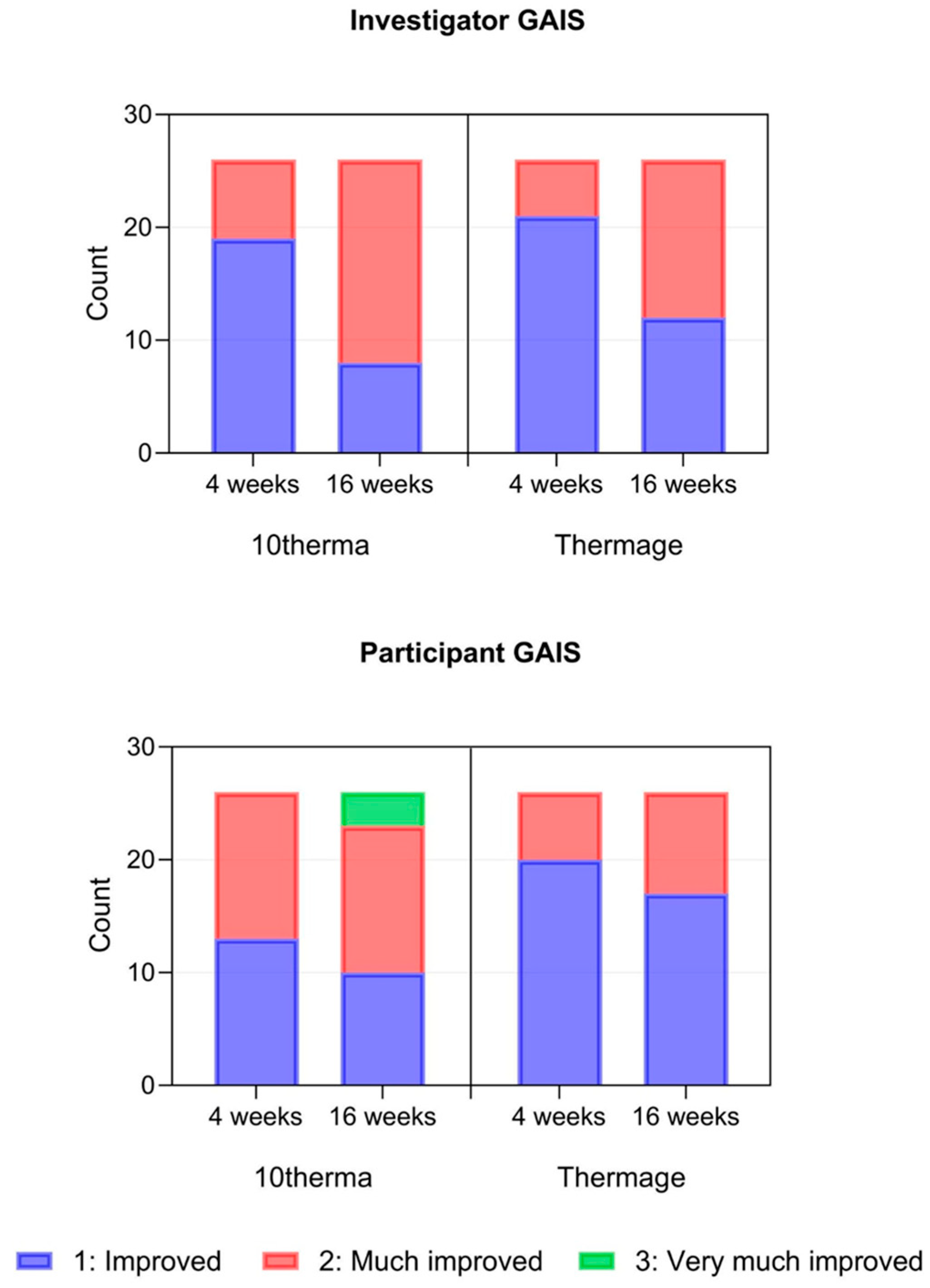
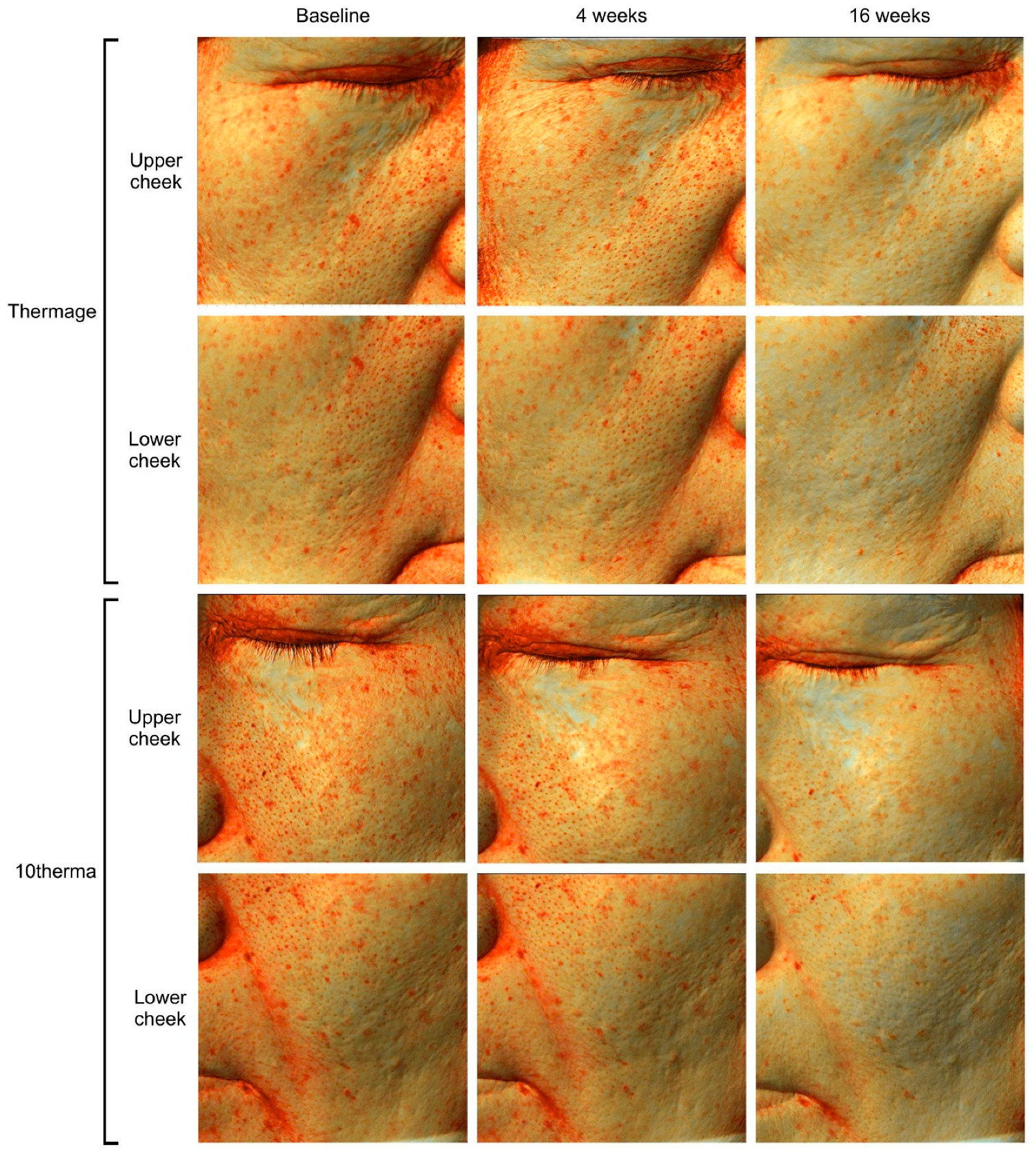
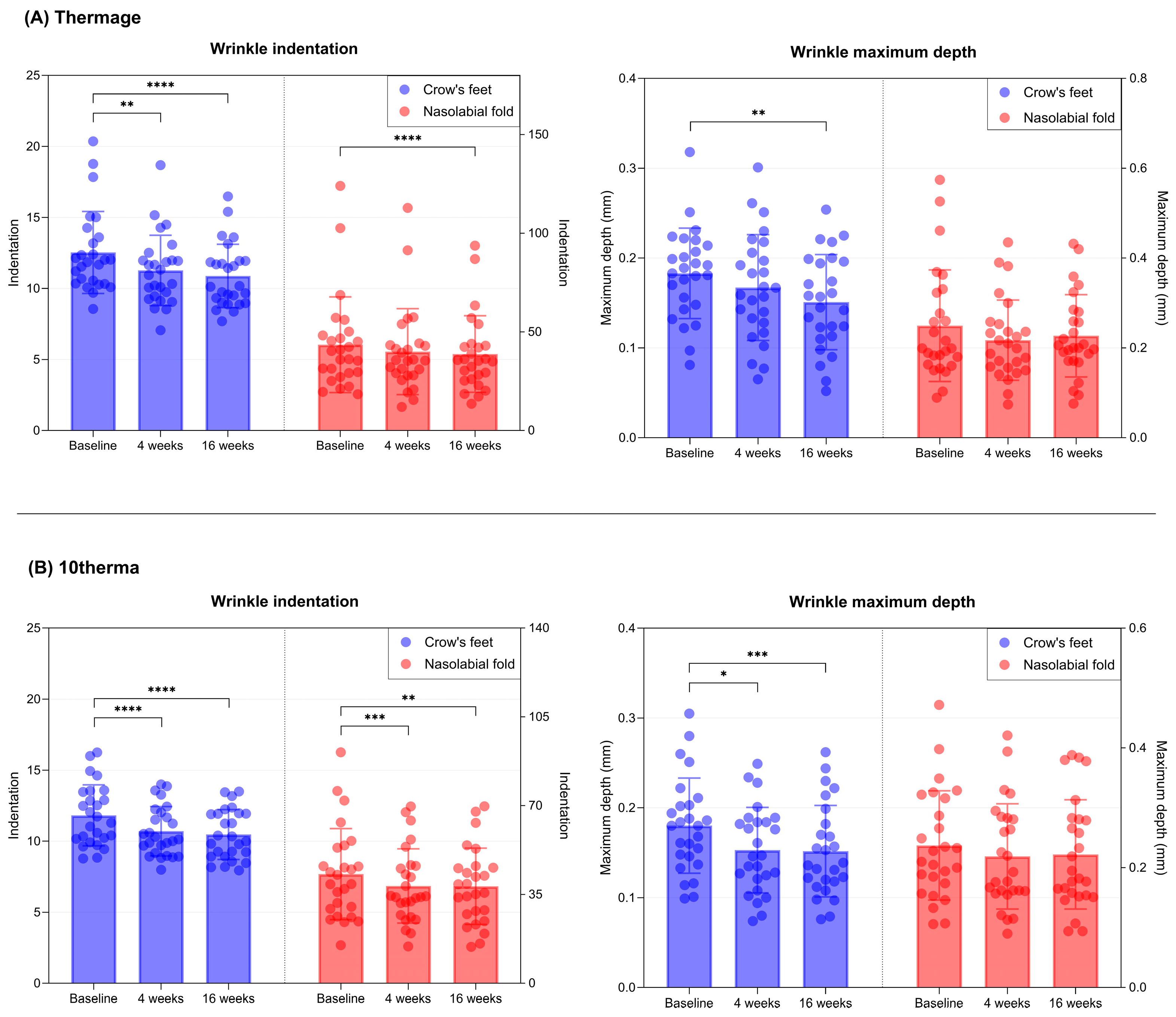
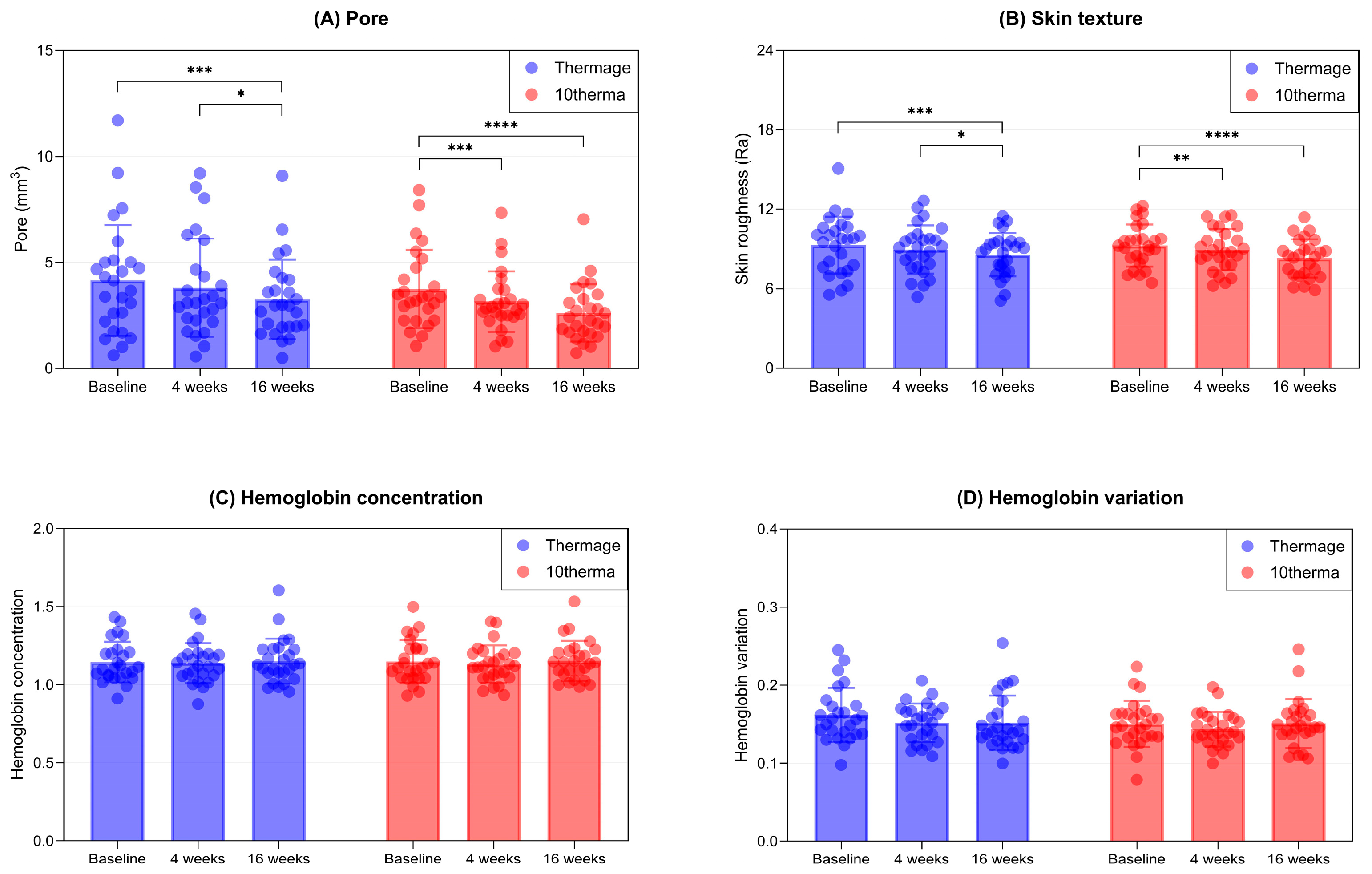
2.1.2. Secondary Outcomes: Wrinkles, Pores, Texture, Hemoglobin, and GAIS
2.2. Ex Vivo Study
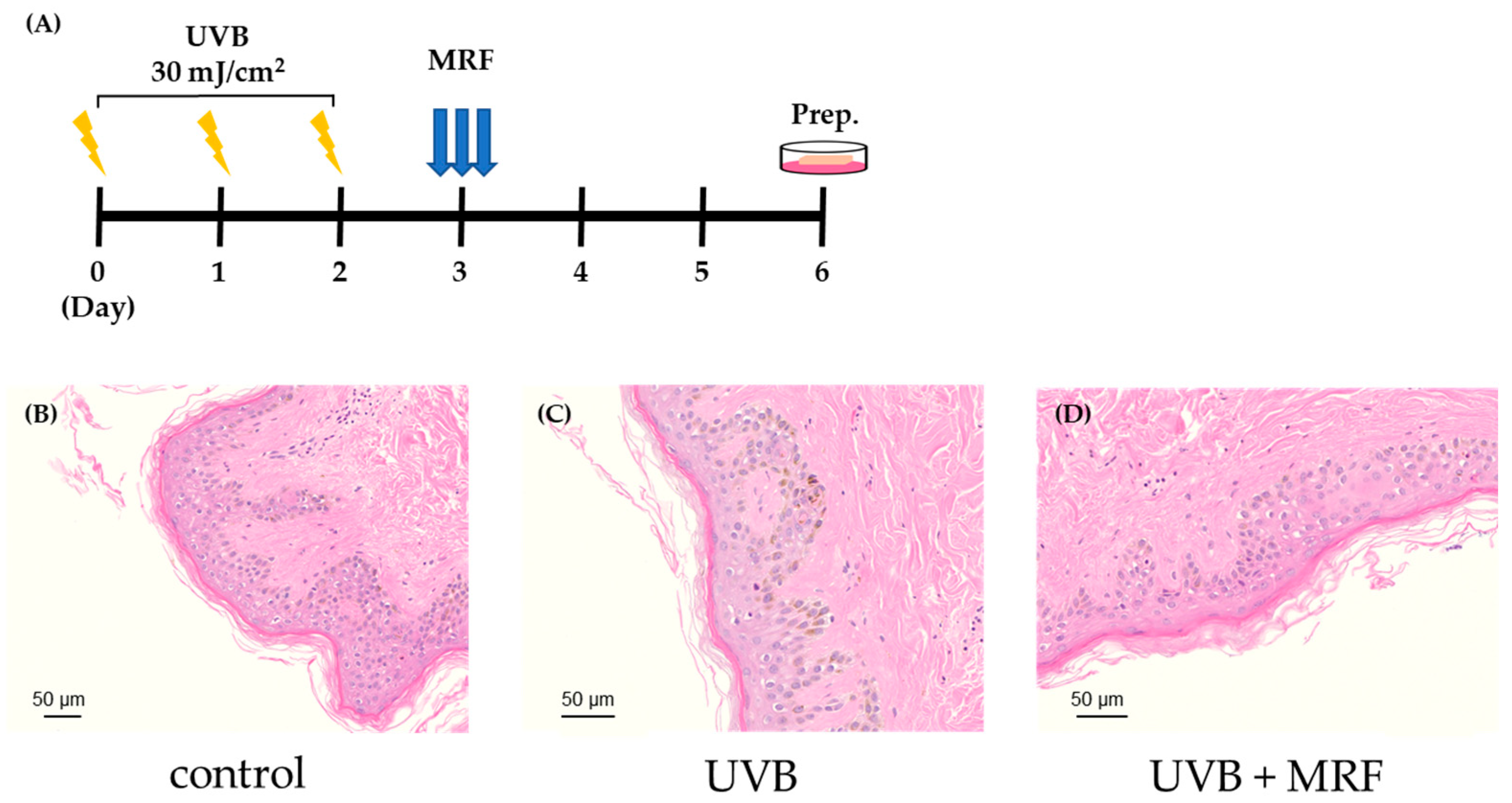
2.2.1. Hematoxylin and Eosin (H&E) Staining
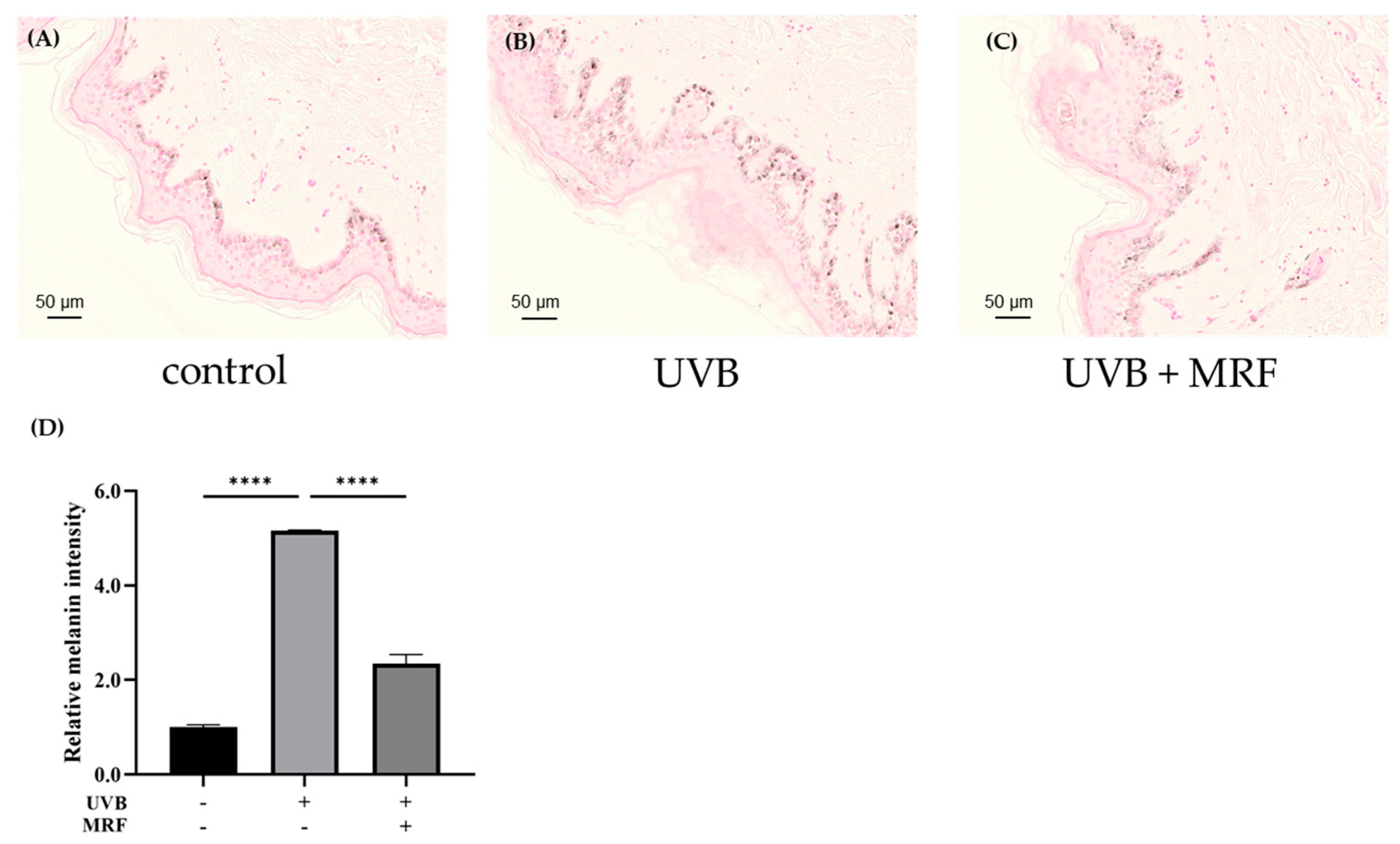
2.2.2. Fontana–Masson (FM) Staining
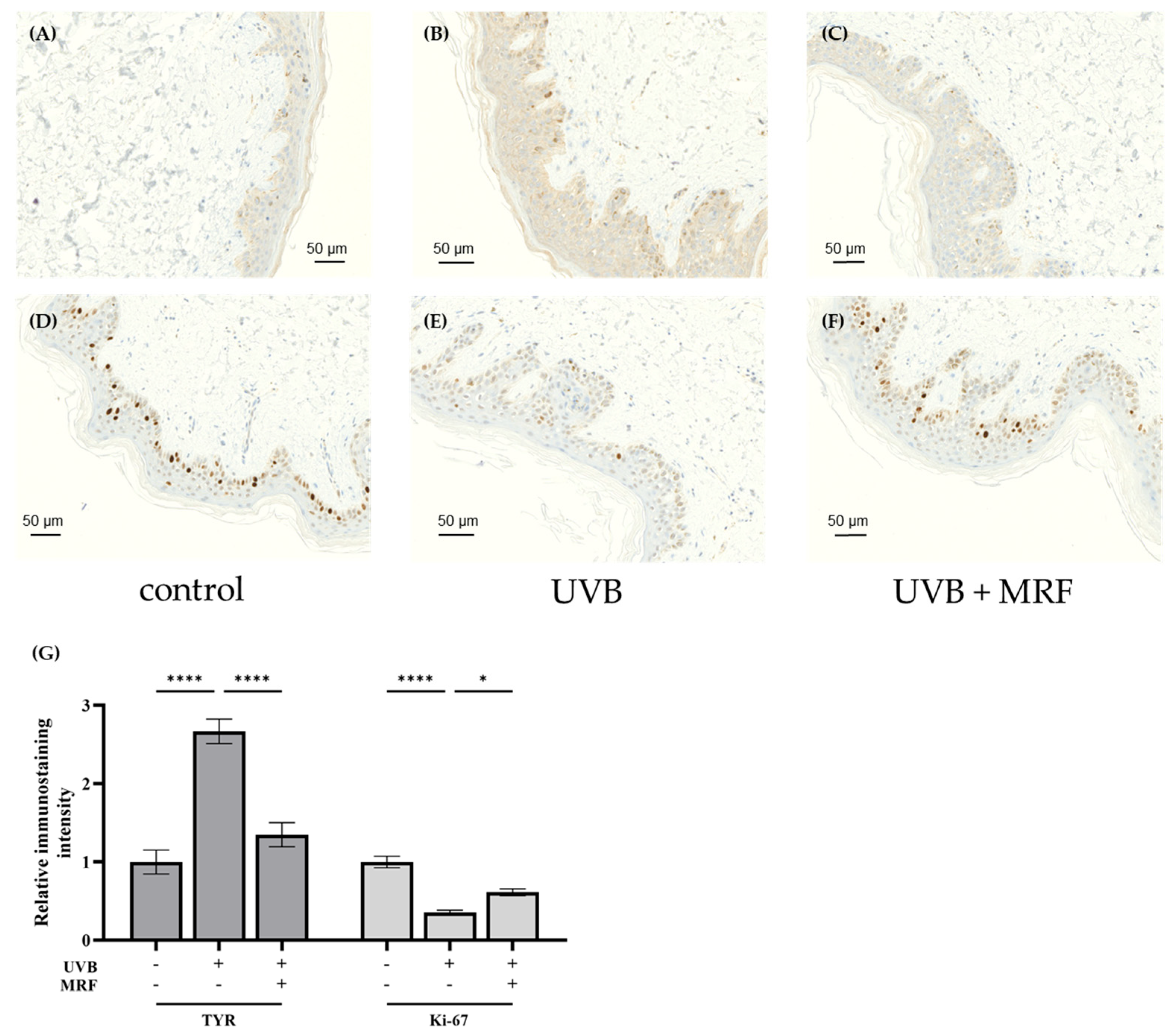
2.2.3. Immunohistochemistry (IHC) Analysis
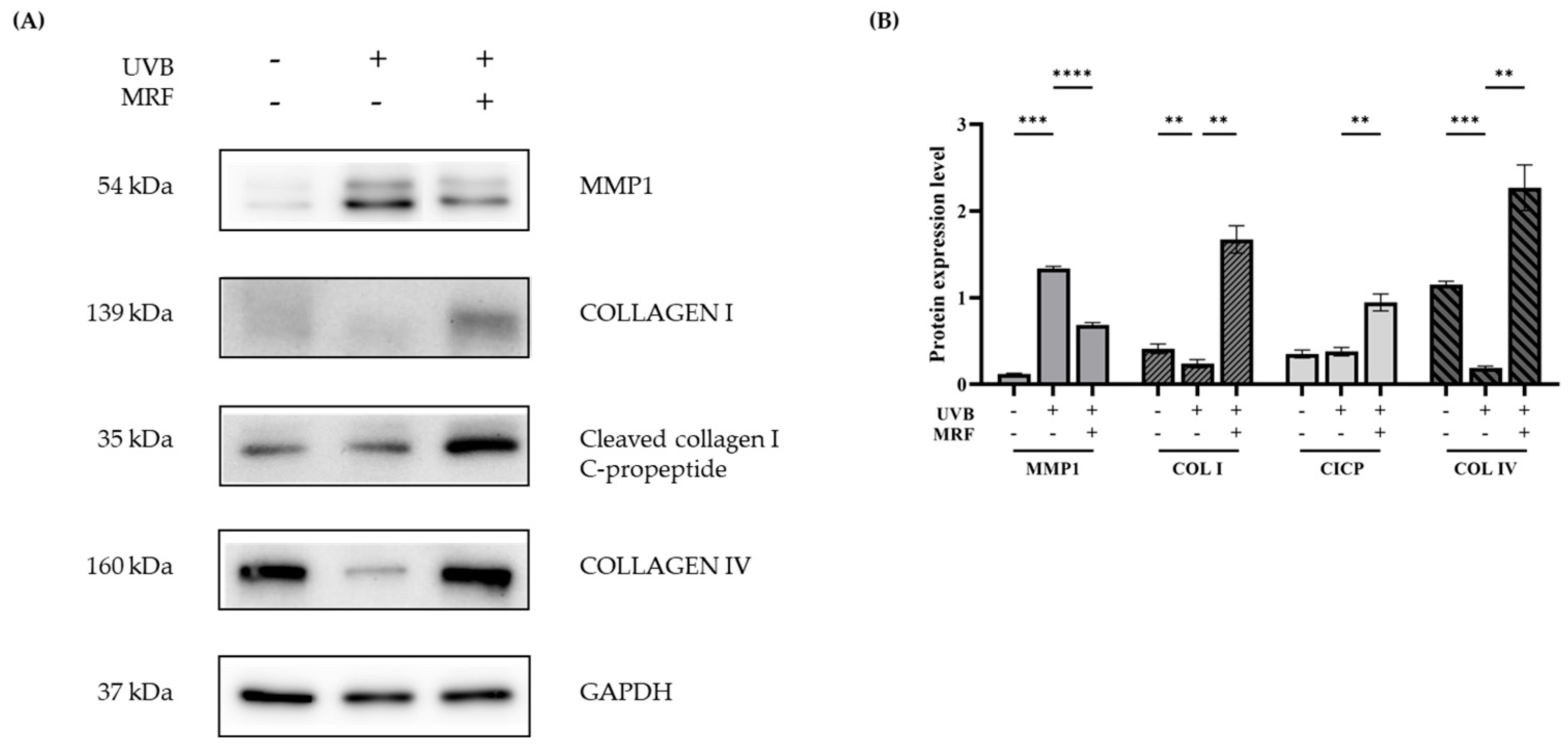
2.2.4. Western Blot (WB) Analysis
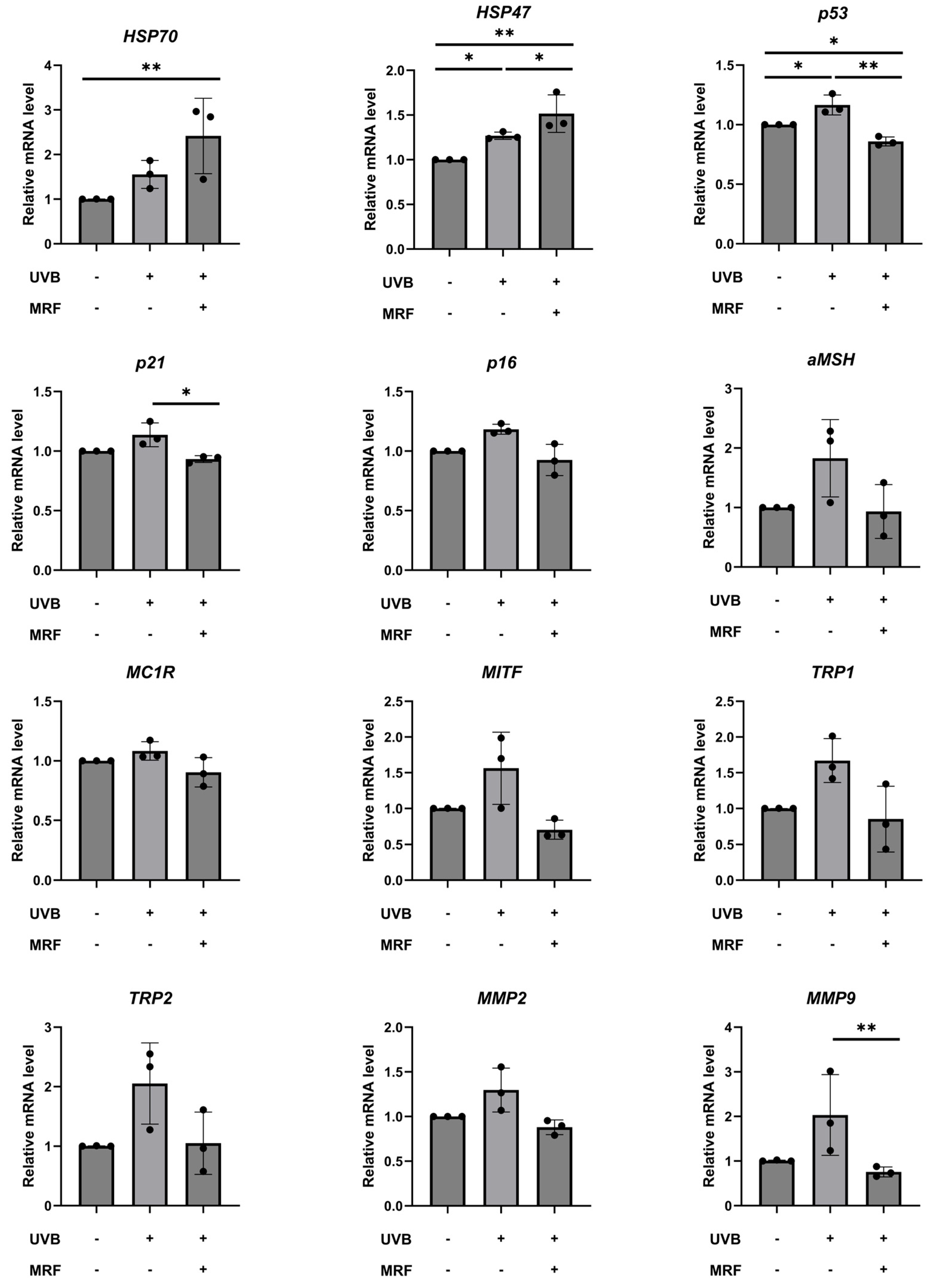
2.2.5. Quantitative Reverse Transcription PCR (RT-qPCR) Analysis
3. Discussion
4. Materials and Methods
4.1. Clinical Study
4.1.1. Study Design and Participants
4.1.2. Treatment Protocol
4.1.3. Clinical Measurements of Skin Parameters
Primary Outcome
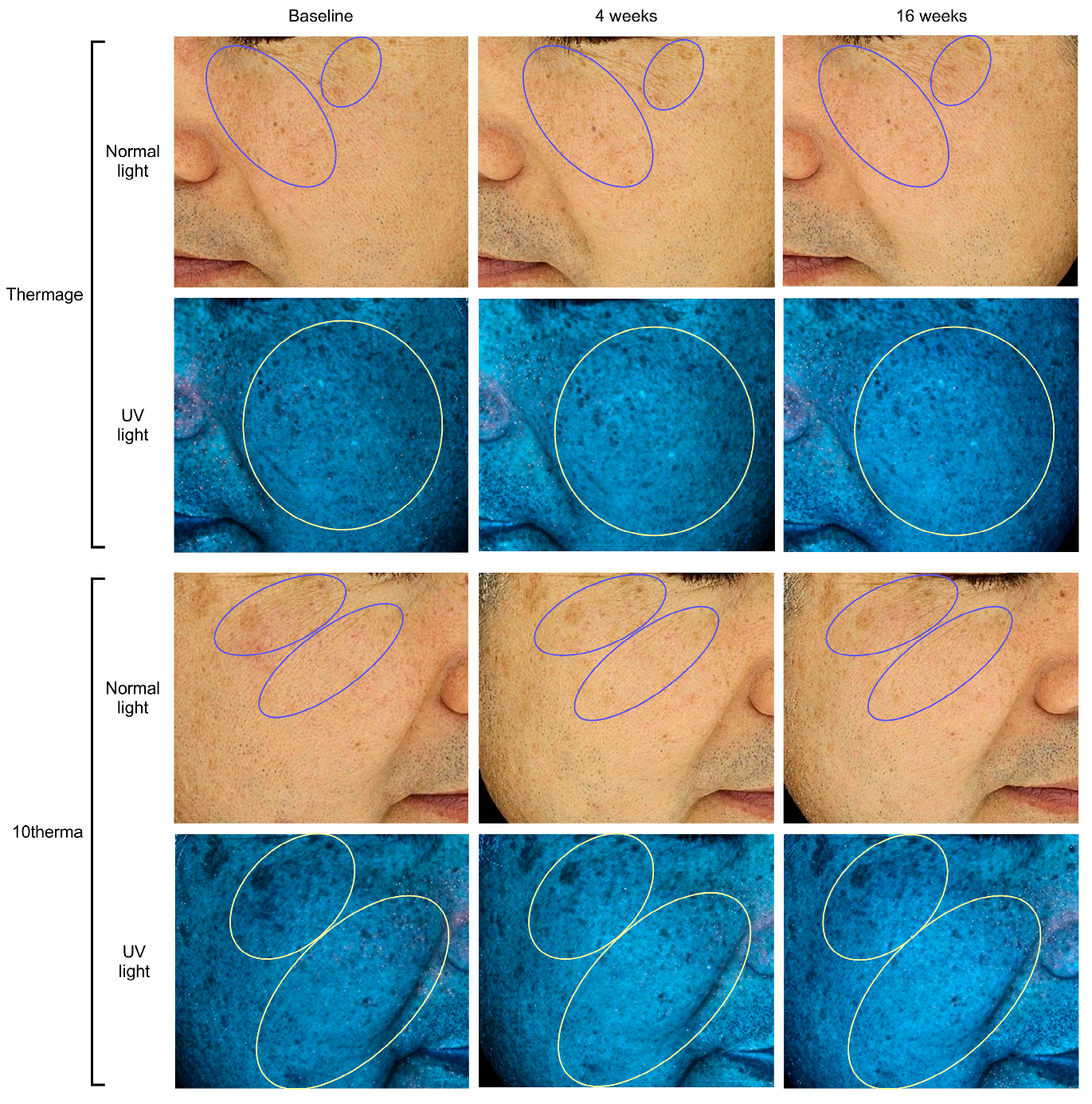
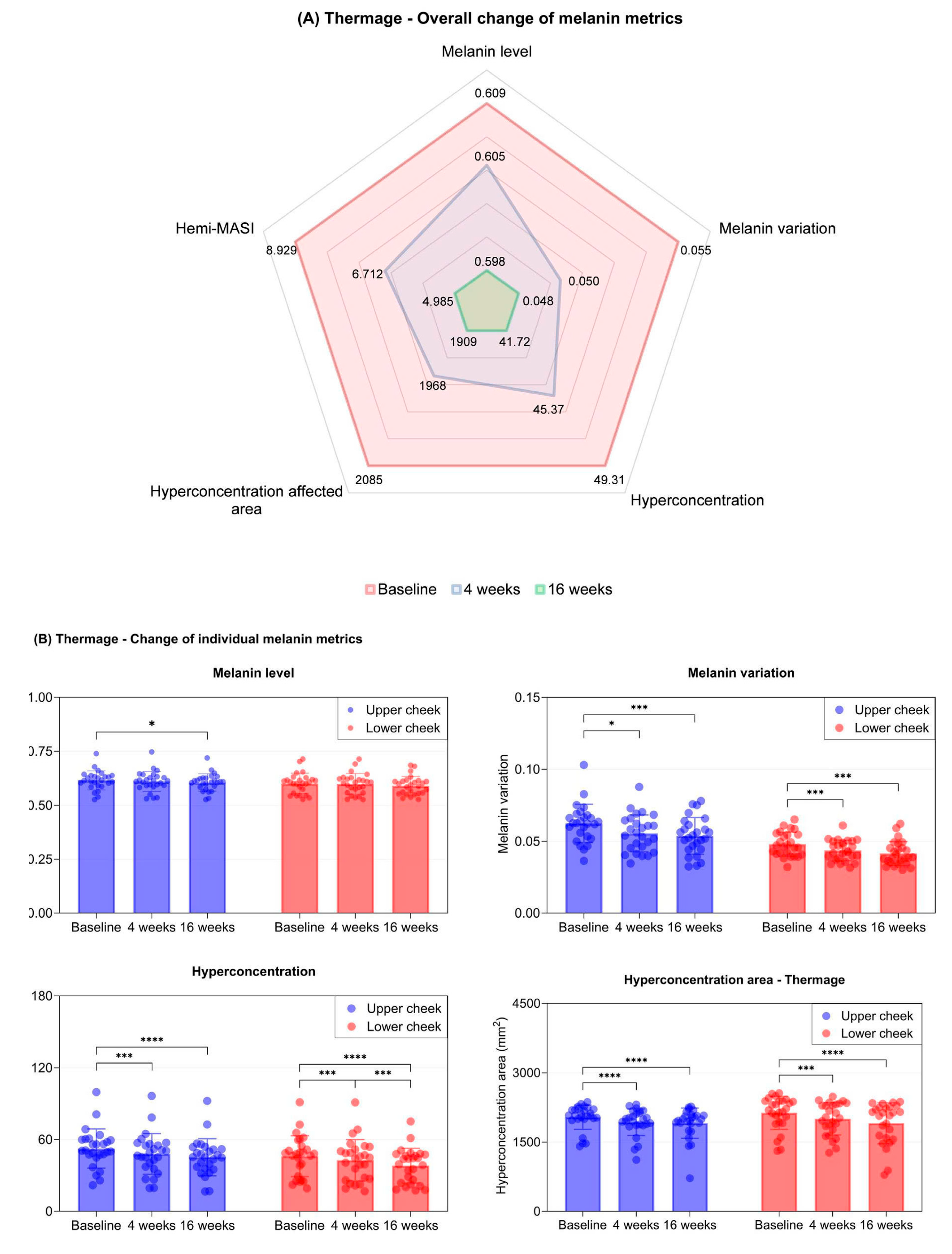
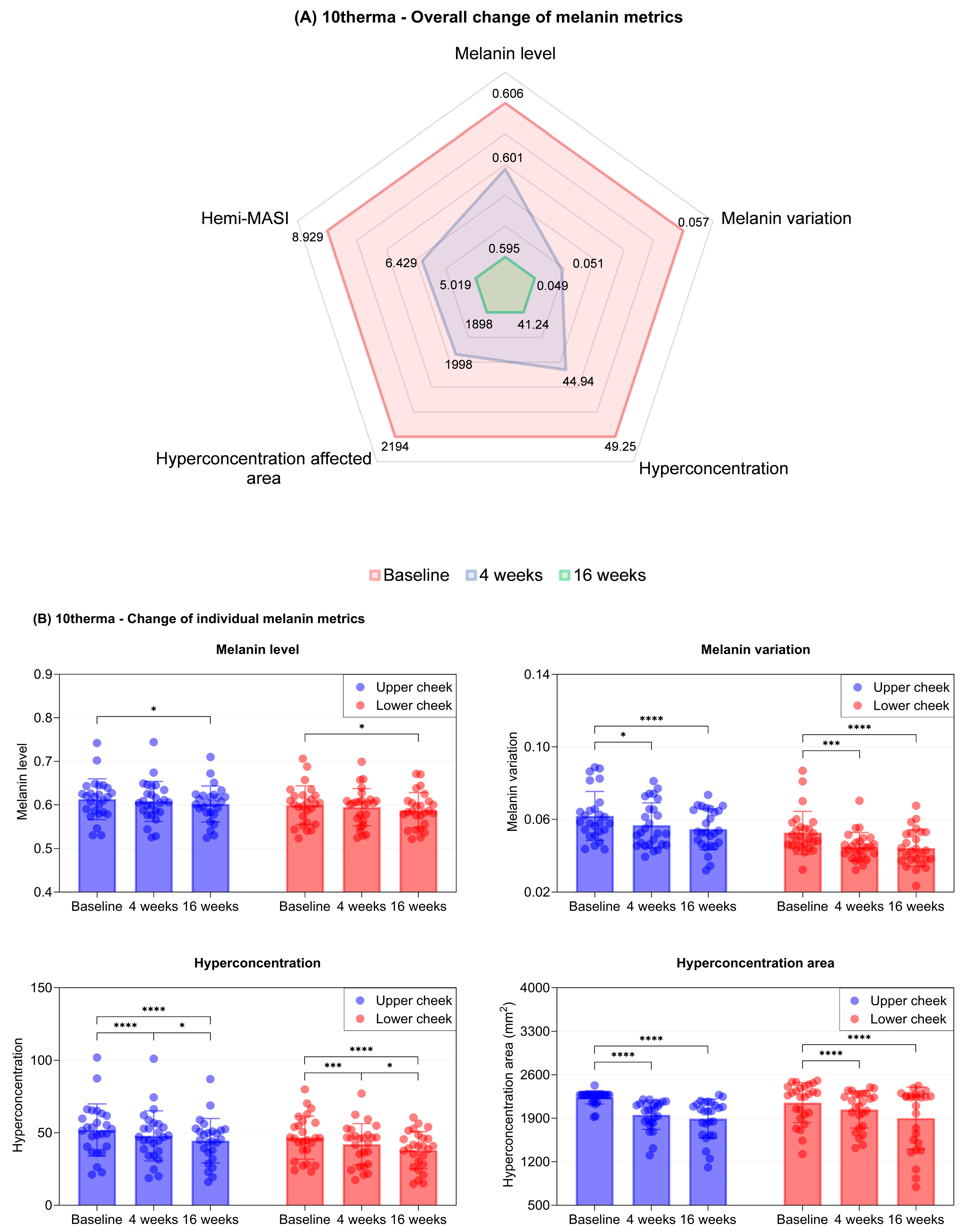
- Melanin level—measures the overall concentration of melanin pigment in the skin.
- Melanin variation (uniformity)—evaluates the evenness of melanin distribution, with higher variation indicating more uneven pigmentation.
- Melanin hyperconcentration—quantifies localized areas with abnormally high melanin density.
- Melanin hyperconcentration area (mm2)—measures the total surface area of these highly pigmented regions.
Secondary Outcomes
- Wrinkles: measured at the crow’s feet and nasolabial fold areas.
- ○
- Indentation index: indicates the average depth and severity of wrinkle depressions.
- ○
- Maximum wrinkle depth (mm): the deepest point of wrinkle furrows.
- Pore volume (mm3)—measures the total three-dimensional volume of visible skin pores, reflecting pore enlargement.
- Hemoglobin:
- ○
- Concentration—quantifies skin redness, which may be related to vascularization or inflammation.
- ○
- Variation—evaluates the evenness of redness distribution across the measured area.
- Texture: Arithmetical skin roughness (Ra)—calculates the average height variation of the skin surface; higher Ra values indicate rougher skin.
4.2. Ex Vivo Experiments
4.2.1. Ex Vivo Skin Tissue Culture and UVB/MRF Irradiation
4.2.2. Histological Analysis
- -
- H&E staining, sections were processed using a commercial H&E Stain Kit (ab245880, Abcam, Cambridge, MA, USA) according to the manufacturer’s instructions to assess histological changes in the epidermis and dermis.
- -
- FM staining, FFPE sections were subjected to standard black reduction to visualize melanin, followed by counterstaining with nuclear fast red, using the Fontana-Masson Stain Kit (ab150669, Abcam, Cambridge, MA, USA). Melanin deposition was quantified using ImageJ (version 1.46r) by calculating the percentage of melanin-positive area within the epidermis.
4.2.3. Immunohistochemical (IHC)
4.2.4. Western Blot
4.2.5. Quantitative Reverse Transcription PCR (RT-qPCR)
4.3. Statistical Analysis
5. Conclusions
Supplementary Materials
Author Contributions
Funding
Institutional Review Board Statement
Informed Consent Statement
Data Availability Statement
Acknowledgments
Conflicts of Interest
Abbreviations
| UV | absorbing ultraviolet |
| PIH | post-inflammatory hyperpigmentation |
| RF | radiofrequency |
| MRF | monopolar radiofrequency |
| MASI | Melasma Area and Severity Index |
| hemi-MASI | hemi–Melasma Area and Severity Index |
| GAIS | Global Aesthetic Improvement Scale |
| DMEM | Dulbecco’s Modified Eagle Medium |
| FFPE | formalin-fixed paraffin-embedded |
| H&E | Hematoxylin and eosin |
| FM | Fontana–Masson |
| IHC | Immunohistochemical |
| TYR | tyrosinase |
| MMP | matrix metalloproteinase |
| COL I | collagen type I |
| COL IV | collagen type IV |
| GAPDH | glyceraldehyde-3-phosphate dehydrogenase |
| RT-qPCR | Quantitative reverse transcription PCR |
| SD | standard deviation |
| HSP | Heat Shock Protein |
| αMSH | Alpha-Melanocyte-Stimulating Hormone |
| MC1R | Melanocortin 1 Receptor |
| MITF | Microphthalmia-Associated Transcription Factor |
References
- Cabaco, L.C.; Tomas, A.; Pojo, M.; Barral, D.C. The Dark Side of Melanin Secretion in Cutaneous Melanoma Aggressiveness. Front. Oncol. 2022, 12, 887366. [Google Scholar] [CrossRef] [PubMed]
- Thawabteh, A.M.; Jibreen, A.; Karaman, D.; Thawabteh, A.; Karaman, R. Skin Pigmentation Types, Causes and Treatment-A Review. Molecules 2023, 28, 4839. [Google Scholar] [CrossRef] [PubMed]
- Murase, D.; Hachiya, A.; Amano, Y.; Ohuchi, A.; Kitahara, T.; Takema, Y. The essential role of p53 in hyperpigmentation of the skin via regulation of paracrine melanogenic cytokine receptor signaling. J. Biol. Chem. 2009, 284, 4343–4353. [Google Scholar] [CrossRef] [PubMed]
- Kang, H.Y.; Lee, J.W.; Papaccio, F.; Bellei, B.; Picardo, M. Alterations of the pigmentation system in the aging process. Pigment. Cell Melanoma Res. 2021, 34, 800–813. [Google Scholar] [CrossRef] [PubMed]
- Yoon, J.E.; Kim, Y.; Kwon, S.; Kim, M.; Kim, Y.H.; Kim, J.H.; Park, T.J.; Kang, H.Y. Senescent fibroblasts drive ageing pigmentation: A potential therapeutic target for senile lentigo. Theranostics 2018, 8, 4620–4632. [Google Scholar] [CrossRef] [PubMed]
- Kim, H.M.; Oh, S.; Choi, C.H.; Yang, J.Y.; Kim, S.; Kang, D.; Son, K.H.; Byun, K. Attenuation Effect of Radiofrequency Irradiation on UV-B-Induced Skin Pigmentation by Decreasing Melanin Synthesis and through Upregulation of Heat Shock Protein 70. Molecules 2021, 26, 7648. [Google Scholar] [CrossRef] [PubMed]
- Kim, H.M.; Oh, S.; Byun, K.A.; Yang, J.Y.; Sun, H.J.; Kang, D.; Son, K.H.; Byun, K. Radiofrequency Irradiation Mitigated UV-B-Induced Skin Pigmentation by Increasing Lymphangiogenesis. Molecules 2022, 27, 454. [Google Scholar] [CrossRef] [PubMed]
- Byun, K.A.; Kim, H.M.; Oh, S.; Son, K.H.; Byun, K. Radiofrequency Irradiation Attenuated UVB-Induced Skin Pigmentation by Modulating ATP Release and CD39 Expression. Int. J. Mol. Sci. 2023, 24, 5506. [Google Scholar] [CrossRef] [PubMed]
- Kim, H.M.; Oh, S.; Yang, J.Y.; Sun, H.J.; Jang, M.; Kang, D.; Son, K.H.; Byun, K. Evaluating Whether Radiofrequency Irradiation Attenuated UV-B-Induced Skin Pigmentation by Increasing Melanosomal Autophagy and Decreasing Melanin Synthesis. Int. J. Mol. Sci. 2021, 22, 10724. [Google Scholar] [CrossRef] [PubMed]
- Vale, A.L.; Pereira, A.S.; Morais, A.; Noites, A.; Mendonca, A.C.; Martins Pinto, J.; Vilarinho, R.; Carvalho, P. Effects of radiofrequency on adipose tissue: A systematic review with meta-analysis. J. Cosmet. Dermatol. 2018, 17, 703–711. [Google Scholar] [CrossRef] [PubMed]
- Bonjorno, A.R.; Gomes, T.B.; Pereira, M.C.; de Carvalho, C.M.; Gabardo, M.C.L.; Kaizer, M.R.; Zielak, J.C. Radiofrequency therapy in esthetic dermatology: A review of clinical evidences. J. Cosmet. Dermatol. 2020, 19, 278–281. [Google Scholar] [CrossRef] [PubMed]
- Meyer, P.F.; de Oliveira, P.; Silva, F.; da Costa, A.C.S.; Pereira, C.R.A.; Casenave, S.; Valentim Silva, R.M.; Araujo-Neto, L.G.; Santos-Filho, S.D.; Aizamaque, E.; et al. Radiofrequency treatment induces fibroblast growth factor 2 expression and subsequently promotes neocollagenesis and neoangiogenesis in the skin tissue. Lasers Med. Sci. 2017, 32, 1727–1736. [Google Scholar] [CrossRef] [PubMed]
- Vassao, P.G.; Balao, A.B.; Credidio, B.M.; Do Vale, G.C.A.; Assis Garcia, L.; Martignago, C.C.S.; Parisi, J.R.; Laakso, E.L.; Renno, A.C.M. Radiofrequency and skin rejuvenation: A systematic review. J. Cosmet. Laser Ther. 2022, 24, 9–21. [Google Scholar] [CrossRef] [PubMed]
- Han, S.H.; Yoon, Y.M.; Lee, Y.W.; Choe, Y.B.; Ahn, K.J. Usefulness of Monopolar Thermal Radiofrequency Treatment for Periorbital Wrinkles. Ann. Dermatol. 2018, 30, 296–303. [Google Scholar] [CrossRef] [PubMed]
- Lyu, J.-J.; Liu, S.-X. Radiofrequency in facial rejuvenation. Int. J. Dermatol. Venereol. 2022, 5, 94–100. [Google Scholar] [CrossRef]
- Cameli, N.; Abril, E.; Mariano, M.; Berardesca, E. Combined use of monopolar radiofrequency and transdermal drug delivery in the treatment of melasma. Dermatol. Surg. 2014, 40, 748–755. [Google Scholar] [PubMed]
- Peters, J.D.; Salame, N.; Eber, A.; Labadie, J.G.; Kandula, P.; Dover, J.S. Combination Use of 1440-nm and 1927-nm Nonablative Fractional Laser With Monopolar Radiofrequency for the Treatment of Facial Skin Laxity, Skin Texture, and Pigmentation. Dermatol. Surg. 2025, 51, 684–689. [Google Scholar] [CrossRef] [PubMed]
- Wang, L.Z.; Ding, J.P.; Yang, M.Y.; Chen, D.W.; Chen, B. Treatment of facial post-burn hyperpigmentation using micro-plasma radiofrequency technology. Lasers Med. Sci. 2015, 30, 241–245. [Google Scholar] [CrossRef] [PubMed]
- Nilforoushzadeh, M.A.; Heidari-Kharaji, M.; Fakhim, T.; Torkamaniha, E.; Tehrani, S.; Delavar, S.; Rafiee, S.; Nouri, M.; Najar Nobari, N.; Shahverdi, M. Treatment of periorbital hyperpigmentation using sublative fractional radiofrequency (SFR). Skin. Res. Technol. 2023, 29, e13467. [Google Scholar] [CrossRef] [PubMed]
- Lee, Y.I.; Kim, E.; Lee, D.W.; Kim, J.; Kim, J.; Lee, W.J.; Lee, J.H. Synergistic Effect of 300 mum Needle-Depth Fractional Microneedling Radiofrequency on the Treatment of Senescence-Induced Aging Hyperpigmentation of the Skin. Int. J. Mol. Sci. 2021, 22, 7480. [Google Scholar] [CrossRef] [PubMed]
- Kim, H.M.; Lee, M.J. Therapeutic efficacy and safety of invasive pulsed-type bipolar alternating current radiofrequency on melasma and rebound hyperpigmentation. Med. Lasers 2017, 6, 17–23. [Google Scholar] [CrossRef]
- Garg, S.; Vashisht, K.R.; Garg, D.; Oberoi, B.; Sharma, G. Advancements in Laser Therapies for Dermal Hyperpigmentation in Skin of Color: A Comprehensive Literature Review and Experience of Sequential Laser Treatments in a Cohort of 122 Indian Patients. J. Clin. Med. 2024, 13, 2116. [Google Scholar] [CrossRef] [PubMed]
- Sullivan, S.A.; Dailey, R.A. Complications of laser resurfacing and their management. Ophthalmic Plast. Reconstr. Surg. 2000, 16, 417–426. [Google Scholar] [CrossRef] [PubMed]
- Ramsdell, W.M. Fractional CO2 Laser Resurfacing Complications. Semin. Plast. Surg. 2012, 26, 137–140. [Google Scholar] [CrossRef] [PubMed]
- el-Domyati, M.; el-Ammawi, T.S.; Medhat, W.; Moawad, O.; Brennan, D.; Mahoney, M.G.; Uitto, J. Radiofrequency facial rejuvenation: Evidence-based effect. J. Am. Acad. Dermatol. 2011, 64, 524–535. [Google Scholar] [CrossRef] [PubMed]
- Robati, R.M.; Asadi, E. Efficacy and safety of fractional CO(2) laser versus fractional Er:YAG laser in the treatment of facial skin wrinkles. Lasers Med. Sci. 2017, 32, 283–289. [Google Scholar] [CrossRef] [PubMed]
- Kim, J.C.; Park, T.J.; Kang, H.Y. Skin-Aging Pigmentation: Who Is the Real Enemy? Cells 2022, 11, 2541. [Google Scholar] [CrossRef] [PubMed]
- Ansary, T.M.; Hossain, M.R.; Kamiya, K.; Komine, M.; Ohtsuki, M. Inflammatory Molecules Associated with Ultraviolet Radiation-Mediated Skin Aging. Int. J. Mol. Sci. 2021, 22, 3974. [Google Scholar] [CrossRef] [PubMed]
- Yardman-Frank, J.M.; Fisher, D.E. Skin pigmentation and its control: From ultraviolet radiation to stem cells. Exp. Dermatol. 2021, 30, 560–571. [Google Scholar] [CrossRef] [PubMed]
- Jonak, C.; Klosner, G.; Trautinger, F. Significance of heat shock proteins in the skin upon UV exposure. Front. Biosci. (Landmark Ed.) 2009, 14, 4758–4768. [Google Scholar] [CrossRef] [PubMed]
- Khan, E.S.; Däinghaus, T. HSP47 in human diseases: Navigating pathophysiology, diagnosis and therapy. Clin. Transl. Med. 2024, 14, e1755. [Google Scholar] [CrossRef]
- Ho, C.Y.; Dreesen, O. Faces of cellular senescence in skin aging. Mech. Ageing Dev. 2021, 198, 111525. [Google Scholar] [CrossRef] [PubMed]
- Wang, A.S.; Dreesen, O. Biomarkers of Cellular Senescence and Skin Aging. Front. Genet. 2018, 9, 247. [Google Scholar] [CrossRef] [PubMed]
- Hughes, B.K.; Bishop, C.L. Current Understanding of the Role of Senescent Melanocytes in Skin Ageing. Biomedicines 2022, 10, 3111. [Google Scholar] [CrossRef] [PubMed]
- Wan, J.; Liao, Z.; Dong, B.; Jiang, S.; Lei, T. Targeting senescent dermal fibroblasts responsible for hyperactive melanocytes in melasma. Chin. Med. J. 2023, 136, 1563–1565. [Google Scholar] [CrossRef] [PubMed]
- Feru, J.; Delobbe, E.; Ramont, L.; Brassart, B.; Terryn, C.; Dupont-Deshorgue, A.; Garbar, C.; Monboisse, J.C.; Maquart, F.X.; Brassart-Pasco, S. Aging decreases collagen IV expression in vivo in the dermo-epidermal junction and in vitro in dermal fibroblasts: Possible involvement of TGF-beta1. Eur. J. Dermatol. 2016, 26, 350–360. [Google Scholar] [CrossRef] [PubMed]
- Nan, L.; Guo, P.; Hui, W.; Xia, F.; Yi, C. Recent advances in dermal fibroblast senescence and skin aging: Unraveling mechanisms and pioneering therapeutic strategies. Front. Pharmacol. 2025, 16, 1592596. [Google Scholar] [CrossRef] [PubMed]
- Ham, S.Y.; Pyo, M.J.; Kang, M.; Kim, Y.S.; Lee, D.H.; Chung, J.H.; Lee, S.T. HSP47 Increases the Expression of Type I Collagen in Fibroblasts through IRE1alpha Activation, XBP1 Splicing, and Nuclear Translocation of beta-Catenin. Cells 2024, 13, 527. [Google Scholar] [CrossRef] [PubMed]
- Louis, F.; Fujii, N.; Katsuyama, M.; Okumoto, S.; Matsusaki, M. Effects of radiofrequency and ultrasound on the turnover rate of skin aging components (skin extracellular matrix and epidermis) via HSP47-induced stimulation. Biochem. Biophys. Res. Commun. 2020. [Google Scholar] [CrossRef] [PubMed]
- Byun, K.A.; Kim, H.M.; Oh, S.; Batsukh, S.; Son, K.H.; Byun, K. Radiofrequency Treatment Attenuates Age-Related Changes in Dermal-Epidermal Junctions of Animal Skin. Int. J. Mol. Sci. 2024, 25, 5178. [Google Scholar] [CrossRef] [PubMed]
- Kim, H.; Jang, J.; Song, M.J.; Park, C.H.; Lee, D.H.; Lee, S.H.; Chung, J.H. Inhibition of matrix metalloproteinase expression by selective clearing of senescent dermal fibroblasts attenuates ultraviolet-induced photoaging. Biomed. Pharmacother. 2022, 150, 113034. [Google Scholar] [CrossRef] [PubMed]







| Thermage | 10therma | |||||
|---|---|---|---|---|---|---|
| Baseline | 4 Weeks | 16 Weeks | Baseline | 4 Weeks | 16 Weeks | |
| cAge (years) | 57.54 ± 4.09 | |||||
| Gender, n (%) | ||||||
| Male | 3 (11.54) | |||||
| Female | 23 (88.46) | |||||
| Fitzpatrick skin type, n (%) | ||||||
| II | 19 (73.08%) | |||||
| III | 5 (19.23%) | |||||
| IV | 2 (7.69%) | |||||
| Melanin level | ||||||
| Upper cheek | 0.62 ± 0.04 | 0.61 ± 0.05 | 0.61 ± 0.04 | 0.61 ± 0.05 | 0.61 ± 0.05 | 0.6 ± 0.04 |
| p-value 1 | 0.23 | 0.043 | 0.124 | 0.036 | ||
| p-value 2 | 0.578 | 0.347 | ||||
| Lower cheek | 0.6 ± 0.05 | 0.6 ± 0.05 | 0.59 ± 0.04 | 0.6 ± 0.04 | 0.59 ± 0.04 | 0.59 ± 0.04 |
| p-value 1 | 0.7504 | 0.0661 | 0.319 | 0.023 | ||
| p-value 2 | 0.191 | 0.244 | ||||
| Melanin variation | ||||||
| Upper cheek | 0.06 ± 0.01 | 0.06 ± 0.01 | 0.05 ± 0.01 | 0.06 ± 0.01 | 0.06 ± 0.01 | 0.05 ± 0.01 |
| p-value 1 | 0.037 | 0.001 | 0.011 | <0.001 | ||
| p-value 2 | 0.752 | 0.636 | ||||
| Lower cheek | 0.05 ± 0.01 | 0.04 ± 0.01 | 0.04 ± 0.01 | 0.05 ± 0.01 | 0.04 ± 0.01 | 0.04 ± 0.01 |
| p-value 1 | 0.003 | 0.002 | 0.001 | <0.001 | ||
| p-value 2 | 0.335 | 0.999 | ||||
| Hyperconcentration | ||||||
| Upper cheek | 52.5 ± 16.35 | 47.99 ± 17.05 | 45.25 ± 15.56 | 51.9 ± 18.05 | 47.85 ± 17.3 | 44.51 ± 15.32 |
| p-value 1 | 0.002 | <0.001 | <0.001 | <0.001 | ||
| p-value 2 | 0.146 | 0.024 | ||||
| Lower cheek | 46.12 ± 17.11 | 42.75 ± 17.28 | 38.18 ± 14.55 | 46.61 ± 14.85 | 42.03 ± 14.24 | 37.96 ± 12.86 |
| p-value 1 | 0.004 | <0.001 | 0.002 | <0.001 | ||
| p-value 2 | 0.002 | 0.016 | ||||
| Hyperconcentration area (mm2) | ||||||
| Upper cheek | 2037.77 ± 263.73 | 1931.62 ± 289.1 | 1908.62 ± 328.31 | 2236.62 ± 107.78 | 1954.85 ± 233.88 | 1894.08 ± 314.18 |
| p-value 1 | <0.001 | <0.001 | <0.001 | <0.001 | ||
| p-value 2 | 0.999 | 0.332 | ||||
| Lower cheek | 2132.08 ± 357.29 | 2004.27 ± 349.82 | 1909.35 ± 444.14 | 2152.42 ± 321.45 | 2041.62 ± 298.89 | 1902.31 ± 499.15 |
| p-value 1 | 0.002 | <0.001 | <0.001 | <0.001 | ||
| p-value 2 | 0.995 | 0.497 | ||||
| Hemi-MASI | 8.93 ± 3.64 | 6.71 ± 3.03 | 4.98 ± 2.47 | 8.93 ± 3.47 | 6.43 ± 2.98 | 5.02 ± 2.4 |
| p-value 1 | 0.001 | <0.001 | <0.001 | <0.001 | ||
| p-value 2 | 0.005 | 0.021 | ||||
| Wrinkle indentation | ||||||
| Crow’s feet | 12.53 ± 2.89 | 11.27 ± 2.47 | 10.88 ± 2.24 | 11.82 ± 2.14 | 10.7 ± 1.73 | 10.47 ± 1.75 |
| p-value 1 | 0.007 | <0.001 | <0.001 | <0.001 | ||
| p-value 2 | 0.08 | 0.183 | ||||
| Nasolabial fold | 43.47 ± 24.23 | 39.97 ± 21.78 | 38.75 ± 19.38 | 43.03 ± 17.95 | 38.35 ± 14.64 | 38.23 ± 15.04 |
| p-value 1 | 0.055 | <0.001 | 0.003 | 0.005 | ||
| p-value 2 | 0.157 | 0.994 | ||||
| Wrinkle maximum depth (mm) | ||||||
| Crow’s feet | 0.18 ± 0.05 | 0.17 ± 0.06 | 0.15 ± 0.05 | 0.18 ± 0.05 | 0.15 ± 0.05 | 0.15 ± 0.05 |
| p-value 1 | 0.178 | 0.009 | 0.017 | 0.002 | ||
| p-value 2 | 0.173 | 0.999 | ||||
| Nasolabial fold | 0.25 ± 0.12 | 0.22 ± 0.09 | 0.23 ± 0.09 | 0.24 ± 0.09 | 0.22 ± 0.09 | 0.22 ± 0.09 |
| p-value 1 | 0.184 | 0.999 | 0.716 | 0.249 | ||
| p-value 2 | 0.636 | 0.999 | ||||
| Pore (mm3) | 4.15 ± 2.61 | 3.8 ± 2.31 | 3.25 ± 1.87 | 3.75 ± 1.84 | 3.16 ± 1.43 | 2.61 ± 1.35 |
| p-value 1 | 0.999 | 0.002 | 0.003 | <0.001 | ||
| p-value 2 | 0.025 | 0.184 | ||||
| Skin texture (Ra) | 9.3 ± 2.15 | 8.96 ± 1.82 | 8.58 ± 1.63 | 9.26 ± 1.59 | 8.95 ± 1.56 | 8.29 ± 1.45 |
| p-value 1 | 0.237 | 0.007 | 0.007 | <0.001 | ||
| p-value 2 | 0.029 | 0.214 | ||||
| Hemoglobin | ||||||
| Concentration | 1.15 ± 0.13 | 1.14 ± 0.13 | 1.15 ± 0.14 | 1.15 ± 0.14 | 1.13 ± 0.12 | 1.15 ± 0.13 |
| p-value 1 | 0.802 | 0.999 | 0.999 | 0.999 | ||
| p-value 2 | 0.995 | 0.497 | ||||
| Variation | 0.16 ± 0.03 | 0.15 ± 0.02 | 0.15 ± 0.03 | 0.15 ± 0.03 | 0.14 ± 0.02 | 0.15 ± 0.03 |
| p-value 1 | 0.636 | 0.113 | 0.497 | 0.999 | ||
| p-value 2 | 0.999 | 0.157 | ||||
| Thermage | 10therma | |||
|---|---|---|---|---|
| β | p-Value 1 | β | p-Value 1 | |
| 4 weeks—baseline change | ||||
| Melanin level | 0.097 | 0.44 | −0.006 | 0.96 |
| Melanin variation | 0.73 | 0.21 | 0.03 | 0.95 |
| Hyperconcentration | 1.05 | 0.04 | −0.17 | 0.69 |
| Hyperconcentration area | 0.09 | 0.785 | −0.24 | 0.3 |
| 16 weeks—baseline change | ||||
| Melanin level | −0.007 | 0.97 | −0.017 | 0.91 |
| Melanin variation | −0.38 | 0.58 | −0.16 | 0.8 |
| Hyperconcentration | 0.22 | 0.67 | −0.3 | 0.63 |
| Hyperconcentration area | −0.34 | 0.59 | −0.13 | 0.83 |
Disclaimer/Publisher’s Note: The statements, opinions and data contained in all publications are solely those of the individual author(s) and contributor(s) and not of MDPI and/or the editor(s). MDPI and/or the editor(s) disclaim responsibility for any injury to people or property resulting from any ideas, methods, instructions or products referred to in the content. |
© 2026 by the authors. Licensee MDPI, Basel, Switzerland. This article is an open access article distributed under the terms and conditions of the Creative Commons Attribution (CC BY) license.
Share and Cite
Baek, Y.; Nguyen, N.H.; Ham, S.; Kim, W.; Lee, J.H.; Lee, Y.I. Monopolar Radiofrequency for Facial Hyperpigmentation Treatment: An Integrated Retrospective Clinical Trial and Ex Vivo Study. Int. J. Mol. Sci. 2026, 27, 761. https://doi.org/10.3390/ijms27020761
Baek Y, Nguyen NH, Ham S, Kim W, Lee JH, Lee YI. Monopolar Radiofrequency for Facial Hyperpigmentation Treatment: An Integrated Retrospective Clinical Trial and Ex Vivo Study. International Journal of Molecular Sciences. 2026; 27(2):761. https://doi.org/10.3390/ijms27020761
Chicago/Turabian StyleBaek, Yujin, Ngoc Ha Nguyen, Seoyoon Ham, Wanjin Kim, Ju Hee Lee, and Young In Lee. 2026. "Monopolar Radiofrequency for Facial Hyperpigmentation Treatment: An Integrated Retrospective Clinical Trial and Ex Vivo Study" International Journal of Molecular Sciences 27, no. 2: 761. https://doi.org/10.3390/ijms27020761
APA StyleBaek, Y., Nguyen, N. H., Ham, S., Kim, W., Lee, J. H., & Lee, Y. I. (2026). Monopolar Radiofrequency for Facial Hyperpigmentation Treatment: An Integrated Retrospective Clinical Trial and Ex Vivo Study. International Journal of Molecular Sciences, 27(2), 761. https://doi.org/10.3390/ijms27020761