Molecular Mechanisms of Endocrine-Disrupting Chemicals and Emerging-Pollutant Toxicity in Human Reproduction: From Xenobiotic Exposure to Fertility Impairment and Reproductive Carcinogenesis



Abstract
1. Introduction
2. Occurrence, Sources and Human Exposure to Reproductively Active Emerging Pollutants
2.1. Chemical Classes, Environmental Sources and Rationale for Inclusion
2.2. Routes of Human Exposure


2.3. Internal Dose, Biological Matrices and Analytical Identification
3. Molecular Mechanisms and Class-Specific Evidence
3.1. Disruption of Hypothalamic–Pituitary–Gonadal Signalling
3.2. Nuclear and Membrane Hormone-Receptor Interference
3.3. Disruption of Steroidogenesis
3.4. Oxidative Stress and Mitochondrial Dysfunction
3.5. Epigenetic Reprogramming and Transgenerational Inheritance
3.6. Crosstalk with Metabolic and Immune Signalling
3.7. Class-Specific Mechanistic and Human Evidence
3.7.1. Phthalates
3.7.2. Bisphenols (BPA, BPS, BPF)
3.7.3. Per- and Polyfluoroalkyl Substances (PFASs)
3.7.4. Pesticides
3.7.5. Polychlorinated Biphenyls (PCBs) and Dioxins
3.7.6. Flame Retardants (PBDEs and OPFRs)
3.7.7. Pharmaceuticals and Personal-Care Products (PPCPs)
4. Cytotoxicity and Genotoxicity in Germ Cells and the Early Embryo
4.1. Male Germ Line: DNA Fragmentation, Oxidative Lesions and Barrier Failure
4.2. Female Germ Line and Gonadal Soma: Meiotic Errors, Apoptosis and Pyroptosis
4.3. Assays and Interpretation
5. Micro-/Nanoplastics, Chemical Mixtures and the Link to Reproductive Carcinogenesis
5.1. Micro- and Nanoplastics as Emerging Pollutants and EDC Vectors
5.2. Chemical Mixtures and Critical Windows
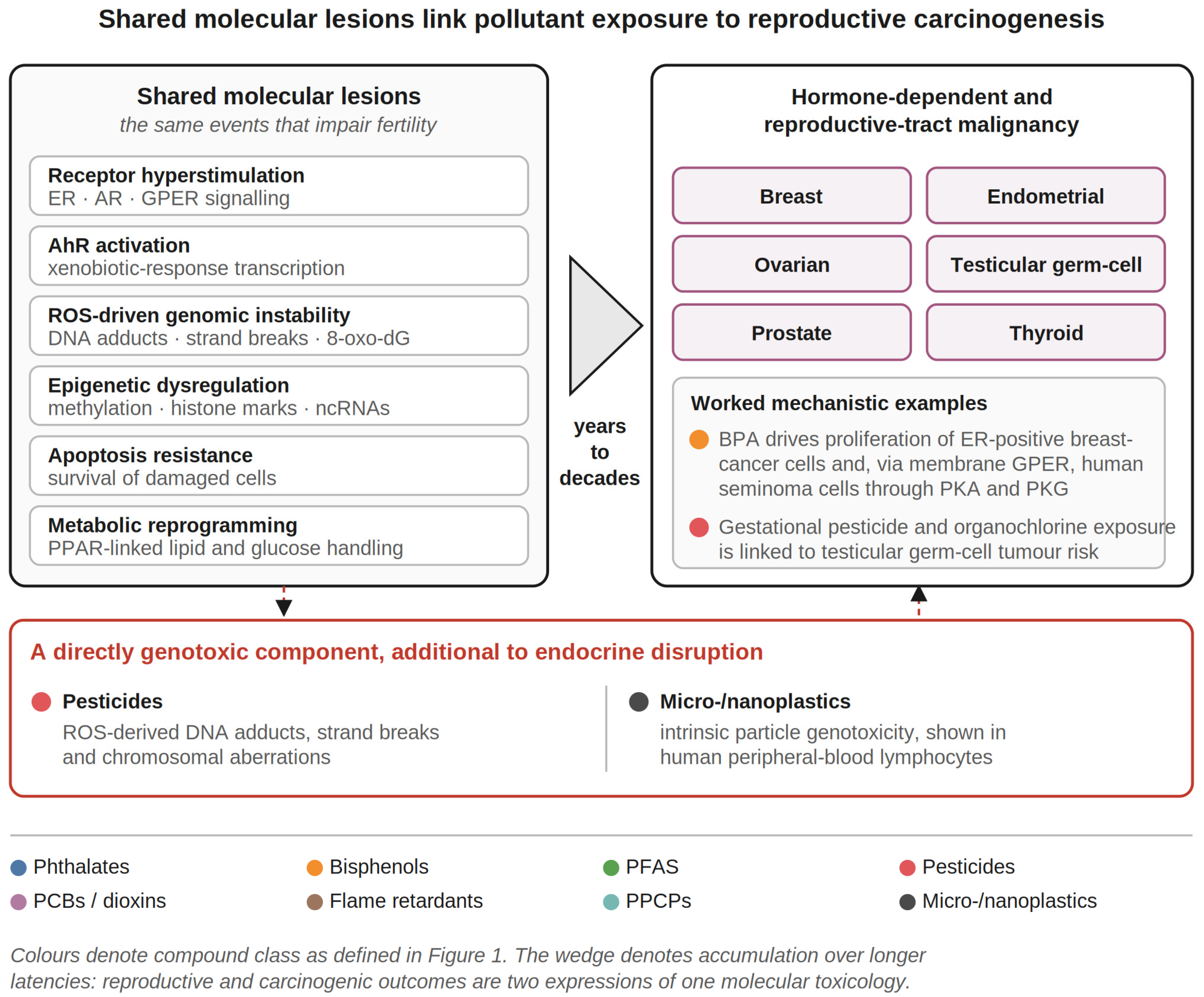
5.3. From Genotoxicity to Reproductive Carcinogenesis
6. Alleviation and Mitigation of Emerging-Pollutant Toxicity
7. Conclusions: Synthesis, Limitations and Research Gaps
Author Contributions
Funding
Institutional Review Board Statement
Informed Consent Statement
Data Availability Statement
Acknowledgments
Conflicts of Interest
Figure and Table Originality
Abbreviations
| AFC | antral follicle count |
| AhR | aryl-hydrocarbon receptor |
| AMH | anti-Müllerian hormone |
| AR | androgen receptor |
| ART | assisted reproductive technology |
| BPA/BPS/BPF | bisphenol A/S/F |
| CYP19A1 | aromatase |
| DEHP | di-(2-ethylhexyl) phthalate |
| EDC | endocrine-disrupting chemical |
| ER | estrogen receptor |
| GnRH | gonadotropin-releasing hormone |
| GPER | G-protein-coupled estrogen receptor |
| GPR54 | kisspeptin receptor (KISS1R) |
| HPG | hypothalamic–pituitary–gonadal |
| 3β-/17β-HSD | hydroxysteroid dehydrogenase |
| LC–MS/MS | liquid chromatography–tandem mass spectrometry |
| MNP | micro-/nanoplastic |
| Nrf2/Keap1 | nuclear-factor-erythroid-2-related-factor-2/Kelch-like ECH-associated protein 1 |
| 8-oxo-dG | 8-oxo-7,8-dihydro-2′-deoxyguanosine |
| PBDE | polybrominated diphenyl ether |
| PCB | polychlorinated biphenyl |
| PFAS | per- and polyfluoroalkyl substances |
| PFOA/PFOS | perfluorooctanoic acid/perfluorooctane sulfonate |
| PPARγ | peroxisome-proliferator-activated receptor γ |
| PPCP | pharmaceuticals and personal-care products |
| ROS | reactive oxygen species |
| StAR | steroidogenic acute regulatory protein |
| TTP | time-to-pregnancy |
References
- World Health Organization. Infertility Prevalence Estimates, 1990–2021; WHO: Geneva, Switzerland, 2023. [Google Scholar]
- Diamanti-Kandarakis, E.; Bourguignon, J.P.; Giudice, L.C.; Hauser, R.; Prins, G.S.; Soto, A.M.; Zoeller, R.T.; Gore, A.C. Endocrine-disrupting chemicals: An Endocrine Society scientific statement. Endocr. Rev. 2009, 30, 293–342. [Google Scholar] [CrossRef] [Scilit]
- Gore, A.C.; Chappell, V.A.; Fenton, S.E.; Flaws, J.A.; Nadal, A.; Prins, G.S.; Toppari, J.; Zoeller, R.T. EDC-2: The Endocrine Society’s Second Scientific Statement on Endocrine-Disrupting Chemicals. Endocr. Rev. 2015, 36, E1–E150. [Google Scholar] [CrossRef] [Scilit]
- Avio, C.G.; Gorbi, S.; Regoli, F. Plastics and microplastics in the oceans: From emerging pollutants to emerged threat. Mar. Environ. Res. 2017, 128, 2–11. [Google Scholar] [CrossRef] [Scilit]
- Ahn, C.; Jeung, E.B. Endocrine-disrupting chemicals and disease endpoints. Int. J. Mol. Sci. 2023, 24, 5342. [Google Scholar] [CrossRef] [Scilit]
- Chang, G.; Huangfu, Y.; Shi, Y.; Shi, X.; Cao, S.; Ge, Y.; An, K.; Bu, Q.; Yu, G. Pharmaceuticals and personal care products in China’s aquatic environments: A decadal update (2013–2022). J. Hazard. Mater. 2026, 502, 140624. [Google Scholar] [CrossRef] [Scilit]
- Ragusa, A.; Svelato, A.; Santacroce, C.; Catalano, P.; Notarstefano, V.; Carnevali, O.; Papa, F.; Rongioletti, M.C.A.; Baiocco, F.; Draghi, S.; et al. Plasticenta: First evidence of microplastics in human placenta. Environ. Int. 2021, 146, 106274. [Google Scholar] [CrossRef] [Scilit] [PubMed]
- Dubey, I.; Khan, S.; Kushwaha, S. Developmental and reproductive toxic effects of exposure to microplastics: A review of associated signaling pathways. Front. Toxicol. 2022, 4, 901798. [Google Scholar] [CrossRef] [Scilit]
- Yin, K.; Wang, Y.; Zhao, H.J.; Wang, D.X.; Guo, M.H.; Mu, M.Y.; Liu, Y.; Nie, X.; Li, B.; Li, J.; et al. A comparative review of microplastics and nanoplastics: Toxicity hazards on digestive, reproductive and nervous system. Sci. Total Environ. 2021, 774, 145758. [Google Scholar] [CrossRef] [Scilit]
- Vandenberg, L.N.; Colborn, T.; Hayes, T.B.; Heindel, J.J.; Jacobs, D.R., Jr.; Lee, D.H.; Shioda, T.; Soto, A.M.; vom Saal, F.S.; Welshons, W.V.; et al. Hormones and endocrine-disrupting chemicals: Low-dose effects and nonmonotonic dose responses. Endocr. Rev. 2012, 33, 378–455. [Google Scholar] [CrossRef] [Scilit]
- Peretz, J.; Vrooman, L.; Ricke, W.A.; Hunt, P.A.; Ehrlich, S.; Hauser, R.; Padmanabhan, V.; Taylor, H.S.; Swan, S.H.; VandeVoort, C.A.; et al. Bisphenol A and reproductive health: Update of experimental and human evidence, 2007–2013. Environ. Health Perspect. 2014, 122, 775–786. [Google Scholar] [CrossRef] [Scilit]
- Meli, R.; Monnolo, A.; Annunziata, C.; Pirozzi, C.; Ferrante, M.C. Oxidative stress and BPA toxicity: An antioxidant approach for male and female reproductive dysfunction. Antioxidants 2020, 9, 405. [Google Scholar] [CrossRef] [Scilit]
- Graceli, J.B.; Dettogni, R.S.; Merlo, E.; Niño, O.; da Costa, C.S.; Zanol, J.F.; Morris, E.A.R.; Miranda-Alves, L.; Denicol, A.C. The impact of endocrine-disrupting chemical exposure in the mammalian hypothalamic-pituitary axis. Mol. Cell. Endocrinol. 2020, 518, 110997. [Google Scholar] [CrossRef] [Scilit]
- Bräuner, E.V.; Lim, Y.H.; Koch, T.; Uldbjerg, C.S.; Gregersen, L.S.; Pedersen, M.K.; Frederiksen, H.; Petersen, J.H.; Coull, B.A.; Andersson, A.-M.; et al. Endocrine disrupting chemicals and risk of testicular cancer: A systematic review and meta-analysis. J. Clin. Endocrinol. Metab. 2021, 106, e4834–e4860. [Google Scholar] [CrossRef] [Scilit]
- Du, A.; Yang, Q.; Yu, L.; Peng, Y.; Huang, T.; Yuan, Q.; Wang, W.; Wang, G. Multifaceted mechanisms by which environmental endocrine-disrupting chemicals promote cancer progression: Crosstalk among carcinogenesis, immunity, and metabolic reprogramming. Front. Mol. Biosci. 2026, 13, 1839082. [Google Scholar] [CrossRef] [Scilit]
- Jiang, M.; Wang, S.; Zeng, H.; Tan, B.; Qin, Y.; Zhou, Q.; Lv, X.; Wan, J.; Chen, M. Perinatal exposure to polystyrene microplastics induces multigenerational impairment of male reproduction via disrupted steroidogenesis and proteostasis. Environ. Int. 2026, 209, 110165. [Google Scholar] [CrossRef] [Scilit]
- Silva, M.J.; Barr, D.B.; Reidy, J.A.; Malek, N.A.; Hodge, C.C.; Caudill, S.P.; Brock, J.W.; Needham, L.L.; Calafat, A.M. Urinary levels of seven phthalate metabolites in the U.S. population from NHANES 1999–2000. Environ. Health Perspect. 2004, 112, 331–338. [Google Scholar] [CrossRef] [Scilit]
- Jurewicz, J.; Radwan, M.; Sobala, W.; Ligocka, D.; Radwan, P.; Bochenek, M.; Hawuła, W.; Jakubowski, L.; Hanke, W. Human urinary phthalate metabolites level and main semen parameters, sperm chromatin structure, sperm aneuploidy and reproductive hormones. Reprod. Toxicol. 2013, 42, 232–241. [Google Scholar] [CrossRef] [Scilit]
- Calafat, A.M.; Ye, X.; Wong, L.Y.; Reidy, J.A.; Needham, L.L. Exposure of the U.S. population to bisphenol A and 4-tertiary-octylphenol: 2003–2004. Environ. Health Perspect. 2008, 116, 39–44. [Google Scholar] [CrossRef] [Scilit]
- Rochester, J.R.; Bolden, A.L. Bisphenol S and F: A systematic review and comparison of the hormonal activity of bisphenol A substitutes. Environ. Health Perspect. 2015, 123, 643–650. [Google Scholar] [CrossRef] [Scilit]
- Jørgensen, K.T.; Specht, I.O.; Lenters, V.; Bach, C.C.; Rylander, L.; Jönsson, B.A.; Lindh, C.H.; Giwercman, A.; Heederik, D.; Toft, G.; et al. Perfluoroalkyl substances and time to pregnancy in couples from Greenland, Poland and Ukraine. Environ. Health 2014, 13, 116. [Google Scholar] [CrossRef] [Scilit]
- Joensen, U.N.; Bossi, R.; Leffers, H.; Jensen, A.A.; Skakkebæk, N.E.; Jørgensen, N. Do perfluoroalkyl compounds impair human semen quality? Environ. Health Perspect. 2009, 117, 923–927. [Google Scholar] [CrossRef] [Scilit]
- Cohn, B.A.; Cirillo, P.M.; Wolff, M.S.; Schwingl, P.J.; Cohen, R.D.; Sholtz, R.I.; Ferrara, A.; Christianson, R.E.; van den Berg, B.J.; Siiteri, P.K. DDT and DDE exposure in mothers and time to pregnancy in daughters. Lancet 2003, 361, 2205–2206. [Google Scholar] [CrossRef] [Scilit]
- Buck Louis, G.M.; Sundaram, R.; Schisterman, E.F.; Sweeney, A.M.; Lynch, C.D.; Gore-Langton, R.E.; Maisog, J.; Kim, S.; Chen, Z.; Barr, D.B. Persistent environmental pollutants and couple fecundity: The LIFE Study. Environ. Health Perspect. 2013, 121, 231–236. [Google Scholar] [CrossRef] [Scilit]
- Buck Louis, G.M.; Peterson, C.M.; Chen, Z.; Croughan, M.; Sundaram, R.; Stanford, J.; Varner, M.W.; Kennedy, A.; Giudice, L.; Fujimoto, V.Y.; et al. Persistent lipophilic environmental chemicals and endometriosis: The ENDO Study. Environ. Health Perspect. 2012, 120, 811–816. [Google Scholar] [CrossRef] [Scilit]
- Harley, K.G.; Marks, A.R.; Chevrier, J.; Bradman, A.; Sjödin, A.; Eskenazi, B. PBDE concentrations in women’s serum and fecundability. Environ. Health Perspect. 2010, 118, 699–704. [Google Scholar] [CrossRef] [Scilit]
- Zhang, J.; Wang, L.; Kannan, K. Microplastics in house dust from 12 countries and associated human exposure. Environ. Int. 2020, 134, 105314. [Google Scholar] [CrossRef] [Scilit]
- Tong, H.; Jiang, Q.; Hu, X.; Zhong, X. Occurrence and identification of microplastics in tap water from China. Chemosphere 2020, 252, 126493. [Google Scholar] [CrossRef] [Scilit]
- Tumu, K.; Vorst, K.; Curtzwiler, G. Endocrine modulating chemicals in food packaging: A review of phthalates and bisphenols. Compr. Rev. Food Sci. Food Saf. 2023, 22, 1337–1359. [Google Scholar] [CrossRef] [Scilit]
- Dueñas-Moreno, J.; Mora, A.; Kumar, M.; Meng, X.Z.; Mahlknecht, J. Worldwide risk assessment of phthalates and bisphenol A in humans: The need for updating guidelines. Environ. Int. 2023, 181, 108294. [Google Scholar] [CrossRef] [Scilit]
- Milton, S.; Tejiram, R.; Joglekar, R.; Hoffman, K. Characterizing the contribution of indoor residential phthalate and phthalate alternative dust concentrations to internal dose in the US general population: An updated systematic review and meta-analysis. Int. J. Environ. Res. Public Health 2023, 20, 6589. [Google Scholar] [CrossRef] [Scilit]
- Ageel, H.K.; Harrad, S.; Abdallah, M.A. Microplastics in indoor air from Birmingham, UK: Implications for inhalation exposure. Environ. Pollut. 2024, 362, 124960. [Google Scholar] [CrossRef] [Scilit]
- Sarker, H.; Monabbi, U.; Saha, G.; Bhowmik, A.; Hossain, B. Microplastics across the human body: Occurrence, detection methodologies, and distribution in human tissues, organs, and biological fluids. Microplastics 2026, 5, 157. [Google Scholar] [CrossRef] [Scilit]
- Chen, J.; Song, P.; Li, C.; Liu, H.; Zhang, L.; Zhou, Y.; Zhou, Z.; Yan, W. Endocrine disrupting chemicals exposure and health: An umbrella review. Ecotoxicol. Environ. Saf. 2025, 302, 118574. [Google Scholar] [CrossRef] [Scilit]
- Frederiksen, H.; Nielsen, J.K.S.; Mørck, T.A.; Hansen, P.W.; Jensen, J.F.; Nielsen, O.; Andersson, A.M.; Knudsen, L.E. Urinary excretion of phthalate metabolites, phenols and parabens in rural and urban Danish mother–child pairs. Int. J. Hyg. Environ. Health 2013, 216, 772–783. [Google Scholar] [CrossRef] [Scilit]
- Shen, Q.; Ge, L.; Zhou, Y.; Liu, Y.; Hu, R.; Geng, M.; He, X.; Cao, Y.; Song, B. Associations between urinary antibiotics exposure and semen parameters among adult men: A biomonitoring-based cross-sectional study. Environ. Pollut. 2025, 375, 126335. [Google Scholar] [CrossRef] [Scilit]
- Jurewicz, J.; Wielgomas, B.; Radwan, M.; Karwacka, A.; Klimowska, A.; Dziewirska, E.; Korczak, K.; Zajdel, R.; Radwan, P.; Hanke, W. Triclosan exposure and ovarian reserve. Reprod. Toxicol. 2019, 89, 168–172. [Google Scholar] [CrossRef] [Scilit]
- Zeng, X.W.; Bloom, M.S.; Wei, F.; Liu, L.; Qin, J.; Xue, L.; Wang, S.; Huang, G.; Teng, M.; He, B.; et al. Perfluoroalkyl acids in follicular fluid and embryo quality during IVF: A prospective IVF cohort in China. Environ. Health Perspect. 2023, 131, 027002. [Google Scholar] [CrossRef] [Scilit]
- Combarnous, Y.; Nguyen, T.M.D. Membrane hormone receptors and their signaling pathways as targets for endocrine disruptors. J. Xenobiot. 2022, 12, 64–73. [Google Scholar] [CrossRef] [Scilit]
- Bouskine, A.; Nebout, M.; Brücker-Davis, F.; Benahmed, M.; Fenichel, P. Low doses of bisphenol A promote human seminoma cell proliferation by activating PKA and PKG via a membrane G-protein-coupled estrogen receptor. Environ. Health Perspect. 2009, 117, 1053–1058. [Google Scholar] [CrossRef] [Scilit]
- Tremblay, J.J. Molecular regulation of steroidogenesis in endocrine Leydig cells. Steroids 2015, 103, 3–10. [Google Scholar] [CrossRef] [Scilit]
- Jin, H.; Yan, M.; Pan, C.; Liu, Z.; Sha, X.; Jiang, C.; Li, L.; Pan, M.; Li, D.; Han, X.; et al. Chronic exposure to polystyrene microplastics induced male reproductive toxicity and decreased testosterone levels via the LH-mediated LHR/cAMP/PKA/StAR pathway. Part Fibre Toxicol. 2022, 19, 13. [Google Scholar] [CrossRef] [Scilit]
- Xue, Y.; Cheng, X.; Ma, Z.Q.; Wang, H.P.; Zhou, C.; Li, J.; Zhang, D.L.; Hu, L.L.; Cui, Y.-F.; Huang, J.; et al. Polystyrene nanoplastics induce apoptosis, autophagy, and steroidogenesis disruption in granulosa cells to reduce oocyte quality and fertility by inhibiting the PI3K/AKT pathway in female mice. J. Nanobiotechnology 2024, 22, 460. [Google Scholar] [CrossRef] [Scilit]
- Xie, X.M.; Deng, T.; Duan, J.F.; Xie, J.; Yuan, J.L.; Chen, M.Q. Exposure to polystyrene microplastics causes reproductive toxicity through oxidative stress and activation of the p38 MAPK signaling pathway. Ecotoxicol. Environ. Saf. 2020, 190, 110133. [Google Scholar] [CrossRef] [Scilit]
- Wang, W.; Guan, J.; Feng, Y.; Liu, S.; Zhao, Y.; Xu, Y.; Xu, H.; Fu, F. Polystyrene microplastics induced ovarian toxicity in juvenile rats associated with oxidative stress and activation of the PERK-eIF2α-ATF4-CHOP signaling pathway. Toxics 2023, 11, 225. [Google Scholar] [CrossRef] [Scilit]
- Li, S.; Wang, Q.; Yu, H.; Yang, L.; Sun, Y.; Xu, N.; Wang, N.; Lei, Z.; Hou, J.; Jin, Y.; et al. Polystyrene microplastics induce blood-testis barrier disruption regulated by the MAPK-Nrf2 signaling pathway in rats. Environ. Sci. Pollut. Res. Int. 2021, 28, 47921–47931. [Google Scholar] [CrossRef] [Scilit]
- Li, T.; Bian, B.; Ji, R.; Zhu, X.; Wo, X.; Song, Q.; Li, Z.; Wang, F.; Jia, Y. Polyethylene terephthalate microplastic exposure induced reproductive toxicity through oxidative stress and p38 signaling pathway activation in male mice. Toxics 2024, 12, 779. [Google Scholar] [CrossRef] [Scilit]
- Meeker, J.D.; Ehrlich, S.; Toth, T.L.; Wright, D.L.; Calafat, A.M.; Trisini, A.T.; Ye, X.; Hauser, R. Semen quality and sperm DNA damage in relation to urinary bisphenol A among men from an infertility clinic. Reprod. Toxicol. 2010, 30, 532–539. [Google Scholar] [CrossRef] [Scilit]
- Hou, J.; Lei, Z.; Cui, L.; Hou, Y.; Yang, L.; An, R.; Wang, Q.; Li, S.; Zhang, H.; Zhang, L. Polystyrene microplastics lead to pyroptosis and apoptosis of ovarian granulosa cells via NLRP3/Caspase-1 signaling pathway in rats. Ecotoxicol. Environ. Saf. 2021, 212, 112012. [Google Scholar] [CrossRef] [Scilit]
- Liu, M.; Wang, S.; Gao, W.; Zhang, J.; Zhang, B.; Rodgers, R.J.; Tian, G.G.; Li, X.; Wu, J. Polystyrene nanoplastics disrupt ovarian development via cytoskeletal remodeling and epigenetic reprogramming particularly in granulosa cells. J. Hazard. Mater. 2026, 505, 141467. [Google Scholar] [CrossRef] [Scilit]
- Haddadi, A.; Kessabi, K.; Boughammoura, S.; Rhouma, M.B.; Mlouka, R.; Banni, M.; Messaoudi, I. Exposure to microplastics leads to a defective ovarian function and change in cytoskeleton protein expression in rat. Environ. Sci. Pollut. Res. 2022, 29, 34594–34606. [Google Scholar] [CrossRef] [Scilit]
- Messerlian, C.; Souter, I.; Gaskins, A.J.; Williams, P.L.; Ford, J.B.; Chiu, Y.H.; Calafat, A.M.; Hauser, R. Urinary phthalate metabolites and ovarian reserve among women seeking infertility care. Hum. Reprod. 2016, 31, 75–83. [Google Scholar] [CrossRef] [Scilit]
- Hauser, R.; Gaskins, A.J.; Souter, I.; Smith, K.W.; Dodge, L.E.; Ehrlich, S.; Meeker, J.D.; Calafat, A.M.; Williams, P.L.; EARTH Study Team. Urinary phthalate metabolite concentrations and reproductive outcomes among women undergoing IVF: Results from the EARTH study. Environ. Health Perspect. 2016, 124, 831–839. [Google Scholar] [CrossRef] [Scilit]
- Dhar, S.; Tomar, A.; Anupama, N.; Chatterjee, P.; Chatterjee, P.K. Phthalates as the silent saboteurs of male fertility via changes in semen quality: A systematic review. Reprod. Biol. Endocrinol. 2026, 24, 42. [Google Scholar] [CrossRef] [Scilit]
- Ehrlich, S.; Williams, P.L.; Missmer, S.A.; Flaws, J.A.; Ye, X.; Calafat, A.M.; Petrozza, J.C.; Wright, D.; Hauser, R. Urinary bisphenol A concentrations and early reproductive health outcomes among women undergoing IVF. Hum. Reprod. 2012, 27, 3583–3592. [Google Scholar] [CrossRef] [Scilit]
- Mok-Lin, E.; Ehrlich, S.; Williams, P.L.; Petrozza, J.; Wright, D.L.; Calafat, A.M.; Ye, X.; Hauser, R. Urinary bisphenol A concentrations and ovarian response among women undergoing IVF. Int. J. Androl. 2010, 33, 385–393. [Google Scholar] [CrossRef] [Scilit]
- Fujimoto, V.Y.; Kim, D.; vom Saal, F.S.; Lamb, J.D.; Taylor, J.A.; Bloom, M.S. Serum unconjugated bisphenol A concentrations in women may adversely influence oocyte quality during in vitro fertilization. Fertil. Steril. 2011, 95, 1816–1819. [Google Scholar] [CrossRef] [Scilit]
- Lassen, T.H.; Frederiksen, H.; Jensen, T.K.; Petersen, J.H.; Joensen, U.N.; Main, K.M.; Skakkebaek, N.E.; Juul, A.; Jørgensen, N.; Andersson, A.M. Urinary bisphenol A levels in young men: Association with reproductive hormones and semen quality. Environ. Health Perspect. 2014, 122, 478–484. [Google Scholar] [CrossRef] [Scilit]
- Adoamnei, E.; Mendiola, J.; Vela-Soria, F.; Fernández, M.F.; Olea, N.; Jørgensen, N.; Swan, S.H.; Torres-Cantero, A.M. Urinary bisphenol A concentrations are associated with reproductive parameters in young men. Environ. Res. 2018, 161, 122–128. [Google Scholar] [CrossRef] [Scilit]
- Li, D.K.; Zhou, Z.; Miao, M.; He, Y.; Wang, J.; Ferber, J.; Herrinton, L.J.; Gao, E.; Yuan, W. Urine bisphenol-A (BPA) level in relation to semen quality. Fertil. Steril. 2011, 95, 625–630. [Google Scholar] [CrossRef] [Scilit]
- Sang, L.; Ge, Y.; Liu, F.; Wei, K.; Shen, X.; Zhang, Y.; Li, Z.; Lu, W.; Gao, X.; Zhang, Y. Association between per- and polyfluoroalkyl substances and sex hormone levels in males based on human studies. Ecotoxicol. Environ. Saf. 2024, 271, 115998. [Google Scholar] [CrossRef] [Scilit]
- Sun, F.; Lin, Y.; Pan, A.; Meng, T.Q.; Xiong, C.L.; Wang, Y.X.; Liu, X.; Chen, D. Per- and polyfluoroalkyl substances in semen associated with repeated measures of semen quality in healthy adult men. Environ. Sci. Technol. 2025, 59, 256–267. [Google Scholar] [CrossRef] [Scilit]
- Maxwell, D.L.; Petriello, M.C.; Pilsner, J.R. PFAS exposure and male reproductive health: Implications for sperm epigenetics. Semin. Reprod. Med. 2024, 42, 288–301. [Google Scholar] [CrossRef] [Scilit]
- Vélez, M.P.; Arbuckle, T.E.; Fraser, W.D. Female exposure to phenols and phthalates and time to pregnancy: The Maternal-Infant Research on Environmental Chemicals (MIREC) Study. Fertil. Steril. 2015, 103, 1011–1020.e2. [Google Scholar] [CrossRef] [Scilit]
- Zhu, W.; Zhang, H.; Tong, C.; Xie, C.; Fan, G.; Zhao, S.; Yu, X.; Tian, Y.; Zhang, J. Environmental exposure to triclosan and semen quality. Int. J. Environ. Res. Public Health 2016, 13, 224. [Google Scholar] [CrossRef] [Scilit]
- Zhu, W.; Xie, C.; Zhao, S.; Zhang, D.; Zhang, H. Environmental exposure to triclosan and male fecundity: A prospective study in China. Front. Public Health 2022, 10, 814927. [Google Scholar] [CrossRef] [Scilit]
- Adegbola, C.A.; Akhigbe, T.M.; Adeogun, A.E.; Tvrdá, E.; Pizent, A.; Akhigbe, R.E. A systematic review and meta-analysis of the impact of triclosan exposure on human semen quality. Front. Toxicol. 2024, 6, 1469340. [Google Scholar] [CrossRef] [Scilit]
- Smarr, M.M.; Honda, M.; Kannan, K.; Chen, Z.; Kim, S.; Buck Louis, G.M. Male urinary biomarkers of antimicrobial exposure and bi-directional associations with semen quality parameters. Reprod. Toxicol. 2018, 77, 103–108. [Google Scholar] [CrossRef] [Scilit]
- Philibert, P.; Stévant, I.; Déjardin, S.; Girard, M.; Sellem, E.; Durix, Q.; Messager, A.; Gonzalez, A.-A.; Mialhe, X.; Pruvost, A.; et al. Intergenerational effects on fertility in male and female mice after chronic exposure to environmental doses of NSAIDs and 17α-ethinylestradiol mixtures. Food Chem. Toxicol. 2023, 182, 114085. [Google Scholar] [CrossRef] [Scilit]
- Wei, Y.; Zhou, Y.; Long, C.; Wu, H.; Hong, Y.; Fu, Y.; Wang, J.; Wu, Y.; Shen, L.; Wei, G. Polystyrene microplastics disrupt the blood-testis barrier integrity through ROS-mediated imbalance of mTORC1 and mTORC2. Environ. Pollut. 2021, 289, 117904. [Google Scholar] [CrossRef] [Scilit]
- Cobanoglu, H.; Belivermis, M.; Sikdokur, E.; Kilic, O.; Cayir, A. Genotoxic and cytotoxic effects of polyethylene microplastics on human peripheral blood lymphocytes. Chemosphere 2021, 272, 129805. [Google Scholar] [CrossRef] [Scilit]
- Montano, L.; Giorgini, E.; Notarstefano, V.; Notari, T.; Ricciardi, M.; Piscopo, M.; Motta, O. Raman microspectroscopy evidence of microplastics in human semen. Sci. Total Environ. 2023, 901, 165922. [Google Scholar] [CrossRef] [Scilit]
- Zhang, C.; Zhang, G.; Sun, K.; Ren, J.; Zhou, J.; Liu, X.; Lin, F.; Yang, H.; Cao, J.; Nie, L.; et al. Association of mixed exposure to microplastics with sperm dysfunction: A multi-site study in China. eBioMedicine 2024, 108, 105369. [Google Scholar] [CrossRef] [Scilit]
- Hunt, P.A.; Lawson, C.; Gieske, M.; Murdoch, B.; Smith, H.; Marre, A.; Hassold, T.; VandeVoort, C.A. Bisphenol A alters early oogenesis and follicle formation in the fetal ovary of the rhesus monkey. Proc. Natl. Acad. Sci. USA 2012, 109, 17525–17530. [Google Scholar] [CrossRef] [Scilit]
- Montano, L.; Raimondo, S.; Piscopo, M.; Ricciardi, M.; Guglielmino, A.; Chamayou, S.; Gentile, R.; Gentile, M.; Rapisarda, P.; Oliveri Conti, G.; et al. First evidence of microplastics in human ovarian follicular fluid: An emerging threat to female fertility. Ecotoxicol. Environ. Saf. 2025, 291, 117868. [Google Scholar] [CrossRef] [Scilit]
- Wang, Q.; Chi, F.; Liu, Y.; Chang, Q.; Chen, S.; Kong, P.; Yang, W.; Liu, W.; Teng, X.; Zhao, Y.; et al. Polyethylene microplastic exposure adversely affects oocyte quality in human and mouse. Environ. Int. 2025, 195, 109236. [Google Scholar] [CrossRef] [Scilit]
- Liu, H.; Sun, Y.; Ran, L.; Li, J.; Shi, Y.; Mu, C.; Hao, C. Endocrine-disrupting chemicals and breast cancer: A meta-analysis. Front. Oncol. 2023, 13, 1282651. [Google Scholar] [CrossRef] [Scilit]
- Caserta, D.; De Marco, M.P.; Besharat, A.R.; Costanzi, F. Endocrine disruptors and endometrial cancer: Molecular mechanisms of action and clinical implications, a systematic review. Int. J. Mol. Sci. 2022, 23, 2956. [Google Scholar] [CrossRef] [Scilit]
- Singh, D.D. Epigenetic mechanisms of endocrine-disrupting chemicals in breast cancer and their impact on dietary intake. J. Xenobiot. 2024, 15, 1. [Google Scholar] [CrossRef] [Scilit]
- Baroutis, D.; Katsianou, E.; Koukoumpanis, K.; Fragiskos, I.; Sindos, N.; Sindos, M.; Daskalakis, G. Endocrine disruptors and gynecological malignancies. Diagnostics 2026, 16, 2116. [Google Scholar] [CrossRef] [Scilit]
- Sieck, N.E.; Bruening, M.; van Woerden, I.; Whisner, C.; Payne-Sturges, D.C. Effects of behavioral, clinical, and policy interventions in reducing human exposure to bisphenols and phthalates: A scoping review. Environ. Health Perspect. 2024, 132, 036001. [Google Scholar] [CrossRef] [Scilit]
- Harray, A.J.; Lucas, A.D.; Herrmann, S.E.; Vlaskovsky, P.S.; Elagali, A.; Seewoo, B.J.; Chan, D.C.; Symeonides, C.; Dunlop, S.A.; Watts, G.F.; et al. Low-plastic diet and urinary levels of plastic-associated phthalates and bisphenols: The randomized controlled PERTH Trial. Nat. Med. 2026, 32, 1871–1883. [Google Scholar] [CrossRef] [Scilit]
- Trasande, L.; Zoeller, R.T.; Hass, U.; Kortenkamp, A.; Grandjean, P.; Myers, J.P.; DiGangi, J.; Bellanger, M.; Hauser, R.; Legler, J.; et al. Estimating burden and disease costs of exposure to endocrine-disrupting chemicals in the European Union. J. Clin. Endocrinol. Metab. 2015, 100, 1245–1255. [Google Scholar] [CrossRef] [Scilit]
- Attina, T.M.; Hauser, R.; Sathyanarayana, S.; Hunt, P.A.; Bourguignon, J.P.; Myers, J.P.; DiGangi, J.; Zoeller, R.T.; Trasande, L. Exposure to endocrine-disrupting chemicals in the USA: A population-based disease burden and cost analysis. Lancet Diabetes Endocrinol. 2016, 4, 996–1003. [Google Scholar] [CrossRef] [Scilit]
- Trasande, L.; Zoeller, R.T.; Hass, U.; Kortenkamp, A.; Grandjean, P.; Myers, J.P.; DiGangi, J.; Hunt, P.M.; Rabesandratana, H.; Bellanger, M.; et al. Burden of disease and costs of exposure to endocrine-disrupting chemicals in the European Union: An updated analysis. Andrology 2016, 4, 565–572. [Google Scholar] [CrossRef] [Scilit]
- Defeudis, G.; de Angelis, C.; Mazzilli, R.; Barbagallo, F.; Leanza, C.; Sabovic, I.; Condorelli, R.A.; Rago, R.; Gianfrilli, D.; Pivonello, R.; et al. The impact of chemical pollution and warming on male fertility: A narrative review by the Special Interest Group “Environment and Fertility” of the Italian Society of Fertility and Sterility and Reproductive Medicine (SIFES-MR). J. Assist. Reprod. Genet. 2025, 42, 4071–4101. [Google Scholar] [CrossRef] [Scilit]

| Compound Class | Mechanisms | Male Endpoints | Female Endpoints |
|---|---|---|---|
| Phthalates | Rec ● Ster ● Ox ○ | ↓ testosterone, ↓ sperm concentration and motility, ↑ DNA fragmentation | ↓ AMH, ↓ AFC, longer TTP, ↓ oocyte yield and embryo quality |
| Bisphenols | Rec ● Ox ● Ster ○ Epi ○ HPG ○ | ↓ motility, abnormal morphology, sperm DNA damage | ↓ AMH and AFC, ↓ fertilisation and implantation rates |
| PFAS | Rec ● Met ● Ox ○ HPG ○ | ↓ motility, abnormal morphology, altered testosterone | ↓ fecundability, ↓ oocyte yield, ↓ live birth |
| Pesticides | Ox ● Epi ● Rec ○ HPG ○ | ↓ concentration, motility and morphology (occupational) | Longer TTP, ↑ miscarriage, ↓ ovarian-reserve markers |
| PCBs/dioxins | Rec ● (AhR, thyroid) Epi ○ HPG ○ | ↓ semen quality in exposed cohorts | Longer TTP, menstrual irregularity, intergenerational ↓ fecundity |
| Flame retardants | Rec ● (thyroid) Ox ○ | Possible ↓ motility and normal morphology | Longer TTP, ↓ ART success |
| PPCPs | Rec ● Ster ○ Ox ○ | ↓ sperm concentration and motility (triclosan, antibiotic mixtures) | ↓ AFC, longer TTP (triclosan) |
| Micro-/nanoplastics | Ox ● Ster ● Epi ● Met ○ HPG ○ | Blood–testis-barrier disruption, ↓ testosterone, spermatogenic apoptosis | Granulosa-cell apoptosis, pyroptosis and autophagy; follicular atresia, ↓ oocyte quality |
| Population | Outcome(s) | Key Mechanistic and Epidemiological Findings | Certainty (GRADE) |
|---|---|---|---|
| Women (general) | Ovarian reserve (AMH, AFC) | Inverse association with DEHP metabolites; StAR/aromatase inhibition and oxidative stress | Moderate |
| Couples | Time-to-pregnancy | Longer TTP; reduced fecundability | Moderate |
| Women (ART) | Oocyte yield, embryo quality, live birth | Reduced oocyte yield, poorer embryos, lower implantation/live-birth rates | Moderate |
| Men | Semen parameters, hormones | Lower sperm concentration/motility; increased DNA fragmentation and aneuploidy; reduced testosterone | Moderate |
| Population | Outcome(s) | Key Mechanistic and Epidemiological Findings | Certainty (GRADE) |
|---|---|---|---|
| Women (general) | Ovarian reserve (AMH, AFC) | Higher BPA associated with lower AMH and AFC; ER/GPER signalling, oxidative stress | Moderate |
| Women (ART) | Oocyte yield, embryo quality, live birth | Fewer mature oocytes; lower fertilisation, implantation and live-birth rates | Moderate |
| Men | Semen motility/morphology, sperm DNA | Reduced motility and abnormal morphology; sperm DNA damage; concentration inconsistent | Low–Moderate |
| Substitutes (BPS/BPF) | Cross-class activity | Hormonal/oxidative activity comparable to BPA; limited but concordant human data | Low |
| Population | Outcome(s) | Key Mechanistic and Epidemiological Findings | Certainty (GRADE) |
|---|---|---|---|
| Women (general) | Fecundability, miscarriage | Reduced fecundability; some evidence of increased miscarriage risk | Moderate |
| Women (ART) | Oocyte yield, embryo quality, live birth | Lower oocyte yield, poorer embryos, reduced live-birth rates | Moderate–High |
| Men | Semen quality, hormones | Reduced motility, abnormal morphology, altered testosterone | Moderate |
| Population | Outcome(s) | Key Mechanistic and Epidemiological Findings | Certainty (GRADE) |
|---|---|---|---|
| Women | TTP, miscarriage, ovarian reserve | Longer TTP, higher miscarriage risk, reduced ovarian-reserve markers; lower ART implantation | Moderate |
| Men (occupational) | Semen quality | Strong association with impaired sperm concentration/motility/morphology; oxidative DNA damage | High |
| Both sexes | Genotoxic/epigenetic | ROS-driven DNA adducts and strand breaks; altered DNA methylation and miRNA | Moderate |
| Population | Outcome(s) | Key Mechanistic and Epidemiological Findings | Certainty (GRADE) |
|---|---|---|---|
| Women | TTP, menstrual cyclicity | Longer TTP and irregular cycles in exposed populations; AhR/thyroid disruption | Moderate |
| Men | Semen quality | Reduced sperm quality in exposed cohorts | Moderate |
| Couples (ART) | Implantation/live birth | Limited evidence of lower ART success | Low |
| Population | Outcome(s) | Key Mechanistic and Epidemiological Findings | Certainty (GRADE) |
|---|---|---|---|
| Women | TTP, ART outcomes | Longer TTP and reduced ART success; thyroid-hormone disruption | Low–Moderate |
| Men | Semen quality | Possible reductions in motility and normal morphology | Low |
| Population | Outcome(s) | Key Mechanistic and Epidemiological Findings | Certainty (GRADE) |
|---|---|---|---|
| Women (triclosan) | Ovarian reserve (AFC) | Inverse association with AFC; no association with AMH, FSH or estradiol | Low–Moderate |
| Women (triclosan) | Time-to-pregnancy | Prolonged TTP in prospective cohort | Low–Moderate |
| Men (triclosan) | Semen quality, fecundability | Reduced sperm parameters; moderate effect sizes, inconsistent dose–response | Low–Moderate |
| Men (antibiotics) | Semen parameters | Individual and mixture exposures inversely associated with concentration and motility | Low |
| Both sexes (diclofenac, NSAIDs) | No human reproductive data | Rodent mixture studies show F1 and F2 effects; no human epidemiology identified | Very low (animal only) |
Disclaimer/Publisher’s Note: The statements, opinions and data contained in all publications are solely those of the individual author(s) and contributor(s) and not of MDPI and/or the editor(s). MDPI and/or the editor(s) disclaim responsibility for any injury to people or property resulting from any ideas, methods, instructions or products referred to in the content. |
© 2026 by the authors. Licensee MDPI, Basel, Switzerland. This article is an open access article distributed under the terms and conditions of the Creative Commons Attribution (CC BY) license.
Share and Cite
El Beaino, Z.; Ayoubi, J.-M.; Hamamah, S. Molecular Mechanisms of Endocrine-Disrupting Chemicals and Emerging-Pollutant Toxicity in Human Reproduction: From Xenobiotic Exposure to Fertility Impairment and Reproductive Carcinogenesis. Int. J. Mol. Sci. 2026, 27, 7766. https://doi.org/10.3390/ijms27177766
El Beaino Z, Ayoubi J-M, Hamamah S. Molecular Mechanisms of Endocrine-Disrupting Chemicals and Emerging-Pollutant Toxicity in Human Reproduction: From Xenobiotic Exposure to Fertility Impairment and Reproductive Carcinogenesis. International Journal of Molecular Sciences. 2026; 27(17):7766. https://doi.org/10.3390/ijms27177766
Chicago/Turabian StyleEl Beaino, Zakhia, Jean-Marc Ayoubi, and Samir Hamamah. 2026. "Molecular Mechanisms of Endocrine-Disrupting Chemicals and Emerging-Pollutant Toxicity in Human Reproduction: From Xenobiotic Exposure to Fertility Impairment and Reproductive Carcinogenesis" International Journal of Molecular Sciences 27, no. 17: 7766. https://doi.org/10.3390/ijms27177766
APA StyleEl Beaino, Z., Ayoubi, J.-M., & Hamamah, S. (2026). Molecular Mechanisms of Endocrine-Disrupting Chemicals and Emerging-Pollutant Toxicity in Human Reproduction: From Xenobiotic Exposure to Fertility Impairment and Reproductive Carcinogenesis. International Journal of Molecular Sciences, 27(17), 7766. https://doi.org/10.3390/ijms27177766