Review

GJB2-Related Hearing Loss: Genotype-Phenotype Correlations, Natural History, and Emerging Therapeutic Strategies


by
Julia Anne Morris
1,2,
Tomas Gonzalez
1,
Susan H. Blanton
1,3,4,
Simon Ignacio Angeli
1 and
Xue Zhong Liu
1,3,4,5,*
1
Department of Otolaryngology, University of Miami Miller School of Medicine, Miami, FL 33136, USA
2
Morsani College of Medicine, University of South Florida, Tampa, FL 33602, USA
3
Dr. John T. Macdonald Foundation Department of Human Genetics, University of Miami Miller School of Medicine, Miami, FL 33136, USA
4
Hussman Institute for Human Genomics, University of Miami Miller School of Medicine, Miami, FL 33136, USA
5
Department of Pediatrics, University of Miami Miller School of Medicine, Miami, FL 33136, USA
*
Author to whom correspondence should be addressed.
Int. J. Mol. Sci. 2026, 27(1), 491; https://doi.org/10.3390/ijms27010491
Submission received: 17 December 2025 / Revised: 31 December 2025 / Accepted: 1 January 2026 / Published: 3 January 2026
(This article belongs to the Special Issue Inner Ear Disorders: From Molecular Mechanisms to Treatment)

Abstract

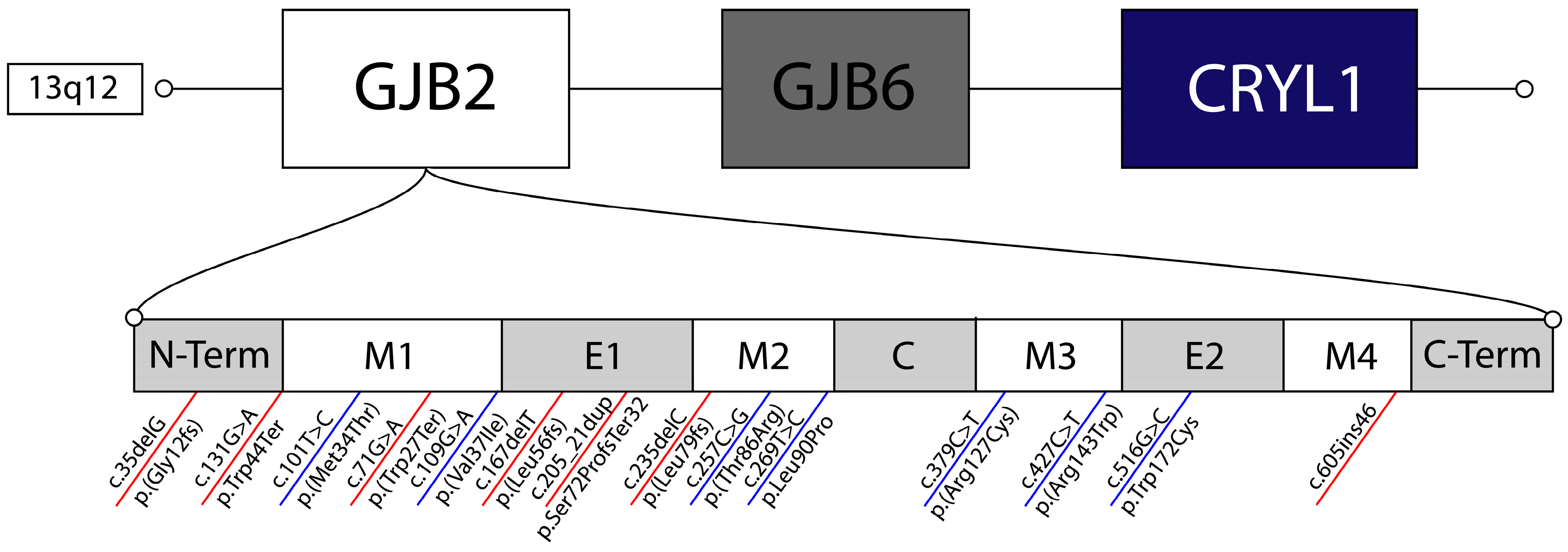
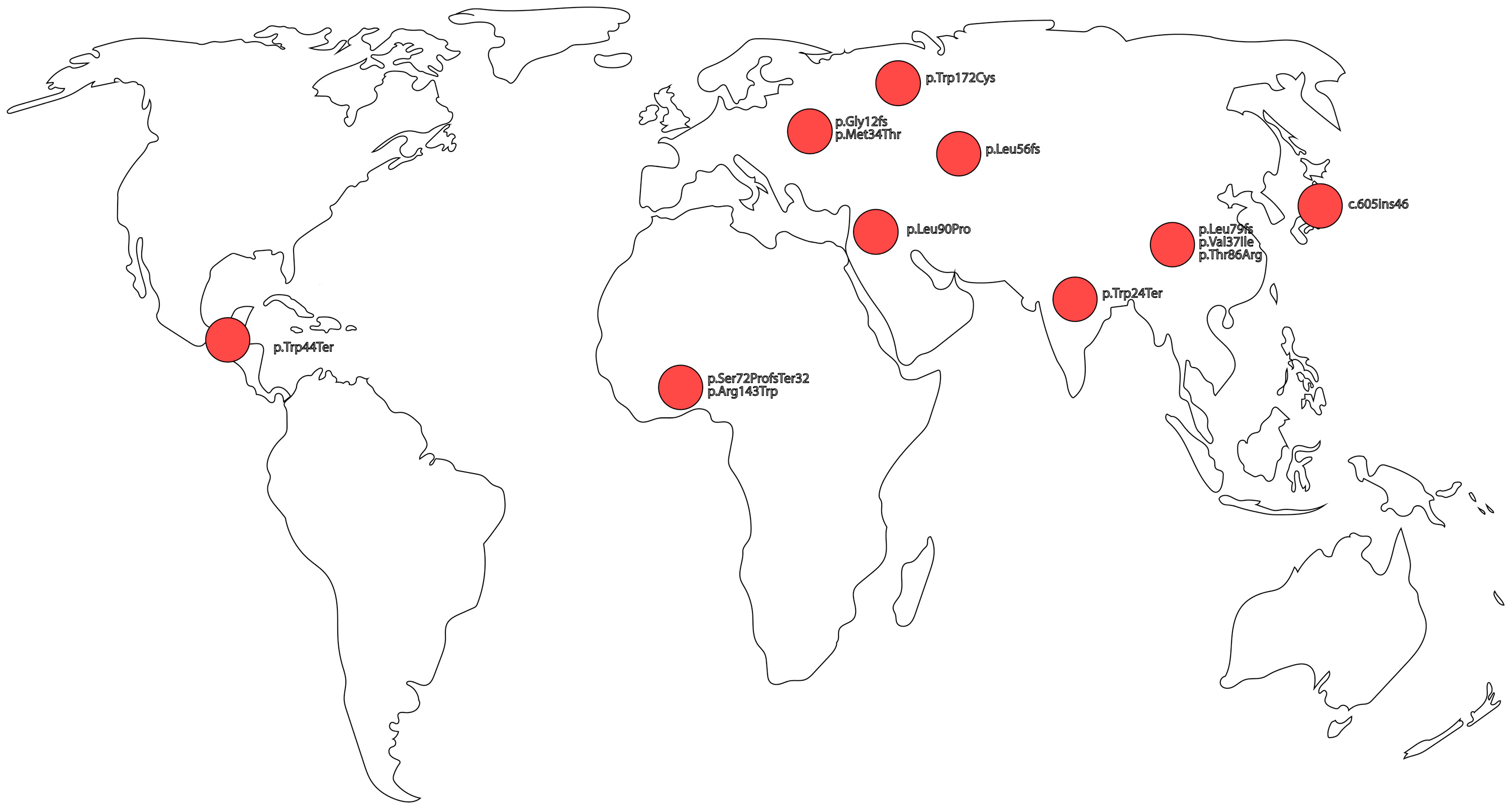
This review integrates molecular, clinical, and translational data to provide an updated understanding of GJB2-related deafness and its emerging treatment landscape. Truncating mutations in GJB2 typically cause severe-profound hearing loss (HL) phenotypes, whereas non-truncating alleles are often associated with milder or progressive phenotypes. Geographic variation in variant prevalence contributes to regional differences in disease burden. Beyond the coding region, deletions and cis-regulatory mutations within the DFNB1 locus, including GJB6 and CRYL1, can influence HL severity when compounded with other pathogenic GJB2 variants. DFNB1 hearing loss generally presents as symmetric, bilateral, and flat to gently sloping across frequencies, with preserved cochlear neurons that support excellent cochlear implant (CI) outcomes. Early implantation CI in GJB2-positive children yields superior speech and language development compared with non-GJB2 etiologies. Emerging therapies include dual-AAV (AAV1 + AAV-ie/ScPro) delivery, achieving cell-specific Cx26 restoration, adenine base-editing for dominant-negative variants, and allele-specific suppression using RNA interference or antisense oligonucleotides. Concurrent progress in human iPSC-derived cochlear organoids provides a physiologic model to advance toward clinical trials. By integrating genotype-phenotype correlations, natural history insights, and advances in molecular therapeutics, this review presents a comprehensive update on GJB2-related HL and highlights how gene-based strategies are poised to change the treatment of this condition.
Keywords: GJB2; connexin-26; genetics; non-syndromic hearing loss; natural history; genotype-phenotype correlations; congenital hearing loss; gene therapy; cochlear implant outcomes GJB2; connexin-26; genetics; non-syndromic hearing loss; natural history; genotype-phenotype correlations; congenital hearing loss; gene therapy; cochlear implant outcomes