Integrative Bioinformatic and Epidemiological Analysis of Acetaminophen Use and Risk of Sex Hormone-Related Cancers


Abstract
1. Introduction
2. Results
2.1. Acetaminophen and Male Sex Hormones—Summary of Existing Evidence
2.1.1. Acetaminophen and Androgen-Dependent Cancers—Overview of Current Evidence
Acetaminophen Exposure and Prostate Cancer Risk
Acetaminophen and Testicular Cancer
2.2. Acetaminophen and Female Sex Hormones—Critical Appraisal of the Literature
2.2.1. Acetaminophen and Estrogen-Dependent Cancers
Acetaminophen and Ovarian Cancer
Acetaminophen and Endometrial Cancer
Acetaminophen and Breast Cancer
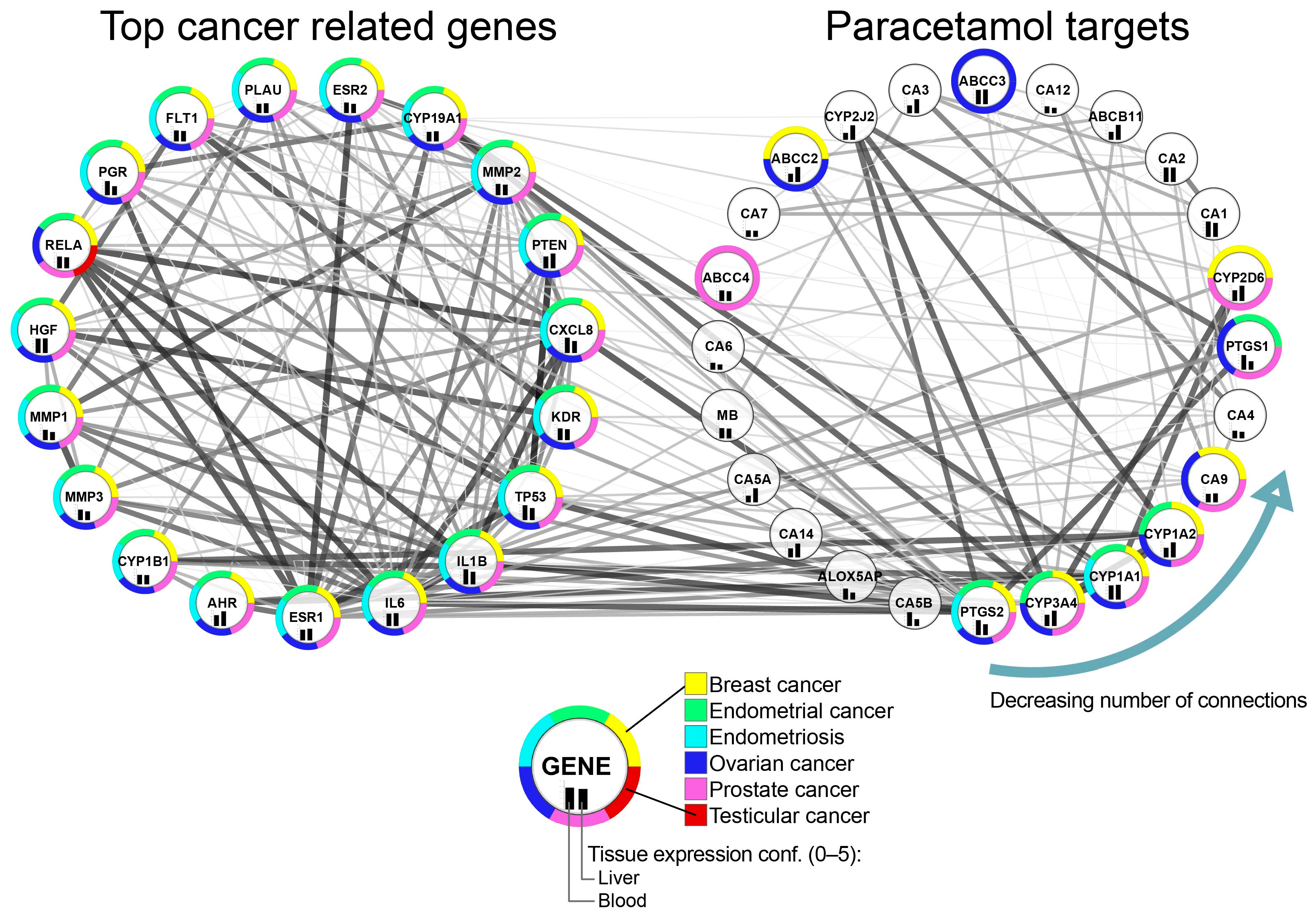
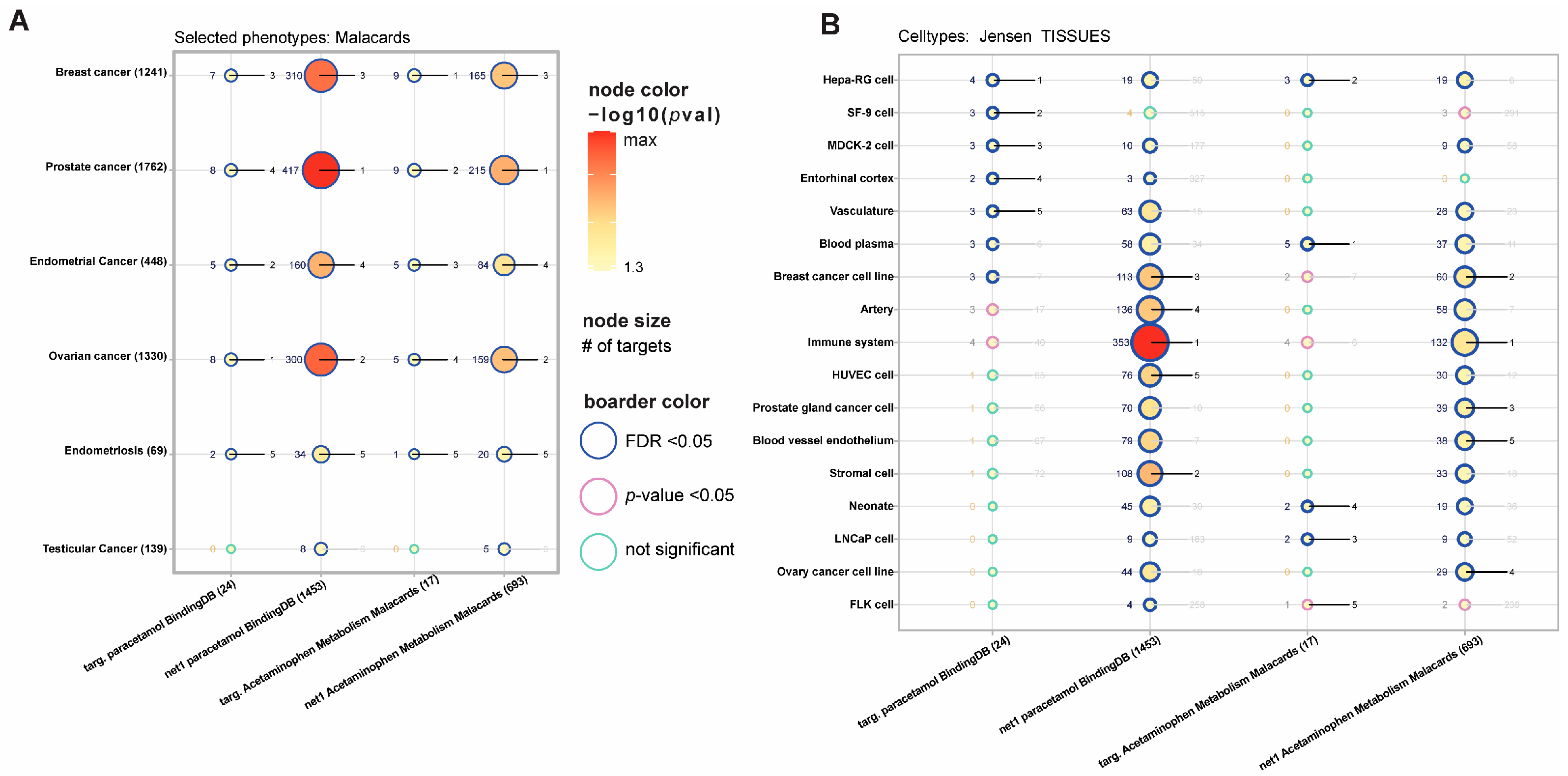
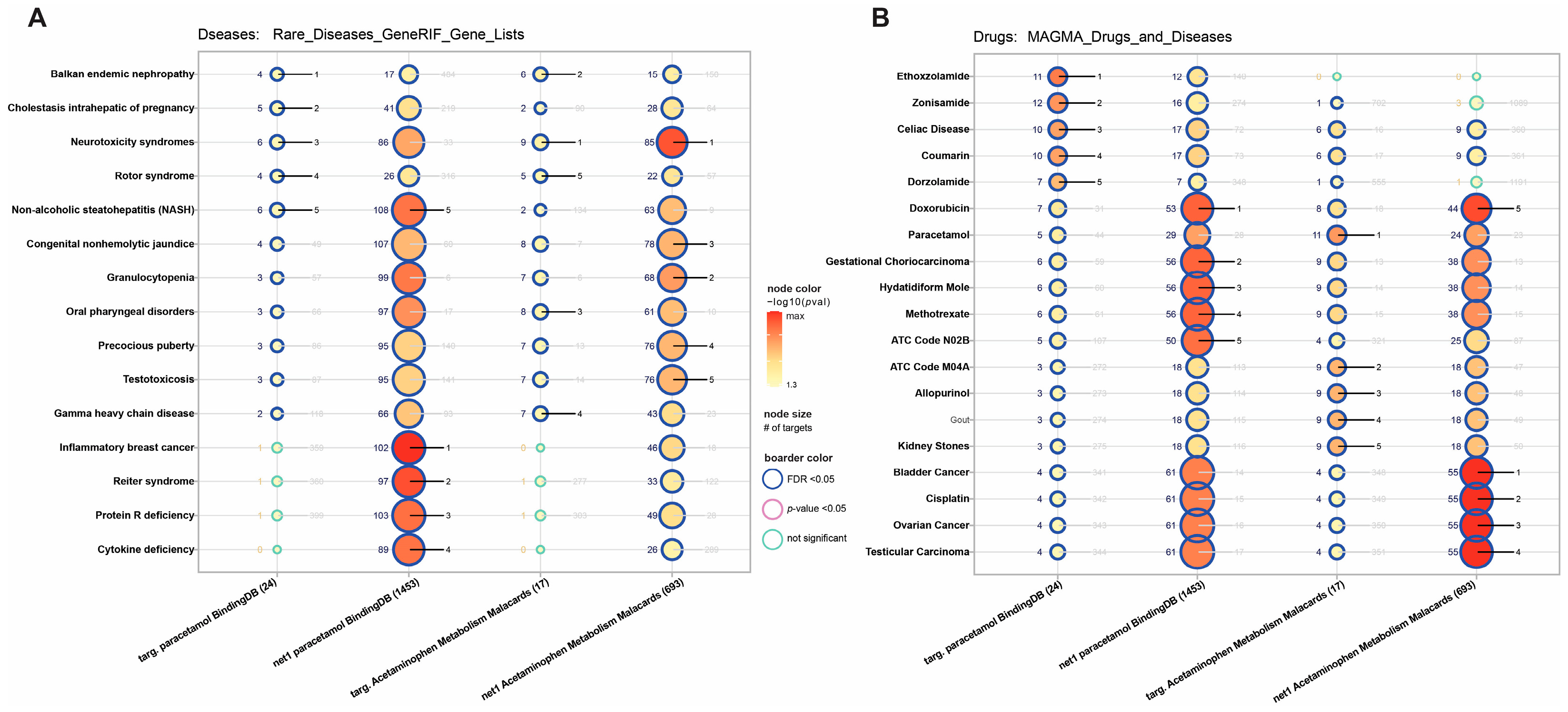
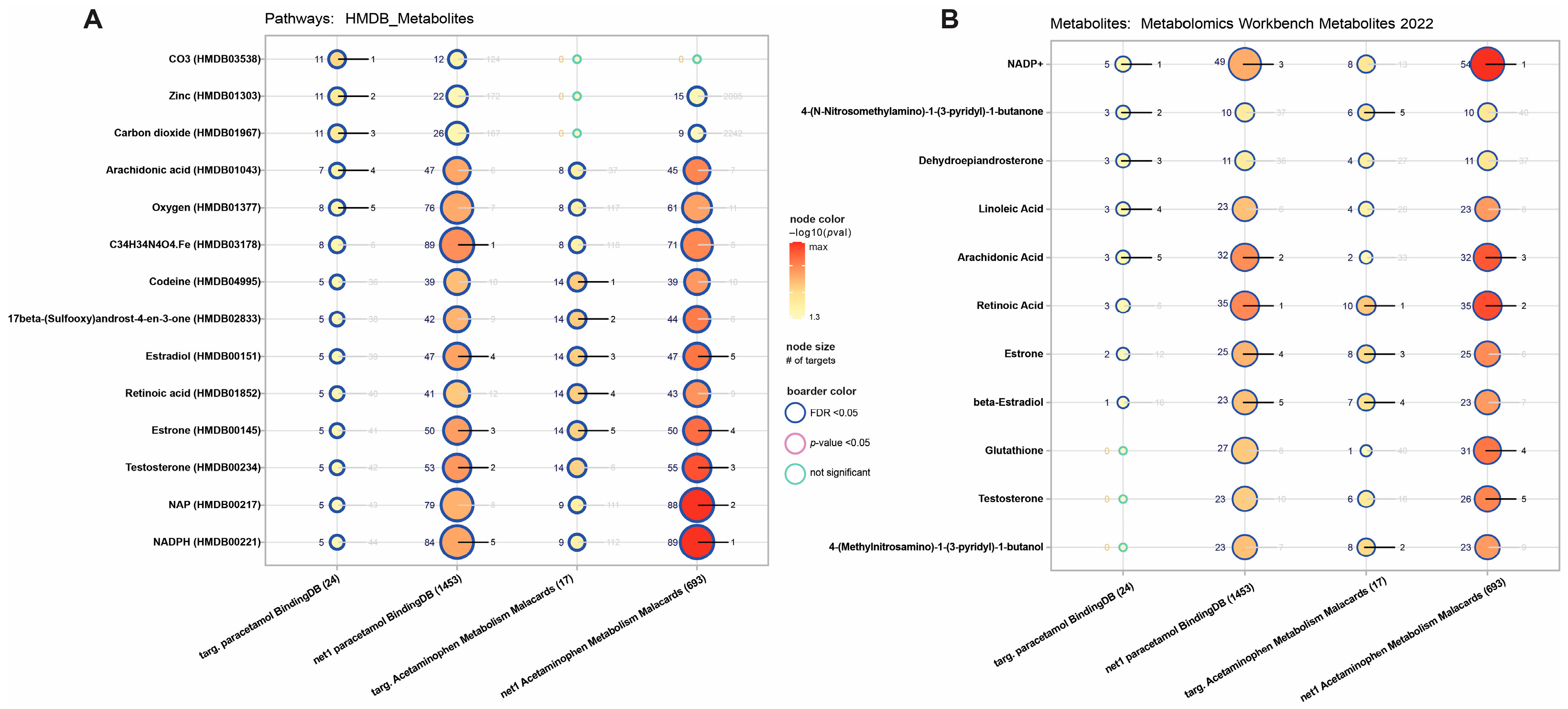
2.3. Bioinformatic Results
3. Discussion
4. Methods and Materials
4.1. Literature Review Strategy
4.2. Bioinformatic Analysis
4.2.1. Gene List Selection
4.2.2. Interaction Network Construction
4.2.3. Enrichment Analysis
5. Conclusions
Supplementary Materials
Author Contributions
Funding
Institutional Review Board Statement
Informed Consent Statement
Data Availability Statement
Acknowledgments
Conflicts of Interest
References
- Dey, S.; Sanders, A.E.; Martinez, S.; Kopitnik, N.L.; Vrooman, B.M. Alternatives to Opioids for Managing Pain; StatPearls: Treasure Island, FL, USA, 2024. Available online: https://www.ncbi.nlm.nih.gov/books/NBK574543/ (accessed on 1 September 2025).
- Zheng, G.; Faber, M.T.; Baandrup, L.; Kjaer, S.K. Paracetamol use and risk of epithelial ovarian cancer: A nationwide nested case-control study. BJOG 2024, 131, 290–299. [Google Scholar] [CrossRef]
- Weinstein, R.; Parikh-Das, A.M.; Salonga, R.; Schuemie, M.; Ryan, P.B.; Atillasoy, E.; Hermanowski-Vosatka, A.; Eichenbaum, G.; Berlin, J.A. A systematic assessment of the epidemiologic literature regarding an association between acetaminophen exposure and cancer. Regul. Toxicol. Pharmacol. 2021, 127, 105043. [Google Scholar] [CrossRef] [PubMed]
- Bessede, A.; Marabelle, A.; Guegan, J.P.; Danlos, F.X.; Cousin, S.; Peyraud, F.; Chaput, N.; Spalato, M.; Roubaud, G.; Cabart, M.; et al. Impact of acetaminophen on the efficacy of immunotherapy in cancer patients. Ann. Oncol. 2022, 33, 909–915. [Google Scholar] [CrossRef]
- Tian, L.; Mi, N.; Wang, L.; Huang, C.; Fu, W.; Bai, M.; Gao, L.; Ma, H.; Zhang, C.; Lu, Y.; et al. Regular use of paracetamol and risk of liver cancer: A prospective cohort study. BMC Cancer 2024, 24, 33. [Google Scholar] [CrossRef] [PubMed]
- Karami, S.; Daughtery, S.E.; Schwartz, K.; Davis, F.G.; Ruterbusch, J.J.; Wacholder, S.; Graubard, B.I.; Berndt, S.I.; Hofmann, J.N.; Purdue, M.P.; et al. Analgesic use and risk of renal cell carcinoma: A case-control, cohort and meta-analytic assessment. Int. J. Cancer 2016, 139, 584–592. [Google Scholar] [CrossRef]
- Donaldson, M.; Goodchild, J.H. Analgesics in Pregnancy and Lactation: Safe Medication Practices. Compend. Contin. Educ. Dent. 2023, 44, 242–248. [Google Scholar]
- Masarwa, R.; Levine, H.; Gorelik, E.; Reif, S.; Perlman, A.; Matok, I. Prenatal Exposure to Acetaminophen and Risk for Attention Deficit Hyperactivity Disorder and Autistic Spectrum Disorder: A Systematic Review, Meta-Analysis, and Meta-Regression Analysis of Cohort Studies. Am. J. Epidemiol. 2018, 187, 1817–1827. [Google Scholar] [CrossRef] [PubMed]
- Wu, K.; Lu, W.; Yan, X. Potential adverse actions of prenatal exposure of acetaminophen to offspring. Front. Pharmacol. 2024, 14, 1094435. [Google Scholar] [CrossRef]
- Xu, M.; Wang, R.; Du, B.; Zhang, Y.; Feng, X. Association of acetaminophen use with perinatal outcomes among pregnant women: A retrospective cohort study with propensity score matching. BMC Pregnancy Childbirth 2024, 24, 268. [Google Scholar] [CrossRef]
- Blecharz-Klin, K.; Joniec-Maciejak, I.; Piechal, A.; Pyrzanowska, J.; Wawer, A.; Widy-Tyszkiewicz, E. Paracetamol impairs the profile of amino acids in the rat brain. Environ. Toxicol. Pharmacol. 2014, 37, 95–102. [Google Scholar] [CrossRef]
- Blecharz-Klin, K.; Wawer, A.; Pyrzanowska, J.; Piechal, A.; Jawna-Zboińska, K.; Widy-Tyszkiewicz, E. Hypothalamus—Response to early paracetamol exposure in male rats offspring. Int. J. Dev. Neurosci. 2019, 76, 1–5. [Google Scholar] [CrossRef]
- Huynh, T.T.H.; Nguyen, H.M.D.; Nguyen, H.A.; Huynh, Q.H.; Nguyen, H.T.A. A review of paracetamol: Mechanism of action and the effects on spermatogenesis. Tạp Chí Dược Học Cần Thơ 2023, 9, 106–120. [Google Scholar] [CrossRef]
- Lecante, L.L.; Leverrier-Penna, S.; Gicquel, T.; Giton, F.; Costet, N.; Desdoits-Lethimonier, C.; Lesne, L.; Fromenty, B.; Lavoue, V.; Rolland, A.D.; et al. Acetaminophen (APAP, Acetaminophen) Interferes with the First Trimester Human Fetal Ovary Development in an Ex Vivo Model. J. Clin. Endocrinol. Metab. 2022, 107, 1647–1661. [Google Scholar] [CrossRef] [PubMed]
- Arendrup, F.S.; Mazaud-Guittot, S.; Jégou, B.; Kristensen, D.M. EDC impact: Is exposure during pregnancy to acetaminophen/paracetamol disrupting female reproductive development? Endocr. Connect. 2018, 7, 149–158. [Google Scholar] [CrossRef]
- Drobnis, E.Z.; Nangia, A.K. Pain Medications and Male Reproduction. Adv. Exp. Med. Biol. 2017, 1034, 39–57. [Google Scholar] [CrossRef]
- Hurwitz, L.M.; Shadyab, A.H.; Tabung, F.K.; Anderson, G.L.; Saquib, N.; Wallace, R.B.; Wild, R.A.; Pfeiffer, R.M.; Xu, X.; Trabert, B. Analgesic Use and Circulating Estrogens, Androgens, and Their Metabolites in the Women’s Health Initiative Observational Study. Cancer Prev. Res. 2022, 15, 173–183. [Google Scholar] [CrossRef]
- Cohen, I.V.; Cirulli, E.T.; Mitchell, M.W.; Jonsson, T.J.; Yu, J.; Shah, N.; Spector, T.D.; Guo, L.; Venter, J.C.; Telenti, A. Acetaminophen (Paracetamol) Use Modifies the Sulfation of Sex Hormones. eBioMedicine 2018, 28, 316–323. [Google Scholar] [CrossRef] [PubMed]
- Oskarsson, A.; Ullerås, E.; Ohlsson Andersson, Å. Acetaminophen Increases Aldosterone Secretion While Suppressing Cortisol and Androgens: A Possible Link to Increased Risk of Hypertension. Am. J. Hypertens. 2016, 29, 1158–1164. [Google Scholar] [CrossRef]
- Johnson-Ferguson, L.; Shanahan, L.; Loher, M.; Bechtiger, L.; Binz, T.M.; Baumgartner, M.; Ribeaud, D.; Eisner, M.; Quednow, B.B. Higher paracetamol levels are associated with elevated glucocorticoid concentrations in hair: Findings from a large cohort of young adults. Arch. Toxicol. 2024, 98, 2261–2268. [Google Scholar] [CrossRef] [PubMed]
- Albert, O.; Desdoits-Lethimonier, C.; Lesne, L.; Legrand, A.; Guille, F.; Bensalah, K.; Dejucq-Rainsford, N.; Jegou, B. Paracetamol, aspirin and indomethacin display endocrine disrupting properties in the adult human testis in vitro. Hum. Reprod. 2013, 28, 1890–1898. [Google Scholar] [CrossRef]
- van den Driesche, S.; Macdonald, J.; Anderson, R.A.; Johnston, Z.C.; Chetty, T.; Smith, L.B.; McKinnell, C.; Dean, A.; Homer, N.Z.; Jorgensen, A.; et al. Prolonged exposure to acetaminophen reduces testosterone production by the human fetal testis in a xenograft model. Sci. Transl. Med. 2015, 7, 288ra80. [Google Scholar] [CrossRef] [PubMed]
- Pereira, M.R.F.; Aleixo, J.F.; Cavalcanti, L.; Costa, N.A.; Vieira, M.L.; Ceravolo, G.S.; Moreira, E.G.; Gerardin, D.C.C. Can maternal exposure to paracetamol impair reproductive parameters of male rat offspring? Reprod. Toxicol. 2020, 93, 68–74. [Google Scholar] [CrossRef]
- Blecharz-Klin, K.; Sznejder-Pachołek, A.; Wawer, A.; Pyrzanowska, J.; Piechal, A.; Joniec-Maciejak, I.; Mirowska-Guzel, D.; Widy-Tyszkiewicz, E. Early exposure to paracetamol reduces level of testicular testosterone and changes gonadal expression of genes relevant for steroidogenesis in rats offspring. Drug Chem. Toxicol. 2022, 45, 1862–1869. [Google Scholar] [CrossRef] [PubMed]
- Nahid, A.; Ali, N.; Esmat, M.; Ali, R.T. Short and long term effects of different doses of paracetamol on sperm parameters and DNA integrity in mice. Middle East Fertil. Soc. J. 2017, 22, 323–328. [Google Scholar] [CrossRef]
- Aksu, E.H.; Özkaraca, M.; Kandemir, F.M.; Ömür, A.D.; Eldutar, E.; Küçükler, S.; Çomaklı, S. Mitigation of paracetamol-induced reproductive damage by chrysin in male rats via reducing oxidative stress. Andrologia 2016, 48, 1145–1154. [Google Scholar] [CrossRef]
- Smarr, M.M.; Kannan, K.; Chen, Z.; Kim, S.; Buck Louis, G.M. Male urinary paracetamol and semen quality. Andrology 2017, 5, 1082–1088. [Google Scholar] [CrossRef]
- Platz, E.A.; Rohrmann, S.; Pearson, J.D.; Corrada, M.M.; Watson, D.J.; De Marzo, A.M.; Landis, P.K.; Jeffrey Metter, E.; Ballentine Carter, H. Nonsteroidal anti-inflammatory drugs and risk of prostate cancer in the Baltimore Longitudinal Study of Aging. Cancer Epidemiol. Biomark. Prev. 2005, 14, 390–396. [Google Scholar] [CrossRef]
- Singer, E.A.; Palapattu, G.S.; van Wijngaarden, E. Prostate-specific antigen levels in relation to consumption of nonsteroidal anti-inflammatory drugs and acetaminophen: Results from the 2001–2002 National Health and Nutrition Examination Survey. Cancer 2008, 113, 2053–2057. [Google Scholar] [CrossRef]
- Salinas, C.A.; Kwon, E.M.; FitzGerald, L.M.; Feng, Z.; Nelson, P.S.; Ostrander, E.A.; Peters, U.; Stanford, J.L. Use of aspirin and other nonsteroidal antiinflammatory medications in relation to prostate cancer risk. Am. J. Epidemiol. 2010, 172, 578–590. [Google Scholar] [CrossRef]
- Jacobs, E.J.; Newton, C.C.; Stevens, V.L.; Gapstur, S.M. A large cohort study of long-term acetaminophen use and prostate cancer incidence. Cancer Epidemiol. Biomark. Prev. 2011, 20, 1322–1328. [Google Scholar] [CrossRef] [PubMed]
- García Rodríguez, L.A.; González-Pérez, A. Inverse association between nonsteroidal anti-inflammatory drugs and prostate cancer. Cancer Epidemiol. Biomark. Prev. 2004, 13, 649–653. [Google Scholar] [CrossRef]
- Veitonmäki, T.; Murtola, T.J.; Määttänen, L.; Taari, K.; Stenman, U.H.; Tammela, T.L.J.; Auvinen, A. Prostate cancer risk and nonsteroidal antiinflammatory drug use in the Finnish prostate cancer screening trial. Br. J. Cancer 2014, 111, 1421–1431. [Google Scholar] [CrossRef]
- Weiss, N.S. Use of acetaminophen in relation to the occurrence of cancer: A review of epidemiologic studies. Cancer Causes Control 2016, 27, 1411–1418. [Google Scholar] [CrossRef]
- Walter, R.B.; Brasky, T.M.; White, E. Cancer risk associated with long-term use of acetaminophen in the prospective VITamins and lifestyle (VITAL) study. Cancer Epidemiol. Biomark. Prev. 2011, 20, 2637–2641. [Google Scholar] [CrossRef] [PubMed]
- Murad, A.S.; Down, L.; Davey Smith, G.; Donovan, J.L.; Athene Lane, J.; Hamdy, F.C.; Neal, D.E.; Martin, R.M. Associations of aspirin, nonsteroidal anti-inflammatory drug and paracetamol use with PSA-detected prostate cancer: Findings from a large, population-based, case-control study (the ProtecT study). Int. J. Cancer 2011, 128, 1442–1448. [Google Scholar] [CrossRef]
- Boberg, J.; Johansson, H.K.L.; Hadrup, N.; Dreisig, K.; Bertelsen, L.; Almstrup, K.; Vinggaard, A.M.; Hass, U. Perinatal exposure to mixtures of anti-androgenic chemicals causes proliferative lesions in rat prostate. Prostate 2015, 75, 126–140. [Google Scholar] [CrossRef] [PubMed]
- Andrews, J.; Djakiew, D.; Krygier, S.; Andrews, P. Superior effectiveness of ibuprofen compared with other NSAIDs for reducing the survival of human prostate cancer cells. Cancer Chemother. Pharmacol. 2002, 50, 277–284. [Google Scholar] [CrossRef]
- Castaño-Vinyals, G.; Carrasco, E.; Lorente, J.A.; Sabate, Y.; Cirac-Claveras, J.; Pollan, M.; Kogevinas, M. Anogenital distance and the risk of prostate cancer. BJU Int. 2012, 110, 707–710. [Google Scholar] [CrossRef]
- Fisher, B.G.; Thankamony, A.; Hughes, I.A.; Ong, K.K.; Dunger, D.B.; Acerini, C.L. Prenatal paracetamol exposure is associated with shorter anogenital distance in male infants. Hum. Reprod. 2016, 31, 2642–2650. [Google Scholar] [CrossRef]
- Isling, L.K.; Boberg, J.; Jacobsen, P.R.; Mandrup, K.R.; Axelstad, M.; Christiansen, S.; Vinggaard, A.M.; Taxvig, C.; Kortenkamp, A.; Hass, U. Late-life effects on rat reproductive system after developmental exposure to mixtures of endocrine disrupters. Reproduction 2014, 147, 465–476. [Google Scholar] [CrossRef]
- Chavarriaga, J.; Nappi, L.; Papachristofilou, A.; Conduit, C.; Hamilton, R.J. Testicular cancer. Lancet 2025, 406, 76–90. [Google Scholar] [CrossRef]
- Garner, M.J.; Turner, M.C.; Ghadirian, P.; Krewski, D. Epidemiology of testicular cancer: An overview. Int. J. Cancer 2005, 116, 331–339. [Google Scholar] [CrossRef]
- Kilcoyne, K.R.; Mitchell, R.T. Assessing the impact of in-utero exposures: Potential effects of paracetamol on male reproductive development. Arch. Dis. Child. 2017, 102, 1169–1175. [Google Scholar] [CrossRef]
- Blecharz-Klin, K. Gender-Related Reproductive (De) Effects after Paracetamol Use—Review of Pre-Clinical and Human Data. Austin J. Pharmacol. Ther. 2020, 8, 1124. [Google Scholar]
- Kristensen, D.M.; Lesne, L.; Le Fol, V.; Desdoits-Lethimonier, C.; Dejucq-Rainsford, N.; Leffers, H.; Jegou, B. Paracetamol (acetaminophen), aspirin (acetylsalicylic acid) and indomethacin are anti-androgenic in the rat foetal testis. Int. J. Androl. 2012, 35, 377–384. [Google Scholar] [CrossRef]
- Guminska, A.; Oszukowska, E.; Kuzanski, W.; Sosnowski, M.; Wolski, J.K.; Walczak-Jedrzejowska, R.; Marchlewska, K.; Niedzielski, J.; Kula, K.; Slowikowska-Hilczer, J. Less advanced testicular dysgenesis is associated by a higher prevalence of germ cell neoplasia. Int. J. Androl. 2010, 33, 153–162. [Google Scholar] [CrossRef] [PubMed]
- Chimento, A.; De Luca, A.; Avena, P.; De Amicis, F.; Casaburi, I.; Sirianni, R.; Pezzi, V. Estrogen Receptors-Mediated Apoptosis in Hormone-Dependent Cancers. Int. J. Mol. Sci. 2022, 23, 1242. [Google Scholar] [CrossRef]
- Dai, D.; Wolf, D.M.; Litman, E.S.; White, M.J.; Leslie, K.K. Progesterone inhibits human endometrial cancer cell growth and invasiveness: Down-regulation of cellular adhesion molecules through progesterone B receptors. Cancer Res. 2002, 62, 881–886. [Google Scholar]
- Harris, R.E.; Kasbari, S.; Farrar, W.B. Prospective study of nonsteroidal anti-inflammatory drugs and breast cancer. Oncol. Rep. 1999, 6, 71–73. [Google Scholar] [CrossRef] [PubMed]
- Crew, K.D.; Neugut, A.I. Aspirin and NSAIDs: Effects in breast and ovarian cancers. Curr. Opin. Obstet. Gynecol. 2006, 18, 71–75. [Google Scholar] [CrossRef]
- Gates, M.A.; Tworoger, S.S.; Eliassen, A.H.; Missmer, S.A.; Hankinson, S.E. Analgesic use and sex steroid hormone concentrations in postmenopausal women. Cancer Epidemiol. Biomark. Prev. 2010, 19, 1033–1041. [Google Scholar] [CrossRef] [PubMed]
- Addo, K.A.; Palakodety, N.; Fry, R.C. Acetaminophen Modulates the Expression of Steroidogenesis-Associated Genes and Estradiol Levels in Human Placental JEG-3 Cells. Toxicol. Sci. 2021, 179, 44–52. [Google Scholar] [CrossRef]
- Mungenast, F.; Thalhammer, T. Estrogen biosynthesis and action in ovarian cancer. Front. Endocrinol. 2014, 12, 192. [Google Scholar] [CrossRef]
- Pinheiro, S.P.; Tworoger, S.S.; Cramer, D.W.; Rosner, B.A.; Hankinson, S.E. Use of nonsteroidal antiinflammatory agents and incidence of ovarian cancer in 2 large prospective cohorts. Am. J. Epidemiol. 2009, 169, 1378–1387. [Google Scholar] [CrossRef]
- Fairfield, K.M.; Hunter, D.J.; Fuchs, C.S.; Colditz, G.A.; Hankinson, S.E. Aspirin, other NSAIDs, and ovarian cancer risk (United States). Cancer Causes Control 2002, 13, 535–542. [Google Scholar] [CrossRef]
- Trabert, B.; Ness, R.B.; Lo-Ciganic, W.; Murphy, M.A.; Goode, E.L.; Poole, E.M.; Brinton, L.A.; Webb, P.M.; Nagle, C.M.; Jordan, S.J.; et al. Aspirin, nonaspirin nonsteroidal anti-inflammatory drug, and acetaminophen use and risk of invasive epithelial ovarian cancer: A pooled analysis in the Ovarian Cancer Association Consortium. J. Natl. Cancer Inst. 2014, 106, djt431. [Google Scholar] [CrossRef]
- Barnard, M.E.; Poole, E.M.; Curhan, G.C.; Eliassen, A.H.; Rosner, B.A.; Terry, K.L.; Tworoger, S.S. Association of Analgesic Use with Risk of Ovarian Cancer in the Nurses’ Health Studies. JAMA Oncol. 2018, 4, 1675–1682. [Google Scholar] [CrossRef] [PubMed]
- Lacey, J.V., Jr.; Sherman, M.E.; Hartge, P.; Schatzkin, A.; Schairer, C. Medication use and risk of ovarian carcinoma: A prospective study. Int. J. Cancer 2004, 108, 281–286. [Google Scholar] [CrossRef]
- Bonovas, S.; Filioussi, K.; Sitaras, N.M. Paracetamol use and risk of ovarian cancer: A meta-analysis. Br. J. Clin. Pharmacol. 2006, 62, 113–121. [Google Scholar] [CrossRef]
- Singh, N.; Baby, D.; Rajguru, J.; Patil, P.B.; Thakkannavar, S.S.; Pujari, V.B. Inflammation and cancer. Ann. Afr. Med. 2019, 18, 121–126. [Google Scholar] [CrossRef] [PubMed]
- Baandrup, L.; Friis, S.; Dehlendorff, C.; Andersen, K.K.; Olsen, J.H.; Kjaer, S.K. Prescription use of paracetamol and risk for ovarian cancer in Denmark. J. Natl. Cancer Inst. 2014, 21, dju111. [Google Scholar] [CrossRef]
- Baandrup, L. Drugs with potential chemopreventive properties in relation to epithelial ovarian cancer—A nationwide case-control study. Dan. Med. J. 2015, 62, B5117. Available online: https://ugeskriftet.dk/dmj/drugs-potential-chemopreventive-properties-relation-epithelial-ovarian-cancer-nationwide-case (accessed on 1 September 2025).
- Schildkraut, J.M.; Moorman, P.G.; Halabi, S.; Calingaert, B.; Marks, J.R.; Berchuck, A. Analgesic drug use and risk of ovarian cancer. Epidemiology 2006, 17, 104–107. [Google Scholar] [CrossRef]
- Trabert, B.; Poole, E.M.; White, E.; Visvanathan, K.; Adami, H.; Anderson, G.L.; Brasky, T.M.; Brinton, L.A.; Fortner, R.T.; Gaudet, M.; et al. Analgesic Use and Ovarian Cancer Risk: An Analysis in the Ovarian Cancer Cohort Consortium. J. Natl. Cancer Inst. 2019, 111, 137–145. [Google Scholar] [CrossRef] [PubMed]
- Ammundsen, H.B.; Faber, M.T.; Jensen, A.; Hogdall, E.; Blaakaer, J.; Hogdall, C.; Kjaer, S.K. Use of analgesic drugs and risk of ovarian cancer: Results from a Danish case-control study. Acta Obstet. Gynecol. Scand. 2012, 91, 1094–1102. [Google Scholar] [CrossRef] [PubMed]
- Dixon, S.C.; Nagle, C.M.; Wentzensen, N.; Trabert, B.; Beeghly-Fadiel, A.; Schildkraut, J.M.; Moysich, K.B.; Risch, H.A.; Rossing, M.A.; Doherty, J.A.; et al. Use of common analgesic medications and ovarian cancer survival: Results from a pooled analysis in the Ovarian Cancer Association Consortium. Br. J. Cancer 2017, 116, 1223–1228. [Google Scholar] [CrossRef]
- Nagle, C.M.; Ibiebele, T.I.; DeFazio, A.; Protani, M.M.; Webb, P.M. Aspirin, nonaspirin nonsteroidal anti-inflammatory drugs, acetaminophen and ovarian cancer survival. Cancer Epidemiol. 2015, 39, 196–199. [Google Scholar] [CrossRef]
- Makker, V.; MacKay, H.; Ray-Coquard, I.; Levine, D.A.; Westin, S.N.; Aoki, D.; Oaknin, A. Endometrial cancer. Nat. Rev. Dis. Primers 2021, 7, 88. [Google Scholar] [CrossRef] [PubMed]
- Holinka, C.F.; Hata, H.; Kuramoto, H.; Gurpide, E. Effects of steroid hormones and antisteroids on alkaline phosphatase activity in human endometrial cancer cells (Ishikawa line). Cancer Res. 1986, 46, 2771–2774. [Google Scholar]
- Dowdy, J.; Brower, S.; Miller, M.R. Acetaminophen exhibits weak antiestrogenic activity in human endometrial adenocarcinoma (Ishikawa) cells. Toxicol. Sci. 2003, 72, 57–65. [Google Scholar] [CrossRef]
- Moysich, K.B.; Baker, J.A.; Rodabaugh, K.J.; Villella, J.A. Regular analgesic use and risk of endometrial cancer. Cancer Epidemiol. Biomark. Prev. 2005, 14, 2923–2928. [Google Scholar] [CrossRef][Green Version]
- Viswanathan, A.N.; Feskanich, D.; Schernhammer, E.S.; Hankinson, S.E. Aspirin, NSAID, and acetaminophen use and the risk of endometrial cancer. Cancer Res. 2008, 68, 2507–2513. [Google Scholar] [CrossRef]
- Bodelon, C.; Doherty, J.A.; Chen, C.; Rossing, M.A.; Weiss, N.S. Use of nonsteroidal antiinflammatory drugs and risk of endometrial cancer. Am. J. Epidemiol. 2009, 170, 1512–1517. [Google Scholar] [CrossRef]
- Neill, A.S.; Nagle, C.M.; Protani, M.M.; Obermair, A.; Spurdle, A.B.; Webb, P.M. Aspirin, nonsteroidal anti-inflammatory drugs, paracetamol and risk of endometrial cancer: A case-control study, systematic review and meta-analysis. Int. J. Cancer 2012, 132, 1146–1155. [Google Scholar] [CrossRef]
- Ding, Y.Y.; Yao, P.; Verma, S.; Han, Z.; Hong, T.; Zhu, Y.; Li, H. Use of acetaminophen and risk of endometrial cancer: Evidence from observational studies. Oncotarget 2017, 8, 34643–34651. [Google Scholar] [CrossRef]
- Webb, P.M.; Na, R.; Weiderpass, E.; Adami, H.O.; Anderson, K.E.; Bertrand, K.A.; Botteri, E.; Brasky, T.M.; Brinton, L.A.; Chen, C.; et al. Use of aspirin, other nonsteroidal anti-inflammatory drugs and acetaminophen and risk of endometrial cancer: The Epidemiology of Endometrial Cancer Consortium. Ann. Oncol. 2019, 30, 310–316. [Google Scholar] [CrossRef] [PubMed]
- Friis, S.; Thomassen, L.; Sorensen, H.T.; Tjonneland, A.; Kim, O.; Cronin-Fenton, D.; McLaughlin, J.K.; Blot, W.J.; Olsen, J.H. Nonsteroidal anti-inflammatory drug use and breast cancer risk: A Danish cohort study. Eur. J. Cancer Prev. 2008, 17, 88–96. [Google Scholar] [CrossRef]
- Kwan, M.L.; Habel, L.A.; Slattery, M.L.; Caan, B. NSAIDs and breast cancer recurrence in a prospective cohort study. Cancer Causes Control 2007, 18, 613–620. [Google Scholar] [CrossRef] [PubMed]
- Brasky, T.M.; Bonner, M.R.; Moysich, K.B.; Ambrosone, C.B.; Nie, J.; Tao, M.H.; Edge, S.B.; Kallakury, B.V.S.; Marian, C.; Trevisan, M.; et al. Non-steroidal anti-inflammatory drug (NSAID) use and breast cancer risk in the Western New York Exposures and Breast Cancer (WEB) Study. Cancer Causes Control 2010, 21, 1503–1512. [Google Scholar] [CrossRef] [PubMed]
- Eliassen, A.H.; Chen, W.Y.; Spiegelman, D.; Willett, W.C.; Hunter, D.J.; Hankinson, S.E. Use of aspirin, other nonsteroidal anti-inflammatory drugs, and acetaminophen and risk of breast cancer among premenopausal women in the Nurses’ Health Study II. Arch. Intern. Med. 2009, 169, 115–121. [Google Scholar] [CrossRef]
- Zhang, X.; Smith-Warner, S.A.; Collins, L.C.; Rosner, B.; Willett, W.C.; Hankinson, W.E. Use of aspirin, other nonsteroidal anti-inflammatory drugs, and acetaminophen and postmenopausal breast cancer incidence. J. Clin. Oncol. 2012, 30, 3468–3477. [Google Scholar] [CrossRef]
- Fortner, R.T.; Oh, H.; Daugherty, S.E.; Xu, X.; Hankinson, S.E.; Ziegler, R.G.; Eliassen, A.H. Analgesic use and patterns of estrogen metabolism in premenopausal women. Horm. Cancer 2014, 5, 104–112. [Google Scholar] [CrossRef]
- de Pedro, M.; Baeza, S.; Escudero, M.; Dierssen, T.; Gomez-Acebo, I.; Pollan, M.; Llorca, J. Effect of COX-2 inhibitors and other non-steroidal inflammatory drugs on breast cancer risk: A meta-analysis. Breast Cancer Res. Treat. 2015, 149, 525–536. [Google Scholar] [CrossRef]
- Marshall, S.F.; Bernstein, L.; Anton-Culver, H.; Deapen, D.; Horn-Ross, P.L.; Mohrenweiser, H.; Peel, D.; Pinder, R.; Purdie, D.M.; Reynolds, P.; et al. Nonsteroidal anti-inflammatory drug use and breast cancer risk by stage and hormone receptor status. J. Natl. Cancer Inst. 2005, 97, 805–812. [Google Scholar] [CrossRef]
- Kehm, R.D.; Hopper, J.L.; John, E.M.; Phillips, K.; Maclnnis, R.J.; Dite, G.S.; Milne, R.L.; Liao, Y.; Zeinomar, N.; Knight, J.A.; et al. Regular use of aspirin and other non-steroidal anti-inflammatory drugs and breast cancer risk for women at familial or genetic risk: A cohort study. Breast Cancer Res. 2019, 18, 52. [Google Scholar] [CrossRef] [PubMed]
- Harris, R.E.; Chlebowski, R.T.; Jackson, R.D.; Frid, D.J.; Ascenseo, J.L.; Anderson, G.; Loar, A.; Rodabough, R.J.; White, E.; McTiernan, A. Breast cancer and nonsteroidal anti-inflammatory drugs: Prospective results from the Women’s Health Initiative. Cancer Res. 2003, 63, 6096–6101. [Google Scholar]
- Harnagea-Theophilus, E.; Gadd, S.L.; Knight-Trent, A.H.; DeGeorge, G.L.; Miller, M.R. Acetaminophen-induced proliferation of breast cancer cells involves estrogen receptors. Toxicol. Appl. Pharmacol. 1999, 155, 273–279. [Google Scholar] [CrossRef] [PubMed]
- Harnagea-Theophilus, E.; Miller, M.R.; Rao, N. Positional isomers of acetaminophen differentially induce proliferation of cultured breast cancer cells. Toxicol. Lett. 1999, 104, 11–18. [Google Scholar] [CrossRef] [PubMed]
- Gadd, S.L.; Hobbs, G.; Miller, M.R. Acetaminophen- induced proliferation of estrogen-responsive breast cancer cells is associated with increases in c-myc RNA expression and NF-kappaB activity. Toxicol. Sci. 2002, 66, 233–243. [Google Scholar] [CrossRef][Green Version]
- Afshar, E.; Hashemi-Arabi, M.; Salami, S.; Peirouvi, T.; Pouriran, R. Screening of acetaminophen-induced alterations in epithelial to mesenchymal transition related expression of microRNAs in a model of stem-like triple-negative breast cancer cells: The possible functional impacts. Gene 2019, 702, 46–55. [Google Scholar] [CrossRef]
- Takehara, M.; Hoshino, T.; Namba, T.; Yamakawa, N.; Mizushima, T. Acetaminophen induced differentiation of human breast cancer stem cells and inhibition of tumor xenograft growth in mice. Biochem. Pharmacol. 2011, 81, 1124–1135. [Google Scholar] [CrossRef]
- Patel, R.; Rosengren, R.J. Acetaminophen elicits anti-estrogenic but not estrogenic responses in the immature mouse. Toxicol. Lett. 2001, 122, 89–96. [Google Scholar] [CrossRef]
- Miller, M.R.; Wentz, E.; Ong, S. Acetaminophen alters estrogenic responses in vitro: Inhibition of estrogen-dependent vitellogenin production in trout liver cells. Toxicol. Sci. 1999, 48, 30–37. [Google Scholar] [CrossRef]
- Cramer, D.W.; Liberman, R.F.; Hornstein, M.D.; McShane, P.; Powers, D.; Li, E.Y.; Barbieri, R. Basal hormone levels in women who use acetaminophen for menstrual pain. Fertil. Steril. 1998, 70, 371–373. [Google Scholar] [CrossRef]
- Bosco, J.L.F.; Palmer, J.R.; Boggs, D.A.; Hatch, E.E.; Rosenberg, L. Regular Aspirin Use and Breast Cancer Risk in U.S. Black Women. Cancer Causes Control 2011, 22, 11. [Google Scholar] [CrossRef]
- Božičević, L.; Peranić, N.; Kalčec, N.; Vrček, I.V. Endocrine Disrupting Activity of Mixtures Composed of Pharmaceuticals and Nanoplastics. Proceedings 2023, 92, 1. [Google Scholar] [CrossRef]
- Mazaud-Guittot, S.; Nicolaz, C.N.; Desdoits-Lethimonier, C.; Coiffec, I.; Maamar, M.B.; Balaguer, P.; Kristensen, D.M.; Chevrier, C.; Lavoue, V.; Poulain, P.; et al. Paracetamol, aspirin, and indomethacin induce endocrine disturbances in the human fetal testis capable of interfering with testicular descent. J. Clin. Endocrinol. Metab. 2013, 98, 1757–1767. [Google Scholar] [CrossRef]
- Kristensen, D.M.; Hass, U.; Lesne, L.; Lottrup, G.; Jacobsen, P.R.; Desdoits-Lethimonier, C.; Boberg, J.; Toppari, J.; Jensen, T.K.; Brunak, S.; et al. Intrauterine exposure to mild analgesics is a risk factor for development of male reproductive disorders in human and rat. Hum. Reprod. 2011, 26, 235–244. [Google Scholar] [CrossRef] [PubMed]
- Ma, Q.; Shao, H.; Feng, Y.; Zhang, L.; Li, P.; Hu, X.; Ma, Z.; Zheng, X.; Luo, G. A new bioluminescent imaging technology for studying oxidative stress in the testis and its impacts on fertility. Free Radic. Biol. Med. 2018, 124, 51–60. [Google Scholar] [CrossRef]
- Boizet-Bonhoure, B.; Déjardin, S.; Rossitto, M.; Poulat, F.; Philibert, P. Using Experimental Models to Decipher the Effects of Acetaminophen and NSAIDs on Reproductive Development and Health. Front. Toxicol. 2022, 4, 835360. [Google Scholar] [CrossRef]
- Altinoz, M.A.; Korkmaz, R. NF-kappaB, macrophage migration inhibitory factor and cyclooxygenase inhibitions as likely mechanisms behind the acetaminophen and NSAID prevention of the ovarian cancer. Neoplasma 2004, 51, 239–247. [Google Scholar] [PubMed]
- Soslow, R.A.; Dannenberg, A.J.; Rush, D.; Woerner, B.M.; Nasir Khan, K.; Masferrer, J.; Koki, A.T. COX-2 is expressed in human pulmonary, colonic, and mammary tumors. Cancer 2000, 89, 2637–2645. [Google Scholar] [CrossRef] [PubMed]
- Half, E.; Tang, X.M.; Gwyn, K.; Sahin, A.; Wathen, K.; Sinicrope, F.A. Cyclooxygenase-2 expression in human breast cancers and adjacent ductal carcinoma in situ. Cancer Res. 2002, 62, 1676–1681. [Google Scholar] [PubMed]
- Shen, J.; Gammon, M.D.; Terry, M.B.; Teitelbaum, S.L.; Neugut, A.I.; Santella, R.M. Genetic polymorphisms in the cyclooxygenase-2 gene, use of nonsteroidal anti-inflammatory drugs, and breast cancer risk. Breast Cancer Res. 2006, 8, R71. [Google Scholar] [CrossRef]
- Kumar, V.; Yadav, C.S.; Singh, S.; Goel, S.; Ahmed, R.S.; Gupta, S.; Grover, R.K.; Banerjee, B.D. CYP 1A1 polymorphism and organochlorine pesticides levels in the etiology of prostate cancer. Chemosphere 2010, 81, 464–468. [Google Scholar] [CrossRef]
- Xu, J.; Tan, C. Interaction between CYP1A1 gene polymorphism and environment factors on risk of endometrial cancer. Environ. Health Prev. Med. 2024, 29, 54. [Google Scholar] [CrossRef]
- Goodman, M.T.; Tung, K.H.; McDuffie, K.; Wilkens, L.R.; Donlon, T.A. Association of caffeine intake and CYP1A2 genotype with ovarian cancer. Nutr. Cancer 2003, 46, 23–29. [Google Scholar] [CrossRef]
- Kukal, S.; Thakran, S.; Kanojia, N.; Yadav, S.; Mishra, M.K.; Guin, D.; Singh, P.; Kukreti, R. Genic-intergenic polymorphisms of CYP1A genes and their clinical impact. Gene 2023, 857, 147171. [Google Scholar] [CrossRef]
- Pastorekova, S.; Zatovicova, M.; Pastorek, J. Cancer-associated carbonic anhydrases and their inhibition. Curr. Pharm. Des. 2008, 14, 685–698. [Google Scholar] [CrossRef]
- Radvak, P.; Repic, M.; Svastova, E.; Takacova, M.; Csaderova, L.; Strnad, H.; Pastorek, J.; Pastorekova, S.; Kopacek, J. Suppression of carbonic anhydrase IX leads to aberrant focal adhesion and decreased invasion of tumor cells. Oncol. Rep. 2013, 29, 1147–1153. [Google Scholar] [CrossRef]
- Rezuchova, I.; Bartosova, M.; Belvoncikova, P.; Takacova, M.; Zatovicova, M.; Jelenska, L.; Csaderova, L.; Meciarova, I.; Pohlodek, K. Carbonic Anhydrase IX in Tumor Tissue and Plasma of Breast Cancer Patients: Reliable Biomarker of Hypoxia and Prognosis. Int. J. Mol. Sci. 2023, 24, 4325. [Google Scholar] [CrossRef]
- Supuran, C.T.; Winum, J.Y. Carbonic anhydrase IX inhibitors in cancer therapy: An update. Future Med. Chem. 2015, 7, 1407–1414. [Google Scholar] [CrossRef] [PubMed]
- Innocenti, A.; Vullo, D.; Scozzafava, A.; Supuran, C.T. Carbonic anhydrase inhibitors: Inhibition of mammalian isoforms I-XIV with a series of substituted phenols including paracetamol and salicylic acid. Bioorg. Med. Chem. 2008, 16, 7424–7428. [Google Scholar] [CrossRef]
- Drouyer, A.; Beaussire, L.; Jorda, P.; Leheurteur, M.; Guillemet, C.; Georgescu, D.; Di Fiore, F.; Perdrix, A.; Clatot, F. Clinical relevance of circulating ESR1 mutations during endocrine therapy for advanced hormone-dependent endometrial carcinoma. BMC Cancer 2023, 23, 1061. [Google Scholar] [CrossRef]
- Smolarz, B.; Zadrozna Nowak, A.; Brys, M.; Forma, E.; Lukasiewicz, H.; Samulak, D.; Langer, S.; Romanowicz, H. Analysis of Single Nucleotide Polymorphisms (SNPs) rs2234693 and rs9340799 of the ESR1 Gene and the Risk of Breast Cancer. In Vivo 2024, 38, 2134–2143. [Google Scholar] [CrossRef] [PubMed]
- Tjader, N.P.; Beer, A.J.; Ramroop, J.; Tai, M.; Ping, J.; Gandhi, T.; Dauch, C.; Neuhausen, S.L.; Ziv, E.; Sotelo, N.; et al. Association of ESR1 Germline Variants with TP53 Somatic Variants in Breast Tumors in a Genome-wide Study. Cancer Res. Commun. 2024, 4, 1597–1608. [Google Scholar] [CrossRef] [PubMed]
- Joosten, S.E.P.; Gregoricchio, S.; Stelloo, S.; Yapici, E.; Huang, C.F.; Yavuz, K.; Collier, M.D.; Morova, T.; Altintas, U.B.; Kim, Y.; et al. Estrogen receptor 1 chromatin profiling in human breast tumors reveals high inter-patient heterogeneity with enrichment of risk SNPs and enhancer activity at most-conserved regions. Genome Res. 2024, 34, 539–555. [Google Scholar] [CrossRef]
- Abdi, S.A.H.; Ali, A.; Sayed, S.F.; Ali, A.; Abadi, S.S.H.; Tahir, A.; Afjal, M.A.; Rashid, H.; Aly, O.M.; Nagarajan, S. Potential of paracetamol for reproductive disruption: Molecular interaction, dynamics, and MM-PBSA based in-silico assessment. Toxicol. Mech. Methods 2023, 33, 349–363. [Google Scholar] [CrossRef]
- van Gameren, M.M.; Willemse, P.H.; Mulder, N.H.; Limburg, P.C.; Groen, H.J.; Vellenga, E.; de Vries, E.G. Effects of recombinant human interleukin-6 in cancer patients: A phase I-II study. Blood 1994, 84, 1434–1441. [Google Scholar] [CrossRef] [PubMed]
- Berger, C.; Qian, Y.; Chen, X. The p53-estrogen receptor loop in cancer. Curr. Mol. Med. 2013, 13, 1229–1240. [Google Scholar] [CrossRef] [PubMed]
- Ghafari, F.; Pelengaris, S.; Walters, E.; Hartshorne, G.M. Influence of p53 and genetic background on prenatal oogenesis and oocyte attrition in mice. Hum. Reprod. 2009, 24, 1460–1472. [Google Scholar] [CrossRef][Green Version]
- McGowan, E.M.; Lin, Y.; Hatoum, D. Good Guy or Bad Guy? The Duality of Wild-Type p53 in Hormone-Dependent Breast Cancer Origin, Treatment, and Recurrence. Cancers 2018, 10, 172. [Google Scholar] [CrossRef]
- Jerry, D.J.; Minter, L.M.; Becker, K.A.; Blackburn, A.C. Hormonal control of p53 and chemoprevention. Breast Cancer Res. 2002, 4, 91–94. [Google Scholar] [CrossRef][Green Version]
- Zhong, X.S.; Liu, L.; Skinner, H.D.; Cao, Z.; Ding, M.; Jiang, B. Mechanism of vascular endothelial growth factor expression mediated by cisplatin in human ovarian cancer cells. Biochem. Biophys. Res. Commun. 2007, 358, 92–98. [Google Scholar] [CrossRef]
- Liu, L.Z.; Hu, X.; Xia, C.; He, J.; Zhou, Q.; Shi, X.; Fang, J.; Jiang, B. Reactive oxygen species regulate epidermal growth factor-induced vascular endothelial growth factor and hypoxia-inducible factor-1alpha expression through activation of AKT and P70S6K1 in human ovarian cancer cells. Free Radic. Biol. Med. 2006, 41, 1521–1533. [Google Scholar] [CrossRef]
- Yilmaz, S.; Gocmen, Y.; Tokpinar, A.; Ucar, I.; Ates, S.; Avnioglu, S.; Nisari, M. Effects of Paracetamol on Vascular Endothelial Growth Factor, Sclerostin and FETUIN-A in the Liver of Rat Fetuses. Acta Med. Alanya 2020, 4, 150–155. [Google Scholar] [CrossRef]
- Papastefanou, V.P.; Bozas, E.; Mykoniatis, M.G.; Grypioti, A.; Garyfallidis, S.; Bartsocas, C.S.; Nicolopoulou-Stamati, P. VEGF isoforms and receptors expression throughout acute acetaminophen-induced liver injury and regeneration. Arch. Toxicol. 2007, 81, 729–741. [Google Scholar] [CrossRef]
- Wicik, Z.; Jales Neto, L.H.; Guzman, L.E.F.; Pavao, R.; Takayama, L.; Caparbo, V.F.; Lopes, N.H.M.; Pereira, A.C.; Pereira, R.M.R. The crosstalk between bone metabolism, lncRNAs, microRNAs and mRNAs in coronary artery calcification. Genomics 2021, 113, 503–513. [Google Scholar] [CrossRef] [PubMed]
- Doncheva, N.T.; Morris, J.H.; Gorodkin, J.; Jensen, L.J. Cytoscape StringApp: Network Analysis and Visualization of Proteomics Data. J. Proteome Res. 2019, 18, 623–632. [Google Scholar] [CrossRef] [PubMed]
- Shannon, P.; Markiel, A.; Ozier, O.; Baliga, N.S.; Wang, J.T.; Ramage, D.; Amin, N.; Schikowski, B.; Ideker, T. Cytoscape: A software environment for integrated models of biomolecular interaction networks. Genome Res. 2003, 13, 2498–2504. [Google Scholar] [CrossRef] [PubMed]
- Chen, E.Y.; Tan, C.M.; Kou, Y.; Duan, Q.; Wang, Z.; Vaz Meirelles, G.; Clark, N.R.; Ma’ayan, A. Enrichr: Interactive and collaborative HTML5 gene list enrichment analysis tool. BMC Bioinform. 2013, 14, 128. [Google Scholar] [CrossRef] [PubMed]


Disclaimer/Publisher’s Note: The statements, opinions and data contained in all publications are solely those of the individual author(s) and contributor(s) and not of MDPI and/or the editor(s). MDPI and/or the editor(s) disclaim responsibility for any injury to people or property resulting from any ideas, methods, instructions or products referred to in the content. |
© 2025 by the authors. Licensee MDPI, Basel, Switzerland. This article is an open access article distributed under the terms and conditions of the Creative Commons Attribution (CC BY) license.
Share and Cite
Górawski, F.; Wicik, Z.; Blecharz-Klin, K. Integrative Bioinformatic and Epidemiological Analysis of Acetaminophen Use and Risk of Sex Hormone-Related Cancers. Int. J. Mol. Sci. 2026, 27, 376. https://doi.org/10.3390/ijms27010376
Górawski F, Wicik Z, Blecharz-Klin K. Integrative Bioinformatic and Epidemiological Analysis of Acetaminophen Use and Risk of Sex Hormone-Related Cancers. International Journal of Molecular Sciences. 2026; 27(1):376. https://doi.org/10.3390/ijms27010376
Chicago/Turabian StyleGórawski, Filip, Zofia Wicik, and Kamilla Blecharz-Klin. 2026. "Integrative Bioinformatic and Epidemiological Analysis of Acetaminophen Use and Risk of Sex Hormone-Related Cancers" International Journal of Molecular Sciences 27, no. 1: 376. https://doi.org/10.3390/ijms27010376
APA StyleGórawski, F., Wicik, Z., & Blecharz-Klin, K. (2026). Integrative Bioinformatic and Epidemiological Analysis of Acetaminophen Use and Risk of Sex Hormone-Related Cancers. International Journal of Molecular Sciences, 27(1), 376. https://doi.org/10.3390/ijms27010376