The Placenta–Gut Microbiota Axis in Gestational Diabetes Mellitus: Molecular Mechanisms, Crosstalk, and Therapeutic Perspectives

 ,
,  , ,
, , 

Abstract
1. Introduction
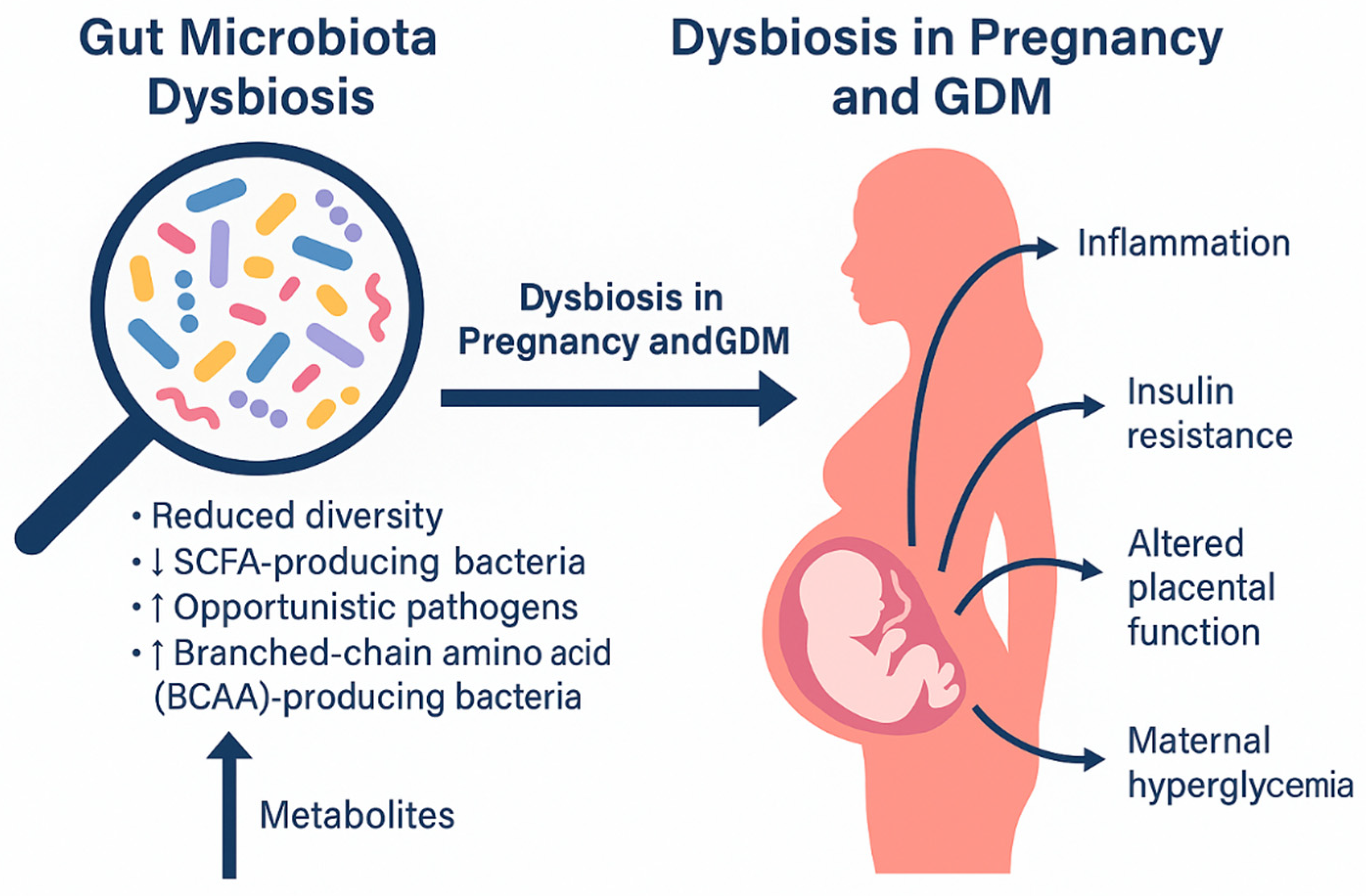
2. Gut Microbiota Dysbiosis in Pregnancy and GDM

| Feature | Healthy Pregnancy | Gestational Diabetes Mellitus (GDM) | Mechanistic/Physiological Implications | References |
|---|---|---|---|---|
| Overall diversity | Reduced diversity in late pregnancy as a physiological adaptation | Further altered diversity; dysbiotic configuration | Exaggerated metabolic inflammation and insulin resistance | [6,24] |
| Dominant taxa | Enrichment of Firmicutes and Actinobacteria in late gestation | Increased abundance of Ruminococcus, Blautia, Collinsella, Parabacteroides | Correlates with insulin resistance and dysglycemia | [7,25] |
| Beneficial bacteria | Presence of Bifidobacterium and Akkermansia muciniphila | Reduced Bifidobacterium and Akkermansia | Impaired gut barrier integrity and glucose homeostasis | [26,27] |
| Inflammatory potential | Mild pregnancy-associated inflammation | Increased Gram-negative bacteria and LPS production | Activation of TLR4/NF-κB signaling and systemic inflammation | [26,28] |
| Metabolic endotoxemia | Low circulating LPS levels | Elevated LPS (“metabolic endotoxemia”) | Impaired insulin signaling and placental inflammation | [26,28] |
| SCFA production | Adequate SCFA (butyrate, propionate) production | Reduced SCFA availability | Loss of anti-inflammatory signaling and gut barrier dysfunction | [16,29] |
| BCAA metabolism | Normal microbial regulation of BCAAs | Elevated circulating BCAAs | Insulin resistance and mitochondrial stress | [9] |
| Bile acid metabolism | Balanced bile acid pools and signaling | Altered bile acid composition and signaling | Dysregulation of FXR/TGR5 pathways affecting glucose metabolism | [16,30] |
| Immune modulation | Balanced Treg/Th17 immune responses | Shift toward pro-inflammatory immune profile | Exacerbated placental immune activation | [13,31] |
| Timing of dysbiosis | Gradual changes across gestation | Dysbiosis detectable early in pregnancy | Suggests a predisposing rather than secondary effect | [17,25] |
3. Molecular Mechanisms Linking Gut Microbiota to Placental Function
4. Immune Crosstalk: Microbiota-Driven Inflammation and Placental Immune Modulation
5. Placental Exosomes and miRNAs as Mediators of Microbiota–Placenta Crosstalk
6. The Placenta Influencing the Maternal Gut Microbiome: Reverse Feedback Mechanisms
7. Therapeutic and Preventive Interventions Targeting the Placenta–Gut Microbiota Axis
7.1. Probiotics and Prebiotics
7.2. Dietary Interventions
7.3. Pharmacological and Molecular Strategies
8. Vaginal Microbiome and Vertical Transmission in Gestational Diabetes Mellitus
8.1. Vertical Transmission and Neonatal Microbiome Programming
8.2. Mechanistic Links Between Vaginal Dysbiosis, Placental Immunity, and GDM
8.3. Delivery Mode as a Modulator of Microbial Inheritance in GDM
8.4. Implications for Prevention and Intervention
9. Future Directions
10. Conclusions
Author Contributions
Funding
Data Availability Statement
Acknowledgments
Conflicts of Interest
Abbreviations
| AKT | protein kinase B, a key mediator of insulin signaling |
| BCAAs | branched-chain amino acids |
| EVs | extracellular vesicles |
| FATPs | fatty acid transport protein |
| FXR | Farnesoid X receptor |
| GDM | gestational diabetes mellitus |
| GLUT1/GLUT4 | glucose transporter 1/glucose transporter 4 |
| GPR41/43 | G-protein-coupled receptors 41/43 |
| hPL | human placental lactogen |
| HDAC | histone deacetylase |
| IL-6 | interleukin-6 |
| IRS | insulin receptor substrate |
| JAK-STAT | Janus kinase–signal transducer and activator of transcription pathway |
| LPS | lipopolysaccharide |
| MAPK | mitogen-activated protein kinase |
| miRNA | microribonucleic acid |
| mTOR | mammalian target of rapamycin |
| NF-KB | nuclear factor kappa-light-chain-enhancer of activated B cells |
| NLRP3 | NOD-, LRR- and pyrin domain-containing protein 3 inflammasome |
| pGH | placental growth hormone |
| SCFAs | short-chain fatty acids |
| SNATs | system A neutral amino acid transporters |
| TGR5 | Takeda G-protein receptor 5 |
| TLR4 | toll-like receptor 4 |
| TNF-alfa | tumor necrosis factor alpha |
References
- American Diabetes Association Professional Practice Committee for Diabetes*. 2. Diagnosis and Classification of Diabetes: Standards of Care in Diabetes—2026. Diabetes Care 2026, 49, S27–S49. [Google Scholar] [CrossRef] [PubMed]
- Ferrara, A. Increasing prevalence of gestational diabetes mellitus: A public health perspective. Nat. Rev. Endocrinol. 2023, 19, 141–152. [Google Scholar]
- Plows, J.F.; Stanley, J.L.; Baker, P.N.; Reynolds, C.M.; Vickers, M.H. The pathophysiology of gestational diabetes mellitus. Int. J. Mol. Sci. 2018, 19, 3342. [Google Scholar] [CrossRef]
- Handwerger, S. Clinical counterpoint: The physiology of placental lactogen in human pregnancy. Endocr. Rev. 2009, 30, 141–169. [Google Scholar] [CrossRef]
- Barbour, L.A.; McCurdy, C.E.; Hernandez, T.L.; Kirwan, J.P.; Catalano, P.M.; Friedman, J.E. Cellular mechanisms for insulin resistance in normal pregnancy and gestational diabetes. Diabetes Care 2007, 30, S112–S119. [Google Scholar] [CrossRef]
- Koren, O.; Goodrich, J.K.; Cullender, T.C.; Spor, A.; Laitinen, K.; Kling Bäckhed, H.; Gonzalez, A.; Werner, J.J.; Angenent, L.T.; Knight, R.; et al. Host remodeling of the gut microbiome and metabolic changes during pregnancy. Cell 2012, 150, 470–480. [Google Scholar] [CrossRef] [PubMed]
- Crusell, M.K.W.; Hansen, T.H.; Nielsen, T.; Allin, K.H.; Rühlemann, M.C.; Damm, P.; Vestergaard, H.; Rørbye, C.; Juhl, C.R.; Christiansen, O.B.; et al. Gestational diabetes is associated with changes in the gut microbiota composition in third trimester of pregnancy. Diabetes 2018, 67, 235–243. [Google Scholar] [CrossRef]
- Muscogiuri, G.; Palomba, S.; Laganà, A.S.; Orio, F. Current insights into inositol isoforms, insulin resistance and their role in gestational diabetes mellitus. J. Clin. Endocrinol. Metab. 2020, 105, dgaa648. [Google Scholar]
- Newgard, C.B.; An, J.; Bain, J.R.; Muehlbauer, M.J.; Stevens, R.D.; Lien, L.F.; Haqq, A.M.; Shah, S.H.; Arlotto, M.; Slentz, C.A.; et al. A branched-chain amino acid-related metabolic signature that differentiates obese and lean humans and contributes to insulin resistance. Cell Metab. 2009, 9, 311–326. [Google Scholar] [CrossRef]
- Kim, J.; Kim, Y.; Lee, H.; Kang, M.J.; Yoon, Y.; Kim, H.J.; Kim, Y. Interplay between the gut microbiota and histone acetylation regulates host metabolism in mice. Sci. Rep. 2016, 6, 21636. [Google Scholar]
- Jansson, T.; Powell, T.L. Role of the placenta in fetal programming: Underlying mechanisms and potential interventional approaches. Placenta 2013, 34, S21–S26. [Google Scholar] [CrossRef]
- Dubé, E.; Gravel, A.; Martin, C.; Despars, G.; Giguère, Y.; Bédard, J.; Forest, J.-C.; Lalonde, M.-É.; Masse, A.; Vohl, M.-C.; et al. Modulation of fatty acid transport and metabolism by maternal obesity in human full-term placenta. Diabetes 2012, 61, 2457–2467. [Google Scholar]
- Prince, A.L.; Antony, K.M.; Chu, D.M.; Aagaard, K.M. The microbiome and development: A mother’s perspective. Front. Immunol. 2014, 5, 79. [Google Scholar] [CrossRef] [PubMed]
- Salomon, C.; Torres, M.J.; Kobayashi, M.; Scholz-Romero, K.; Sobrevia, L.; Dobierzewska, A.; Illanes, S.E.; Rice, G.E. A gestational profile of placental exosomes in maternal plasma and their effects on endothelial cell migration. Diabetes 2016, 65, 598–609. [Google Scholar] [CrossRef] [PubMed]
- Nair, S.; Salomon, C. Extracellular vesicles and their immunomodulatory functions in pregnancy. Placenta 2020, 102, 82–88. [Google Scholar] [CrossRef]
- Koh, A.; Molinaro, A.; Ståhlman, M.; Khan, M.T.; Schmidt, C.; Mannerås-Holm, L.; Wu, H.; Carreras, A.; Jeong, H.; Olofsson, L.E.; et al. From dietary fiber to host physiology: Short-chain fatty acids as key bacterial metabolites. Nat. Rev. Microbiol. 2016, 14, 387–401. [Google Scholar] [CrossRef]
- Lappas, M. NOD1 and NOD2 regulation of inflammatory and metabolic pathways in human gestational tissues: Implications for gestational diabetes. J. Endocrinol. 2014, 222, 219–232. [Google Scholar]
- Tang, W.H.; Wang, Z.; Levison, B.S.; Koeth, R.A.; Britt, E.B.; Fu, X.; Wu, Y.; Hazen, S.L. Intestinal microbial metabolism of phosphatidylcholine and cardiovascular risk. N. Engl. J. Med. 2013, 368, 1575–1584. [Google Scholar] [CrossRef]
- Qin, J.; Li, R.; Raes, J.; Arumugam, M.; Burgdorf, K.S.; Manichanh, C.; Nielsen, T.; Pons, N.; Levenez, F.; Yamada, T.; et al. A human gut microbial gene catalogue established by metagenomic sequencing. Nature 2012, 490, 55–65. [Google Scholar] [CrossRef]
- Alba-Linares, J.J.; Pérez, R.F.; Tejedor, J.R.; Bastante-Rodríguez, D.; Ponce, F.; Carbonell, N.G.; Zafra, R.G.; Fernández, A.F.; Fraga, M.F.; Lurbe, E. Maternal obesity and gestational diabetes reprogram the methylome of offspring beyond birth by inducing epigenetic signatures in metabolic and developmental pathways. Cardiovasc. Diabetol. 2023, 22, 44. [Google Scholar] [CrossRef]
- Davie, J.R. Inhibition of histone deacetylase activity by butyrate. J. Cell. Physiol. 2003, 184, 2485S–2493S. [Google Scholar] [CrossRef] [PubMed]
- Wang, J.; Li, L.; Zhang, Z.; Zhang, X.; Zhu, Y.; Zhang, C.; Bi, Y. Extracellular vesicles mediate the communication of adipose tissue with brain and promote cognitive impairment associated with insulin resistance. Cell Metab. 2022, 34, 1264–1279.e8. [Google Scholar] [CrossRef]
- Paciolla, C.; Manganelli, M.; Di Chiano, M.; Montenegro, F.; Gallone, A.; Sallustio, F.; Guida, G. Valeric Acid: A Gut-Derived Metabolite as a Potential Epigenetic Modulator of Neuroinflammation in the Gut–Brain Axis. Cells 2025, 14, 1823. [Google Scholar] [CrossRef]
- DiGiulio, D.B.; Callahan, B.J.; McMurdie, P.J.; Costello, E.K.; Lyell, D.J.; Robaczewska, A.; Sun, C.L.; Goltsman, D.S.; Wong, R.J.; Shaw, G.; et al. Temporal and spatial variation of the human microbiota during pregnancy. Proc. Natl. Acad. Sci. USA 2015, 112, 11060–11065. [Google Scholar] [CrossRef]
- Fugmann, M.; Breier, M.; Rottenkolber, M.; Banning, F.; Ferrari, U.; Sacco, V.; Grallert, H.; Seissler, J.; Clavel, T.; Lechner, A. The stool microbiota of insulin resistant women with recent gestational diabetes mellitus. Diabetologia 2015, 58, 156–166. [Google Scholar]
- Saad, M.J.; Santos, A.; Prada, P.O. Linking gut microbiota and inflammation to obesity and insulin resistance. Diabetes 2016, 65, 1045–1051. [Google Scholar] [CrossRef]
- Burcelin, R.; Serino, M.; Chabo, C.; Garidou, L.; Pomie, C.; Courtney, M.; Amar, J.; Bouloumié, A.; Maresca, M.; Sulpice, T.; et al. Metagenome-wide association of intestinal microbiota with diabetes: A cross-sectional study. PLoS ONE 2011, 6, e23126. [Google Scholar]
- Cani, P.D.; Amar, J.; Iglesias, M.A.; Poggi, M.; Knauf, C.; Bastelica, D.; Neyrinck, A.M.; Fava, F.; Tuohy, K.M.; Chabo, C.; et al. Metabolic endotoxemia initiates obesity and insulin resistance. Diabetes 2007, 56, 1761–1772. [Google Scholar] [CrossRef]
- Vinolo, M.A.; Rodrigues, H.G.; Nachbar, R.T.; Curi, R. Regulation of inflammation by short chain fatty acids. Nutrients 2011, 3, 858–876. [Google Scholar] [CrossRef]
- Pols, T.W.; Noriega, L.G.; Nomura, M.; Auwerx, J.; Schoonjans, K. The bile acid receptor TGR5 as a modulator of gut microbiota and host metabolism. Gastroenterology 2011, 141, 1609–1616. [Google Scholar]
- Sun, M.; Wu, W.; Liu, Z.; Cong, Y. Microbiota metabolite regulation of host immune homeostasis. Cell Metab. 2019, 30, 513–526. [Google Scholar]
- Barbosa, M.R.; Marchi, G.F.d.; Silva, K.M.R.; França, D.C.H.; Silva, M.A.B.d.; Ribeiro Barbosa, J.; Melo, L.V.L.; França, E.L.; Honorio-França, A.C. Gestational Diabetes Mellitus Alters Cytokine Profiles and Macrophage Polarization in Human Placenta. Int. J. Mol. Sci. 2025, 26, 10867. [Google Scholar] [CrossRef] [PubMed]
- Tauber, Z.; Burianova, A.; Koubova, K.; Mrstik, M.; Jirkovska, M.; Cizkova, K. The interplay of inflammation and placenta in maternal diabetes: Insights into Hofbauer cell expression patterns. Front. Immunol. 2024, 15, 1386528. [Google Scholar] [CrossRef]
- Luoto, R.; Laitinen, K.; Nermes, M.; Isolauri, E. Impact of maternal probiotic-supplemented dietary counseling on pregnancy outcome and prenatal and postnatal growth: A double-blind, placebo-controlled study. Br. J. Nutr. 2010, 103, 1792–1799. [Google Scholar] [CrossRef]
- Simmons, D.; Jelsma, J.G.M.; Galjaard, S.; Braatvedt, G.D.; van Poppel, M.N.M.; Wang, E.C.; Devlieger, R.; Desoye, G.; Simmons, D. Results from a European Multicenter Randomized Trial of Lifestyle Intervention for Pregnant Women with Obesity (DALI): Impact on Maternal and Infant Health. Placenta 2020, 102, 1–10. [Google Scholar]
- Zhao, L.; Zhang, F.; Ding, X.; Wu, G.; Lam, Y.Y.; Wang, X.; Fu, H.; Xue, X.; Lu, C.; Xue, Y.; et al. Gut bacteria selectively promoted by dietary fibers alleviate type 2 diabetes. Endocrinology 2011, 152, 2403–2414. [Google Scholar] [CrossRef] [PubMed]
- Yang, Q.; Liang, Q.; Balakrishnan, B.; Belobrajdic, D.P.; Feng, Q.-J.; Zhang, W. Role of Dietary Nutrients in the Modulation of Gut Microbiota: A Narrative Review. Nutrients 2020, 12, 381. [Google Scholar] [CrossRef] [PubMed]
- Zhang, L.; Wang, F.; Tashiro, S.; Liu, P.J. Effects of Dietary Approaches and Exercise Interventions on Gestational Diabetes Mellitus: A Systematic Review and Bayesian Network Meta-analysis. Adv. Nutr. 2024, 15, 100330. [Google Scholar] [CrossRef]
- Greff, D.; Váncsa, S.; Váradi, A.; Szinte, J.; Park, S.; Hegyi, P.; Nyirády, P.; Ács, N.; Horváth, E.M.; Várbíró, S. Myoinositols Prevent Gestational Diabetes Mellitus and Related Complications: A Systematic Review and Meta-Analysis of Randomized Controlled Trials. Nutrients 2023, 15, 4224. [Google Scholar] [CrossRef]
- Baars, A.; Oosting, A.; Lohuis, M.A.M.; Koehorst, M.; El Aidy, S.; Hooiveld, G.J.; Smidt, H.; Boekschoten, M.V.; Verkade, H.J.; Faber, K.N. A Role for the Bile Acid Receptors FXR and TGR5 in Gut Microbiota–Host Metabolic Crosstalk: Therapeutic Implications for Obesity and Metabolic Syndrome. Microorganisms 2015, 3, 641–666. [Google Scholar] [CrossRef]
- Wang, L.; Cao, W.; He, L.; Cai, S.; Yang, D.; Feng, G.; Chen, X.; Markert, U.R.; Diao, L. Engineered extracellular vesicles in female reproductive and pregnancy-related disorders. Biomed. Pharmacother. 2025, 191, 118453. [Google Scholar] [CrossRef] [PubMed]
- Ravel, J.; Gajer, P.; Abdo, Z.; Schneider, G.M.; Koenig, S.S.K.; McCulle, S.L.; Karlebach, S.; Gorle, R.; Russell, J.; Tacket, C.O.; et al. Vaginal microbiome of reproductive-age women. Proc. Natl. Acad. Sci. USA 2011, 108, 4680–4687. [Google Scholar] [CrossRef]
- Petrova, M.I.; Lievens, E.; Malik, S.; Imholz, N.; Lebeer, S. Lactobacillus species as biomarkers and agents that can promote various aspects of vaginal health. Front. Physiol. 2015, 6, 81. [Google Scholar] [CrossRef] [PubMed]
- Cui, Y.; Wang, Q.; Zhang, J.; Xu, C.; Liu, S.; Zhao, Y. Vaginal microbiome changes in women with gestational diabetes mellitus and their association with inflammation. Front. Cell. Infect. Microbiol. 2021, 11, 731038. [Google Scholar]
- Anahtar, M.N.; Byrne, E.H.; Doherty, K.E.; Bowman, B.A.; Yamamoto, H.S.; Soumillon, M.; Padavattan, N.; Ismail, N.; Moodley, A.; Sabatini, M.E.; et al. Cervicovaginal bacteria are a major modulator of host inflammatory responses in the female genital tract. Immunity 2015, 42, 965–976. [Google Scholar] [CrossRef] [PubMed]
- Mitchell, C.; Moreira, C.; Fredricks, D.; Paul, K.; Caliendo, A.M.; Kurkinen-Räty, M.; Rabe, L.; Ravel, J.; Forney, L.J. Vaginal Microbiota and pH Regulation during Pregnancy. Clin. Infect. Dis. 2015, 61, 104–112. [Google Scholar]
- Dias, S.; Pheiffer, C.; Adam, S. The Maternal Microbiome and Gestational Diabetes Mellitus: Cause and Effect. Microorganisms 2025, 11, 2217. [Google Scholar] [CrossRef]
- Nuriel-Ohayon, M.; Neuman, H.; Koren, O. Microbial Changes during Pregnancy, Birth, and Infancy. Front. Microbiol. 2016, 7, 1031. [Google Scholar] [CrossRef]
- Morrill, S.; Gilbert, N.M.; Lewis, A.L. Glycogen and Lactate Metabolism in the Vaginal Microenvironment. mBio 2021, 12, e03429-20. [Google Scholar]
- Wang, J.; Li, Z.; He, Y.; Pan, J.; Chen, Y.; Wang, J. Altered Vaginal Cytokine Profiles in Women with Gestational Diabetes Mellitus. J. Reprod. Immunol. 2020, 138, 103080. [Google Scholar]
- Serrano, M.G.; Edwards, D.; Ahmed, K.; Bailey, V.C.; Beksinska, M.; Edupuganti, L.; Harryparsad, R.; D’Hellencourt, F.L.; Meyer, B.; Mehou-Loko, C.; et al. Effect of contraceptive methods on the vaginal microbiome and host immune factors. Contraception 2025, 148, 110936. [Google Scholar] [CrossRef] [PubMed]
- Chu, D.M.; Ma, J.; Prince, A.L.; Antony, K.M.; Seferovic, M.D.; Aagaard, K.M. Maturation of the Infant Microbiome Community Structure and Function across Multiple Body Sites and in Relation to Mode of Delivery. Nat. Med. 2017, 23, 1224–1231. [Google Scholar] [CrossRef] [PubMed]
- Shao, Y.; Forster, S.C.; Tsaliki, E.; Vervier, K.; Strang, A.; Simpson, N.; Kumar, N.; Stares, M.D.; Rodger, A.; Brocklehurst, P.; et al. Stunted Microbiota and Opportunistic Pathogen Colonization in Caesarean-Section Births. Nature 2019, 574, 117–121. [Google Scholar] [CrossRef]
- Soderborg, T.K.; Clark, S.E.; Mulligan, C.E.; Janssen, R.C.; Babcock, L.; Ir, D.; Young, B.; Krebs, N.; Lemas, D.J.; Johnson, L.K.; et al. The Gut Microbiota in Infants of Obese Mothers Increases Inflammation and Susceptibility to NAFLD. Nat. Commun. 2018, 9, 4462, Erratum in Nat. Commun. 2019, 10, 2965. [Google Scholar] [CrossRef]
- Gomez-Arango, L.F.; Barrett, H.L.; McIntyre, H.D.; Callaway, L.K.; Morrison, M.; Dekker Nitert, M. Contributions of the Gut Microbiome to Metabolic Outcomes in Offspring of Women with Gestational Diabetes Mellitus. Gut 2017, 66, 145–153. [Google Scholar]
- Dominguez-Bello, M.G.; Costello, E.K.; Contreras, M.; Magris, M.; Hidalgo, G.; Fierer, N.; Knight, R. Delivery mode shapes the acquisition and structure of the initial microbiota across multiple body habitats in newborns. Proc. Natl. Acad. Sci. USA 2010, 107, 11971–11975. [Google Scholar] [CrossRef]
- Mueller, N.T.; Bakacs, E.; Combellick, J.; Grigoryan, Z.; Dominguez-Bello, M.G. The infant microbiome development: Mom matters. Trends Mol. Med. 2015, 21, 109–117. [Google Scholar] [CrossRef]
- Romero, R.; Hassan, S.S.; Gajer, P.; Tarca, A.L.; Fadrosh, D.W.; Nikita, L.; Galuppi, M.; Lamont, R.F.; Chaemsaithong, P.; Miranda, J.; et al. The composition and stability of the vaginal microbiota of normal pregnant women is different from that of non-pregnant women. Microbiome 2014, 2, 4, Erratum in Microbiome 2014, 2, 10. [Google Scholar] [CrossRef]
- Stinson, L.F.; Payne, M.S.; Keelan, J.A. A critical review of the bacterial baptism hypothesis and the impact of cesarean delivery on the infant microbiome. Front. Med. 2018, 5, 135. [Google Scholar] [CrossRef]
- Miko, E.; Csaszar, A.; Bodis, J.; Kovacs, K. The Maternal–Fetal Gut Microbiota Axis: Physiological Changes, Dietary Influence, and Modulation Possibilities. Life 2022, 12, 424. [Google Scholar] [CrossRef]
- Miao, Z.; Hu, S.; Wu, P.; Lai, Y.; Chen, L.T.; Huang, M.; Zhang, K.; He, H.; Xu, F.; Li, F.; et al. Maternal Gut Microbiome during Early Pregnancy Predicts Preterm Birth. Cell Host Microbe 2025, 33, 1623–1639.e8. [Google Scholar] [CrossRef] [PubMed]


| Component | Source | Key Molecular Cargo | Target Tissue/Cells | Biological Effects Relevant to GDM | References |
|---|---|---|---|---|---|
| Placental exosomes (EVs) | Syncytiotrophoblasts; increased release in GDM | miRNAs, proteins, lipids | Maternal liver, adipose tissue, skeletal muscle | Modulation of insulin signaling, glucose uptake, and inflammatory pathways | [14,15] |
| miR-16 | Placental exosomes; upregulated by metabolic stress | miR-16 | Endothelial cells, adipocytes | Regulation of inflammation and insulin signaling; endothelial dysfunction | [14,22] |
| miR-21 | Placental exosomes; influenced by inflammatory signals | miR-21 | Immune cells, insulin-responsive tissues | Promotes inflammation and insulin resistance via NF-κB and MAPK signaling | [17,26] |
| miR-29 family (miR-29a/b/c) | Placental exosomes; responsive to SCFA and metabolic stress | miR-29 | Liver, skeletal muscle | Impaired insulin signaling and glucose metabolism; epigenetic regulation | [9,20] |
| miR-222 | Placental exosomes; elevated in GDM | miR-222 | Adipose tissue, muscle | Disruption of insulin receptor signaling and adipokine regulation | [14,22] |
| SCFA-modulated exosomal cargo | Gut microbiota-derived SCFAs (butyrate, propionate) | Altered miRNA and protein profiles | Placenta, maternal metabolic tissues | Anti-inflammatory effects; improved insulin sensitivity; epigenetic modulation via HDAC inhibition | [16,21] |
| LPS-driven EV alterations | Gut dysbiosis; increased intestinal permeability | Pro-inflammatory miRNAs, cytokine-associated proteins | Placenta, immune cells | Enhanced placental inflammation, macrophage activation, insulin resistance | [27,28] |
| EV-mediated immune modulation | Placental stress and inflammation | miRNAs regulating macrophage polarization | Maternal immune cells | Shift toward pro-inflammatory (M1) phenotype; impaired immune tolerance | [15,31] |
| Potential biomarker EVs | Early pregnancy placental exosome release | Circulating miRNA signatures | Maternal plasma | Early prediction of GDM risk and disease severity | [15,20] |
| Feature | Healthy Pregnancy | GDM Pregnancy | Physiological Implication | References |
|---|---|---|---|---|
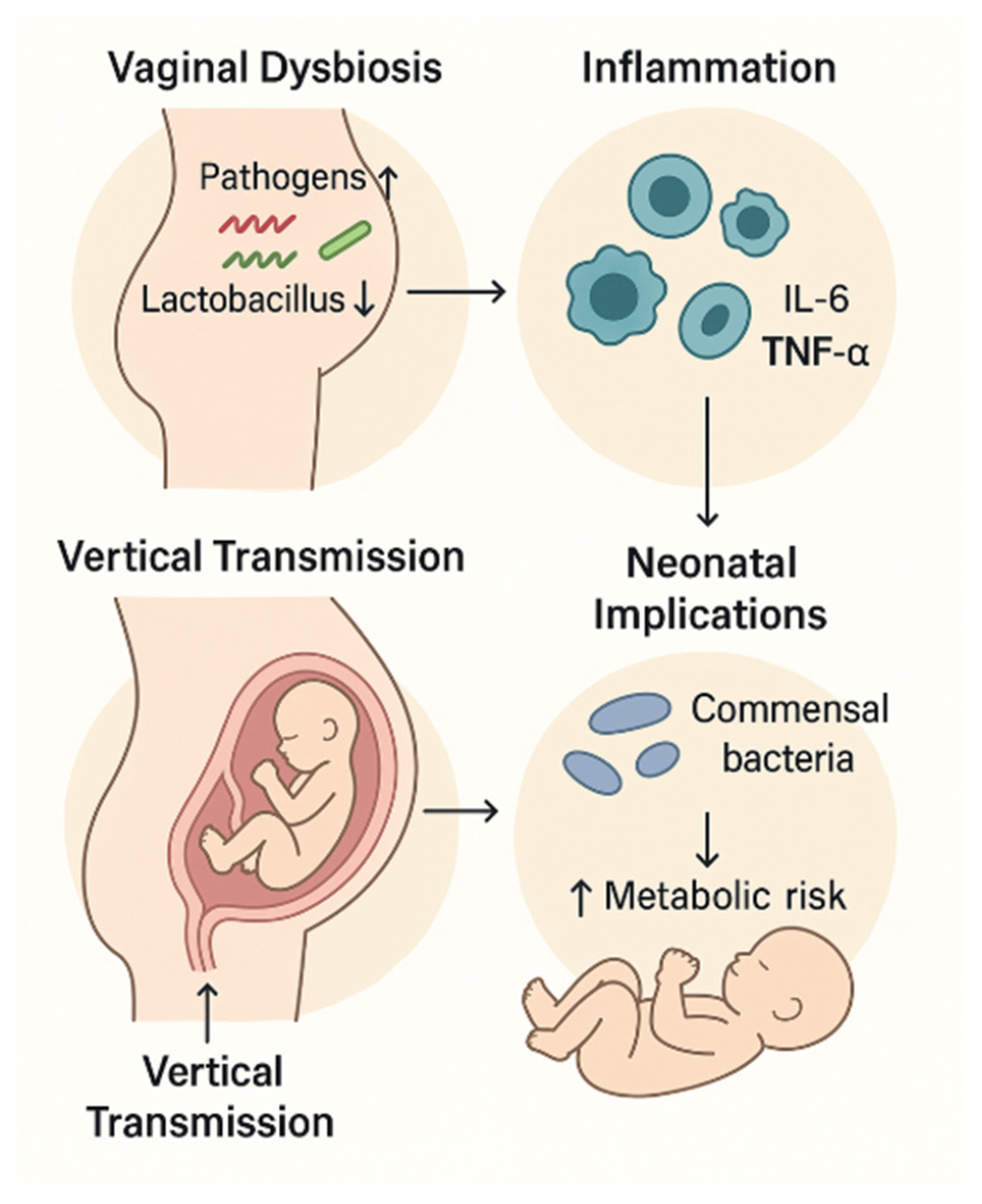
| Dominant taxa | Lactobacillus-dominated microbiome (mainly L. crispatus, L. jensenii, L. gasseri) | Reduced Lactobacillus spp.; increased Gardnerella, Atopobium, Prevotella, Ureaplasma | Elevated vaginal pH, weakened epithelial defense, increased susceptibility to inflammation and infection | [39,46] |
| Microbial diversity | Low diversity, stable community | Increased alpha-diversity with enrichment of anaerobic taxa | Shift toward dysbiotic profiles resembling bacterial vaginosis | [39,47,48] |
| Community State Types (CSTs) | CST I–III (Lactobacillus-dominant) | Shift toward CST IV (diverse anaerobes) | Increased inflammatory signaling and mucosal barrier disruption | [47,48,49] |
| pH regulation | Low pH (≈3.5–4.5) maintained by lactic acid production | Elevated pH due to reduced lactic acid production | Loss of antimicrobial protection and altered immune tone | [42,50] |
| Inflammatory milieu | Physiological low-grade inflammation of pregnancy | Increased vaginal IL-6, IL-8, TNF-α | Local inflammation may propagate to decidua and placenta | [21,51] |
| Metabolic environment | Normal glycogen metabolism supporting Lactobacillus growth | Altered glycogen and lactate metabolism | Favors anaerobic overgrowth and dysbiosis | [50,52] |
| Vertical transmission potential | Predominant transfer of beneficial Lactobacillus to neonate during vaginal delivery | Increased likelihood of dysbiotic microbial transfer | Altered early-life microbiome seeding | [53,54] |
| Neonatal implications | Healthy gut colonization and immune maturation | Altered infant gut microbiota; increased metabolic risk | Early life metabolic and immune programming effects | [53,54,55] |
Disclaimer/Publisher’s Note: The statements, opinions and data contained in all publications are solely those of the individual author(s) and contributor(s) and not of MDPI and/or the editor(s). MDPI and/or the editor(s) disclaim responsibility for any injury to people or property resulting from any ideas, methods, instructions or products referred to in the content. |
© 2025 by the authors. Licensee MDPI, Basel, Switzerland. This article is an open access article distributed under the terms and conditions of the Creative Commons Attribution (CC BY) license.
Share and Cite
Vass, R.A.; Miko, E.; Premusz, V.; Vari, S.G.; Kovacs, K.; Bodis, J.; Ertl, T. The Placenta–Gut Microbiota Axis in Gestational Diabetes Mellitus: Molecular Mechanisms, Crosstalk, and Therapeutic Perspectives. Int. J. Mol. Sci. 2026, 27, 312. https://doi.org/10.3390/ijms27010312
Vass RA, Miko E, Premusz V, Vari SG, Kovacs K, Bodis J, Ertl T. The Placenta–Gut Microbiota Axis in Gestational Diabetes Mellitus: Molecular Mechanisms, Crosstalk, and Therapeutic Perspectives. International Journal of Molecular Sciences. 2026; 27(1):312. https://doi.org/10.3390/ijms27010312
Chicago/Turabian StyleVass, Reka Anna, Eva Miko, Viktoria Premusz, Sandor G. Vari, Kalman Kovacs, Jozsef Bodis, and Tibor Ertl. 2026. "The Placenta–Gut Microbiota Axis in Gestational Diabetes Mellitus: Molecular Mechanisms, Crosstalk, and Therapeutic Perspectives" International Journal of Molecular Sciences 27, no. 1: 312. https://doi.org/10.3390/ijms27010312
APA StyleVass, R. A., Miko, E., Premusz, V., Vari, S. G., Kovacs, K., Bodis, J., & Ertl, T. (2026). The Placenta–Gut Microbiota Axis in Gestational Diabetes Mellitus: Molecular Mechanisms, Crosstalk, and Therapeutic Perspectives. International Journal of Molecular Sciences, 27(1), 312. https://doi.org/10.3390/ijms27010312