Article

Discrimination of Hard Ticks by Polymerase Chain Reaction–Restriction Fragment Length Polymorphism (PCR-RFLP)

by
Nandhini Perumalsamy
1,2,
Rohit Sharma
1,*,
Ayyanar Elango
1,
Ananganallur Nagarajan Shriram
1,* and
Manju Rahi
1
1
Indian Council of Medical Research—Vector Control Research Centre (ICMR-VCRC), Puducherry 605006, India
2
Pondicherry University, Puducherry 605014, India
*
Authors to whom correspondence should be addressed.
Int. J. Mol. Sci. 2026, 27(1), 285; https://doi.org/10.3390/ijms27010285
Submission received: 22 October 2025 / Revised: 6 December 2025 / Accepted: 21 December 2025 / Published: 26 December 2025
(This article belongs to the Collection Advances in Cell and Molecular Biology)

Abstract

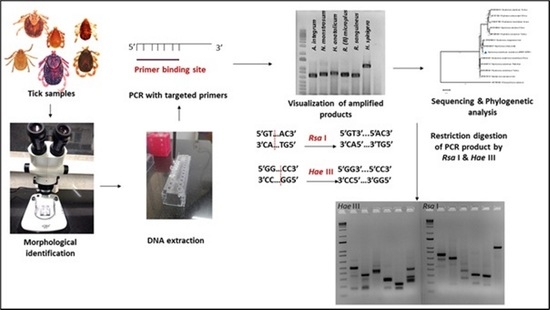
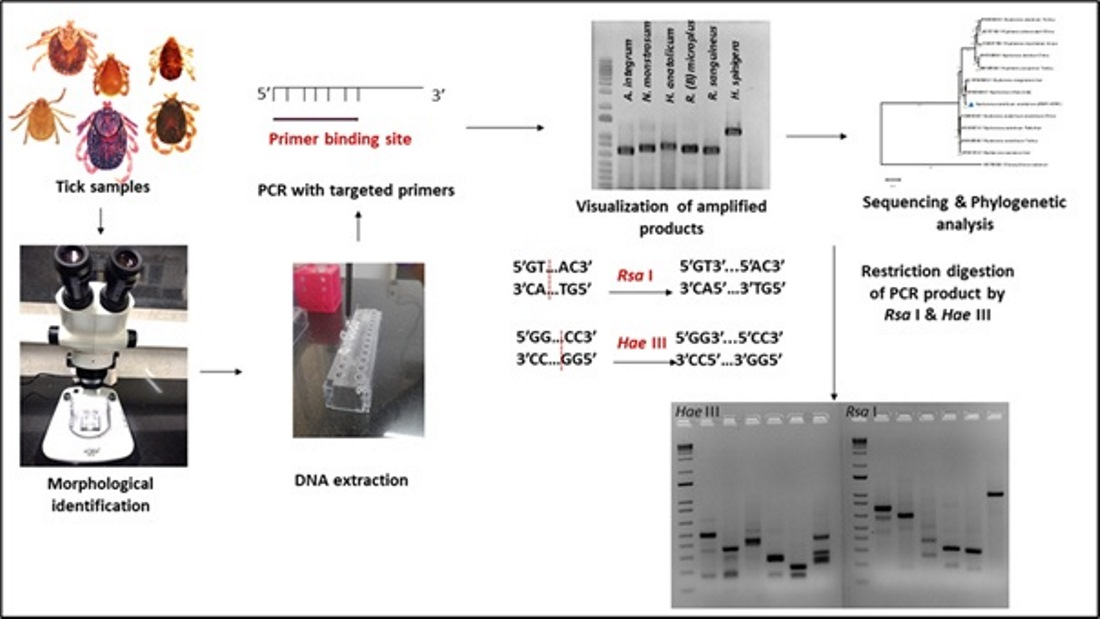
Hard ticks are important vectors for several human and zoonotic pathogens, transmitting diseases such as Crimean–Congo hemorrhagic fever, Lyme disease, Kyasanur forest disease, Powassan virus disease, Tick-borne encephalitis, Rickettsiosis, and Anaplasmosis. Morphological identification of ticks relies on taxonomic keys but is often challenging due to damaged, engorged, or immature specimens and requires expertise. Molecular taxonomy can be a supplement to species identification and usually requires nucleotide sequencing of the genetic markers. PCR-RFLP is an important tool for tick identification and can be supplemented to the classical taxonomy. The current study focused on the morphological identification of important hard tick vectors from India, their phylogenetic positioning, and developing a PCR-RFLP based diagnostic tool for easy identification of hard tick vectors. The primer sets were designed to amplify the ITS-2 region from important tick vectors causing human and zoonotic diseases in India. These ticks were morphologically identified with taxonomical keys, and the extracted genomic DNA were used for ITS-2 based PCR amplification. The nucleotide sequences from each vector were used for their phylogenetic positioning. We obtained variable sizes of ITS-2 amplicons from each species and utilized the sequence for RFLP assays design. We have successfully shown PCR-RFLP based assays with two different restriction enzymes (Hae III & Rsa I) with specific restriction sites on the amplified regions. The PCR-RFLP tool showed different DNA fragment patterns on the agarose gel, specific for each hard tick vector. This study presents the phylogenetic positioning of Indian tick vectors and demonstrates the development and applicability of a molecular tool for their identification.

Graphical Abstract

1. Introduction

Ticks are a common ectoparasite of amphibians, reptiles, birds, and mammals, which also parasitize domestic and pet animals [1]. They are the second most important arthropod vectors after mosquitoes, transmitting diseases to humans and animals [2]. Ticks can acquire, maintain, and transmit a broader range of pathogens, including viruses, bacteria, and protozoa, than any other blood-feeding arthropods [3,4]. Nearly 900 species of ticks are well-known. These species are divided into three families: Ixodidae/hard ticks (700 species), Argasidae/soft ticks (200 species), and Nuttaliellidae (monotypic family) [5,6]. Among these, hard ticks are the most significant in the medical and veterinary fields. Haemaphysalis, Rhipicephalus, Hyalomma, Dermacentor, Ixodes, and Amblyomma are widely distributed and serve as vectors for various diseases, predominantly affecting domestic animals, though some species also parasitize humans [2,7,8,9,10].
Ticks form a highly localized population, and the pathogens they transmit may vary geographically due to environmental and climatic factors [11,12]. The distribution of ticks and their role in disease transmission are influenced by habitat expansion, climate change, and host availability, with global concerns rising due to the geographical and range expansion and increasing tick-borne diseases (TBDs) [13,14]. Several hard tick species are responsible for transmitting pathogens to humans and animals. Hyalomma anatolicum anatolicm is the primary vector for Crimean–Congo Hemorrhagic Fever (CCHF), and other Hyalomma spp. are also involved in CCHF transmission [10]. Haemaphysalis spinigera is the main vector for Kyasanur Forest Disease (KFD) [15,16]. Indian tick typhus and other rickettsial pathogens are transmitted by Rhipicephalus sanguineus [2,17]. Rhipicephalus (Boophilus) microplus is involved in the transmission of babesiosis, theileriosis, and anaplasmosis throughout the world [18]. Ticks in the Amblyomma genus are known vectors for multiple diseases like rocky mountain spotted fever, tularemia, ehrlichiosis, KFD, and other rickettsial pathogen transmission [19,20].
Morphological identification of these tick vectors relies on determining the shape, size, and color of ticks using taxonomic keys. However, morphological identification has limitations, requiring expertise and difficulties with immature, damaged, or engorged specimens, as well as closely related species [21,22]. Phylogenetic markers address these challenges, supporting species identification and population genetic studies [21,23]. Phylogenetic studies based on the molecular marker can allow us to understand the genetic structure, hybrid vectors, and genetic factors associated with acaricide resistance [2,24,25]. Mitochondrial and ribosomal genes like COI, 16S rRNA, 12S rRNA, ITS-1 (Internal Transcribed Spacer-1), and ITS-2 (Internal Transcribed Spacer-2) are the common markers for species identification and phylogenetic analysis [26,27,28]. The ITS-2 non-coding region, flanked by the conserved rDNA genes (5.8S, and 28S), evolves rapidly due to minimal selection pressure, allowing it to accumulate substitutions that distinguish between closely related species. Primers targeting the conserved genes flanking ITS-2 enable effective amplification across diverse genera of hard ticks, making it a powerful tool for tick species identification [28,29]. Due to inter-species variations in ITS-2 nucleotide sequences resulting in variable PCR amplicon size, this is a valuable marker for developing an identification tool for tick vectors [29,30].
PCR-RFLP (Polymerase Chain Reaction-Restriction Fragment Length Polymorphism) is one such molecular technique which is rapid, cost-effective, and accurate in the identification of arthropod vectors [31]. Previous studies showed that the ITS-2 region-based PCR-RFLP had the best resolution among different species of ticks [32,33]. RFLP differentiates species by analyzing DNA band patterns generated by restriction enzymes. Variations in cleavage sites produce fragments of different lengths, allowing species and even strains to be distinguished based on their unique fragment profiles [34]. This method integrates PCR with RFLP, offering a simple, specific, and sensitive tool for tick identification. For instance, species within the Rhipicephalus (Boophilus) genus R. microplus, R. geigyi, R. decoloratus, and R. annulatus are distinguished using PCR-RFLP targeting the ITS-2 region, with restriction carried out by the enzyme MspI [32]. Similarly, Rhipicephalus appendiculatus and Rhipicephalus zambeziensis are differentiated as distinct species using PCR-RFLP, where the ITS-2 genetic marker was restricted by the enzyme BauI [33].
In this study, tick vectors were morphologically identified via dichotomous keys and then subjected to DNA extraction and molecular characterization using the ITS-2 genetic marker. Furthermore, ITS-2 sequences obtained from these tick vectors were utilized to design a PCR-RFLP tool which enabled accurate species identification of these vectors.

2. Results

2.1. Morphological Characterization

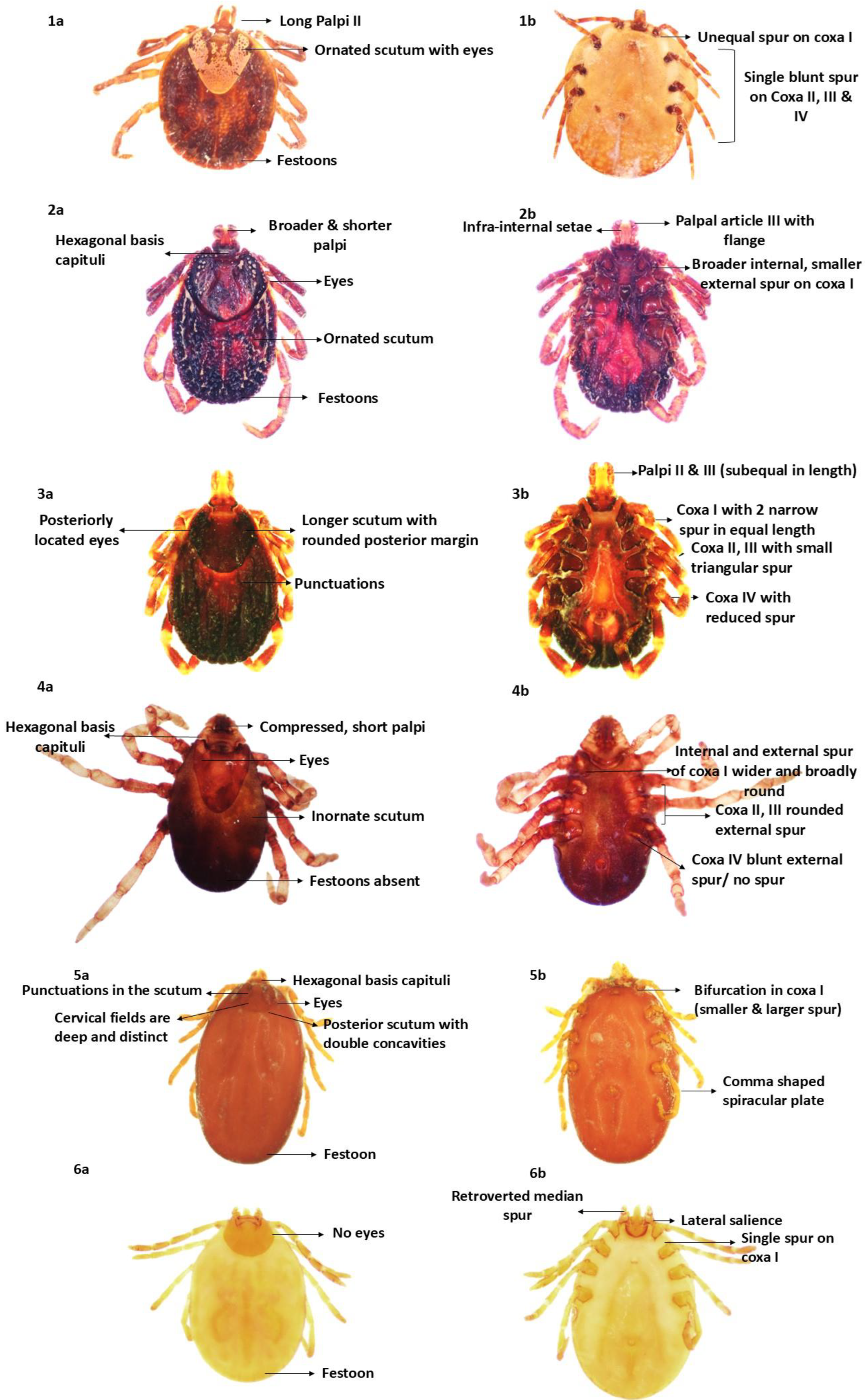
Ticks were identified based on key morphological characteristics, including palpi structure, basis capitulum shape, body morphology, coloration, ornamentation, spiracle shape, adanal plate, eye presence, and festoon patterns [21,35]. The following species were identified based on established taxonomic descriptions (Figure 1) [36,37,38,39,40,41,42,43,44,45,46].

2.2. Primer Designing and PCR Amplification of ITS-2

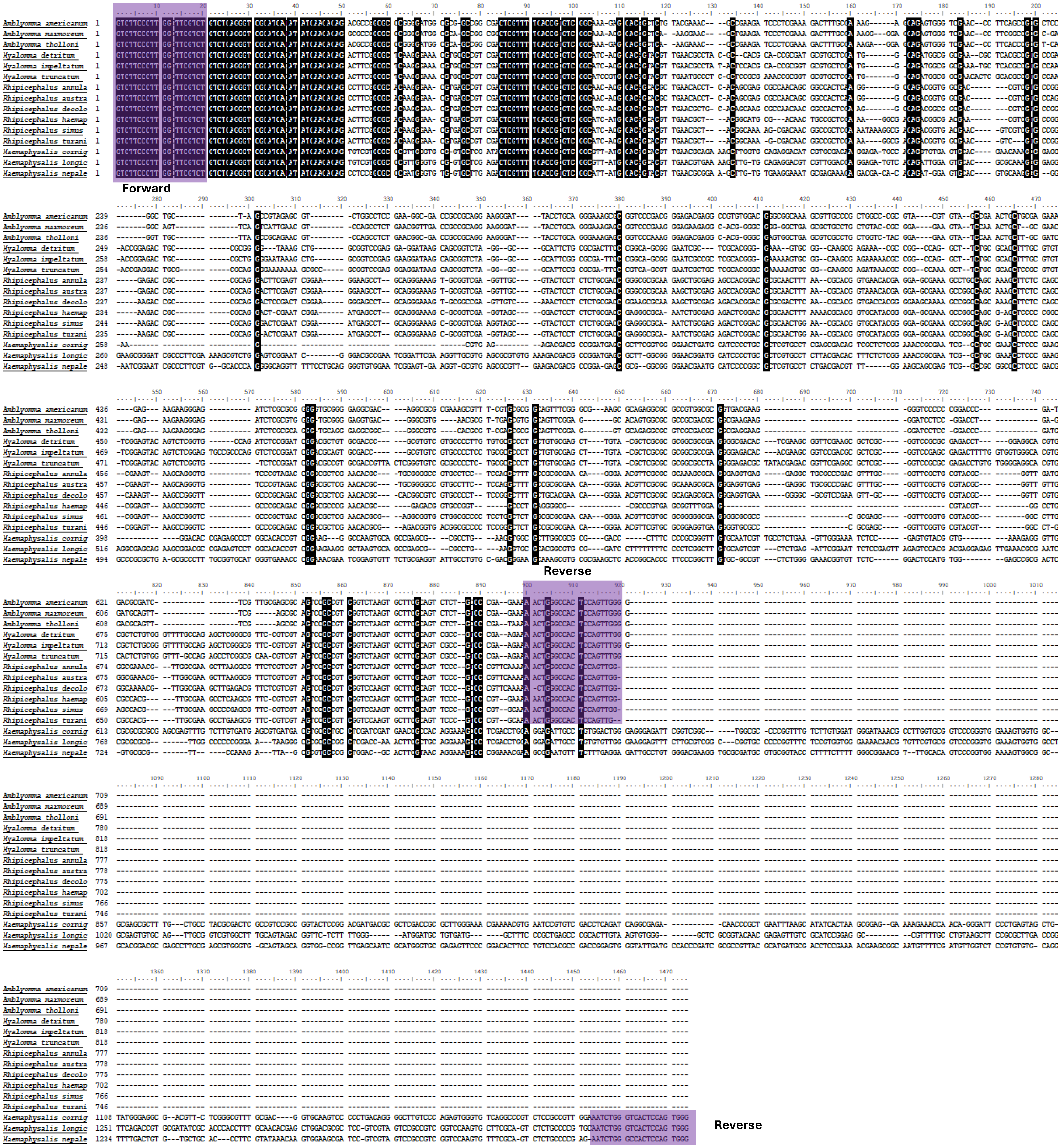
The ribosomal spacer ITS-2 region was targeted for this study. The ITS-2 sequences used for primer designing were collected from NCBI, showing significant variations in the length; however, the used primer binding sites were conserved (Figure 2 and Table 1). We designed a degenerated primer set, which can produce amplicons from different tick vectors.
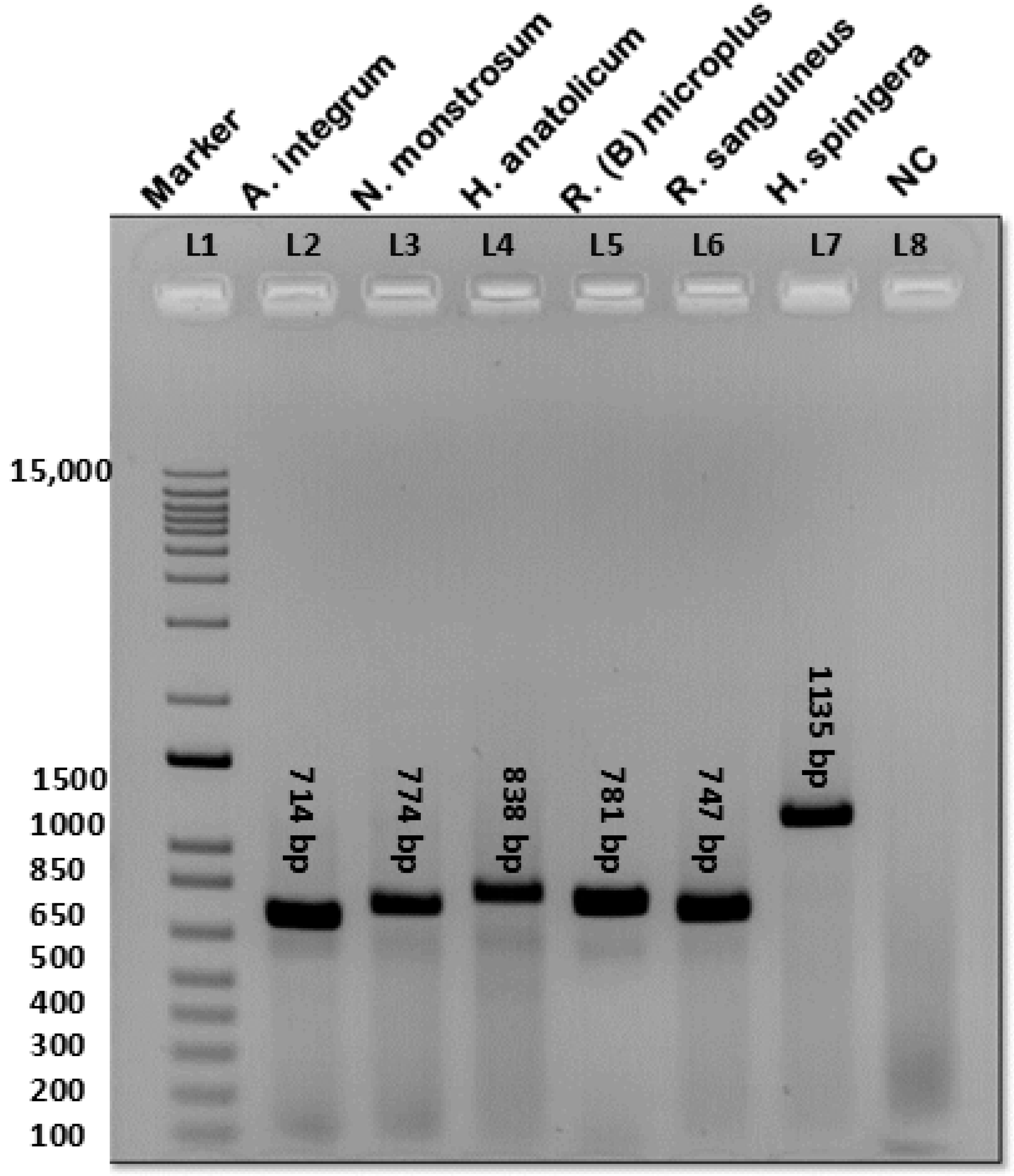
Morphologically identified tick samples were utilized for DNA extraction (Table S1). The extracted DNA from the individual tick vectors was utilized for the amplification of the ITS-2 region by using the designed primer. The amplified products were run on agarose gel electrophoresis, and the bands were confirmed for different ticks (Figure 3). We designed a degenerated primer set to produce amplicons (~700–1200 bp) from six tick vectors found in India (Figure 3). The PCR products were then purified, and Sanger sequenced resulting in different nucleotide lengths.

2.3. Sequence Analysis and Phylogenetic Positioning

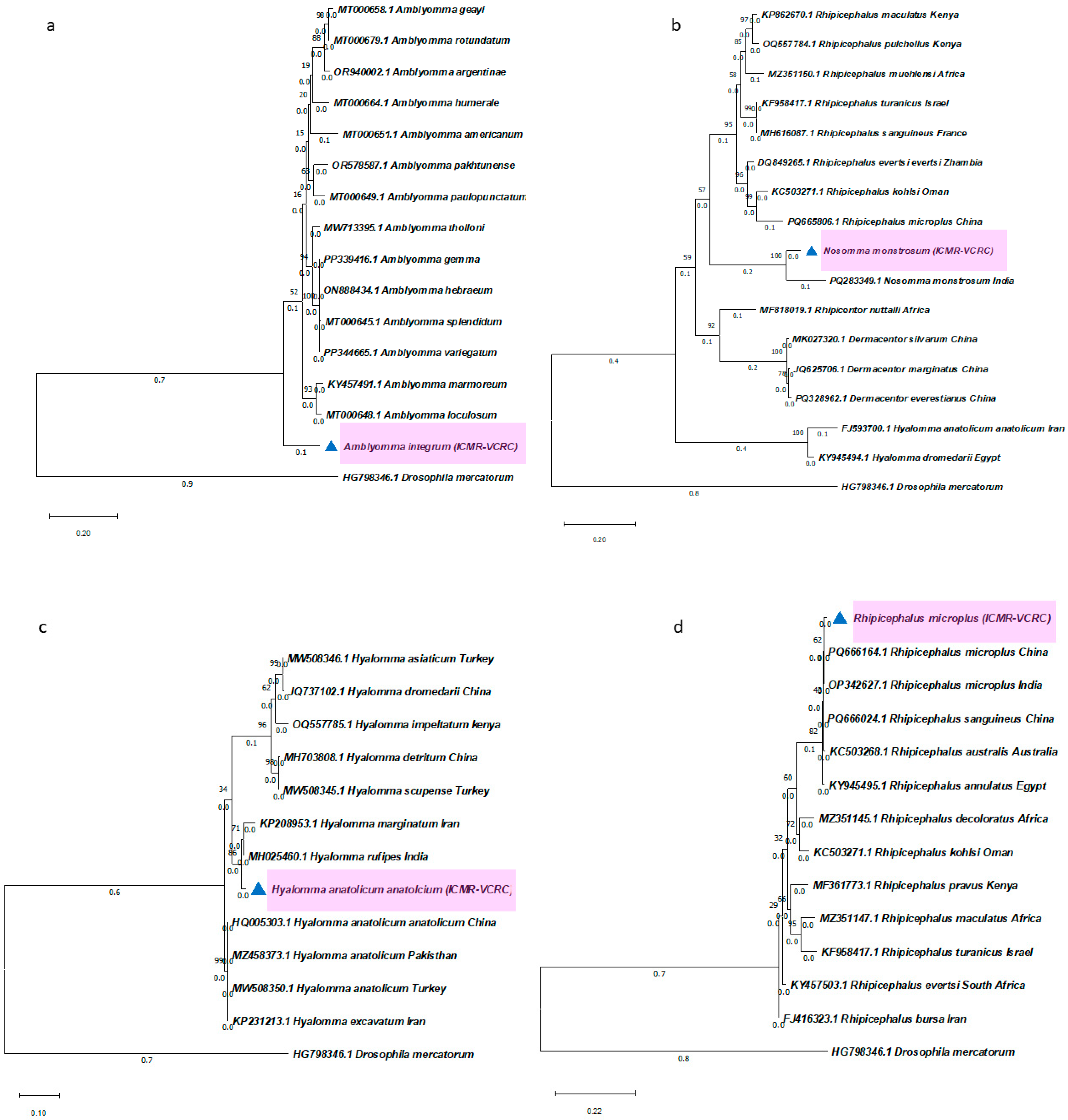
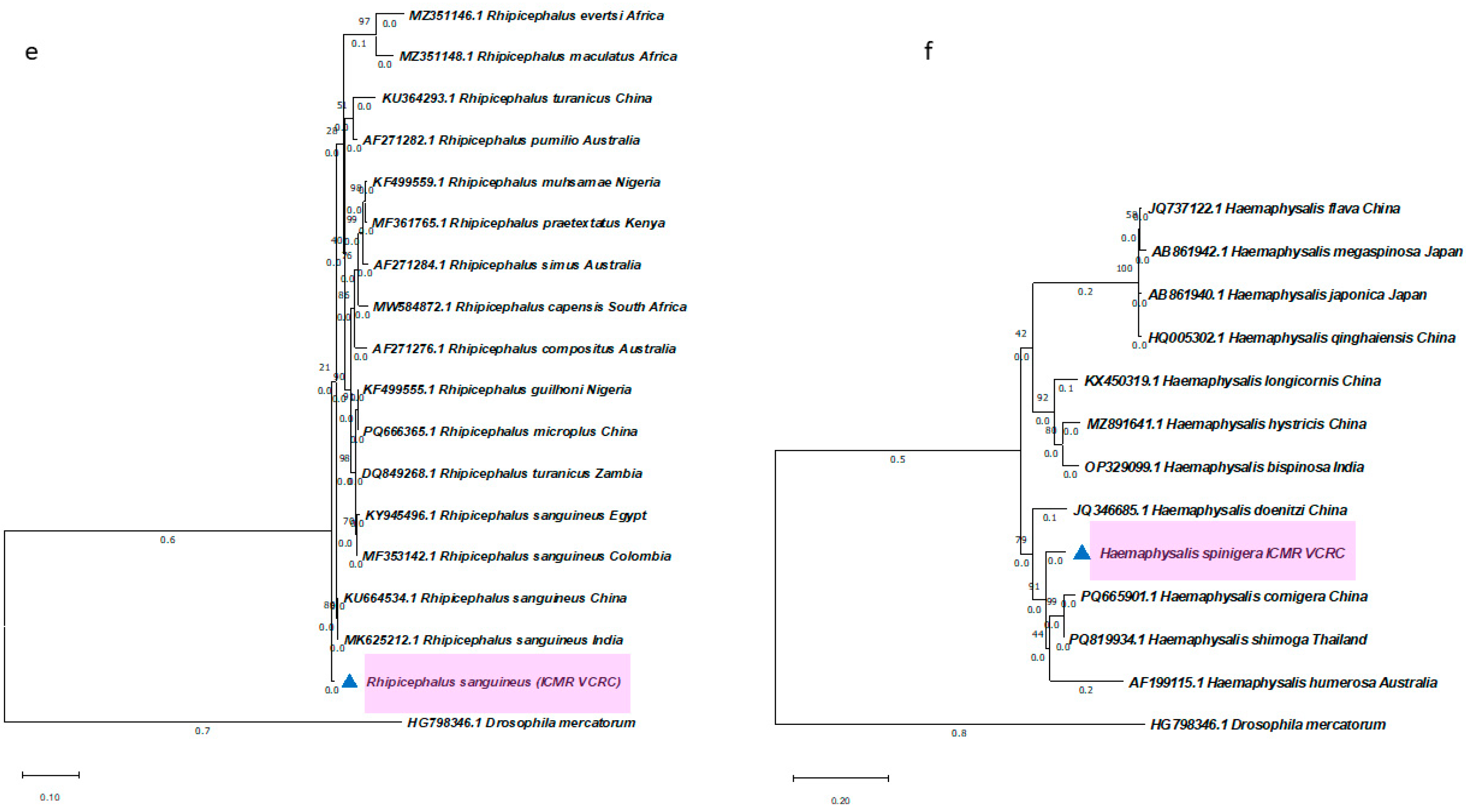
Sequences obtained from the amplified PCR products were blasted in the NCBI platform, and the species were confirmed with the closest nucleotide identities. Sequences of all six ticks from different genera of the hard tick family were used for the phylogenetic tree construction. The phylogenetic tree was constructed with other closely related species retrieved from the NCBI database. The NCBI blast of A. integrum sequence was matched with other Amblyomma ticks from Africa and America. However, the phylogenetic tree showed a 10% genetic difference between A. integrum and other African and American Amblyomma ticks. It showed that A. integrum is genetically diverged from other Amblyomma ticks from other continents. The N. monstrosum blast result showed close alignment with N. monstrosum from India and other Rhipicephalus ticks. N. monstrosum is a monotypic tick, grouped with N. monstrosum in the same clade and grouped with Rhipicephalus ticks. It showed a distance from Dermacentor and Hyalomma ticks. H anatolicum anatolicum, R. (B) microplus, and R. sanguineus exhibit closeness with the species of the same genus from different parts of the world. R. sanguineus from Asia grouped, and the same species from other places were separated from the Asian group. H. spinigera is grouped with the other Haemaphysalis spp. from China and Thailand in the same clade, and it is closer to Haemaphysalis cornigera and Haemaphysalis shimoga (Figure 4).

2.4. In Silico Analysis of PCR-RFLP of Important Hard Tick Vectors

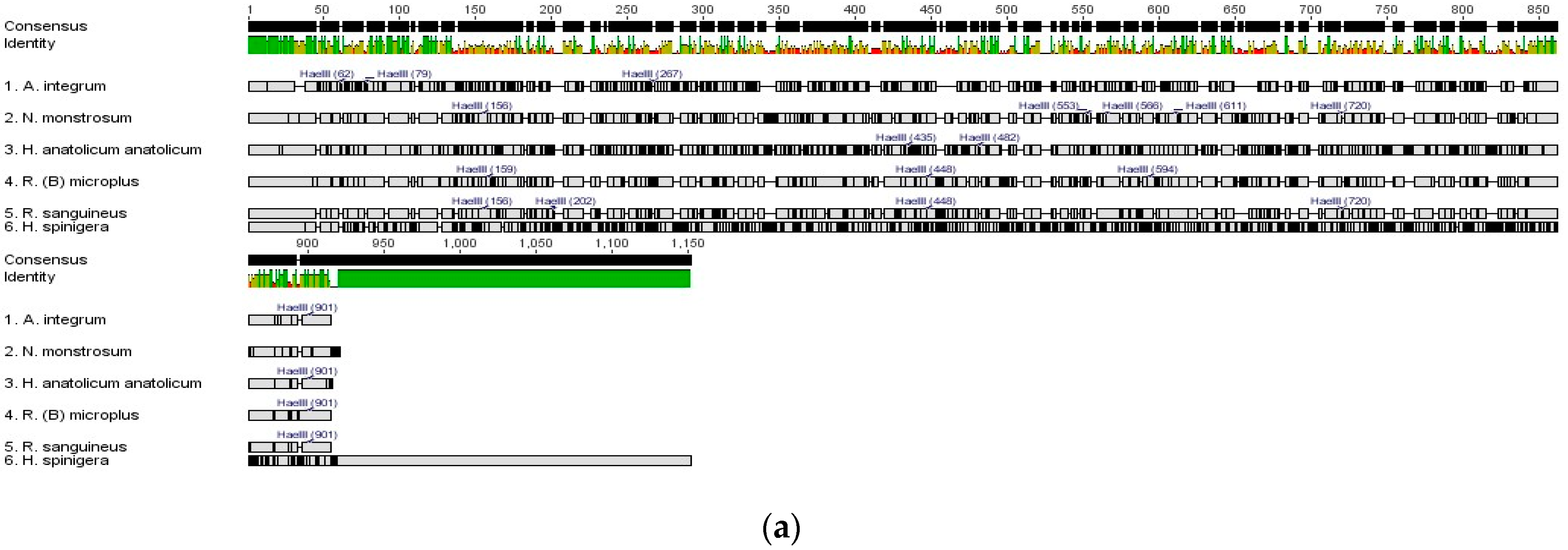
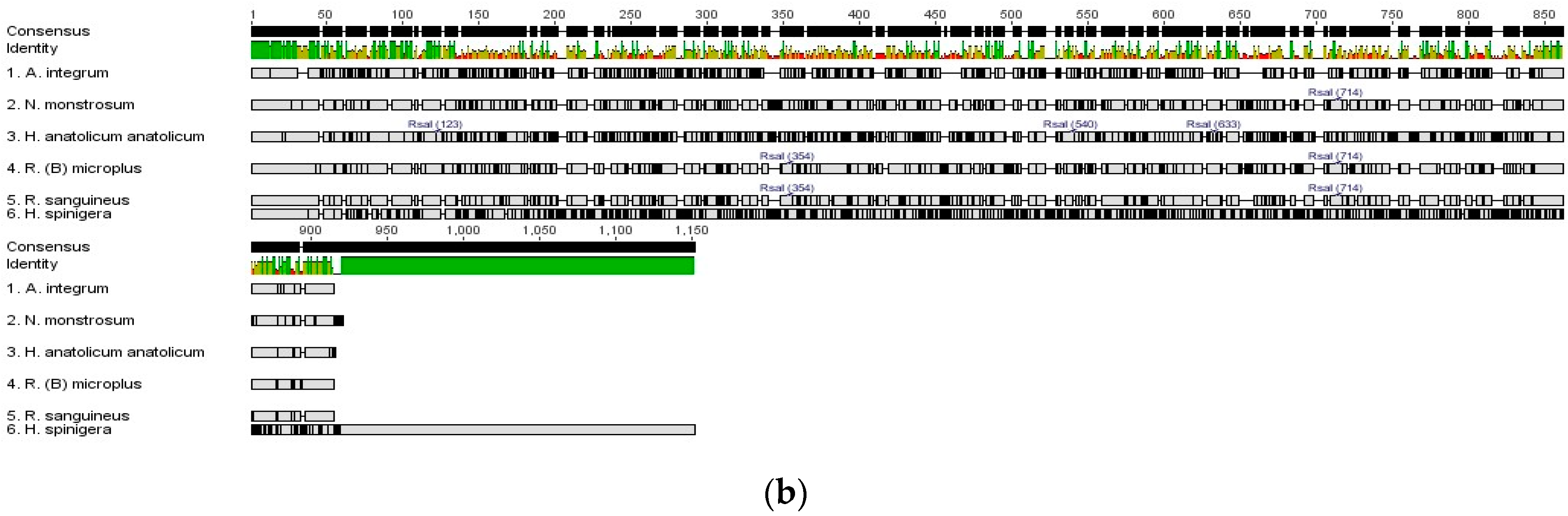
The obtained ITS-2 sequence was mapped for unique restriction sites for commonly used enzymes. Finally, Hae III and Rsa I were selected for their diagnostic abilities. Both restriction enzymes could generate specific fragments of the PCR-amplified ITS-2 from different tick vectors. ITS-2 fragments of A. integrum (~720 bp) and H. spinigera (~1200 bp) are not digested by the Rsa I enzyme. But these species were differentiated by the variation in the length of the amplified product. These restriction fragments were unique due to the frequency and distance of the restriction sites, and the restriction sites for both enzymes in different tick vectors were mapped (Figure 5). Virtual gel was generated for each species using Geneious software version 9.0.5 (Figure S1). Moreover, for the other two common tick vectors from India, Haemaphysalis bispinosa and Haemaphysalis intermedia, ITS-2 sequences were collected from NCBI, and primer sites were annotated. The restriction map and virtual gel of the Hae III and Rsa I are shown in Figures S2 and S3.

2.5. PCR-RFLP Using Hae III and Rsa I

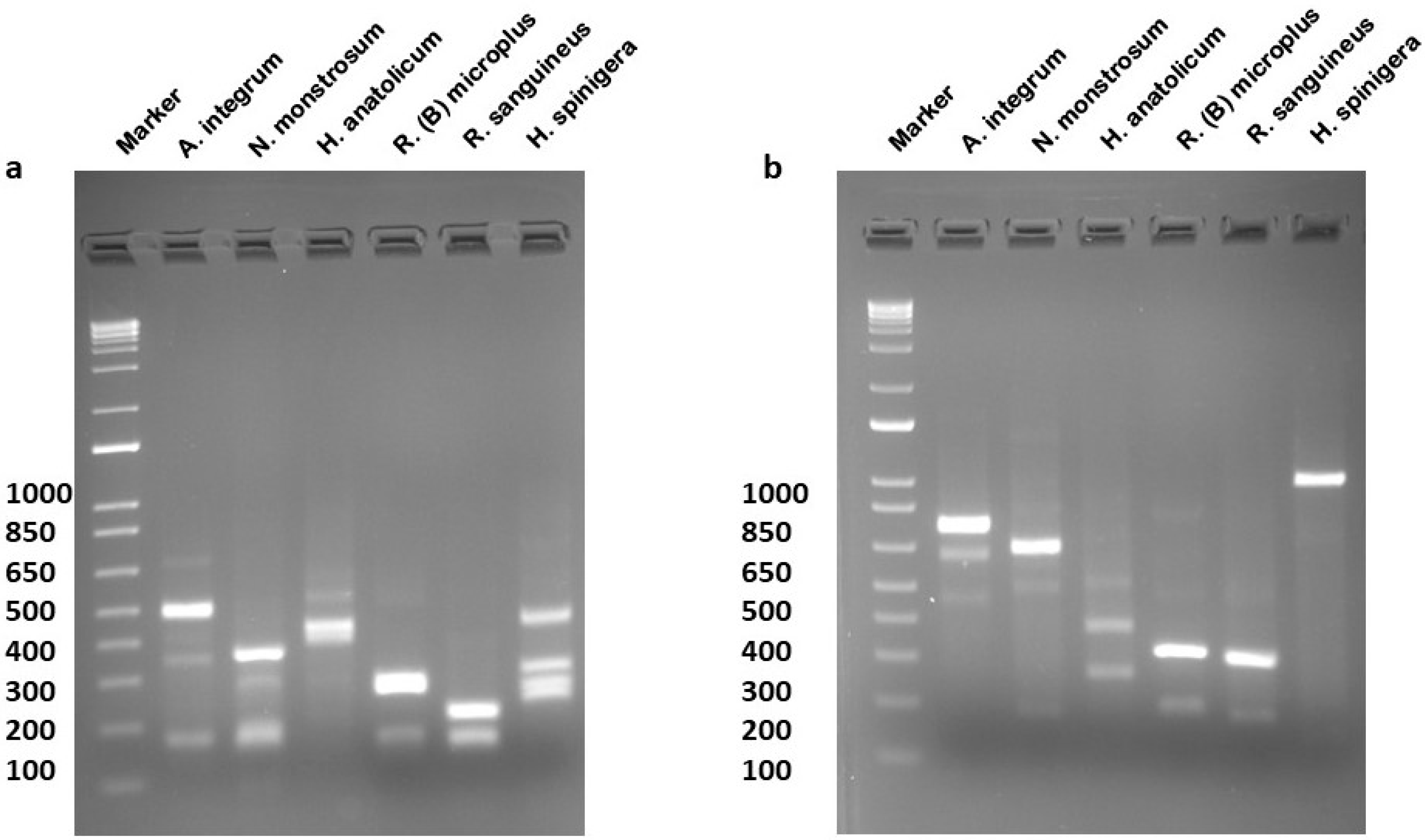
PCR amplification was performed for each species, and the bands were confirmed as mentioned above (Figure 3). After restriction digestion, the prepared gel showed a distinct pattern of bands specific to each species of hard tick vectors (Table 2, Figure 6) and uncropped gel (Figure S5). The fragment length was compared with the virtual gel as mentioned (Figures S1 and S6). Several independent experiments were performed to determine the reproducibility of the developed PCR-RFLP assay (Figures S4 and S8). Hae III has more restriction sites compared to Rsa I. A. integrum, and H. spinigera was not digested by Rsa I. Due to a larger number of restriction sites for Hae III, the amplicons were digested into smaller bands in all species. Rsa I showed a low number of restriction sites, and the digested bands were larger than Hae III. The lower bands less than 100bp were not resolved, therefore not shown (Figure 6).

2.6. In Silico Analysis of PCR for Global Tick Vectors

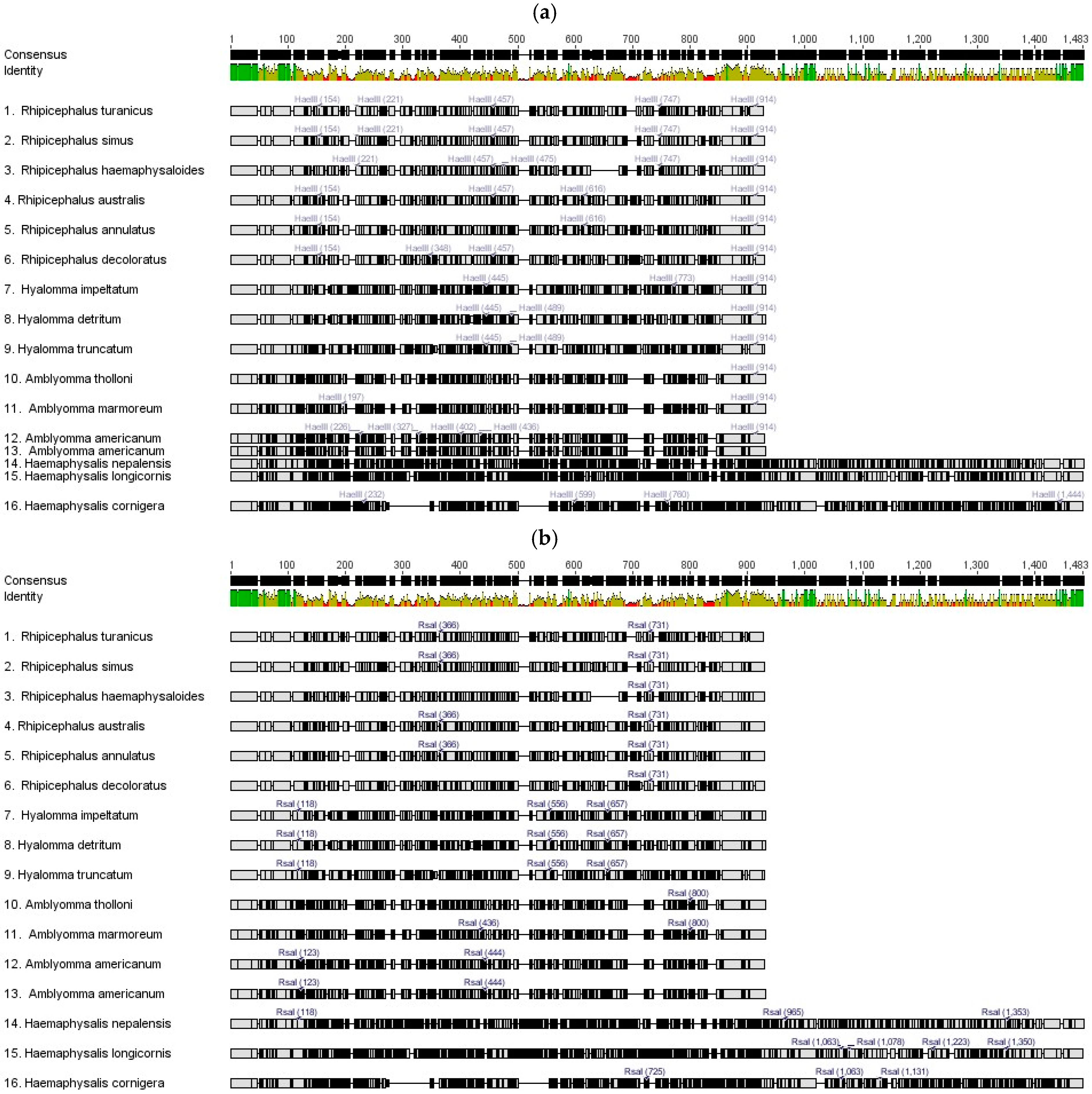
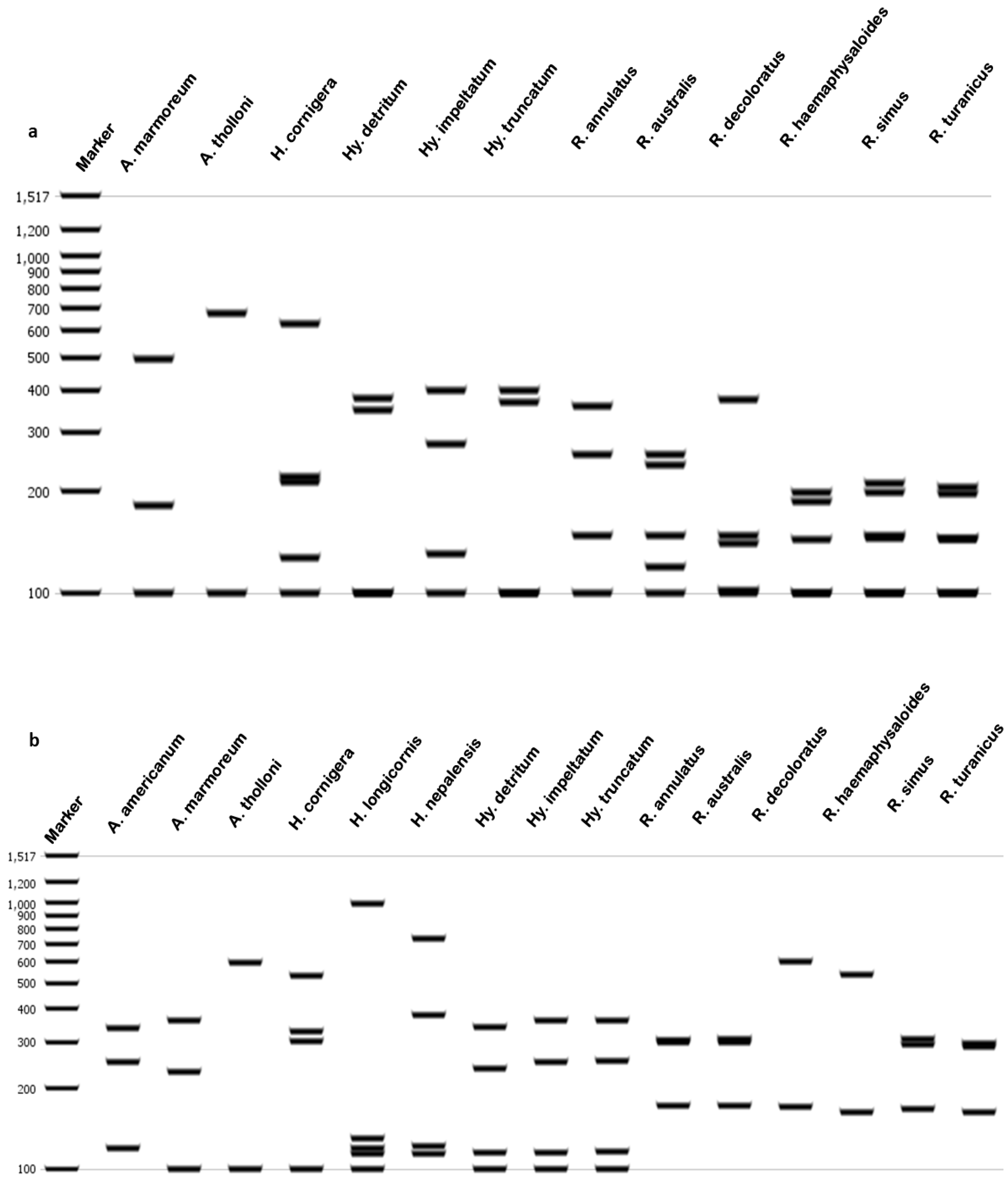
Moreover, in the in silico analysis, these restriction enzymes were used for other global tick vectors. For that, the available sequences of ITS-2 from the NCBI platform were collected, and the primer sites were annotated (Figure 7 and Figure S7). For three individual ticks of each genus, ITS-2 sequences of different genera of hard ticks and in silico digestion was performed by Hae III and Rsa I, and restriction mapping was constructed using the Geneious software (Figure 8). The virtual gel was finally produced for each tick species (Figure 9). Amblyomma americanum, Amblyomma marmoreum, and Amblyomma tholloni are the ticks from the Amblyomma genus that were clearly differentiated by the digestion of both enzymes. The Haemaphysalis ticks (Haemaphysalis cornigera, Haemaphysalis longicornis, and Haemaphysalis nepalensis) were well differentiated with Rsa I and H. longcornis (1372 bp) and H. nepalensis (1349 bp) did not have a restriction site for Hae III. However, these species showed slight length variation without digestion.
Hyalomma detritum, Hyalomma impeltatum, and Hyalomma truncatum were the species from the Hyalomma genus screened for restriction digestion with Hae III and Rsa I. Hae III showed well differentiated band patterns for each tick, and Rsa I showed more or less similar band patterns. Rhipicephalus annulatus, Rhipicephalus australis, and Rhipicephalus decoloratus are closely related tick species, which showed unique patterns for both Hae III and Rsa I. Hae III showed better variations among these species. Rsa I showed the differentiation between Rhipicephalus haemaphysaloides, Rhipicephalus simus, and Rhipicephalus turanicus. Finally, both the enzymes are capable of differentiating the hard ticks between genus and within genus as well.

3. Discussion

The molecular method for tick identification can be a supplementary tool for classical taxonomy and enhance the accuracy [20]. The abundance of tick vectors is usually an indicator of the risk for transmission of associated pathogens in the locality, indicating the importance of tick surveillance in different geographies [47]. Identification of ticks is challenging and requires specialized skills, and it is difficult to identify immature and damaged ticks by morphology even by an expert [48]. The morphological differences between some of the genera are low, especially in female ticks [49]. Molecular level identification of ticks is needed to exclude all these gaps, and it supports the classical taxonomy. In India, molecular taxonomy is not well documented, due to the absence of molecular tools for the identification of local tick species. Therefore, to develop such tools requires the accurate morphological identification and molecular characterization of these ticks.
PCR-RFLP is a cost-effective molecular tool utilized for species differentiation among genera across plants and animals, including important parasites and vectors [34]. The PCR amplicons of the gene of interest, digested with restriction enzymes can differentiate species by DNA band patterns analyzed on agarose gel. Different genetic markers like ITS-1, ITS-2, HSP60, COI, 16S r DNA, and 18S rDNA have proven useful for PCR-RFLP to differentiate various parasites and vectors [50,51,52,53,54,55,56]. The ITS-2 region was previously used for developing RFLP tools and employed for differentiating various species of trematodes and nematodes including Fasciola spp., Trichostrongylus spp., Cylicocyclus spp., Anisakis simplex, Trichuris spp., and Strongylus spp. [57,58,59,60,61,62,63,64,65,66]. The ITS-based RFLP has been widely utilized for the molecular identification of fungal and protozoan infections like Candida spp., Leishmania spp., Crithidia spp., and Cryptosporidium spp. [64,65,66,67]. There are several studies in which ITS2-RFLP was used as a powerful tool for species differentiation of malaria vectors [31,68,69,70].
In this study, we have developed a PCR-RFLP assay for identifying important Indian hard tick vectors. The classical taxonomic keys were used to morphologically identify these tick vectors, and molecular phylogenetic analysis was performed to confirm the genera/species. The developed assay involved amplification of ITS-2 region conserved at the primer binding site with variation in the length of the fragment. A single designed degenerate primer set was utilized for the PCR amplification of ITS-2 with optimized PCR conditions. These amplified regions of the ITS-2 fragment from different tick species were able to differentiate them based on different lengths of amplicons. Furthermore, restriction enzymes like Rsa I and Hae III showed distinct fragment patterns specific for each tick species. The different restriction fragment patterns obtained for each species were analyzed to develop a discrimination method using PCR-RFLP analysis without the need for sequencing. Furthermore, our PCR-RFLP method showed that a higher sensitivity and specificity to six tick species found in India can be determined within a short time. The six species used in this study were successfully distinguished using two different restriction enzymes (Hae III and Rsa I) with a designed degenerate ribosomal primer set.
In a previous study, ITS-2 RFLP has been used for differentiation of tick species from Rhipicephalus (Boophilus) genus, including R. microplus, R. geigyi, R. decoloratus, and R. annulatus using the MspI restriction enzyme [32]. In other studies, ITS-2 RFLPs were used to differentiate the species of the Rhipicephalus genus, R. appendiculatus and R. zambeziensis, using Bau I, and H. bispinosa and Boophilus microplus, using Hind III [33,71]. Furthermore, PCR-RFLP with COI and 16S rRNA was demonstrated to differentiate Haemaphysalis ticks [72].
The developed PCR-RFLP was validated for important tick vectors belonging to six genera including A. integrum, N. monstrosum, H. anatolicum anatolicum, R. (B) microplus, R. sanguineus, and H. spinigera. The result indicated that the PCR-RFLP assay has the potential to discriminate these vectors based on the restricted band patterns of ITS-2. This PCR-RFLP tool can be used for identifying tick vectors and may be a supplement to classical taxonomy. Furthermore, we demonstrated that this PCR-RFLP assay may be suitable for discriminating global tick vectors. The in silico analysis showed conserved primer binding sites in the available ITS-2 sequences obtained from global tick vectors. The restriction sites mapping for Rsa I and Hae III predicted differential band patterns in virtual gel and suggested the utility of the developed PCR-RFLP in discriminating tick vectors from different parts of the world.

4. Materials and Methods

4.1. Study Area and Tick Collection

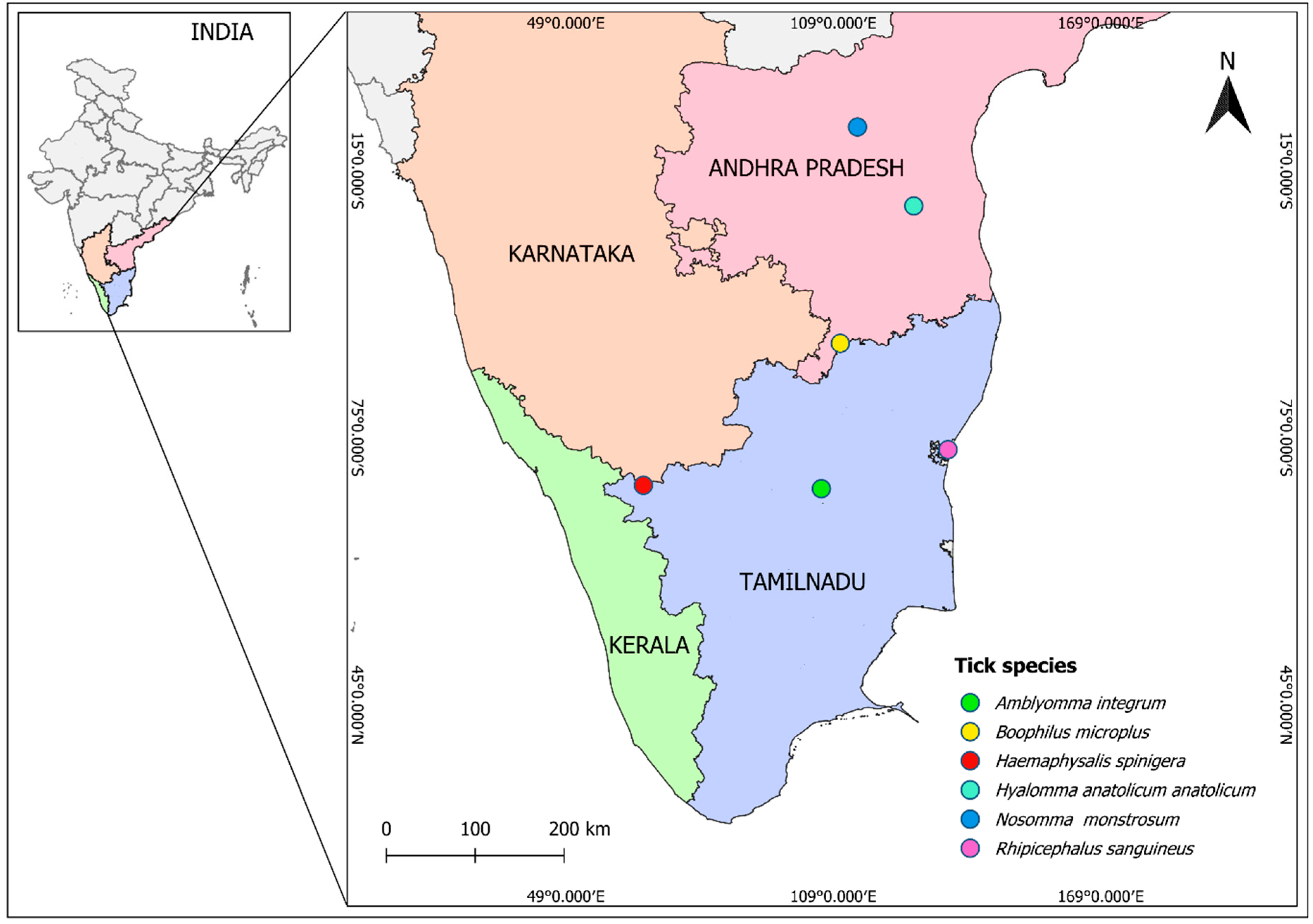
Ticks were collected from domestic animals (Bos taurus, Bubalus bubalis, Capra aegagrus hircus, Ovis aries, and Canis lupus familiaris), as a part of tick surveys conducted in southern parts of India, between 2022 and 2023. The tick collection sites included the states of Tamil Nadu (Keeripatti (11°32′19″ N 78°29′28″ E) and Masinangudi (11°34′26″ N 76°38′58″ E)), Andhra Pradesh (Obulapuram Thanda (15°17′11″ N 78°51′53″ E), Thopugunta (14°28′06″ N 79°26′51″ E), and Thimmaigaripalle (13°02′41″ N 78°41′13″ E)), and Puducherry (11°56′35″ N 79°48′09″ E) (Figure 10). Ticks were carefully removed from hosts using sterile forceps and preserved in 80% ethanol for subsequent analysis. Overall, approximately 50 ticks (females and nymphs) were used for this study from six different genera. A. integrum, N. monstrosum, H. anatolicum anatolcium, R. (B) microplus, R. sanguineus, and H. spinigera are the six tick species identified by using the developed PCR-RFLP. To ensure optimal preservation, the specimens were stored in a deep freezer (−40 °C) until further processing.

4.2. Morphological Characterization

Morphological identification was conducted using a stereo zoom microscope (Weswox SZM-102, The Western Electric and Scientific Works (Weswox), Ambala, Haryana, India). Identification was based on established dichotomous keys, considering morphological characteristic such as body shape, presence of festoons, eye morphology, palpal length, spur arrangement, basis capitulum shape, adanal plate presence, and dental formula [36,37,38,39,40,41,42,43,44,45,46].

4.3. Molecular Characterization

4.3.1. DNA Extraction

Total genomic DNA was extracted from individual tick specimens (n = 60 ticks from six different genera) using the DNeasy Blood and Tissue Kit® (Qiagen, Hilden, Germany), following the optimized protocol [20]. The DNA quality and concentration were assessed using a Thermo NanoDrop Lite UV–Visible Spectrophotometer® (Waltham, MA, USA) before proceeding to downstream applications (Table S1).

4.3.2. Primer Designing

Available sequences from different tick vectors from the NCBI database were used for MSA (Multiple Sequence Alignment) using BioEdit v7.2.5 software, and a common conserved region flanking a variable region was selected for the primer binding sites specific to various genera of hard ticks (Table S2). The designed primers were validated, synthesized, and subsequently used for PCR amplification (Figure 2) (Table 1). The GC content and primer dimers were checked with the IDT OligoAnalyzer™ Tool (https://www.idtdna.com/pages/tools/oligoanalyzer, accessed on 20 December 2025). The primers were expected to amplify ITS-2 fragments from all Indian tick vectors.

4.3.3. PCR Amplification, Sequencing, and Phylogenetic Analysis

The designed primers were utilized to amplify the targeted ITS-2 fragment. Each PCR reaction included 2 µL of the DNA sample, with gene amplification performed using the Q5 Master Mix (New England Biolabs, Ipswich, MA, USA) and a Bio-Rad (Hercules, CA, USA) T100 Thermal Cycler®. The PCR protocol comprised an initial denaturation at 98 °C for 1 min, followed by 35 cycles of denaturation at 98 °C for 10 s, annealing at 59 °C for 15 s, and extension at 72 °C for 20 s. A final extension step was carried out at 72 °C for 5 min. The amplified PCR products were run on a 1.5% agarose gel and visualized under UV light using the VILBER Bioprint® gel documentation system. The PCR products were purified using the PCR Clean-up Kit (Macherey-Nagel, Düren, Germany) and subsequently sequenced using the Sanger method. The resulting nucleotide sequences were identified as the ITS-2 region of hard ticks through an nBLAST search on the NCBI database. Multiple sequence alignments were performed using BioEdit v7.2.5 software (https://bioedit.software.informer.com/7.2/, accessed on 20 December 2025). Phylogenetic analysis was conducted using the Maximum Likelihood (ML) method with 1000 bootstrap replicates, applying the Tamura–Nei substitution model in MEGA 11 software.

4.3.4. In Silico Analysis for PCR-RFLP for Important Tick Vectors

The obtained sequences of the ITS-2 fragment from Indian tick vectors were aligned together, the forward and reverse primers were annotated on the sequences, and length variations were confirmed. The individual sequences were screened with different restriction enzymes using Geneious version9.0.5 software, and common enzymes that restrict different positions for different species were selected. In this study, for the PCR-RFLP analysis of Indian tick vectors, Hae III and Rsa I restriction enzymes were selected. Rsa I recognizes and restricts the sequences at GT↓AC, and Hae III recognizes the sequences at GG↓CC and restricts it. The virtual gels were made for different species. Further, the ITS-2 sequences of other tick vectors distributed in the different parts of the world were collected from the NCBI, and the collected sequences were aligned using MSA with BioEdit v7.2.5 software. The forward and primer sites were annotated, and restriction mapping was performed with Rsa I and Hae III. The virtual gel was made for each tick vector.

4.3.5. Development of PCR-RFLP (Restriction Fragment Length Polymorphism) Based Assay of ITS-2 for Indian Tick Vectors

PCR was performed by using an optimized protocol, and amplification was confirmed. The restriction enzymes Rsa I (Sisco Research Laboratories Pvt. Ltd.—97505, Mumbai, India) and Hae III (Promega R6175, Madison, WI, USA) were used for restriction. For the restriction, 25 µL of reaction mix was prepared, which includes 2.5 µL of 10× buffer, 0.5 µL of restriction enzyme, and 18.5 µL of nuclease-free water with 3.5 µL amplicon, and was mixed well. The reaction mix was left overnight at 37 °C. All restricted samples were mixed with gel loading dye and loaded to 2.5% agarose gel, and a 1kb+ DNA ladder (Invitrogen™ 1 Kb Plus DNA Ladder, Carlsbad, CA, USA) was added to the gel for fragment size determination. The gel was stained with safe stain (HiMedia-Hi-SYBr Safe Gel Stain (Kennett Square, PA, USA) (10,000× in DMSO) and visualized under UV light.

5. Conclusions

This study involves the molecular characterization of hard tick vectors co-existing in India. We have developed a PCR-RFLP-based molecular tool for the identification of these vectors, which can be crucial for tick taxonomy in India. This PCR-based method is easy, does not require sequencing for tick identification, and can be utilized for important tick vectors globally. As TBDs are public health threats in India, the development of such molecular tools, like PCR-RFLP for tick identification, is important, given that morphological identification requires special expertise in tick taxonomy and is not easily available. We have now validated the tool for identifying at least six different genera involved in the transmission of important diseases like KFD, CCHF, Indian tick typhus, and other rickettsial pathogens. However, intra-specific variations among these tick vectors should be analyzed for any potential variations on the restriction sites chosen for PCR-RFLP. Considering the low intraspecific variation in ITS-2, this developed PCR-RFLP tool cannot be used for strain determination and may not be useful for hybrid tick identification. In conclusion, the developed tool has a potential role in tick surveys for the risk assessment of re-emerging outbreaks of TBDs.

Supplementary Materials

The following supporting information can be downloaded at https://www.mdpi.com/article/10.3390/ijms27010285/s1.

Author Contributions

Conception: R.S., N.P. and A.N.S.; Methodology: N.P.; Data collection and curation: N.P.; Illustrations: N.P.; First draft preparation: N.P. and R.S.; Critical revision of the article: R.S., A.N.S. and M.R.; Resources: A.N.S., M.R. and A.E.; Final edits: A.N.S., R.S. and M.R. All authors have read and agreed to the published version of the manuscript.

Funding

This study was supported by intramural funding from ICMR-VCRC.

Institutional Review Board Statement

The study was approved by the scientific advisory committee of the ICMR-VCRC (Project ID-IM2316, approval date 1/08/2023). The study was conducted in accordance with the Declaration of Research Integrity Undertaking (RIU) of ICMR-VCRC.

Informed Consent Statement

Not applicable.

Data Availability Statement

The original contributions presented in this study are included in the article/Supplementary Material. Further inquiries can be directed to the corresponding author.

Acknowledgments

The authors would like to express their sincere gratitude to all individuals who contributed to tick collection in various regions and provided access to the necessary instrumentation facilities for the molecular work. Special thanks are extended to Tamil Selvan R, Renuka Devi A, Shantakumar P, and Vaishnavi R. for their invaluable support in the laboratory.

Conflicts of Interest

The authors declare no competing interests.

Abbreviations

TBDsTick-borne Diseases
PCR–RFLPPolymerase Chain Reaction–Restriction Fragment Length Polymorphism
ITS-2Internal Transcribed Spacer-2
CCHFCrimean–Congo Hemorrhagic Fever
KFDKyasanur Forest Disease
NCBINational Center for Biotechnology Information
MSAMultiple Sequence Alignment

References

  1. Saleh, M.N.; Allen, K.E.; Lineberry, M.W.; Little, S.E.; Reichard, M.V. Ticks infesting dogs and cats in North America: Biology, geographic distribution, and pathogen transmission. Vet. Parasitol. 2021, 294, 109392. [Google Scholar] [CrossRef]
  2. Perumalsamy, N.; Sharma, R.; Subramanian, M.; Nagarajan, S.A. Hard Ticks as Vectors: The Emerging Threat of Tick-Borne Diseases in India. Pathogens 2024, 13, 556. [Google Scholar] [CrossRef]
  3. Pfäffle, M.; Littwin, N.; Muders, S.V.; Petney, T.N. The ecology of tick-borne diseases. Int. J. Parasitol. 2024, 43, 1059–1077. [Google Scholar] [CrossRef]
  4. Paddock, C.D.; Lane, R.S.; Staples, J.E.; Labruna, M.B. Changing paradigms for tick-borne diseases in the Americas. In: Forum on Microbial Threats; Board on Global Health; Health and Medicine Division; National Academies of Sciences, Engineering, and Medicine. In Global Health Impacts of Vector-Borne Diseases: Workshop Summary; National Academies Press: Washington, DC, USA. Available online: https://www.ncbi.nlm.nih.gov/books/NBK390439 (accessed on 20 December 2025).
  5. Mans, B.J.; de Klerk, D.; Pienaar, R.; Latif, A.A. Nuttalliella namaqua: A living fossil and closest relative to the ancestral tick lineage: Implications for the evolution of blood-feeding in ticks. PLoS ONE 2011, 6, e23675. [Google Scholar] [CrossRef]
  6. Latif, A.A.; Putterill, J.F.; de Klerk, D.G.; Pienaar, R.; Mans, B.J. Nuttalliella namaqua (Ixodoidea: Nuttalliellidae): First description of the male, immature stages and re-description of the female. PLoS ONE 2012, 7, e41651. [Google Scholar] [CrossRef][Green Version]
  7. Fatemian, Z.; Salehzadeh, A.; Sedaghat, M.M.; Telmadarraiy, Z.; Hanafi-Bojd, A.A.; Zahirnia, A.H. Hard tick (Acari: Ixodidae) species of livestock and their seasonal activity in Boyer-Ahmad and Dena cities of Kohgiluyeh and Boyer-Ahmad Province, Southwest of Iran. Vet. World 2018, 11, 1357–1363. [Google Scholar] [CrossRef]
  8. Geevarghese, G.; Mishra, A.C. Haemaphysalis Ticks of India, 1st ed.; Elsevier: Amsterdam, The Netherlands, 2011. [Google Scholar] [CrossRef]
  9. Balasubramanian, R.; Yadav, P.D.; Sahina, S.; Nadh, V.A. The species distribution of ticks the prevalence of Kyasanur forest disease virus in questing nymphal ticks from Western Ghats of Kerala, South India. Indian J. Med. Res. 2021, 154, 743–749. [Google Scholar] [CrossRef]
  10. de la Fuente, J.; Ghosh, S.; Lempereur, L.; Garrison, A.; Sprong, H.; Lopez-Camacho, C.; Maritz-Olivier, C.; Contreras, M.; Moraga-Fernández, A.; Bente, D.A. Interventions for the control of Crimean-Congo hemorrhagic fever and tick vectors. npj Vaccines 2024, 9, 181. [Google Scholar] [CrossRef]
  11. Ogden, N.H.; Mechai, S.; Margos, G. Changing geographic ranges of ticks and tick-borne pathogens: Drivers, mechanisms and consequences for pathogen diversity. Front. Cell. Infect. Microbiol. 2013, 3, 46. [Google Scholar] [CrossRef]
  12. Schoville, S.D.; Burke, R.L.; Dong, D.Y.; Ginsberg, H.S.; Maestas, L.; Paskewitz, S.M.; Tsao, J.I. Genome resequencing reveals population divergence and local adaptation of blacklegged ticks in the United States. Mol. Ecol. 2024, 33, e17460. [Google Scholar] [CrossRef]
  13. Choubdar, N.; Oshaghi, M.A.; Rafinejad, J.; Pourmand, M.R.; Maleki-Ravasan, N.; Salehi-Vaziri, M.; Telmadarraiy, Z.; Karimian, F.; Koosha, M.; Rahimi-Foroushani, A.; et al. Effect of Meteorological Factors on Hyalomma Species Composition and Their Host Preference, Seasonal Prevalence and Infection Status to Crimean-Congo Haemorrhagic Fever in Iran. J. Arthropod-Borne Dis. 2019, 13, 268–283. [Google Scholar] [CrossRef]
  14. Tian, D.; Cui, X.; Ye, R.; Li, Y.; Wang, N.; Gao, W.; Wang, B.; Lin, Z.; Zhu, W.; Wang, Q.; et al. Distribution and diversity of ticks determined by environmental factors in Ningxia, China. One Health 2024, 19, 100897. [Google Scholar] [CrossRef]
  15. Singh, K.R.; Pavri, K.M.; Anderson, C.R. Transmission of Kyasanur forest disease virus by Haemaphysalis turturis, Haemaphysalis papuana kinneari and Haemaphysalis minuta. Indian J. Med. Res. 1964, 52, 566–573. [Google Scholar]
  16. Rajaiah, P. Kyasanur Forest Disease in India: Innovative options for intervention. Hum. Vaccines Immunother. 2019, 15, 2243–2248. [Google Scholar] [CrossRef]
  17. Krishnamoorthi, S.; Goel, S.; Kaur, J.; Bisht, K.; Biswal, M. A Review of Rickettsial Diseases Other Than Scrub typhus in India. Trop. Med. Infect. Dis. 2023, 8, 280. [Google Scholar] [CrossRef]
  18. Almazán, C.; Scimeca, R.C.; Reichard, M.V.; Mosqueda, J. Babesiosis and Theileriosis in North America. Pathogens 2022, 11, 168. [Google Scholar] [CrossRef]
  19. Richardson, E.A.; Roe, R.M.; Apperson, C.S.; Ponnusamy, L. Rickettsia amblyommatis in Ticks: A Review of Distribution, Pathogenicity, and Diversity. Microorganisms 2023, 11, 493. [Google Scholar] [CrossRef]
  20. Perumalsamy, N.; Subramanian, M.; Sharma, R.; Elango, A.; Nagarajan, S.A. A simple improved method for extracting DNA from ethanol-preserved hard ticks and its applications. Infect. Genet. Evol. J. Mol. Epidemiol. Evol. Genet. Infect. Dis. 2024, 127, 105709. [Google Scholar] [CrossRef]
  21. Intirach, J.; Lv, X.; Han, Q.; Lv, Z.Y.; Chen, T. Morphological and Molecular Identification of Hard Ticks in Hainan Island, China. Genes 2023, 14, 1592. [Google Scholar] [CrossRef]
  22. Makwarela, T.G.; Nyangiwe, N.; Masebe, T.M.; Djikeng, A.; Nesengani, L.T.; Smith, R.M.; Mapholi, N.O. Morphological and Molecular Characterization of Tick Species Infesting Cattle in South Africa. Vet. Sci. 2024, 11, 638. [Google Scholar] [CrossRef]
  23. Moustafa, M.A.M.; Mohamed, W.M.A.; Chatanga, E.; Naguib, D.; Matsuno, K.; Gofton, A.W.; Barker, S.C.; Nonaka, N.; Nakao, R. Author Correction: Unraveling the phylogenetics of genetically closely related species, Haemaphysalis japonica and Haemaphysalis megaspinosa, using entire tick mitogenomes and microbiomes. Sci. Rep. 2024, 14, 12937. [Google Scholar] [CrossRef]
  24. Lampo, M.; Rangel, Y.; Mata, A. Population Genetic Structure of a Three-Host Tick, Amblyomma dissimile, in Eastern Venezuela. J. Parasitol. 1998, 84, 1137. [Google Scholar] [CrossRef]
  25. Araya-Anchetta, A.; Busch, J.D.; Scoles, G.A.; Wagner, D.M. Thirty years of tick population genetics: A comprehensive review. Infect. Genet. Evol. 2014, 29, 164–179. [Google Scholar] [CrossRef]
  26. Chitimia, L.; Lin, R.Q.; Cosoroaba, I.; Braila, P.; Song, H.Q.; Zhu, X.Q. Molecular characterization of hard soft ticks from Romania by sequences of the internal transcribed spacers of ribosomal, DNA. Parasitol. Res. 2009, 105, 907–911. [Google Scholar] [CrossRef] [PubMed]
  27. Low, V.L.; Tay, S.T.; Kho, K.L.; Koh, F.X.; Tan, T.K.; Lim, Y.A.L.; Ong, B.L.; Panchadcharam, C.; Norma-Rashid, Y.; Sofian-Azirun, M. Molecular characterisation of the tick Rhipicephalus microplus in Malaysia: New insights into the cryptic diversity and distinct genetic assemblages throughout the world. Parasites Vectors 2015, 8, 341. [Google Scholar] [CrossRef] [PubMed]
  28. Cruickshank, R.H. Molecular markers for the phylogenetics of mites and ticks. Syst. Appl. Acarol. 2002, 7, 3. [Google Scholar] [CrossRef]
  29. Soltan-Alinejad, P.; Ramezani, Z.; Edalat, H.; Telmadarraiy, Z.; Dabiri, F.; Vatandoost, H.; Oshaghi, M.A.; Mohebali, M.; Seyyed-Zadeh, S.J.; Zarei, Z.; et al. Molecular characterization of Ribosomal DNA (ITS2) of hard ticks in Iran: Understanding the conspecificity of Dermacentor marginatus and D. niveus. BMC Res. Notes 2020, 13, 478. [Google Scholar] [CrossRef]
  30. Hlinka, O.; Murrell, A.; Barker, S. Evolution of the secondary structure of the rRNA internal transcribed spacer 2 (ITS2) in hard ticks (Ixodidae, Arthropoda). Heredity 2002, 88, 275–279. [Google Scholar] [CrossRef]
  31. Cienfuegos, A.V.; Rosero, D.A.; Naranjo, N.; Luckhart, S.; Conn, J.E.; Correa, M.M. Evaluation of a PCR-RFLP-ITS2 assay for discrimination of Anopheles species in northern and western Colombia. Acta Trop. 2011, 118, 128–135. [Google Scholar] [CrossRef]
  32. Lempereur, L.; Geysen, D.; Madder, M. Development and validation of a PCR-RFLP test to identify African Rhipicephalus (Boophilus) ticks. Acta Trop. 2010, 114, 55–58. [Google Scholar] [CrossRef][Green Version]
  33. Mtambo, J.; Madder, M.; Van Bortel, W.; Berkvens, D.; Backeljau, T. Rhipicephalus appendiculatus and R. zambeziensis (Acari: Ixodidae) from Zambia: A molecular reassessment of their species status and identification. Exp. Appl. Acarol. 2007, 41, 115–128. [Google Scholar] [CrossRef]
  34. Levin, R.E.; Ekezie, F.C.; Sun, D. DNA-Based Technique: Polymerase Chain Reaction (PCR). In Modern Techniques for Food Authentication, 2nd ed.; Academic Press: Cambridge, MA, USA, 2017; pp. 527–616. [Google Scholar] [CrossRef]
  35. Dantas-Torres, F.; Latrofa, M.S.; Annoscia, G.; Giannelli, A.; Parisi, A.; Otranto, D. Morphological and genetic diversity of Rhipicephalus sanguineus sensu lato from the New and Old Worlds. Parasites Vectors 2013, 6, 213. [Google Scholar] [CrossRef]
  36. Nuttall, G.H.F.; Robinson, L.E.; Warburton, C.; Cooper, W.F. Ticks, a monograph of the Ixodoidea; Cambridge University Press: Cambridge, UK, 1908. [Google Scholar] [CrossRef]
  37. Apanaskevich, D.A.; Bandaranayaka, K.O.; Apanaskevich, M.A.; Rajakaruna, R.S. Redescription of Amblyomma integrum adults and immature stages. Med. Vet. Entomology 2016, 30, 330–341. [Google Scholar] [CrossRef]
  38. Arthur, D.R.; Chaudhuri, R.P. A revision of Nosomma monstrosum (Nuttall and Warburton, 1908) Ixodoidea: Ixodidae. Parasitology 1965, 55, 391–400. [Google Scholar] [CrossRef]
  39. Prakasan, K.; Ramani, N. Tick parasites of domestic animals of Kerala, South India. Asian J. Anim. Vet. Adv. 2007, 2, 74–80. [Google Scholar] [CrossRef][Green Version]
  40. Guglielmone, A.A.; Robbins, R.G.; Apanaskevich, D.A.; Petney, T.N.; Estrada-Peña, A.; Horak, I.G. The Genus Nosomma. In The Hard Ticks of the World; Springer: Dordrecht, The Netherlands, 2014. [Google Scholar] [CrossRef]
  41. Geevarghese, G.; Dhanda, V. The Indian Hyalomma Ticks (Ixodoidea: Ixodidae); Indian Council of Agricultural Research, English, Book: New Delhi, India, 1987.
  42. Walker, A.R.; Bouattour, A.; Camicas, J.L.; Estrada-Pena, A.A.; Horak, I.G.; Litif, A.A.; Pegram, R.G.; Preston, P.M. Ticks of Domestic Animals in Africa; Bioscience Reports; University of Edinbrugh: Edinburgh, UK, 2007. [Google Scholar]
  43. Kazim, A.R.; Van, L.; Lucas, L.; Tappe DHussaini, J.; Heo, C.C. Rhipicephalus annulatus, R. australis or R. microplus? Discordance between morphological and genetic data among three cattle tick species. Exp. Appl. Acarology 2022, 87, 119–131. [Google Scholar] [CrossRef] [PubMed]
  44. Barker, S.C.; Walker, A.R. Ticks of Australia. The species that infest domestic animals and humans. Zootaxa 2014, 3816, 1–144. [Google Scholar] [CrossRef]
  45. Trapido, H.; Varma, M.G.R.; Rajagopalan, P.K.; Singh, K.R.P.; Rebello, M. JA guide to the identification of all stages of the Haemaphysalis ticks of South India. Bull. Entomol. Res. 1964, 55, 249–270. [Google Scholar] [CrossRef]
  46. Hoogstraal, H.; Wassef, H. Y The Haemaphysalis Ticks (Ixodoidea: Ixodidae) of Birds. 3. H. (Ornithophysalis) Subgen. N.: Definition, Species, Hosts, and Distribution in the Oriental, Palearctic, Malagasy, and Ethiopian Faunal Regions. J. Parasitol. 1973, 59, 1099–1117. [Google Scholar] [CrossRef] [PubMed]
  47. Omodior, O.; Kianersi, S. Active Surveillance of ticks in peri-domestic areas of Indiana, Midwest United States. J. Vector Borne Dis. 2021, 58, 352–358. [Google Scholar] [CrossRef] [PubMed]
  48. Balinandi, S.; Chitimia-Dobler, L.; Grandi, G.; Nakayiki, T.; Kabasa, W.; Bbira, J.; Lutwama, J.J.; Bakkes, D.K.; Malmberg, M.; Mugisha, L. Morphological and molecular identification of ixodid tick species (Acari: Ixodidae) infesting cattle in Uganda. Parasitol. Res. 2020, 119, 2411–2420. [Google Scholar] [CrossRef]
  49. Amrutha, B.M.; Kumar, K.G.A.; Kurbet, P.S.; Varghese, A.; Deepa, C.K.; Pradeep, R.K.; Nimisha, M.; Asaf, M.; Juliet, S.; Ravindran, R.; et al. Morphological and molecular characterization of Rhipicephalus microplus and Rhipicephalus annulatus from selected states of southern India. Ticks Tick-Borne Dis. 2023, 14, 102086. [Google Scholar] [CrossRef]
  50. Kong, H.; Shin, J.; Yu, H.; Kim, J.; Hahn, T.; Hahn, Y.; Chung, D. Mitochondrial DNA Restriction Fragment Length Polymorphism (RFLP) and 18S Small-Subunit Ribosomal DNA PCR-RFLP Analyses of Acanthamoeba Isolated from Contact Lens Storage Cases of Residents in Southwestern Korea. J. Clin. Microbiol. 2002, 40, 1199–1206. [Google Scholar] [CrossRef]
  51. Volpini, A.C.; Passos, V.M.; Oliveira, G.C.; Romanha, A.J. PCR-RFLP to identify Leishmania (Viannia) braziliensis and L. (Leishmania) amazonensis causing American cutaneous leishmaniasis. Acta Trop. 2004, 90, 31–37. [Google Scholar] [CrossRef] [PubMed]
  52. Goriacheva, I.I.; Zvantsov, A.B.; Gordeev, M.I.; Bezzhonova, O.V.; Usenbaev, N.T.; Ezhov, M.N. PCR-RFLP and sequencing studies of malaria vectors (Diptera, Culicidae, Anopheles) in Kyrgyzstan. Med. Parazitol. 2011, 34–38. [Google Scholar] [PubMed]
  53. Alam, M.S.; Kato, H.; Fukushige, M.; Wagatsuma, Y.; Itoh, M. Application of RFLP-PCR-Based Identification for Sand Fly Surveillance in an Area Endemic for Kala-Azar in Mymensingh, Bangladesh. J. Parasitol. Res. 2012, 2012, 467821. [Google Scholar] [CrossRef]
  54. Ramírez, J.D.; Duque, M.C.; Montilla, M.; Cucunubá, Z.M.; Guhl, F. Multilocus PCR-RFLP profiling in Trypanosoma cruzi I highlights an intraspecific genetic variation pattern. Infect. Genet. Evol. 2012, 12, 1743–1750. [Google Scholar] [CrossRef] [PubMed]
  55. Dokianakis, E.; Tsirigotakis, N.; Christodoulou, V.; Poulakakis, N.; Antoniou, M. DNA sequencing confirms PCR-RFLP identification of wild caught Larroussius sand flies from Crete and Cyprus. Acta Trop. 2016, 164, 314–320. [Google Scholar] [CrossRef] [PubMed]
  56. Ovalle, T.M.; Vásquez-Ordóñez, A.A.; Jimenez, J.; Parsa, S.; Cuellar, W.J.; Lopez-Lavalle, L.A.B. A simple PCR-based method for the rapid and accurate identification of spider mites (Tetranychidae) on cassava. Sci. Rep. 2020, 10, 19496. [Google Scholar] [CrossRef] [PubMed]
  57. Gasser, R.B.; Chilton, N.B.; Hoste, H.; Stevenson, L.A. Species identification of trichostrongyle nematodes by PCR-linked RFLP. Int. J. Parasitol. 1994, 24, 291–293. [Google Scholar] [CrossRef]
  58. Campbell, A.J.; Gasser, R.B.; Chilton, N.B. Differences in a ribosomal DNA sequence of Strongylus species allows identification of single eggs. Int. J. Parasitol. 1995, 25, 359–365. [Google Scholar] [CrossRef]
  59. Hung, G.C.; Chilton, N.B.; Beveridge, I.; McDonnell, A.; Lichtenfels, J.R.; Gasser, R.B. Molecular delineation of Cylicocyclus nassatus and C. ashworthi (Nematoda: Strongylidae). Int. J. Parasitol. 1997, 27, 601–605. [Google Scholar] [CrossRef]
  60. Huang, W.Y.; He, B.; Wang, C.R.; Zhu, X.Q. Characterisation of Fasciola species from Mainland China by ITS-2 ribosomal DNA sequence. Vet. Parasitol. 2004, 120, 75–83. [Google Scholar] [CrossRef]
  61. Perteguer, M.J.; Ortiz, G.; García, E.; Flores, M.; Rodríguez, E.; Ubeira, F.M.; Gárate, T. Application of the PCR-RFLP technique for the species-specific identification of nematodes involved in human anisakiasis. Med. Clin. 2004, 122, 686–689. [Google Scholar] [CrossRef]
  62. Rinaldi, L.; Perugini, A.G.; Capuano, F.; Fenizia, D.; Musella, V.; Veneziano, V.; Cringoli, G. Characterization of the second internal transcribed spacer of ribosomal DNA of Calicophoron daubneyi from various hosts and locations in southern Italy. Vet. Parasitol. 2005, 131, 247–253. [Google Scholar] [CrossRef] [PubMed]
  63. Shafiei, R.; Sarkari, B.; Moshfe, A. A Consistent PCR-RFLP Assay Based on ITS-2 Ribosomal DNA for Differentiation of Fasciola Species. Iran. J. Basic Med. Sci. 2013, 16, 1266–1269. [Google Scholar]
  64. Meekums, H.; Hawash, M.B.; Sparks, A.M.; Oviedo, Y.; Sandoval, C.; E Chico, M.; Stothard, J.R.; Cooper, P.J.; Nejsum, P.; Betson, M. A genetic analysis of Trichuris trichiura and Trichuris suis from Ecuador. Parasites Vectors 2015, 8, 19. [Google Scholar] [CrossRef] [PubMed]
  65. Chalmers, R.M.; Ferguson, C.; Cacciò, S.; Gasser, R.B.; El-Osta, Y.G.A.; Heijnen, L.; Xiao, L.; Elwin, K.; Hadfield, S.; Sinclair, M.; et al. Direct comparison of selected methods for genetic categorisation of Cryptosporidium parvum and Cryptosporidium hominis species. Int. J. Parasitol. 2005, 35, 397–410, Correction in Int. J. Parasitol. 2005, 35, 1615. [Google Scholar] [CrossRef]
  66. Mosleh, I.M.; Shönian, G.; Geith, E.; Al-Jawabreh, A.; Natsheh, L. The Jordanian Mid Jordan Valley is a classic focus of Leishmania major as revealed by RFLP of 56 isolates and 173 ITS-1-PCR-positive clinical samples. Exp. Parasitol. 2015, 148, 81–85. [Google Scholar] [CrossRef] [PubMed]
  67. Fakhar, M.; Derakhshani-Nia, M.; Gohardehi, S.; Karamian, M.; Hezarjaribi, H.Z.; Mohebali, M.; Akhoundi, B.; Sharbatkhori, M. Domestic dogs carriers of Leishmania infantum, Leishmania tropica and Crithidia fasciculata as potential reservoirs for human visceral leishmaniasis in northeastern Iran. Vet. Med. Sci. 2022, 8, 2329–2336. [Google Scholar] [CrossRef]
  68. Garros, C.; Koekemoer, L.L.; Kamau, L.; Manguin, S.; Coetzee, M.; Coosemans, M.; Awolola, T.S.; van Bortel, W. Restriction fragment length polymorphism method for the identification of major African and Asian malaria vectors within the Anopheles funestus and An. minimus groups. Am. J. Trop. Med. Hyg. 2004, 70, 260–265. [Google Scholar] [CrossRef] [PubMed]
  69. Vezenegho, S.B.; Issaly, J.; Carinci, R.; Gaborit, P.; Girod, R.; Dusfour, I.; Briolant, S. Discrimination of 15 Amazonian Anopheline Mosquito Species by Polymerase Chain Reaction-Restriction Fragment Length Polymorphism. J. Med. Entomol. 2022, 59, 1060–1064. [Google Scholar] [CrossRef] [PubMed]
  70. Escobar, D.; Pérez, F.; Ortiz, B.; Fontecha, G. PCR-RFLP assays for the identification of Anopheles (Diptera: Culicidae) species circulating in Honduras. Malar. J. 2023, 22, 57. [Google Scholar] [CrossRef] [PubMed]
  71. Brahma, R.K.; Dixit, V.; Sangwan, A.K.; Doley, R. Identification and characterization of Rhipicephalus (Boophilus) microplus and Haemaphysalis bispinosa ticks (Acari: Ixodidae) of northeast India by ITS2 and 16S rDNA sequences and morphological analysis. Exp. Appl. Acarol. 2014, 62, 253–265. [Google Scholar] [CrossRef]
  72. Thompson, A.T.; Dominguez, K.; Cleveland, C.A.; Dergousoff, S.J.; Doi, K.; Falco, R.C.; Greay, T.; Irwin, P.; Lindsay, L.R.; Liu, J.; et al. Molecular Characterization of Haemaphysalis Species and a Molecular Genetic Key for the Identification of Haemaphysalis of North America. Front. Vet. Sci. 2020, 7, 141. [Google Scholar] [CrossRef]
Figure 1. Morphology of the female hard ticks: (1a) (dorsal) and (1b) (ventral) view of Amblyomma integrum, (2a) (dorsal) and (2b) (ventral) view of Nosomma monstrosum, (3a) (dorsal) and (3b) (ventral) view of Hyalomma anatolicum anatolicum, (4a) (dorsal) and (4b) (ventral) view of Rhipicephalus (Boophilus) microplus, (5a) (dorsal) and (5b) (ventral) view of Rhipicephalus sanguineus, and (6a) (dorsal) and (6b) (ventral) view of Haemaphysalis spinigera.
Ijms 27 00285 g001
Figure 2. The multiple sequence alignment showing conserved regions of different hard tick species collected from NCBI and used for primer designing. This figure demonstrated the annotation of the nuclear fragment variation and gaps in the target fragment among different tick vectors from different genera.
Ijms 27 00285 g002
Figure 3. Amplification of ITS-2 fragment by using the designed primers. L1—Marker (1 kb plus), L2A. integrum (714 bp), L3N. monstrosum (774 bp), L4H. anatolium anatolicum (838 bp), L5R. (B) microplus (781 bp), L6R. sanguineus (747 bp), L7H. spinigera (~1200 bp), and L8—NC (negative control).
Ijms 27 00285 g003
Figure 4. Phylogenetic positioning of ticks using the ITS-2 fragment. Phylogenetic trees were constructed using the Maximum Likelihood method (ML) with the Tamura–Nei model (1000 replicates) in MEGA 11. (a) A. integrum, (b) N. monstrosum, (c) H. anatolicum anatolicum, (d) R. (B) microplus, (e) R. sanguineus, and (f) H. spinigera. The color (pink) and the triangle (blue) indicate tick species characterized in this study.
Ijms 27 00285 g004aIjms 27 00285 g004b
Figure 5. Restriction mapping of ITS-2 fragments from Indian tick vectors. (a) Hae III-based restriction digestion mapping. (b) Rsa I-based restriction digestion mapping.
Ijms 27 00285 g005aIjms 27 00285 g005b
Figure 6. UV visualization of agarose gel electrophoresis of digested products of different tick vectors. (a) Restriction digestion of Hae III, (b) restriction digestion of Rsa I and Marker1kb plus marker.
Ijms 27 00285 g006
Figure 7. Multiple sequence alignment from ITS-2 region of various tick vectors, showing conserved primer binding sites. The black shade regions are the conserved region among different tick vectors.
Ijms 27 00285 g007
Figure 8. Restriction mapping of ITS-2 fragments from different tick vectors around the world. (a) Hae III based restriction digestion mapping. (b) Rsa I based restriction digestion mapping.
Ijms 27 00285 g008
Figure 9. Virtual gel of other tick vectors from different genera. (a) Digestion with Hae III restriction enzyme (A. americanum (709 bp), H. longicornis (1372 bp), and H. nepalensis (1349 bp) no restriction sites). (b) Digestion with Rsa I restriction enzyme.
Ijms 27 00285 g009
Figure 10. Map displaying the sites where the tick vectors collected from domestic animals in India. The collected ticks from these regions were initially characterized (morphology and molecular), and the obtained sequences were utilized for restriction mapping. The map was generated by using QGIS Desktop 3.34.13 software.
Ijms 27 00285 g010
Table 1. Primer sequences used to amplify the ITS-2 spacer from the tick vectors from different genera. The primer was used to amplify ITS-2 regions from Indian tick vectors.
Primer Name ForwardReverseProduct Size
ITS25′-GTCTTCCCTTGGCTTCGTCT-3′5′-CCMACTGGAGTGRCCCAGWT-3′~700–1200 bp
Table 2. The primers synthesized using available NCBI sequences were used to amplify the ribosomal internal transcribed spacer 2 (ITS2) region from adult tick vectors. The amplified regions were utilized for phylogenetic analysis and restriction fragment length polymorphism (RFLP) studies.
Tick SpeciesHae IIIRsa I
Restriction SitesBand SizesRestriction SitesBand Sizes
Amblyomma integrum4466 bps, 164 bps, 54 bps 17 bps, and 13 bps0No restriction site
Boophilus microplus4258 bps, 240 bps, 152 bps,118 bps, and 13 bps2306 bps, 304 bps, and 171 bps
Hyalomma anatolicum anatolicum3405 bps, 379 bps, 40 bps, and 14 bps3365 bps, 263 bps, 120 bps, and 90 bps
Nosomma monstrosum5327 bps, 166 bps,145 bps, 86 bps, 41 bps, and 9 bps1602 bps and172 bps
Rhipicephalus sanguineus5205 bps,198 bps, 143 bps,145 bps, 43 bps, and 13 bps2295 bps, 288 bps, and 164 bps
Haemaphysalis spinigera3391 bps, 284 bps 243 bps, and 217 bps0No restriction site
Disclaimer/Publisher’s Note: The statements, opinions and data contained in all publications are solely those of the individual author(s) and contributor(s) and not of MDPI and/or the editor(s). MDPI and/or the editor(s) disclaim responsibility for any injury to people or property resulting from any ideas, methods, instructions or products referred to in the content.