Diagnostic and Prognostic Potential of CXCL9 and CXCL10 Chemokines in Alcohol-Associated Liver Disease

Abstract
1. Introduction
2. Results
2.1. The Study Cohort Characteristics
2.2. Comparison of CXCL Chemokine Concentrations in Patients with ALD and the Control Group
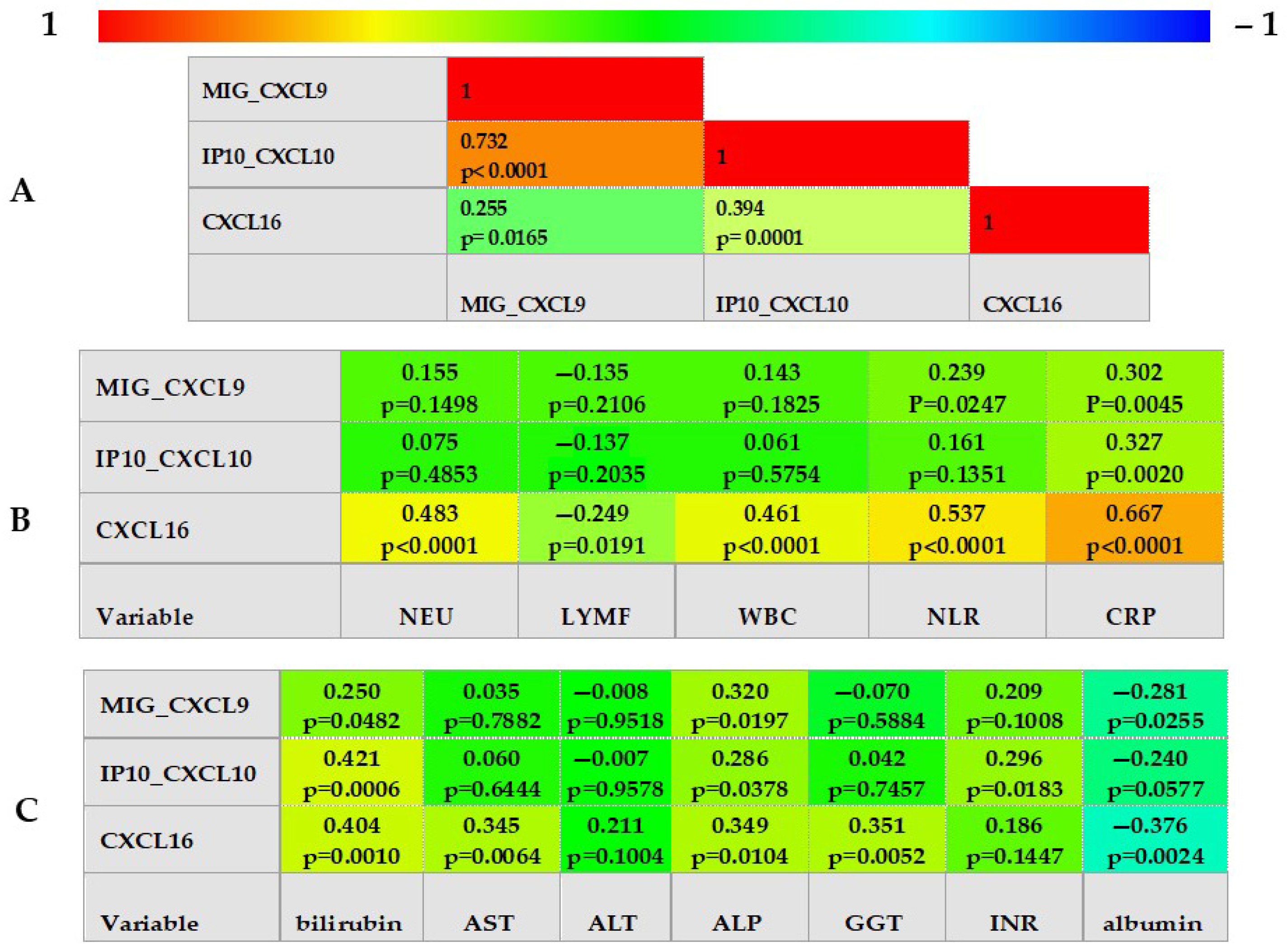
2.3. Correlation Analyses of the Studied CXCL Chemokines
2.4. Comparison of Blood CXCL Concentrations Among ALD Patients with Various Severities of Liver Dysfunction
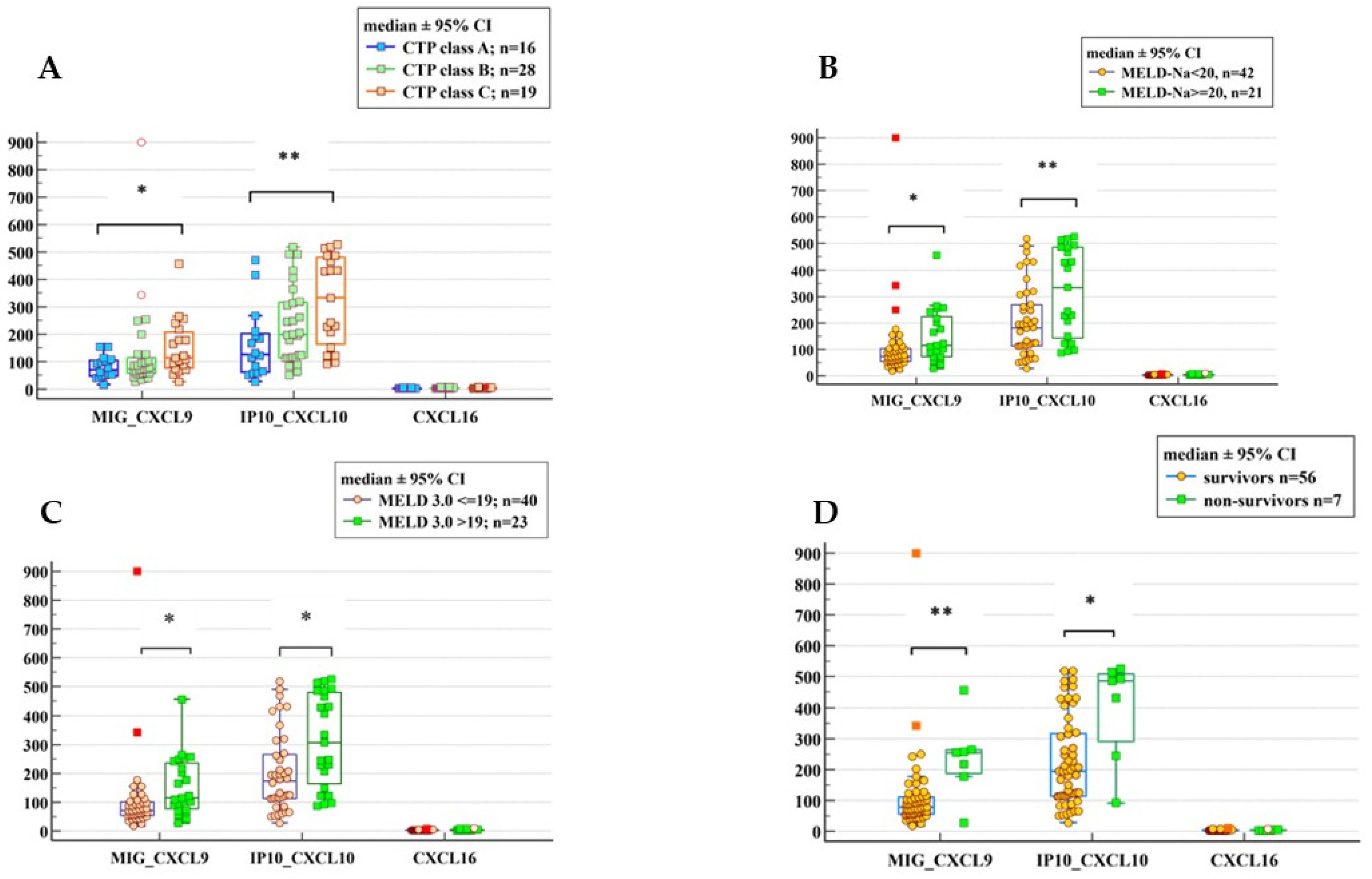
2.4.1. Stratification by Child–Turcotte–Pugh (CTP) Class
- ➢
- CXCL9 (MIG):
- ✓
- Class A (Compensated): Median 70.40 pg/mL (IQR: 47.92–104.81).
- ✓
- Class C (Decompensated): Median 114.80 pg/mL (IQR: 77.49–207.71).
- ✓
- Significance: p = 0.0244, the difference was significant, with post hoc analysis (Dunn’s test) confirming a significant elevation in Class C compared to Class A.
- ➢
- CXCL10 (IP-10):
- ✓
- Class A (Compensated): Median 126.49 pg/mL (IQR: 62.06–202.42).
- ✓
- Class C (Decompensated): Median 333.52 pg/mL (IQR: 164.35–480.73).
- ✓
- Significance: p = 0.0066, CXCL10 showed the most robust difference), with levels in Class C nearly triple those of Class A.
- ➢
- CXCL16:
- ✓
- Class A (Compensated): Median 2.41 pg/mL (IQR: 2.00–2.87).
- ✓
- Class C (Decompensated): Median 2.99 pg/mL (IQR: 2.23–3.99).
- ✓
- Significance: p = 0.0962, while there was a slight numerical trend upward (Class A vs. Class C), the difference was not statistically significant, indicating that CXCL16 levels did not differ in patients with various grades of liver dysfunction.
2.4.2. Stratification by MELD-Na and MELD 3.0 Scores
Stratification by MELD-Na Score (Severity Cut-Off: 20)
- ➢
- CXCL9 (MIG):
- ✓
- Lower severity (MELD-Na < 20): Median 73.10 pg/mL (IQR: 54.43–102.68).
- ✓
- Advanced severity: (MELD-Na ≥ 20): Median 114.80 pg/mL (IQR: 72.78–223.70).
- ✓
- Significance: p = 0.0101.
- ➢
- CXCL10 (IP-10):
- ✓
- Lower severity (MELD-Na < 20): Median 180.96 pg/mL (IQR: 113.26–268.54).
- ✓
- Advanced severity: (MELD-Na ≥ 20): Median 333.52 pg/mL (IQR: 143.04–486.13).
- ✓
- Significance: p = 0.0089.
- ➢
- CXCL16:
- ✓
- Lower severity (MELD-Na < 20): Median 2.65 pg/mL (IQR: 2.18–3.27).
- ✓
- Advanced severity: Median 3.12 pg/mL (IQR: 2.49–4.19).
- ✓
- Significance: p = 0.0590.
Stratification by MELD 3.0 Score (Severity Cut-Off: 19)
- ➢
- CXCL9 (MIG):
- ✓
- Lower severity: (MELD 3.0 ≤ 19): 71.19 pg/mL (IQR: 54.27–100.56).
- ✓
- Advanced severity: (MELD 3.0 > 19): Median 114.80 pg/mL (IQR: 77.49–235.28).
- ✓
- Significance: p = 0.0029.
- ➢
- CXCL10 (IP-10):
- ✓
- Lower severity: (MELD 3.0 ≤ 19): Median 173.35 pg/mL (IQR: 112.81–265.55).
- ✓
- Advanced severity: (MELD 3.0 > 19): Median 306.50 pg/mL (IQR: 164.35–480.73).
- ✓
- Significance: p = 0.0046.
- ➢
- CXCL16:
- ✓
- Lower severity: (MELD 3.0 ≤ 19): Median 2.72 ng/mL (IQR: 2.20–3.30).
- ✓
- Advanced severity: (MELD 3.0 > 19): Median 3.11 ng/mL (IQR: 2.31–4.00)
- ✓
- Significance: p = 0.1773
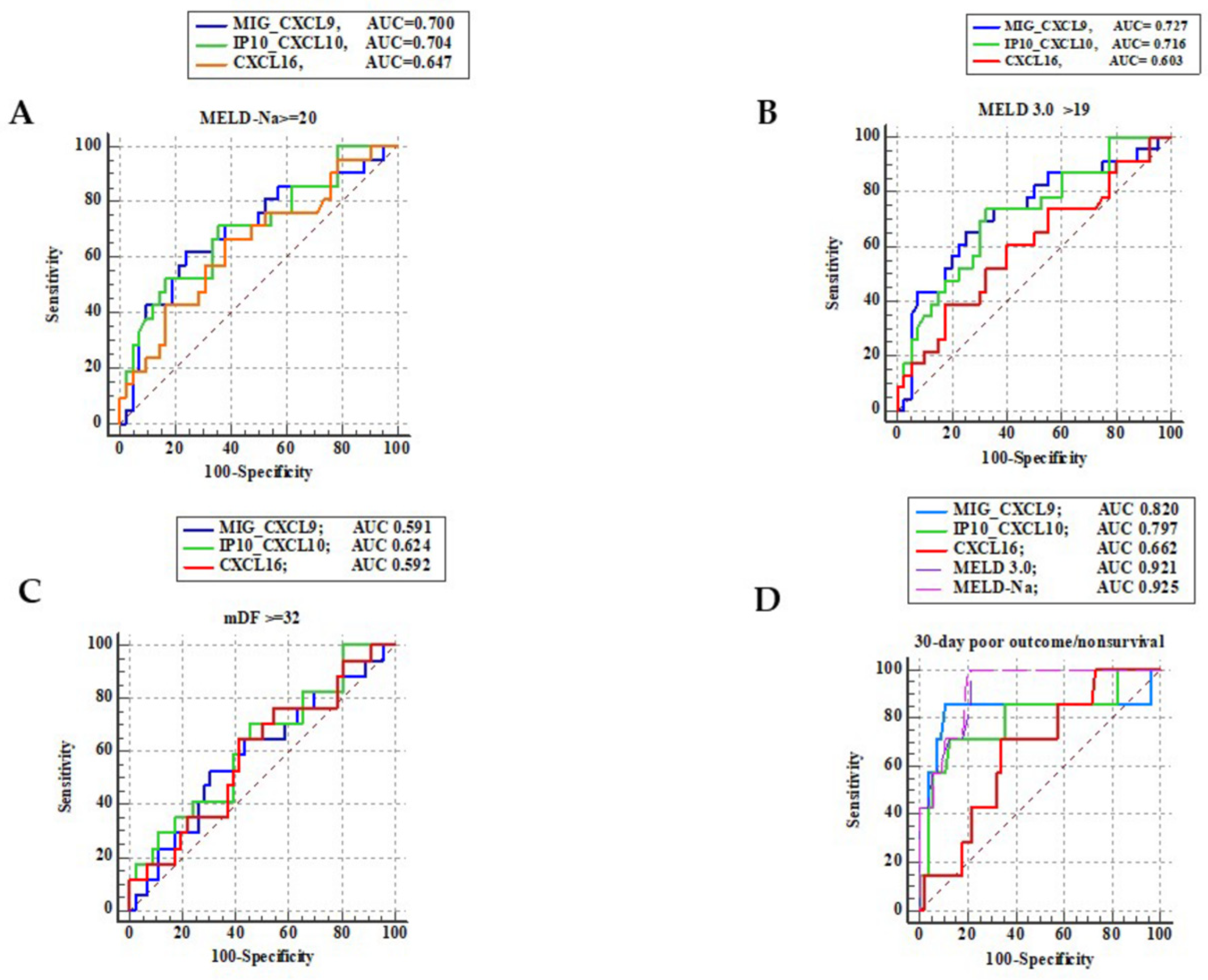
2.5. Comparison of CXCL Chemokine Concentrations in ALD Patients Based on Their Outcomes Within 30 Days of Follow-Up
3. Discussion
4. Materials and Methods
4.1. Participants’ Recruitment
- Patient agreement and signature of the informed consent.
- Age group: Adults aged 18 years and above.
- Confirmation of active alcohol consumption exceeding 40 g/day for men and 20 g/day for women during the last 6–12 months before enrollment, as well as positive results of the AUDIT-C evaluation, i.e., a score of 4 or more in men and 3 or more in women.
- Physical examination revealing the presence of findings suggestive of chronic liver disease (hepatomegaly, a firm liver edge, splenomegaly, sarcopenia, palmar erythema, parotid enlargement, jaundice, etc.).
- Laboratory liver function tests consistent with alcohol-associated liver injury, including moderately elevated ALT and AST levels with a reversed de Ritis ratio (AST/ALT) above 2, significantly increased gamma-glutamyl transpeptidase (GGT).
- Elimination of other etiologies of liver disease (viral infection, immune-related disorders, drug-induced liver disease, Wilson’s disease, hemochromatosis, etc.).
- Lack of written approval/agreement to participate in the study.
- Individuals younger than 18 years.
- Steroid/immunosuppressant treatment in the last 6 months before study enrollment.
- Use of non-steroidal anti-inflammatory drugs on a long-term basis and/or documented hepatotoxic effects of other medications within the 6 months prior to study enrollment.
- Blood and/or blood products transfusion in the last 6 months before study enrollment.
- Serious comorbidities that preclude an assessment and are associated with poor prognosis and/or require complex clinical management that might influence the study outcome (e.g., tumors, respiratory/circulatory failure, chronic renal failure, complicated and unstable diabetes mellitus or other endocrinopathies, advanced hematologic illness, etc.).
- Pregnancy.
4.2. Methods of the Study Group Assessment
4.3. Laboratory Tests and Examinations of Blood CXCL Concentrations
- ➢
- Liver function blood tests, including liver enzymes, i.e., alanine aminotransferase (ALT), aspartate aminotransferase (ASP), alkaline phosphatase (ALP), gamma-glutamyltransferase (GGT), total bilirubin (T-bilirubin), albumin, prothrombin time (PT), and the international normalized ratio (INR).
- ➢
- Complete blood count (CBC).
- ➢
- Kidney function tests (creatinine and urea), electrolyte levels (sodium and potassium).
- ➢
- Conventional markers of inflammation, including C-reactive protein (CRP) level, leucocytes (white blood cells count, WBC), neutrophils (NEU) count, and neutrophil to lymphocyte ratio (NLR).
- ➢
- Additional markers to exclude other than ALD etiologies of chronic liver disease, including HBs antigen, anti-HBc antibodies, anti-HCV antibodies, and HCV RNA if required, autoantibodies, tests for Wilson’s disease, and hemochromatosis.
- Human MIG/CXCL9 ELISA Kit (cat. #EHCXCL9; sensitivity 20 pg/mL, assay range 20–6000 pg/mL);
- Human IP-10 (CXCL10) ELISA Kit (cat. # KAC2361; sensitivity < 2 pg/mL, assay range 7.8–500 pg/mL);
- Human CXCL16 ELISA Kit (cat. # EHCXCL16; sensitivity 3 pg/mL, assay range 3–2000 pg/mL).
4.4. Statistical Analysis
5. Conclusions
Author Contributions
Funding
Institutional Review Board Statement
Informed Consent Statement
Data Availability Statement
Conflicts of Interest
Abbreviations
| AH | Alcohol-associated hepatitis |
| ALD | Alcohol-associated liver disease |
| ALP | Alkaline phosphatase |
| ALT | Alanine aminotransferase |
| AMA | Anti-mitochondrial antibodies |
| AST | Aspartate aminotransferase |
| AUC | Area under the curve |
| AUDIT-C | Alcohol use disorders identification test-consumption |
| CI | Confidence interval |
| CRP | C-reactive protein |
| CTP | Child–Turcotte–Pugh |
| CXCL | C-X-C motif ligand |
| CXCR | CXC chemokine receptor |
| DAMP | Damage-associated molecular pattern |
| EASL | European Association for the Study of the Liver |
| GGT | Gamma-glutamyltransferase |
| HGB | Hemoglobin |
| INR | International normalized ratio |
| IP-10 | Interferon gamma-induced protein-10 (CXC10) |
| MASLD | Metabolic dysfunction-associated liver disease |
| mDF | Modified Maddrey’s discriminant function |
| MELD | Model of end-stage liver disease |
| MIG | Monokine induced by gamma interferon (CXC9) |
| NAFLD | Non-alcoholic fatty liver disease |
| NEU | Neutrophils |
| NK | Natural killer cell |
| NKT | Natural killer T cell |
| NLR | Neutrophil to lymphocyte ratio |
| ROC | Receiver operating characteristic |
| WBC | White blood cells |
References
- Hughes, C.E.; Nibbs, R.J.B. A guide to chemokines and their receptors. FEBS J. 2018, 285, 2944–2971. [Google Scholar] [CrossRef]
- Cecchinato, V.; Martini, V.; Pirani, E.; Ghovehoud, E.; Uguccioni, M. The chemokine landscape: One system multiple shades. Front. Immunol. 2023, 14, 1176619. [Google Scholar] [CrossRef]
- Dimberg, A. Chemokines in Angiogenesis. In The Chemokine System in Experimental and Clinical Hematology; Bruserud, O., Ed.; Springer: Berlin/Heidelberg, Germany, 2010; pp. 59–80. Available online: http://link.springer.com/10.1007/82_2010_21 (accessed on 24 September 2025).
- Ozga, A.J.; Chow, M.T.; Luster, A.D. Chemokines and the immune response to cancer. Immunity 2021, 54, 859–874. [Google Scholar] [CrossRef] [PubMed]
- Karin, N. Autoantibodies to Chemokines and Cytokines Participate in the Regulation of Cancer and Autoimmunity. Front. Immunol. 2018, 9, 623. [Google Scholar] [CrossRef]
- Power, C.A. Knock out models to dissect chemokine receptor function in vivo. J. Immunol. Methods 2003, 273, 73–82. [Google Scholar] [CrossRef] [PubMed]
- Wehr, A.; Baeck, C.; Heymann, F.; Niemietz, P.M.; Hammerich, L.; Martin, C.; Zimmermann, H.W.; Pack, O.; Gassler, N.; Hittatiya, K.; et al. Chemokine Receptor CXCR6-Dependent Hepatic NK T Cell Accumulation Promotes Inflammation and Liver Fibrosis. J. Immunol. 2013, 190, 5226–5236. [Google Scholar] [CrossRef]
- Gao, J.-L.; Wynn, T.A.; Chang, Y.; Lee, E.J.; Broxmeyer, H.E.; Cooper, S.; Tiffany, H.L.; Westphal, H.; Kwon-Chung, J.; Murphy, P.M. Impaired Host Defense, Hematopoiesis, Granulomatous Inflammation and Type 1–Type 2 Cytokine Balance in Mice Lacking CC Chemokine Receptor 1. J. Exp. Med. 1997, 185, 1959–1968. [Google Scholar] [CrossRef]
- Charo, I.F.; Ransohoff, R.M. The Many Roles of Chemokines and Chemokine Receptors in Inflammation. N. Engl. J. Med. 2006, 354, 610–621. [Google Scholar] [CrossRef]
- Rot, A.; Von Andrian, U.H. Chemokines in Innate and Adaptive Host Defense: Basic Chemokinese Grammar for Immune Cells. Annu. Rev. Immunol. 2004, 22, 891–928. [Google Scholar] [CrossRef]
- Wang, H.J. Alcohol, inflammation, and gut-liver-brain interactions in tissue damage and disease development. World J. Gastroenterol. 2010, 16, 1304. [Google Scholar] [CrossRef]
- Marra, F.; Tacke, F. Roles for Chemokines in Liver Disease. Gastroenterology 2014, 147, 577–594.e1. [Google Scholar] [CrossRef]
- Mandrekar, P.; Mandal, A. Pathogenesis of Alcohol-Associated Liver Disease. Clin. Liver Dis. 2024, 28, 647–661. [Google Scholar] [CrossRef]
- Shen, H.; Liangpunsakul, S.; Iwakiri, Y.; Szabo, G.; Wang, H. Immunological mechanisms and emerging therapeutic targets in alcohol-associated liver disease. Cell. Mol. Immunol. 2025, 22, 1190–1204. Available online: https://www.nature.com/articles/s41423-025-01291-w (accessed on 23 September 2025). [CrossRef]
- Wu, X.; Fan, X.; Miyata, T.; Kim, A.; Cajigas-Du Ross, C.K.; Ray, S.; Huang, E.; Taiwo, M.; Arya, R.; Wu, J.; et al. Recent Advances in Understanding of Pathogenesis of Alcohol-Associated Liver Disease. Annu. Rev. Pathol. Mech. Dis. 2023, 18, 411–438. [Google Scholar] [CrossRef] [PubMed]
- Li, W.; Gao, W.; Yan, S.; Yang, L.; Zhu, Q.; Chu, H. Gut Microbiota as Emerging Players in the Development of Alcohol-Related Liver Disease. Biomedicines 2024, 13, 74. [Google Scholar] [CrossRef]
- Griswold, M.G.; Fullman, N.; Hawley, C.; Arian, N.; Zimsen, S.R.M.; Tymeson, H.D.; Venkateswaran, V.; Tapp, A.D.; Forouzanfar, M.H.; Salama, J.S.; et al. Alcohol use and burden for 195 countries and territories, 1990–2016: A systematic analysis for the Global Burden of Disease Study 2016. Lancet 2018, 392, 1015–1035, Erratum in Lancet 2018, 392, 1116. [Google Scholar] [CrossRef] [PubMed]
- Hernández-Évole, H.; Jiménez-Esquivel, N.; Pose, E.; Bataller, R. Alcohol-associated liver disease: Epidemiology and management. Ann. Hepatol. 2024, 29, 101162. [Google Scholar] [CrossRef]
- Niu, L.; Thiele, M.; Geyer, P.E.; Rasmussen, D.N.; Webel, H.E.; Santos, A.; Gupta, R.; Meier, F.; Strauss, M.; Kjaergaard, M.; et al. Noninvasive proteomic biomarkers for alcohol-related liver disease. Nat. Med. 2022, 28, 1277–1287. [Google Scholar] [CrossRef]
- Karlsen, T.H.; Sheron, N.; Zelber-Sagi, S.; Carrieri, P.; Dusheiko, G.; Bugianesi, E.; Pryke, R.; Hutchinson, S.J.; Sangro, B.; Martin, N.K.; et al. The EASL–Lancet Liver Commission: Protecting the next generation of Europeans against liver disease complications and premature mortality. Lancet 2022, 399, 61–116. [Google Scholar] [CrossRef]
- Asphaug, L.; Thiele, M.; Krag, A.; Melberg, H.O.; on behalf of the GALAXY Consortium. Cost-Effectiveness of Noninvasive Screening for Alcohol-Related Liver Fibrosis. Hepatology 2020, 71, 2093–2104. [Google Scholar] [CrossRef]
- Shim, Y.R.; Jeong, W.I. Recent advances of sterile inflammation and inter-organ cross-talk in alcoholic liver disease. Exp. Mol. Med. 2020, 52, 772–780. [Google Scholar] [CrossRef]
- Hyun, J.; Han, J.; Lee, C.; Yoon, M.; Jung, Y. Pathophysiological Aspects of Alcohol Metabolism in the Liver. Int. J. Mol. Sci. 2021, 22, 5717. [Google Scholar] [CrossRef]
- Mackowiak, B.; Fu, Y.; Maccioni, L.; Gao, B. Alcohol-associated liver disease. J. Clin. Investig. 2024, 134, e176345. [Google Scholar] [CrossRef]
- Wasmuth, H.; Lammert, F.; Zaldivar, M.; Weiskirchen, R.; Hellerbrand, C.; Scholten, D.; Berres, M.; Zimmermann, H.; Streetz, K.; Tacke, F.; et al. Antifibrotic effects of CXCL9 and its receptor CXCR3 in livers of mice and humans. Gastroenterology 2009, 137, 309–319. [Google Scholar] [CrossRef] [PubMed]
- Tang, L.; Yu, X.; Zou, L.; Li, S.; Cheng, Y.; Wu, Y.; Xing, L.; Fang, H. Qinggan Huoxue Recipe Protects against Experimental Alcoholic Liver Fibrosis through CXCL16 Inhibition. Evid. Based Complement. Alternat. Med. 2023, 2023, 5642713. [Google Scholar] [CrossRef] [PubMed]
- Domínguez, M.; Miquel, R.; Colmenero, J.; Moreno, M.; García-Pagán, J.; Bosch, J.; Arroyo, V.; Ginés, P.; Caballería, J.; Bataller, R. Hepatic expression of CXC chemokines predicts portal hypertension and survival in patients with alcoholic hepatitis. Gastroenterology 2009, 136, 1639–1650. [Google Scholar] [CrossRef] [PubMed]
- Brandt, E.F.; Baues, M.; Wirtz, T.H.; May, J.N.; Fischer, P.; Beckers, A.; Schüre, B.C.; Sahin, H.; Trautwein, C.; Lammers, T.; et al. Chemokine CXCL10 Modulates the Tumor Microenvironment of Fibrosis-Associated Hepatocellular Carcinoma. Int. J. Mol. Sci. 2022, 23, 8112. [Google Scholar] [CrossRef]
- Cao, S.; Liu, M.; Sehrawat, T.; Shah, V. Regulation and functional roles of chemokines in liver diseases. Nat. Rev. Gastroenterol. Hepatol. 2021, 18, 630–647. [Google Scholar] [CrossRef]
- Berres, M.-L.; Asmacher, S.; Lehmann, J.; Jansen, C.; Görtzen, J.; Klein, S.; Meyer, C.; Strunk, H.M.; Fimmers, R.; Tacke, F.; et al. CXCL9 is a prognostic marker in patients with liver cirrhosis receiving transjugular intrahepatic portosystemic shunt. J. Hepatol. 2015, 62, 332–339. [Google Scholar] [CrossRef]
- Poulsen, K.; Fan, X.; Kibler, C.; Huang, E.; Wu, X.; McMullen, M.; Leng, L.; Bucala, R.; Ventura-Cots, M.; Argemí, J.; et al. Role of MIF in coordinated expression of hepatic chemokines in Patients with alcohol-associated hepatitis. JCI Insight 2021, 6, e141420. Available online: https://consensus.app/papers/role-of-mif-in-coordinated-expression-of-hepatic-kibler-huang/f267b2c4450452228f8fccedb4ec6ba4/ (accessed on 30 August 2025). [CrossRef]
- Gopalkrishnan, K.; Dodge, J.L.; Lee, B.P. Significant Liver Disease Among Increased Alcohol Consumers More Than Doubled From 1999 to 2020 Alongside Evolving U.S. Population Demographics. Clin. Gastroenterol. Hepatol. 2025, S1542-3565(25)00610-X. [Google Scholar] [CrossRef]
- Slade, T.; Chapman, C.; Swift, W.; Keyes, K.; Tonks, Z.; Teesson, M. Birth cohort trends in the global epidemiology of alcohol use and alcohol-related harms in men and women: Systematic review and metaregression. BMJ Open 2016, 6, e011827. [Google Scholar] [CrossRef] [PubMed] [PubMed Central]
- Crabb, D.W.; Bataller, R.; Chalasani, N.P.; Kamath, P.S.; Lucey, M.; Mathurin, P.; McClain, C.; McCullough, A.; Mitchell, M.C.; Morgan, T.R.; et al. Standard Definitions and Common Data Elements for Clinical Trials in Patients with Alcoholic Hepatitis: Recommendation From the NIAAA Alcoholic Hepatitis Consortia. Gastroenterology 2016, 150, 785–790. [Google Scholar] [CrossRef] [PubMed]
- Israelsen, M.; Rungratanawanich, W.; Thiele, M.; Liangpunsakul, S. Non-invasive tests for alcohol-associated liver disease. Hepatology 2024, 80, 1390–1407. [Google Scholar] [CrossRef] [PubMed]
- Prince, D.S.; Nash, E.; Liu, K. Alcohol-Associated Liver Disease: Evolving Concepts and Treatments. Drugs 2023, 83, 1459–1474. [Google Scholar] [CrossRef]
- Kisseleva, T.; Brenner, D. Molecular and cellular mechanisms of liver fibrosis and its regression. Nat. Rev. Gastroenterol. Hepatol. 2021, 18, 151–166. [Google Scholar] [CrossRef]
- Liu, M.; Cao, S.; He, L.; Gao, J.; Arab, J.; Cui, H.; Xuan, W.X.; Gao, Y.; Sehrawat, T.; Hamdan, F.; et al. Super enhancer regulation of cytokine-induced chemokine production in alcoholic hepatitis. Nat. Commun. 2021, 12, 4560. Available online: https://consensus.app/papers/super-enhancer-regulation-of-cytokineinduced-chemokine-johnsen-ordog/87538d74276f53ec881ae8424cd6eb2d/ (accessed on 4 September 2025). [CrossRef]
- Khan, R.S.; Lalor, P.F.; Thursz, M.; Newsome, P.N. The role of neutrophils in alcohol-related hepatitis. J. Hepatol. 2023, 79, 1037–1048. [Google Scholar] [CrossRef]
- Hintermann, E.; Bayer, M.; Pfeilschifter, J.M.; Luster, A.D.; Christen, U. CXCL10 promotes liver fibrosis by prevention of NK cell mediated hepatic stellate cell inactivation. J. Autoimmun. 2010, 35, 424–435. [Google Scholar] [CrossRef]
- Zhang, X.; Shen, J.; Man, K.; Chu, E.S.H.; Yau, T.O.; Sung, J.C.Y.; Go, M.Y.Y.; Deng, J.; Lu, L.; Wong, V.W.S.; et al. CXCL10 plays a key role as an inflammatory mediator and a non-invasive biomarker of non-alcoholic steatohepatitis. J. Hepatol. 2014, 61, 1365–1375. [Google Scholar] [CrossRef]
- Feng, D.; Hwang, S.; Guillot, A.; Wang, Y.; Guan, Y.; Chen, C.; Maccioni, L.; Gao, B. Inflammation in Alcohol-Associated Hepatitis: Pathogenesis and Therapeutic Targets. Cell. Mol. Gastroenterol. Hepatol. 2024, 18, 101352. [Google Scholar] [CrossRef]
- Raya Tonetti, F.; Eguileor, A.; Mrdjen, M.; Pathak, V.; Travers, J.; Nagy, L.E.; Llorente, C. Gut-liver axis: Recent concepts in pathophysiology in alcohol-associated liver disease. Hepatology 2024, 80, 1342–1371. [Google Scholar] [CrossRef]
- Yang, F.; Li, X.; Sun, J.; Pang, X.; Sun, Q.; Lu, Y. Regulatory mechanisms of the probiotic-targeted gut–liver axis for the alleviation of alcohol-related liver disease: A review. Crit. Rev. Food Sci. Nutr. 2025, 65, 6963–6984. [Google Scholar] [CrossRef]
- Tilg, H.; Adolph, T.E.; Trauner, M. Gut-liver axis: Pathophysiological concepts and clinical implications. Cell Metab. 2022, 34, 1700–1718. [Google Scholar] [CrossRef] [PubMed]
- Li, L.; Xia, Y.; Ji, X.; Wang, H.; Zhang, Z.; Lu, P.; Ding, Q.; Wang, D.; Liu, M. MIG/CXCL9 exacerbates the progression of metabolic-associated fatty liver disease by disrupting Treg/Th17 balance. Exp. Cell Res. 2021, 407, 112801. [Google Scholar] [CrossRef]
- Wu, X.; Yuan, C.; Pan, J.; Zhou, Y.; Pan, X.; Kang, J.; Ren, L.; Gong, L.; Li, Y. CXCL9, IL2RB, and SPP1, potential diagnostic biomarkers in the co-morbidity pattern of atherosclerosis and non-alcoholic steatohepatitis. Sci. Rep. 2024, 14, 16364. [Google Scholar] [CrossRef]
- Zhou, C.; Shen, Z.; Shen, B.; Dai, W.; Sun, Z.; Guo, Y.; Xu, X.; Wang, J.; Lu, J.; Zhang, Q.; et al. FABP4 in LSECs promotes CXCL10-mediated macrophage recruitment and M1 polarization during NAFLD progression. Biochim. Biophys. Acta BBA—Mol. Basis Dis. 2023, 1869, 166810. [Google Scholar] [CrossRef]
- Wang, F.T.; Wu, T.Q.; Lin, Y.; Jiao, Y.R.; Li, J.Y.; Ruan, Y.; Yin, L.; Chen, C.Q. The role of the CXCR6/CXCL16 axis in the pathogenesis of fibrotic disease. Int. Immunopharmacol. 2024, 132, 112015. [Google Scholar] [CrossRef]
- Bao, N.; Fu, B.; Zhong, X.; Jia, S.; Ren, Z.; Wang, H.; Wang, W.; Shi, H.; Li, J.; Ge, F.; et al. Role of the CXCR6/CXCL16 axis in autoimmune diseases. Int. Immunopharmacol. 2023, 121, 110530. [Google Scholar] [CrossRef]
- Wan, Y.; Mao, M.; Li, M.; Liu, J.; Tong, X.; Wang, J.; Li, J.; Yin, S.; Wu, C. Serum CXCL16: A new predictor of liver inflammation in patients with chronic hepatitis B. J. Viral Hepat. 2024, 31, 107–119. [Google Scholar] [CrossRef]
- Lehmann, J.M.; Claus, K.; Jansen, C.; Pohlmann, A.; Schierwagen, R.; Meyer, C.; Thomas, D.; Manekeller, S.; Claria, J.; Strassburg, C.P.; et al. Circulating CXCL 10 in cirrhotic portal hypertension might reflect systemic inflammation and predict ACLF and mortality. Liver Int. 2018, 38, 875–884. [Google Scholar] [CrossRef]
- Zhang, J.; Liu, Y.; Chen, H.; Yuan, Q.; Wang, J.; Niu, M.; Hou, L.; Gu, J.; Zhang, J. MyD88 in hepatic stellate cells enhances liver fibrosis via promoting macrophage M1 polarization. Cell Death Dis. 2022, 13, 411. [Google Scholar] [CrossRef]
- Singh, U.P.; Singh, S.; Singh, R.; Cong, Y.; Taub, D.D.; Lillard, J.W. CXCL10-Producing Mucosal CD4+ T Cells, NK Cells, and NKT Cells Are Associated with Chronic Colitis in IL-10−/− Mice, Which Can Be Abrogated by Anti-CXCL10 Antibody Inhibition. J. Interferon Cytokine Res. 2008, 28, 31–43. [Google Scholar] [CrossRef]
- Karin, N. CXCR3 Ligands in Cancer and Autoimmunity, Chemoattraction of Effector T Cells, and Beyond. Front. Immunol. 2020, 11, 976. [Google Scholar] [CrossRef]
- Kasztelan-Szczerbinska, B.; Slomka, M.; Celinski, K.; Szczerbinski, M. Alkaline Phosphatase: The Next Independent Predictor of the Poor 90-Day Outcome in Alcoholic Hepatitis. BioMed Res. Int. 2013, 2013, 614081. [Google Scholar] [CrossRef] [PubMed]
- Yan, S.; Lin, Z.; Ma, M.; Arasteh, A.; Yin, X.-M. Cholestatic insult triggers alcohol-associated hepatitis in mice. Hepatol. Commun. 2024, 8, e0566. Available online: https://journals.lww.com/10.1097/HC9.0000000000000566 (accessed on 19 October 2025). [CrossRef] [PubMed]
- Thursz, M.; Kamath, P.S.; Mathurin, P.; Szabo, G.; Shah, V.H. Alcohol-related liver disease: Areas of consensus, unmet needs and opportunities for further study. J. Hepatol. 2019, 70, 521–530. [Google Scholar] [CrossRef]
- Nath, P.; Anand, A.C. Extrahepatic Manifestations in Alcoholic Liver Disease. J. Clin. Exp. Hepatol. 2022, 12, 1371–1383. [Google Scholar] [CrossRef]
- Li, Y.; Zhang, X.; Liu, G.; Tang, T.; Ye, X.; Cai, J. The effect and mechanism of CXCL9 overexpressed umbilical cord mesenchymal stem cells on liver fibrosis in vivo and in vitro. Exp. Cell Res. 2025, 452, 114750. [Google Scholar] [CrossRef]
- Parker, R.; Weston, C.; Adams, D. CXCR6 and CXCL16 in liver disease. Lancet 2013, 381, S83. [Google Scholar] [CrossRef]
- Reschke, R.; Gajewski, T.F. CXCL9 and CXCL10 bring the heat to tumors. Sci. Immunol. 2022, 7, eabq6509. [Google Scholar] [CrossRef]
- Argyris, D.G.; Anastasiadou, D.P.; Filippou, P.S.; Karagiannis, G.S. An emerging paradigm of CXCL16 involvement in cancer progression. Cytokine Growth Factor Rev. 2025, 84, 87–100. [Google Scholar] [CrossRef] [PubMed]
- Fajgenbaum, D.C.; June, C.H. Cytokine Storm. N. Engl. J. Med. 2020, 383, 2255–2273. [Google Scholar] [CrossRef] [PubMed]
- Scarlata, G.; Colaci, C.; Scarcella, M.; Dallio, M.; Federico, A.; Boccuto, L.; Abenavoli, L. The Role of Cytokines in the Pathogenesis and Treatment of Alcoholic Liver Disease. Diseases 2024, 12, 69. [Google Scholar] [CrossRef] [PubMed]
- Neuman, M.; Maor, Y.; Nanau, R.; Melzer, E.; Mell, H.; Opris, M.; Cohen, L.; Malnick, S. Alcoholic Liver Disease: Role of Cytokines. Biomolecules 2015, 5, 2023–2034. [Google Scholar] [CrossRef]
- Li, H. Update on the role of Chemokines and Chemokine Receptors in Liver Fibrosis. J. Gastrointestin. Liver Dis. 2023, 32, 241–256. [Google Scholar] [CrossRef]
- Poulsen, K.L.; Ross, C.K.C.-D.; Chaney, J.K.; Nagy, L.E. Role of the chemokine system in liver fibrosis: A narrative review. Dig. Med. Res. 2022, 5, 30. Available online: https://dmr.amegroups.org/article/view/8271 (accessed on 13 November 2025). [CrossRef]
- Xiao, L.; Tang, S.; Zhang, L.; Ma, S.; Zhao, Y.; Zhang, F.; Xie, Z.; Li, L. Serum CXCL1 Is a Prognostic Factor for Patients with Hepatitis B Virus–Related Acute-On-Chronic Liver Failure. Front. Med. 2021, 8, 657076. [Google Scholar] [CrossRef]
- Barbería-Latasa, M.; Gea, A.; Martínez-González, M.A. Alcohol, Drinking Pattern, and Chronic Disease. Nutrients 2022, 14, 1954. [Google Scholar] [CrossRef]
- Hansen, E.D.; Torp, N.; Johansen, S.; Hansen, J.K.; Bergmann, M.L.; Hansen, C.D.; Detlefsen, S.; Andersen, P.; Villesen, I.; Bech, K.; et al. Quantification of alcohol intake in patients with steatotic liver disease and excessive alcohol intake. JHEP Rep. 2025, 7, 101200, Erratum in JHEP Rep. 2025, 7, 101359. [Google Scholar] [CrossRef]
- Westwood, G.; Meredith, P.; Atkins, S.; Greengross, P.; Schmidt, P.E.; Aspinall, R.J. Universal screening for alcohol misuse in acute medical admissions is feasible and identifies patients at high risk of liver disease. J. Hepatol. 2017, 67, 559–567. [Google Scholar] [CrossRef]
- Mellinger, J.; Winder, G.S.; Fernandez, A.C. Measuring the Alcohol in Alcohol-Associated Liver Disease: Choices and Challenges for Clinical Research. Hepatology 2021, 73, 1207–1212. [Google Scholar] [CrossRef]
- Alcohol Use Disorders Identification Test (AUDIT-C)—Viral Hepatitis and Liver Disease. Available online: https://www.hepatitis.va.gov/alcohol/treatment/audit-c.asp (accessed on 13 November 2025).
- Vilstrup, H.; Amodio, P.; Bajaj, J.; Cordoba, J.; Ferenci, P.; Mullen, K.D.; Weissenborn, K.; Wong, P. Hepatic encephalopathy in chronic liver disease: 2014 Practice Guideline by the American Association for the Study of Liver Diseases and the European Association for the Study of the Liver. Hepatology 2014, 60, 715–735. [Google Scholar] [CrossRef]
- European Association for the Study of the Liver EASL Clinical Practice Guidelines: The diagnosis and management of patients with primary biliary cholangitis. J. Hepatol. 2017, 67, 145–172. [CrossRef]
- Kim, W.R.; Mannalithara, A.; Heimbach, J.K.; Kamath, P.S.; Asrani, S.K.; Biggins, S.W.; Wood, N.L.; Gentry, S.E.; Kwong, A.J. MELD 3.0: The Model for End-Stage Liver Disease Updated for the Modern Era. Gastroenterology 2021, 161, 1887–1895.e4. [Google Scholar] [CrossRef]
- Child-Pugh Score for Cirrhosis Mortality. Available online: https://www.mdcalc.com/calc/340/child-pugh-score-cirrhosis-mortality (accessed on 13 November 2025).
- Medcalculators|MELD 3.0. Available online: https://medcalculators.stanford.edu/meld (accessed on 13 November 2025).
- Maddrey’s Discriminant Function for Alcoholic Hepatitis. Available online: https://www.mdcalc.com/calc/56/maddreys-discriminant-function-alcoholic-hepatitis (accessed on 13 November 2025).



| Variable | Patients with ALD n = 63 | Controls n = 25 | p |
|---|---|---|---|
| Age median (25–75 percentiles) | 49.00 (41.00–58.00) | 45.00 (33.15–50.25) | 0.0793 |
| Gender n (%) | |||
| Males | 44 (69.84) | 16 (64.00) | 0.5978 |
| Females | 19 (30.16) | 9 (36.00) | |
| ALD Study Group, n = 63 | p | ||
|---|---|---|---|
| Females with ALD n = 19 | Males with ALD n = 44 | ||
| Median 25–75 Percentiles | Median 25–75 Percentiles | ||
| Age [years] | 53.00 38.00–57.75 | 47.00 41.00–59.00 | 1.0000 # |
| ALT IU/L | 41.00 30.00–66.00 | 50.00 28.75–93.75 | 0.6801 # |
| AST IU/L | 106.00 75.50–162.00 | 127.50 81.00–174.00 | 0.5130 # |
| ALP IU/L | 136.00 99.00–217.25 | 130.50 95.00–227.00 | 0.8563 # |
| GGT IU/L | 415.00 297.00–775.00 | 365.00 185.00–679.25 | 0.3883 # |
| T-bilirubin [mg/dL] | 2.10 1.25–6.28 | 2.90 1.55–8.95 | 0.5291 # |
| Albumin [g/dL] | 2.90 2.57–3.79 | 2.96 2.27–3.58 | 0.4100 # |
| INR | 1.47 1.13–1.66 | 1.39 1.18–1.72 | 0.9821 # |
| Na [mEq/L] | 137.00 136.00–139.00 | 136.00 133.00–140.00 | 0.4198 # |
| Creatinine [mg/dL] | 0.80 0.70–1.00 | 0.80 0.70–1.00 | 0.9152 # |
| HGB [g/dL] | 12.20 11.77–13.95 | 11.50 10.50–12.70 | 0.1139 # |
| RBC [×106 cells/uL] | 3.84 3.27–4.14 | 3.44 3.02–3.86 | 0.2397 # |
| WBC [×103 cells/uL] | 7.87 5.57–9.63 | 7.02 4.75–9.75 | 0.6586 # |
| NEU [×103 cells/uL] | 4.91 3.64–8.14 | 4.62 2.97–7.87 | 0.7081 # |
| NLR | 3.87 2.18–8.52 | 4.22 3.06–6.84 | 0.6750 # |
| PLT [×103 cells/uL] | 153.00 123.00–225.25 | 127.00 82.50–167.50 | 0.1266 # |
| CRP [mg/L] | 29.61 3.58–69.23 | 20.98 6.24–39.82 | 0.5066 # |
| CTP class | A = 5 B = 9 C = 5 | A = 11 B = 19 C = 14 | 0.9073 * |
| mDF score | 16.48 2.83–30.67 | 16.92 8.35–35.15 | 0.7531 # |
| MELD-Na score | 14.00 8.75–19.50 | 16.00 10.00–22.50 | 0.5485 # |
| MELD 3.0 score | 16.00 12.25–22.25 | 17.00 11.50–23.50 | 0.6801# |
| Type of Complication | ALD Patients n = 63 | |
|---|---|---|
| Complication Present n (%) | Complication Absent n (%) | |
| Ascites | 40 (63.49) | 23 (36.51) |
| Hepatic encephalopathy | 2 (3.17) | 61 (96.83) |
| Esophageal varices | 34 (53.97) | 29 (46.03) |
Poor 30-day outcome/death
| 7 (11.11) 6 (37.50) 1 (2.13) | 56 (88.89) 10 (62.50) 46 (97.87) |
| Chemokines pg/mL | ALD Total Group n = 63 (a) | ALD Survivors n = 56 (b) | ALD Non-Survivors n = 7 (c) | Controls n = 25 (d) | p a vs. d | p b vs. c | p b vs. d | p c vs. d |
|---|---|---|---|---|---|---|---|---|
| MIG_CXCL9 | 86.75 32.59–292.50 | 78.188 (56.99–113.07 | 255.19 (177.13–265.47) | 59.14 (40.94–88.62 | 0.0047 | 0.0061 | 0.0130 | 0.0030 |
| IP10_CXCL10 | 200.56 54.11–515.81 | 195.42 (114.10–321.90) | 459.35 (243.93–492.58) | 83.86 (74.79–113.09) | <0.0001 | 0.0108 | 0.0001 | 0.0001 |
| CXCL16 | 2.93 1.76–7.50 | 2.78 (2.16–3.68) | 3.15 (2.58–3.74) | 1.67 (1.33–1.88) | 0.0001 | 0.1649 | <0.0001 | <0.0001 |
| Variable | Coefficient | Std. Error | Wald | p | Model’s AUC | Std. Error | 95% CI |
|---|---|---|---|---|---|---|---|
| MODEL I | |||||||
| MIG_CXCL9 | 0.0052315 | 0.0046553 | 1.2629 | 0.2611 | 0.972 | 0.0190 | 0.896–0.997 |
| IP10_CXCL10 | 0.0071278 | 0.0048025 | 2.2027 | 0.1378 | |||
| CXCL16 | −0.61311 | 0.55358 | 1.2267 | 0.2681 | |||
| MELD 3.0 | 0.40483 | 0.16060 | 6.3540 | 0.0117 | |||
| Constant | −13.07269 | 4.91852 | 7.0642 | 0.0079 | |||
| MODEL II | |||||||
| MIG_CXCL9 | 0.0062316 | 0.0050746 | 1.5080 | 0.2194 | 0.977 | 0.0171 | 0.903–0.998 |
| IP10_CXCL10 | 0.0077294 | 0.0049007 | 2.4876 | 0.1147 | |||
| CXCL16 | −0.51124 | 0.52848 | 0.9358 | 0.3333 | |||
| MELD-Na | 0.46669 | 0.20371 | 5.2484 | 0.0220 | |||
| Constant | −14.76076 | 6.21374 | 5.6430 | 0.0175 | |||
Disclaimer/Publisher’s Note: The statements, opinions and data contained in all publications are solely those of the individual author(s) and contributor(s) and not of MDPI and/or the editor(s). MDPI and/or the editor(s) disclaim responsibility for any injury to people or property resulting from any ideas, methods, instructions or products referred to in the content. |
© 2025 by the authors. Licensee MDPI, Basel, Switzerland. This article is an open access article distributed under the terms and conditions of the Creative Commons Attribution (CC BY) license (https://creativecommons.org/licenses/by/4.0/).
Share and Cite
Szczerbinska, A.; Rolinski, J.; Surdacka, A.; Cichoz-Lach, H. Diagnostic and Prognostic Potential of CXCL9 and CXCL10 Chemokines in Alcohol-Associated Liver Disease. Int. J. Mol. Sci. 2025, 26, 11717. https://doi.org/10.3390/ijms262311717
Szczerbinska A, Rolinski J, Surdacka A, Cichoz-Lach H. Diagnostic and Prognostic Potential of CXCL9 and CXCL10 Chemokines in Alcohol-Associated Liver Disease. International Journal of Molecular Sciences. 2025; 26(23):11717. https://doi.org/10.3390/ijms262311717
Chicago/Turabian StyleSzczerbinska, Agnieszka, Jacek Rolinski, Agata Surdacka, and Halina Cichoz-Lach. 2025. "Diagnostic and Prognostic Potential of CXCL9 and CXCL10 Chemokines in Alcohol-Associated Liver Disease" International Journal of Molecular Sciences 26, no. 23: 11717. https://doi.org/10.3390/ijms262311717
APA StyleSzczerbinska, A., Rolinski, J., Surdacka, A., & Cichoz-Lach, H. (2025). Diagnostic and Prognostic Potential of CXCL9 and CXCL10 Chemokines in Alcohol-Associated Liver Disease. International Journal of Molecular Sciences, 26(23), 11717. https://doi.org/10.3390/ijms262311717