Review

Exploring the Potential of Molecular Hydrogen in Different Heart Failure Models: A Review

1
Centre of Experimental Medicine, Slovak Academy of Sciences, 841 04 Bratislava, Slovakia
2
Institute of Biochemistry and Microbiology, Faculty of Chemical and Food Technology, Slovak University of Technology, 812 37 Bratislava, Slovakia
3
Department of Pharmacology and Toxicology, Faculty of Pharmacy, Comenius University, 832 32 Bratislava, Slovakia
*
Author to whom correspondence should be addressed.
Int. J. Mol. Sci. 2025, 26(23), 11574; https://doi.org/10.3390/ijms262311574
Submission received: 31 October 2025 / Revised: 23 November 2025 / Accepted: 25 November 2025 / Published: 28 November 2025

Abstract

Heart failure (HF) is increasing in prevalence in many countries around the world. HF is a complex clinical syndrome characterized by the heart’s inability to pump blood effectively, resulting in significant morbidity and mortality. After an initial cardiac event (e.g., myocardial infarction, valve dysfunction, hypertension, etc.), adaptive mechanisms are activated to preserve cardiac function. Sustained activation of these mechanisms leads to cellular and structural changes involving cardiac remodeling and hypertrophy. This ultimately leads to impaired cardiac contractility and reduced cardiac output, with a 5-year HF-associated mortality rate up to 75%. The current treatment strategies for HF are not sufficient to cover all the underlying complex mechanisms. It has been demonstrated that molecular hydrogen (H2) exerts cardioprotective effects via its antioxidant, anti-inflammatory, and anti-apoptotic action. The number of studies exploring beneficial effects of H2 in different HF models is increasing. This is the first review summarizing the knowledge in this field. The available literature indicates that H2 may be effective in mitigating different HF pathologies via regulating cardiac oxidative stress and inflammation, cardiomyocyte death, and mitochondrial function/cell metabolism, as well as cardiac remodeling, including hypertrophy and fibrosis. As this area of research is still in its infancy, the feasibility and efficiency of H2 treatment in different HF types need further investigation.

1. Introduction

Heart failure (HF) is increasing in prevalence in many countries worldwide. In Europe, according to the European Society of Cardiology—Heart Failure Association (ESC–HFA), the prevalence of HF was 17.2 cases per 1000 inhabitants (1.7%), with considerable variation between countries; for example, in Lithuania and Germany the prevalence exceeded 30 cases per 1000. Despite improvements in acute myocardial infarction care and more effective therapies for chronic HF, national forecasts project a further 30% rise in HF prevalence by 2035 [1,2].
HF is not a single, specific disease but rather a clinical syndrome in which the heart’s ability to pump or fill with blood is so impaired that characteristic symptoms (such as dyspnea, fatigue, and fluid retention) and objective signs of cardiac dysfunction emerge. HF develops as a result of diverse structural, functional, and molecular abnormalities, and its pathophysiology and etiology vary substantially from patient to patient [3]. The molecular mechanisms underlying HF mainly involve mitochondrial dysfunction (including oxidative stress), lipotoxicity, endoplasmic reticulum stress, defective autophagy, chronic inflammation, programmed cell death, endothelial dysfunction, and impaired contractile signaling. Collectively, these processes drive cardiomyocyte hypertrophy, fibrosis, and depletion, progressively weakening the heart’s pump function [4]. MicroRNAs (miRNAs) have emerged as one of key molecular regulators in the development of HF, linking cellular stress to structural and functional remodeling of the heart. MiRNAs are involved in the pathogenesis of HF at every stage, from endothelial dysfunction and vascular remodeling to the direct regulation of cardiomyocyte metabolism, fibrosis, and apoptosis [5].
Optimal treatment for HF still does not exist due to the complexity of involved pathophysiological mechanisms, which is why the development of new therapeutics remains critically important. This is especially relevant in HF with preserved ejection fraction (HFpEF), which is strongly linked to obesity, insulin resistance, skeletal muscle metabolic inflexibility, and mitochondrial impairment. Current treatments neither restore mitochondrial energetics nor correct metabolic remodeling, leaving a critical driver of disease progression untreated [6]. Molecular hydrogen (H2) is considered a therapeutic gas for the treatment of various diseases. Owing to its small size, H2 can easily penetrate cell and organelle membranes, which significantly improves its bioavailability. Beyond its selective scavenging of the most harmful radicals (•OH, ONOO), studies have shown that H2 exerts antioxidant, anti-inflammatory, anti-apoptotic, mitochondria-protective, metabolic, and immunomodulatory effects [7]. H2 delivered in various forms demonstrated cardioprotective effects in different cardiovascular disease models, including reduced ischemia–reperfusion injury, limited infarct size, decreased arrhythmia incidence, and preserved left-ventricular function. Its cardioprotective properties are attributed to various benefits: H2 lowers malondialdehyde (MDA) levels and pro-inflammatory cytokines, supports ATP synthesis, and stabilizes the mitochondrial membrane potential [8].
The number of experimental studies dealing with the effects of H2 in different HF models is continuously increasing. Therefore, we aimed to prepare a systematic review that summarizes the existing data on the properties of H2 in the context of HF, which is currently lacking. The literature search was performed in the PubMed database using keywords “molecular hydrogen” OR “hydrogen” AND “heart failure” OR “isoproterenol” OR “arterial ligation” OR “aortic constriction” OR “monocrotaline” OR “doxorubicin” OR “SHR”. This review may be useful in guiding further H2 research in the field of HF treatment.

2. Pathophysiology of Heart Failure

HF represents one of the most serious and widespread cardiovascular complications, affecting millions of people worldwide. HF is a syndrome in which the heart’s ability to pump blood or sustain normal pressure is compromised, resulting in symptoms like shortness of breath, fatigue, and swelling of the ankles, as well as clinical signs such as elevated jugular venous pressure, pulmonary crackles, and peripheral edema. Confirming the diagnosis depends on identifying structural or functional cardiac abnormalities. Examples include impaired systolic or diastolic performance following a myocardial infarction, valvular defects, pericardial disease, or disturbances in cardiac rhythm or conduction [9].
HF may develop as a result of various factors, such as increased hemodynamic burden, ischemia, ventricular remodeling, neurohumoral activation, and many others. These mechanisms can lead to deterioration of left ventricular function and other cardiac structures [10]. Patients with HF are typically divided into four categories according to left ventricular contractile performance: HF with reduced ejection fraction (HFrEF), HF with mildly reduced ejection fraction (HFmrEF), HFpEF, and HF with improved ejection fraction (HFimpEF). In HFrEF, the left ventricular ejection fraction (EF) falls below 40%, leading primarily to insufficient stroke volume and cardiac output. HFmrEF is characterized by a persistently stable left ventricular EF in about one-third of patients with HF. This means that over time these patients maintain or even experience an increase in left ventricular EF to a level of approximately 40–45% [11]. By contrast, HFpEF patients maintain a normal EF (over 50%), but exhibit diastolic dysfunction, characterized by impaired ventricular relaxation [12]. HFimpEF refers to HF with improved left ventricular EF in patients who previously had reduced left ventricular EF. Although these patients still take a risk of relapses, they generally have a more favorable prognosis [13].
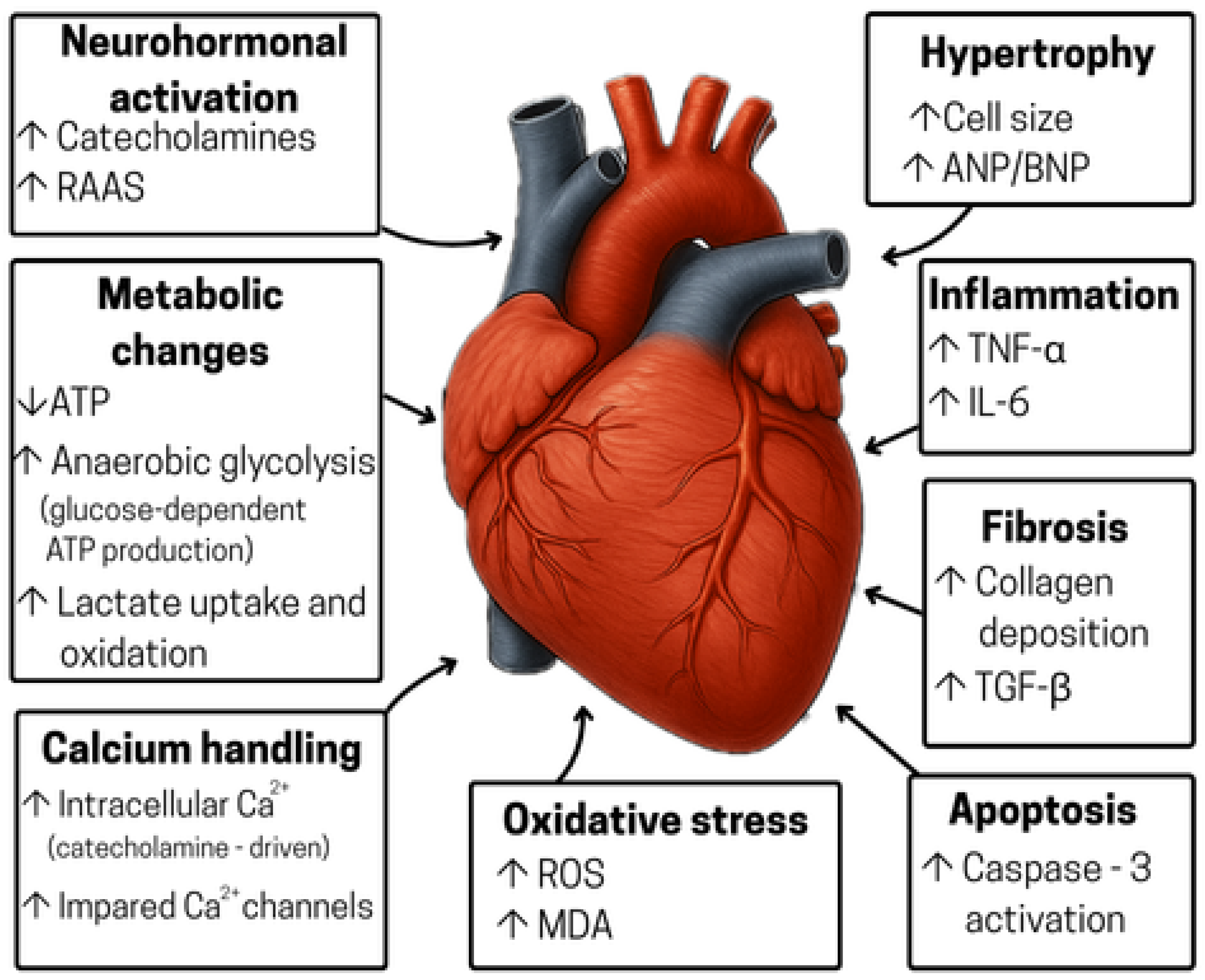
Immediately after the primary injury, and before clinical symptoms of HF appear, the body initiates several compensatory pathways to sustain cardiac output: catecholamine-driven increases in heart rate and contractility, activation of the renin–angiotensin–aldosterone system (RAAS), release of natriuretic peptides and heightened sympathetic drive [12,14]. Although these compensatory mechanisms temporarily support cardiac function, they also promote cardiomyocyte hypertrophy and fibroblast activation. Next, metabolic reprogramming occurs, the heart shifts from efficient fatty acid oxidation to less efficient, glucose dependent ATP synthesis, exacerbating energy deficits, and oxidative stress [15] (Figure 1).
Before the onset of HF, cardiac hypertrophy develops as an adaptive response to maintain cardiac function. It is characterized by an increase in cardiomyocyte size and thickening of ventricular walls. These changes become maladaptive when the chronic stress persists, leading to ventricular dilation, fall in contractile function and ultimately progressing to HF. Cardiac hypertrophy is accompanied by alterations within cardiomyocytes including calcium handling, metabolism and gene expression (atrial natriuretic peptide—ANP, brain natriuretic peptide—BNP), as well as cell death (e.g., apoptosis), and changes in extracellular matrix (ECM) (fibrosis) and angiogenesis [16].
Dysfunction of cardiac mitochondria is a hallmark of HF and a leading cause of oxidative stress. In addition to producing ATP, mitochondria generate reactive oxygen species (ROS) as byproducts of the respiratory chain. Under normal conditions, ROS support essential cellular functions; however, when their production exceeds elimination (e.g., during HF), oxidative stress arises [17]. An overabundance of ROS and reactive nitrogen species (RNS) damages cells by modifying proteins, lipids, and nucleic acids, ultimately contributing to inflammation, apoptosis, and progression of cardiovascular disease [18]. Several ROS and RNS contribute to HF pathology, including superoxide (O2), hydrogen peroxide (H2O2), hydroxyl radical (·OH), and peroxynitrite (ONOO). Superoxide acts as a primary ROS, generating additional ROS, promoting apoptosis, and driving remodeling by stimulating fibroblast proliferation and metalloproteinase activation. It also reacts with nitric oxide (NO), diminishing NO’s cardioprotective effects and forming peroxynitrite, which damages lipids and proteins, leading to cellular dysfunction and further remodeling. Hydrogen peroxide participates in redox signaling and can give rise to hydroxyl radicals, which are among the most reactive species, causing irreversible damage to lipids, proteins, and DNA and play a central role in the cellular injury seen in HF [19].
Oxidative stress also causes myocardial tissue damage and inflammation, contributing to HF progression. Over time, both the innate and adaptive immune systems become activated, resulting in the release of pro-inflammatory cytokines (e.g., interleukin-6—IL-6, interleukin-1β—IL-1β, tumor necrosis factor-α—TNF-α). These mediators contribute to endothelial dysfunction, oxidative stress, and myocardial injury. Moreover, comorbidities such as diabetes, obesity, or hypertension promote systemic inflammation, thereby contributing to myocardial fibrosis, hypertrophy, and left ventricular dysfunction [20].
Abnormal Ca2+ signaling is identified as a form of pathological remodeling in HF. Disrupted Ca2+ homeostasis and reduced sarcoplasmic/endoplasmic reticulum Ca2+-ATPase (SERCA-2a) activity exacerbate myocardial dysfunction. Consequently, less Ca2+ is released during systole, while excess Ca2+ remains in the cytosol during diastole, directly contributing to both systolic and diastolic dysfunction of the myocardium [15]. For efficient relaxation to occur, Ca2+ needs to be efficiently removed from the cytosol following release. Slowed and incomplete Ca2+ removal from the cytosol during HF impairs cardiomyocyte relaxation and promotes hypertrophy and apoptosis signaling [21].
Fibrosis arises in HF when mechanical stress, neurohumoral activation, inflammation, and metabolic disturbances combine to activate cardiac fibroblasts, which remodel the extracellular matrix (ECM), and drive left ventricular hypertrophy. Following myocardial injury, an exaggerated wound-healing response deposits excess collagen types I and III, stiffening the ventricle and impairing diastolic relaxation, while chronic activation of the RAAS and profibrotic mediators such as transforming growth factor beta (TGF-β) and IL-1β promote persistent myofibroblast differentiation and ECM overproduction. Prolonged pressure overload from hypertension or aortic stenosis further increases wall tension, upregulates the expression of pro-fibrotic genes in both cardiomyocytes and fibroblasts, and accelerates collagen crosslinking [22].
Concurrently with pathological fibrosis, programmed cell death pathways are activated in the myocardium during HF. Systemic inflammation promotes increased cardiomyocyte apoptosis by activating caspase 3. Apoptosis is a tightly regulated, caspase-dependent process that preserves membrane integrity while ensuring controlled cell death. It may be activated by intrinsic signals, such as the release of mitochondrial cytochrome c regulated by B-cell lymphoma 2 (Bcl-2) family proteins or by extrinsic signals, specifically via the binding of “death” ligands to TNF/Fas receptors, with subsequent DNA fragmentation and cardiomyocyte destruction. Apoptosis reduces the functional cardiomyocyte pool, triggers compensatory hypertrophy, fibroblast proliferation, and excessive extracellular matrix deposition [15,20].
The heart’s metabolism in HF undergoes extensive changes that reduce mitochondrial oxidative function and cut ATP levels by about 30%, leaving the heart energy starved. Contributing factors include excess ROS and disturbed mitochondrial Ca2+ balance, both of which hamper enzyme activity and can initiate cell death. Mitochondrial dynamics are also disrupted, fission is increased, mitophagy is overactive, and fusion is impaired leading to fewer, lower-quality mitochondria. At the same time, transcriptional regulators like peroxisome proliferator-activated receptor gamma coactivator 1-alpha (PGC1α) and peroxisome proliferator-activated receptor alpha (PPARα) are downregulated, weakening mitochondrial biogenesis and fatty-acid oxidation [23]. While healthy hearts rely primarily on fatty acid β-oxidation for ATP production, hypertrophied myocardium switches to glucose utilization to lower oxygen demand and reduce ROS generation [1].
Considering all these interconnected pathophysiological processes, it becomes clear that effective HF therapy requires a comprehensive approach.

2.1. microRNAs in Heart Failure

Micro ribonucleic acids (microRNAs, miRNAs) are small, single-stranded, non-coding RNA molecules that typically consist of 21 to 23 nucleotides. These molecules are found in plants, animals, and even some viruses. miRNAs play a crucial role in RNA silencing and the post-transcriptional regulation of gene expression [24]. Additionally, miRNAs are important in predicting and treating HF. Abnormal expression of specific miRNAs is closely associated with HF pathological processes, such as cardiomyocyte apoptosis, myocardial fibrosis, cardiac hypertrophy, and ventricular remodeling. The role of miRNAs is significant in the prognosis of HF [25,26].
Cardiac hypertrophy serves as a vital compensatory mechanism for the heart in response to various pathophysiological stimuli. Several miRNAs are known to be regulated during cardiac hypertrophy [27], with two in particular—miRNA-1 and miRNA-133—playing a crucial role in inhibiting this condition. MiRNA-1 and miRNA-133 are part of the same bicistronic unit and are specifically expressed in skeletal muscle and cardiac myocytes [28]. MiRNA-1 reduces calcium–calmodulin signaling through the calcineurin/nuclear factor of activated T-cells (NFAT) pathway and negatively affects the expression of myocyte-specific enhancer factor 2A (Mef2a) and Gata4, thereby inhibiting cardiomyocyte growth [29]. Similarly, the anti-hypertrophic effect of miRNA-133a was observed through the inhibition of Gq-protein and protein kinase C (PKC) pathways, as well as by offsetting multiple targets involved in calcium signaling, cell growth, and cell development pathways [27,30]. The upregulation of miRNA-30e-5p demonstrates promising anti-hypertrophic effects in cardiomyocytes induced by angiotensin II (Ang II) [31]. Several other miRNAs have been identified as pro-hypertrophic, including miRNA-208, miRNA-21, miRNA-18b, miRNA-195, miRNA-199, miRNA-23, miRNA-24, miRNA-27, and miRNA-9. MiRNA-208 is specific to the heart and is essential for cardiomyocyte hypertrophy, fibrosis, and the expression of beta-myosin heavy chain (β-MHC) in response to stress [32].
There is growing evidence that miRNAs play a significant regulatory role in fibrosis in various organs, including the heart [33]. According to study of Zhao et al. [34], more than 60 miRNAs are directly or indirectly involved in anti- or pro-fibrosis in the cardiac tissues. In particular, several miRNAs, such as members of the miRNA-21 and miRNA-29 families, are increasingly recognized as common regulators of fibrosis across different tissue types [35]. Specifically, miRNA-21 initiates the transformation of inactive cardiac fibroblasts into activated myofibroblasts by targeting the Notch/Jagged1 signaling pathway [36]. Research has shown that miRNA-101a, miRNA-67, and miRNA-15 may function as anti-fibrotic molecules by inhibiting TGFβRI. In a similar manner, miRNA-9, miRNA-590, and miRNA-145 have been noted to play an anti-fibrotic role by targeting TGFβRII [34].
The reduction in functional cardiomyocytes is a primary factor contributing to cardiac remodeling. Three main mechanisms are involved in this process: apoptosis, autophagy, and necrosis. It is widely accepted that miRNAs play a significant role in regulating cardiomyocyte death during the progression of cardiac disease [37,38]. According to current understanding of apoptosis, miRNA-1 facilitates changes in mitochondrial structure by regulating apoptosis-related proteins such as Bcl-2 and Bcl-2-associated X protein (Bax). The overexpression of miRNA-133 reduces the production of ROS and diminishes the oxidative stress response, which helps to decrease cellular apoptosis. Furthermore, miRNA-139 influences the extrinsic death signal of Fas, while miRNA-145 regulates calcium overload in the endoplasmic reticulum. Both of these actions have a regulatory effect on cardiomyocyte apoptosis [39]. The signaling pathways linking autophagy and apoptosis are intricate and often occur simultaneously. By inhibiting both autophagy and apoptosis through the protein kinase B (Akt)/mammalian target of rapamycin (mTOR) pathway, miRNA-223 protects heart tissue from ischemic damage and hypoxia in myocardial cells [40]. Several miRNAs are implicated in heart necrosis. These miRNAs can either promote or inhibit necrosis, and their involvement is often linked to targeting specific proteins involved in the necrotic cell death pathways. Long non-coding RNA H19 has been shown to directly bind to miRNA-103/107, thereby regulating the expression of Fas-associated death domain protein (FADD) and influencing necrosis [41]. MiRNA-155 offers a mechanism to block necrosis by targeting receptor interacting protein 1 (RIP1) independently on the activation of the Akt pro-survival pathway [42].

2.2. Rodent Models of Heart Failure

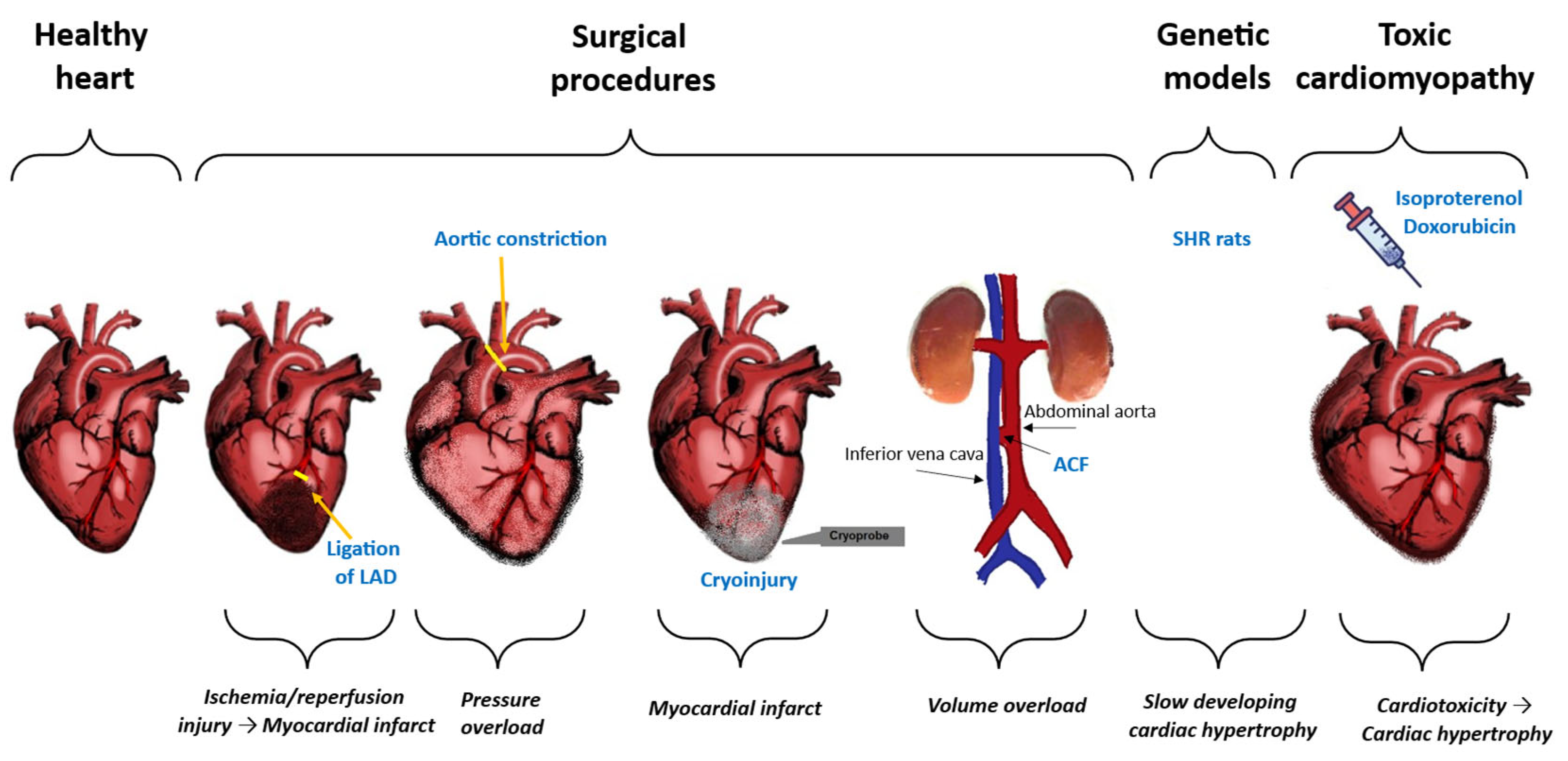
Over the past few decades, numerous animal models have been developed to replicate various mechanisms that contribute to HF. Despite their limitations, these models have significantly advanced understanding of the different causes of HF and have helped clarify the underlying mechanisms. These models employ surgical techniques, pharmacological methods, and genetic engineering to study HF [43,44,45] (Figure 2).
Animal models of HF can be developed using various surgical procedures, including arterial ligation, aortic constriction, or cryogenic damage with a metal probe cooled in liquid nitrogen [46]. Aortocaval fistula in rats serves as a unique model for studying volume-overload congestive HF and cardiac hypertrophy [47,48]. Currently, the ligation of the left anterior descending artery has become the preferred model for inducing ischemia because the pathology seen in this model relates to clinically relevant observations [49,50]. Permanent coronary artery loss results in a complete blockage of blood flow and irreversible hypoxia, which puts most of the surrounding area at risk of infarction and leads to the formation of a large, permanent scar in the myocardium. This damaged region is prone to pathological remodeling, which contributes to the progression of HF [51]. A model of aortic constriction is effective for inducing pressure overload and examining left ventricular hypertrophy. This method enhances the pressure within the left ventricle by partially constricting the aorta [52]. Cryoinjury is a technique used to create a myocardial infarction rat model. It involves applying a cold probe to the surface of the heart, usually targeting the left ventricle, to freeze and damage a small area of heart tissue. This injury triggers a local inflammatory response and leads to scar formation, which mimics the physiological changes observed in human myocardial infarction [53].
In contrast to surgical techniques, HF models have been developed that use drug administration to induce HF in experimental rodent models. This approach involves the direct toxicity to myocardial tissue caused by substances such as isoproterenol, doxorubicin, angiotensin II, monocrotaline, ethanol, or homocysteine [54]. The isoproterenol-induced HF model is a commonly used experimental method to investigate HF in animal subjects, particularly in mice and rats. Isoproterenol-induced cardiac hypertrophy serves as a reliable, reproducible, and well-characterized model for studying cardiac hypertrophy, which is linked to arrhythmia, myocyte loss, and fibrosis, ultimately leading to HF. As a non-selective beta-adrenergic agonist, isoproterenol induces cardiac injury and dysfunction by increasing heart rate and contractility, thereby mimicking the effects of stress on the heart [55,56]. Cardiotoxicity is the most significant and dose-limiting side effect of doxorubicin (also known as Adriamycin), an anticancer drug. Doxorubicin-induced cardiac toxicity is characterized by thinning of the ventricular walls and dilation of the left ventricular chamber. Various pathogenic mechanisms have been identified as contributing to doxorubicin-induced dilated cardiomyopathy, including mitochondrial dysfunction, apoptosis of cardiac myocytes, and alterations in calcium handling [57,58]. Non-surgical models of left ventricular failure include Ang II infusion that mimic slow-developing cardiac hypertrophy as seen in the progression of HFpEF [46]. Monocrotaline model is commonly used to investigate the cellular mechanisms related to the development of right HF. Monocrotaline damages the endothelial cells in the lungs, leading to pulmonary hypertension, which eventually results in right ventricular hypertrophy and failure [59,60]. In rats, the consumption of ethanol can result in different types of HF, including alcoholic cardiomyopathy. This condition is marked by reduced cardiac function and structural changes in the heart. Chronic exposure to ethanol disrupts myocardial protein synthesis, which further impairs heart function. Additionally, ethanol can lead to the apoptosis of cardiomyocytes and dilation of the left ventricle [61,62]. Supplementing rats’ diet with homocysteine can also lead to ventricular dysfunction. This was evidenced by a significant increase in collagen content and echocardiographic changes, including an increase in the thickness of the posterior wall and the interventricular septum [63]. Streptozotocin (STZ)-induced HF, commonly referred to as diabetic cardiomyopathy, is a significant complication associated with type 1 diabetes mellitus in rodent models. This condition can present as both HFrEF and HFpEF. In these models, STZ induces hyperglycemia and disrupts myocardial function, resulting in HF symptoms such as bradycardia and decreased blood pressure [64,65,66].
Rodent genetic models of HF include spontaneously hypertensive rats (SHR), which develop HF over time. Spontaneous hypertension is a natural model of pressure overload, leading to HF with aging [67]. Spontaneously hypertensive HF-prone rats (SHHF) develop HF earlier than the SHR strain, with loss of cardiac function starting at the age of 15 months [68]. Dahl-salt-sensitive rats are characterized by hypersensitivity to sodium intake. When administered with high-salt diet, they develop left ventricular hypertrophy and later decompensate HF with marked ventricular dilation [69]. Rodent models of type 2 diabetes include the Zucker fatty rat, as well as db/db and ob/ob mice, which have a mutation in the leptin receptor. These models are engineered to mimic HFpEF and are used to study the link between diabetes and HF [70].

3. Potential of Molecular Hydrogen Therapy in Heart Failure—Mechanistic Insight

H2 is the smallest and lightest ubiquitous molecule. Owing to its small size, H2 can penetrate through any biological barrier, including the blood–brain barrier, and diffuse throughout the body, as has been demonstrated in studies with rats and pigs [71,72]. In cells, H2 can be rapidly distributed into the cytosol and organelles, and it can enter the mitochondria and nucleus, what makes it available directly at the site of action [73]. Another advantage is the broad range of H2 administration methods, e.g., drinking of H2-rich water, inhalation of H2-rich air, or injection of H2-rich saline [74]. H2 gas is explosive in a reaction with O2 in the concentration range 4–75% (v/v); therefore, medical applications of H2 need to take place outside this range. Nevertheless, even the concentrations of H2 up to 4% exhibit beneficial effects [75]. The trials conducted so far confirm the safety and the nearly absent toxicity of H2 administration in humans [76].
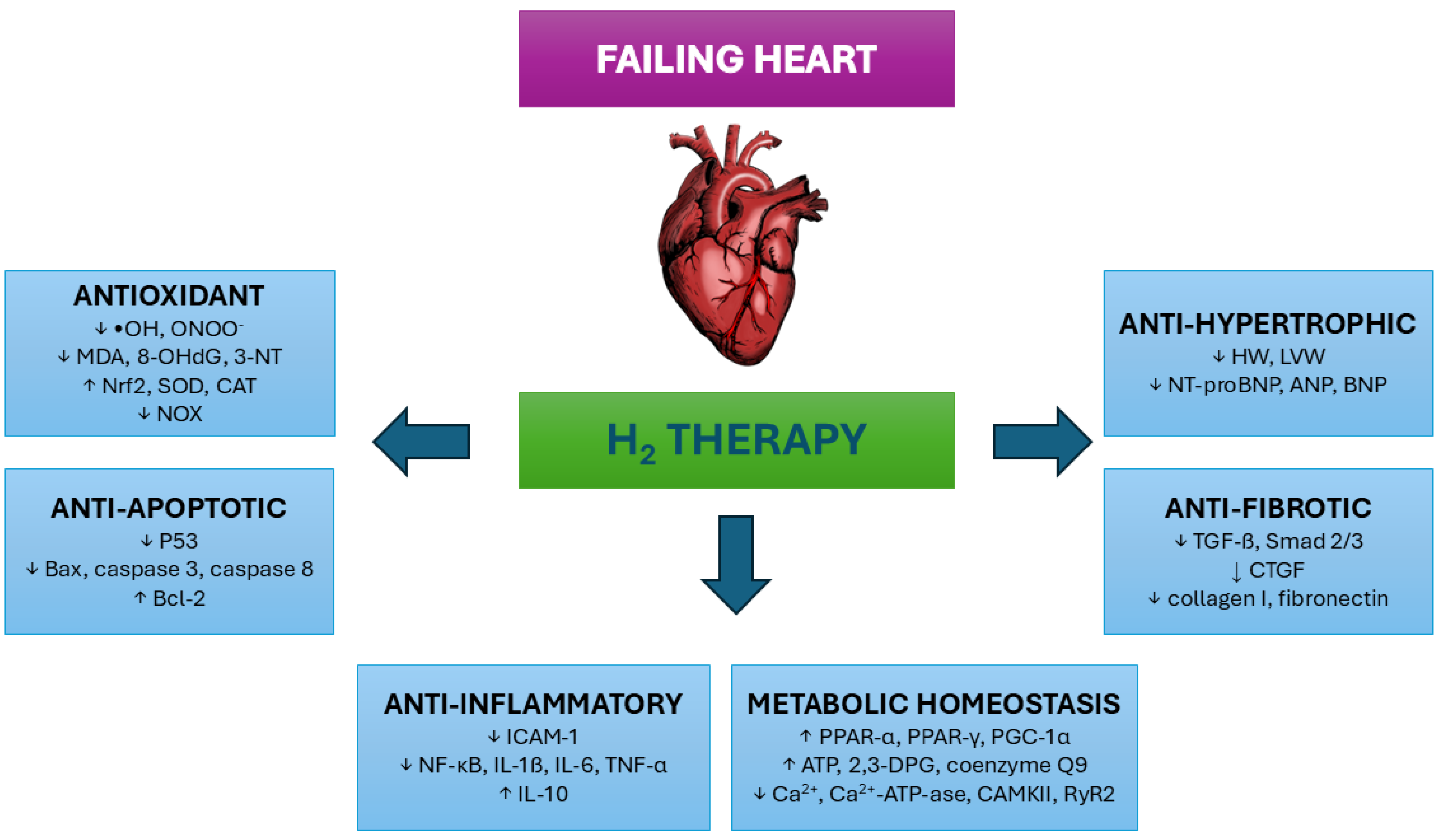
Biological properties of H2, that may be involved in the protection of heart during HF onset and progression, include its selective antioxidant properties and anti-inflammatory action, it can also reduce cell apoptosis and improve cell metabolism as well as exerts anti-hypertrophic and anti-fibrotic effect [8] (Figure 3).
Conventional antioxidants, such as vitamin E, failed to demonstrate therapeutic benefits for HF in preclinical models. This may be attributed to their inability to selectively target mitochondria, where oxidative stress is most pronounced during HF, or their broad scavenging of ROS that may disrupt essential cellular processes [77]. In this sense, H2 may be a suitable antioxidant molecule for HF as it selectively reacts only with the most harmful radicals, like hydroxyl (•OH) and peroxynitrite (ONOO−), without affecting ROS with a physiological role [73]. Due to the unique small size of H2 molecule, the neutralization of ROS can occur in any cell compartment, including mitochondria [78]. It has been demonstrated that the administration of H2 effectively decreased oxidative stress markers, like MDA, 8-hydroxy-2′-deoxyguanosine (8-OHdG) or 3-nitrotyrosine, in different HF models [79,80,81]. H2 can also exert the antioxidant effect via the induction of the nuclear factor erythroid 2-related factor 2 (Nrf2) pathway, thereby activating endogenous antioxidant enzymes [82]. In rats, supplementation with H2 enhanced superoxide dismutase (SOD) and catalase (CAT) activity under HF conditions [80,83,84,85]. Moreover, H2 has been shown to inhibit enzymes producing ROS, such as nicotinamide adenine dinucleotide phosphate oxidase (NOX) [80,84].
Anti-inflammatory action of H2 has been proved in different experimental disease models, including HF [86,87]. At the early stage of inflammatory reaction, H2 can decrease the infiltration of neutrophils and macrophages by downregulating the expression of adhesion molecules (e.g., intercellular adhesion molecule 1—ICAM-1) and chemokines [88]. Besides that, H2 can affect the inflammatory process by regulating nuclear transcription factors and downstream pro-inflammatory cytokines. It has been revealed that H2 can modulate inflammatory signaling pathways, including the nuclear factor kappa B (NF-κB) pathway [89]. H2 decreased inflammatory markers IL-6 and TNF-α in the serum and/or cardiac tissue of rats with isoproterenol-induced myocardial infarction [85]. H2 exerted its cardioprotective effect on rat’s heart damaged by doxorubicin via lowering the inflammatory molecules like TNF-α, IL-6, and IL-1ß [87]. In addition, H2 increases the expression of anti-inflammatory molecules like IL-10 [90].
A key hallmark of HF is the loss of cardiomyocytes via apoptosis, what leads to the loss of myocardial tissue and contributes to disease development [91]. It has been shown that H2 effectively decreases apoptosis and other forms of programmed cell death. In rats with isoproterenol-induced myocardial infarction, H2 treatment improved cardiac function, reduced infarct size and apoptosis. P53 has been identified as a transcription factor associated with anti-apoptotic effects of H2 [79]. The application of H2-rich saline via intraperitoneal injection in rats treated with doxorubicin exerted cardioprotective effects via lowering pro-apoptotic molecules (Bax, caspase 8, caspase 3) as well as increasing anti-apoptotic molecules (Bcl-2) [87]. Similar apoptosis-reducing effects of H2 were seen in a rat model of isoproterenol-induced HF. Intraperitoneal injection of H2-rich saline ameliorated myocardial injury via inhibition of cardiomyocyte apoptosis by upregulating Bcl-2, and downregulating Bax [92]. Inhibition of apoptosis by H2 may involve activation of various signaling pathways, e.g., phosphoinositide 3-kinase/protein kinase B (PI3K/AKT) pathway [93].
Cardiac hypertrophy typically emerges before the onset of HF as an adaptive response to maintain cardiac function after preceding increased workload or cardiac insult [16]. Administration of H2-rich saline mitigated cardiac hypertrophy and HF induced by the pressure overload in rats as shown by lower heart and atrial weights [94]. Hypertrophy was also reduced in the heart of rats with isoproterenol-induced HF after H2 treatment. The authors detected decreased heart and left ventricle weights as well as lowered levels of a biomarker N-terminal B-type natriuretic peptide precursor (NT-proBNP) in the plasma [92]. Intraperitoneal injection of H2-rich saline prevented isoproterenol-induced cardiac hypertrophy and improved cardiac function in mice. This was reflected by lowered heart weight/body weight ratio as well as reduced ANP and BNP levels in the left ventricles [81].
The anti-fibrotic effect of H2 has been demonstrated in various HF models. H2 administered by intraperitoneal injection prevented interstitial fibrosis and the progression of HF induced by pressure overload (aortic constriction) in rats. H2 treatment decreased the phosphorylation of p38 mitogen-activated protein kinase (MAPK) and Smad2/3, and the expression of TGF-β1 and connective tissue growth factor (CTGF), which were accompanied by reduced hydroxyproline content, collagen I (Col I) and fibronectin 1 (FN1) mRNA levels [84]. After inhalation of H2-rich air, decrease in atrial fibrosis was measured in rats with atrial fibrillation induced by Ang II. H2 reduced Ang II-mediated atrial fibrosis through inhibiting TGF-β1/Smad2/3 pathway [80]. Similar effects were seen in another study, where the authors found that H2-rich saline mitigated atrial fibrosis induced by pressure overload in rats. This was possibly achieved via inhibition of the Janus kinase/signal transducer and activator of transcription protein (JAK-STAT) signaling pathway [94]. In a monocrotaline-induced pulmonary hypertension model (representing right ventricle HF), inhalation of H2-rich air reduced fibrosis of lung tissue via lowering TGF-ß expression levels [95]. Intraperitoneal injection of H2-rich saline reduced collagen deposition and myocardial fibrosis in rats with isoproterenol-induced HF [92].
Mitochondria ensure the homeostasis of energy metabolism. When disrupted during HF, metabolic remodeling occurs, leading to a shift in metabolic substrate utilization from free fatty acid to glucose oxidation, insufficient ATP production and Ca2+ overload [96]. The in vivo and in vitro assays showed that H2 promoted fatty acid β-oxidation by modulating the activation of adenosine monophosphate-activated protein kinase (AMPK) signaling and PPARα/γ [97]. Other authors found that H2 stimulates the expression of PGC-1α to enhance fatty acid metabolism. H2 has been proven to stimulate energy production. H2 inhalation increased ATP and 2,3-diphosphoglyceric acid (2,3-DPG) levels in erythrocytes of rats with induced chronic HF thereby enhancing oxygen delivery to tissues [98]. In another study with rats undergoing heart transplantation, H2 treatment was also associated with increased ATP levels in grafts and increased activity of respiratory chain enzymes in mitochondria [99]. Gvozdjáková et al. [100] demonstrated that consumption of H2-rich water resulted in stimulated mitochondrial respiratory chain function, increased levels of ATP and coenzyme Q9 in the rat myocardium. H2 has also been shown to regulate calcium levels. In a different study, H2-rich water administration prevented elevation of intracellular Ca2+ levels in a model of ischemic brain injury [101]. H2 contributes to calcium homeostasis also via its effects on different enzymes and receptors involved in calcium signaling, e.g., Ca2+—ATPase activity [85], or phosphorylation of CaMKII enzyme and ryanodine receptor 2 (RyR2) [80].

4. Experimental Evidence for Molecular Hydrogen Effects in Different Heart Failure Models

As stated above, HF is a complex syndrome that involves many pathophysiological mechanisms. There is no single HF model that could cover such a complexity of underlying mechanisms. Experimental studies exploring the effects of H2 on different HF models are continuously increasing. Their results are summarized below as well as in Table 1.

4.1. In Vitro Studies

The prevailing in vitro model to study the effect of H2 was a model of cardiac cells damaged by isoproterenol. Chen et al. [92] conducted in vitro experiments using H9c2 cardiomyocytes incubated with isoproterenol. Cultivation of isoproterenol-treated H9c2 cells in H2-rich medium improved the survival and proliferation of cells, reduced the cell surface area, indicating a protective effect against hypertrophy. Furthermore, H2-rich medium alleviated apoptosis via lowering Bax levels and enhancing Bcl-2 expression in isoproterenol-treated cells. In another study, the authors revealed that isoproterenol-induced excessive autophagy in H9c2 cardiomyocytes was blocked by pretreatment with H2-rich medium [102]. Anti-hypertrophic effects of H2 were confirmed in H9c2 cardiomyocytes treated with isoproterenol. H2 lowered the excessive expression of NOX and the accumulation of ROS, attenuated the decrease in matrix metalloproteinase (MMP), and inhibited ROS-sensitive extracellular signal-regulated kinase 1/2 (ERK1/2), p38, and c-Jun N-terminal kinase (JNK) signaling pathways [81].
Other in vitro models were also employed to study H2 effects in HF-related conditions. In vitro experiments were performed using cardiotrophin-1 (CT-1)-induced hypertrophy in cultured neonatal rat cardiomyocytes. The addition of H2-rich saline to the medium mitigated cells’ hypertrophy, as demonstrated by lowered cell surface area. In addition, H2 significantly downregulated the expression of IL-6 and JAK/STAT3 signaling pathway expression in hypertrophic cells [94]. To demonstrate H2 potential for preventing and treating atrial fibrillation, HL-1 atrial cardiomyocytes and rat fibroblasts were treated with Ang II. Decrease in ROS and NLRP3 inflammasome was detected in Ang II-treated HL-1 cells that were cultivated under 75% H2. At the same time, improvement in calcium handling and K+ channel function was also detected in this model when incubated under 75% H2. H2 treatment suppressed proliferation and migration of atrial fibroblasts cultivated in the presence of Ang II. H2 inhibited TGF-β1 secretion and activation and decreased Ang II-induced atrial fibrosis through suppressing TGF-β1/Smad2/3 pathway [80]. In another study, H2 treatment attenuated doxorubicin-induced injury in H9c2 cardiomyocytes. Incubation of cardiomyocytes in H2-saturated medium inhibited doxorubicin-induced apoptosis, as measured by decreased expression of Bax, cleaved caspase-3 and -9 as well as upregulation of Bcl-2. It has been demonstrated that H2 treatment attenuated doxorubicin-induced cardiomyocyte injury by activating autophagy via the AMPK/mTOR pathway [103].

4.2. In Vivo Studies

The most frequently used in vivo model to study the effect of H2 was a model of heart damage induced by isoproterenol. Chi et al. [79] aimed to investigate the possible mechanism of H2 inhalation in delaying the progression of chronic HF. The chronic HF model was established by subcutaneous injection of isoproterenol in rats. H2 inhalation (2% in air) improved heart function with significant attenuation of oxidative stress damage and apoptosis. P53 has been identified as a transcription factor potentially associated with antioxidant and anti-apoptotic effects of H2. In another study, it has also been demonstrated that administration of H2-rich saline shows cardioprotective effects in a rat model of isoproterenol-induced HF. This was evidenced by reduced myocardial fibrosis and cardiac hypertrophy after H2 administration. Markers of tissue damage were also lowered [creatine kinase—myocardial band (CK-MB), troponin-I and NT-proBNP]. Furthermore, cardiomyocyte apoptosis was inhibited [92]. H2 was able to inhibit autophagy mediated by isoproterenol in mice in vivo, as was documented by suppressed expression levels of Beclin1, autophagy-related gene 7 (Atg7) and microtubule-associated protein 1 light chain 3B (LC3B II). H2 as well mitigated hypertrophy induced by isoproterenol in mice hearts, as indicated by decreasing HW and HW/BW ratio [102]. Zhang et al. [81] investigated the effects of H2 on cardiac hypertrophy induced by isoproterenol in mice. H2 intraperitoneal injection decreased hypertrophic markers ANP and BNP and HW/BW ratio as well as alleviated the impaired left ventricular function. H2 exerted its protective effects partially through blocking ROS-sensitive ERK1/2, p38, and JNK signaling pathways. In another study, isoproterenol was used to induce myocardial infarction in rats. To mitigate the heart damage, rats were given different doses of H2-rich saline or vitamin C. H2-rich saline decreased oxidative stress parameters MDA and 8-OHdG, enhanced SOD and Na+/K+-ATPase activity, lowered Ca-ATPase activity and decreased inflammatory markers IL-6 and TNF-α in the serum and/or cardiac tissue of rats. H2-rich saline pretreatment also reduced infarct size and improved left ventricle function [85].
H2 administered by intraperitoneal injection as saturated saline prevented interstitial fibrosis and the progression of HF induced by pressure overload (aortic constriction) in rats. This was evidenced through its antioxidant properties and via suppression of TGF-β1 signaling. H2 treatment decreased the level of oxidative stress parameters ROS, MDA, and NOX, while the activity of the antioxidant enzyme SOD was increased. Administration of H2 was associated with decreased expression of TGF-β1 and CTGF. These molecular changes coincided with lower hydroxyproline content and downregulation of Col I and FN1 mRNA levels [84]. Pressure overload was induced in rats by abdominal aortic constriction. Administration of H2-rich saline mitigated cardiac hypertrophy and HF induced by the pressure overload and reduced atrial fibrosis and atrial fibrillation possibly via JAK-STAT signaling pathway. The authors observed better results with higher doses of H2-rich saline (6 mL/kg) [94].
Atrial fibrillation is one of the main factors leading to HF. Experimental rats were given Ang II at low doses (1080 μg/kg/24 h) via osmotic minipumps continuously over 28 days. Rats that inhaled 2% H2 in air (6 h per day) for 28 days showed decreased susceptibility to atrial fibrillation. At the same time, H2 decreased atrial fibrosis (TGF-ß1), oxidative stress (MDA) and inflammation and improved Ca2+ handling via inhibition of phosphorylation of Ca channels [80]. Ventricular fibrillation was induced by transcutaneous electrical epicardial stimulation in rats with subsequent cardiac arrest. The results of the study revealed that inhalation of H2 gas (2% H2 in O2) during cardio-pulmonary resuscitation and for 2 h after the return of spontaneous circulation improved the survival rate of rats experiencing cardiac arrest after ventricular fibrillation. H2 prevented a rise in left ventricular end-diastolic pressure and increase in serum IL-6. At the same time, H2 inhalation ameliorated oxidative myocardial injury, as both 8-OHdG- and 4-hydroxynonenal (4-HNE)-positive cardiomyocytes were markedly suppressed [104].
He et al. [105] explored protective effects of H2 on monocrotaline-induced pulmonary hypertension ultimately leading to right-sided HF. H2 was administered to rats either orally as H2-rich water or via intraperitoneal injection of H2-rich saline. Both forms of administration effectively decreased pulmonary hypertension and inflammatory response as well as mitigated right ventricular hypertrophy. The protective effect of H2 was attributed to its antioxidant and anti-inflammatory action. In a similar model Kuropatkina et al. [95] found that inhalation of 4% H2 in air for 21 days reduces inflammation (mast cells) and fibrosis (TGF-ß) of lung tissue during monocrotaline-induced pulmonary hypertension.
Doxorubicin is one of the effective anticancer treatments, but its use is limited due to cardiotoxicity that might lead to HF. Gao et al. [87] found that intraperitoneal injection of H2-rich saline ameliorated the mortality, cardiac dysfunction and histopathological changes caused by doxorubicin in rats. H2 exerted its protective effect via lowering oxidant (MDA, ROS), inflammatory (TNF-α, IL-6, IL-1ß) and apoptotic molecules (Bcl-2, Bax, caspase 8, caspase 3). In another study, chronic heart injury model was also established by intraperitoneal injection of doxorubicin in rats. H2 inhalation improved doxorubicin-induced decline in cardiac function (left ventricular diameter, left ventricular ejection fraction, fractional shortening) as well as pathological structural abnormalities in rats. Cardiac injury markers lactate dehydrogenase (LDH), CK-MB, cTnI, BNP as well as apoptotic markers were decreased after H2 treatment. H2 inhalation activated autophagy through AMPK/mTOR pathway, thereby protected against myocardial injury induced by doxorubicin [103].
In another study, the effects of H2 inhalation on the functional states of red blood cells (RBCs) in rats with chronic HF were explored. Chronic HF was induced by intraperitoneal injection of 1% adrenaline. Application of H2 via inhalation (2% in air) improved microcirculation and oxygen transport function of blood. This was concluded based on the increased electrophoretic mobility of erythrocytes (EPM) and decreased level of their aggregation as seen after 14 days of H2 treatment. At the same time, H2 increased ATP and 2,3-diphosphoglyceric acid (2,3-DPG) levels in erythrocytes thereby enhancing oxygen delivery to tissues. Oxidative stress and hematological parameters were also improved in a group receiving H2 [83].
Table 1. Experimental studies exploring the effects of molecular hydrogen in different heart failure models. HF—heart failure, H2—molecular hydrogen, ISO—isoproterenol, H9c2 cells—cardiomyocyte cell line, LVESD—left ventricular end-systolic dimension, LVEDD—left ventricular end-diastolic dimension, RAVD—right atrium vertical diameter, RATD—right atrium transverse diameter, IVS—interventricular septum, RV—right ventricle, EF—ejection fraction, FS—fractional shortening, E/A—mitral E/A peak velocity, BNP—brain natriuretic peptide, 8-OHdG—8-hydroxy-2′-deoxyguanosine, MDA—malondialdehyde, Bcl-2—B-cell lymphoma 2, Bax—Bcl-2 associated X-protein, p53—transcription factor p53, IP—intraperitoneal, EPM—electrophoretic mobility, ATP—adenosine triphosphate, 2,3-DPG—2,3-diphosphoglyceric acid, CAT—catalase, RBC—red blood cell count, Hg—hemoglobin, MCV—mean corpuscular volume, Col I—collagen I, FN1—fibronectin 1, TGF-β1—transforming growth factor β1, CTGF—connective tissue growth factor, p-Smad2/3—phosphorylated Smad2/3, NOX—nicotinamide adenine dinucleotide phosphate oxidase, p-p38 MAPK—phosphorylated p38 mitogen-activated protein kinase, CPR—cardio-pulmonary resuscitation, ROSC—return of spontaneous circulation, IL—interleukin, LVEDP—left ventricular end-diastolic pressure, 4-HNE—4-hydroxynonenal, HW—heart weight, BW—body weight, AW—atrial weight, LVW—left ventricle weight, HR—heart rate, LVAWd—LV anterior wall thickness at end-diastole, LVPWd—LV posterior wall thickness at end-diastole, LVD—left ventricular diameter, ROS—reactive oxygen species, TNF-α—tumor necrosis factor α, LC3—microtubule-associated protein 1 light chain 3, AMPK—adenosine monophosphate-activated protein kinase, mTOR—mammalian target of rapamycin, AngII—angiotensin 2, AF—atrial fibrillation, NLRP3—Nucleotide-Binding Domain, Leucine-Rich–Containing Family, Pyrin Domain–Containing-3, ASC—Apoptosis-associated speck-like protein containing a caspase recruitment domain (CARD), CaMKII—Ca2+/calmodulin-dependent protein kinase II, RyR2—Ryanodine receptor 2, α-SMA—alpha-smooth muscle actin, Smad—Mothers against decapentaplegic homolog, MCT—monocrotaline, mPAP—mean pulmonary arterial pressure, RVHI—right ventricular hypertrophy index, ANF—atrial natriuretic factor, LVESV—left ventricular end-systolic volume, LVEDV—left ventricular end-diastolic volume, TB—tibia length, CK-MB—creatine kinase-MB, cTn-I—cardiac troponin-I, NT-proBNP—N-terminal B-type natriuretic peptide precursor, p-cTn-I—phosphorylated cardiac troponin-I, Atg7 -autophagy-related protein 7, LC3B—microtubule-associated protein 1 light chain 3β, MMP—matrix metalloproteinase, ERK—extracellular signal-regulated kinase, JNK—c-Jun N-terminal kinase, AST—aspartate aminotransferase, LVSP—left ventricular systolic pressure, +dP/dt max—maximal rate of pressure rise, -dP/dt max—maximal rate of pressure fall.
HF ModelH2 AdministrationH2 EffectsReference
ISO (85, 170, 340 mg/kg bw) subcutaneous injection (rats)

Menadione (10 μM) (H9c2 cells)
2% H2 in air inhalation
12 h daily for 14 days


H2 saturated medium (min. 0.6 mM)
↓ LVESD, LVEDD, RAVD, RATD, IVS, RV
↑ EF, FS, E/A
↓ BNP
↓ fibrosis
↓ 8-OHdG, MDA
↓ apoptosis, Bax, cleaved caspase-3
↓ p53
Chi et al. [79]
ISO (10 mg/kg/day)
for 14 days
subcutaneous injection (rats)


ISO (25 μg/mL) for 24 h (H9c2 cells)
H2 saturated saline (0.6 mmol/L)
IP injection (10 mL/kg/d)
for 14 days

H2-rich medium (15, 50, or 150 μM)
↓ LVEDD, LVESD, LVESV, LVEDV
↑ EF, FS
↓ hypertrophy, HW/BW, LVW/BW, LVW/TL
↓ fibrosis
↓ CK-MB, cTn-I, NT-proBNP, p-cTn-I
↓ apoptosis, Bax
↓ Bcl-2
Chen et al. [92]
ISO (0.5 mg/100 g/day)
for 7 days
subcutaneous injection (mice)

ISO (10 μM) (H9c2 cells)
HRS (1 mL/100 g/day)
IP injection
7 days pretreatment


7 days treatment
H2-rich medium
↓ HW/BW
↑ Beclin1, Atg7, LC3B II
Zhang et al. [102]
ISO (0.5 mg/100 g/day)
for 7 days
subcutaneous injection (mice)

ISO (10 μM) (H9c2 cells)
HRS (1 mL/100 g/day)
IP injection
7 days pretreatment
7 days treatment


H2-rich medium
↓ ANP, BNP, HW/BW
↓ LVESD, LVEDD
↑ FS
↓ ROS, 3-nitrotyrosine, p67, MMP
↓ phosphorylation of ERK1/2, p38, JNK
Zhang et al. [81]
ISO (200 mg/kg bw)
subcutaneous injection (rats)
HRS (5, 7.5, 10 mL/kg bw)
IP injection
↓ infarct size
↓ CK-MB, AST activity
↑ LVSP, +dP/dt max, -dP/dt max
↓ LVEDP
↓ MDA, 8-OHdG
↑ SOD activity
↓ IL-6, TNF-α
↑ Na+-K+-ATPase
↓ Ca2+-ATPase
Jing et al. [85]
abdominal aortic constriction (rats)H2 saturated saline
IP injection
10 mL/kg daily for 16 weeks
↓ LVESD, LVEDD
↑ EF, FS
↓ hydroxyproline, Col I, FN1, TGF-β1, CTGF, p-Smad2/3
↓ ROS, MDA, NOX2, NOX4
↑ SOD activity
↓ p-p38 MAPK
Yang et al. [84]
abdominal aortic constriction (rats)


Cardiotrophin-1 (0.1 nM) (neonatal rat cardiomyocytes)
H2 saturated saline
IP injection
3 or 6 mL/kg HRS daily for 6 weeks

H2 saturated medium
↓ HW/BW, AW/BW, LVW/BW
↑ AW/HW
↓ HR, LVAWd, LVPWd
↓ atrial fibrillation
↓ atrial fibrosis
↓ IL-6, JAK, STAT3
Wang and Pan [94]
Ang II (1080 μg/kg/24 h)
Daily for 28 days Osmotic minipumps (rats)

Ang II (1.0μM)
HL-1 atrial cardiomyocytes
rat fibroblasts
2% H2 in air inhalation
6 h a day for 28 days


75% H2
↓ AF susceptibility and duration
↓ left atrial diameter and area
↓ MDA, NOX4
↑ SOD activity
↓ NLRP3, ASC, IL-1ß
↓ caspase 1
↓ p-CaMKII, p-RyR2
↓ TGF-ß1, α-SMA, Col I, III, p-Smad2, p-Smad3
Zhang et al. [80]
transcutaneous electrical epicardial stimulation (rats)2% H2 in O2 inhalation
during CPR and 2 h after ROSC
↑ survival
↓ IL-6
↓ LVEDP
↓ fibrosis
↓ 8-OHdG- and 4-HNE-positive cells
Hayashida et al. [104]
MCT (80 mg/kg)
IP injection (rats)
H2 saturated water (0.6 mmol/L)
H2 saturated saline (0.6 mmol/L) IP injection
for 28 days
↓ mPAP
↓ RVHI, ANF
He et al. [105]
MCT (60 mg/kg)
subcutaneous injection (rats)
4% H2 in air continuous inhalation for 21 days↓ mast cells
↓ TGF-ß
Kuropatkina et al. [95]
2 mg/kg doxorubicin
Every 3 days for 30 days
IP injection (rats)
H2 saturated saline
IP injection
10 mL/kg HRS daily for 30 days
↓ LVD
↑ EF, FS
↓ BNP
↓ ROS, MDA
↓ TNF-α, IL-6, IL-1ß
↓ Bax/Bcl-2
↓ caspase 8, 3
Gao et al. [87]
2 mg/kg doxorubicin
Every 4 days for 30 days
IP injection (rats)

doxorubicin (2 μM) (H9c2 cells)
2% H2 in air inhalation
6 h daily for 30 days


H2 saturated medium
↓ HW/BW
↓ LVD
↑ LVEF, FS
↓ LDH, CK-MB, cTnI, BNP
↑ LC3, Beclin1, Atg7
↓ Bax, cleaved caspase-3, 9
↑ Bcl-2
↑ p-AMPK/AMPK
↓ p-mTOR/mTOR
Ma et al. [103]
1% adrenaline (0.3 mg/kg)
3 times every 48 h
IP injection (rats)
2% H2 in air inhalation
40 min a day for 5 days
↑ EPM, ATP, 2,3-DPG, CAT activity
↓ erythrocyte aggregation, MDA, RBC, Hg, MCV
Deryugina et al. [83]

5. Future Directions

Despite a growing number of studies confirming beneficial effects of H2 administration in different disease settings, its potential acceptance in clinics is still under development. The outcomes of several clinical studies have suggested that H2 can improve the consequences associated with cardiovascular diseases. These are mainly oriented on post-cardiac arrest syndrome [106,107] and myocardial infarction [108]. Nevertheless, clinical investigations in this area are still limited. Future large-scale and long-term trials are necessary not only to determine the clinical feasibility of using H2 as a therapy but also to verify its efficacy and safety. Different administration methods of H2 represent an advantage for its use in prevention or disease treatment. Oral consumption of H2-rich water is suitable for gastrointestinal disorders, whereas inhalation of H2 or injection of H2-rich saline is appropriate for systemic diseases. Inhalation of H2 is clinically more feasible compared with other methods of H2 delivery. Research in the area of H2 administration options is still evolving. For example, different nanomaterials and devices for H2 supply have been developed that aim to increase the concentration of H2 at the site of action and provide controlled H2 release and combined treatment [109]. Development of new delivery systems might be necessary to support the clinical potential of H2 therapy. The use of H2 in clinics presents several challenges. Manipulation with H2 during preparation, storage, transfer, and distribution of inhaled H2 requires attention to prevent potential explosions. Oral administration of H2 lacks targeted delivery to specific sites of action. Future research needs to explore the timing, dose–response relationship, and how H2 can be combined with other therapies. Finally, searching for the exact intracellular mechanisms of H2 action is needed as well to enable its transfer into clinical practice. With regard to HF, future research could be oriented around the investigation of H2 mechanisms to reduce ventricular dilation, decrease metabolic stress, or reverse adverse cardiac remodeling. Available in vivo studies of H2 effects in different HF models are performed on male animals only. Therefore, investigation of sex differences in the response to H2 treatment is also warranted.

6. Conclusions

Cardiovascular diseases are the leading causes of death worldwide and therefore warrant new therapies. Given the complexity of underlying pathological mechanisms, effective HF therapy requires a comprehensive approach. H2 is a small ubiquitous gaseous molecule that has been shown to exert diverse biological effects. Experimental and clinical studies demonstrate that the utilization of H2 can be beneficial in the prevention and treatment of various diseases, including HF. According to our knowledge, this is the first review summarizing experimental evidence for H2 effects in different HF models. The available literature indicates that H2 may be effective in mitigating different HF pathologies via regulating cardiac oxidative stress and inflammation, cardiomyocyte death and mitochondrial function/cell metabolism, as well as cardiac remodeling, including hypertrophy and fibrosis. Although the number of studies dealing with the effects of H2 in different HF models is continuously increasing, this area of research is still in its infancy. Further studies are needed to reveal exact intracellular mechanisms of H2 action, as well as its efficacy and safety for potential use as a novel treatment in HF.

Author Contributions

Conceptualization, B.K. (Branislav Kura) and J.S.; investigation, B.K. (Branislav Kura); resources, B.K. (Branislav Kura); writing—original draft preparation, B.K. (Branislav Kura), D.K. and B.K. (Barbora Kalocayova); writing—review and editing, J.S., B.K. (Branislav Kura), B.K. (Barbora Kalocayova) and D.K.; visualization, B.K. (Branislav Kura) and D.K.; supervision, J.S. and B.K. (Branislav Kura); project administration, B.K. (Branislav Kura), B.K. (Barbora Kalocayova) and J.S.; funding acquisition, B.K. (Branislav Kura), B.K. (Barbora Kalocayova) and J.S. All authors have read and agreed to the published version of the manuscript.

Funding

This work was supported by grant from Slovak Research and Development Agency (APVV-19-0317, APVV-21-0410), grant from the Slovak Academy of Sciences (VEGA 2/0092/22, VEGA 2/0051/25, VEGA 2/0148/22, VEGA 2/0104/22), grant from European Union Structural funds (ITMS 26230120009), grant (2018/7838:1-26C0), ERA4Health CARDINNOV, project RESCUE, and grant from Ministry of Health of The Slovak Republic (2019/4-CEMSAV-1).

Data Availability Statement

No new data were created or analyzed in this study. Data sharing is not applicable to this article.

Conflicts of Interest

The authors declare no conflicts of interest.

References

  1. Ren, S.; Chang, S.; Tran, A.; Mandelli, A.; Wang, Y.; Wang, J.J. Implantation of an Isoproterenol Mini-Pump to Induce Heart Failure in Mice. J. Vis. Exp. 2019, 152, e59646. [Google Scholar] [CrossRef]
  2. Seferović, P.M.; Vardas, P.; Jankowska, E.A.; Maggioni, A.P.; Timmis, A.; Milinković, I.; Polovina, M.; Gale, C.P.; Lund, L.H.; Lopatin, Y.; et al. The Heart Failure Association Atlas: Heart Failure Epidemiology and Management Statistics 2019. Eur. J. Heart Fail. 2021, 23, 906–914. [Google Scholar] [CrossRef]
  3. Khan, M.S.; Shahid, I.; Bennis, A.; Rakisheva, A.; Metra, M.; Butler, J. Global Epidemiology of Heart Failure. Nat. Rev. Cardiol. 2024, 21, 717–734. [Google Scholar] [CrossRef]
  4. Fonseka, O.; Gare, S.R.; Chen, X.; Zhang, J.; Alatawi, N.H.; Ross, C.; Liu, W. Molecular Mechanisms Underlying Heart Failure and Their Therapeutic Potential. Cells 2025, 14, 324. [Google Scholar] [CrossRef] [PubMed]
  5. Zhou, H.; Tang, W.; Yang, J.; Peng, J.; Guo, J.; Fan, C. MicroRNA-Related Strategies to Improve Cardiac Function in Heart Failure. Front. Cardiovasc. Med. 2021, 8, 773083. [Google Scholar] [CrossRef] [PubMed]
  6. Omote, K.; Verbrugge, F.H.; Borlaug, B.A. Heart Failure with Preserved Ejection Fraction: Mechanisms and Treatment Strategies. Annu. Rev. Med. 2022, 73, 321–337. [Google Scholar] [CrossRef] [PubMed]
  7. Jin, J.; Yue, L.; Du, M.; Geng, F.; Gao, X.; Zhou, Y.; Lu, Q.; Pan, X. Molecular Hydrogen Therapy: Mechanisms, Delivery Methods, Preventive, and Therapeutic Application. MedComm 2025, 6, e70194. [Google Scholar] [CrossRef]
  8. Saengsin, K.; Sittiwangkul, R.; Chattipakorn, S.C.; Chattipakorn, N. Hydrogen Therapy as a Potential Therapeutic Intervention in Heart Disease: From the Past Evidence to Future Application. Cell. Mol. Life Sci. 2023, 80, 174. [Google Scholar] [CrossRef]
  9. Schwinger, R.H.G. Pathophysiology of Heart Failure. Cardiovasc. Diagn. Ther. 2021, 11, 263–276. [Google Scholar] [CrossRef]
  10. Holzhauser, L.; Kim, G.; Sayer, G.; Uriel, N. The Effect of Left Ventricular Assist Device Therapy on Cardiac Biomarkers: Implications for the Identification of Myocardial Recovery. Curr. Heart Fail. Rep. 2018, 15, 250–259. [Google Scholar] [CrossRef]
  11. Shang, Z.; Wang, X.; Gao, W. Heart Failure with Mildly Reduced Ejection Fraction: Emerging Frontiers in Clinical Characteristics, Prognosis, and Treatment. Rev. Cardiovasc. Med. 2022, 23, 30. [Google Scholar] [CrossRef]
  12. Snipelisky, D.; Chaudhry, S.-P.; Stewart, G.C. The Many Faces of Heart Failure. Card. Electrophysiol. Clin. 2019, 11, 11–20. [Google Scholar] [CrossRef] [PubMed]
  13. Kodur, N.; Tang, W.H.W. Management of Heart Failure With Improved Ejection Fraction. JACC Hear. Fail. 2025, 13, 537–553. [Google Scholar] [CrossRef] [PubMed]
  14. Šimko, F. Patofyziológia Zlyhania Srdca. Via Pract. 2006, 3, 382–384. [Google Scholar]
  15. Azevedo, P.S.; Polegato, B.F.; Minicucci, M.F.; Paiva, S.A.R.; Zornoff, L.A.M. Cardiac Remodeling: Concepts, Clinical Impact, Pathophysiological Mechanisms and Pharmacologic Treatment. Arq. Bras. Cardiol. 2016, 106, 62–69. [Google Scholar] [CrossRef]
  16. Tham, Y.K.; Bernardo, B.C.; Ooi, J.Y.Y.; Weeks, K.L.; McMullen, J.R. Pathophysiology of Cardiac Hypertrophy and Heart Failure: Signaling Pathways and Novel Therapeutic Targets. Arch. Toxicol. 2015, 89, 1401–1438. [Google Scholar] [CrossRef]
  17. Wróbel-Nowicka, K.; Wojciechowska, C.; Jacheć, W.; Zalewska, M.; Romuk, E. The Role of Oxidative Stress and Inflammatory Parameters in Heart Failure. Medicina (B. Aires). 2024, 60, 760. [Google Scholar] [CrossRef]
  18. Klimczak-Tomaniak, D.; Haponiuk-Skwarlińska, J.; Kuch, M.; Pączek, L. Crosstalk between MicroRNA and Oxidative Stress in Heart Failure: A Systematic Review. Int. J. Mol. Sci. 2022, 23, 15013. [Google Scholar] [CrossRef]
  19. Tsutsui, H.; Kinugawa, S.; Matsushima, S. Oxidative Stress and Heart Failure. Am. J. Physiol. Circ. Physiol. 2011, 301, H2181–H2190. [Google Scholar] [CrossRef]
  20. Boulet, J.; Sridhar, V.S.; Bouabdallaoui, N.; Tardif, J.-C.; White, M. Inflammation in Heart Failure: Pathophysiology and Therapeutic Strategies. Inflamm. Res. 2024, 73, 709–723. [Google Scholar] [CrossRef]
  21. Roe, A.; Frisk, M.; Louch, W. Targeting Cardiomyocyte Ca2+ Homeostasis in Heart Failure. Curr. Pharm. Des. 2014, 21, 431–448. [Google Scholar] [CrossRef] [PubMed]
  22. Ravassa, S.; López, B.; Treibel, T.A.; San José, G.; Losada-Fuentenebro, B.; Tapia, L.; Bayés-Genís, A.; Díez, J.; González, A. Cardiac Fibrosis in Heart Failure: Focus on Non-Invasive Diagnosis and Emerging Therapeutic Strategies. Mol. Aspects Med. 2023, 93, 101194. [Google Scholar] [CrossRef] [PubMed]
  23. Lopaschuk, G.D.; Karwi, Q.G.; Tian, R.; Wende, A.R.; Abel, E.D. Cardiac Energy Metabolism in Heart Failure. Circ. Res. 2021, 128, 1487–1513. [Google Scholar] [CrossRef] [PubMed]
  24. Lozano-Velasco, E.; Inácio, J.M.; Sousa, I.; Guimarães, A.R.; Franco, D.; Moura, G.; Belo, J.A. MiRNAs in Heart Development and Disease. Int. J. Mol. Sci. 2024, 25, 1673. [Google Scholar] [CrossRef]
  25. Hou, B.; Yu, D.; Bai, H.; Du, X. Research Progress of MiRNA in Heart Failure: Prediction and Treatment. J. Cardiovasc. Pharmacol. 2024, 84, 136–145. [Google Scholar] [CrossRef]
  26. Wang, Y.; Lai, J.; Chen, Z.; Sun, L.; Ma, Y.; Wu, J. Exploring the Therapeutic Mechanisms of Heart Failure with Chinese Herbal Medicine: A Focus on MiRNA-Mediated Regulation. Front. Pharmacol. 2024, 15, 1475975. [Google Scholar] [CrossRef]
  27. Wehbe, N.; Nasser, S.; Pintus, G.; Badran, A.; Eid, A.; Baydoun, E. MicroRNAs in Cardiac Hypertrophy. Int. J. Mol. Sci. 2019, 20, 4714. [Google Scholar] [CrossRef]
  28. Chen, J.-F.; Mandel, E.M.; Thomson, J.M.; Wu, Q.; Callis, T.E.; Hammond, S.M.; Conlon, F.L.; Wang, D.-Z. The Role of MicroRNA-1 and MicroRNA-133 in Skeletal Muscle Proliferation and Differentiation. Nat. Genet. 2006, 38, 228–233. [Google Scholar] [CrossRef]
  29. Ikeda, S.; He, A.; Kong, S.W.; Lu, J.; Bejar, R.; Bodyak, N.; Lee, K.-H.; Ma, Q.; Kang, P.M.; Golub, T.R.; et al. MicroRNA-1 Negatively Regulates Expression of the Hypertrophy-Associated Calmodulin and Mef2a Genes. Mol. Cell. Biol. 2009, 29, 2193–2204. [Google Scholar] [CrossRef]
  30. Feng, B.; Chen, S.; George, B.; Feng, Q.; Chakrabarti, S. MiR133a Regulates Cardiomyocyte Hypertrophy in Diabetes. Diabetes. Metab. Res. Rev. 2010, 26, 40–49. [Google Scholar] [CrossRef]
  31. Wang, W.; Wu, C.; Ren, L.; Bao, Y.; Han, Y.; Li, C.; Li, Y. MiR-30e-5p Is Sponged by Kcnq1ot1 and Represses Angiotensin II-Induced Hypertrophic Phenotypes in Cardiomyocytes by Targeting ADAM9. Exp. Cell Res. 2020, 394, 112140. [Google Scholar] [CrossRef]
  32. van Rooij, E.; Sutherland, L.B.; Qi, X.; Richardson, J.A.; Hill, J.; Olson, E.N. Control of Stress-Dependent Cardiac Growth and Gene Expression by a MicroRNA. Science 2007, 316, 575–579. [Google Scholar] [CrossRef]
  33. Wang, J.; Yang, X. The Function of MiRNA in Cardiac Hypertrophy. Cell. Mol. Life Sci. 2012, 69, 3561–3570. [Google Scholar] [CrossRef]
  34. Zhao, Y.; Du, D.; Chen, S.; Chen, Z.; Zhao, J. New Insights into the Functions of MicroRNAs in Cardiac Fibrosis: From Mechanisms to Therapeutic Strategies. Genes 2022, 13, 1390. [Google Scholar] [CrossRef] [PubMed]
  35. Gocer, Z.; Elek, A.; Caska, H.; Bozgeyik, I. MicroRNAs and Cardiac Fibrosis: A Comprehensive Update on Mechanisms and Consequences. Pathol.—Res. Pract. 2023, 251, 154853. [Google Scholar] [CrossRef] [PubMed]
  36. Zhou, X.; Xu, H.; Liu, Z.; Wu, Q.; Zhu, R.; Liu, J. MiR-21 Promotes Cardiac Fibroblast-to-myofibroblast Transformation and Myocardial Fibrosis by Targeting Jagged1. J. Cell. Mol. Med. 2018, 22, 3816–3824. [Google Scholar] [CrossRef] [PubMed]
  37. Kansakar, U.; Varzideh, F.; Mone, P.; Jankauskas, S.S.; Santulli, G. Functional Role of MicroRNAs in Regulating Cardiomyocyte Death. Cells 2022, 11, 983. [Google Scholar] [CrossRef]
  38. Mohammed, O.A.; Alghamdi, M.; Alfaifi, J.; Alamri, M.M.S.; Al-Shahrani, A.M.; Alharthi, M.H.; Alshahrani, A.M.; Alhalafi, A.H.; Adam, M.I.E.; Bahashwan, E.; et al. The Emerging Role of MiRNAs in Myocardial Infarction: From Molecular Signatures to Therapeutic Targets. Pathol.—Res. Pract. 2024, 253, 155087. [Google Scholar] [CrossRef]
  39. Ge, T.; Ning, B.; Wu, Y.; Chen, X.; Qi, H.; Wang, H.; Zhao, M. MicroRNA-Specific Therapeutic Targets and Biomarkers of Apoptosis Following Myocardial Ischemia–Reperfusion Injury. Mol. Cell. Biochem. 2024, 479, 2499–2521. [Google Scholar] [CrossRef]
  40. Liu, X.; Deng, Y.; Xu, Y.; Jin, W.; Li, H. MicroRNA-223 Protects Neonatal Rat Cardiomyocytes and H9c2 Cells from Hypoxia-Induced Apoptosis and Excessive Autophagy via the Akt/MTOR Pathway by Targeting PARP-1. J. Mol. Cell. Cardiol. 2018, 118, 133–146. [Google Scholar] [CrossRef]
  41. Wang, J.-X.; Zhang, X.-J.; Li, Q.; Wang, K.; Wang, Y.; Jiao, J.-Q.; Feng, C.; Teng, S.; Zhou, L.-Y.; Gong, Y.; et al. MicroRNA-103/107 Regulate Programmed Necrosis and Myocardial Ischemia/Reperfusion Injury Through Targeting FADD. Circ. Res. 2015, 117, 352–363. [Google Scholar] [CrossRef]
  42. Liu, J.; van Mil, A.; Vrijsen, K.; Zhao, J.; Gao, L.; Metz, C.H.G.; Goumans, M.-J.; Doevendans, P.A.; Sluijter, J.P.G. MicroRNA-155 Prevents Necrotic Cell Death in Human Cardiomyocyte Progenitor Cells via Targeting RIP1. J. Cell. Mol. Med. 2011, 15, 1474–1482. [Google Scholar] [CrossRef]
  43. Riehle, C.; Bauersachs, J. Small Animal Models of Heart Failure. Cardiovasc. Res. 2019, 115, 1838–1849. [Google Scholar] [CrossRef] [PubMed]
  44. Farag, A.; Mandour, A.S.; Hendawy, H.; Elhaieg, A.; Elfadadny, A.; Tanaka, R. A Review on Experimental Surgical Models and Anesthetic Protocols of Heart Failure in Rats. Front. Vet. Sci. 2023, 10, 1103229. [Google Scholar] [CrossRef] [PubMed]
  45. Pilz, P.M.; Ward, J.E.; Chang, W.-T.; Kiss, A.; Bateh, E.; Jha, A.; Fisch, S.; Podesser, B.K.; Liao, R. Large and Small Animal Models of Heart Failure With Reduced Ejection Fraction. Circ. Res. 2022, 130, 1888–1905. [Google Scholar] [CrossRef]
  46. Ponzoni, M.; Coles, J.G.; Maynes, J.T. Rodent Models of Dilated Cardiomyopathy and Heart Failure for Translational Investigations and Therapeutic Discovery. Int. J. Mol. Sci. 2023, 24, 3162. [Google Scholar] [CrossRef]
  47. Abassi, Z.; Goltsman, I.; Karram, T.; Winaver, J.; Hoffman, A. Aortocaval Fistula in Rat: A Unique Model of Volume-Overload Congestive Heart Failure and Cardiac Hypertrophy. Biomed Res. Int. 2011, 2011, 729497. [Google Scholar] [CrossRef]
  48. Sykora, M.; Kratky, V.; Cervenka, L.; Kopkan, L.; Tribulova, N.; Szeiffova Bacova, B. The Treatment with Trandolapril and Losartan Attenuates Pressure and Volume Overload Alternations of Cardiac Connexin-43 and Extracellular Matrix in Ren-2 Transgenic Rats. Sci. Rep. 2023, 13, 20923. [Google Scholar] [CrossRef]
  49. Pfeffer, M.A.; Pfeffer, J.M.; Fishbein, M.C.; Fletcher, P.J.; Spadaro, J.; Kloner, R.A.; Braunwald, E. Myocardial Infarct Size and Ventricular Function in Rats. Circ. Res. 1979, 44, 503–512. [Google Scholar] [CrossRef]
  50. Goldman, S.; Raya, T.E. Rat Infarct Model of Myocardial Infarction and Heart Failure. J. Card. Fail. 1995, 1, 169–177. [Google Scholar] [CrossRef]
  51. Salimova, E.; Nowak, K.J.; Estrada, A.C.; Furtado, M.B.; McNamara, E.; Nguyen, Q.; Balmer, L.; Preuss, C.; Holmes, J.W.; Ramialison, M.; et al. Variable Outcomes of Human Heart Attack Recapitulated in Genetically Diverse Mice. Npj Regen. Med. 2019, 4, 5. [Google Scholar] [CrossRef]
  52. Bosch, L.; de Haan, J.J.; Bastemeijer, M.; van der Burg, J.; van der Worp, E.; Wesseling, M.; Viola, M.; Odille, C.; el Azzouzi, H.; Pasterkamp, G.; et al. The Transverse Aortic Constriction Heart Failure Animal Model: A Systematic Review and Meta-Analysis. Heart Fail. Rev. 2021, 26, 1515–1524. [Google Scholar] [CrossRef] [PubMed]
  53. Ciulla, M.M.; Paliotti, R.; Ferrero, S.; Braidotti, P.; Esposito, A.; Gianelli, U.; Busca, G.; Cioffi, U.; Bulfamante, G.; Magrini, F. Left Ventricular Remodeling after Experimental Myocardial Cryoinjury in Rats. J. Surg. Res. 2004, 116, 91–97. [Google Scholar] [CrossRef] [PubMed]
  54. Balakumar, P.; Singh, A.P.; Singh, M. Rodent Models of Heart Failure. J. Pharmacol. Toxicol. Methods 2007, 56, 1–10. [Google Scholar] [CrossRef] [PubMed]
  55. Rebrova, T.Y.; Korepanov, V.A.; Stepanov, I.V.; Afanasiev, S.A. Modeling of Isoproterenol-Induced Chronic Heart Failure in 24-Month-Old Rats. Bull. Exp. Biol. Med. 2024, 178, 30–33. [Google Scholar] [CrossRef]
  56. Krenek, P.; Kmecova, J.; Kucerova, D.; Bajuszova, Z.; Musil, P.; Gazova, A.; Ochodnicky, P.; Klimas, J.; Kyselovic, J. Isoproterenol-induced Heart Failure in the Rat Is Associated with Nitric Oxide-dependent Functional Alterations of Cardiac Function. Eur. J. Heart Fail. 2009, 11, 140–146. [Google Scholar] [CrossRef]
  57. Sun, Y.; Xiao, L.; Chen, L.; Wang, X. Doxorubicin-Induced Cardiac Remodeling: Mechanisms and Mitigation Strategies. Cardiovasc. Drugs Ther. 2025, s10557. [Google Scholar] [CrossRef]
  58. Choksey, A.; Carter, R.D.; Thackray, B.D.; Ball, V.; Kennedy, B.W.C.; Ha, L.H.T.; Sharma, E.; Broxholme, J.; Castro-Guarda, M.; Murphy, M.P.; et al. AICAR Confers Prophylactic Cardioprotection in Doxorubicin-Induced Heart Failure in Rats. J. Mol. Cell. Cardiol. 2024, 191, 12–22. [Google Scholar] [CrossRef]
  59. Krstic, A.M.; Jones, T.L.M.; Power, A.S.; Ward, M.-L. The Monocrotaline Rat Model of Right Heart Disease Induced by Pulmonary Artery Hypertension. Biomedicines 2024, 12, 1944. [Google Scholar] [CrossRef]
  60. Andersen, A.; van der Feen, D.E.; Andersen, S.; Schultz, J.G.; Hansmann, G.; Bogaard, H.J. Animal Models of Right Heart Failure. Cardiovasc. Diagn. Ther. 2020, 10, 1561–1579. [Google Scholar] [CrossRef]
  61. Raymond, A.R.; Becker, J.; Woodiwiss, A.J.; Booysen, H.L.; Norton, G.R.; Brooksbank, R.L. Ethanol-Associated Cardiomyocyte Apoptosis and Left Ventricular Dilation Are Unrelated to Changes in Myocardial Telomere Length in Rats. J. Card. Fail. 2016, 22, 294–302. [Google Scholar] [CrossRef]
  62. Fernández-Solà, J. The Effects of Ethanol on the Heart: Alcoholic Cardiomyopathy. Nutrients 2020, 12, 572. [Google Scholar] [CrossRef]
  63. Joseph, J.; Joseph, L.; Shekhawat, N.S.; Devi, S.; Wang, J.; Melchert, R.B.; Hauer-Jensen, M.; Kennedy, R.H. Hyperhomocysteinemia Leads to Pathological Ventricular Hypertrophy in Normotensive Rats. Am. J. Physiol. Circ. Physiol. 2003, 285, H679–H686. [Google Scholar] [CrossRef]
  64. Marino, F.; Salerno, N.; Scalise, M.; Salerno, L.; Torella, A.; Molinaro, C.; Chiefalo, A.; Filardo, A.; Siracusa, C.; Panuccio, G.; et al. Streptozotocin-Induced Type 1 and 2 Diabetes Mellitus Mouse Models Show Different Functional, Cellular and Molecular Patterns of Diabetic Cardiomyopathy. Int. J. Mol. Sci. 2023, 24, 1132. [Google Scholar] [CrossRef]
  65. Wang, Y.; Sun, H.; Zhang, J.; Xia, Z.; Chen, W. Streptozotocin-Induced Diabetic Cardiomyopathy in Rats: Ameliorative Effect of PIPERINE via Bcl2, Bax/Bcl2, and Caspase-3 Pathways. Biosci. Biotechnol. Biochem. 2020, 84, 2533–2544. [Google Scholar] [CrossRef] [PubMed]
  66. Marchini, G.S.; Cestari, I.N.; Salemi, V.M.C.; Irigoyen, M.C.; Arnold, A.; Kakoi, A.; Rocon, C.; Aiello, V.D.; Cestari, I.A. Early Changes in Myocyte Contractility and Cardiac Function in Streptozotocin-Induced Type 1 Diabetes in Rats. PLoS ONE 2020, 15, e0237305. [Google Scholar] [CrossRef] [PubMed]
  67. Bing, O.H.L.; Brooks, W.W.; Robinson, K.G.; Slawsky, M.T.; Hayes, J.A.; Litwin, S.E.; Sens, S.; Conrad, C.H. The Spontaneously Hypertensive Rat as a Model of the Transition from Compensated Left Ventricular Hypertrophy to Failure. J. Mol. Cell. Cardiol. 1995, 27, 383–396. [Google Scholar] [CrossRef] [PubMed]
  68. Heyen, J.R.R.; Blasi, E.R.; Nikula, K.; Rocha, R.; Daust, H.A.; Frierdich, G.; Van Vleet, J.F.; De Ciechi, P.; McMahon, E.G.; Rudolph, A.E. Structural, Functional, and Molecular Characterization of the SHHF Model of Heart Failure. Am. J. Physiol. Circ. Physiol. 2002, 283, H1775–H1784. [Google Scholar] [CrossRef]
  69. Klotz, S.; Hay, I.; Zhang, G.; Maurer, M.; Wang, J.; Burkhoff, D. Development of Heart Failure in Chronic Hypertensive Dahl Rats. Hypertension 2006, 47, 901–911. [Google Scholar] [CrossRef]
  70. Gomes, A.C.; Falcão-Pires, I.; Pires, A.L.; Brás-Silva, C.; Leite-Moreira, A.F. Rodent Models of Heart Failure: An Updated Review. Heart Fail. Rev. 2013, 18, 219–249. [Google Scholar] [CrossRef]
  71. Liu, C.; Kurokawa, R.; Fujino, M.; Hirano, S.; Sato, B.; Li, X.-K. Estimation of the Hydrogen Concentration in Rat Tissue Using an Airtight Tube Following the Administration of Hydrogen via Various Routes. Sci. Rep. 2014, 4, 5485, Erratum in Sci. Rep. 2014, 4, 5485. [Google Scholar] [CrossRef]
  72. Sano, M.; Ichihara, G.; Katsumata, Y.; Hiraide, T.; Hirai, A.; Momoi, M.; Tamura, T.; Ohata, S.; Kobayashi, E. Pharmacokinetics of a Single Inhalation of Hydrogen Gas in Pigs. PLoS ONE 2020, 15, e0234626. [Google Scholar] [CrossRef]
  73. Ohsawa, I.; Ishikawa, M.; Takahashi, K.; Watanabe, M.; Nishimaki, K.; Yamagata, K.; Katsura, K.; Katayama, Y.; Asoh, S.; Ohta, S. Hydrogen Acts as a Therapeutic Antioxidant by Selectively Reducing Cytotoxic Oxygen Radicals. Nat. Med. 2007, 13, 688–694. [Google Scholar] [CrossRef]
  74. Russell, G.; Nenov, A.; Kisher, H.; Hancock, J.T. Molecular Hydrogen as Medicine: An Assessment of Administration Methods. Hydrogen 2021, 2, 444–460. [Google Scholar] [CrossRef]
  75. Ohta, S. Molecular Hydrogen as a Preventive and Therapeutic Medical Gas: Initiation, Development and Potential of Hydrogen Medicine. Pharmacol. Ther. 2014, 144, 1–11. [Google Scholar] [CrossRef] [PubMed]
  76. Johnsen, H.M.; Hiorth, M.; Klaveness, J. Molecular Hydrogen Therapy—A Review on Clinical Studies and Outcomes. Molecules 2023, 28, 7785. [Google Scholar] [CrossRef] [PubMed]
  77. Yusuf, S.; Dagenais, G.; Pogue, J.; Bosch, J.; Sleight, P.; Heart Outcomes Prevention Evaluation Study Investigators. Vitamin E Supplementation and Cardiovascular Events in High-Risk Patients. N. Engl. J. Med. 2000, 342, 154–160. [Google Scholar] [CrossRef]
  78. Ohta, S. Molecular Hydrogen as a Novel Antioxidant. Methods Enzymol. 2015, 555, 289–317. [Google Scholar]
  79. Chi, J.; Li, Z.; Hong, X.; Zhao, T.; Bie, Y.; Zhang, W.; Yang, J.; Feng, Z.; Yu, Z.; Xu, Q.; et al. Inhalation of Hydrogen Attenuates Progression of Chronic Heart Failure via Suppression of Oxidative Stress and P53 Related to Apoptosis Pathway in Rats. Front. Physiol. 2018, 9, 1026. [Google Scholar] [CrossRef]
  80. Zhang, B.; Hou, J.; Liu, J.; He, J.; Gao, Y.; Li, G.; Ma, T.; Lv, X.; Dong, L.; Yang, W. Hydrogen Decreases Susceptibility to AngII-Induced Atrial Fibrillation and Atrial Fibrosis via the NOX4/ROS/NLRP3 and TGF-Β1/Smad2/3 Signaling Pathways. PLoS ONE 2025, 20, e0310852. [Google Scholar] [CrossRef]
  81. Zhang, Y.; Xu, J.; Long, Z.; Wang, C.; Wang, L.; Sun, P.; Li, P.; Wang, T. Hydrogen (H2) Inhibits Isoproterenol-Induced Cardiac Hypertrophy via Antioxidative Pathways. Front. Pharmacol. 2016, 7, 392. [Google Scholar] [CrossRef]
  82. Cheng, D.; Long, J.; Zhao, L.; Liu, J. Hydrogen: A Rising Star in Gas Medicine as a Mitochondria-Targeting Nutrient via Activating Keap1-Nrf2 Antioxidant System. Antioxidants 2023, 12, 2062. [Google Scholar] [CrossRef]
  83. Deryugina, A.V.; Danilova, D.A.; Pichugin, V.V.; Brichkin, Y.D. The Effect of Molecular Hydrogen on Functional States of Erythrocytes in Rats with Simulated Chronic Heart Failure. Life 2023, 13, 418. [Google Scholar] [CrossRef]
  84. Yang, J.; Wu, S.; Zhu, L.; Cai, J.; Fu, L. Hydrogen-Containing Saline Alleviates Pressure Overload-Induced Interstitial Fibrosis and Cardiac Dysfunction in Rats. Mol. Med. Rep. 2017, 16, 1771–1778. [Google Scholar] [CrossRef] [PubMed]
  85. Jing, L.; Wang, Y.; Zhao, X.-M.; Zhao, B.; Han, J.-J.; Qin, S.-C.; Sun, X.-J. Cardioprotective Effect of Hydrogen-Rich Saline on Isoproterenol-Induced Myocardial Infarction in Rats. Hear. Lung Circ. 2015, 24, 602–610. [Google Scholar] [CrossRef] [PubMed]
  86. Tian, Y.; Zhang, Y.; Wang, Y.; Chen, Y.; Fan, W.; Zhou, J.; Qiao, J.; Wei, Y. Hydrogen, a Novel Therapeutic Molecule, Regulates Oxidative Stress, Inflammation, and Apoptosis. Front. Physiol. 2021, 12, 789507. [Google Scholar] [CrossRef] [PubMed]
  87. Gao, Y.; Yang, H.; Fan, Y.; Li, L.; Fang, J.; Yang, W. Hydrogen-Rich Saline Attenuates Cardiac and Hepatic Injury in Doxorubicin Rat Model by Inhibiting Inflammation and Apoptosis. Mediators Inflamm. 2016, 2016, 1320365, Erratum in Mediators Inflamm. 2017, 2017, 3675910. [Google Scholar] [CrossRef]
  88. Fang, W.; Wang, G.; Tang, L.; Su, H.; Chen, H.; Liao, W.; Xu, J. Hydrogen Gas Inhalation Protects against Cutaneous Ischaemia/Reperfusion Injury in a Mouse Model of Pressure Ulcer. J. Cell. Mol. Med. 2018, 22, 4243–4252. [Google Scholar] [CrossRef]
  89. Cai, W.-W.; Zhang, M.-H.; Yu, Y.-S.; Cai, J.-H. Treatment with Hydrogen Molecule Alleviates TNFα-Induced Cell Injury in Osteoblast. Mol. Cell. Biochem. 2013, 373, 1–9. [Google Scholar] [CrossRef]
  90. Fu, Z.; Zhang, Z.; Wu, X.; Zhang, J. Hydrogen-Rich Saline Inhibits Lipopolysaccharide-Induced Acute Lung Injury and Endothelial Dysfunction by Regulating Autophagy through MTOR/TFEB Signaling Pathway. Biomed. Res. Int. 2020, 2020, 9121894. [Google Scholar] [CrossRef]
  91. Simmonds, S.J.; Cuijpers, I.; Heymans, S.; Jones, E.A.V. Cellular and Molecular Differences between HFpEF and HFrEF: A Step Ahead in an Improved Pathological Understanding. Cells 2020, 9, 242. [Google Scholar] [CrossRef] [PubMed]
  92. Chen, F.; Chen, R.; Yang, L.; Shen, B.; Wang, Y.; Gao, Y.; Tan, R.; Zhao, X. Magnesium-Assisted Hydrogen Improves Isoproterenol-Induced Heart Failure. Med. Gas. Res. 2025, 15, 459–470. [Google Scholar] [CrossRef] [PubMed]
  93. Li, L.; Liu, T.; Li, X.; Liu, X.; Liu, L.; Li, S.; Li, Z.; Zhou, Y.; Liu, F. Protein Chip and Bioinformatic Analyses of Differentially Expressed Proteins Involved in the Effect of Hydrogen-Rich Water on Myocardial Ischemia-Reperfusion Injury. Int. J. Med. Sci. 2019, 16, 1254–1259. [Google Scholar] [CrossRef] [PubMed]
  94. Wang, C.; Pan, Z. Hydrogen-Rich Saline Mitigates Pressure Overload-Induced Cardiac Hypertrophy and Atrial Fibrillation in Rats via the JAK-STAT Signalling Pathway. J. Int. Med. Res. 2020, 48, 030006052093641. [Google Scholar] [CrossRef]
  95. Kuropatkina, T.; Atiakshin, D.; Sychev, F.; Artemieva, M.; Samoilenko, T.; Gerasimova, O.; Shishkina, V.; Gufranov, K.; Medvedeva, N.; LeBaron, T.W.; et al. Hydrogen Inhalation Reduces Lung Inflammation and Blood Pressure in the Experimental Model of Pulmonary Hypertension in Rats. Biomedicines 2023, 11, 3141. [Google Scholar] [CrossRef]
  96. Zhou, B.; Tian, R. Mitochondrial Dysfunction in Pathophysiology of Heart Failure. J. Clin. Investig. 2018, 128, 3716–3726. [Google Scholar] [CrossRef]
  97. Li, S.-W.; Takahara, T.; Que, W.; Fujino, M.; Guo, W.-Z.; Hirano, S.-I.; Ye, L.-P.; Li, X.-K. Hydrogen-Rich Water Protects against Liver Injury in Nonalcoholic Steatohepatitis through HO-1 Enhancement via IL-10 and Sirt 1 Signaling. Am. J. Physiol. Liver Physiol. 2021, 320, G450–G463. [Google Scholar] [CrossRef]
  98. Kamimura, N.; Ichimiya, H.; Iuchi, K.; Ohta, S. Molecular Hydrogen Stimulates the Gene Expression of Transcriptional Coactivator PGC-1α to Enhance Fatty Acid Metabolism. Npj Aging Mech. Dis. 2016, 2, 16008. [Google Scholar] [CrossRef]
  99. Noda, K.; Tanaka, Y.; Shigemura, N.; Kawamura, T.; Wang, Y.; Masutani, K.; Sun, X.; Toyoda, Y.; Bermudez, C.A.; Nakao, A. Hydrogen-Supplemented Drinking Water Protects Cardiac Allografts from Inflammation-Associated Deterioration. Transpl. Int. 2012, 25, 1213–1222. [Google Scholar] [CrossRef]
  100. Gvozdjáková, A.; Kucharská, J.; Kura, B.; Vančová, O.; Rausová, Z.; Sumbalová, Z.; Uličná, O.; Slezák, J. A New Insight into the Molecular Hydrogen Effect on Coenzyme Q and Mitochondrial Function of Rats. Can. J. Physiol. Pharmacol. 2020, 98, 29–34. [Google Scholar] [CrossRef]
  101. Han, L.; Tian, R.; Yan, H.; Pei, L.; Hou, Z.; Hao, S.; Li, Y.V.; Tian, Q.; Liu, B.; Zhang, Q. Hydrogen-Rich Water Protects against Ischemic Brain Injury in Rats by Regulating Calcium Buffering Proteins. Brain Res. 2015, 1615, 129–138. [Google Scholar] [CrossRef] [PubMed]
  102. Zhang, Y.; Long, Z.; Xu, J.; Tan, S.; Zhang, N.; Li, A.; Wang, L.; Wang, T. Hydrogen Inhibits Isoproterenol-Induced Autophagy in Cardiomyocytes in Vitro and in Vivo. Mol. Med. Rep. 2017, 16, 8253–8258. [Google Scholar] [CrossRef] [PubMed]
  103. Ma, T.; Yang, L.; Zhang, B.; Lv, X.; Gong, F.; Yang, W. Hydrogen Inhalation Enhances Autophagy via the AMPK/MTOR Pathway, Thereby Attenuating Doxorubicin-Induced Cardiac Injury. Int. Immunopharmacol. 2023, 119, 110071. [Google Scholar] [CrossRef] [PubMed]
  104. Hayashida, K.; Sano, M.; Kamimura, N.; Yokota, T.; Suzuki, M.; Maekawa, Y.; Kawamura, A.; Abe, T.; Ohta, S.; Fukuda, K.; et al. H2 Gas Improves Functional Outcome After Cardiac Arrest to an Extent Comparable to Therapeutic Hypothermia in a Rat Model. J. Am. Heart Assoc. 2012, 1, e003459. [Google Scholar] [CrossRef] [PubMed]
  105. He, B.; Zhang, Y.; Kang, B.; Xiao, J.; Xie, B.; Wang, Z. Protection of Oral Hydrogen Water as an Antioxidant on Pulmonary Hypertension. Mol. Biol. Rep. 2013, 40, 5513–5521. [Google Scholar] [CrossRef]
  106. Tamura, T.; Suzuki, M.; Hayashida, K.; Kobayashi, Y.; Yoshizawa, J.; Shibusawa, T.; Sano, M.; Hori, S.; Sasaki, J. Hydrogen Gas Inhalation Alleviates Oxidative Stress in Patients with Post-Cardiac Arrest Syndrome. J. Clin. Biochem. Nutr. 2020, 67, 214–221. [Google Scholar] [CrossRef]
  107. Tamura, T.; Hayashida, K.; Sano, M.; Suzuki, M.; Shibusawa, T.; Yoshizawa, J.; Kobayashi, Y.; Suzuki, T.; Ohta, S.; Morisaki, H.; et al. Feasibility and Safety of Hydrogen Gas Inhalation for Post-Cardiac Arrest Syndrome—First-in-Human Pilot Study—. Circ. J. 2016, 80, 1870–1873. [Google Scholar] [CrossRef]
  108. Katsumata, Y.; Sano, F.; Abe, T.; Tamura, T.; Fujisawa, T.; Shiraishi, Y.; Kohsaka, S.; Ueda, I.; Homma, K.; Suzuki, M.; et al. The Effects of Hydrogen Gas Inhalation on Adverse Left Ventricular Remodeling After Percutaneous Coronary Intervention for ST-Elevated Myocardial Infarction—First Pilot Study in Humans—. Circ. J. 2017, 81, 940–947. [Google Scholar] [CrossRef]
  109. Zhang, L.; Yu, H.; Tu, Q.; He, Q.; Huang, N. New Approaches for Hydrogen Therapy of Various Diseases. Curr. Pharm. Des. 2021, 27, 636–649. [Google Scholar] [CrossRef]
Figure 1. Pathological changes that occur in the heart during HF. RAAS—renin–angiotensin–aldosterone system, ANP—atrial natriuretic peptide, BNP—brain natriuretic peptide, ATP—adenosine triphosphate, TNF-α—tumor necrosis factor alpha, IL-6—interleukin 6, TGF-ß—transforming growth factor beta, ROS—reactive oxygen species, MDA—malondialdehyde.
Ijms 26 11574 g001
Figure 2. In studies involving rats, heart failure (HF) can be induced through various methods, including surgical methods as arterial ligation (LAD; Left Anterior Descending artery), aortic constriction, or cryogenic damage with a metal probe cooled in liquid nitrogen. Aortocaval fistula (ACF) in rats serves as a unique model for studying volume-overload congestive HF. Genetic models of HF include spontaneous hypertensive rats (SHR) which mimic slow-developing cardiac hypertrophy. Other models of HF that utilize drug administration to induce HF in experimental rodent models include direct toxicity to myocardial tissue caused by agents such as doxorubicin or isoproterenol.
Ijms 26 11574 g002
Figure 3. Possible mechanisms of H2 cardioprotective action during heart failure onset and progression. •OH—hydroxyl radical, ONOO—peroxynitrite, MDA—malondialdehyde, 8-OHdG—8-hydroxy-2-deoxyguanozine, 3-NT—3-nitrotyrosine, Nrf2—nuclear factor erythroid 2-related factor 2, SOD—superoxide dismutase, CAT—catalase, NOX—nicotinamide adenine dinucleotide phosphate oxidase, Bax—B-cell lymphoma 2-associated X protein, Bcl-2—B-cell lymphoma 2, ICAM-1—intercellular adhesion molecule 1, NF-κB—nuclear factor kappa B, IL-1β—interleukin 1 beta, IL-6—interleukin 6, TNF-α—tumor necrosis factor alpha, IL-10—interleukin 10, PPAR-α—peroxisome proliferator-activated receptor alpha, PPAR-γ—peroxisome proliferator-activated receptor gamma, PGC-1α—peroxisome proliferator-activated receptor-gamma coactivator-1 alpha, ATP—adenosine triphosphate, 2,3-DPG—2,3-diphosphoglyceric acid, Ca2+-ATP-ase—calcium adenosine triphosphatase, CAMKII—calcium/calmodulin-dependent protein kinase II, RyR2—ryanodine receptor 2, TGF-β—transforming growth factor beta, CTGF—connective tissue growth factor, HW—heart weight, LVW—left ventricle weight, NT-proBNP—N-terminal B-type natriuretic peptide precursor, ANP—atrial natriuretic peptide, BNP—brain natriuretic peptide.
Ijms 26 11574 g003
Disclaimer/Publisher’s Note: The statements, opinions and data contained in all publications are solely those of the individual author(s) and contributor(s) and not of MDPI and/or the editor(s). MDPI and/or the editor(s) disclaim responsibility for any injury to people or property resulting from any ideas, methods, instructions or products referred to in the content.