Article

Creatine Kinase Blockade Disrupts Energy Metabolism and Redox Homeostasis to Suppress Osteosarcoma Progression


1
Department of Molecular Pathology, School of Medicine, Nara Medical University, Kashihara 634-8521, Japan
2
Department of Pathology, School of Medicine, Kansai Medical University, Hirakata 573-1010, Japan
3
Department of Soft Tissue Sarcomas, School of Medicine, Nara Medical University, Kashihara 634-8522, Japan
*
Authors to whom correspondence should be addressed.
These authors contributed equally to this work.
Int. J. Mol. Sci. 2025, 26(23), 11555; https://doi.org/10.3390/ijms262311555
Submission received: 30 October 2025 / Revised: 23 November 2025 / Accepted: 25 November 2025 / Published: 28 November 2025
(This article belongs to the Special Issue Molecular Insights into Heredity and Metabolism of Osteosarcoma)

Abstract

Osteosarcoma is the most common primary malignant bone tumor in adolescents and young adults; yet survival outcomes have remained stagnated for decades, underscoring the urgent need for new therapeutic strategies. Creatine kinase (CK)—comprising cytosolic CKB and mitochondrial CK—maintains malignant behaviors by supporting high-energy phosphate transfer through the phosphocreatine (pCr) shuttle. Here, we pharmacologically inhibited CK activity in osteosarcoma models and evaluated proliferation, cell death modalities, mitochondrial function, stemness, motility, and tumor behavior. CK blockade consistently suppressed growth and clonogenicity and induced apoptosis as the predominant mode of death. It impaired ATP buffering capacity and disturbed mitochondrial homeostasis, accompanied by reduced expression of stemness-associated markers and diminished migration and invasion. In mouse models, CK inhibition significantly restrained tumor progression and dissemination. These results indicate that disabling the CK-pCr energy-buffering system reprograms cellular energetics toward apoptosis and less aggressive phenotypes. Our findings support targeting the CK pathway as a tractable metabolic vulnerability and a rational partner for cytotoxic regimens, with pathway-specific signaling alterations representing downstream consequences of central energetic collapse.

1. Introduction

Osteosarcoma (OS) is the most common primary malignant bone tumor, occurring predominantly in adolescents and young adults, and arising most frequently in the metaphyseal regions of long bones [1,2]. Standard chemotherapy for pediatric and adolescent and young adult (AYA) patients comprises high-dose methotrexate, doxorubicin, and cisplatin (MAP), whereas older adults (≥40 years) are generally treated with doxorubicin plus cisplatin, with or without ifosfamide, to avoid methotrexate [3,4]. Although long-term survival for localized disease approaches 60–70%, outcomes for metastatic or relapsed OS remain dismal. Importantly, survival rates for localized OS have stagnated since the 1980s due to the absence of new effective therapeutic options [4], underscoring an urgent need to identify novel molecular targets.
Recent studies have highlighted that osteosarcoma exhibits marked metabolic plasticity; however, the mechanisms that stabilize its energy balance remain poorly defined. A hallmark of malignant metabolism is the Warburg effect, wherein cancer cells preferentially utilize aerobic glycolysis despite intact mitochondrial function [5]. This configuration supports biosynthesis and redox capacity yet leaves cells vulnerable to fluctuations in ATP demand. The creatine kinase (CK)–phosphocreatine (pCr) shuttle is a key ATP-buffering system that rapidly regenerates ATP and integrates glycolytic and mitochondrial energy fluxes. Disruption of this CK-dependent circuit is therefore predicted to critically impair OS growth and survival, although its precise contribution remains unsolved.
Creatine kinases (CKs) catalyze the reversible transfer of high-energy phosphate groups between ATP and creatine, maintaining cellular energy homeostasis (Figure S1). Cytosolic CKB (brain-type CK) and mitochondrial MTCK (CKMT1/2) have emerged as important regulators in cancer metabolism [6,7,8].
CKB supports ATP supply to energy-demanding sites and contributes to cytoskeletal remodeling, migration, and invasion. It is frequently upregulated in multiple malignancies, including breast and colorectal carcinomas. Inhibition or miRNA-mediated suppression of CKB reduces proliferation, invasion, epithelial–mesenchymal transition, and metastatic potential, highlighting its therapeutic relevance [9,10,11,12]. By contrast, normal cells rely more on alternative pathways and are less dependent on CKB.
MTCK, located in the mitochondrial intermembrane space, converts ATP to pCr, which diffuses into the cytosol while ADP is recycled back into the mitochondria [13,14]. This mechanism fuels energy-consuming processes, stabilizes mitochondrial redox balance, and prevents excessive reactive oxygen species (ROS) generation (Figure S1). MTCK inhibition or deficiency leads to the collapse of the ATP supply, oxidative stress, mitochondrial permeability transition pore (mPTP), and apoptosis [15,16]. Although MTCK is indispensable for tumor cell survival, it is also critical in high-energy tissues such as the myocardium and neurons, raising concerns regarding potential systemic toxicity [17,18].
Multiple strategies targeting CKs have been explored. Cyclocreatine (CyC) shows antitumor activity in vitro and in vivo [19,20,21]. β-Guanidinopropionic acid (β-GPA) depletes pCr and reduces tumor burden [22], and miRNAs such as \miR-483-5p and miR-551a suppress CKB to inhibit metastasis [9]. Mitochondrial CK inhibition increases ROS and induces apoptosis [15]. Pharmacological blockade of the creatine shuttle using 2,4-dinitro-1-fluorobenzene (DNFB) suppresses colorectal cancer growth and metastatic ability in vitro [23], and covalent CK inhibitors targeting catalytic cysteine residues demonstrate antitumor effects in glioblastoma models [24,25]. However, systemic CK inhibition causes cardiac and skeletal toxicity, limiting clinical translation [26,27]. Conversely, the creatine transporter (SLC6A8) inhibitor RGX-202 is in early-phase clinical evaluation [28].
DNFB, originally introduced by Sanger as a derivatization reagent, is an electrophilic arylating compound that forms dinitrophenyl (DNP) adducts with protein nucleophiles such as cysteine and lysine. Due to this broad reactivity, high-dose repetitive topical DNFB can act as a tumor-promoting agent in initiated mouse skin models [29]. Therefore, in the present study, DNFB was used solely as an in vitro tool compound to acutely inactivate CK; our therapeutic concept focuses on targeting the CK–pCr axis rather than on clinical use of DNFB itself.
Although CK activity has been implicated in cell proliferation and its inhibition exerts antitumor effects [30,31], the functional role of CK isoforms in OS remains poorly defined compared with other malignancies, such as colorectal, pancreatic, breast, and hepatocellular carcinomas [32]. Here, we investigated the effects of CK inhibition in OS cells and xenograft models to establish CKB and MTCK as potential therapeutic targets.

2. Results

2.1. Effects of CK Inhibition on OS Cells
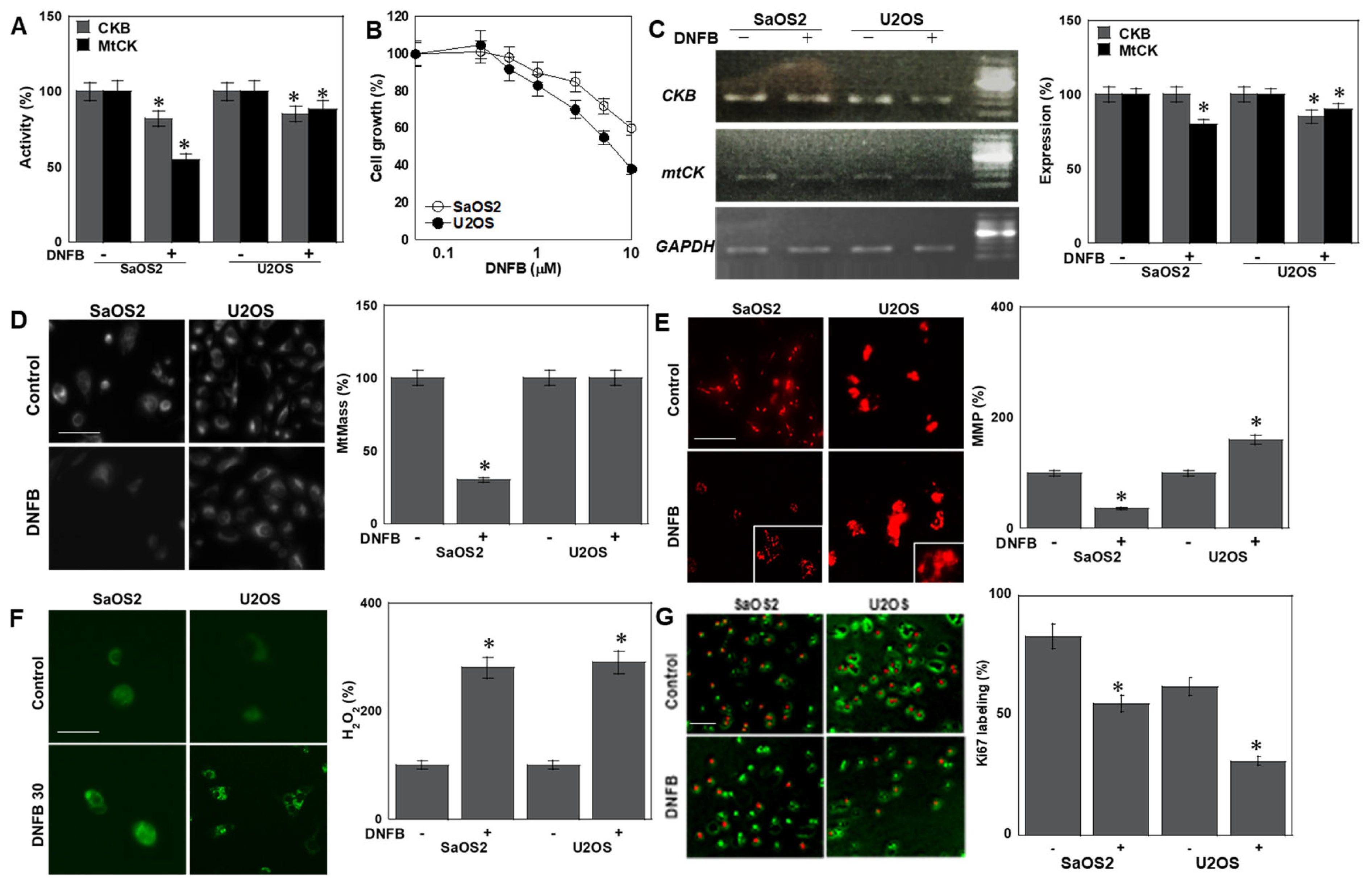
Treatment with DNFB, a pharmacologic CK inhibitor, suppressed the enzymatic activity of both CKB and MTCK, resulting in a dose-dependent reduction in cell proliferation (Figure 1A,B). Additional OS cell lines (HOS and MG63) similarly demonstrated DNFB dose-dependent growth inhibition (Supplementary Figure S2A). DNFB exposure also decreased CKB and MTCK mRNA levels (Figure 1C). Mitochondrial mass (MtMass) was reduced in SaOS2 and HOS cells but remained unchanged in U2OS and MG63 cells (Figure 1D, Supplementary Figure S2B,D). Mitochondrial membrane potential (MMP) decreased in SaOS2 cells yet paradoxically increased in U2OS cells (Figure 1E, Supplementary Figure S2C,D). In contrast, mitochondrial H2O2 production increased in both lines (Figure 1F). The proliferative index, measured by Ki67 staining, was markedly reduced following CK inhibition (Figure 1G). To investigate metabolic differences underlying variable DNFB responses, Seahorse flux analysis was performed, revealing an OXPHOS-dominant phenotype in SaOS2 and HOS, whereas U2OS and MG63 relied more heavily on glycolysis (Supplementary Figure S2E).
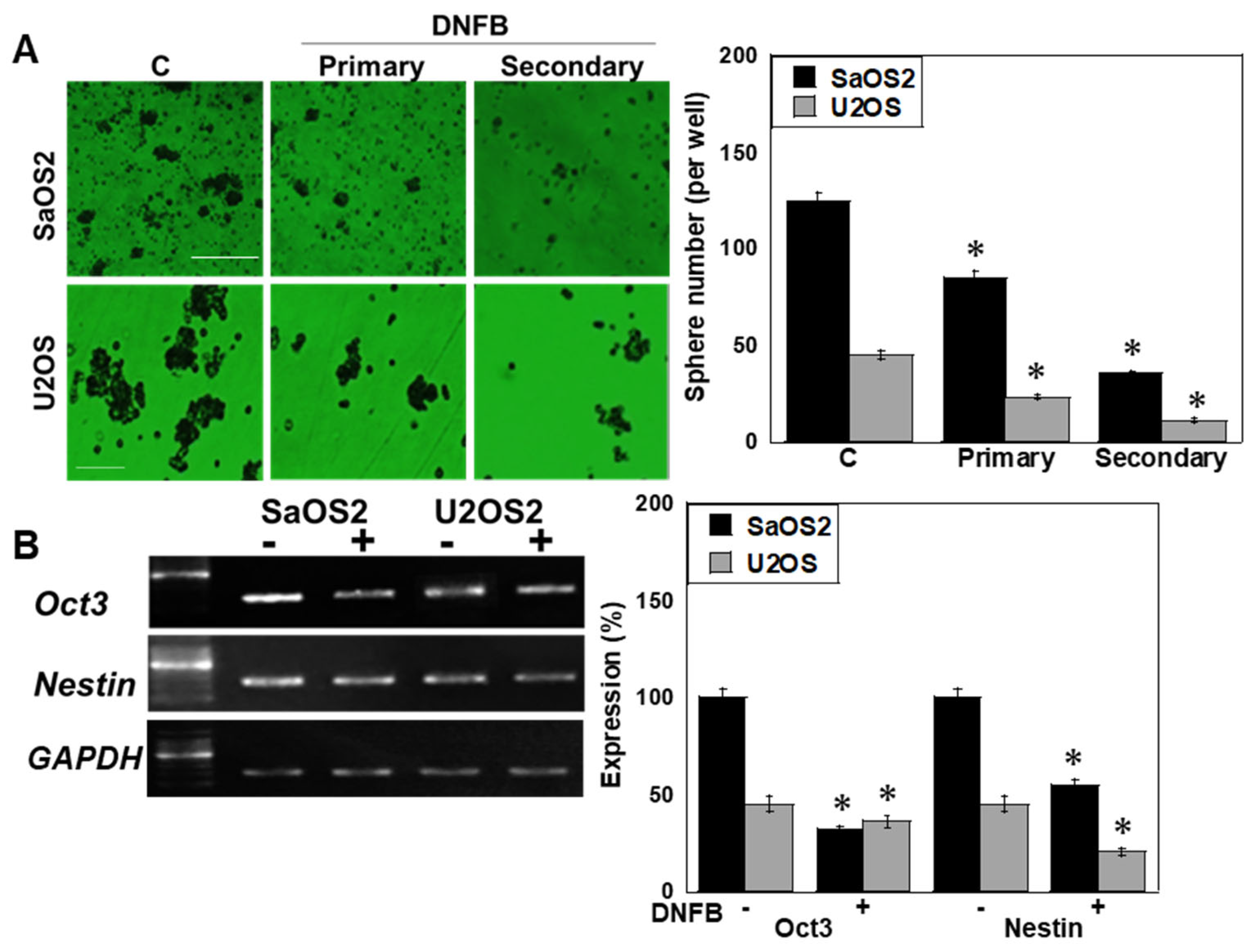
Figure 1. Effects of DNFB-mediated CK inhibition on OS cells. (A,B) DNFB suppressed CKB/MTCK enzymatic activity and reduced cell proliferation in a dose-dependent manner. (C) mRNA expression of CKB and MTCK following DNFB treatment (quantified by RT-PCR). (DF) Effects of DNFB on mitochondria: mitochondrial parameters: mitochondrial mass (MtMass), MMP (E). Inset, high magnificent image, and mitochondrial H2O2 production, assessed by MitoTracker Green, TMRE, and MitoSOX fluorescence, respectively. Scale bar, 50 μm. (G) Labeling index of proliferation index quantified by Ki67 immunofluorescence * p < 0.05 vs. DNFB(−). Error bars: standard deviation of three independent trials. Statistical differences were calculated using ordinary ANOVA with Bonferroni correction. ANOVA, analysis of variance; DNFB, dinitrofluorobenzene; CK, creatine kinase; OS, osteosarcoma; CKB, creatine kinase B; MTCK, mitochondrial creatine kinase; mtMass, mitochondrial mass; MMP, mitochondrial membrane potential. Sphere formation assays revealed that DNFB significantly impaired the clonogenic potential in both cell lines (Figure 2A), accompanied by reduced expression of stemness markers such as POU Class 5 Homeobox 1 (Oct3) and Nestin (Figure 2B).
Ijms 26 11555 g001
Figure 2. Effects of CK inhibition on stemness. (A) Sphere-forming capacity in SaOS2 and U2OS cells following DNFB treatment. Images were taken with a phase-contrast microscope. Scale bar, 100 μm. (B) Expression of stemness markers Oct3 and Nestin assessed by RT-PCR. * p < 0.05 vs. C or DNFB(−). Error bars: standard deviation of three independent trials. Statistical differences were calculated using ordinary ANOVA with Bonferroni correction. ANOVA, analysis of variance; DNFB, dinitrofluorobenzene; CK, creatine kinase; OCT3, POU Class 5 homeobox 1; ACTB, β-actin.
Ijms 26 11555 g002

2.2. Effects of CK Inhibition on Cell Death

DNFB treatment induced apoptosis in both SaOS2 and U2OS cells, with only a modest increase in necrosis (Figure 3A). Cell death was attenuated by the antioxidant N-acetylcysteine (NAC) and the apoptosis inhibitor Z-VAD, and partially by the ER stress inhibitor 4-PBA, but not by inhibitors of ferroptosis (Fer-1) (Figure 3B). Caspase-3 activity was significantly increased following DNFB exposure (Figure 3C). Time-course analysis revealed rapid loss of viability within 60 min after DNFB treatment, occurring more rapidly than with the creatine analog CyC (Figure 3D,E). ATP and NADPH levels sharply declined during this early phase (Figure 3F,G), while ROS levels peaked at 15 min and gradually declined thereafter in parallel with GSH depletion (Figure 3H,I).

2.3. Effects of CK Inhibition on Phosphorylation Signaling

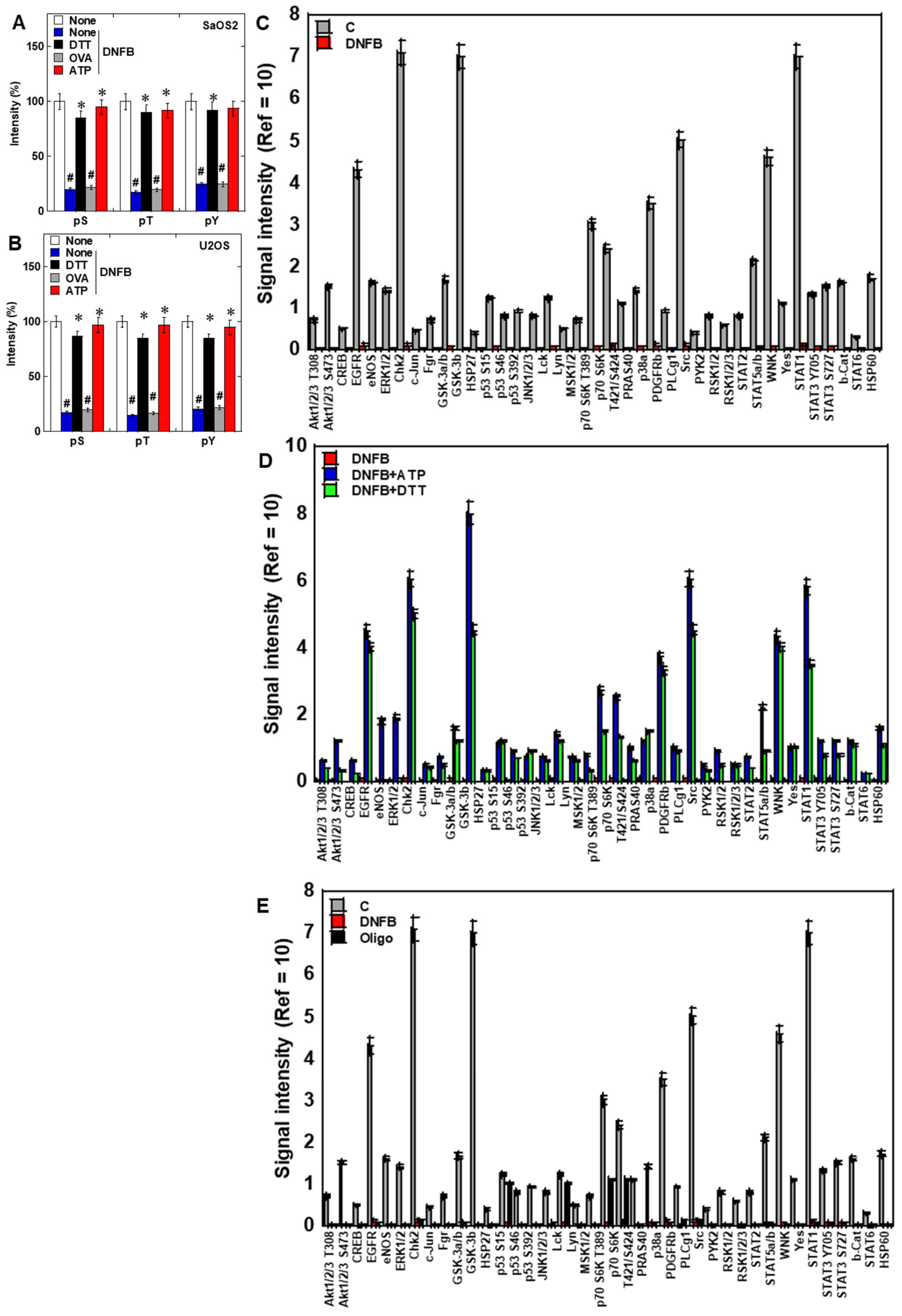
Consistent with our prior report of global suppression phosphorylation suppression following DNFB exposure [23], pan-phosphorylation of serine, threonine, and tyrosine residues decreased by approximately 20% in both OS lines (Figure 4A,B). This reduction was restored by dithiothreitol (DTT) or ATP supplementation but not by phosphatase inhibition with pervanadate. Phospho-protein array profiling demonstrated broad downregulation of 39 signaling proteins, including Akt, extracellular signal-regulated kinase (ERK) 1/2, and signal transducer and activator of transcription (STAT)-3 (Figure 4C). ATP or DTT treatment rescued the phosphorylation, whereas oligomycin recapitulated DNFB effect (Figure 4D,E). Western blotting confirmed that DNFB reduced phosphorylation of Akt (Ser473), ERK1/2, and STAT3 (Tyr705) without altering total protein levels, and ATP supplementation restored phosphorylation (Supplementary Figure S3).

2.4. Isoform-Specific Effects of CK Knockdown

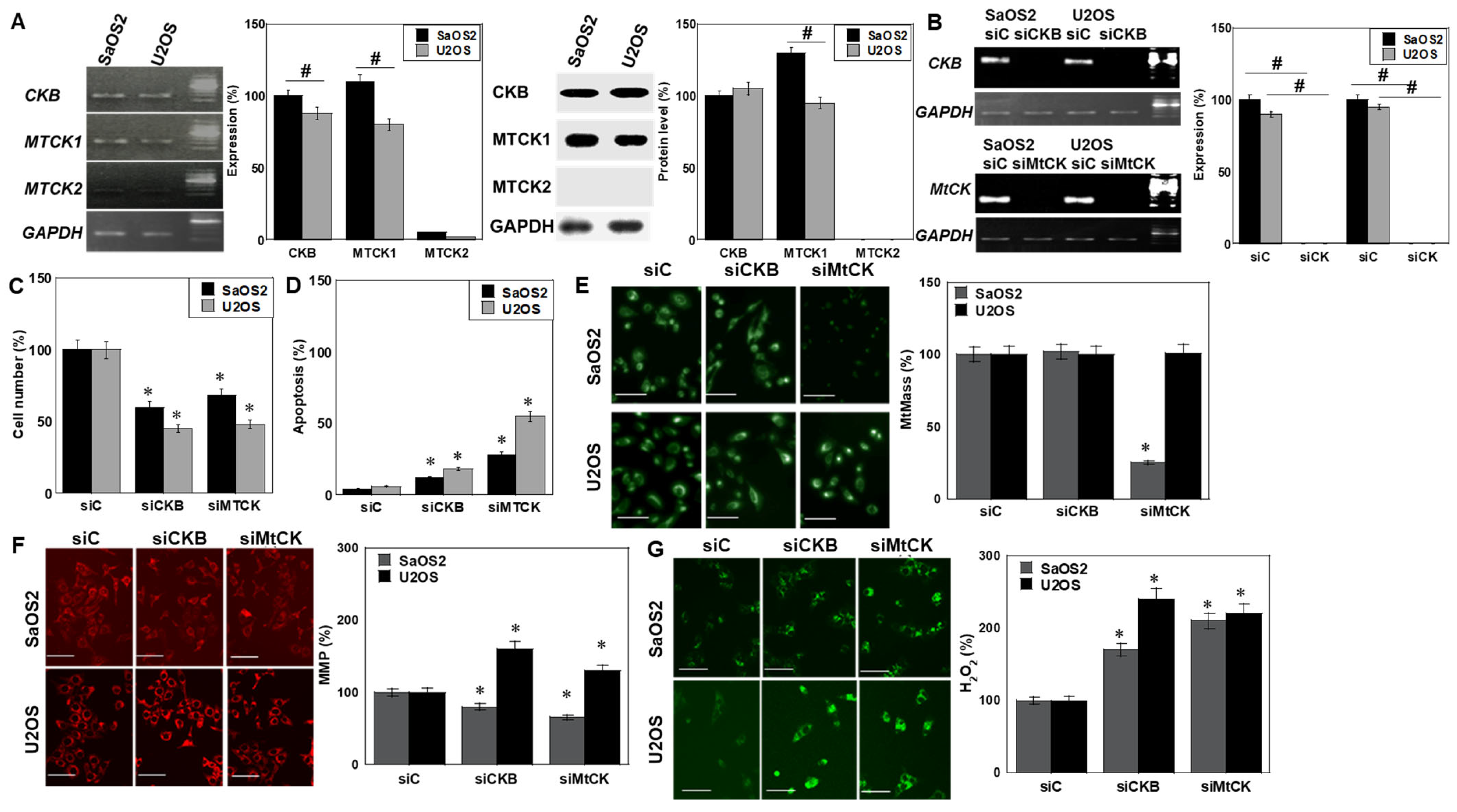
MTCK2 expression was lower than that of CKB and MTCK1 at both mRNA and protein levels (Figure 5A). Knockdown (KD) of either CKB or MTCK1 suppressed cell proliferation in (Figure 5B,C). Apoptosis induction was more pronounced in MTCK1 KD (Figure 5D). In SaOS2 cells, MtMass decreased following MTCK1 KD. MMP was reduced by both KDs in SaOS2 but paradoxically increased in U2OS (Figure 5E,F). Both KDs increased mitochondrial H2O2 levels (Figure 5G).

2.5. CK Specificity of DNFB

Because DNFB is a broadly reactive electrophile, off-target effects could not be excluded. To directly assess CK dependence, we conducted epistasis experiments combining CK ND with DNFB (Supplementary Figure S4). Dual KD of CKB and MTCK1 markedly attenuated DNFB-induced cytotoxicity and apoptosis, supporting CK inhibition as a major mechanism of DNFB action. Differential DNFB responses in multiple OS cell lines were consistent with their distinct metabolic phenotypes (Supplementary Figure S2). These findings demonstrate mechanistic convergence between DNFB and CK KD.

2.6. Effects of CK Inhibition In Vivo

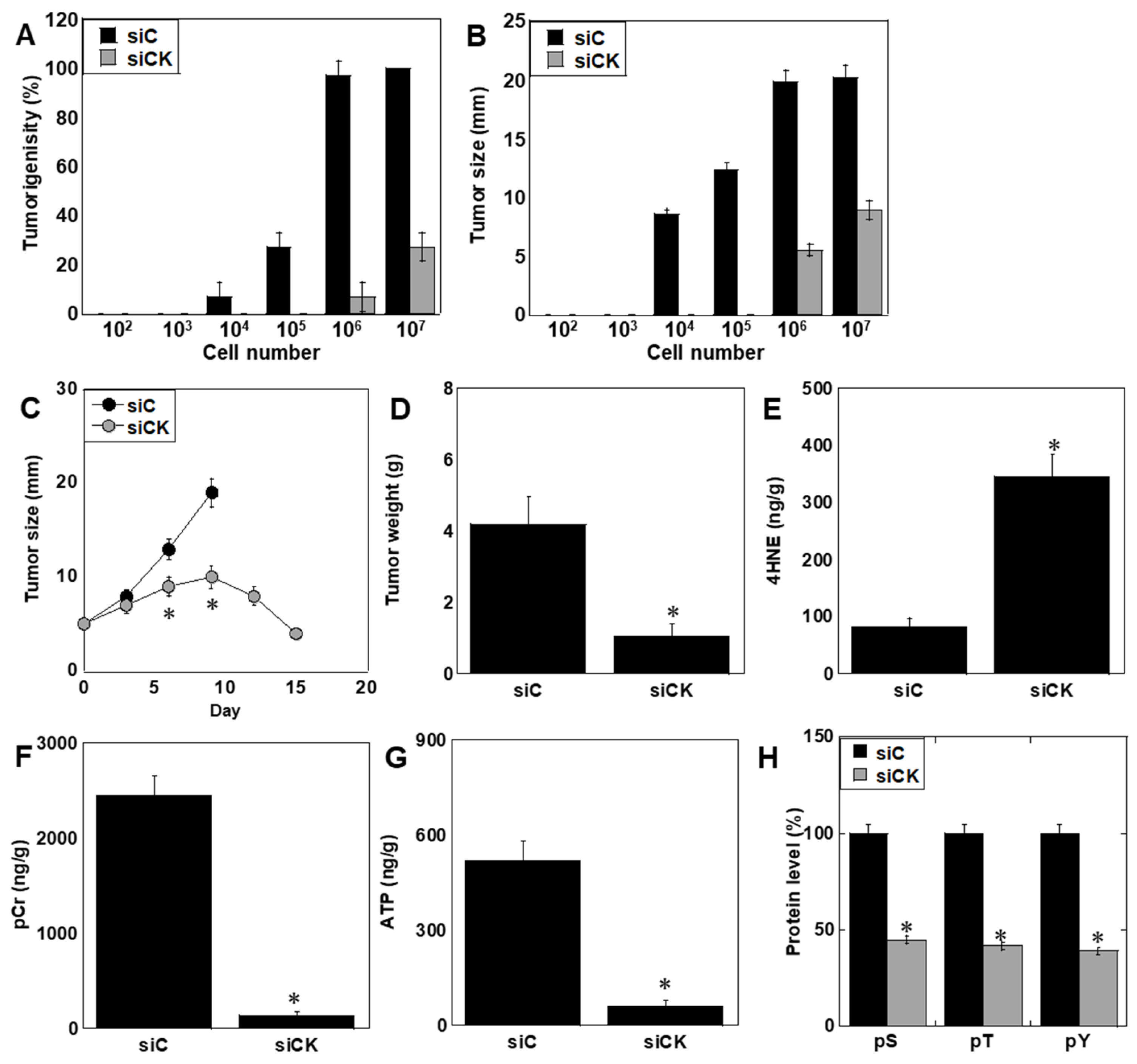
Because DNFB is rapidly inactivated in vivo, xenograft experiments were performed using CK-KD cells. Tumor-initiating capacity was markedly reduced: while control SaOS2 cells formed tumors from injections at as low as 104 cells, CK KD cells required ≥106 cells (Figure 6A). Tumor growth was significantly suppressed in CK KD groups (Figure 6B), and intratumoral siRNA-liposome injection induced tumor regression after day 9 (Figure 6C). CK KD significantly reduced final tumor weight and increased oxidative stress markers (4-HNE), while phosphocreatine, ATP, and global phosphorylation levels were markedly reduced (Figure 6D–H).
Toxicity assessments revealed no significant differences in body weight, organ weight, or serum biochemical parameters (ALT, AST, BUN) between groups (Supplementary Figure S5A–C). MSC-derived osteoblast-like cells (MSC-OB) displayed substantially greater resistance to DNFB than OS cells (IC50: SaOS2 18.2 μM, U2OS 9.3 μM, MSC-OB 95 μM), indicating a potential therapeutic window (Supplementary Figure S5D).
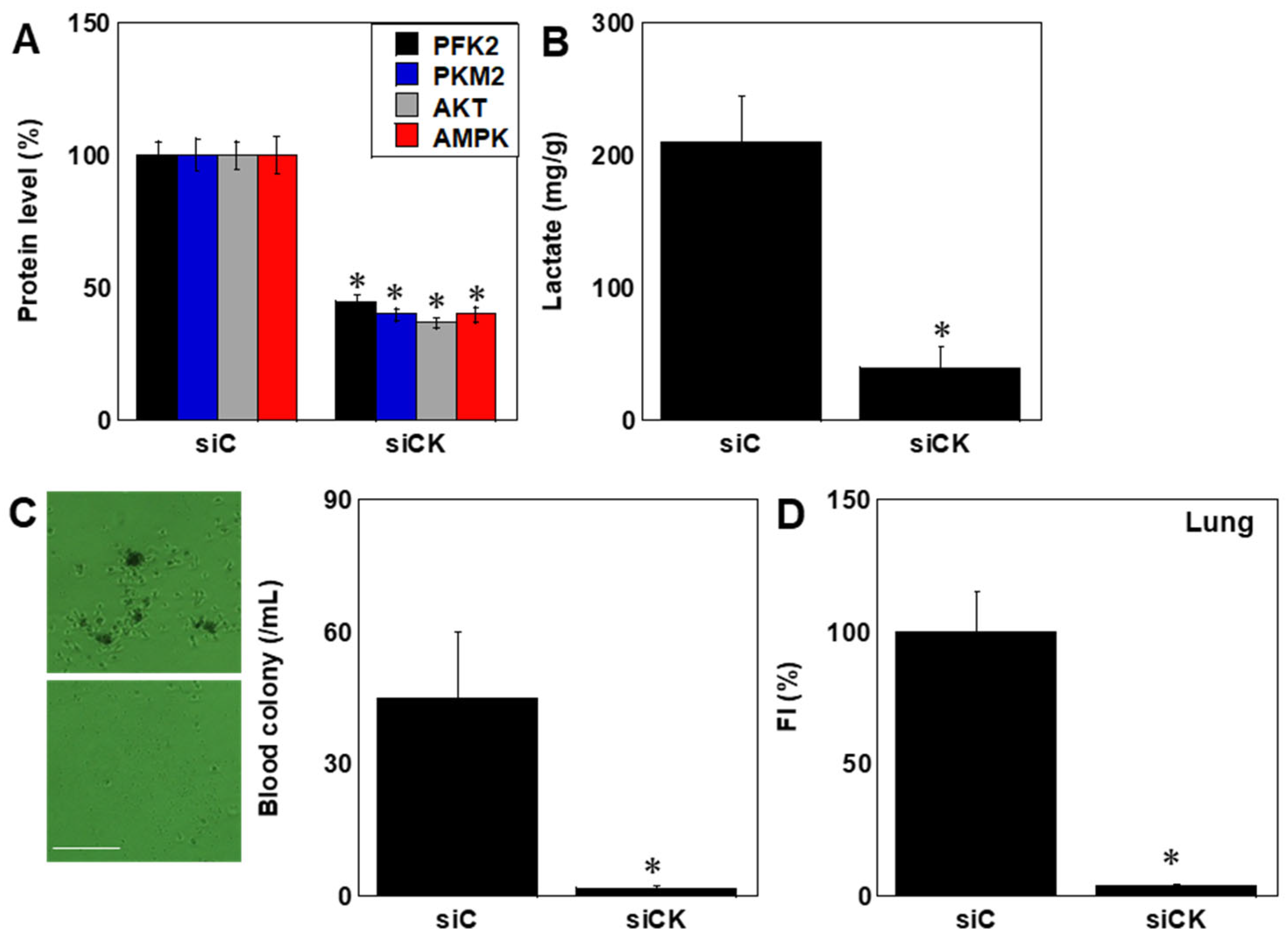
Glycolysis-related enzyme expression and lactate production were also reduced (Figure 7A,B). CK KD preconditioning reduced circulating tumor cells 12 h after tail vein injection and significantly decreased pulmonary colonization by fluorescent OS cells (Figure 7C,D). No significant differences in organ weights were observed between groups (supplementary Figure S5B).

3. Discussion

In this study, we comprehensively evaluated the effects of creatine kinase (CK) inhibition on OS models in vitro and in vivo. CK blockade suppressed cell proliferation, induced ROS-mediated apoptosis, impaired mitochondrial homeostasis, disrupted phosphorylation signaling, diminished stemness, and reduced both tumorigenicity and metastatic potential. These findings highlight the CK–phosphocreatine (PCr) energy-buffering system as a metabolic vulnerability in OS.
DNFB rapidly inhibited the activities of CKB and MTCK, causing an acute reduction in ATP and NADPH within 1 h. This early energetic collapse was accompanied by alterations in mitochondrial membrane potential and increased ROS production, ultimately leading to apoptosis. This effect was attenuated by the antioxidant NAC, indicating that ROS is a central mediator of DNFB-induced cell death. MTCK protects against mitochondrial ROS by facilitating pCr cycling [33]; thus, its inhibition disrupts redox balance, with minimal contribution from necrosis or ferroptosis. These findings support the concept that CK isoforms are essential not only for ATP buffering but also for oxidative stress resistance in OS cells. Previous studies have linked CKB to oncogenic signaling via suppression of the p53/p21/BAX axis and enhancement of BCL2 and MDM2 [29], while MTCK2 has been identified as a marker of poor-prognosis metastasis [34]. Our results provide mechanistic insights into how inhibition of these isoforms promotes ROS-dependent apoptosis.
Distinct mitochondrial responses were observed among OS cell lines: mitochondrial mass and membrane potential decreased in SaOS2 and HOS but increased in U2OS and MG63 cells. Because MTCK interacts with the voltage-dependent anion channel (VDAC) to maintain mitochondrial electrochemical stability [35], differential MTCK sensitivity to DNFB may contribute to these phenotypes. Seahorse analysis demonstrated that SaOS2 and HOS rely predominantly on oxidative phosphorylation (OXPHOS), whereas U2OS and MG63 favor glycolysis. Thus, MTCK inhibition in OXPHOS-dependent lines may trigger mitochondrial dysfunction and apoptosis, whereas glycolytic lines may undergo apoptosis due to ROS-driven hyperpolarization. These trends were reproduced using siRNA-mediated CK knockdown, in which MTCK1 depletion caused more pronounced mitochondrial dysfunction and oxidative stress. MTCK1 and MTCK2 have also been linked to mitochondrial architecture through polyamine metabolism [36], consistent with our findings.
DNFB broadly suppressed the phosphorylation of serine, threonine, and tyrosine residues, and reduced activation of key survival pathways, including Akt, ERK, and STAT3. These effects were reversed by ATP or DTT, but not by phosphatase inhibition, and were recapitulated by oligomycin, indicating that ATP depletion and oxidative stress are the primary mechanisms. Rapid loss of ATP and GSH likely prevents compensatory responses, explaining the more pronounced effects compared to cyclocreatine. Additionally, GSH depletion can enhance CK thiolation and inactivation [37], potentially reinforcing the energy failure cycle. CK knockdown reduced glycolysis-related enzyme expression and lactate production, indicating that glycolysis does not compensate for impaired mitochondrial function. MTCK1 reportedly promotes HK2-dependent glycolysis via JNK-MAPK/JUN signaling [38], consistent with our observation of dual suppression of OXPHOS and glycolysis. This metabolic “quiescence” aligns with reduced stemness, impaired pulmonary colonization, and reduced circulating tumor cells. CKMT1 regulates trophoblast differentiation [39], and phosphocreatine prevents stemness loss by blocking BRD2 ubiquitination [40]. Furthermore, miR-483 and miR-551a suppress CKB to inhibit metastasis [41]. As reviewed by Du et al. [42], redox-sensitive transcription factors such as Nrf2, HIF-1α, FOXO, and STAT3 are key regulators of cancer stemness. Our findings support a framework in which disruption of the CK–pCr energy-buffering system leads to ATP depletion and redox imbalance, attenuating these pro-stemness pathways in OS.
DNFB, used in this study to inhibit CK, has been reported to inactivate enzymes such as fructose diphosphatase through reactions with amines/thiols [43] or cysteine residues [44]. Given that DNFB is a broadly reactive electrophile, off-target effects must be considered. However, dual knockdown of CKB and MTCK1 markedly attenuated DNFB-induced cytotoxicity and apoptosis, supporting CK inhibition as its major mechanism. While DNFB cannot be used clinically due to rapid inactivation and sensitizing/tumor-promoting potential following chronic dermal exposure, our data validate CK as a molecular target and justify the development of selective CK inhibitors or SLC6A8 inhibitors such as RGX-202 for future translational studies [24,25].
Importantly, CK inhibition demonstrated an acceptable safety profile: CK-KD xenografts showed no significant toxicity in body weight, organ weight, or serum chemistry, and MSC-derived osteoblast-like cells were substantially more resistant to DNFB than OS cells, suggesting a therapeutic window. Long-term evaluation in myocardium and neural tissue—high-CK-demand sites—will be needed prior to clinical translation.
Recent investigations support therapeutic targeting of mitochondrial metabolism in OS. OS stem-like subpopulations co-activate glycolysis and OXPHOS and depend on OXPHOS for progression [45,46], and Complex I inhibition has demonstrated efficacy in OS models and early clinical trials [47,48]. Within this framework, the CK–PCr axis represents a complementary metabolic node that integrates mitochondrial output with cytosolic energy demand. Combining CK axis inhibition with mitochondrial inhibitors or redox-modulating therapy may represent a rational strategy for targeting aggressive OS [49,50,51].
Taken together, our findings establish CK-dependent ATP buffering as a metabolic vulnerability in osteosarcoma. Although DNFB was used solely as a tool compound, convergence between DNFB and CK knockdown strongly supports CK inhibition as a rational therapeutic strategy [52]. Future efforts should prioritize the development of selective CK inhibitors or SLC6A8 transport inhibitors such as RGX-202 [49], and the integration of CK-targeted approaches with metabolic or redox-modulating therapies. This metabolism-anchored perspective may facilitate the development of effective treatments for refractory OS.

4. Materials and Methods

4.1. Cell Culture

Human OS cell lines SaOS2, U2OS, HOS, MG63, and human bone marrow-derived mesenchymal stem cell line (hMSC, PCS-500-01) were purchased from the American Type Culture Collection (ATCC; Rockville, MD, USA). Cells were cultured in Dulbecco’s Modified Eagle Medium (DMEM; Nacalai Tesque, Kyoto, Japan) supplemented with 10% fetal bovine serum (Nichirei, Tokyo, Japan) and 50 U/mL penicillin/streptomycin (Nacalai Tesque) under 5% CO2 at 37 °C. Cyclocreatin (CyC, 500 μM, Selleck, Yokohama, Japan), oligomycin (Oligo, 0.5 μM, Selleck), ATP (1 mM, WAKO, Osaka, Japan), and dithiothreitol (DTT, 0.5 mM, WAKO) were obtained from the indicated suppliers.
For osteoblastic differentiation, hMSCs were cultured in MesenCult Osteogenic Differentiation Basal Medium supplemented with MesenCult Osteogenic Diff 5× Supplement (Veritas, Tokyo, Japan) according to the manufacturer’s protocol.
DNFB (Wako, Osaka, Japan) was dissolved in DMSO and used at 5–20 μM, 48 h for exclusively in vitro. This range was selected based on previous studies in colorectal cancer demonstrating that 10 μM DNFB inhibits CK activity and proliferation without causing extensive necrosis in non-tumor cells [23]. DNFB was not administered systemically in vivo because of rapid protein binding and its reported tumor-promoting effects when repeatedly applied at high-dose dermal doses in initiated mouse skin. All in vivo studies employed CK inhibition via siRNA or intratumoral liposomal delivery.

4.2. Cell Viability Assay

Cells (1 × 10⁴ cells/well) were seeded in 96-well plates, cultured overnight, and treated with DNFB (5–20 μM) for 48 h. Viability was measured by MTS tetrazolium assay (Sigma-Aldrich Inc., St. Louis, MO, USA), as previously described [53].

4.3. Cell Death and Apoptosis

Apoptosis and necrosis were evaluated using Cell Meter™ Apoptotic and Necrotic Multiplexing Detection Kit (#22843, AAT Bioquest, Pleasanton, CA, USA). Cells were harvested after treatment, washed twice with cold PBS, and resuspended in 1× binding buffer at a concentration of 1 × 10⁶ cells/mL. Loss of plasma membrane integrity, as demonstrated by the ability of a membrane-impermeable DNA Nuclear Green™ DCS1 (Ex/Em = 490/525 nm) to label the nucleus, represents a straightforward approach to demonstrate late-stage apoptosis and necrosis. In addition, this kit also provides a live cell cytoplasm labeling dye, CytoCalcein™ Violet 450 (Ex/Em = 405/450 nm), for labeling living cell cytoplasm. Samples were analyzed within 1 h using a flow cytometer (BD FACSCanto II, BD Biosciences) equipped with Analyze cells with a flow cytometer with 660/20 nm (for apotosis-APC channel), 530/30 nm (for necrosis-FITC channel) and 450/40 nm emission filter (for healthy cells-Pacific Blue channel) A total of 10,000 events were collected for each sample.

4.4. Cytoimmunochemistry

Cells grown on glass slides (Nunc, Thermo Fisher, Tokyo, Japan) were fixed with 4% paraformaldehyde (4 °C, 1 h) and permeabilized with Triton-X100 (0.2% in PBS, 4 °C, 10 min). Ki67 immunostaining was performed using anti-Ki67 antibody (Abcam, Waltham, MA, USA) labeled with Cyanine 5 dye (AAT Bioquest, Pleasanton, CA, USA). Ki67 labeling index was calculated by counting 500 cells using a BZ-X710 fluorescence microscope (KEYENCE, Osaka, Japan).

4.5. Cell Death Rescue Assay

OS cells were treated with DNFB (10 μM for 48 h) in the presence or absence of the following inhibitors: NAC (WAKO), Z-VAD-FMK (ZVAD, 20 µM; Santa Cruz Biotechnology, Santa Cruz, CA, USA), ferrostatin-1 (FER1, 2 µM; Cayman Chemicals, Ann Arbor, MI, USA), necrostatin-1 (NEC1, Selleck), 4-phenylbutyric acid (4PBA, Tokyo Chemical Institute, Tokyo, Japan). Viability was assessed by MTS assay.

4.6. Sphere Formation Assay

Cells (1 × 10³) were seeded in bacteriological 35-mm dishes (Corning, NY, USA) containing 3D Tumorsphere Medium XF (Sigma-Aldrich). After 5 days, spheres were dissociated with Accutase (Innovative Cell Technologies) and replated (1 × 10³ cells/mL) in ultra-low attachment 6-well plates (Corning). Spheres were imaged on Days 5 and 10, and quantified using ImageJ software (version 1.54, NIH, Bethesda, MD, USA).

4.7. Reverse Transcription-Polymerase Chain Reaction (RT-PCR)

Total RNA (0.5 µg) was extracted using the RNeasy Kit (Qiagen, Germantown, MD, USA). Primers (Table 1) were designed using NCBI Primer-BLAST (version 2.5.0) and validated with Primer3Plus to minimize secondary structure and dimer formation. RT-PCR was performed according to the manufacturer’s protocol, and products were electrophoresed on 2% agarose gels stained with ethidium bromide. DNase digestion was not performed, as the purpose was to analyze total cellular RNA rather than extracellular contaminating DNA.

4.8. Mitochondrial Imaging

Cells were seeded in 6-well plates (1 × 105 cells/well), treated with or without DNFB (10 µM for 48 h), and stained with dihydrorhodamine 123 (DHR123; 10 mM for mitochondrial H2O2), tetramethylrhodamine ethyl ester (TMRE, 0.5 µM; for mitochondrial membrane potential, MMP), and MitoGreen (200 µM; for mitochondrial mass, MtMass) in the dark at 37 °C for 30 min. Fluorescence images were acquired using BZ-X700 fluorescence microscope (KEYENCE). Quantification of signal intensities was performed using ImageJ software (version 1.54, NIH, Bethesda, MD, USA).

4.9. Protein Extraction

Whole-cell protein lysates were prepared using RIPA buffer supplemented with 0.1% sodium dodecyl sulfate (SDS) (Thermo Fisher Scientific, Tokyo, Japan), following our previously published protocol [53]. Samples were stored at −80 °C until use. Protein concentrations were quantified using the Protein Assay Rapid Kit (Wako Pure Chemical Industries, Osaka, Japan).

4.10. Enzyme-Linked Immunosorbent Assay

Enzyme-linked immunosorbent assay (ELISA) kits were used to measure the protein levels and enzyme activities from the extracted samples according to manufacturer’s instructions (Table 1). All assays were performed using whole-cell lysates.

4.11. Phosphorylated Protein Profiling

Phospho-protein profiling was performed using the Proteome Profiler Human Phospho-Kinase Array Kit (ARY003C, R&D Systems, Minneapolis, MN, USA) according to the manufacturer’s instructions. This membrane-based sandwich immunoassay uses immobilized capture antibodies spotted in duplicate on nitrocellulose membranes to detect phosphorylated signaling proteins. Captured proteins were detected using biotinylated secondary antibodies and chemiluminescent substrate. Signal intensity was proportional to relative phosphorylation levels.

4.12. Immunoblot Analysis

For Western blotting, 10 μg of protein lysate per sample was resolved by SDS-PAGE (10% gel) and transferred onto nitrocellulose membranes. Membranes were incubated with primary antibodies listed in Table 1, followed by peroxidase-conjugated secondary antibody (P0217, Dako). Signals were visualized with Fusion Solo S imaging system (M&S Instruments Inc., Osaka, Japan).
For dot blotting, lysates (1 μg/10 µL TBSB) were applied to nitrocellulose using a Bio-Dot SF Microfiltration Apparatus (#1706542, Bio-Rad, Tokyo, Japan), dried, and processed similarly to Western blots.

4.13. Knockdown Assay

CKB and MTCK1 were knocked down using siRNA (siCKB and siMTCK1, respectively; Santa Cruz Biotechnology Inc., Santa Cruz, CA, USA); control cells were transfected with non-targeting siRNA (siC). siRNA (50 nM for 2 × 10⁵ cells) was diluted in transfection solution according to manufacturer’s instructions. Gene expression was analyzed 48 h post-transfection.

4.14. Animals

Four-week-old BALB/c Slc-nu/nu mice were purchased from SLC Japan Inc. (Shizuoka, Japan). The animals were maintained and subjected to experiments in accordance with the institutional guidelines approved by the Committee for Animal Experimentation of Nara Medical University and the current regulations and standards of the Ministry of Health, Labour, and Welfare of Japan (approval nos. 12807, 28 May 2020, and 13093, 20 June 2021). Animals were acclimated to their housing for 7 days before the start of the experiment.

4.15. Animal Tumor Models

For the tumorigenesis assessment, SaOS2 cells (1 × 10⁷ cells/mouse), pretreated with siCK (siCKB + siMTCK1) or siC, were injected subcutaneously into nude mice (n = 10 per group). Tumor formation and growth were evaluated 4 weeks post-inoculation.
For local siRNA delivery, SaOS2 xenografts were established (1 × 10⁷ cells/mouse), and after tumors reached 5 mm diameter, liposomes containing siCK or siC (50 nM, 50 μL total volume) were injected intratumorally twice weekly using a 27-gauge needle.
For lung colonization experiments, SaOS2 cells were labeled with PKH26 (Sigma-Aldrich) and injected via tail vein (1 × 10⁶ cells/mouse). At 12 h, circulating tumor cells (CTCs) were isolated by dextran sedimentation and expanded in culture for colony counting. At 2 weeks, lungs were harvested for fluorescence imaging using the IVIS Spectrum system (Summit Pharmaceutical International, Tokyo, Japan). Group size calculations were performed using EZR software (v4.3.1, Jichi University Hospital).

4.16. Statistical Analysis

Statistical significance was performed using ordinary one-way ANOVA with Bonferroni correction (InStat 3.1, GraphPad, Los Angeles, CA, USA). Data are presented as mean ± SD. A two-sided p-value < 0.05 was considered to indicate statistical significance.

5. Conclusions

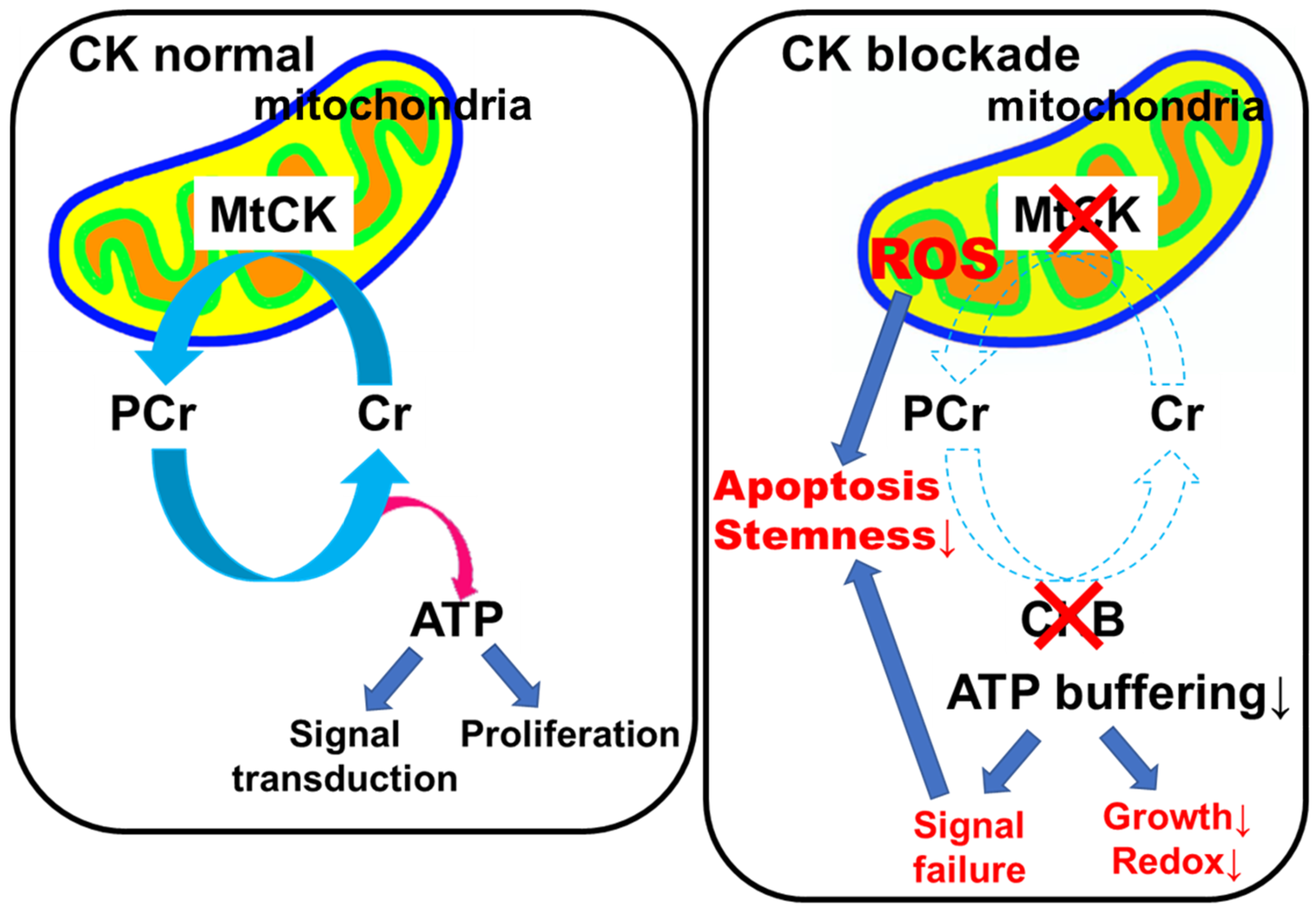
Creatine kinase (CK) blockade disables the phosphocreatine (pCr) energy shuttle in cancer cells, leading to ATP-buffering failure, mitochondrial and oxidative stress, apoptosis, and reduced stemness and motility. In vivo, CK inhibition suppressed tumor growth and dissemination, supporting CK axis disruption as an actionable metabolic vulnerability in osteosarcoma (Figure 8).

Supplementary Materials

The following supporting information can be downloaded at: https://www.mdpi.com/article/10.3390/ijms262311555/s1.

Author Contributions

Study concept and design, H.K.; data investigation, S.K., R.S., Y.L., K.G., Y.M., I.K., R.N. and S.N.; data analysis, S.K., R.S., H.O., K.F., T.S., Y.N. and R.O.; supervision, K.H. and R.F.-T.; drafting of the manuscript, S.K.; editing of the manuscript, H.K. All authors have read and agreed to the published version of the manuscript.

Funding

This work was supported by MEXT KAKENHI Grant Numbers 24K14281 (YL), 25K14462 (RFT), 23K10481 (HO), and 25K22766 (HK).

Institutional Review Board Statement

Animal experiments were performed in accordance with the institutional guidelines approved by the Committee for Animal Experimentation of Nara Medical University, Kashihara, Japan, following current regulations and standards of the Japanese Ministry of Health, Labor and Welfare (approval nos. 12807 and 13093, 28 May 2020 and 20 June 2021, respectively).

Informed Consent Statement

Not applicable.

Data Availability Statement

Data is contained within the article.

Acknowledgments

The authors thank Tomomi Nitta for expert assistance with the preparation of this manuscript.

Conflicts of Interest

The authors declare no conflicts of interest.

Abbreviations

CKcreatinine kinase
CKBcreatinine kinase
MTCKmitochondrial creatinine kinase
DNFBdinitrofluorobenzene
OSosteosarcoma
pCrphosphocreatine
ROSreactive oxygen species
CyCcyclocreatine
KDknockdown
VDACvoltage-dependent anion channel
oct3POU Class 5 Homeobox 1
pSPhosphoserine
pTPhosphothereonine
pYphosphotyrosine
sismall interfering RNA
siCnegative control siRNA
AMPKα15′-AMP-Activated Protein Kinase Catalytic Subunit Alpha-1
PKM2pyruvate kinase M2
PFKFB26-Phosphofructo-2-Kinase/Fructose-2,6-Bisphosphatase 2
NADPHnicotinamide adenine dinucleotide phosphate
ATPadenosine triphosphate
4HNE4-hydroxynonenal
GSHglutathione

References

  1. Ritter, J.; Bielack, S.S. Osteosarcoma. Ann. Oncol. 2010, 21 (Suppl. 7), vii320–vii325. [Google Scholar] [CrossRef]
  2. Yoshida, A. Osteosarcoma: Old and New Challenges. Surg. Pathol. Clin. 2021, 14, 567–583. [Google Scholar] [CrossRef] [PubMed]
  3. Strauss, S.J.; Frezza, A.M.; Abecassis, N.; Bajpai, J.; Bauer, S.; Biagini, R.; Bielack, S.; Blay, J.Y.; Bolle, S.; Bonvalot, S.; et al. Bone sarcomas: ESMO-EURACAN-GENTURIS-ERN PaedCan Clinical Practice Guideline for diagnosis, treatment and follow-up. Ann. Oncol. 2021, 32, 1520–1536. [Google Scholar] [CrossRef] [PubMed]
  4. Smeland, S.; Bielack, S.S.; Whelan, J.; Bernstein, M.; Hogendoorn, P.; Krailo, M.D.; Gorlick, R.; Janeway, K.A.; Ingleby, F.C.; Anninga, J.; et al. Survival and prognosis with osteosarcoma: Outcomes in more than 2000 patients in the EURAMOS-1 (European and American Osteosarcoma Study) cohort. Eur. J. Cancer 2019, 109, 36–50. [Google Scholar] [CrossRef]
  5. Koppenol, W.H.; Bounds, P.L.; Dang, C.V. Otto Warburg’s contributions to current concepts of cancer metabolism. Nat. Rev. Cancer 2011, 11, 325–337. [Google Scholar] [CrossRef] [PubMed]
  6. Bonilla, D.A.; Kreider, R.B.; Stout, J.R.; Forero, D.A.; Kerksick, C.M.; Roberts, M.D.; Rawson, E.S. Metabolic Basis of Creatine in Health and Disease: A Bioinformatics-Assisted Review. Nutrients 2021, 13, 1238. [Google Scholar] [CrossRef]
  7. Sumien, N.; Shetty, R.A.; Gonzales, E.B. Creatine, Creatine Kinase, and Aging. Subcell. Biochem. 2018, 90, 145–168. [Google Scholar]
  8. Yan, Y.B. Creatine kinase in cell cycle regulation and cancer. Amino Acids 2016, 48, 1775–1784. [Google Scholar] [CrossRef]
  9. Loo, J.M.; Scherl, A.; Nguyen, A.; Man, F.Y.; Weinberg, E.; Zeng, Z.; Saltz, L.; Paty, P.B.; Tavazoie, S.F. Extracellular metabolic energetics can promote cancer progression. Cell 2015, 160, 393–406. [Google Scholar] [CrossRef]
  10. Lu, Y.; Zhang, P.; Chen, H.; Tong, Q.; Wang, J.; Li, Q.; Tian, C.; Yang, J.; Li, S.; Zhang, Z.; et al. Cytochalasin Q exerts anti-melanoma effect by inhibiting creatine kinase B. Toxicol. Appl. Pharmacol. 2022, 441, 115971. [Google Scholar] [CrossRef]
  11. Li, L.; Chen, Y.; Gibson, S.B. Starvation-induced autophagy is regulated by mitochondrial reactive oxygen species leading to AMPK activation. Cell Signal 2013, 25, 50–65. [Google Scholar] [CrossRef] [PubMed]
  12. Wang, Z.; Hulsurkar, M.; Zhuo, L.; Xu, J.; Yang, H.; Naderinezhad, S.; Wang, L.; Zhang, G.; Ai, N.; Li, L.; et al. CKB inhibits epithelial-mesenchymal transition and prostate cancer progression by sequestering and inhibiting AKT activation. Neoplasia 2021, 23, 1147–1165. [Google Scholar] [CrossRef] [PubMed]
  13. Su, Y. Three-dimensional network of creatine metabolism: From intracellular energy shuttle to systemic metabolic regulatory switch. Mol. Metab. 2025, 100, 102228. [Google Scholar] [CrossRef] [PubMed]
  14. Schlattner, U.; Kay, L.; Tokarska-Schlattner, M. Mitochondrial Proteolipid Complexes of Creatine Kinase. Subcell. Biochem. 2018, 87, 365–408. [Google Scholar]
  15. Datler, C.; Pazarentzos, E.; Mahul-Mellier, A.L.; Chaisaklert, W.; Hwang, M.S.; Osborne, F.; Grimm, S. CKMT1 regulates the mitochondrial permeability transition pore in a process that provides evidence for alternative forms of the complex. J. Cell Sci. 2014, 127 Pt 8, 1816–1828. [Google Scholar] [CrossRef]
  16. Wallimann, T.; Tokarska-Schlattner, M.; Schlattner, U. The creatine kinase system and pleiotropic effects of creatine. Amino Acids 2011, 40, 1271–1296. [Google Scholar] [CrossRef]
  17. Béard, E.; Braissant, O. Synthesis and transport of creatine in the CNS: Importance for cerebral functions. J. Neurochem. 2010, 115, 297–313. [Google Scholar] [CrossRef]
  18. Hemmer, W.; Wallimann, T. Functional aspects of creatine kinase in brain. Dev. Neurosci. 1993, 15, 249–260. [Google Scholar] [CrossRef]
  19. Patel, R.; Ford, C.A.; Rodgers, L.; Rushworth, L.K.; Fleming, J.; Mui, E.; Zhang, T.; Watson, D.; Lynch, V.; Mackay, G.; et al. Cyclocreatine Suppresses Creatine Metabolism and Impairs Prostate Cancer Progression. Cancer Res. 2022, 82, 2565–2575. [Google Scholar] [CrossRef]
  20. Martin, K.J.; Winslow, E.R.; Kaddurah-Daouk, R. Cell cycle studies of cyclocreatine, a new anticancer agent. Cancer Res. 1994, 54, 5160–5165. [Google Scholar]
  21. Kristensen, C.A.; Askenasy, N.; Jain, R.K.; Koretsky, A.P. Creatine and cyclocreatine treatment of human colon adenocarcinoma xenografts: 31P and 1H magnetic resonance spectroscopic studies. Br. J. Cancer 1999, 79, 278–285. [Google Scholar] [CrossRef]
  22. Ohira, Y.; Inoue, N. Effects of creatine and beta-guanidinopropionic acid on the growth of Ehrlich ascites tumor cells: Ip injection and culture study. Biochim. Biophys. Acta 1995, 1243, 367–372. [Google Scholar] [CrossRef] [PubMed]
  23. Kita, M.; Fujiwara-Tani, R.; Kishi, S.; Mori, S.; Ohmori, H.; Nakashima, C.; Goto, K.; Sasaki, T.; Fujii, K.; Kawahara, I.; et al. Role of creatine shuttle in colorectal cancer cells. Oncotarget 2023, 14, 485–501. [Google Scholar] [CrossRef] [PubMed]
  24. Darabedian, N.; Ji, W.; Fan, M.; Lin, S.; Seo, H.S.; Vinogradova, E.V.; Yaron, T.M.; Mills, E.L.; Xiao, H.; Senkane, K.; et al. Depletion of creatine phosphagen energetics with a covalent creatine kinase inhibitor. Nat. Chem. Biol. 2023, 19, 815–824. [Google Scholar] [CrossRef] [PubMed]
  25. Katz, J.L.; Geng, Y.; Billingham, L.K.; Sadagopan, N.S.; DeLay, S.L.; Subbiah, J.; Chia, T.Y.; McManus, G.; Wei, C.; Wang, H.; et al. A covalent creatine kinase inhibitor ablates glioblastoma migration and sensitizes tumors to oxidative stress. Sci. Rep. 2024, 14, 21959. [Google Scholar] [CrossRef]
  26. Del Franco, A.; Ambrosio, G.; Baroncelli, L.; Pizzorusso, T.; Barison, A.; Olivotto, I.; Recchia, F.A.; Lombardi, C.M.; Metra, M.; Ferrari Chen, Y.F.; et al. Creatine deficiency and heart failure. Heart Fail. Rev. 2022, 27, 1605–1616. [Google Scholar] [CrossRef]
  27. Zhang, H.; To, K.K.W. Serum creatine kinase elevation following tyrosine kinase inhibitor treatment in cancer patients: Symptoms, mechanism, and clinical management. Clin. Transl. Sci. 2024, 17, e70053. [Google Scholar] [CrossRef]
  28. Li, R.Z.; Pan, G.Q.; Xiong, C.; Ding, Z.N.; Zhang, T.S.; Yan, L.J.; Wang, D.; Zhang, X.; Dong, X.F.; Yan, Y.C.; et al. Hypoxia-Induced Creatine Uptake Reprograms Metabolism to Antagonize PARP1-Mediated Cell Death and Facilitate Tumor Progression in Hepatocellular Carcinoma. Cancer Res. 2025, 85, 3671–3688, Online ahead of print. [Google Scholar] [CrossRef]
  29. Maldve, R.E.; Fischer, S.M. Tumor-promoting activity of 2,4-dinitrofluorobenzene. Int. J. Cancer 1995, 60, 545–553. [Google Scholar] [CrossRef]
  30. Geng, Y.; DeLay, S.L.; Chen, X.; Miska, J. It Is Not Just About Storing Energy: The Multifaceted Role of Creatine Metabolism on Cancer Biology and Immunology. Int. J. Mol. Sci. 2024, 25, 13273. [Google Scholar] [CrossRef]
  31. Sömjen, D.; Kaye, A.M. Stimulation by insulin-like growth factor-I of creatine kinase activity in skeletal-derived cells and tissues of male and female rats. J. Endocrinol. 1994, 143, 251–259. [Google Scholar] [CrossRef]
  32. Zhang, L.; Bu, P. The two sides of creatine in cancer. Trends Cell Biol. 2022, 32, 380–390. [Google Scholar] [CrossRef] [PubMed]
  33. Meyer, L.E.; Machado, L.B.; Santiago, A.P.; da-Silva, W.S.; De Felice, F.G.; Holub, O.; Oliveira, M.F.; Galina, A. Mitochondrial creatine kinase activity prevents reactive oxygen species generation: Antioxidant role of mitochondrial kinase-dependent ADP re-cycling activity. J. Biol. Chem. 2006, 281, 37361–37371. [Google Scholar] [CrossRef] [PubMed]
  34. Hong, X.; Fu, R. Construction of a 5-gene prognostic signature based on oxidative stress related genes for predicting prognosis in osteosarcoma. PLoS ONE 2023, 18, e0295364. [Google Scholar] [CrossRef]
  35. Lemeshko, V.V. VDAC electronics: 3. VDAC-Creatine kinase-dependent generation of the outer membrane potential in respiring mitochondria. Biochim. Biophys. Acta 2016, 1858, 1411–1418. [Google Scholar] [CrossRef]
  36. Bordin, L.; Vargiu, C.; Clari, G.; Brunati, A.M.; Colombatto, S.; Salvi, M.; Grillo, M.A.; Toninello, A. Phosphorylation of recombinant human spermidine/spermine N(1)-acetyltransferase by CK1 and modulation of its binding to mitochondria: A comparison with CK2. Biochem. Biophys. Res. Commun. 2002, 290, 463–468. [Google Scholar] [CrossRef]
  37. Miller, R.M.; Sies, H.; Park, E.M.; Thomas, J.A. Phosphorylase and creatine kinase modification by thiol-disulfide exchange and by xanthine oxidase-initiated S-thiolation. Arch. Biochem. Biophys. 1990, 276, 355–363. [Google Scholar] [CrossRef]
  38. Mi, Y.; Li, Q.; Liu, B.; Wang, D.; Liu, Z.; Wang, T.; Wang, Y.; Zang, Y.; Zhou, Y.; Wen, Y.; et al. Ubiquitous mitochondrial creatine kinase promotes the progression of gastric cancer through a JNK-MAPK/JUN/HK2 axis regulated glycolysis. Gastric Cancer 2023, 26, 69–81, Erratum in Gastric Cancer 2024, 27, 646–648. [Google Scholar] [CrossRef]
  39. Wang, L.J.; Chen, C.P.; Lee, Y.S.; Ng, P.S.; Chang, G.D.; Pao, Y.H.; Lo, H.F.; Peng, C.H.; Cheong, M.L.; Chen, H. Functional antagonism between ΔNp63α and GCM1 regulates human trophoblast stemness and differentiation. Nat. Commun. 2022, 13, 1626. [Google Scholar] [CrossRef]
  40. Chen, L.; Qi, Q.; Jiang, X.; Wu, J.; Li, Y.; Liu, Z.; Cai, Y.; Ran, H.; Zhang, S.; Zhang, C.; et al. Phosphocreatine Promotes Epigenetic Reprogramming to Facilitate Glioblastoma Growth Through Stabilizing BRD2. Cancer Discov. 2024, 14, 1547–1565. [Google Scholar] [CrossRef]
  41. Sullivan, W.J.; Christofk, H.R. The metabolic milieu of metastases. Cell 2015, 160, 363–364. [Google Scholar] [CrossRef] [PubMed]
  42. Du, M.; Zhang, J.; Wicha, M.S.; Luo, M. Redox regulation of cancer stem cells: Biology and therapeutic implications. Med. Comm. Oncol. 2024, 3, e70005. [Google Scholar] [CrossRef]
  43. Tokumura, K.; Fukasawa, K.; Ichikawa, J.; Sadamori, K.; Hiraiwa, M.; Hinoi, E. PDK1-dependent metabolic reprogramming regulates stemness and tumorigenicity of osteosarcoma stem cells through ATF3. Cell Death Dis. 2025, 16, 574. [Google Scholar] [CrossRef]
  44. Eisen, H.N.; Belmam, S. Studies of hypersensitivity to low molecular weight substances. II. Reactions of some allergenic substituted dinitrobenzenes with cysteine or cystine of skin proteins. J. Exp. Med. 1953, 98, 533–549. [Google Scholar] [CrossRef]
  45. Cao, J.; Zhang, H.; Wang, C.; He, L.; Li, Y.; Wang, Z.; Li, X.; Aziz, F.; Yang, M.; Zhu, X. Demethylzeylasteral inhibits osteosarcoma cell proliferation by regulating METTL17-mediated mitochondrial oxidative phosphorylation. Toxicol. Appl. Pharmacol. 2025, 499, 117348. [Google Scholar] [CrossRef]
  46. Zheng, J.; Wang, Q.; Chen, J.; Cai, G.; Zhang, Z.; Zou, H.; Zou, J.X.; Liu, Q.; Ji, S.; Shao, G.; et al. Tumor mitochondrial oxidative phosphorylation stimulated by the nuclear receptor RORγ represents an effective therapeutic opportunity in osteosarcoma. Cell Rep. Med. 2024, 5, 101519. [Google Scholar] [CrossRef]
  47. Yap, T.A.; Ahnert, J.R.; Piha-Paul, S.A.; Fu, S.; Janku, F.; Karp, D.D.; Naing, A.; Dumbrava, E.E.I.; Pant, S.; Subbiah, V.; et al. Phase I trial of IACS-010759 (IACS), a potent, selective inhibitor of complex I of the mitochondrial electron transport chain, in patients (pts) with advanced solid tumors. J. Clin. Oncol. 2019, 37, 3014. [Google Scholar] [CrossRef]
  48. Jewell, B.E.; Xu, A.; Zhu, D.; Huang, M.F.; Lu, L.; Liu, M.; Underwood, E.L.; Park, J.H.; Fan, H.; Gingold, J.A.; et al. Patient-derived iPSCs link elevated mitochondrial respiratory complex I function to osteosarcoma in Rothmund-Thomson syndrome. PLoS Genet. 2021, 17, e1009971. [Google Scholar] [CrossRef]
  49. Zhou, F.; Dou, X.; Li, C. CKB affects human osteosarcoma progression by regulating the p53 pathway. Am. J. Cancer Res. 2022, 12, 4652–4665. [Google Scholar]
  50. Zhang, W.; Lyu, P.; Andreev, D.; Jia, Y.; Zhang, F.; Bozec, A. Hypoxia-immune-related microenvironment prognostic signature for osteosarcoma. Front. Cell Dev. Biol. 2022, 10, 974851. [Google Scholar] [CrossRef]
  51. Kurth, I.; Yamaguchi, N.; Andreu-Agullo, C.; Tian, H.S.; Sridhar, S.; Takeda, S.; Gonsalves, F.C.; Loo, J.M.; Barlas, A.; Manova-Todorova, K.; et al. Therapeutic targeting of SLC6A8 creatine transporter suppresses colon cancer progression and modulates human creatine levels. Sci. Adv. 2021, 7, eabi7511. [Google Scholar] [CrossRef]
  52. Martin, K.J.; Chen, S.F.; Clark, G.M.; Degen, D.; Wajima, M.; Von Hoff, D.D.; Kaddurah-Daouk, R. Evaluation of creatine analogues as a new class of anticancer agents using freshly explanted human tumor cells. J. Natl. Cancer Inst. 1994, 86, 608–613. [Google Scholar] [CrossRef]
  53. Kuniyasu, H.; Oue, N.; Wakikawa, A.; Shigeishi, H.; Matsutani, N.; Kuraoka, K.; Ito, R.; Yokozaki, H.; Yasui, W. Expression of receptors for advanced glycation end-products (RAGE) is closely associated with the invasive and metastatic activity of gastric cancer. J. Pathol. 2002, 196, 163–170. [Google Scholar] [CrossRef]
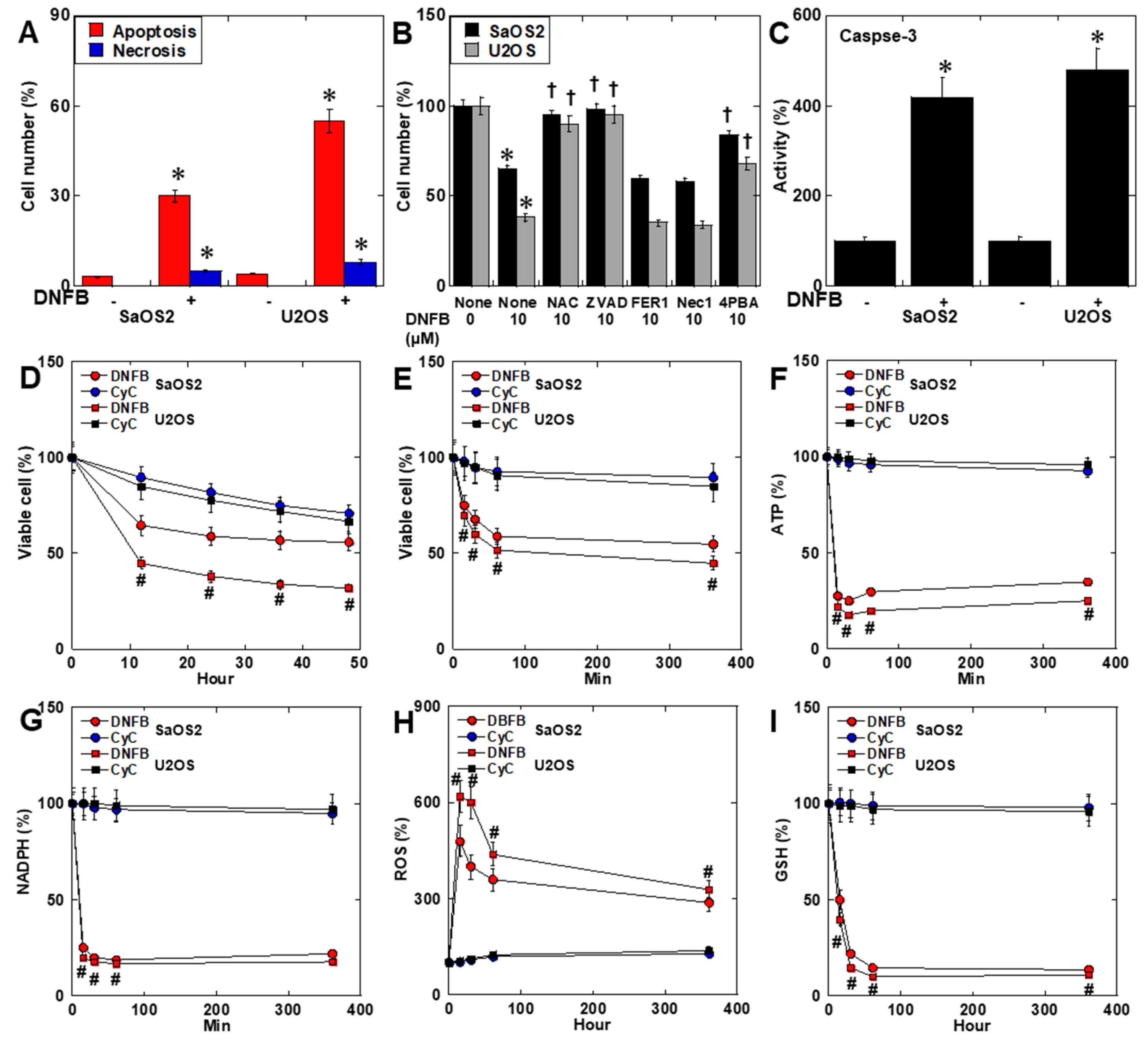
Figure 3. DNFB-induced cell death. (A) Apoptosis and necrosis evaluated using by Cell MeterTM flowcytometric cell death detection kit. (B) Cell death rescue assay using: NAC, Z-VAD-FMK, Fer-1, and 4PBA. (C) Caspase-3 activity. (D,E) Time-course comparison of viability loss induced by DNFB and cyclocreatine (CyC, 500 μM). (FI) Early decrease in ATP and NADPH levels, transient increase in ROS (4HNE), and progressive GSH depletion, evaluated by ELISA kits. * p < 0.05 vs. DNFB(−) or None/DNFB(−) or CyC.  p < 0.05 vs. None/DNFB (10), # p < 0.05 vs. CyC (both cell types). Data represent mean ± SD of three independent experiments. Statistical differences were calculated using ordinary ANOVA with Bonferroni correction. ANOVA, analysis of variance; DNFB, dinitrofluorobenzene; NAC, N-acetylcysteine; ZVAD, Z-VAD-FMK; FER1, ferrostatin-1; NEC1, necrostatin-1; 4PBA, 4-Phenylbutyric acid; CyC, cyclocreatine; NADPH, nicotinamide adenine dinucleotide phosphate; GSH, glutathione; 4HNE, 4-hydroxynonenal.
Ijms 26 11555 g003
Figure 4. CK inhibition suppresses phosphorylation signaling networks. (A,B) DNFB caused a global reduction in serine, threonine, and tyrosine residues, restored by ATP (1 mM) or DTT (0.5 mM). Evaluated by dot blot analysis of proteins. (C) Proteome Profiler Phospho-Kinase array revealed broad suppression of 39 signaling proteins. (D,E) ATP (1 mM) or DTT (0.5 mM) restored phosphorylation, whereas oligomycin (0.5 μM) mimicked DNFB effects. # p < 0.05 vs. DNFB(−) or * p < 0.05 vs. None/DNFB(+). Data represent mean ± SD of three independent experiments. Statistical differences were calculated using ordinary ANOVA with Bonferroni correction. ANOVA, analysis of variance; DNFB, dinitrofluorobenzene; pS, phosphoserine; pT, phosphothreonine; pY, phosphotyrosine; DTT, dithiothreitol; OVA, orthovanadate; oligo, oligomycin.
Ijms 26 11555 g004
Figure 5. Isoform-specific effects of CK knockdown. (A) Basal expression of CK isoforms of mRNA (left, RT-PCR) and protein (right, Western blot). (B) Confirmation of siRNA knockdown efficiency, evaluated by RT-PCR. (C) Both CKB and MTCK KD reduced proliferation. (D) Apoptosis induction was more pronounced after MTCK KD. (E,F) Effect of KD on MtMass and MMP. (G) Mitochondrial H2O2 generation. Data represent mean ± SD of three independent experiments. * p < 0.05 vs. # p < 0.05. siC. Statistical analysis: one-way ANOVA with Bonferroni correction. ANOVA, analysis of variance; KD, knockdown; si, small interfering RNA; siC, control siRNA; siCKB, CKB siRNA; siMTCK, MTCK1 siRNA; MtMass, mitochondrial mass.
Ijms 26 11555 g005
Figure 6. In vivo effects of CK knockdown. Ten mice per group were examined. (A) Limiting dilution assay of tumorigenicity. (B) Tumor growth was suppressed in CK KD xenografts. (C) Intratumoral siRNA-liposome injection suppressed tumor growth and induced regression. (D) Final tumor weight. (EG) Increased 4-HNE, decreased phosphocreatine, and ATP in CK KD tumors. (H) Reduced global phosphorylation levels. Evaluated by dot blot analysis of protein. * p < 0.05 vs. siC. Data represent mean ± SD of 10 mice. Statistical differences were calculated using ordinary ANOVA with Bonferroni correction. ANOVA, analysis of variance; KD, knockdown; si, small interfering RNA; siC, control siRNA; siCK, siCKB + siMTCK1; 4HNE, 4-hydroxynonenal; pCr, phosphocreatine; pS, phosphoserine; pT, phosphothreonine; pY, phosphotyrosine.
Ijms 26 11555 g006
Figure 7. Effects of CK KD on glycolysis and metastasis. (A) Expression of glycolysis-related proteins (PFK2, PKM2, Akt, AMPK) measured by ELISA (B) Lactate production. (C) Circulating tumor cells at 12 h post-tail vein injection. Images were taken with a phase-contrast microscope. Each experimental group consisted of 10 mice. Scale bar, 100 μm. (D) Pulmonary colonization of fluorescently labeled OS cells. * p < 0.05 vs. siC. Data represent mean ± SD of 10 mice. Statistical differences were calculated using ordinary ANOVA with Bonferroni correction. ANOVA, analysis of variance; KD, knockdown; si, small interfering RNA; siC, control siRNA; siCK, siCKB + siMTCK1; PKM2, pyruvate kinase M2; PFK2, 6-phosphofructo-2-kinase/fructose-2,6-bisphosphatase 2; AMPK, 5′-AMP-activated protein kinase; FI, fluorescent intensity.
Ijms 26 11555 g007
Figure 8. Effects of CK blockade. Creatine kinase (CK) blockade disables the phosphocreatine (pCr) energy shuttle in cancer cells, leading to ATP-buffering failure, mitochondrial/oxidative stress, redox impairment, apoptosis, and reduced stemness. In vivo, CK inhibition restrains tumor growth and dissemination. MtCK, mitochondrial CK; Cr, creatine; ROS, reactive oxygen species; Red X symbol, inhibition.
Ijms 26 11555 g008
Table 1. PCR primers, antibodies, siRNAs, and ELISA kits.
PCR Primers
GeneIDForwardReverse
human Oct3BC117437.1gaaggatgtggtccgagtgtgtgaagtgagggctcccata
human nestinNM_006617.1aacagcgacggaggtctctattctcttgtcccgcagactt
human CKBNM_001823.4catatcaagctgcccaacctaccagctccacctctgagaa
human mtCKJ05401.1gccgctactacaagctgtcccctggtgtgatcctcctcat
human ALPLAH005272.2ccagggaaatctgtgggcatccctaccttccaccagcaag
Antibody (clone)Cat No.Company
pS (A4A)05-1000Merck, Darmstadt, Germany
pT (PTR-8)P6623Merck, Darmstadt, Germany
pY (4G10)05-1050Merck, Darmstadt, Germany
human CKB18713-1-APProteintech, Rosemont, IL, USA
human MtCK115346-1-APProteintech, Rosemont, IL, USA
human MtCK213207-1-APProteintech, Rosemont, IL, USA
human β-actinJAN4548995073129Fuji Film WAKO, Osaka, Japan
human AKT#9272Cell Signaling Technology, Danvers, MA, USA
human pAKT, Ser473 (D9E)#11861Cell Signaling Technology, Danvers, MA, USA
human ERKp42#9108Cell Signaling Technology, Danvers, MA, USA
human pERKp42, Tyr204 (E4)sc-7383Santa Cruz Biotechnology, Dallas, TX, USA
human STAT3 (124H6)#2217Cell Signaling Technology, Danvers, MA, USA
human pSTAT3, Tyr705 (B7)sc-8059Santa Cruz Biotechnology, Dallas, TX, USA
human Ki67ab15580Abcam, Waltham, MA, USA
Small interfering RNACat No.Company
siC (Stealth RNAi)12935-300Thermo Fisher, Tokyo, Japan
siCKMabx901083Abbexa, Cambridge, UK
siMTCK1abx911914Abbexa, Cambridge, UK
siMTCK2abx911918Abbexa, Cambridge, UK
ELISA
TargetCat No.Company
human AMPKMBS2514316MyBioSource, San Diego, CA, USA
human PKM2NBP3-18036Novus Biologicals, Centennial, CO, USA
human AKT1/2/3ab253299Abcam, Waltham, MA, USA
human PFK2#SG-00103Sinogeneclon, Hangzhou, China
CK activityMAK116Merck, Darmstadt, Germany
mouse Ki-67#14507Cell Signaling Technology, Danvers, MA, USA
ATPab83355Abcam, Waltham, MA, USA
NADPHABIN771004antibodies-online, Limerick, PA, USA
4HNEab287803Abcam, Waltham, MA, USA
GSHCEA294GeCLOUD-CLONE, Wuhan, China
pCrELK8254ELK Biotechnology, Sugar Land, TX, USA
Lactateab65331Abcam, Waltham, MA, USA
ELISA, enzyme-linked immunosorbent assay; oct3, POU Class 5 Homeobox 1; CKB, creatine kinase B; mtCK, mitochondrial creatinine kinase; ALPL, alkaline phosphatase, liver, bone, kidney isotype; pS, phosphoserine; pT, phosphothereonine; pY, phosphotyrosine; pAKT, phosphorylated AKT; ERK, extracellular signal-regulated kinase; pERK, phosphorylated ERK; STAT, signal transducers and activator of transcription; pSTAT3, phosphorylated STAT3; si, short interferring RNA; siC, negative control siRNA; AMPKα1, 5′-AMP-Activated Protein Kinase Catalytic Subunit Alpha-1; PKM2, pyruvate kinase M2; PFKFB2, 6-Phosphofructo-2-Kinase/Fructose-2,6-Bisphosphatase 2; CK, creatinine kinase; NADPH, nicotinamide adenine dinucleotide phosphate; ATP, adenosine triphosphate; 4HNE, 4-hydroxynonenal; GSH, glutathione; pCr, phospho-creatine.
Disclaimer/Publisher’s Note: The statements, opinions and data contained in all publications are solely those of the individual author(s) and contributor(s) and not of MDPI and/or the editor(s). MDPI and/or the editor(s) disclaim responsibility for any injury to people or property resulting from any ideas, methods, instructions or products referred to in the content.