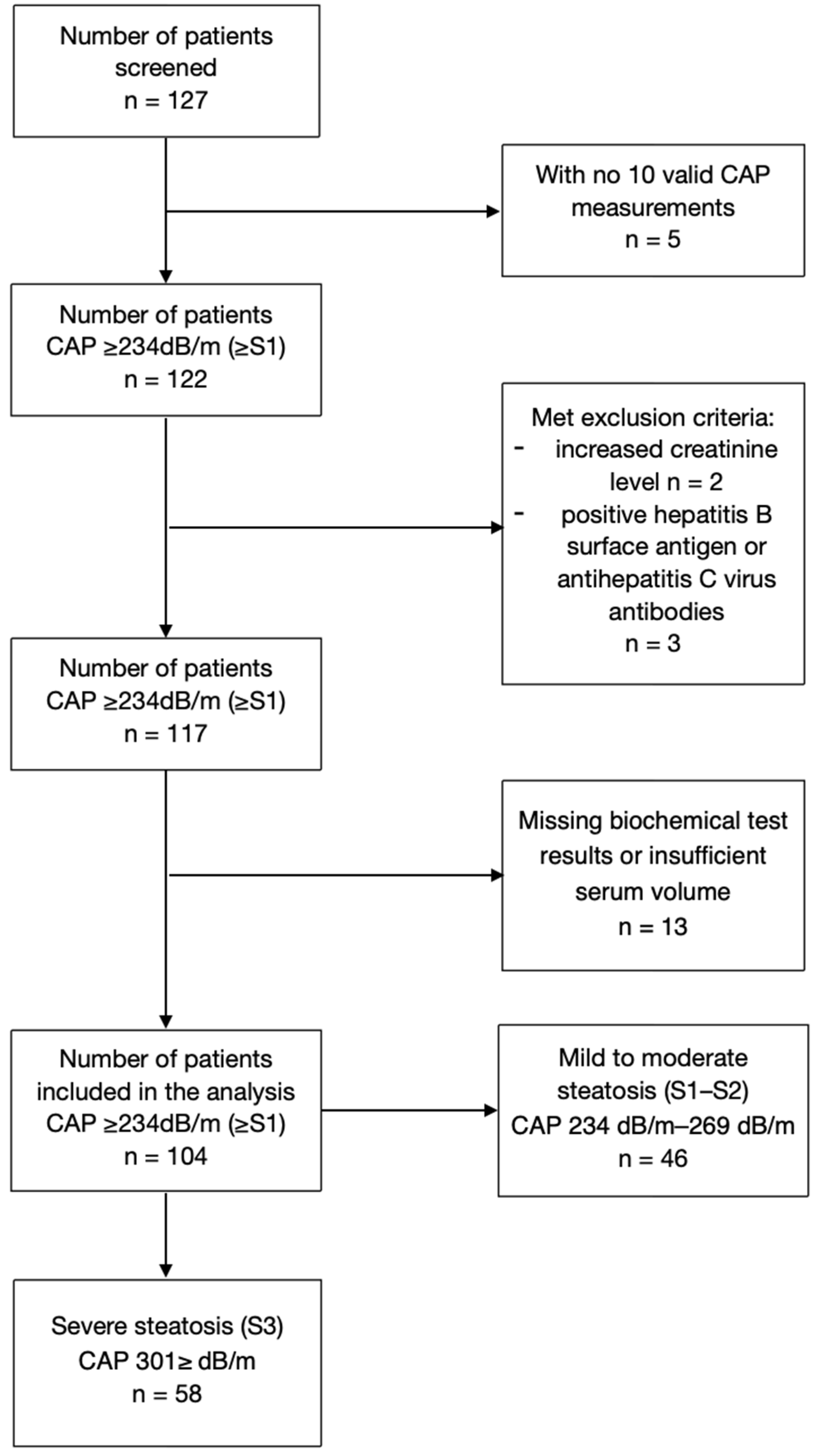
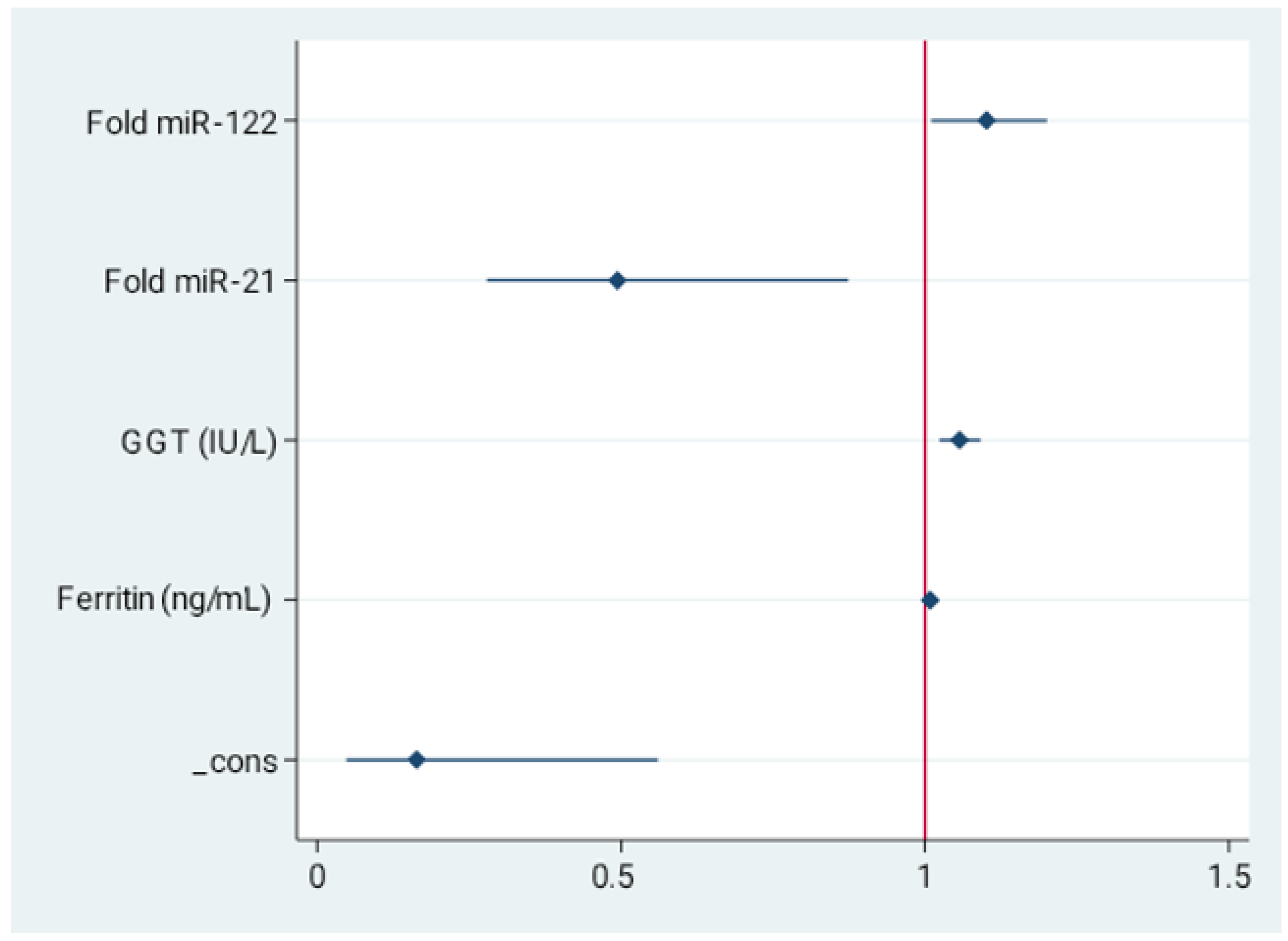
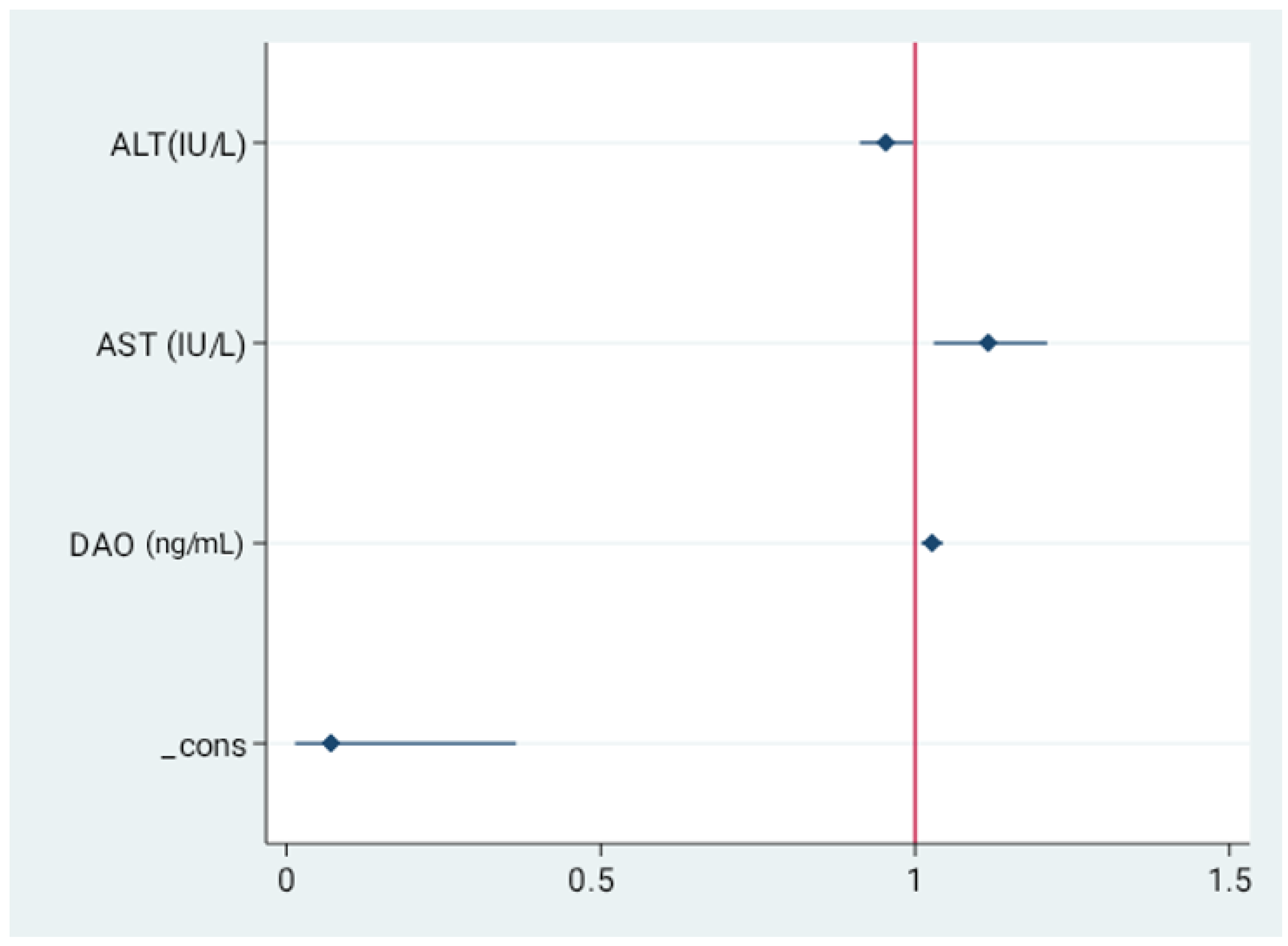
MicroRNA and Protein Biomarkers of Intestinal Permeability in the Assessment of Metabolic Dysfunction-Associated Steatotic Liver Disease (MASLD)
 , ,
, ,
Abstract
1. Introduction
2. Results
2.1. Study Population
2.2. Markers of Intestinal Permeability in Study and Control Group
2.3. Correlation Between Protein Markers of Intestinal Permeability and MASLD Severity
2.4. Correlation Between Microrna and MASLD Severity
2.5. Independent Indicators of the Presence of Liver Steatosis
2.6. Independent Predictors of Severe Steatosis
2.7. Independent Predictors of Advanced Fibrosis
2.8. Associations Between Analyzed Parameters of Intestinal Permeability
3. Discussion
4. Materials and Methods
4.1. Study Participants and Clinical Assessment
4.2. Liver Stiffness and CAP Measurements
4.3. Biomarkers of Intestinal Permeability
4.4. ELISA Analyses
4.5. miRNA Expression Analysis
4.6. Ethics
4.7. Statistical Analysis
4.7.1. Descriptive Statistics
4.7.2. Comparative Analyses
4.7.3. Correlation and Regression
4.7.4. Software
5. Conclusions
Supplementary Materials
Author Contributions
Funding
Institutional Review Board Statement
Informed Consent Statement
Data Availability Statement
Conflicts of Interest
Abbreviations
| MASLD | Metabolic dysfunction-associated steatotic liver disease |
| NAFLD | Non-alcoholic fatty liver disease |
| MASH | Metabolic associated steatohepatitis |
| LBP | Lipopolysaccharide binding protein |
| DAO | Diamine oxidase |
| IL-6 | Interleukin 6 |
| TNF-α | Tumor necrosis factor |
| LPS | Lipopolysaccharide |
| CAP | Controlled attenuation parameter |
| AST | Aspartate aminotransferase |
| APRI | AST to Platelet Ratio |
| FIB-4 | Fibrosis-4 |
| FLI | Fatty liver index |
| US | Ultrasonography |
| HRI | Hepatorenal index |
| TE | Transient elastography |
| ALT | Alanine aminotransferase |
| GGT | gamma-glutamyl transferase |
| BMI | Body Mass Index |
| TLR4 | toll-like receptor 4 |
| ZO-1 | zona occludens-1 |
| NASH | Non-alcoholic sreatohepatitis |
| HOMA | Homeostatic model assessment |
| ROCK1 | Rho-associated coiled-coil kinase 1 |
| HSCs | hepatic stellate cells |
| HMGCR | 3-hydroxy-3-methylglutaryl-CoA reductase |
| CLDN1 | claudin-1 |
| NKRF | NF-κB repressing factor |
| FOXO3 | Forkhead Box O3 |
| I-FABP | Intestinal fatty acid binding protein |
| HDL3 | High density lipoprotein 3 |
References
- Younossi, Z.M.; Golabi, P.; Paik, J.M.; Henry, A.; Van Dongen, C.; Henry, L. The global epidemiology of nonalcoholic fatty liver disease (NAFLD) and nonalcoholic steatohepatitis (NASH): A systematic review. Hepatology 2023, 7, 1335–1347. [Google Scholar] [CrossRef]
- Rinella, M.E.; Lazarus, J.V.; Ratziu, V.; Francque, S.M.; Sanyal, A.J.; Kanwal, F.; Romero, D.; Abdelmalek, M.F.; Anstee, Q.M.; Arab, J.P.; et al. A multisociety Delphi consensus statement on new fatty liver disease nomenclature. J. Hepatol. 2023, 79, 1542–1556. [Google Scholar] [CrossRef]
- Pendyala, S.; Walker, J.M.; Holt, P.R. A High-Fat Diet Is Associated with Endotoxemia That Originates from the Gut. Gastroenterology 2012, 142, 1100–1101.e2. [Google Scholar] [CrossRef]
- Serino, M.; Luche, E.; Gres, S. Metabolic adaptation to a high-fat diet is associated with a change in the gut microbiota. Gut 2012, 61, 543–553. [Google Scholar] [CrossRef]
- Fianchi, F.; Liguori, A.; Gasbarrini, A.; Grieco, A.; Miele, L. Nonalcoholic Fatty Liver Disease (NAFLD) as Model of Gut-Liver Axis Interaction: From Pathophysiology to Potential Target of Treatment for Personalized Therapy. Int. J. Mol. Sci. 2021, 22, 6485. [Google Scholar] [CrossRef]
- Nier, A.; Engstler, A.J.; Maier, I.B.; Bergheim, I. Markers of intestinal permeability are already altered in early stages of non-alcoholic fatty liver disease: Studies in children. PLoS ONE 2017, 12, e0183282. [Google Scholar] [CrossRef] [PubMed]
- Mouries, J.; Brescia, P.; Silvestri, A.; Spadoni, I.; Sorribas, M.; Wiest, R.; Mileti, E.; Galbiati, M.; Invernizzi, P.; Adorini, L.; et al. Microbiota-driven gut vascular barrier disruption is a prerequisite for non-alcoholic steatohepatitis development. J. Hepatol. 2019, 71, 1216–1228. [Google Scholar] [CrossRef]
- Thuijls, G.; van Wijck, K.; Grootjans, J.; Derikx, J.P.M.; van Bijnen, A.A.; Heineman, E.; Dejong, C.H.; Buurman, W.A.; Poeze, M. Early diagnosis of intestinal ischemia using urinary and plasma fatty acid binding proteins. Ann. Surg. 2011, 253, 303–308. [Google Scholar] [CrossRef] [PubMed]
- Vreugdenhil, A.C.; Wolters, V.M.; Adriaanse, M.P.; Neucker, A.M.V.D.; A van Bijnen, A.; Houwen, R.; A Buurman, W. Additional value of serum I-FABP levels for evaluating celiac disease activity in children. Scand. J. Gastroenterol. 2011, 46, 1435–1441. [Google Scholar] [CrossRef] [PubMed]
- Seethaler, B.; Basrai, M.; Neyrinck, A.M.; Nazare, J.-A.; Walter, J.; Delzenne, N.M.; Bischoff, S.C. Biomarkers for assessment of intestinal permeability in clinical practice. Am. J. Physiol. Gastrointest. Liver Physiol. 2021, 321, G11–G17. [Google Scholar] [CrossRef]
- Ajamian, M.; Steer, D.; Rosella, G.; Gibson, P.R. Serum zonulin as a marker of intestinal mucosal barrier function: May not be what it seems. PLoS ONE 2019, 14, e0210728. [Google Scholar] [CrossRef] [PubMed]
- Gonzalez-Quintela, A.; Alonso, M.; Campos, J.; Vizcaino, L.; Loidi, L.; Gude, F. Determinants of Serum Concentrations of Lipopolysaccharide-Binding Protein (LBP) in the Adult Population: The Role of Obesity. PLoS ONE 2013, 8, e54600. [Google Scholar] [CrossRef]
- Zhang, R.; Chen, Y.; Zhang, J.; Liu, J. Elevated serum levels of diamine oxidase, D-lactate and lipopolysaccharides are associated with metabolic-associated fatty liver disease. Eur. J. Gastroenterol. Hepatol. 2023, 35, 94–101. [Google Scholar] [CrossRef] [PubMed]
- Rawat, M.; Govindappa, P.K.; Gupta, Y.; Ma, T.Y. MicroRNA in intestinal tight junction regulation. npj Gut Liver 2025, 2, 11. [Google Scholar] [CrossRef]
- Girard, M.; Jacquemin, E.; Munnich, A.; Lyonnet, S.; Henrion-Caude, A. miR-122, a paradigm for the role of microRNAs in the liver. J. Hepatol. 2008, 48, 648–656. [Google Scholar] [CrossRef]
- Zhang, L.; Shen, J.; Cheng, J.; Fan, X. MicroRNA-21 regulates intestinal epithelial tight junction permeability. Cell Biochem. Funct. 2015, 33, 235–240. [Google Scholar] [CrossRef] [PubMed]
- Zhu, H.; Xiao, X.; Shi, Y.; Wu, Y.; Huang, Y.; Li, D.; Xiong, F.; He, G.; Chai, Y.; Tang, H. Inhibition of miRNA-29a regulates intestinal barrier function in diarrhea-predominant irritable bowel syndrome by upregulating ZO-1 and CLDN1. Exp. Ther. Med. 2020, 20, 155. [Google Scholar] [CrossRef]
- Karlas, T.; Petroff, D.; Garnov, N.; Böhm, S.; Tenckhoff, H.; Wittekind, C.; Wiese, M.; Schiefke, I.; Linder, N.; Schaudinn, A.; et al. Non-Invasive Assessment of Hepatic Steatosis in Patients with NAFLD Using Controlled Attenuation Parameter and 1H-MR Spectroscopy. PLoS ONE 2014, 9, e91987. [Google Scholar] [CrossRef]
- Hailman, E.; Lichenstein, H.S.; Wurfel, M.M.; Miller, D.S.; Johnson, D.A.; Kelley, M.; Busse, L.A.; Zukowski, M.M.; Wright, S.D. Lipopolysaccharide (LPS)-binding protein accelerates the binding of LPS to CD14. J. Exp. Med. 1994, 179, 269–277. [Google Scholar] [CrossRef]
- Bergheim, I.; Moreno-Navarrete, J.M. The relevance of intestinal barrier dysfunction, antimicrobial proteins and bacterial endotoxin in metabolic dysfunction-associated steatotic liver disease. Eur. J. Clin. Investig. 2024, 54, e14224. [Google Scholar] [CrossRef] [PubMed]
- Wong, V.W.; Wong, G.L.; Chan, H.Y.; Yeung, D.K.W.; Chan, R.S.-M.; Chim, A.M.-L.; Chan, C.K.M.; Tse, Y.K.; Woo, J.; Chu, W.C.W. Bacterial endotoxin and non-alcoholic fatty liver disease in the general population: A prospective cohort study. Aliment. Pharmacol. Ther. 2015, 42, 731–740. [Google Scholar] [CrossRef]
- Miele, L.; Valenza, V.; La Torre, G.; Montalto, M.; Cammarota, G.; Ricci, R.; Mascianà, R.; Forgione, A.; Gabrieli, M.L.; Perotti, G.; et al. Increased intestinal permeability and tight junction alterations in nonalcoholic fatty liver disease. Hepatology 2009, 49, 1877–1887. [Google Scholar] [CrossRef]
- Giorgio, V.; Miele, L.; Principessa, L.; Ferretti, F.; Villa, M.P.; Negro, V.; Grieco, A.; Alisi, A.; Nobili, V. Intestinal permeability is increased in children with non-alcoholic fatty liver disease, and correlates with liver disease severity. Dig. Liver Dis. 2014, 46, 556–560. [Google Scholar] [CrossRef]
- Soppert, J.; Brandt, E.F.; Heussen, N.M.; Barzakova, E.; Blank, L.M.; Kuepfer, L.; Hornef, M.W.; Trebicka, J.; Jankowski, J.; Berres, M.-L.; et al. Blood Endotoxin Levels as Biomarker of Nonalcoholic Fatty Liver Disease: A Systematic Review and Meta-analysis. Clin. Gastroenterol. Hepatol. 2023, 21, 2746–2758. [Google Scholar] [CrossRef] [PubMed]
- Pang, J.; Xu, W.; Zhang, X.; Wong, G.L.-H.; Chan, A.W.-H.; Chan, H.-Y.; Tse, C.-H.; Shu, S.S.-T.; Choi, P.C.-L.; Chan, H.L.-Y.; et al. Significant positive association of endotoxemia with histological severity in 237 patients with non-alcoholic fatty liver disease. Aliment. Pharmacol. Ther. 2017, 46, 175–182. [Google Scholar] [CrossRef]
- Hegazy, M.A.; Mogawer, S.M.; Alnaggar, A.R.L.R.; Ghoniem, O.A.; Abdel Samie, R.M. Serum LPS and CD163 Biomarkers Confirming the Role of Gut Dysbiosis in Overweight Patients with NASH. Diabetes Metab. Syndr. Obes. 2020, 13, 3861–3872. [Google Scholar] [CrossRef] [PubMed]
- Männistö, V.; Färkkilä, M.; Pussinen, P.; Jula, A.; Männistö, S.; Lundqvist, A.; Valsta, L.; Salomaa, V.; Perola, M.; Åberg, F. Serum lipopolysaccharides predict advanced liver disease in the general population. JHEP Rep. 2019, 1, 345–352. [Google Scholar] [CrossRef] [PubMed]
- Moreno-Navarrete, J.M.; Ortega, F.; Serino, M.; Luche, E.; Waget, A.; Pardo, G.; Salvador, J.; Ricart, W.; Frühbeck, G.; Burcelin, R.; et al. Circulating lipopolysaccharide-binding protein (LBP) as a marker of obesity-related insulin resistance. Int. J. Obes. 2012, 36, 1442–1449. [Google Scholar] [CrossRef]
- Sun, L.; Yu, Z.; Ye, X.; Zou, S.; Li, H.; Yu, D.; Wu, H.; Chen, Y.; Dore, J.; Clément, K.; et al. A Marker of Endotoxemia Is Associated with Obesity and Related Metabolic Disorders in Apparently Healthy Chinese. Diabetes Care 2010, 33, 1925–1932. [Google Scholar] [CrossRef]
- Ott, B.; Skurk, T.; Hastreiter, L.; Lagkouvardos, I.; Fischer, S.; Büttner, J.; Kellerer, T.; Clavel, T.; Rychlik, M.; Haller, D.; et al. Effect of caloric restriction on gut permeability, inflammation markers, and fecal microbiota in obese women. Sci. Rep. 2017, 7, 11955. [Google Scholar] [CrossRef]
- Yang, P.J.; Lee, W.J.; Tseng, P.H.; Lee, P.H.; Lin, M.T.; Yang, W.S. Bariatric surgery decreased the serum level of an endotoxin-associated marker: Lipopolysaccharide-binding protein. Surg. Obes. Relat. Dis. 2014, 10, 1182–1187. [Google Scholar] [CrossRef]
- Teixeira, T.F.; Souza, N.C.; Chiarello, P.G.; Franceschini, S.C.C.; Bressan, J.; Ferreira, C.L.L.F.; Peluzio, M.d.C.G. Intestinal permeability parameters in obese patients are correlated with metabolic syndrome risk factors. Clin. Nutr. 2012, 31, 735–740. [Google Scholar] [CrossRef]
- Damms-Machado, A.; Louis, S.; Schnitzer, A.; Volynets, V.; Rings, A.; Basrai, M.; Bischoff, S.C. Gut permeability is related to body weight, fatty liver disease, and insulin resistance in obese individuals undergoing weight reduction. Am. J. Clin. Nutr. 2017, 105, 127–135. [Google Scholar] [CrossRef]
- Jin, C.J.; Engstler, A.J.; Ziegenhardt, D.; Bischoff, S.C.; Trautwein, C.; Bergheim, I. Loss of lipopolysaccharide-binding protein attenuates the development of diet-induced non-alcoholic fatty liver disease in mice. J. Gastroenterol. Hepatol. 2017, 2, 708–715. [Google Scholar] [CrossRef] [PubMed]
- Milbank, E.; Díaz-Trelles, R.; Dragano, N.; Latorre, J.; Mukthavaram, R.; Mayneris-Perxachs, J.; Ortega, F.; Federici, M.; Burcelin, R.; Karmali, P.P.; et al. Liver lipopolysaccharide binding protein prevents hepatic inflammation in physiological and pathological non-obesogenic conditions. Pharmacol. Res. 2023, 187, 106562. [Google Scholar] [CrossRef] [PubMed]
- Barchetta, I.; Cimini, F.A.; Sentinelli, F.; Chiappetta, C.; Di Cristofano, C.; Silecchia, G.; Leonetti, F.; Baroni, M.G.; Cavallo, M.G. Reduced Lipopolysaccharide-Binding Protein (LBP) Levels Are Associated with Non-Alcoholic Fatty Liver Disease (NAFLD) and Adipose Inflammation in Human Obesity. Int. J. Mol. Sci. 2023, 24, 17174. [Google Scholar] [CrossRef]
- Han, Y.H.; Onufer, E.J.; Huang, L.H.; Sprung, R.W.; Davidson, W.S.; Czepielewski, R.S.; Wohltmann, M.; Sorci-Thomas, M.G.; Warner, B.W.; Randolph, G.J. Enterically derived high-density lipoprotein restrains liver injury through the portal vein. Science 2021, 373, eabe6729. [Google Scholar] [CrossRef]
- Tan, Z.; Ou, Y.; Cai, W.; Zheng, Y.; Li, H.; Mao, Y.; Zhou, S.; Tu, J. Advances in the Clinical Application of Histamine and Diamine Oxidase (DAO) Activity: A Review. Catalysts 2023, 13, 48. [Google Scholar] [CrossRef]
- Ruan, P.; Gong, Z.J.; Zhang, Q.R. Changes of plasma D(-)-lactate, diamine oxidase and endotoxin in patients with liver cirrhosis. Hepatobiliary Pancreat. Dis. Int. 2004, 3, 58–61. [Google Scholar]
- Li, F.C.; Fan, Y.C.; Li, Y.K.; Wang, K. Plasma diamine oxidase level predicts 6-month readmission for patients with hepatitis B virus-related decompensated cirrhosis. Virol. J. 2019, 16, 115. [Google Scholar] [CrossRef]
- Miyoshi, J.; Miyamoto, H.; Goji, T.; Taniguchi, T.; Tomonari, T.; Sogabe, M.; Kimura, T.; Kitamura, S.; Okamoto, K.; Fujino, Y.; et al. Serum diamine oxidase activity as a predictor of gastrointestinal toxicity and malnutrition due to anticancer drugs. J. Gastroenterol. Hepatol. 2015, 30, 1582–1590. [Google Scholar] [CrossRef] [PubMed]
- Liu, C.H.; Ampuero, J.; Gil-Gómez, A.; Montero-Vallejo, R.; Rojas, Á.; Muñoz-Hernández, R.; Gallego-Durán, R.; Romero-Gómez, M. miRNAs in patients with non-alcoholic fatty liver disease: A systematic review and meta-analysis. J. Hepatol. 2018, 69, 1335–1348. [Google Scholar] [CrossRef] [PubMed]
- Chai, C.; Rivkin, M.; Berkovits, L.; Simerzin, A.; Zorde-Khvalevsky, E.; Rosenberg, N.; Klein, S.; Yaish, D.; Durst, R.; Shpitzen, S.; et al. Metabolic Circuit Involving Free Fatty Acids, microRNA 122, and Triglyceride Synthesis in Liver and Muscle Tissues. Gastroenterology 2017, 153, 1404–1415. [Google Scholar] [CrossRef]
- Ezaz, G.; Trivedi, H.D.; Connelly, M.A.; Filozof, C.; Howard, K.; Parrish, M.L.; Kim, M.; Herman, M.A.; Nasser, I.; Afdhal, N.H.; et al. Differential Associations of Circulating MicroRNAs with Pathogenic Factors in NAFLD. Hepatol. Commun. 2020, 4, 670–680. [Google Scholar] [CrossRef]
- Akuta, N.; Kawamura, Y.; Suzuki, F.; Saitoh, S.; Arase, Y.; Muraishi, N.; Fujiyama, S.; Sezaki, H.; Hosaka, T.; Kobayashi, M.; et al. Dynamics of Circulating miR-122 Predict Liver Cancer and Mortality in Japanese Patients with Histopathologically Confirmed NAFLD and Severe Fibrosis Stage. Oncology 2022, 100, 31–38. [Google Scholar] [CrossRef] [PubMed]
- Atic, A.I.; Thiele, M.; Munk, A.; Dalgaard, L.T. Circulating miRNAs associated with nonalcoholic fatty liver disease. Am. J. Physiol. Cell Physiol. 2023, 324, C588–C602. [Google Scholar] [CrossRef]
- Liu, Z.; Li, C.; Chen, S.; Lin, H.; Zhao, H.; Liu, M.; Weng, J.; Liu, T.; Li, X.; Lei, C.; et al. MicroRNA-21 increases the expression level of occludin through regulating ROCK1 in prevention of intestinal barrier dysfunction. J. Cell Biochem. 2019, 120, 4545–4554. [Google Scholar] [CrossRef]
- Jiang, Z.; Yang, F.; Qie, J.; Jin, C.; Zhang, F.; Shen, J.; Zhang, L. TNF-α–Induced miR-21-3p Promotes Intestinal Barrier Dysfunction by Inhibiting MTDH Expression. Front. Pharmacol. 2021, 12, 722283. [Google Scholar] [CrossRef]
- Al-Sadi, R.; Engers, J.; Abdulqadir, R. Talk about micromanaging! Role of microRNAs in intestinal barrier function. Am. J. Physiol. Gastrointest. Liver Physiol. 2020, 319, G170–G174. [Google Scholar] [CrossRef]
- Yang, Y.; Ma, Y.; Shi, C.; Chen, H.; Zhang, H.; Chen, N.; Zhang, P.; Wang, F.; Yang, J.; Yang, J.; et al. Overexpression of miR-21 in patients with ulcerative colitis impairs intestinal epithelial barrier function through targeting the Rho GTPase RhoB. Biochem. Biophys. Res. Commun. 2013, 434, 746–752. [Google Scholar] [CrossRef]
- Schönauen, K.; Le, N.; Von Arnim, U.; Schulz, C.; Malfertheiner, P.; Link, A. Circulating and Fecal microRNAs as Biomarkers for Inflammatory Bowel Diseases. Inflamm. Bowel Dis. 2018, 24, 1547–1557. [Google Scholar] [CrossRef] [PubMed]
- Loyer, X.; Paradis, V.; Hénique, C.; Vion, A.C.; Colnot, N.; Guerin, C.L.; Devue, C.; On, S.; Scetbun, J.; Romain, M.; et al. Liver microRNA-21 is overexpressed in non-alcoholic steatohepatitis and contributes to the disease in experimental models by inhibiting PPARα expression. Gut 2016, 65, 1882–1894. [Google Scholar] [CrossRef]
- Rodrigues, P.M.; Rodrigues, C.M.P.; Castro, R.E. Modulation of liver steatosis by miR-21/PPARα. Cell Death Discov. 2018, 4, 73, Erratum in Cell Death Discov. 2019, 5, 116. [Google Scholar] [CrossRef] [PubMed]
- Wu, H.; Ng, R.; Chen, X.; Steer, C.J.; Song, G. MicroRNA-21 is a potential link between non-alcoholic fatty liver disease and hepatocellular carcinoma via modulation of the HBP1-p53-Srebp1c pathway. Gut 2016, 65, 1850–1860. [Google Scholar] [CrossRef]
- Zhang, J.; Jiao, J.; Cermelli, S.; Muir, K.; Jung, K.H.; Zou, R.; Rashid, A.; Gagea, M.; Zabludoff, S.; Kalluri, R.; et al. miR-21 Inhibition Reduces Liver Fibrosis and Prevents Tumor Development by Inducing Apoptosis of CD24+ Progenitor Cells. Cancer Res. 2015, 75, 1859–1867. [Google Scholar] [CrossRef]
- Kim, T.H.; Lee, Y.; Lee, Y.S.; Gim, J.A.; Ko, E.; Yim, S.Y.; Jung, Y.K.; Kang, S.; Kim, M.Y.; Kim, H.; et al. Circulating miRNA is a useful diagnostic biomarker for nonalcoholic steatohepatitis in nonalcoholic fatty liver disease. Sci. Rep. 2021, 11, 14639. [Google Scholar] [CrossRef]
- Yamada, H.; Suzuki, K.; Ichino, N.; Ando, Y.; Sawada, A.; Osakabe, K.; Sugimoto, K.; Ohashi, K.; Teradaira, R.; Inoue, T.; et al. Associations between circulating microRNAs (miR-21, miR-34a, miR-122 and miR-451) and non-alcoholic fatty liver. Clin. Chim. Acta. 2013, 424, 99–103. [Google Scholar] [CrossRef]
- Sun, C.; Huang, F.; Liu, X.; Xiao, X.; Yang, M.; Hu, G.; Liu, H.; Liao, L. miR-21 regulates triglyceride and cholesterol metabolism in non-alcoholic fatty liver disease by targeting HMGCR. Int. J. Mol. Med. 2015, 35, 847–853. [Google Scholar] [CrossRef]
- Zhou, Q.; Costinean, S.; Croce, C.M.; Brasier, A.R.; Merwat, S.; Larson, S.A.; Basra, S.; Verne, G.N. MicroRNA 29 Targets Nuclear Factor-κB–Repressing Factor and Claudin 1 to Increase Intestinal Permeability. Gastroenterology 2015, 148, 158–169.e8. [Google Scholar] [CrossRef]
- Zhou, Q.; Souba, W.W.; Croce, C.M.; Verne, G.N. MicroRNA-29a regulates intestinal membrane permeability in patients with irritable bowel syndrome. Gut 2010, 59, 775–784. [Google Scholar] [CrossRef] [PubMed]
- Dong, T.; Li, J.; Liu, Y.; Zhou, S.; Wei, X.; Hua, H.; Tang, K.; Zhang, X.; Wang, Y.; Wu, Z.; et al. Roles of immune dysregulation in MASLD. Biomed. Pharmacother. 2024, 170, 116069. [Google Scholar] [CrossRef]
- Cai, D.; Yuan, M.; Frantz, D.F.; Melendez, P.A.; Hansen, L.; Lee, J.; Shoelson, S.E. Local and systemic insulin resistance resulting from hepatic activation of IKK-β and NF-κB. Nat. Med. 2005, 11, 183–190. [Google Scholar] [CrossRef]
- Wieckowska, A.; Papouchado, B.G.; Li, Z.; Lopez, R.; Zein, N.N.; Feldstein, A.E. Increased Hepatic and Circulating Interleukin-6 Levels in Human Nonalcoholic Steatohepatitis. Am. J. Gastroenterol. 2008, 103, 1372–1379. [Google Scholar] [CrossRef] [PubMed]
- Guo, Y.; Wang, B.; Wang, T.; Gao, L.; Yang, Z.J.; Wang, F.F.; Shang, H.-W.; Hua, R.; Xu, J.-D. Biological characteristics of IL-6 and related intestinal diseases. Int. J. Biol. Sci. 2021, 17, 204–219. [Google Scholar] [CrossRef] [PubMed]
- Hu, Y.; Peng, X.; Du, G.; Zhang, Z.; Zhai, Y.; Xiong, X.; Luo, X. MicroRNA-122-5p Inhibition Improves Inflammation and Oxidative Stress Damage in Dietary-Induced Non-alcoholic Fatty Liver Disease Through Targeting FOXO3. Front. Physiol. 2022, 13, 803445. [Google Scholar] [CrossRef] [PubMed]
- Pillai, S.S.; Lakhani, H.V.; Zehra, M.; Wang, J.; Dilip, A.; Puri, N.; O’Hanlon, K.; Sodhi, K. Predicting Nonalcoholic Fatty Liver Disease through a Panel of Plasma Biomarkers and MicroRNAs in Female West Virginia Population. Int. J. Mol. Sci. 2020, 21, 6698. [Google Scholar] [CrossRef]
- Pu, K.; Wang, Y.; Bai, S.; Wei, H.; Zhou, Y.; Fan, J.; Qiao, L. Diagnostic accuracy of controlled attenuation parameter (CAP) as a non-invasive test for steatosis in suspected non-alcoholic fatty liver disease: A systematic review and meta-analysis. BMC Gastroenterol. 2019, 19, 51. [Google Scholar] [CrossRef]
- Cao, Y.T.; Xiang, L.T.; Qi, F.; Zhang, Y.J.; Chen, Y.; Zhou, X.Q. Accuracy of controlled attenuation parameter (CAP) and liver stiffness measurement (LSM) for assessing steatosis and fibrosis in non-alcoholic fatty liver disease: A systematic review and meta-analysis. eClinicalMedicine 2022, 51, 101547. [Google Scholar] [CrossRef]
- Camilleri, M.; Vella, A. What to do about the leaky gut. Gut 2022, 71, 424–435. [Google Scholar] [CrossRef]
- Kozłowska-Petriczko, K.; Wunsch, E.; Petriczko, J.; Syn, W.-K.; Milkiewicz, P. Diagnostic Accuracy of Non-Imaging and Ultrasound-Based Assessment of Hepatic Steatosis Using Controlled Attenuation Parameter (CAP) as Reference. J. Clin. Med. 2021, 10, 1507. [Google Scholar] [CrossRef]
- Marshall, R.H.; Eissa, M.; Bluth, E.I.; Gulotta, P.M.; Davis, N.K. Hepatorenal Index as an Accurate, Simple, and Effective Tool in Screening for Steatosis. AJR Am. J. Roentgenol. 2012, 199, 997–1002. [Google Scholar] [CrossRef] [PubMed]
- Bedogni, G.; Bellentani, S.; Miglioli, L.; Masutti, F.; Passalacqua, M.; Castiglione, A.; Tiribelli, C. The Fatty Liver Index: A simple and accurate predictor of hepatic steatosis in the general population. BMC Gastroenterol. 2006, 6, 33. [Google Scholar] [CrossRef] [PubMed]
- Xiao, G.; Zhu, S.; Xiao, X.; Yan, L.; Yang, J.; Wu, G. Comparison of laboratory tests, ultrasound, or magnetic resonance elastography to detect fibrosis in patients with nonalcoholic fatty liver disease: A meta-analysis. Hepatology 2017, 66, 1486–1501. [Google Scholar] [CrossRef] [PubMed]



| Variable | Study Group (n = 104) | Control Group (n = 57) | p Value |
|---|---|---|---|
| Male gender | 42 (40.4%) | 20 (35.1%) | 0.61 |
| Age (years) | 55 (20–83) | 54 (28–81) | 0.67 |
| BMI (kg/m2) | 30.3 (21.8–47.3) | 24.1 (18.7–33.7) | <0.0001 |
| Laboratory tests | |||
| ALT (IU/L) | 21 (6–205) | 14 (9–40) | 0.0003 |
| AST (IU/L) | 24 (12–114) | 18 (12–47) | 0.0004 |
| GGT (IU/L) | 36 (9–235) | 17 (4–92) | <0.0001 |
| Total bilirubin (mg/dL) | 0.4 (0.1–2.7) | 0.3 (0.1–1.6) | 0.21 |
| Albumin (g/L) | 49 (37–57) | 48 (41–71) | 0.60 |
| Glucose (mg/dL) | 98 (80–283) | 92 (73–118) | 0.0004 |
| Insulin (U/mL) | 13.9 (2.5–224) | 7.5 (1.9–52.7) | <0.0001 |
| Ferritin (μg/L) | 185 (7.1–1254) | 77.2 (3.3–282) | <0.0001 |
| Total cholesterol (mg/dL) | 202 (117–290) | 207 (139–322) | 0.09 |
| LDL (mg/dL) | 132 (56–222) | 128 (66–249) | 0.86 |
| Triglycerides (mg/dL) | 146 (49–521) | 98 (49–205) | <0.0001 |
| Noninvasive markers of steatosis | |||
| CAP | 310 (235–400) | 213 (144–233) | <0.0001 |
| HRI | 1.93 (1.1–3.6) | 1.27 (0.97–2.01) | <0.0001 |
| FLI | 79.5 (11.5–99.7) | 27.9 (2.5–87.8) | <0.0001 |
| Noninvasive markers of fibrosis | |||
| TE (kPa) | 5.0 (2.9–19.7) | 4.4 (2.1–6.3) | 0.0001 |
| FIB-4 | 1.2 (0.3–5.0) | n/a | |
| APRI | 0.002 (0.001–0.02) | n/a | |
| Tested Biomarkers | Study Group (n = 104) | Control Group (n = 57) | p Value |
|---|---|---|---|
| LBP (μg/mL) | 28.8 (0.08–120.4) | 19.5 (6.1–51.0) | 0.002 |
| TNFa (pg/mL) | 7.7 (0.03–76.6) | 7.6 (0.2–29.6) | 0.99 |
| IL-6 (pg/mL) | 3.2 (0.07–29.4) | 2.7 (0.1–81.9) | 0.26 |
| DAO (ng/mL) | 41.6 (0.7–209.3) | 34.4 (1.2–216.6) | 0.15 |
| Fold miR-21 | 0.9 (0.03–17.3) | 1.1 (0.06–7.97) | 0.07 |
| Fold miR-122 | 5.3 (0.09–1721.5) | 1.0 (0.07–48.17) | <0.0001 |
| Fold miR-29a | 1.6 (0.05–403.0) | 0.9 (0.01–50.4) | 0.18 |
| Variable | DAO | TNFa | IL-6 | LBP | miR-122 | miR-21 | miR-29a | |||||||
|---|---|---|---|---|---|---|---|---|---|---|---|---|---|---|
| Rho | p Value | Rho | p Value | Rho | p Value | Rho | p Value | Rho | p Value | Rho | p Value | Rho | p Value | |
| Age | −0.08 | 0.42 | −0.12 | 0.21 | −0.07 | 0.50 | 0.07 | 0.49 | −0.17 | 0.08 | 0.01 | 0.89 | 0.09 | 0.37 |
| BMI | 0.05 | 0.60 | 0.01 | 0.88 | 0.04 | 0.70 | 0.10 | 0.31 | −0.10 | 0.34 | 0.004 | 0.96 | 0.06 | 0.51 |
| Laboratory tests | ||||||||||||||
| ALT | 0.01 | 0.88 | 0.09 | 0.36 | −0.18 | 0.07 | 0.03 | 0.74 | 0.40 | <0.0001 | 0.07 | 0.50 | −0.10 | 0.30 |
| AST | −0.18 | 0.07 | 0.16 | 0.11 | −0.15 | 0.12 | −0.006 | 0.95 | 0.50 | <0.0001 | 0.20 | 0.04 | 0.07 | 0.49 |
| GGT | −0.03 | 0.78 | 0.05 | 0.58 | −0.21 | 0.04 | 0.14 | 0.15 | 0.27 | 0.005 | 0.09 | 0.34 | −0.03 | 0.78 |
| BIL-T | −0.07 | 0.44 | 0.13 | 0.17 | −0.04 | 0.71 | −0.25 | 0.01 | 0.21 | 0.03 | 0.13 | 0.20 | −0.01 | 0.92 |
| Albumin | 0.05 | 0.59 | 0.15 | 0.13 | −0.03 | 0.79 | −0.17 | 0.09 | 0.18 | 0.07 | 0.09 | 0.33 | −0.04 | 0.67 |
| INR | 0.15 | 0.25 | −0.06 | 0.63 | 0.33 | 0.009 | −0.07 | 0.62 | −0.11 | 0.40 | −0.11 | 0.41 | −0.04 | 0.77 |
| Glucose | −0.02 | 0.86 | −0.19 | 0.08 | −0.08 | 0.45 | 0.14 | 0.21 | −0.17 | 0.11 | −0.19 | 0.08 | −0.20 | 0.06 |
| Insulin | 0.02 | 0.83 | 0.03 | 0.72 | −0.05 | 0.62 | 0.14 | 0.17 | 0.13 | 0.18 | −0.04 | 0.73 | −0.13 | 0.19 |
| Ferritin | 0.04 | 0.69 | 0.10 | 0.32 | −0.03 | 0.79 | −0.06 | 0.54 | 0.20 | 0.04 | 0.05 | 0.56 | −0.01 | 0.91 |
| Chol-T | −0.07 | 0.51 | −0.07 | 0.46 | −0.18 | 0.07 | 0.15 | 0.14 | 0.07 | 0.50 | 0.10 | 0.29 | 0.03 | 0.75 |
| LDL | −0.01 | 0.90 | −0.03 | 0.77 | −0.21 | 0.04 | 0.19 | 0.05 | 0.16 | 0.10 | 0.17 | 0.07 | 0.08 | 0.44 |
| TG | 0.006 | 0.95 | 0.07 | 0.49 | 0.04 | 0.72 | 0.16 | 0.11 | 0.01 | 0.89 | −0.07 | 0.50 | −0.11 | 0.26 |
| Non-invasive markers of steatosis | ||||||||||||||
| CAP | 0.22 | 0.02 | 0.04 | 0.67 | −0.12 | 0.22 | 0.23 | 0.02 | 0.17 | 0.08 | 0.03 | 0.77 | −0.12 | 0.22 |
| HRI | 0.03 | 0.74 | 0.07 | 0.49 | 0.01 | 0.91 | −0.06 | 0.55 | 0.22 | 0.02 | 0.15 | 0.12 | −0.08 | 0.45 |
| FLI | 0.03 | 0.76 | 0.14 | 0.17 | −0.12 | 0.26 | 0.16 | 0.13 | 0.28 | 0.005 | 0.09 | 0.37 | 0.08 | 0.43 |
| Non-invasive markers of fibrosis | ||||||||||||||
| TE | −0.12 | 0.23 | 0.13 | 0.19 | −0.16 | 0.10 | 0.11 | 0.26 | 0.22 | 0.03 | 0.15 | 0.14 | 0.05 | 0.59 |
| APRI | −0.26 | 0.02 | 0.01 | 0.89 | −0.10 | 0.38 | 0.07 | 0.55 | 0.41 | 0.0001 | 0.09 | 0.40 | −0.05 | 0.67 |
| FIB-4 | −0.37 | 0.0007 | −0.12 | 0.26 | −0.04 | 0.71 | 0.07 | 0.55 | 0.16 | 0.16 | 0.06 | 0.61 | 0.03 | 0.78 |
| Variable | Advanced Steatosis (CAP Karlas 2014 [18]) | Significant Fibrosis (TE) | ||||
|---|---|---|---|---|---|---|
| S1–S2 (n = 46) | S3 (n = 58) | p Value | F0–F1 (n = 87) | F2–F4 (n = 15) | p Value | |
| ALT (IU/L) | 18 (6–205) | 21 (10–103) | 0.02 | 20 (6–205) | 29 (14–103) | 0.02 |
| AST (IU/L) | 20 (12–114) | 25 (14–74) | 0.0009 | 22 (12–114) | 32 (19–74) | 0.0005 |
| GGT (IU/L) | 33 (9–139) | 39.5 (15–235) | 0.04 | 35 (9–235) | 44 (15–139) | 0.11 |
| ALP (IU/L) | 74 (32–162) | 74 (45–167) | 0.79 | 73 (32–162) | 84 (49–167) | 0.11 |
| Bilirubin (mg/dL) | 0.4 (0.1–1.4) | 0.4 (0.2–2.7) | 0.55 | 0.4 (0.1–2.7) | 0.4 (0.2–1.3) | 0.60 |
| Glucose (mg/dL) | 98 (80–127) | 99 (80–283) | 0.28 | 98 (80–283) | 99 (89–178) | 0.69 |
| Insulin (U/mL) | 18 (2–55) | 16 (6–224) | 0.0001 | 13 (2–57) | 27 (8–224) | 0.0006 |
| Ferritin (μg/L) | 134 (7–487) | 191 (16–1254) | 0.08 | 170 (7–993) | 199 (20–487) | 0.58 |
| Chol-T (mg/dL) | 196 (120–287) | 205 (117–290) | 0.62 | 202 (117–290) | 208 (119–269) | 0.83 |
| LDL (mg/dL) | 127 (65–199) | 133 (56–222) | 0.90 | 133 (56–222) | 131 (58–188) | 0.74 |
| TG (mg/dL) | 131 (49–502) | 158 (57–521) | 0.05 | 138 (49–521) | 161 (100–245) | 0.20 |
| LBP (μg/mL) | 22.9 (6.4–78.5) | 33.2 (0.08–120.4) | 0.04 | 28.8 (0.08–120.4) | 27.0 (11.6–107.8) | 0.70 |
| TNFa (pg/mL) | 6.8 (0.03–76.1) | 7.8 (0.03–76.6) | 0.49 | 7.7 (0.03–76.6) | 9.5 (0.5–27.5) | 0.18 |
| IL-6 (pg/mL) | 3.7 (0.1–29.4) | 2.8 (0.07–24.3) | 0.26 | 3.2 (0.1–29.4) | 3.0 (0.07–17.5) | 0.47 |
| DAO (ng/mL) | 38.9 (0.07–113.6) | 49.0 (12.8–209.3) | 0.04 | 44.2 (0.7–209.3) | 28.9 (12.8–71.4) | 0.04 |
| Fold miR-21 | 0.85 (0.05–16.5) | 0.97 (0.03–17.2) | 0.47 | 0.9 (0.03–17.3) | 0.9 (0.04–4.2) | 0.45 |
| Fold miR-122 | 4.6 (0.2–214.1) | 6.7 (0.09–1721.5) | 0.12 | 4.8 (0.09–1721.5) | 7.6 (0.4–68.3) | 0.05 |
| Fold miR-29a | 1.7 (0.07–66.4) | 1.4 (0.05–403.0) | 0.78 | 1.9 (0.05–403.0) | 1.0 (0.05–114.7) | 0.76 |
Disclaimer/Publisher’s Note: The statements, opinions and data contained in all publications are solely those of the individual author(s) and contributor(s) and not of MDPI and/or the editor(s). MDPI and/or the editor(s) disclaim responsibility for any injury to people or property resulting from any ideas, methods, instructions or products referred to in the content. |
© 2025 by the authors. Licensee MDPI, Basel, Switzerland. This article is an open access article distributed under the terms and conditions of the Creative Commons Attribution (CC BY) license (https://creativecommons.org/licenses/by/4.0/).
Share and Cite
Białek, D.; Wunsch, E.; Kempińska-Podhorodecka, A.; Abramczyk, J.; Wunsch, A.; Kozłowska, K. MicroRNA and Protein Biomarkers of Intestinal Permeability in the Assessment of Metabolic Dysfunction-Associated Steatotic Liver Disease (MASLD). Int. J. Mol. Sci. 2025, 26, 11351. https://doi.org/10.3390/ijms262311351
Białek D, Wunsch E, Kempińska-Podhorodecka A, Abramczyk J, Wunsch A, Kozłowska K. MicroRNA and Protein Biomarkers of Intestinal Permeability in the Assessment of Metabolic Dysfunction-Associated Steatotic Liver Disease (MASLD). International Journal of Molecular Sciences. 2025; 26(23):11351. https://doi.org/10.3390/ijms262311351
Chicago/Turabian StyleBiałek, Dominika, Ewa Wunsch, Agnieszka Kempińska-Podhorodecka, Joanna Abramczyk, Adam Wunsch, and Katarzyna Kozłowska. 2025. "MicroRNA and Protein Biomarkers of Intestinal Permeability in the Assessment of Metabolic Dysfunction-Associated Steatotic Liver Disease (MASLD)" International Journal of Molecular Sciences 26, no. 23: 11351. https://doi.org/10.3390/ijms262311351
APA StyleBiałek, D., Wunsch, E., Kempińska-Podhorodecka, A., Abramczyk, J., Wunsch, A., & Kozłowska, K. (2025). MicroRNA and Protein Biomarkers of Intestinal Permeability in the Assessment of Metabolic Dysfunction-Associated Steatotic Liver Disease (MASLD). International Journal of Molecular Sciences, 26(23), 11351. https://doi.org/10.3390/ijms262311351