Article

The Gene Encoding the RCC1 (Regulator of Chromosome Condensation 1) Protein in Drosophila melanogaster and Homo sapiens


by
Vera A. Turtapkina
,
Maria V. Maltseva
,
Elena V. Evtushenko
,
Sima S. Gatzkaya
,
Evgeniya S. Omelina
,
Nadezhda V. Battulina
,
Natalia A. Lemskaya
,
Victor V. Shloma
,
Alexander V. Vershinin
,
Tatyana Yu. Vatolina
and
Igor F. Zhimulev
*
Institute of Molecular and Cellular Biology, Novosibirsk 630090, Russia
*
Author to whom correspondence should be addressed.
Int. J. Mol. Sci. 2025, 26(23), 11276; https://doi.org/10.3390/ijms262311276
Submission received: 6 September 2025 / Revised: 11 November 2025 / Accepted: 18 November 2025 / Published: 21 November 2025
(This article belongs to the Special Issue Drosophila: A Versatile Model in Biology and Medicine—2nd Edition)

Abstract

The RCC1 gene is active in ensuring many cellular functions related to cell division in Drosophila melanogaster and Homo sapiens. A detailed comparison of the structure and functions of the RCC1 gene in Drosophila melanogaster and Homo sapiens was carried out using different analytical techniques (bioinformatics, immunofluorescence and confocal microscopy, FISH, and molecular genetic methods). The Drosophila RCC1 gene belongs to the family of housekeeping genes, since it resides in the interbands and gray bands of polytene chromosomes within aquamarine/lazurite chromatin in D. melanogaster. Furthermore, the databases demonstrate that RCC1 in D. melanogaster is expressed in all the tissues at all the developmental stages. According to The Human Protein Atlas, RCC1 in humans also exhibits low tissue specificity for 29 tissues. Immunostaining of polytene chromosomes with RCC1 antibodies revealed approximately 260 sites of RCC1 protein localization exclusively in black bands (sites of developmental genes) and in heterochromatin. The size of the coding gene portions is almost identical for D. melanogaster and H. sapiens, being ~2 kb. The group of Drosophila proteins related to condensed chromatin, RCC1 being a member of this group, has homologs forming similar interaction networks in humans. The conserved nature of the RCC1 gene has been confirmed by cell cycle studies in both species. It was found that expression of the RCC1 gene is upregulated in glioblastoma; the RCC1 protein predominantly resides on centrioles during metaphase.

1. Introduction

There is no doubt that Drosophila is currently the best-studied genetic object. Meanwhile, the research focus is gradually shifting toward humans. Therefore, comparative genetic studies are of significant interest. We compared the data for the RCC1 (Regulator of Chromosome Condensation 1) gene and RCC1 protein in Drosophila melanogaster and Homo sapiens.
The RCC1 protein was identified approximately 40 years ago [1] as one of the key cell cycle regulators. It is the only known guanidine nucleotide exchange factor for nuclear Ras-like G protein (Ran) [2] and is directly involved in cellular processes in humans, such as nuclear envelope formation, nucleocytoplasmic transport, mitotic spindle assembly, and chromatin condensation during late S phase and early M phase of the cell cycle [3].
An analysis of the amino acid sequence of RCC1 protein in humans revealed that RCC1 consists of seven homologous repeats, each comprising 51–68 amino acid residues [4]. According to the NCBI database, it exists as three isoforms named RCC1-A, RCC1-B, and RCC1-C [5]. In human cells, RCC1 also exists as at least three isoforms referred to as αRCC1, βRCC1, and γRCC1, varying in their expression levels in certain tissues and differing in their affinity for chromatin and molecular interactions [6].
According to the Uniprot database, the human RCC1 protein has a molecular weight of 45 kDa [7], which is also consistent with experimentally obtained data [1]. For Drosophila, the molecular weight of the RCC1 protein is 59 kDa (according to Uniprot); however, various literature sources report an observed molecular weight of 68 kDa [8,9]. Biochemical analysis of the Drosophila melanogaster nuclear protein RCC1, identified using monoclonal antibodies, demonstrated that RCC1 is associated with nucleosomes and is released from chromatin by DNA-intercalating agents [8]. The sequence from amino acids 46 to 417, containing seven repeats of the first type, turned out to be highly evolutionarily conserved: 45% of amino acids in this region are conserved in seven similar tandem repeats of the human RCC1 gene. The protein is localized in all bands on polytene chromosomes, without preference for any particular locus [8]. However, further studies revealed that RCC1 localizes only on black condensed bands and pericentromeric heterochromatin, so extensive regions of gray bands without RCC1 protein localization are observed on the chromosome. Such differential binding patterns of the same protein may indicate distinct activation mechanisms for developmental and housekeeping genes. Therefore, RCC1 is a good marker for developmental genes localized within the black bands of chromosomes [10,11,12].
The RCC1 protein exists as two forms during the cell cycle: the soluble form and the chromatin-bound form. RCC1 distribution between these two states is regulated through its binding to RanBP1 and Ran to form a heterotrimeric complex [13]. As mentioned above, both Homo sapiens and Drosophila melanogaster have several RCC1 isoforms differing in affinity for chromatin and regulation mechanisms, suggesting that they have different functions during the cell cycle and in differentiated cells [6]. Recent studies have revealed that RCC1 plays an important role in tumorigenesis. Hence, RCC1 expression is significantly downregulated in gastric cancer, and different RCC1 expression suppression levels are observed [14]. However, RCC1 expression during tumorigenesis is more likely to be upregulated compared to that in normal cells. It was demonstrated for such cancers as breast cancer, ovarian cancer, liver and pancreatic cancer [15], as well as clear cell renal carcinoma [16] lung adenocarcinoma [17] and colorectal cancer [18].
Gliomas are among the most malignant and difficult-to-treat types of cancer. Gliomas are a common and diverse group of neuroectodermal brain tumors [19]. Little data is available on changes in RCC1 expression for this cancer type. Recent studies focusing on this topic have dealt with the interaction between arginine methyltransferase (protein arginine N-methyltransferase 6, PRMT6) and RCC1, leading to an increased concentration of RCC1 methylated at Arg214. In turn, it enhances its affinity for chromatin and activates Ran. In normal cells, this process is regulated through deubiquitylation and phosphorylation of PRMT6 by casein kinase 2 (CK2). Hence, disruptions in the CK2-PRMT6-RCC1 signaling axis result in upregulated RCC1 expression [20].
To summarize, since RCC1 acts as one of the key cell cycle regulators and controls Ran activation, it is a promising target for studying its role in the development of various tumors, including gliomas. However, although many studies regard RCC1 as an onco-marker, differences in RCC1 expression in gliomas and control tissue samples remain inconsistent across various sources [20,21].
The features of localization of the RCC1 gene and its product in D. melanogaster and H. sapiens were identified in this work. The interactions of the RCC1 protein were analyzed. Additionally, a comprehensive comparative analysis of the cell cycle phases in D. melanogaster cells and in normal and cancer (glioma) human cells were performed.

2. Results and Discussion

2.1. The Structure of the RCC1 Gene and Localization of the RCC1 Protein in Polytene Chromosomes of D. melanogaster

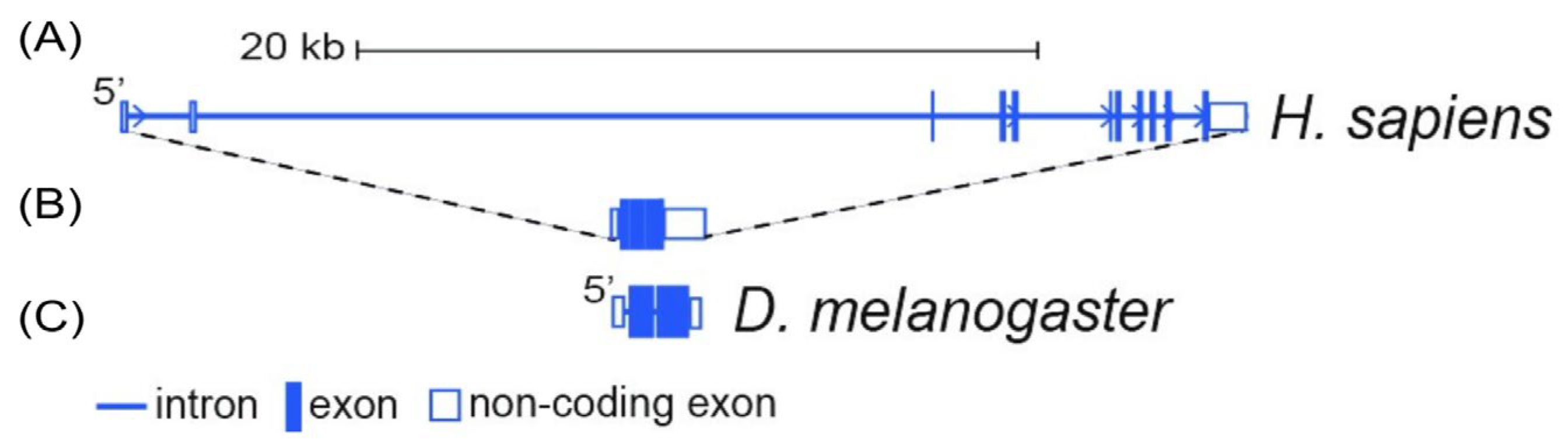
The RCC1 gene in humans was discovered by M. Ohtsubo et al. in 1989 [1]. The structure of the RCC1 gene is well studied. The Drosophila melanogaster and Homo sapiens genes were compared using databases. Figure 1 shows the structure of the RCC1 gene in both Homo sapiens and Drosophila melanogaster; Table 1 provides a comparative analysis of the structural organization of the gene across these two species.
The RCC1 gene in Homo sapiens is approximately 14-fold larger than that in Drosophila melanogaster due to insertion of extensive introns between short exons. Contrariwise, in Drosophila melanogaster, long exons are separated by short intronic sequences. Therefore, genes have comparable lengths when only the exonic sequences are considered (Figure 1). Alignment of their nucleotide sequences (RCC1 H. sapiens: NM_001381865.2, RCC1 D. melanogaster: NM_079219.3) revealed 32% exon homology (data not shown).
The presence of polytene chromosomes in D. melanogaster offers a unique opportunity to localize the RCC1 gene in a certain structure of the interphase genome. Previously, we identified four chromatin states by analyzing the distribution of proteins and histone modifications: aquamarine and lazurite chromatin, where housekeeping (HK) genes localize (promoters in aquamarine chromatin are interbands of polytene chromosomes, while gene bodies in lazurite chromatin are located in gray bands). The developmental genes are located in ruby chromatin (black bands and heterochromatin). Intergenic spacers and long introns are enriched in malachite chromatin [11,12].
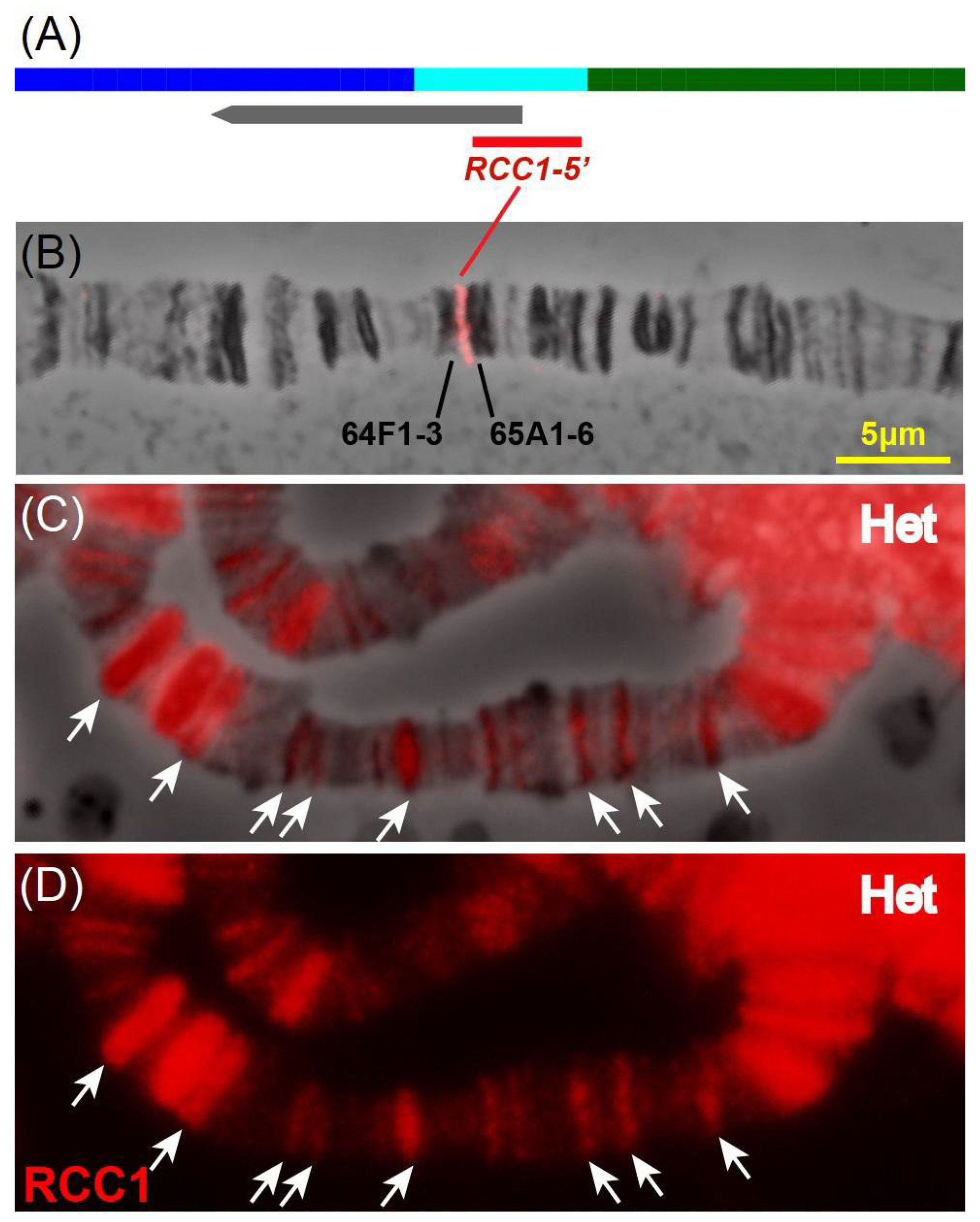
An analysis of Figure 2 demonstrates that the DNA probe from the 5′-end of the RCC1 gene is localized in aquamarine chromatin, being localized in interbands in chromosomes, thus indicating that this gene belongs to the group of housekeeping genes [9,10] constituting ~50% of protein-coding genes (6562) in the D. melanogaster genome.
According to the FlyBase (FlyAtlas, modENCODE) database [22], RCC1 in D. melanogaster is expressed in all the tissues at all the developmental stages. According to the Human Protein Atlas database, in H. sapiens, RCC1 is also characterized by low tissue specificity for 29 tissues [21].
However, the gene product (RCC1 protein in the specified chromosomal region (C and D) localizes in inactive chromatin and predominantly in black bands where the developmental genes reside (3162 developmental genes in the D. melanogaster genome) or in heterochromatin.
Precise positions of the sites of labeling with anti-RCC1 antibodies in the full set of chromosomes were determined in wild-type and mutant D. melanogaster lines ([10], Table S1 and Figure 3).
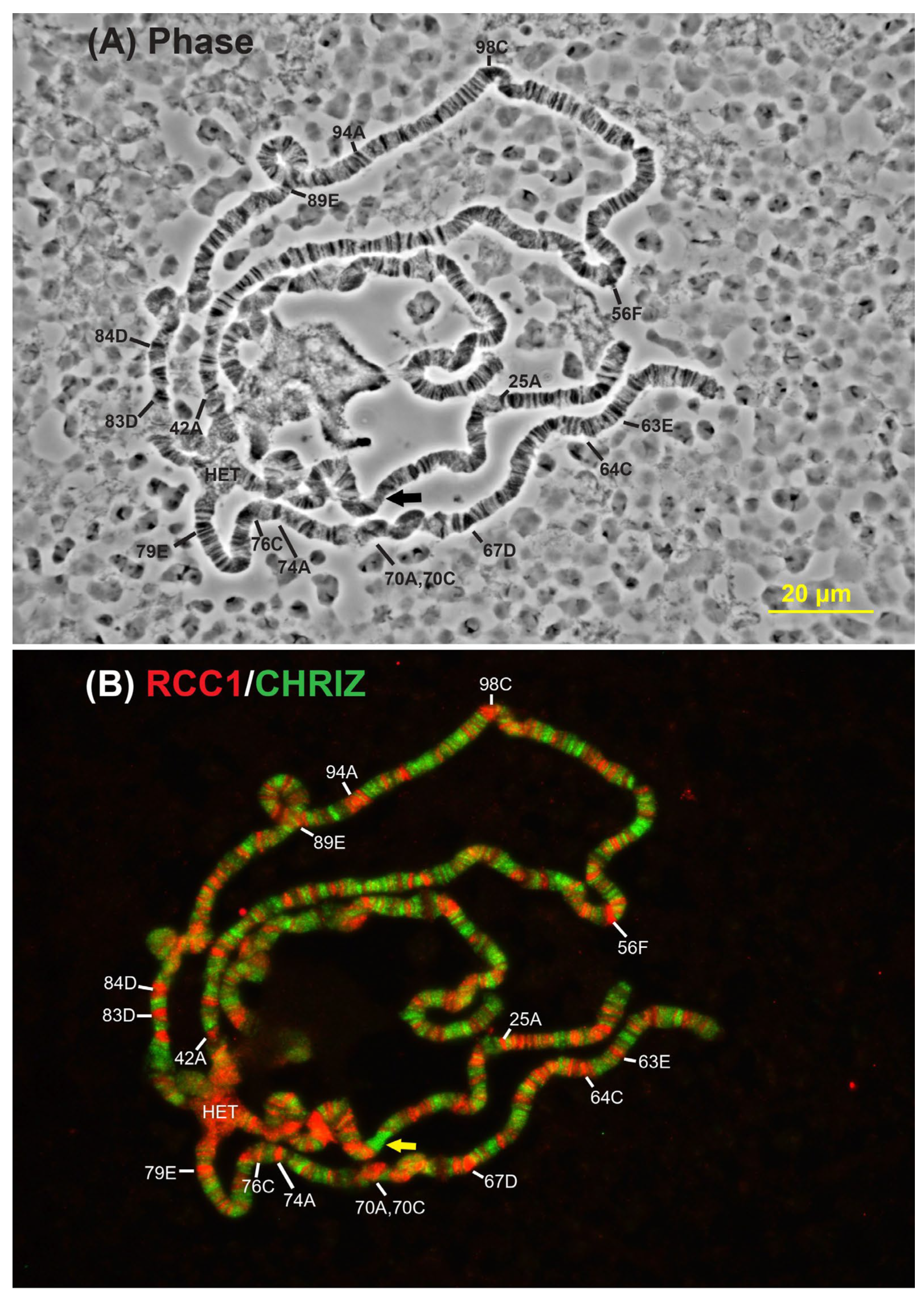
Figure 3 shows the colocalization of antibodies targeting proteins specific to housekeeping genes and Chriz between black bands and antibodies targeting the RCC1 gene product on Drosophila melanogaster polytene chromosomes of the wide-type Oregon-R strain.
Figure 3 shows the localization of antibodies targeting proteins Chriz specific to housekeeping genes and antibodies targeting the RCC1 gene product on Drosophila melanogaster polytene chromosomes. It is worth mentioning that antibodies targeting the Xenopus RCC1 protein, which specifically bind to RCC1 proteins in both the Drosophila melanogaster and Homo sapiens, were used for immunostaining. Both products exhibit specific distribution patterns.
The extensive Chriz localization regions and numerous shorter regions are alternating with the areas stained positively for RCC1. One can see that RCC1 localizes in the pericentromeric chromatin regions as well as in the regions of black bands within the euchromatic arms of chromosomes. All the signals are exclusively localized to these regions. In other words, the RCC1 protein resides on chromosomal segments containing developmental genes [11]. A total of about 260 localization sites were identified for the Rif11 strain. The comprehensive list is provided in Table S1 (Supplementary Materials). The RCC1 signals were identical in all the studied strains (Figure 3, Table S1, [10]).

2.2. Characterization of RCC1 Protein

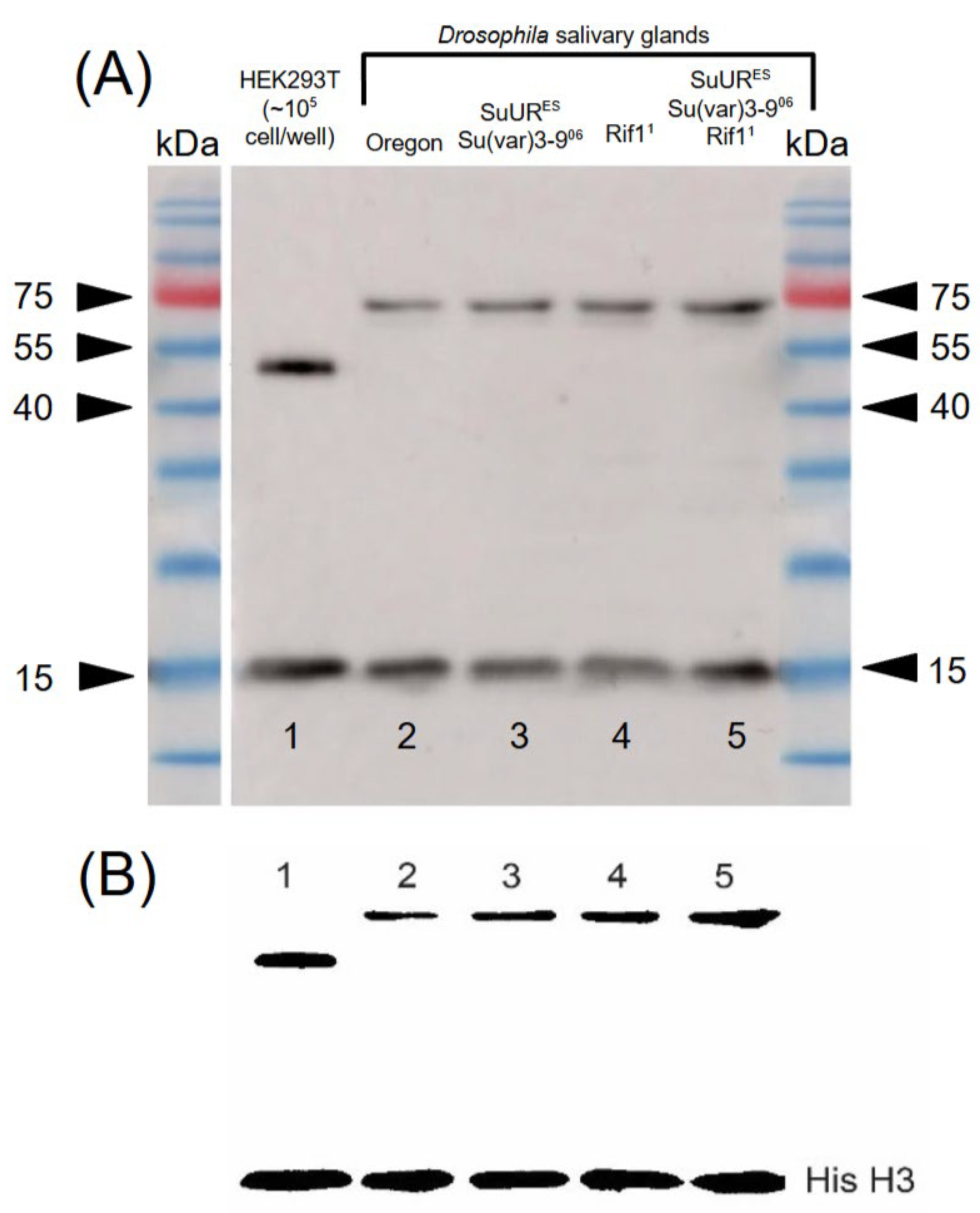
In 1991, M. Frasch identified a Drosophila homolog of the RCC1 gene, which was named BJ1. Using monoclonal antibodies, M. Frasch identified this nuclear protein and mapped it to polytene chromosomes; it was found to be associated with bands, without preference for specific loci. However, as we now know, there are two types of these bands: black bands containing developmental genes and gray bands, which contain housekeeping genes, together with interbands. These gene groups differ both at the genetic (nucleotide sequence) and the epigenetic (the level not involving changes to the DNA structure) levels. The genomic localization of the RCC1 protein in the Drosophila melanogaster genome was previously discussed in report [10]. The present study provides more detailed localization data obtained for two strains: Rif11 and SuURES, Rif11, Su(var)3-906. In our study, we revealed that antibodies targeting Xenopus RCC1 protein specifically bind to the RCC1 protein of both Drosophila melanogaster and Homo sapiens, as demonstrated by Western blot analysis (Figure 4).
Black bands and the chromocenter are known to frequently undergo incomplete polytenization (under-replication), resulting in underrepresentation of the material from black bands in wild-type chromosomes. We employed Western blot hybridization to determine the molecular weight and perform a semi-quantitative analysis of the RCC1 protein in the Oregon-R strain of Drosophila melanogaster and in strains carrying different doses of mutant genes that restore under-replicated DNA regions in Drosophila chromosomes (Figure 3). It was demonstrated using the ImageJ software that in the mutant strains SuURES Su(var)3-906, Rif11, and SuURES Su(var)3-906 Rif11, the relative content of RCC1 protein in salivary gland cells increases more than threefold compared to the wild-type strain (Figure 4A,B).
Under-replication in polytene chromosomes of Drosophila melanogaster can be significant (up to 75% of DNA under-replication in black bands and pericentromeric heterochromatin). Mutations in SuURES or Rif11 proteins suppress under-replication and repair the target amount of DNA per individual chromatid [23].
Therefore, the data shown in Figure 4B allow one to infer that, indeed, the amount of DNA is restored, and the quantity of material in black bands and chromocenter increases. Since RCC1 binds to these structures, the quantity of RCC1 protein also rises. This finding proves once again that the antibodies used are specific to under-replicated chromosomal regions (i.e., RCC1 binding sites).
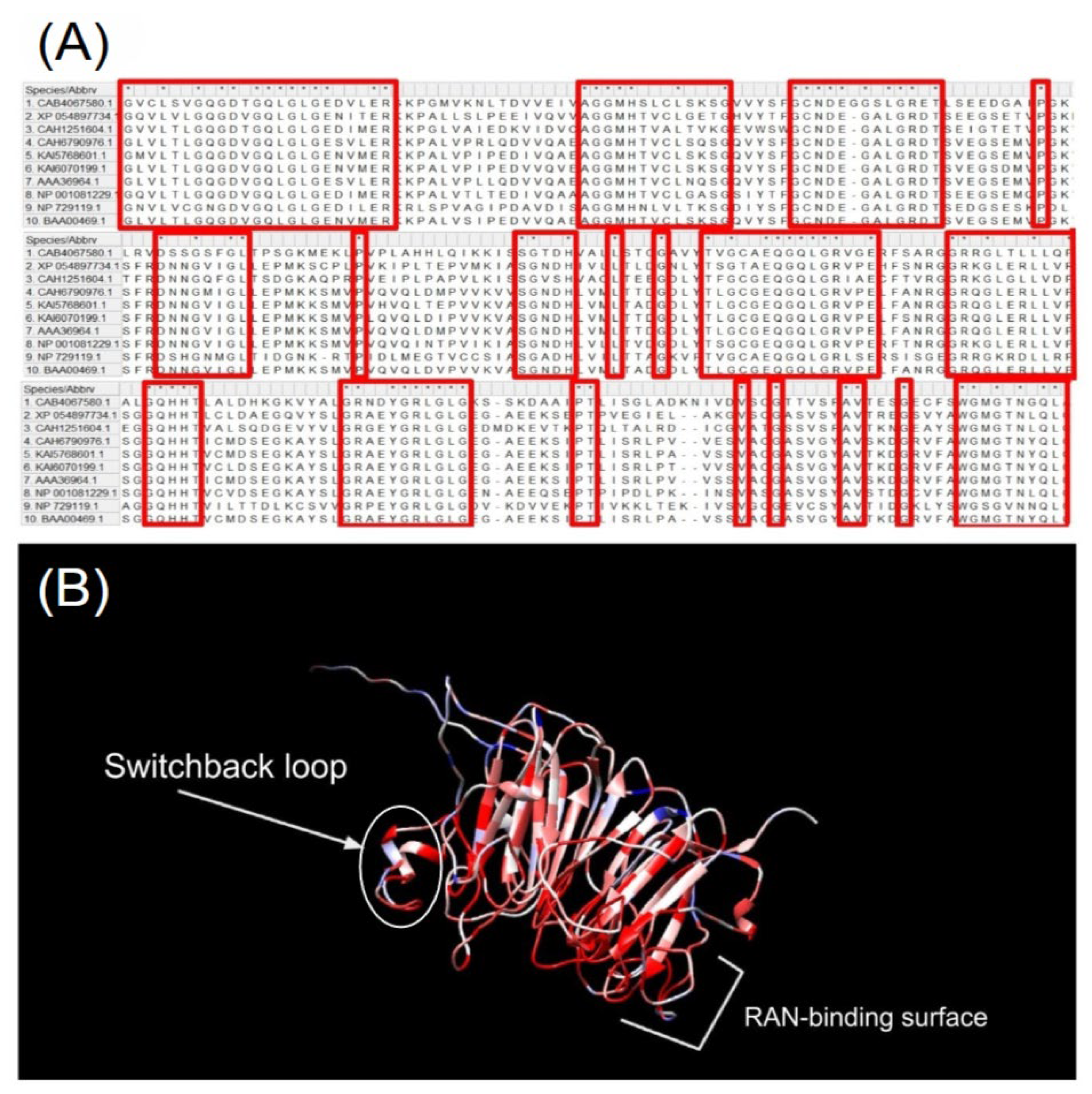
Unlike the RCC1 gene, RCC1 protein is more conserved, human RCC1 protein has many homologs among various organisms. Figure 5 shows (A) the RCC1 protein sequence alignment regions in ten organisms and (B) the model of human RCC1 protein, with the conservatism map built for these organisms.
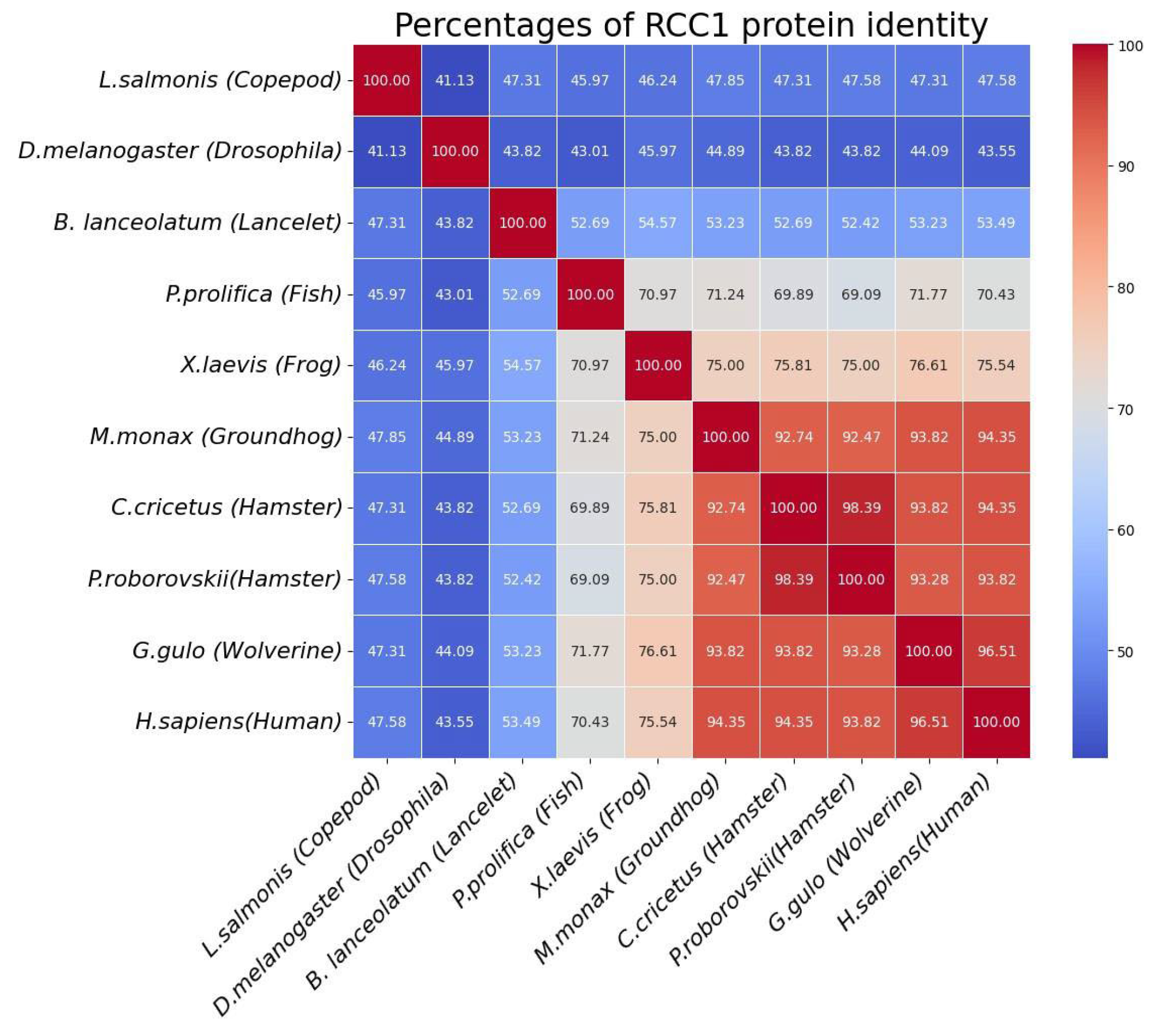
Despite the small percentage of the total homology between some organisms, certain regions in RCC1 protein still remain intact. The region responsible for RCC1–RAN binding and the switchback loop required for binding to nucleosome remain especially conserved [24]. Figure 6 shows detailed information on homology percentage in these organisms.
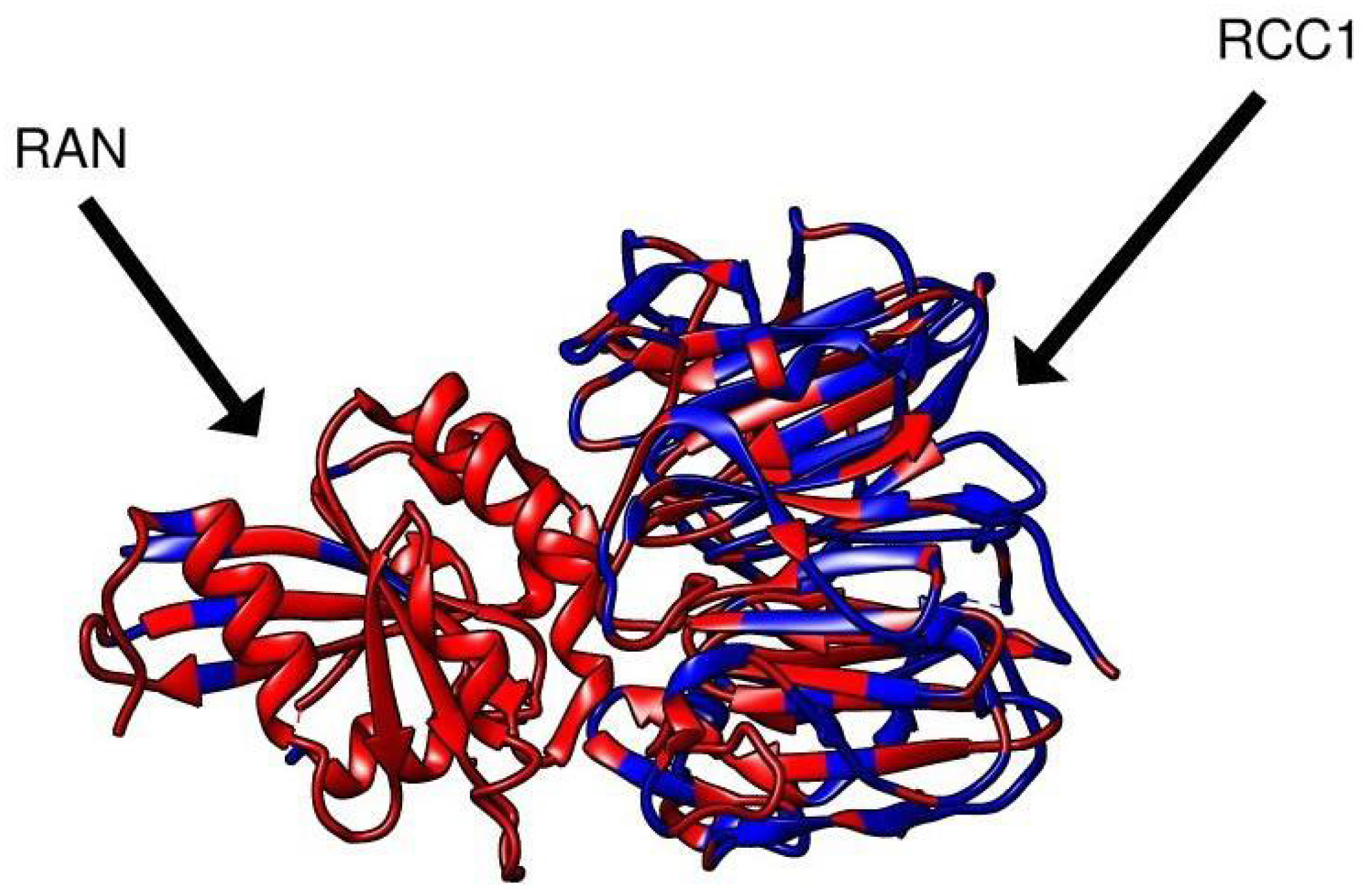
The model showing the conserved regions of RCC1 and RAN for Drosophila 289 melanogaster and Homo sapiens is shown individually in Figure 7. The model of RCC1–RAN interaction, with the conservatism map between Drosophila melanogaster and Homo sapiens, is presented.
The model demonstrates that despite the large total percentage of blue color, the switchback loop and the RAN-binding surfaces are conserved.
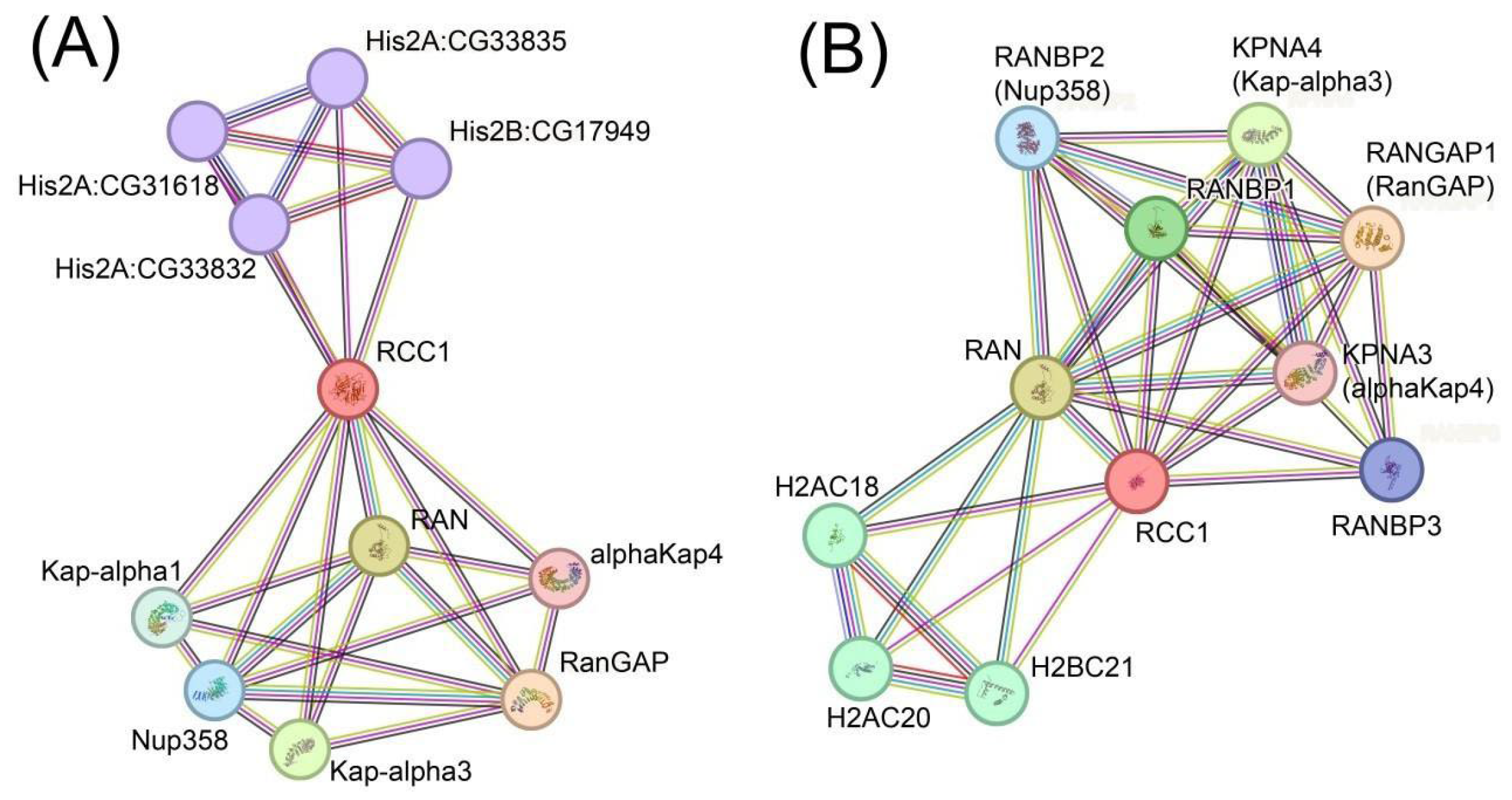
When further studying the interactions of RCC1 protein in Drosophila melanogaster and Homo Sapiens, we placed a closer focus on proteins predicted to interact with RCC1 in both species. Ten proteins for each of the species, predicted to interact with RCC1 according to the STRING database [25], are presented in Figure 8.
Figure 8 indicates that both in Homo sapiens and Drosophila melanogaster, the RCC1 protein interacts with histone proteins, Ran and Ran-related proteins, as well as importins. Thus, Kap-alpha1 is a homolog of KPNA6; alphaKap3, a homolog of KPNA4/KPNA3; alphaKap4, a homolog of KPNA3/KPNA4; RanGAP, a homolog of RanGAP1; and Nup358, a homolog of RanBP2.
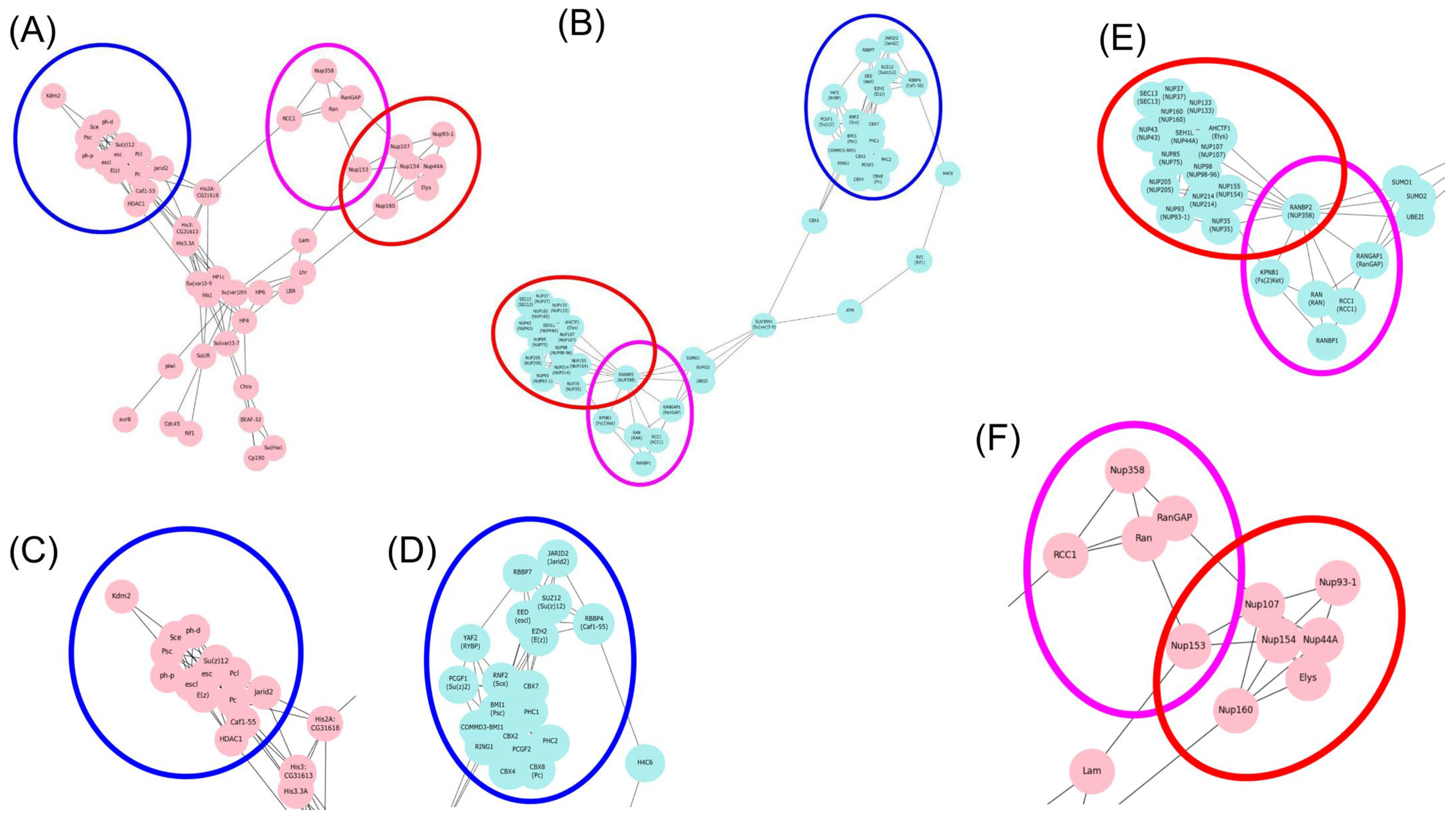
Polytene chromosomes in Drosophila melanogaster enable detailed analysis of the localization of various proteins in the genome, which is infeasible for Homo sapiens chromosomes. Taking into account the predominant localization of RCC1 within densely packed DNA regions (heterochromatin and black bands) (Figure 3), proteins associated with heterochromatin and black bands in D. Melanogaster were identified: aurB, D1, eff, Elys, E(z), His1, HP4, Lam, HP3, Nup93-1, Pc, Pcl, Psc, Sce, Ran, Rap1, RCC1,Su(var)3-9, Su(var)205, HP1a, su(Hw), and SuUR [26,27,28,29,30,31,32,33,34,35,36,37,38,39]. Proteins interacting with them were retrieved, and repeats for several proteins were identified. The STRING database used for predicting interaction employs the following criteria: the interaction is indicated in other databases; the interaction has been verified experimentally; genetic neighborhood; gene fusion; genetic coincidence; co-expression; protein homology; and frequent mentioning of co-occurring genes in the literature. Each predicted interacting protein was then compared to the original list of heterochromatin-associated proteins. An undirected graph of interactions (Figure 9A) was plotted using the Network X library for Python 3.10.12 as a result of this analysis.
Figure 9A indicates that in D. melanogaster, proteins were divided into several groups having a common function. The function was analyzed using the DAVID bioinformatics tool and the Uniprot database. Table 2 shows the distribution of genes with respect to their functions. Next, proteins homologous for Homo sapiens were retrieved for these proteins using the FlyBase database [22], and identical manipulations were performed for them. An undirected graph of interactions (Figure 9B) was plotted as a result of analysis. Figure 9B demonstrates that human proteins were also classified into groups according to the common function. Table 3 lists classification of proteins according to their functions.
Interestingly, according to recent data, the NUP98 and SEC13 proteins may also be involved in heterochromatin repair [40].
The results of this analysis demonstrate that the selected group of D. melanogaster proteins bound to condensed chromatin has homologs forming similar interaction networks among H. sapiens proteins. Hence, the results of modeling and cytological analysis are consistent and allow one to consider RCC1 as being localized within transcriptionally inhibited regions. Cytological data cannot be obtained for Homo sapiens; however, the modeling data are reproduced, with identical protein groups being singled out.
As it follows from the modeling data, RCC1 exhibits an affinity for Nucleoporin proteins (Nups) (Figure 9A,B,E,F). We analyzed the distribution of NUP93-1 in D. melanogaster nuclei and chromosomes.
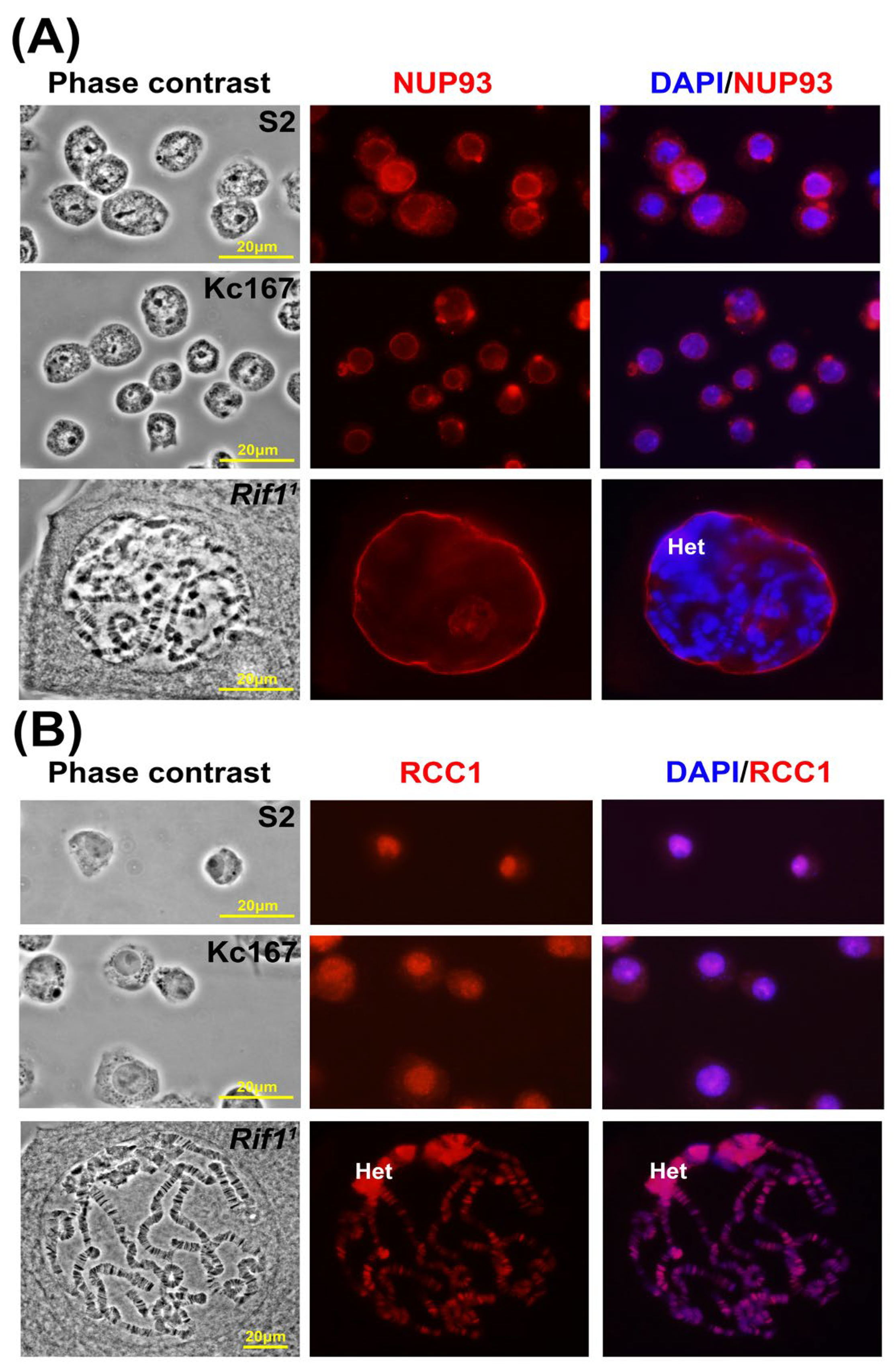
In interphase nuclei of cell cultures and unsquashed nuclei with polytene chromosomes of salivary glands, NUP93-1 binds exclusively to the nuclear envelope, and no labeling signs were identified in the bulk of the nucleus (Figure 10A). Meanwhile, anti-RCC1 antibodies easily penetrate into the unsquashed nucleus and stain chromosomes (Figure 10B).
The data obtained for localization of RCC1 and NUP93-1 in the D. melanogaster cell culture and unsquashed nuclei with polytene chromosomes explicitly contradict Figure 9, which indicates that RCC1 in H. sapiens and D. melanogaster belongs to groups of proteins having shared functions. In other words, RCC1 and NUP93-1 are supposed to interact in chromosomes both in H. sapiens and D. melanogaster as demonstrated by the 4HMM model according to which Lamin proteins within the nuclear envelope are expected to be localized in ruby chromatin.
Furthermore, it has been demonstrated recently that the component of the nuclear pore complex Nup93-1 is involved in repression mediated by Polycomb proteins, which are known to localize to black bands [23], and marks PRE-chromatin elements [35].
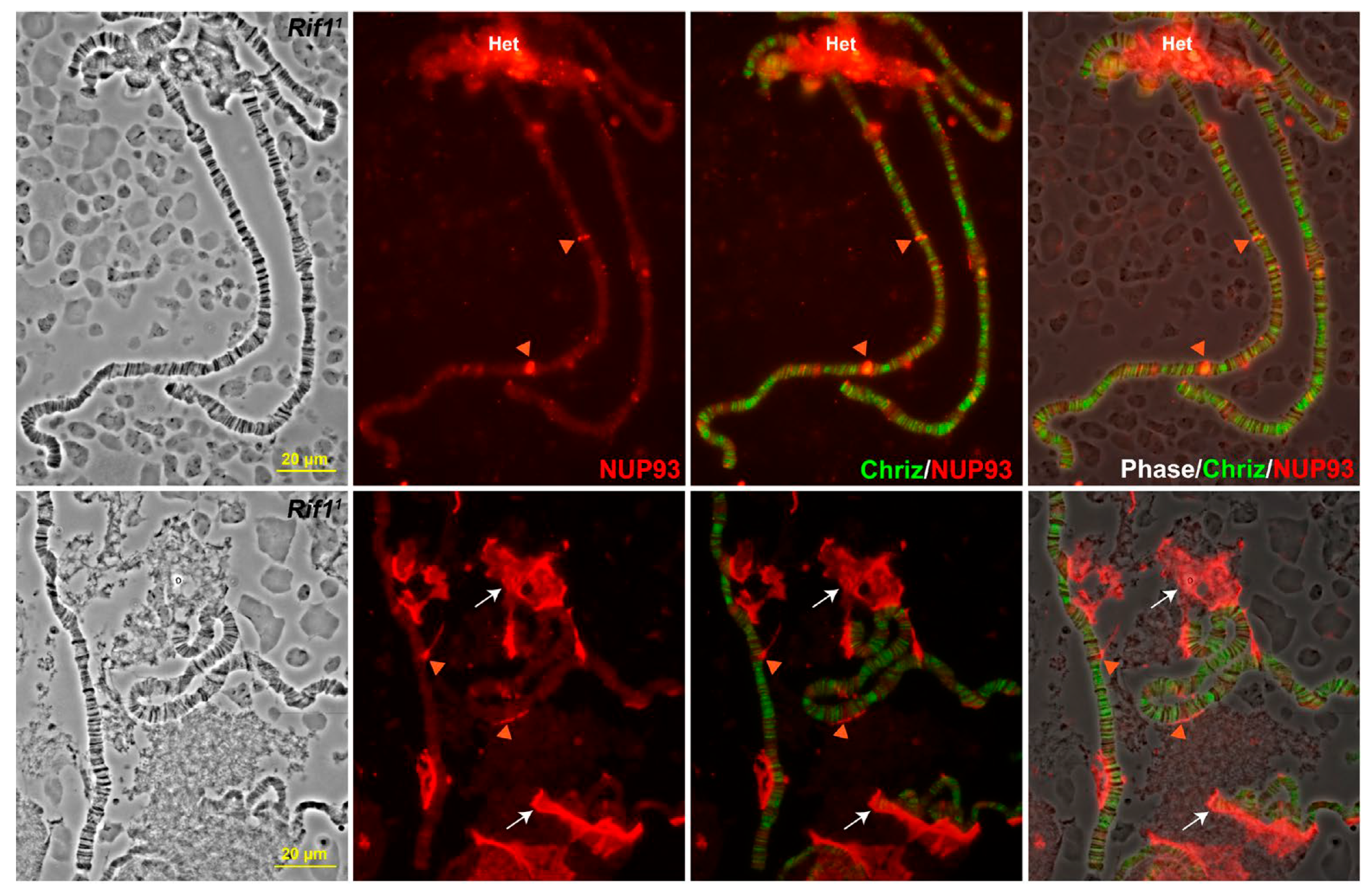
However, Figure 2 and Figure 3 indicate that in polytene chromosomes, anti-RCC1 antibodies intensively stain heterochromatin. One can see in Figure 11 that envelope fragments labeled with anti-NUP93-1 antibodies colocalize with pericentromeric heterochromatin (Het), which always localizes to the inner side of the nuclear envelope. Therefore, one can hypothesize that NUP93-1 and RCC1 actually have shared interactions. It can be indicated by individual signals from NUP93-1 (red arrow heads) shown in Figure 11, which can represent residual contacts between RCC1 and the nuclear envelope. These contradictions are partially resolved by the fact that in Figure 10B, the contacts are partial contacts between NUP93-1 proteins and pericentromeric heterochromatin, which almost always resides on the inner side of the nuclear envelope in the interphase nucleus.
Many additional studies both for H. sapiens and D. melanogaster need to be conducted to resolve this contradiction, and it harbors a potential for new discoveries.

2.3. RCC1 Localization Throughout the Cell Cycle

We used anti-xenopus RCC1 antibodies whose epitope resides in the conserved portion of the RCC1 protein (Figure 4), so the same antibodies could be used for immunostaining of all the RCC1 protein isoforms for both D. melanogaster and H. sapiens.
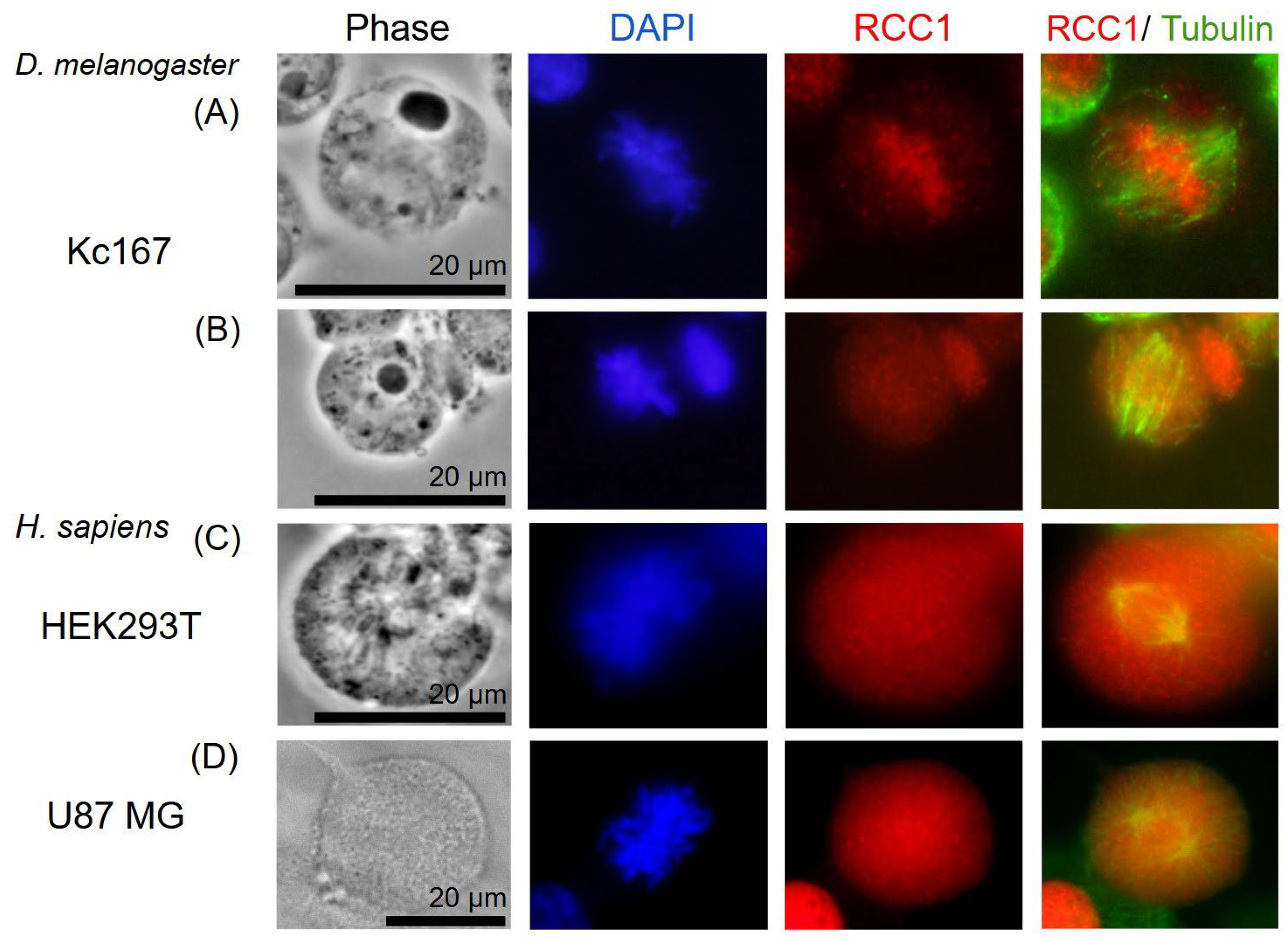
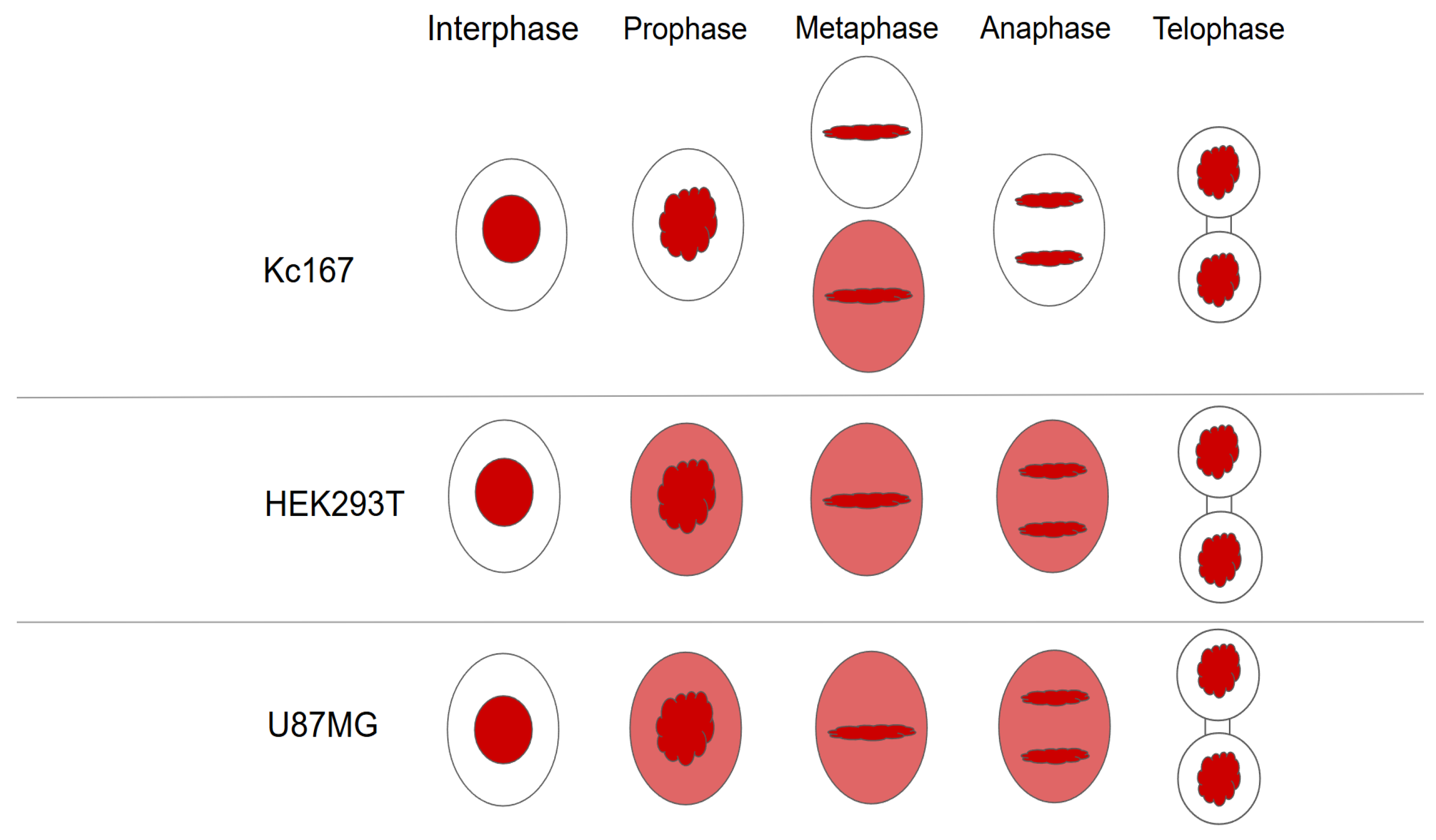
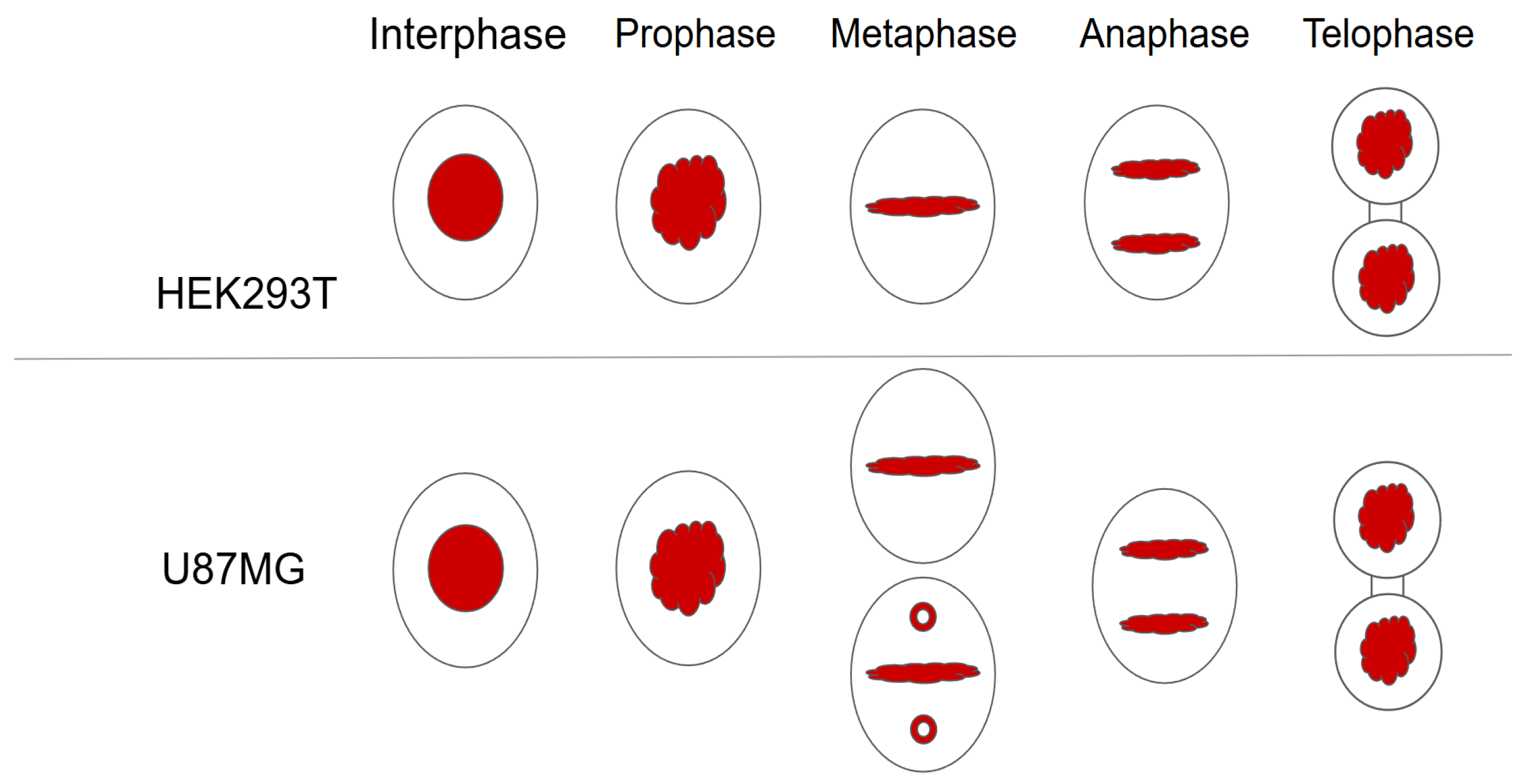
RCC1 localization is known to be dependent on the fixation method [41]. It is generally believed that upon acetone–methanol fixation, RCC1 is detected on chromatin throughout the entire cell cycle, whereas when cells are fixed with formaldehyde, RCC1 colocalizes with chromatin exclusively during interphase and is not detected on metaphase chromosomes. Moore et al. expressed fusion with green fluorescent protein (GFP-RCC1) in human cells. Live transfected cell follow-up demonstrated that GFP-RCC1 resided in the nucleus during interphase and localized predominantly to chromatin at all stages of mitosis, although the signal dispersed in the cytoplasm was intensified during metaphase/anaphase [41]. In our study, we analyzed the RCC1 localization throughout the cell cycle using immunostaining with anti-RCC1 antibodies for two different fixation conditions. For formaldehyde fixation, which induces covalent interprotein cross-links, one can observe both the chromatin-bound and soluble forms of RCC1. Figure 12 and Figure 13 show the optical microscopy images of RCC1 localization during metaphase for different fixation methods. The general RCC1 localization in the cell cycle for Kc167 (D. melanogaster), U87 (H. sapiens), and HEK293T (H. sapiens) cell lines is shown in the scheme (Figure 14 and Figure 15); the remaining photographs are provided in Supplementary materials (Figures S1–S8, Tables S3 and S4).
Fixation with acetone and methanol could not be used for these antibodies for the Kc167 cell line (D. melanogaster). Therefore, Figure 13 shows only the human cell lines.
Figure 14 demonstrates that during interphase and telophase, RCC1 colocalized with chromatin in all the cell lines. During metaphase, the protein was distributed across the entire cell, being slightly concentrated within chromatin; for the H. sapiens cell lines, RCC1 was found to localize within alpha-tubulin. For D. melanogaster cells during metaphase, we observed both protein distribution across the entire cell and its colocalization with chromatin.
Our findings on localization of RCC1 protein for Kc167 and HEK293T cell lines agree with the known data [41]. However, RCC1 localization near microtubules within the spindle in metaphase is detected for the U87MG cell line upon fixation with acetone and methanol.
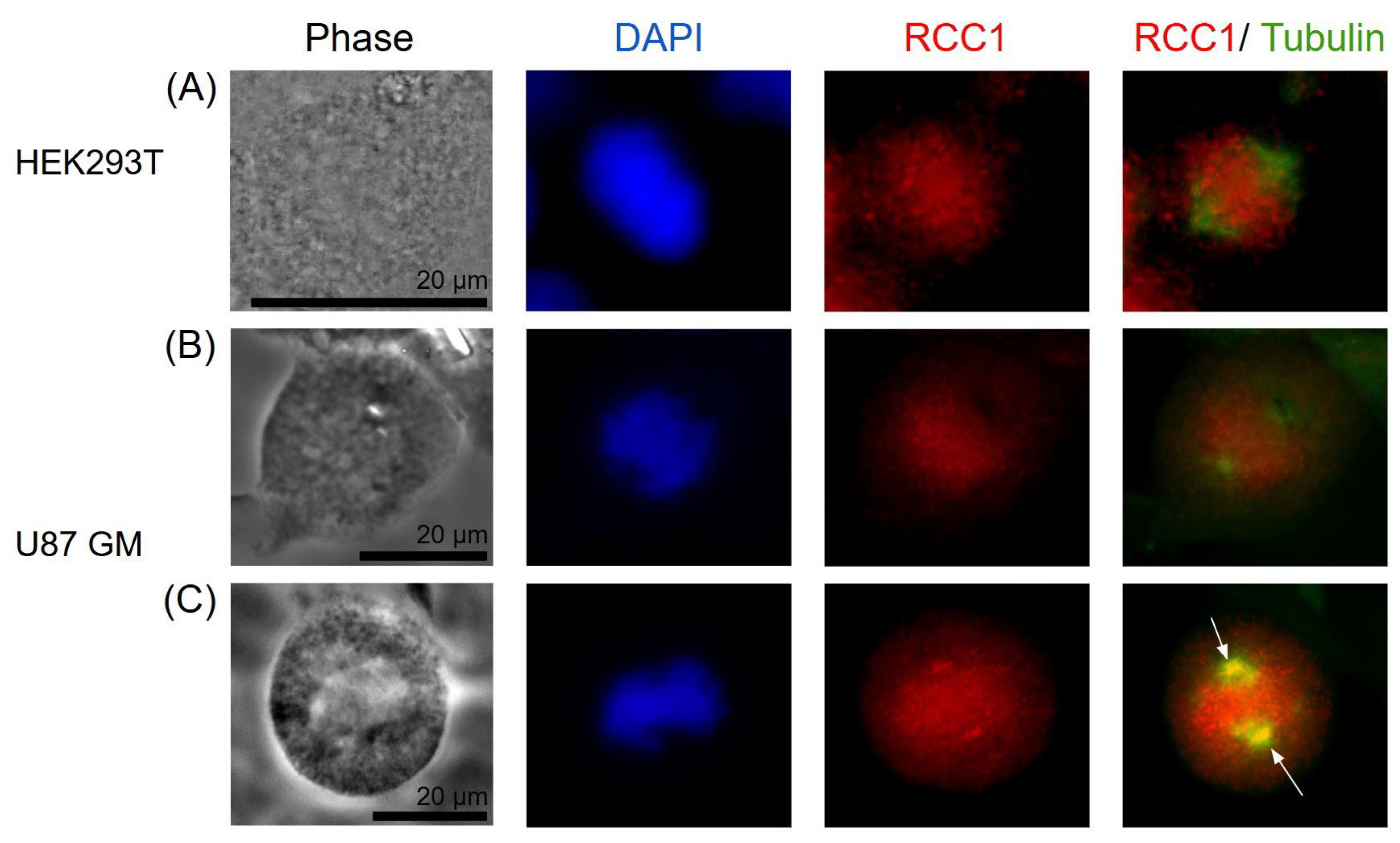
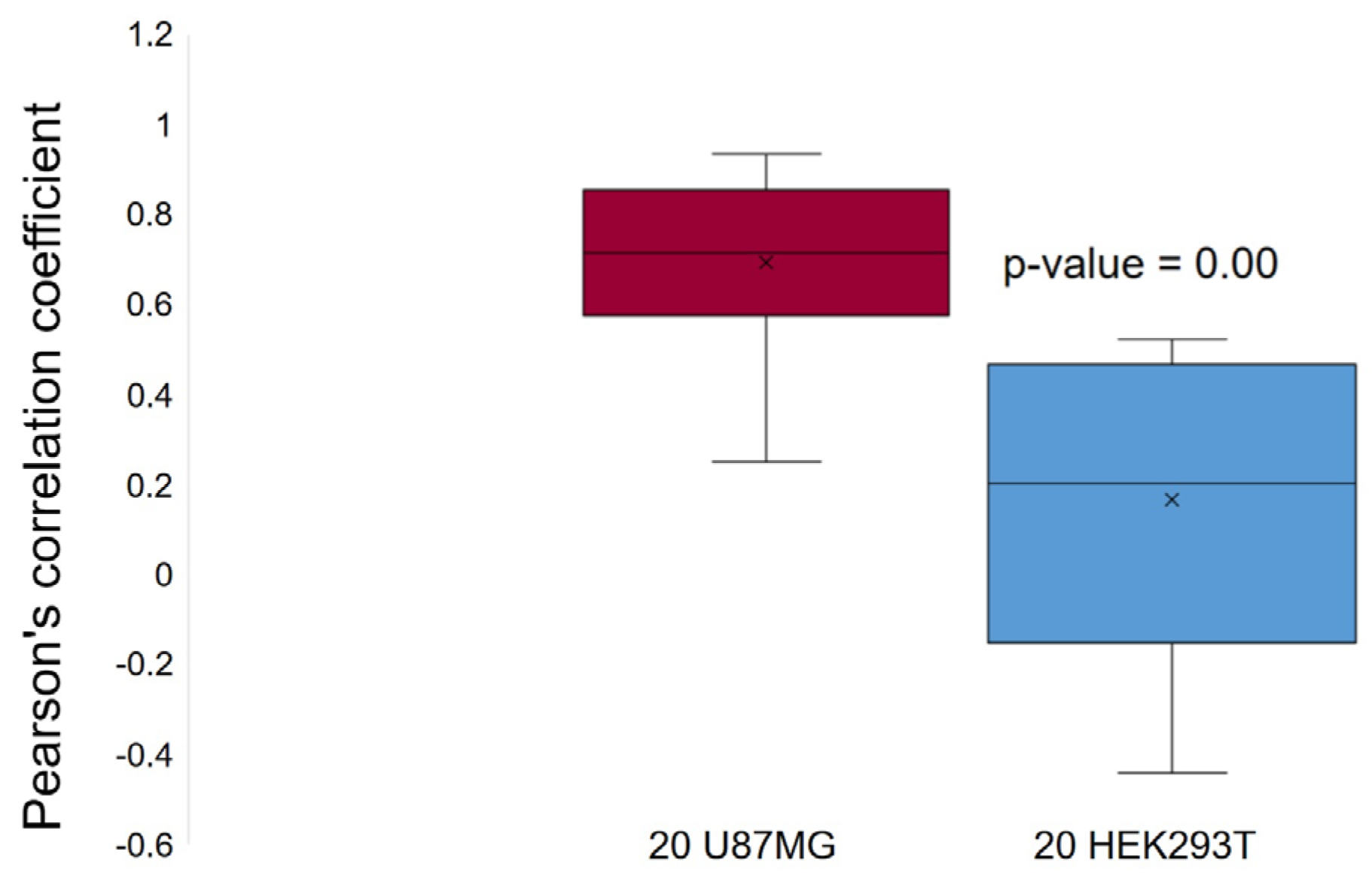
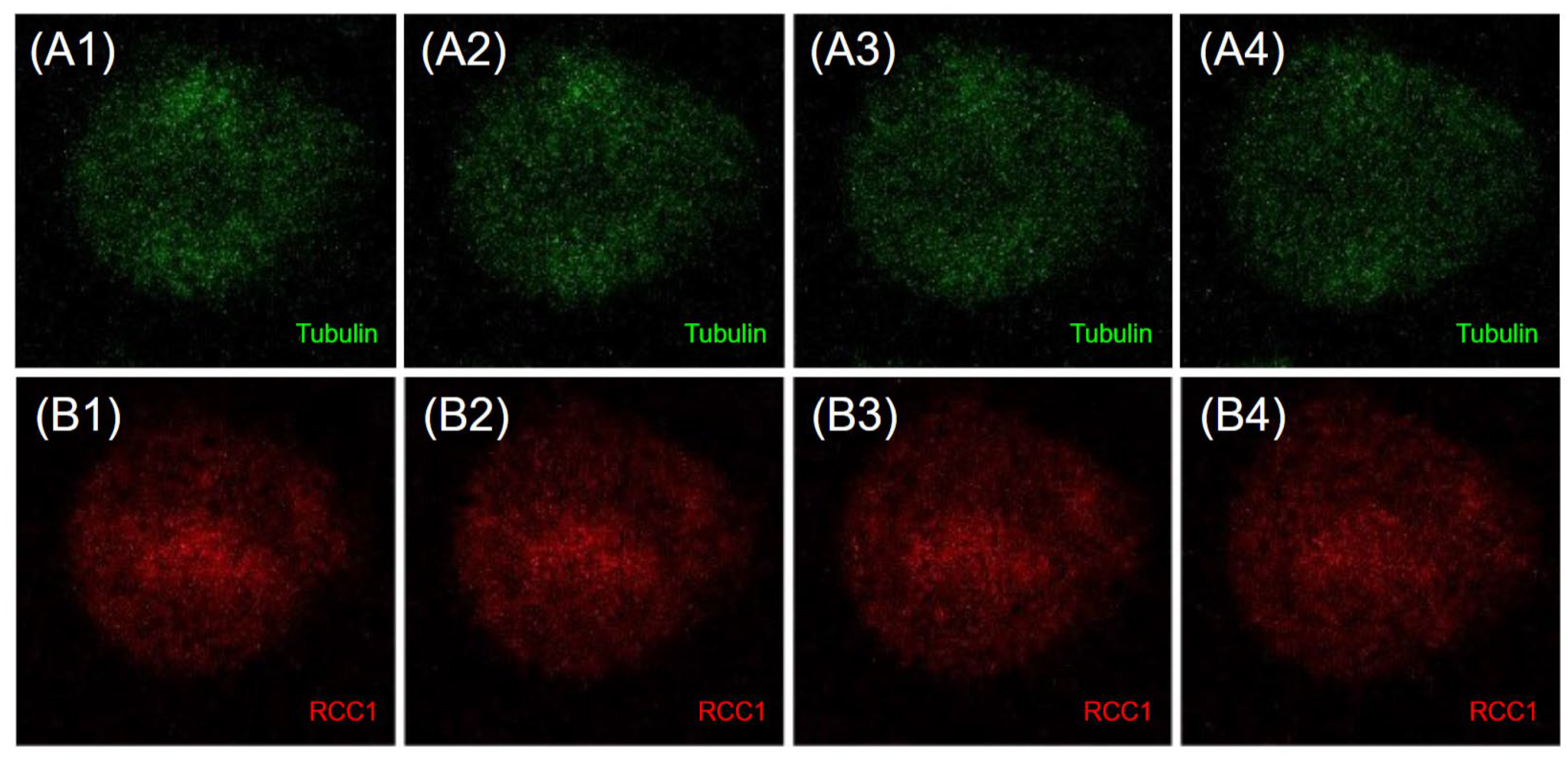
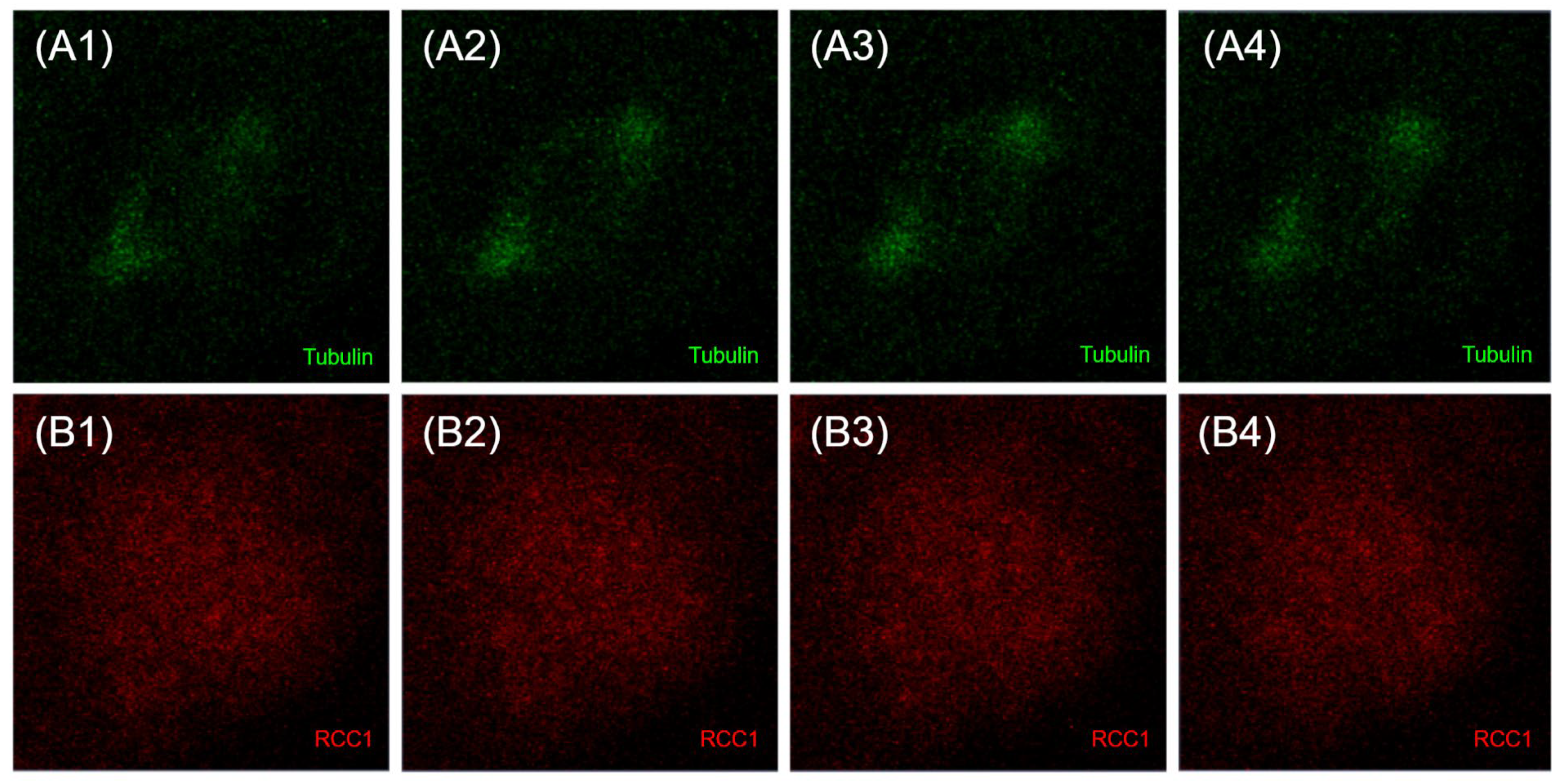
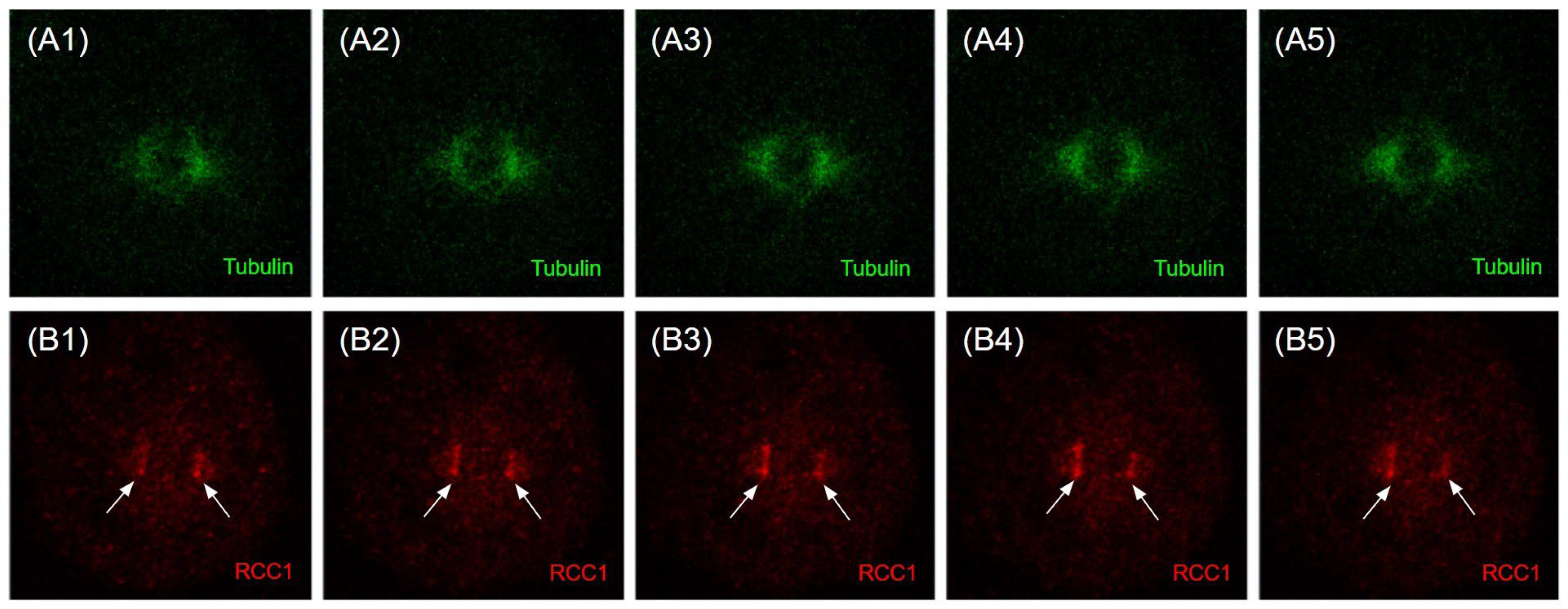
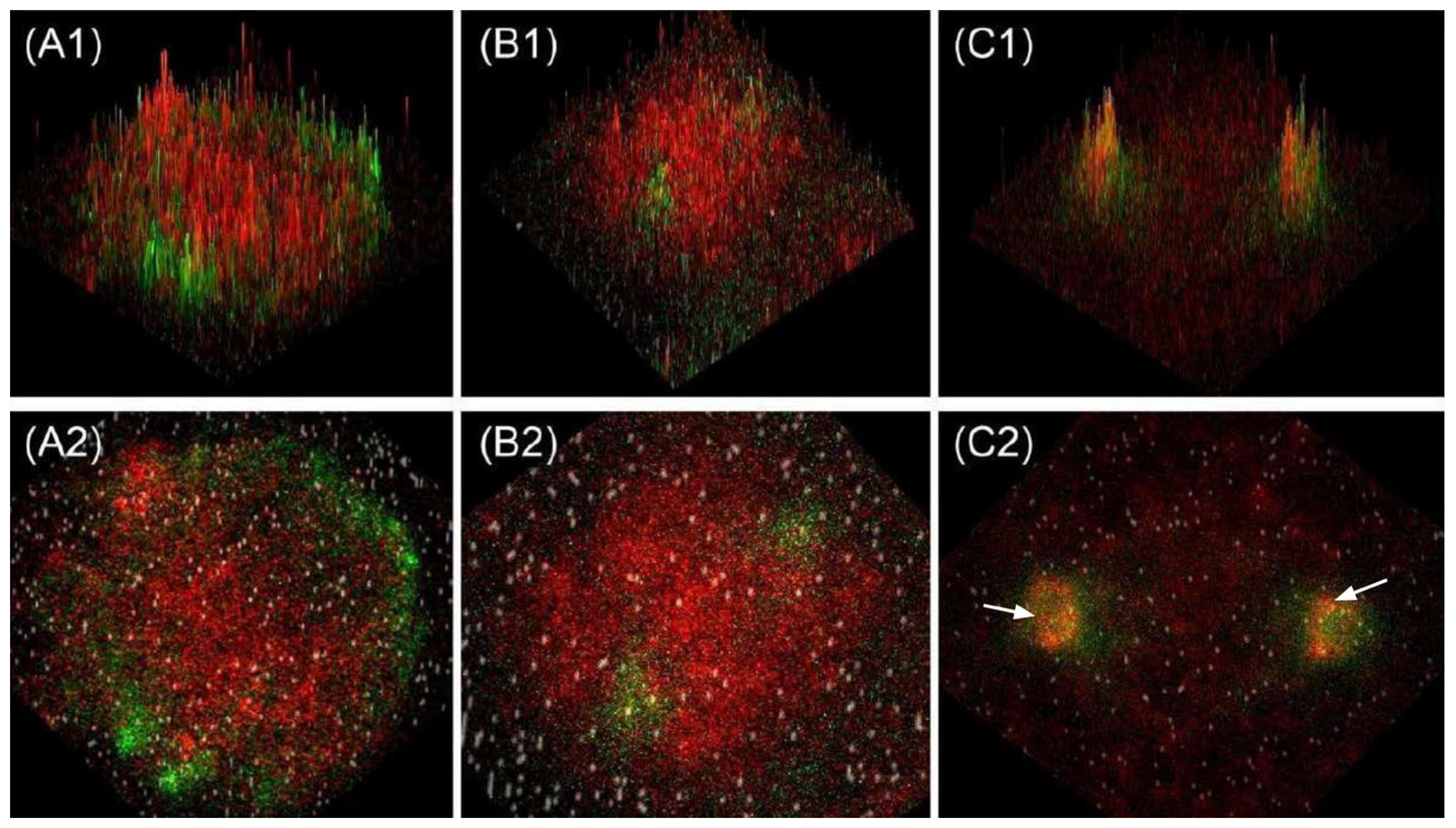
It was previously believed that RCC1 can affect mitotic spindle assembly only in an indirect manner by forming a proper GTP gradient. RCC1 localizes near kinetochores to ensure proper microtubule orientation. We observed RCC1 localization not only near chromosomes but also in close proximity to the centrioles of the mitotic spindle. An analysis of optical microscopy images revealed colocalization of RCC1 and tubulin in U87MG cells, being verified by Pearson correlation coefficients, while no colocalization was detected in D. melanogaster Kc167 cells (Figure 16). More thorough confocal microscopy examination of the cells for which this phenomenon had been observed revealed that RCC1 and tubulin always localize to the same optical sections for all the cell lines (Figure 17, Figure 18, Figure 19 and Figure S9). However, upon signal overlapping, almost no yellow color was observed in the 3D model of a U87MG cell (Figure S9) and in 2.5 D graphs for all the cell lines (Figure 20). Furthermore, Pearson correlation coefficients were insufficient for colocalization in both Homo sapiens and Drosophila melanogaster cells, although RCC1 localization near tubulin was more prominent for U87MG human glioblastoma cells. This fact suggests that proteins might not be bound directly; instead, RCC1 can be a component of the protein complex affecting centriole microtubules. We observed this distribution of RCC1 for the transition from prometaphase to metaphase. Therefore, it can be hypothesized that not only is concentration of RCC1 important as a guanine nucleotide exchange factor near chromosomes, but it is also essential for ensuring formation of centriole microtubules in U87MG glioblastoma cells. It is also possible that confocal microscopy cannot detect RCC1–tubulin colocalization because of the collateral orientation of these proteins. It is observed most vividly for the 3D model of a U87MG cell (Figure S9).
According to the Mann–Whitney U-test, the differences in RCC1 colocalization in HEK293T and U87MG cell lines are statistically significant (p-value = 0.00).
Optical microscopy revealed potential colocalization of RCC1 and tubulin for U87MG human cell lines, which was supported by Pearson’s correlation coefficients (Figure 16). However, a more thorough confocal microscopy study revealed that although proteins resided within the same planes and lay next to each other, calculation of the Pearson’s correlation coefficient yielded no statistically significant values (data not shown). It can indicate that tubulin and RCC1 are bound into a single protein complex, but proteins either do not interact directly or can interact within a plane impeding colocalization analysis.

2.4. The Role of RCC1 in Gliomagenesis

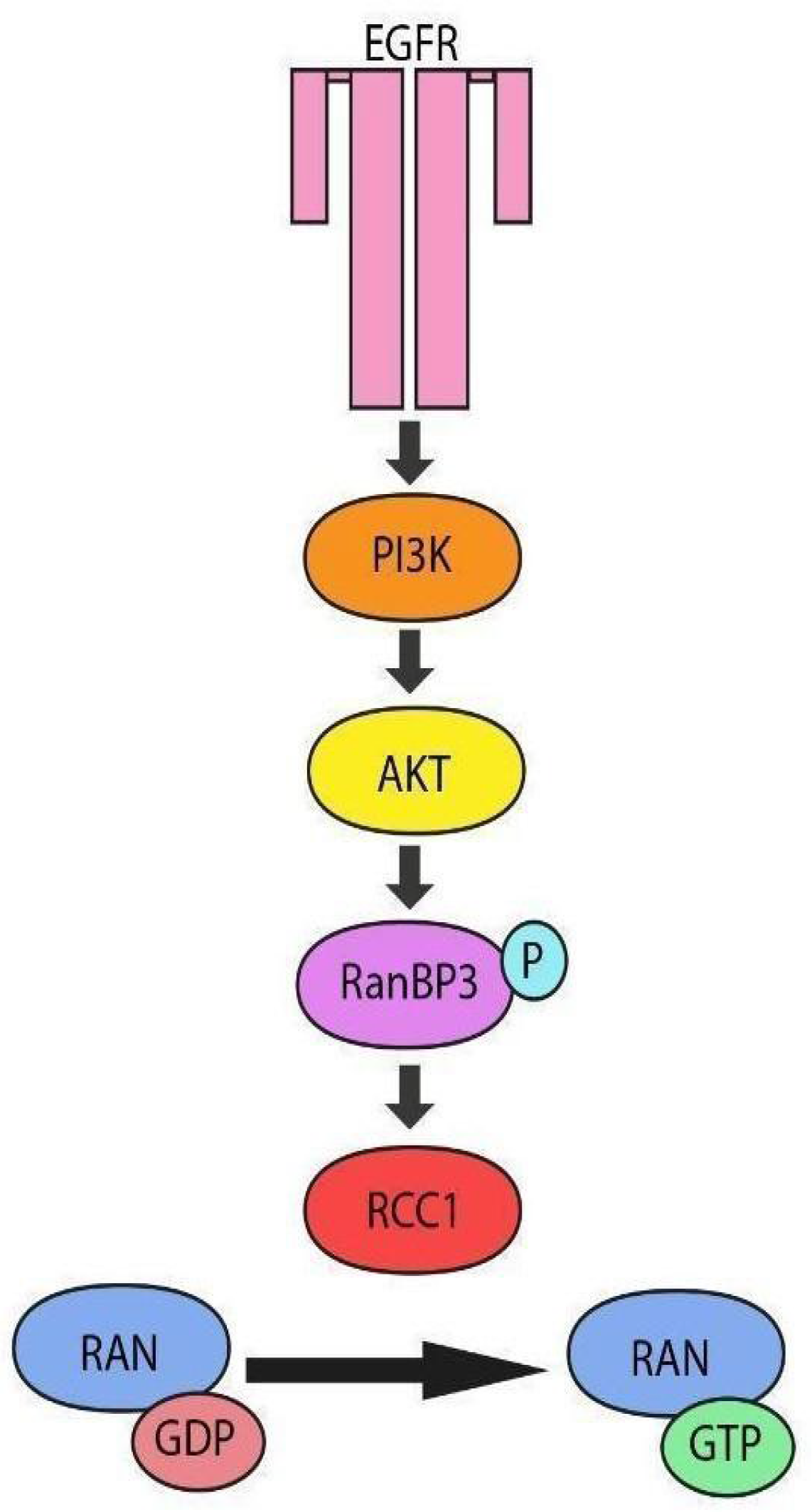
There is a D. melanogaster model of glioma simulating the disease by inserting mutations in the genes encoding epidermal growth factor receptor (EGFR) and phosphoinositide 3-kinases (PI3K) [42]. These proteins form the EGFR/PI3K/Akt signaling pathway (Figure 21), one of the key pathways involved in regulation of cell proliferation, growth, differentiation, metabolism, survival, apoptosis, and angiogenesis activation. Furthermore, it participates in regulation of the RCC1 function. Interestingly, 29 proteins out of the 31 core components of this pathway in H. sapiens have a homolog in D. melanogaster.
EGFR plays a crucial role in gliomagenesis, as well as development of chemotherapy resistance in humans [43]. Its abnormal activation can disrupt the phosphatidylinositol-3-kinase (PI3K)/AKT signaling pathway, which may further alter regulation of the RCC1 function and eventually cause RCC1 malfunctioning.
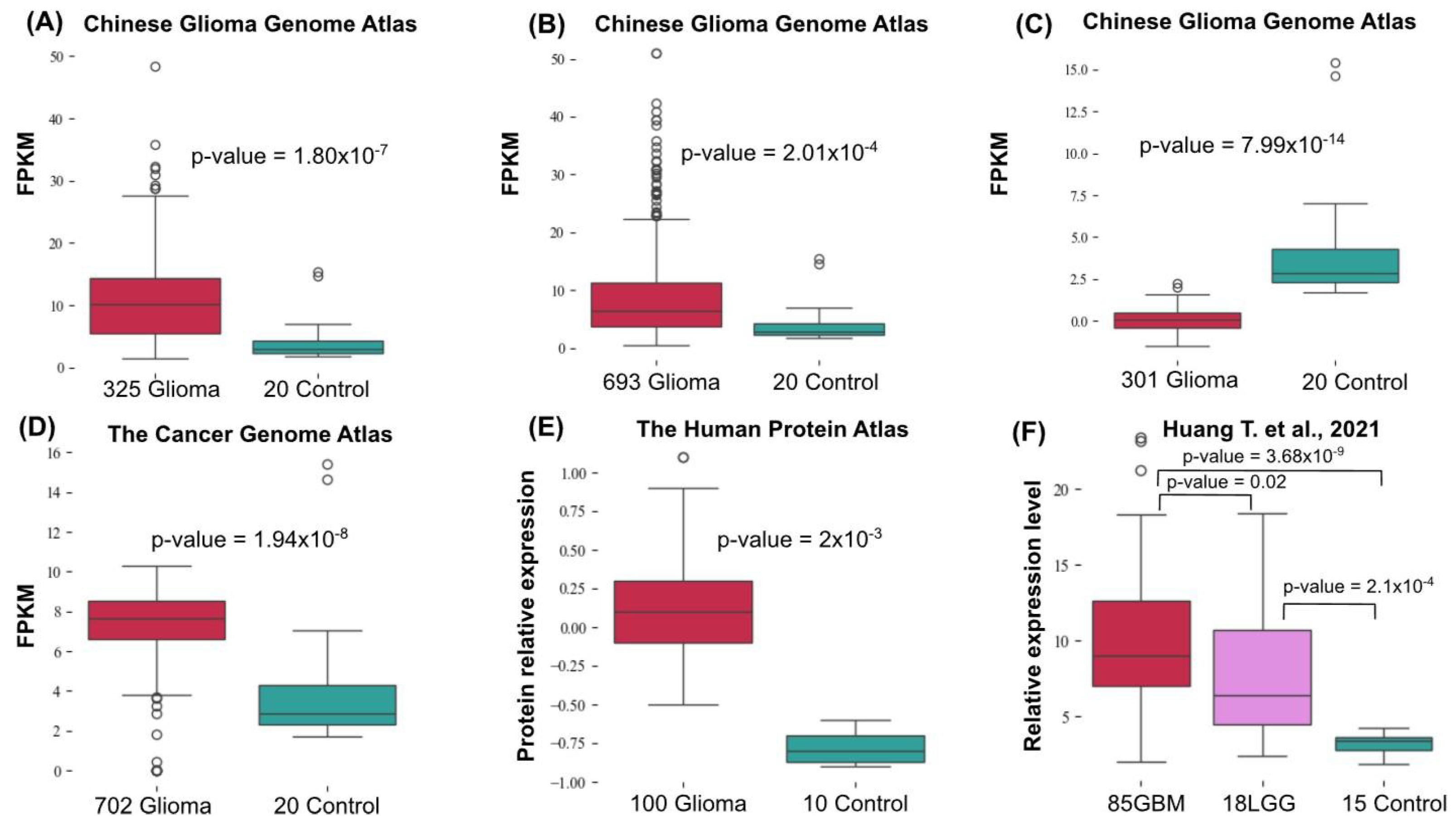
In order to assess changes in RCC1 expression, we analyzed the open-source data presented in the Chinese Glioma Genome Atlas, the Cancer Genome Atlas, the Human Protein Atlas, as well as the findings reported by Huang T. et al. [20] (Figure 22).
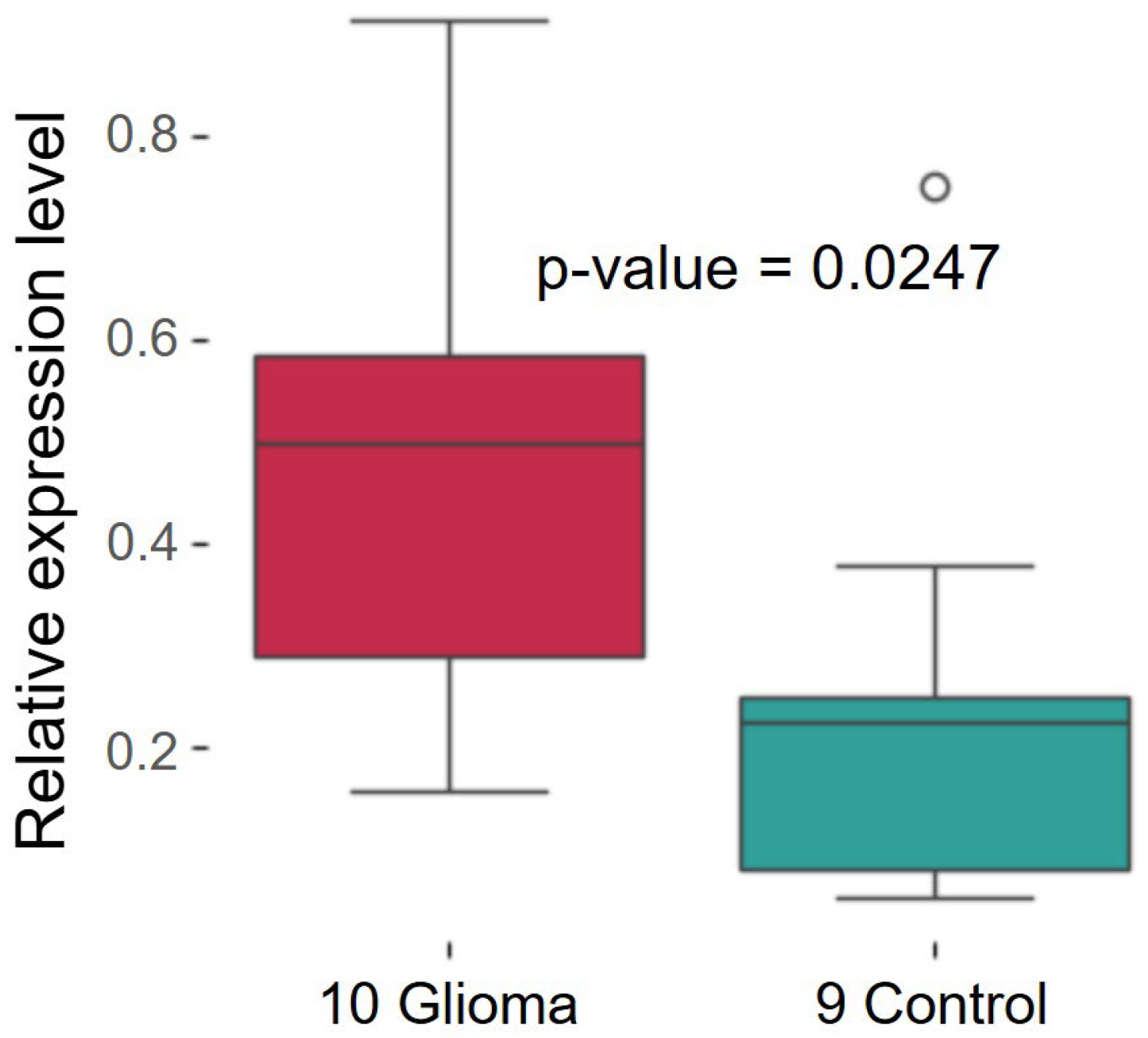
To make our own assessment, we conducted RT-PCR of ten glioma specimens and nine healthy tissue specimens obtained from patients of the Ya.L. Tsiv’yan Novosibirsk Research Institute of Traumatology and Orthopedics.
Prior to RT-PCR, six candidate reference genes (EIF2B, MRPL19, TFRC, TBP, CTBP1, and B2M) were selected based on the literature data [44] and information about commonly used genes. These candidate reference genes were tested for the following cell lines: HEK293T, HUES9, U87MG, healthy glial cell line, as well as tumor and healthy tissue specimens. Genetic stability was calculated using the RefFinder tool [45]. Three most stable reference genes (EIF2B1, MRPL19, TBP) were selected and used in further study.
Figure 23 demonstrates that RCC1 expression in tumor specimens increased approximately twofold. If one takes into account differences between cell lines, the expression level in the U87MG line was increased threefold compared to that in healthy glial cell line. However, closer consideration reveals that some patients either exhibited no differences in expression or had non-significant differences. However, analysis of the data available in the Chinese Glioma Atlas [46] and the Cancer Genome Atlas reveals that statistical significance increases for larger sample size.

3. Materials and Methods

3.1. Study Objects

The Drosophila melanogaster fruit fly was used as a study object. Flies were reared on a standard medium consisting of cornmeal, yeast, agar, and molasses at 18, 22, or 25 °C. The Oregon-R strain was used as the wild-type control. The Rif11 strain was kindly provided by Jared Nordman (Department of Biological Sciences, Vanderbilt University, USA). The w; ru h SuURES, XYˆ XYˆXYˆ yw; SuURES, Su(var)3-906, XYˆ XYˆXYˆ yw; Rif11; and SuURES, Su(var)3-906 strains were previously obtained in our laboratory.
Cell cultures: human embryonic kidney cells HEK293T, human glioblastoma cell line U87MG, human pluripotent cells HUES9, healthy human nasal glial cell line, and D. melanogaster embryonic cell line Kc167s.
Tumor samples: The studies were conducted in full compliance with ethical standards developed on the basis of the Helsinki Declaration of the World Medical Association “Ethical Principles of Scientific Medical research involving humans” as amended in 2000, and the “Rules of Clinical Practice in the Russian Federation”, approved by Order of the Ministry of Health of the Russian Federation dated 1 April 2016 No. 200n. The study was approved by the Committee on Biomedical Ethics of the Novosibirsk Scientific Research Institute of Traumatology and Orthopedics named after Ya.L. Tsiv’yan” of the Ministry of Health of the Russian Federation (Protocol No. 094/15 dated 28 December 2015). All patients were individually informed about the objectives of the research and before they started, each patient provided voluntary consent, and all personal data was depersonalized.

3.2. RNA Extraction and Reverse Transcription

RNA was extracted from tumor and healthy tissues obtained from the Ya.L. Tsiv’yan Novosibirsk Research Institute of Traumatology and Orthopedics using QIAzol Lysis Reagent for purification of total RNA from fatty tissues (QIAGEN Sciences Inc., Germantown, MD, USA) following the manufacturer’s protocol. The extracted RNA was immediately treated with DNase I, RNAse-free (Thermo Fisher Scientific Inc., Waltham, MA, USA, # EN0525). The treated samples were immediately used in the reverse transcription reaction. Reverse transcription reactions were carried out using RevertAid reverse transcriptase (Thermo Fisher Scientific, Waltham, MA, USA) according to the manufacturer’s protocol. Obtained cDNA samples were stored at −20 °C until usage. The mRNA expression level of the gene of interest in tumor, healthy tissues and cell lines was analyzed.

3.3. Quantitative PCR

Quantitative PCR was conducted using BioMaster HS–qPCR SYBR Blue master mix (2×) (BiolabMix, Novosibirsk, Russia, #MHC030-2040). The following reagents were used to carry out a 25 µL reaction: 2× Master Mix—12.5 µL; 0.3 mM of forward and reverse primers; cDNA—1.3 µL; H2O up to 25 µL. All reactions were performed in triplicate using a LightCycler 480 Instrument II (Roche, Basel, Switzerland) according to the following program: at 95 °C for 5 min, followed by 45 cycles at 95 °C for 15 s, at the annealing temperature of 62 °C for 20 s, and at 72 °C for 30 s. The reference genes (EIF2B1, MRPL19, TBP) used for the normalization of the transcription levels of the RCC1 gene were selected in this study. The primers used in this study are listed in the Table S2 (Supplementary Materials). The primers for amplification of the RCC1 transcripts were designed using Primer-BLAST NCBI [47]. Primers for RCC1 were selected to target a region conserved across all forms of human RCC1. The primers for RCC1 used in this study were as follows:
  • RCC1_F: AGCTGCAAGAGAAGGTGGTA
  • RCC1_R: ACACCGTTATTGTCCCGGAAG
External standard curves for each gene were constructed to determine primer efficiencies. The relative quantification was carried out using the “Relative quantification analysis with high confidence 2nd derivative max method” supplied with the LightCycler 480 software.

3.4. Cultivation and Cryopreservation

Cells were cultured in a CO2 incubator at 37 °C and 5% CO2 content. The growth medium consisted of MEM or DMEM supplemented with 15% fetal bovine serum and a combination of antibiotics: streptomycin (100 µg/mL), penicillin (100 µg/mL), and amphotericin B (2.5 µg/mL). Cell culture passage was performed after a dense monolayer of cells had been formed, typically two or three times per week; the split ratio was 1/2–1/4. The cell culture passage procedure was performed as follows: the growth medium was removed; cells were rinsed twice with DPBS solution, and 0.5–1 mL of a trypsin–EDTA mixture (trypsin, 2.5 mg/mL; EDTA, 0.3 mg/mL) was added. The cells were incubated at 37 °C for 2–5 min for monolayer destruction. Then, 5 mL of growth medium was added; the cells were resuspended and transferred to new appropriately sized culture flasks containing a sufficient amount of fresh growth medium for subsequent cultivation. Actively growing cells were used for cryopreservation (freezing). Prior to freezing, cells were processed using the same procedure as the one utilized for routine cell culture passage, but at the end, the cell suspension was transferred into a 15 mL tube and centrifuged at 2000 rpm (600× g) for 5 min. The pellet was resuspended in a solution containing 90% newborn calf serum and 10% DMSO. The cell suspension was aliquoted into plastic cryovials, placed into cryo-containers, and exposed to −70 °C for at least 24 h. The ampoules were then transferred to liquid nitrogen for long-term storage.

3.5. Immunostaining of Polytene Chromosomes

The slides were rinsed with PBST solution for immunostaining. Without letting the slide dry out, primary antibodies in blocking buffer (2% bovine serum albumin in PBST) were added to the specimens, followed by 2 h incubation in a humid cabinet at room temperature. The slides were then washed with a PBST solution, and a solution of fluorochrome-conjugated secondary antibodies in blocking buffer was added. The slides were incubated for 1.5 h, and the slides were washed with PBST buffer once again (three times, 5 min each). Next, 8 µL of a solution (a DABCO–DAPI mixture, Abcam (Cambridge, UK)) was placed dropwise onto the dried specimens, and a coverslip was placed on top. An Olympus BX-50F microscope (Olympus, Tokyo, Japan) was used for cytological analysis and image recording. Each experiment was repeated at least five times; the staining pattern was reproducible in all cases. Antibodies for Drosophila RCC1 and NUP93-1 were provided by N.E. Vorobyeva, Group of transcriptional complexes dynamics, Institute of Gene Biology RAS.

3.6. Immunostaining of Cells with Formaldehyde Fixation

Cells in PBS solution were centrifuged at 800× g for 5 min. The fluid was removed; 1 mL of PBS was added to the pellet to wash cells, and centrifugation was repeated. The supernatant was removed, and the cells were suspended in a small amount of the remaining solution. Formaldehyde (3.7% in PBS; 2 mL) was added dropwise. The mixture was shaken carefully and incubated at room temperature for 7 min. After centrifugation at 800× g for 5 min, the supernatant was removed, and 2 mL of PBS was added to dilute the remaining formaldehyde. The mixture was centrifuged at 800× g for 5 min. The supernatant was removed, and 0.5–1 mL of PBS was added. Fixed cells were loaded into Cytospin funnels (100 µL per funnel) and centrifuged at 900 rpm for 4 min. Microscope glass slides were submerged into liquid nitrogen for 3–5 min. The glass slides were transferred into PBS until all of them were ready for immunostaining. The glass slides were incubated in PBS + 0.1% Triton (PBT) for 30 min, followed by 30 min incubation in PBS + 3% BSA. Twenty-five milliliters of primary antibody solution in PBS + 3% BSA were applied. The glass slides were covered with parafilm and incubated overnight at 4 °C. After primary staining, the glass slides were washed first with PBS for 10 min, then with PBT for 20 min, and finally with PBS for 5 min. Twenty-five microliters of secondary antibodies in PBS + 3% BSA solution were added. The glass slides were covered with parafilm and incubated at room temperature for 2 h. Next, the glass slides were washed again with PBS for 10 min, with PBT for 20 min, and with PBS for 5 min. DAPI-containing antifade mounting medium (5 µL) was applied, and coverslips were placed over the glass slides. The resulting specimens were stored in a dark place. An Olympus BX-50F microscope (Olympus, Tokyo, Japan) and an LSM 700-LK 2 laser confocal microscope (Zeiss, Oberkochen, Germany) were used for cytological analysis and image recording.

3.7. FISH

Salivary glands were dissected in Ephrussi-Beadle solution and then fixed in a 3:1 mixture of ethanol and acetic acid for 30 min at −20 °C, squashed in 45% acetic acid, snap-frozen in liquid nitrogen and stored in 70% ethanol at −20 °C. Fluorescence in situ hybridization (FISH) on polytene chromosomes was performed as described [11]. Random-primed labeling of DNA probes with TAMRA (TMR, Tetramethylrhodamine) was done using Klenow enzyme.

3.8. Immunostaining with Acetone–Methanol Fixation

HEK293T cells were cultured in the DMEM growth medium (Gibco, Loughborough, UK) supplemented with 10% FBS (Gibco, UK) and 1× Penicillin–Streptomycin (HyClone, Logan, UT, USA) at 37 °C in an atmosphere of 5% CO2. A round coverslip (25 mm in diameter) pretreated with ethanol was placed in a Petri dish (35 mm), and 5–6 × 10⁵ cells in 2 mL of growth medium was transferred. The cells were incubated at 37 °C for 24 h in an atmosphere of 5% CO2. The growth medium was then removed from the Petri dish; the cells were washed twice with 1 mL of PBS solution (room temperature). The cells were fixed on ice using cold methanol–acetone solution for 20 min and washed with PBS solution thrice (each washing cycle lasting 10 min). The cells were then co-incubated with blocking buffer for 30 min and then with incubation buffer containing the primary antibody for 2 days at 4 °C. Next, the mixture was washed with PBS solution thrice (each washing cycle lasting 10 min) and incubated in the buffer containing secondary antibody at room temperature for 2 h. The cells were also washed with PBS thrice (each washing cycle lasting 10 min). DAPI-containing antifade mounting medium (5 µL) was applied, and the slide with a cell culture was flipped onto a glass slide. An Olympus BX-50F microscope and an LSM 700-LK 2 laser confocal microscope were used for cytological analysis and image recording.

3.9. Western Blot Hybridization

For Western blot hybridization, Drosophila salivary gland tissue (20 pairs per lane) and human HEK cell culture (approximately 105 cells per lane) were used. All samples were lysed in a buffer (50 mM Tris-HCl, 150 mM NaCl, 0.1% Triton X-100, 0.1% SDS, and 1 mM PMSF), and the total protein extract was loaded onto a polyacrylamide gel. The proteins in the samples were separated electrophoretically in a Bio-Rad chamber using a standard protocol on a 10% SDS-polyacrylamide gel. After separation, a membrane was placed on top of the gel, and electrical transfer of the sample was carried out using a cooled buffer solution (0.2 M glycine, 0.025 M Tris, and 20% methanol) for 1 h at a direct current. Primary antibodies were diluted in blocking solution (rabbit polyclonal antibodies against Xenopus RCC1 protein from Invitrogen—1:1000; mouse monoclonal antibodies against histone H3 from Novus Biological—1:10,000). The membrane was placed in diluted primary bodies and incubated for 1 h at room temperature on a shaker at 45–50 rpm. After that, it was washed with 1× PBST. Immunodetection was then performed using the Novex ECL Chemiluminescent Substrate Reagent Kit (Invitrogen, Carlsbad, CA, USA), and the results were analyzed using the Amersham Imager 600 topographer (GE Healthcare Life Sciences, Chicago, IL, USA) and the ImageJ 1.54.P program [48].

3.10. Bioinformatics Analysis

The open-source data of the Chinese Glioma Atlas, the Cancer Genome Atlas, the Human Protein Atlas, as well as the findings reported by Huang T. et al. (2021) [20] were used to analyze RCC1 expression.
Statistical analysis of the Mann–Whitney U test was conducted using the scipy.stats library.
The interactions were analyzed using open-source data from the STRING database and the Python Network X library.

4. Conclusions

The study demonstrates a high degree of evolutionary conservation of the RCC1 protein between Drosophila melanogaster and Homo sapiens. This is manifested by the preservation of key functional domains and the ability to form similar protein complexes.
In U87MG glioblastoma cells, the RCC1 protein is localized near centrioles during mitosis. Combined with data on the increased expression of the RCC1 gene in gliomas, this suggests that a disruption of its normal localization and level of expression may be associated with mechanisms of oncogenesis.
The results obtained expand our understanding of RCC1’s functions beyond regulation of chromatin condensation, indicating its potential role in glioblastoma pathogenesis. This opens up new avenues for further investigation of this gene as a potential therapeutic target.

Supplementary Materials

The following supporting information can be downloaded at: https://www.mdpi.com/article/10.3390/ijms262311276/s1.

Author Contributions

Conceptualization, I.F.Z., A.V.V., T.Y.V. and V.A.T.; methodology, V.A.T., M.V.M., E.V.E., S.S.G., E.S.O., N.V.B., N.A.L. and V.V.S.; software, V.A.T. and S.S.G.; validation, I.F.Z., A.V.V., T.Y.V., E.S.O. and V.A.T.; formal analysis, V.A.T., M.V.M., E.V.E. and S.S.G.; investigation, V.A.T., M.V.M., E.V.E., S.S.G., I.F.Z., A.V.V. and T.Y.V.; resources, I.F.Z.; data curation, I.F.Z., A.V.V. and T.Y.V.; writing—original draft preparation, I.F.Z., T.Y.V. and V.A.T.; writing—review and editing, I.F.Z., T.Y.V. and V.A.T.; visualization, V.A.T., M.V.M. and V.V.S.; supervision, I.F.Z.; project administration, I.F.Z.; funding acquisition, I.F.Z. All authors have read and agreed to the published version of the manuscript.

Funding

This work was supported by the Russian Science Foundation grants No. 24-14-00133 (Molecular Biology, Bioinformatics and Microscopy) (50%) and 22-74-10118-P (Cell Cultures) (50%).

Institutional Review Board Statement

The studies were conducted in full compliance with ethical standards developed on the basis of the Helsinki Declaration of the World Medical Association “Ethical Principles of Scientific Medical research involving humans” as amended in 2000, and the “Rules of Clinical Practice in the Russian Federation”, approved by Order of the Ministry of Health of the Russian Federation dated 1 April 2016 No. 200n. The study was approved by the Committee on Biomedical Ethics of the Novosibirsk Scientific Research Institute of Traumatology and Orthopedics named after Ya.L. Tsiv’yan” of the Ministry of Health of the Russian Federation (Protocol No. 094/15 dated 28 December 2015).

Informed Consent Statement

All patients were individually informed about the objectives of the research and before they started, each patient provided voluntary consent, and all personal data was depersonalized.

Data Availability Statement

The original contributions presented in this study are included in the article/Supplementary Materials. Further inquiries can be directed to the corresponding author.

Acknowledgments

The authors are grateful to O.A. Koval, G.V. Pavlova, S.A. Romanenko, A.A. Ogienko, and E.N. Andreeva for their assistance with conducting the research, valuable advice, and discussion of the study. The results shown here are in part based upon data generated by the TCGA Research Network: https://www.cancer.gov/tcga (accessed on 1 December 2024).

Conflicts of Interest

The authors declare no conflicts of interest.

References

  1. Ohtsubo, M.; Okazaki, H.; Nishimoto, T. The RCC1 protein, a regulator for the onset of chromosome condensation locates in the nucleus and binds to DNA. J. Cell Biol. 1989, 109, 1389–1397. [Google Scholar] [CrossRef]
  2. Bischoff, F.R.; Ponstingl, H. Catalysis of guanine nucleotide exchange or Ran by RCC1 and stimulation of hydrolysis of Ran-bound GTP by Ran-GAP1. Methods Enzymol. 1995, 257, 135–144. [Google Scholar] [CrossRef]
  3. Dasso, M. RCC1 in the cell cycle: The regulator of chromosome condensation takes on new roles. Trends Biochem. Sci. 1993, 18, 96–101. [Google Scholar] [CrossRef] [PubMed]
  4. Renault, L.; Nassar, N.; Vetter, I.; Becker, J.; Klebe, C.; Roth, M.; Wittinghofer, A. The 1.7 Å crystal structure of the regulator of chromosome condensation (RCC1) reveals a seven-bladed propeller. Nature 1998, 392, 97–101. [Google Scholar] [CrossRef] [PubMed]
  5. O’Leary, N.A.; Wright, M.W.; Brister, J.R.; Ciufo, S.; Haddad, D.; McVeigh, R.; Rajput, B.; Robbertse, B.; Smith-White, B.; Ako-Adjei, D.; et al. Reference sequence (RefSeq) database at NCBI: Current status, taxonomic expansion, and functional annotation. Nucleic Acids Res. 2016, 44, D733–D745. [Google Scholar] [CrossRef] [PubMed]
  6. Hood, F.E.; Clarke, P.R. RCC1 isoforms differ in their affinity for chromatin, molecular interactions and regulation by phosphorylation. J. Cell Sci. 2007, 120, 3436–3445. [Google Scholar] [CrossRef]
  7. The UniProt Consortium. UniProt: The universal protein knowledgebase in 2025. Nucleic Acids Res. 2024, 53, D609–D617. [Google Scholar] [CrossRef]
  8. Frasch, M. The maternally expressed Drosophila gene encoding the chromatin-binding protein BJ1 is a homolog of the vertebrate gene Regulator of Chromatin Condensation, RCC1. EMBO J. 1991, 10, 1225–1236. [Google Scholar] [CrossRef]
  9. Ohtsubo, M.; Yoshida, T.; Seino, H.; Nishitani, H.; Clark, K.L.; Sprague, G.F.; Frasch, M.; Nishimoto, T. Mutation of the hamster cell cycle gene RCC1 is complemented by the homologous genes of Drosophila and S. cerevisiae. EMBO J. 1991, 10, 1265–1273. [Google Scholar] [CrossRef]
  10. Zykova, T.Y.; Maltseva, M.V.; Demakov, S.A.; Pokholkova, G.V.; Veryaskina, Y.A.; Lavrik, O.I.; Kolesnikova, T.D.; Zhimulev, I.F. Conservative Protein RCC1 Is a New Component of Black Bands of Drosophila melanogaster Polytene Chromosomes. Ontogenez 2023, 54, 176–180. [Google Scholar] [CrossRef]
  11. Zhimulev, I.F.; Zykova, T.Y.; Goncharov, F.P.; Khoroshko, V.A.; Demakova, O.V.; Semeshin, V.F.; Pokholkova, G.V.; Boldyreva, L.V.; Demidova, D.S.; Babenko, V.N.; et al. Genetic Organization of Interphase Chromosome Bands and Interbands in Drosophila melanogaster. PLoS ONE 2014, 9, e101631. [Google Scholar] [CrossRef]
  12. Zhimulev, I.; Vatolina, T.; Levitsky, V.; Tsukanov, A. Developmental and Housekeeping Genes: Two Types of Genetic Organization in the Drosophila Genome. Int. J. Mol. Sci. 2024, 25, 4068. [Google Scholar] [CrossRef]
  13. Dasso, M. The Ran GTPase: Theme and Variations. Curr. Biol. 2002, 12, R502–R508. [Google Scholar] [CrossRef]
  14. Lin, Y.-L.; Chen, H.-L.; Cheng, S.-B.; Yeh, D.-C.; Huang, C.-C.; P’Eng, F.-K.; Tsai, T.-C.; Wu, C.-C.; Chen, C.-M. Methylation-silencing RCC1 expression is associated with tumorigenesis and depth of invasion in gastric cancer. Int. J. Clin. Exp. Pathol. 2015, 8, 14257–14269. [Google Scholar]
  15. Wu, C.; Duan, Y.; Gong, S.; Kallendrusch, S.; Schopow, N.; Osterhoff, G. Integrative and Comprehensive Pancancer Analysis of Regulator of Chromatin Condensation 1 (RCC1). Int. J. Mol. Sci. 2021, 22, 7374. [Google Scholar] [CrossRef] [PubMed]
  16. Wu, Y.; Xu, Z.; Chen, X.; Fu, G.; Tian, J.; Jin, B. RCC1 functions as a tumor facilitator in clear cell renal cell carcinoma by dysregulating cell cycle, apoptosis, and EZH2 stability. Cancer Med. 2023, 12, 19889–19903. [Google Scholar] [CrossRef] [PubMed]
  17. Hsu, C.-H.; Hsu, C.-W.; Hsueh, C.; Wang, C.-L.; Wu, Y.-C.; Wu, C.-C.; Liu, C.-C.; Yu, J.-S.; Chang, Y.-S.; Yu, C.-J. Identification and Characterization of Potential Biomarkers by Quantitative Tissue Proteomics of Primary Lung Adenocarcinoma. Mol. Cell. Proteom. 2016, 15, 2396–2410. [Google Scholar] [CrossRef] [PubMed]
  18. Deng, Y.; Yu, L.; Zhao, Y.; Peng, J.; Xu, Y.; Qin, J.; Xiao, B.; Liu, S.; Li, M.; Fang, Y.; et al. RCC1 Expression as a Prognostic Marker in Colorectal Liver Oligometastases. Pathol. Oncol. Res. 2021, 27, 1610077. [Google Scholar] [CrossRef]
  19. Semenova, E.V.; Filatov, M.V. Genetic and epigenetic markers of gliomas. Tsitologiya 2013, 55, 290–299. [Google Scholar] [CrossRef]
  20. Huang, T.; Yang, Y.; Song, X.; Wan, X.; Wu, B.; Sastry, N.; Horbinski, C.M.; Zeng, C.; Tiek, D.; Goenka, A.; et al. PRMT6 methylation of RCC1 regulates mitosis, tumorigenicity, and radiation response of glioblastoma stem cells. Mol. Cell 2021, 81, 1276–1291.e9. [Google Scholar] [CrossRef]
  21. Uhlén, M.; Zhang, C.; Lee, S.; Sjöstedt, E.; Fagerberg, L.; Bidkhori, G.; Benfeitas, R.; Arif, M.; Liu, Z.; Edfors, F.; et al. A pathology atlas of the human cancer transcriptome. Science 2017, 357, 2507. [Google Scholar] [CrossRef] [PubMed]
  22. Öztürk-Çolak, A.; Marygold, S.J.; Antonazzo, G.; Attrill, H.; Goutte-Gattat, D.; Jenkins, V.K.; Matthews, B.B.; Millburn, G.; dos Santos, G.; Tabone, C.J.; et al. FlyBase: Updates to the Drosophila genes and genomes database. Genetics 2024, 227, iyad211. [Google Scholar] [CrossRef]
  23. Zhimulev, I.F.; Belyaeva, E.S.; Makunin, I.V.; Pirrotta, V.; Volkova, E.I.; Alekseyenko, A.A.; Andreyeva, E.N.; Makarevich, G.F.; Boldyreva, L.V.; Nanayev, R.A.; et al. Influence of the SuUR gene on intercalary heterochromatin in Drosophila melanogaster polytene chromosomes. Chromosoma 2003, 111, 377–398. [Google Scholar] [CrossRef] [PubMed]
  24. Makde, R.D.; England, J.R.; Yennawar, H.P.; Tan, S. Structure of RCC1 chromatin factor bound to the nucleosome core particle. Nature 2010, 467, 562–566. [Google Scholar] [CrossRef]
  25. Szklarczyk, D.; Kirsch, R.; Koutrouli, M.; Nastou, K.; Mehryary, F.; Hachilif, R.; Gable, A.L.; Fang, T.; Doncheva, N.T.; Pyysalo, S.; et al. The STRING database in 2023: Protein–protein association networks and functional enrichment analyses for any sequenced genome of interest. Nucleic Acids Res. 2022, 51, D638–D646. [Google Scholar] [CrossRef] [PubMed]
  26. Filion, G.J.; van Bemmel, J.G.; Braunschweig, U.; Talhout, W.; Kind, J.; Ward, L.D.; Brugman, W.; de Castro, I.J.; Kerkhoven, R.M.; Bussemaker, H.J.; et al. Systematic Protein Location Mapping Reveals Five Principal Chromatin Types in Drosophila Cells. Cell 2010, 143, 212–224. [Google Scholar] [CrossRef]
  27. Boldyreva, L.; Goncharov, F.; Demakova, O.; Zykova, T.; Levitsky, V.; Kolesnikov, N.; Pindyurin, A.; Semeshin, V.; Zhimulev, I. Protein and Genetic Composition of Four Chromatin Types in Drosophila melanogaster Cell Lines. Curr. Genom. 2017, 18, 214–226. [Google Scholar] [CrossRef]
  28. Kharchenko, P.V.; Alekseyenko, A.A.; Schwartz, Y.B.; Minoda, A.; Riddle, N.C.; Ernst, J.; Sabo, P.J.; Larschan, E.; Gorchakov, A.A.; Gu, T.; et al. Comprehensive analysis of the chromatin landscape in Drosophila melanogaster. Nature 2010, 471, 480–485. [Google Scholar] [CrossRef]
  29. Belyaeva, E.S.; Goncharov, F.P.; Demakova, O.V.; Kolesnikova, T.D.; Boldyreva, L.V.; Semeshin, V.F.; Zhimulev, I.F.; Chadwick, B.P. Late Replication Domains in Polytene and Non-Polytene Cells of Drosophila melanogaster. PLoS ONE 2012, 7, e30035. [Google Scholar] [CrossRef]
  30. Alfageme, C.R.; Rudkin, G.T.; Cohen, L.H. Locations of chromosomal proteins in polytene chromosomes. Proc. Natl. Acad. Sci. USA 1976, 73, 2038–2042. [Google Scholar] [CrossRef]
  31. Smith, M.B.; Weiler, K.S. Drosophila D1 overexpression induces ectopic pairing of polytene chromosomes and is deleterious to development. Chromosoma 2010, 119, 287–309. [Google Scholar] [CrossRef] [PubMed]
  32. Cipressa, F.; Romano, S.; Centonze, S.; Lage, P.I.Z.; Vernì, F.; Dimitri, P.; Gatti, M.; Cenci, G. Effete, a Drosophila Chromatin-Associated Ubiquitin-Conjugating Enzyme That Affects Telomeric and Heterochromatic Position Effect Variegation. Genetics 2013, 195, 147–158. [Google Scholar] [CrossRef] [PubMed]
  33. Doronin, S.A.; Ilyin, A.A.; Kononkova, A.D.; Solovyev, M.A.; Olenkina, O.M.; Nenasheva, V.V.; Mikhaleva, E.A.; Lavrov, S.A.; Ivannikova, A.Y.; Simonov, R.A.; et al. Nucleoporin Elys attaches peripheral chromatin to the nuclear pores in interphase nuclei. Commun. Biol. 2024, 7, 783. [Google Scholar] [CrossRef] [PubMed]
  34. Greil, F.; de Wit, E.; Bussemaker, H.J.; van Steensel, B. HP1 controls genomic targeting of four novel heterochromatin proteins in Drosophila. EMBO J. 2007, 26, 741–751. [Google Scholar] [CrossRef]
  35. Gozalo, A.; Duke, A.; Lan, Y.; Pascual-Garcia, P.; Talamas, J.A.; Nguyen, S.C.; Shah, P.P.; Jain, R.; Joyce, E.F.; Capelson, M. Core Components of the Nuclear Pore Bind Distinct States of Chromatin and Contribute to Polycomb Repression. Mol. Cell 2020, 77, 67–81.e7. [Google Scholar] [CrossRef]
  36. Gorfinkiel, N.; Fanti, L.; Melgar, T.; García, E.; Pimpinelli, S.; Guerrero, I.; Vidal, M. The Drosophila Polycomb group gene Sex combs extra encodes the ortholog of mammalian Ring1 proteins. Mech. Dev. 2004, 121, 449–462. [Google Scholar] [CrossRef]
  37. Kurtz, S.; Shore, D. RAP1 protein activates and silences transcription of mating-type genes in yeast. Genes Dev. 1991, 5, 616–628. [Google Scholar] [CrossRef]
  38. Bondra, E.R.; Rine, J. Context-dependent function of the transcriptional regulator Rap1 in gene silencing and activation in Saccharomyces cerevisiae. Proc. Natl. Acad. Sci. USA 2023, 120, e2304343120. [Google Scholar] [CrossRef]
  39. Wallace, H.A.; Plata, M.P.; Kang, H.-J.; Ross, M.; Labrador, M. Chromatin insulators specifically associate with different levels of higher-order chromatin organization in Drosophila. Chromosoma 2009, 119, 177–194. [Google Scholar] [CrossRef]
  40. Merigliano, C.; Ryu, T.; Cibulka, J.; Rawal, C.C.; See, C.D.; Mitra, A.; Reynolds, T.W.; Butova, N.L.; Caridi, C.P.; Li, X.; et al. Off-pore Nup98 condensates mobilize heterochromatic breaks and exclude Rad51. Mol. Cell 2025, 85, 2355–2373.e11, Correction in Mol. Cell 2025, 85, 3345-3349. https://doi.org/10.1016/j.molcel.2025.08.012. [Google Scholar] [CrossRef]
  41. Moore, W.J.; Zhang, C.; Clarke, P.R. Targeting of RCC1 to Chromosomes Is Required for Proper Mitotic Spindle Assembly in Human Cells. Curr. Biol. 2002, 12, 1442–1447. [Google Scholar] [CrossRef]
  42. Chen, A.S.; Read, R.D. Drosophila melanogaster as a Model System for Human Glioblastomas. In The Drosophila Model in Cancer; Advances in Experimental Medicine and Biology; Springer: Cham, Switzerland, 2019; Volume 1167, pp. 207–224. [Google Scholar] [CrossRef]
  43. Colardo, M.; Segatto, M.; Di Bartolomeo, S. Targeting RTK-PI3K-mTOR Axis in Gliomas: An Update. Int. J. Mol. Sci. 2021, 22, 4899. [Google Scholar] [CrossRef] [PubMed]
  44. Dang, W.; Zhang, X.; Ma, Q.; Chen, L.; Cao, M.; Miao, J.; Cui, Y.; Zhang, X. Selection of Reference Genes Suitable for Normalization of RT-qPCR Data in Glioma Stem Cells. BioTechniques 2019, 68, 130–137. [Google Scholar] [CrossRef]
  45. Xie, F.; Xiao, P.; Chen, D.; Xu, L.; Zhang, B. miRDeepFinder: A miRNA analysis tool for deep sequencing of plant small RNAs. Plant Mol. Biol. 2012, 80, 75–84. [Google Scholar] [CrossRef] [PubMed]
  46. Zhao, Z.; Zhang, K.N.; Wang, Q.; Li, G.; Zeng, F.; Zhang, Y.; Wu, F.; Chai, R.; Wang, Z.; Zhang, C.; et al. Chinese Glioma Genome Atlas (CGGA): A Comprehensive Resource with Functional Genomic Data from Chinese Glioma Patients. Genom. Proteom. Bioinform. 2021, 19, 1–12. [Google Scholar] [CrossRef] [PubMed]
  47. Ye, J.; Coulouris, G.; Zaretskaya, I.; Cutcutache, I.; Rozen, S.; Madden, T.L. Primer-BLAST: A tool to design target-specific primers for polymerase chain reaction. BMC Bioinform. 2012, 13, 134. [Google Scholar] [CrossRef]
  48. Thacker, J.S.; Andersen, D.; Liang, S.; Zieniewicz, N.; Trivino-Paredes, J.S.; Nahirney, P.C.; Christie, B.R. Unlocking the brain: A new method for Western blot protein detection from fixed brain tissue. J. Neurosci. Methods 2021, 348, 108995. [Google Scholar] [CrossRef]
Figure 1. The structure and sizes of the RCC1 gene according to the UCSC genome browser. (A) Homo sapiens (Genome version T2T CHM13v2.0/hs1); (B) the exon structure of the RCC1 gene in Homo sapiens; (C) Drosophila melanogaster (Genome version BDGP Release 6 + ISO1MT/dm6).
Ijms 26 11276 g001
Figure 2. Mapping of the RCC1 gene on the maps of chromatin states (A), polytene chromosomes (red signal in B), and RCC1 protein in black bands and pericentromeric heterochromatin of polytene chromosomes (C,D). (A) The 4HMM-predicted map of chromatin states [9,10] (top band), the RCC1 gene (a gray arrow), and position of the FISH probe (the red fragment). (B) FISH localization of the 5′ fragment of the RCC1 gene within the 64/65 3L region of D. melanogaster chromosome. (C,D) White arrows show localization of anti-RCC1 antibodies in black bands. Heterochromatin of polytene chromosomes named as Het (C—antibodies and phase contrast), (D—immunofluorescence only).
Ijms 26 11276 g002
Figure 3. Cytological localization of RCC1 and Chriz on polytene chromosomes of the wild-type Oregon-R strain of Drosophila melanogaster. Regions corresponding to black bands are indicated by numbers and letters. An extended Chriz localization region is marked with a yellow arrow. The arrow shows the long tract of CHRIZ protein localization. HET denotes the pericentromeric heterochromatin.
Ijms 26 11276 g003
Figure 4. (A) Characterization of the RCC1 protein in Drosophila melanogaster and Homo sapiens by Western blot analysis: (rabbit polyclonal antibodies against Xenopus RCC1 protein 1:1000). (1) Human embryonic kidney cell culture (HEK 293T); (2) salivary glands of the Oregon-R strain of Drosophila melanogaster; (3) salivary glands of the SuURES Su(var)3-906 strain of Drosophila melanogaster; (4) salivary glands of the Rif11 strain of Drosophila melanogaster; and (5) salivary glands of the SuURES Su(var)3-906, Rif11 strain of Drosophila melanogaster. (B) Analysis of the Western blot data using the ImageJ software; designations for lanes (1–5) are identical to those used in Figure 2A. The lower band at 15 kDa is a marker of lane loading and molecular weight—histone H3 (mouse monoclonal antibodies against histone H3—1:10,000). According to the manufacturer’s specification, the HEK239T cell line is a positive control for anti-Xenopus RCC1 antibodies.
Ijms 26 11276 g004
Figure 5. (A) Sequence alignment regions of the RCC1 protein for ten different organisms: Homo sapiens (BAA00469.1), Drosophila melanogaster (NP_729119.1), Xenopus laevis (NP_001081229.1), Cricetus cricetus (AAA36964.1), Marmota monax (KAI6070199.1), Gulo gulo (KAI5768601.1), Phodopus roborovskii (CAH6790976.1), Branchiostoma lanceolatum (CAH1251604.1), Poeciliopsis prolifica (XP_054897734.1), and Lepeophtheirus salmonis (CAB4067580.1). Homologous regions are shown in red, * show identical amino acids. (B) The model of human RCC1 protein (PDB id 1I2M), with the conservatism map plotted using the Chimera 1.14 software. The most conserved regions are shown in red; the least conserved ones are shown in blue. The oval in Figure 5B denotes the switchback loop. The RAN-binding surface is shown with a bracket.
Ijms 26 11276 g005
Figure 6. The homology percentage of amino acid sequences of RCC1 protein for ten different organisms available in the NCBI database. The blue-to-red gradient indicates an increasing percentage of protein identity.
Ijms 26 11276 g006
Figure 7. The model of RCC1–RAN interactions in Homo Sapiens (PDB id 1I2M), with the conservatism map between Homo Sapiens and Drosophila melanogaster additionally plotted using the Chimera.1.14 software. Conserved regions are shown in red; the differing regions are shown in blue.
Ijms 26 11276 g007
Figure 8. (A) Top ten interactions for the RCC1 protein in Drosophila melanogaster predicted according to the STRING database. (B) Top ten interactions for the RCC1 protein in Homo sapiens predicted according to the STRING database. The colors of lines denote different criteria for predicting the interaction: aquamarine—the interaction is specified in both databases; fuchsia—the interaction was verified experimentally; green—genetic neighborhood; red—gene fusion, blue—genetic coincidence; black—co-expression; light purple—protein homology; and light green—interaction is predicted according to the literature data. Homologous proteins are shown with circles of identical color.
Ijms 26 11276 g008
Figure 9. Non-directed interaction graphs for heterochromatin proteins in D. melanogaster (A,C,F) and homologous groups of Homo sapiens proteins (B,D,E) according to the STRING database. Functionally similar groups predominantly consisting of homologous proteins for Homo sapiens and Drosophila melanogaster are enclosed in ovals of identical colors (blue—for the Polycomb group; red—for the nucleoporin group; purple—for RAN and RAN-related proteins).
Ijms 26 11276 g009
Figure 10. Localization of anti-NUP 93-1 (A) and anti-RCC1 (B) antibodies in interphase nuclei of cell cultures and unsquashed nuclei of D. melanogaster polytene chromosomes. (A) Top row: S2 cells; from left to right: phase contrast, NUP93-1 staining, superposition of NUP93-1 and DAPI; middle row: the same for Kc167 cells; bottom row: the same for nuclei with polytene chromosomes for Rif11 line. (B) The same as in (A) for RCC1 protein.
Ijms 26 11276 g010
Figure 11. Localization of anti-NUP93 antibodies and CHRIZ on squashed specimens of salivary gland chromosomes. Red arrowheads indicate putative contacts with the nuclear envelope. White arrows indicate remnants of the nuclear envelope.
Ijms 26 11276 g011
Figure 12. Optical microscopy images of the localization of RCC1 (red) and alphaTub (green) proteins during metaphase. Immunostaining of Kc167 cells (A,B) (D. melanogaster) and HEK293T (C), U87MG cells (D) (H. sapiens). Fixation with 3.7% formaldehyde.
Ijms 26 11276 g012
Figure 13. Optical microscopy images of the localization of RCC1 (red) and alphaTub (green) proteins during metaphase. Immunostaining of HEK293T (A) and U87MG cells (B,C) (H. sapiens). Acetone–methanol fixation. The white arrows indicate the accumulation of the RCC1 signal near the centrioles.
Ijms 26 11276 g013
Figure 14. The scheme of RCC1 localization (shown in red) during the cell cycle for such cell lines as Kc167, HEK293T, and U87MG upon fixation with 3.8% formaldehyde.
Ijms 26 11276 g014
Figure 15. The scheme of RCC1 localization (shown in red) during the cell cycle for such cell lines as Kc167, HEK293T, and U87MG upon fixation with acetone and methanol.
Ijms 26 11276 g015
Figure 16. Pearson correlation coefficients (RCC1/Tub) for the HEK293T cell line and U87MG human glioblastoma cell line (optical microscopy images).
Ijms 26 11276 g016
Figure 17. Confocal microscopy images of the localization of alphaTub protein (green) (A1A4) and RCC1 (red) (B1B4) during metaphase Immunostaining of Kc167 cells (D. melanogaster). Fixation with 3.7%formaldehyde.
Ijms 26 11276 g017
Figure 18. Confocal microscopy images of the localization of alphaTub protein (green) (A1A4) and RCC1 (red) (B1B4) during metaphase Immunostaining of HEK293T cells (H.sapiens). Acetone–methanol fixation.
Ijms 26 11276 g018
Figure 19. Confocal microscopy images of the localization of alphaTub protein (green) (A1A5) and RCC1 (red) (B1B5) during metaphase Immunostaining of U87MG cells (H. sapiens). Acetone–methanol fixation. The white arrows indicate the accumulation of the RCC1 signal near the centrioles.
Ijms 26 11276 g019
Figure 20. Confocal microscopy images (2.5D signal intensity plots). Alpha-tubulin and RCC1 immunostaining of (A1,A2) Kc167 cells (D. melanogaster, formaldehyde fixation), (B1,B2) HEK293T cells (H. sapiens, acetone–methanol fixation), and (C1,C2) U87MG cells (H. sapiens, acetone–methanol fixation). The white arrows indicate the accumulation of the RCC1 signal near the centrioles.
Ijms 26 11276 g020
Figure 21. The scheme of RCC1 function regulation via the EGFR/PI3K/Akt pathway in D. melanogaster and H. sapiens.
Ijms 26 11276 g021
Figure 22. Differences in RCC1 expression according to the Chinese Glioma Genome Atlas (CGGA). The RNA sequencing data shown in the diagrams (A,B) were obtained using an Illumina HiSeq system; the data shown in diagram (C) were obtained using the microarray sequencing technology. (D) The RNA sequencing data deposited in the Cancer Genome Atlas (TCGA). (E) The data on normalized protein expression (nRPX) available in the Human Protein Atlas. (F) The RNA sequencing data reported by Huang T. et al. (2021) [20]. The p-value for (E) was identical to that in the Human Protein Atlas.
Ijms 26 11276 g022
Figure 23. Changes in RCC1 expression in patients with glioma.
Ijms 26 11276 g023
Table 1. Comparison of the organization of the RCC1 gene in Homo sapiens and Drosophila melanogaster.
Homo sapiensDrosophila melanogaster
Gene positionschr1: 28 506 043-28 538 989
GRCh38/hg38 chr1:28 529
867-28 538 007
chr3L:5 929 674-5 933 200
Release 6.54
Number of transcripts63
Size32,947 bp (including UTRs)2351 bp
Exons10–13 Number of coding exons: 9 Total exon length: 1266 bpTotal number of exons: 3–4 Total exon length: 2017 bp
IntronsNumber of introns: 9–11
Total intron length: 29,125
Number of introns: 2–3
Total intron length: 207 bp
ProteinbpNP_001041659.1 (isoform a): 452 aa NP_001041660.1
(isoform b): 438 aa NP_001260.1 (isoform c): 421 aa 45 kDa [1,7]
NP_523943.1 (isoform a): 547 aa NP_729118.1
(isoform b): 547 aa NP_729119.1 (isoform c): 547 aa 58.9 kDa [7], 68 kDa [8,9]
Table 2. Functional annotation of gene groups for Drosophila melanogaster.
No.Group MembersFunctions of the Group
1RanGAP, Nup358, Rcc1, RanNucleocytoplasmic transport, chromatin condensation, proper mitotic progression
2Nup107, Nup44A, Nup154, Nup160, Nup153, ElysNuclear pore components, double-strand break repair, involvement in regulation of female and male fertility, association with transcriptionally active chromatin
3HDAC1, Caf1-55, Jarid2, Pc, Pcl, E(z), Su(z)12, esc, escl, ph-p, Psc, Sce, ph-d, Kdm2Polycomb repressive complex, syncytial blastoderm mitotic cell cycle. Chromatin regulators, transcription regulators
4Su(var)3-7, HP4, HP6, LBR, Lhr, Lam, Su(var)205, HP1c, Su(var)3-9, His1Pericentric heterochromatin, protein binding, nucleus, heterochromatin, telomeric region of a chromosome
5Su(var)3-7, Chro, BEAF-32, Su(Hw), Cp190Protein binding, binding of chromatin insulator sequence, DNA binding, zinc fingers
6SuUR, Cdc45, Rif1Control of chromatin organization in polytene chromosomes
7piwi, aurBMediation of both meiotic and mitotic chromosome segregation; repression of mobile elements during meiosis through the formation of PIWI/piRNA protein complexes; and regulation of methylation and subsequent repression of transposons
8His 3: CG31613, His 3.3A, His 2: CG31618Histone proteins
Table 3. Functional annotation of gene groups for Homo sapiens.
No.Group MembersFunctions of the Group
1RCC1, Ran, RANBP1, KPNB1, RANBP2,
RANGAP1
Nucleocytoplasmic transport, chromatin condensation, and proper mitotic progression
2NUP205, NUP37, NUP155, NUP35, NUP160, NUP93, NUP43, NUP214, NUP133, NUP107, AHCTF1, NUP98, NUP85, SEC13, SEH1LComponents of the Nup107-160 subcomplex of the nuclear pore complex (NPC). The Nup107-160 subcomplex is essential for the assembly of a functional NPC. Furthermore, the Nup107-160 subcomplex is needed for proper kinetochore-microtubule attachment, mitotic progression, and chromosome segregation
3EZH2, EED, SUZ12, YAF2, RBBP7, YARID2, RBBP4, PCGF1, CBX7, RNF2, BMI1, COMMD3-BMI1, RING, PHC1, CBX8, CBX2, PCGF1, PCGF2, PHC2, CBX4Polycomb repressive complex. Chromatin regulators, transcription regulators
4UBE2I, SUMO1, SUMO2Protein SUMOylating
5SUV39H1, ATM, RIF1, H4C6, CBX1Telomeric region of a chromosome, DNA damage response
Disclaimer/Publisher’s Note: The statements, opinions and data contained in all publications are solely those of the individual author(s) and contributor(s) and not of MDPI and/or the editor(s). MDPI and/or the editor(s) disclaim responsibility for any injury to people or property resulting from any ideas, methods, instructions or products referred to in the content.