Epigallocatechin Gallate as a Molecular Therapeutic in Heart Failure and Cardio-Oncology: Mechanistic Pathways and Translational Perspectives

 , , , , , and
Abstract
1. Introduction
2. Methodology
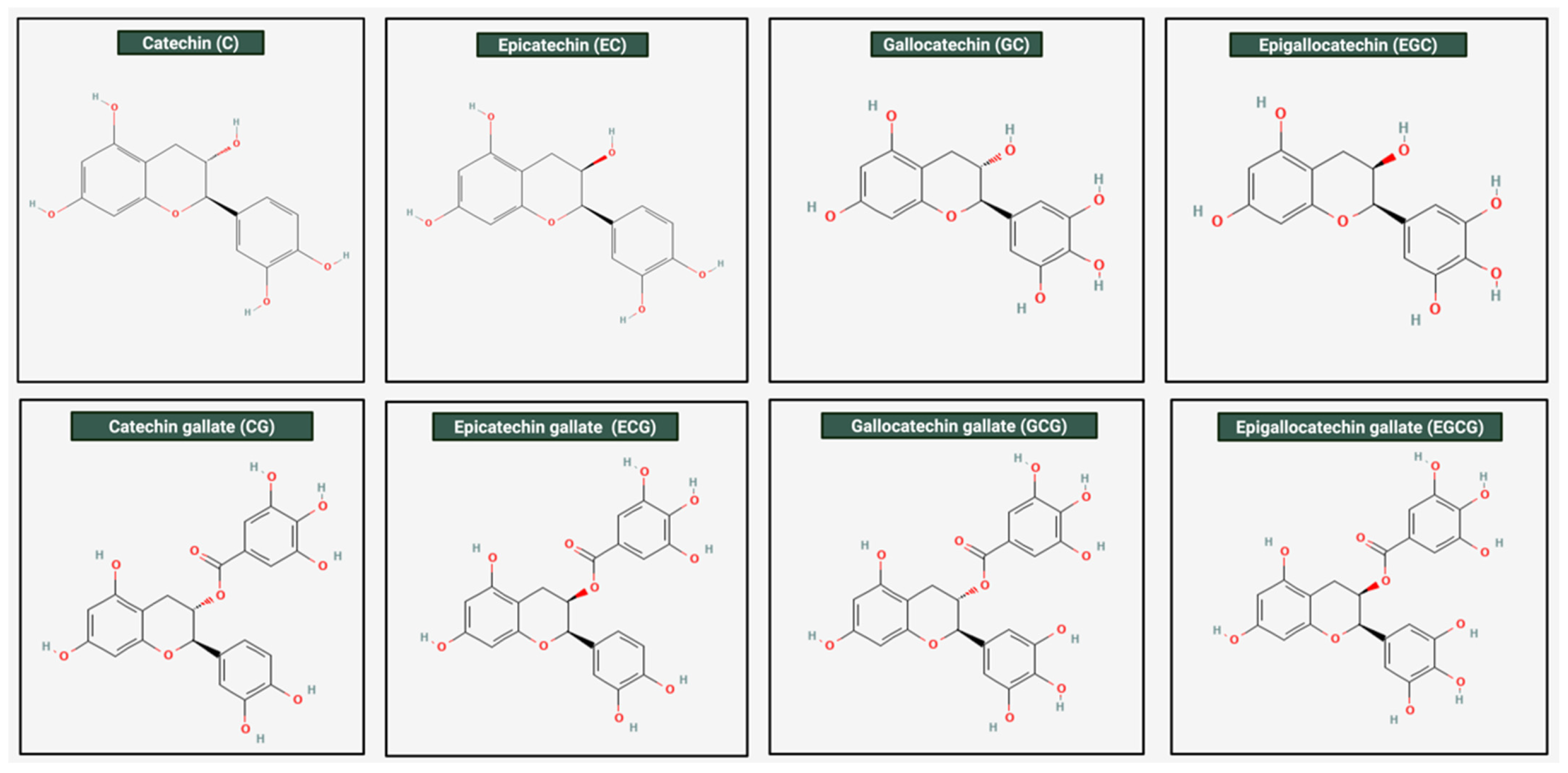
3. Chemical and Molecular Structure of Epigallocatechin Gallate
4. Strategies for Isolation of Epigallocatechin Gallate from Green Tea
5. Geographical Variations in Green Tea Species and Epigallocatechin Gallate Content

| Green Tea Type | Geographical Area of Origin | Processing Method/Cultivar | EGCG Content in Dry Leaf (mg/g) | EGCG per Serving (mg) (Based on 2 g Dry Tea or Powder) | Serving Volume (mL) | EGCG Concentration per Serving (µM) | Reference | Remarks on EGCG Measurement and Brewing |
|---|---|---|---|---|---|---|---|---|
| General Green Tea (Infusion) | Global | Various | N/A | 165 | 240 | 1499.0 | [42] | General average for brewed green tea. |
| General Green Tea (Infusion) | Global | Various | N/A | 90 | 200 | 981.7 | [43] | Based on 2.5 g tea leaves per 200 mL water. |
| General Green Tea (Dry Leaves) | Global | Various | 73.8 | 147.6 | N/A | N/A | [42] | EGCG content in dried leaves, not brewed. |
| Matcha | Japan | Powdered, Shade-grown | 50.5–56.6 (avg. ceremonial: 56.6; culinary: 50.5) | 101–113 | 100 | ~22–24 | [44] | Based on 2 g powder per cup. Consuming whole leaf. |
| Gyokuro | Japan | Shade-grown | 53.31 | 106.62 | 240 | 969.4 | [45] | EGCG in dry leaf. |
| Gyokuro (Infusion) | Japan | Shade-grown | N/A | 268.09 | 240 | 2437.0 | [45] | Infusion from 10 g leaves in 60 mL water at 60 °C for 2 min. Highly concentrated. |
| Sencha (Superior) | Japan | Sun-grown | 67.45 | 134.90 | 240 | 1226.2 | [45] | EGCG in dry leaf. |
| Sencha (Superior Infusion) | Japan | Sun-grown | N/A | 74.41 | 240 | 676.0 | [45] | Infusion from 6 g leaves in 170 mL water at 70 °C for 1 min. |
| Sencha (Standard) | Japan | Sun-grown | 62.16 | 124.32 | 240 | 1131.0 | [45] | EGCG in dry leaf. |
| Sencha (Standard Infusion) | Japan | Sun-grown | N/A | 91.30 | 240 | 830.0 | [45] | Infusion from 6 g leaves in 260 mL water at 90 °C for 1 min. |
| Sencha (Deep-Steamed) | Japan | Sun-grown, Deep-steamed | 63.51 | 127.02 | 240 | 1155.0 | [45] | EGCG in dry leaf. |
| Sencha (Deep-Steamed Infusion) | Japan | Sun-grown, Deep-steamed | N/A | 114.20 | 240 | 1038.0 | [45] | Infusion from 6 g leaves in 260 mL water at 90 °C for 1 min. |
| Sencha (Infusion) | Japan | Sun-grown | N/A | 124 mg/100 mL | 100 | 2705.4 | [46] | EGCG content per 100 mL of infusion. |
| Tamaryokucha (Pan-Fired) | Japan | Pan-fired | 64.29 | 128.58 | 240 | 1168.0 | [45] | EGCG in dry leaf. |
| Tamaryokucha (Pan-Fired Infusion) | Japan | Pan-fired | N/A | 65.72 | 240 | 597.1 | [45] | Infusion from 6 g leaves in 260 mL water at 90 °C for 1 min. |
| Tamaryokucha (Steamed) | Japan | Steamed | 61.61 | 123.22 | 240 | 1120.0 | [45] | EGCG in dry leaf. |
| Tamaryokucha (Steamed Infusion) | Japan | Steamed | N/A | 90.00 | 240 | 818.0 | [45] | Infusion from 6 g leaves in 260 mL water at 90 °C for 1 min. |
| Lu’an Guapian (HSGP) | Anhui, China (Huoshan County) | Traditional Processing | 110.69 | 221.38 | 240 | 2013.7 | [47] | EGCG in dry leaf (WT%). |
| Lu’an Guapian (JZGP) | Anhui, China (Jinzhai County) | Traditional Processing | 87.18 | 174.36 | 240 | 1585.5 | [47] | EGCG in dry leaf (WT%). |
| Lu’an Guapian (YAGP) | Anhui, China (Yu’an District) | Traditional Processing | 80.23 | 160.46 | 240 | 1459.7 | [47] | EGCG in dry leaf (WT%). |
| Lu’an Guapian (IMGP) | Anhui, China (Inner Mountain) | Traditional Processing | 92.75 | 185.50 | 240 | 1687.2 | [47] | EGCG in dry leaf (WT%). |
| Lu’an Guapian (OMGP) | Anhui, China (Outer Mountain) | Traditional Processing | 79.33 | 158.66 | 240 | 1443.5 | [47] | EGCG in dry leaf (WT%). |
| Korean Green Tea (Woojeon) | Korea | Early Plucking Period | 105.37 | 210.74 | 240 | 1916.6 | [48] | EGCG in dry leaf. |
| Korean Green Tea (Sejak) | Korea | Mid Plucking Period | 103.95 | 207.90 | 240 | 1890.3 | [48] | EGCG in dry leaf. |
| Korean Green Tea (Joongjak) | Korea | Late Plucking Period | 111.59 | 223.18 | 240 | 2030.0 | [48] | EGCG in dry leaf. |
| Korean Green Tea (Daejak) | Korea | Latest Plucking Period | 112.86 | 225.72 | 240 | 2053.3 | [48] | EGCG in dry leaf. |
| Jeju Green Tea (Steamed) | Jeju, Korea | Steaming | 24.0 (Extract) | 48.0 (Extracted) | 240 | 436.0 | [49] | EGCG extracted from dry tea into infusion (mg/g dry tea). Assumed 2 g dry tea serving. |
| Jeju Green Tea (Pan-fired) | Jeju, Korea | Pan-firing | 31.8 (Extract) | 63.6 (Extracted) | 240 | 578.0 | [49] | EGCG extracted from dry tea into infusion (mg/g dry tea). Assumed 2 g dry tea serving. |
| Jeju Green Tea (Steamed and Pan-fired, Light) | Jeju, Korea | Steaming and Pan-firing | 20.2 (Extract) | 40.4 (Extracted) | 240 | 367.0 | [49] | EGCG extracted from dry tea into infusion (mg/g dry tea). Assumed 2 g dry tea serving. |
| Jeju Green Tea (Steamed and Pan-fired, Heavy Roast) | Jeju, Korea | Steaming and Pan-firing, Heavy Roasting | 42.3 (Extract) | 84.6 (Extracted) | 240 | 769.0 | [49] | EGCG extracted from dry tea into infusion (mg/g dry tea). Assumed 2 g dry tea serving. |
| Boseong Green Tea (Pan-fired) | Boseong, Korea | Pan-firing | 39.9 (Extract) | 79.8 (Extracted) | 240 | 725.0 | [49] | EGCG extracted from dry tea into infusion (mg/g dry tea). Assumed 2 g dry tea serving. |
| Hangjou Green Tea (Pan-fired) | Hangjou, China | Pan-firing | 36.9 (Extract) | 73.8 (Extracted) | 240 | 671.0 | [49] | EGCG extracted from dry tea into infusion (mg/g dry tea). Assumed 2 g dry tea serving. |
| Shizuoka Green Tea (Steamed) | Shizuoka, Japan | Steaming | 24.5 (Extract) | 49.0 (Extracted) | 240 | 445.0 | [49] | EGCG extracted from dry tea into infusion (mg/g dry tea). Assumed 2 g dry tea serving. |
| Longjing (Dragon Well) | Hangzhou, Zhejiang, China | Pan-fired | Variable | Variable | 240 | Variable | [50] | Known for high thiamine; EGCG present but specific values per serving not consistently provided. |
| Biluochun (Green Snail Spring) | Jiangsu, China | Traditional Processing | Variable | Variable | 240 | Variable | [50] | Rich in polyphenols, high antioxidant level. Specific EGCG per serving not provided. |
| Huangshan Maofeng | Anhui, China | Traditional Processing | Variable | Variable | 240 | Variable | [50] | Rich in antioxidants, including EGCG, but specific values per serving not provided. |
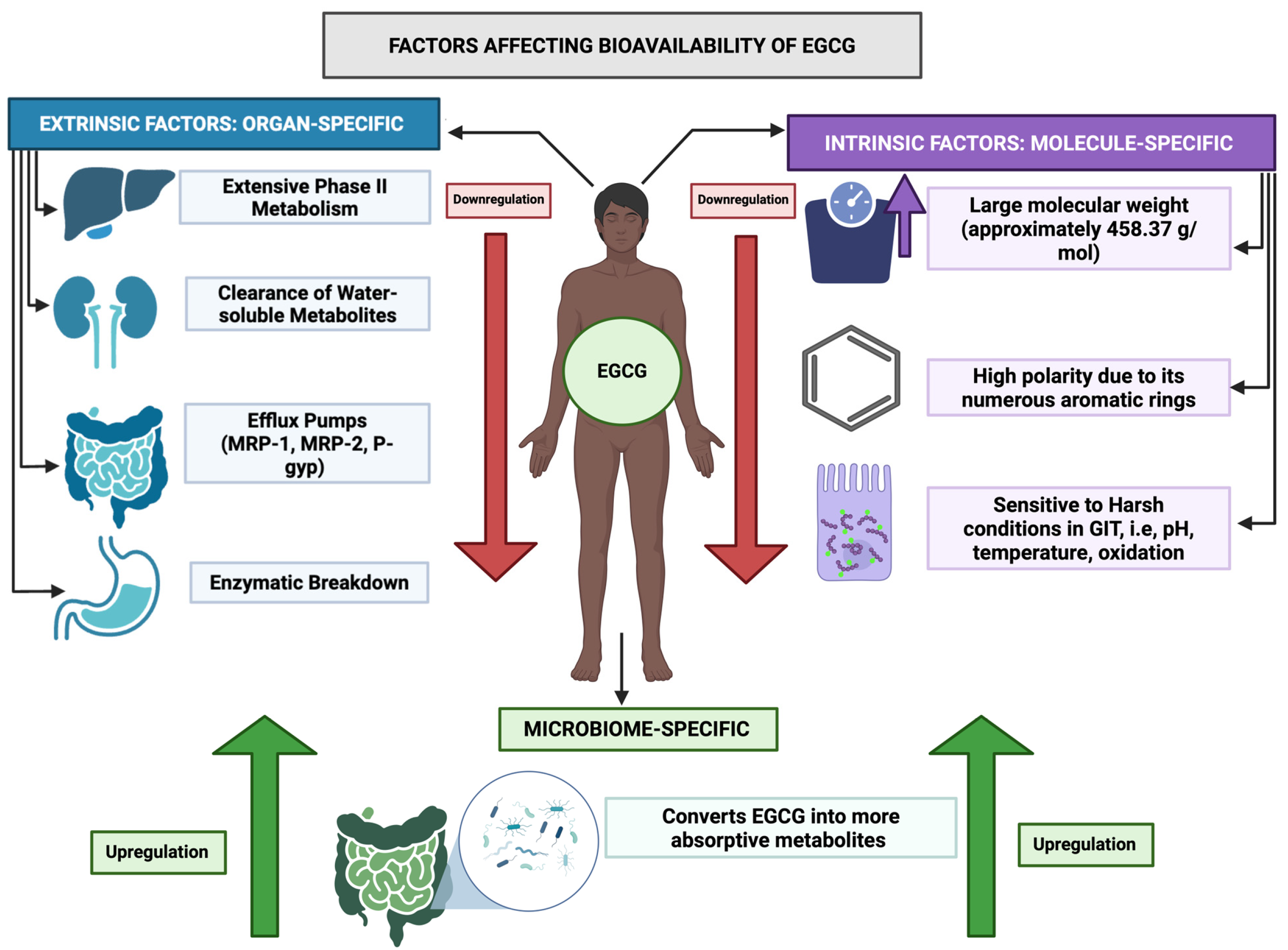
6. Determinants of Epigallocatechin Gallate Bioavailability and Absorption
6.1. Metabolic Barriers to Epigallocatechin Gallate Bioavailability
6.2. Microbiome-Associated Epigallocatechin Gallate Pharmacokinetics and Absorption
7. Polypharmacy and Epigallocatechin Gallate–Drug Interactions
| Drug Class | Representative Drugs | Indication | Mechanism of Interaction | Effect on EGCG Bioavailability | Notes/Clinical Relevance | Refs. |
|---|---|---|---|---|---|---|
| COMT (Catechol-O-methyltransferase) Inhibitors | Entacapone, Tolcapone | Parkinson’s disease | Inhibit methylation of EGCG | ↑ Plasma EGCG levels, prolonged half life | Risk of higher systemic EGCG exposure; may increase adverse effects (e.g., hepatotoxicity) | [92] |
| UGT (UDP-glucuronosyltransferase) Inhibitors | Valproic acid | Epilepsy | Block EGCG glucuronidation in intestine/liver | ↑ Bioavailability | Drug–nutrient competition; caution with chronic use | [93,94] |
| Probenecid | Gout | |||||
| SULT (Sulfotransferase) Inhibitors | Diclofenac, Celecoxib | Inflammatory conditions, pain, arthritis | Reduce sulfation of EGCG | ↑ Systemic exposure | Possible synergy in inflammation models | [95] |
| P-gp (P-glycoprotein) Inhibitors | Verapamil | Hypertension, arrhythmias | Prevent EGCG efflux from intestinal cells | ↑ Absorption and plasma concentrations | High risk for pharmacokinetic interactions with narrow therapeutic index drugs | [96,97,98] |
| Cyclosporine | Immunosuppression | |||||
| Quinidine | Arrythmias | |||||
| OATP (Organic Anion Transporting Polypeptide) Substrates/Inhibitors | Statins | Hyperlipidemia, cardiovascular risk reduction | Competition on intestinal uptake transporters | ↓ Oral uptake of EGCG OR altered statin pharmacokinetics | EGCG may reduce statin absorption (bidirectional effect) | [99,100] |
| Rifampicin | Tuberculosis | |||||
| Proton Pump Inhibitors (PPIs) | Omeprazole, Pantoprazole | GERD, peptic ulcers | Increase gastric pH → reduce EGCG degradation | Potential ↑ stability but ↓ solubility depending on formulation | Effect varies with formulation (capsules vs. tea extract) | [101] |
| Antibiotics (Broad Spectrum) | Ciprofloxacin, Amoxicillin–Clavulanate | Broad-spectrum bacterial infection | Disrupt gut microbiota metabolism of EGCG | ↓ Formation of valerolactone/phenolic metabolites; altered bioactivity | Reduces health benefits mediated by microbiota-derived metabolites | [102] |
| Iron Supplements | Ferrous sulfate, Ferric chloride | Iron deficiency anemia | Chelates EGCG, forming insoluble complexes | ↓ EGCG absorption | Should avoid co-administration of EGCG-rich tea with iron | [103] |
| Anticoagulants/Antiplatelets | Warfarin | Thrombosis prevention and treatment, atrial fibrillation | Not directly altering PK but EGCG itself has antiplatelet/anticoagulant properties | ↑ Bleeding risk despite bioavailability changes | Clinical safety concern | [104,105,106,107] |
| Aspirin, Clopidogrel | Cardiovascular disease prevention, antiplatelet therapy | |||||
| Protease Inhibitors (HIV Drugs) | Ritonavir, Saquinavir | HIV infections | EGCG can inhibit CYP3A4 and P-gp, altering drug PK; reciprocal effect possible | Altered absorption of both EGCG and drug | Case reports of interactions | [108] |
| β-blockers | Propranolol, Metoprolol | Hypertension, heart failure, arrythmias, angina | EGCG inhibits intestinal transport/metabolism | ↓ Bioavailability of β-blockers (drug side) | Reciprocal PK effect: EGCG may also increase systemic exposure | [109] |
8. Strategies to Enhance Bioavailability of Epigallocatechin Gallate
| Strategy | Mechanism/Rationale | Examples/Approaches | Key Outcomes | Limitations/Considerations | Reference |
|---|---|---|---|---|---|
| Nanoencapsulation/Nanoparticles | Protects EGCG from degradation; increases solubility and intestinal absorption | - EGCG-loaded liposomes (phospholipid vesicles) - Polymeric nanoparticles (PLGA, chitosan, PEGylated systems) - Solid lipid nanoparticles (SLN) | ↑ Stability in GI tract ↑ Plasma concentration Controlled release | Complexity in formulation; scale-up issues; regulatory hurdles | [115,116,117] |
| Protein/Peptide Carriers | Binding to proteins improves stability and transport across membranes | - Casein micelles - Gelatin nanoparticles - BSA–EGCG complexes | Sustained release Reduced oxidation Enhanced intestinal uptake | Allergenicity concerns (milk proteins); may alter taste | [118,119,120,121] |
| Phospholipid Complexes (Phytosomes®) | Conjugation with phospholipids enhances lipophilicity and membrane permeability | EGCG–phosphatidylcholine complexes (commercial: Greenselect® Phytosome) | 2–4× ↑ oral bioavailability Better tissue distribution | Cost; formulation stability | [122,123] |
| Co-administration with Bioenhancers | Inhibits efflux transporters and metabolic enzymes (COMT, UGTs) | - Piperine (from black pepper) - Quercetin - Ascorbic acid (vitamin C prevents auto-oxidation) | ↑ Systemic exposure Reduced EGCG glucuronidation/sulfation | Possible herb–drug interactions May alter safety profile | [20,124,125] |
| Prodrug Approaches | Mask polar groups to improve absorption, later hydrolyzed in vivo | - Esterified EGCG derivatives - Peracetylated EGCG | ↑ Lipophilicity ↑ Plasma half life | May reduce intrinsic activity; prodrug activation variability | [113] |
| Encapsulation in Polysaccharides | Protects from pH and enzymatic degradation; controlled release | - EGCG in alginate beads - Cyclodextrin inclusion complexes | Sustained colonic release Improved taste masking | Encapsulation efficiency varies; limited load capacity | [126,127] |
| Lipid-based Formulations | Enhance solubility and lymphatic transport | - Self-emulsifying drug delivery systems (SEDDS) - Nanoemulsions/microemulsions | ↑ Solubility Avoids first-pass metabolism | Stability and scalability challenges | [128] |
| Metal/Mineral Conjugates | Chelation reduces degradation; modulates transport | EGCG–Zn, EGCG–Se complexes | Enhanced antioxidant and anticancer potency Greater plasma stability | Toxicity risk if not controlled | [129,130] |
| Targeted Delivery Systems | Directs EGCG to tissues/organs of interest | - Antibody–EGCG conjugates - Folate-decorated nanoparticles (for tumor targeting) | Selective accumulation in tumors or inflamed tissue | High cost; complex validation | [131,132] |
| Controlled-release Formulations | Sustained release prevents rapid clearance | EGCG hydrogels, matrix tablets | Prolonged half life Steady plasma levels | Patient compliance; release variability | [133] |
| Microbiota-directed Strategies | Modulate gut microbiota to favor beneficial EGCG metabolites (e.g., valerolactones) | - Prebiotics/probiotics co-administration - Engineered gut bacteria | ↑ Production of bioactive metabolites Personalized nutrition approach | Still experimental; inter-individual variability | [134] |
9. Pharmacokinetics: Half-Life
10. Molecular Pathways in Heart Failure: Targets for EGCG
10.1. Oxidative Stress, Keap1–Nrf2 Antioxidant Defense, and Therapeutic Potential of Epigallocatechin Gallate
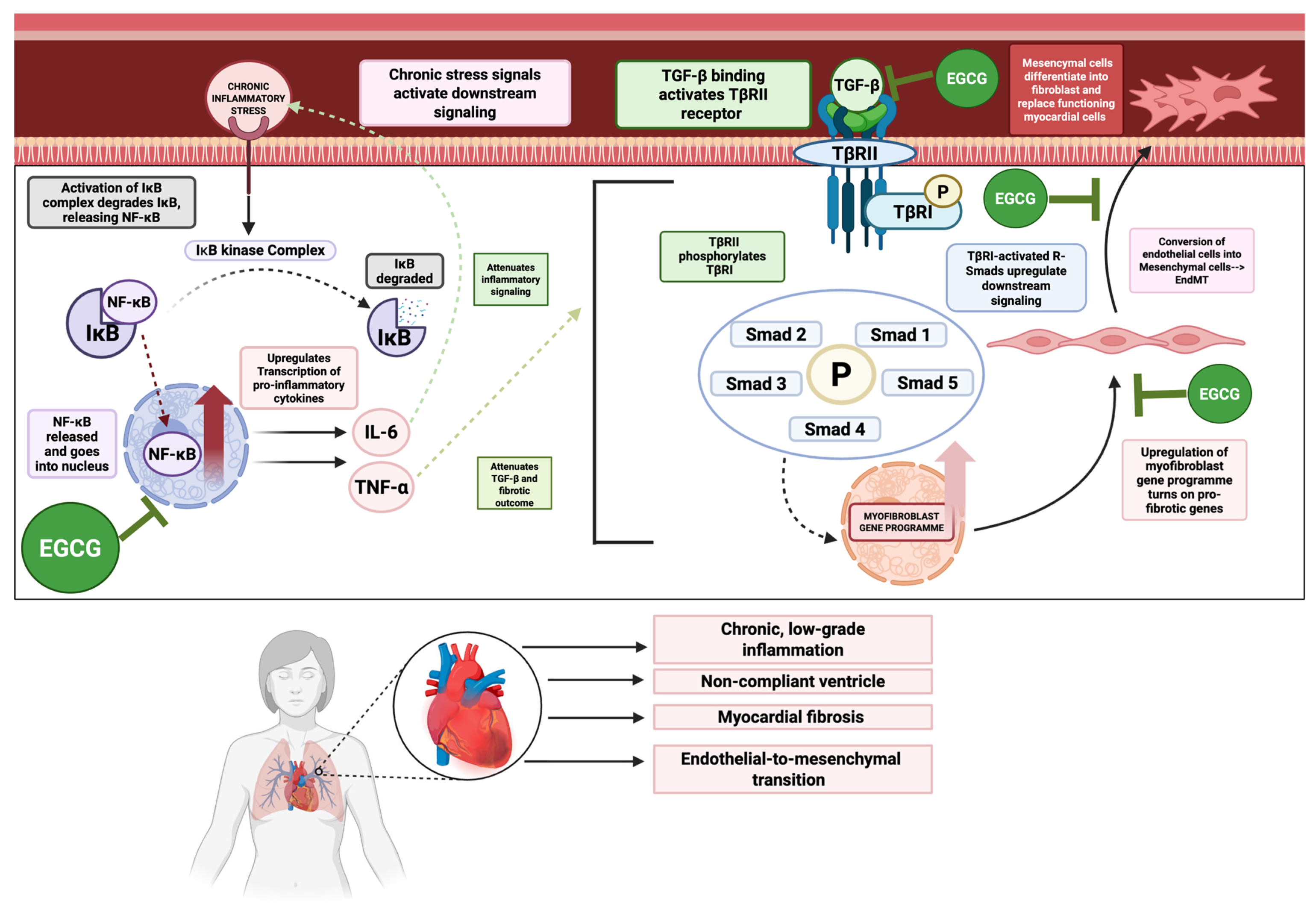
10.2. Inflammation and Fibrosis
10.3. Mitochondrial Dysfunction and Energy Metabolism
10.4. Apoptosis and Autophagy
11. EGCG in Myocardial Infarction and Ischemia Reperfusion
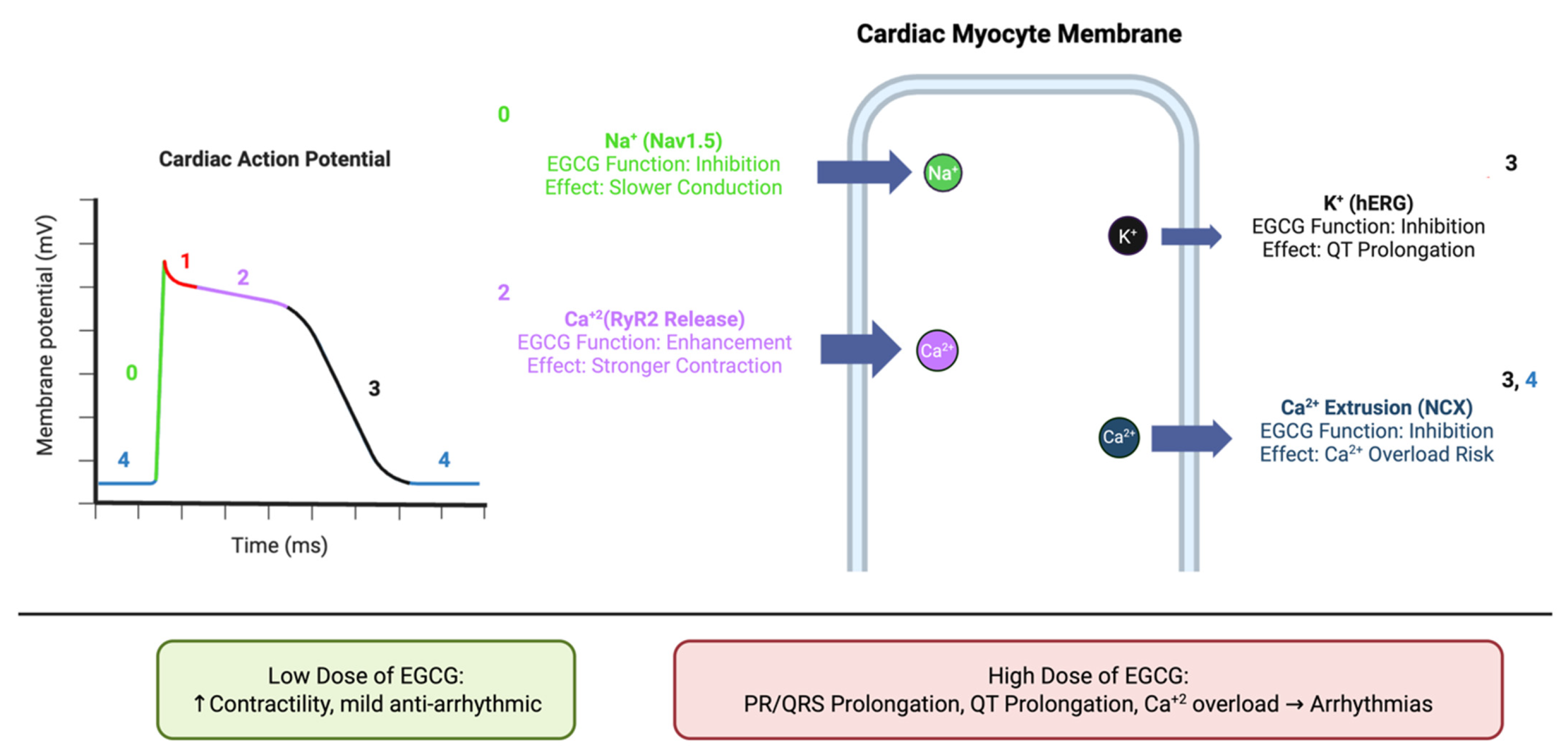
12. EGCG and Cardiac Arrhythmogenesis
13. EGCG in Cardio-Oncology
13.1. Chemotherapy-Induced Cardiotoxicity
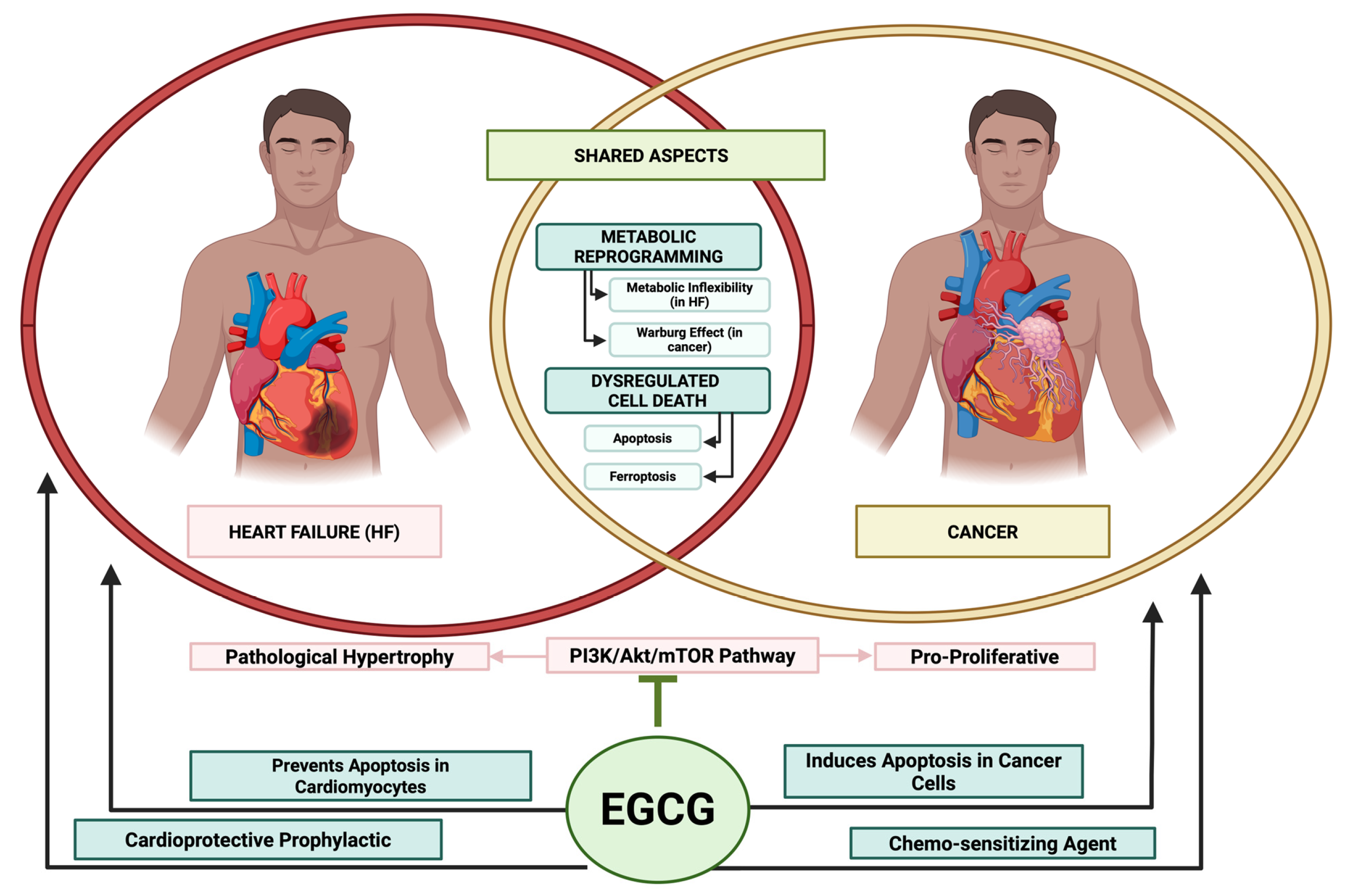
13.2. Shared Pathways with Cancer
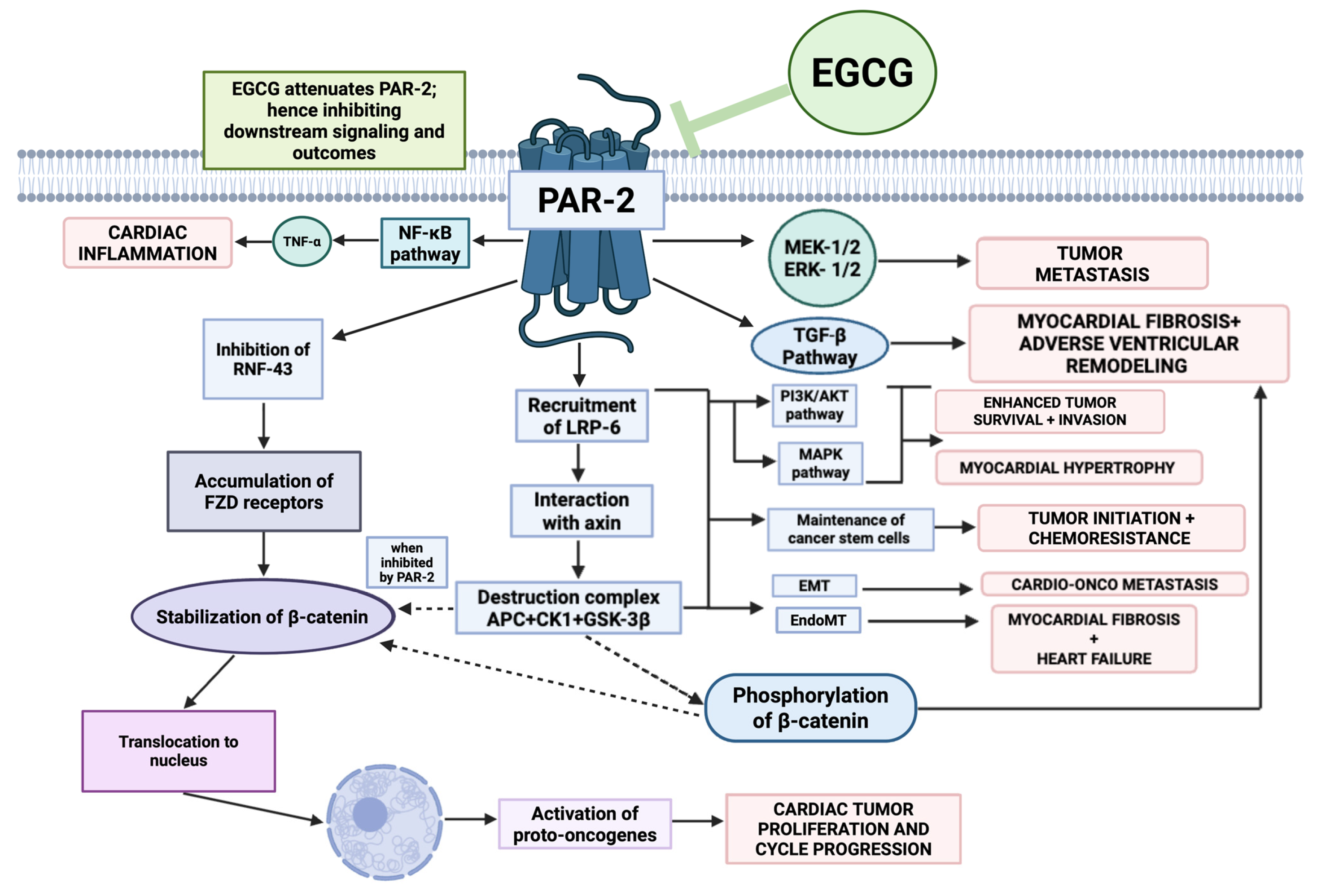
13.3. PAR-2 Signalling Is a Common Theme in HF and Cancer
14. Translational and Clinical Perspectives
14.1. Preclinical Evidence
14.2. Human Data
| Study Type | Model/Participants | EGCG Intervention | Observed Effects and Mechanistic Insights | Main Outcomes | Reference |
|---|---|---|---|---|---|
| Preclinical (in vitro and in vivo) | Rat cardiac fibroblasts in vitro (Ang II stimulation); Rat pressure-overload hypertrophy via abdominal aortic constriction (AAC) in vivo | EGCG 50 mg/kg (in vivo); EGCG in μM range in vitro (exact dose not stated) | Anti-fibrotic and anti-hypertrophic: EGCG significantly reduced collagen synthesis, fibronectin expression, and proliferation in cardiac fibroblasts under Ang II. In AAC-induced hypertrophy, EGCG ameliorated cardiac fibrosis, blunting connective tissue growth factor (CTGF) overexpression. Mechanistically, EGCG blocked NF-κB activation (less p65 nuclear translocation, preserved IκB-α) and thereby suppressed CTGF induction. | Prevented pathological cardiac remodeling in pressure overload; first evidence that EGCG’s cardioprotection in hypertrophy is via NF-κB/CTGF inhibition. | [222] |
| Preclinical (in vivo) | Wistar rat myocardial infarction model (isoproterenol-induced MI) | EGCG 10, 20, 30 mg/kg orally, daily for 21 days (pretreatment) | Antioxidant cardioprotection: EGCG dose-dependently lowered myocardial lipid peroxidation and elevated antioxidant enzyme levels in heart tissue. 30 mg/kg had the strongest effect. EGCG maintained the cardiac redox defense system, mitigating ISO-induced oxidative damage. No adverse effects observed. Mechanisms are attributed to free-radical scavenging and antioxidant effects of EGCG. | Reduced MI injury: EGCG prevented oxidative cardiac damage and improved lipid profiles in MI rats, thereby limiting infarct severity and preserving tissue integrity. | [223] |
| Preclinical (in vivo) | Type 2 diabetic rat model (diabetic cardiomyopathy) | EGCG 40 mg/kg or 80 mg/kg orally, daily for 8 weeks | Anti-fibrotic and cardiometabolic effects: In diabetic hearts, EGCG improved left ventricular contractile function and reduced hypertrophy (lower heart weight index) and injury markers. It significantly alleviated myocardial fibrosis (less collagen I/III deposition, lower hydroxyproline) by downregulating pro-fibrotic TGF-β1 and MMP-2/9 levels. Notably, EGCG activated cardiac autophagy—increased LC3 and Beclin1—via AMPK upregulation and mTOR inhibition, which in turn repressed the TGF-β/MMP fibrotic pathway. | Improved cardiac function in diabetic cardiomyopathy: EGCG enhanced LV function and reduced fibrosis in diabetic rats. Mechanistically, benefits were linked to autophagy activation (AMPK/mTOR) and suppression of TGF-β-mediated fibrosis, highlighting a novel cardioprotective pathway. | [224] |
| Clinical (pilot observational) | Patients with transthyretin amyloid cardiomyopathy (ATTR-CM), wild-type (senile) form (n = 25, all males, age ~71) | Green tea extract capsules providing 600 mg EGCG daily, ≥12 months | Cardioprotective (amyloid-stabilizing): After 12 months of EGCG, left-ventricular mass decreased by ~6% (from median 196 g to 180 g, p = 0.03) and no significant increase in interventricular wall thickness or decline in ejection fraction occurred (in untreated ATTR-CM, wall thickness typically increases and EF falls). This suggests a halt in disease progression. Total cholesterol also dropped ~8%. Mechanistic basis: EGCG binds and stabilizes TTR, and prior studies show it can disrupt amyloid fibrils, consistent with the observed stabilization/regression of cardiac amyloid. No serious adverse effects reported. | Disease stabilization in cardiac amyloidosis: Chronic EGCG intake halted cardiac hypertrophy progression in ATTR-CM patients, evidenced by stable or reduced LV mass and wall thickness, which implies slowed amyloid deposition. This pilot outcome indicates EGCG’s potential to modify disease course in a human heart failure etiology lacking other disease-modifying therapy. | [225] |
| Clinical (open-label trial) | Pediatric patients with restrictive or hypertrophic cardiomyopathy (n = 12, ages ~1–14) with diastolic heart failure (impaired relaxation) | Decaffeinated green tea catechin extract (Life Extension®), titrated up to ~50 mg/kg/day EGCG (325 mg EGCG per capsule) over 3 months, then continued for 12 months | Improved diastolic function: EGCG therapy led to a significant decrease in isovolumetric relaxation time (IVRT, from 115 ms at baseline to 94 ms at 12 months, p ≈ 0.03) and an increase in stroke volume and end-diastolic volume (e.g., stroke volume 25→30 mL at 12 mo, p ~0.02) indicating better filling capacity. Left atrial sizes tended to decrease and BNP (heart failure biomarker) levels fell in most patients. Systolic function (EF) and wall thickness remained stable (no deterioration). Mechanistically, green tea catechins (especially EGCG) can bind cardiac troponin and reduce myofibrillar Ca2+ sensitivity, improving relaxation. Indeed, authors note EGCG acts as a Ca2+-desensitizer, downregulating hypercontractile signaling (potentially via SIRT1-p53 or HDAC pathways as seen in animal models). Tolerability was good with no significant side effects. | Symptomatic and functional relief in diastolic HF: 1 year of high-dose EGCG improved cardiac relaxation and output in children with diastolic dysfunction, as reflected by shortened IVRT and increased volumes. Clinically, patients had improved exercise tolerance and no adverse events. This suggests EGCG as a potential adjunct to enhance diastolic function in heart failure with preserved EF, though controlled trials are needed. | [226] |
| Preclinical (multiple in vitro/in vivo studies) | Various cancer cell lines (e.g., breast, colon, prostate, lung) and tumor-bearing animal models across cancer types | Typical in vitro EGCG ~10–100 µM; In vivo as green tea extracts or pure EGCG at human-equivalent doses (e.g., 0.1–0.5% in diet or ~50–100 mg/kg) | Broad anti-cancer activities: Extensive studies show EGCG exerts anti-proliferative, pro-apoptotic, anti-angiogenic, and anti-metastatic effects in cancer. EGCG can induce cell-cycle arrest (e.g., G0/G1 arrest via downregulating cyclins/CDKs), trigger apoptosis (intrinsic pathway via mitochondrial depolarization and caspase activation), and inhibit tumor angiogenesis (reduced VEGF production and microvessel density). It modulates multiple oncogenic signals—interfering with EGFR, PI3K/Akt, MAPK, NF-κB, and other pathways—while upregulating tumor suppressors (e.g., p53, PTEN) and DNA repair mechanisms. These pleiotropic actions target hallmarks of cancer, resulting in slower tumor growth and reduced invasiveness in models. | Suppressed tumor growth and spread: In diverse preclinical models, EGCG treatment consistently slows tumor proliferation, promotes cancer cell death, and blocks angiogenesis and metastasis, thereby reducing tumor burden. This multi-targeted efficacy suggests EGCG as a promising adjunct or chemopreventive agent against various cancers. | [227,228] |
| Preclinical (in vitro) | Human colorectal cancer cell lines (HCT-116 and HT-29) | EGCG 20–50 µM (approximate range used in vitro) | Anti-metastatic mechanism: EGCG was shown to inhibit the hepatocyte growth factor/c-Met signaling pathway in these colon cancer cells. c-Met is a key driver of tumor invasion and metastasis. By blocking Met activation, EGCG reduced downstream pro-migratory signaling (like MAPK and AKT), thereby suppressing cancer cell migration and invasion. Notably, this effect was independent of H2O2 (i.e., not merely due to antioxidant activity). EGCG also decreased matrix metalloproteinases (MMP-2/9) in similar models (noted in other studies), further hindering metastatic potential. | Reduced metastatic behavior: EGCG attenuated tumor spread in vitro, evidenced by impaired migration/invasion of colon cancer cells. Inhibition of the HGF/c-Met axis by EGCG suggests a specific molecular target through which EGCG can prevent metastasis. This highlights EGCG’s potential to curb metastatic progression in solid tumors. | [229] |
| Preclinical (in vitro) | Human nasopharyngeal carcinoma (NPC) cell lines (CNE-2 and 5-8F) | EGCG 40 µM (with time-course up to 48–72 h) | Pro-apoptotic and tumor-suppressive: EGCG significantly inhibited proliferation and induced apoptosis in NPC cells. A key finding was EGCG’s effect on epigenetic regulators: it downregulated Sirtuin 1 (SIRT1), an NAD+-dependent deacetylase often overexpressed in cancers. SIRT1 reduction led to increased acetylation (activation) of p53, enhancing p53-mediated apoptotic signaling. Consequently, EGCG-treated NPC cells showed higher Bax/Bcl-2 ratio and caspase-3 activation (hallmarks of intrinsic apoptosis). This SIRT1-p53 axis modulation is one mechanism by which EGCG promotes cancer cell apoptosis and growth arrest. | Induced tumor cell apoptosis: EGCG triggered programmed cell death in NPC, correlating with suppression of SIRT1 and reactivation of p53 tumor suppressor function. The result is potent anti-tumor activity in vitro, indicating EGCG can target cancer cell survival pathways (like SIRT1) to overcome growth and survival advantages of tumor cells. | [230] |
| Clinical (randomized placebo-controlled trial) | Men with high-grade prostatic intraepithelial neoplasia (HGPIN, a premalignant prostate lesion); Italy (n = 60) | Green tea catechin (GTC) supplement, 3 capsules daily (total 600 mg GTC/day, ~50–60% EGCG ≈ 300 mg EGCG/day) for 12 months | Chemoprevention of cancer: Only 1 out of 30 men (3.3%) in the GTC-treated group was diagnosed with prostate cancer within 1 year, compared to 9 out of 30 (30%) in the placebo group—a striking ~90% risk reduction. The GTC group also had consistently lower PSA levels (though not statistically significant) and improved LUTS (lower urinary symptom scores) in those with concomitant BPH. Mechanistically, prostate biopsies showed that EGCG-rich catechins lowered expression of proliferation markers (Ki-67) and increased apoptosis in prostatic tissue (per prior reports). No significant side effects were noted; liver function remained normal and adherence was high. | Reduced cancer incidence: Green tea catechin supplementation significantly prevented prostate cancer development in high-risk men. This landmark proof-of-principle showed EGCG-containing catechins can treat premalignant lesions safely and effectively, presumably by anti-proliferative and pro-apoptotic effects on early tumorigenic foci. It positions EGCG as a potential chemopreventive agent for prostate cancer. | [231] |
| Clinical (Phase II trial, single arm) | Patients with early-stage chronic lymphocytic leukemia (CLL), Rai stage 0–II, asymptomatic (n = 42); USA (Mayo Clinic) | Polyphenon E green tea extract, 2000 mg EGCG per dose, twice daily (4000 mg EGCG/day) for up to 6 months | Anti-leukemic activity: High-dose EGCG was well tolerated; only 3 patients (7%) had grade 3 adverse events (mild transaminitis, abdominal pain, fatigue). Clinically, 31% of patients had a sustained ≥20% decrease in absolute lymphocyte count (peripheral blood leukemia cells), and 69% of those with enlarged lymph nodes achieved ≥50% reduction in lymph node size. Overall, 69% of patients met criteria for a biological response (lymphocyte count and/or lymph node reduction) during treatment. Plasma EGCG levels achieved correlated with magnitude of node shrinkage (R = 0.44). No patients progressed to requiring chemotherapy while on EGCG. Mechanistic studies indicate EGCG induces apoptosis of CLL B-cells and downmodulates B-cell receptor signaling; this trial’s results align with those effects (many patients had tumor cell count reductions). | Leukemia control in vivo: Oral EGCG (Polyphenon E) elicited partial tumor responses in early CLL, evidenced by significant declines in leukemia cell counts and lymphadenopathy in the majority of patients. While not a cure, EGCG stabilized disease in many cases and was very well tolerated. This represents one of the first clinical demonstrations of EGCG’s anti-cancer activity in humans, supporting further research into EGCG as a therapy or adjunct in low-grade malignancies. | [232] |
| Preclinical (in vivo) | Mouse solid tumor model with chemotherapy—Sarcoma-180 tumor-bearing mice treated with doxorubicin (DOX) | Co-administration of EGCG alongside DOX; (EGCG dose ~50 mg/kg, given with or before DOX; DOX given at cardiotoxic dose) | Dual anti-cancer and cardioprotective effects: EGCG augmented the chemotherapeutic efficacy of DOX while mitigating its cardiotoxicity. Mice receiving EGCG + DOX had significantly smaller tumors than DOX alone, as EGCG enhanced DOX-induced tumor apoptosis and growth inhibition. Simultaneously, EGCG protected the heart: it reduced DOX-induced cardiomyocyte injury, shown by lower serum LDH release and fewer apoptotic heart cells, versus DOX-only controls. Mechanistically, EGCG co-treatment preserved mitochondrial membrane potential (ΔΨm) and upregulated myocardial MnSOD (antioxidant enzyme), which led to reduced ROS generation and prevention of Ca2+ overload in cardiac tissue. These actions culminated in less oxidative damage and cell death in the myocardium. Importantly, EGCG did not interfere with DOX’s tumor-killing ability; it actually improved it. | Chemo efficacy boosted; heart damage reduced: The EGCG + DOX combination enhanced anti-tumor outcomes (greater tumor suppression) while providing cardioprotection against DOX. EGCG prevented DOX-induced heart failure signs (arrhythmias, ultrastructural damage) in mice. Overall, co-therapy resulted in preserved cardiac function and fewer DOX toxic effects, without compromising (and even improving) cancer cell kill. This suggests EGCG as a promising cardioprotective adjuvant in oncology, warranting further clinical investigation. | [233] |
| Preclinical (in vivo and in vitro) | Doxorubicin-induced cardiotoxicity model (rodents and cardiomyocyte cultures)—Cardio-oncology mechanism study | EGCG pretreatment prior to DOX exposure (doses ~50 mg/kg in rodents; 10–20 µM in cardiomyocytes) | Prevention of ferroptosis (iron-dependent cardiac cell death): EGCG pretreatment was found to alleviate DOX-induced cardiotoxicity by upregulating AMPKα2 and activating adaptive autophagy in cardiomyocytes. Activation of AMPK and autophagy by EGCG led to suppression of ferroptosis, a form of cell death characterized by lipid peroxidation due to iron overload. In DOX-treated hearts, EGCG increased levels of glutathione peroxidase and reduced malondialdehyde, indicating less lipid peroxidation. By curbing ferroptosis, EGCG preserved viable myocardium. This is a distinct mechanism beyond classical antioxidant effects: EGCG essentially triggers the heart’s stress adaptation pathways (AMPK autophagy) to defend against DOX toxicity. | Mechanistic cardioprotection: EGCG shielded the heart from chemotherapy damage through metabolic reprogramming—specifically, inducing autophagy and inhibiting ferroptotic cell death in cardiac muscle. This mechanistic insight reinforces that EGCG’s cardioprotection in cancer therapy is multi-faceted (antioxidant, anti-apoptotic, and now anti-ferroptotic). It provides a rationale for using EGCG or analogs to prevent long-term cardiomyopathy in cancer patients receiving anthracyclines (no clinical trials to date have yet confirmed this benefit in patients, but these findings lay the groundwork for future translational research). | [196] |
14.3. Safety and Dosing
15. Limitations of Current Evidence
16. Future Strategies and Research Directions
17. Conclusions
Author Contributions
Funding
Institutional Review Board Statement
Informed Consent Statement
Data Availability Statement
Conflicts of Interest
References
- Shahim, B.; Kapelios, C.J.; Savarese, G.; Lund, L.H. Global Public Health Burden of Heart Failure: An Updated Review. Card. Fail. Rev. 2023, 9, e11. [Google Scholar] [CrossRef] [Scilit]
- Bozkurt, B.; Ahmad, T.; Alexander, K.; Baker, W.L.; Bosak, K.; Breathett, K.; Carter, S.; Drazner, M.H.; Dunlay, S.M.; Fonarow, G.C.; et al. HF STATS 2024, Heart Failure Epidemiology and Outcomes Statistics An Updated 2024 Report from the Heart Failure Society of America. J. Card. Fail. 2025, 31, 66–116. [Google Scholar] [CrossRef] [Scilit]
- Bozkurt, B.; Ahmad, T.; Alexander, K.M.; Baker, W.L.; Bosak, K.; Breathett, K.; Fonarow, G.C.; Heidenreich, P.; Ho, J.E.; Hsich, E.; et al. Heart Failure Epidemiology and Outcomes Statistics: A Report of the Heart Failure Society of America. J. Card. Fail. 2023, 29, 1412–1451. [Google Scholar] [CrossRef] [Scilit]
- Morris, A.; Shah, K.S.; Enciso, J.S.; Hsich, E.; Ibrahim, N.E.; Page, R.; Yancy, C.; Butler, J.; Pressler, S.B.; Shah, K.; et al. The Impact of Health Care Disparities on Patients With Heart Failure. J. Card. Fail. 2022, 28, 1169–1184. [Google Scholar] [CrossRef] [Scilit] [PubMed]
- Kazi, D.S. Forecasting the Economic Burden of Cardiovascular Disease and Stroke in the United States Through 2050, A Presidential Advisory From the American Heart Association. Am. Heart Assoc. J. 2024, 150, 1. [Google Scholar] [CrossRef] [Scilit]
- Kaźmierski, W.; Jurek, J.; Lis, P.; Lis, A.; Ziobro, A.; Ziomek, M.; Camlet, K.; Kocur, K. Sodium-Glucose Cotransporter-2 Inhibitors In Heart Failure. Prospect. Pharm. Sci. 2024, 22, 225–232. [Google Scholar] [CrossRef] [Scilit]
- Rivera-Martinez, J.C.; Sabina, M.; Khanani, A.; Lurie, A.; Rigdon, A.; Abusnina, W.; Lugo Rosado, L.D.; Bizanti, A.; Paul, T.K. Effect of Finerenone in Cardiovascular and Renal Outcomes: A Systematic Review and Meta-analysis. Cardiovasc. Drugs Ther. arxiv 2025. [Google Scholar] [CrossRef] [Scilit]
- Sharma, R.; Kashyap, J.; Olanrewaju, O.A.; Jabbar, A.; Someshwar, F.; Saeed, H.; Varrassi, G.; Qadeer, H.A.; Kumar, S.; Cheema, A.Y.; et al. Cardio-Oncology: Managing Cardiovascular Complications of Cancer Therapies. Cureus 2023, 15, e51038. [Google Scholar] [CrossRef] [Scilit] [PubMed]
- Bansal, N.; Adams, M.J.; Ganatra, S.; Colan, S.D.; Aggarwal, S.; Steiner, R.; Amdani, S.; Lipshultz, E.R.; Lipshultz, S.E. Strategies to prevent anthracycline-induced cardiotoxicity in cancer survivors. Cardiooncology 2019, 5, 18. [Google Scholar] [CrossRef] [Scilit] [PubMed]
- Deng, H.W.; Fan, R.; Zhai, Y.S.; Li, J.; Huang, Z.B.; Peng, L.Y. Incidence of chemotherapy-related cardiac dysfunction in cancer patients. Clin. Cardiol. 2024, 47, e24269. [Google Scholar] [CrossRef] [Scilit]
- McGowan, J.V.; Chung, R.; Maulik, A.; Piotrowska, I.; Walker, J.M.; Yellon, D.M. Anthracycline Chemotherapy and Cardiotoxicity. Cardiovasc. Drugs Ther. 2017, 31, 63–75. [Google Scholar] [CrossRef] [Scilit]
- Ali, A.; Koutroumpakis, E.; Song, J.; Booser, D.; Barcenas, C.H.; Tripathy, D.; Barac, A.; Palaskas, N.L.; Deswal, A. Risk Stratification for Trastuzumab-Induced Cardiac Dysfunction and Potential Implications for Surveillance. JACC CardioOncol. 2025, 7, 203–215. [Google Scholar] [CrossRef] [Scilit] [PubMed]
- Parizad, R.; Batta, A.; Hatwal, J.; Taban-Sadeghi, M.; Mohan, B. Emerging risk factors for heart failure in younger populations: A growing public health concern. World J. Cardiol. 2025, 17, 104717. [Google Scholar] [CrossRef] [Scilit]
- Florido, R.; Daya, N.R.; Ndumele, C.E.; Koton, S.; Russell, S.D.; Prizment, A.; Blumenthal, R.S.; Matsushita, K.; Mok, Y.; Felix, A.S.; et al. Cardiovascular Disease Risk Among Cancer Survivors: The Atherosclerosis Risk In Communities (ARIC) Study. J. Am. Coll. Cardiol. 2022, 80, 22–32. [Google Scholar] [CrossRef] [Scilit] [PubMed]
- de Boer, R.A.; Hulot, J.S.; Tocchetti, C.G.; Aboumsallem, J.P.; Ameri, P.; Anker, S.D.; Bauersachs, J.; Bertero, E.; Coats, A.J.S.; Celutkiene, J.; et al. Common mechanistic pathways in cancer and heart failure. A scientific roadmap on behalf of the Translational Research Committee of the Heart Failure Association (HFA) of the European Society of Cardiology (ESC). Eur. J. Heart Fail. 2020, 22, 2272–2289. [Google Scholar] [CrossRef] [Scilit]
- Zhao, Y.; Jia, H.; Hua, X.; An, T.; Song, J. Cardio-oncology: Shared Genetic, Metabolic, and Pharmacologic Mechanism. Curr. Cardiol. Rep. 2023, 25, 863–878. [Google Scholar] [CrossRef] [Scilit] [PubMed]
- Karlstaedt, A.; Barrett, M.; Hu, R.; Gammons, S.T.; Ky, B. Cardio-Oncology: Understanding the Intersections Between Cardiac Metabolism and Cancer Biology. JACC Basic Transl. Sci. 2021, 6, 705–718. [Google Scholar] [CrossRef] [Scilit]
- Shaik, T.; Bhavsar, J.; Garg, S.; Gupta, V.; Kanagala, S.G.; Jain, R. The cardio-oncology continuum: Bridging the gap between cancer and cardiovascular care. Glob. Cardiol. Sci. Pract. 2024, 2024, e202409. [Google Scholar] [CrossRef] [Scilit]
- Yan, T.; Yu, H.; Li, T.; Dong, Y. Mechanisms of Cardiovascular Toxicities Induced by Cancer Therapies and Promising Biomarkers for Their Prediction: A Scoping Review. Heart Lung Circ. 2024, 33, 605–638. [Google Scholar] [CrossRef] [Scilit]
- Capasso, L.; De Masi, L.; Sirignano, C.; Maresca, V.; Basile, A.; Nebbioso, A.; Rigano, D.; Bontempo, P. Epigallocatechin Gallate (EGCG): Pharmacological Properties, Biological Activities and Therapeutic Potential. Molecules 2025, 30, 654. [Google Scholar] [CrossRef] [Scilit]
- Almatroodi, S.A.; Almatroudi, A.; Khan, A.A.; Alhumaydhi, F.A.; Alsahli, M.A.; Rahmani, A.H. Potential Therapeutic Targets of Epigallocatechin Gallate (EGCG), the Most Abundant Catechin in Green Tea, and Its Role in the Therapy of Various Types of Cancer. Molecules 2020, 25, 3146. [Google Scholar] [CrossRef] [Scilit] [PubMed]
- Chowdhury, A.; Sarkar, J.; Chakraborti, T.; Pramanik, P.K.; Chakraborti, S. Protective role of epigallocatechin-3-gallate in health and disease: A perspective. Biomed. Pharmacother. 2016, 78, 50–59. [Google Scholar] [CrossRef] [Scilit] [PubMed]
- Talib, W.H.; Awajan, D.; Alqudah, A.; Alsawwaf, R.; Althunibat, R.; Abu AlRoos, M.; Al Safadi, A.; Abu Asab, S.; Hadi, R.W.; Al Kury, L.T. Targeting Cancer Hallmarks with Epigallocatechin Gallate (EGCG): Mechanistic Basis and Therapeutic Targets. Molecules 2024, 29, 1373. [Google Scholar] [CrossRef] [Scilit] [PubMed]
- Al-Kabani, A.; Huda, B.; Haddad, J.; Yousuf, M.; Bhurka, F.; Ajaz, F.; Patnaik, R.; Jannati, S.; Banerjee, Y. Exploring Experimental Models of Colorectal Cancer: A Critical Appraisal from 2D Cell Systems to Organoids, Humanized Mouse Avatars, Organ-on-Chip, CRISPR Engineering, and AI-Driven Platforms-Challenges and Opportunities for Translational Precision Oncology. Cancers 2025, 17, 2163. [Google Scholar]
- Ferrari, E.; Naponelli, V. Catechins and Human Health: Breakthroughs from Clinical Trials. Molecules 2025, 30, 3128. [Google Scholar] [CrossRef] [Scilit]
- Hussein, J. Principles and Applications of High-Performance Liquid Chromatography (HPLC): A Review. Biomed. Pharmacol. J. 2025, 18, 1087–1091. [Google Scholar] [CrossRef] [Scilit]
- Koli, R.; Mannur, V.S. Green RP-HPLC method for simultaneous quantification of epigallocatechin-3-gallate and rosmarinic acid in lipid-based nanocarriers and biological fluids: Quality by design-driven optimization and lean six sigma approach. Green Anal. Chem. 2024, 11, 100153. [Google Scholar] [CrossRef] [Scilit]
- Sun, M.F.; Jiang, C.L.; Kong, Y.S.; Luo, J.L.; Yin, P.; Guo, G.Y. Recent Advances in Analytical Methods for Determination of Polyphenols in Tea: A Comprehensive Review. Foods 2022, 11, 1425. [Google Scholar] [CrossRef] [Scilit]
- Ahmed, R. High-Performance Liquid Chromatography (HPLC): Principles, Applications, Versatality, Efficiency, Innovation and Comparative Analysis in Modern Analytical Chemistry and in Pharmaceutical Sciences. Clin. Investig. 2024, 14, 524–535. [Google Scholar]
- Cioanca, O.; Lungu, I.-I.; Mita-Baciu, I.; Robu, S.; Burlec, A.F.; Hancianu, M.; Crivoi, F. Extraction and Purification of Catechins from Tea Leaves: An Overview of Methods, Advantages, and Disadvantages. Separations 2024, 11, 171. [Google Scholar] [CrossRef] [Scilit]
- Wang, K.; Chen, Q.; Lin, Y.; Yu, S.; Lin, H.; Huang, J.; Liu, Z. Separation of catechins and O-methylated (−)-epigallocatechin gallate using polyamide thin-layer chromatography. J. Chromatogr. B Analyt. Technol. Biomed. Life Sci. 2016, 1017–1018, 221–225. [Google Scholar] [CrossRef] [Scilit]
- Kowalska, T.; Sajewicz, M. Thin-Layer Chromatography (TLC) in the Screening of Botanicals-Its Versatile Potential and Selected Applications. Molecules 2022, 27, 6607. [Google Scholar] [CrossRef] [Scilit]
- Santiago, M.; Strobel, S. Thin layer chromatography. Methods Enzymol. 2013, 533, 303–324. [Google Scholar]
- Hemdan, A.; Ahmed, N.; Galal, M.M.; Zaazaa, H.E. TLC vs. HPLC: A green comparison for veterinary drug analysis. Microchem. J. 2024, 207, 112149. [Google Scholar] [CrossRef] [Scilit]
- Uwineza, P.A.; Waskiewicz, A. Recent Advances in Supercritical Fluid Extraction of Natural Bioactive Compounds from Natural Plant Materials. Molecules 2020, 25, 3847. [Google Scholar] [CrossRef] [Scilit]
- Herzyk, F.; Pilakowska-Pietras, D.; Korzeniowska, M. Supercritical Extraction Techniques for Obtaining Biologically Active Substances from a Variety of Plant Byproducts. Foods 2024, 13, 1713. [Google Scholar] [CrossRef] [Scilit] [PubMed]
- Khaw, K.Y.; Parat, M.O.; Shaw, P.N.; Falconer, J.R. Solvent Supercritical Fluid Technologies to Extract Bioactive Compounds from Natural Sources: A Review. Molecules 2017, 22, 1186. [Google Scholar] [CrossRef] [Scilit] [PubMed]
- Nain, C.W.; Mignolet, E.; Herent, M.F.; Quetin-Leclercq, J.; Debier, C.; Page, M.M.; Larondelle, Y. The Catechins Profile of Green Tea Extracts Affects the Antioxidant Activity and Degradation of Catechins in DHA-Rich Oil. Antioxidants 2022, 11, 1844. [Google Scholar] [CrossRef] [Scilit] [PubMed]
- Kim, J.M.; Kang, J.Y.; Park, S.K.; Han, H.J.; Lee, K.Y.; Kim, A.N.; Kim, J.C.; Choi, S.G.; Heo, H.J. Effect of storage temperature on the antioxidant activity and catechins stability of Matcha (Camellia sinensis). Food Sci. Biotechnol. 2020, 29, 1261–1271. [Google Scholar] [CrossRef] [Scilit]
- Peng, H.; Shahidi, F. Oxidation and degradation of (epi)gallocatechin gallate (EGCG/GCG) and (epi)catechin gallate (ECG/CG) in alkali solution. Food Chem. 2023, 408, 134815. [Google Scholar] [CrossRef] [Scilit]
- Ramachandran, B.; Jayavelu, S.; Murhekar, K.; Rajkumar, T. Repeated dose studies with pure Epigallocatechin-3-gallate demonstrated dose and route dependant hepatotoxicity with associated dyslipidemia. Toxicol. Rep. 2016, 3, 336–345. [Google Scholar] [CrossRef] [Scilit]
- Bhagwat, S.; Haytowitz, D.B.; Holden, J.M. USDA Database for the Flavonoid Content of Selected Foods, Release 3.1; US Department of Agriculture, Agricultural Research Service, Nutrient Data Laboratory: Washington, DC, USA, 2014. [Google Scholar]
- Pastoriza, S.; Mesias, M.; Cabrera, C.; Rufian-Henares, J.A. Healthy properties of green and white teas: An update. Food Funct. 2017, 8, 2650–2662. [Google Scholar] [CrossRef] [Scilit]
- Meyer, B.R.; White, H.M.; McCormack, J.D.; Niemeyer, E.D. Catechin Composition, Phenolic Content, and Antioxidant Properties of Commercially-Available Bagged, Gunpowder, and Matcha Green Teas. Plant Foods Hum. Nutr. 2023, 78, 662–669. [Google Scholar] [CrossRef] [Scilit]
- Unno, K.; Ikka, T.; Yamashita, H.; Kameoka, Y.; Nakamura, Y. Stress-Relieving Effects of Japanese Green Tea: Evaluation Using the Molar Ratio of Caffeine and Epigallocatechin Gallate to Theanine and Arginine as an Indicator. Foods 2025, 14, 103. [Google Scholar] [CrossRef] [Scilit] [PubMed]
- Koch, W.; Kukula-Koch, W.; Komsta, L.; Marzec, Z.; Szwerc, W.; Glowniak, K. Green Tea Quality Evaluation Based on Its Catechins and Metals Composition in Combination with Chemometric Analysis. Molecules 2018, 23, 1689. [Google Scholar] [CrossRef] [Scilit]
- Su, H.; Wu, W.; Wan, X.; Ning, J. Discriminating geographical origins of green tea based on amino acid, polyphenol, and caffeine content through high-performance liquid chromatography: Taking Lu’an guapian tea as an example. Food Sci. Nutr. 2019, 7, 2167–12175. [Google Scholar] [CrossRef] [Scilit]
- Lee, L.S.; Kim, S.H.; Kim, Y.B.; Kim, Y.C. Quantitative analysis of major constituents in green tea with different plucking periods and their antioxidant activity. Molecules 2014, 19, 9173–9186. [Google Scholar] [CrossRef] [Scilit] [PubMed]
- Kim, Y.-K. Chemical Composition of Green Teas According to Processing Methods and Extraction Conditions. Food Sci. Biotechnol. 2009, 18, 1212–1217. [Google Scholar]
- Filippini, T.; Malavolti, M.; Borrelli, F.; Izzo, A.A.; Fairweather-Tait, S.J.; Horneber, M.; Vinceti, M. Green tea (Camellia sinensis) for the prevention of cancer. Cochrane. Database Syst. Rev. 2020, 3, CD005004. [Google Scholar]
- Liu, Z.; de Bruijn, W.J.C.; Bruins, M.E.; Vincken, J.P. Reciprocal Interactions between Epigallocatechin-3-gallate (EGCG) and Human Gut Microbiota In Vitro. J. Agric. Food Chem. 2020, 68, 9804–9815. [Google Scholar] [CrossRef] [Scilit]
- Yang, K.; Zhang, L.; Liao, P.; Xiao, Z.; Zhang, F.; Sindaye, D.; Xin, Z.; Tan, C.; Deng, J.; Yin, Y.; et al. Impact of Gallic Acid on Gut Health: Focus on the Gut Microbiome, Immune Response, and Mechanisms of Action. Front. Immunol. 2020, 11, 580208. [Google Scholar] [CrossRef] [Scilit]
- Wang, L.; Liu, R.; Yan, F.; Chen, W.; Zhang, M.; Lu, Q.; Huang, B.; Liu, R. A newly isolated intestinal bacterium involved in the C-ring cleavage of flavan-3-ol monomers and the antioxidant activity of the metabolites. Food Funct. 2024, 15, 580–590. [Google Scholar] [CrossRef] [Scilit]
- Liu, C.; Boeren, S.; Rietjens, I. Intra- and Inter-individual Differences in the Human Intestinal Microbial Conversion of (−)-Epicatechin and Bioactivity of Its Major Colonic Metabolite 5-(3′,4′-Dihydroxy-Phenyl)-gamma-Valerolactone in Regulating Nrf2-Mediated Gene Expression. Front. Nutr. 2022, 9, 910785. [Google Scholar] [CrossRef] [Scilit]
- Angelino, D.; Carregosa, D.; Domenech-Coca, C.; Savi, M.; Figueira, I.; Brindani, N.; Jang, S.; Lakshman, S.; Molokin, A.; Urban, J.F., Jr.; et al. 5-(Hydroxyphenyl)-gamma-Valerolactone-Sulfate, a Key Microbial Metabolite of Flavan-3-ols, Is Able to Reach the Brain: Evidence from Different in Silico, In Vitro and In Vivo Experimental Models. Nutrients 2019, 11, 2678. [Google Scholar] [CrossRef] [Scilit] [PubMed]
- Perez-Burillo, S.; Navajas-Porras, B.; Lopez-Maldonado, A.; Hinojosa-Nogueira, D.; Pastoriza, S.; Rufian-Henares, J.A. Green Tea and Its Relation to Human Gut Microbiome. Molecules 2021, 26, 3907. [Google Scholar] [CrossRef] [Scilit] [PubMed]
- Liu, T.; Wang, J.; Du, M.R.; Wang, Y.S.; Fang, X.; Peng, H.; Shi, Q.S.; Xie, X.B.; Zhou, G. The interplays between epigallocatechin-3-gallate (EGCG) and Aspergillus niger RAF106 based on metabolism. Fungal. Biol. 2022, 126, 727–737. [Google Scholar] [CrossRef] [Scilit]
- Jin, L.; Sun, S.; Ryu, Y.; Piao, Z.H.; Liu, B.; Choi, S.Y.; Kim, G.R.; Kim, H.S.; Kee, H.J.; Jeong, M.H. Gallic acid improves cardiac dysfunction and fibrosis in pressure overload-induced heart failure. Sci. Rep. 2018, 8, 9302. [Google Scholar] [CrossRef] [Scilit] [PubMed]
- Badavi, M.; Sadeghi, N.; Dianat, M.; Samarbafzadeh, A. Effects of gallic Acid and cyclosporine a on antioxidant capacity and cardiac markers of rat isolated heart after ischemia/reperfusion. Iran. Red. Crescent Med. J. 2014, 16, e16424. [Google Scholar] [CrossRef] [Scilit]
- Priscilla, D.H.; Prince, P.S. Cardioprotective effect of gallic acid on cardiac troponin-T, cardiac marker enzymes, lipid peroxidation products and antioxidants in experimentally induced myocardial infarction in Wistar rats. Chem. Biol. Interact. 2009, 179, 118–124. [Google Scholar] [CrossRef] [Scilit]
- He, J.; Xu, L.; Yang, L.; Wang, X. Epigallocatechin Gallate Is the Most Effective Catechin Against Antioxidant Stress via Hydrogen Peroxide and Radical Scavenging Activity. Med. Sci. Monit. 2018, 24, 8198–8206. [Google Scholar] [CrossRef] [Scilit]
- Sheng, Y.; Sun, Y.; Tang, Y.; Yu, Y.; Wang, J.; Zheng, F.; Li, Y.; Sun, Y. Catechins: Protective mechanism of antioxidant stress in atherosclerosis. Front. Pharmacol. 2023, 14, 1144878. [Google Scholar] [CrossRef] [Scilit]
- Galato, D.; Ckless, K.; Susin, M.F.; Giacomelli, C.; Ribeiro-do-Valle, R.M.; Spinelli, A. Antioxidant capacity of phenolic and related compounds: Correlation among electrochemical, visible spectroscopy methods and structure-antioxidant activity. Redox. Rep. 2001, 6, 243–250. [Google Scholar] [CrossRef] [Scilit]
- Obrenovich, M.E.; Jaskiw, G.E.; Mana, T.S.C.; Bennett, C.P.; Cadnum, J.; Donskey, C.J. Urinary Metabolites of Green Tea as Potential Markers of Colonization Resistance to Pathogenic Gut Bacteria in Mice. Pathog. Immun. 2019, 4, 271–293. [Google Scholar] [CrossRef] [Scilit]
- Favari, C.; Rinaldi de Alvarenga, J.F.; Sanchez-Martinez, L.; Tosi, N.; Mignogna, C.; Cremonini, E.; Manach, C.; Bresciani, L.; Del Rio, D.; Mena, P. Factors driving the inter-individual variability in the metabolism and bioavailability of (poly)phenolic metabolites: A systematic review of human studies. Redox. Biol. 2024, 71, 103095. [Google Scholar] [CrossRef] [Scilit]
- Liu, C.; Vervoort, J.; van den Elzen, J.; Beekmann, K.; Baccaro, M.; de Haan, L.; Rietjens, I.M.C.M. Interindividual Differences in Human In Vitro Intestinal Microbial Conversion of Green Tea (−)-Epigallocatechin-3-O-Gallate and Consequences for Activation of Nrf2 Mediated Gene Expression. Mol. Nutr. Food Res. 2020, 65, 2000934. [Google Scholar] [CrossRef] [Scilit]
- Yu, D.; Zhou, L.; Liu, X.; Xu, G. Stable isotope-resolved metabolomics based on mass spectrometry: Methods and their applications. TrAC Trends Anal. Chem. 2023, 160, 116985. [Google Scholar] [CrossRef] [Scilit]
- Alanazi, S. Recent Advances in Liquid Chromatography-Mass Spectrometry (LC-MS) Applications in Biological and Applied Sciences. Anal. Sci. Adv. 2025, 6, e70024. [Google Scholar] [CrossRef] [Scilit]
- Peterson, A.C.; Russell, J.D.; Bailey, D.J.; Westphall, M.S.; Coon, J.J. Parallel reaction monitoring for high resolution and high mass accuracy quantitative, targeted proteomics. Mol. Cell Proteomics. 2012, 11, 1475–1488. [Google Scholar] [CrossRef] [Scilit]
- Kitata, R.B.; Yang, J.C.; Chen, Y.J. Advances in data-independent acquisition mass spectrometry towards comprehensive digital proteome landscape. Mass Spectrom. Rev. 2023, 42, 2324–2348. [Google Scholar] [CrossRef] [Scilit]
- Lin, H.C.; Hsiao, W.C.; Hsu, Y.C.; Lin, M.C.; Hsu, C.C.; Zhang, M.M. Highly efficient CRISPR-Cas9 base editing in Bifidobacterium with bypass of restriction modification systems. Appl. Environ. Microbiol. 2025, 91, e0198524. [Google Scholar] [CrossRef] [Scilit]
- Rasmussen, T.S.; Koefoed, A.K.; Deng, L.; Muhammed, M.K.; Rousseau, G.M.; Kot, W.; Sprotte, S.; Neve, H.; Franz, C.; Hansen, A.K.; et al. CRISPR-Cas provides limited phage immunity to a prevalent gut bacterium in gnotobiotic mice. ISME J. 2023, 17, 432–442. [Google Scholar] [CrossRef] [Scilit]
- Beller, Z.W.; Wesener, D.A.; Seebeck, T.R.; Guruge, J.L.; Byrne, A.E.; Henrissat, S.; Terrapon, N.; Henrissat, B.; Rodionov, D.A.; Osterman, A.L.; et al. Inducible CRISPR-targeted “knockdown” of human gut Bacteroides in gnotobiotic mice discloses glycan utilization strategies. Proc. Natl. Acad. Sci. USA 2023, 120, e2311422120. [Google Scholar] [CrossRef] [Scilit]
- Chen, J.; Nichols, K.K. Comprehensive shotgun lipidomics of human meibomian gland secretions using MS/MSall with successive switching between acquisition polarity modes. J. Lipid. Res. 2018, 59, 2223–2236, Erratum in J. Lipid. Res. 2019, 60, 1640. https://doi.org/10.1194/jlr.ERR119000263. [Google Scholar] [CrossRef] [Scilit] [PubMed]
- Qi, Y.; Jiang, C.; Cheng, J.; Krausz, K.W.; Li, T.; Ferrell, J.M.; Gonzalez, F.J.; Chiang, J.Y. Bile acid signaling in lipid metabolism: Metabolomic and lipidomic analysis of lipid and bile acid markers linked to anti-obesity and anti-diabetes in mice. Biochim. Biophys. Acta. 2015, 1851, 19–29. [Google Scholar] [CrossRef] [Scilit]
- Koo, S.I.; Noh, S.K. Green tea as inhibitor of the intestinal absorption of lipids: Potential mechanism for its lipid-lowering effect. J. Nutr. Biochem. 2007, 18, 179–183. [Google Scholar] [CrossRef] [Scilit]
- Kean, I.R.L.; Wagner, J.; Wijeyesekera, A.; De Goffau, M.; Thurston, S.; Clark, J.A.; White, D.K.; Ridout, J.; Agrawal, S.; Kayani, R.; et al. Profiling gut microbiota and bile acid metabolism in critically ill children. Sci. Rep. 2022, 12, 10432. [Google Scholar] [CrossRef] [Scilit]
- Kim, C.H. Complex regulatory effects of gut microbial short-chain fatty acids on immune tolerance and autoimmunity. Cell Mol. Immunol. 2023, 20, 341–350. [Google Scholar] [CrossRef] [Scilit]
- Visekruna, A.; Luu, M. The Role of Short-Chain Fatty Acids and Bile Acids in Intestinal and Liver Function, Inflammation, and Carcinogenesis. Front. Cell Dev. Biol. 2021, 9, 703218. [Google Scholar] [CrossRef] [Scilit]
- Yang, J.; Hirai, Y.; Iida, K.; Ito, S.; Trumm, M.; Terada, S.; Sakai, R.; Tsuchiya, T.; Tabata, O.; Kamei, K.I. Integrated-gut-liver-on-a-chip platform as an in vitro human model of non-alcoholic fatty liver disease. Commun. Biol. 2023, 6, 310. [Google Scholar] [CrossRef] [Scilit]
- Fakhraldeen, S.A.; Madhusoodhanan, R.; Habibi, N.; Al-Haddad, S.; Alagarsamy, S.; Habeebullah, S.F.K.; Al-Zakri, W.M.; Thuslim, F.; Fernandes, L.; Al-Yamani, F.; et al. Shotgun metagenomics reveals the interplay between microbiome diversity and environmental gradients in the first marine protected area in the northern Arabian Gulf. Front. Microbiol. 2024, 15, 1479542. [Google Scholar] [CrossRef] [Scilit]
- Alharbi, F.; Vakanski, A.; Zhang, B.; Elbashir, M.K.; Mohammed, M. Comparative Analysis of Multi-Omics Integration Using Graph Neural Networks for Cancer Classification. IEEE Access. 2025, 13, 37724–37736. [Google Scholar] [CrossRef] [Scilit] [PubMed]
- Knop, J.; Misaka, S.; Singer, K.; Hoier, E.; Muller, F.; Glaeser, H.; Konig, J.; Fromm, M.F. Inhibitory Effects of Green Tea and (−)-Epigallocatechin Gallate on Transport by OATP1B1, OATP1B3, OCT1, OCT2, MATE1, MATE2-K and P-Glycoprotein. PLoS ONE 2015, 10, e0139370. [Google Scholar] [CrossRef] [Scilit] [PubMed]
- Misaka, S.; Yatabe, J.; Muller, F.; Takano, K.; Kawabe, K.; Glaeser, H.; Yatabe, M.S.; Onoue, S.; Werba, J.P.; Watanabe, H.; et al. Green tea ingestion greatly reduces plasma concentrations of nadolol in healthy subjects. Clin. Pharmacol. Ther. 2014, 95, 432–438. [Google Scholar] [CrossRef] [Scilit]
- Misaka, S.; Abe, O.; Ono, T.; Ono, Y.; Ogata, H.; Miura, I.; Shikama, Y.; Fromm, M.F.; Yabe, H.; Shimomura, K. Effects of single green tea ingestion on pharmacokinetics of nadolol in healthy volunteers. Br. J. Clin. Pharmacol. 2020, 86, 2314–2318. [Google Scholar] [CrossRef] [Scilit]
- Misaka, S.; Ono, Y.; Uchida, A.; Ono, T.; Abe, O.; Ogata, H.; Sato, H.; Suzuki, M.; Onoue, S.; Shikama, Y.; et al. Impact of Green Tea Catechin Ingestion on the Pharmacokinetics of Lisinopril in Healthy Volunteers. Clin. Transl. Sci. 2021, 14, 476–480. [Google Scholar] [CrossRef] [Scilit]
- Misaka, S.; Ono, Y.; Taudte, R.V.; Hoier, E.; Ogata, H.; Ono, T.; Konig, J.; Watanabe, H.; Fromm, M.F.; Shimomura, K. Exposure of Fexofenadine, but Not Pseudoephedrine, Is Markedly Decreased by Green Tea Extract in Healthy Volunteers. Clin. Pharmacol. Ther. 2022, 112, 627–634. [Google Scholar] [CrossRef] [Scilit]
- Duan, X.; Fan, X.; Jiang, H.; Li, J.; Shen, X.; Xu, Z.; Zhou, Z.; Xu, J.; Chen, C.; Jin, H. Herb-drug interactions in oncology: Pharmacodynamic/pharmacokinetic mechanisms and risk prediction. Chin. Med. 2025, 20, 107. [Google Scholar] [CrossRef] [Scilit]
- Misaka, S.; Miyazaki, N.; Fukushima, T.; Yamada, S.; Kimura, J. Effects of green tea extract and (−)-epigallocatechin-3-gallate on pharmacokinetics of nadolol in rats. Phytomedicine 2013, 20, 1247–1250. [Google Scholar] [CrossRef] [Scilit]
- Kim, T.Y. (−)-Epigallocatechin-3-Gallate (EGCG), Green Tea Component, Antagonize the Anti-Myeloma Activity of Proteasome Inhibitor PS-341 by Direct Chemical Interaction. Blood 2007, 110, 4850. [Google Scholar] [CrossRef] [Scilit]
- Jia, L.; Liu, F.T. Why bortezomib cannot go with ‘green’? Cancer Biol. Med. 2013, 10, 206–213. [Google Scholar] [PubMed]
- Forester, S.C.; Lambert, J.D. Synergistic inhibition of lung cancer cell lines by (−)-epigallocatechin-3-gallate in combination with clinically used nitrocatechol inhibitors of catechol-O-methyltransferase. Carcinogenesis 2014, 35, 365–372. [Google Scholar] [CrossRef] [Scilit]
- Alrashdi, B.M.; Fehaid, A.; Kassab, R.B.; Rizk, S.; Habotta, O.A.; Abdel Moneim, A.E. Biosynthesized Selenium Nanoparticles Using Epigallocatechin Gallate Protect against Pentylenetetrazole-Induced Acute Epileptic Seizures in Mice via Antioxidative, Anti-Inflammatory, and Anti-Apoptotic Activities. Biomedicines 2023, 11, 1955. [Google Scholar] [CrossRef] [Scilit] [PubMed]
- Hong, J.; Lu, H.; Meng, X.; Ryu, J.H.; Hara, Y.; Yang, C.S. Stability, cellular uptake, biotransformation, and efflux of tea polyphenol (−)-epigallocatechin-3-gallate in HT-29 human colon adenocarcinoma cells. Cancer Res. 2002, 62, 7241–7246. [Google Scholar]
- Hardtner, C.; Multhoff, G.; Falk, W.; Radons, J. (−)-Epigallocatechin-3-gallate, a green tea-derived catechin, synergizes with celecoxib to inhibit IL-1-induced tumorigenic mediators by human pancreatic adenocarcinoma cells Colo357. Eur. J. Pharmacol. 2012, 684, 36–43. [Google Scholar] [CrossRef] [Scilit]
- Chung, J.H.; Choi, D.H.; Choi, J.S. Effects of oral epigallocatechin gallate on the oral pharmacokinetics of verapamil in rats. Biopharm. Drug Dispos. 2009, 30, 90–93. [Google Scholar] [CrossRef] [Scilit]
- Chang, E.J.; Mun, K.C. Effect of epigallocatechin gallate on renal function in cyclosporine-induced nephrotoxicity. Transplant. Proc. 2004, 36, 2133–2134. [Google Scholar] [CrossRef] [Scilit]
- Albassam, A.A.; Markowitz, J.S. An Appraisal of Drug-Drug Interactions with Green Tea (Camellia sinensis). Planta. Med. 2017, 83, 496–508. [Google Scholar] [CrossRef] [Scilit]
- Abdelkawy, K.S.; Abdelaziz, R.M.; Abdelmageed, A.M.; Donia, A.M.; El-Khodary, N.M. Effects of Green Tea Extract on Atorvastatin Pharmacokinetics in Healthy Volunteers. Eur. J. Drug Metab. Pharmacokinet. 2020, 45, 351–360. [Google Scholar] [CrossRef] [Scilit]
- Sharma, A.; Vaghasiya, K.; Ray, E.; Gupta, P.; Gupta, U.D.; Singh, A.K.; Verma, R.K. Targeted Pulmonary Delivery of the Green Tea Polyphenol Epigallocatechin Gallate Controls the Growth of Mycobacterium tuberculosis by Enhancing the Autophagy and Suppressing Bacterial Burden. ACS Biomater. Sci. Eng. 2020, 6, 4126–4140. [Google Scholar] [CrossRef] [Scilit]
- Adhikary, B.; Yadav, S.K.; Bandyopadhyay, S.K.; Chattopadhyay, S. Epigallocatechin gallate accelerates healing of indomethacin-induced stomach ulcers in mice. Pharmacol. Rep. 2011, 63, 527–536. [Google Scholar] [CrossRef] [Scilit]
- DİCle, Y.; Yazgi, H.; ÇOŞKun, M.V.; Topalceng, İ.Z.Z. Synergistic Antibacterial Effect of Ciprofloxacin and Green Tea Extract on Methicillin-Resistant Staphylococcus aureus (MRSA) Strains Isolated from Clinical Cases. Turk. Bull. Hyg. Exp. Biol. 2022, 79, 3–12. [Google Scholar] [CrossRef] [Scilit]
- Settakorn, K.; Kongkarnka, S.; Chompupoung, A.; Svasti, S.; Fucharoen, S.; Porter, J.B.; Srichairatanakool, S.; Koonyosying, P. Effects of green tea extract treatment on erythropoiesis and iron parameters in iron-overloaded beta-thalassemic mice. Front. Physiol. 2022, 13, 1053060. [Google Scholar] [CrossRef] [Scilit]
- Patel, S.; Singh, R.; Preuss, C.V.; Patel, N. Warfarin. In StatPearls [Internet]; StatPearls: Treasure Island, FL, USA, 2025. [Google Scholar]
- Kang, W.S.; Lim, I.H.; Yuk, D.Y.; Chung, K.H.; Park, J.B.; Yoo, H.S.; Yun, Y.P. Antithrombotic activities of green tea catechins and (−)-epigallocatechin gallate. Thromb. Res. 1999, 96, 229–237. [Google Scholar] [CrossRef] [Scilit]
- Dai, Y.; Ge, J. Clinical use of aspirin in treatment and prevention of cardiovascular disease. Thrombosis 2012, 2012, 245037. [Google Scholar] [CrossRef] [Scilit]
- Joo, H.J.; Park, J.Y.; Hong, S.J.; Kim, K.A.; Lee, S.H.; Cho, J.Y.; Park, J.H.; Yu, C.W.; Lim, D.S. Anti-platelet effects of epigallocatechin-3-gallate in addition to the concomitant aspirin, clopidogrel or ticagrelor treatment. Korean J. Intern. Med. 2018, 33, 522–531. [Google Scholar] [CrossRef] [Scilit]
- Nance, C.L.; Siwak, E.B.; Shearer, W.T. Preclinical development of the green tea catechin, epigallocatechin gallate, as an HIV-1 therapy. J. Allergy Clin. Immunol. 2009, 123, 459–465. [Google Scholar] [CrossRef] [Scilit]
- Zeng, W.; Lao, S.; Guo, Y.; Wu, Y.; Huang, M.; Tomlinson, B.; Zhong, G. The Influence of EGCG on the Pharmacokinetics and Pharmacodynamics of Bisoprolol and a New Method for Simultaneous Determination of EGCG and Bisoprolol in Rat Plasma. Front. Nutr. 2022, 9, 907986. [Google Scholar] [CrossRef] [Scilit]
- Oketch-Rabah, H.A.; Roe, A.L.; Rider, C.V.; Bonkovsky, H.L.; Giancaspro, G.I.; Navarro, V.; Paine, M.F.; Betz, J.M.; Marles, R.J.; Casper, S.; et al. United States Pharmacopeia (USP) comprehensive review of the hepatotoxicity of green tea extracts. Toxicol. Rep. 2020, 7, 386–402. [Google Scholar] [CrossRef] [Scilit]
- Wong, C.N.; Lim, Y.M.; Liew, K.B.; Chew, Y.L.; Chua, A.L.; Lee, S.K. EGCG as a therapeutic agent: A systematic review of recent advances and challenges in nanocarrier strategies. J. Zhejiang Univ. Sci. B 2025, 26, 633–656. [Google Scholar] [CrossRef] [Scilit]
- Chen, L.; Wang, W.; Zhang, J.; Cui, H.; Ni, D.; Jiang, H. Dual effects of ascorbic acid on the stability of EGCG by the oxidation product dehydroascorbic acid promoting the oxidation and inhibiting the hydrolysis pathway. Food Chem. 2021, 337, 127639. [Google Scholar] [CrossRef] [Scilit]
- Lambert, J.D.; Sang, S.; Hong, J.; Kwon, S.J.; Lee, M.J.; Ho, C.T.; Yang, C.S. Peracetylation as a means of enhancing in vitro bioactivity and bioavailability of epigallocatechin-3-gallate. Drug Metab. Dispos. 2006, 34, 2111–2116. [Google Scholar] [CrossRef] [Scilit]
- Lambert, J.D.; Hong, J.; Kim, D.H.; Mishin, V.M.; Yang, C.S. Piperine enhances the bioavailability of the tea polyphenol (−)-epigallocatechin-3-gallate in mice. J. Nutr. 2004, 134, 1948–1952. [Google Scholar] [CrossRef] [Scilit]
- Cheng, C.Y.; Barro, L.; Tsai, S.T.; Feng, T.W.; Wu, X.Y.; Chao, C.W.; Yu, R.S.; Chin, T.Y.; Hsieh, M.F. Epigallocatechin-3-Gallate-Loaded Liposomes Favor Anti-Inflammation of Microglia Cells and Promote Neuroprotection. Int. J. Mol. Sci. 2021, 22, 3037. [Google Scholar] [CrossRef] [Scilit]
- Haddad, F.; Mohammed, N.; Gopalan, R.C.; Ayoub, Y.A.; Nasim, M.T.; Assi, K.H. Development and Optimisation of Inhalable EGCG Nano-Liposomes as a Potential Treatment for Pulmonary Arterial Hypertension by Implementation of the Design of Experiments Approach. Pharmaceutics 2023, 15, 539. [Google Scholar] [CrossRef] [Scilit] [PubMed]
- Farabegoli, F.; Pinheiro, M. Epigallocatechin-3-Gallate Delivery in Lipid-Based Nanoparticles: Potentiality and Perspectives for Future Applications in Cancer Chemoprevention and Therapy. Front. Pharmacol. 2022, 13, 809706. [Google Scholar] [CrossRef] [Scilit]
- Wanat, K. Biological barriers, and the influence of protein binding on the passage of drugs across them. Mol. Biol. Rep. 2020, 47, 3221–3231. [Google Scholar] [CrossRef] [Scilit]
- Sadiq, U.; Gill, H.; Chandrapala, J. Casein Micelles as an Emerging Delivery System for Bioactive Food Components. Foods 2021, 10, 1965. [Google Scholar] [CrossRef] [Scilit]
- Liu, Y.; Wu, Y.; Zhang, J.; Wu, H.; Zheng, Z.; Zeng, C.; Liu, X.; Li, X.; Ye, J.; Liu, Z.; et al. Bovine serum albumin-EGCG particles increase high internal phase pickering emulsions stability: The leading role of EGCG concentrations. LWT 2025, 218, 117496. [Google Scholar] [CrossRef] [Scilit]
- Kim, Y.; Baek, Y.; Jeong, E.; Lee, H.G. Development of gelatinized-core liposomes for the oral delivery of EGCG with improved stability, release property, and cellular antioxidant activity. Colloids Surf. B Biointerfaces 2024, 234, 113723. [Google Scholar] [CrossRef] [Scilit]
- Yuan, M.; Hu, L.; Zhu, C.; Li, Q.; Tie, H.; Ruan, H.; Wu, T.; Zhang, H.; Xu, L. Comparison and Assessment of Anti-Inflammatory and Antioxidant Capacity Between EGCG and Phosphatidylcholine-Encapsulated EGCG. J. Cosmet. Dermatol. 2025, 24, e16628. [Google Scholar] [CrossRef] [Scilit] [PubMed]
- Stoeva-Grigorova, S.; Ivanova, N.; Sotirova, Y.; Radeva-Ilieva, M.; Hvarchanova, N.; Georgiev, K. Lipid-Based Nanotechnologies for Delivery of Green Tea Catechins: Advances, Challenges, and Therapeutic Potential. Pharmaceutics 2025, 17, 985. [Google Scholar] [CrossRef] [Scilit]
- Wang, P.; Heber, D.; Henning, S.M. Quercetin increased bioavailability and decreased methylation of green tea polyphenols in vitro and in vivo. Food Funct. 2012, 3, 635–642. [Google Scholar] [CrossRef] [Scilit]
- Xie, Q.; Cai, X.; Dong, X.; Wang, Y.; Sun, M.; Tai, L.; Xu, Y. Effects of epigallocatechin-3-gallate combined with ascorbic acid and glycerol on the stability and uric acid-lowering activity of epigallocatechin-3-gallate. Pharm. Biol. 2021, 59, 157–166. [Google Scholar] [CrossRef] [Scilit] [PubMed]
- Liu, B.; Chen, Z.; Zhang, Y.; Liu, E.; Han, S.; Gong, Z.; Xiao, W. Epigallocatechin-3-gallate + L-theanine/β-cyclodextrin inclusion complexes enhance epigallocatechin-3-gallate bioavailability and its lipid-lowering and weight loss effects. J. Funct. Foods 2022, 90, 104998. [Google Scholar] [CrossRef] [Scilit]
- Hu, M.; Du, X.; Liu, G.; Huang, Y.; Qi, B.; Li, Y. Sodium alginate/soybean protein-epigallocatechin-3-gallate conjugate hydrogel beads: Evaluation of structural, physical, and functional properties. Food Funct. 2021, 12, 12347–12361. [Google Scholar] [CrossRef] [Scilit] [PubMed]
- Hu, C.; Wang, Q.; Zhao, G.; Yao, W.; Xia, Q. Improved oral absorption of (−)-epigallocatechin-3-gallate via self-double-emulsifying solid formulation. Eur. J. Lipid Sci. Technol. 2015, 118, 1115–1124. [Google Scholar] [CrossRef] [Scilit]
- Orita, T.; Ijiri, D.; Hou, D.X.; Sakao, K. Creation of Zinc (II)-Complexed Green Tea and Its Effects on Gut Microbiota by Daily Green Tea Consumption. Molecules 2025, 30, 3191. [Google Scholar] [CrossRef] [Scilit] [PubMed]
- Zhou, J.; Liu, Y.; Hu, Y.; Zhang, D.; Xu, W.; Chen, L.; He, J.; Cheng, S.; Cai, J. Selenium Nanoparticles Synergistically Stabilized by Starch Microgel and EGCG: Synthesis, Characterization, and Bioactivity. Foods 2022, 12, 13. [Google Scholar] [CrossRef] [Scilit]
- Liang, K.; Bae, K.H.; Nambu, A.; Dutta, B.; Chung, J.E.; Osato, M.; Kurisawa, M. A two-pronged anti-leukemic agent based on a hyaluronic acid-green tea catechin conjugate for inducing targeted cell death and terminal differentiation. Biomater. Sci. 2019, 8, 497–505. [Google Scholar] [CrossRef] [Scilit]
- Kazi, J.; Sen, R.; Ganguly, S.; Jha, T.; Ganguly, S.; Chatterjee Debnath, M. Folate decorated epigallocatechin-3-gallate (EGCG) loaded PLGA nanoparticles; in-vitro and in-vivo targeting efficacy against MDA-MB-231 tumor xenograft. Int. J. Pharm. 2020, 585, 119449. [Google Scholar] [CrossRef] [Scilit]
- Kang, H.J.; Subramanian, S.A.; Song, S.Y.; Hwang, J.; Lee, C.; Kim, S.J. Epigallocatechin-3-Gallate (EGCG)-Loaded Hyaluronic Acid Hydrogel Seems to Be Effective in a Rat Model of Collagenase-Induced Achilles Tendinopathy. J. Funct. Biomater. 2025, 16, 55. [Google Scholar] [CrossRef] [Scilit] [PubMed]
- Wang, M. The Combination of Epigallocatechin Gallate and Lactiplantibacillus plantarum P101 Alleviated Carbon Tetrachloride-Induced Liver Injury in Mice by Regulating Gut Microbiota. Appl. Sci. 2022, 12, 11636. [Google Scholar] [CrossRef] [Scilit]
- Birben, E.; Sahiner, U.M.; Sackesen, C.; Erzurum, S.; Kalayci, O. Oxidative stress and antioxidant defense. World Allergy Organ J. 2012, 5, 9–19. [Google Scholar] [CrossRef] [Scilit]
- Mailloux, R.J. An Update on Mitochondrial Reactive Oxygen Species Production. Antioxidants 2020, 9, 472. [Google Scholar] [CrossRef] [Scilit]
- Juan, C.A.; Perez de la Lastra, J.M.; Plou, F.J.; Perez-Lebena, E. The Chemistry of Reactive Oxygen Species (ROS) Revisited: Outlining Their Role in Biological Macromolecules (DNA, Lipids and Proteins) and Induced Pathologies. Int. J. Mol. Sci. 2021, 22, 4642. [Google Scholar] [CrossRef] [Scilit]
- Magnani, F.; Mattevi, A. Structure and mechanisms of ROS generation by NADPH oxidases. Curr. Opin. Struct Biol. 2019, 59, 91–97. [Google Scholar] [CrossRef] [Scilit]
- Aranda-Rivera, A.K.; Cruz-Gregorio, A.; Arancibia-Hernández, Y.L.; Hernández-Cruz, E.Y.; Pedraza-Chaverri, J. RONS and Oxidative Stress: An Overview of Basic Concepts. Oxygen 2022, 2, 437–478. [Google Scholar] [CrossRef] [Scilit]
- Sies, H.; Jones, D.P. Reactive oxygen species (ROS) as pleiotropic physiological signalling agents. Nat. Rev. Mol. Cell Biol. 2020, 21, 363–383. [Google Scholar] [CrossRef] [Scilit] [PubMed]
- Chen, Q.M. Nrf2 for protection against oxidant generation and mitochondrial damage in cardiac injury. Free Radic. Biol. Med. 2022, 179, 133–143. [Google Scholar] [CrossRef] [Scilit] [PubMed]
- de Almeida, A.J.P.O.; de Oliveira, J.C.P.L.; Pontes, L.V.d.S.; Júnior, J.F.d.S.; Gonçalves, T.A.F.; Dantas, S.H.; Feitosa, M.S.d.A.; Silva, A.O.; de Medeiros, I.A. ROS: Basic Concepts, Sources, Cellular Signaling, and its Implications in Aging Pathways. Oxid. Med. Cell Longev. 2022, 2022, 1225578. [Google Scholar] [CrossRef] [Scilit] [PubMed]
- Wafi, A.M. Nrf2 and autonomic dysregulation in chronic heart failure and hypertension. Front. Physiol. 2023, 14, 1206527. [Google Scholar] [CrossRef] [Scilit]
- Manful, C.F.; Fordjour, E.; Subramaniam, D.; Sey, A.A.; Abbey, L.; Thomas, R. Antioxidants and Reactive Oxygen Species: Shaping Human Health and Disease Outcomes. Int. J. Mol. Sci. 2025, 26, 7520. [Google Scholar] [CrossRef] [Scilit]
- He, L.; He, T.; Farrar, S.; Ji, L.; Liu, T.; Ma, X. Antioxidants Maintain Cellular Redox Homeostasis by Elimination of Reactive Oxygen Species. Cell Physiol. Biochem. 2017, 44, 532–553. [Google Scholar] [CrossRef] [Scilit]
- Hill, M.F.; Singal, P.K. Antioxidant and oxidative stress changes during heart failure subsequent to myocardial infarction in rats. Am. J. Pathol. 1996, 148, 291–300. [Google Scholar] [PubMed]
- Hill, M.F.; Singal, P.K. Right and left myocardial antioxidant responses during heart failure subsequent to myocardial infarction. Circulation 1997, 96, 2414–2420. [Google Scholar] [CrossRef] [Scilit] [PubMed]
- D’Amato, A.; Cestie, C.; Ferranti, F.; Segato, C.; Prosperi, S.; Germano, R.; Myftari, V.; Bartimoccia, S.; Castellani, V.; Badagliacca, R.; et al. Implications of Oxidative Stress in the Pathophysiological Pathways of Heart Failure. Int. J. Mol. Sci. 2025, 26, 5165. [Google Scholar] [CrossRef] [Scilit]
- Gallo, G.; Rubattu, S.; Volpe, M. Mitochondrial Dysfunction in Heart Failure: From Pathophysiological Mechanisms to Therapeutic Opportunities. Int. J. Mol. Sci. 2024, 25, 2667. [Google Scholar] [CrossRef] [Scilit]
- Bertero, E.; Maack, C. Metabolic remodelling in heart failure. Nat. Rev. Cardiol. 2018, 15, 457–470. [Google Scholar] [CrossRef] [Scilit] [PubMed]
- Wu, C.; Zhang, Z.; Zhang, W.; Liu, X. Mitochondrial dysfunction and mitochondrial therapies in heart failure. Pharmacol. Res. 2022, 175, 106038. [Google Scholar] [CrossRef] [Scilit]
- Tsutsui, H.; Kinugawa, S.; Matsushima, S. Oxidative stress and heart failure. Am. J. Physiol. Heart Circ. Physiol. 2011, 301, H2181–H2190. [Google Scholar] [CrossRef] [Scilit]
- Strom, J.; Chen, Q.M. Loss of Nrf2 promotes rapid progression to heart failure following myocardial infarction. Toxicol. Appl. Pharmacol. 2017, 327, 52–58. [Google Scholar] [CrossRef] [Scilit]
- Lu, Y.; An, L.; Taylor, M.R.G.; Chen, Q.M. Nrf2 signaling in heart failure: Expression of Nrf2, Keap1, antioxidant, and detoxification genes in dilated or ischemic cardiomyopathy. Physiol. Genomics.. 2022, 54, 115–127. [Google Scholar] [CrossRef] [Scilit] [PubMed]
- Li, J.; Ichikawa, T.; Villacorta, L.; Janicki, J.S.; Brower, G.L.; Yamamoto, M.; Cui, T. Nrf2 protects against maladaptive cardiac responses to hemodynamic stress. Arterioscler. Thromb. Vasc. Biol. 2009, 29, 1843–1850. [Google Scholar] [CrossRef] [Scilit] [PubMed]
- Zoccarato, A.; Smyrnias, I.; Reumiller, C.M.; Hafstad, A.D.; Chong, M.; Richards, D.A.; Santos, C.X.C.; Visnagri, A.; Verma, S.; Bromage, D.I.; et al. NRF2 activation in the heart induces glucose metabolic reprogramming and reduces cardiac dysfunction via upregulation of the pentose phosphate pathway. Cardiovasc. Res. 2025, 121, 339–352. [Google Scholar] [CrossRef] [Scilit] [PubMed]
- Hao, L.; Zhang, A.; Lv, D.; Cong, L.; Sun, Z.; Liu, L. EGCG activates Keap1/P62/Nrf2 pathway, inhibits iron deposition and apoptosis in rats with cerebral hemorrhage. Sci. Rep. 2024, 14, 31474. [Google Scholar] [CrossRef] [Scilit]
- Eshraghi, R.; Bahrami, A.; Iravanlou, F.T.; Karimi, M.; Soleimani, M.S.; Paknahad, M.H.; Yaghoubi, M.; Beheshtirooy, A.; Talouki, F.Q.; Shaabanzadeh, J.; et al. Cardioprotective and Anti-Hypertensive Effects of Epigallocatechin Gallate: Novel Insights Into Biological Evidence. J. Clin. Hypertens. 2025, 27, e70036. [Google Scholar] [CrossRef] [Scilit]
- Wei, X.Y.; Zeng, Y.F.; Guo, Q.H.; Liu, J.J.; Yin, N.; Liu, Y.; Zeng, W.J. Cardioprotective effect of epigallocatechin gallate in myocardial ischemia/reperfusion injury and myocardial infarction: A meta-analysis in preclinical animal studies. Sci. Rep. 2023, 13, 14050. [Google Scholar] [CrossRef] [Scilit]
- Lee, S.-R. Role of oral and maxillofacial radiology in clinical dentistry —Current status and future perspective in Korea. Oral Radiol. 1996, 12, 113–118. [Google Scholar] [CrossRef] [Scilit]
- Shin, J.H.; Jeon, H.J.; Park, J.; Chang, M.S. Epigallocatechin-3-gallate prevents oxidative stress-induced cellular senescence in human mesenchymal stem cells via Nrf2. Int. J. Mol. Med. 2016, 38, 1075–1082. [Google Scholar] [CrossRef] [Scilit]
- Huang, X.; Chu, Y.; Ren, H.; Pang, X. Antioxidation Function of EGCG by Activating Nrf2/HO-1 Pathway in Mice with Coronary Heart Disease. Contrast Media Mol. Imaging 2022, 2022, 8639139. [Google Scholar] [CrossRef] [Scilit]
- Sun, W.; Liu, X.; Zhang, H.; Song, Y.; Li, T.; Liu, X.; Liu, Y.; Guo, L.; Wang, F.; Yang, T.; et al. Epigallocatechin gallate upregulates NRF2 to prevent diabetic nephropathy via disabling KEAP1. Free Radic. Biol. Med. 2017, 108, 840–857. [Google Scholar] [CrossRef] [Scilit]
- Ghiasi, M. Investigating the NF-kappaB signaling pathway in heart failure: Exploring potential therapeutic approaches. Heliyon 2024, 10, e40812. [Google Scholar] [CrossRef] [Scilit]
- Hamid, T.; Guo, S.Z.; Kingery, J.R.; Xiang, X.; Dawn, B.; Prabhu, S.D. Cardiomyocyte NF-kappaB p65 promotes adverse remodelling, apoptosis, and endoplasmic reticulum stress in heart failure. Cardiovasc. Res. 2011, 89, 129–138. [Google Scholar] [CrossRef] [Scilit] [PubMed]
- Hanna, A.; Humeres, C.; Frangogiannis, N.G. The role of Smad signaling cascades in cardiac fibrosis. Cell Signal. 2021, 77, 109826. [Google Scholar] [CrossRef] [Scilit] [PubMed]
- Saadat, S.; Noureddini, M.; Mahjoubin-Tehran, M.; Nazemi, S.; Shojaie, L.; Aschner, M.; Maleki, B.; Abbasi-Kolli, M.; Rajabi Moghadam, H.; Alani, B.; et al. Pivotal Role of TGF-beta/Smad Signaling in Cardiac Fibrosis: Non-coding RNAs as Effectual Players. Front. Cardiovasc. Med. 2020, 7, 588347. [Google Scholar]
- Musale, V.; Murdoch, C.E.; Banah, A.K.; Hasib, A.; Hennayake, C.K.; Dong, B.; Lang, C.C.; Wasserman, D.H.; Kang, L. Extracellular Matrix Abnormalities Contribute to Cardiac Insulin Resistance and Associated Dysfunction in Diet-induced Obese Mice. bioRxiv 2023. [Google Scholar] [CrossRef] [Scilit]
- Lakshmi, S.P.; Reddy, A.T.; Kodidhela, L.D.; Varadacharyulu, N.C. The tea catechin epigallocatechin gallate inhibits NF-kappaB-mediated transcriptional activation by covalent modification. Arch. Biochem. Biophys. 2020, 695, 108620. [Google Scholar] [CrossRef] [Scilit]
- Reddy, A.T.; Lakshmi, S.P.; Maruthi Prasad, E.; Varadacharyulu, N.C.; Kodidhela, L.D. Epigallocatechin gallate suppresses inflammation in human coronary artery endothelial cells by inhibiting NF-kappaB. Life Sci. 2020, 258, 118136. [Google Scholar] [CrossRef] [Scilit]
- Chen, K.; Chen, W.; Liu, S.L.; Wu, T.S.; Yu, K.F.; Qi, J.; Wang, Y.; Yao, H.; Huang, X.Y.; Han, Y.; et al. Epigallocatechingallate attenuates myocardial injury in a mouse model of heart failure through TGF-β1/Smad3 signaling pathway. Mol. Med. Rep. 2018, 17, 7652–7660. [Google Scholar] [CrossRef] [Scilit]
- Kim, S.; Lee, H.; Moon, H.; Kim, R.; Kim, M.; Jeong, S.; Kim, H.; Kim, S.H.; Hwang, S.S.; Lee, M.Y.; et al. Epigallocatechin-3-Gallate Attenuates Myocardial Dysfunction via Inhibition of Endothelial-to-Mesenchymal Transition. Antioxidants 2023, 12, 1059. [Google Scholar] [CrossRef] [Scilit]
- Kovacic, J.C.; Dimmeler, S.; Harvey, R.P.; Finkel, T.; Aikawa, E.; Krenning, G.; Baker, A.H. Endothelial to Mesenchymal Transition in Cardiovascular Disease: JACC State-of-the-Art Review. J. Am. Coll. Cardiol. 2019, 73, 190–209. [Google Scholar] [CrossRef] [Scilit]
- Li, X.; Liu, J.; Lu, Q.; Ren, D.; Sun, X.; Rousselle, T.; Tan, Y.; Li, J. AMPK: A therapeutic target of heart failure-not only metabolism regulation. Biosci. Rep. 2019, 39, BSR20181767. [Google Scholar] [CrossRef] [Scilit] [PubMed]
- Feng, Y.; Zhu, Z.; He, Y.; Li, X. The Role of AMPKalpha in the Mechanism of Development and Treatment of Heart Failure. Rev. Cardiovasc. Med. 2025, 26, 36391. [Google Scholar] [CrossRef] [Scilit]
- Long, Y.C.; Zierath, J.R. AMP-activated protein kinase signaling in metabolic regulation. J. Clin. Investig. 2006, 116, 1776–1783. [Google Scholar] [CrossRef] [Scilit]
- Wong, A.K.; Howie, J.; Petrie, J.R.; Lang, C.C. AMP-activated protein kinase pathway: A potential therapeutic target in cardiometabolic disease. Clin. Sci. 2009, 116, 607–620. [Google Scholar] [CrossRef] [Scilit]
- Sun, S.; Guo, H.; Chen, G.; Zhang, H.; Zhang, Z.; Wang, X.; Li, D.; Li, X.; Zhao, G.; Lin, F. Peroxisome proliferator-activated receptor gamma coactivator-1alpha in heart disease (Review). Mol. Med. Rep. 2025, 31, 1–9. [Google Scholar] [CrossRef] [Scilit]
- Mou, Q.; Jia, Z.; Luo, M.; Liu, L.; Huang, X.; Quan, J.; Tian, J. Epigallocatechin-3-gallate exerts cardioprotective effects related to energy metabolism in pressure overload-induced cardiac dysfunction. Arch. Biochem. Biophys. 2022, 723, 109217. [Google Scholar] [CrossRef] [Scilit]
- Huang, C.H.; Tsai, S.J.; Wang, Y.J.; Pan, M.H.; Kao, J.Y.; Way, T.D. EGCG inhibits protein synthesis, lipogenesis, and cell cycle progression through activation of AMPK in p53 positive and negative human hepatoma cells. Mol. Nutr. Food Res. 2009, 53, 1156–1165. [Google Scholar] [CrossRef] [Scilit] [PubMed]
- Zhang, S.; Xie, H.; Pan, P.; Wang, Q.; Yang, B.; Li, Y.; Wei, Y.; Sun, Y.; Wei, Y.; Jiang, Q.; et al. EGCG alleviates heat-stress-induced fat deposition by targeting HSP70 through activation of AMPK-SIRT1-PGC-1alpha in porcine subcutaneous preadipocytes. Biochem. Pharmacol. 2024, 225, 116250. [Google Scholar] [CrossRef] [Scilit]
- Devika, P.T.; Stanely Mainzen Prince, P. (−)Epigallocatechin-gallate (EGCG) prevents mitochondrial damage in isoproterenol-induced cardiac toxicity in albino Wistar rats: A transmission electron microscopic and in vitro study. Pharmacol Res. 2008, 57, 351–357. [Google Scholar] [CrossRef] [Scilit] [PubMed]
- Chiong, M.; Wang, Z.V.; Pedrozo, Z.; Cao, D.J.; Troncoso, R.; Ibacache, M.; Criollo, A.; Nemchenko, A.; Hill, J.A.; Lavandero, S. Cardiomyocyte death: Mechanisms and translational implications. Cell Death Dis. 2011, 2, e244. [Google Scholar] [CrossRef] [Scilit] [PubMed]
- Jiang, B.; Zhou, X.; Yang, T.; Wang, L.; Feng, L.; Wang, Z.; Xu, J.; Jing, W.; Wang, T.; Su, H.; et al. The role of autophagy in cardiovascular disease: Cross-interference of signaling pathways and underlying therapeutic targets. Front. Cardiovasc. Med. 2023, 10, 1088575. [Google Scholar] [CrossRef] [Scilit]
- Liang, W.; Gustafsson, Å.B. Recent insights into the role of autophagy in the heart. Curr. Opin. Physiol. 2022, 29, 100593. [Google Scholar] [CrossRef] [Scilit]
- Sheng, R.; Gu, Z.L.; Xie, M.L.; Zhou, W.X.; Guo, C.Y. EGCG inhibits cardiomyocyte apoptosis in pressure overload-induced cardiac hypertrophy and protects cardiomyocytes from oxidative stress in rats. Acta Pharmacol. Sin. 2007, 28, 191–201. [Google Scholar] [CrossRef] [Scilit]
- Xuan, F.; Jian, J. Epigallocatechin gallate exerts protective effects against myocardial ischemia/reperfusion injury through the PI3K/Akt pathway-mediated inhibition of apoptosis and the restoration of the autophagic flux. Int. J. Mol. Med. 2016, 38, 328–336. [Google Scholar] [CrossRef] [Scilit]
- Zhang, S.; Cao, M.; Fang, F. The Role of Epigallocatechin-3-Gallate in Autophagy and Endoplasmic Reticulum Stress (ERS)-Induced Apoptosis of Human Diseases. Med. Sci. Monit. 2020, 26, e924558. [Google Scholar] [CrossRef] [Scilit]
- Kim, C.J.; Kim, J.M.; Lee, S.R.; Jang, Y.H.; Kim, J.H.; Chun, K.J. Polyphenol (−)-epigallocatechin gallate targeting myocardial reperfusion limits infarct size and improves cardiac function. Korean J. Anesthesiol. 2010, 58, 169–175. [Google Scholar] [CrossRef] [Scilit] [PubMed]
- Salameh, A.; Schuster, R.; Dahnert, I.; Seeger, J.; Dhein, S. Epigallocatechin Gallate Reduces Ischemia/Reperfusion Injury in Isolated Perfused Rabbit Hearts. Int. J. Mol. Sci. 2018, 19, 628. [Google Scholar] [CrossRef] [Scilit]
- Amarouch, M.Y.; Kurt, H.; Delemotte, L.; Abriel, H. Biophysical Characterization of Epigallocatechin-3-Gallate Effect on the Cardiac Sodium Channel Na(v)1.5. Molecules 2020, 25, 902. [Google Scholar] [CrossRef] [Scilit]
- Kelemen, K.; Kiesecker, C.; Zitron, E.; Bauer, A.; Scholz, E.; Bloehs, R.; Thomas, D.; Greten, J.; Remppis, A.; Schoels, W.; et al. Green tea flavonoid epigallocatechin-3-gallate (EGCG) inhibits cardiac hERG potassium channels. Biochem. Biophys. Res. Commun. 2007, 364, 429–435. [Google Scholar] [CrossRef] [Scilit]
- Feng, W.; Hwang, H.S.; Kryshtal, D.O.; Yang, T.; Padilla, I.T.; Tiwary, A.K.; Puschner, B.; Pessah, I.N.; Knollmann, B.C. Coordinated regulation of murine cardiomyocyte contractility by nanomolar (−)-epigallocatechin-3-gallate, the major green tea catechin. Mol. Pharmacol. 2012, 82, 993–1000. [Google Scholar] [CrossRef] [Scilit]
- Kang, J.; Cheng, H.; Ji, J.; Incardona, J.; Rampe, D. In vitro electrocardiographic and cardiac ion channel effects of (−)-epigallocatechin-3-gallate, the main catechin of green tea. J. Pharmacol. Exp. Ther. 2010, 334, 619–626. [Google Scholar] [CrossRef] [Scilit]
- Xiao, B.; Hong, L.; Cai, X.; Mei, S.; Zhang, P.; Shao, L. The true colors of autophagy in doxorubicin-induced cardiotoxicity. Oncol. Lett. 2019, 18, 2165–2172. [Google Scholar] [CrossRef] [Scilit]
- He, H.; Wang, L.; Qiao, Y.; Yang, B.; Yin, D.; He, M. Epigallocatechin-3-gallate pretreatment alleviates doxorubicin-induced ferroptosis and cardiotoxicity by upregulating AMPKalpha2 and activating adaptive autophagy. Redox. Biol. 2021, 48, 102185. [Google Scholar] [CrossRef] [Scilit]
- Wu, L.; Zhang, Y.; Wang, G.; Ren, J. Molecular Mechanisms and Therapeutic Targeting of Ferroptosis in Doxorubicin-Induced Cardiotoxicity. JACC Basic. Transl. Sci. 2024, 9, 811–826. [Google Scholar] [CrossRef] [Scilit] [PubMed]
- Lin, M.; Xiong, W.; Wang, S.; Li, Y.; Hou, C.; Li, C.; Li, G. The Research Progress of Trastuzumab-Induced Cardiotoxicity in HER-2-Positive Breast Cancer Treatment. Front. Cardiovasc. Med. 2021, 8, 821663. [Google Scholar] [CrossRef] [Scilit] [PubMed]
- Shimizu, M.; Adachi, S.; Masuda, M.; Kozawa, O.; Moriwaki, H. Cancer chemoprevention with green tea catechins by targeting receptor tyrosine kinases. Mol. Nutr. Food Res. 2011, 55, 832–843. [Google Scholar] [CrossRef] [Scilit] [PubMed]
- Adachi, S.; Nagao, T.; To, S.; Joe, A.K.; Shimizu, M.; Matsushima-Nishiwaki, R.; Kozawa, O.; Moriwaki, H.; Maxfield, F.R.; Weinstein, I.B. (−)-Epigallocatechin gallate causes internalization of the epidermal growth factor receptor in human colon cancer cells. Carcinogenesis 2008, 29, 1986–1993. [Google Scholar] [CrossRef] [Scilit]
- Shimizu, M.; Shirakami, Y.; Moriwaki, H. Targeting receptor tyrosine kinases for chemoprevention by green tea catechin, EGCG. Int. J. Mol. Sci. 2008, 9, 1034–1049. [Google Scholar] [CrossRef] [Scilit]
- de Wit, S.; Glen, C.; de Boer, R.A.; Lang, N.N. Mechanisms shared between cancer, heart failure, and targeted anti-cancer therapies. Cardiovasc. Res. 2023, 118, 3451–3466. [Google Scholar] [CrossRef] [Scilit]
- Karlstaedt, A.; Moslehi, J.; de Boer, R.A. Cardio-onco-metabolism: Metabolic remodelling in cardiovascular disease and cancer. Nat. Rev. Cardiol. 2022, 19, 414–425. [Google Scholar] [CrossRef] [Scilit]
- Liu, S.; Wang, X.J.; Liu, Y.; Cui, Y.F. PI3K/AKT/mTOR signaling is involved in (−)-epigallocatechin-3-gallate-induced apoptosis of human pancreatic carcinoma cells. Am. J. Chin. Med. 2013, 41, 629–642. [Google Scholar] [CrossRef] [Scilit]
- Kciuk, M.; Alam, M.; Ali, N.; Rashid, S.; Glowacka, P.; Sundaraj, R.; Celik, I.; Yahya, E.B.; Dubey, A.; Zerroug, E.; et al. Epigallocatechin-3-Gallate Therapeutic Potential in Cancer: Mechanism of Action and Clinical Implications. Molecules 2023, 28, 5246. [Google Scholar] [CrossRef] [Scilit]
- Alam, M.; Gulzar, M.; Akhtar, M.S.; Rashid, S.; Zulfareen; Tanuja; Shamsi, A.; Hassan, M.I. Epigallocatechin-3-gallate therapeutic potential in human diseases: Molecular mechanisms and clinical studies. Mol. Biomed. 2024, 5, 73. [Google Scholar] [CrossRef] [Scilit] [PubMed]
- Patnaik, R.; Riaz, S.; Sivani, B.M.; Faisal, S.; Naidoo, N.; Rizzo, M.; Banerjee, Y. Evaluating the potential of Vitamin D and curcumin to alleviate inflammation and mitigate the progression of osteoarthritis through their effects on human chondrocytes: A proof-of-concept investigation. PLoS ONE 2023, 18, e0290739. [Google Scholar] [CrossRef] [Scilit] [PubMed]
- Patnaik, R.; Varghese, R.; Jannati, S.; Naidoo, N.; Banerjee, Y. Targeting PAR2-mediated inflammation in osteoarthritis: A comprehensive in vitro evaluation of oleocanthal’s potential as a functional food intervention for chondrocyte protection and anti-inflammatory effects. BMC Musculoskelet. Disord. 2024, 25, 769. [Google Scholar] [CrossRef] [Scilit]
- Patnaik, R.; Varghese, R.; Al-Kabani, A.; Jannati, S.; Banerjee, Y. Curcumin Inhibits Protease Activated Receptor 2-Induced ERK Phosphorylation Calcium Mobilization and Anti-Apoptotic Signaling in Inflammation-Driven Colorectal Cancer Cells. Cells 2025, 14, 1451. [Google Scholar] [CrossRef] [Scilit]
- Rothmeier, A.S.; Ruf, W. Protease-activated receptor 2 signaling in inflammation. Semin. Immunopathol. 2012, 34, 133–149. [Google Scholar] [CrossRef] [Scilit]
- Kennedy, A.J.; Sundstrom, L.; Geschwindner, S.; Poon, E.K.Y.; Jiang, Y.; Chen, R.; Cooke, R.; Johnstone, S.; Madin, A.; Lim, J.; et al. Protease-activated receptor-2 ligands reveal orthosteric and allosteric mechanisms of receptor inhibition. Commun. Biol. 2020, 3, 782. [Google Scholar] [CrossRef] [Scilit] [PubMed]
- Su, S.; Li, Y.; Luo, Y.; Sheng, Y.; Su, Y.; Padia, R.N.; Pan, Z.K.; Dong, Z.; Huang, S. Proteinase-activated receptor 2 expression in breast cancer and its role in breast cancer cell migration. Oncogene 2009, 28, 3047–3057. [Google Scholar] [CrossRef] [Scilit]
- Patnaik, R.; Varghese, R.L.; Khan, S.; Huda, B.; Bhurka, F.; Amiri, L.; Banerjee, Y. Targeting PAR-2-driven inflammatory pathways in colorectal cancer: Mechanistic insights from atorvastatin and rosuvastatin treatment in cell line models. Transl. Cancer. Res. 2025, 14, 1531–1566. [Google Scholar] [CrossRef] [Scilit]
- Ma, B.; Hottiger, M.O. Crosstalk between Wnt/beta-Catenin and NF-kappaB Signaling Pathway during Inflammation. Front. Immunol. 2016, 7, 378. [Google Scholar] [CrossRef] [Scilit] [PubMed]
- Ma, Y.; He, L.; Zhao, X.; Li, W.; Lv, X.; Zhang, X.; Peng, J.; Yang, L.; Xu, Q.; Wang, H. Protease activated receptor 2 signaling promotes self-renewal and metastasis in colorectal cancer through beta-catenin and periostin. Cancer Lett. 2021, 521, 130–141. [Google Scholar] [CrossRef] [Scilit] [PubMed]
- Kawaguchi, M.; Yamamoto, K.; Kataoka, H.; Izumi, A.; Yamashita, F.; Kiwaki, T.; Nishida, T.; Camerer, E.; Fukushima, T. Protease-activated receptor-2 accelerates intestinal tumor formation through activation of nuclear factor-kappaB signaling and tumor angiogenesis in Apc(Min/+) mice. Cancer Sci. 2020, 111, 1193–1202. [Google Scholar] [CrossRef] [Scilit]
- Shah, H.; Hill, T.A.; Lim, J.; Fairlie, D.P. Protease-activated receptor 2 attenuates doxorubicin-induced apoptosis in colon cancer cells. J. Cell Commun. Signal. 2023, 17, 1293–1307. [Google Scholar] [CrossRef] [Scilit] [PubMed]
- Zhang, X.; Fang, Q.; Ma, Y.; Zou, S.; Liu, Q.; Wang, H. Protease activated receptor 2 mediates tryptase-induced cell migration through MYO10 in colorectal cancer. Am. J. Cancer Res. 2019, 9, 1995–2006. [Google Scholar]
- Antoniak, S.; Sparkenbaugh, E.M.; Tencati, M.; Rojas, M.; Mackman, N.; Pawlinski, R. Protease activated receptor-2 contributes to heart failure. PLoS ONE 2013, 8, e81733. [Google Scholar] [CrossRef] [Scilit]
- Friebel, J.; Weithauser, A.; Witkowski, M.; Rauch, B.H.; Savvatis, K.; Dorner, A.; Tabaraie, T.; Kasner, M.; Moos, V.; Bosel, D.; et al. Protease-activated receptor 2 deficiency mediates cardiac fibrosis and diastolic dysfunction. Eur. Heart J. 2019, 40, 3318–3332. [Google Scholar] [CrossRef] [Scilit]
- Hao, J.; Kim, C.H.; Ha, T.S.; Ahn, H.Y. Epigallocatechin-3 gallate prevents cardiac hypertrophy induced by pressure overload in rats. J. Vet. Sci. 2007, 8, 121–129. [Google Scholar] [CrossRef] [Scilit]
- Cai, Y.; Yu, S.S.; Chen, T.T.; Gao, S.; Geng, B.; Yu, Y.; Ye, J.T.; Liu, P.Q. EGCG inhibits CTGF expression via blocking NF-kappaB activation in cardiac fibroblast. Phytomedicine 2013, 20, 106–113. [Google Scholar] [CrossRef] [Scilit]
- Devika, P.T.; Stanely Mainzen Prince, P. Protective effect of (−)-epigallocatechin-gallate (EGCG) on lipid peroxide metabolism in isoproterenol induced myocardial infarction in male Wistar rats: A histopathological study. Biomed Pharmacother. 2008, 62, 701–708. [Google Scholar] [CrossRef] [Scilit] [PubMed]
- Jia, Q.; Yang, R.; Mehmood, S.; Li, Y. Epigallocatechin-3-gallate attenuates myocardial fibrosis in diabetic rats by activating autophagy. Exp. Biol. Med. 2022, 247, 1591–1600. [Google Scholar] [CrossRef] [Scilit]
- aus dem Siepen, F.; Bauer, R.; Aurich, M.; Buss, S.J.; Steen, H.; Altland, K.; Katus, H.A.; Kristen, A.V. Green tea extract as a treatment for patients with wild-type transthyretin amyloidosis: An observational study. Drug Des. Dev. Ther. 2015, 9, 6319–6325. [Google Scholar] [CrossRef] [Scilit]
- Quan, J.; Jia, Z.; Lv, T.; Zhang, L.; Liu, L.; Pan, B.; Zhu, J.; Gelb, I.J.; Huang, X.; Tian, J. Green tea extract catechin improves cardiac function in pediatric cardiomyopathy patients with diastolic dysfunction. J. Biomed. Sci. 2019, 26, 32. [Google Scholar] [CrossRef] [Scilit]
- Min, K.J.; Kwon, T.K. Anticancer effects and molecular mechanisms of epigallocatechin-3-gallate. Integr. Med. Res. 2014, 3, 16–24. [Google Scholar] [CrossRef] [Scilit]
- Sharma, E.; Attri, D.C.; Sati, P.; Dhyani, P.; Szopa, A.; Sharifi-Rad, J.; Hano, C.; Calina, D.; Cho, W.C. Recent updates on anticancer mechanisms of polyphenols. Front. Cell Dev. Biol. 2022, 10, 1005910. [Google Scholar] [CrossRef] [Scilit]
- Larsen, C.A.; Dashwood, R.H. Suppression of Met activation in human colon cancer cells treated with (−)-epigallocatechin-3-gallate: Minor role of hydrogen peroxide. Biochem. Biophys. Res. Commun. 2009, 389, 527–530. [Google Scholar] [CrossRef] [Scilit]
- Jiang, S.; Huang, C.; Zheng, G.; Yi, W.; Wu, B.; Tang, J.; Liu, X.; Huang, B.; Wu, D.; Yan, T.; et al. EGCG Inhibits Proliferation and Induces Apoptosis Through Downregulation of SIRT1 in Nasopharyngeal Carcinoma Cells. Front. Nutr. 2022, 9, 851972. [Google Scholar] [CrossRef] [Scilit] [PubMed]
- Johnson, J.J.; Bailey, H.H.; Mukhtar, H. Green tea polyphenols for prostate cancer chemoprevention: A translational perspective. Phytomedicine 2010, 17, 3–13. [Google Scholar] [CrossRef] [Scilit] [PubMed]
- Shanafelt, T.D.; Call, T.G.; Zent, C.S.; Leis, J.F.; LaPlant, B.; Bowen, D.A.; Roos, M.; Laumann, K.; Ghosh, A.K.; Lesnick, C.; et al. Phase 2 trial of daily, oral Polyphenon E in patients with asymptomatic, Rai stage 0 to II chronic lymphocytic leukemia. Cancer 2013, 119, 363–370. [Google Scholar] [CrossRef] [Scilit]
- Yao, Y.F.; Liu, X.; Li, W.J.; Shi, Z.W.; Yan, Y.X.; Wang, L.F.; Chen, M.; Xie, M.Y. (−)-Epigallocatechin-3-gallate alleviates doxorubicin-induced cardiotoxicity in sarcoma 180 tumor-bearing mice. Life Sci. 2017, 180, 151–159. [Google Scholar] [CrossRef] [Scilit] [PubMed]
- Lambert, J.D.; Kennett, M.J.; Sang, S.; Reuhl, K.R.; Ju, J.; Yang, C.S. Hepatotoxicity of high oral dose (−)-epigallocatechin-3-gallate in mice. Food Chem. Toxicol. 2010, 48, 409–416. [Google Scholar] [CrossRef] [Scilit] [PubMed]
- Han, X.D.; Zhang, Y.Y.; Wang, K.L.; Huang, Y.P.; Yang, Z.B.; Liu, Z. The involvement of Nrf2 in the protective effects of (−)-Epigallocatechin-3-gallate (EGCG) on NaAsO2-induced hepatotoxicity. Oncotarget 2017, 8, 65302–65312. [Google Scholar] [CrossRef] [Scilit]
- Wang, D.; Wang, Y.; Wan, X.; Yang, C.S.; Zhang, J. Green tea polyphenol (−)-epigallocatechin-3-gallate triggered hepatotoxicity in mice: Responses of major antioxidant enzymes and the Nrf2 rescue pathway. Toxicol. Appl. Pharmacol. 2015, 283, 65–74. [Google Scholar] [CrossRef] [Scilit]
- Pillukat, M.H.; Bester, C.; Hensel, A.; Lechtenberg, M.; Petereit, F.; Beckebaum, S.; Muller, K.M.; Schmidt, H.H. Concentrated green tea extract induces severe acute hepatitis in a 63-year-old woman—A case report with pharmaceutical analysis. J. Ethnopharmacol. 2014, 155, 165–170. [Google Scholar] [CrossRef] [Scilit]
- Mazzanti, G.; Menniti-Ippolito, F.; Moro, P.A.; Cassetti, F.; Raschetti, R.; Santuccio, C.; Mastrangelo, S. Hepatotoxicity from green tea: A review of the literature and two unpublished cases. Eur. J. Clin. Pharmacol. 2009, 65, 331–341. [Google Scholar] [CrossRef] [Scilit]
- Hu, J.; Webster, D.; Cao, J.; Shao, A. The safety of green tea and green tea extract consumption in adults—Results of a systematic review. Regul. Toxicol. Pharmacol. 2018, 95, 412–433. [Google Scholar] [CrossRef] [Scilit]
- Isomura, T.; Suzuki, S.; Origasa, H.; Hosono, A.; Suzuki, M.; Sawada, T.; Terao, S.; Muto, Y.; Koga, T. Liver-related safety assessment of green tea extracts in humans: A systematic review of randomized controlled trials. Eur. J. Clin. Nutr. 2016, 70, 1221–1229, Erratum in Eur. J. Clin. Nutr. 2016, 70, 1340. https://doi.org/10.1038/ejcn.2016.165. [Google Scholar] [CrossRef] [Scilit] [PubMed]


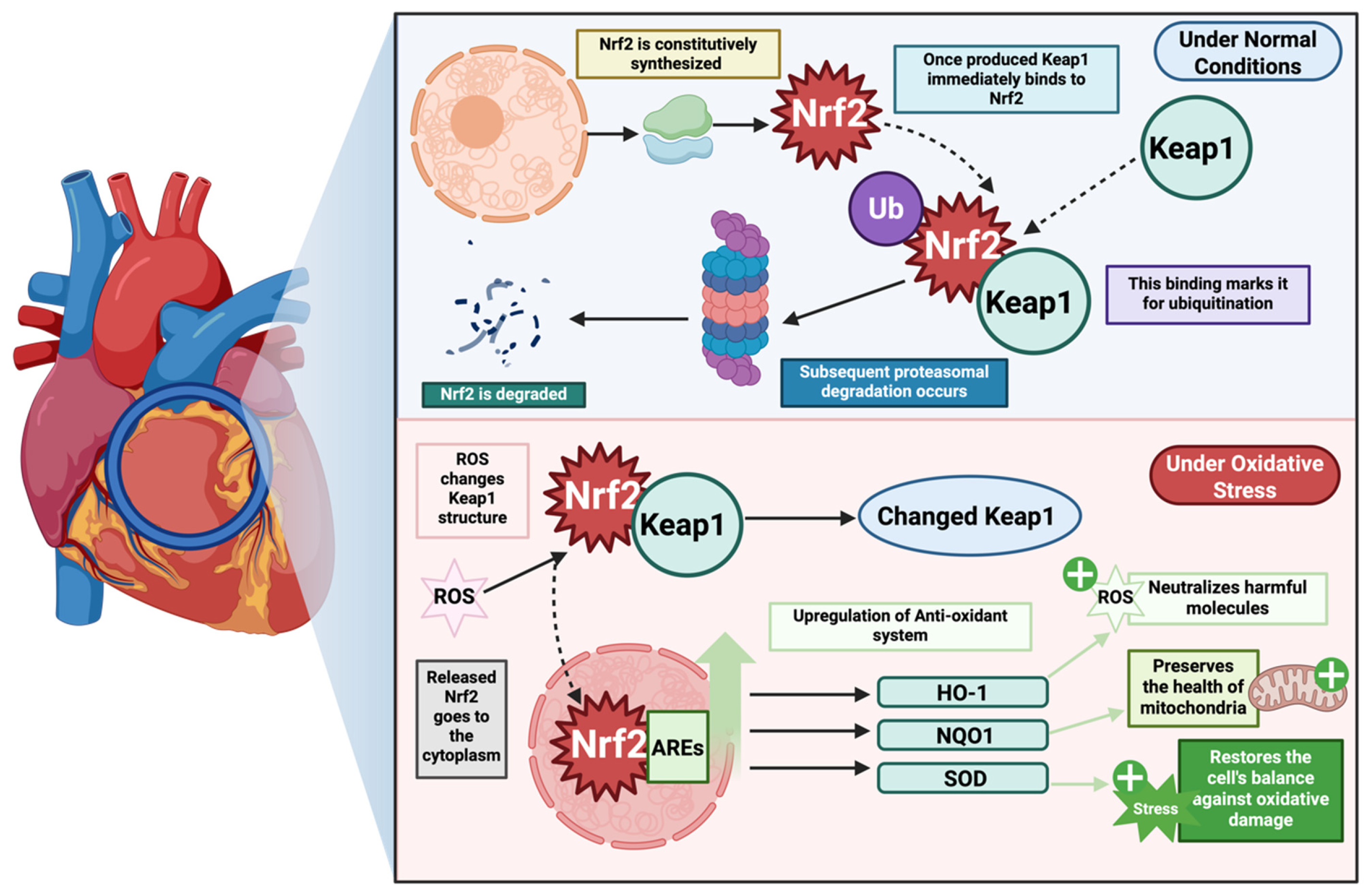

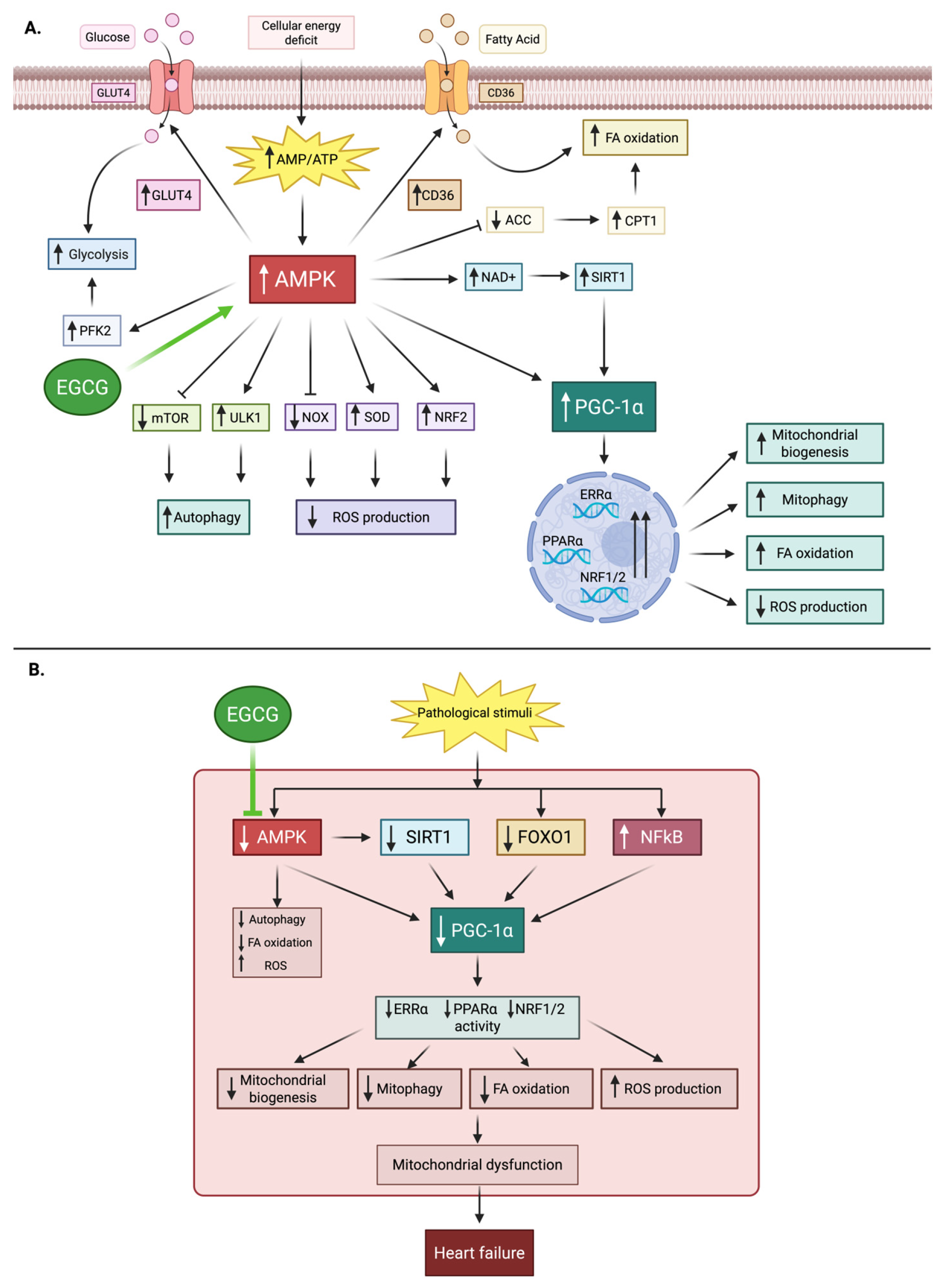


| Step/Pathway | Microbial Action/Enzymes | Metabolites Formed | Representative Bacterial Genera | Notes/Biological Relevance | References |
|---|---|---|---|---|---|
| Degalloylation | Microbial esterases cleave gallate moiety from EGCG | Epigallocatechin (EGC) + Gallic acid (GA) | Bifidobacterium, Lactobacillus | Increases EGC absorption; GA has antioxidant and anti-inflammatory activity | [51,52] |
| Ring Fission (C-ring cleavage) | Microbial reductases/lyases break C-ring | Valerolactones (e.g., 5-(3,4,5-trihydroxyphenyl)-γ-valerolactone) | Eubacterium, Flavonifractor plautii | Key intermediates in flavanol metabolism; absorbed in colon | [53,54,55] |
| Dehydroxylation and Decarboxylation | Dehydroxylases, decarboxylases modify B- and A-rings | Phenylpropionic acids, Phenylacetic acids | Clostridium, Eggerthella lenta | Simplification of structure enhances systemic absorption | [51,56] |
| Dehydrogenation and Reduction | Oxidoreductases act on valerolactones | Phenyl-γ-valeric acid derivatives | Bacteroides, Ruminococcus | Circulating metabolites detected in plasma after green tea ingestion | [51,56] |
| Further Catabolism | Successive β-oxidation, dehydroxylation | Hippuric acid, Benzoic acid derivatives | Mixed microbiota (various Firmicutes, Bacteroidetes) | Excreted in urine; major end-products of flavanol metabolism | [51] |
Disclaimer/Publisher’s Note: The statements, opinions and data contained in all publications are solely those of the individual author(s) and contributor(s) and not of MDPI and/or the editor(s). MDPI and/or the editor(s) disclaim responsibility for any injury to people or property resulting from any ideas, methods, instructions or products referred to in the content. |
© 2025 by the authors. Licensee MDPI, Basel, Switzerland. This article is an open access article distributed under the terms and conditions of the Creative Commons Attribution (CC BY) license (https://creativecommons.org/licenses/by/4.0/).
Share and Cite
Ajaz, F.; Haddad, J.; Huda, B.; Yousuf, M.; Patnaik, R.; Bhurka, F.; Banerjee, Y. Epigallocatechin Gallate as a Molecular Therapeutic in Heart Failure and Cardio-Oncology: Mechanistic Pathways and Translational Perspectives. Int. J. Mol. Sci. 2025, 26, 10798. https://doi.org/10.3390/ijms262110798
Ajaz F, Haddad J, Huda B, Yousuf M, Patnaik R, Bhurka F, Banerjee Y. Epigallocatechin Gallate as a Molecular Therapeutic in Heart Failure and Cardio-Oncology: Mechanistic Pathways and Translational Perspectives. International Journal of Molecular Sciences. 2025; 26(21):10798. https://doi.org/10.3390/ijms262110798
Chicago/Turabian StyleAjaz, Faika, Jewel Haddad, Bintul Huda, Maryam Yousuf, Rajashree Patnaik, Farida Bhurka, and Yajnavalka Banerjee. 2025. "Epigallocatechin Gallate as a Molecular Therapeutic in Heart Failure and Cardio-Oncology: Mechanistic Pathways and Translational Perspectives" International Journal of Molecular Sciences 26, no. 21: 10798. https://doi.org/10.3390/ijms262110798
APA StyleAjaz, F., Haddad, J., Huda, B., Yousuf, M., Patnaik, R., Bhurka, F., & Banerjee, Y. (2025). Epigallocatechin Gallate as a Molecular Therapeutic in Heart Failure and Cardio-Oncology: Mechanistic Pathways and Translational Perspectives. International Journal of Molecular Sciences, 26(21), 10798. https://doi.org/10.3390/ijms262110798