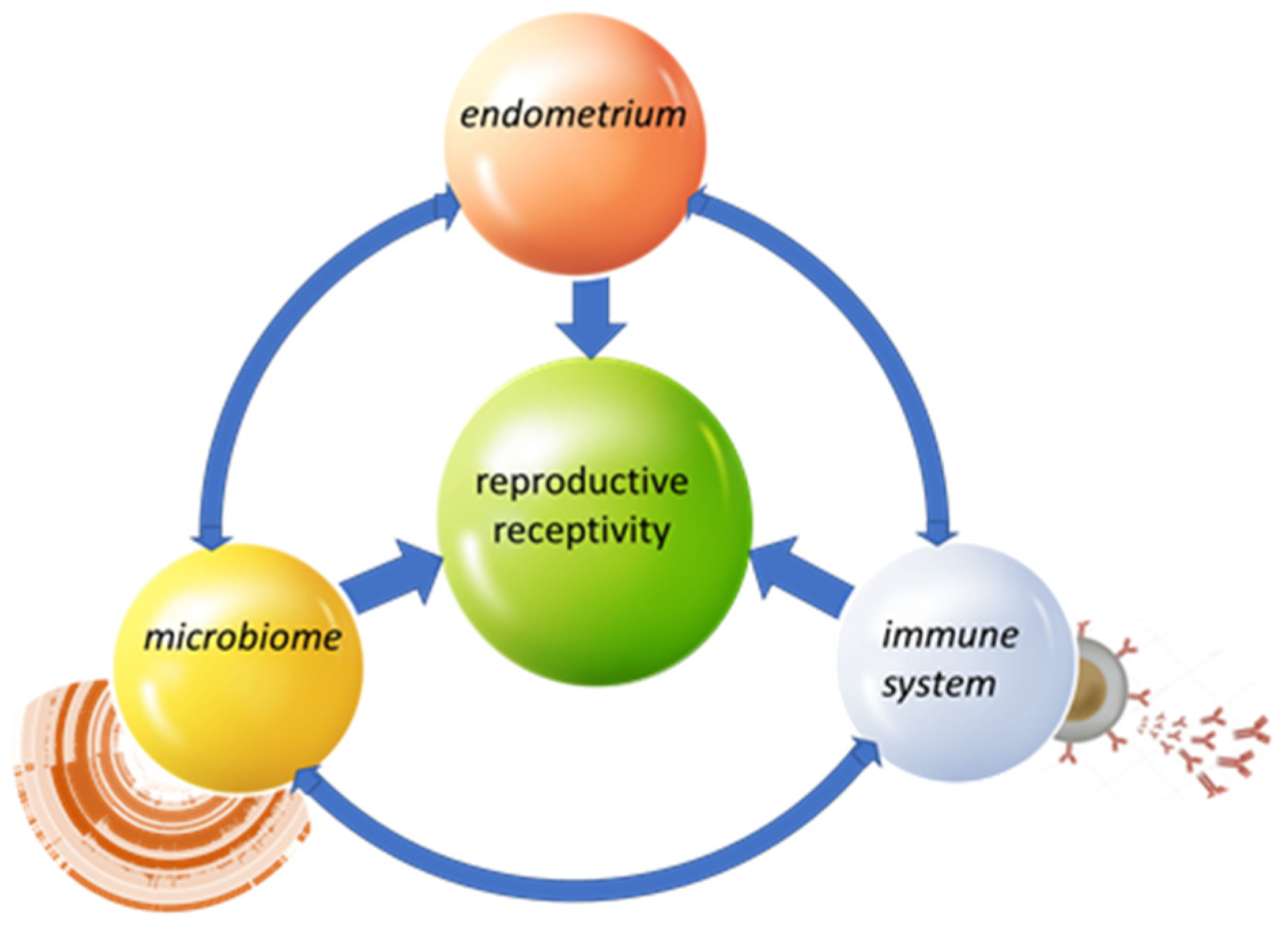

Endometrial Microbiome and Reproductive Receptivity: Diverse Perspectives

Abstract
1. Introduction
2. Methodological Features and Challenges in Endometrial Research Microbiome
2.1. Taking on Samples: Risk from Contamination (Cervical/Vaginal Transmission)
2.2. Size of the Study Group and Lack of Healthy Controls
2.3. Low Biomass on the Endometrial Microbiome
2.4. Methods for Research
2.5. Lack of Standardization → Difficulty in Comparing Results
3. Composition and Dynamics of the Endometrial Microbiome: Is There a Connection with Reproductive Health?
4. Study of the Endometrial Microbiome Using Cultivation Methods: Isolation of Pure Cultures of “Beneficial” Microorganisms
5. Therapeutic and Clinical Applications
6. Immunological Mechanisms—Research Methods: Interaction of the Microbiome with the Immune System and the Local Environment
6.1. Human Endometrial Epithelial Cell Lines
6.2. Three-Dimensional Human Endometrial Culture Models
6.3. Interaction Between the Endometrial Microbiota and Endothelium
6.4. Pro-Inflammatory Molecules, Cytokines, and Implantation Factors
6.5. Immunological Markers That Determine the Decidual Immune Profile and the Success of Implantation
7. Oxidative Stress and the Female Reproductive System
7.1. The Nature of Oxidative Stress
- Oocyte quality: OS induces apoptosis, mitochondrial dysfunction, and chromosomal anomalies, compromising oocyte viability and developmental potential.
- Fertility: It contributes to chromosomal non-disjunction and increases the risk of aneuploidy, particularly in advanced maternal age [128].
- Steroidogenesis: OS suppresses the activity of granulosa cells and impairs the synthesis of essential reproductive hormones such as follicle-stimulating hormone (FSH) and estradiol [118].
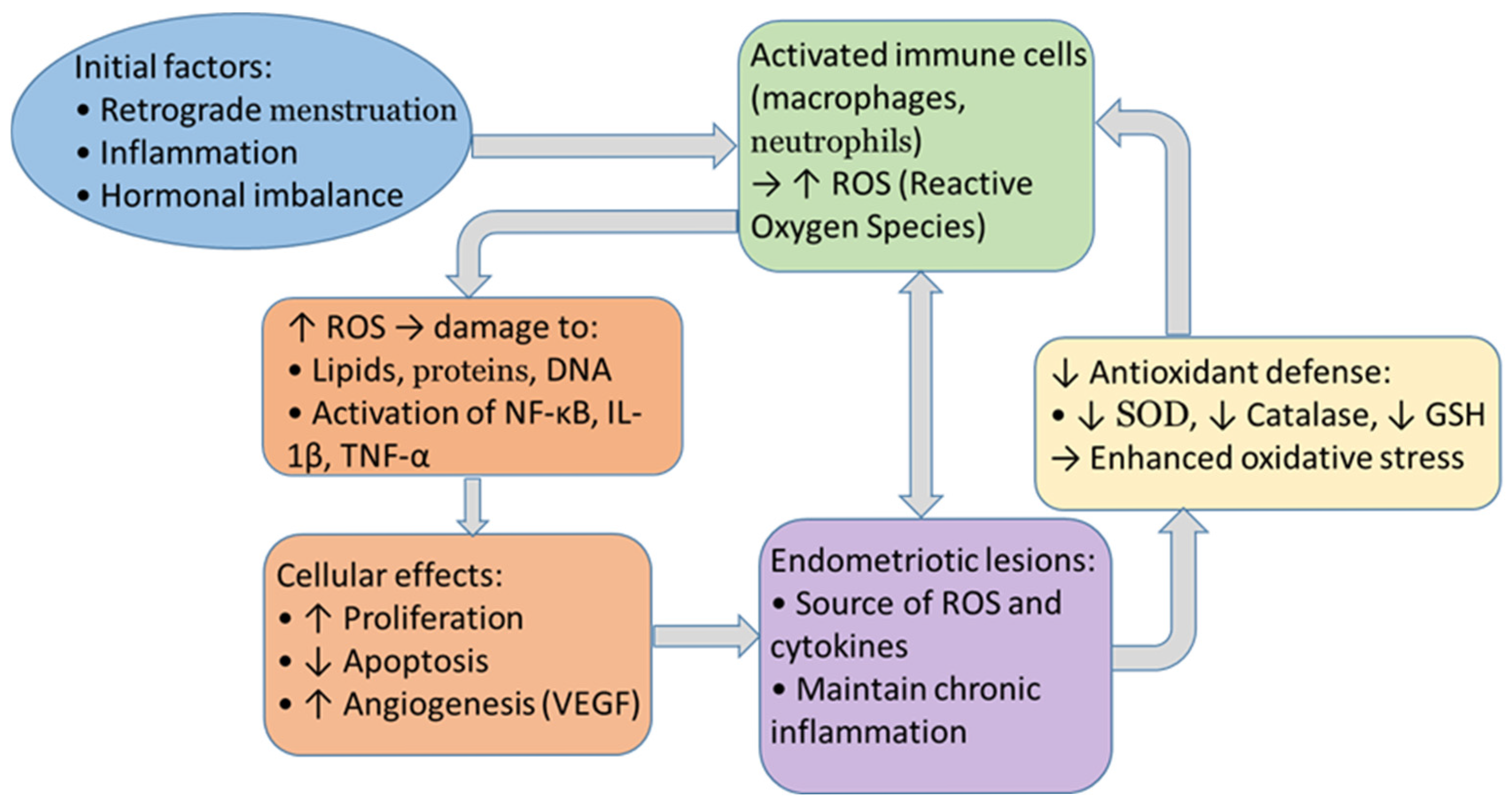
7.2. Oxidative Stress and Cellular Aging in Endometriosis
7.3. MAPK Signaling and Aging
7.4. Decidualization and Fertility
7.5. Antioxidant Defense
7.6. Antioxidant Activity of Lactobacilli
8. Conclusions
- Restoration and maintenance of Lactobacillus-dominant microbiota is a promising strategy for reducing gynecological and reproductive risks;
- Probiotic approaches show good results in terms of reducing symptoms and improving the microbiome ecosystem of the reproductive tract, but so far, these studies have focused primarily on the vaginal microbiome and vaginal infections, and not explicitly on the endometrial flora and its relationship with reproductive outcomes;
- The endometrial microbiome may influence the local immune response in the uterus, which is important for protection against pathogens and for tolerating pregnancy;
- Standardization of studies is needed to avoid methodological problems and distortion of results;
- One of the main factors influencing reproductive susceptibility is oxidative stress;
- Some strains of Lactobacillus exhibit relatively high antioxidant parameters, thereby favoring stress management and improving reproductive capacity.
Author Contributions
Funding
Institutional Review Board Statement
Informed Consent Statement
Data Availability Statement
Acknowledgments
Conflicts of Interest
References
- Paavonen, J.; Critchlow, C.W.; DeRouen, T.; Stevens, C.E.; Kiviat, N.; Brunham, R.C.; Holmes, K.K. Etiology of cervical inflammation. Am. J. Obstet. Gynecol. 1986, 154, 556–564. [Google Scholar] [CrossRef]
- Møller, B.R.; Kristiansen, F.V.; Thorsen, P.; Frost, L.; Mogensen, S.C. Sterility of the uterine cavity. Acta Obstet. Gynecol. Scand. 1995, 74, 216–219. [Google Scholar] [CrossRef]
- Bearfield, C.; Davenport, E.S.; Sivapathasundaram, V.; Allaker, R.P. Possible association between amniotic fluid micro-organism infection and microflora in the mouth. BJOG 2002, 109, 527–533. [Google Scholar] [PubMed]
- Stout, M.J.; Conlon, B.; Landeau, M.; Lee, I.; Bower, C.; Zhao, Q.; Mysorekar, I.U. Identification of intracellular bacteria in the basal plate of the human placenta in term and preterm gestations. Am. J. Obstet. Gynecol. 2013, 208, 226.e1. [Google Scholar] [CrossRef]
- Mitchell, C.M.; Haick, A.; Nkwopara, E.; Garcia, R.; Rendi, M.; Agnew, K.; Eschenbach, D. Colonization of the upper genital tract by vaginal bacterial species in nonpregnant women. Am. J. Obstet. Gynecol. 2015, 212, 611.e1. [Google Scholar] [CrossRef]
- Moreno, I.; Codoñer, F.M.; Vilella, F.; Valbuena, D.; Martinez-Blanch, J.F.; Jimenez-Almazán, J.; Simon, C. Evidence that the endometrial microbiota has an effect on implantation success or failure. Am. J. Obstet. Gynecol. 2016, 215, 684–703. [Google Scholar] [CrossRef]
- Fang, R.L.; Chen, L.X.; Shu, W.S.; Yao, S.Z.; Wang, S.W.; Chen, Y.Q. Barcoded sequencing reveals diverse intrauterine microbiomes in patients suffering with endometrial polyps. Am. J. Transl. Res. 2016, 8, 1581–1592. [Google Scholar]
- Verstraelen, H.; Vilchez-Vargas, R.; Desimpel, F.; Jauregui, R.; Vankeirsbilck, N.; Weyers, S.; Van De Wiele, T. Characterisation of the human uterine microbiome in non-pregnant women through deep sequencing of the V1-2 region of the 16S rRNA gene. PeerJ 2016, 4, e1602. [Google Scholar] [CrossRef]
- Altmäe, S.; Rienzi, L. Endometrial microbiome: New hope, or hype? Reprod. Biomed. Online 2021, 42, 1051–1052. [Google Scholar] [CrossRef]
- Cuffaro, F.; Russo, E.; Amedei, A. Endometriosis, pain, and related psychological disorders: Unveiling the interplay among the microbiome, inflammation, and oxidative stress as a common thread. Int. J. Mol. Sci. 2024, 25, 6473. [Google Scholar] [CrossRef]
- Ichiyama, T.; Kuroda, K.; Nagai, Y.; Urushiyama, D.; Ohno, M.; Yamaguchi, T.; Tanaka, A. Analysis of vaginal and endometrial microbiota communities in infertile women with a history of repeated implantation failure. Reprod. Med. Biol. 2021, 20, 334–344. [Google Scholar] [CrossRef]
- Chen, C.; Song, X.; Wei, W.; Zhong, H.; Dai, J.; Lan, Z.; Jia, H. The microbiota continuum along the female reproductive tract and its relation to uterine-related diseases. Nat. Commun. 2017, 8, 875. [Google Scholar] [CrossRef]
- Kyono, K.; Hashimoto, T.; Kikuchi, S.; Nagai, Y.; Sakuraba, Y. A pilot study and case reports on endometrial microbiota and pregnancy outcome: An analysis using 16S rRNA gene sequencing among IVF patients, and trial therapeutic intervention for dysbiotic endometrium. Reprod. Med. Biol. 2019, 18, 72–82. [Google Scholar] [CrossRef]
- Winters, A.D.; Romero, R.; Gervasi, M.T.; Gomez-Lopez, N.; Tran, M.R.; Garcia-Flores, V.; Theis, K.R. Does the endometrial cavity have a molecular microbial signature? Sci. Rep. 2019, 9, 9905. [Google Scholar] [CrossRef]
- Jean, S.; Huang, B.; Parikh, H.I.; Edwards, D.J.; Brooks, J.P.; Kumar, N.G.; Buck, G.A. Multi-omic microbiome profiles in the female reproductive tract in early pregnancy. Infect. Microbes Dis. 2019, 1, 49–60. [Google Scholar] [CrossRef]
- Boroń, D.; Zmarzły, N.; Wierzbik-Strońska, M.; Rosińczuk, J.; Mieszczański, P.; Grabarek, B.O. Recent multiomics approaches in endometrial cancer. Int. J. Mol. Sci. 2022, 23, 1237. [Google Scholar] [CrossRef]
- Bokulich, N.A.; Łaniewski, P.; Adamov, A.; Chase, D.M.; Caporaso, J.G.; Herbst-Kralovetz, M.M. Multi-omics data integration reveals metabolome as the top predictor of the cervicovaginal microenvironment. PLoS Comput. Biol. 2022, 18, e1009876. [Google Scholar] [CrossRef] [PubMed]
- Jie, Z.; Chen, C.; Hao, L.; Li, F.; Song, L.; Zhang, X.; Jia, H. Life history recorded in the vagino-cervical microbiome along with multi-omes. Genom. Proteom. Bioinform. 2022, 20, 304–321. [Google Scholar] [CrossRef] [PubMed]
- Chen, P.; Guo, Y.; Jia, L.; Wan, J.; He, T.; Fang, C.; Li, T. Interaction between functionally active endometrial microbiota and host gene regulation in endometrial cancer. Front. Cell Dev. Biol. 2021, 9, 727286. [Google Scholar] [CrossRef] [PubMed]
- Bui, B.N.; van Hoogenhuijze, N.; Viveen, M.; Mol, F.; Teklenburg, G.; de Bruin, J.P.; van de Wijgert, J.H. The endometrial microbiota of women with or without a live birth within 12 months after a first failed IVF/ICSI cycle. Sci. Rep. 2023, 13, 3444. [Google Scholar] [CrossRef] [PubMed]
- Foteinidou, P.; Exindari, M.; Chatzidimitriou, D.; Gioula, G. Endometrial microbiome and its correlation to female infertility: A systematic review and meta-analysis. Acta Microbiol. Hell. 2024, 69, 14–28. [Google Scholar] [CrossRef]
- Su, W.; Gong, C.; Zhong, H.; Yang, H.; Chen, Y.; Wu, X.; Zhao, J. Vaginal and endometrial microbiome dysbiosis associated with adverse embryo transfer outcomes. Reprod. Biol. Endocrinol. 2024, 22, 111. [Google Scholar] [CrossRef] [PubMed]
- Li, C.; Xu, X.; Zhao, X.; Du, B. The inconsistent pathogenesis of endometriosis and adenomyosis: Insights from endometrial metabolome and microbiome. mSystems 2025, 10, e00202-25. [Google Scholar] [CrossRef]
- Ye, L.; Dimitriadis, E. Endometrial Receptivity—Lessons from “Omics”. Biomolecules 2025, 15, 106. [Google Scholar] [CrossRef]
- Bwanga, P.K.; Tremblay-Lemoine, P.L.; Timmermans, M.; Ravet, S.; Munaut, C.; Nisolle, M.; Henry, L. The endometrial microbiota: Challenges and prospects. Medicina 2023, 59, 1540. [Google Scholar] [CrossRef]
- Baker, J.M.; Chase, D.M.; Herbst-Kralovetz, M.M. Uterine microbiota: Residents, tourists, or invaders? Front. Immunol. 2018, 9, 208. [Google Scholar] [CrossRef]
- Moreno, I.; Simon, C. Relevance of assessing the uterine microbiota in infertility. Fertil. Steril. 2018, 110, 337–343. [Google Scholar] [CrossRef] [PubMed]
- Qin, D. Next-generation sequencing and its clinical application. Cancer Biol. Med. 2019, 16, 4. [Google Scholar] [CrossRef] [PubMed]
- Korczynska, L.; Zeber-Lubecka, N.; Zgliczynska, M.; Zarychta, E.; Zareba, K.; Wojtyla, C.; Dabrowska, M.; Ciebiera, M. The role of microbiota in the pathophysiology of uterine fibroids—A systematic review. Front. Cell Infect. Microbiol. 2023, 13, 1177366. [Google Scholar] [CrossRef]
- Davidson, I.M.; Nikbakht, E.; Haupt, L.M.; Ashton, K.J.; Dunn, P.J. Methodological approaches in 16S sequencing of female reproductive tract in fertility patients: A review. J. Assist. Reprod. Genet. 2025, 42, 15–37. [Google Scholar] [CrossRef]
- Molina, N.M.; Sola-Leyva, A.; Haahr, T.; Aghajanova, L.; Laudanski, P.; Castilla, J.A.; Altmäe, S. Analysing endometrial microbiome: Methodological considerations and recommendations for good practice. Hum. Reprod. 2021, 36, 859–879. [Google Scholar] [CrossRef] [PubMed]
- Vitale, S.G.; Ferrari, F.; Ciebiera, M.; Zgliczyńska, M.; Rapisarda, A.M.C.; Vecchio, G.M.; Pino, A.; Angelico, G.; Knafel, A.; Riemma, G.; et al. The role of genital tract microbiome in fertility: A systematic review. Int. J. Mol. Sci. 2022, 23, 180. [Google Scholar] [CrossRef] [PubMed]
- Toson, B.; Simon, C.; Moreno, I. The endometrial microbiome and its impact on human conception. Int. J. Mol. Sci. 2022, 23, 485. [Google Scholar] [CrossRef]
- Tao, X.; Franasiak, J.M.; Zhan, Y.; Scott, R.T., III; Rajchel, J.; Bedard, J.; Chu, T. Characterizing the endometrial microbiome by analyzing the ultra-low bacteria from embryo transfer catheter tips in IVF cycles: Next generation sequencing (NGS) analysis of the 16S ribosomal gene. Hum. Microbiome J. 2017, 3, 15–21. [Google Scholar] [CrossRef]
- Moreno, I.; Franasiak, J.M. Endometrial microbiota—New player in town. Fertil. Steril. 2017, 108, 32–39. [Google Scholar] [CrossRef]
- Franasiak, J.M.; Werner, M.D.; Juneau, C.R.; Tao, X.; Landis, J.; Zhan, Y.; Scott, R.T. Endometrial microbiome at the time of embryo transfer: Next-generation sequencing of the 16S ribosomal subunit. J. Assist. Reprod. Genet. 2016, 33, 129–136. [Google Scholar] [CrossRef]
- Väinämö, S.; Saqib, S.; Kalliala, I.; Kervinen, K.; Luiro, K.; Niinimäki, M.; Holster, T. Longitudinal analysis of vaginal microbiota during IVF fresh embryo transfer and in early pregnancy. Microbiol. Spectr. 2023, 11, e01650-23. [Google Scholar] [CrossRef]
- Gao, X.; Louwers, Y.; Laven, J.; Schoenmakers, S. Clinical relevance of vaginal and endometrial microbiome investigation in women with repeated implantation failure and recurrent pregnancy loss. Int. J. Mol. Sci. 2024, 25, 622. [Google Scholar] [CrossRef] [PubMed]
- Shi, Y.; Yamada, H.; Sasagawa, Y.; Tanimura, K.; Deguchi, M. Uterine endometrium microbiota and pregnancy outcome in women with recurrent pregnancy loss. J. Reprod. Immunol. 2022, 152, 103653. [Google Scholar] [CrossRef]
- Moreno, I.; Garcia-Grau, I.; Perez-Villaroya, D.; Gonzalez-Monfort, M.; Bahçeci, M.; Barrionuevo, M.J.; Simon, C. Endometrial microbiota composition is associated with reproductive outcome in infertile patients. Microbiome 2022, 10, 1. [Google Scholar] [CrossRef]
- Parvanov, D.; Ganeva, R.; Ruseva, M.; Handzhiyska, M.; Tihomirova, T.; Chapanova, S.; Hadjidekova, S. Association between endometrial microbiome and implantation success in women with frozen embryo transfer: Results of a prospective cohort study. Biotechnol. Biotechnol. Equip. 2023, 37, 2250007. [Google Scholar] [CrossRef]
- Odendaal, J.; Black, N.; Bennett, P.R.; Brosens, J.; Quenby, S.; MacIntyre, D.A. The endometrial microbiota and early pregnancy loss. Hum. Reprod. 2024, 39, 638–646. [Google Scholar] [CrossRef] [PubMed]
- Bellver, J.; Gonzalez-Monfort, M.; González, S.; Toson, B.; Labarta, E.; Castillón, G.; Mariani, G.; Vidal, C.; Giles, J.; Cruz, F.; et al. An Analysis of the Digestive and Reproductive Tract Microbiota in Infertile Women with Obesity. Int. J. Mol. Sci. 2024, 25, 12600. [Google Scholar] [CrossRef] [PubMed]
- Garcia-Grau, I.; Perez-Villaroya, D.; Bau, D.; Gonzalez-Monfort, M.; Vilella, F.; Moreno, I.; Simon, C. Taxonomical and functional assessment of the endometrial microbiota in a context of recurrent reproductive failure: A case report. Pathogens 2019, 8, 205. [Google Scholar] [CrossRef]
- Li, F.; Chen, C.; Wei, W.; Wang, Z.; Dai, J.; Hao, L.; Jia, H. The metagenome of the female upper reproductive tract. Gigascience 2018, 7, giy107. [Google Scholar] [CrossRef]
- Sola-Leyva, A.; Andrés-León, E.; Molina, N.M.; Terron-Camero, L.C.; Plaza-Díaz, J.; Sáez-Lara, M.J.; Altmäe, S. Mapping the entire functionally active endometrial microbiota. Hum. Reprod. 2021, 36, 1021–1031. [Google Scholar] [CrossRef]
- Theis, K.R.; Romero, R.; Winters, A.D.; Greenberg, J.M.; Gomez-Lopez, N.; Alhousseini, A.; Hassan, S.S. Does the human placenta delivered at term have a microbiota? Results of cultivation, quantitative real-time PCR, 16S rRNA gene sequencing, and metagenomics. Am. J. Obstet. Gynecol. 2019, 220, 267.e1. [Google Scholar] [CrossRef] [PubMed]
- Boutriq, S.; González-González, A.; Plaza-Andrades, I.; Laborda-Illanes, A.; Sánchez-Alcoholado, L.; Peralta-Linero, J.; Queipo-Ortuño, M.I. Gut and endometrial microbiome dysbiosis: A new emergent risk factor for endometrial cancer. J. Pers. Med. 2021, 11, 659. [Google Scholar] [CrossRef]
- Balla, B.; Illés, A.; Tobiás, B.; Pikó, H.; Beke, A.; Sipos, M.; Lakatos, P.; Kósa, J. The Role of the Vaginal and Endometrial Microbiomes in Infertility and Their Impact on Pregnancy Outcomes in Light of Recent Literature. Int. J. Mol. Sci. 2024, 25, 13227. [Google Scholar] [CrossRef]
- Cariati, F.; Carotenuto, C.; Bagnulo, F.; Pacella, D.; Marrone, V.; Paolillo, R.; Catania, M.R.; Di Girolamo, R.; Conforti, A.; Strina, I.; et al. Endometrial microbiota profile in in-vitro fertilization (IVF) patients by culturomics-based analysis. Front. Endocrinol. 2023, 14, 1204729. [Google Scholar] [CrossRef]
- Mohammadi, A.; Moini, A.; Falsafi, S.; Feizabadi, M.M. Lactobacilli deficiency in infertile women seeking IVF in Arash Hospital: An imbalance in the genital microbiome. J. Fam. Reprod. Health 2025, 19, 122–127. [Google Scholar] [CrossRef]
- Vanstokstraeten, R.; Mackens, S.; Callewaert, E.; Blotwijk, S.; Emmerechts, K.; Crombé, F.; Soetens, O.; Wybo, I.; Vandoorslaer, K.; Mostert, L.; et al. Culturomics to Investigate the Endometrial Microbiome: Proof-of-Concept. Int. J. Mol. Sci. 2022, 23, 12212. [Google Scholar] [CrossRef]
- Vanstokstraeten, R.; Callewaert, E.; Blotwijk, S.; Rombauts, E.; Crombé, F.; Emmerechts, K.; Soetens, O.; Vandoorslaer, K.; De Geyter, D.; Allonsius, C.; et al. Comparing Vaginal and Endometrial Microbiota Using Culturomics: Proof of Concept. Int. J. Mol. Sci. 2023, 24, 5947. [Google Scholar] [CrossRef]
- Stoyancheva, G.; Marzotto, M.; Dellaglio, F.; Torriani, S. Bacteriocin production and gene sequencing analysis from vaginal Lactobacillus strains. Arch. Microbiol. 2014, 196, 645–653. [Google Scholar] [CrossRef]
- Kovachev, S. Defence factors of vaginal lactobacilli. Crit. Rev. Microbiol. 2018, 44, 31–39. [Google Scholar] [CrossRef] [PubMed]
- Giordani, B.; Abruzzo, A.; Parolin, C.; Foschi, C.; Laghi, L.; Marangoni, A.; Luppi, B.; Vitali, B. Prebiotic activity of vaginal Lactobacilli on Bifidobacteria: From concept to formulation. Microbiol. Spectr. 2023, 11, e02009-22. [Google Scholar] [CrossRef]
- Miko, E.; Barakonyi, A. The role of hydrogen-peroxide (H2O2) produced by vaginal microbiota in female reproductive health. Antioxidants 2023, 12, 1055. [Google Scholar] [CrossRef] [PubMed]
- Avitabile, E.; Menotti, L.; Croatti, V.; Giordani, B.; Parolin, C.; Vitali, B. Protective mechanisms of vaginal Lactobacilli against sexually transmitted viral infections. Int. J. Mol. Sci. 2024, 25, 9168. [Google Scholar] [CrossRef]
- Chee, W.J.Y.; Chew, S.Y.; Than, L.T.L. Vaginal microbiota and the potential of Lactobacillus derivatives in maintaining vaginal health. Microb. Cell Factories 2020, 19, 203. [Google Scholar] [CrossRef] [PubMed]
- Chenoll, E.; Moreno, I.; Sánchez, M.; Garcia-Grau, I.; Silva, Á.; González-Monfort, M.; Genovés, S.; Vilella, F.; Seco-Durban, C.; Simón, C.; et al. Selection of new probiotics for endometrial health. Front. Cell Infect. Microbiol. 2019, 9, 114. [Google Scholar] [CrossRef]
- Pérez-Prieto, I.; Vargas, E.; Salas-Espejo, E.; Lüll, K.; Canha-Gouveia, A.; Pérez, L.A.; Fontes, J.; Salumets, A.; Andreson, R.; Aasmets, O.; et al. Gut microbiome in endometriosis: A cohort study on 1000 individuals. BMC Med. 2024, 22, 294, Correction in BMC Med. 2024, 22, 448. [Google Scholar] [CrossRef]
- Sobstyl, M.; Brecht, P.; Sobstyl, A.; Mertowska, P.; Grywalska, E. The Role of Microbiota in the Immunopathogenesis of Endometrial Cancer. Int. J. Mol. Sci. 2022, 23, 5756. [Google Scholar] [CrossRef]
- Baușic, A.; Scurtu, F.; Manu, A.; Matasariu, D.; Brătilă, E. Gut Microbiota Dysbiosis in Endometriosis: A Potential Link to Inflammation and Disease Progression. Int. J. Mol. Sci. 2025, 26, 5144. [Google Scholar] [CrossRef] [PubMed]
- Barczyński, B.; Frąszczak, K.; Grywalska, E.; Kotarski, J.; Korona-Głowniak, I. Vaginal and Cervical Microbiota Composition in Patients with Endometrial Cancer. Int. J. Mol. Sci. 2023, 24, 8266. [Google Scholar] [CrossRef]
- Molina, N.M.; Sola-Leyva, A.; Saez-Lara, M.J.; Plaza-Diaz, J.; Tubić-Pavlović, A.; Romero, B.; Altmäe, S. New opportunities for endometrial health by modifying uterine microbial composition: Present or future? Biomolecules 2020, 10, 593. [Google Scholar] [CrossRef] [PubMed]
- Brennan, C.; Chan, K.; Kumar, T.; Maissy, E.; Brubaker, L.; Dothard, M.I.; Knight, R. Harnessing the power within: Engineering the microbiome for enhanced gynecologic health. Reprod. Fertil. 2024, 5, e230060. [Google Scholar] [CrossRef] [PubMed]
- Valeriano, V.D.; Lahtinen, E.; Hwang, I.C.; Zhang, Y.; Du, J.; Schuppe-Koistinen, I. Vaginal dysbiosis and the potential of vaginal microbiome-directed therapeutics. Front. Microbiomes 2024, 3, 1363089. [Google Scholar] [CrossRef]
- Mändar, R.; Sõerunurk, G.; Štšepetova, J.; Smidt, I.; Rööp, T.; Kõljalg, S.; Salumets, A. Impact of Lactobacillus crispatus-containing oral and vaginal probiotics on vaginal health: A randomised double-blind placebo controlled clinical trial. Benef. Microbes 2023, 14, 143–152. [Google Scholar] [CrossRef]
- Bayar, E.; MacIntyre, D.A.; Sykes, L.; Mountain, K.; Parks, T.P.; Lee, P.P.; Bennett, P.R. Safety, tolerability, and acceptability of Lactobacillus crispatus CTV-05 (LACTIN-V) in pregnant women at high-risk of preterm birth. Benef. Microbes 2023, 14, 45–56. [Google Scholar] [CrossRef]
- Kadogami, D.; Nakaoka, Y.; Morimoto, Y. Use of a vaginal probiotic suppository and antibiotics to influence the composition of the endometrial microbiota. Reprod. Biol. 2020, 20, 307–314. [Google Scholar] [CrossRef]
- Sakamoto, M.; Tanaka, H.; Enomoto, S.; Takeuchi, H.; Nishioka, M.; Tanaka, K.; Ikeda, T. The efficacy of vaginal treatment for non-Lactobacillus-dominant endometrial microbiota—A case–control study. J. Obstet. Gynaecol. Res. 2024, 50, 604–610. [Google Scholar] [CrossRef] [PubMed]
- Santarelli, G.; Rosato, R.; Cicchinelli, M.; Iavarone, F.; Urbani, A.; Sanguinetti, M.; Delogu, G.; De Maio, F. The activity of cell-free supernatant of Lactobacillus crispatus M247: A promising treatment against vaginal infections. Front. Cell. Infect. Microbiol. 2025, 15, 1586442. [Google Scholar] [CrossRef] [PubMed]
- Vander Donck, L.; Victor, M.; Van Beeck, W.; Van Rillaer, T.; Dillen, J.; Ahannach, S.; Lebeer, S. Host-independent synergism between Lactobacillus crispatus and other vaginal lactobacilli. Cell Rep. 2025, 44, 9. [Google Scholar] [CrossRef]
- He, X.; Chen, W.; Zhou, X.; Hu, G.; Wei, J.; Liu, Y.; Chen, T. The therapeutic potential of Lactobacillus crispatus for chronic endometritis: A comprehensive clinical trial and experimental investigation. Probiotics Antimicrob. Proteins 2024, 1–19. [Google Scholar] [CrossRef]
- Frąszczak, K.; Barczyński, B.; Kondracka, A. Does Lactobacillus exert a protective effect on the development of cervical and endometrial cancer in women? Cancers 2022, 14, 4909. [Google Scholar] [CrossRef]
- Riaz, M.A.; Kary, F.L.; Jensen, A.; Zeppernick, F.; Meinhold-Heerlein, I.; Konrad, L. Long-Term Maintenance of Viable Human Endometrial Epithelial Cells to Analyze Estrogen and Progestin Effects. Cells 2024, 13, 811. [Google Scholar] [CrossRef]
- Classen-Linke, I.; Buck, V.U.; Sternberg, A.K.; Kohlen, M.; Izmaylova, L.; Leube, R.E. Changes in Epithelial Cell Polarity and Adhesion Guide Human Endometrial Receptivity: How In Vitro Systems Help to Untangle Mechanistic Details. Biomolecules 2025, 15, 1057. [Google Scholar] [CrossRef]
- Hannan, N.J.; Paiva, P.; Dimitriadis, E.; Salamonsen, L.A. Models for Study of Human Embryo Implantation: Choice of Cell Lines? Biol. Reprod. 2010, 82, 235–245. [Google Scholar] [CrossRef]
- Miller, M.M.; Alyea, R.A.; LeSommer, C.; Doheny, D.L.; Rowley, S.M.; Childs, K.M.; Balbuena, P.; Ross, S.M.; Dong, J.; Sun, B.; et al. Editor’s Highlight: Development of an In Vitro Assay Measuring Uterine-Specific Estrogenic Responses for Use in Chemical Safety Assessment. Toxicol. Sci. 2016, 154, 162–173. [Google Scholar] [CrossRef] [PubMed][Green Version]
- Pavlič, R.; Gjorgoska, M.; Hafner, E.; Sinreih, M.; Gajser, K.; Poschner, S.; Jäger, W.; Rižner, T.L. In the Model Cell Lines of Moderately and Poorly Differentiated Endometrial Carcinoma, Estrogens Can Be Formed via the Sulfatase Pathway. Front. Mol. Biosci. 2021, 8, 743403. [Google Scholar] [CrossRef]
- Sahoo, S.S.; Ramanand, S.G.; Cuevas, I.C.; Gao, Y.; Lee, S.; Abbas, A.; Zhang, X.; Kumar, A.; Koduru, P.; Roy, S.; et al. A Distinct Mechanism of Epigenetic Reprogramming Silences PAX2 and Initiates Endometrial Carcinogenesis. J. Clin. Investig. 2025, 135, e190989. [Google Scholar] [CrossRef]
- Wang, H.; Pilla, F.; Martinez-Escribano, S.; Bocca, S.; Oehninger, S.; Horcajadas, J.A. A Novel In Vitro Model of Human Implantation: An Endometrium-like Three-Dimensional (3D) Culture System for Attachment/Invasion of Trophoblast-like Cells. Fertil. Steril. 2010, 94, S64–S65. [Google Scholar] [CrossRef]
- Wang, H.; Pilla, F.; Anderson, S.; Martinez-Escribano, S.; Herrer, I.; Moreno-Moya, J.M.; Musti, S.; Bocca, S.; Oehninger, S.; Horcajadas, J.A. A Novel Model of Human Implantation: 3D Endometrium-like Culture System to Study Attachment of Human Trophoblast (Jar) Cell Spheroids. Mol. Hum. Reprod. 2012, 18, 33–43. [Google Scholar] [CrossRef]
- Stern-Tal, D.; Achache, H.; Jacobs Catane, L.; Reich, R.; Tavor Re’em, T. Novel 3D Embryo Implantation Model within Macroporous Alginate Scaffolds. J. Biol. Eng. 2020, 14, 18. [Google Scholar] [CrossRef] [PubMed]
- Li, X.; Kodithuwakku, S.P.; Chan, R.W.S.; Yeung, W.S.B.; Yao, Y.; Ng, E.H.Y.; Chiu, P.C.N.; Lee, C.-L. Three-Dimensional Culture Models of Human Endometrium for Studying Trophoblast-Endometrium Interaction during Implantation. Reprod. Biol. Endocrinol. 2022, 20, 120. [Google Scholar] [CrossRef] [PubMed]
- Ciprietti, M.; Bueds, C.; Vankelecom, H.; Vriens, J. Organoids as Powerful Models of Endometrium Epithelium in Transcriptomic, Cellular and Functional Mimicry. Cell. Mol. Life Sci. 2025, 82, 272. [Google Scholar] [CrossRef] [PubMed]
- Jabri, A.; Alsharif, M.; Abbad, T.; Taftafa, B.; Mhannayeh, A.; Elsalti, A.; Attia, F.; Mir, T.A.; Saadeldin, I.; Yaqinuddin, A. Endometrial Organoids and Their Role in Modeling Human Infertility. Cells 2025, 14, 829. [Google Scholar] [CrossRef]
- Liu, J.; Shi, Y.; Shen, X.; Zhang, W.; Wang, X.; Wang, K. Evolving from Organoid to Assembloid with Enhanced Cellular Interactions. Cell Organoid. 2025. online ahead of print. Available online: https://www.sciopen.com/article/10.26599/CO.2025.9410010 (accessed on 7 September 2025).
- Kleinová, M.; Varga, I.; Čeháková, M.; Valent, M.; Klein, M. Exploring the Black Box of Human Reproduction: Endometrial Organoids and Assembloids—Generation, Implantation Modeling, and Future Clinical Perspectives. Front. Cell Dev. Biol. 2024, 12, 1482054. [Google Scholar] [CrossRef]
- Benner, M.; Ferwerda, G.; Joosten, I.; Van Der Molen, R.G. How Uterine Microbiota Might Be Responsible for a Receptive, Fertile Endometrium. Hum. Reprod. Update 2018, 24, 393–415. [Google Scholar] [CrossRef]
- Verstraelen, H.; Vieira-Baptista, P.; De Seta, F.; Ventolini, G.; Lonnee-Hoffmann, R.; Lev-Sagie, A. The Vaginal Microbiome: I. Research Development, Lexicon, Defining “Normal” and the Dynamics Throughout Women’s Lives. J. Low. Genit. Tract Dis. 2022, 26, 73–78. [Google Scholar] [CrossRef]
- Karadbhajne, P.; More, A.; Dzoagbe, H.Y. The Role of Endometrial Microbiota in Fertility and Reproductive Health: A Narrative Review. Cureus. 2025. online ahead of print. Available online: https://www.cureus.com/articles/253962-the-role-of-endometrial-microbiota-in-fertility-and-reproductive-health-a-narrative-review (accessed on 8 September 2025).
- Carosso, A.; Revelli, A.; Gennarelli, G.; Canosa, S.; Cosma, S.; Borella, F.; Tancredi, A.; Paschero, C.; Boatti, L.; Zanotto, E.; et al. Controlled Ovarian Stimulation and Progesterone Supplementation Affect Vaginal and Endometrial Microbiota in IVF Cycles: A Pilot Study. J. Assist. Reprod. Genet. 2020, 37, 2315–2326. [Google Scholar] [CrossRef]
- Sirota, I.; Zarek, S.; Segars, J. Potential Influence of the Microbiome on Infertility and Assisted Reproductive Technology. Semin. Reprod. Med. 2014, 32, 35–42. [Google Scholar] [CrossRef]
- Cela, V.; Daniele, S.; Obino, M.E.R.; Ruggiero, M.; Zappelli, E.; Ceccarelli, L.; Papini, F.; Marzi, I.; Scarfò, G.; Tosi, F.; et al. Endometrial Dysbiosis Is Related to Inflammatory Factors in Women with Repeated Implantation Failure: A Pilot Study. J. Clin. Med. 2022, 11, 2481. [Google Scholar] [CrossRef]
- Franasiak, J.M.; Scott, R.T. Endometrial Microbiome. Curr. Opin. Obstet. Gynecol. 2017, 29, 146–152. [Google Scholar] [CrossRef]
- Guo, L.; Guo, A.; Yang, F.; Li, L.; Yan, J.; Deng, X.; Dai, C.; Li, Y. Alterations of Cytokine Profiles in Patients With Recurrent Implantation Failure. Front. Endocrinol. 2022, 13, 949123. [Google Scholar] [CrossRef]
- Bhagwat, S.R.; Chandrashekar, D.S.; Kakar, R.; Davuluri, S.; Bajpai, A.K.; Nayak, S.; Bhutada, S.; Acharya, K.; Sachdeva, G. Endometrial Receptivity: A Revisit to Functional Genomics Studies on Human Endometrium and Creation of HGEx-ERdb. PLoS ONE 2013, 8, e58419. [Google Scholar] [CrossRef] [PubMed]
- Altmäe, S.; Martinez-Conejero, J.A.; Esteban, F.J.; Ruiz-Alonso, M.; Stavreus-Evers, A.; Horcajadas, J.A.; Salumets, A. microRNAs miR-30b, miR-30d, and miR-494 Regulate Human Endometrial Receptivity. Reprod. Sci. 2013, 20, 308–317. [Google Scholar] [CrossRef]
- Altmäe, S.; Koel, M.; Võsa, U.; Adler, P.; Suhorutšenko, M.; Laisk-Podar, T.; Kukushkina, V.; Saare, M.; Velthut-Meikas, A.; Krjutškov, K.; et al. Meta-signature of Human Endometrial Receptivity: A Meta-analysis and Validation Study of Transcriptomic Biomarkers. Sci. Rep. 2017, 7, 10077. [Google Scholar] [CrossRef]
- Dimitriadis, E.; White, C.A.; Jones, R.L.; Salamonsen, L.A. Cytokines, Chemokines and Growth Factors in Endometrium Related to Implantation. Hum. Reprod. Update 2005, 11, 613–630. [Google Scholar] [CrossRef] [PubMed]
- Cha, J.; Sun, X.; Dey, S.K. Mechanisms of Implantation: Strategies for Successful Pregnancy. Nat. Med. 2012, 18, 1754–1767. [Google Scholar] [CrossRef] [PubMed]
- Singh, M.; Chaudhry, P.; Asselin, E. Bridging Endometrial Receptivity and Implantation: Network of Hormones, Cytokines, and Growth Factors. J. Endocrinol. 2011, 210, 5–14. [Google Scholar] [CrossRef]
- Achache, H.; Revel, A. Endometrial Receptivity Markers, the Journey to Successful Embryo Implantation. Hum. Reprod. Update 2006, 12, 731–746. [Google Scholar] [CrossRef]
- Gnainsky, Y.; Granot, I.; Aldo, P.B.; Barash, A.; Or, Y.; Schechtman, E.; Mor, G.; Dekel, N. Local Injury of the Endometrium Induces an Inflammatory Response That Promotes Successful Implantation. Fertil. Steril. 2010, 94, 2030–2036. [Google Scholar] [CrossRef] [PubMed]
- Ashary, N.; Tiwari, A.; Modi, D. Embryo Implantation: War in Times of Love. Endocrinology 2018, 159, 1188–1198. [Google Scholar] [CrossRef]
- Moffett, A.; Colucci, F. Uterine NK Cells: Active Regulators at the Maternal-Fetal Interface. J. Clin. Investig. 2014, 124, 1872–1879. [Google Scholar] [CrossRef] [PubMed]
- Hiby, S.E.; Apps, R.; Sharkey, A.M.; Farrell, L.E.; Gardner, L.; Mulder, A.; Claas, F.H.J.; Walker, J.J.; Redman, C.W.G.; Morgan, L.; et al. Maternal KIR in Combination with Paternal HLA-C Regulate Human Birth Weight. J. Immunol. 2010, 185, 116–1124. [Google Scholar] [CrossRef] [PubMed]
- Houser, B.L. Decidual Macrophages and Their Roles at the Maternal–Fetal Interface. Yale J. Biol. Med. 2012, 85, 105–118. [Google Scholar] [PubMed]
- Aluvihare, V.R.; Kallikourdis, M.; Betz, A.G. Regulatory T Cells Mediate Maternal Tolerance to the Fetus. Nat. Immunol. 2004, 5, 266–271. [Google Scholar] [CrossRef]
- Agarwal, S.; Sharma, K.; Swanson, B.G.; Yüksel, G.Ü.; Clark, S. Nonstarter Lactic Acid Bacteria Biofilms and Calcium Lactate Crystals in Cheddar Cheese. J. Dairy Sci. 2006, 89, 1452–1466. [Google Scholar] [CrossRef] [PubMed]
- Agarwal, R.; Sharma, N.; Chaudhry, R.; Deorari, A.; Paul, V.K.; Gewolb, I.H.; Panigrahi, P. Effects of Oral Lactobacillus GG on Enteric Microflora in Low-Birth-Weight Neonates. J. Pediatr. Gastroenterol. Nutr. 2003, 36, 397–402. [Google Scholar] [CrossRef]
- Murphy, C.; Murphy, S.; O’Brien, F.; O’Donoghue, M.; Boileau, T.; Sunvold, G.; O’Mahony, L. Metabolic Activity of Probiotics—Oxalate Degradation. Vet. Microbiol. 2009, 136, 100–107. [Google Scholar] [CrossRef]
- Montuschi, P.; Barnes, P.; Jackson Roberts, L. Insights into Oxidative Stress: The Isoprostanes. Curr. Med. Chem. 2007, 14, 703–717. [Google Scholar] [CrossRef]
- Pisoschi, A.M.; Pop, A. The Role of Antioxidants in the Chemistry of Oxidative Stress: A Review. Eur. J. Med. Chem. 2015, 97, 55–74. [Google Scholar] [CrossRef]
- Rahiminejad, M.E.; Moaddab, A.; Ganji, M.; Eskandari, N.; Yepez, M.; Rabiee, S.; Ranjbar, A. Oxidative Stress Biomarkers in Endometrial Secretions: A Comparison between Successful and Unsuccessful In Vitro Fertilization Cycles. J. Reprod. Immunol. 2016, 116, 70–75. [Google Scholar] [CrossRef]
- Malvezzi, H.; Cestari, B.A.; Meola, J.; Podgaec, S. Higher Oxidative Stress in Endometriotic Lesions Upregulates Senescence-Associated p16ink4a and β-Galactosidase in Stromal Cells. Int. J. Mol. Sci. 2023, 24, 914. [Google Scholar] [CrossRef] [PubMed]
- Didziokaite, G.; Biliute, G.; Gudaite, J.; Kvedariene, V. Oxidative Stress as a Potential Underlying Cause of Minimal and Mild Endometriosis-Related Infertility. Int. J. Mol. Sci. 2023, 24, 3809. [Google Scholar] [CrossRef]
- Stein, T.P.; Scholl, T.O.; Schluter, M.D.; Leskiw, M.J.; Chen, X.; Spur, B.W.; Rodriguez, A. Oxidative Stress Early in Pregnancy and Pregnancy Outcome. Free Radic. Res. 2008, 42, 841–848. [Google Scholar] [CrossRef] [PubMed]
- Aitken, R.J. Impact of Oxidative Stress on Male and Female Germ Cells: Implications for Fertility. Reproduction 2020, 159, R189–R201. [Google Scholar] [CrossRef] [PubMed]
- Ra, K.; Park, S.C.; Lee, B.C. Female Reproductive Aging and Oxidative Stress: Mesenchymal Stem Cell Conditioned Medium as a Promising Antioxidant. Int. J. Mol. Sci. 2023, 24, 5053. [Google Scholar] [CrossRef]
- Oyawoye, O.; Abdel Gadir, A.; Garner, A.; Constantinovici, N.; Perrett, C.; Hardiman, P. Antioxidants and Reactive Oxygen Species in Follicular Fluid of Women Undergoing IVF: Relationship to Outcome. Hum. Reprod. 2003, 18, 2270–2274. [Google Scholar] [CrossRef]
- Combelles, C.M.; Gupta, S.; Agarwal, A. Could Oxidative Stress Influence the In-Vitro Maturation of Oocytes? Reprod. Biomed. Online 2009, 18, 864–880. [Google Scholar] [CrossRef]
- Borowiecka, M.; Wojsiat, J.; Polac, I.; Radwan, M.; Radwan, P.; Zbikowska, H.M. Oxidative Stress Markers in Follicular Fluid of Women Undergoing In Vitro Fertilization and Embryo Transfer. Syst. Biol. Reprod. Med. 2012, 58, 301–305. [Google Scholar] [CrossRef] [PubMed]
- García-Gil, F.A.; Albendea, C.D.; López-Pingarrón, L.; Royo-Dachary, P.; Martínez-Guillén, J.; Piedrafita, E.; Martínez-Díez, M.; Soria, J.; García, J.J. Altered Cellular Membrane Fluidity Levels and Lipid Peroxidation During Experimental Pancreas Transplantation. J. Bioenerg. Biomembr. 2012, 44, 571–577. [Google Scholar] [CrossRef]
- Checa, J.; Aran, J.M. Reactive Oxygen Species: Drivers of Physiological and Pathological Processes. J. Inflamm. Res. 2020, 13, 1057–1073. [Google Scholar] [CrossRef] [PubMed]
- Aydin, Y.; Ozatik, O.; Hassa, H.; Ulusoy, D.; Ogut, S.; Sahin, F. Relationship between oxidative stress and clinical pregnancy in assisted reproductive technology treatment cycles. JARG 2013, 30, 765–772, Correction in JARG 2014, 31, 1569. [Google Scholar] [CrossRef]
- Ruder, E.H.; Hartman, T.J.; Goldman, M.B. Impact of oxidative stress on female fertility. Curr. Opin. Obstet. Gynecol. 2009, 21, 219–222. [Google Scholar] [CrossRef] [PubMed]
- Scutiero, G.; Iannone, P.; Bernardi, G.; Bonaccorsi, G.; Spadaro, S.; Volta, C.A.; Nappi, L. Oxidative Stress and Endometriosis: A Systematic Review of the Literature. Oxidative Med. Cell. Longev. 2017, 2017, 7265238. [Google Scholar] [CrossRef]
- Tanbo, T.; Fedorcsak, P. Endometriosis-Associated Infertility: Aspects of Pathophysiological Mechanisms and Treatment Options. Acta Obstet. Gynecol. Scand. 2017, 96, 659–667. [Google Scholar] [CrossRef]
- Amini, L.; Chekini, R.; Nateghi, M.R.; Haghani, H.; Jamialahmadi, T.; Sathyapalan, T.; Sahebkar, A. The Effect of Combined Vitamin C and Vitamin E Supplementation on Oxidative Stress Markers in Women with Endometriosis: A Randomized, Triple-Blind Placebo-Controlled Clinical Trial. Pain Res. Manag. 2021, 2021, 5529741. [Google Scholar] [CrossRef]
- Cacciottola, L.; Donnez, J.; Dolmans, M.M. Oxidative Stress, Mitochondria, and Infertility: Is the Relationship Fully Established? Fertil. Steril. 2021, 116, 306–308. [Google Scholar] [CrossRef]
- Yoshino, O.; Osuga, Y.; Hirota, Y.; Koga, K.; Hirata, T.; Harada, M.; Morimoto, C.; Yano, T.; Nishii, O.; Tsutsumi, O.; et al. Possible pathophysiological roles of mitogen-activated protein kinases (MAPKs) in endometriosis. Am. J. Reprod. Immunol. 2004, 52, 306–311. [Google Scholar] [CrossRef]
- Yotova, I.Y.; Quan, P.; Leditznig, N.; Beer, U.; Wenzl, R.; Tschugguel, W. Abnormal activation of Ras/Raf/MAPK and RhoA/ROCKII signalling pathways in eutopic endometrial stromal cells of patients with endometriosis. Hum. Reprod. 2011, 26, 885–897. [Google Scholar] [CrossRef]
- Matsuzaki, S.; Darcha, C. Co-operation between the AKT and ERK signaling pathways may support growth of deep endometriosis in a fibrotic microenvironment in vitro. Hum. Reprod. 2015, 30, 1606–1616. [Google Scholar] [CrossRef]
- Lu, J.; Wang, Z.; Cao, J.; Chen, Y.; Dong, Y. A novel and compact review on the role of oxidative stress in female reproduction. Reprod. Biol. Endocrinol. RBE 2018, 16, 80. [Google Scholar] [CrossRef] [PubMed]
- Ansariniya, H.; Yavari, A.; Javaheri, A.; Zare, F. Oxidative stress-related effects on various aspects of endometriosis. Am. J. Reprod. Immunol. 2022, 88, e13593. [Google Scholar] [CrossRef] [PubMed]
- Bane, K.; Desouza, J.; Shetty, D.; Choudhary, P.; Kadam, S.; Katkam, R.R.; Fernandes, G.; Sawant, R.; Dudhedia, U.; Warty, N.; et al. Endometrial DNA damage response is modulated in endometriosis. Hum. Reprod. 2021, 36, 160–174. [Google Scholar] [CrossRef]
- Zhang, Z.; Li, T.; Xu, L.; Wang, Q.; Li, H.; Wang, X. Extracellular superoxide produced by Enterococcus faecalis reduces endo-metrial receptivity via inflammatory injury. Am. J. Reprod. Immunol. 2021, 86, e13453. [Google Scholar] [CrossRef] [PubMed]
- Alam, F.; Khan, T.A.; Amjad, S.; Rehman, R. Association of oxidative stress with female infertility—A case control study. J. Pak. Med. Assoc. 2019, 69, 627–631. [Google Scholar]
- Chuang, H.C.; Tsai, K.L.; Tsai, K.J.; Tu, T.Y.; Shyong, Y.J.; Jou, I.M.; Hsu, C.C.; Shih, S.S.; Liu, Y.F.; Lin, C.L. Oxidative Stress Mediates Age-Related Hypertrophy of Ligamentum Flavum by Inducing Inflammation, Fibrosis, and Apoptosis through Activating Akt and MAPK Pathways. Aging 2020, 12, 24168–24183. [Google Scholar] [CrossRef]
- Uimari, O.; Rahmioglu, N.; Nyholt, D.R.; Vincent, K.; Missmer, S.A.; Becker, C.; Morris, A.P.; Montgomery, G.W.; Zondervan, K.T. Genome-Wide Genetic Analyses Highlight Mitogen-Activated Protein Kinase (MAPK) Signaling in the Pathogenesis of Endometriosis. Hum. Reprod. 2017, 32, 780–793. [Google Scholar] [CrossRef]
- Borodkina, A.V.; Shatrova, A.N.; Nikolsky, N.N.; Burova, E.B. The Role of p38 MAP-Kinase in Stress-Induced Senescence of Human Endometrium-Derived Mesenchymal Stem Cells. Cell Tissue Biol. 2016, 10, 365–371. [Google Scholar] [CrossRef]
- Borodkina, A.; Shatrova, A.; Abushik, P.; Nikolsky, N.; Burova, E. Interaction Between ROS Dependent DNA Damage, Mitochondria and p38 MAPK Underlies Senescence of Human Adult Stem Cells. Aging 2014, 6, 481–495. [Google Scholar] [CrossRef] [PubMed]
- Burova, E.; Borodkina, A.; Shatrova, A.; Nikolsky, N. Sublethal Oxidative Stress Induces the Premature Senescence of Human Mesenchymal Stem Cells Derived from Endometrium. Oxidative Med. Cell. Longev. 2013, 2013, 474931. [Google Scholar] [CrossRef]
- Agarwal, A.; Aziz, N.; Rizk, B. Oxidative Stress Endometrium. In Studies on Women’s Health; Springer: New York, NY, USA, 2013; pp. 1–363. [Google Scholar] [CrossRef]
- Deryabin, P.I.; Ivanova, J.S.; Borodkina, A.V. Senescence of Stromal Cells Contributes to Endometrium Dysfunction and Embryo Implantation Failure. bioRxiv 2021. [Google Scholar] [CrossRef]
- Lessey, B.A.; Kim, J.J. Endometrial Receptivity in the Eutopic Endometrium of Women with Endometriosis: It Is Affected, and Let Me Show You Why. Fertil. Steril. 2017, 108, 19–27. [Google Scholar] [CrossRef] [PubMed]
- Poli-Neto, O.B.; Meola, J.; Rosa-e-Silva, J.C.; Tiezzi, D. Transcriptome Meta-Analysis Reveals Differences of Immune Profile Between Eutopic Endometrium from Stage I–II and III–IV Endometriosis Independently of Hormonal Milieu. Sci. Rep. 2020, 10, 313. [Google Scholar] [CrossRef]
- Ighodaro, O.M.; Akinloye, O.A. First Line Defence Antioxidants—Superoxide Dismutase (SOD), Catalase (CAT) and Glutathione Peroxidase (GPX): Their Fundamental Role in the Entire Antioxidant Defence Grid. Alex. J. Med. 2018, 54, 287–293. [Google Scholar] [CrossRef]
- Guerin, P.; El Mouatassim, S.; Menezo, Y. Oxidative Stress and Protection Against Reactive Oxygen Species in the Pre-Implantation Embryo and Its Surroundings. Hum. Reprod. Update 2001, 7, 175–189. [Google Scholar] [CrossRef]
- Boomsma, C.M.; Kavelaars, A.; Eijkemans, M.J.C.; Lentjes, E.G.; Fauser, B.C.J.M.; Heijnen, C.J.; Macklon, N.S. Endometrial Secretion Analysis Identifies a Cytokine Profile Predictive of Pregnancy in IVF. Hum. Reprod. 2009, 24, 1427–1435. [Google Scholar] [CrossRef]
- Sun, J.; Hu, X.L.; Le, G.W.; Shi, Y.H. Lactobacilli Prevent Hydroxy Radical Production and Inhibit Escherichia coli and Enterococcus Growth in System Mimicking Colon Fermentation. Lett. Appl. Microbiol. 2009, 50, 264–269. [Google Scholar] [CrossRef]
- Achuthan, A.A.; Duary, R.K.; Madathil, A.; Panwar, H.; Kumar, H.; Batish, V.K. Antioxidative Potential of Lactobacilli Isolated from the Gut of Indian People. Mol. Biol. Rep. 2012, 39, 7887–7897. [Google Scholar] [CrossRef] [PubMed]
- Li, S.; Zhao, Y.; Zhang, L.; Zhang, X.; Huang, L.; Li, D. Antioxidant Activity of Lactobacillus plantarum Strains Isolated from Traditional Chinese Fermented Foods. Food Chem. 2012, 135, 1914–1919. [Google Scholar] [CrossRef]
- Ahmadi, M.F.; Goodarzi, M.T.; Hendi, S.S.; Kasraei, S.; Moghimbeigi, A. Total Antioxidant Capacity of Saliva and Dental Caries. Med. Oral Patol. Oral Cir. Bucal 2013, 18, e553–e556. [Google Scholar] [CrossRef]
- Songisepp, E.; Kals, J.; Kullisaar, T.; Mandar, R.; Hutt, P.; Zilmer, M. Evaluation of the Functional Efficacy of an Antioxidative Probiotic in Healthy Volunteers. Nutr. J. 2005, 4, 22. [Google Scholar] [CrossRef]
- Amaretti, A.; di Nunzio, M.; Pompei, A.; Raimondi, S.; Rossi, M.; Bordoni, A. Antioxidant Properties of Potentially Probiotic Bacteria: In Vitro and In Vivo Activities. Appl. Microbiol. Biotechnol. 2013, 97, 809–817. [Google Scholar] [CrossRef]
- Lutgendorff, F.; Nijmeijer, R.M.; Sandström, P.A.; Trulsson, L.M.; Magnusson, K.E.; Timmerman, H.M. Probiotics Prevent Intestinal Barrier Dysfunction in Acute Pancreatitis in Rats via Induction of Ileal Mucosal Glutathione Biosynthesis. PLoS ONE 2009, 4, e4512. [Google Scholar] [CrossRef]
- Lutgendorff, F.; Trulsson, L.M.; van Minnen, L.P.; Rijkers, G.T.; Timmerman, H.M.; Franzén, L.E. Probiotics Enhance Pancreatic Glutathione Biosynthesis and Reduce Oxidative Stress in Experimental Acute Pancreatitis. Am. J. Physiol. Gastrointest. Liver Physiol. 2008, 295, G1111–G1121. [Google Scholar] [CrossRef]
- Peran, L.; Camuesco, D.; Comalada, M.; Nieto, A.; Concha, A.; Adrio, J.L. Lactobacillus fermentum, a Probiotic Capable to Release Glutathione, Prevents Colonic Inflammation in the TNBS Model of Rat Colitis. Int. J. Color. Dis. 2006, 21, 737–746. [Google Scholar] [CrossRef] [PubMed]
- Mikelsaar, M.; Zilmer, M. Lactobacillus fermentum ME-3–An Antimicrobial and Antioxidative Probiotic. Microb. Ecol. Health Dis. 2009, 21, 1–27. [Google Scholar] [CrossRef][Green Version]
- Zhang, Y.; Du, R.; Wang, L.; Zhang, H. The Antioxidative Effects of Probiotic Lactobacillus casei Zhang on the Hyperlipidemic Rats. Eur. Food Res. Technol. 2010, 231, 151–155. [Google Scholar] [CrossRef]
- Kullisaar, T.; Songisepp, E.; Aunapuu, M.; Kilk, K.; Arend, A.; Mikelsaar, M.; Zilmer, M. Complete Glutathione System in Probiotic Lactobacillus fermentum ME-3. Appl. Biochem. Microbiol. 2010, 46, 481–486. [Google Scholar] [CrossRef]
- Kim, I.S.; Kim, Y.S.; Yoon, H.S. Glutathione Reductase from Oryza sativa Increases Acquired Tolerance to Abiotic Stresses in a Genetically Modified Saccharomyces cerevisiae Strain. J. Microbiol. Biotechnol. 2012, 22, 1557–1567. [Google Scholar] [CrossRef]
- Zhang, Y.; Li, Y. Engineering the antioxidative properties of lactic acid bacteria for improving its robustness. Curr. Opin. Biotechnol. 2013, 24, 142–147. [Google Scholar] [CrossRef]
- Al-Madboly, L.A.; Ali, S.M.; Fakharany, E.M.E.; Ragab, A.E.; Khedr, E.G.; Elokely, K.M. Stress-Based Production and Characterization of Glutathione Peroxidase and Glutathione S-Transferase Enzymes from Lactobacillus plantarum. Front. Bioeng. Biotechnol. 2020, 8, 78. [Google Scholar] [CrossRef]
- Lee, M.; Cho, T.; Jantaratnotai, N.; Wang, Y.T.; McGeer, E.; McGeer, P.L. Depletion of GSH in Glial Cells Induces Neurotoxicity: Relevance to Aging and Degenerative Neurological Diseases. FASEB J. 2010, 24, 2533–2545. [Google Scholar] [CrossRef] [PubMed]
- Hamon, E.; Horvatovich, P.; Izquierdo, E.; Bringel, F.; Marchioni, E.; Aoudé-Werner, D.; Ennahar, S. Comparative Proteomic Analysis of Lactobacillus plantarum for the Identification of Key Proteins in Bile Tolerance. BMC Microbiol. 2011, 11, 63. [Google Scholar] [CrossRef] [PubMed]
- Jänsch, A.; Korakli, M.; Vogel, R.F.; Gänzle, M.G. Glutathione Reductase from Lactobacillus sanfranciscensis DSM20451T: Contribution to Oxygen Tolerance and Thiol Exchange Reactions in Wheat Sourdoughs. Appl. Environ. Microbiol. 2007, 73, 4469–4476. [Google Scholar] [CrossRef] [PubMed]
- Bryukhanov, A.L.; Klimko, A.I.; Netrusov, A.I. Antioxidant Properties of Lactic Acid Bacteria. Microbiology 2022, 91, 463–478. [Google Scholar] [CrossRef]
- Serrano, J.; Goñi, I.; Saura-Calixto, F. Food antioxidant capacity determined by chemical methods may underestimate the physiological antioxidant capacity. Food Res. Int. 2007, 40, 15–21. [Google Scholar] [CrossRef]
- Lu, J.; Holmgren, A. The thioredoxin antioxidant system. Free Radic. Biol. Med. 2014, 66, 75–87. [Google Scholar] [CrossRef]
- Jastrząb, R.; Graczyk, D.; Siedlecki, P. Molecular and cellular mechanisms influenced by postbiotics. Int. J. Mol. Sci. 2021, 22, 13475. [Google Scholar] [CrossRef] [PubMed]



| Year | Authors/Research | Main Contribution |
|---|---|---|
| <2000 | Numerous studies using culture techniques (samples from uterus, placenta, cesarean sections)—Paavonen et al. 1986 AJOG, Møller et al. 1995 AOGS, Bearfield et al. 2002 BJOG, Stout et al. 2013 AJOG [1,2,3,4] | All isolated bacteria are considered contamination; the uterus is still considered sterile. |
| 2015 | Mitchell CM et al., AJOG [5] | First multi-site 16S rRNA study of the female reproductive tract → proves the presence of microbial communities in the upper sections (incl. uterus). |
| 2016 | Fang RL et al., AJTR [7] | It clearly shows through 16S rRNA sequencing that the endometrium has its own microbiome, distinct from the vaginal one. |
| 2016 | Moreno I. et al., AJOG [6] | Connects endometrial microbiome with implantation success/failure in IVF—first clinical data for functional meaning. |
| 2016 | Verstraelen H. et al., PeerJ [8] | Deep sequencing on the endometrium in healthy women → confirms that the uterus is not sterile. |
| 2017–2019 | Several groups [12,13,14] (Chen. et al., 2017, Nat. Commun., Kyono et al., 2019, RMB, Winters et al., 2019, Sci. Rep.) | Additional NGS studies → confirm domination of Lactobacillus in a “normal” profile and relationship to fertility. |
| 2019–2022 | Multi-omics approaches (metagenomics, metabolomics), Jean and all. 2019 Infect. Microbes Dis., Boroń et al., 2022 IJMS, Bokulich et al., 2022 PLoS Compute. Biol., Jie et al., 2022 GPB, Chen et al., 2021 Front. Cell Dev. Biol. [15,16,17,18,19] | They reveal the functional role of microbes: estrogen metabolism, inflammation, and immune regulation. |
| 2023–2025 | Large cohort and meta-analyses (Bui et al., 2023 Sci. Rep., Foteinidou et al., 2024 AMH, Su et al., 2024 Reprod Biol Endocrinol, Li et al., 2025 Msystems, Ye and D imitriadis 2025 Biomolecules) [20,21,22,23,24] | They emphasize the clinical significance of the LD (“Lactobacillus-dominant”) profile and create predictive models for IVF success. |
| Method | Advantages | Restrictions | Suitable Applications |
|---|---|---|---|
| qPCR panels | Fast, sensitive, purposeful. | Limited to in advance selected taxa. | Clinical practice (EMMA test), validation of results. |
| 16S rRNA sequencing | Cheap, widely used, suitable for ato taxonomic profile. Applicable to many types of samples and designs in research. | Limited resolution (up to genus/species), no reports of functional activity, and the need for control samples and standardization in 16S ampliconization. Requires knowledge of microbial community. | Basic studies on composition. |
| Shotgun metagenomics | High resolution, functional information, and discovery of rare microorganisms. No required knowledge for microbial community. | Expensive, complicated analysis, requires high-quality DNA. | In detailed profiling, multi-omics integrations. |
| Condition | Characteristic Taxa | Potentially Meaning |
|---|---|---|
| Healthy endometrium | Lactobacillus crispatus, L. iners | Maintenance on low pH, antimicrobial protection, and optimal implantation |
| Implantation failures | ↑ Gardnerella, Atopobium, Streptococcus | Inflammation, impaired endometrial acceptance |
| Chronic endometritis | ↑ Enterococcus, Escherichia coli | Persistent inflammation, risk of infertility |
| Endometriosis | Imbalance: ↑ Streptococcus, Staphylococcus | Potential contribution to a chronic inflammatory background |
| Characteristics | Spheroids | Organoids | Assembloids |
|---|---|---|---|
| Cellular composition | Single-type or mixed cells | Epithelial stem/progenitor cells | Complex of epithelium, stroma, and immune cells |
| Architecture | Simple aggregates | Gland-like 3D structures | Complex 3D systems with multicellular interaction |
| Physiological relevance | Medium | High | Very high (closer to in vivo) |
| Main applications | Adhesion, invasion | Receptivity, pathologies, and hormonal response | Integrative models of implantation and immune regulation |
| Limitations | Absence of complex structure | Absence of stromal and immune cells | Complex and resource-intensive, still a developing technology |
| Factor/Mechanism | Impact/Consequence | Conditions | Ref. |
|---|---|---|---|
| ROS | DNA damage, cell apoptosis, aging | Endometriosis, PCOS, infertility | [120] |
| Lipid peroxidation | Impaired membrane fluidity, cellular dysfunction | Endometriosis | [136] |
| Elevated cytokines, macrophages | Chronic inflammation, toxic to sperm/embryos | Endometriosis | [136] |
| Glycodilin + VEGF | Promotes the growth of ectopic endometrium | Endometriosis | [137] |
| Impaired iron metabolism | ROS generated by the Fenton reaction | Endometriosis | [138] |
| DNA damage (γH2AX, p16INK4A) | Cellular senescence, decreased implantation | Endometriosis | [139] |
| Low antioxidant activity (SOD, GPx) | Neutralization of ROS is difficult | Endometriosis, PCOS | [118] |
| Infections (e.g., E. faecalis) | Apoptosis and decreased receptivity of the endometrium | Infertility | [139] |
| Psychological stress | Increased ROS, hormonal imbalance | PCOS, Infertility | [140] |
| Severity of endometriosis | Proportional to OS level | Endometriosis | |
| Experimental therapies (antioxidants) | Limited effectiveness on conception | Mild endometriosis |
| Compound/Enzyme | Function | Availability/Role in LAB | Ref. |
|---|---|---|---|
| Glutathione (GSH) | Universal antioxidant, supports redox balance, protects the cells from stress | Lc. lactis, L. fermentum ME-3, L. salivarius, L. reuteri | [164,165,166,167,168] |
| Glutathione reductase (GshR) | Restores GSSG back to GSH, maintains active redox cycle | L. plantarum, L. sanfranciscensis | [169,170] |
| Glutathione synthetase/ligase | Synthesize glutathione from precursors | LAB use or bienzyme, or a bifunctional synthetic route | [171] |
| Cysteine (precursor) | Predecessor of GSH; alone by itself, there is antioxidant function | Supports growth and antioxidant protection at different strains (L. sanfranciscensis) | [166,170] |
| γ-glutamyl-cysteine | Precursor of glutathione | Participates in biosynthesis and redox balance | [171] |
| Thioredoxin reductase/ Thioredoxin | Protects enzymes like GAPDH, involved in redox reactions, important in peroxide stress | L. plantarum WCFS1, B. bifidum | [172,173,174] |
| Glutaredoxin system | Together with thioredoxin, the system supports the cytoplasm in reduced condition | General mechanism in many LAB | [171] |
| H2S and thiols | Products from the decomposition of cystine; act as reducing agents | L. reuteri—through ABC transporters and cystathionine γ-lyase | [171] |
Disclaimer/Publisher’s Note: The statements, opinions and data contained in all publications are solely those of the individual author(s) and contributor(s) and not of MDPI and/or the editor(s). MDPI and/or the editor(s) disclaim responsibility for any injury to people or property resulting from any ideas, methods, instructions or products referred to in the content. |
© 2025 by the authors. Licensee MDPI, Basel, Switzerland. This article is an open access article distributed under the terms and conditions of the Creative Commons Attribution (CC BY) license (https://creativecommons.org/licenses/by/4.0/).
Share and Cite
Stoyancheva, G.; Mihaylova, N.; Gerginova, M.; Krumova, E. Endometrial Microbiome and Reproductive Receptivity: Diverse Perspectives. Int. J. Mol. Sci. 2025, 26, 10796. https://doi.org/10.3390/ijms262110796
Stoyancheva G, Mihaylova N, Gerginova M, Krumova E. Endometrial Microbiome and Reproductive Receptivity: Diverse Perspectives. International Journal of Molecular Sciences. 2025; 26(21):10796. https://doi.org/10.3390/ijms262110796
Chicago/Turabian StyleStoyancheva, Galina, Nikolina Mihaylova, Maria Gerginova, and Ekaterina Krumova. 2025. "Endometrial Microbiome and Reproductive Receptivity: Diverse Perspectives" International Journal of Molecular Sciences 26, no. 21: 10796. https://doi.org/10.3390/ijms262110796
APA StyleStoyancheva, G., Mihaylova, N., Gerginova, M., & Krumova, E. (2025). Endometrial Microbiome and Reproductive Receptivity: Diverse Perspectives. International Journal of Molecular Sciences, 26(21), 10796. https://doi.org/10.3390/ijms262110796