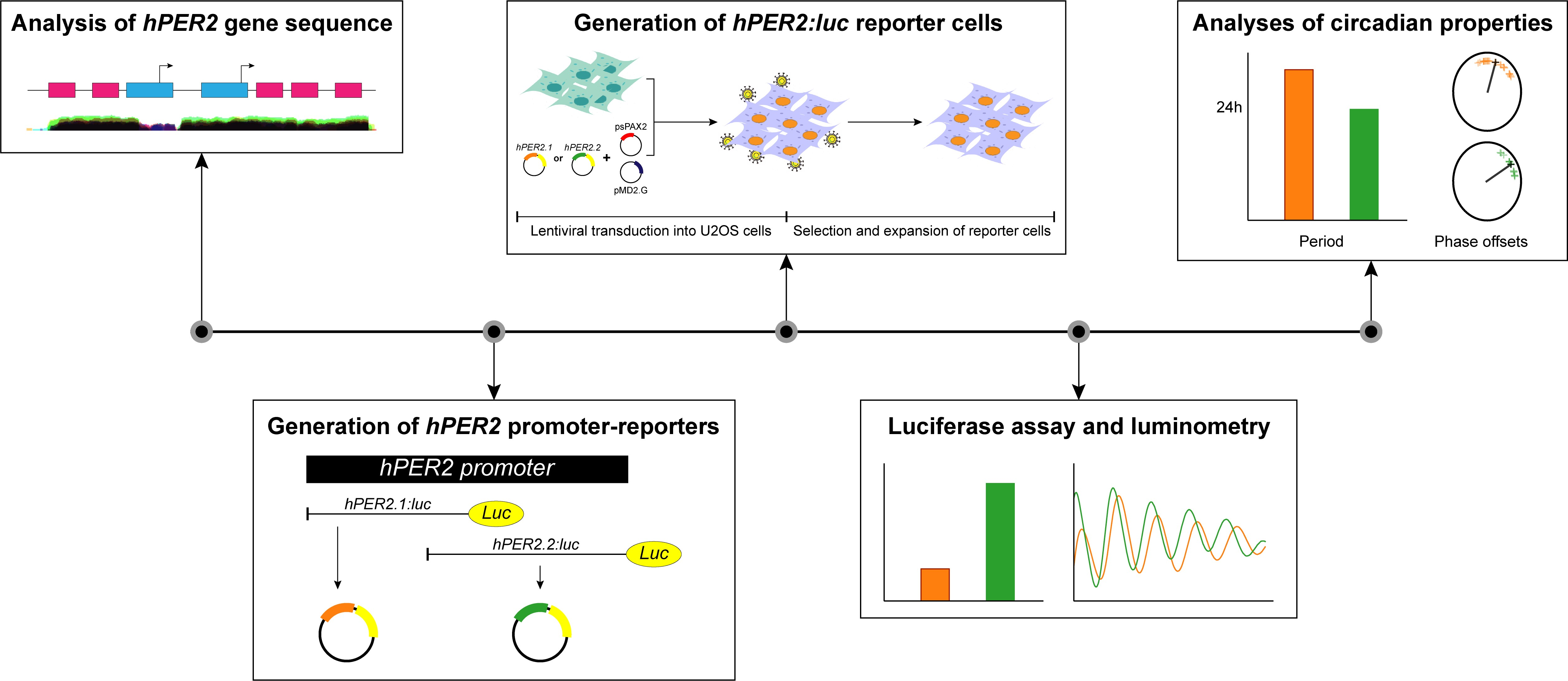
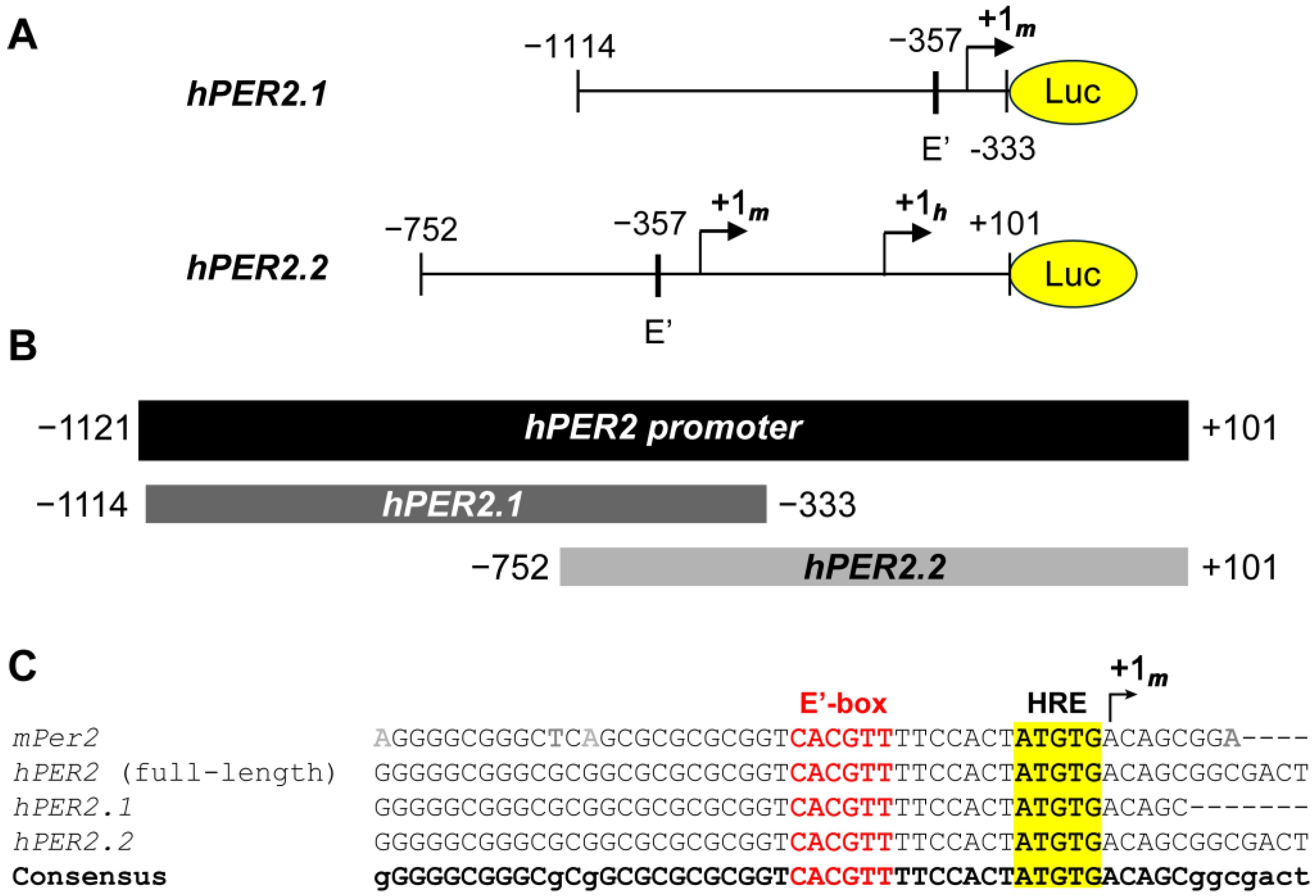
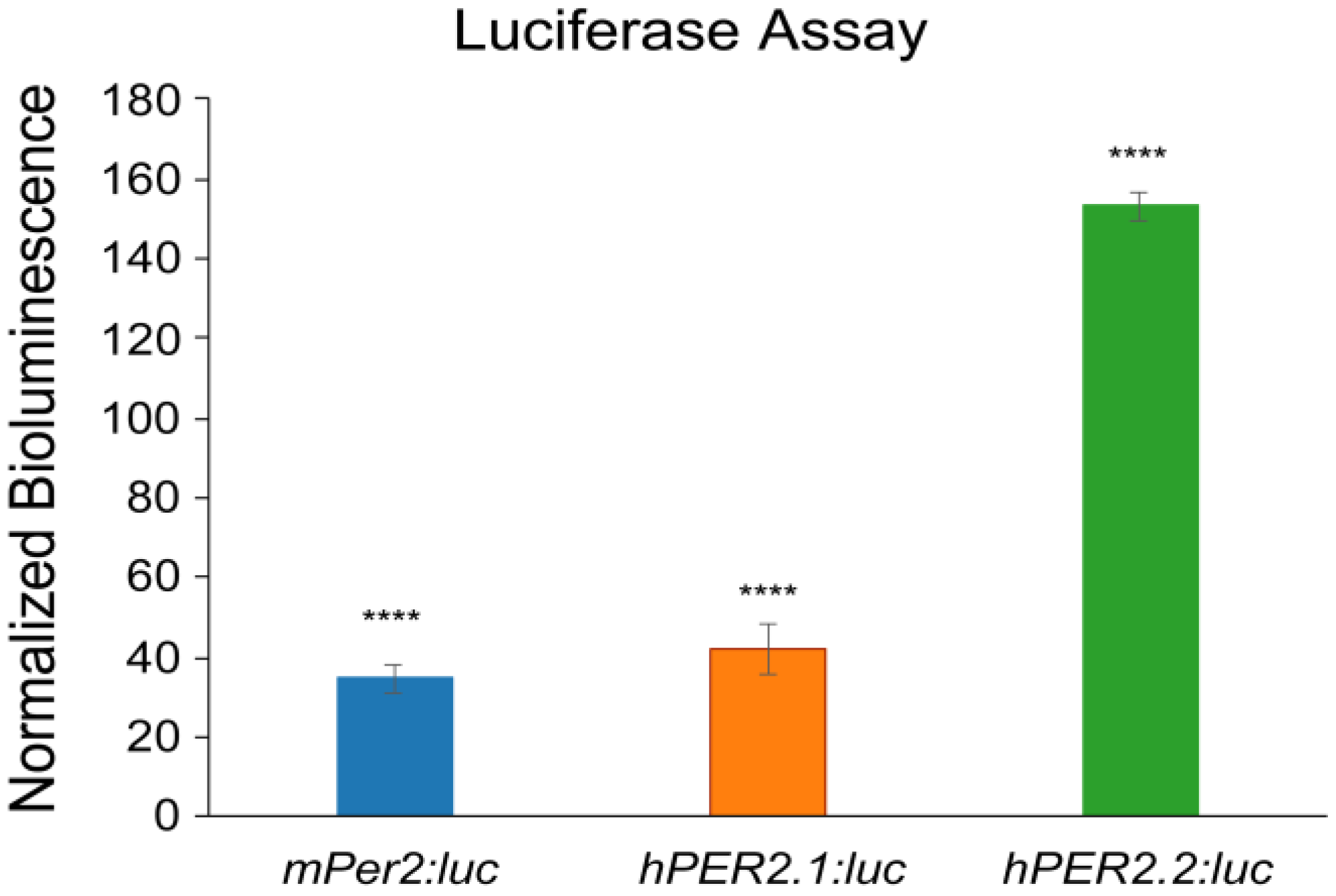
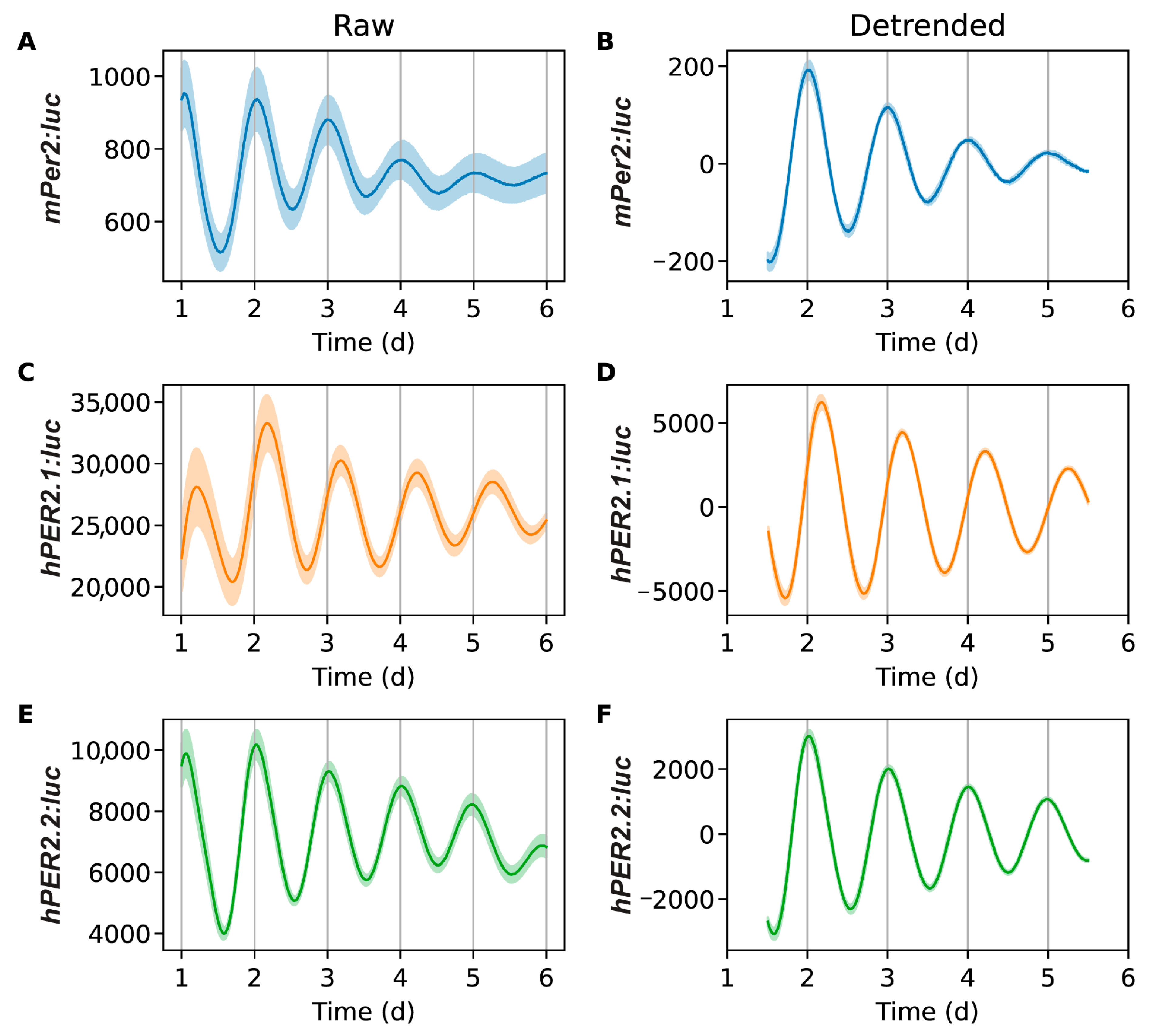
Promoter Frame Position Affects Strength and Nature of Circadian Oscillations in hPER2 Luciferase Reporters


Abstract
Share and Cite
Kalyanaraman, B.; Villafana, G.; Taylor, S.R.; Farkas, M.E. Promoter Frame Position Affects Strength and Nature of Circadian Oscillations in hPER2 Luciferase Reporters. Int. J. Mol. Sci. 2025, 26, 10785. https://doi.org/10.3390/ijms262110785
Kalyanaraman B, Villafana G, Taylor SR, Farkas ME. Promoter Frame Position Affects Strength and Nature of Circadian Oscillations in hPER2 Luciferase Reporters. International Journal of Molecular Sciences. 2025; 26(21):10785. https://doi.org/10.3390/ijms262110785
Chicago/Turabian StyleKalyanaraman, Bhavna, Gabrielle Villafana, Stephanie R. Taylor, and Michelle E. Farkas. 2025. "Promoter Frame Position Affects Strength and Nature of Circadian Oscillations in hPER2 Luciferase Reporters" International Journal of Molecular Sciences 26, no. 21: 10785. https://doi.org/10.3390/ijms262110785
APA StyleKalyanaraman, B., Villafana, G., Taylor, S. R., & Farkas, M. E. (2025). Promoter Frame Position Affects Strength and Nature of Circadian Oscillations in hPER2 Luciferase Reporters. International Journal of Molecular Sciences, 26(21), 10785. https://doi.org/10.3390/ijms262110785