Review

The Impact of Metabolic Rewiring in Glioblastoma: The Immune Landscape and Therapeutic Strategies


by
Yuganthini Vijayanathan
1 and
Ivy A. W. Ho
1,2,3,*
1
Molecular Neurotherapeutics Laboratory, National Neuroscience Institute, Singapore 308433, Singapore
2
Duke-NUS Medical School, Singapore 169857, Singapore
3
Department of Physiology, National University of Singapore, Singapore 117593, Singapore
*
Author to whom correspondence should be addressed.
Int. J. Mol. Sci. 2025, 26(2), 669; https://doi.org/10.3390/ijms26020669
Submission received: 16 December 2024 / Revised: 6 January 2025 / Accepted: 9 January 2025 / Published: 14 January 2025
(This article belongs to the Special Issue Targeting Glioblastoma Metabolism)

Abstract

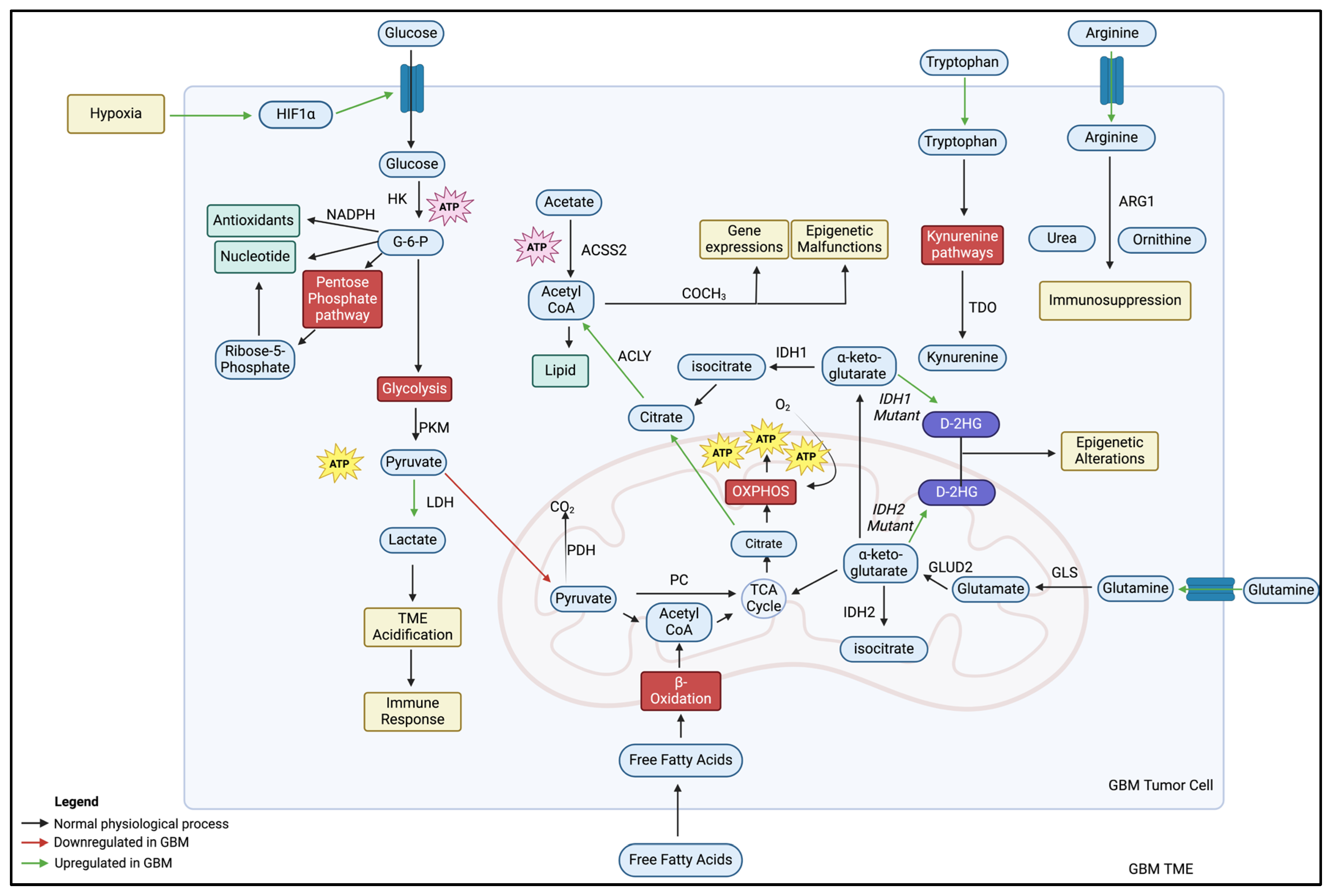
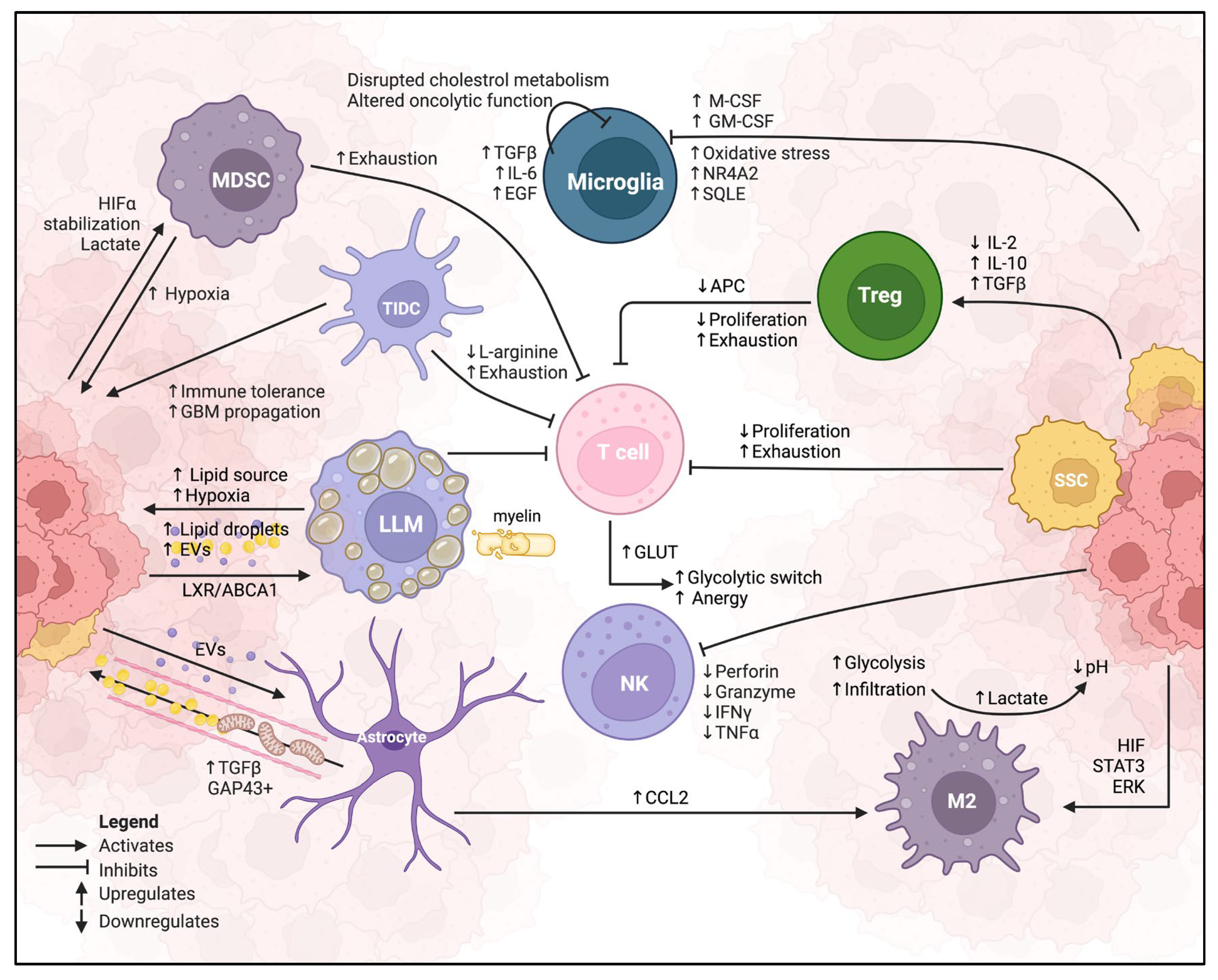
Glioblastoma (GBM) is an aggressive brain tumor characterized by extensive metabolic reprogramming that drives tumor growth and therapeutic resistance. Key metabolic pathways, including glycolysis, lactate production, and lipid metabolism, are upregulated to sustain tumor survival in the hypoxic and nutrient-deprived tumor microenvironment (TME), while glutamine and tryptophan metabolism further contribute to the aggressive phenotype of GBM. These metabolic alterations impair immune cell function, leading to exhaustion and stress in CD8+ and CD4+ T cells while favoring immunosuppressive populations such as regulatory T cells (Tregs) and M2-like macrophages. Recent studies emphasize the role of slow-cycling GBM cells (SCCs), lipid-laden macrophages, and tumor-associated astrocytes (TAAs) in reshaping GBM’s metabolic landscape and reinforcing immune evasion. Genetic mutations, including Isocitrate Dehydrogenase (IDH) mutations, Epidermal Growth Factor Receptor (EGFR) amplification, and Phosphotase and Tensin Homolog (PTEN) loss, further drive metabolic reprogramming and offer potential targets for therapy. Understanding the relationship between GBM metabolism and immune suppression is critical for overcoming therapeutic resistance. This review focuses on the role of metabolic rewiring in GBM, its impact on the immune microenvironment, and the potential of combining metabolic targeting with immunotherapy to improve clinical outcomes for GBM patients.
Keywords: metabolism; glioma; GBM; tumor microenvironment; immune infiltration metabolism; glioma; GBM; tumor microenvironment; immune infiltration