Review

CRISPR-Cas Gene Editing Technology in Potato

by
Zagipa Sapakhova
1,2,
Rakhim Kanat
1,2,
Khanylbek Choi
1,
Dias Daurov
1,
Ainash Daurova
1,
Kabyl Zhambakin
1 and
Malika Shamekova
1,*
1
Institute of Plant Biology and Biotechnology, Almaty 050040, Kazakhstan
2
Tanir Research Laboratory, Almaty 050060, Kazakhstan
*
Author to whom correspondence should be addressed.
Int. J. Mol. Sci. 2025, 26(15), 7496; https://doi.org/10.3390/ijms26157496
Submission received: 20 June 2025 / Revised: 31 July 2025 / Accepted: 1 August 2025 / Published: 3 August 2025
(This article belongs to the Section Molecular Plant Sciences)

Abstract

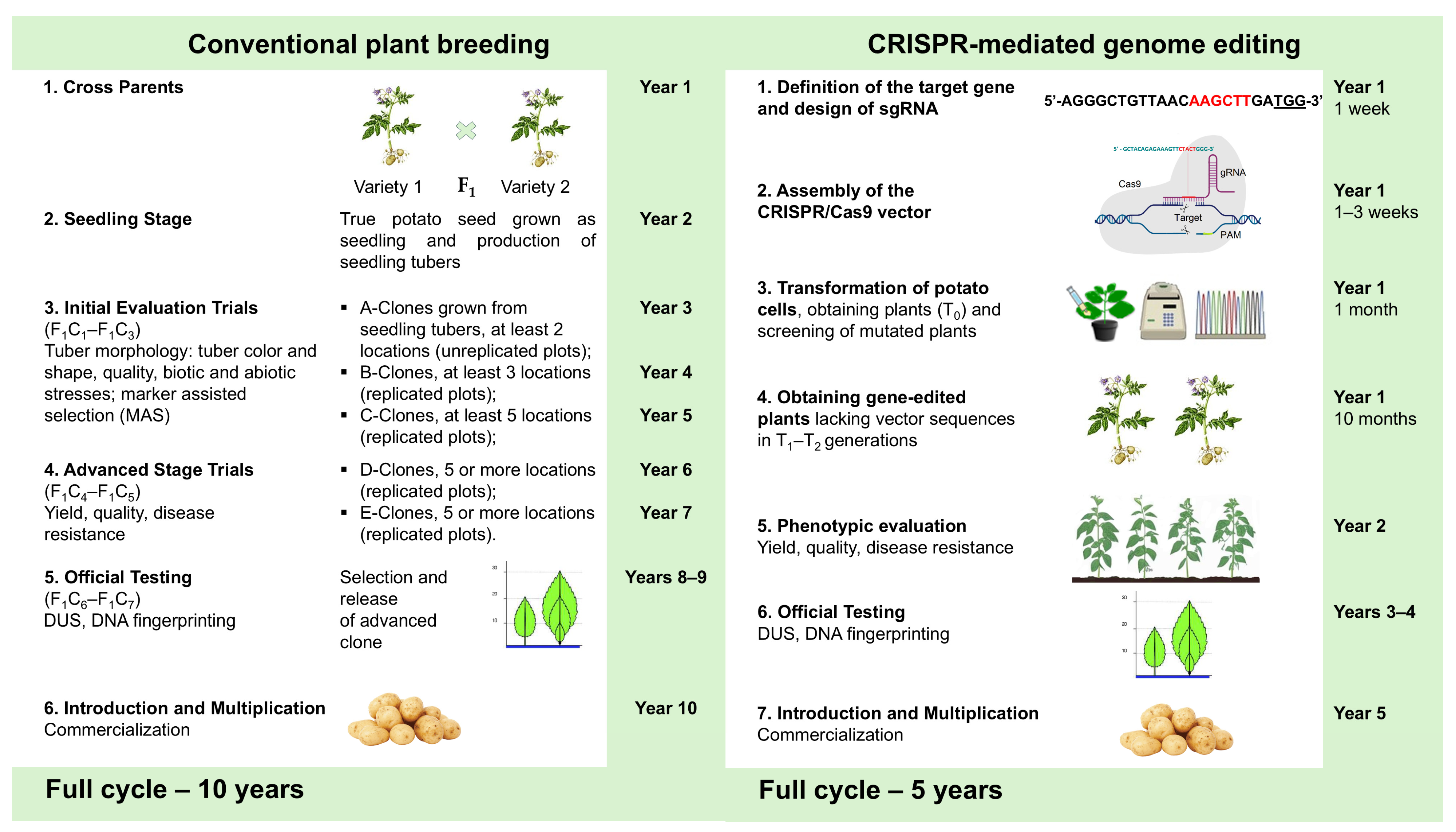
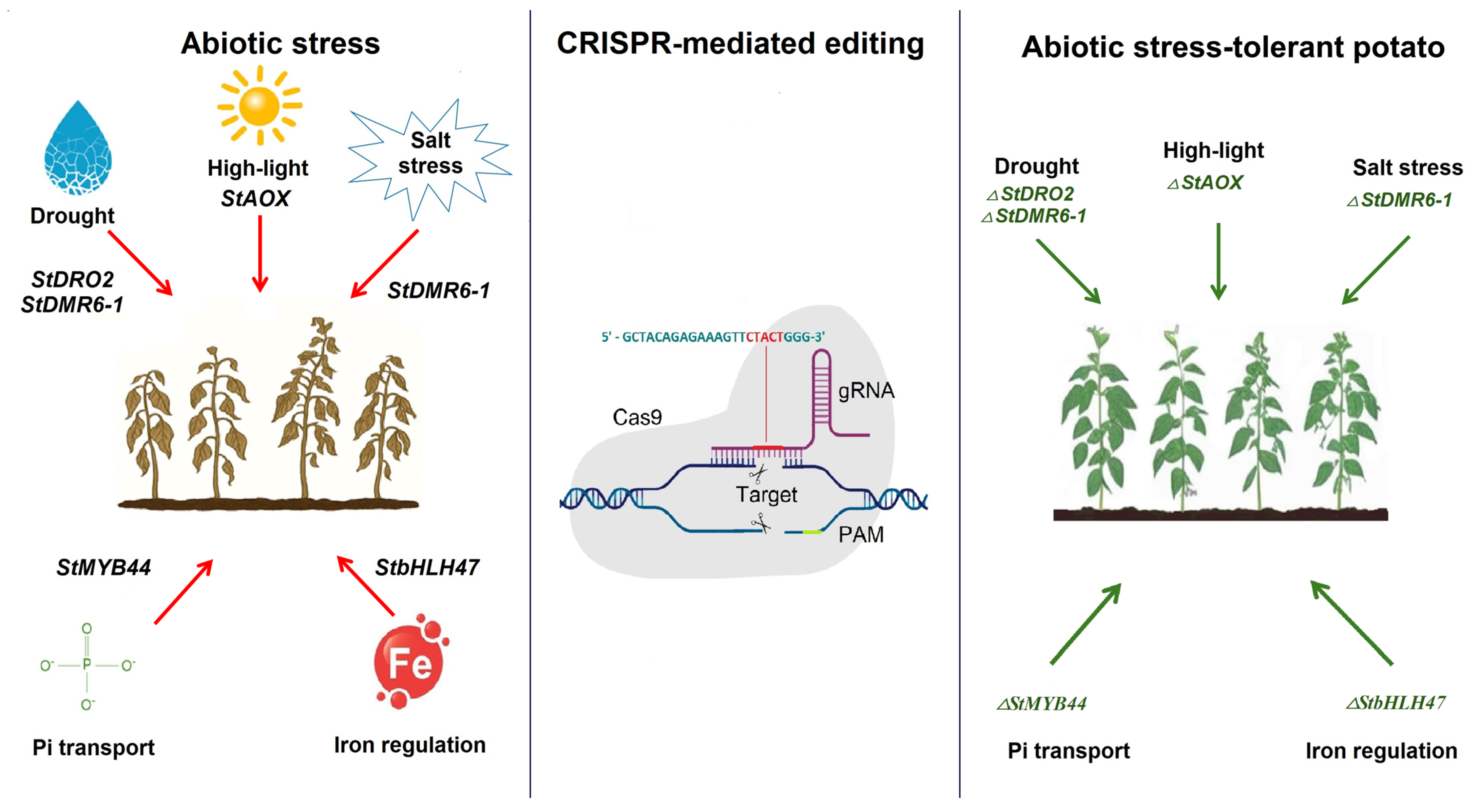
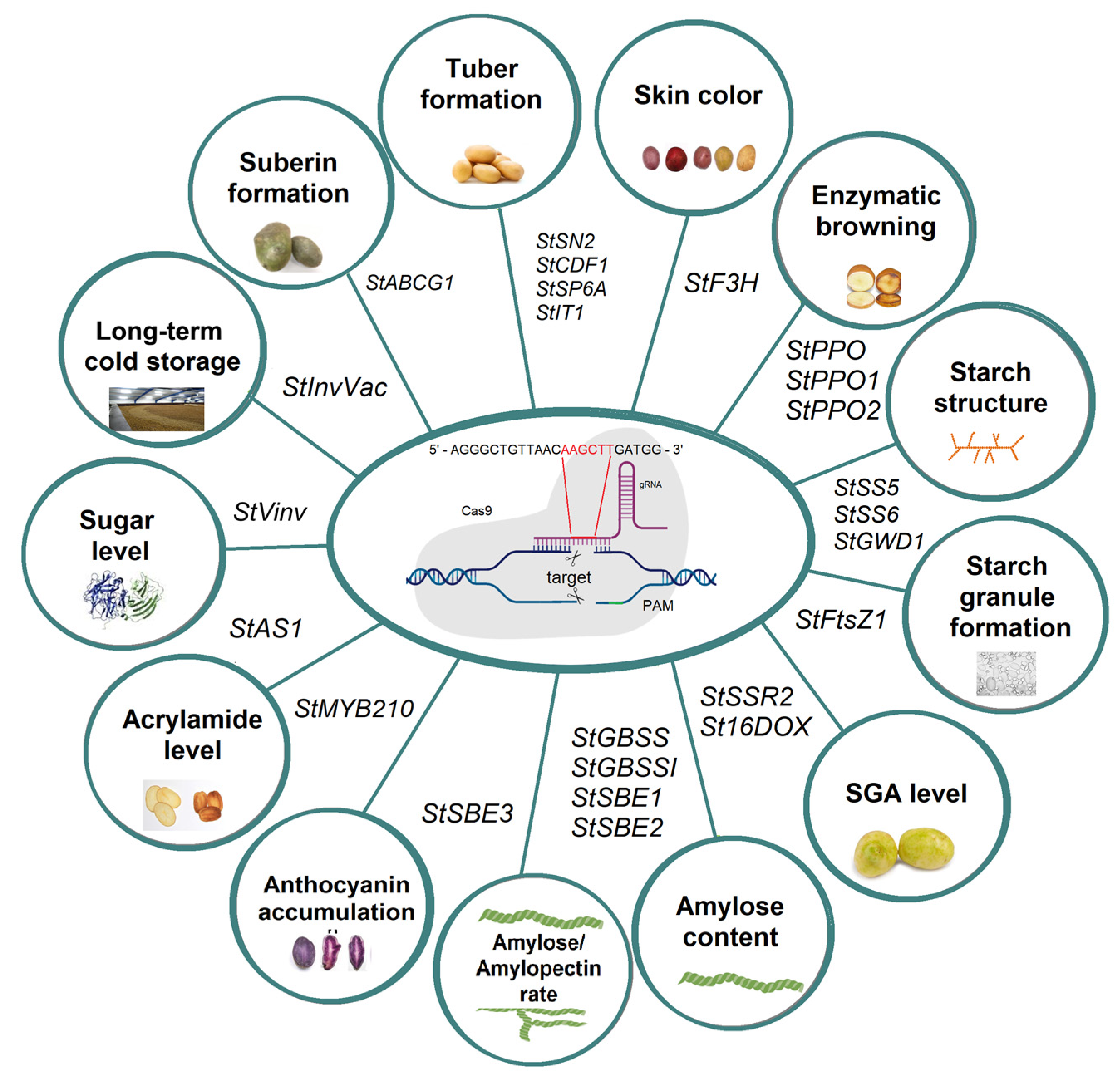
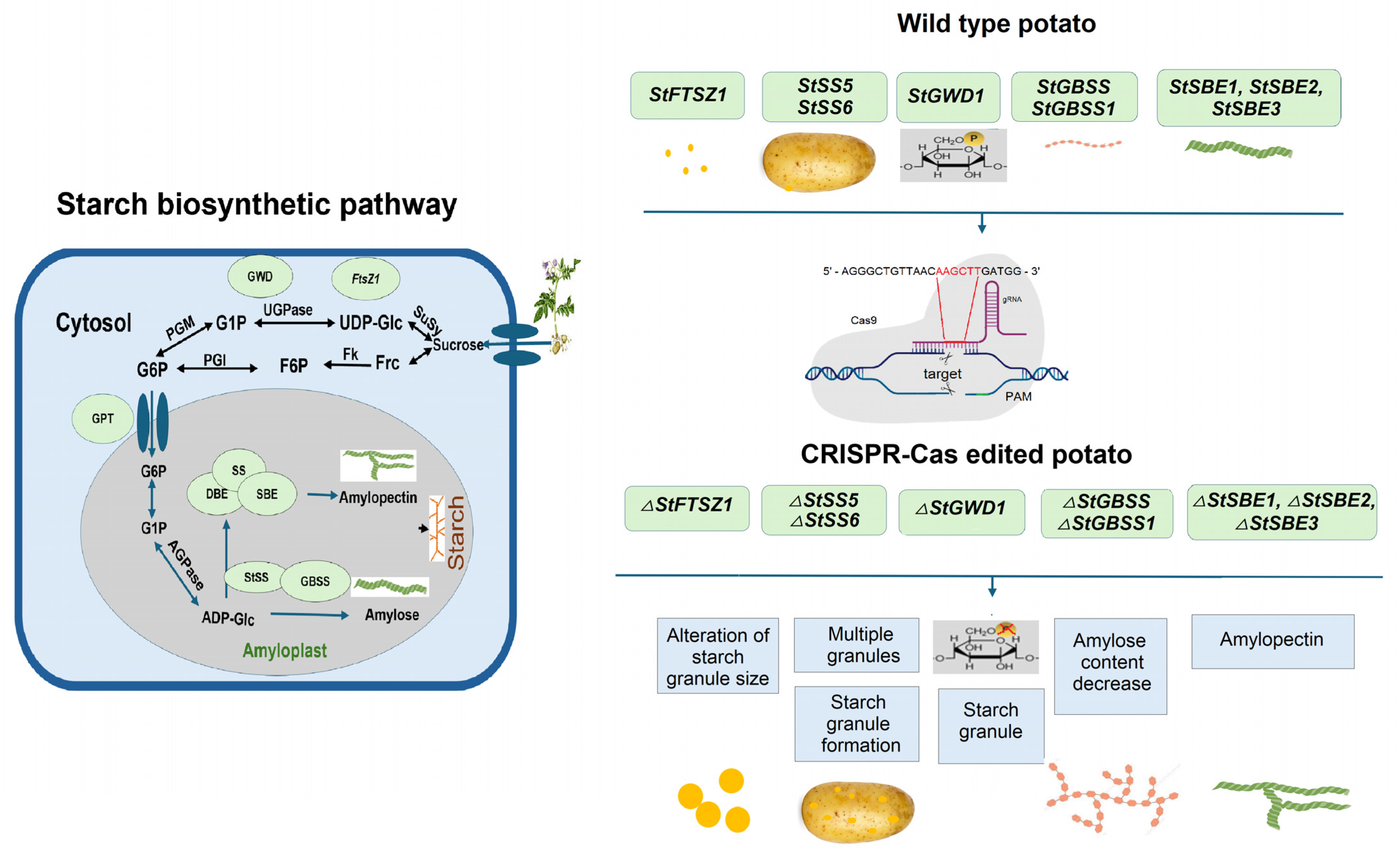
Potato (Solanum tuberosum L.) is one of the most important food crops in the world, ranking fourth after rice, maize, and wheat. Potatoes are exposed to biotic and abiotic environmental factors, which lead to economic losses and increase the possibility of food security threats in many countries. Traditional potato breeding faces several challenges, primarily due to its genetic complexity and the time-consuming nature of the process. Therefore, gene editing—CRISPR-Cas technology—allows for more precise and rapid changes to the potato genome, which can speed up the breeding process and lead to more effective varieties. In this review, we consider CRISPR-Cas technology as a potential tool for plant breeding strategies to ensure global food security. This review summarizes in detail current and potential technological breakthroughs that open new opportunities for the use of CRISPR-Cas technology for potato breeding, as well as for increasing resistance to abiotic and biotic stresses, and improving potato tuber quality. In addition, the review discusses the challenges and future perspectives of the CRISPR-Cas system in the prospects of the development of potato production and the regulation of gene-edited crops in different countries around the world.
Keywords: potato; gene editing; CRISPR-Cas; improve breeding process; biotic stress; disease resistance; viral resistance; abiotic stress; drought; tuber quality potato; gene editing; CRISPR-Cas; improve breeding process; biotic stress; disease resistance; viral resistance; abiotic stress; drought; tuber quality