Next Article in Journal
Gardenia jasminoides Extract, with a Melatonin-like Activity, Protects against Digital Stress and Reverses Signs of Aging
Next Article in Special Issue
Characterization of tRNA-Derived Fragments in Lung Squamous Cell Carcinoma with Respect to Tobacco Smoke
Previous Article in Journal
Association of SNPs in the PAI1 Gene with Disease Recurrence and Clinical Outcome in Bladder Cancer
Previous Article in Special Issue
Mechanisms Contributing to the Comorbidity of COPD and Lung Cancer
 
 
Journal Notice: The Editorial Office has been made aware of an issue concerning the validity of one peer-review report during the peer review process of this article, overseen by the Academic Editor. According to MDPI’s Publication Ethics and Editorial Process policies (https://www.mdpi.com/ethics#_bookmark29; https://www.mdpi.com/editorial_process), the Editorial Office and Editorial Board have decided to initiate a post-publication peer review to ensure that the publication fully complies with this policy. Once the process is completed, the Editorial Office will provide an additional update. MDPI regrets that this action has become necessary and wishes to emphasize that the authors were unaware of the compromised review report and, therefore, are not responsible for this additional retrospective evaluation.
Article

Data-Driven Radiogenomic Approach for Deciphering Molecular Mechanisms Underlying Imaging Phenotypes in Lung Adenocarcinoma: A Pilot Study

1
Institute for Biostatistics and Informatics in Medicine and Ageing Research, Rostock University Medical Center, Ernst-Heydemannstr. 8, 18057 Rostock, Germany
2
Department of Systems Biology and Bioinformatics, University of Rostock, Ulmenstr. 69, 18057 Rostock, Germany
3
Department of Medicine II, Hematology and Oncology, University Hospital Schleswig-Holstein, Arnold-Hellerstr. 3, 24105 Kiel, Germany
*
Author to whom correspondence should be addressed.
These authors contributed equally to this work.
Int. J. Mol. Sci. 2023, 24(5), 4947; https://doi.org/10.3390/ijms24054947
Submission received: 23 December 2022 / Revised: 13 February 2023 / Accepted: 23 February 2023 / Published: 3 March 2023
(This article belongs to the Special Issue Molecular Mechanisms and Therapies of Lung Cancer and Lung Disease)

Abstract

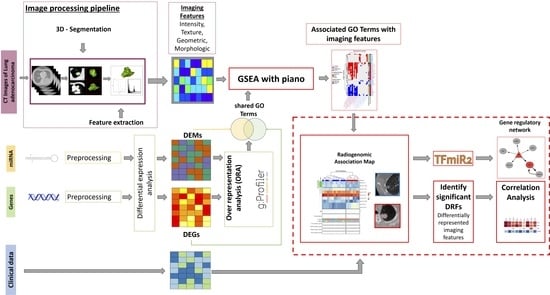
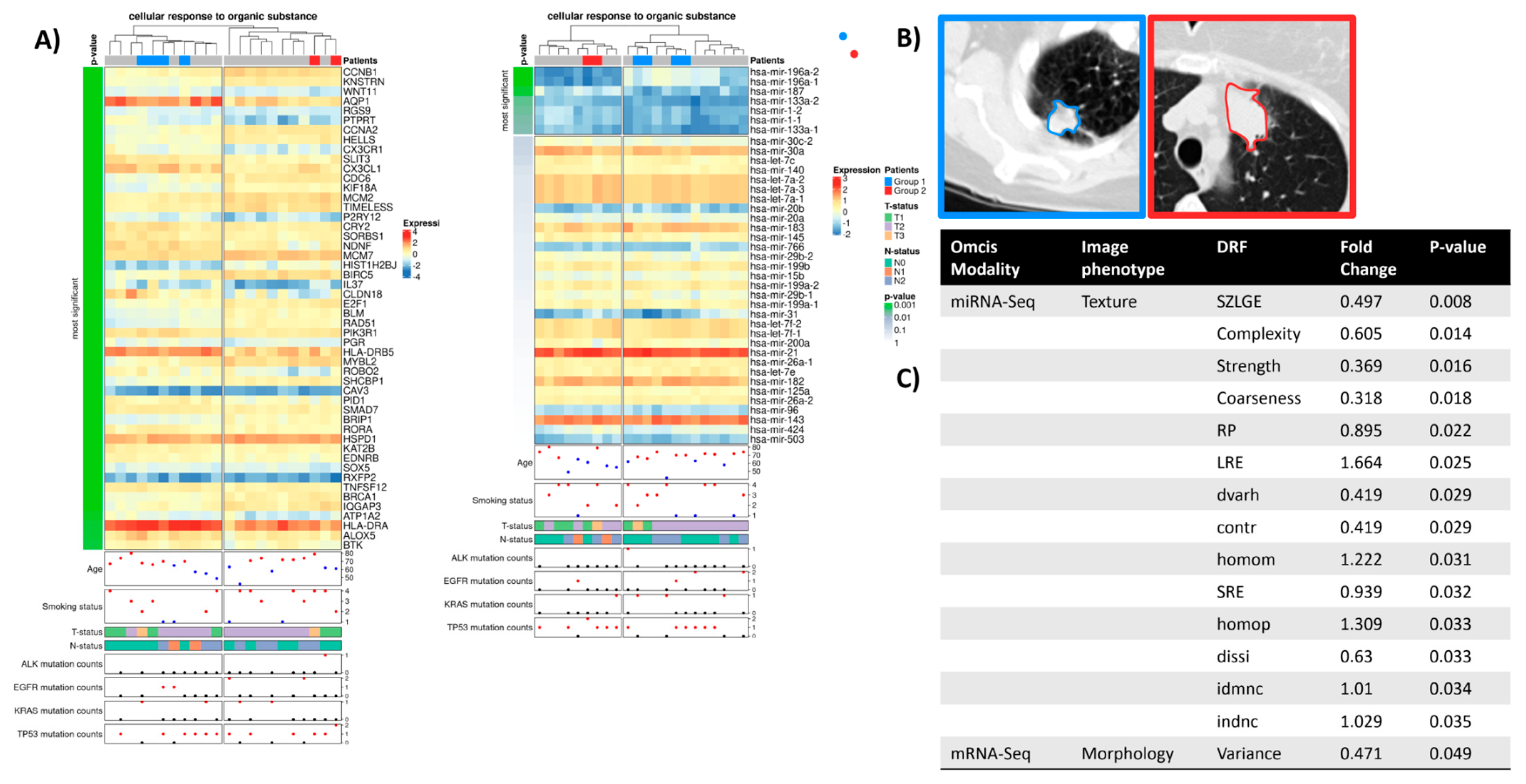
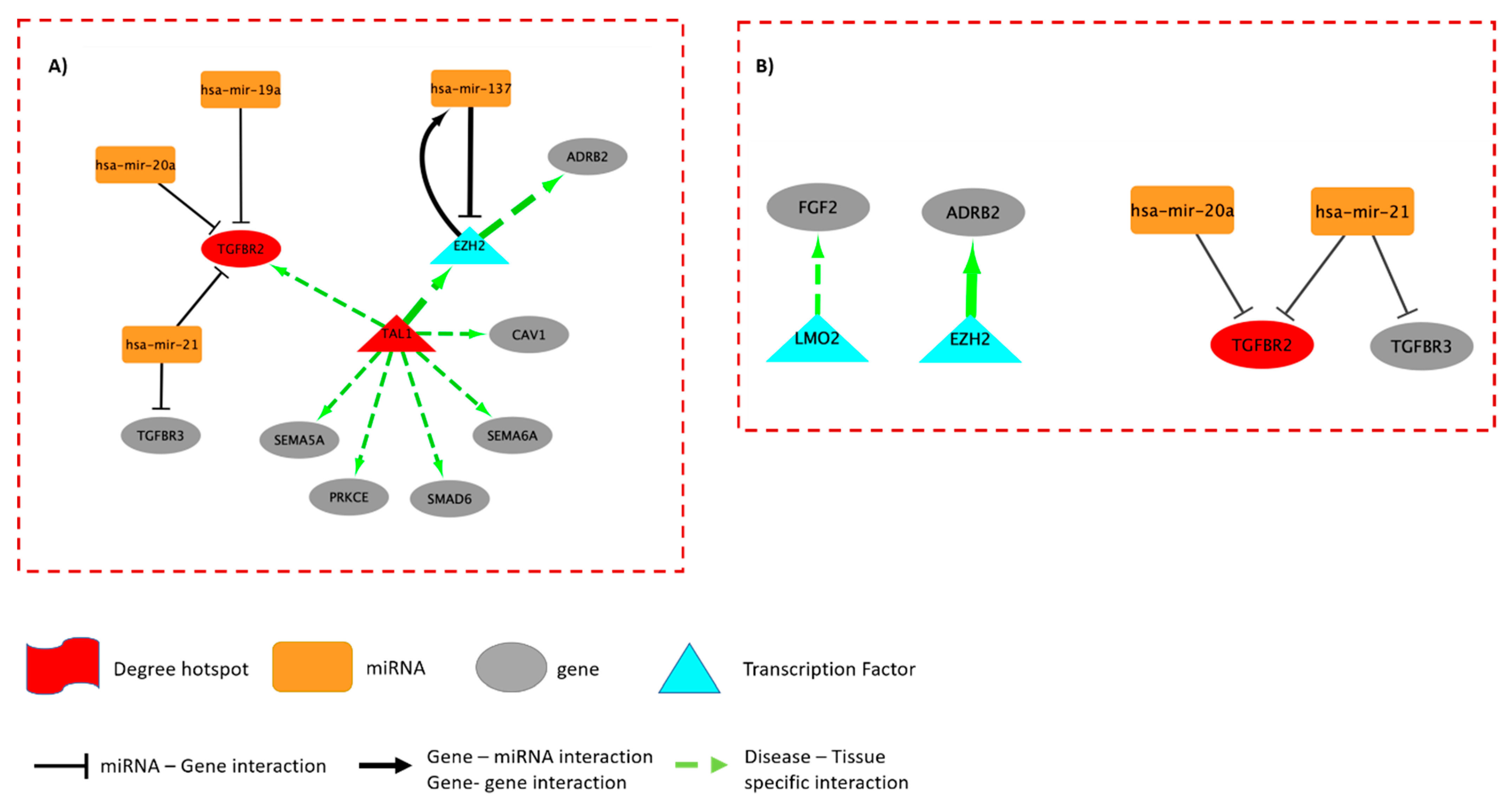
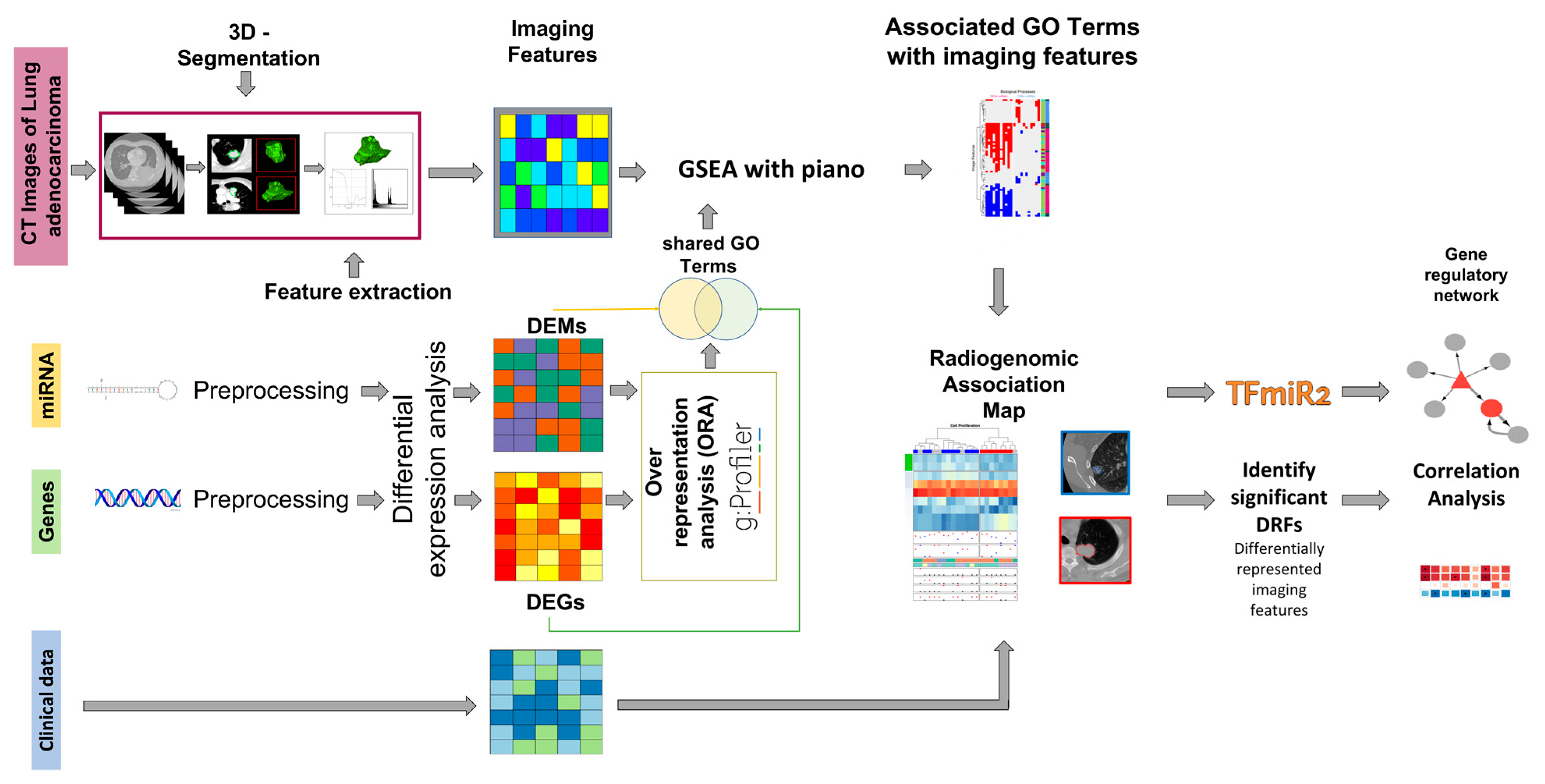
The heterogeneity of lung tumor nodules is reflected in their phenotypic characteristics in radiological images. The radiogenomics field employs quantitative image features combined with transcriptome expression levels to understand tumor heterogeneity molecularly. Due to the different data acquisition techniques for imaging traits and genomic data, establishing meaningful connections poses a challenge. We analyzed 86 image features describing tumor characteristics (such as shape and texture) with the underlying transcriptome and post-transcriptome profiles of 22 lung cancer patients (median age 67.5 years, from 42 to 80 years) to unravel the molecular mechanisms behind tumor phenotypes. As a result, we were able to construct a radiogenomic association map (RAM) linking tumor morphology, shape, texture, and size with gene and miRNA signatures, as well as biological correlates of GO terms and pathways. These indicated possible dependencies between gene and miRNA expression and the evaluated image phenotypes. In particular, the gene ontology processes “regulation of signaling” and “cellular response to organic substance” were shown to be reflected in CT image phenotypes, exhibiting a distinct radiomic signature. Moreover, the gene regulatory networks involving the TFs TAL1, EZH2, and TGFBR2 could reflect how the texture of lung tumors is potentially formed. The combined visualization of transcriptomic and image features suggests that radiogenomic approaches could identify potential image biomarkers for underlying genetic variation, allowing a broader view of the heterogeneity of the tumors. Finally, the proposed methodology could also be adapted to other cancer types to expand our knowledge of the mechanistic interpretability of tumor phenotypes.
Keywords: lung cancer; radiogenomics; data integration; imaging genomics lung cancer; radiogenomics; data integration; imaging genomics
Graphical Abstract