Review

Electrochemistry of Flavonoids: A Comprehensive Review

by
Ana-Maria Chiorcea-Paquim
1,2
1
Instituto Pedro Nunes (IPN), 3030-199 Coimbra, Portugal
2
University of Coimbra, Centre for Mechanical Engineering, Materials and Processes (CEMMPRE), Advanced Production and Intelligent Systems (ARISE), Department of Chemistry, 3004-535 Coimbra, Portugal
Int. J. Mol. Sci. 2023, 24(21), 15667; https://doi.org/10.3390/ijms242115667
Submission received: 28 August 2023 / Revised: 18 October 2023 / Accepted: 19 October 2023 / Published: 27 October 2023

Abstract

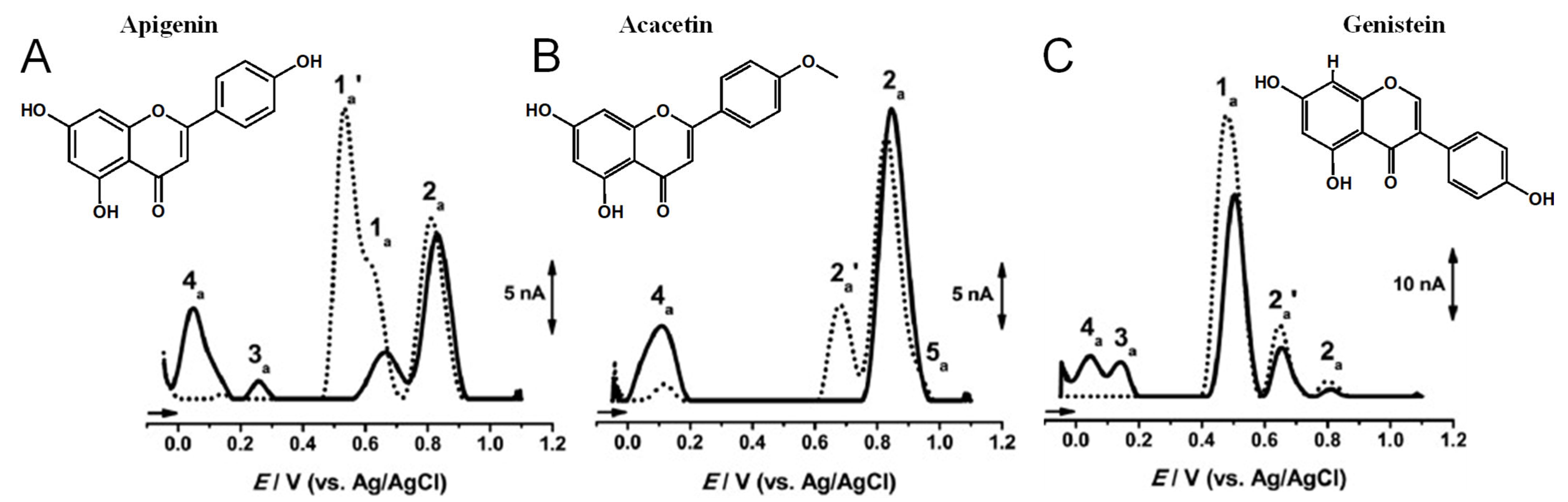
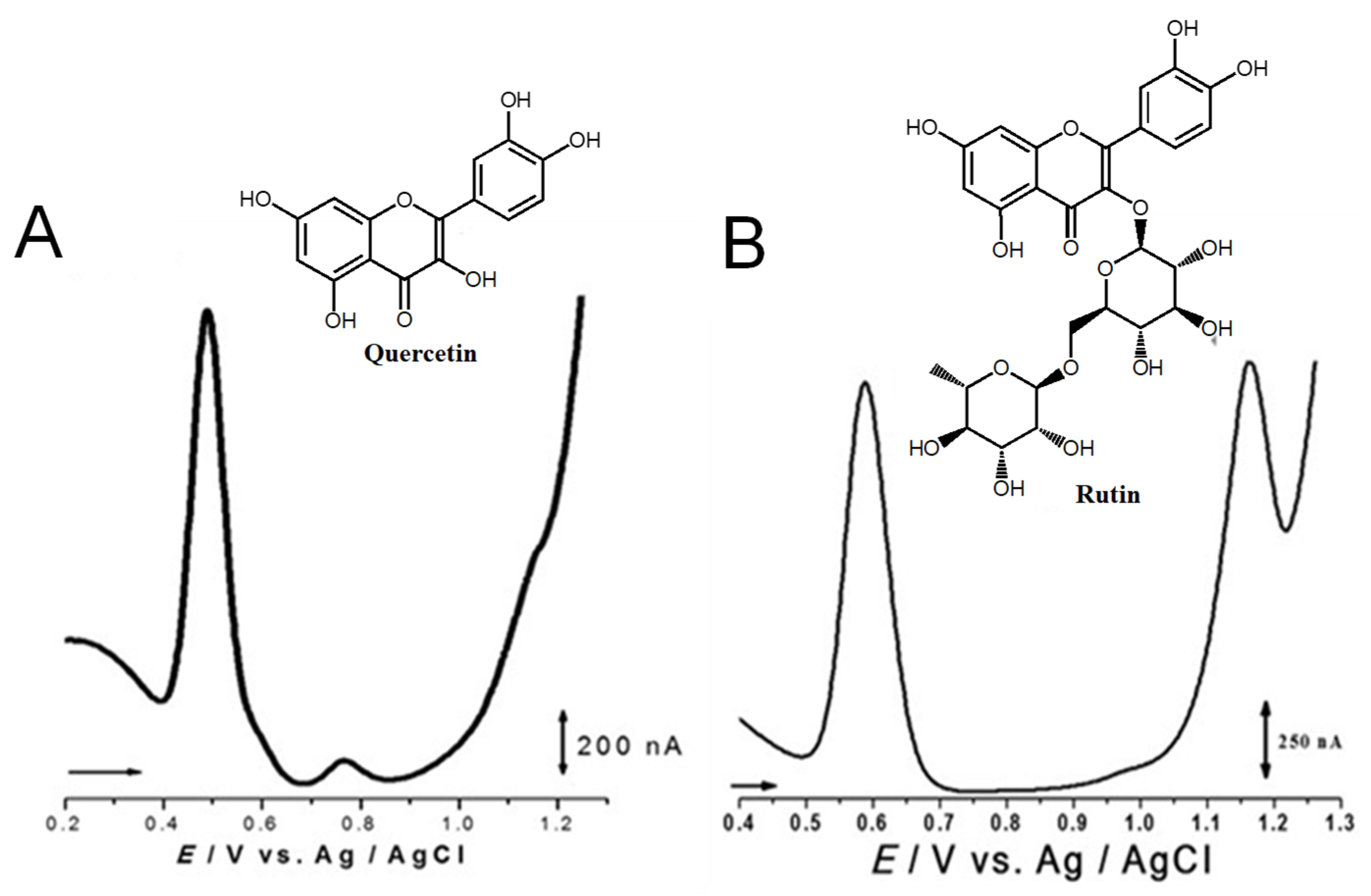
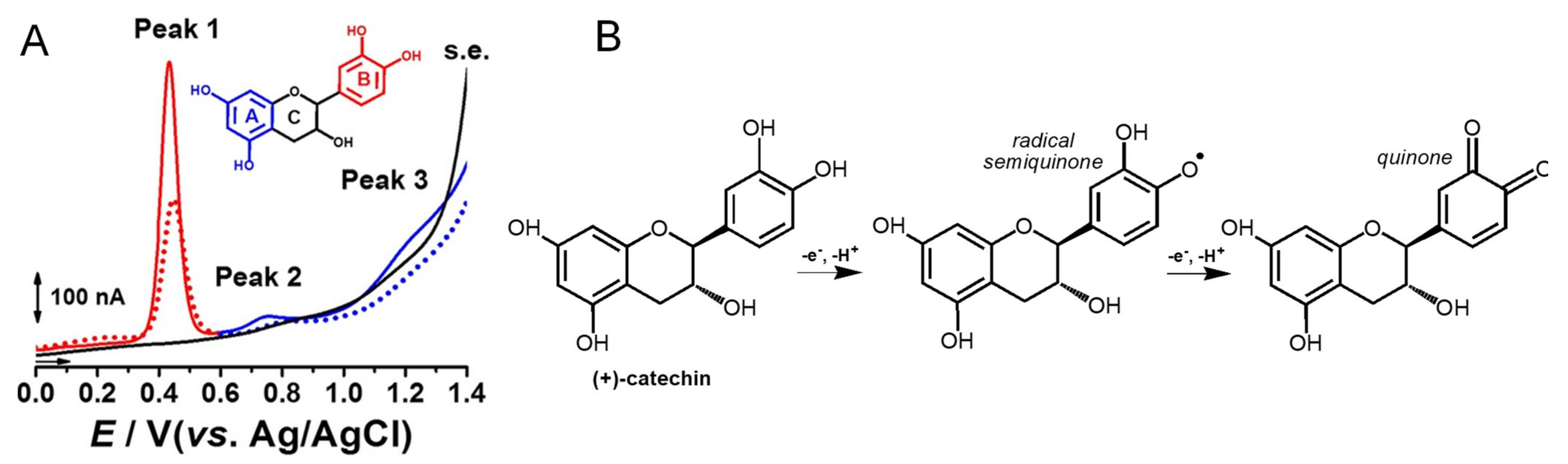
Flavonoids represent a large group of aromatic amino acids that are extensively disseminated in plants. More than six thousand different flavonoids have been isolated and identified. They are important components of the human diet, presenting a broad spectrum of health benefits, including antibacterial, antiviral, antimicrobial, antineoplastic, anti-mutagenic, anti-inflammatory, anti-allergic, immunomodulatory, vasodilatory and cardioprotective properties. They are now considered indispensable compounds in the healthcare, food, pharmaceutical, cosmetic and biotechnology industries. All flavonoids are electroactive, and a relationship between their electron-transfer properties and radical-scavenging activity has been highlighted. This review seeks to provide a comprehensive overview concerning the electron-transfer reactions in flavonoids, from the point of view of their in-vitro antioxidant mode of action. Flavonoid redox behavior is related to the oxidation of the phenolic hydroxy groups present in their structures. The fundamental principles concerning the redox behavior of flavonoids will be described, and the phenol moiety oxidation pathways and the effect of substituents and experimental conditions on flavonoid electrochemical behavior will be discussed. The final sections will focus on the electroanalysis of flavonoids in natural products and their identification in highly complex matrixes, such as fruits, vegetables, beverages, food supplements, pharmaceutical compounds and human body fluids, relevant for food quality control, nutrition, and healthcare research.
Keywords: flavonoids; polyphenols; phenolic compounds; electrochemistry; electrochemical sensing; antioxidant flavonoids; polyphenols; phenolic compounds; electrochemistry; electrochemical sensing; antioxidant