



Circulating Concentrations of Cathelicidin Anti-Microbial Peptide (CAMP) Are Increased during Oral Glucose Tolerance Test


Abstract
1. Introduction
- -
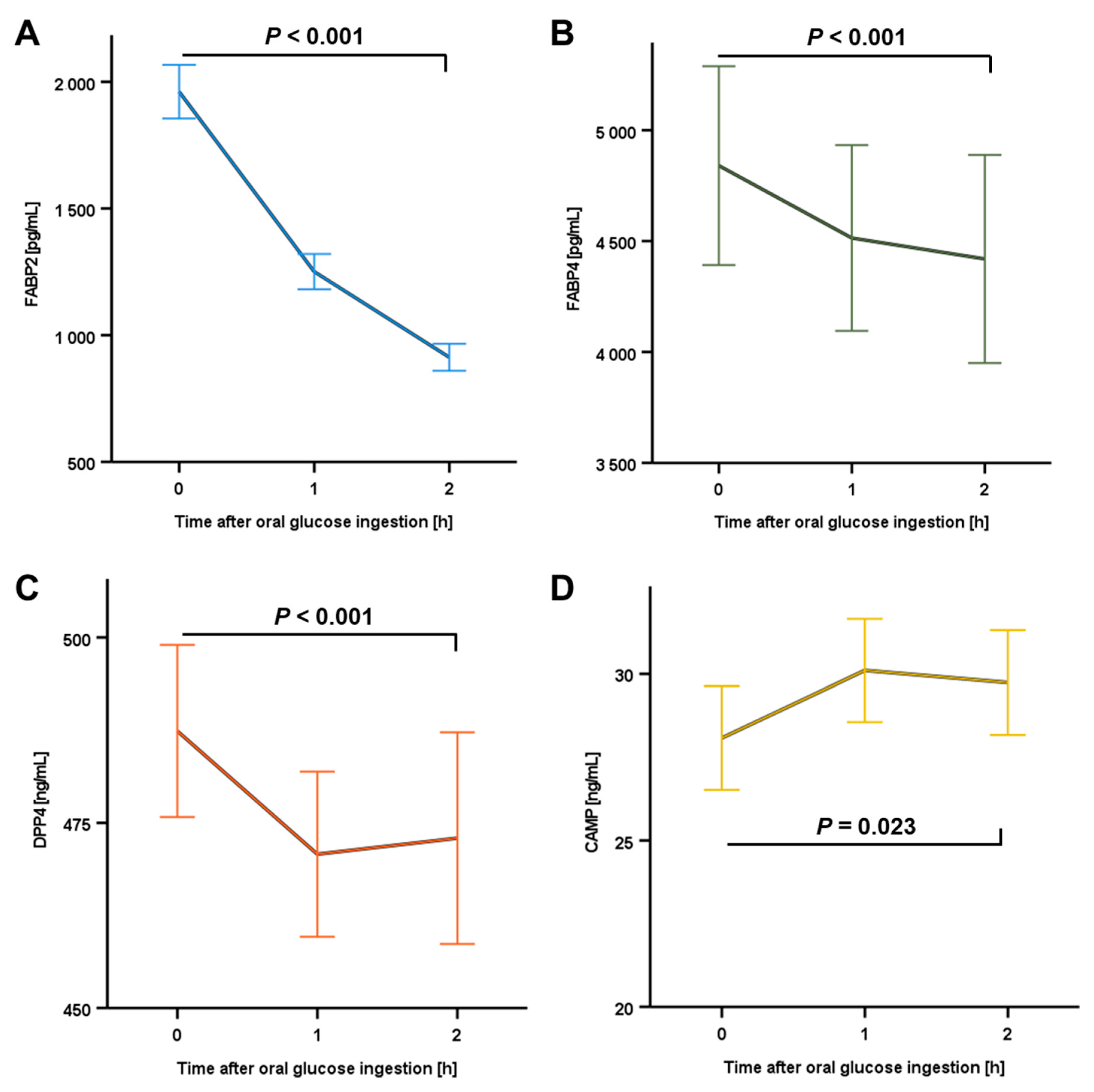
- An investigation of the short-term effects of oral glucose ingestion on systemic CAMP levels in vivo, alongside FABP2/4 and DPP4 as significant factors of postprandial metabolic regulation;
- -
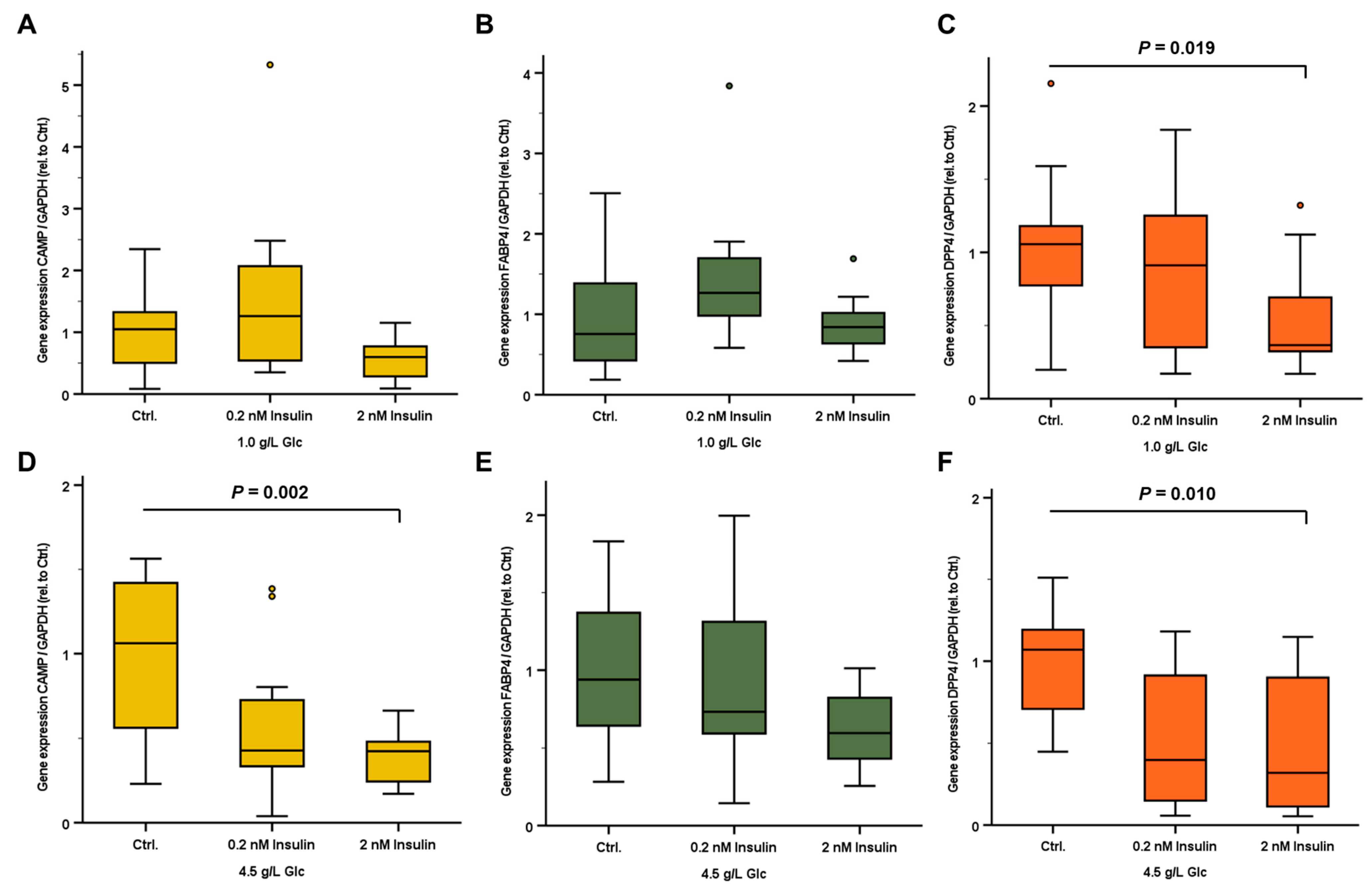
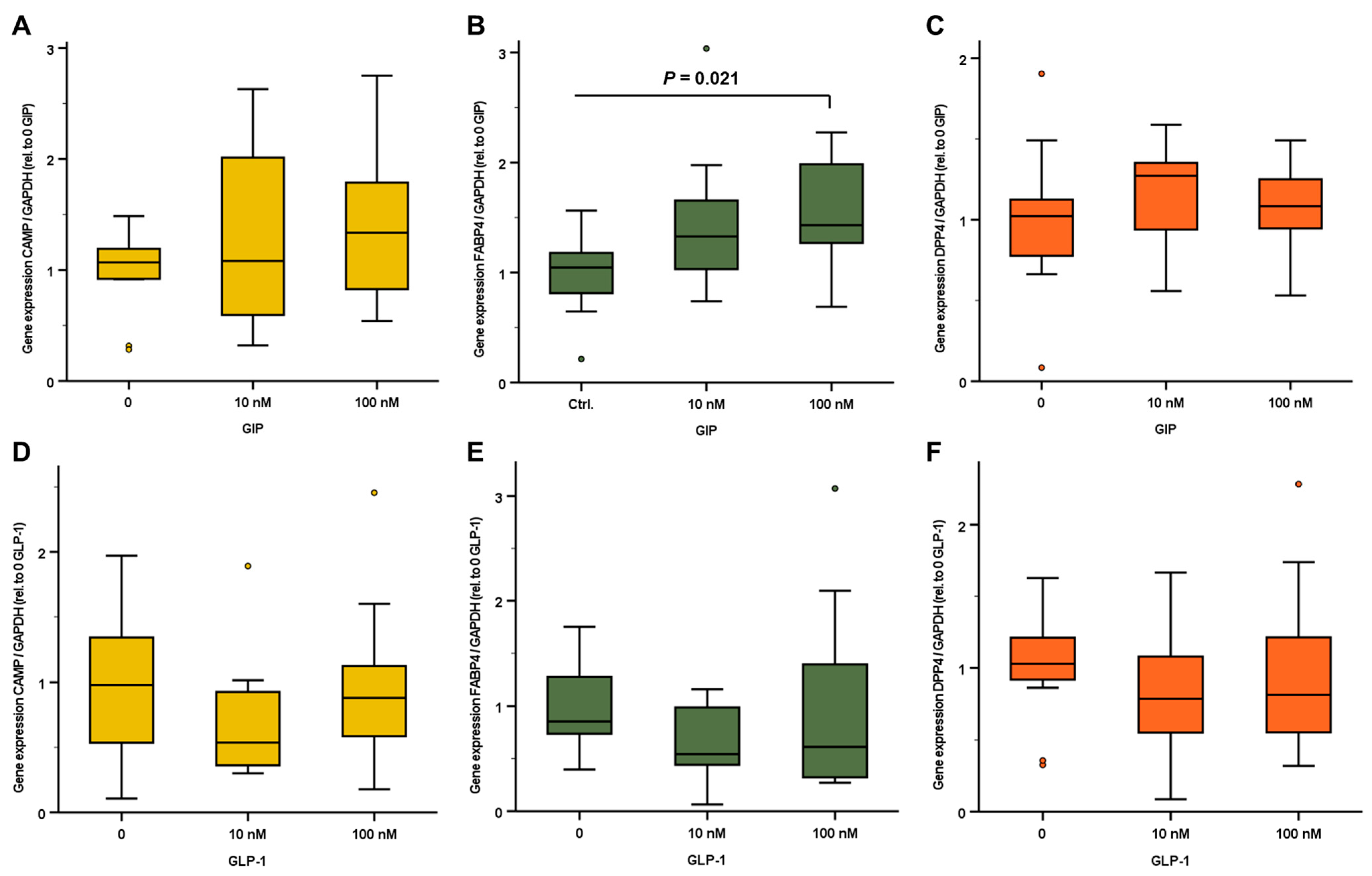
- The characterization of glucose, insulin, and incretins regarding their ability to modulate human adipocyte CAMP expression in vitro.
2. Results
2.1. Characteristics of the Study Cohort
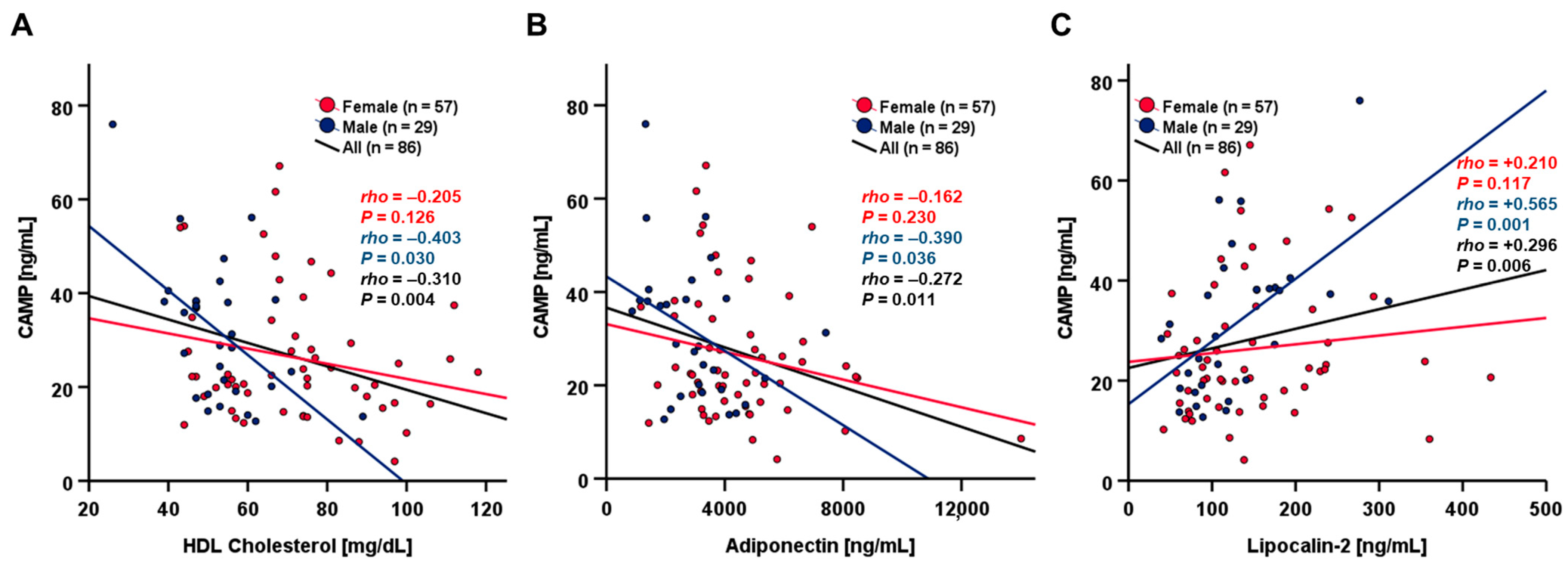
2.2. Correlations of Serum CAMP Levels with Anthropometric and Biochemical Parameters
2.3. Dynamics of Systemic CAMP, FABP2/4 and DPP4 Concentrations during OGTT
2.4. Effects of Glucose, Insulin and Incretins on Adipocyte Gene Expression In Vitro
3. Discussion
Limitations
4. Materials and Methods
4.1. Study Cohort
4.2. Oral Glucose Tolerance Test
4.3. Quantification of Systemic Proteins and Standard Serum Parameters
4.4. SGBS Cell Culture
4.5. Gene Expression Analysis
- Human CAMP:
- 5′-TAGATGGCATCAACCAGCGG-3′/5′-CTGGGTCCCCATCCATCGT-3′
- Human DPP4:
- 5′-TTCTGCTGAACAAAGGCAATGA-3′/5′-CTGTTCTCCAAGAAAACTGAGCTG-3′
- Human FABP4:
- 5′-ATGGGGGTGTCCTGGTACAT-3′/5′-CTTTCATGACGCATTCCACCA-3′
- Human GAPDH:
- 5′-GAGTCCACTGGCGTCTTCAC-3′/5′-CCAGGGGTGCTAAGCAGTT-3′
4.6. Statistical Analysis
5. Conclusions
Supplementary Materials
Author Contributions
Funding
Institutional Review Board Statement
Informed Consent Statement
Data Availability Statement
Acknowledgments
Conflicts of Interest
References
- Blüher, M. Obesity: Global epidemiology and pathogenesis. Nat. Rev. Endocrinol. 2019, 15, 288–298. [Google Scholar] [CrossRef] [Scilit] [PubMed]
- Engin, A. The Definition and Prevalence of Obesity and Metabolic Syndrome. In Advances in Experimental Medicine and Biology; Springer: Cham, Switzerland, 2017. [Google Scholar]
- Kolotkin, R.L.; Andersen, J.R. A systematic review of reviews: Exploring the relationship between obesity, weight loss and health-related quality of life. Clin. Obes. 2017, 7, 273–289. [Google Scholar] [CrossRef] [Scilit] [PubMed]
- Peeters, A.; Barendregt, J.J.; Willekens, F.; MacKenbach, J.P.; Al Mamun, A.; Bonneux, L.; Janssen, F.; Kunst, A.; Nusselder, W. Obesity in Adulthood and Its Consequences for Life Expectancy: A Life-Table Analysis. Ann. Intern. Med. 2003, 138, 24–32. [Google Scholar] [CrossRef] [Scilit] [PubMed]
- Goossens, G.H. The Metabolic Phenotype in Obesity: Fat Mass, Body Fat Distribution, and Adipose Tissue Function. Obes. Facts 2017, 10, 207–215. [Google Scholar] [CrossRef] [Scilit] [PubMed]
- Hotamisligil, G.S. Inflammation, metaflammation and immunometabolic disorders. Nature 2017, 542, 177–185. [Google Scholar] [CrossRef] [Scilit] [PubMed]
- Kawai, T.; Autieri, M.V.; Scalia, R. Adipose tissue inflammation and metabolic dysfunction in obesity. Am. J. Physiol.—Cell Physiol. 2021, 320, C375–C391. [Google Scholar] [CrossRef] [Scilit]
- Bradley, D.; Xu, A.; Hsueh, W.A. Editorial: The Immunomodulatory Roles of Adipocytes. Front. Immunol. 2021, 12, 827281. [Google Scholar] [CrossRef] [Scilit]
- Zhang, L.-J.; Guerrero-Juarez, C.F.; Hata, T.; Bapat, S.P.; Ramos, R.; Plikus, M.V.; Gallo, R.L. Dermal adipocytes protect against invasive Staphylococcus aureus skin infection. Science 2015, 347, 67–71. [Google Scholar] [CrossRef] [Scilit]
- Schmid, A.; Karrasch, T.; Thomalla, M.; Schlegel, J.; Salzberger, B.; Schäffler, A.; Hanses, F. Innate Immunity of Adipose Tissue in Rodent Models of Local and Systemic Staphylococcus aureus Infection. Mediat. Inflamm. 2017, 2017, 5315602. [Google Scholar] [CrossRef] [Scilit]
- Karrasch, T.; Höpfinger, A.; Schäffler, A.; Schmid, A. The adipokine C1q/TNF-related protein-3 (CTRP-3) inhibits Toll-like receptor (TLR)-induced expression of Cathelicidin antimicrobial peptide (CAMP) in adipocytes. Cytokine 2021, 148, 155663. [Google Scholar] [CrossRef] [Scilit]
- Hochberg, A.; Patz, M.; Karrasch, T.; Schäffler, A.; Schmid, A. Serum Levels and Adipose Tissue Gene Expression of Cathelicidin Antimicrobial Peptide (CAMP) in Obesity and During Weight Loss. Horm. Metab. Res. 2020, 53, 169–177. [Google Scholar] [CrossRef] [Scilit] [PubMed]
- Haunerland, N.H.; Spener, F. Fatty acid-binding proteins—Insights from genetic manipulations. Prog. Lipid Res. 2004, 43, 328–349. [Google Scholar] [CrossRef] [Scilit] [PubMed]
- Hotamisligil, G.S.; Johnson, R.S.; Distel, R.J.; Ellis, R.; Papaioannou, V.E.; Spiegelman, B.M. Uncoupling of Obesity from Insulin Resistance through a Targeted Mutation in aP2, the Adipocyte Fatty Acid Binding Protein. Science 1996, 274, 1377–1379. [Google Scholar] [CrossRef] [Scilit] [PubMed]
- Maeda, K.; Cao, H.; Kono, K.; Gorgun, C.Z.; Furuhashi, M.; Uysal, K.T.; Cao, Q.; Atsumi, G.; Malone, H.; Krishnan, B.; et al. Adipocyte/macrophage fatty acid binding proteins control integrated metabolic responses in obesity and diabetes. Cell Metab. 2005, 1, 107–119. [Google Scholar] [CrossRef] [Scilit]
- Karakas, S.E.; Almario, R.U.; Kim, K. Serum fatty acid binding protein 4, free fatty acids, and metabolic risk markers. Metabolism 2009, 58, 1002–1007. [Google Scholar] [CrossRef] [Scilit]
- Alpers, D.H.; Bass, N.M.; Engle, M.J.; DeSchryver-Kecskemeti, K. Intestinal fatty acid binding protein may favor differential apical fatty acid binding in the intestine. Biochim. Biophys. Acta—Mol. Cell Biol. Lipids 2000, 1483, 352–362. [Google Scholar] [CrossRef] [Scilit] [PubMed]
- Weiss, E.P.; Brandauer, J.; Kulaputana, O.; Ghiu, I.A.; Wohn, C.R.; Phares, D.A.; Shuldiner, A.R.; Hagberg, J.M. FABP2 Ala54Thr genotype is associated with glucoregulatory function and lipid oxidation after a high-fat meal in sedentary nondiabetic men and women. Am. J. Clin. Nutr. 2007, 85, 102–108. [Google Scholar] [CrossRef] [Scilit]
- Drucker, D.J.; Nauck, M.A. The incretin system: Glucagon-like peptide-1 receptor agonists and dipeptidyl peptidase-4 inhibitors in type 2 diabetes. Lancet 2006, 368, 1696–1705. [Google Scholar] [CrossRef] [Scilit]
- Rader, D.J.; Hovingh, G.K. HDL and cardiovascular disease. Lancet 2014, 384, 618–625. [Google Scholar] [CrossRef] [Scilit]
- Villarreal-Molina, M.T.; Antuna-Puente, B. Adiponectin: Anti-inflammatory and cardioprotective effects. Biochimie 2012, 94, 2143–2149. [Google Scholar] [CrossRef] [Scilit]
- Moschen, A.R.; Adolph, T.E.; Gerner, R.R.; Wieser, V.; Tilg, H. Lipocalin-2: A Master Mediator of Intestinal and Metabolic Inflammation. Trends Endocrinol. Metab. 2017, 28, 388–397. [Google Scholar] [CrossRef] [Scilit] [PubMed]
- Zhang, S.; Yang, L.; Chen, P.; Jin, H.; Xie, X.; Yang, M.; Gao, T.; Hu, C.; Yu, X. Circulating Adipocyte Fatty Acid Binding Protein (FABP4) Levels Are Associated with Irisin in the Middle-Aged General Chinese Population. PLoS ONE 2016, 11, e0146605. [Google Scholar] [CrossRef] [Scilit]
- Mita, T.; Furuhashi, M.; Hiramitsu, S.; Ishii, J.; Hoshina, K.; Ishimura, S.; Fuseya, T.; Watanabe, Y.; Tanaka, M.; Ohno, K.; et al. FABP4 is secreted from adipocytes by adenyl cyclase-PKA- and guanylyl cyclase-PKG-dependent lipolytic mechanisms. Obesity 2015, 23, 359–367. [Google Scholar] [CrossRef] [Scilit] [PubMed]
- Cristelo, C.; Machado, A.; Sarmento, B.; Gama, F.M. The roles of vitamin D and cathelicidin in type 1 diabetes susceptibility. Endocr. Connect. 2021, 10, R1–R12. [Google Scholar] [CrossRef] [Scilit] [PubMed]
- El-Ashmawy, H.M.; Ahmed, A.M. Serum cathelicidin as a marker for diabetic nephropathy in patients with type 1 diabetes. Diabetes/Metabolism Res. Rev. 2018, 34, e3057. [Google Scholar] [CrossRef] [Scilit]
- Plataki, M.N.; Vamvoukaki, R.; Samonis, G.; Bikis, C.; Gorgomiti, M.; Papadakis, J.A.; Maraki, S.; Kofteridis, D.P. Vitamin D and Cathelicidin (LL-37) Status in Patients with Type 2 Diabetes and Staphylococcus aureus Nasal Carriage. Rev. Diabet. Stud. 2021, 17, 30–37. [Google Scholar] [CrossRef] [Scilit]
- Brauner, H.; Lüthje, P.; Grünler, J.; Ekberg, N.R.; Dallner, G.; Brismar, K.; Brauner, A. Markers of innate immune activity in patients with type 1 and type 2 diabetes mellitus and the effect of the anti-oxidant coenzyme Q10 on inflammatory activity. Clin. Exp. Immunol. 2014, 177, 478–482. [Google Scholar] [CrossRef] [Scilit]
- Höpfinger, A.; Karrasch, T.; Schäffler, A.; Schmid, A. Circulating Levels of Cathelicidin Antimicrobial Peptide (CAMP) Are Affected by Oral Lipid Ingestion. Nutrients 2023, 15, 3021. [Google Scholar] [CrossRef] [Scilit]
- Wabitsch, M.; Brenner, R.E.; Melzner, I.; Braun, M.; Möller, P.; Heinze, E.; Debatin, K.M.; Hauner, H. Characterization of a human preadipocyte cell strain with high capacity for adipose differentiation. Int. J. Obes. 2001, 25, 8–15. [Google Scholar] [CrossRef] [Scilit]
- Tews, D.; Brenner, R.E.; Siebert, R.; Debatin, K.M.; Fischer-Posovszky, P.; Wabitsch, M. 20 Years with SGBS cells—A versatile in vitro model of human adipocyte biology. Int. J. Obes. 2022, 46, 1939–1947. [Google Scholar] [CrossRef] [Scilit]
- Montoya-Rosales, A.; Castro-Garcia, P.; Torres-Juarez, F.; Enciso-Moreno, J.A.; Rivas-Santiago, B. Glucose levels affect LL-37 expression in monocyte-derived macrophages altering the Mycobacterium tuberculosis intracellular growth control. Microb. Pathog. 2016, 97, 148–153. [Google Scholar] [CrossRef] [Scilit] [PubMed]
- Bala, M.; Martin, J.; Kopp, A.; Hanses, F.; Buechler, C.; Schaffler, A. In vivo suppression of visfatin by oral glucose uptake: Evidence for a novel incretin-like effect by glucagon-like peptide-1 (GLP-1). J. Clin. Endocrinol. Metab. 2011, 96, 2493–2501. [Google Scholar] [CrossRef] [Scilit] [PubMed]
- Schmid, A.; Kopp, A.; Aslanidis, C.; Wabitsch, M.; Müller, M.; Schäffler, A. Regulation and Function of C1Q/TNF-related Protein-5 (CTRP-5) in the Context of Adipocyte Biology. Exp. Clin. Endocrinol. Diabetes 2013, 121, 310–317. [Google Scholar] [CrossRef] [Scilit] [PubMed]

| A | ||||
|---|---|---|---|---|
| Parameters | Study Cohort (n = 86) | Male (n = 29) | Female (n = 57) | p |
| Sex (male/female) | 29/57 | |||
| Age [y] | 26.8 ± 6.1 | 26.4 ± 5.1 | 27.0 ± 6.6 | n.s. |
| BMI [kg/m2] | 25.27 ± 4.94 | 25.20 ± 4.99 | 25.31 ± 4.96 | n.s. |
| WHR | 0.86 ± 0.08 | 0.92 ± 0.07 | 0.83 ± 0.08 | <0.001 |
| Glucose [mg/dL] | 84.07 ± 12.87 | 83.72 ± 12.61 | 84.25 ± 13.11 | n.s. |
| Insulin [mU/L] | 10.12 ± 9.15 | 10.68 ± 13.22 | 9.84 ± 6.28 | n.s. |
| HOMA-Index | 2.14 ± 1.80 | 2.16 ± 2.43 | 2.14 ± 1.40 | n.s. |
| Total cholesterol [mg/dL] | 197.5 ± 36.7 | 187.5 ± 39.0 | 202.6 ± 34.7 | n.s. |
| HDL cholesterol [mg/dL] | 65.3 ± 19.1 | 53.2 ± 11.6 | 71.5 ± 19.3 | <0.001 |
| LDL cholesterol [mg/dL] | 109.5 ± 31.8 | 109.5 ± 36.1 | 109.5 ± 29.7 | n.s. |
| Triglycerides [mg/dL] | 114.2 ± 88.1 | 126.9 ± 122.5 | 107.8 ± 64.3 | n.s. |
| CAMP [ng/mL] | 28.08 ± 14.45 | 31.49 ± 15.00 | 26.34 ± 13.97 | n.s. |
| FABP2 [pg/mL] | 1961.07 ± 981.27 | 1991.11 ± 955.07 | 1945.79 ± 1002.37 | n.s. |
| FABP4 [pg/mL] | 4840.53 ± 4057.25 | 3982.63 ± 2831.50 | 5261.68 ± 4503.67 | 0.016 |
| DPP4 [ng/mL] | 487.40 ± 107.62 | 524.19 ± 103.96 | 468.68 ± 105.44 | 0.025 |
| B | ||||
| Parameters | Lean (n = 40) | Overweight (n = 46) | p | |
| Sex (male/female) | 16/24 | 13/33 | ||
| Age [y] | 24.65 ± 2.28 | 28.65 ± 7.46 | 0.022 | |
| BMI [kg/m2] | 21.31 ± 1.83 | 28.72 ± 4.14 | <0.001 | |
| WHR | 0.83 ± 0.74 | 0.89 ± 0.08 | 0.002 | |
| Glucose [mg/dL] | 77.45 ± 12.54 | 89.83 ± 10.19 | <0.001 | |
| Insulin [mU/L] | 6.89 ± 4.02 | 12.94 ± 11.26 | <0.001 | |
| HOMA-Index | 1.45 ± 0.87 | 2.75 ± 2.16 | <0.001 | |
| Total cholesterol [mg/dL] | 192.82 ± 36.52 | 201.63 ± 36.69 | n.s. | |
| HDL cholesterol [mg/dL] | 71.35 ± 17.46 | 60.07 ± 19.09 | 0.001 | |
| LDL cholesterol [mg/dL] | 96.73 ± 27.35 | 120.57 ± 31.45 | <0.001 | |
| Triglycerides [mg/dL] | 94.43 ± 45.17 | 131.43 ± 110.57 | n.s. | |
| CAMP [ng/mL] | 25.06 ± 13.15 | 30.71 ± 15.13 | n.s. | |
| FABP2 [pg/mL] | 2073.84 ± 773.68 | 1863.02 ± 1130.88 | n.s. | |
| FABP4 [pg/mL] | 3834.31 ± 4676.08 | 5667.87 ± 3295.78 | <0.001 | |
| DPP4 [ng/mL] | 496.18 ± 107.25 | 479.76 ± 108.53 | n.s. |
| Parameters Correlated with CAMP | rho | p |
|---|---|---|
| HDL cholesterol | −0.310 | 0.004 |
| Adiponectin | −0.272 | 0.011 |
| Angptl4 | −0.219 | 0.043 |
| NT-proANP | +0.270 | 0.015 |
| FGF-21 | +0.243 | 0.025 |
| Lipocalin-2 | +0.296 | 0.006 |
Disclaimer/Publisher’s Note: The statements, opinions and data contained in all publications are solely those of the individual author(s) and contributor(s) and not of MDPI and/or the editor(s). MDPI and/or the editor(s) disclaim responsibility for any injury to people or property resulting from any ideas, methods, instructions or products referred to in the content. |
© 2023 by the authors. Licensee MDPI, Basel, Switzerland. This article is an open access article distributed under the terms and conditions of the Creative Commons Attribution (CC BY) license (https://creativecommons.org/licenses/by/4.0/).
Share and Cite
Höpfinger, A.; Karrasch, T.; Schäffler, A.; Schmid, A. Circulating Concentrations of Cathelicidin Anti-Microbial Peptide (CAMP) Are Increased during Oral Glucose Tolerance Test. Int. J. Mol. Sci. 2023, 24, 12901. https://doi.org/10.3390/ijms241612901
Höpfinger A, Karrasch T, Schäffler A, Schmid A. Circulating Concentrations of Cathelicidin Anti-Microbial Peptide (CAMP) Are Increased during Oral Glucose Tolerance Test. International Journal of Molecular Sciences. 2023; 24(16):12901. https://doi.org/10.3390/ijms241612901
Chicago/Turabian StyleHöpfinger, Alexandra, Thomas Karrasch, Andreas Schäffler, and Andreas Schmid. 2023. "Circulating Concentrations of Cathelicidin Anti-Microbial Peptide (CAMP) Are Increased during Oral Glucose Tolerance Test" International Journal of Molecular Sciences 24, no. 16: 12901. https://doi.org/10.3390/ijms241612901
APA StyleHöpfinger, A., Karrasch, T., Schäffler, A., & Schmid, A. (2023). Circulating Concentrations of Cathelicidin Anti-Microbial Peptide (CAMP) Are Increased during Oral Glucose Tolerance Test. International Journal of Molecular Sciences, 24(16), 12901. https://doi.org/10.3390/ijms241612901

