1. Introduction
The functional regeneration of damaged or diseased tissues and organs remains an intriguing challenge for modern medicine [
1]. Advances in the research field on regenerative biomaterials have inspired successful strategies for the development of smart, affordable and safe scaffolds which promote the restore of tissue form and functionality [
2]. However, tissue engineering investigation is constantly in search of an ideal customizable scaffold to better fit the specific features of the tissue to be repaired [
3,
4,
5,
6,
7]. In this context, synthetic biodegradable polymers, such as polylactic acid, polyglycolic acid, polycaprolactone and polylactide-co-glycolide, offer unique physical, chemical, biological, and biomechanical properties to provide efficient regenerative therapy [
8]. Among other polymers, polyvinyl alcohol (PVA) has been increasingly appreciated in medical applications as a biocompatible, atoxic and non-immunogenic biomaterial which seems to present ideal characteristics for the preparation of implantable devices (i.e., tunable mechanical and drug delivery properties) [
9,
10,
11,
12]. Nevertheless, in the form of a cross-linked hydrogel, it presents poor biodegradation capacity [
13]. To overcome this limit, partial oxidation of PVA has been widely investigated as a post-modification of the polymer finalized at enhancing its biodegradation profile, mainly for ecological disposal purposes [
14]. Currently, different oxidation processes of PVA are described in literatures. In 2001, Won and Colleagues [
15] reported PVA degradation by polymer incubation in water at 200 °C, in the presence of oxygen. In the work described by Zimin et al. [
16], mixtures of ozone/oxygen and oxygen/oxygenated water are investigated to study PVA radical oxidation kinetics. An oxidation strategy based on the treatment with persulphate in the presence of 365 nm-UV light was reported by Chia-Chang and Collaborators [
17]. The study showed that the oxidative modification is influenced by the pH value, being more efficient in the presence of acid pH rather than alkaline pH. The oxidation kinetics of PVA with potassium permanganate was investigated by Maqsood et al. [
18].
Our research group considered for the first time the chemical oxidation of PVA to render it a biodegradable scaffold for tissue engineering applications [
19]. Through partial oxidation with potassium permanganate (KMnO
4) in perchloric acid (HClO
4), we manufactured a modified PVA hydrogel that is more prone to in vivo degradation. In addition, the oxidation of the hydroxyl groups to carbonyl groups allowed to introduce into the polymer chain more reactive chemical functionalities, which can be used for binding drugs or bioactive growth factors [
19,
20,
21]. Intriguingly, when scaffolds made of PVA oxidized with KMnO
4 were prepared in the form of hollow nerve conduits or nerve wraps and implanted into a rat model of sciatic nerve resection, they demonstrated to efficiently promote peripheral nerve regeneration, as well as confirming biocompatibility and low immunogenicity of the material [
22,
23].
Despite the obtainment of a biodegradable and functionalizable scaffold, oxidation of PVA through KMnO
4 seemed to cause a loss of polymer viscosity, which is strictly correlated to material degradation for the decrease of its mean molecular weight [
24]. We hypothesized that this could be ascribed to the poor stereoregularity of the commercial polymer, which causes the addition of a certain percentage of head-to-head monomers (with resulting 1,2-diols) during polymerization. In this case, the treatment with permanganate in acid environment could result not only in material oxidation, but also in the non-selective cleavage of C-C bonds of 1,2-diols in the PVA chain, leading to the decrease of the mean molecular weight of the polymer. Starting from these considerations, the present work investigated for the first time the possibility to perform controlled PVA oxidation by using halogens [i.e., bromine (Br
2), chlorine (Cl
2) and iodine (I
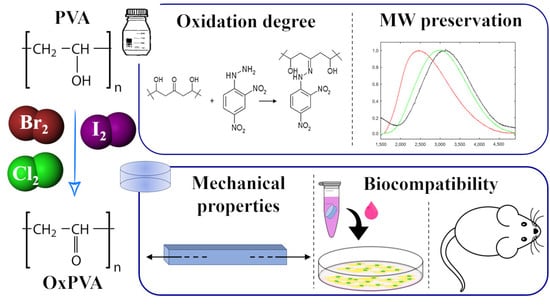
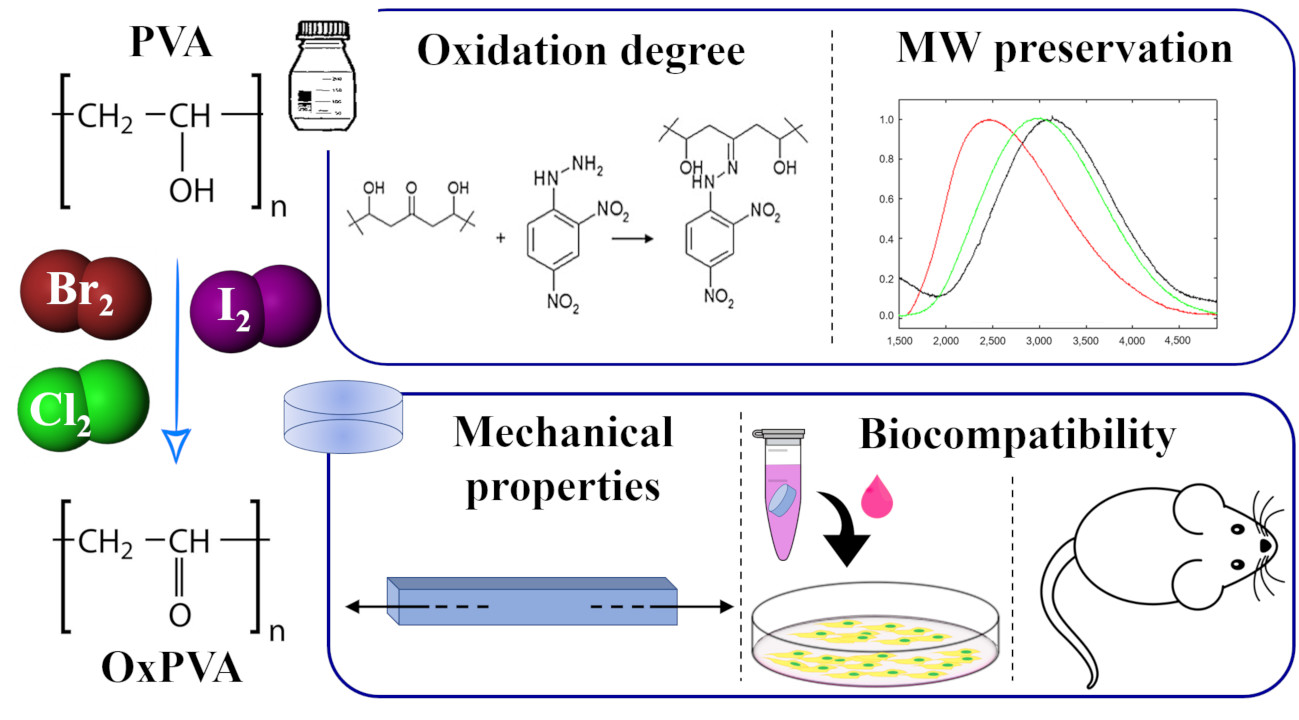
2)] as less aggressive chemical agents, which could assure for the minor degradation of polymer molecular size. Thus, it will be possible to standardize different polymer oxidation conditions to produce customizable PVA scaffolds for specific tissue engineering applications.
3. Discussion
In the effort of improving the biological features of PVA hydrogel, our previous research focused on two main aspects. Firstly, we successfully fabricated composite scaffolds by combining the polymer with bioactive extracellular matrices (ECMs). Decellularized, homogenized and lyophilized sheets from articular cartilage, Wharton’s Jelly and small intestine were cross-linked to PVA, obtaining bio-hybrid supports that sustained cell adhesion and proliferation [
25,
26,
27]. In parallel, we proposed for the first time a standardized method to perform chemical oxidation of PVA by KMnO
4 in acid environment, in order to obtain scaffolds with improved swelling kinetics and protein adsorption/release ability with respect to neat PVA, as well as with tunable biodegradation properties which increase along with the degree of oxidation [
19,
22,
23].
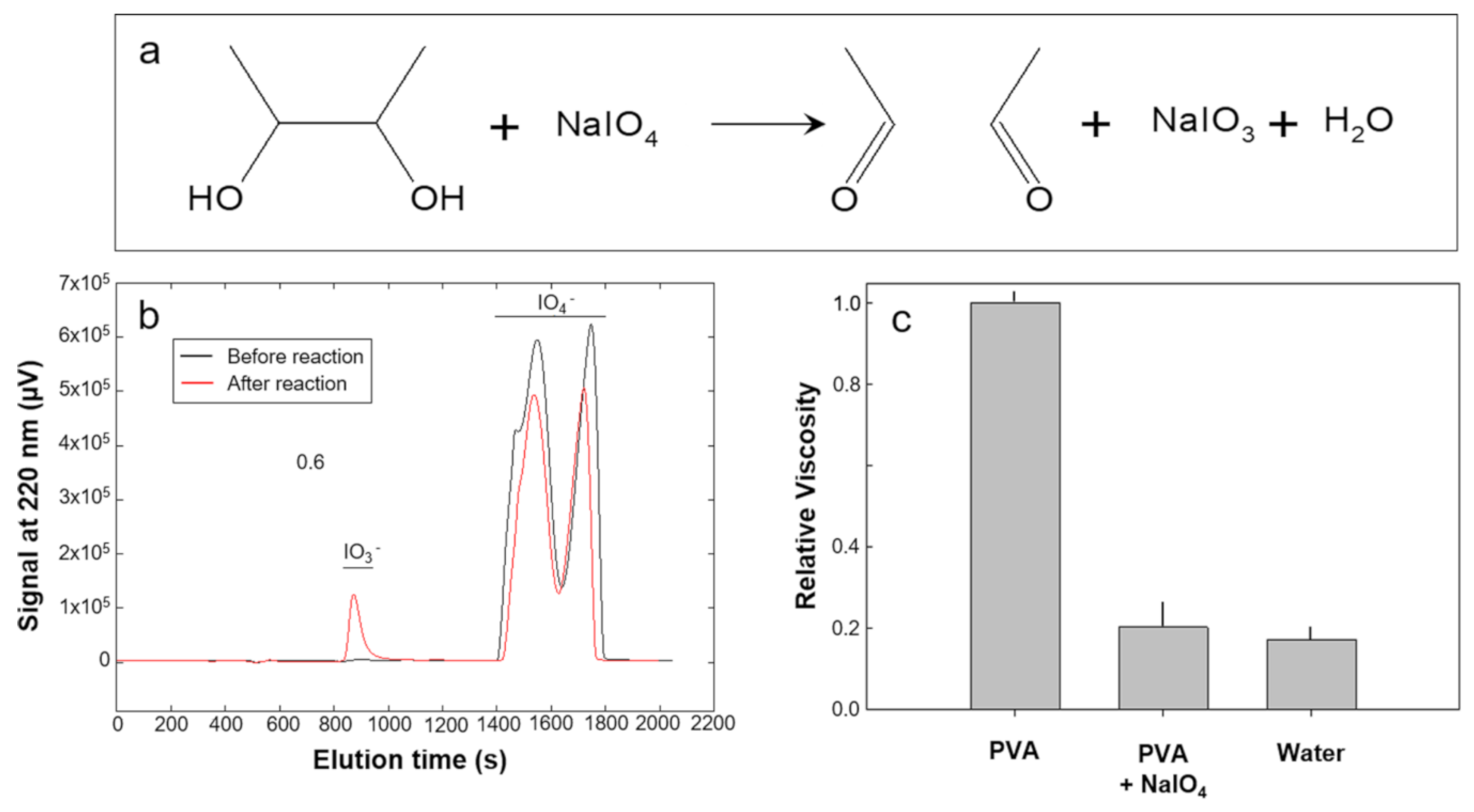
Although OxPVA_KMnO4 proved to possess encouraging properties to be used as a bioabsorbable scaffold for TE applications, it resulted to suffer from lower viscosity than non-modified PVA, reveling some alteration of polymer molecular weight due to the oxidation process. To explain this, we considered that the commercial PVA comes from the hydrolysis of polyvinyl acetate (PVAc), which is obtained from the radical polymerization of the monomer vinyl acetate (Vac). The control of radical polymerization stereoselectivity is not easily performed, resulting into the random addition of head-to-head monomers instead of the prevalent head-to-tail insertions in the polymer chain. This implies that, after hydrolysis with removal of the acetate group, the PVA contains some 1,2-diol groups which could be easily cleaved during the oxidation process with KMnO4, causing a decrease of polymer molecular weight. Our hypothesis was confirmed by demonstrating the production of IO3− ion after reaction of PVA solution with NaIO4, which caused the selective cleavage of the C-C single bond carrying the hydroxyl groups. This allowed us to quantify the 1,2-diol content in the polymer, in order to estimate a decrease of PVA mean molecular weight from 154,000 Da to about 2400 Da.
To support this result, polymer viscosity (i.e., molecular weight) was found to substantially decrease after reaction of PVA solution with NaIO
4. Since the literature reports that the oxidation with KMnO
4 in acid environment could potentially cause the cleavage of the C-C bond of 1,2-diols [
28] (which we proved to be present in the PVA chain), we deduced that the decrease in viscosity of PVA solution after treatment with this oxidizing agent may arise from main-chain cleavage at head-to-head units with consequent alteration of polymer molecular size.
Starting from these considerations, this work aims at identifying novel oxidizing agents which can assure for the obtainment of partially oxidized PVA with the minor variation in molecular weight distribution compared to the starting polymer. Halogens as Br
2, Cl
2 and I
2 possess standard oxidation-reduction potential which is sufficient to oxidize secondary alcohol groups of PVA polymer chain to ketone groups. To the best of our knowledge, PVA oxidation mediated by halogens has never been considered, except for a work by Ye and Collaborators [
29], which described a method for UV/Cl
2 oxidation of PVA to promote its degradation for ecological disposal purposes. Thus, here we standardized a method to produce and investigate novel PVA hydrogels partially oxidized with Br
2, Cl
2 and I
2, in the perspective of using them as synthetic scaffolds for tissue regeneration. In parallel, OxPVA_KMnO4 was considered as a reference. Given the paucity of experimental data about halogen-mediated PVA oxidation and considering that Br
2, Cl
2 and I
2 possess different redox potentials, we decided to test all the three oxidizing agents for the effect they can produce on polymer modification.
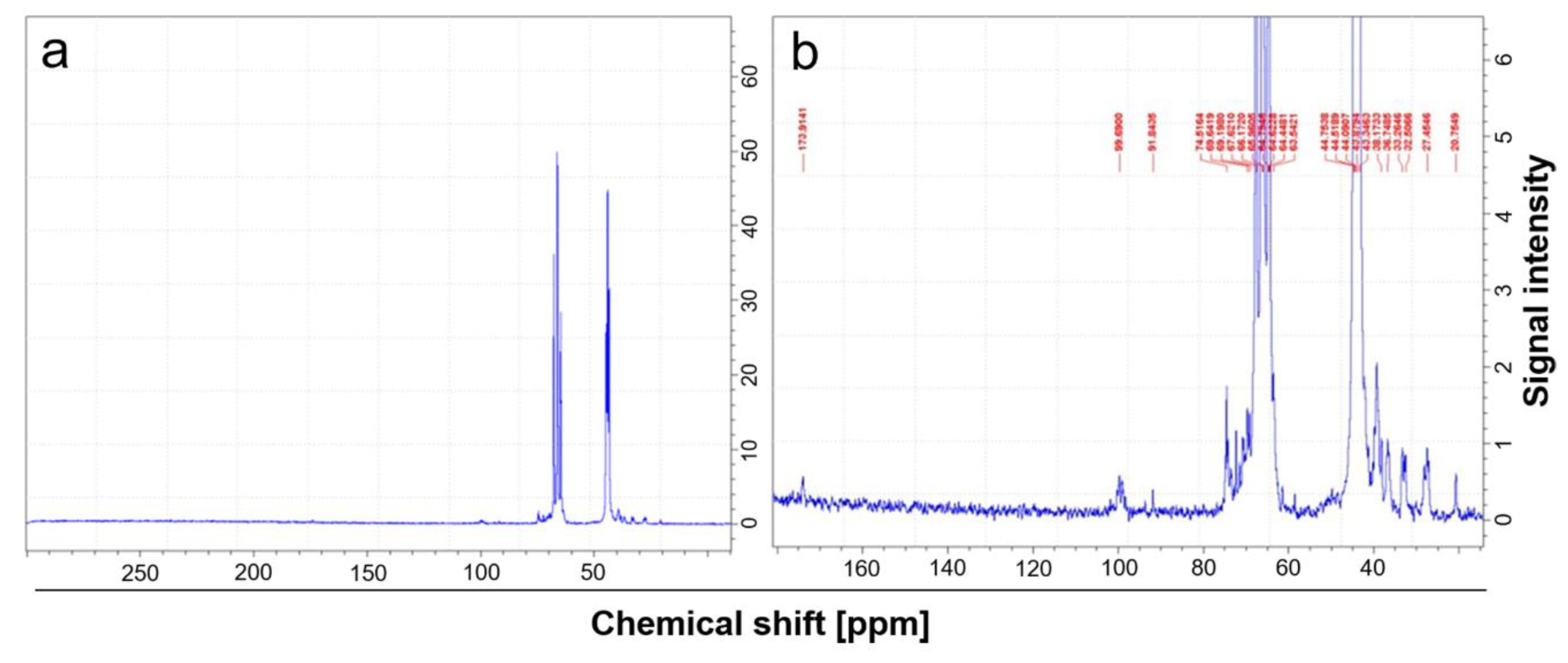
After standardization of the oxidation method, the determination of carbonyl groups in all the types of oxidized PVA was first performed by infrared (IR) spectroscopy. Unfortunately, this technique turned out to be not sensitive enough to detect the small amount (1% and 2%) of carbonyl groups introduced into the polymer after oxidation. In fact, IR-spectra of neat and oxidized PVA were found nearly to overlap, not allowing an accurate and reproducible quantification of carbonyl content. Given that, oxidized PVA was subsequently analyzed by NMR spectroscopy to detect the 13C of the carbonyl groups. Additionally in this case, the carbonyl signal was very small. However, the presence of other weak signals suggested that most of the carbonyls formed by oxidation were probably converted into hemiacetal and acetal groups.
Since both IR and NMR spectrometry gave no satisfactory results, we decided to perform DNPH assay as a more accurate and reliable method to estimate polymer oxidation. DNPH assay effectively allowed to quantify the carbonyl content of the partially oxidized PVA, confirming that chemical modification with all oxidants efficiently occurred.
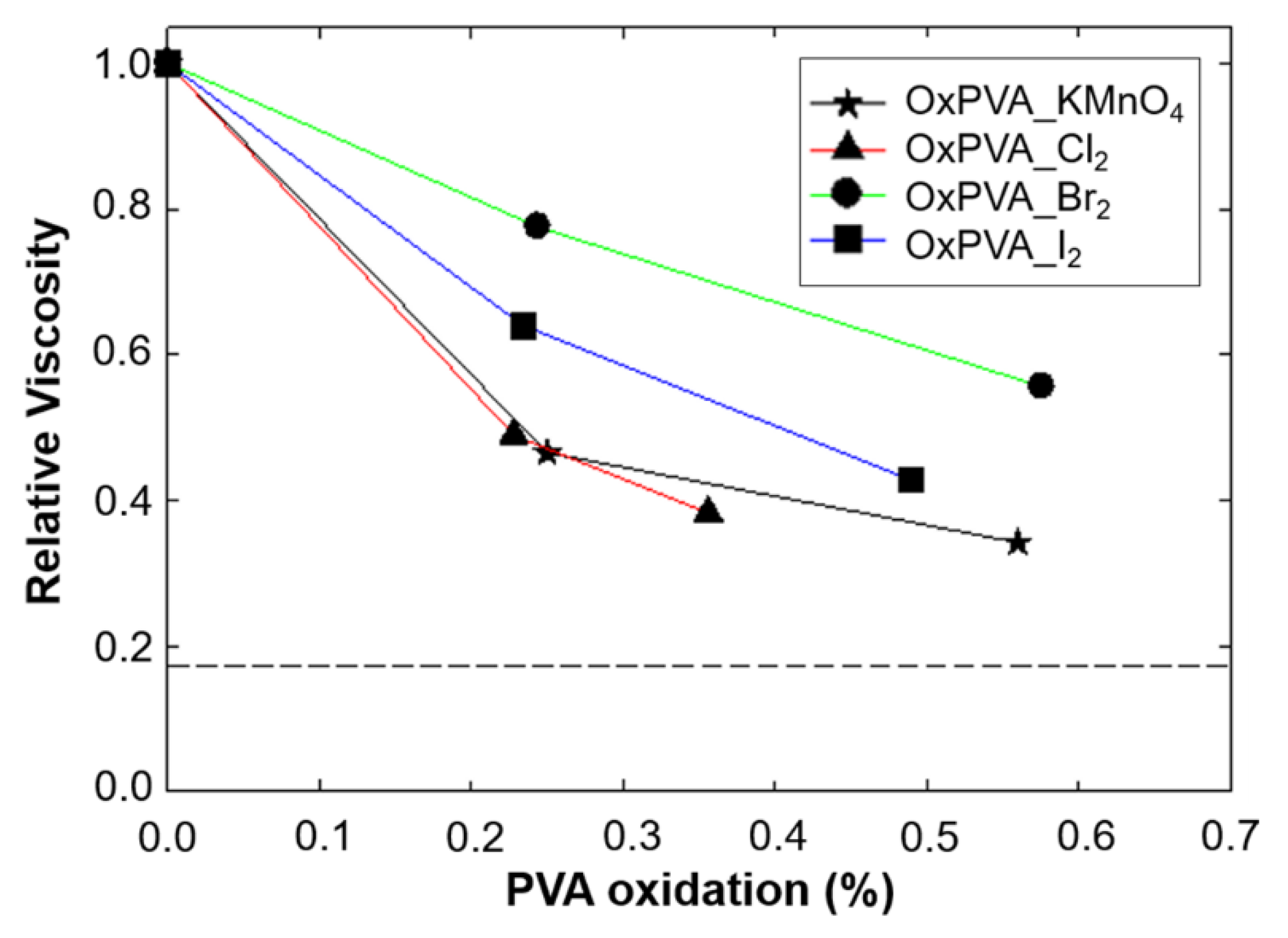
The effect of halogen-mediated oxidation on PVA polymerization or depolymerization was then assessed by determining polymer solution relative viscosity, which results to be a good practical measure of polymer molecular weight [
24]. The analysis revealed that Br
2 and I
2 caused the minor loss of PVA viscosity, turning out to be milder oxidants than Cl
2 and KMnO
4 and probably less prone to carbon-carbon cleavage of 1,2-diols, assuring for minor alteration of PVA molecular weight. Comparing the oxidation-reduction potentials of the three halogens, the mildest oxidant results to be I
2. In practice, however, the oxidation with I
2 needs to be carried out at a higher temperature (i.e., 70 °C) to avoid the formation of I
2/PVA complexes which would lead to an extended agglutination of the polymer. Since I
2 was not found to cause the minor alteration of PVA viscosity, we can infer that the elevated temperature derived the reaction over activation barriers necessary for 1,2-diols cleavage, facilitating their oxidative fragmentation [
30]. On the contrary, both Br
2 and Cl
2 do not form agglutinating complexes with PVA at low temperatures and showed different effects on polymer solution viscosity upon oxidation. In particular, Cl
2, being the strongest oxidizing agent, resulted to cause a loss of PVA viscosity which was comparable to that observed for KMnO
4-mediated oxidation.
Since viscosity measurements indicated a certain viscosity alteration of all oxidized polymer solutions, HPGPC was performed to compare molecular weight distribution among different samples by using a different procedure. Unfortunately, it was not possible to find polymers with hydrodynamic behavior similar to PVA and with known molecular weight distribution to serve as standards for gel filtration column calibration. This prevented us from quantifying the range of molecular weights of the analyzed PVA solutions. After PVA labeling with DNPH and PABA in order to make them visible with the spectrophotometric detector, gel chromatography analysis confirmed viscosity measurements results, highlighting that Br2 is the most selective oxidant and allowed to obtain partially oxidized PVA which maintains a molecular weight distribution similar to that of neat PVA.
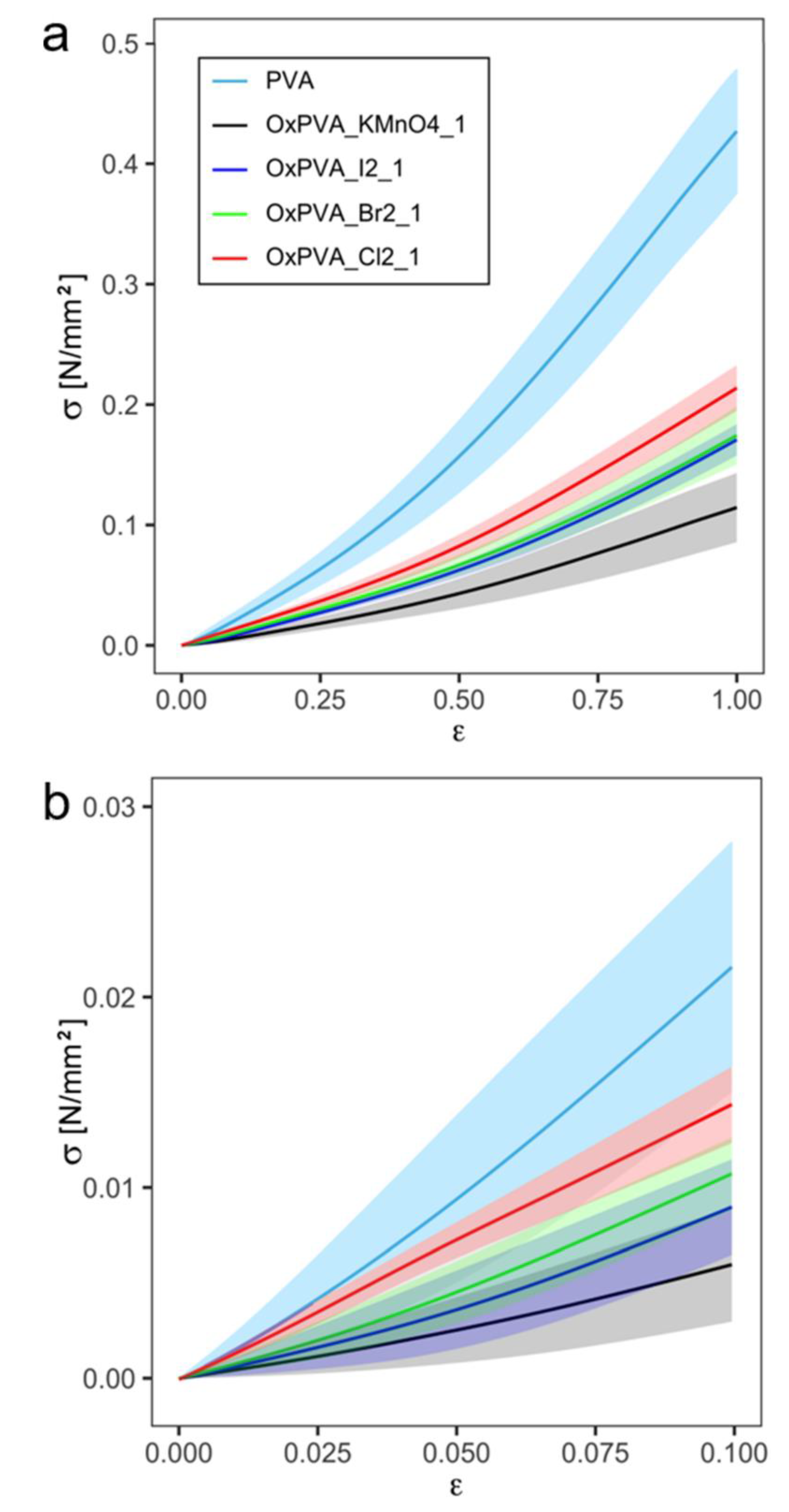
Aiming at using novel oxidized PVA hydrogels as implantable scaffolds for tissue regeneration, we investigated how the oxidation process affected polymer mechanical behavior. After uniaxial tensile test, a non-linear stiffening behavior of neat and oxidized PVA was measured in the overall strain range selected in this investigation. This strain range (up to 100%) is extremely higher than physiological range which any biomaterial could experience in vivo. However, experimental results pointed out that the materials did not show any failure or permanent strain at the maximum strain applied, recovering the initial length in the unloading phase. This characteristic is important when it is necessary to ensure a safety factor for the strength of a material. In the perspective of future TE applications, the first part of stress-strain response is worth investigating. As shown by the values of the secant elastic modulus, neat PVA resulted to be stiffer than oxidized PVA. In particular, the oxidation with KMnO4 induced the strongest decrease in stiffness, while the oxidation with Cl2 less intensely affected PVA stiffness. The oxidation with I2 and Br2 provided very similar effects in terms of mechanical properties modification, being OxPVA_Br2_1 slightly stiffer than OxPVA_I2_1. However, due to the variance of experimental results, a significant difference among oxidized PVA scaffolds was found in case of OxPVA_Cl2_1 vs. OxPVA_KMnO4_1 and OxPVA_I2_1 at 10% strain, and OxPVA_KMnO4_1 vs. OxPVA_Br2_1 and OxPVA_Cl2_1, as well as OxPVA_Cl2_1 vs. OxPVA_I2_1 at 20% strain.
The mechanical investigation developed in this work was limited to the uni-axial tensile behavior of the materials considered. The loading conditions in vivo can be more general and suggest extending the mechanical characterization to other stress modes, for example considering bi-axial tensile tests or compressive tests [
31,
32]. Furthermore, it would be interesting to evaluate the time-dependent behavior of native and oxidized PVA due to interaction between solid matrix and permeating liquid phases [
33,
34].
Finally, cellular and tissue compatibility of partially oxidized PVA was studied by in vitro and in vivo models to assess polymer interactions with both human fetal fibroblast cells and mice subcutaneous tissue. In fact, the chemical oxidative treatment might affect PVA atoxicity in terms of possible residual reagents which would be biologically harmful to tissues and cells [
35].
First of all, our protocol for neat/oxidized PVA hydrogel preparation starting from the corresponding solutions is based on physical cross-linking by freezing/thawing. This allows to avoid the use of any toxic chemicals, such as cross-linkers and initiators (i.e., glutaraldehyde [
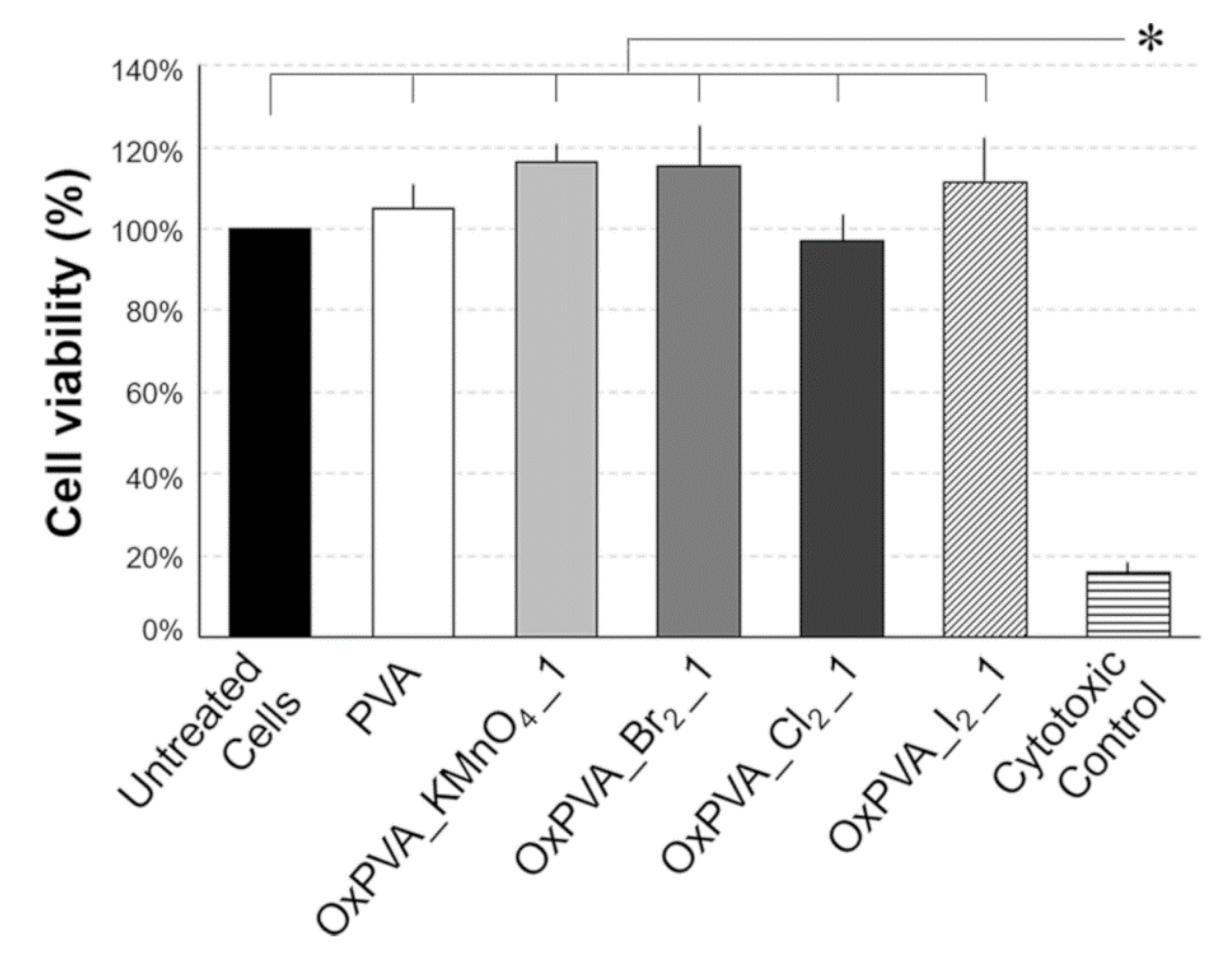
13]), which would augment the risk of alter polymer cytocompatibility. The extract cytotoxicity test highlighted that IMR-90 fibroblasts cultured with oxidized PVA-conditioned media preserved cell viability as much as untreated cultures and cells grown into medium conditioned with known atoxic PVA.
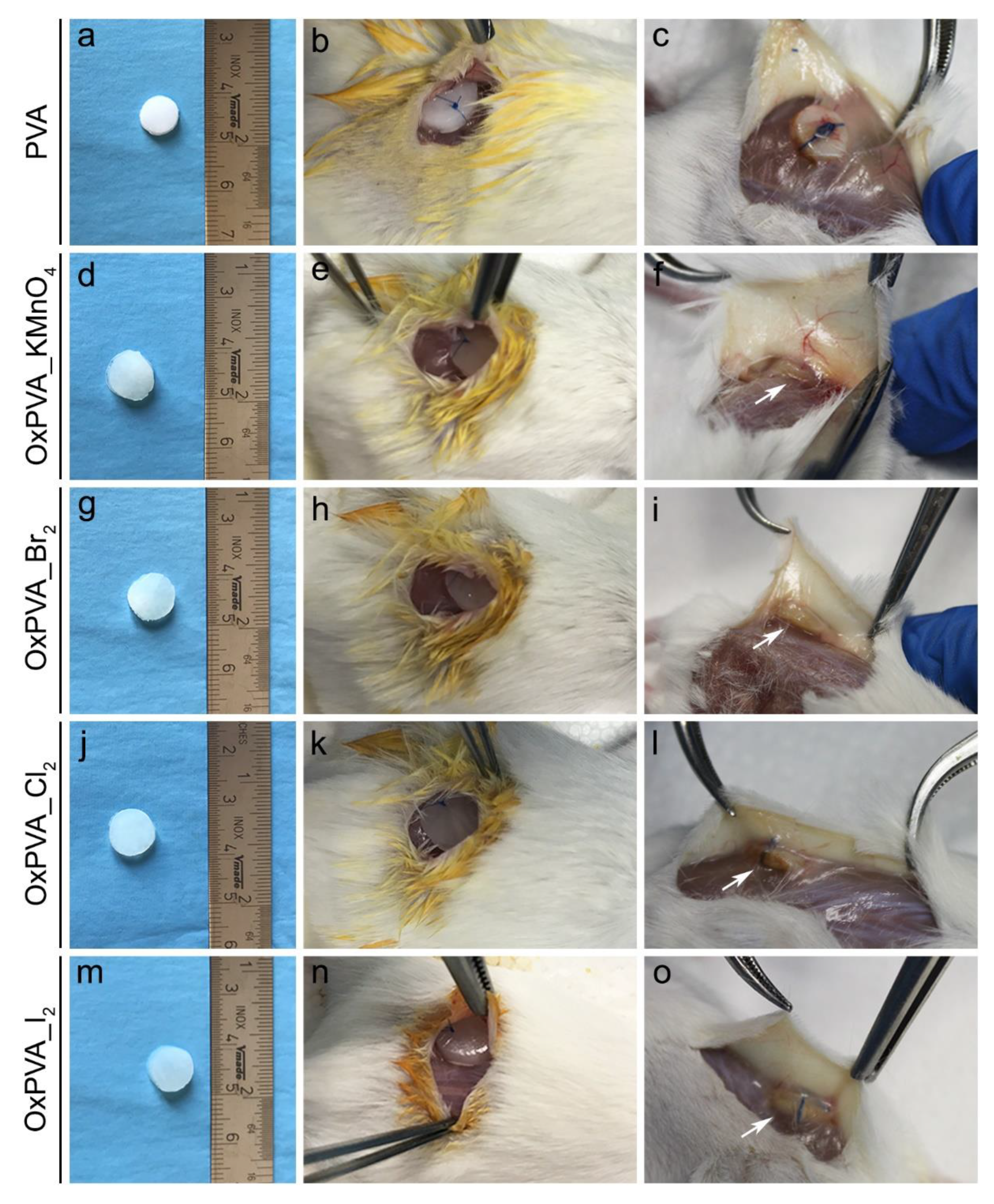
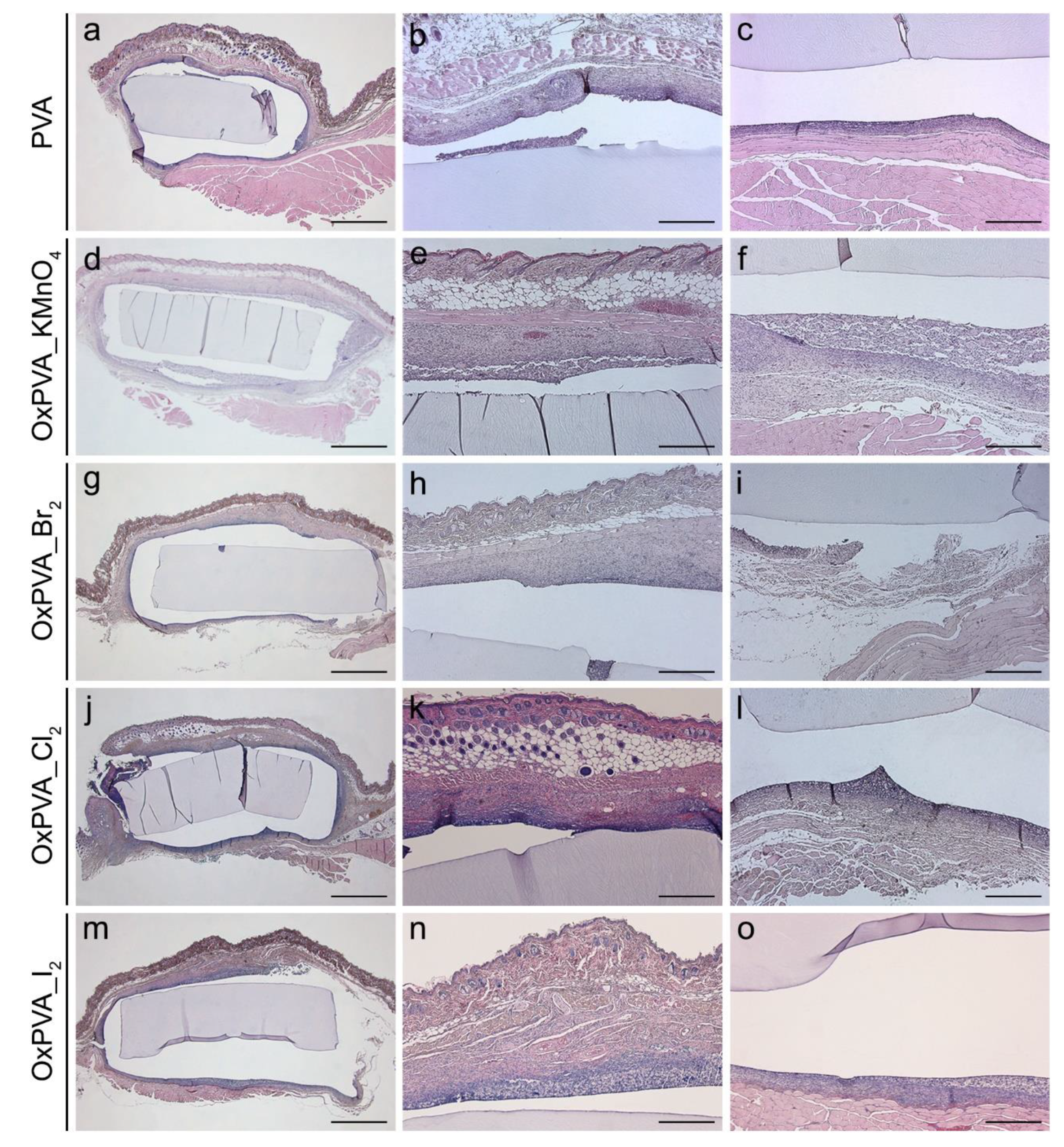
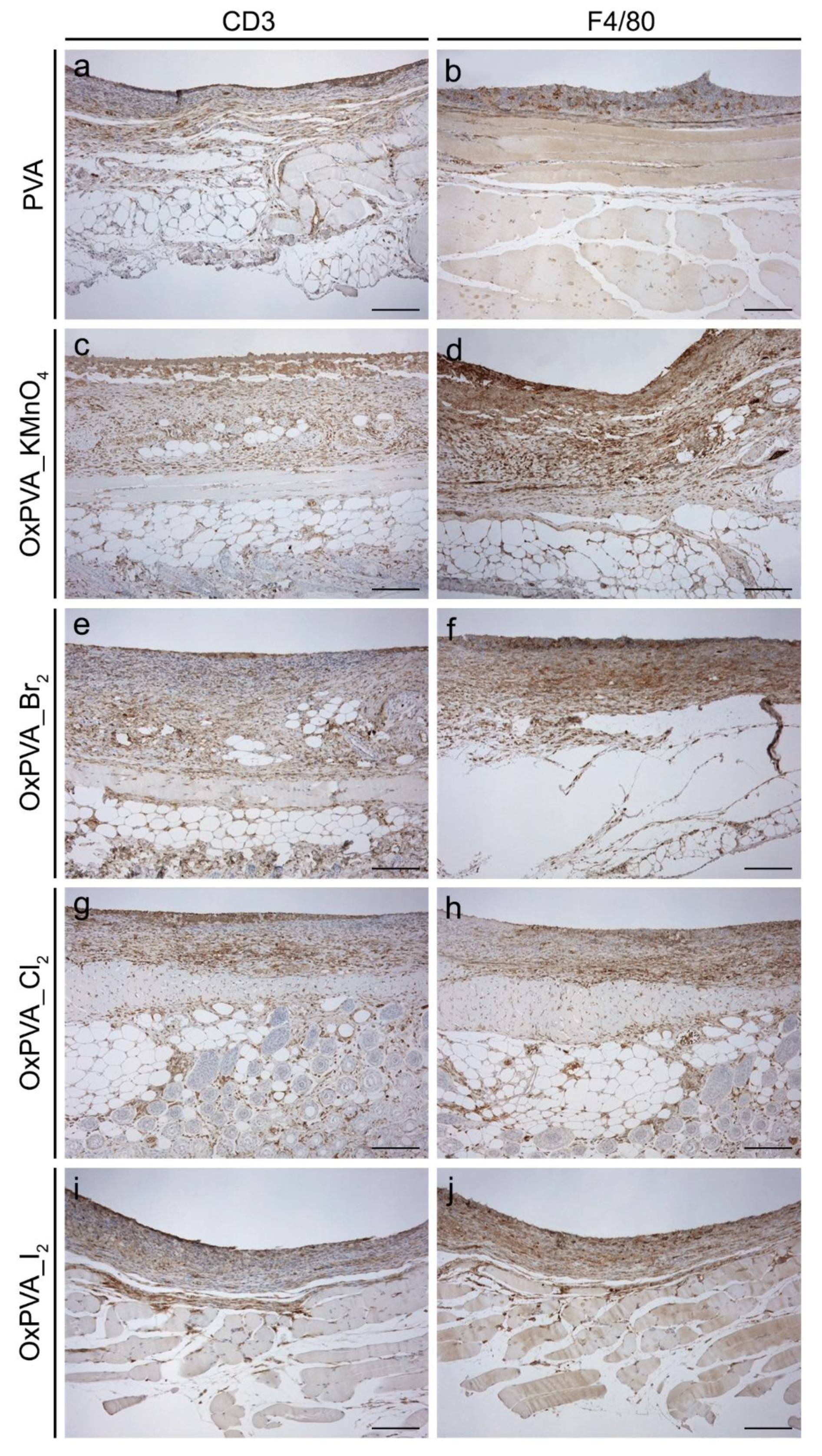
In addition to the in vitro cytotoxicity studies, the biocompatibility of oxidized scaffolds in vivo was also tested. A subcutaneous implantation model using BALB/c mice was investigated to obtain preliminary results of in vivo biocompatibility in the perspective of scaffold orthotopic implant studies. Animal experiment corroborated in vitro cell culture assay, demonstrating that all types of oxidized PVA hydrogels maintained high biocompatibility and low immunogenicity in comparison with neat PVA, which was reported to be atoxic and biocompatible. These results confirmed that the prolonged dialysis of the polymer solutions after oxidation assured for the elimination of any potentially toxic residual products derived from the chemical modification process. Further in vivo experiments of subcutaneous implantation for longer end points (i.e., up to 12 weeks) will be necessary to define the biodegradation profile of oxidized PVA-derived scaffolds.
Overall, this study on the halogen-mediated oxidation of PVA pointed out that Br2 and I2 can effectively modify the polymer assuring a better preservation of molecular weight distribution in comparison with KMnO4, with Br2 producing the best outcome. The possibility to control the polymeric structure of oxidized PVA could have an impact on its specific biological features. In this work, we found that, in comparison with KMnO4, halogens as Br2 can produce oxidized scaffolds with higher mechanical stiffness, suggesting that they can be preferred to restore tissue districts where higher mechanical resistance is required. Furthermore, the preserved molecular weight distribution of PVA oxidized by halogens can ensure for a more homogeneous network structure of the polymer, which may affect the release kinetics of proteins/drugs absorbed by the scaffold. However, these biological differences among oxidized PVA scaffolds need to be evaluated with specific experimental approaches to determine which oxidized hydrogel can be used in specific clinical applications.
4. Materials and Methods
4.1. Reagents
PVA [Molecular Weight (MW) 124,000-184,000 Da], phosphate buffered saline (PBS), 70% hydrochloric acid (HCl), 80% phosphoric acid (H3PO4), perchloric acid (HClO4), acetonitrile, elementary Br2, elementary Cl2, 30% oxygenated water, 32% HCl, sodium periodate (NaIO4), sodium bicarbonate (NaHCO3), sodium cyanoborohydride, cetyltrimethylammonium chloride, para-aminobenzoic acid (PABA), were supplied by Sigma-Aldrich (S. Louis, MO, USA). KMnO4, elementary I2, potassium iodide, 2-propanol, ethylene glycol, methanol and dimethyl sulfoxide (DMSO) were purchased from Carlo Erba (Milan, Italy).
4.2. Preparation of PVA and Oxidized PVA Solutions
An aqueous solution of 16 wt% neat PVA was prepared as described previously by Stocco and Collaborators [
19,
25]. In brief, PVA powder was weighted, suspended into milliQ water and then heated for 48 hours (h) at 100 °C under stirring until complete dissolution of the polymer. In parallel, each type of oxidized PVA was obtained by the experimental procedure following described.
4.2.1. PVA Oxidation with Permanganate in Perchloric Acid
The preparation of OxPVA_KMnO
4_1 (1% oxidized PVA with KMnO
4) was performed according to a published protocol [
19]. Briefly, 10 g of PVA were added to 200 g of milliQ water and heated in a boiling water bath for 60 min (min) over a magnetic stirrer. After cooling at 37 °C, the polymer solution was treated with 151 mg of KMnO
4 in 10 mL of milliQ water and 1.60 g of 70% HClO
4 (w/w) for 60 min at 37 °C, till complete discoloration. The resulting solution was extensively dialyzed against water using a membrane with 8000 Da cut-off (Sigma-Aldrich). In parallel, the synthesis of OxPVA_KMnO
4_2 (2% oxidized PVA with KMnO
4) was performed as described above, doubling the amounts of KMnO
4 and HClO
4. For long term storage, OxPVA_KMnO
4_1 and OxPVA_KMnO
4_2 solutions were kept at −20 °C overnight to allow complete freezing and then lyophilized using an under-vacuum evaporator (Speed Vac Concentrator Savant, Instruments Inc., Farmingdale, NJ, USA). When experiments had to be carried out, oxidized PVA solutions were recovered by processing lyophilized material as described in
Section 4.2 for the neat polymer powder.
4.2.2. PVA Oxidation with Bromine in Sodium Bicarbonate Buffer Solution
OxPVA_Br
2_1 (1% oxidized PVA with Br
2) was produced by preparing a solution of PVA powder (5.05 g) into milliQ water (100 g), which was heated in a boiling water bath for 60 min over a magnetic stirrer. The solution was then cooled at 15 °C, before adding 264 mg of NaHCO
3 and mixing well for complete dissolution. Subsequently, polymer oxidation occurred by treating the solution with 66 µL of Br
2 in 11 mL of milliQ water for 4 h at 15–18 °C. At the end of the process, a complete clear solution was obtained. Finally, oxidized PVA solution was subjected to dialysis, freezing at −20 °C and lyophilization as described in
Section 4.2.1. OxPVA_Br
2_2 (2% oxidized PVA with Br
2) was obtained following the same procedure, doubling the amounts of Br
2 and NaHCO
3.
4.2.3. PVA Oxidation with Chlorine in Sodium Bicarbonate Buffer Solution
The preparation of OxPVA_Cl2_1 (1% oxidized PVA with Cl2) was carried out by weighing 5.05 g of PVA and dissolving the powder into 100 g of milliQ water. The solution was then heated for 60 min in a boiling water bath over a magnetic stirrer. After that, PVA solution was cooled at 15 °C, 287 mg of NaHCO3 were added and mixed to the polymer until complete dissolution. The solution was then treated with 7.0 mL of 0.185 M Cl2 previously absorbed in 0.30 M phosphate buffer, pH 8.0 and left to react until complete discoloration. Finally, the resulting solution was dialyzed, frozen and lyophilized as previously described. OxPVA_Cl2_2 (2% oxidized PVA with Cl2) was obtained following the same procedure, doubling the amounts of Cl2 and NaHCO3.
4.2.4. PVA Oxidation with Iodine in Sodium Bicarbonate Buffer Solution
OxPVA_I2_1 (1% oxidized PVA with I2) was prepared by suspending PVA powder (5.05 g) into 100 g of milliQ water and by heating the solution in a boiling water bath for 60 min under agitation. After cooling the solution at 70 °C, 334 mg of NaHCO3 were added and mixed until complete dissolution. The solution was then treated with 5 mL of milliQ water containing 315.2 mg of I2, dissolved by addition of 574 mg potassium iodide. When the solution was completely clear, it was dialyzed, frozen and lyophilized as previously described. OxPVA_I2_2 (2% oxidized PVA with I2) was obtained following the same procedure, doubling the amounts of I2 and NaHCO3.
4.3. Determination of 1,2-Diol Content in PVA
The amount of 1,2-diols in neat PVA was quantitated through the reaction with an excess of NaIO4, which is a fast, selective and quantitative oxidizing agent for 1,2-diols.
For PVA/NaIO
4 reaction, a glass vial containing 400 mg of PVA and 19.60 g of deionized water were sealed and heated at 100 °C for 30 min until complete dissolution of the polymer. After cooling at room temperature (RT), 10.0 g of the solution were pooled apart and added with 110 mg NaIO
4 (MW = 213). After 60 min, the viscosity of the treated solution was measured in comparison to the native one. The evaluation of iodate (IO
3−) and periodate (IO
4−) ion content was performed by HPLC, by analyzing an aliquot of 5 µl with a reversed-phase C18 column Bio-Sil ODS-5S (BioRad, Hercules, CA, USA) and the ion-couple reagent cetyltrimethylammonium chloride. The isocratic eluent was constituted by water/acetonitrile 1/1 added with 0.10% H
3PO
4 and 1 mM cetyltrimethylammonium chloride. The flow rate was 1.00 mL/min at RT and the spectrophotometric detection was conducted at 220 nm [
36]. For calibration of IO
3− ion, pre-weighed amounts of ethylene glycol were added to five solutions, each containing 10.0 g of water and 110 mg of NaIO
4. After complete reaction (60 min), 5 µl of each solution were analyzed by HPLC.
4.4. Viscosity Measurements
The relative viscosity of aqueous solutions of neat and oxidized PVA was measured using a simple device composed of a reservoir vertically connected to a capillary of fixed length and diameter. The mass of solutions containing 2% (w/w) neat or oxidized PVA in pure water that flowed through the capillary in 240 s (s) was measured at the temperature of 20 °C, starting every time from the same level of the liquid in the reservoir. The reference was always the mass flown of a solution of native PVA of equal concentration. All the solutions were filtered through 1.2 µm pore size cellulose regenerated filters (Merck Millipore, Burlington, MA, USA) to avoid clog or slow down of the liquid flow into the capillary.
4.5. High Performance Liquid Chromatography (HPLC)
HPLC analysis was conducted using an LKB system (Uppsala, Sweden) constituted by two pumps model 2248, a high-pressure mixer, a Valco injection valve and a detector multi-wavelength LKB 2141. The management of the chromatographic system and the acquisition of the chromatograms were performed with the software HPLC Manager (Uppsala, Sweden). The elaboration of the chromatograms for quantitative analyses was realized with the software NELSON (PerkinElmer, Waltham, MA, USA). The HPLC system was employed for quantitative analysis of the IO3− and IO4− ions, for low pressure Sepharose G10, Sepharose G25SF gel permeation chromatography (GPC), as well as for high performance GPC with column Superose™ 6 (GE Healthcare, Chicago, IL, USA).
4.6. NMR Analysis of 13C in Oxidized PVA
Analyses were performed with a Bruker Avance III nuclear magnetic resonance spectrometer (Bruker BioSpin, Switzerland), operating at 400 MHz of 1H frequency and at 100 MHz of 13C frequency. Briefly, 80 mg of PVA oxidized with different agents were firstly dried on anhydrous CaCl2 under vacuum for 24 h and then inserted into the NMR tube and dissolved with 400 µL of 99% deuterated water (Sigma-Aldrich), heating the tube at 100 °C for 30 min. A total of 40,960 scans were performed to obtain the 13C spectrum able to highlight the minimum amount of carbonyls that should be present in the partially oxidized PVA.
4.7. Determination of Moisture Content
About 250 mg of each lyophilized oxidized PVA chopped into small pieces were transferred in a test tube partially closed with a perforated rubber stopper. The polymer was heated to 110 °C under a stream of nitrogen (input pressure about 0.2 Bar), flown through a Teflon tube inserted in the stopper. After 70 min, the lyophilized oxidized PVA was removed and weighted.
4.8. Evaluation of Oxidized PVA Carbonyl Content through DNPH Assay
Partial oxidation of PVA produces carbonyl groups that can be quantitate by 2,4-dinitrophenylhydrazine (DNPH) (Fluka, Basel, Switzerland) assay. An aliquot of 100 μL was taken from solutions of each polymer and allowed to react with 900 μL of 10 mM DNPH in 2.5 M HCl for 96 h at 20 °C in the dark. The PVA-dinitrophenylhydrazones resulting from the reaction were separated from the excess of DNPH through gel permeation on a Sephadex® G-25 SF column (diameter: 8 mm; length: 12 cm), eluted with PBS/methanol 70/30 (v/v). The injected volume was 200 μL and flow rate was 0.40 mL/min. The eluate was monitored at 375 nm allowing a manual accurate collection of the peak fraction containing the PVA-dinitrophenylhydrazones. Measuring absorbance at 375 nm and volume of the pooled fraction allowed the quantitative evaluation (molar absorptivity: 22,000 M−l cm−1) of carbonyl groups. Some of the collected PVA-dinitrophenylhydrazones were also analyzed by high performance GPC on a Superose™ 6 column as reported subsequently.
4.9. Coupling of Para-Aminobenzoic Acid to Oxidized PVA
The coupling reaction of oxidized PVA with PABA was performed in 0.20 M NaHCO3, pH 8.2, by mixing 100 μL of 20 mg/mL PABA, 400 μL of oxidized PVA 20 mg/mL solution and 80 μL of 20 mg/mL sodium cyanoborohydride in a 1.5 mL-Eppendorf tube. Reaction was carried on for 48 h at 32 °C and then PABA excess was removed by gel permeation on Sephadex® G-10 column. Briefly, 400 µL of each sample were charged on column and eluted with PBS to a flow rate of 0.40 mL/min. Higher molecular weight PVA covalently bound to PABA eluted first; each peak was collected manually in an Eppendorf tube, monitoring the eluate absorption at 280 nm. Oxidized PVA decorated with PABA were analysed by high performance GPC as reported subsequently.
4.10. High Performance gel Permeation Chromatography (HPGPC)
Partially oxidized PVA samples were decorated with PABA or DNPH as previously described, to allow an easy detection through UV absorption. Molecular size dispersion of the polymers was evaluated by HPGPC in water-based eluent using a Superose™ 6 column. In particular, oxidized PVA decorated with PABA were analysed on Superose™ 6 column eluted with 0.25 mL/min PBS. Injection volume was 300 µL and detection wavelength was 280 nm. The column was thermostated to 25 °C. In parallel, collected fractions of oxidized PVA decorated with DNPH were analyzed on Superose™ 6 column eluted with 0.25 mL/min PBS/methanol 70/30 (v/v). Injection volume was 400 µl and detection wavelength was 375 nm. The column was thermostated to 50 °C.
4.11. PVA Hydrogel Preparation
PVA, OxPVA_KMnO
4_1, OxPVA_Br
2_1, OxPVA_Cl
2_1 and OxPVA_I
2_1 hydrogel scaffolds were prepared as already described by Stocco and Collaborators [
19,
25]. Briefly, a solution of each polymer was poured between two sheets of plate glass separated by 2 mm-thick spacers. Physical cross-linking of polymer solutions was then performed through a partially modified freeze-thaw (FT) process, according to Lozinsky et al. [
37]. In particular, neat and oxidized PVA aqueous solutions were poured between two glass sheets separated by 2 mm-spacers, frozen at −20 °C for 24 h and then thawed at −2.5 °C for 24 h. After three FT cycles, the hydrogels were stored at −20 °C until use.
4.12. Mechanical Tests
Uniaxial tensile tests were carried out on a Bose ElectroForce
® Planar Biaxial Test Bench instrument (TA Instruments, New Castle, USA). The system was equipped with a load cell of 22 N. Rectangular samples with 1:4 width-to-free length ratio (width 5 mm × free length 20 mm) were cut from 2 mm-thick scaffolds for tensile testing. Tests were carried out up to 100% strain at a constant strain rate of 0.5%s
−1. The samples were hydrated for the entire duration of the test by dripping physiologic solution on the sample surface. Preliminary tests pointed out an isotropic and almost-incompressible behavior, verified for each material through local strain measurements [
38]. Ten test repetitions for each material were performed.
Force versus elongation data were acquired during the tests. Nominal stress σ was calculated as current force divided by the section area of the sample (initial width x thickness). Nominal strain was calculated as the ratio between the imposed elongation and the initial length of the sample. Experimental data were analyzed with a functional data analysis approach [
39], by means of statistical computing software R (R version 3.6.0, The R Foundation) [
40]. The raw data of each single test were preprocessed, performing a smoothing with B-splines basis. Specifically, a cubic B-spline basis with 100 internal equally spaced knots over the domain (0, 1) was used. After the preprocessing, experimental data were splint into 5 different groups according to material (PVA, OxPVA_KMnO
4_1, OxPVA_Br
2_1, OxPVA_Cl
2_1 and OxPVA_I
2_1) and functional group-specific means and standard deviations were computed.
4.13. Scaffold Biocompatibility
4.13.1. In Vitro Cytotoxicity Assay
Neat and oxidized PVA cytotoxic effects were evaluated on the human fetal lung fibroblast cell line IMR-90 (ATCC, Manassas, VA, USA). Cells were cultured in 60 mm-petri dishes (Corning, NY, USA) using Minimum Essential Medium (MEM) (Sigma-Aldrich) supplemented with 10% fetal bovine serum (FBS) (Sigma-Aldrich), 1% L-glutamine (200 mM) (Sigma-Aldrich) and 1% penicillin (10,000 U/mL)/streptomycin (10 mg/mL) solution (Sigma-Aldrich). Cultures were maintained at 37 °C, 95% relative humidity and 5% CO2 changing medium every other day until the time of use. The extract test was performed on IMR-90 cells of passage 25–27 to assess the cytotoxicity of any leachable by-products from neat and oxidized PVA. To this end, PVA, OxPVA_KMnO4_1, OxPVA_Br2_1, OxPVA_Cl2_1 and OxPVA_I2_1 disks (diameter: 7 mm; thickness: 2 mm) were used to prepare soluble extracts by incubating them into IMR-90 culture medium (1 mL/100 mg disk weight), at 37 °C for 72 h. The supernatants were then collected for cell treatment.
In parallel, fibroblasts were seeded into wells of a flat-bottomed 96-well plate (Corning) at a density that would achieve confluence on attachment. After cells were let adhere for 24 h, the culture medium was aspirated and replaced with the extract media collected as previously described. The positive (cytotoxic) control was prepared by incubating cells in culture medium added with 50% DMSO, whereas the negative control was represented by untreated cultures. Cells were then incubated for a further 24 h at 37 °C in 5% (v/v) CO
2 in air before the effect of the extracts on cell viability was determined using the MTT assay [
41].
Treated and untreated IMR-90 cells were incubated with 0.5 mg/mL MTT for 4 h. Formazan precipitates were dissolved by using 2-propanol acid (0.04 M HCl in 2-propanol) and samples were analyzed with a Microplate auto reader VICTOR3™ (PerkinElmer, Waltham, MA, USA) to measure the optical density at 570 nm. The percentage of viable, metabolically active cells was calculated in comparison with the untreated control (100%) to determine the results of cytotoxicity assay.
4.13.2. In Vivo Implantation
Animal procedures were carried out after obtaining the approval by the ethical committee of the University of Padua and by the Italian Department of Health (Permission code: 977/2015-PR, 21 September 2015).
Before surgery, BALB/c mice (n = 15) were given gas anesthesia (isoflurane/oxygen) and their dorsal cutis was shaved and sterilized with Betadine® (Bayer, Leverkusen, Germany). After that, a 20 mm-lumbotomy incision was executed on the right side, by using a No. 10 surgical blade (Becton-Dickinson, Franklin Lakes, NJ, USA). Resorting to the blunt dissection technique, a subcutaneous pouch was obtained and discoidal scaffolds (diameter: 7 mm; thickness: 2 mm) of PVA, OxPVA_KMnO4_1, OxPVA_Br2_1, OxPVA_Cl2_1 and OxPVA_I2_1 (n = 3 for each group) were inserted in. To avoid graft displacement, samples were anchored to the latissimus dorsi muscle by using Tycron 4/0 sutures. Finally, absorbable Novosyn 4/0 sutures were used to stitch the skin. The first 5 days from surgery, the animals were administered antibiotic and anti-inflammatory therapy and were monitored during the whole recovery period.
The mice were euthanized 4 weeks from surgery by asphyxiation with carbon dioxide and implanted scaffolds were excised together with the surrounding tissues. Samples were then fixed with 10% formalin solution in neutral PBS and embedded in paraffin for histological and immunohistochemical analyses. To this end, explants were cut into 5 μm-thick serial sections, which were stained with hematoxylin and eosin (Bio Optica, Milan, Italy) according to routine protocols. Immunological characterization of the cells identified in contiguity with PVA-derived scaffolds was carried out by Dako Autostainer/Autostainer Plus (Dako, Milan, Italy), according to previously standardized protocols11. In particular, antigen immunolocalization on samples was performed by using anti-CD3 (A0452; Dako) and anti-F4/80 (sc-26643-R; Santa Cruz Biotechnology, CA, USA) primary antibodies, which were diluted in PBS 1:500 and 1:800, respectively. The binding between primary antibody and specific antigen was then revealed by a labeled polymer (EnVision™ FLEX-HRP; Dako) and 3,3′-diaminobenzidine (EnVision™ FLEX Substrate buffer + DAB + Chromogen; Dako). In parallel, negative controls were prepared without incubation with primary antibodies.
4.14. Statistical Analysis
For the characterization of oxidized PVA solutions and the cytotoxicity tests, results are expressed as means of three different experiments ± standard deviation (SD). For the statistical analysis of data, one-way analysis of variance (ANOVA) and Tukey’s multiple comparisons test were performed. Significant differences were determined by p values ≤ 0.05. Statistical analysis was performed by using Prism 8.1.0 (GraphPad Software, San Diego, CA, USA).
In parallel, to evaluate the difference in mechanical response of neat and oxidized PVA scaffolds, a functional ANOVA test was performed using the
fdatest package in R. The latter implements the interval-wise testing procedure proposed in the literature by Pini and Vantini [
42] and allows to produce a functional
p-value which can be used to assess if the differences between the functional means of the groups is significant along their domains. The secant elastic modulus E
s was calculated for mean data of each material, as the slope of the straight line drawn from the origin of the stress-strain diagram and intersecting the mean curve at 10% and 20% strain. The secant elastic modulus at 10% strain for different materials was compared with ANOVA test followed by Bonferroni post-hoc test, considering a significant total
p-value ≤ 0.05.



 ,
,