Dengue Virus Infection of Aedes aegypti Alters Extracellular Vesicle Protein Cargo to Enhance Virus Transmission


 , ,
, ,  ,
,
Abstract
1. Introduction
2. Results
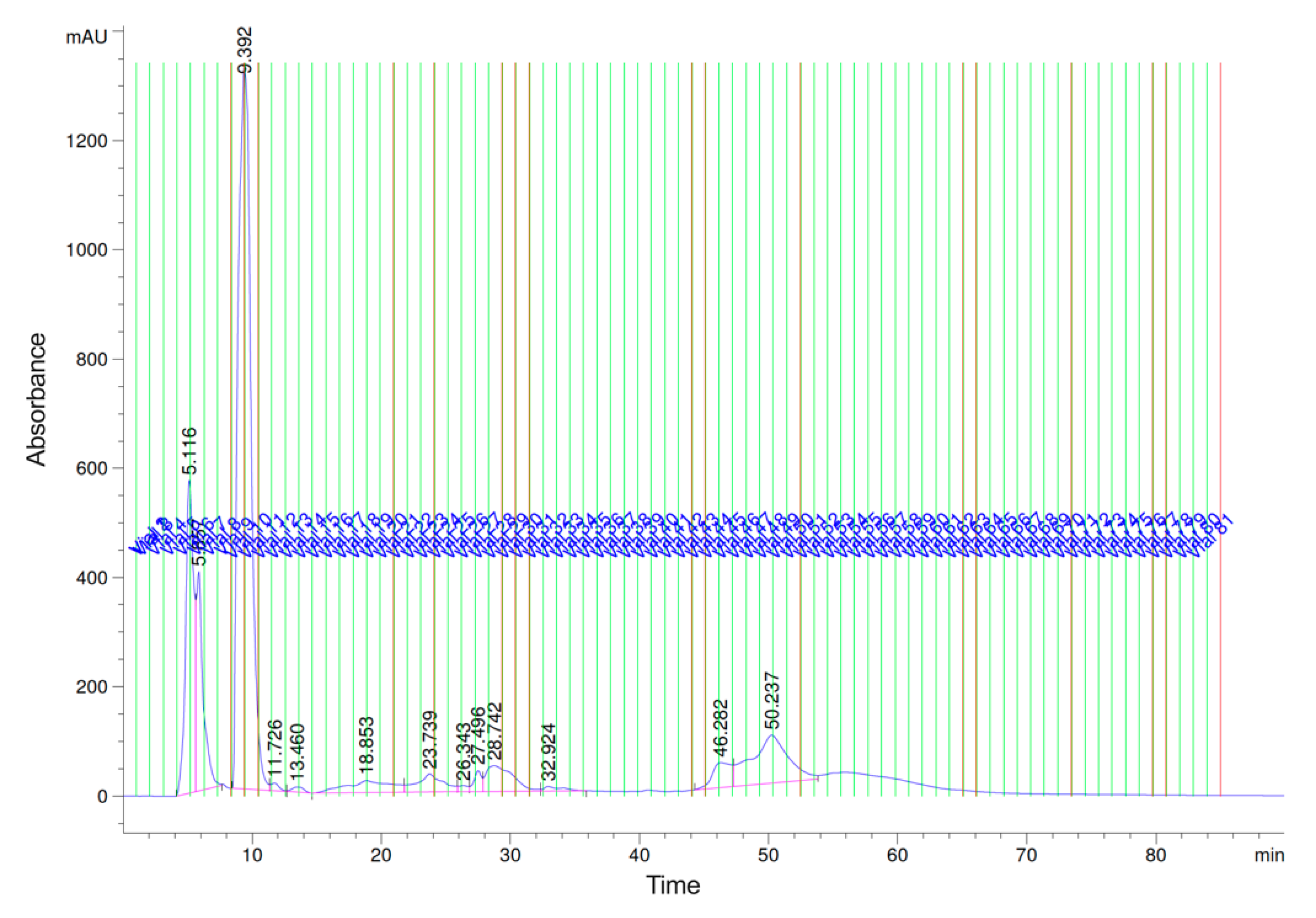
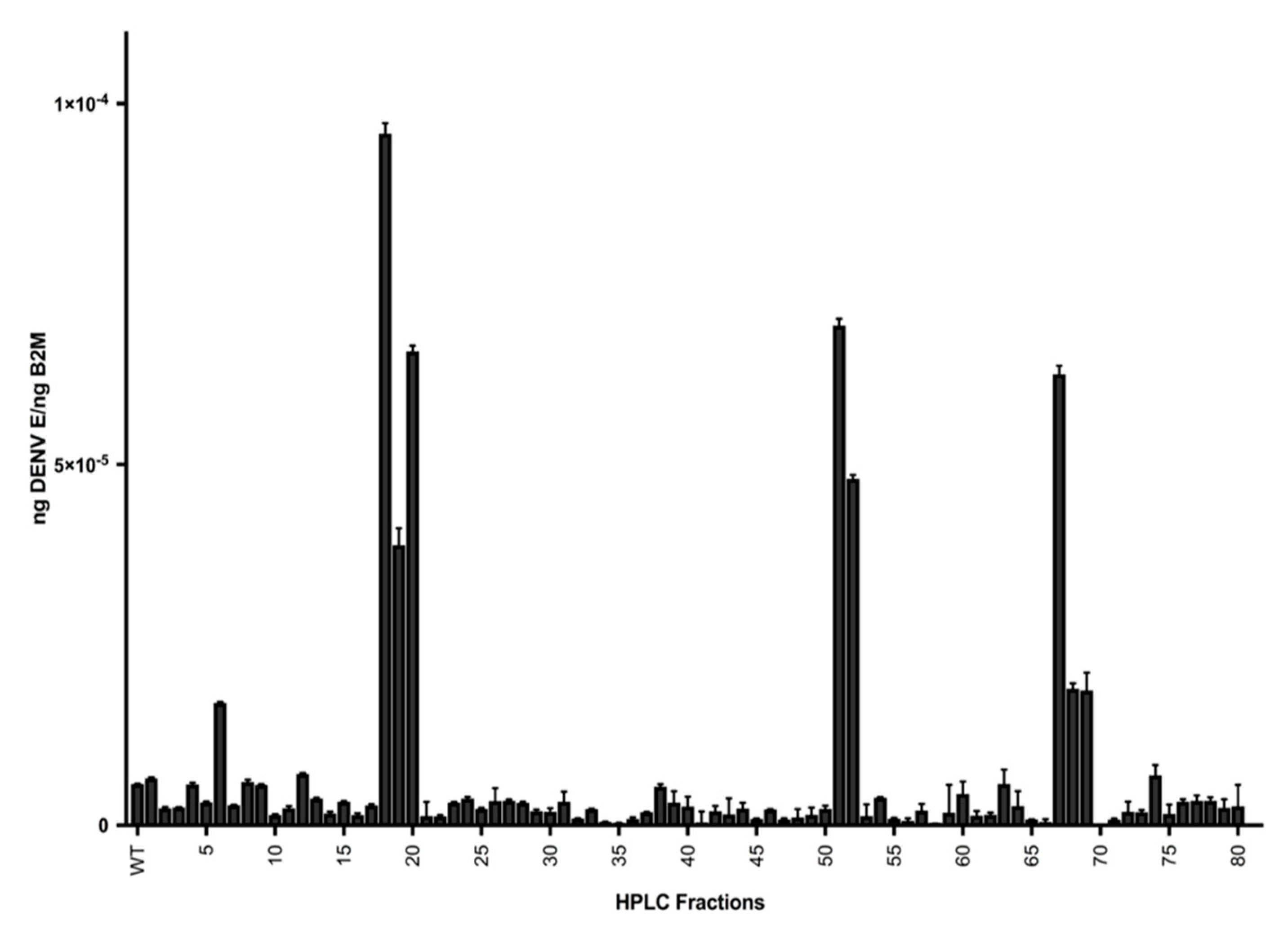
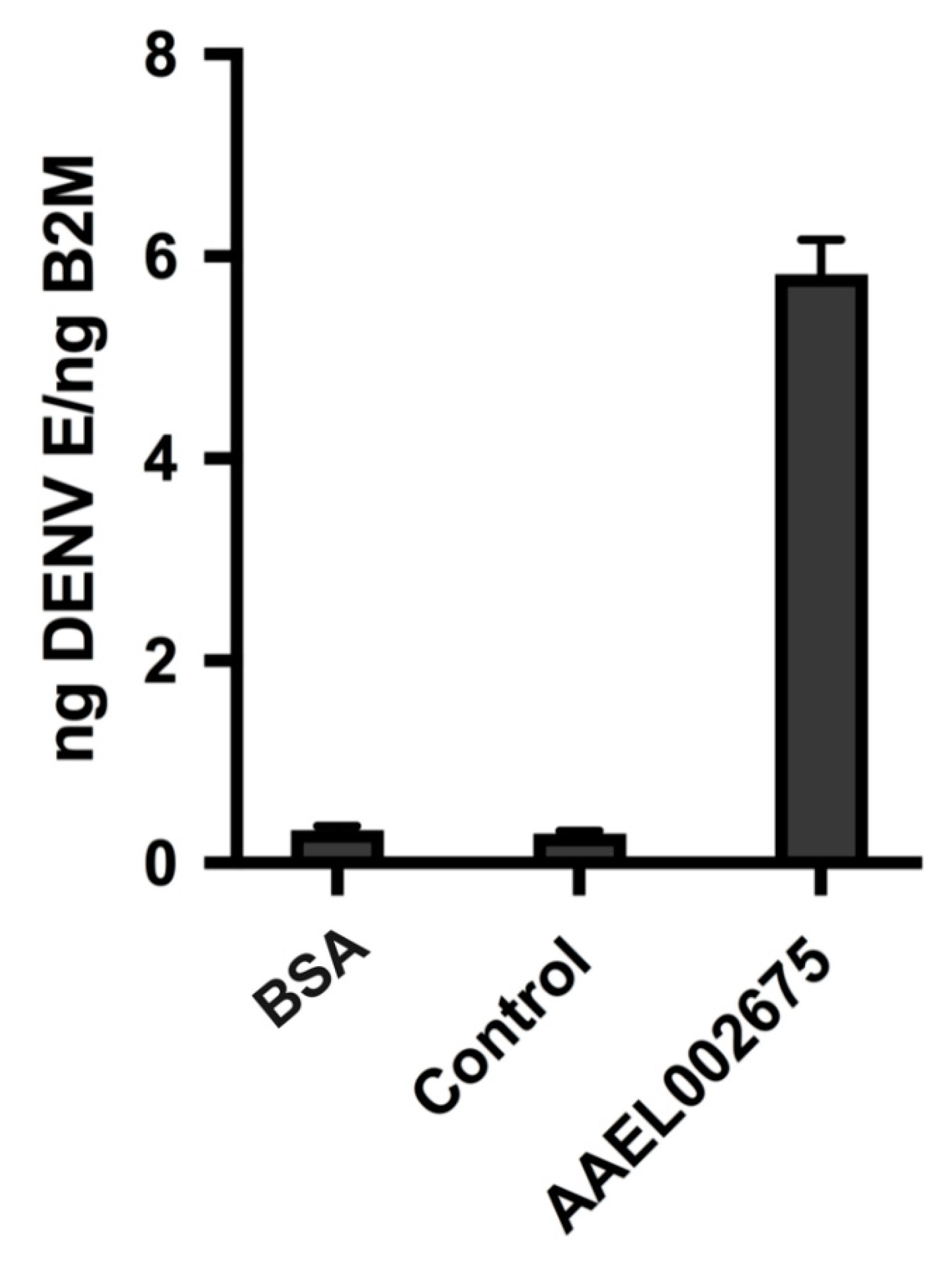
2.1. Identification of DENV Infection-Enhancing Aedes aegypti Saliva Proteins
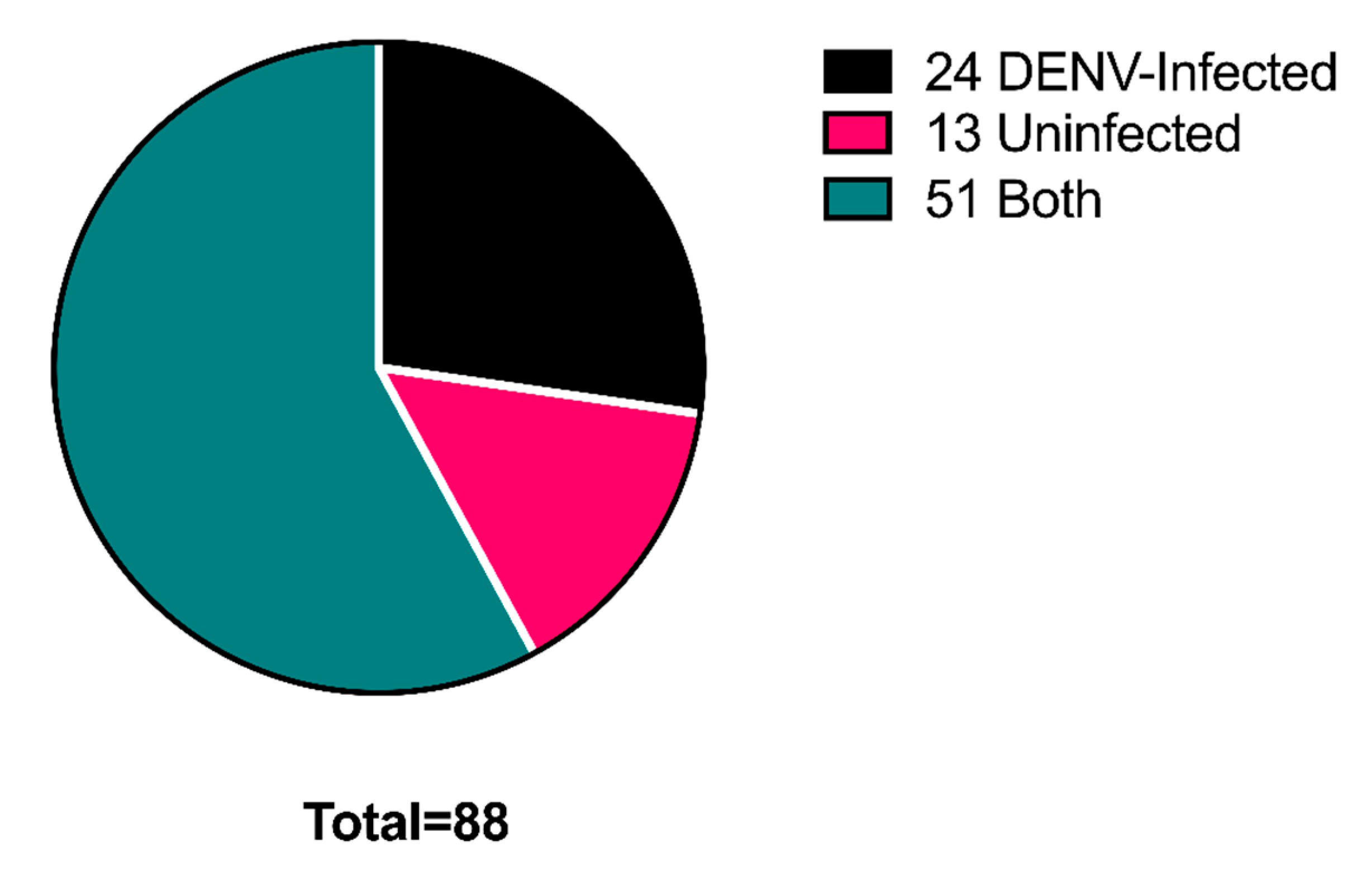
2.2. DENV Infection Altered Protein Cargo of Ae. aegypti EVs
2.3. DENV Infection Resulted in the Packaging of Infection-Enhancing Cargo in Ae. aegypti EVs
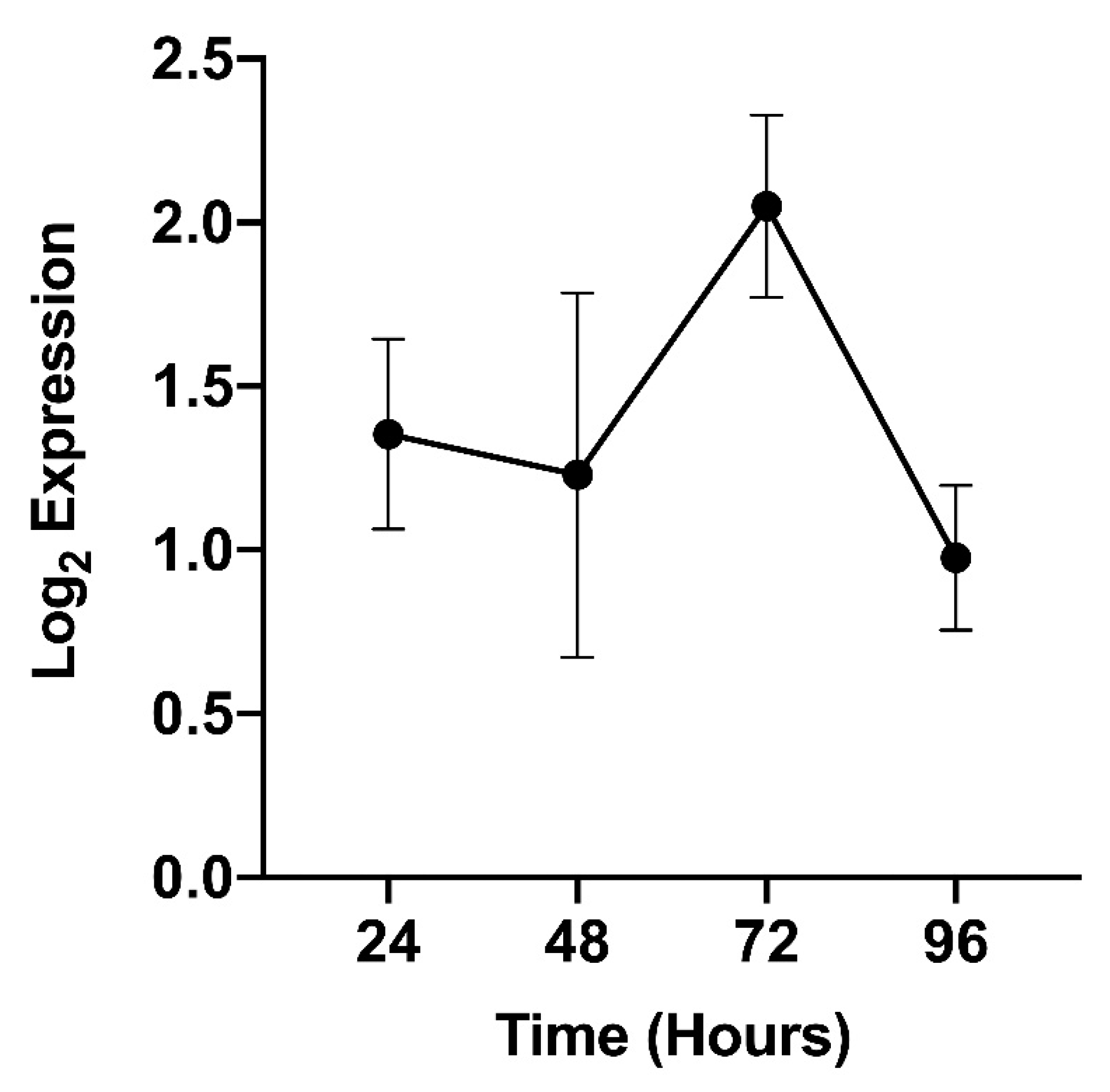
2.4. AAEL002675 Expression Increased upon DENV Infection
3. Discussion
4. Materials and Methods
4.1. Mosquito Rearing and Saliva Collection
4.2. Determination of Enhancing Salivary Proteins by HPLC and LC-MS/MS
4.3. Aedes aegypti Extracellular Vesicle Isolation and Protein Processing
4.4. Mass Spectrometry
4.5. Peptide Identification
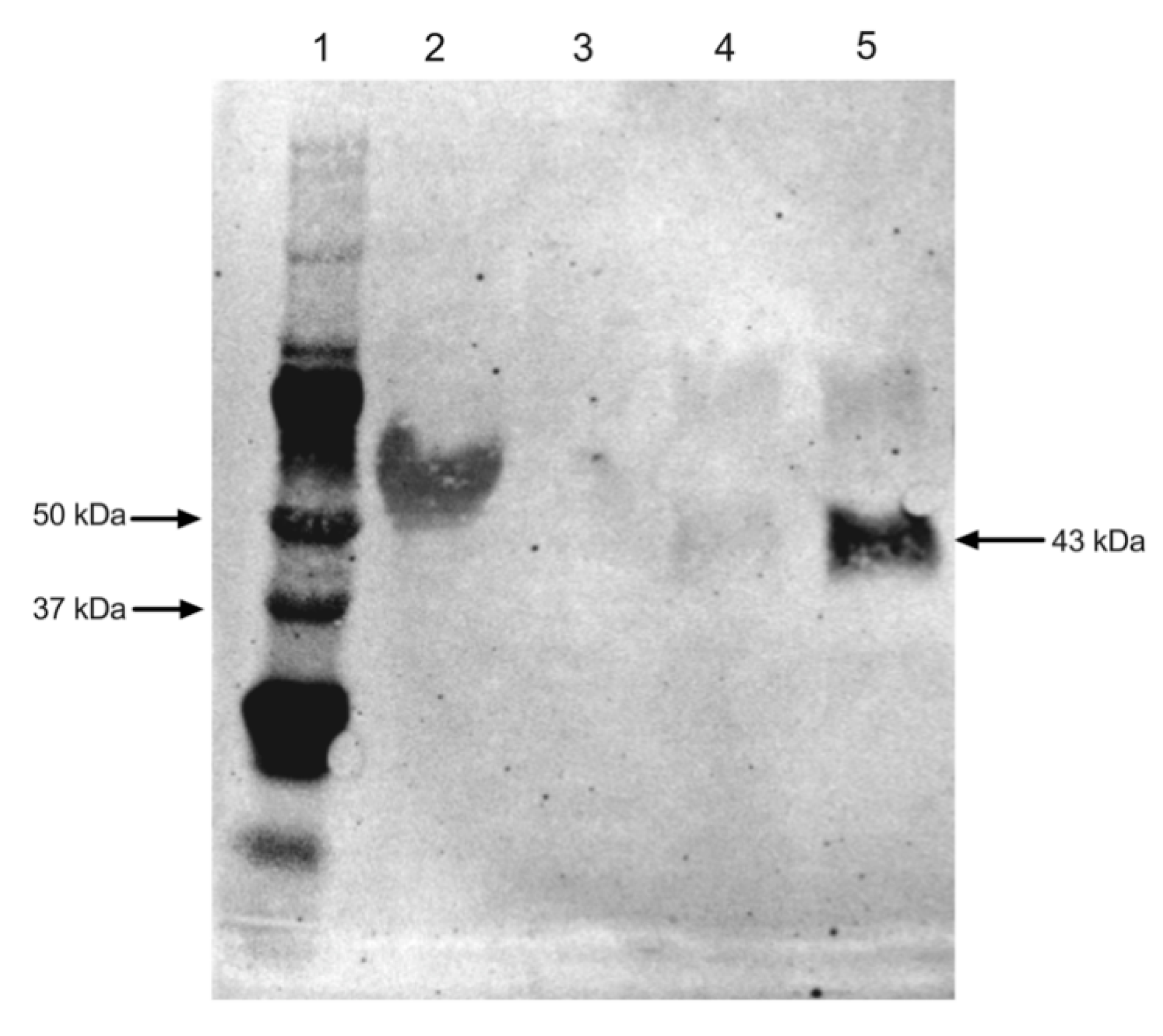
4.6. Cloning of Recombinant Mosquito Protein AAEL002675
4.7. Expression, Purification, and Western Blotting of Mosquito Proteins
4.8. Treatment of Fibroblasts with Mosquito Proteins and Infection with DENV-2
4.9. AAEL002675 Expression Changes upon DENV Infection
Author Contributions
Funding
Acknowledgments
Conflicts of Interest
Abbreviations
| qRT-PCR | Quantitative Reverse Transcription PCR |
| EV | Extracellular Vesicle |
Appendix A
References
- Beatty, M.E.; Letson, G.W.; Margolis, H.S. The Global Burden of Dengue. 2009. Available online: http://www.pdvi.org/about_dengue/GBD.asp (accessed on 4 September 2020).
- Messina, J.P.; Brady, O.J.; Pigott, D.M.; Brownstein, J.S.; Hoen, A.G.; Hay, S.I. A global compendium of human dengue virus occurrence. Sci. Data 2014, 1, 140004. [Google Scholar] [CrossRef] [PubMed]
- Stanaway, J.D.; Shepard, D.S.; Undurraga, E.A.; Halasa, Y.A.; Coffeng, L.E.; Brady, O.J.; Hay, S.I.; Bedi, N.; Bensenor, I.M.; Castañeda-Orjuela, C.A.; et al. The Global Burden of Dengue: An analysis from the Global Burden of Disease Study 2013. Lancet Infect. Dis. 2016, 16, 712–723. [Google Scholar] [CrossRef]
- Kraemer, M.U.; Sinka, M.E.; Duda, K.A.; Mylne, A.Q.; Shearer, F.M.; Barker, C.M.; Moore, C.G.; Carvalho, R.G.; Coelho, G.E.; Van Bortel, W.; et al. The global distribution of the arbovirus vectors Aedes aegypti and Ae. albopictus. eLife 2015, 4, e08347. [Google Scholar] [CrossRef] [PubMed]
- Brady, O.J.; Gething, P.W.; Bhatt, S.; Messina, J.P.; Brownstein, J.S.; Hoen, A.G.; Moyes, C.L.; Farlow, A.W.; Scott, T.W.; Hay, S.I. Refining the Global Spatial Limits of Dengue Virus Transmission by Evidence-Based Consensus. PLoS Negl. Trop. Dis. 2012, 6, e1760. [Google Scholar] [CrossRef] [PubMed]
- Bhatt, S.; Gething, P.W.; Brady, O.J.; Messina, J.P.; Farlow, A.W.; Moyes, C.L.; Drake, J.M.; Brownstein, J.S.; Hoen, A.G.; Sankoh, O.; et al. The global distribution and burden of dengue. Nature 2013, 496, 504–507. [Google Scholar] [CrossRef]
- Gibbons, R.V.; Vaughn, D.W. Dengue: An escalating problem. BMJ 2002, 324, 1563–1566. [Google Scholar] [CrossRef]
- Gubler, D.J. The Global emergence/resurgence of arboviral diseases as public health problems. Arch. Med. Res. 2002, 33, 330–342. [Google Scholar] [CrossRef]
- Beatty, M.E.; Stone, A.; Fitzsimons, D.W.; Hanna, J.N.; Lam, S.K.; Vong, S.; Guzman, M.G.; Mendez-Galvan, J.F.; Halstead, S.B.; Letson, G.W.; et al. Best practices in dengue surveillance: A report from the Asia-Pacific and Americas Dengue Prevention Boards. PLoS Negl. Trop. Dis. 2010, 4, e890. [Google Scholar] [CrossRef]
- Mangold, K.A.; Reynolds, S.L. A review of dengue fever: A resurging tropical disease. Pediatr. Emerg. Care 2013, 29, 665–669. [Google Scholar] [CrossRef]
- Messina, J.P.; Brady, O.J.; Golding, N.; Kraemer, M.U.G.; Wint, G.R.W.; Ray, S.E.; Pigott, D.M.; Shearer, F.M.; Johnson, K.; Earl, L.; et al. The current and future global distribution and population at risk of dengue. Nat. Microbiol. 2019, 4, 1508–1515. [Google Scholar] [CrossRef]
- Low, J.G.H.; Ooi, E.E.; Vasudevan, S.G. Current status of dengue therapeutics research and development. J. Infect. Dis. 2017, 215, S96–S102. [Google Scholar] [CrossRef]
- Neelakanta, G.; Sultana, H. Transmission-blocking vaccines: Focus on anti-vector vaccines against tick-borne diseases. Arch. Immunol. Ther. Exp. 2014, 63, 169–179. [Google Scholar] [CrossRef]
- Styer, L.M.; Kent, K.A.; Albright, R.G.; Bennett, C.J.; Kramer, L.D.; Bernard, K.A. Mosquitoes Inoculate High Doses of West Nile Virus as They Probe and Feed on Live Hosts. PLoS Pathog. 2007, 3, e132. [Google Scholar] [CrossRef] [PubMed]
- Schneider, B.S.; Higgs, S. The enhancement of arbovirus transmission and disease by mosquito saliva is associated with modulation of the host immune response. Trans. R. Soc. Trop. Med. Hyg. 2008, 102, 400–408. [Google Scholar] [CrossRef] [PubMed]
- Styer, L.M.; Lim, P.Y.; Louie, K.L.; Albright, R.G.; Kramer, L.D.; Bernard, K.A. Mosquito Saliva Causes Enhancement of West Nile Virus Infection in Mice. J. Virol. 2010, 85, 1517–1527. [Google Scholar] [CrossRef] [PubMed]
- Ribeiro, J.M.C.; Francischetti, I.M.B. Role of arthropod saliva in bloofeeding: Sialome and post-sialome perspectives. Annu. Rev. Entomol. 2003, 48, 73–88. [Google Scholar] [CrossRef] [PubMed]
- Conway, M.J.; Watson, A.M.; Colpitts, T.M.; Dragovic, S.M.; Li, Z.; Wang, P.; Feitosa, F.; Shepherd, D.T.; Ryman, K.D.; Klimstra, W.B.; et al. Mosquito saliva serine protease enhances dissemination of dengue virus into the mammalian host. J. Virol. 2013, 88, 164–175. [Google Scholar] [CrossRef]
- Vogt, M.B.; Lahon, A.; Arya, R.P.; Kneubehl, A.R.; Spencer Clinton, J.L.; Paust, S.; Rico-Hesse, R. Mosquito saliva alone has profound effects on the human immune system. PLoS Negl. Trop. Dis. 2018, 12, e0006439. [Google Scholar] [CrossRef]
- Depinay, N.; Hacini, F.; Beghdadi, W.; Peronet, R.; Mécheri, S. Mast cell-dependent down-regulation of antigen-specific immune responses by mosquito bites. J. Immunol. 2006, 176, 4141–4146. [Google Scholar] [CrossRef]
- Cantillo, J.F.; Fernández-Caldas Rodríguez, E.; Puerta, L. Immunological aspects of the immune response induced by mosquito allergens. Int. Arch. Allergy Immunol. 2014, 165, 271–282. [Google Scholar] [CrossRef]
- Conway, M.J.; Londono-Renteria, B.; Troupin, A.; Watson, A.M.; Klimstra, W.B.; Fikrig, E.; Colpitts, T.M. Aedes aegypti D7 Saliva protein inhibits dengue virus infection. PLoS Negl. Trop. Dis. 2016, 10, e0004941. [Google Scholar] [CrossRef] [PubMed]
- Sun, P.; Nie, K.; Zhu, Y.; Liu, Y.; Wu, P.; Liu, Z.; Du, S.; Fan, H.; Chen, C.-H.; Zhang, R.; et al. A mosquito salivary protein promotes flavivirus transmission by activation of autophagy. Nat. Commun. 2020, 11, 1–15. [Google Scholar] [CrossRef] [PubMed]
- Van Niel, G.; D’Angelo, G.; Raposo, G. Shedding light on the cell biology of extracellular vesicles. Nat. Rev. Mol. Cell Boil. 2018, 19, 213–228. [Google Scholar] [CrossRef] [PubMed]
- Raposo, G.; Stahl, P.D. Extracellular vesicles: A new communication paradigm? Nat. Rev. Mol. Cell Boil. 2019, 20, 509–510. [Google Scholar] [CrossRef] [PubMed]
- Urbanelli, L.; Buratta, S.; Tancini, B.; Sagini, K.; Delo, F.; Porcellati, S.; Emiliani, C. The Role of Extracellular Vesicles in Viral Infection and Transmission. Vaccines 2019, 7, 102. [Google Scholar] [CrossRef] [PubMed]
- Vora, A.; Zhou, W.; Londono-Renteria, B.; Woodson, M.; Sherman, M.B.; Colpitts, T.M. Arthropod EVs mediate dengue virus transmission through interaction with a tetraspanin domain containing glycoprotein Tsp29Fb. Proc. Natl. Acad. Sci. USA 2018, 115, E6604–E6613. [Google Scholar] [CrossRef]
- Zhou, W.; Woodson, M.; Neupane, B.; Bai, F.; Sherman, M.B.; Choi, K.H.; Neelakanta, G.; Sultana, H. Exosomes serve as novel modes of tick-borne flavivirus transmission from arthropod to human cells and facilitates dissemination of viral RNA and proteins to the vertebrate neuronal cells. PLoS Pathog. 2018, 14, e1006764. [Google Scholar] [CrossRef]
- Reyes-Ruiz, J.M.; Osuna-Ramos, J.F.; De Jesús-González, L.A.; Hurtado-Monzón, A.M.; Farfan-Morales, C.N.; Cervantes-Salazar, M.; Bolaños, J.; Cigarroa-Mayorga, O.E.; Martín-Martínez, E.S.; Medina, F.; et al. Isolation and characterization of exosomes released from mosquito cells infected with dengue virus. Virus Res. 2019, 266, 1–14. [Google Scholar] [CrossRef]
- Hackenberg, M.; Kotsyfakis, M. Exosome-Mediated Pathogen Transmission by Arthropod Vectors. Trends Parasitol. 2018, 34, 549–552. [Google Scholar] [CrossRef]
- Martins, S.T.; Kuczera, D.; Lotvall, J.; Bordignon, J.; Alves, L.R. Characterization of Dendritic Cell-Derived Extracellular Vesicles During Dengue Virus Infection. Front. Microbiol. 2018, 9, 1792. [Google Scholar] [CrossRef]
- Surasombatpattana, P.; Ekchariyawat, P.; Hamel, R.; Patramool, S.; Thongrungkiat, S.; Denizot, M.; Delaunay, P.; Thomas, F.; Luplertlop, N.; Yssel, H.; et al. Aedes aegypti Saliva Contains a Prominent 34-kDa Protein that Strongly Enhances Dengue Virus Replication in Human Keratinocytes. J. Investig. Dermatol. 2014, 134, 281–284. [Google Scholar] [CrossRef] [PubMed]
- Li, D.; Wei, T.; Abbott, C.M.; Harrich, D. The Unexpected Roles of Eukaryotic Translation Elongation Factors in RNA Virus Replication and Pathogenesis. Microbiol. Mol. Boil. Rev. 2013, 77, 253–266. [Google Scholar] [CrossRef] [PubMed]
- Blackwell, J.L.; Brinton, M.A. Translation Elongation Factor-1 Alpha Interacts with the 39 Stem-Loop Region of West Nile Virus Genomic RNA. J. Virol. 1997, 71, 6433–6444. [Google Scholar] [CrossRef] [PubMed]
- Davis, W.G.; Blackwell, J.L.; Shi, P.Y.; Brinton, M.A. Interaction between the Cellular Protein eEF1A and the 3′-Terminal Stem-Loop of West Nile Virus Genomic RNA Facilitates Viral Minus-Strand RNA Synthesis. J. Virol. 2007, 81, 10172–10187. [Google Scholar] [CrossRef] [PubMed]
- De Nova-Ocampo, M.; Villegas-Sepúlveda, N.; Del Angel, R.M. Translation Elongation Factor-1α, La, and PTB Interact with the 3′ Untranslated Region of Dengue 4 Virus RNA. Virology 2002, 295, 337–347. [Google Scholar] [CrossRef]
- Raquin, V.; Merkling, S.H.; Gausson, V.; Moltini-Conclois, I.; Frangeul, L.; Varet, H.; Dillies, M.-A.; Saleh, M.-C.; Lambrechts, L. Individual co-variation between viral RNA load and gene expression reveals novel host factors during early dengue virus infection of the Aedes aegypti midgut. PLoS Negl. Trop. Dis. 2017, 11, e0006152. [Google Scholar] [CrossRef]
- Taguwa, S.; Maringer, K.; Li, X.; Bernal-Rubio, D.; Rauch, J.N.; Gestwicki, J.E.; Andino, R.; Fernandez-Sesma, A.; Frydman, J. Defining Hsp70 Subnetworks in Dengue Virus Replication Reveals Key Vulnerability in Flavivirus Infection. Cell 2015, 163, 1108–1123. [Google Scholar] [CrossRef]
- Kanlaya, R.; Thongboonkerd, V. Heat Shock Protein 70 (HSP70) Family in Dengue Virus Infection. In Regulation of Heat Shock Protein Responses. Heat Shock Proteins; Asea, A., Kaur, P., Eds.; Springer: Cham, Switzerland, 2018; p. 13. [Google Scholar] [CrossRef]
- Pujhari, S.; Brustolin, M.; Macias, V.M.; Nissly, R.H.; Nomura, M.; Kuchipudi, S.V.; Rasgon, J.L. Heat shock protein 70 (Hsp70) mediates Zika virus entry, replication, and egress from host cells. Emerg. Microbes Infect. 2019, 8, 8–16. [Google Scholar] [CrossRef]
- Nene, V.; Wortman, J.R.; Lawson, D.; Haas, B.; Kodira, C.; Tu, Z.; Loftus, B.; Xi, Z.; Megy, K.; Grabherr, M.; et al. Genome Sequence of Aedes aegypti, a Major Arbovirus Vector. Science 2007, 316, 1718–1723. [Google Scholar] [CrossRef]
- Von Dungern, P.; Briegel, H. Protein catabolism in mosquitoes: Ureotely and uricotely in larval and imaginal Aedes aegypti. J. Insect Physiol. 2001, 47, 131–141. [Google Scholar] [CrossRef]
- Isoe, J.; Scaraffia, P.Y. Urea Synthesis and Excretion in Aedes aegypti Mosquitoes Are Regulated by a Unique Cross-Talk Mechanism. PLoS ONE 2013, 8, e65393. [Google Scholar] [CrossRef] [PubMed]
- Munder, M. Arginase: An emerging key player in the mammalian immune system. Br. J. Pharmacol. 2009, 158, 638–651. [Google Scholar] [CrossRef] [PubMed]
- MacMicking, J.; Xie, Q.-W.; Nathan, C. Nitric oxide and macrophage function. Annu. Rev. Immunol. 1997, 15, 323–350. [Google Scholar] [CrossRef] [PubMed]
- Burrack, K.S.; Morrison, T.E. The Role of Myeloid Cell Activation and Arginine Metabolism in the Pathogenesis of Virus-Induced Diseases. Front. Immunol. 2014, 5, 5. [Google Scholar] [CrossRef] [PubMed]
- Lombardi Pereira, A.P.; Suzukawa, H.T.; do Nascimento, A.M.; Bufalo Kawassaki, A.C.; Basso, C.R.; Dos Santos, D.P.; Damasco, K.F.; Machado, L.F.; Amarante, M.K.; Ehara Watanabe, M.A. An overview of the immune response and Arginase I on CHIKV immunopathogenesis. Microb. Pathog. 2019, 135, 103581. [Google Scholar] [CrossRef]
- Cao, W.; Sun, B.; Feitelson, M.A.; Wu, T.; Tur-Kaspa, R.; Fan, Q. Hepatitis C virus targets over-expression of arginase I in hepatocarcinogenesis. Int. J. Cancer 2009, 124, 2886–2892. [Google Scholar] [CrossRef]
- Takhampunya, R.; Padmanabhan, R.; Ubol, S. Antiviral action of nitric oxide on dengue virus type 2 replication. J. Gen. Virol. 2006, 87, 3003–3011. [Google Scholar] [CrossRef]
- Chaturvedi, U.C.; Nagar, R. Nitric oxide in dengue and dengue haemorrhagic fever: Necessity or nuisance? FEMS Immunol. Med. Microbiol. 2009, 56, 9–24. [Google Scholar] [CrossRef]
- Colton, L.; Biggerstaff, B.J.; Johnson, A.; Nasci, R.S. Quantification of West Nile Virus in Vector Mosquito Saliva. J. Am. Mosq. Control Assoc. 2005, 21, 49–53. [Google Scholar] [CrossRef]
- Anderson, S.L.; Richards, S.L.; Smartt, C.T. A Simple Method for Determining Arbovirus Transmission in Mosquitoes. Am. Mosq. Control Assoc. 2010, 26, 108–111. [Google Scholar] [CrossRef]
- Kinney, R.M.; Butrapet, S.; Chang, G.-J.J.; Tsuchiya, K.R.; Roehrig, J.T.; Bhamarapravati, N.; Gubler, D.J. Construction of Infectious cDNA Clones for Dengue 2 Virus: Strain 16681 and Its Attenuated Vaccine Derivative, Strain PDK-53. Virology 1997, 230, 300–308. [Google Scholar] [CrossRef] [PubMed]
- Zody, M.C.; Garber, M.; Sharpe, T.; Young, S.K.; Rowen, L.; O’Neill, K.; Whittaker, C.A.; Kamal, M.; Chang, J.L.; Cuomo, C.A.; et al. Analysis of the DNA sequence and duplication history of human chromosome 15. Nature 2006, 440, 671–675. [Google Scholar] [CrossRef]
- Tang, Y.T.; Huang, Y.Y.; Zheng, L.; Qin, S.H.; Xu, X.P.; An, T.X.; Xu, Y.; Wu, Y.S.; Hu, X.M.; Ping, B.H.; et al. Comparison of isolation methods of exosomes and exosomal RNA form cell culture medium and serum. Int. J. Mol. Med. 2017, 40, 834–844. [Google Scholar] [CrossRef] [PubMed]
- Ribeiro, J.M.C.; Arcà, B.; Lombardo, F.; Calvo, E.; Phan, V.M.; Chandra, P.K.; Wikel, S.K. An annotated catalogue of salivary gland transcripts in the adult female mosquito, Aedes ægypti. BMC Genom. 2007, 8, 6. [Google Scholar] [CrossRef] [PubMed]


| Protein SeqID | Fraction Observed | Putative Function-Vector Base 1 | Putative Function-Blastp 2 | Accession |
|---|---|---|---|---|
| AAEL000299-PA | A20 | Unknown | Zinc finger protein 490 (Aedes aegypti) | XP_001654769.2 |
| AAEL000794-PA | A18, A19, A20, A51, A52 | Unknown | Clustered mitochondria protein homolog | Q17N71.1 |
| AAEL000913-PA | A19, A20, A68 | Cuticle Protein | Cuticle Protein | XP_001651656.2 |
| AAEL002675-PA | A18, A19, A20, A52 | Arginase | Arginase | XP_001662057.1 |
| AAEL005493-PA | A18, A19, A20, A52, A69 | Septin | Septin-1 isoform X2 | XP_021704188.1 |
| AAEL006525-PA | A20, A52 | Kelch Repeat Protein | Kelch domain-containing protein 3 | XP_001652008.2 |
| AAEL006528-PA | A20 | No match | AAEL006528-PA (Aedes aegypti) | EAT41874.1 |
| AAEL006844-PA | A19, A20, A52 | GPCR Octopamine/Tyramine Family | Probable G-protein coupled receptor No18 | XP_001652255.3 |
| AAEL007354-PA | A67 | Pseudouridylate synthase | tRNA pseudouridine synthase A, mitochondrial | XP_001658327.1 |
| AAEL009062-PA | A19 | Uncharacterized | Voltage-dependent calcium channel | XP_001659677.2 |
| AAEL009533-PA | A68 | F-box protein 25/32, Fox0 signaling pathway | F-box only protein 25 (Aedes aegypti) | XP_001660205.1 |
| AAEL009824-PA | A20, A67 | Ubiquitin specific protein 9/faf | Probable ubiquitin carboxyl-terminal hydrolase FAF (Aedes aegypti) | XP_021705402.1 |
| AAEL010440-PA | A67 | Bud22/Serum response factor-binding protein 1 | Nucleolin (Aedes aegypti) | XP_001660823.1 |
| AAEL010962-PA | A18, A19 | No match | Gustatory receptor 73 (Aedes aegypti) | NP_001345229.1 |
| AAEL012615-PA | A67 | No match | Uncharacterized protein LOC5576554 (Aedes aegypti) | XP_021705756.1 |
| Gene ID VectorBase | Protein Vector Base | Putative Function-Vector Base 1 | Putative Function-Blastp 2 | Accession |
|---|---|---|---|---|
| AAEL000511 | AAEL000511-PC | Acetylcholinesterase (Fragment) | Acetylcholinesterase isoform X1 (Aedes aegypti) | XP_001656977.3 |
| AAEL001493 | AAEL001493-PC | Laminin, N-terminal | Laminin subunit alpha-1 isoform X1 (Aedes aegypti) | XP_021700673.1 |
| AAEL002675 | AAEL002675-PA | Arginase | Arginase, hepatic (Aedes aegypti) | XP_001662057.1 |
| AAEL003402 | AAEL003402-PB | Sphingomyelin phosphodiesterase | AAEL003402-PB (Aedes aegypti) | EAT45277.1 |
| AAEL003413 | AAEL003413-PA | F-spondin | Spondin-1 (Aedes aegypti) | XP_001656777.2 |
| AAEL003723 | AAEL003723-PA | C-Type Lysozyme (Lys-A) | Lysozyme-like (Aedes aegypti) | XP_021699294.1 |
| AAEL005951 | AAEL005951-PC | Lipid storage droplets surface binding protein | Lipid storage droplets surface-binding protein 1 isoform X1 (Aedes aegypti) | XP_021693333 |
| AAEL006240 | AAEL006240-PA | purple acid phosphatase, putative | Select seq ref|XP_001651840.1| | XP_001651840.1 |
| AAEL006434 | AAEL006434-PA | Serine protease, putative | Serine protease 7 isoform X2 (Aedes aegypti) | XP_021703558.1 |
| AAEL007992 | AAEL007992-PB. | Trypsin, putative | Serine protease 7 isoform X1 (Aedes aegypti) | XP_021693694.1 |
| AAEL009038 | AAEL009038-PB | Prolylcarboxypeptidase, putative | Putative serine protease F56F10.1 (Aedes aegypti) | XP_021697410.1 |
| AAEL009345 | AAEL009345-PA | Prohibitin | Protein 1(2)37Cc (Aedes aegypti) | XP_001653792.1 |
| AAEL011271 | AAEL011271-PA | PDCD6IP | AAEL011271-PA (Aedes aegypti) | EAT36654 |
| AAEL012326 | AAEL012326-PA | Calmodulin family | AAEL012326-PA (Aedes aegypti) | EAT35514.1 |
| AAEL013620 | AAEL013620-PA | Ras-related protein | AAEL013620-PA (Aedes aegypti) | EAT34116.1 |
| AAEL013952 | AAEL013952-PE | Prohibitin | AAEL013952-PA (Aedes aegypti) | EAT33777.1 |
| AAEL014566 | AAEL014566-PD | Wingless | AAEL014566-PA, partial (Aedes aegypti) | EAT32499.1 |
| AAEL015038 | AAEL015038-PA | Palmitoyl-protein thioesterase | Palmitoyl-protein thioesterase 1 (Aedes aegypti) | XP_001650360.2 |
| AAEL015235 | AAEL015235-PA | Flotillin subfamily | AAEL015235-PA, partial (Aedes aegypti) | EAT32605.1 |
| AAEL017301 | AAEL017301-PA | Elongation factor 1-alpha | AAEL017301-PA (Aedes aegypti) | EJY57625.1 |
| AAEL017982 | AAEL023321-PA | HSP70 | Heat shock 70 Cb (Aedes aegypti) | ACJ64198.1 |
| AAEL020330 | AAEL020330-PA | Unknown | Heat shock protein 70 A1-like (Aedes aegypti) | XP_021693654.1 |
| AAEL021904 | AAEL021904-PA | Unknown | Sushi, von Willebrand factor type A, EGF and pentraxin domain-containing protein 1 (Aedes aegypti) | XP_021702720.1 |
| AAEL024406 | AAEL024406-PB | Unknown | Uncharacterized protein LOC5572108 isoform X3 (Aedes aegypti) | XP_021699023.1 |
© 2020 by the authors. Licensee MDPI, Basel, Switzerland. This article is an open access article distributed under the terms and conditions of the Creative Commons Attribution (CC BY) license (http://creativecommons.org/licenses/by/4.0/).
Share and Cite
Gold, A.S.; Feitosa-Suntheimer, F.; Araujo, R.V.; Hekman, R.M.; Asad, S.; Londono-Renteria, B.; Emili, A.; Colpitts, T.M. Dengue Virus Infection of Aedes aegypti Alters Extracellular Vesicle Protein Cargo to Enhance Virus Transmission. Int. J. Mol. Sci. 2020, 21, 6609. https://doi.org/10.3390/ijms21186609
Gold AS, Feitosa-Suntheimer F, Araujo RV, Hekman RM, Asad S, Londono-Renteria B, Emili A, Colpitts TM. Dengue Virus Infection of Aedes aegypti Alters Extracellular Vesicle Protein Cargo to Enhance Virus Transmission. International Journal of Molecular Sciences. 2020; 21(18):6609. https://doi.org/10.3390/ijms21186609
Chicago/Turabian StyleGold, Alexander S., Fabiana Feitosa-Suntheimer, Ricardo V. Araujo, Ryan M. Hekman, Sultan Asad, Berlin Londono-Renteria, Andrew Emili, and Tonya M. Colpitts. 2020. "Dengue Virus Infection of Aedes aegypti Alters Extracellular Vesicle Protein Cargo to Enhance Virus Transmission" International Journal of Molecular Sciences 21, no. 18: 6609. https://doi.org/10.3390/ijms21186609
APA StyleGold, A. S., Feitosa-Suntheimer, F., Araujo, R. V., Hekman, R. M., Asad, S., Londono-Renteria, B., Emili, A., & Colpitts, T. M. (2020). Dengue Virus Infection of Aedes aegypti Alters Extracellular Vesicle Protein Cargo to Enhance Virus Transmission. International Journal of Molecular Sciences, 21(18), 6609. https://doi.org/10.3390/ijms21186609