Article

Exploring the Hospital Microbiome by High-Resolution 16S rRNA Profiling


by
Pabulo H. Rampelotto
1,2,
Aline F.R. Sereia
3,
Luiz Felipe V. de Oliveira
3 and
Rogério Margis
1,*
1
PPGBCM, Center of Biotechnology, Federal University of Rio Grande do Sul, 9500, Porto Alegre, RS 91501-970, Brazil
2
Laboratory of Experimental Hepatology and Gastroenterology, Hospital de Clínicas de Porto Alegre (HCPA), 2350, Porto Alegre, RS 90035-903, Brazil
3
Neoprospecta Microbiome Technologies, 1302, Florianópolis, SC 88057-260, Brazil
*
Author to whom correspondence should be addressed.
Int. J. Mol. Sci. 2019, 20(12), 3099; https://doi.org/10.3390/ijms20123099
Submission received: 30 April 2019 / Revised: 19 June 2019 / Accepted: 20 June 2019 / Published: 25 June 2019
(This article belongs to the Section Molecular Microbiology)

Abstract

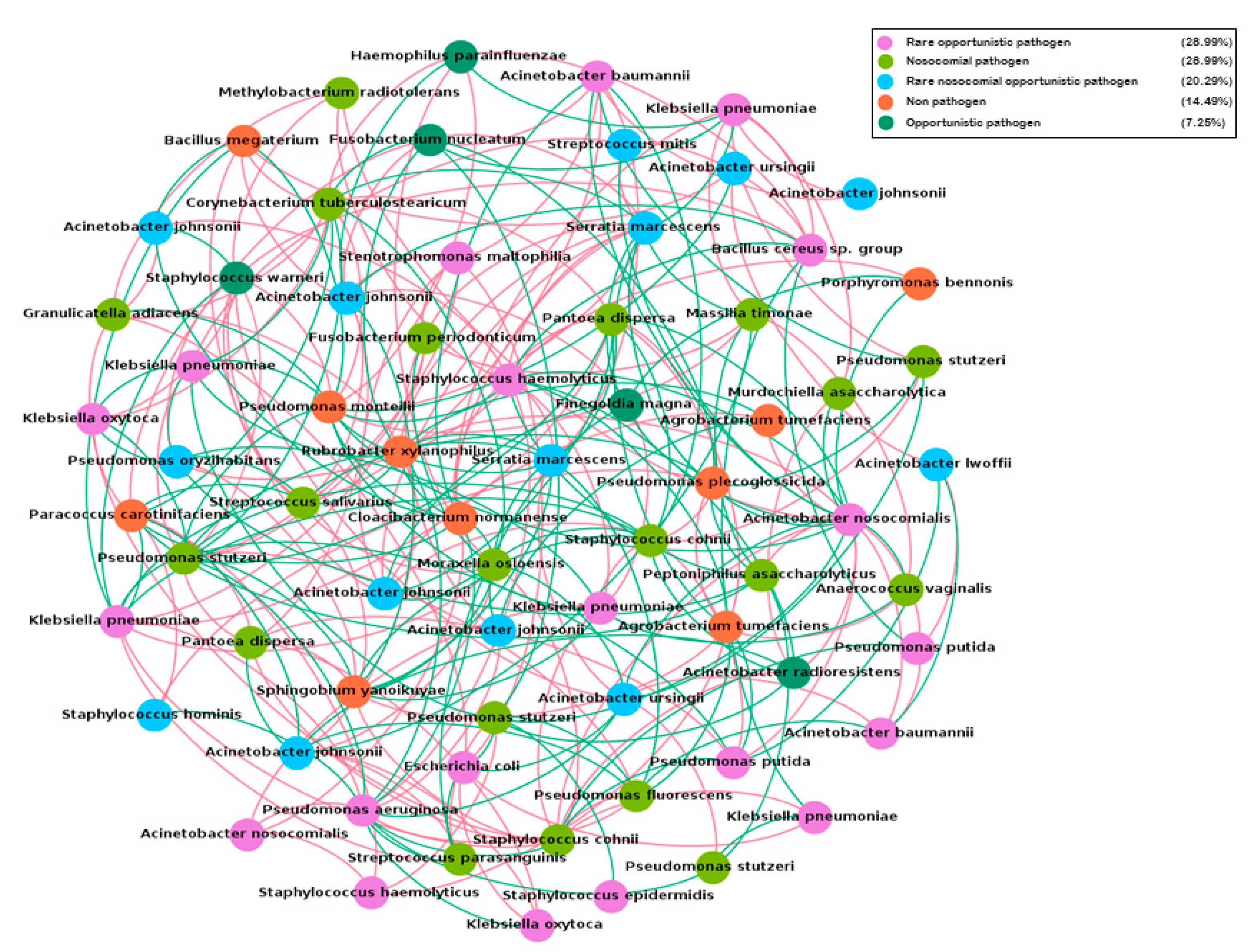
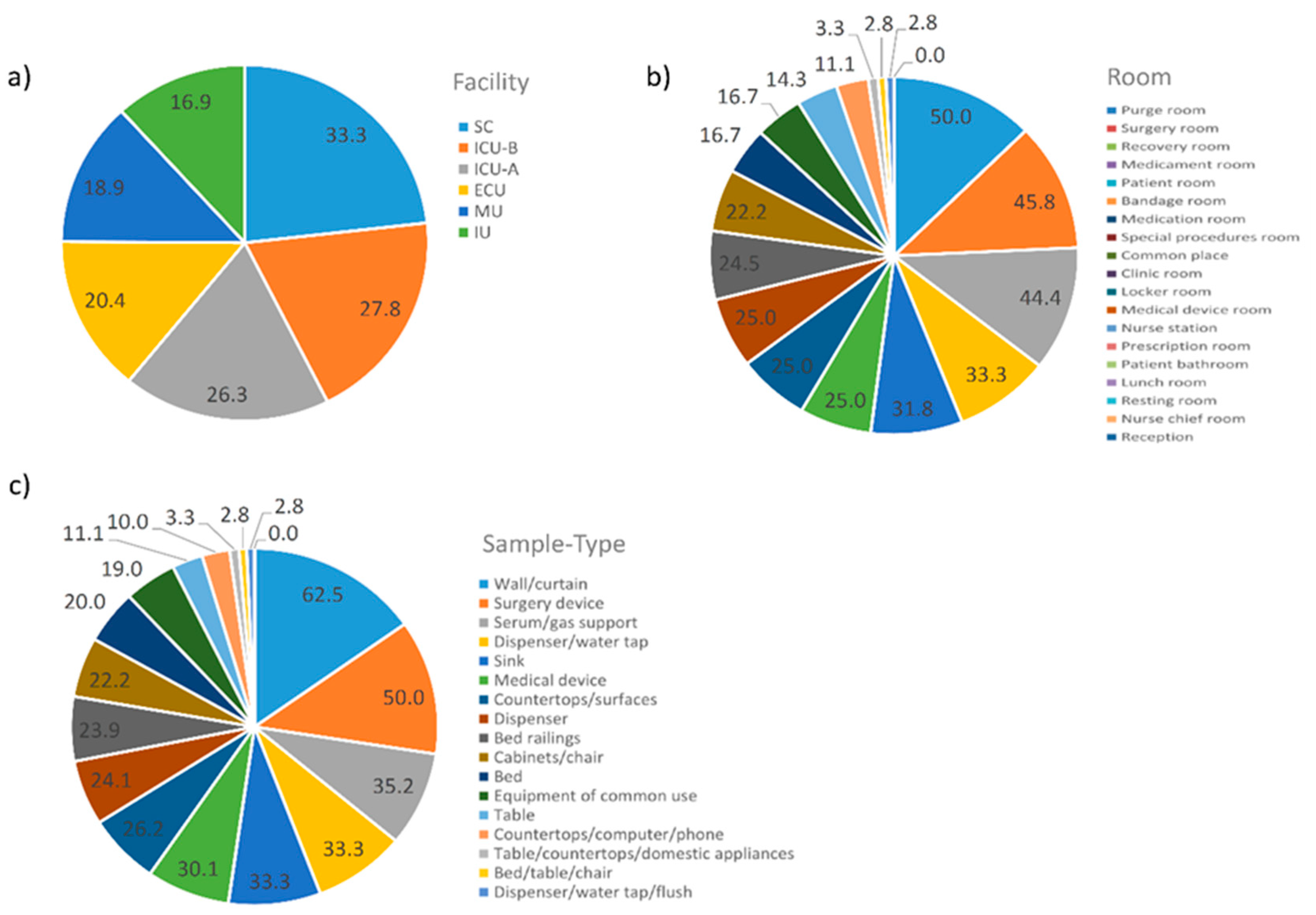
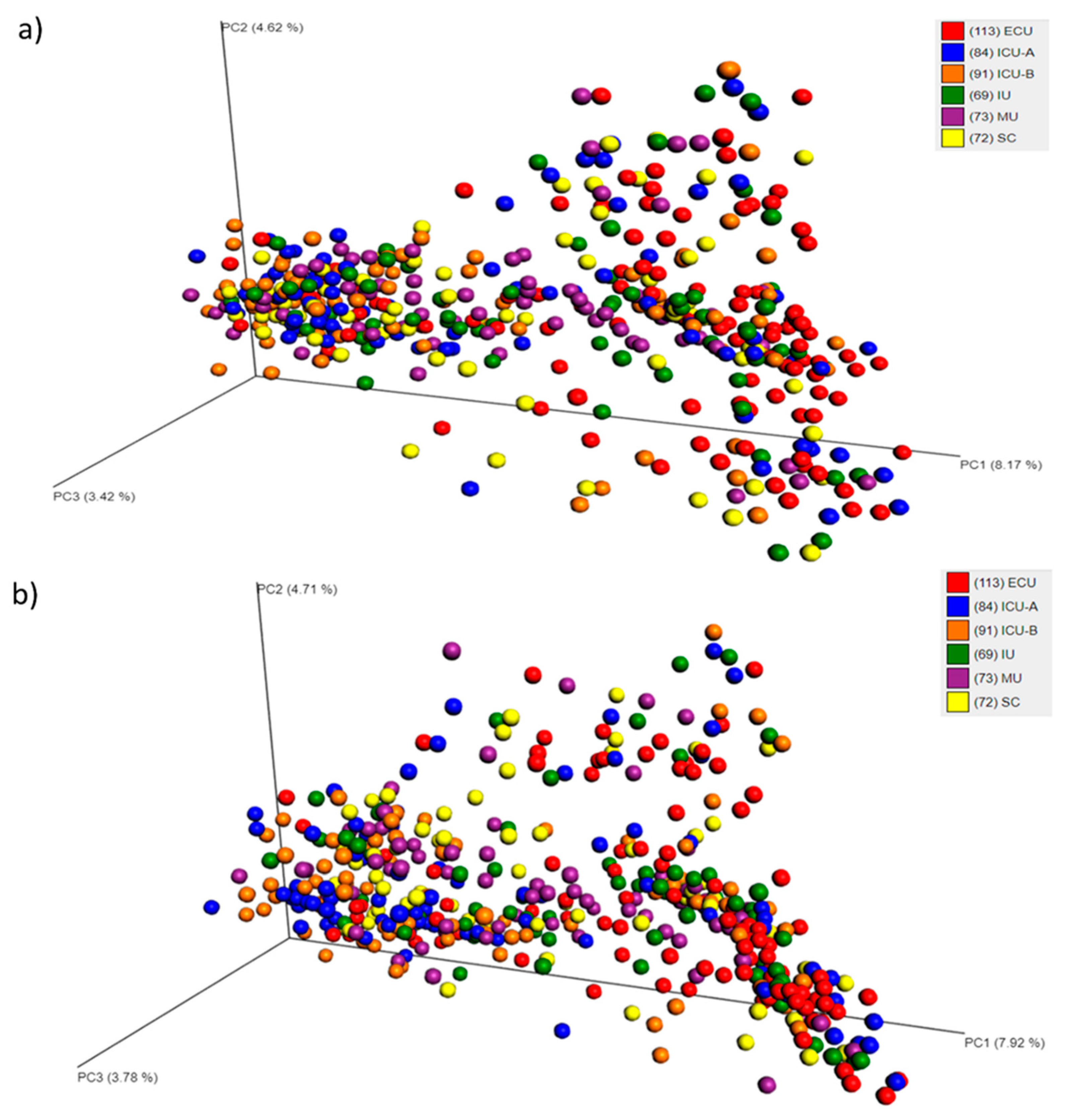
The aim of this work was to analyze and compare the bacterial communities of 663 samples from a Brazilian hospital by using high-throughput sequencing of the 16S rRNA gene. To increase taxonomic profiling and specificity of 16S-based identification, a strict sequence quality filtering process was applied for the accurate identification of clinically relevant bacterial taxa. Our results indicate that the hospital environment is predominantly inhabited by closely related species. A massive dominance of a few taxa in all taxonomic levels down to the genera was observed, where the ten most abundant genera in each facility represented 64.4% of all observed taxa, with a major predominance of Acinetobacter and Pseudomonas. The presence of several nosocomial pathogens was revealed. Co-occurrence analysis indicated that the present hospital microbial network had low connectedness, forming a clustered topology, but not structured among groups of nodes (i.e., modules). Furthermore, we were able to detect ecologically relevant relationships between specific microbial taxa, in particular, potential competition between pathogens and non-pathogens. Overall, these results provide new insight into different aspects of a hospital microbiome and indicate that 16S rRNA sequencing may serve as a robust one-step tool for microbiological identification and characterization of a wide range of clinically relevant bacterial taxa in hospital settings with a high resolution.
Keywords: microbiota; nosocomial pathogens; hospital-acquired infections; 16S rRNA; clinical microbiology; Acinetobacter; Staphylococcus; Pseudomonas microbiota; nosocomial pathogens; hospital-acquired infections; 16S rRNA; clinical microbiology; Acinetobacter; Staphylococcus; Pseudomonas