Article

Effects of Methylmercury and Theaflavin Digallate on Adipokines in Mature 3T3-L1 Adipocytes

by
Shubhangi Chauhan
1,2,
Kriya Dunlap
1,2 and
Lawrence K. Duffy
1,2,*
1
Department of Chemistry and Biochemistry, University of Alaska Fairbanks, Fairbanks, AK 99775-6160, USA
2
Institute of Arctic Biology, University of Alaska Fairbanks, Fairbanks, AK 99775-7000, USA
*
Author to whom correspondence should be addressed.
Int. J. Mol. Sci. 2019, 20(11), 2755; https://doi.org/10.3390/ijms20112755
Submission received: 10 May 2019 / Revised: 31 May 2019 / Accepted: 2 June 2019 / Published: 5 June 2019
(This article belongs to the Collection Feature Papers in Molecular Toxicology)

Abstract

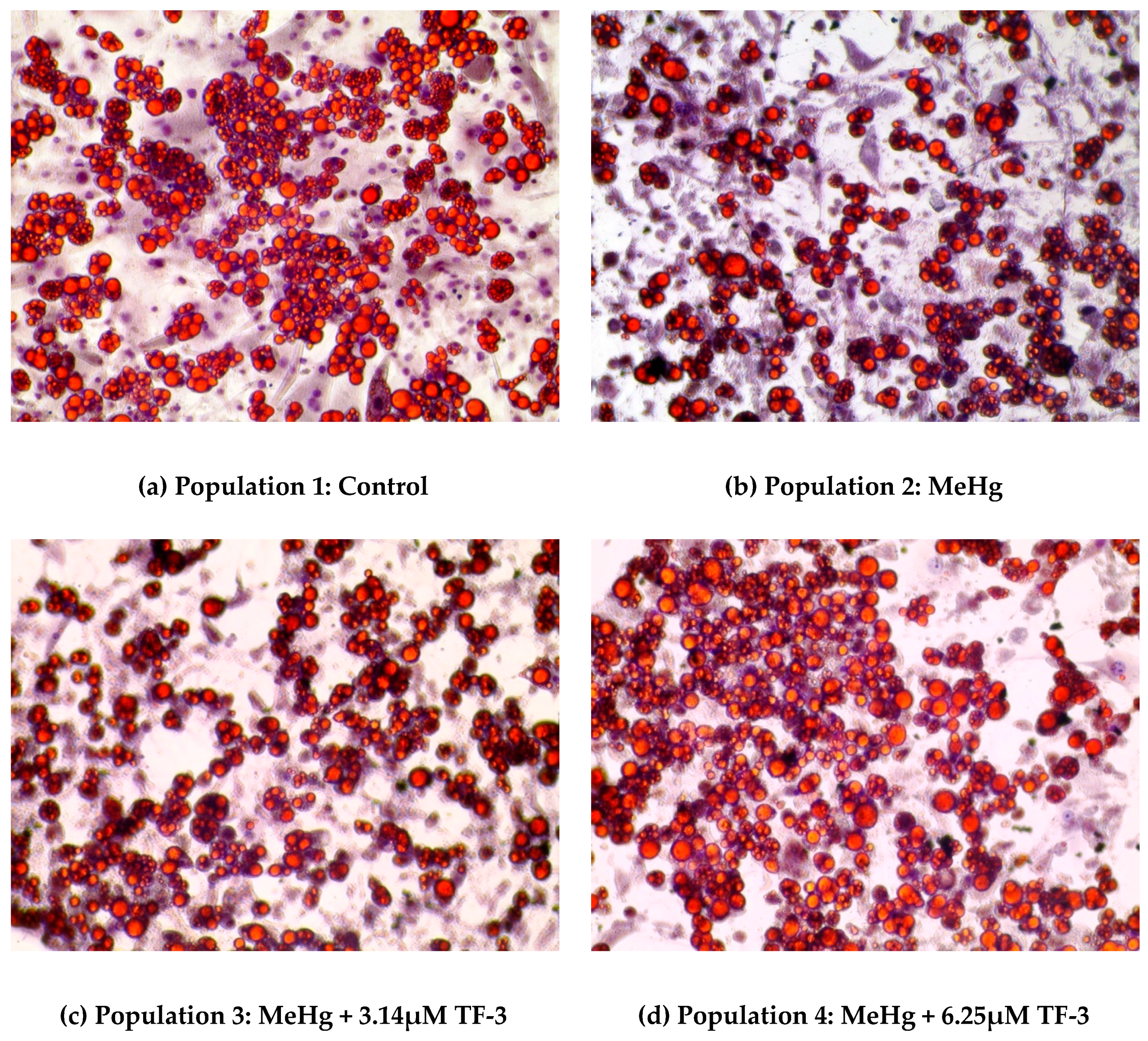
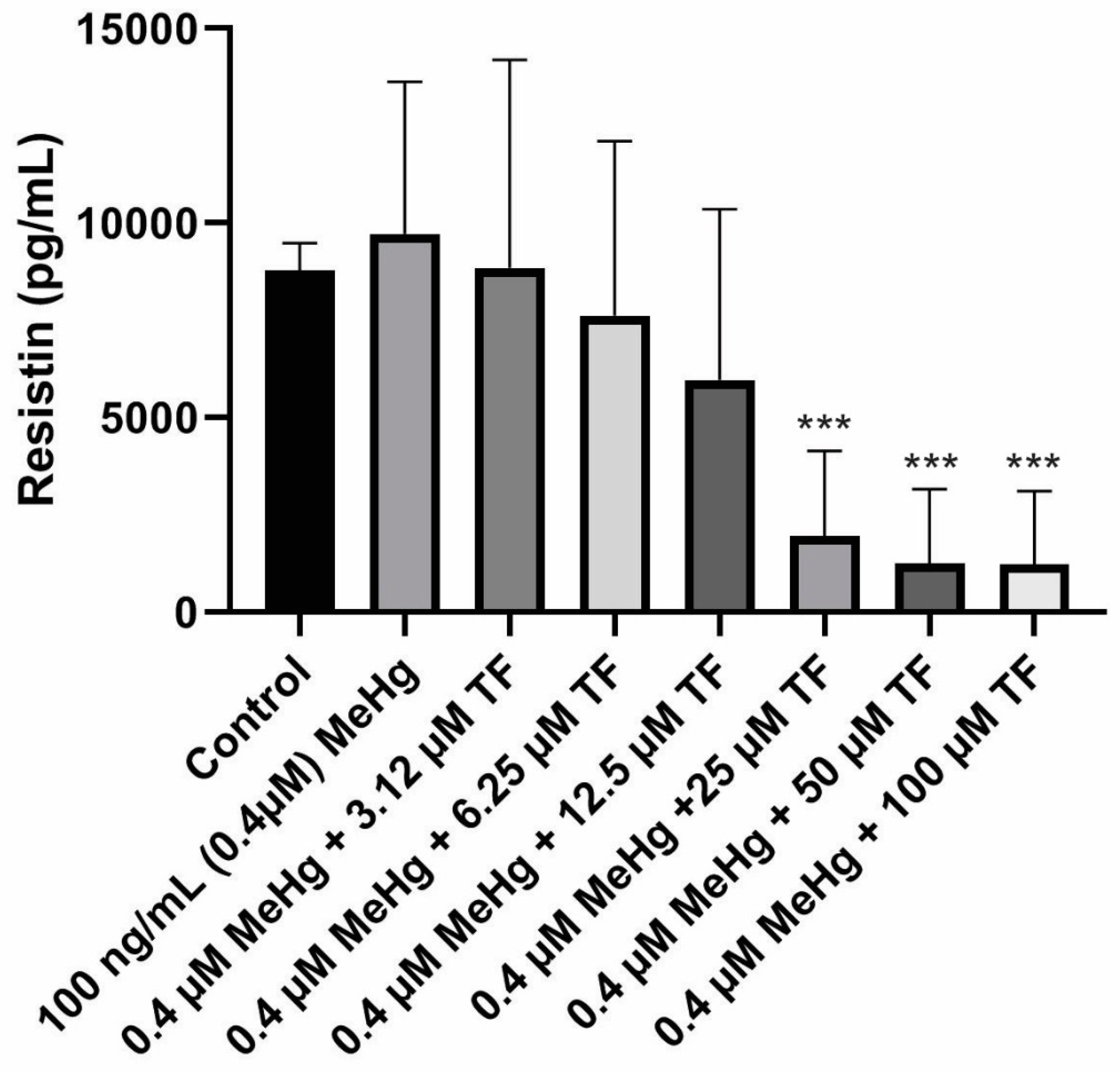
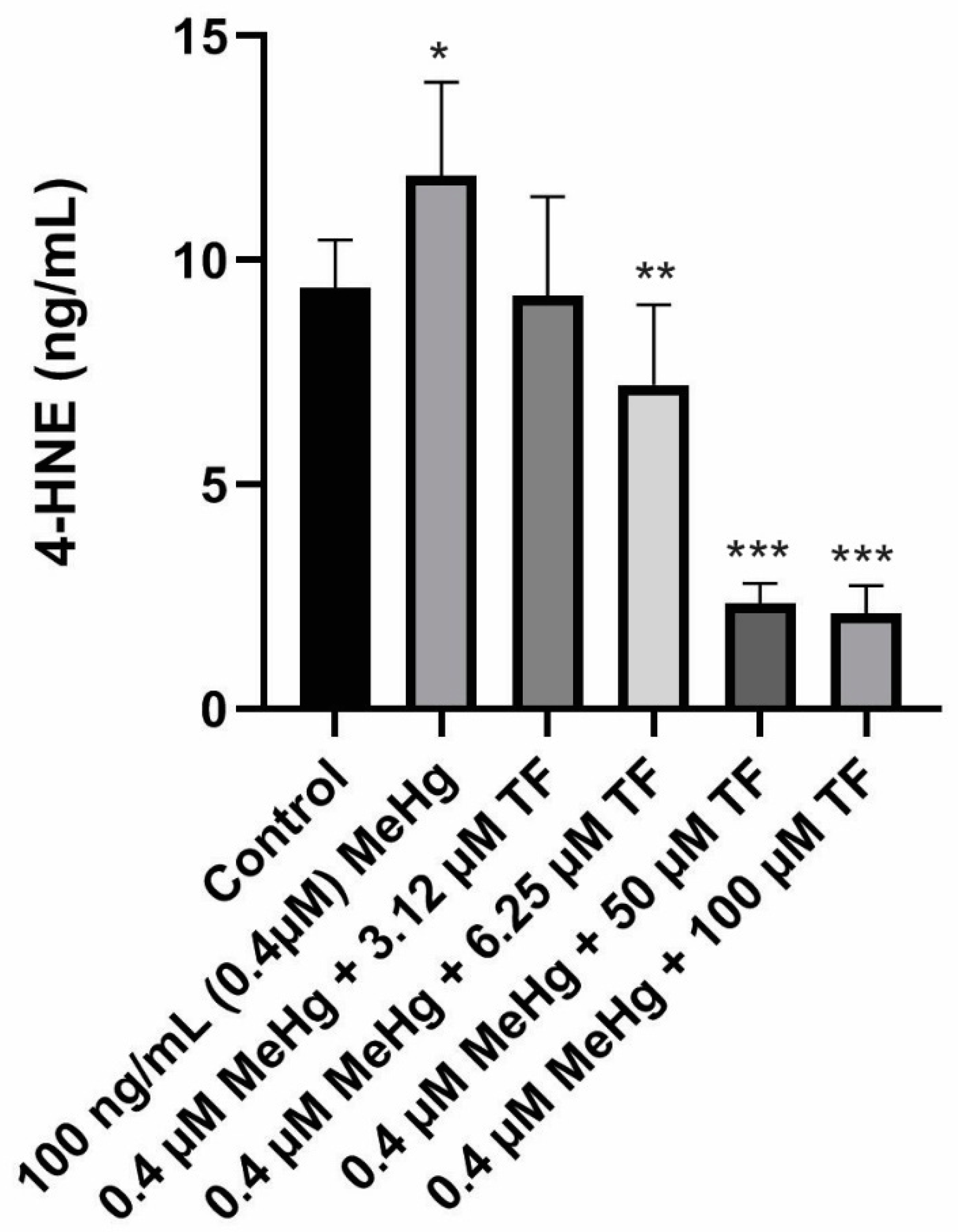
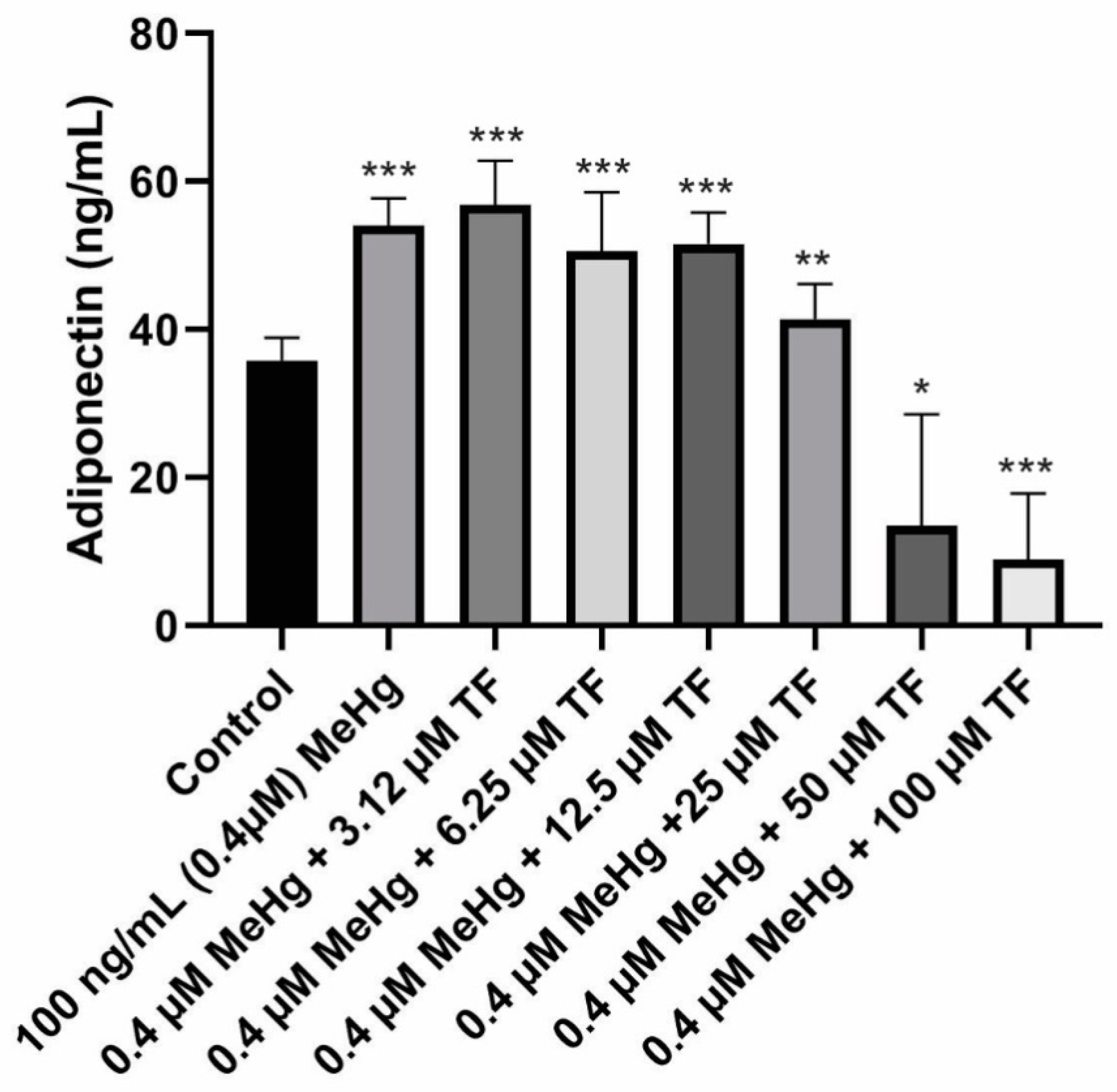
Diabetes is a contributor to morbidity across the globe and is often associated with obesity, metabolic syndrome and other inflammatory diseases associated with aging. In addition to genetic and lifestyle factors, environmental factors such as metals and persistent organic pollutants may increase the severity or lower the threshold of these conditions. In cell culture, methylmercury is toxic to adipocytes and may impact adipokine secretions. In this study, we determined the effects of different concentrations of theaflavin digallate on methylmercury exposed 3T3-L1 adipocytes in cell culture. Secretions of resistin, adiponectin and lipid peroxidation product, 4-hydroxynonenal (4-HNE) were monitored using ELISA assays. Cell morphology of methylmercury and theaflavin-3,3′-digallate treated adipocytes was assessed using Lipid (Oil Red O) staining. Exposure to methylmercury increased the levels of resistin and adiponectin as well as 4-HNE when compared to the control cells. Methylmercury treated cells resulted in smaller number of adipocytes and clumped lipid droplets. These results suggest that methylmercury induces reactive oxygen species leading to development of an inflammatory response. Theaflavin-3,3′-digallate reduced the impact of methylmercury by maintaining the adipocytes morphology and secretion patterns of adiponectin, resistin and 4-hydroxynonenal. With this experimental model system other anti-inflammatory and signaling agents could be tested at the biochemical level before eventually leading to studies in animal models.
Keywords: methylmercury; diabetes; adipokines; adiponectin; resistin; lipid peroxidation; theaflavin digallate methylmercury; diabetes; adipokines; adiponectin; resistin; lipid peroxidation; theaflavin digallate