An Overview of Metabolomic Approaches to Polyphenol Profiling for Nutraceutical Development

 , ,
, ,
Abstract
1. Introduction

Literature Selection and Scope
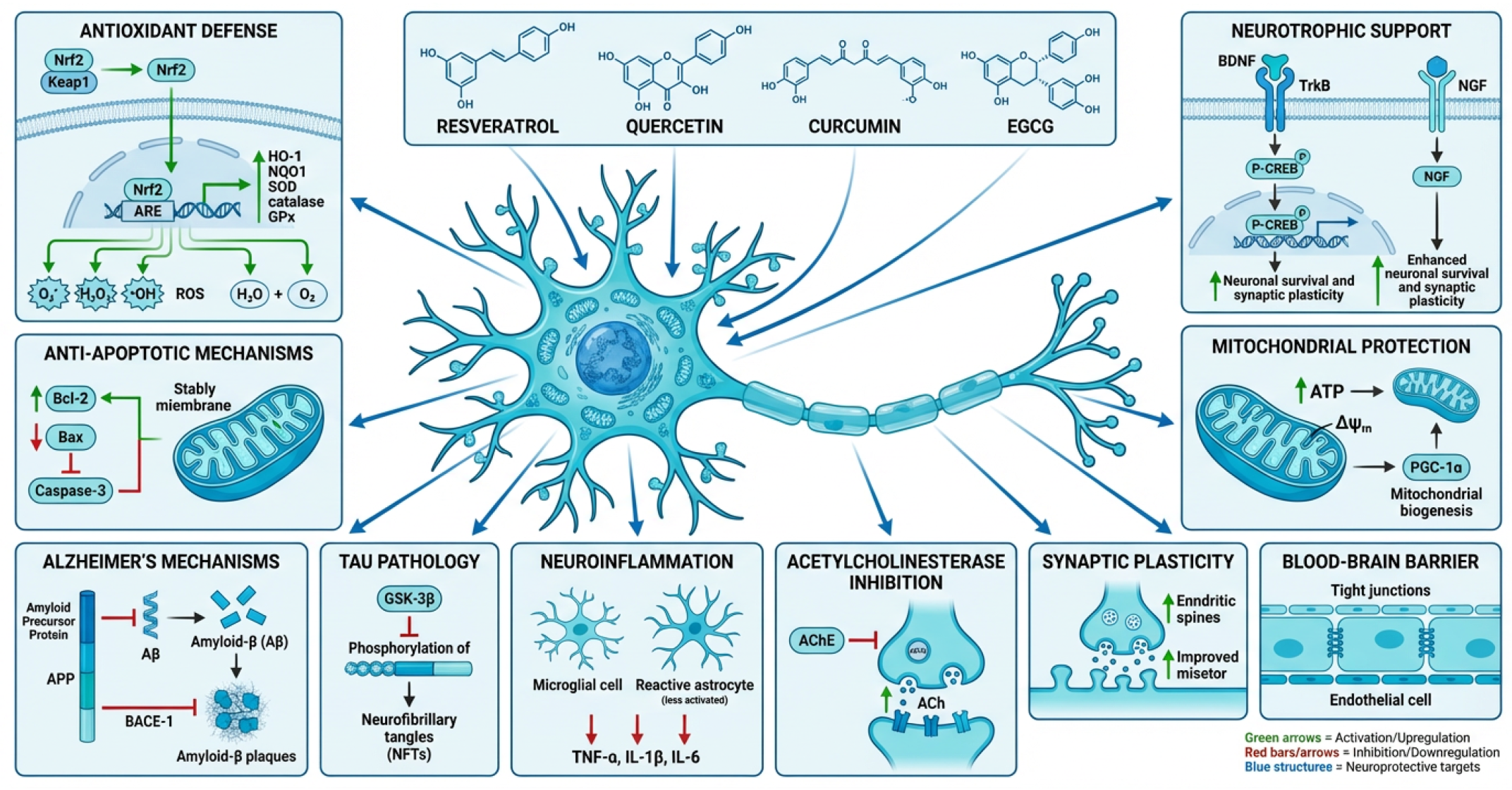
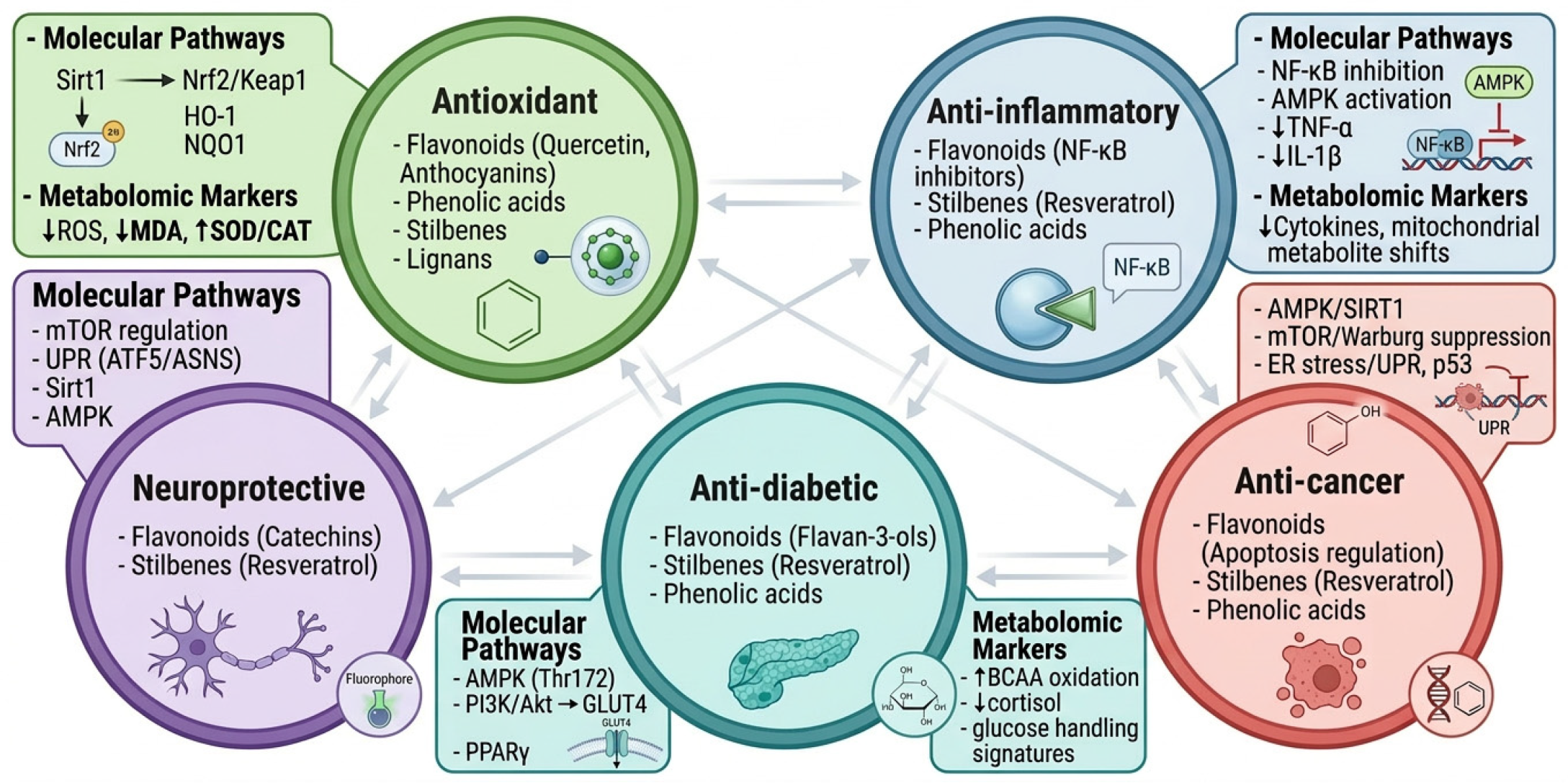
2. Bioactivities of Polyphenols
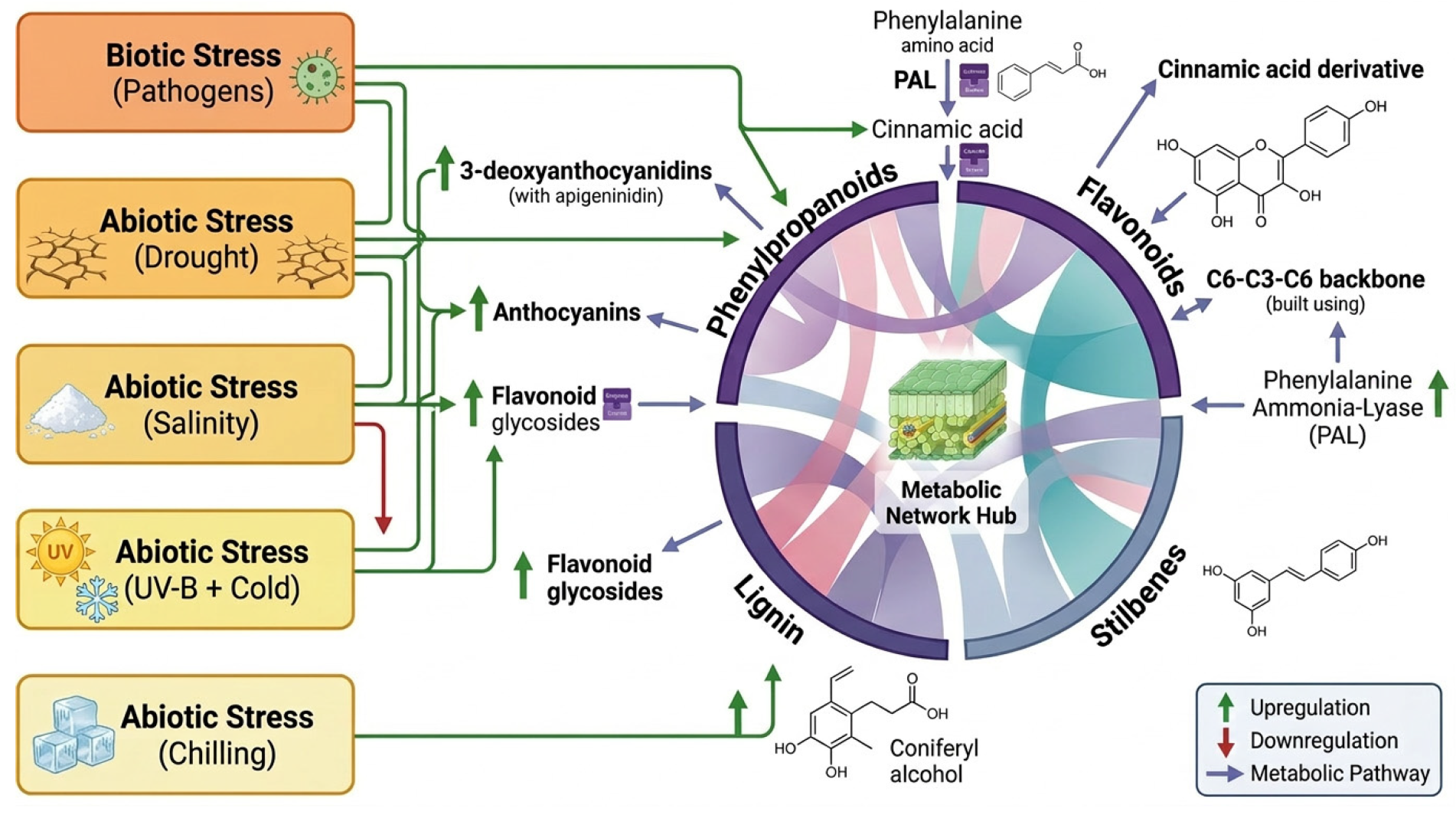
3. Biosynthesis, Accumulation and Diversity of Polyphenols
Impact of Environmental Stressors on Polyphenol Accumulation
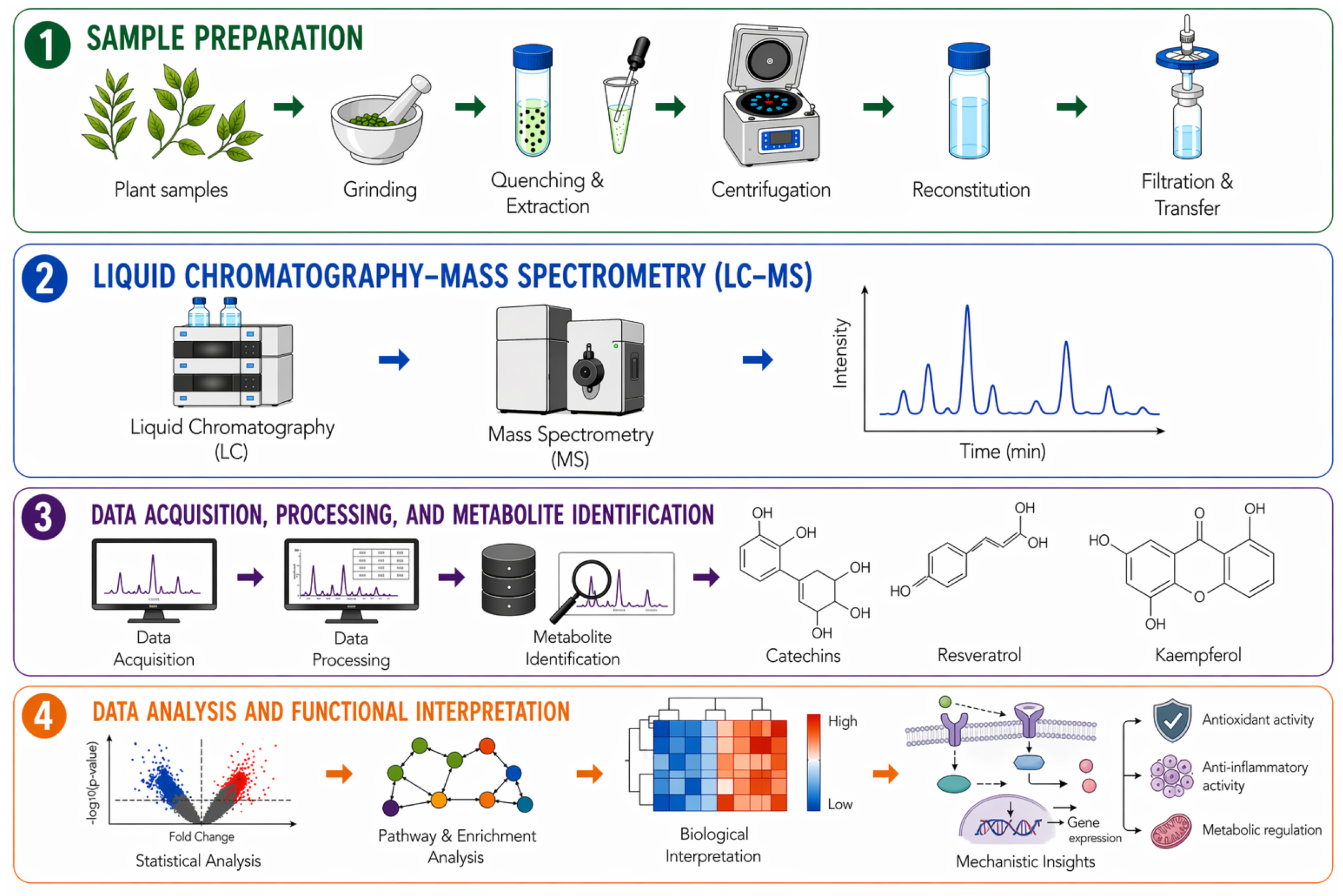
4. Metabolomic Approaches
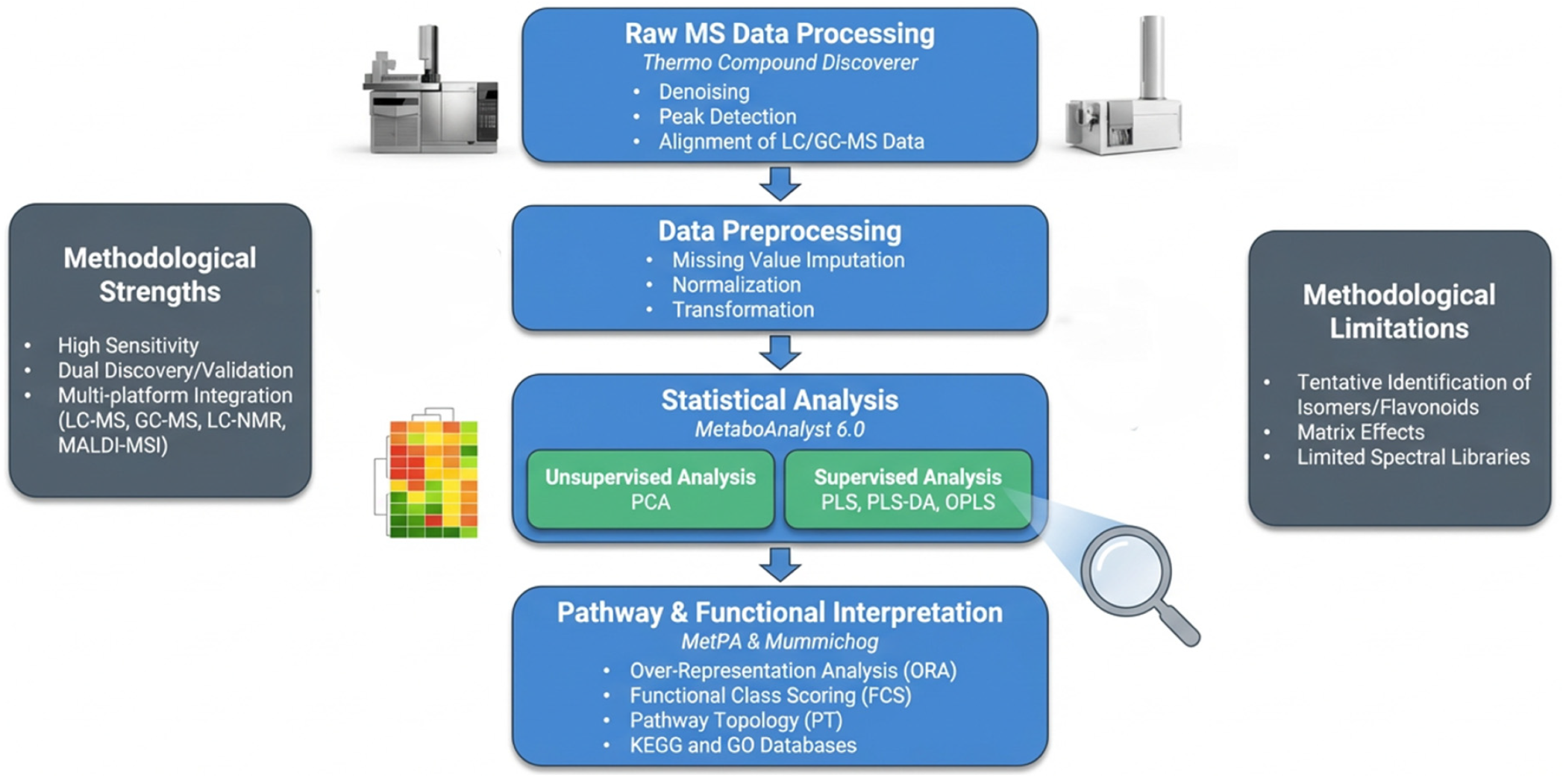
4.1. Data Analysis and Interpretation
4.1.1. Pathway Enrichment Analysis
4.1.2. Data Requirements, Results Interpretation, and Application Scope
4.2. Methodological Strengths and Gaps
5. Future Directions
6. Conclusions
Author Contributions
Funding
Data Availability Statement
Acknowledgments
Conflicts of Interest
References
- Ofori, K.F.; Otchere, E.K.; Besong, S.; Aryee, A.N.A. Anti-inflammatory properties of phytochemical-rich foods. In Plant Food Phytochemicals and Bioactive Compounds in Nutrition and Health; CRC Press: Boca Raton, FL, USA, 2024; pp. 364–403. [Google Scholar]
- Miransari, M.; Mahdavi, S.; Smith, D. The biological approaches of altering the growth and biochemical properties of medicinal plants under salinity stress. Appl. Microbiol. Biotechnol. 2021, 105, 7201–7213. [Google Scholar] [CrossRef] [PubMed]
- Teklić, T.; Parađiković, N.; Špoljarević, M.; Zeljković, S.; Lončarić, Z.; Lisjak, M. Linking abiotic stress, plant metabolites, biostimulants and functional food. Ann. Appl. Biol. 2021, 178, 169–191. [Google Scholar] [CrossRef]
- Šamec, D.; Karalija, E.; Šola, I.; Bok, V.V.; Salopek-Sondi, B. The role of polyphenols in abiotic stress response: The influence of molecular structure. Plants 2021, 10, 118. [Google Scholar] [CrossRef]
- Sutula, M.; Gubaidullin, N.; Rakhimzhanova, A.; Manabayeva, S. Stress-induced secondary metabolite profiling in Cistanche deserticola Callus cultures: Insights from GC-MS and HPLC-MS analysis. Int. J. Mol. Sci. 2025, 26, 6091. [Google Scholar] [CrossRef]
- Tiwari, R.; Rana, C.S. Plant secondary metabolites: A review. Int. J. Eng. Res. Gen. Sci. 2015, 3, 661–670. [Google Scholar]
- Farazi, M.; Houghton, M.J.; Nicolotti, L.; Murray, M.; Cardoso, B.R.; Williamson, G. Inhibition of human starch digesting enzymes and intestinal glucose transport by walnut polyphenols. Food Res. Int. 2024, 189, 114572. [Google Scholar] [CrossRef]
- Nema, N.; Rajan, N.; Babu, M.; Sabu, S.; Khamborkar, S.; Sarojam, S.; Sajan, L.; Peter, A.; Chacko, B.; Jacob, V. Plant polyphenols as nutraceuticals and their antioxidant potentials. In Polyphenols Food, Nutraceutical, Nanotherapeutic Applications; John Wiley & Sons: Hoboken, NJ, USA, 2023; pp. 21–44. [Google Scholar]
- Malarz, J.; Michalska, K.; Yudina, Y.V.; Stojakowska, A. Hairy root cultures as a source of polyphenolic antioxidants: Flavonoids, stilbenoids and hydrolyzable tannins. Plants 2022, 11, 1950. [Google Scholar] [CrossRef] [PubMed]
- Priyanga, D.; Amudha, K.; Sakthivel, N.; Sivasakthivelan, P.; Utharasu, S.; Uma, D.; Sudha, M. Nutritional diversity and therapeutic potential of Indian rice landraces: A comprehensive review. Genet. Resour. Crop Evol. 2025, 72, 9199–9232. [Google Scholar] [CrossRef]
- Demircan, H.; Sarioğlu, K.; Sağdiç, O.; Özkan, K.; Kayacan, S.; Us, A.A.; Oral, R.A. Deer apple (Malus trilobata) fruit grown in the Mediterranean region: Identification of some components and pomological features. Food Sci. Technol. 2022, 42, e116421. [Google Scholar] [CrossRef]
- Maroyi, A. Ximenia caffra Sond. (Ximeniaceae) in sub-Saharan Africa: A synthesis and review of its medicinal potential. J. Ethnopharmacol. 2016, 184, 81–100. [Google Scholar] [CrossRef]
- Nabatanzi, A.; Nkadimeng, S.M.; Lall, N.; Kabasa, J.D.; McGaw, L.J. Antioxidant and anti-inflammatory activities of Kigelia africana (Lam.) Benth. Evid.-Based Complement. Altern. Med. 2020, 2020, 4352084. [Google Scholar]
- Sambo, M.; Wurochekke, A.U.; Nadro, M.S. Bush Candle Fruit (Canarium schweinfurthii): A Novel Source of Superoxide Dismutase (SOD). Eur. J. Med. Health Res. 2025, 3, 161–166. [Google Scholar] [CrossRef]
- Pereira, A.G.; Echave, J.; Jorge, A.O.S.; Nogueira-Marques, R.; Nur Yuksek, E.; Barciela, P.; Perez-Vazquez, A.; Chamorro, F.; Oliveira, M.B.P.P.; Carpena, M. Therapeutic and preventive potential of plant-derived antioxidant nutraceuticals. Foods 2025, 14, 1749. [Google Scholar] [CrossRef] [PubMed]
- Gashaw, A.D.; Desta, M.A.; Yaya, E.E. A comprehensive review-current development in spectroscopic and chromatographic techniques for natural product analysis. Results Chem. 2025, 16, 102341. [Google Scholar] [CrossRef]
- Zhang, Q.; Liu, M.; Mumm, R.; Vos, R.C.H.; Ruan, J. Metabolomics reveals the within-plant spatial effects of shading on tea plants. Tree Physiol. 2021, 41, 317–330. [Google Scholar] [CrossRef]
- Serio, F.; Girelli, C.R.; Acito, M.; Imbriani, G.; Sabella, E.; Moretti, M.; Fanizzi, F.P.; Valacchi, G. Preliminary characterization of ‘Salice Salentino’ PDO wines from Salento (South Italy) Negroamaro grapes: NMR-Based metabolomic and biotoxicological analyses. Foods 2024, 13, 3554. [Google Scholar] [CrossRef] [PubMed]
- Rivera-Mondragón, A.; Tuenter, E.; Ortiz, O.; Sakavitsi, M.E.; Nikou, T.; Halabalaki, M.; Caballero-George, C.; Apers, S.; Pieters, L.; Foubert, K. UPLC-MS/MS-based molecular networking and NMR structural determination for the untargeted phytochemical characterization of the fruit of Crescentia cujete (Bignoniaceae). Phytochemistry 2020, 177, 112438. [Google Scholar] [CrossRef]
- Hou, H.; Li, Y.; Zhou, S.; Zhang, R.; Wang, Y.; Lei, L.; Yang, C.; Huang, S.; Xu, H.; Liu, X. Compositional analysis of grape berries: Mapping the global metabolism of grapes. Foods 2024, 13, 3716. [Google Scholar] [CrossRef]
- Esteban-Munoz, A.; Sánchez-Hernández, S.; Samaniego-Sánchez, C.; Giménez-Martínez, R.; Olalla-Herrera, M. Differences in the phenolic profile by UPLC coupled to high resolution mass spectrometry and antioxidant capacity of two diospyros kaki varieties. Antioxidants 2020, 10, 31. [Google Scholar] [CrossRef]
- Machitescu, A.M.D.; Stanga, C.M.; Stanila, A.; Diaconeasa, Z.M. Emerging technologies in polyphenol analysis: From traditional methods to-omics approaches. Hop Med. Plants 2024, 32, 56–101. [Google Scholar] [CrossRef]
- Zhang, Y.; Zhang, J.; Wu, Y.; Wu, Y.; Guo, W.; You, C. Non-Targeted metabolomics and network pharmacology reveal bioactive metabolites and the medicinal potential of three ornamental Camellia Flowers. Plants 2025, 14, 2967. [Google Scholar] [CrossRef]
- Yang, X.; Zhang, W.; Lan, Y.; Zhang, J.; Zheng, W.; Wu, J.; Zhang, C.; Dang, B. An investigation into the effects of various processing methods on the characteristic compounds of highland barley using a widely targeted metabolomics approach. Food Res. Int. 2024, 180, 114061. [Google Scholar] [CrossRef]
- Kumar, M.; Patel, M.K.; Kumar, N.; Bajpai, A.B.; Siddique, K.H.M. Metabolomics and molecular approaches reveal drought stress tolerance in plants. Int. J. Mol. Sci. 2021, 22, 9108. [Google Scholar] [CrossRef]
- Manickam, S.; Rajagopalan, V.R.; Kambale, R.; Rajasekaran, R.; Kanagarajan, S.; Muthurajan, R. Plant metabolomics: Current initiatives and future prospects. Curr. Issues Mol. Biol. 2023, 45, 8894–8906. [Google Scholar] [CrossRef] [PubMed]
- Qaderi, M.M.; Martel, A.B.; Strugnell, C.A. Environmental factors regulate plant secondary metabolites. Plants 2023, 12, 447. [Google Scholar] [CrossRef] [PubMed]
- Umoh, S.D.; Bojase, G.; Masesane, I.B.; Majinda, R.T.; Sichilongo, K.F. Untargeted GC–MS metabolomics to identify and classify bioactive compounds in Combretum platypetalum subp. soatesii (Rolfe) Exell (Combretaceae). Phytochem. Anal. 2023, 34, 127–138. [Google Scholar] [CrossRef] [PubMed]
- Abdul, U.; Manikandan, D.B.; Arumugam, M.; Alomar, S.Y.; Manoharadas, S.; Ramasamy, T. GC–MS based metabolomic profiling of Aporosa cardiosperma (Gaertn.) Merr. leaf extracts and evaluating its therapeutic potential. Sci. Rep. 2024, 14, 16010. [Google Scholar] [CrossRef]
- Wieder, C.; Frainay, C.; Poupin, N.; Rodríguez-Mier, P.; Vinson, F.; Cooke, J.; Lai, R.P.J.; Bundy, J.G.; Jourdan, F.; Ebbels, T. Pathway analysis in metabolomics: Recommendations for the use of over-representation analysis. PLoS Comput. Biol. 2021, 17, e1009105. [Google Scholar] [CrossRef]
- Zanatta, A.C.; Vilegas, W.; Edrada-Ebel, R. UHPLC-(ESI)-HRMS and NMR-based metabolomics approach to access the seasonality of Byrsonima intermedia and Serjania marginata from Brazilian Cerrado Flora diversity. Front. Chem. 2021, 9, 710025. [Google Scholar]
- Si, W.; Zhang, Y.; Li, X.; Du, Y.; Xu, Q. Understanding the functional activity of polyphenols using omics-based approaches. Nutrients 2021, 13, 3953. [Google Scholar] [CrossRef]
- Salam, U.; Ullah, S.; Tang, Z.H.; Elateeq, A.A.; Khan, Y.; Khan, J.; Khan, A.; Ali, S. Plant metabolomics: An overview of the role of primary and secondary metabolites against different environmental stress factors. Life 2023, 13, 706. [Google Scholar] [CrossRef]
- Lu, Z.; Zeng, Y.; Zhang, Z.; Lu, X.; Shang, G. Exploring the therapeutic potential of extractions of total flavonoids from Sarcandra Glabra in immune thrombocytopenia: A metabolomic and network pharmacology approach. J. Chromatogr. B 2025, 1264, 124742. [Google Scholar] [CrossRef]
- Zagoskina, N.V.; Zubova, M.Y.; Nechaeva, T.L.; Kazantseva, V.V.; Goncharuk, E.A.; Katanskaya, V.M.; Baranova, E.N.; Aksenova, M.A. Polyphenols in plants: Structure, biosynthesis, abiotic stress regulation, and practical applications. Int. J. Mol. Sci. 2023, 24, 13874. [Google Scholar] [CrossRef]
- Kathuria, D.; Thakur, S.; Singh, N. Advances of metabolomic in exploring phenolic compounds diversity in cereal and their health implications. Int. J. Food Sci. Technol. 2024, 59, 4213–4233. [Google Scholar] [CrossRef]
- Kahfi, J.; Rachman, D.; Permatasari, D.; Kusumastuti, S.A.; Wulansari, M.T.; Sioud, S.; Manasra, R.; Makharza, S.; Kusumaningrum, S.; Jaremko, M. Untargeted metabolomics and in silico screening of sisymbrium officinale: Identification of flavonoid glycosides as potential anti-inflammatory agents. J. Proteome Res. 2025, 24, 3943–3960. [Google Scholar] [CrossRef]
- Zhang, L.; Rocchetti, G.; Zengin, G.; Ak, G.; Saber, F.R.; Montesano, D.; Lucini, L. The UHPLC-QTOF-MS phenolic profiling and activity of Cydonia oblonga Mill. reveals a promising nutraceutical potential. Foods 2021, 10, 1230. [Google Scholar] [CrossRef] [PubMed]
- Chang, W.C.-W.; Chen, Y.-T.; Chen, H.-J.; Hsieh, C.-W.; Liao, P.-C. Comparative UHPLC-Q-Orbitrap HRMS-based metabolomics unveils biochemical changes of black garlic during aging process. J. Agric. Food Chem. 2020, 68, 14049–14058. [Google Scholar] [CrossRef]
- El-Shiekh, R.A.; Ashour, R.M.; El-Haleim, E.A.A.; Ahmed, K.A.; Abdel-Sattar, E. Hibiscus sabdariffa L.: A potent natural neuroprotective agent for the prevention of streptozotocin-induced Alzheimer’s disease in mice. Biomed. Pharmacother. 2020, 128, 110303. [Google Scholar] [CrossRef] [PubMed]
- Kumar, A.; Singh, N.; Joshi, R. Unravelling the metabolomic pool of Ocimum microgreens under diverse growing conditions through targeted compound analysis and non-targeted UHPLC-QToF-IMS based approach. Food Biosci. 2024, 59, 103984. [Google Scholar] [CrossRef]
- Zhu, G.; Wang, W.; Chen, C.; Tang, L.; Liang, Y.; Zhang, Z.; Lu, Y.; Zhao, Y. UHPLC-MS-based metabolomics and chemoinformatics study reveals the neuroprotective effect and chemical characteristic in Parkinson’s disease mice after oral administration of Wen-Shen-Yang-Gan decoction. Aging 2021, 13, 19510. [Google Scholar] [CrossRef]
- Tanna, B.; Choudhary, B.; Mishra, A.; Chauhan, O.P.; Patel, M.K.; Shokralla, S.; El-Abedin, T.K.Z.; Elansary, H.O.; Mahmoud, E.A. Antioxidant; scavenging; reducing, and anti-proliferative activities of selected tropical brown seaweeds confirm the nutraceutical potential of Spatoglossum asperum. Foods 2021, 10, 2482. [Google Scholar] [CrossRef]
- Elshorbagy, A.M.; Fayed, M.A.A.; Sallam, A.; Badria, F.A. Metabolic profiling, GC-MS, LC-ESI-MS/MS analysis, phenolics isolation and biological evaluation of the aerial parts extracts of Felicia abyssinica L. Chem. Biodivers. 2024, 21, e202301347. [Google Scholar] [CrossRef] [PubMed]
- Lin, Z.; Gan, T.; Huang, Y.; Bao, L.; Liu, S.; Cui, X.; Wang, H.; Jiao, F.; Zhang, M.; Su, C. Anti-inflammatory activity of mulberry leaf flavonoids in vitro and in vivo. Int. J. Mol. Sci. 2022, 23, 7694. [Google Scholar] [CrossRef] [PubMed]
- Sarfraz, M.; Alam, F.; Uddin, Z. UHPLC-QTOF-MS-Based metabolic profiling, estimation of antioxidants and anticancer potential assessment of Dicliptera bupleuroides Nees by caspase activation, and ROS and MMP evaluation by using fluorescence microscopy. Microsc. Res. Tech. 2025, 88, 1748–1764. [Google Scholar] [CrossRef] [PubMed]
- Vijayalakshmi, S.; Yoo, D.-S.; Kim, D.-G.; Chelliah, R.; Barathikannan, K.; Aloo, S.-O.; Tyagi, A.; Yan, P.; Shan, L.; Gebre, T.S. Fermented Perilla frutescens leaves and their untargeted metabolomics by UHPLC-QTOF-MS reveal anticancer and immunomodulatory effects. Food Biosci. 2023, 56, 103065. [Google Scholar] [CrossRef]
- Septaningsih, D.A.; Suparto, I.H.; Achmadi, S.S.; Heryanto, R.; Rafi, M. Untargeted metabolomics using UHPLC-Q-Orbitrap HRMS for identifying cytotoxic compounds on MCF-7 breast cancer cells from Annona muricata Linn leaf extracts as potential anticancer agents. Phytochem. Anal. 2024, 35, 1418–1427. [Google Scholar] [CrossRef]
- Abu-Baih, D.H.; Abd El-Mordy, F.M.; Saber, E.A.; Ali, S.F.E.; Hisham, M.; Alanazi, M.A.; Altemani, F.H.; Algehainy, N.A.; Lehmann, L.; Abdelmohsen, U.R. Unlocking the potential of edible Ulva sp. seaweeds: Metabolomic profiling, neuroprotective mechanisms, and implications for Parkinson’s disease management. Arch. Pharm. 2024, 357, e2400418. [Google Scholar] [CrossRef]
- Deabes, D.A.H.; El-Abd, E.A.W.; Baraka, S.M.; El-Gendy, Z.A.; Korany, R.M.S.; Elbatanony, M.M. Metabolomics analyses and comparative insight to neuroprotective potential of unripe fruits and leaves of Citrus aurantium ethanolic extracts against cadmium-induced rat brain dysfunction: Involvement of oxidative stress and akt-mediated CREB/BDNF and GSK. Metab. Brain Dis. 2025, 40, 89. [Google Scholar] [CrossRef]
- Mohammed, M.A.; El-Gengaihi, S.E.; Maklad, Y.A.; Shabana, M.E.; Attia, H.N. Role of rich phenolics and betanin profiles from Opuntia ficus-indica fruits in the prevention of diabetic complications using metabolomics study. Sci. Rep. 2025, 15, 5780. [Google Scholar] [CrossRef]
- El-Gazzar, N.S.; Shawky, E.; Ghareeb, D.A.; Mahmoud, F.A.A.; Selim, D.A. UPLC-MS/MS and chemometrics analyses reveal chemical profile and anti-inflammatory activity of Bienertia cycloptera Bunge fractions. Phytochem. Anal. 2025, 36, 603–617. [Google Scholar] [CrossRef]
- Dong, X.; Wang, Z.; Fu, Y.; Tian, Y.; Xue, P.; Wang, Y.; Yang, F.; Li, G.; Wang, R. From tea to functional foods: Exploring Caryopteris Mongolica Bunge for anti-rheumatoid arthritis and unraveling its potential mechanisms. Nutrients 2024, 16, 4311. [Google Scholar] [CrossRef]
- Shawky, E.M.; Hamdy, R.; Elgindi, M.R.; Baky, M.H. UPLC-HRMS-MS profiling of Ludwigia adscendens subsp. diffusa aerial parts and investigation of the anti-inflammatory effect. Sci. Rep. 2025, 15, 19718. [Google Scholar] [CrossRef]
- Aloo, S.-O.; Ofosu, F.-K.; Daliri, E.-B.-M.; Oh, D.-H. UHPLC-ESI-QTOF-MS/MS metabolite profiling of the antioxidant and antidiabetic activities of red cabbage and broccoli seeds and sprouts. Antioxidants 2021, 10, 852. [Google Scholar] [CrossRef] [PubMed]
- Wafaey, A.A.; El-Hawary, S.S.; El Raey, M.A.; Abdelrahman, S.S.; Ali, A.M.; Mandour, Y.M.; Fayek, F.H.; Mohamed, S.S.; El-Rashedy, A.A.; Mohamed, O.G.; et al. UHPLC-QTOF-MS/MS metabolomic profiling and in silico-in vivo evaluation of Gliricidia sepium leaves for renoprotection in diabetic nephropathy. Fitoterapia 2025, 186, 106875. [Google Scholar] [CrossRef] [PubMed]
- Cháirez-Ramírez, M.H.; de la Cruz-López, K.G.; García-Carrancá, A. Polyphenols as antitumor agents targeting key players in cancer-driving signaling pathways. Front. Pharmacol. 2021, 12, 710304. [Google Scholar] [CrossRef] [PubMed]
- Sharma, E.; Attri, D.C.; Sati, P.; Dhyani, P.; Szopa, A.; Sharifi-Rad, J.; Hano, C.; Calina, D.; Cho, W.C. Recent updates on anticancer mechanisms of polyphenols. Front. Cell. Dev. Biol. 2022, 10, 1005910. [Google Scholar] [CrossRef]
- Lyubitelev, A.; Studitsky, V. Inhibition of cancer development by natural plant polyphenols: Molecular mechanisms. Int. J. Mol. Sci. 2023, 24, 10663. [Google Scholar] [CrossRef]
- Lin, F.; Recchia, M.J.J.; Clark, T.N.; Kennelly, E.J.; Linington, R.G.; Long, C. Metabolite profiling and characterization of potential anticancer constituents from Garcinia subfalcata using UPLC-IMS-QTOF-MS. Food Chem. 2025, 465, 141900. [Google Scholar] [CrossRef]
- Wongsuwan, S.; Jumpathong, W.; Chatwichien, J.; Thamnarak, W.; Ngiwsara, L.; Lirdprapamongkol, K.; Svasti, J.; Ruchirawat, S.; Thasana, N. An LC-MS based metabolomic approach coupled with bioassay-guided fractionation to identifying bioactive biflavonoids from Selaginella Willdenowii. Chem. Asian J. 2025, 20, e00713. [Google Scholar] [CrossRef]
- Younis, I.Y.; Sedeek, M.S.; Essa, A.F.; Elgamal, A.M.; Eltanany, B.M.; Goda, Z.M.; Pont, L.; Benavente, F.; Mohsen, E. Exploring geographic variations in quinoa grains: Unveiling anti-Alzheimer activity via GC–MS, LC-QTOF-MS/MS, molecular networking, and chemometric analysis. Food Chem. 2025, 465, 141918. [Google Scholar] [CrossRef]
- Šola, I.; Poljuha, D.; Mikulic-Petkovsek, M.; Davosir, D.; Pinterić, M.; Bilić, J.; Veberic, R.; Hudina, M.; Rusak, G. Biopotential of underutilized Rosaceae inflorescences: LC-DAD-MS phytochemical profiles associated with antioxidant, antidiabetic, anti-inflammatory and antiproliferative activity in vitro. Plants 2022, 11, 271. [Google Scholar] [CrossRef]
- Yang, K.; Jian, S.; Guo, D.; Wen, C.; Xin, Z.; Zhang, L.; Kuang, T.; Wen, J.; Yin, Y.; Deng, B. Fecal microbiota and metabolomics revealed the effect of long-term consumption of gallic acid on canine lipid metabolism and gut health. Food Chem. X 2022, 15, 100377. [Google Scholar] [CrossRef] [PubMed]
- Gheibi, S.A.; Alirezalu, A.; Shirzad, H.; Iaccarino, N.; Romano, F.; Amato, J.; Alipour, H. Phytochemical profiling; antioxidant potential, and UHPLC-HRMS analysis of Phlomis genus aerial parts for therapeutic applications. Sci. Rep. 2025, 15, 6732. [Google Scholar] [CrossRef] [PubMed]
- Malik, I.M.; Bhat, A.H.; Majeed, D.; Nabi, N. Environmental factors influencing phytochemical production for enhanced phytochemical defense. In Phytochemical Arsenal: Understanding Plant Defense Mechanisms Against Nematodes; Bentham Science Publishers: Sharjah, United Arab Emirates, 2025; pp. 118–150. [Google Scholar]
- Tsamo, A.T.; Mohammed, M.; Dakora, F.D. Metabolite fingerprinting of kersting’s groundnut [macrotyloma geocarpum (harms) maréchal & baudet] seeds using uplc-qtof-ms reveals the nutraceutical and antioxidant potentials of the orphan legume. Front. Nutr. 2020, 7, 593436. [Google Scholar]
- Wang, J.; Yang, K.; Yao, L.; Ma, Z.; Li, C.; Si, E.; Li, B.; Meng, Y.; Ma, X.; Shang, X. Metabolomics analyses provide insights into nutritional value and abiotic stress tolerance in halophyte Halogeton glomeratus. Front. Plant Sci. 2021, 12, 703255. [Google Scholar] [CrossRef]
- Mohagheghian, B.; Saeidi, G.; Arzani, A. Phenolic compounds, antioxidant enzymes, and oxidative stress in barley (Hordeum vulgare L.) genotypes under field drought-stress conditions. BMC Plant Biol. 2025, 25, 709. [Google Scholar] [CrossRef]
- Aru, V.; Nittnaus, A.; Sørensen, K.M.; Engelsen, S.B.; Toldam-Andersen, T.B. Effects of water stress, defoliation and crop thinning on Vitis vinifera L. cv. solaris: Part I: Plant responses, fruit development and fruit quality. Metabolites 2022, 12, 363. [Google Scholar] [CrossRef]
- Liu, T.; Wang, P.; Chen, Y.; Sun, B.; Li, Q.; Wan, H.; Yang, W.; Ma, P.; Zhang, D.; Dong, G. LC–MS and MALDI–MSI-based metabolomic approaches provide insights into the spatial–temporal metabolite profiles of Tartary buckwheat achene development. Food Chem. 2024, 449, 139183. [Google Scholar] [CrossRef]
- Graczyk, F.; Strzemski, M.; Balcerek, M.; Kozłowska, W.; Mazurek, B.; Karakuła, M.; Sowa, I.; Ptaszyńska, A.A.; Załuski, D. Pharmacognostic evaluation and HPLC–PDA and HS–SPME/GC–MS metabolomic profiling of Eleutherococcus senticosus fruits. Molecules 2021, 26, 1969. [Google Scholar] [CrossRef]
- Rokkam, R.; Pinipay, F.; Killo, J.T.; Botcha, S.; Tamanam, R.R. Nutritional characterization and metabolic profiling of bioactive compounds in Cajanus scarabaeoides seeds using GC-MS and LC-MS analysis. Plant Foods Hum. Nutr. 2025, 80, 121. [Google Scholar] [CrossRef]
- Samy, M.N.; Hamed, A.N.E.; Mahmoud, B.K.; Attia, E.Z.; Abdelmohsen, U.R.; Fawzy, M.A.; Attya, M.E.; Kamel, M.S. LC-MS-based identification of bioactive compounds and hepatoprotective and nephroprotective activities of Bignonia binata leaves against carbon tetrachloride-induced injury in rats. Nat. Prod. Res. 2022, 36, 1375–1379. [Google Scholar] [CrossRef] [PubMed]
- Xu, G.; Shu, Y.; Xu, Y. Metabolomics analyses of traditional Chinese medicine formula Shuang Huang Lian by UHPLC-QTOF-MS/MS. Chin. Med. 2022, 17, 62. [Google Scholar] [CrossRef] [PubMed]
- Wang, L.; Li, T.; Wu, C.; Fan, G.; Zhou, D.; Li, X. Unlocking the potential of plant polyphenols: Advances in extraction, antibacterial mechanisms, and future applications. Food Sci. Biotechnol. 2025, 34, 1235–1259. [Google Scholar] [CrossRef] [PubMed]
- Liu, L.-J.; Li, H.-F.; Xu, F.; Wang, H.-Y.; Zhang, Y.-F.; Liu, G.-X.; Shang, M.-Y.; Wang, X.; Cai, S.-Q. Exploring the in vivo existence forms (23 original constituents and 147 metabolites) of astragali radix total flavonoids and their distributions in rats using HPLC-DAD-ESI-IT-TOF-MSn. Molecules 2020, 25, 5560. [Google Scholar] [CrossRef]
- Araujo-León, J.A.; Sánchez-del Pino, I.; Ortiz-Andrade, R.; Hidalgo-Figueroa, S.; Carrera-Lanestosa, A.; Brito-Argáez, L.G.; González-Sánchez, A.; Giácoman-Vallejos, G.; Hernández-Abreu, O.; Peraza-Sánchez, S.R. HPLC-based metabolomic analysis and characterization of Amaranthus cruentus leaf and inflorescence extracts for their antidiabetic and antihypertensive potential. Molecules 2024, 29, 2003. [Google Scholar] [CrossRef]
- Rha, C.-S.; Jang, E.K.; Hong, Y.D.; Park, W.S. Supervised statistical learning prediction of soybean varieties and cultivation sites using rapid UPLC-MS separation, method validation, and targeted metabolomic analysis of 31 phenolic compounds in the leaves. Metabolites 2021, 11, 884. [Google Scholar] [CrossRef]
- González-Domínguez, R.; Sayago, A.; Santos-Martín, M.; Fernández-Recamales, Á. High-throughput method for wide-coverage and quantitative phenolic fingerprinting in plant-origin foods and urine samples. J. Agric. Food Chem. 2022, 70, 7796–7804. [Google Scholar] [CrossRef]
- Sinan, K.I.; Aktumsek, A.; de la Luz Cádiz-Gurrea, M.; Leyva-Jiménez, F.J.; Fernández-Ochoa, Á.; Segura-Carretero, A.; Glamocilja, J.; Sokovic, M.; Nenadić, M.; Zengin, G. A prospective of multiple biopharmaceutical activities of procyanidins-rich Uapaca togoensis pax extracts: HPLC-ESI-TOF-MS coupled with bioinformatics analysis. Chem. Biodivers. 2021, 18, e2100299. [Google Scholar] [CrossRef] [PubMed]
- Rai, M.; Dutta, M.; Saito, K.; Rai, A. A deep dive into plant metabolomics: Milestones, technologies, and translational impact. Plant Physiol. 2025, 199, kiaf408. [Google Scholar] [CrossRef]
- Varghese, R.; Shringi, H.; Efferth, T.; Ramamoorthy, S. Artificial intelligence driven approaches in phytochemical research: Trends and prospects. Phytochem. Rev. 2025, 24, 3649–3664. [Google Scholar] [CrossRef]
- Santamaria, G.; Pinto, F.R. Bioinformatic analysis of metabolomic data: From raw spectra to biological insight. BioChem 2024, 4, 90–114. [Google Scholar] [CrossRef]
- Karnovsky, A.; Li, S. Pathway analysis for targeted and untargeted metabolomics. In Computational Methods and Data Analysis for Metabolomics; Humana Press: New York, NY, USA, 2020; pp. 387–400. [Google Scholar]
- Ramabulana, A.-T.; Petras, D.; Madala, N.E.; Tugizimana, F. Metabolomics and molecular networking to characterize the chemical space of four Momordica plant species. Metabolites 2021, 11, 763. [Google Scholar] [CrossRef]
- Zhang, Y.; He, Y.; Yuan, L.; Shi, J.; Zhao, J.; Tan, C.; Liu, Y.; Xu, Y.-J. Multi-omics revealed anti-fatigue property of polyphenol from areca nut. Phytomedicine 2024, 132, 155838. [Google Scholar] [CrossRef]
- Gloaguen, Y.; Borgsmüller, N.; Opialla, T.; Blanc, E.; Sicard, E.; Royer, A.L.; Le Bizec, B.; Durand, S.; Migné, C.; Pétéra, M. Machine learning-based classification to improve Gas Chromatography-Mass spectrometry data processing. In Proceedings of the European RFMF Metabomeeting 2020, Toulouse, France, 22–24 January 2020; 263p. [Google Scholar]
- García-Pérez, P.; Zhang, L.; Miras-Moreno, B.; Lozano-Milo, E.; Landin, M.; Lucini, L.; Gallego, P.P. The combination of untargeted metabolomics and machine learning predicts the biosynthesis of phenolic compounds in Bryophyllum medicinal plants (Genus Kalanchoe). Plants 2021, 10, 2430. [Google Scholar] [CrossRef]
- Karabulut, F.; Mir, M.Y.; Kamili, A.N. Production of secondary metabolites from endangered and commercially important medicinal plants through cell and tissue culture technology. In In Vitro Propagation and Secondary Metabolite Production from Medicinal Plants: Current Trends (Part 1); Bentham Science Publishers: Sharjah, United Arab Emirates, 2024; pp. 182–200. [Google Scholar]


| Plant | Phytochemicals | Nutraceutical Potential | References |
|---|---|---|---|
| F. abyssinica extracts | Quercetin-rutinoside and sinapate derivatives | Antioxidant and antidiabetic | [7] |
| Anthocyanin and stilbenoid-rich extracts | Antioxidant and anti-inflammatory | ||
| Quercetin, kaempferol glycosides | Anticancer or cardioprotective | ||
| Mulberry (Morus alba L.) leaf extract | Quercetin, kaempferol, and their derivatives | Anticancer, neuroprotective, anti-inflammatory, and antidiabetic | [45] |
| Brown seaweeds in vitro | Flavonoids and phenolic acids | Antioxidant | [43] |
| Garcinia subfalcata, edible species | Flavonoid glycosides, phenolic acids, flavans, O-methylated flavonoids, linoleic acids, terpene glycosides, and triterpenoid saponins | Anticancer | [46] |
| Annona muricata L. (Leaf) | Alkaloids, flavonoids, and acetogenins | Anticancer | [47,48] |
| Hibiscus sabdariffa L. (Malvaceae) | Anthocyanins, flavonoids, aliphatic and phenolic acids | Alzheimer’s disease treatment | [40] |
| Wen-Shen-Yang-Gan decoction | Flavonoids, aliphatic and phenolic acids | Parkinson’s disease treatment | [42,49] |
| Citrus aurantium (unripe fruits and leaf) ethanolic extracts | 7-trihydroxyflavone, isorhainetin, vitexin, and apigenin, and apigenin | Neuroprotective | [50] |
| Opuntia ficus-indica red fruit (OFI-RF) ethanol extracts | Chlorogenic acid and caffeic acid | Antidiabetic and anti-hypercholesterolemic | [51] |
| B. cycloptera fractions | Flavonoids, cardenolides, and phenolic acids | Antioxidant, anti-inflammatory, and antidiabetic | [52] |
| Caryopteris mongolica Bunge tea | Phenolic acids | Anti-rheumatoid arthritis | [53] |
| Ludwigia adscendens subsp. diffusa (Forssk.) P.H. Raven | Gallic acid, quercetin, ellagic acid, and betulinic acid | Antidiabetic, antioxidant, and anti-inflammatory | [54] |
| Red cabbage and broccoli seeds and sprouts | Amino acids and phenolic compounds | Antidiabetic | [55] |
| Technique | Plant and Part | Polyphenols and Others | References |
|---|---|---|---|
| GC-MS | Combretum platypetalum | Terpenoids, flavonoids | [28] |
| F. abyssinica | Stilbenoids, lignans, coumarins, and complex tannins | [7] | |
| UHPLC-HS-SPME/GC-MS | Eleutherococcus senticosus (Rupr. et Maxim.) (fruit) | Polyphenols (eleutherosides B, E, E1) and phenolic acids | [72] |
| UHPLC-HRMS | Phlomis species | Polyphenols, flavonoids, tannin, phenylalanine ammonia-lyase activity, photosynthetic pigments, and ascorbic acid levels | [65] |
| Cinnamic acids, phenolic acids derived from galloyl quinic and shikimic acid, proanthocyanidins, glycosylated flavonoids, and triterpenes | [31] | ||
| Aged black garlic | Polyphenols and anthocyanins | [39] | |
| UHPLC-Q-TOF-MS2 | Fermented Perilla frutescens | Apigenin, p-coumaric acid, rosmarinic acid, caffeic acid, polygallic acid, phenprobamate, hydroxy acetophenone, allopurinol, homovanillic acid, danshensu, and N-malayamycin | [47] |
| GC-MS, LC-QTOF-MS/MS | Quinoa (grains) | Flavonoid glycosides and saponins | [62] |
| Cajanus scarabaeoides | Flavonoids and polyphenols | [73] | |
| Selaginella | Biflavonoids | [61] | |
| Uapaca togoensis (Leaf and stem bark) | Polyphenols | [42] | |
| LC-HR-ESI-MS | Bignonia binata (Leaf) | Phenylethanoids, flavonoid glycosides, and iridoids | [74] |
| GC-MS/FT-IR | Aporosa cardiosperma (Leaf) | Flavonoid, phenol, and tannin | [29] |
| LC-MS and MALDI-MSI | Fagopyrum tataricum (L.) Gaertn. (Tartary Buckwheat) (various parts) | Phenolic acids and flavonoid. Flavonol glycosides and aglycones (in the embryo) and methylated flavonols, and procyanidins (in the hull) | [71] |
| UHPLC-QTOF-MS/MS | Cydonia oblonga Mill. (fruit) | Anthocyanins, flavones, flavones, flavan-3-ols, and flavonols, hydroxycinnamics, hydroxybenzoics, tyrosol, and stilbenes | [38] |
| Shuang Huang Lian (SHL) (Lonicerae japonicae Flos, Forsythiae fructus, and Scutellariae radix) | Flavonoids, terpenoids, glycosylglycerol derivatives | [75] | |
| Gliricidia sepium (Jacq.) Kunth. ex Walp (Leaf) | Flavonoids, phenolic acids, triterpenoid saponins, fatty acid derivatives, and coumarins. Kaempferol-3-O-robinoside-7-O-rhamnoside, soyasaponin I & III, and 16-hydroxyhexadecanoic acid (major constituents | [56] | |
| UHPLC-Q-Exactive Orbitrap MS | Cocculus orbiculatus (L.) DC. (dried roots, stem and flower) | Alkaloids, flavonoids, and organic acids | [76] |
| UHPLC-DAD-ESI-IT-TOF-MSn | Astragali radix plant | Polyphenols | [77] |
| HPLC-UV/DAD | Amaranthus cruentus | Quercetin, kaempferol, catechin, hesperetin, naringenin, hesperidin, and naringin, p-coumaric acid, ferulic acid, and caffeic acid, vanillic acid, and 4-hydroxybenzoic acid | [78] |
| UPLC-MS | Soybean varieties and cultivation sites (leaf) | Isoflavones, quercetin derivatives, and flavonol | [79] |
| UPLC-MS-NMR | Crescentia cujete (fruit pulp) | n-alkyl glycosides, phenolic acid derivatives (such as cinnamoyl and benzoyl derivatives), flavonoids, phenylethanoid derivatives, and iridoid glycosides | [19] |
| Technique | Accuracy | Sensitivity | Coverage | Quantitation Capability | References |
|---|---|---|---|---|---|
| UHPLC-MS (e.g., UHPLC-QTOF-MS, UPLC-ESI-HRMS) | High; excellent mass accuracy (e.g., <5 ppm with HRMS) and reproducibility due to fast gradients and stable ionization | Very high; low limit of quantification (LOQ: ng/mL range) via ESI and nano-flow options, ideal for trace polyphenols | Broad; untargeted profiling of diverse polyphenols (flavonoids, tannins) across polarity ranges | Strong for relative quantitation (e.g., via standards or isotopes); absolute needs calibration but handles matrix effects well | [80] |
| HPLC-MS (e.g., RP-HPLC-ESI-MS) | Good; reliable for targeted analysis but lower resolution than UPLC leads to co-elution risks | Moderate to high; LOQs in μg/mL, less optimal for ultra-trace than UPLC | Moderate; suits semi-targeted polyphenols but misses volatiles or isomers without HRMS | Excellent for targeted absolute quantitation with standards; cost-effective for routine use | [5,42,68] |
| GC-MS (e.g., HS-SPME/GC-MS, targeted GC-MS) | High for volatiles/derivatized phenolics; precise retention indices reduce false positives | Moderate; requires derivatization, limits non-volatiles (LOQs ~μg/g) | Narrow; best for small phenolics/acids, poor for glycosides or high-MW polyphenols | Good for absolute quantitation post-derivatization; reproducible but labor-intensive | [5,28,29] |
| LC-NMR (or hyphenated with MS) | Moderate; structural confirmation via 1D/2D spectra but lower precision in complex matrices | Low; poor for trace levels (mg/mL range) due to solvent suppression needs | Good for structural isomers; limited throughput | Poor; mainly qualitative, not routine for quantitation | [18,19,31] |
| Other (e.g., MALDI-MSI, IC-MS) | Variable; high spatial accuracy in imaging but matrix-dependent | High in localized analysis; not bulk-sensitive | Specialized (e.g., spatial metabolomes); narrow for polyphenols | Limited; relative only | [71] |
| Metabolomics + Plant Studied | Data Analysis | Pathway Analysis | Key Features | References |
|---|---|---|---|---|
| GC-MS (Untargeted)—Combretum platypetalum | Preprocessing by MetabR, PCA, HCA, multivariate analysis | Not reported | Bioactive metabolites and classified chemical profiles | [28] |
| GC-MS/FT-IR—Aporosa cardiosperma (Gaertn.) Merr. | PCA, compound library matching | Not reported | Profiled metabolites and linked to therapeutic potential | [29] |
| UHPLC-QTOF-MS (untargeted)—Perilla frutescens | PCA, OPLS-DA | Kyoto Encyclopedia of Genes and Genomes (KEGG) | Fermentation-induced bioactive metabolites with anticancer/immunomodulatory effects | [47] |
| UHPLC-Q-Orbitrap HRMS (untargeted)—Annona muricata | PCA, OPLS-DA | Not reported | Cytotoxic compounds active on MCF-7 cells | [48] |
| UPLC-MS/MS molecular networking—Crescentia cujete (Bignoniaceae) | GNPS molecular networking, clustering | Not reported | Structural annotation of untargeted phytochemicals | [19] |
| UPLC-qTOF-MS metabolite fingerprinting—Macrotyloma geocarpum | PCA, HCA | Not reported | Nutraceutical and antioxidant metabolite profiling | [67] |
| UHPLC-QTOF-MS—Ocimum microgreens | Multivariate analysis (PCA) | Not reported | Compared growing conditions and phenolic diversity | [41] |
| UPLC-MS/MS + chemometrics—Bienertia cycloptera | PCA, PLS-DA, chemometrics | Not reported | Anti-inflammatory fractions | [52] |
| UPLC-HRMS—Ludwigia adscendens | Multivariate analysis (PCA, OPLS-DA) | Not reported | Anti-inflammatory fractions | [54] |
| LC-MS + MALDI-MSI—Tartary buckwheat | PCA, spatial metabolomics analysis | KEGG | Spatial-temporal metabolite profiling during achene development | [71] |
| UHPLC-MS—Halogeton glomeratus | PCA, PLS-DA, OPLS-DA | KEGG | Metabolites linked to abiotic stress tolerance | [68] |
| HPLC + HRMS/MS + network pharmacology—Sarcandra glabra | OPLS-DA, pathway enrichment | KEGG + disease pathway mapping | Mechanisms in immune thrombocytopenia | [34] |
| UPLC-HESI (Untargeted) + network pharmacology—Ornamental Camellia flowers | PCA, OPLS-DA, network pharmacology | Gene Ontology (GO) + KEGG enrichment analysis | Bioactive metabolites and medicinal pathways | [23] |
| GC-MS + LC-QTOF-MS/MS + molecular networking—Quinoa | Chemometrics, molecular networking | KEGG | Anti-Alzheimer compounds; geographic variation | [62] |
| UPLC-Q-Orbitrap HRMS—Black garlic | PCA, OPLS-DA | KEGG | Biochemical changes during aging | [39] |
| UPLC-Orbitrap-MS/MS—Gallic acid intervention | PCA, correlation network analysis | KEGG | Linked polyphenols to lipid metabolism | [64] |
| LC-MS (Untargeted) + in silico screening—Sisymbrium officinale | PCA, docking, bioinformatics | Not reported | Flavonoid glycosides as anti-inflammatory agents | [37] |
| UPLC-ESI-MS/MS + signaling pathway study—Citrus aurantium | PCA, differential metabolite analysis | Not reported | Neuroprotection via signaling pathway modulation | [50] |
| UPLC/HESI-MS/MS—Opuntia ficus-indica | Multivariate analysis | Not reported | Phenolics & betanin preventing diabetic complications | [51] |
| Tools | Data Requirements | Result Interpretation | Scope of Application | References |
|---|---|---|---|---|
| MetaboAnalyst 6.0 | LC-MS raw spectra in open formats (e.g., mzML) or pre-processed CSV/TSV peak-intensity tables with numerical values, sample-class labels (such control vs. treatment), and samples arranged in rows or columns; optional metadata table for multi-factor/time-series designs | Spectrum processing, multivariate statistics (PCA, PLS-DA, OPLS-DA), univariate tests, pathway-enrichment maps (such as metabolite set enrichment analysis (MSEA)/MetPA-style results), and causal-analysis modules are all available; users can interpret these results to find discriminating metabolites, enriched pathways, and potentially causative metabolite-phenotype relationships | Plant-based metabolomics research and biomarker-discovery applications can benefit from an all-inclusive web-based platform for targeted and untargeted metabolomics, which includes LC-MS, exposomics, and integration with pathway-enrichment and causal-inference procedures | [81,83,84,85] |
| Thermo compound discoverer | In-house databases (such as mzCloud and ChemSpider) are utilized for compound-annotation procedures; raw LC-MS/MS, GC-MS, or HRMS data files (such as Thermo Raw files) and sample-grouping metadata (factor levels, replicates) uploaded into the research software | Creates lists of known and unknown compounds, volcano-style graphs, and feature-level tables (m/z, RT, adducts, fragment-ions, annotation-match quality); users examine these tables to rank putative metabolites, improve annotations, and direct orthogonal validation (e.g., NMR) | Plant metabolomics, nutraceutical profiling, and exposomics all make extensive use of integrated software for small-molecule identification and characterization in complicated matrices (foods, plant extracts, biofluids) | [7] |
| MetPA | A metabolite concentration table with phenotypic labels (e.g., diseased vs. control, treated vs. untreated) or a collection of statistically significant metabolite identifiers (common names, KEGG and HMDB identifiers) | Produces ranked routes with p-values and topological “impact” scores using pathway enrichment and PT-based analysis; pathway map views show dysregulated nodes, assisting users in determining which metabolic modules are most severely disrupted | A specialized web-based metabolomics pathway analysis tool that connects metabolite lists to KEGG-compatible pathways and supports PT-based interpretation and overrepresentation in metabolomics studies focused on plants and diseases | [30] |
| Metscape | A separate gene-level table (such as Entrez identifiers) with related statistics (such as p-values and fold-change) for multi-omics integration and a metabolite-intensity table (CSV) with metabolite identifiers (such as KEGG-style identifiers) across samples | Allows users to explore metabolic-transcriptional linkages and deduce regulatory hubs that underlie observed metabolite patterns by interpreting network layouts that visualize metabolite-metabolite and metabolite-gene networks where node color/size encodes importance or fold-change | Pathway-centric and network-biology studies of plant-based or disease-related metabolite profiles are made possible by the cytoscape-based application that integrates metabolomics with transcriptome or proteomic data | [85] |
| Mummichog | A tab-delimited text file having columns for m/z, retention time, p-value (or significance), and test statistic (such as t-score) and one line for each m/z feature | Generates ranked routes with highlighted metabolites and enzymes by calculating pathway-enrichment scores from the feature list. Users may utilize these rankings to determine which biochemical pathways are probably changed, even in cases where many features lack reliable structural identifiers | Specifically created for untargeted metabolomics or other omics data where many measured entities are not fully annotated. Pathway and network analysis tool that facilitates exploratory analysis of intricately complex datasets connected to plants and diseases | [82,83,84,85] |
| KEGG | A list of metabolite or enzyme identifiers (such as gene numbers, KEGG Orthology (KOs) or KEGG compound identifiers) mapped from transcriptomic or metabolomic data; these are usually obtained from previous statistical analysis and metabolite–gene mapping | Users can locate dysregulated reactions and deduce functional modules implicated in a certain phenotype like stress-response, nutraceutical mechanism by annotating pathway maps with highlighted nodes based on fold-change, significance, or enrichment scores | In plant and clinical metabolomics, a central database of metabolic and signaling pathways is widely utilized as the foundation for pathway enrichment and PT-based tools (MetPA, MetaboAnalyst, etc.) | [23,30,84,85,86] |
| Gene Ontology (GO) | The input is usually a list of metabolites or genes with related statistics. A background set of all measured entities and a list of important metabolites or related genes mapped to GO keywords (for example, using Gene Ontology Analysis by the Integrated Data Science Laboratory for Metabolomics and Exposomics (IDSL.GOA)-style mappings | Beyond traditional pathway-map annotations, enriched GO terms (biological processes, molecular functions, cellular components) with p-values and term-specific scores are interpreted to capture broad functional themes (e.g., oxidoreductase activity, response to oxidative stress) | A functional annotation approach that supports pathway-based interpretation which is especially helpful when integrative multi-omics (metabolome plus transcriptome) study is being undertaken or when pathway-database coverage is restricted | [23,84] |
| Functional Class Scoring (FCS) | A set of pathway/gene-set definitions (e.g., KEGG-based or user-defined sets) and a full-ranked list of all measurable entities (e.g., metabolites or genes) arranged by a continuous metric (fold-change, correlation, or test statistic); no explicit binary differential-expression step is required | Enables users to identify pathways with weak per-metabolite impacts that over-representation analysis could overlook by producing enrichment-score plots and p-values for pathways that show subtle but coordinated shifts across functionally related entities | In metabolomics and multiomics, FCS-based techniques (such as MSEA-style methods in MetaboAnalyst) are employed as sensitivity-enhanced substitutes for ORA, particularly when polygenic or small-effect contributions are suspected | [84] |
| Pathway topology (PT) | A quantitative table (fold-change, p-values, or test scores) for each node in the pathway-network structure (nodes = metabolites/genes, edges = reactions/interactions) derived from KEGG-style databases; the PT-based modules are frequently integrated into pathway-analysis tools (MetPA, MetaboAnalyst, NetGSA-style tools) | Enables the interpretation of which pathways are both enriched and functionally central in the reported phenotype by providing topology-aware pathway scores that weigh metabolites according to their network role (hubs, bottlenecks) | By taking regulatory architecture and pathway connectivity into consideration, PT-based techniques are used to improve detection power in metabolomics and related omics | [30,84] |
Disclaimer/Publisher’s Note: The statements, opinions and data contained in all publications are solely those of the individual author(s) and contributor(s) and not of MDPI and/or the editor(s). MDPI and/or the editor(s) disclaim responsibility for any injury to people or property resulting from any ideas, methods, instructions or products referred to in the content. |
© 2026 by the authors. Licensee MDPI, Basel, Switzerland. This article is an open access article distributed under the terms and conditions of the Creative Commons Attribution (CC BY) license.
Share and Cite
Egbeniyi, T.O.; Dongsogo, J.; Bamidele, T.O.; Aryee, A.N.A. An Overview of Metabolomic Approaches to Polyphenol Profiling for Nutraceutical Development. Molecules 2026, 31, 1468. https://doi.org/10.3390/molecules31091468
Egbeniyi TO, Dongsogo J, Bamidele TO, Aryee ANA. An Overview of Metabolomic Approaches to Polyphenol Profiling for Nutraceutical Development. Molecules. 2026; 31(9):1468. https://doi.org/10.3390/molecules31091468
Chicago/Turabian StyleEgbeniyi, Temitope Oluwaferanmi, Julius Dongsogo, Titilayo Oluwayemisi Bamidele, and Alberta N. A. Aryee. 2026. "An Overview of Metabolomic Approaches to Polyphenol Profiling for Nutraceutical Development" Molecules 31, no. 9: 1468. https://doi.org/10.3390/molecules31091468
APA StyleEgbeniyi, T. O., Dongsogo, J., Bamidele, T. O., & Aryee, A. N. A. (2026). An Overview of Metabolomic Approaches to Polyphenol Profiling for Nutraceutical Development. Molecules, 31(9), 1468. https://doi.org/10.3390/molecules31091468