An Initiator-Free Electrochemical Approach to Radical Thiol–Ene Coupling in a Microfluidic Reactor

Abstract
1. Introduction

2. Results and Discussion
2.1. Optimization of Reaction Conditions
2.2. Thiol Substrate Scope
2.3. Olefin Substrate Scope
3. Materials and Methods
3.1. General
3.2. General Procedure for Electrochemical Thiol–Ene Coupling Using ECMR
3.3. Electrochemical Thiol–Ene Coupling of 1a with 2a Under Batch Conditions
4. Conclusions
Supplementary Materials
Author Contributions
Funding
Institutional Review Board Statement
Informed Consent Statement
Data Availability Statement
Conflicts of Interest
Abbreviations
| APCI | Atmospheric Pressure Chemical Ionization |
| ECMR | Electrochemical microreactor |
| Et3N | Triethylamine |
| EtOAc | Ethyl acetate |
| FEP | Fluorinated ethylene propylene |
| LC-MS | Liquid Chromatography–Mass Spectrometry |
| MeCN | Acetonitrile |
| MgSO4 | Magnesium sulfate |
| NMR | Nuclear Magnetic Resonance |
| TLC | Thin-Layer Chromatography |
References
- Hoyle, C.E.; Bowman, C.N. Thiol–Ene Click Chemistry. Angew. Chem. Int. Ed. 2010, 49, 1540–1573. [Google Scholar] [CrossRef]
- Nair, D.P.; Podgórski, M.; Chatani, S.; Gong, T.; Xi, W.; Fenoli, C.R.; Bowman, C.N. The Thiol-Michael Addition Click Reaction: A Powerful and Widely Used Tool in Materials Chemistry. Chem. Mater. 2014, 26, 724–744. [Google Scholar] [CrossRef]
- Sinha, A.K.; Equbal, D. Thiol−Ene Reaction: Synthetic Aspects and Mechanistic Studies of an Anti-Markovnikov-Selective Hydrothiolation of Olefins. Asian J. Org. Chem. 2019, 8, 32–47. [Google Scholar] [CrossRef]
- Posner, T. Beiträge Zur Kenntniss Der Ungesättigten Verbindungen. II. Ueber Die Addition von Mercaptanen an Ungesättigte Kohlenwasserstoffe. Ber. Dtsch. Chem. Ges. 1905, 38, 646–657. [Google Scholar] [CrossRef]
- Kolb, H.C.; Finn, M.G.; Sharpless, K.B. Click Chemistry: Diverse Chemical Function from a Few Good Reactions. Angew. Chem. Int. Ed. 2001, 40, 2004–2021. [Google Scholar] [CrossRef]
- Lowe, A.B. Thiol-Ene “Click” Reactions and Recent Applications in Polymer and Materials Synthesis. Polym. Chem. 2010, 1, 17–36. [Google Scholar] [CrossRef]
- Markey, L.; Giordani, S.; Scanlan, E.M. Native Chemical Ligation, Thiol–Ene Click: A Methodology for the Synthesis of Functionalized Peptides. J. Org. Chem. 2013, 78, 4270–4277. [Google Scholar] [CrossRef]
- Wang, Y.; Bruno, B.J.; Cornillie, S.; Nogieira, J.M.; Chen, D.; Cheatham, T.E., III; Lim, C.S.; Chou, D.H.-C. Application of Thiol–Yne/Thiol–Ene Reactions for Peptide and Protein Macrocyclizations. Chem. Eur. J. 2017, 23, 7087–7092. [Google Scholar] [CrossRef]
- Li, Z.; Zou, X.; Shi, F.; Liu, R.; Yagci, Y. Highly Efficient Dandelion-like near-Infrared Light Photoinitiator for Free Radical and Thiol-Ene Photopolymerizations. Nat. Commun. 2019, 10, 3560. [Google Scholar] [CrossRef]
- Taylor, N.C.; Hessman, G.; Kramer, H.B.; McGouran, J.F. Probing Enzymatic Activity—A Radical Approach. Chem. Sci. 2020, 11, 2967–2972. [Google Scholar] [CrossRef]
- Choi, H.; Kim, M.; Jang, J.; Hong, S. Visible-Light-Induced Cysteine-Specific Bioconjugation: Biocompatible Thiol–Ene Click Chemistry. Angew. Chem. Int. Ed. 2020, 59, 22514–22522. [Google Scholar] [CrossRef]
- Llorente, O.; Agirre, A.; Calvo, I.; Olaso, M.; Tomovska, R.; Sardon, H. Exploring the Advantages of Oxygen-Tolerant Thiol-Ene Polymerization over Conventional Acrylate Free Radical Photopolymerization Processes for Pressure-Sensitive Adhesives. Polym. J. 2021, 53, 1195–1204. [Google Scholar] [CrossRef]
- Scheelje, F.C.M.; Meier, M.A.R. Non-Isocyanate Polyurethanes Synthesized from Terpenes Using Thiourea Organocatalysis and Thiol-Ene-Chemistry. Commun. Chem. 2023, 6, 239. [Google Scholar] [CrossRef]
- Kaczmarek, M.; Przybylska, A.; Szymańska, A.; Dutkiewicz, A.; Maciejewski, H. Thiol-Ene Click Reaction as an Effective Tool for the Synthesis of PEG-Functionalized Alkoxysilanes-Precursors of Anti-Fog Coatings. Sci. Rep. 2023, 13, 21025. [Google Scholar] [CrossRef]
- Shlapakov, N.S.; Kobelev, A.D.; Burykina, J.V.; Kostyukovich, A.Y.; König, B.; Ananikov, V.P. Reversible Radical Addition Guides Selective Photocatalytic Intermolecular Thiol-Yne-Ene Molecular Assembly. Angew. Chem. Int. Ed. 2024, 63, e202314208. [Google Scholar] [CrossRef] [PubMed]
- Mandsberg, N.K.; Aslan, F.; Dong, Z.; Levkin, P.A. 3D Printing of Reactive Macroporous Polymers via Thiol–Ene Chemistry and Polymerization-Induced Phase Separation. Chem. Commun. 2024, 60, 5872–5875. [Google Scholar] [CrossRef]
- Nolan, M.D.; Schüttel, M.; Scanlan, E.M.; Nielsen, A.L. Nanomole-Scale Photochemical Thiol-Ene Chemistry for High-Throughput Late-Stage Diversification of Peptide Macrocycles. Pept. Sci. 2024, 116, e24310. [Google Scholar] [CrossRef]
- Malafaia, A.P.; Sobreiro-Almeida, R.; Rodrigues, J.M.M.; Mano, J.F. Thiol-Ene Click Chemistry: Enabling 3D Printing of Natural-Based Inks for Biomedical Applications. Biomater. Adv. 2025, 167, 214105. [Google Scholar] [CrossRef]
- Tyson, E.L.; Ament, M.S.; Yoon, T.P. Transition Metal Photoredox Catalysis of Radical Thiol-Ene Reactions. J. Org. Chem. 2013, 78, 2046–2050. [Google Scholar] [CrossRef]
- Tyson, E.L.; Niemeyer, Z.L.; Yoon, T.P. Redox Mediators in Visible Light Photocatalysis: Photocatalytic Radical Thiol–Ene Additions. J. Org. Chem. 2014, 79, 1427–1436. [Google Scholar] [CrossRef] [PubMed]
- Hearon, K.; Nash, L.D.; Rodriguez, J.N.; Lonnecker, A.T.; Raymond, J.E.; Wilson, T.S.; Wooley, K.L.; Maitland, D.J. A High-Performance Recycling Solution for Polystyrene Achieved by the Synthesis of Renewable Poly(Thioether) Networks Derived from d-Limonene. Adv. Mater. 2014, 26, 1552–1558. [Google Scholar] [CrossRef]
- Bhat, V.T.; Duspara, P.A.; Seo, S.; Bakar, N.S.B.A.; Greaney, M.F. Visible Light Promoted Thiol-Ene Reactions Using Titanium Dioxide. Chem. Commun. 2015, 51, 4383–4385. [Google Scholar] [CrossRef]
- Fadeyi, O.O.; Mousseau, J.J.; Feng, Y.; Allais, C.; Nuhant, P.; Chen, M.Z.; Pierce, B.; Robinson, R. Visible-Light-Driven Photocatalytic Initiation of Radical Thiol–Ene Reactions Using Bismuth Oxide. Org. Lett. 2015, 17, 5756–5759. [Google Scholar] [CrossRef]
- Xu, J.; Boyer, C. Visible Light Photocatalytic Thiol–Ene Reaction: An Elegant Approach for Fast Polymer Postfunctionalization and Step-Growth Polymerization. Macromolecules 2015, 48, 520–529. [Google Scholar] [CrossRef]
- Limnios, D.; Kokotos, C.G. Photoinitiated Thiol-Ene “Click” Reaction: An Organocatalytic Alternative. Adv. Synth. Catal. 2017, 359, 323–328. [Google Scholar] [CrossRef]
- Guerrero-Corella, A.; Martinez-Gualda, A.M.; Ahmadi, F.; Ming, E.; Fraile, A.; Alemán, J. Thiol–Ene/Oxidation Tandem Reaction under Visible Light Photocatalysis: Synthesis of Alkyl Sulfoxides. Chem. Commun. 2017, 53, 10463–10466. [Google Scholar] [CrossRef]
- Zhao, G.; Kaur, S.; Wang, T. Visible-Light-Mediated Thiol–Ene Reactions through Organic Photoredox Catalysis. Org. Lett. 2017, 19, 3291–3294. [Google Scholar] [CrossRef]
- Singh, M.; Yadav, A.K.; Yadav, L.D.S.; Singh, R.K.P. Visible Light Photocatalysis with Benzophenone for Radical Thiol-Ene Reactions. Tetrahedron Lett. 2017, 58, 2206–2208. [Google Scholar] [CrossRef]
- Levin, V.V.; Dilman, A.D. Visible-Light-Mediated Organocatalyzed Thiol–Ene Reaction Initiated by a Proton-Coupled Electron Transfer. J. Org. Chem. 2019, 84, 8337–8343. [Google Scholar] [CrossRef]
- Vanslambrouck, S.; Riva, R.; Ucakar, B.; Préat, V.; Gagliardi, M.; Molin, D.G.M.; Lecomte, P.; Jérôme, C. Thiol-Ene Reaction: An Efficient Tool to Design Lipophilic Polyphosphoesters for Drug Delivery Systems. Molecules 2021, 26, 1750. [Google Scholar] [CrossRef] [PubMed]
- Xiao, Q.; Tong, Q.-X.; Zhong, J.-J. Recent Advances in Visible-Light Photoredox Catalysis for the Thiol-Ene/Yne Reactions. Molecules 2022, 27, 619. [Google Scholar] [CrossRef]
- Burykina, J.V.; Kobelev, A.D.; Shlapakov, N.S.; Kostyukovich, A.Y.; Fakhrutdinov, A.N.; König, B.; Ananikov, V.P. Intermolecular Photocatalytic Chemo-, Stereo- and Regioselective Thiol–Yne–Ene Coupling Reaction. Angew. Chem. Int. Ed. 2022, 61, e202116888. [Google Scholar] [CrossRef] [PubMed]
- Wdowik, T.; Fedorov, E.; Ho, T.-T.; Duriez, P.; Stulz, E.; Gryko, D. Red-Light-Induced Cysteine Modifications Suitable for Protein Labeling. ACS Org. Inorg. Au 2025, 5, 238–243. [Google Scholar] [CrossRef]
- Frontana-Uribe, B.A.; Little, R.D.; Ibanez, J.G.; Palma, A.; Vasquez-Medrano, R. Organic Electrosynthesis: A Promising Green Methodology in Organic Chemistry. Green Chem. 2010, 12, 2099–2119. [Google Scholar] [CrossRef]
- Möhle, S.; Zirbes, M.; Rodrigo, E.; Gieshoff, T.; Wiebe, A.; Waldvogel, S.R. Modern Electrochemical Aspects for the Synthesis of Value-Added Organic Products. Angew. Chem. Int. Ed. 2018, 57, 6018–6041. [Google Scholar] [CrossRef]
- Murray, P.R.D.; Cox, J.H.; Chiappini, N.D.; Roos, C.B.; McLoughlin, E.A.; Hejna, B.G.; Nguyen, S.T.; Ripberger, H.H.; Ganley, J.M.; Tsui, E.; et al. Photochemical and Electrochemical Applications of Proton-Coupled Electron Transfer in Organic Synthesis. Chem. Rev. 2022, 122, 2017–2291. [Google Scholar] [CrossRef]
- Yoshida, J.; Nakatani, S.; Isoe, S. Electroinitiated Oxygenation of Alkenyl Sulfides and Alkynes in the Presence of Thiophenol. J. Org. Chem. 1993, 58, 4855–4865. [Google Scholar] [CrossRef]
- Watts, K.; Baker, A.; Wirth, T. Electrochemical Synthesis in Microreactors. J. Flow Chem. 2014, 4, 2–11. [Google Scholar] [CrossRef]
- Atobe, M.; Tateno, H.; Matsumura, Y. Applications of Flow Microreactors in Electrosynthetic Processes. Chem. Rev. 2018, 118, 4541–4572. [Google Scholar] [CrossRef] [PubMed]
- Pletcher, D.; Green, R.A.; Brown, R.C.D. Flow Electrolysis Cells for the Synthetic Organic Chemistry Laboratory. Chem. Rev. 2018, 118, 4573–4591. [Google Scholar] [CrossRef]
- Zheng, S.; Yan, J.; Wang, K. Engineering Research Progress of Electrochemical Microreaction Technology—A Novel Method for Electrosynthesis of Organic Chemicals. Engineering 2021, 7, 22–32. [Google Scholar] [CrossRef]
- Elsherbini, M.; Wirth, T. Electroorganic Synthesis under Flow Conditions. Acc. Chem. Res. 2019, 52, 3287–3296. [Google Scholar] [CrossRef]
- Noël, T.; Cao, Y.; Laudadio, G. The Fundamentals Behind the Use of Flow Reactors in Electrochemistry. Acc. Chem. Res. 2019, 52, 2858–2869. [Google Scholar] [CrossRef]
- Nicholls, T.P.; Schotten, C.; Willans, C.E. Electrochemistry in Continuous Systems. Curr. Opin. Green Sustain. Chem. 2020, 26, 100355. [Google Scholar] [CrossRef]
- Tanbouza, N.; Ollevier, T.; Lam, K. Bridging Lab and Industry with Flow Electrochemistry. iScience 2020, 23, 101720. [Google Scholar] [CrossRef]
- Bajada, M.A.; Sanjosé-Orduna, J.; Liberto, G.D.; Tosoni, S.; Pacchioni, G.; Noël, T.; Vilé, G. Interfacing Single-Atom Catalysis with Continuous-Flow Organic Electrosynthesis. Chem. Soc. Rev. 2022, 51, 3898–3925. [Google Scholar] [CrossRef] [PubMed]
- Arai, K.; Watts, K.; Wirth, T. Difluoro- and Trifluoromethylation of Electron-Deficient Alkenes in an Electrochemical Microreactor. ChemistryOpen 2014, 3, 23–28. [Google Scholar] [CrossRef]
- Arai, K.; Ueda, S.; Tamura, S. Rapid Electrochemical Conversion of Thiol and Disulfide into Difluoro and Trifluoromethyl Thioethers in a Microfluidic Reactor. Curr. Green Chem. 2017, 4, 137–143. [Google Scholar] [CrossRef]
- Watts, K.; Gattrell, W.; Wirth, T. A Practical Microreactor for Electrochemistry in Flow. Beilstein J. Org. Chem. 2011, 7, 1108–1114. [Google Scholar] [CrossRef]
- El-Gendy, B.E.-D.M.; Ghazvini Zadeh, E.H.; Sotuyo, A.C.; Pillai, G.G.; Katritzky, A.R. α-Substitution Effects on the Ease of S→N-Acyl Transfer in Aminothioesters. Chem. Biol. Drug. Des. 2013, 81, 577–582. [Google Scholar] [CrossRef] [PubMed]
- Chalker, J.M.; Gunnoo, S.B.; Boutureira, O.; Gerstberger, S.C.; Fernández-González, M.; Bernardes, G.J.L.; Griffin, L.; Hailu, H.; Schofield, C.J.; Davis, B.G. Methods for Converting Cysteine to Dehydroalanine on Peptides and Proteins. Chem. Sci. 2011, 2, 1666–1676. [Google Scholar] [CrossRef]
- Liu, Y.; Lai, Z.; Yang, P.; Xu, Y.; Zhang, W.; Liu, B.; Lu, M.; Chang, H.; Ding, T.; Xu, H. Thio-Michael Addition of α,β-Unsaturated Amides Catalyzed by Nmm-Based Ionic Liquids. RSC Adv. 2017, 7, 43104–43113. [Google Scholar] [CrossRef]
- Sasano, Y.; Kogure, N.; Nagasawa, S.; Kasabata, K.; Iwabuchi, Y. 2-Azaadamantane N-Oxyl (AZADO)/Cu Catalysis Enables Chemoselective Aerobic Oxidation of Alcohols Containing Electron-Rich Divalent Sulfur Functionalities. Org. Lett. 2018, 20, 6104–6107. [Google Scholar] [CrossRef] [PubMed]


 | ||||||||||
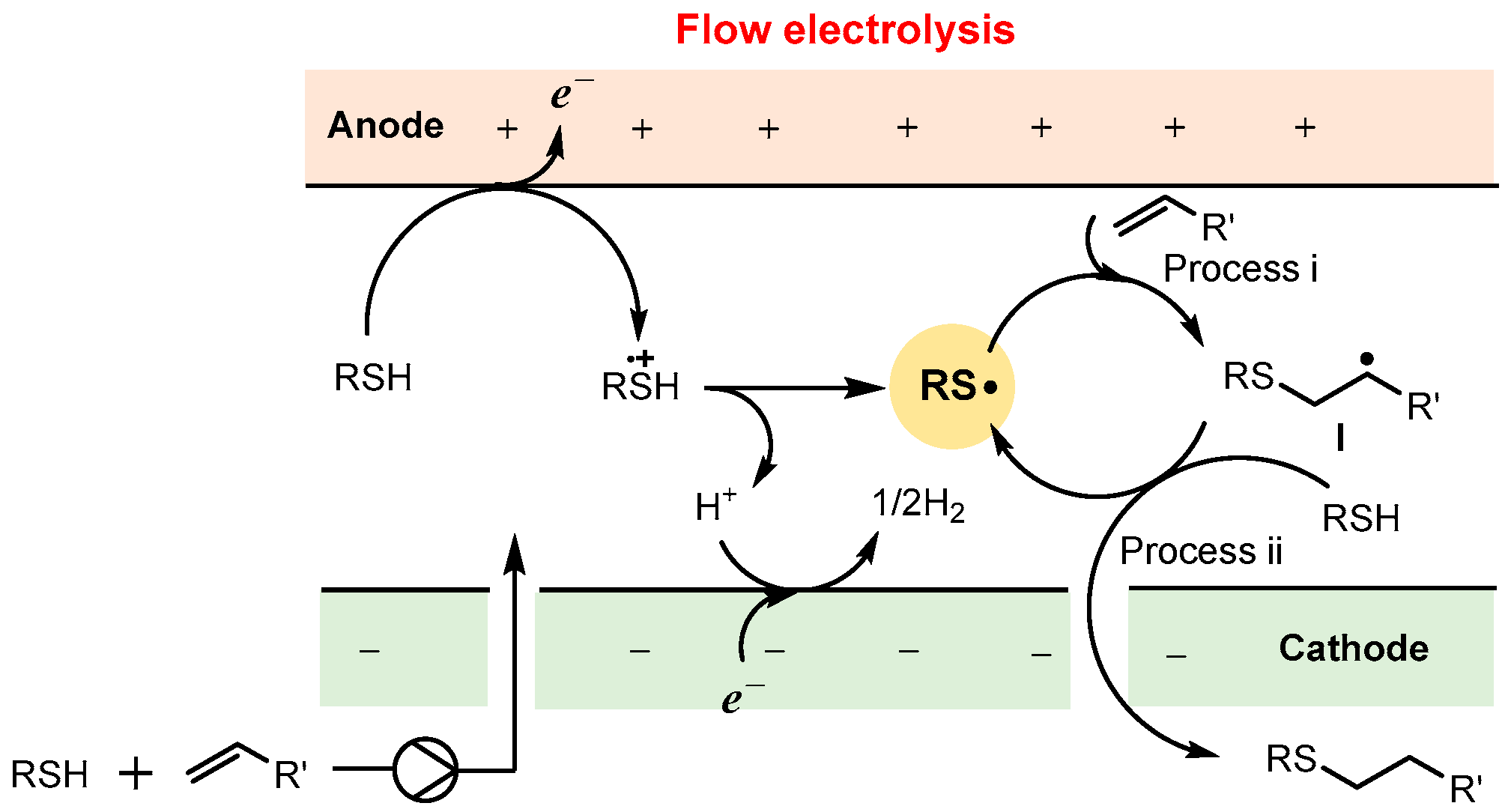
| Entry | Flow/Batch | Concentration (mol L−1) | Additive | Reaction Time (Min) a | Current Density (mA cm−2) b | Cell Voltage (V) c | Isolated Yield (%) | |||
| 1a | 2a | 3a | 4 | 5 | ||||||
| 1 | Flow | 0.1 | 0.1 | None | 4.5 | 8.3 | 4.7–4.8 | NG d | 16 | 12 |
| 2 | 0.1 | 0.1 | Et3N (10% mol) | 4.5 | 8.3 | 4.6–5.0 | 22 | NG | NG | |
| 3 | 0.1 | 0.1 | Et3N (20% mol) | 4.5 | 8.3 | 5.9–6.9 | 13 | 2 | 4 | |
| 4 | 0.1 | 0.1 | Et3N (10% mol) | 9.0 | 4.2 | 4.0–4.5 | 19 | NG | NG | |
| 5 | 0.1 | 0.1 | Et3N (10% mol) | 2.3 | 16.7 | 5.4–5.6 | 17 | 2 | 2 | |
| 6 | 0.2 | 0.1 | Et3N (10% mol) | 4.5 | 8.3 | 4.1–4.2 | 69 | NG | NG | |
| 7 | 0.3 | 0.1 | Et3N (10% mol) | 4.5 | 8.3 | 4.1–4.3 | 65 | NG | NG | |
| 8 | 0.1 | 0.2 | Et3N (10% mol) | 4.5 | 8.3 | 6.5–7.2 | 16 | NG | NG | |
| 9 | Batch e | 0.2 | 0.1 | Et3N (10% mol) | 180 | 8.3 | 8.3–23.1 | 18 | trace f | 7 |
 | |||
| Thiol 1 | Product 3 | Isolated Yield (%) | |
 | 1b |  | 3b: 70% |
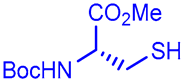 | 1c | 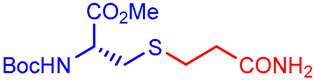 | 3c: 31% |
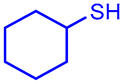 | 1d | 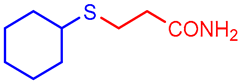 | 3d: trace b |
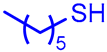 | 1e |  | 3e: 67% c |
 | 1f (X = H) 1g (X = F) 1h (X = Cl) 1i (X = Br) 1j (X = NO2) 1k (X = Me) 1l (X = OMe) | 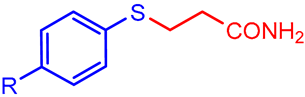 | 3f (X = H): 37% 3g (X = F): 57% 3h (X = Cl): 26% 3i (X = Br): NR d 3j (X = NO2): 9% 3k (X = Me): 32% 3l (X = OMe): 11% |
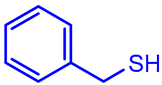 | 1m | 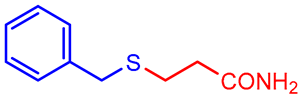 | 3m: NG e |
 | |||
| Olefine 2 | Product 3 | Isolated Yield (%) | |
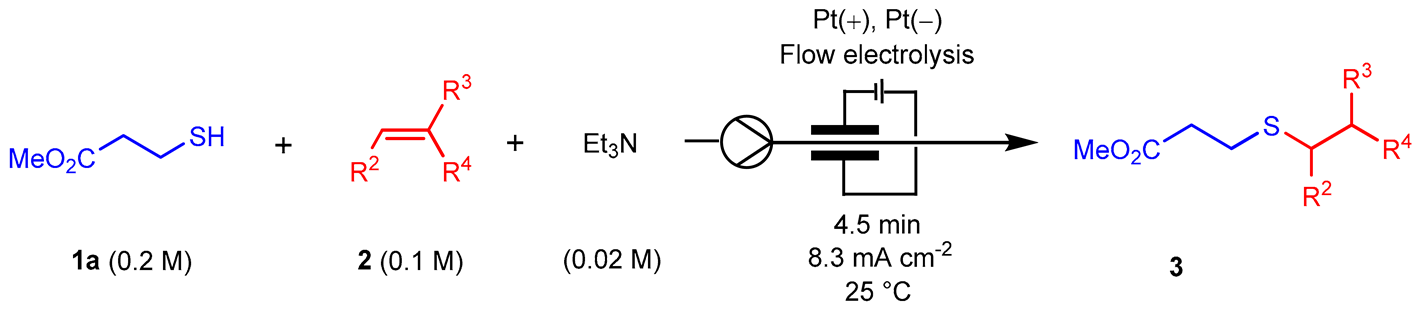
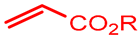 | 2b (R = Me) 2c (R = Et) 2d (R = tBu) |  | 3n (X = Me): 54% 3o (X = Et): 48% 3p (X = tBu): 43% |
 | 2e |  | 3q: trace b |
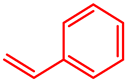 | 2f | 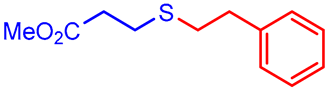 | 3r: NG |
 | 2g |  | 3s: 43% |
 | 2h | 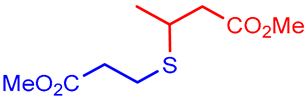 | 3t: 24% |
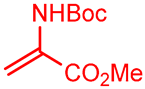 | 2i | 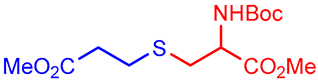 | 3u: trace |
 | 2j |  | 3v: NG c |
 | 2k | 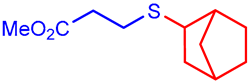 | 3w: trace |
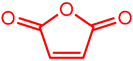 | 2l | 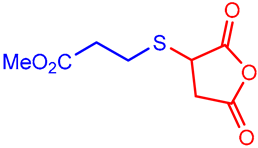 | 3x: trace |
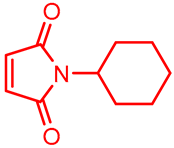 | 2m |  | 3y: trace |
Disclaimer/Publisher’s Note: The statements, opinions and data contained in all publications are solely those of the individual author(s) and contributor(s) and not of MDPI and/or the editor(s). MDPI and/or the editor(s) disclaim responsibility for any injury to people or property resulting from any ideas, methods, instructions or products referred to in the content. |
© 2026 by the authors. Licensee MDPI, Basel, Switzerland. This article is an open access article distributed under the terms and conditions of the Creative Commons Attribution (CC BY) license.
Share and Cite
Yamamoto, K.; Arai, K. An Initiator-Free Electrochemical Approach to Radical Thiol–Ene Coupling in a Microfluidic Reactor. Molecules 2026, 31, 429. https://doi.org/10.3390/molecules31030429
Yamamoto K, Arai K. An Initiator-Free Electrochemical Approach to Radical Thiol–Ene Coupling in a Microfluidic Reactor. Molecules. 2026; 31(3):429. https://doi.org/10.3390/molecules31030429
Chicago/Turabian StyleYamamoto, Kakeru, and Kenta Arai. 2026. "An Initiator-Free Electrochemical Approach to Radical Thiol–Ene Coupling in a Microfluidic Reactor" Molecules 31, no. 3: 429. https://doi.org/10.3390/molecules31030429
APA StyleYamamoto, K., & Arai, K. (2026). An Initiator-Free Electrochemical Approach to Radical Thiol–Ene Coupling in a Microfluidic Reactor. Molecules, 31(3), 429. https://doi.org/10.3390/molecules31030429