Synthesis of N-Difluoromethyl Benzothiazole (or Benzoxazole) Selenones as Novel Inhibitors Against Phytopathogenic Fungi


Abstract
1. Introduction
2. Results
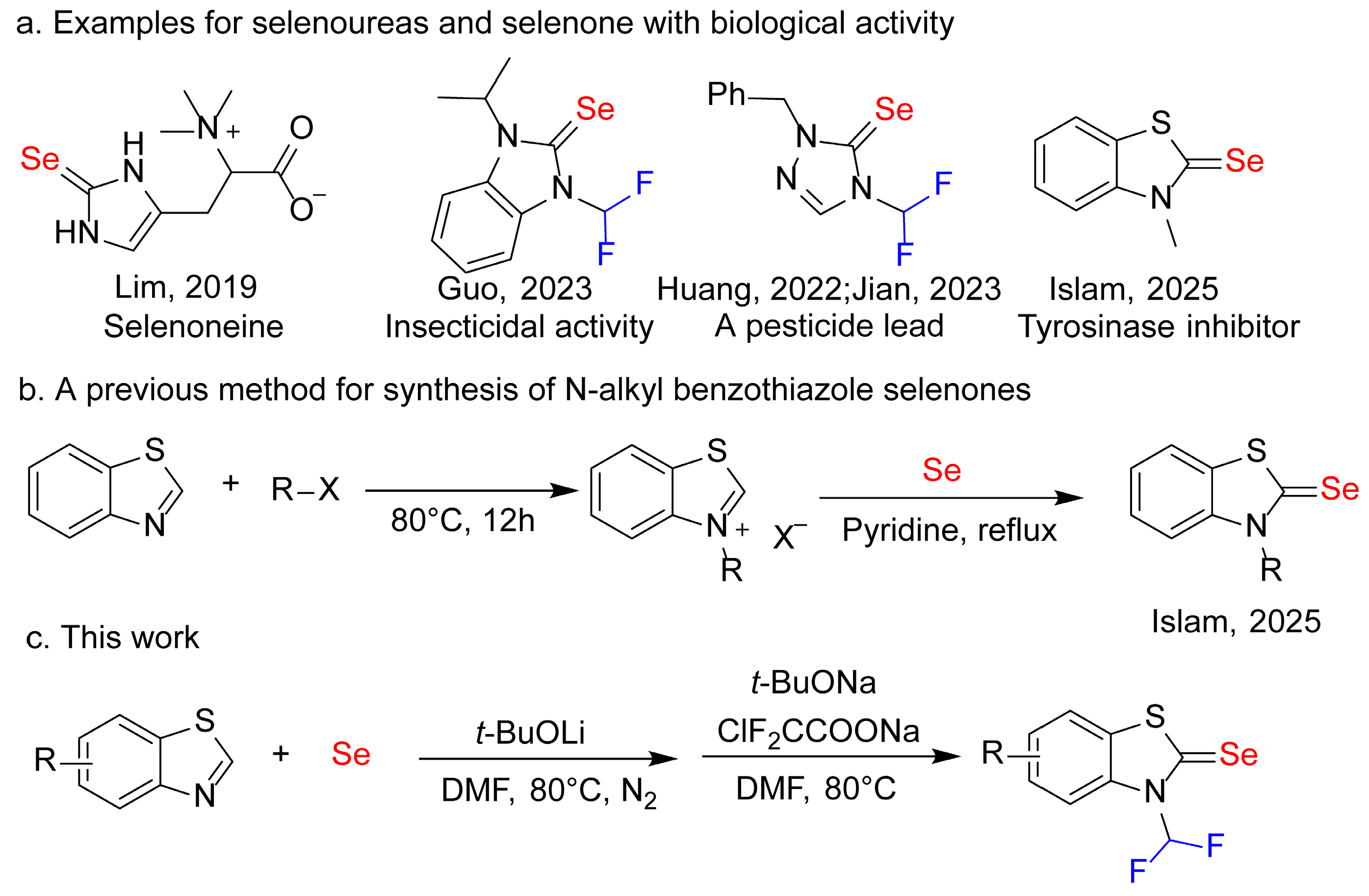
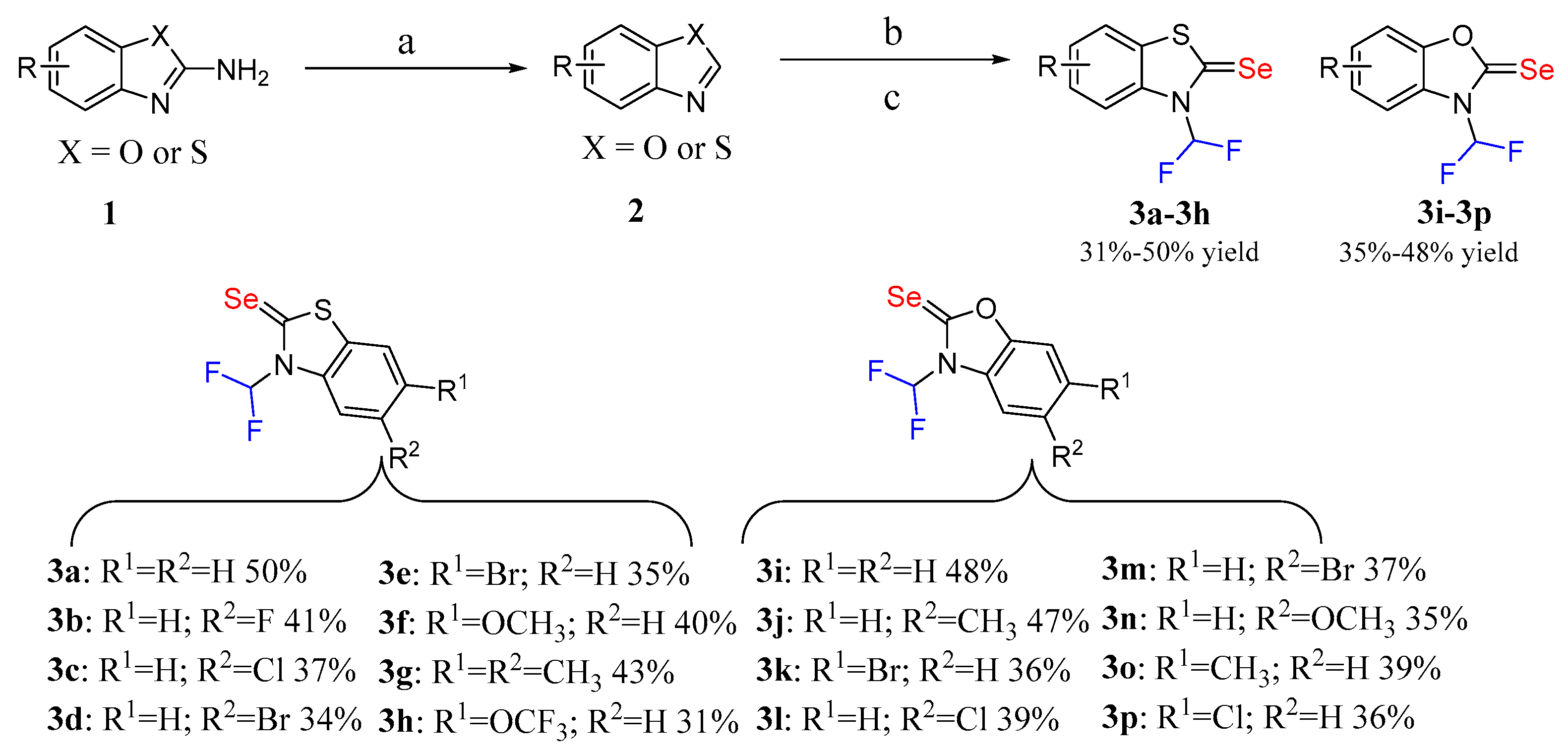
2.1. Synthesis of N-Difluoromethyl Benzothiazole (or Benzoxazole) Selenones
2.2. Antifungal Activity
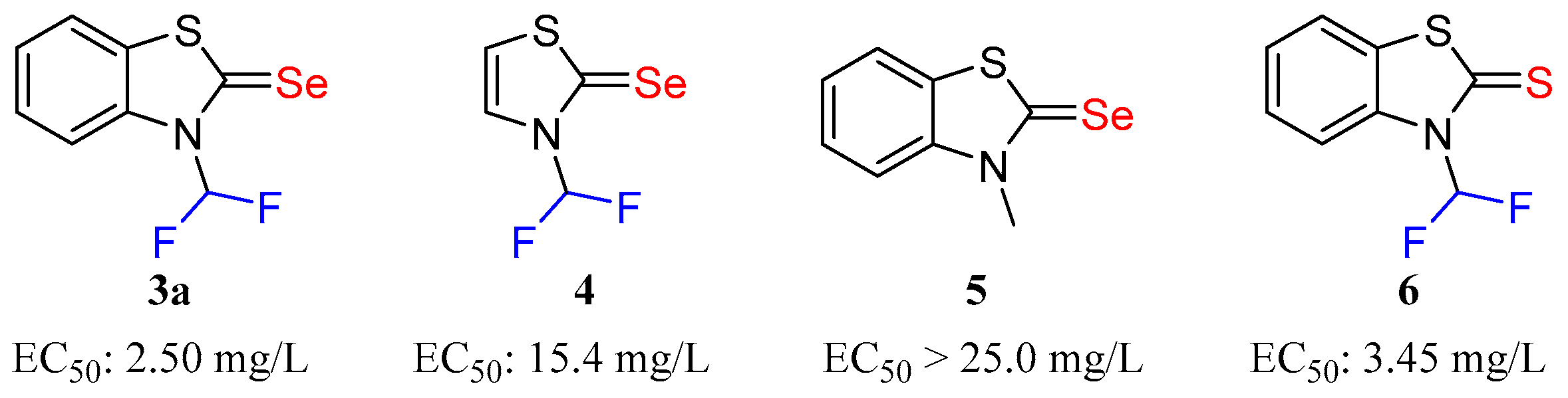
2.3. Determination of Active Functional Groups
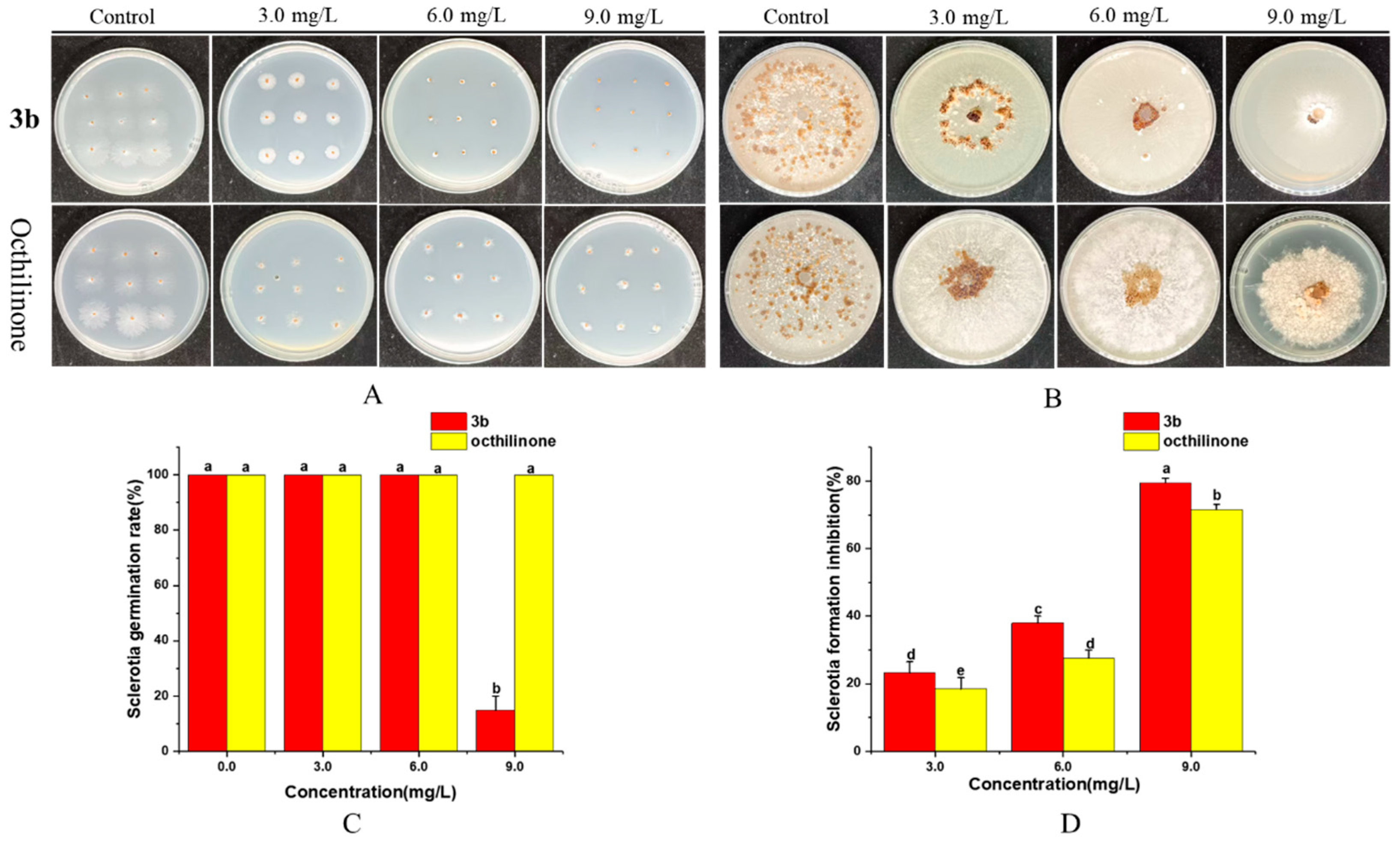
2.4. Effect of Compound 3b on the Formation and Germination of R. solani Sclerotium
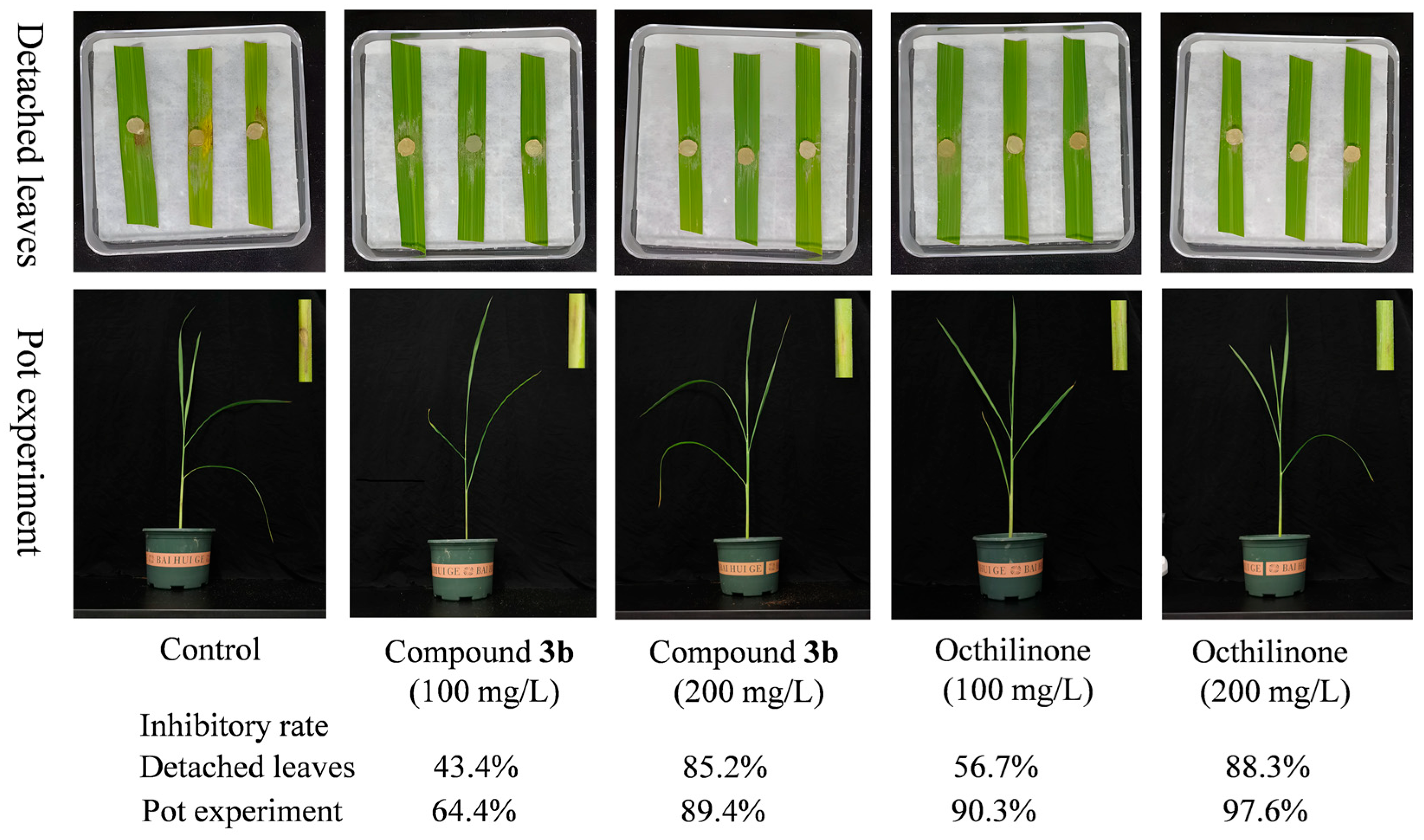
2.5. In Vivo Antifungal Activity Against R. solani of Compound 3b
3. Discussion
3.1. Synthesis of N-Difluoromethyl Benzothiazole and Benzoxazole Selenones
3.2. Analysis of Biological Active Groups
3.3. Antifungal Efficacy
4. Materials and Methods
4.1. Chemicals and Instruments
4.2. Synthetic Procedures
4.2.1. Synthetic Procedure for Intermediates 2 [27,28]
4.2.2. Synthesis of N-Difluoromethyl Thiazole (or Benzoxazole) Selenones
4.2.3. Synthesis of Compounds 4, 5, and 6
4.3. Antifungal Activity Assay In Vitro [7,35]
4.4. Inhibition Assay on Sclerotia Formation and Germination [7,35]
4.4.1. Inhibition Assay on Sclerotia Formation
4.4.2. Inhibition Assay on Sclerotia Germination
4.5. In Vivo Inhibition Assay of Compound 3b [7,35]
4.6. Statistical Analyses
5. Conclusions
Supplementary Materials
Author Contributions
Funding
Institutional Review Board Statement
Informed Consent Statement
Data Availability Statement
Conflicts of Interest
References
- Madhushan, A.; Weerasingha, D.B.; Ilyukhin, E.; Taylor, P.W.J.; Ratnayake, A.S.; Liu, J.-K.; Maharachchikumbura, S.S.N. From natural hosts to agricultural threats: The evolutionary journey of phytopathogenic fungi. J. Fungi 2025, 11, 25. [Google Scholar] [CrossRef] [Scilit] [PubMed]
- Fungicide Resistance Action Committee (FRAC). Available online: http://www.frac.info/ (accessed on 17 August 2021).
- Cheng, Q.; Wang, Y.; Han, C.; Liu, W.; Fan, G.; Zhang, H.; Lei, Z.; Hu, C.-X.; Zhao, X. Selenium: The toxicant for pathogen and pest but the guardian of soil and crop. J. Agric. Food Chem. 2025, 73, 11495–11514. [Google Scholar] [CrossRef] [Scilit]
- Guo, X.-Y.; Huang, Z.-H.; Xiong, L.-T.; Dong, L.; Huang, Y.-K.; Wei, L.-H.; Tang, R.-Y.; Wang, Z.-L.; Xu, H.-H. Azole selenourea disrupted the midgut and caused malformed development of Plutella xylostella. J. Integr. Agric. 2023, 22, 1104–1116. [Google Scholar] [CrossRef] [Scilit]
- Huang, Z.-H.; Guo, X.-Y.; Xiong, L.-T.; Dong, L.; Jian, J.-T.; Wei, L.-H.; Tang, R.-Y.; Xu, H.-H. Versatile triazole selenoureas against pests, fungi, and weeds. ACS Agric. Sci. Technol. 2022, 2, 754–760. [Google Scholar] [CrossRef] [Scilit]
- Jian, J.-T.; Xiong, L.-T.; Guo, X.-Y.; Ma, Y.-L.; Tang, R.-Y. Triazole selenourea as a nutritional fortifier and defense for the microgreen of chinese flowering cabbage. ACS Agric. Sci. Technol. 2023, 3, 1044–1054. [Google Scholar] [CrossRef] [Scilit]
- Dong, L.; Zheng, X.-F.; Rong, C.-X.; Xiong, L.-T.; Yang, B.; Tang, R.-Y. Design and synthesis of N-heterocycle-fused azolyl selenoureas against Rhizoctonia solani and its mechanism of action. Pest Manag. Sci. 2025. Online ahead of print. [Google Scholar] [CrossRef] [Scilit] [PubMed]
- Yang, C.-X.; Guo, X.-Y.; Zheng, X.-F.; Yang, B.; Tang, R.-Y. Inhibition of energy metabolism of Plutella xylostella by N-difluoromethyl imidazole selenium urea and transcriptomic analysis. J. Nanjing Agric. Univ. 2025, 1–13. Available online: https://link.cnki.net/urlid/32.1148.S.20250514.1612.006 (accessed on 15 May 2025).
- Zhou, N.; Xiao, H.; Li, T.-K.; Nur-E-Kamal, A.; Liu, L.F. DNA damage-mediated apoptosis induced by selenium compounds. J. Biol. Chem. 2003, 278, 29532–29537. [Google Scholar] [CrossRef] [Scilit]
- Wahyuni, E.A.; Yii, C.-Y.; Liang, H.-L.; Luo, Y.-H.; Yang, S.-H.; Wu, P.-Y.; Hsu, W.-L.; Nien, C.-Y.; Chen, S.-C. Selenocystine induces oxidative-mediated DNA damage via impairing homologous recombination repair of DNA double-strand breaks in human hepatoma cells. Chem.-Biol. Interact. 2022, 365, 110046. [Google Scholar] [CrossRef] [Scilit]
- Xie, J.X.; Wang, L.J.; Zhang, X.Y.; Li, Y.Y.; Liao, X.; Yang, C.X.; Tang, R.-Y. Discovery of new anti-MRSA agents based on phenoxyethanol and its mechanism. ACS Infect. Dis. 2022, 8, 2291–2306. [Google Scholar] [CrossRef] [Scilit]
- Pannico, A.; El-Nakhel, C.; Graziani, G.; Kyriacou, M.C.; Giordano, M.; Soteriou, G.A.; Zarrelli, A.; Ritieni, A.; De Pascale, S.; Rouphael, Y. Selenium biofortification impacts the nutritive value, polyphenolic content, and bioactive constitution of variable microgreens genotypes. Antioxidants 2020, 9, 272. [Google Scholar] [CrossRef] [Scilit]
- Cappa, J.J.; Yetter, C.; Fakra, S.; Cappa, P.J.; DeTar, R.; Landes, C.; Pilon-Smits, E.A.H.; Simmons, M.P. Evolution of selenium hyperaccumulation in stanleya (brassicaceae) as inferred from phylogeny, physiology and X-ray microprobe analysis. New Phytol. 2015, 205, 583–595. [Google Scholar] [CrossRef] [Scilit] [PubMed]
- Saeedi, M.; Soltani, F.; Babalar, M.; Izadpanah, F.; Wiesner-Reinhold, M.; Baldermann, S. Selenium fortification alters the growth, antioxidant characteristics and secondary metabolite profiles of cauliflower (Brassica oleracea var. botrytis) cultivars in hydroponic culture. Plants 2021, 10, 1537. [Google Scholar] [CrossRef] [Scilit]
- Rayman, M.P. The argument for increasing selenium intake. Proc. Nutr. Soc. 2002, 61, 203–215. [Google Scholar] [CrossRef] [Scilit] [PubMed]
- Lim, D.; Gründemann, D.; Seebeck, F.P. Total Synthesis and Functional Characterization of Selenoneine. Angew. Chem. Int. Ed. 2019, 58, 15026–15030. [Google Scholar] [CrossRef] [Scilit]
- Islam, A.; Rai, R.K.; Pati, R.S.; Muralidharan, Y.; Roy, G. Thiazole- and benzothiazole-based organoselenium compounds as dual-action agents: Tyrosinase inhibitors and functional mimics of glutathione peroxidase. Inorg. Chem. 2025, 64, 18206–18226. [Google Scholar] [CrossRef] [Scilit]
- Deng, J.-C.; Gao, Y.-C.; Zhu, Z.; Xu, L.; Li, Z.-D.; Tang, R.-Y. Sulfite-promoted synthesis of N-difluoromethylthioureas via the reaction of azoles with bromodifluoroacetate and elemental sulfur. Org. Lett. 2019, 21, 545–548. [Google Scholar] [CrossRef] [Scilit]
- Deng, J.-C.; Chen, J.-H.; Zhang, J.-R.; Lu, T.-T.; Tang, R.-Y. Sulfite-induced N-alkylation and thioketonization of azoles enable access to diverse azole thiones. Adv. Synth. Catal. 2018, 360, 4795–4806. [Google Scholar] [CrossRef] [Scilit]
- Chen, J.-H.; Ahmed, W.; Li, M.-H.; Li, Z.-D.; Cui, Z.-N.; Tang, R.-Y. TEMPO-mediated synthesis of N-(fluoroalkyl)imidazolones via reaction of imidazoles with iodofluoroacetate. Adv. Synth. Catal. 2020, 362, 269–276. [Google Scholar] [CrossRef] [Scilit]
- Yan, Z.-Z.; Liu, A.-P.; Ou, Y.-C.; Li, J.-M.; Yi, H.-B.; Zhang, N.; Liu, M.-H.; Huang, L.; Ren, J.; Liu, W.; et al. Design, synthesis and fungicidal activity evaluation of novel pyrimidinamine derivatives containing phenyl-thiazole/oxazole moiety. Bioorganic Med. Chem. 2019, 27, 3218–3228. [Google Scholar] [CrossRef] [Scilit]
- Yan, Z.-Z.; Liu, A.-P.; Huang, M.-Z.; Liu, M.-H.; Pei, H.; Huang, L.; Yi, H.-B.; Liu, W.-D.; Hu, A.-X. Design, synthesis, DFT study and antifungal activity of the derivatives of pyrazolecarboxamide containing thiazole or oxazole ring. Eur. J. Med. Chem. 2018, 149, 170–181. [Google Scholar] [CrossRef] [Scilit] [PubMed]
- Guo, J.-C.; Hao, Y.-N.; Ji, X.-F.; Wang, Z.-W.; Liu, Y.-X.; Ma, D.-J.; Li, Y.-Q.; Pang, H.-L.; Ni, J.-P.; Wang, Q.-M. Optimization, structure–activity relationship, and mode of action of nortopsentin analogues containing thiazole and oxazole moieties. J. Agric. Food Chem. 2019, 67, 10018–10031. [Google Scholar] [CrossRef] [Scilit] [PubMed]
- Yan, H.-R.; Huang, Y.-K.; Yang, C.-X.; Zheng, X.-F.; Yang, B.; Jin, Y.-L.; Pan, H.-P.; Zhang, C.-Q.; Xu, H.-H.; Tang, R.-Y. AlphaFold-assisted design and synthesis of V-type amidazoles as chitin synthase inhibitors against Plutella xylostella. J. Agric. Food Chem. 2025, 73, 22208–22217. [Google Scholar] [CrossRef] [Scilit]
- Nie, B.-H.; Yan, H.-R.; Rong, C.-X.; Yang, B.; Tang, R.-Y. I2/K2S2O8-catalyzed cascade synthesis of insecticidal 2-imino-1,3-thiazoles: A sustainable approach to bioactive heterocycles. Asian J. Org. Chem. 2025, 14, e00567. [Google Scholar] [CrossRef] [Scilit]
- Ahmed, W.; Huang, Z.-H.; Cui, Z.-N.; Tang, R.-Y. Design and synthesis of unique thiazoloisoquinolinium thiolates and derivatives. Chin. Chem. Lett. 2021, 32, 3211–3214. [Google Scholar] [CrossRef] [Scilit]
- Ji, X.-M.; Xu, L.; Yan, Y.; Chen, F.; Tang, R.-Y. Metal-free oxidative deamination cross-coupling of imidazoheterocycles with 2-aminobenzothiazoles. Synthesis 2016, 48, 687–696. [Google Scholar]
- Felipe-Blanco, D.; Alonso, F.; Gonzalez-Gomez, J.C. Salicylic acid-catalyzed one-pot hydrode-amination of aromatic amines by tert-butyl nitrite in tetrahydrofuran. Adv. Synth. Catal. 2017, 359, 2857–2863. [Google Scholar] [CrossRef] [Scilit]
- Jia, W.; Hu, C.X.; Ming, J.J.; Zhao, Y.Y.; Xin, J.; Sun, X.C.; Zhao, X.H. Action of selenium against sclerotinia sclerotiorum: Damaging membrane system and interfering with metabolism. Pestic. Biochem. Physiol. 2018, 150, 10–16. [Google Scholar] [CrossRef] [Scilit]
- Feng, R.-W.; Wei, C.-Y.; Tu, S.-X. The roles of selenium in protecting plants against abiotic stresses. Environ. Exp. Bot. 2013, 87, 58–68. [Google Scholar] [CrossRef] [Scilit]
- Singh, P.; Mazumdar, P.; Harikrishna, J.A.; Babu, S. Sheath Blight of Rice: A review and identification of priorities for future research. Planta 2019, 250, 1387–1407. [Google Scholar] [CrossRef] [Scilit] [PubMed]
- Ali, W.; Aasma; Mehmood, A.; Amin, A.; Ullah, S.; Fateh, F.S.; Fayyaz, M. Sheath blight of rice: A review of host pathogen interaction, management strategies and future prospects. Plant Prot. 2023, 7, 331–339. [Google Scholar] [CrossRef] [Scilit]
- Senapati, M.; Tiwari, A.; Sharma, N.; Chandra, P.; Bashyal, B.M.; Ellur, R.K.; Bhowmick, P.K.; Bollinedi, H.; Vinod, K.K.; Singh, A.K.; et al. Rhizoctonia solani Kühn pathophysiology: Status and prospects of sheath blight disease management in rice. Front. Plant Sci. 2022, 13, 881116. [Google Scholar] [CrossRef] [Scilit] [PubMed]
- Cheng, Q.; Hu, C.-X.; Jia, W.; Cai, M.-M.; Tang, Y.-N.; Yang, D.-D.; Zhou, Y.-J.; Sun, X.-C.; Zhao, X.-H. Selenium reduces the pathogenicity of sclerotinia sclerotiorum by inhibiting sclerotial formation and germination. Ecotoxicol. Environ. Saf. 2019, 183, 109503. [Google Scholar] [CrossRef] [Scilit] [PubMed]
- Xiong, L.-T.; Guo, X.-Y.; Dong, L.; Jian, J.-T.; Liao, X.; Tang, R.-Y.; Xu, H.-H. Microemulsification of nonvolatile components of melaleuca alternifolia and borneol can effectively defend. Rhizoctonia solani. Ind. Crops Prod. 2022, 184, 115052. [Google Scholar] [CrossRef] [Scilit]



| Compound (25 mg/L) | Average Inhibition Rat ± SD (%) (n = 3) | |||
|---|---|---|---|---|
| R. solani | P. infestans | B. cinerea | F. oxysporum | |
| 3a | 100 ± 0.0 | 100 ± 0.0 | 97.6 ± 0.0 | 100 ± 0.0 |
| 3b | 100 ± 0.0 | 100 ± 0.0 | 79.5 ± 0.3 | 87.8 ± 0.1 |
| 3c | 58.0 ± 0.7 | 15.1 ± 1.0 | 28.5 ± 0.4 | 21.5 ± 0.5 |
| 3d | 15.9 ± 0.2 | 0.0 ± 0.0 | 21.9 ± 0.1 | 4.6 ± 0.4 |
| 3e | 63.6 ± 0.5 | 36.4 ± 0.2 | 35.1 ± 0.4 | 37.1 ± 0.0 |
| 3f | 100 ± 0.0 | 73.3 ± 0.6 | 57.5 ± 0.5 | 63.4 ± 0.4 |
| 3g | 42.3 ± 0.2 | 5.3 ± 0.1 | 17.6 ± 0.2 | 8.9 ± 0.2 |
| 3h | 94.4 ± 0.3 | 64.3 ± 0.3 | 35.1 ± 0.9 | 64.5 ± 0.6 |
| 3i | 100 ± 0.0 | 45.0 ± 0.7 | 24.2 ± 0.0 | 56.6 ± 0.1 |
| 3j | 100 ± 0.0 | 49.2 ± 0.5 | 15.3 ± 0.0 | 54.6 ± 0.3 |
| 3k | 100 ± 0.0 | 58.5 ± 0.4 | 64.1 ± 0.5 | 60.9 ± 0.2 |
| 3l | 100 ± 0.0 | 52.4 ± 0.2 | 53.3 ± 0.0 | 56.9 ± 0.9 |
| 3m | 79.0 ± 0.3 | 38.1 ± 0.6 | 8.8 ± 0.2 | 40.0 ± 0.4 |
| 3n | 100 ± 0.0 | 57.7 ± 0.2 | 19.0 ± 0.4 | 70.8 ± 0.0 |
| 3o | 65.5 ± 0.1 | 60.3 ± 0.3 | 25.3 ± 0.0 | 56.1 ± 0.0 |
| 3p | 100 ± 0.0 | 65.9 ± 0.1 | 49.4 ± 0.0 | 62.9 ± 0.8 |
| Octhilinone | 100 ± 0.0 | 83.8 ± 0.4 | 94.2 ± 0.0 | 78.2 ± 0.2 |
| Azoxystrobin | 71.0 ± 0.2 | 25.7 ± 0.7 | 65.3 ± 0.4 | 62.0 ± 0.8 |
| Compound | EC50 (mg/L) | |||
|---|---|---|---|---|
| R. solani | P. infestans | B. cinerea | F. oxysporum | |
| 3a | 2.50 | 4.69 | 7.68 | 5.25 |
| 3b | 2.10 | 6.31 | 7.49 | 5.73 |
| 3c | 20.00 | >25.0 | >25.0 | >25.0 |
| 3d | >25.0 | >25.0 | >25.0 | >25.0 |
| 3e | 15.7 | >25.0 | >25.0 | >25.0 |
| 3f | 2.59 | 9.56 | 21.5 | 15.9 |
| 3g | >25.0 | >25.0 | >25.0 | >25.0 |
| 3h | 2.56 | 15.20 | >25.0 | 16.2 |
| 3i | 5.24 | >25.0 | >25.0 | 20.0 |
| 3j | 3.07 | >25.0 | >25.0 | 22.1 |
| 3k | 3.71 | 17.6 | 14.6 | 18.5 |
| 3l | 6.35 | 19.7 | 24.5 | 21.5 |
| 3m | 11.9 | >25.0 | >25.0 | >25.0 |
| 3n | 3.91 | 21.1 | >25.0 | 11.7 |
| 3o | 14.5 | 16.9 | >25.0 | 21.01 |
| 3p | 2.24 | 13.3 | >25.0 | 17.1 |
| Octhilinone | 1.18 | 2.77 | 1.09 | 3.13 |
| Azoxystrobin | 3.51 | >25.0 | 12.8 | 13.5 |
Disclaimer/Publisher’s Note: The statements, opinions and data contained in all publications are solely those of the individual author(s) and contributor(s) and not of MDPI and/or the editor(s). MDPI and/or the editor(s) disclaim responsibility for any injury to people or property resulting from any ideas, methods, instructions or products referred to in the content. |
© 2026 by the authors. Licensee MDPI, Basel, Switzerland. This article is an open access article distributed under the terms and conditions of the Creative Commons Attribution (CC BY) license.
Share and Cite
Huang, Z.; Liu, Z.; Zhang, B.; Jiao, J.; Tang, R.-Y. Synthesis of N-Difluoromethyl Benzothiazole (or Benzoxazole) Selenones as Novel Inhibitors Against Phytopathogenic Fungi. Molecules 2026, 31, 314. https://doi.org/10.3390/molecules31020314
Huang Z, Liu Z, Zhang B, Jiao J, Tang R-Y. Synthesis of N-Difluoromethyl Benzothiazole (or Benzoxazole) Selenones as Novel Inhibitors Against Phytopathogenic Fungi. Molecules. 2026; 31(2):314. https://doi.org/10.3390/molecules31020314
Chicago/Turabian StyleHuang, Zihao, Zhen Liu, Baixin Zhang, Jing Jiao, and Ri-Yuan Tang. 2026. "Synthesis of N-Difluoromethyl Benzothiazole (or Benzoxazole) Selenones as Novel Inhibitors Against Phytopathogenic Fungi" Molecules 31, no. 2: 314. https://doi.org/10.3390/molecules31020314
APA StyleHuang, Z., Liu, Z., Zhang, B., Jiao, J., & Tang, R.-Y. (2026). Synthesis of N-Difluoromethyl Benzothiazole (or Benzoxazole) Selenones as Novel Inhibitors Against Phytopathogenic Fungi. Molecules, 31(2), 314. https://doi.org/10.3390/molecules31020314