Energy-Rich Molecules and Group Transfer Potentials in Energetic Coupling Reactions


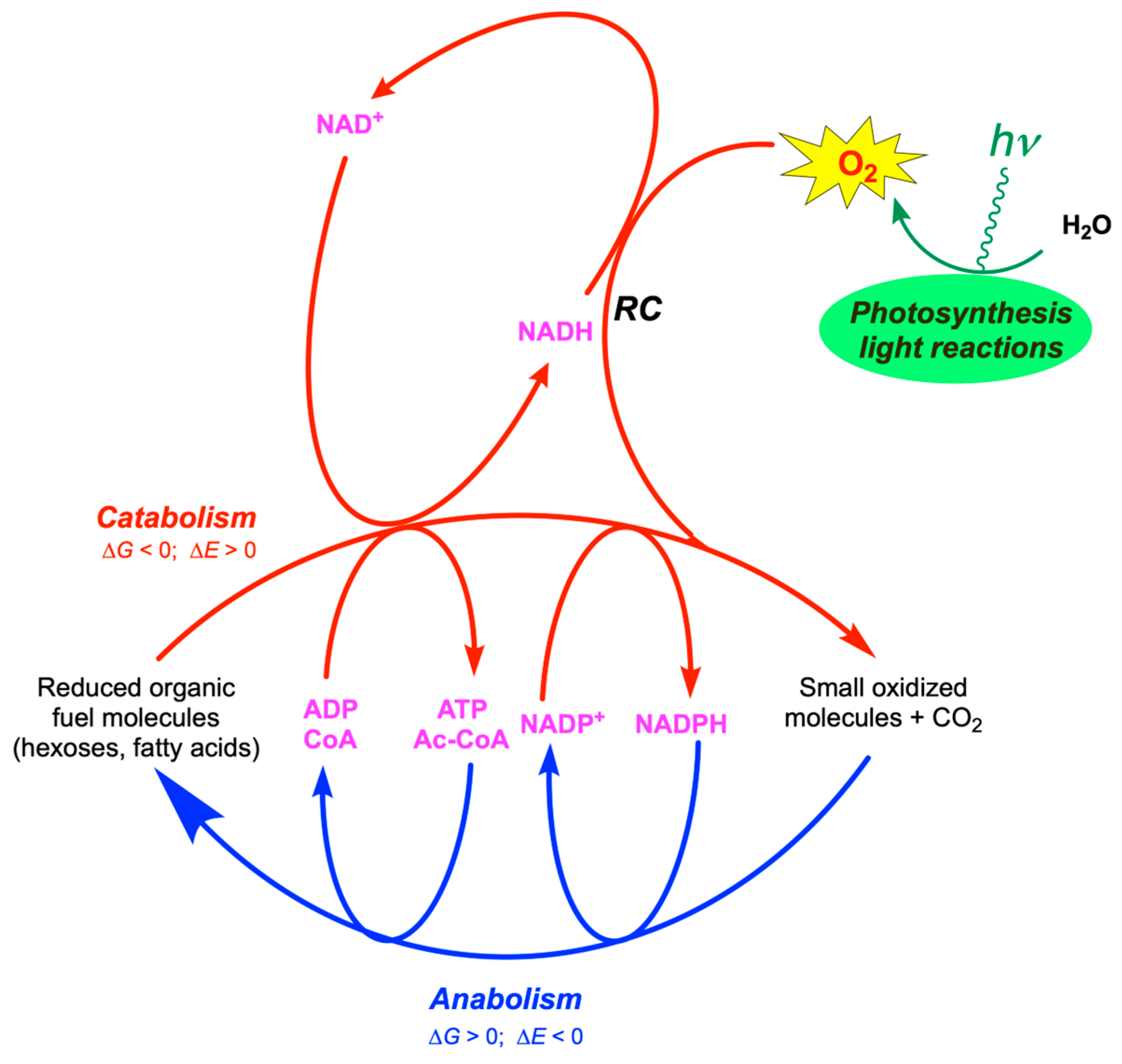
Abstract
1. Introduction
→ CoA-SH + 3 NADH + 3 H+ + FADH2 + GTP + 2 CO2 ΔG′° = −50.3 kJ mol−1
2. Energy Changes in Chemical Reactions
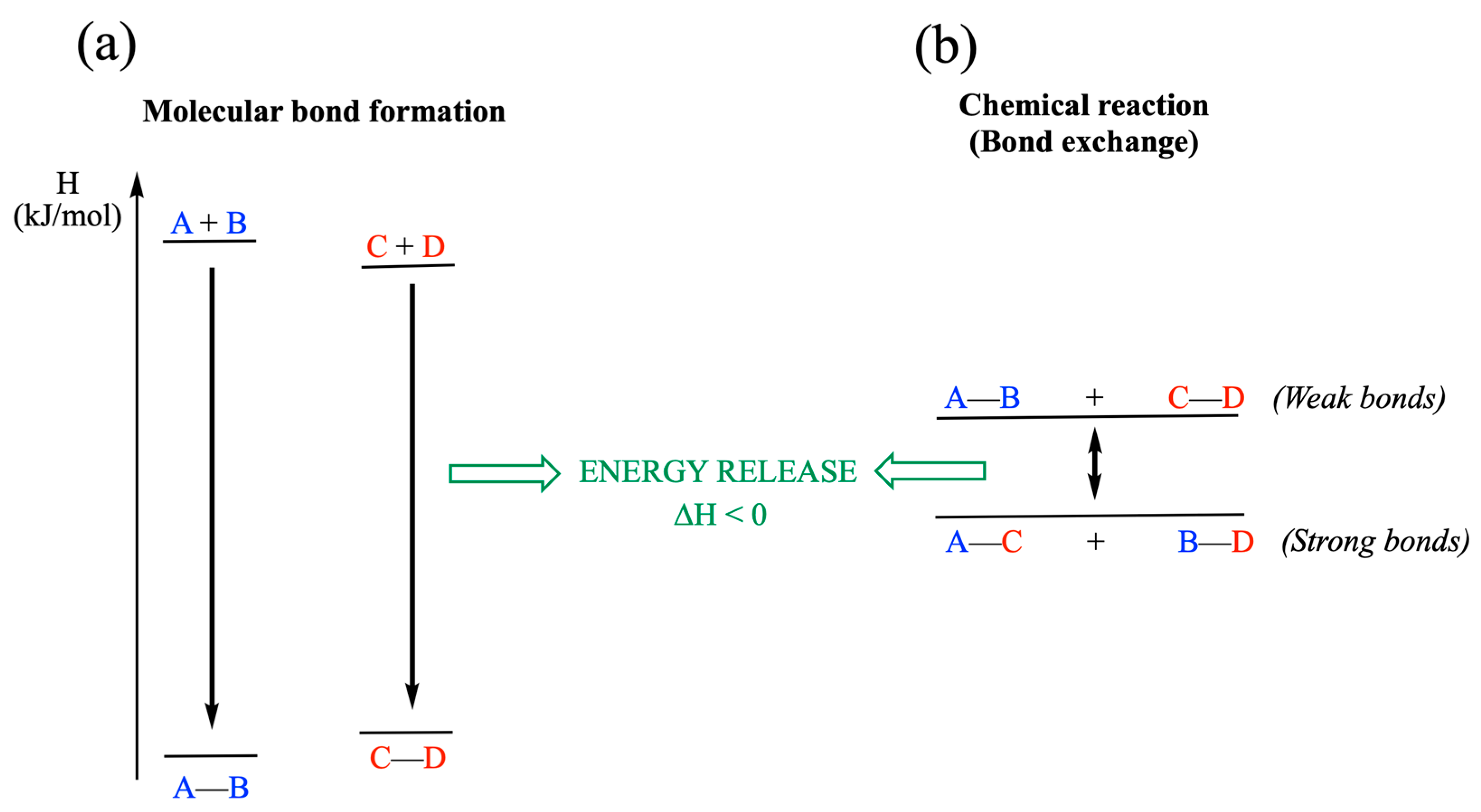
2.1. Chemical Energy and Molecular Bonding
2.2. Energetics of Chemical Reactions
3. The Concept of Energy-Rich Molecules and Their Role in Energy Metabolism
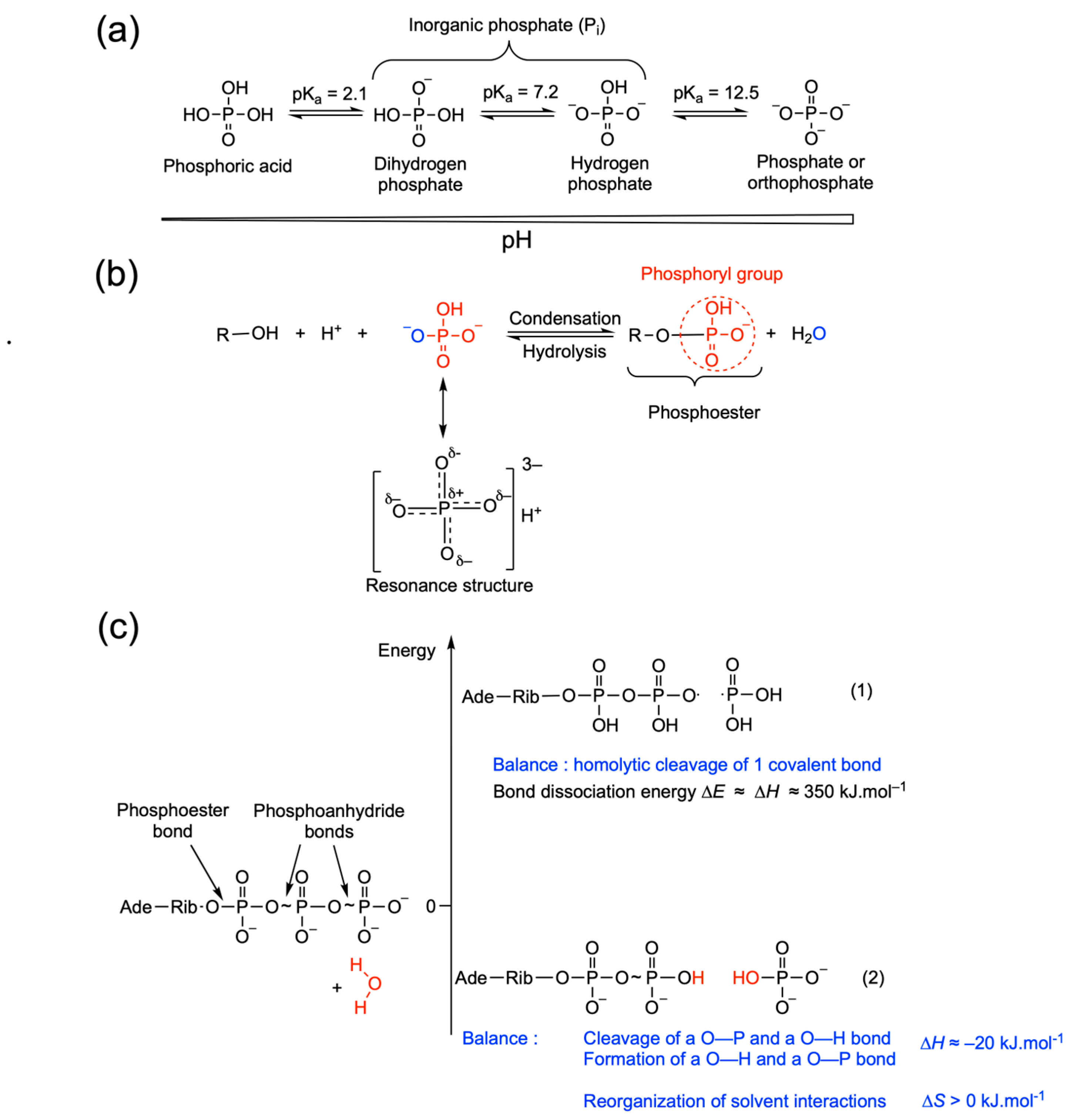
3.1. ATP and Other Energy-Rich Phosphorylated Compounds
3.2. What Makes the Hydrolysis of Phosphoanhydride Bonds in Atp and Other Nucleotides So Particular?

| Donor | ΔhG′° 1 (kJ mol−1) | Phosphoryl Group Transfer Potential (−ΔhG′°) |
|---|---|---|
| Phosphoenolpyruvate | −61.9 | 61.9 |
| 1,3-Bisphosphoglycerate | −49.4 | 49.4 |
| ATP (to AMP) | −45.6 2 | 3 |
| Acetyl phosphate | −43.1 | 43.1 |
| Creatine phosphate | −43.1 | 43.1 |
| Pyrophosphate (PPi) | −33.0 4 | 33.0 |
| ATP (to ADP) | −30.5 | 30.5 |
| ADP (to AMP) | −30.5 | 30.5 |
| Glucose 1-phosphate | −20.9 | 20.9 |
| 5-AMP | −14.2 | 14.2 |
| Glucose 6-phosphate | −13.8 | 13.8 |
| Glycerol 3-phosphate | −9.2 | 9.2 |
3.3. Thioesters Are Common Intermediates Between Catabolism and Anabolism
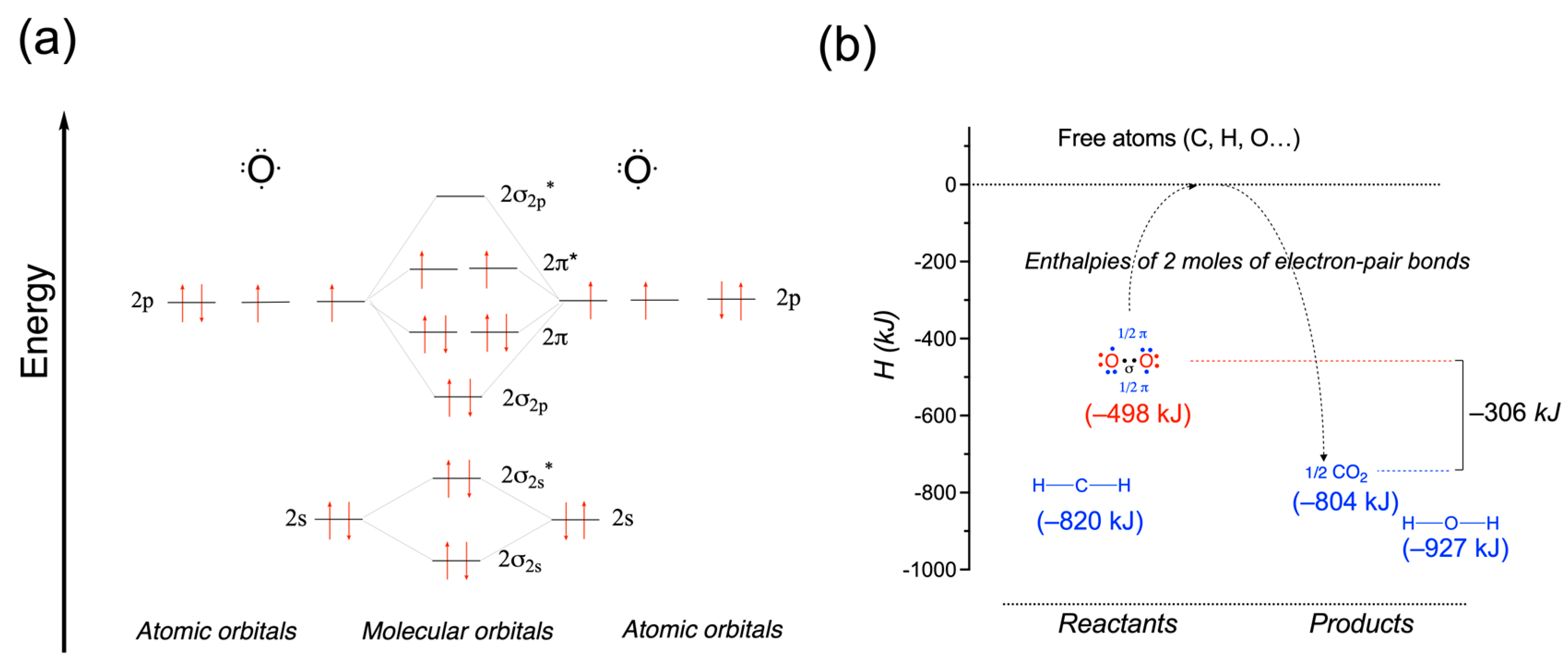
3.4. Dioxygen Is an Energy-Rich Molecule
4. The Concept of Transfer Potential
4.1. Group Transfer
4.2. Proton Transfer
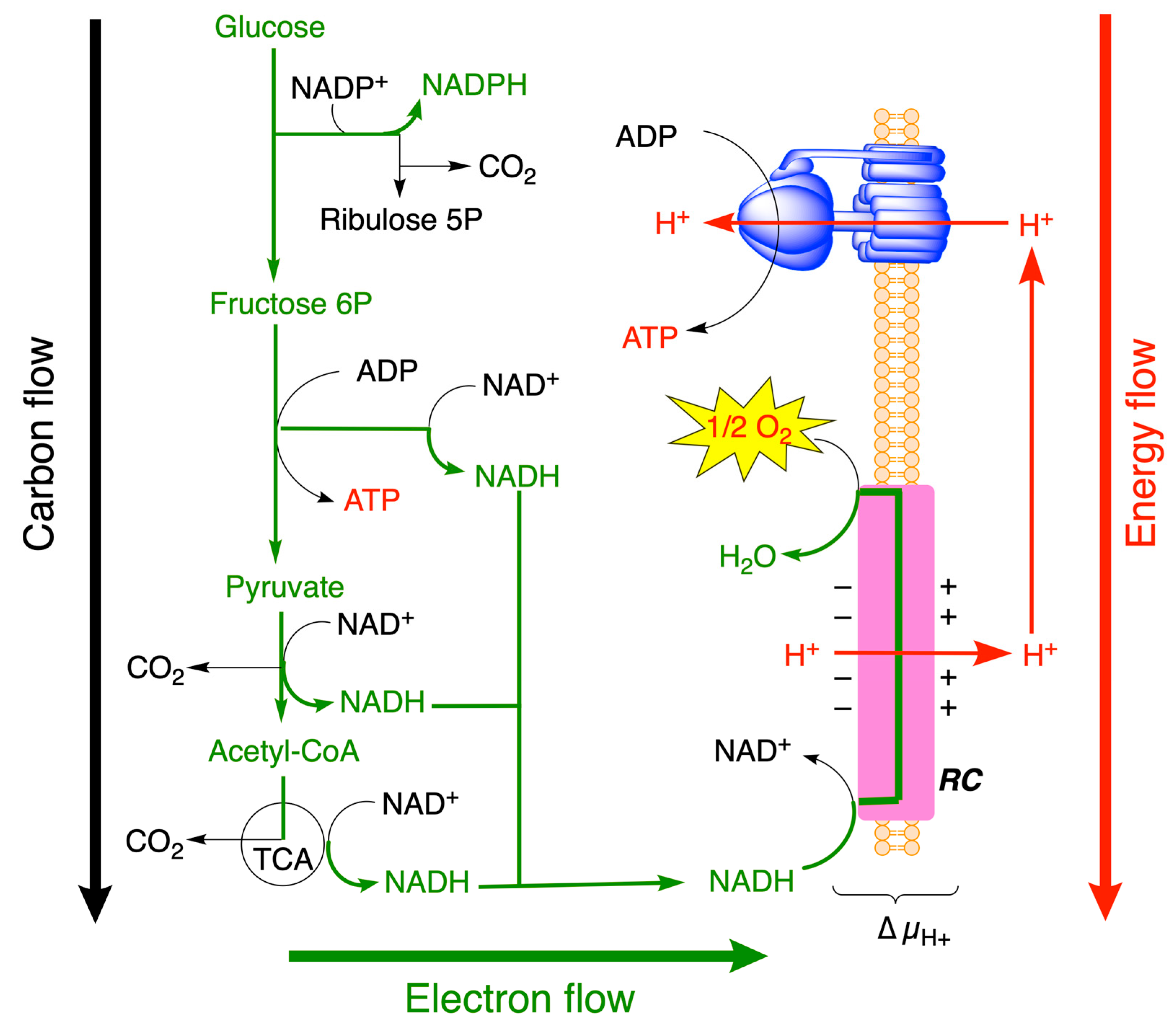
4.3. Electron Transfer: Are Reduced Molecules Rich in Energy?
5. Chemical Coupling Through Phosphoryl Group Transfer

6. Coupling of Two Reactions with ATP Hydrolysis (Ligase-Catalyzed Reactions)
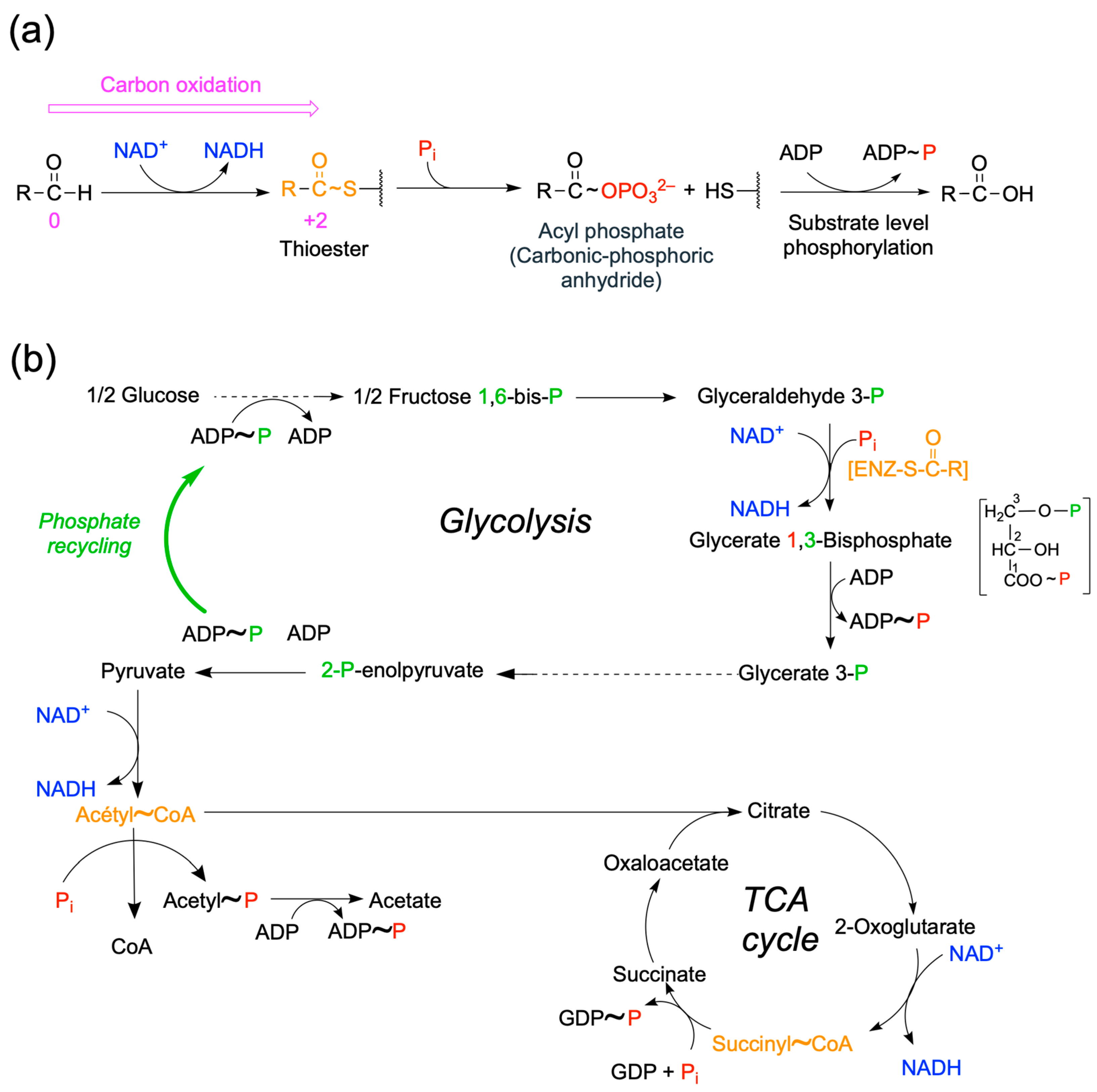
7. Substrate-Level Phosphorylation and Thioesters
(Succinyl-CoA synthetase, EC 6.2.1.4)
(Acetate kinase, EC 2.7.2.1)
8. Conclusions
Author Contributions
Funding
Institutional Review Board Statement
Informed Consent Statement
Data Availability Statement
Conflicts of Interest
Abbreviations
| TCA cycle | Tricarboxylic acid cycle |
References
- Bettendorff, L. Reduced Nucleotides, Thiols and O2 in Cellular Redox Balance: A Biochemist’s View. Antioxidants 2022, 11, 1877. [Google Scholar] [CrossRef] [PubMed]
- Voet, D.; Voet, J.G.; Pratt, C.W. Principles of Biochemistry; John Wiley & Sons: Singapore, 2013. [Google Scholar]
- Campbell, M.K.; Farrell, S.O. Biochemistry, 6th ed.; International Student Edition; Thomson Brooks/Cole: Boston, MA, USA, 2009. [Google Scholar]
- Alberty, R.A.; Cornish-Bowden, A.; Goldberg, R.N.; Hammes, G.G.; Tipton, K.; Westerhoff, H.V. Recommendations for Terminology and Databases for Biochemical Thermodynamics. Biophys. Chem. 2011, 155, 89–103. [Google Scholar] [CrossRef] [PubMed]
- Nath, S. The Thermodynamic Efficiency of ATP Synthesis in Oxidative Phosphorylation. Biophys. Chem. 2016, 219, 69–74. [Google Scholar] [CrossRef] [PubMed]
- Hapkiewicz, A. Clarifying Chemical Bonding. Overcoming Our Misconceptions. Sci. Teach. 1991, 58, 24–27. [Google Scholar]
- Heitler, W.; London, F. Wechselwirkung neutraler Atome und homöopolare Bindung nach der Quantenmechanik. Z. Physik 1927, 44, 455–472. [Google Scholar] [CrossRef]
- Schmidt-Rohr, K. Why Combustions Are Always Exothermic, Yielding about 418 kJ per Mole of O2. J. Chem. Educ. 2015, 92, 2094–2099. [Google Scholar] [CrossRef]
- Blackman, A. Aylward and Findlay’s SI Chemical Data 7E; Gardners VI Books AMS006: Brisbane, QLD, Australia, 2014; ISBN 978-0-7303-0246-9. [Google Scholar]
- Brown, T.L.; LeMAy, H.E.; Bursten, B.E. Chemistry: The Central Science, 6th ed.; Prentice Hall: Englewood Cliffs, NJ, USA, 1994. [Google Scholar]
- George, P.; Rutman, R.J. The “High Energy Phosphate Bond” Concept. Prog. Biophys. Mol. Biol. 1960, 10, 1–53. [Google Scholar] [CrossRef]
- Lipmann, F. Metabolic Generation and Utilization of Phosphate Bond Energy. In Advances in Enzymology—And Related Areas of Molecular Biology; Wiley: Hoboken, NJ, USA, 1941; Volume 1, pp. 99–162. [Google Scholar]
- Thornton, W.M. XV. The Relation of Oxygen to the Heat of Combustion of Organic Compounds. Lond. Edinb. Dublin Philos. Mag. J. Sci. 1917, 33, 196–203. [Google Scholar] [CrossRef]
- Weiss, H.M. Appreciating Oxygen. J. Chem. Educ. 2008, 85, 1218. [Google Scholar] [CrossRef]
- Schmidt-Rohr, K. Oxygen Is the High-Energy Molecule Powering Complex Multicellular Life: Fundamental Corrections to Traditional Bioenergetics. ACS Omega 2020, 5, 2221–2233. [Google Scholar] [CrossRef]
- Podolsky, R.J.; Morales, M.F. The Enthalpy Change of Adenosine Triphosphate Hydrolysis. J. Biol. Chem. 1956, 218, 945–959. [Google Scholar] [CrossRef] [PubMed]
- Atkinson, D.E. Cellular Energy Metabolism and Its Regulation; Academic Press: New York, NY, USA, 1977; ISBN 978-0-12-066150-3. [Google Scholar]
- Franovic, C.G.-C.; Williams, N.R.; Noyes, K.; Klymkowsky, M.W.; Cooper, M.M. How Do Instructors Explain The Mechanism by Which ATP Drives Unfavorable Processes? LSE 2023, 22, ar50. [Google Scholar] [CrossRef] [PubMed]
- Green, A.I.; Parent, K.N.; Underwood, S.M.; Matz, R.L. Connecting Ideas Across Courses: Relating Energy, Bonds & How ATP Hydrolysis Powers a Molecular Motor. Am. Biol. Teach. 2021, 83, 303–310. [Google Scholar] [CrossRef]
- Fontecilla-Camps, J.C. The Complex Roles of Adenosine Triphosphate in Bioenergetics. Chembiochem 2022, 23, e202200064. [Google Scholar] [CrossRef]
- Ruben, E.A.; Plumley, J.A.; Chapman, M.S.; Evanseck, J.D. Anomeric Effect in “High Energy” Phosphate Bonds. Selective Destabilization of the Scissile Bond and Modulation of the Exothermicity of Hydrolysis. J. Am. Chem. Soc. 2008, 130, 3349–3358. [Google Scholar] [CrossRef]
- Pinna, S.; Kunz, C.; Halpern, A.; Harrison, S.A.; Jordan, S.F.; Ward, J.; Werner, F.; Lane, N. A Prebiotic Basis for ATP as the Universal Energy Currency. PLoS Biol. 2022, 20, e3001437. [Google Scholar] [CrossRef]
- Roy, D.; Najafian, K.; von Ragué Schleyer, P. Chemical Evolution: The Mechanism of the Formation of Adenine under Prebiotic Conditions. Proc. Natl. Acad. Sci. USA 2007, 104, 17272–17277. [Google Scholar] [CrossRef]
- Banfalvi, G. Why Ribose Was Selected as the Sugar Component of Nucleic Acids. DNA Cell Biol. 2006, 25, 189–196. [Google Scholar] [CrossRef]
- Jencks, W.P. Handbook of Biochemistry and Molecular Biology (Volume I); Fasman, G.D., Ed.; CRC Press: Boca Raton, FL, USA, 1976; pp. 296–304. [Google Scholar]
- Frey, P.A.; Arabshahi, A. Standard Free Energy Change for the Hydrolysis of the Alpha, Beta-Phosphoanhydride Bridge in ATP. Biochemistry 1995, 34, 11307–11310. [Google Scholar] [CrossRef]
- Colvin, M.E.; Evleth, E.; Akacem, Y. Quantum Chemical Studies of Pyrophosphate Hydrolysis. J. Am. Chem. Soc. 1995, 117, 4357–4362. [Google Scholar] [CrossRef]
- Kornberg, A.; Rao, N.N.; Ault-Riché, D. Inorganic Polyphosphate: A Molecule of Many Functions. Annu. Rev. Biochem. 1999, 68, 89–125. [Google Scholar] [CrossRef] [PubMed]
- Börner, A.; Zeidler, J. The Chemistry of Biology: Basis and Origin of Evolution; Springer: Berlin/Heidelberg, Germany, 2023; ISBN 978-3-662-66520-6. [Google Scholar]
- Nelson, D.L.; Cox, M.M. Lehninger Principles of Biochemistry; Worth Publishers: New York, NY, USA, 2000. [Google Scholar]
- Yang, W.; Drueckhammer, D.G. Understanding the Relative Acyl-Transfer Reactivity of Oxoesters and Thioesters: Computational Analysis of Transition State Delocalization Effects. J. Am. Chem. Soc. 2001, 123, 11004–11009. [Google Scholar] [CrossRef] [PubMed]
- De Duve, C. Singularities: Landmarks on the Pathways of Life; Cambridge University Press: Cambridge, UK, 2005; ISBN 978-0-521-84195-5. [Google Scholar]
- Stryer, L. Biochemsitry, 4th ed.; W. H. Freeman and Company: New York, NY, USA, 1995. [Google Scholar]
- Borden, W.T.; Hoffmann, R.; Stuyver, T.; Chen, B. Dioxygen: What Makes This Triplet Diradical Kinetically Persistent? J. Am. Chem. Soc. 2017, 139, 9010–9018. [Google Scholar] [CrossRef] [PubMed]
- Mondal, S.; Nguyen, H.T.K.; Hauschild, R.; Freunberger, S.A. Marcus Kinetics Control Singlet and Triplet Oxygen Evolving from Superoxide. Nature 2025, 646, 601–605. [Google Scholar] [CrossRef]
- Minaev, B.P.; Sakhno, T.V.; Panchenko, O.O.; Sakhno, Y.E. Spin-Orbit Interaction During the Activation of Molecular Oxygen by Oxidases and Cofactor-Free Oxygenases: A Review. Theor. Exp. Chem. 2024, 60, 91–107. [Google Scholar] [CrossRef]
- Klotz, I.M. Introduction to Biomolecular Energetics; Academic Press, Inc.: Cambridge, MA, USA, 1986. [Google Scholar]
- Kirby, A.J.; Nome, F. Fundamentals of Phosphate Transfer. Acc. Chem. Res. 2015, 48, 1806–1814. [Google Scholar] [CrossRef]
- Mulashkina, T.I.; Kulakova, A.M.; Nemukhin, A.V.; Khrenova, M.G. Comparison of the Mechanisms of Hydrolysis of Organophosphates with Good and Poor Leaving Group by Phosphotriesterase from Pseudomonas Diminuta. Russ. J. Phys. Chem. A 2024, 98, 283–289. [Google Scholar] [CrossRef]
- Metzler, D.E. Biochemistry. The Chemical Reactions of Living Cells, 2nd ed.; Harcourt/Academic Press: Cambridge, MA, USA, 2001; Volume 1. [Google Scholar]
- Pullman, B.; Pullman, A. The Electronic Structure of the Respiratory Coenzymes. Proc. Natl. Acad. Sci. USA 1959, 45, 136–144. [Google Scholar] [CrossRef]
- Meurer, F.; Bobrownik, M.; Sadowski, G.; Held, C. Standard Gibbs Energy of Metabolic Reactions: I. Hexokinase Reaction. Biochemistry 2016, 55, 5665–5674. [Google Scholar] [CrossRef]
- De Duve, C. Singularités—Jalons Sur Les Chemins de La Vie; Odile Jacob: Paris, France, 2005. [Google Scholar]
- Nguyen, P.T.; Deisl, C.; Fine, M.; Tippetts, T.S.; Uchikawa, E.; Bai, X.; Levine, B. Structural Basis for Gating Mechanism of the Human Sodium-Potassium Pump. Nat. Commun. 2022, 13, 5293. [Google Scholar] [CrossRef]
- Eisenberg, D.; Gill, H.S.; Pfluegl, G.M.; Rotstein, S.H. Structure-Function Relationships of Glutamine Synthetases. Biochim. Biophys. Acta 2000, 1477, 122–145. [Google Scholar] [CrossRef]
- Morgan, J.A.M.; Singh, A.; Kurz, L.; Nadler-Holly, M.; Ruwolt, M.; Ganguli, S.; Sharma, S.; Penkert, M.; Krause, E.; Liu, F.; et al. Extensive Protein Pyrophosphorylation Revealed in Human Cell Lines. Nat. Chem. Biol. 2024, 20, 1305–1316. [Google Scholar] [CrossRef]
- Martin, W.F. Older Than Genes: The Acetyl CoA Pathway and Origins. Front. Microbiol. 2020, 11, 817. [Google Scholar] [CrossRef]
- De Duve, C. Construire Une Cellule. Essai Sur La Nature et l’origine de La Vie; De Boeck Université: Bruxelles, Belgium, 1990; ISBN 2-8041-1401-5. [Google Scholar]



| Bond | ΔfH° (kJ mol−1) |
|---|---|
| C—C | −346 |
| C=C | −615 |
| C—H | −413 |
| C—O | −351 |
| C=O (in CO2) | −804 |
| C—N | −305 |
| C—S | −259 |
| PO—P | ~334 1 |
| O=O | −498 |
| O—H | −463 |
| O—O (H2O2) | −139 |
| Group Transfer Potential (NTPs or Thioesters) | Electron Transfer Potential (Redox Potential) | Proton Transfer Potential (Acidity) | |
|---|---|---|---|
| Equation | A–O~P → A + Pi | A → A+ + e− | AH → A− + H+ |
| Equation with acceptor | A–O~P + H2O → A-OH + Pi + H+ | A + H+ → A+ + ½ H2 | AH + H2O →A− + H3O+ |
| Measure of transfer potential (by hydrolysis) | ΔhG° = ΔG° | ||
| Nature of the transfer potential | ∝ ΔG° per mol of Pi transferred | ∝ ΔG° per mol of e− transferred | ∝ ΔG° per mol of H+ transferred |
| Molecule | High-Energy Molecule | High Group Transfer Potential | Electron Transfer Potential | H+ Transfer Potential |
|---|---|---|---|---|
| NTP | Yes | Yes (phosphoryl) | No | No |
| Acetyl-CoA | Yes | Yes (acetyl) | No | No |
| O2 | Yes | No | No | No |
| Hexoses, fatty acids | No | No | No 1 | No |
| NAD(P)H | No | No | Yes | No |
| AH (strong acids) | No | No | No | Yes |
Disclaimer/Publisher’s Note: The statements, opinions and data contained in all publications are solely those of the individual author(s) and contributor(s) and not of MDPI and/or the editor(s). MDPI and/or the editor(s) disclaim responsibility for any injury to people or property resulting from any ideas, methods, instructions or products referred to in the content. |
© 2026 by the authors. Licensee MDPI, Basel, Switzerland. This article is an open access article distributed under the terms and conditions of the Creative Commons Attribution (CC BY) license.
Share and Cite
Bettendorff, L.; Wins, P. Energy-Rich Molecules and Group Transfer Potentials in Energetic Coupling Reactions. Molecules 2026, 31, 242. https://doi.org/10.3390/molecules31020242
Bettendorff L, Wins P. Energy-Rich Molecules and Group Transfer Potentials in Energetic Coupling Reactions. Molecules. 2026; 31(2):242. https://doi.org/10.3390/molecules31020242
Chicago/Turabian StyleBettendorff, Lucien, and Pierre Wins. 2026. "Energy-Rich Molecules and Group Transfer Potentials in Energetic Coupling Reactions" Molecules 31, no. 2: 242. https://doi.org/10.3390/molecules31020242
APA StyleBettendorff, L., & Wins, P. (2026). Energy-Rich Molecules and Group Transfer Potentials in Energetic Coupling Reactions. Molecules, 31(2), 242. https://doi.org/10.3390/molecules31020242