1. Introduction
Environmental pollution associated with synthetic plastics has become an increasing concern due to their persistence and limited biodegradability. Polyhydroxybutyrate (PHB) is a microbial polyester belonging to the polyhydroxyalkanoate (PHA) family and is one of the most studied biodegradable polymers. PHB exhibits thermoplastic properties comparable to polypropylene, including average molar mass, high crystallinity (55–80%), melting point up to 180 °C, and high tensile strength, indicating similar fundamental properties [
1,
2]. Due to its biodegradability and biocompatibility, PHB has attracted increasing attention for applications in packaging materials, biomedical devices, agricultural films and environmentally sustainable plastics. However, large-scale PHB production remains economically challenging due to the high cost of carbon substrates and fermentation processes. Consequently, identification of low-cost LB feedstocks capable of supplying fermentable sugars remains a critical objective for sustainable PHB production.
Lignocellulosic biomass (LB) derived from HH, an agricultural waste, represents a promising substrate for biopolymer production due to its abundance, low cost, and carbon-neutral profile. HHs are the woody inner cores remaining after fibre extraction from industrial hemp and represent an underutilised LB with potential for biorefinery applications.
HHs offer a renewable alternative that addresses agricultural waste disposal issues while promoting a circular economy [
3]. For renewable feedstocks to be industrially viable, they must be cost-effective, scalable and capable of meeting global material demands [
4].
The transition towards a circular bioeconomy requires the development of technologies capable of converting low-value agricultural residues into high-value bioproducts. The LB composition of HH consists of high carbohydrate content (32.6–51.1% cellulose, 10.6–16.6% hemicellulose, 18% pectin) and reduced lignin presence (3.7–20.0%) [
5]. This makes HH a promising feedstock for biofuel, chemical and biodegradable polymer production. The use of HH aligns with circular economy principles through promoting resource efficiency, reducing agricultural waste accumulation and supporting the replacement of fossil-derived materials with renewable alternatives [
6].
The valorisation of HH into polyhydroxybutyrate (PHB) presents an opportunity to integrate waste management, sustainable material development and biotechnology within a single circular bioeconomy framework [
2,
6]. Although bioproducts made from LB meet two of these criteria, their cost-effective production is currently lacking because of the challenges in hydrolysis and converting the sugars locked within the LB, contributing an estimated 20–30% of total production costs [
7].
Despite its favourable carbohydrate composition, efficient use of HH remains constrained by structural and physicochemical barriers that limit enzymatic accessibility. Previous work demonstrated that HHs contain substantial polysaccharide content (53.4%), moderate lignin content (20.8%) and a crystallinity index of 40.2%, confirming their suitability as a lignocellulosic feedstock for bioconversion processes [
3]. Subsequent pretreatment studies identified ultrasound-assisted sodium hydroxide pretreatment as the most effective strategy for structural disruption, resulting in a crystallinity index of 65.8%, reduced lignin-associated functional groups and improved cellulose accessibility [
8]. Collectively, these findings established a foundation for the enzymatic conversion of HH-derived carbohydrates into value-added bioproducts.
In HH, the matrix of hydrogen bonding within crystalline cellulose and the hydrophobic interactions with lignin cause enzymatic conversion to be inefficient [
9]. Bioconversion of polysaccharides embedded in cellulose structure requires disruption of crystalline hydrogen bonding and hydrophobic cross-linking between cellulose, hemicellulose, and lignin [
10]. Such a structure increases pretreatment costs, which are necessary to overcome structural barriers, constituting at least 20% of the entire production cost [
7].
The crystalline nature of cellulose represents one of the primary barriers to efficient enzymatic hydrolysis. Extensive intra- and intermolecular hydrogen bonding reduces enzyme accessibility to glycosidic linkages, thereby limiting cellulose depolymerisation. In addition, lignin acts as a physical barrier surrounding cellulose microfibrils and may adsorb cellulolytic enzymes non-productively, reducing hydrolysis efficiency. Hemicellulose further contributes to structural complexity by forming a heterogeneous matrix that reinforces interactions between cellulose and lignin.
These physicochemical characteristics collectively reduce the accessibility of cellulolytic enzymes to fermentable carbohydrate fractions and often necessitate pretreatment prior to hydrolysis. Consequently, efficient lignocellulosic biomass conversion requires integrated strategies capable of improving enzyme accessibility, enhancing hydrolysis performance and maximising sugar release. Addressing these limitations is essential for the development of economically and environmentally sustainable biomass-valorisation pathways capable of converting agricultural residues such as HH into value-added bioproducts.
The conversion of lignocellulosic biomass into fermentable sugars remains one of the major challenges limiting the economic and technical feasibility of biorefineries. Enzymatic hydrolysis using cellulase enzymes is widely regarded as an environmentally friendly approach for cellulose depolymerisation because it operates under mild reaction conditions and minimises the formation of inhibitory by-products. Free cellulase systems have been extensively investigated for lignocellulosic biomass conversion; however, their industrial application is often constrained by limited operational stability, challenges associated with enzyme recovery and the requirement for repeated enzyme addition during successive hydrolysis cycles.
Enzyme immobilisation has emerged as a promising strategy to overcome these limitations. Immobilised cellulases can exhibit improved operational stability, enhanced resistance to environmental conditions and the ability to be recovered and reused across multiple hydrolysis cycles. These characteristics may contribute to reduced enzyme consumption and improved process efficiency during biomass conversion. Furthermore, immobilisation can facilitate sustained enzymatic activity while maintaining hydrolytic performance, making it an attractive approach for lignocellulosic biorefinery applications.
For hemp hurd valorisation, immobilised cellulase systems offer the potential to improve cellulose hydrolysis efficiency and increase the release of fermentable sugars required for downstream bioconversion processes. Building upon the feedstock characterisation and pretreatment studies, previous work by the authors demonstrated successful immobilisation of Trichoderma reesei cellulase onto amine-functionalised magnetic nanoparticles with approximately 89% retained enzymatic activity. The immobilised cellulase system generated 88–91% of the glucose produced by free cellulase across multiple enzyme loadings and retained approximately 64% of its initial hydrolytic performance after five reuse cycles. These findings demonstrated the feasibility of generating fermentable sugar streams from pretreated HH using recyclable cellulase nanobiocatalysts. This route, in which pretreated HHs are hydrolysed by immobilised cellulase and the recovered sugars are then fermented, is a separate hydrolysis and fermentation (SHF) configuration rather than strict consolidated bioprocessing (CBP). The present study builds conceptually on this biomass valorisation pathway by computationally designing candidate phaCAB expression constructs for cellulolytic consolidated-bioprocessing hosts, toward future polyhydroxybutyrate production.
The bioconversion of HH into valuable bioproducts entails several steps, such as biomass pretreatment, enzymatic hydrolysis and fermentation [
11]. There are three primary methods to convert HH into fermentable sugars and fermentation to bioproducts: (i) separate hydrolysis and fermentation (SHF), (ii) simultaneous saccharification and fermentation (SSF) and (iii) consolidated bioprocessing (CBP), which occurs in one bioreactor and is the least researched method [
12]. The integration of these steps is a necessity for economic and environmental reasons. CBP has gained attention because it integrates biomass hydrolysis and fermentation into a single process step, thereby reducing operational cost. Consequently, synthetic biology and metabolic engineering approaches have emerged as key strategies for integrating biomass degradation and product biosynthesis within single microbial platforms.
While previous studies have investigated microbial PHB production from simple carbon substrates, few studies have explored the conceptual integration of LB-degrading microorganisms with heterologous PHB biosynthetic pathways within a CBP framework. For PHB production from LB, CBP relies on engineered microbial cell factories capable of both LB degradation and product formation in a single process. However, developing highly efficient microorganisms for LB conversion remains challenging. Current genetic and metabolic engineering strategies focus either on engineering cellulolytic microorganisms to produce value-added products or modifying product-producing microorganisms to express cellulolytic enzymes, thereby enhancing simultaneous enzyme hydrolysis and fermentation of LB [
11,
12].
The integration of biomass pretreatment, enzymatic hydrolysis, consolidated bioprocessing and PHB biosynthesis represents a potential strategy for converting LB from HH into biodegradable polymers within a circular bioeconomy framework.
Among the microorganisms investigated for CBP applications, cellulolytic fungi and thermophilic bacteria represent attractive candidates due to their intrinsic biomass-degrading capabilities and potential for heterologous pathway engineering.
Trichoderma reesei is a filamentous fungus with a high capacity to produce cellulolytic enzymes, including endoglucanases, cellobiohydrolases and β-glucosidases that act synergistically to hydrolyse cellulose into fermentable sugars. Endoglucanase cleaves internal β-(1 → 4)-glycosidic bonds within cellulose chains, reducing polymer length and creating new chain ends. Cellobiohydrolase (exoglucanase) then hydrolyses cellulose from these chain ends, releasing cellobiose as the primary product. Finally, β-glucosidase converts cellobiose into glucose. Together, these enzymes depolymerise cellulose into fermentable glucose [
13,
14]. This makes
T. reesei a key organism in industrial applications for biomass degradation and biofuel production and in the textile, paper and food industries.
Clostridium thermocellum (
Hungate Clostridium thermocellum) is a thermophilic anaerobic bacterium isolated from soil with high potential for LB degradation [
15]. It is a Gram-positive bacterium that produces cellulosome enzymes known for degradation of both crystalline cellulose and hemicellulose [
16]. This is a unique feature for
C. thermocellum, enabling direct hydrolysis of biomass.
C. thermocellum produces a highly efficient cellulosome capable of solubilising crystalline cellulose and hemicellulose.
C. thermocellum encodes a complex cellulosome with various catalytic subunits, including endoglucanases, exoglucanases, xylanases and additional hemicellulases, along with carbohydrate-binding modules (CBM3) for substrate attachment. The cellulosomes in
C. thermocellum exist both as cell-bound and unbound complexes, in addition to free, individual enzyme systems. This supports the effective solubilisation and decomposition of LB into reducing sugars, primarily cellodextrins and cellobiose with smaller amounts of glucose [
17].
C. thermocellum preferentially metabolises cellodextrins, while any contribution of glucose utilisation to heterologous PHB production remains to be experimentally established. Although
C. thermocellum possesses highly efficient biomass-degrading capabilities,
C. thermocellum is not a recognised native PHB-production host. Consequently, the introduction of heterologous PHB biosynthetic pathways represents a promising strategy for coupling LB degradation with biodegradable polymer production within a CBP framework.
Engineered CBP hosts require expression systems compatible with the physiological and genetic characteristics of the target microorganism [
18,
19]. Synthetic biology provides a platform for introducing heterologous pathways into cellulolytic microorganisms, enabling conversion of LB-derived sugars into products beyond their native metabolic range. In this study, host-specific expression designs were selected to provide a theoretical framework for evaluating the compatibility of the PHB biosynthetic genes with fungal and bacterial cellulolytic hosts. Computational construct design allows preliminary assessment of gene organisation, insert orientation and vector architecture before experimental implementation and is increasingly used in metabolic engineering to support rational strain development.
To support the computational design, host-specific platforms were selected for E. coli, T. reesei and C. thermocellum. The pET-24a(+) vector was used only as an intermediate assembly platform in E. coli BL21 (DE3) because of its widespread use in recombinant work. For T. reesei, a dedicated fungal expression architecture based on the constitutive tef1 promoter and cbh1 terminator was designed rather than a heterologous yeast vector, so that the three biosynthetic genes could be expressed as individual, host-compatible cassettes. For C. thermocellum, the shuttle vector pIKM1 was retained as the backbone and supplemented with a thermophile-compatible groEL promoter, individual ribosome-binding sites and a transcription terminator. Successful PHB biosynthesis requires intracellular acetyl-CoA and reducing equivalents in the form of NADPH; both hosts possess central carbon pathways capable of generating these precursors from LB-derived sugars, although the extent to which carbon flux can be redirected towards PHB accumulation remains to be evaluated experimentally.
The valorisation of LB into biodegradable polymers is constrained by the limited availability of microbial platforms capable of simultaneously degrading biomass and synthesising value-added products. Previous studies have separately demonstrated PHB production from lignocellulosic hydrolysates, heterologous expression in
T. reesei, genetic manipulation of
C. thermocellum and recombinant expression of PHB biosynthetic pathways. Recombinant
E. coli has produced PHB from hydrolysates derived from non-recyclable fibre rejects under a separate hydrolysis and fermentation configuration, and engineered
C. necator has been reported to convert mixed sugars from real lignocellulosic hydrolysates [
20,
21]. These studies confirm that lignocellulosic hydrolysates can support polymer production but do not link biomass degradation and PHB synthesis within a single cellulolytic host, nor do they connect the process to a defined hemp-hurd valorisation sequence. The comparison in
Table 1 positions the present work against these categories of prior study.
All analyses were performed computationally and did not imply experimental validation. Rather than focusing solely on cloning feasibility, this work establishes a conceptual biomass-valorisation platform linking agricultural waste utilisation, enzymatic biomass conversion, consolidated bioprocessing and biodegradable polymer production. By combining fungal and bacterial cellulolytic architectures with the PHB biosynthetic pathway, the study provides a foundation for future development of engineered microbial systems capable of converting hemp hurd biomass into sustainable bioplastics within a circular bioeconomy as illustrated in
Figure 1.
The contribution of this study is therefore not the first computational cloning of the
phaCAB genes. It is the development of a comparative, host-specific computational design framework that is conceptually and positionally linked to an established hemp-hurd valorisation sequence, spanning feedstock characterisation, pretreatment and immobilised-cellulase hydrolysis, with candidate PHB expression architectures for two mechanistically distinct cellulolytic hosts. This study does not itself analyse hemp hurd hydrolysate composition, substrate uptake, inhibitor tolerance, carbon flux from hemp hurd sugars, or PHB production from hemp hurd; it should therefore be read as a candidate construct-design framework positioned within a future hemp-hurd valorisation pathway, rather than a validated hemp-hurd bioconversion platform. Prior phaCAB engineering has centred on non-cellulolytic chassis, including promoter- and construct-design studies in
Escherichia coli [
22,
23] and heterologous expression in transgenic plants [
24]; for the
C. thermocellum host specifically, previous work has largely focused on identifying genetic-engineering targets and enabling host manipulation rather than establishing a heterologous PHB pathway [
25]; the representative studies considered here do not link phaCAB expression to a cellulolytic consolidated-bioprocessing host or to a defined lignocellulosic waste stream such as hemp hurd. The framework remains computational and requires experimental validation. To support this concept, an
in silico workflow was developed to evaluate the design feasibility of introducing the individual
phaC,
phaA and
phaB genes into
Trichoderma reesei RUT C-30 and
Clostridium thermocellum DSM 1313, using
Escherichia coli BL21(DE3) as an intermediate assembly host. All analyses were computational and did not imply experimental validation.
2. Materials and Methods
2.1. Retrieval and Validation of the phaCAB Genes
The native
phaC1 (H16_A1437),
phaA (H16_A1438) and
phaB1 (H16_A1439) coding sequences of the
Cupriavidus necator H16 PHB biosynthetic operon were retrieved from the annotated genome assembly GCA_000009285.2 (chromosome 1 accession AM260479.1), at chromosome 1 positions 1557353-1559122, 1559207-1560388 and 1560463-1561203 respectively (PhaC1 UniProt accession P23608; PhaAUniProt accession P14611; PhaB1 UniProt accession 14697). The locus-specific genes
phaC1 and
phaB1 are referred to hereafter as
phaC and
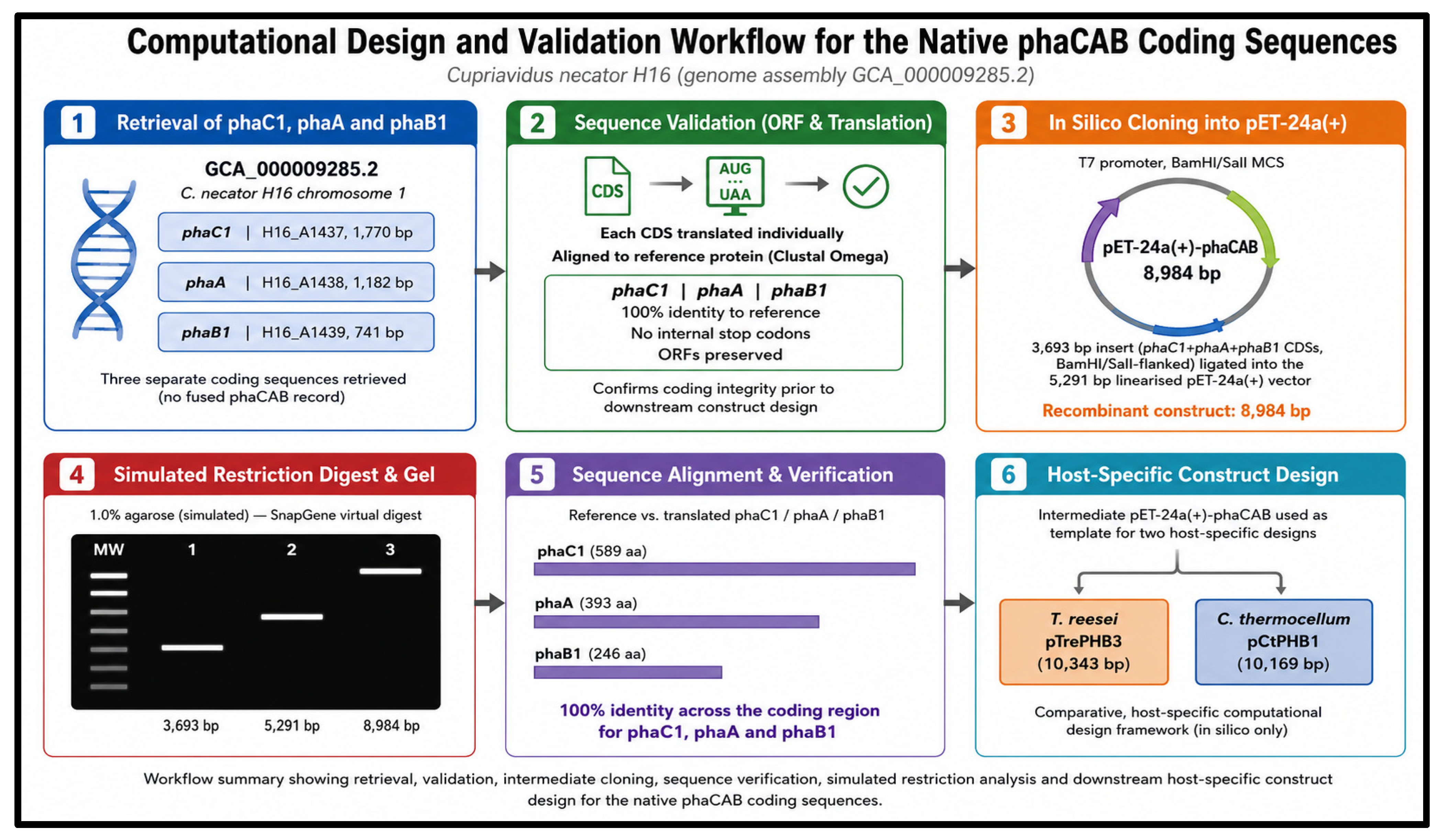
phaB, respectively. The three coding sequences were treated as separate open reading frames. Their coding boundaries, start codons, terminal stop codons and translated products were recorded before downstream construct design. Each coding sequence translated to a single open reading frame with no internal stop codon and full identity to its reference protein. The operon was selected because it represents one of the extensively characterised PHB biosynthetic systems and has been successfully expressed in a variety of microbial hosts, making it an appropriate model pathway for computational strain engineering studies [
22,
23]; PHB biosynthesis has also been characterised in taxonomically diverse producers more broadly [
26]. The operon encodes the three core enzymes required for PHB biosynthesis: PhaA (acetyl-CoA acetyltransferase), PhaB (acetoacetyl-CoA reductase), and PhaC (PHB synthase). Sequence integrity, open reading frame preservation and translational continuity were assessed using Clustal Omega (v1.2.4) prior to downstream construct design. The genes were handled as three separate open reading frames throughout, and no fused PhaCAB product was generated. The bioinformatic tools and sequence resources used are summarised in
Table 2.
2.2. In Silico Physicochemical Characterisation of phaCAB-Encoded Proteins
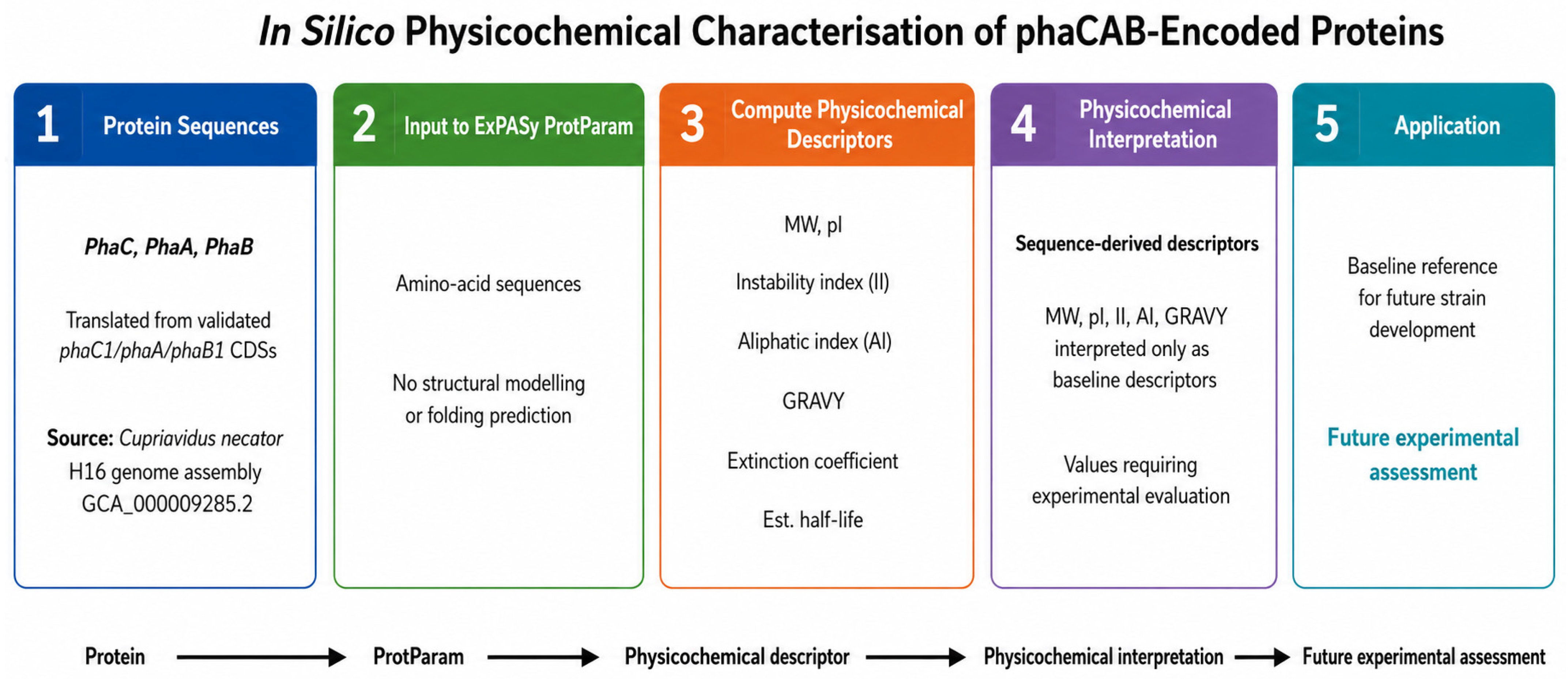
The physicochemical properties of
PhaA,
PhaB and
PhaC were analysed using the ExPASy ProtParam platform, as shown in
Figure 2. Parameters including molecular weight, theoretical isoelectric point, instability index, aliphatic index and hydropathicity were examined. These parameters were reported as baseline sequence-derived physicochemical descriptors and were not used to predict solubility, expression performance, protein folding, catalytic activity or host compatibility. No structural modelling or protein folding predictions were performed.
Physicochemical characterisation was included to provide baseline sequence-derived descriptors of the PHB biosynthetic enzymes and to identify any values that may warrant attention in future experimental implementation. These parameters were not used to predict solubility, expression performance, protein folding, catalytic activity, cofactor availability or host compatibility and are interpreted only as preliminary physicochemical descriptors.
2.3. Host-Specific Vector Selection and Expression Design
Expression vectors were selected according to the physiological and transcriptional characteristics of each host system. pET-24a(+) was selected as an intermediate cloning vector for
E. coli BL21 (DE3). For
T. reesei, three independent expression cassettes were designed, each with its own promoter and terminator rather than a single polycistronic or bidirectional-promoter arrangement, reflecting the limited characterisation of multi-gene expression architectures in this host [
27], each combining the constitutive
tef1 promoter, a fungal Kozak context, one coding sequence and a
cbh1 terminator, a validated fungal selectable marker (
hph) and 5′ and 3′ homology arms (approximately 1000 bp each) targeting a candidate integration region, designated NL1 (candidate site:
T. reesei RUT C-30 assembly GCA_000513815.1, scaffold_6:142,300–144,300, + strand; coordinates given in half-open, 0-based format [start, end), consistent with standard genomic interval notation, so that the 5′ arm [142,300–143,300) and 3′ arm [143,300–144,300) are each exactly 1000 bp with no overlap, combining to exactly 2000 bp; the site is a computationally proposed candidate and its neutrality requires experimental confirmation), and is designed to preserve the native
cbh1 locus and its cellulolytic function, consistent with reports that integrating heterologous genes away from the native cbh1 locus can avoid disrupting endogenous cellulase expression and, depending on the alternative site, may support higher heterologous transcription than cbh1-locus integration itself [
28,
29]. For
C. thermocellum, pIKM1 was used as the shuttle backbone and supplemented with a host-compatible
groEL promoter, individual ribosome-binding sites, appropriate intergenic spacing and a transcription terminator. Because promoter strength cannot be established conclusively from sequence analysis alone, promoter compatibility was assessed from documented function in the intended host. Quantitative promoter strength and condition-specific activity remain to be determined experimentally. Vector selection was based on host compatibility, promoter availability and suitability for heterologous expression studies reported in the literature [
18,
19].
2.4. Primer Design and Restriction Site Engineering
Primers were designed to support intermediate assembly in E. coli and host-specific construction for T. reesei and C. thermocellum. For the intermediate construct, BamHI and SalI sites flanked the assembled insert in pET-24a(+). For C. thermocellum, KflI and XbaI sites flanked the groEL-driven cassette for insertion into pIKM1. For T. reesei, gene-specific primers carried fungal Kozak contexts and overlap tails for cassette assembly rather than a single directional insertion, so that each gene formed an independent cassette. Melting temperature, GC content and site incorporation were evaluated in SnapGene (v6.2) to confirm theoretical compatibility. The individual coding sequences were screened to confirm the absence of internal recognition sites that could interfere with assembly. The other key factors were vector compatibility, preservation of coding sequence integrity and maintenance of promoter-gene orientation required for heterologous expression.
2.5. Host-Specific Codon-Usage and Sequence-Composition Analysis
Because successful virtual assembly does not establish expression feasibility, a host-specific compatibility analysis was performed for each coding sequence in the two final hosts and, for comparison, in E. coli BL21 (DE3), the intermediate assembly host. For phaC, phaA and phaB against both T. reesei and C. thermocellum, the following parameters were evaluated: gene length; coding-sequence GC content; host genome GC content and the difference between them; codon adaptation index (CAI); effective number of codons; rare-codon frequency and clustering.
The coding sequences of
phaC,
phaA and
phaB were analysed separately after removal of the terminal stop codon for codon-based calculations. Host-specific codon-adaptation reference tables were generated from annotated ribosomal-protein coding sequences of the respective host assemblies. The
C. thermocellum DSM 1313 reference set comprised 56 ribosomal-protein coding sequences from assembly GCF_000184925.1, and the
T. reesei RUT C-30 reference set comprised 100 ribosomal-protein coding sequences from assembly GCA_000513815.1. In both cases, coding sequences annotated as ribosomal proteins in the respective RefSeq/GenBank annotation were selected, excluding pseudogenes and partial CDSs. For
E. coli BL21(DE3), the built-in Biopython SharpEcoliIndex reference set (Bio.SeqUtils. CodonUsageIndices), derived from the highly expressed
E. coli gene set of Sharp and Li [
30], was used, and genome GC content was calculated from assembly GCF_000009565.1. Native
C. necator H16 coding sequences were retrieved from assembly GCA_000009285.2.
The codon adaptation index was calculated using the Sharp–Li relative-adaptiveness method [
30] implemented in Biopython 1.86. Codons absent from a host reference set were assigned a pseudocount of 1 before normalisation. The effective number of codons was calculated according to the Wright method [
31] as Nc = 2 + 9/F2 + 1/F3 + 5/F4 + 3/F6, where F values represent synonymous-family homozygosity.
Gene GC content was calculated from the complete coding sequence, including its terminal stop codon. Host GC content was calculated directly from unambiguous A, C, G and T bases in the corresponding genome assembly. GC difference was calculated as gene GC% minus host genome GC% and is reported in percentage points.
A sense codon was classified as rare when its host-specific relative-adaptiveness value was below 0.10. Rare-codon frequency was calculated as the number of rare codons divided by the total number of sense codons in the stop-excluded coding sequence, multiplied by 100. A rare-codon cluster was defined as a 10-codon sliding window containing at least three rare codons. Overlapping qualifying windows were merged and reported as one cluster. Several methodological caveats apply to this analysis. CAI values were calculated against different host-specific reference sets (the built-in Biopython SharpEcoliIndex for E. coli; ribosomal-protein reference sets assembled for T. reesei and C. thermocellum) and are not a directly equivalent absolute scale across hosts; they should be read as within-host relative measures rather than a cross-host performance ranking. The pseudocount of 1 assigned to codons absent from a reference set was not varied, so its quantitative effect on the reported CAI values has not been evaluated. Whole-genome GC content is a coarse comparator, particularly for the eukaryotic T. reesei genome, where coding-region GC and third-codon-position (GC3) content would be more informative than a single genome-wide value; the GC comparisons reported here should be interpreted with this limitation in mind. The 0.10 relative-adaptiveness threshold used to classify rare codons, and the 10-codon/three-rare-codon window used to define clusters, follow common conventions in the codon-usage literature but were not subjected to a sensitivity analysis in this study; different thresholds could plausibly shift which codons and windows are flagged.
Ribosome-binding sites for the C. thermocellum construct were designed within the native groL (groEL) 5′ leader of C. thermocellum DSM 1313 (NC_017304.1, immediately upstream of position 486968). Predicted translation-initiation rates were calculated with OSTIR v1.1, an open-source implementation of the RBS Calculator thermodynamic model, using a host-specific anti-Shine–Dalgarno sequence (5′-ACCTCCTTT-3′) taken from the 3′ terminus of the C. thermocellum 16S ribosomal RNA (locus CLO1313_RS02235). Shine–Dalgarno cores and spacer lengths were varied systematically, and the first 99 nucleotides of each native coding sequence were supplied as the downstream context. Predicted initiation rates are reported in arbitrary units on the RBS Calculator scale and are relative rather than absolute measures; the underlying model is parameterised for Escherichia coli at 37 degrees Celsius and has not been calibrated for thermophilic translation at 55 degrees Celsius.
2.6. Computational Construct Validation
Constructs were validated computationally with Clustal Omega (v1.2.4) and SnapGene (v6.2). Alignments verified preservation of each open reading frame after assembly. Simulated restriction digestion and virtual agarose-gel electrophoresis were used to check whether predicted fragment sizes matched the expected vector and insert architecture. These analyses provided construct-level computational consistency and did not demonstrate laboratory amplification, ligation efficiency, transformation or construct stability.
2.7. In Silico Cloning and Host-Specific Subcloning Strategy
For
T. reesei, three
tef1-driven cassettes were assembled
in silico, each carrying a fungal Kozak context, one coding sequence and a
cbh1 terminator, an
hph selection cassette and candidate NL1 homology arms (designed to preserve the native
cbh1 locus). For
C. thermocellum, a single
groEL-driven cassette containing individually tuned ribosome-binding sites upstream of
phaC,
phaA and
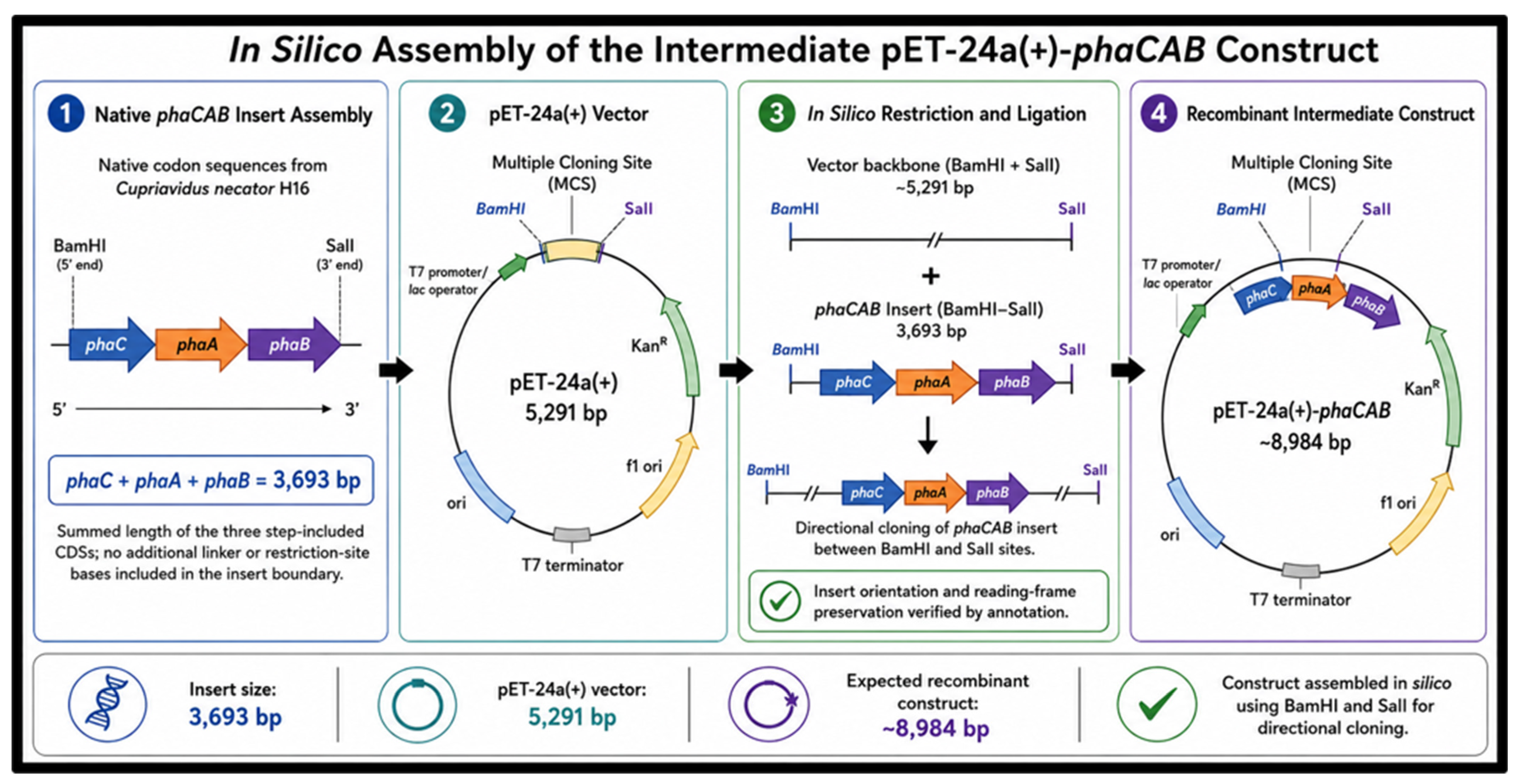
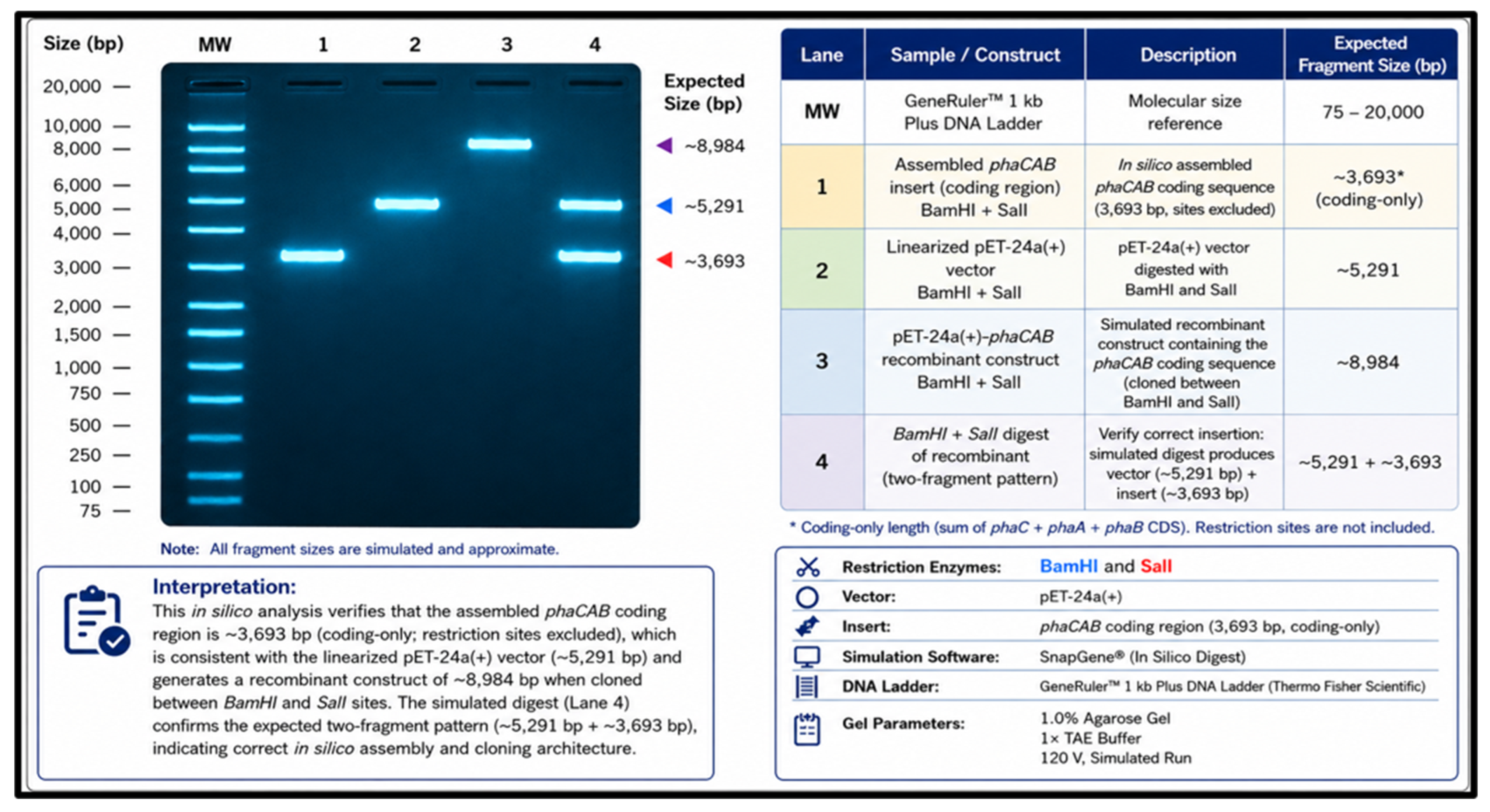
phaB and a downstream terminator was assembled into pIKM1. Insert orientation and reading frame preservation were verified through annotation of the resulting construct maps. The overall cloning strategy was designed to evaluate the feasibility of integrating the PHB biosynthetic pathway into cellulolytic hosts with metabolic characteristics relevant to CBP. The initial phase was the 3693 bp
phaCAB insert assembly into the 5291 bp pET-24a(+) vector to generate an approximately 8984 bp intermediate construct before development of the host-specific expression systems, as shown in
Figure 3.
The in silico cloning workflow consisted of sequence amplification, restriction enzyme digestion, vector linearisation and ligation simulation using SnapGene’s construct assembly module (San Diego, CA, USA). Restriction digestion was simulated under default enzyme recognition parameters, and insert orientation was verified through annotation of open reading frames within the resulting plasmid maps.
2.8. In Silico Subcloning into T. reesei
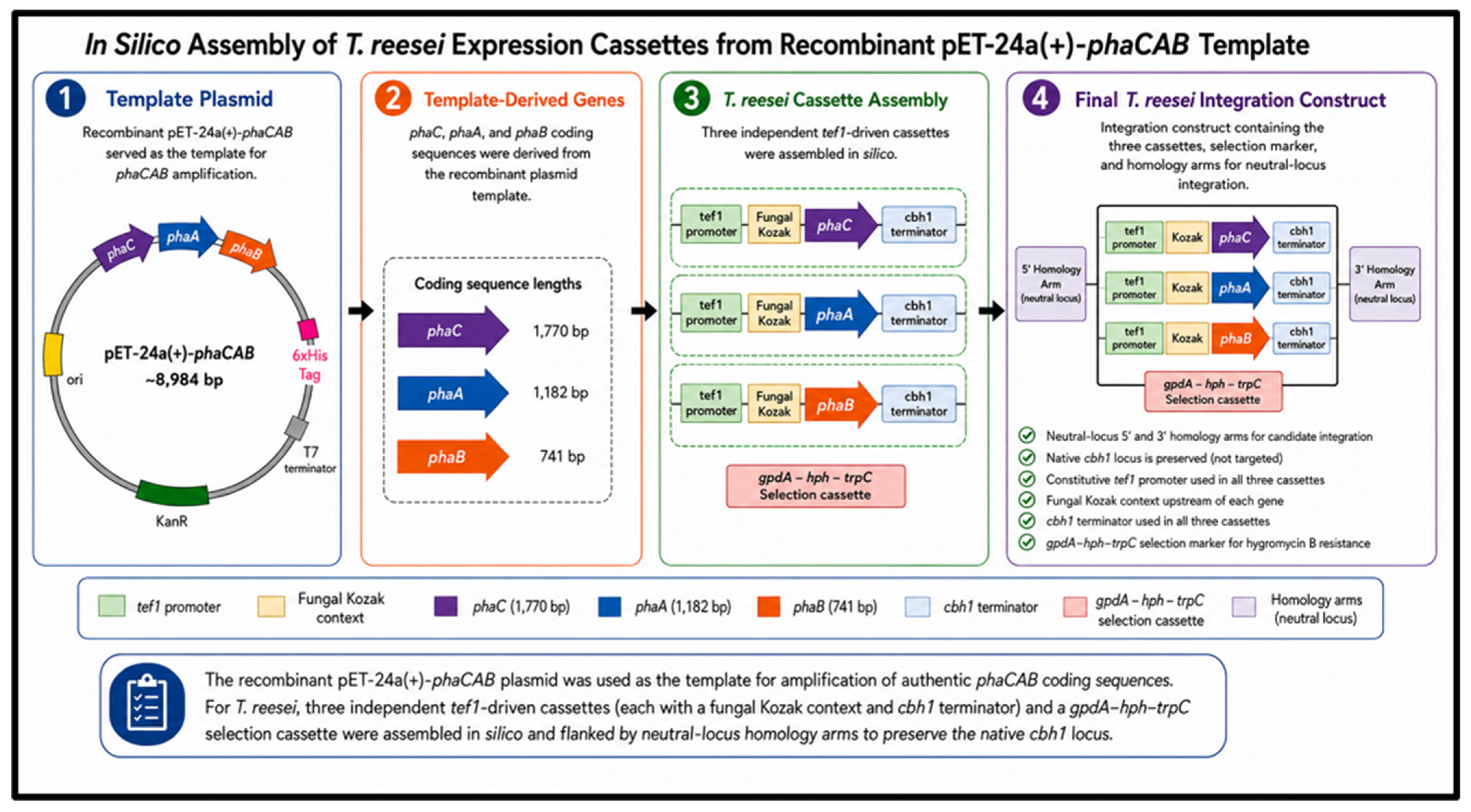
The recombinant pET-24a(+)-phaCAB plasmid was used as the template for per-gene amplification into three cassettes. For
T. reesei, three
tef1-driven expression cassettes were assembled
in silico, each comprising a fungal Kozak sequence, a single coding sequence and a
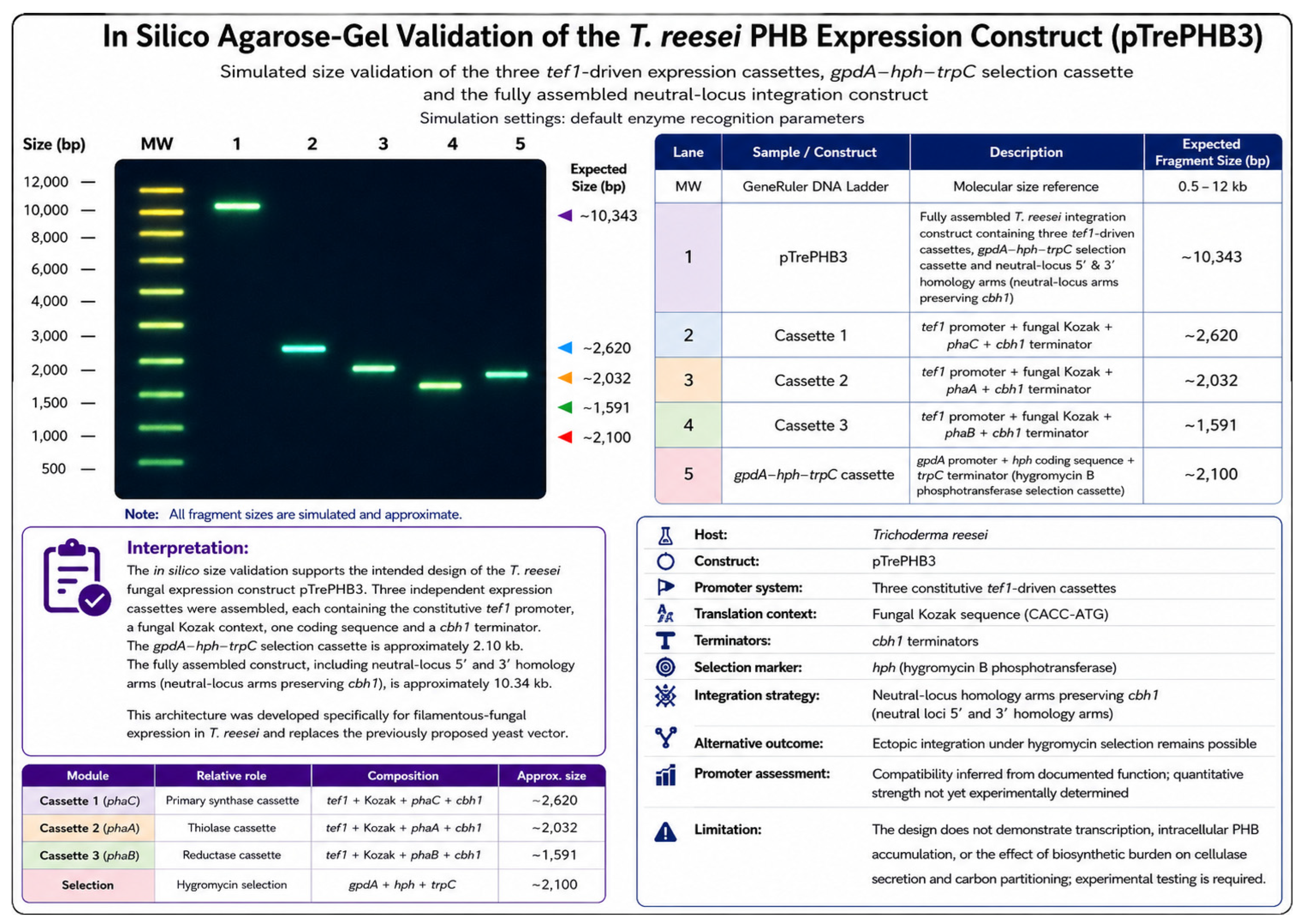
cbh1 terminator. The final construct also contained an
hph selection cassette and candidate NL1 homology arms as illustrated in
Figure 4.
2.9. In Silico Subcloning into C. thermocellum
The recombinant pET-24a(+)-
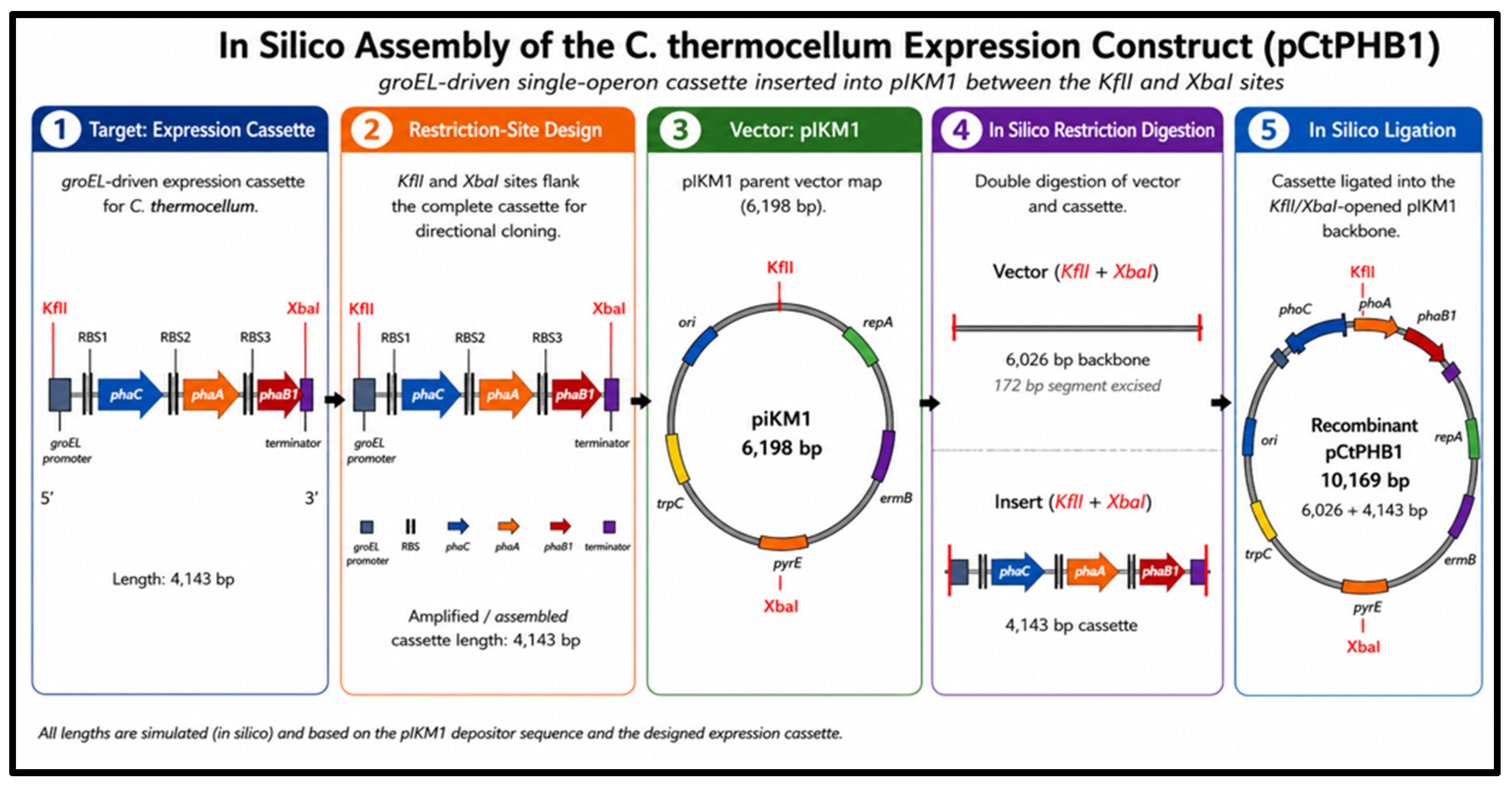
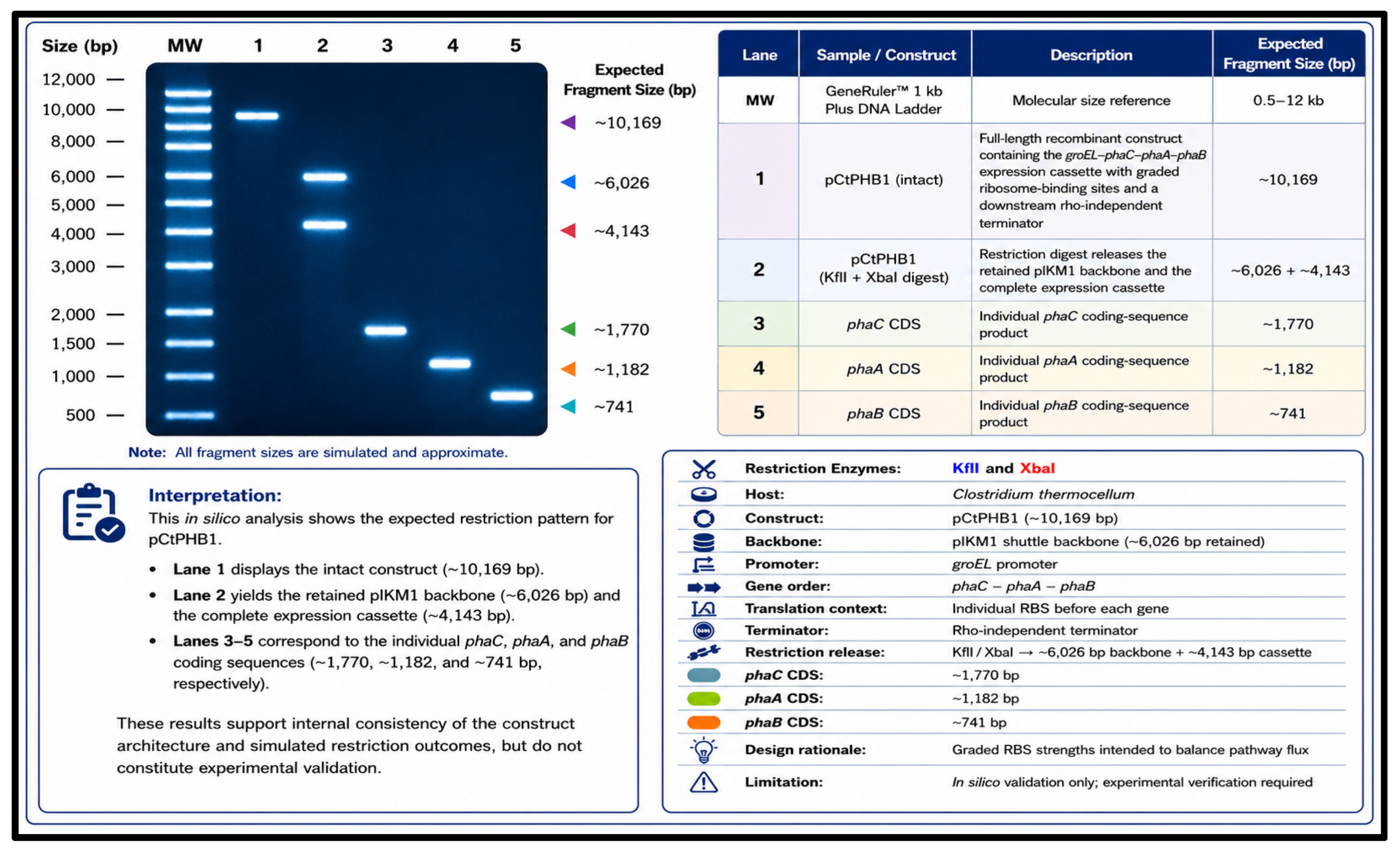
phaCAB construct was used as the source template for simulated subcloning into the pIKM1 vector. The three coding sequences were used as the basis for a complete expression cassette comprising the groEL promoter (200 bp), RBS1–phaC (35 bp ribosome-binding site plus the 1770 bp phaC coding sequence), a 40 bp intergenic region, RBS2–phaA (35 bp ribosome-binding site plus the 1182 bp phaA coding sequence), a second 40 bp intergenic region, RBS3–phaB (35 bp ribosome-binding site plus the 741 bp phaB coding sequence), and a downstream 65 bp rho-independent terminator, giving a 4143 bp cassette that was assembled
in silico and inserted between the KflI and XbaI sites of pIKM1, followed by virtual digestion of both insert and vector within SnapGene. Recombinant construct assembly was performed through simulated ligation, and sequence integrity was verified using Clustal Omega. The resulting construct was evaluated for theoretical compatibility with the thermophilic host
C. thermocellum, as shown in
Figure 5.
In silico pathway design is increasingly used in metabolic engineering to reduce experimental costs and identify feasible cloning strategies before laboratory implementation. The computational framework developed in this study therefore provides a rational design step for future experimental strain construction.
2.10. Study Scope and Computational Limitations
This study was designed as a computational construct-development and feasibility assessment. No laboratory cloning, transformation, expression analysis or PHB production was conducted. Promoter activity, plasmid stability, transformation efficiency, transcriptional regulation, protein expression, metabolic flux and polymer accumulation were not experimentally evaluated. The constructs therefore represent candidate designs intended to guide future laboratory implementation and strain development.
3. Results and Discussion
3.1. Confirmation of phaCAB Sequence Retrieval and Translation
The retrieved native
phaC1,
phaA and
phaB1 coding sequences from
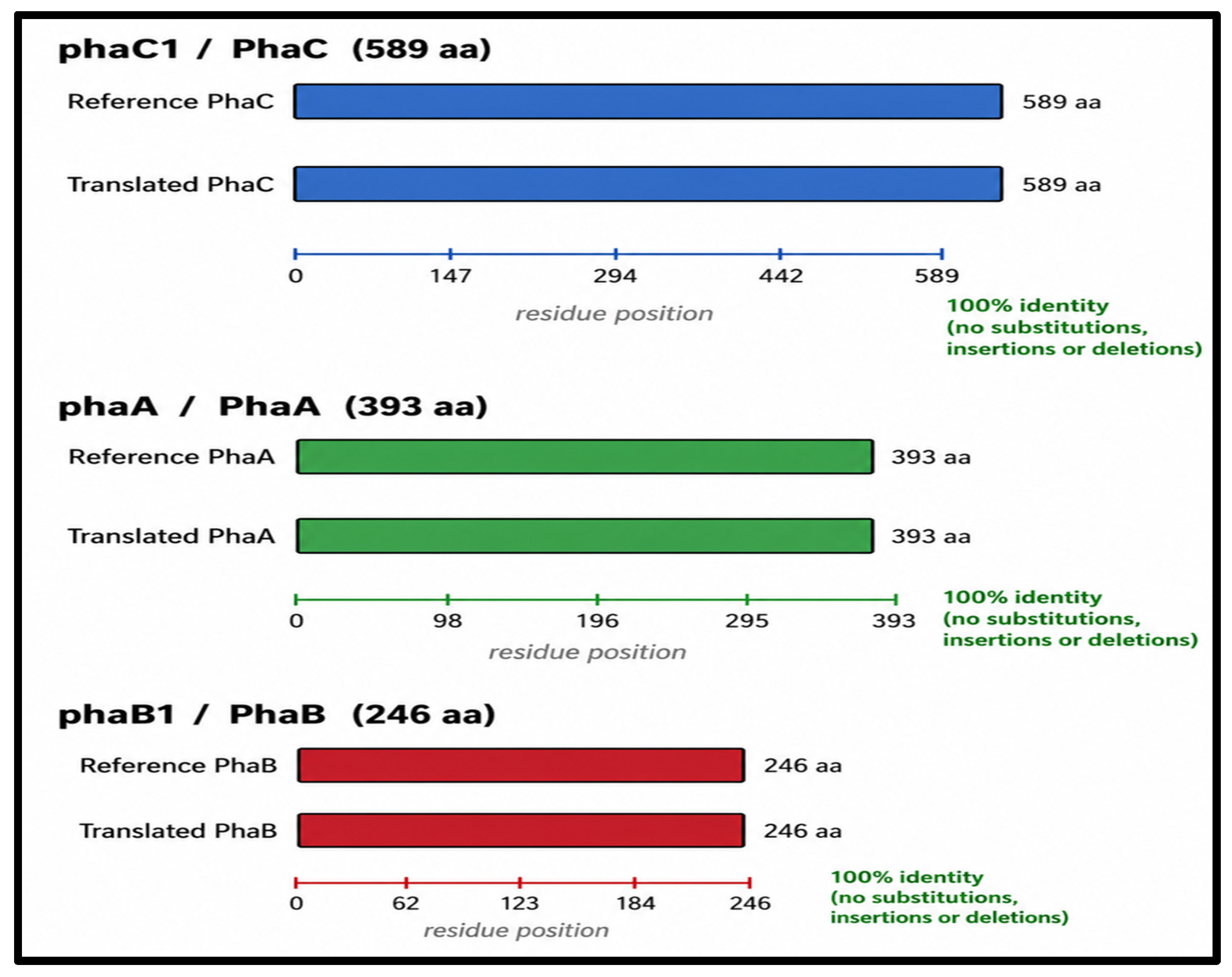
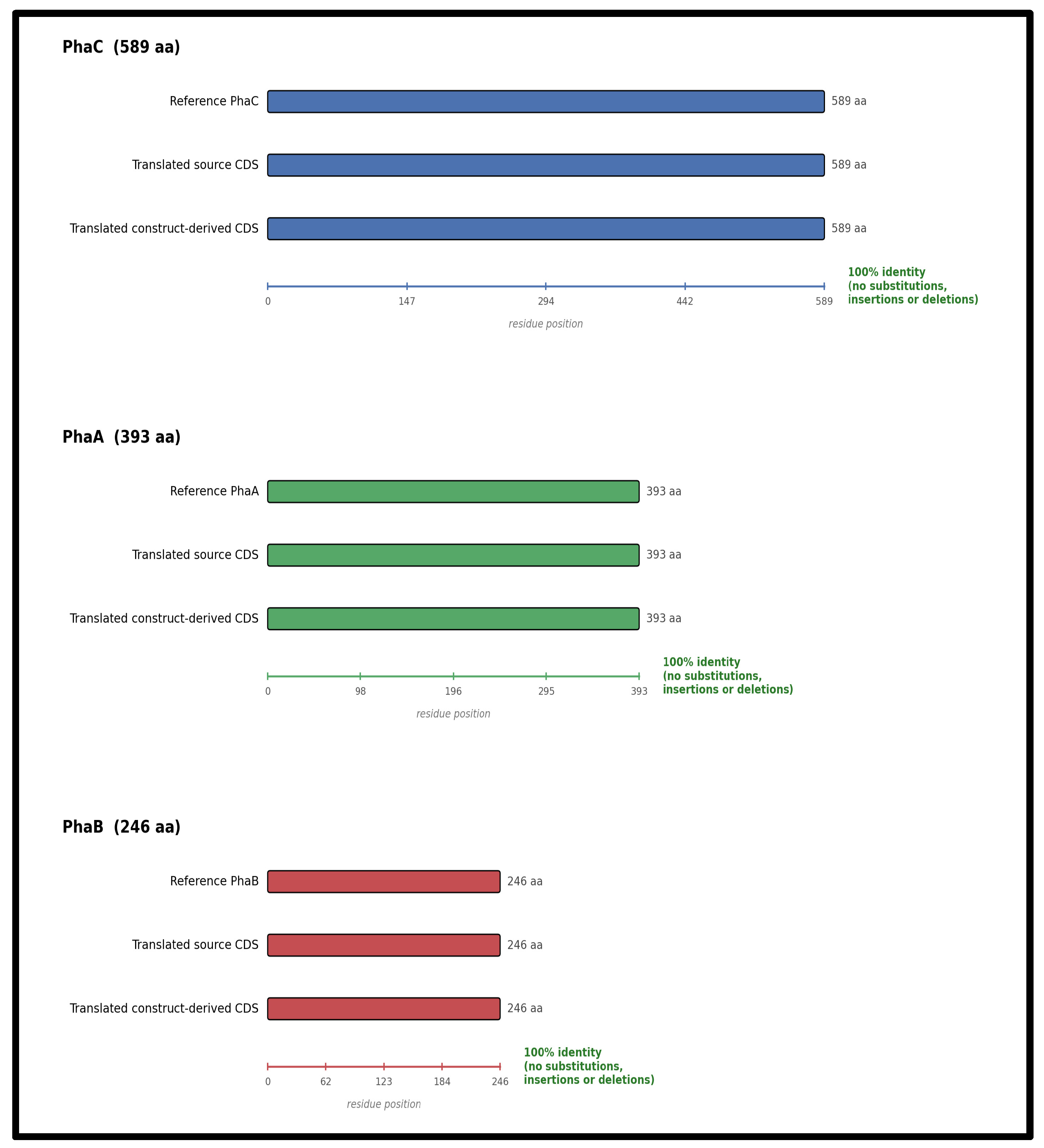
Cupriavidus necator H16 (assembly GCA_000009285.2) were translated individually and aligned with their respective reference proteins using Clustal Omega. Summarised schematically in
Figure A1, we observed 100% identity between each translated sequence and its corresponding reference protein, confirming preservation of the open reading frames (ORFs) and the absence of substitutions, insertions, or deletions throughout the translation workflow. These results indicate that the coding regions remained intact and suitable for downstream cloning and construct development.
The 100% identity here reflects faithful retrieval and translation of the deposited C. necator H16 coding sequences, not cross-species conservation.
The confirmed sequence integrity provided confidence for subsequent physicochemical characterisation, primer design, and in silico cloning analyses. The 100% identity is a quality-control check confirming the accuracy of the sequence-retrieval and translation workflow used in this study; it is not itself a substantive biological finding.
3.2. Physicochemical Characterisation of the phaCAB-Encoded Proteins
3.2.1. PhaA (Acetyl-CoA Acetyltransferase)
The
phaA gene encodes the acetyl-CoA acetyltransferase protein, characterised in
Table 3.
In several bacteria,
phaA is clustered with
phaB (acetoacetyl-CoA reductase) in an operon, suggesting coordinated expression during PHB production. However, in some species, a transcriptional stop signal between
phaA and
phaB may uncouple their expression. PhaA is responsible for the initial condensation of two acetyl-CoA molecules to form acetoacetyl-CoA, thereby initiating PHB biosynthesis [
32]. The enzyme consists of 393 amino acids [
32], with a calculated molecular weight of 40.87 kDa and a theoretical isoelectric point (pI) of 5.85, indicating a mildly acidic character. The instability index (28.9) classifies the enzyme as stable. The aliphatic index was comparatively high at 92.4; however, actual thermal stability requires experimental testing. The negative GRAVY value (−0.12) indicates overall hydrophilic character. Although computational predictions cannot confirm expression success, these characteristics provide preliminary support for future experimental expression studies.
3.2.2. PhaB (Acetoacetyl-CoA Reductase)
PhaB, also known as acetoacetyl-CoA reductase, is a key enzyme in the polyhydroxyalkanoate (PHA) biosynthetic pathway and is described in
Table 4. It catalyses the NADPH-dependent reduction of acetoacetyl-CoA to (R)-3-hydroxybutyryl-CoA, which is subsequently polymerised by PHA synthase to form PHAs such as polyhydroxybutyrate (PHB).
The enzyme is comparatively smaller, with ≈246 amino acids, a molecular weight of 26.45 kDa and a near-neutral theoretical pI of 6.32. The instability index (31.7) predicts stable protein, and the aliphatic index (84.6) is comparatively high; actual thermal stability requires experimental testing. The slightly negative GRAVY value (−0.05) indicates overall hydrophilic character; ProtParam does not predict subcellular localisation, and any co-factor interaction requires separate experimental or structural evidence.
3.2.3. PhaC (Polyhydroxybutyrate Synthase)
PhaC is the key polymerase responsible for PHB chain elongation. The enzyme comprises approximately 589 amino acids with a molecular weight of 63.98 kDa [
33], as characterised in
Table 5. The instability index (35.4) remains below the threshold for instability, while the aliphatic index (88.1) is comparatively high; actual thermal stability requires experimental testing. The extinction coefficient reflects the abundance of aromatic residues (Trp, Tyr, Cys) and is principally useful for estimating protein concentration; it does not itself establish structural stability. The GRAVY value (−0.09) indicates overall hydrophilic character; ProtParam does not predict subcellular or granule-associated localisation.
Collectively, the ProtParam analyses indicate baseline sequence-derived physicochemical descriptors consistent with stable, hydrophilic proteins; actual expression, folding, activity and host compatibility require experimental validation.
Similar physicochemical characteristics have been reported for PHB biosynthetic enzymes from C. necator, which are typically stable intracellular proteins involved in polymer synthesis pathways. These sequence-derived physicochemical descriptors provide baseline information for future heterologous-expression studies but do not predict host compatibility or expression performance.
Comparable ProtParam-based physicochemical profiling of PHA synthase (PhaC) enzymes across other industrially relevant PHA-producing genera (Azotobacter, Bacillus, Cupriavidus and Halomonas) reported instability indices for Cupriavidus PhaC homologues of approximately 34–43 and negative GRAVY values between −0.27 and −0.16, broadly consistent with the stable, hydrophilic character (instability index 35.4, GRAVY −0.09) obtained here for PhaC from
C. necator H16 [
34]. This agreement across independent
in silico analyses of different PhaC sequences supports the general reliability of ProtParam-derived descriptors as a preliminary screening step; however, as in that study, such sequence-derived predictions alone cannot substitute for experimentally resolved structural or functional data, particularly given the reported structural divergence of Bacillus-derived PHA synthases from the otherwise structurally conserved Azotobacter, Cupriavidus and Halomonas group [
34].
3.3. Host-Specific Codon and Regulatory Compatibility
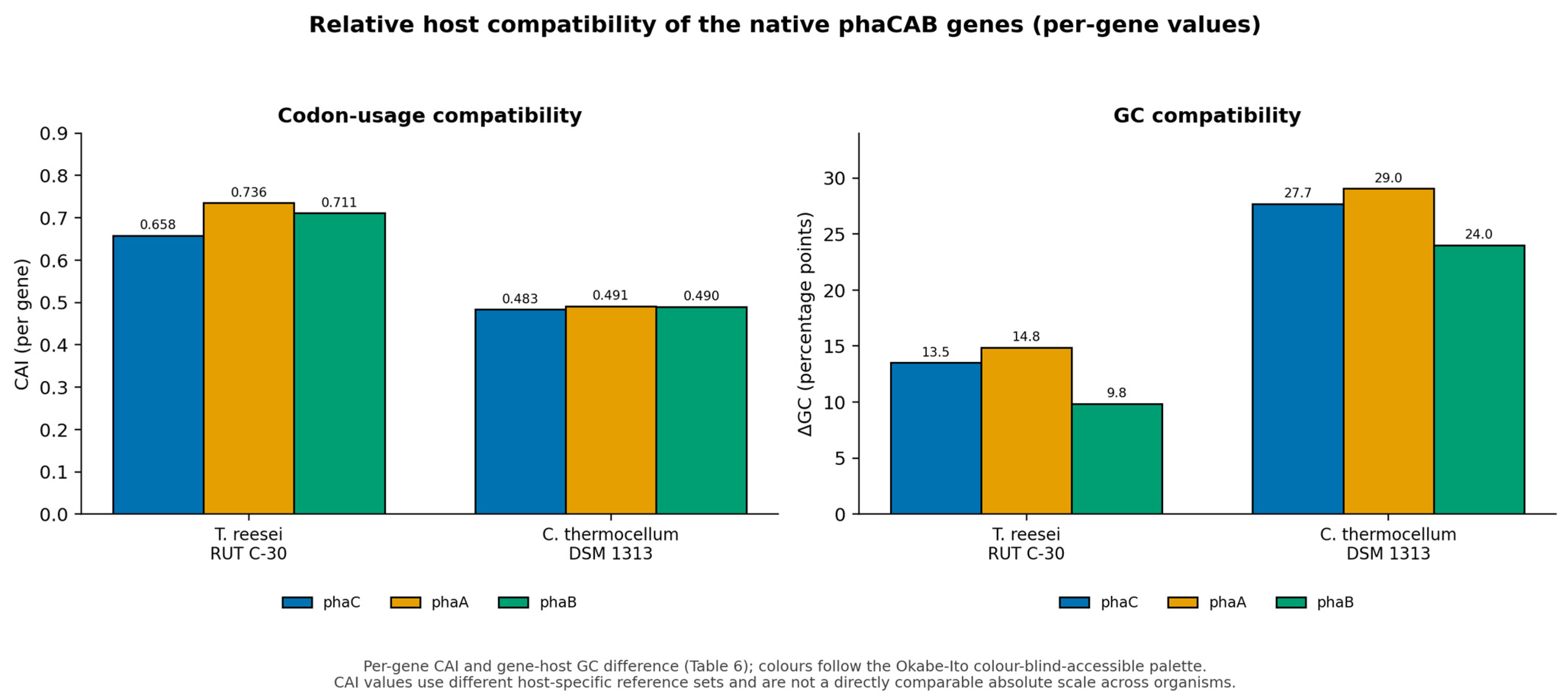
The native phaC, phaA and phaB coding sequences from C. necator H16 displayed different codon-usage profiles across the two final hosts and the E. coli intermediate comparator. For E. coli BL21 (DE3), CAI values were 0.7666, 0.7695 and 0.7544 for phaC, phaA and phaB respectively, and no codon in any of the three genes fell below the rare-codon threshold. E. coli showed the highest codon compatibility, although it was included only as an intermediate comparator.
The lowest CAI values were obtained for C. thermocellum DSM 1313, at 0.4832 for phaC, 0.4912 for phaA and 0.4898 for phaB. This host also showed the largest compositional mismatch, with the GC contents of phaC, phaA and phaB exceeding the host genome GC content by 27.69, 29.04 and 24.01 percentage points respectively. Rare-codon frequencies were 5.26% for phaC, 3.05% for phaA and 4.07% for phaB, and the dominant host-disfavoured codon in all three genes was the arginine codon CGC, which is strongly avoided in this AT-rich thermophile. Two rare-codon clusters were identified in phaC and one in phaB.
Intermediate-to-high CAI values were obtained for T. reesei RUT C-30, at 0.6582 for phaC, 0.7356 for phaA and 0.7111 for phaB. The compositional mismatch was correspondingly smaller, at 13.50, 14.85 and 9.82 percentage points. Rare codons were scarce, at 0.68% for phaC and 0.51% for phaA, with none detected in phaB, and no rare-codon cluster was identified in any of the three genes. The principal host-disfavoured codons were AAA and GTA.
ENC values were 31.17 for phaC, 27.76 for phaA and 29.28 for phaB. These values indicate moderately biased synonymous-codon usage, consistent with the high GC content of the C. necator H16 genome (66.34%) and typical of native bacterial coding sequences.
This is reflected in the relative codon-usage compatibility and rare-codon load (
Table 6 and
Figure 6), which diverge moderately from
T. reesei and strongly from
C. thermocellum, so codon optimisation is more critical for the thermophile. The pCtPHB1 construct reported here deliberately retains the native
C. necator coding sequences as an unoptimised reference design: it establishes a baseline against which the magnitude of the predicted codon-usage mismatch can be judged, and avoids introducing untested synonymous substitutions ahead of any experimental data on their effect. A codon-optimised pCtPHB1 alternative, incorporating the
C. thermocellum-preferred codons identified here (in particular replacement of the rare CGC arginine codon and disruption of the identified rare-codon clusters), is a logical next design iteration but was not generated computationally in this study; the native-CDS construct should therefore be read as a reference point rather than a final expression-ready design for this host.
The genes showed moderately high CAI values relative to the selected E. coli reference set, intermediate-to-high values in T. reesei RUT C-30 and the lowest values in C. thermocellum DSM 1313. The largest compositional mismatch occurred in C. thermocellum, where the genes were 24.01–29.04 percentage points more GC-rich than the host genome. In T. reesei, the GC differences were 9.82–14.85 percentage points, rare codons were scarce and no rare-codon clusters were detected, although isolated host-disfavoured AAA and GTA codons were identified.
The ENC values of approximately 28 to 31 indicate moderate synonymous-codon bias. This is consistent with the high-GC genome of C. necator H16 and confirms that native coding sequences, rather than an engineered deposit, underpin the compatibility analysis reported here.
Positive values indicate that the gene is more GC rich than the host genome, whereas negative values indicate that it is less GC rich. Here, ΔGC was calculated as
The principal host-disfavoured codons in the T. reesei comparison were AAA and GTA, based on the defined relative-adaptiveness threshold of 0.10.
Rare-codon analysis reinforced this pattern (
Table 7). In the
C. thermocellum comparison, 3.05 to 5.26% of sense codons fell below the relative-adaptiveness threshold, predominantly the arginine codon CGC, and the genes were 24.01 to 29.04 percentage points more GC rich than the host genome, with two clusters in
phaC and one in
phaB. In contrast,
T. reesei showed rare-codon frequencies of 0 to 0.68% and no clusters. The results do not support a single universal optimisation strategy. The thermophilic bacterial construct requires attention to the substantial GC mismatch, the CGC arginine load and host-specific ribosome-binding-site architecture, whereas the fungal construct requires comparatively minor synonymous adjustment. Experimental expression data will ultimately be required to determine whether further recoding is necessary.
This host-dependent divergence in codon compatibility parallels findings from a comparative evaluation of open-source codon harmonisation tools across
Escherichia coli, Saccharomyces cerevisiae and Streptomyces lividans, which found that no single harmonisation strategy performed uniformly well across hosts and that gene-specific features such as GC content and RNA secondary structure significantly influenced outcomes [
35]. That study also cautioned that indiscriminate removal of rare codons can eliminate functionally important rare-codon clusters that assist co-translational folding, rather than simply removing translational bottlenecks [
35]. This reinforces the conservative choice made here to retain the native
C. necator coding sequences for pCtPHB1 as an unoptimised reference construct rather than pre-emptively substituting the identified rare-codon clusters in phaC and phaB without experimental evidence of their functional role.
3.4. Assembly of the Intermediate E. coli Construct
The individual genes were assembled into pET-24a(+) as a convenient intermediate carrier. Simulated restriction digestion and virtual agarose-gel electrophoresis produced fragment sizes consistent with the expected architecture (
Figure 7): the coding-only insert at approximately 3693 bp, the linearised vector at approximately 5291 bp and the recombinant construct at approximately 8984 bp, with the expected two-fragment pattern on BamHI and SalI digestion. This simulated digest serves as a design-verification (quality-control) check confirming that the construct sequence is internally consistent with its intended architecture; it does not constitute experimental confirmation of amplification, ligation efficiency, gene expression or PHB production, and the pET-24a(+) construct does not establish expression in either final host. The pET-24a(+) intermediate is used here for convenience rather than scientific necessity: because the three coding sequences were first assembled and computationally sequence-checked as a single annotated unit in a well-characterised bacterial backbone, this step provided a common, easily inspected reference sequence from which the two host-specific constructs (TrePHB3 integration construct and pCtPHB1) could each be derived computationally, rather than assembling each host-specific design independently from the three separate source CDSs. The intermediate is retained only as an assembly and template-supply step.
From a circular bioeconomy perspective, the in silico preservation of the intended pathway architecture represents the first step toward developing microbial systems capable of converting lignocellulosic residues such as HH into biodegradable polymers. Although no experimental expression studies were conducted, the construct architecture provides a theoretical framework for future strain development and pathway implementation.
3.5. Host-Specific T. reesei Construct Design (TrePHB3 Integration Construct)
A dedicated fungal expression architecture was designed for
T. reesei, suited to filamentous-fungal expression. Three independent cassettes were assembled, each combining the constitutive
tef1 promoter, a fungal Kozak context, one coding sequence and a
cbh1 terminator (
Table 8).
Promoter compatibility was assessed from the documented function of the tef1 promoter and cbh1 terminator in T. reesei; quantitative promoter strength remains to be determined experimentally. Selection is provided by a validated gpdA–hph–trpC cassette. Integration is directed by candidate NL1 5′ and 3′ homology arms designed to preserve the native cbh1 locus and its cellulolytic function. Ectopic integration under hygromycin selection remains a possible alternative. The assembled construct, designated TrePHB3 integration construct, contains three independent expression cassettes of approximately 2620, 2032 and 1591 bp, an approximately 2100 bp selection cassette and approximately 2000 bp of combined homology arms, giving a fully assembled size of 10,343 bp; this total is the exact arithmetic sum of the stated component design values rather than an independently verified sequence length, since the regulatory-part lengths (promoter, Kozak context, terminator, homology arms) are representative design values rather than fixed experimentally determined sequences. This design accounts for fungal gene-expression architecture but does not demonstrate transcription, intracellular PHB accumulation or the effect of the added biosynthetic burden on cellulase secretion and carbon partitioning, all of which require experimental testing. TrePHB3 integration construct is designed as a named collection of three assembled tef1-Kozak-CDS-cbh1 integration cassettes plus the gpdA-hph-trpC selection cassette and NL1 homology arms, intended for genomic integration at the candidate NL1 site rather than as an autonomously replicating circular plasmid; no fungal replication origin or plasmid backbone is included in the reported 10,343 bp total, and the “p” designation refers to the assembled DNA construct rather than a self-replicating vector. Repeating the same tef1 promoter and cbh1 terminator sequence in all three cassettes introduces sequence redundancy that could in principle increase the risk of intramolecular recombination, cassette rearrangement or transcriptional interference between adjacent modules; this risk was not assessed computationally in this study. Diversifying the promoter and terminator sequences used across the three cassettes, for example by substituting alternative constitutive T. reesei promoters and terminators of comparable strength, would be a reasonable design modification to reduce this redundancy and is noted here as a direction for future design iterations rather than a change implemented in the present construct.
The individual design choices underlying this architecture can also be weighed against the literature rather than taken only on documented function. The gpdA–hph–trpC selection cassette used here originates from a heterologous
Aspergillus nidulans expression system [
36]; a
T. reesei-homologous alternative built from the native pki1 promoter and cbh1 terminator has been reported to give a 15- to 20-fold higher transformation frequency than this heterologous gpdA/trpC-type cassette [
37], so the selection strategy adopted here may be more conservative than necessary for this host. The choice of a candidate NL1 site over the cbh1 locus is similarly a design decision rather than a validated one: cbh1 remains the only integration site in
T. reesei with a documented positive effect on heterologous gene expression, and NL1 has not, to our knowledge, been independently benchmarked against it. A further consideration follows from the sequence redundancy already noted above: a tef1-promoter/cbh1-terminator cassette on a circular plasmid has been shown to integrate preferentially by homologous recombination immediately upstream of the native tef1 locus rather than at the intended site, driven by sequence identity with the promoter itself [
18]. Because the TrePHB3 design places three copies of the same
tef1 promoter in a single construct, this precedent raises the possibility that integration could be redirected toward the native
tef1 locus, or toward one of the construct’s own internal promoter copies, rather than being confined to the intended NL1 site; this risk was not evaluated computationally here and would need to be assessed experimentally, for example by junction PCR and sequencing at both the intended locus and the native tef1 locus (
Figure 8).
The tef1/cbh1 cassette architecture adopted for the TrePHB3 construct reflects a previously validated expression strategy in
T. reesei, in which the tef1 promoter has repeatedly been used to drive constitutive heterologous expression. However, a recent review of
T. reesei as a heterologous protein production host emphasises that yields of non-native proteins in this organism remain frequently limited by proteolytic degradation and by incompatibility between the fungus’s secretory machinery, which is highly optimised for native cellulases, and heterologous protein cargo, with multi-protease gene deletion and signal-peptide screening identified as necessary complementary strategies rather than promoter choice alone [
38]. This suggests that the present computational design, while establishing a plausible transcriptional architecture, addresses only one of several bottlenecks likely to determine actual PhaC, PhaA and PhaB expression levels in
T. reesei, and that protease-deficient or secretion-engineered chassis strains may need to be considered alongside this construct in future experimental work.
3.6. Host-Specific C. thermocellum Construct Design
For
C. thermocellum, pIKM1 was retained as the shuttle backbone but supplemented with a complete candidate expression cassette. The cassette places the
groEL promoter upstream of a
phaC,
phaA,
phaB arrangement in which each gene is preceded by its own ribosome-binding site, with a rho-independent terminator downstream. The three ribosome-binding sites were designed with a graded predicted-strength hierarchy (
Table 9) as a design hypothesis to be tested experimentally, not as a quantitatively reliable expression prediction for
C. thermocellum. The highest predicted initiation rate (approximately 40,700 arbitrary units) was assigned to the site preceding
phaB rather than
phaC, on the hypothesis that rapid consumption of the acetoacetyl-CoA generated by PhaA (via the NADPH-dependent PhaB reductase step) would limit accumulation of this intermediate; an intermediate predicted rate (approximately 10,200 arbitrary units) was assigned to
phaA, and a lower predicted rate (approximately 3300 arbitrary units) to
phaC, giving an approximate order-of-magnitude predicted range across the cassette. These OSTIR outputs were not tested against alternative RBS sequences, spacer lengths or downstream sequence contexts, so the robustness of this ranking to such changes is unknown; the values should not be read with more precision than a coarse low/intermediate/high ordering, and predicted initiation rate is distinguished here from actual protein abundance or pathway flux, neither of which was measured.
Because PhaA produces acetoacetyl-CoA and PhaB consumes it in an NADPH-dependent reaction, the highest predicted initiation rate was assigned to
phaB, an intermediate rate to
phaA and a moderate rate to
phaC, a design intended to test whether comparatively higher predicted PhaB initiation could reduce acetoacetyl-CoA accumulation rather than allowing it to build up. None of the designed Shine–Dalgarno or spacer sequences introduced a recognition site for any restriction enzyme used in the assembly workflow. These values are thermodynamic predictions for a mesophilic model and require experimental measurement in
C. thermocellum before the intended translational hierarchy can be considered established. Simulated digestion of the resulting construct, designated pCtPHB1, returned fragment sizes consistent with the intended architecture (
Figure 9).
The RBS spacer lengths designed here (5, 7 and 9 nt for phaC, phaB and phaA respectively) can be compared against an experimentally derived optimum for
C. thermocellum gene expression. Using a chromosomally integrated reporter library, a 6–7 nucleotide gap between the ribosome-binding site and the start codon was identified as optimal for high expression in this organism [
39]. Two of the three designed spacers in pCtPHB1 (phaC at 5 nt and phaA at 9 nt) fall outside this empirically optimal window, while the phaB spacer (7 nt) sits within it; combined with the fact that phaB was assigned the highest predicted initiation rate in the present design, this raises the possibility that the predicted low-to-intermediate initiation rates for phaC and phaA are partly an artefact of spacer geometry rather than solely of Shine–Dalgarno sequence strength, and spacer length should therefore be revisited experimentally alongside RBS sequence in any future optimisation of this construct.
3.7. Comparative Biological Feasibility of the Two Hosts
The two hosts present contrasting engineering profiles. T. reesei is an aerobic mesophile with a pentose phosphate pathway that can supply NADPH, an established genetic toolkit and a strong secretory system, but it diverts substantial carbon to cellulase secretion and directs acetyl-CoA into the tricarboxylic acid cycle and lipid synthesis. C. thermocellum is a thermophilic anaerobe with an exceptionally efficient cellulosome that degrades crystalline cellulose directly, which could remove the need for externally supplied enzymes, but its redox metabolism is dominated by NADH-linked fermentation, its acetyl-CoA is committed to ethanol, acetate, lactate and hydrogen formation, and its genetic accessibility is more limited. Temperature, oxygen requirement, cellulose-degradation strategy, acetyl-CoA and NADPH supply, gene-expression architecture, intracellular PHB burden and expected scale-up challenges therefore differ substantially between the two hosts, and each construct was designed to reflect these differences. Neither design has been tested, so the comparison indicates where experimental effort should focus rather than which host will perform better.
3.8. Metabolic and Physiological Constraints
The computational design and validation of phaCAB constructs in cellulolytic hosts provide a theoretical framework for future experimental evaluation of direct conversion of hemp hurd-derived carbohydrates into PHB through consolidated bioprocessing. By integrating lignocellulose degradation and polymer biosynthesis within a single microbial platform, the proposed strategy may reduce processing complexity, improve resource utilisation and support circular bioeconomy objectives through the valorisation of agricultural residues into biodegradable plastics.
3.8.1. Acetyl-CoA Competition
Acetyl-CoA is a central metabolic intermediate required for multiple essential cellular processes, including energy generation, lipid biosynthesis, and fermentative metabolism. Introduction of the phaCAB pathway genes into cellulolytic hosts may therefore create competition between native metabolic pathways and PHB biosynthesis. In C. thermocellum, acetyl-CoA is naturally directed toward the production of ethanol, acetate, lactate, and hydrogen during anaerobic fermentation. Redirecting this metabolite toward PHB synthesis through the action of PhaA may reduce carbon availability for native energy-generating pathways and potentially affect cellular growth and substrate utilisation efficiency. Similarly, in T. reesei, acetyl-CoA is closely associated with the tricarboxylic acid (TCA) cycle, fatty acid biosynthesis, and cellular maintenance processes. Diverting acetyl-CoA toward PHB accumulation may alter intracellular carbon partitioning and influence fungal growth dynamics, cellulase secretion, and biomass formation. Consequently, balanced metabolic engineering strategies would likely be required to minimise pathway competition while maintaining efficient lignocellulose degradation.
This anticipated competition is consistent with broader experience in PHA metabolic engineering: a recent review of gene-deletion strategies for enhanced PHA production highlights that removal of competing pathways diverting acetyl-CoA or its precursors away from PHA biosynthesis is among the most consistently effective interventions for increasing PHA titre across diverse bacterial hosts [
40]. This suggests that, beyond the phaCAB expression constructs designed here, deletion or downregulation of native fermentative or lipogenic pathways competing for acetyl-CoA in
C. thermocellum and
T. reesei respectively may ultimately be necessary to realise substantial PHB accumulation, rather than heterologous pathway expression alone.
3.8.2. NADPH Availability
The reduction of acetoacetyl-CoA to (R)-3-hydroxybutyryl-CoA by PhaB requires NADPH as a reducing cofactor. The availability of NADPH is therefore a critical determinant of efficient PHB biosynthesis. In C. thermocellum, cellular redox metabolism is predominantly associated with NADH-dependent fermentative pathways, which may limit intracellular NADPH availability for PhaB activity. Insufficient NADPH regeneration could therefore reduce theoretical PHB biosynthetic efficiency and create metabolic imbalances within the engineered host. In contrast, T. reesei possesses active pentose phosphate pathway metabolism, which may provide a more favourable intracellular NADPH supply. However, NADPH is also required for amino-acid synthesis, oxidative stress responses, and lipid metabolism, potentially resulting in competition between native anabolic processes and PHB synthesis. Future metabolic engineering approaches may therefore require cofactor balancing strategies or enhancement of NADPH-generating pathways to improve theoretical PHB production efficiency.
3.8.3. Host-Specific Expression Limitations
Although the computational design workflow demonstrated theoretical construct assembly feasibility, several host-specific biological constraints may influence successful heterologous expression of the phaCAB expression constructs. Codon usage differences between C. necator and the proposed expression hosts may affect translation efficiency and protein folding. In addition, promoter compatibility, plasmid maintenance, transcriptional regulation, mRNA stability and ribosome binding efficiency may vary between bacterial and fungal systems. The thermophilic anaerobic conditions required for C. thermocellum growth may also influence protein stability and folding of the heterologously expressed enzymes. In T. reesei, secretion-associated metabolic burden and intracellular compartmentalisation may further affect PHB biosynthesis. Since codon optimisation and transcriptional modelling were not performed in this study, the present work should be interpreted as a construct-design feasibility assessment rather than confirmation of functional gene expression.
3.8.4. PHB Granule Formation Burden
Intracellular accumulation of PHB granules may impose physiological stress on engineered microbial hosts. Excessive polymer accumulation can alter cytoplasmic organisation, reduce metabolic flexibility, and increase cellular energy demand. In C. thermocellum, which naturally allocates substantial metabolic resources toward cellulolytic enzyme production and anaerobic fermentation, additional PHB biosynthesis may increase metabolic burden and reduce substrate conversion efficiency. Similarly, T. reesei dedicates significant cellular resources to extracellular cellulase secretion, and PHB accumulation may interfere with normal carbon utilisation and protein secretion pathways. The formation of intracellular polymer granules could therefore affect growth rates, enzyme secretion capacity, and overall biomass conversion performance. These potential physiological effects highlight the importance of balanced pathway regulation in future strain-engineering studies.
3.9. Proposed Experimental Validation
Experimental validation is required to confirm biological functionality. A proposed validation workflow is presented (
Table 10), beginning with physical assembly or synthesis of the designed constructs and verification of complete sequence, orientation and junctions by restriction analysis and whole-plasmid sequencing. The host-specific constructs would then be transformed into
T. reesei and
C. thermocellum, and genomic integration or plasmid retention confirmed by junction PCR, sequencing and copy-number analysis. Transcription of
phaC,
phaA and
phaB would be measured by RT-qPCR, and PhaC, PhaA and PhaB expression and activity assessed by Western blotting, targeted proteomics or enzyme assays. PHB would be screened qualitatively by Nile red or BODIPY staining and then quantified by gas chromatography with flame-ionisation detection or mass spectrometry after methanolysis, supported by Fourier-transform infrared spectroscopy as a supporting identification method rather than the sole quantitative approach. Construct stability would be evaluated by serial passaging with and without selection, and process performance assessed through sugar consumption, titre, yield and productivity, first on model sugars, then on hemp hurd hydrolysates and finally on pretreated hemp-hurd solids. Appropriate controls include empty-vector strains, untransformed hosts, a recognised PHB-producing positive control and defined glucose or mixed-sugar media.
3.10. Biotechnology Implications of Heterologous phaCAB Expression in Cellulolytic Hosts
The computational incorporation of the
phaCAB pathway genes into cellulolytic hosts represents only the first step towards the development of CBP for PHB production. For effective PHB biosynthesis to occur, the host organism must possess metabolic pathways capable of generating the precursor metabolites and reducing equivalents required by the heterologous pathway [
41].
The
phaCAB operon encodes three enzymes that convert acetyl-CoA into PHB through sequential condensation, reduction and polymerisation reactions [
22,
23], drawing on the acetyl-CoA and NADPH pools discussed in
Section 3.8.1 and
Section 3.8.2 above. Both
T. reesei and
C. thermocellum generate these metabolites through central carbon metabolism during growth on LB-derived carbohydrates [
42,
43], but whether this supply is sufficient to support heterologous PHB biosynthesis without constraining native growth remains to be experimentally determined [
44].
Despite the theoretical compatibility of the pathway, several biological challenges remain. These include codon usage differences between donor and host organisms, transcriptional regulation, promoter strength, metabolic competition for acetyl-CoA, intracellular polymer accumulation and potential effects on host growth. Consequently, the present study should be viewed as a computational assessment of construct feasibility rather than confirmation of PHB production capability.
Nevertheless, the results suggest that integration of the phaCAB pathway genes into cellulolytic hosts provides a plausible route for coupling LB degradation with biodegradable polymer biosynthesis. Such an approach may support the future development of engineered CBP systems capable of converting agricultural residues such as HH into value-added biopolymers within an integrated biorefinery framework.
This single-organism strategy differs from an alternative CBP-PHA approach already demonstrated for lignocellulosic biomass, in which a highly cellulolytic but non-PHA-producing bacterium was co-cultured with a PHA-accumulating partner strain, together converting untreated Miscanthus biomass directly to poly (3-hydroxybutyrate) without any heterologous pathway engineering in either organism, achieving approximately 40 mg PHB per gram of biomass [
45]. That co-culture result shows that division of labour between a degrader and a producer strain is a viable, already-validated alternative to the single-host phaCAB integration strategy pursued here. The two approaches carry different trade-offs: co-culture avoids the codon-compatibility and expression-burden constraints identified in the present computational design (
Section 3.3 and
Section 3.8), but introduces its own challenge of maintaining a stable population ratio between degrader and producer strains over extended cultivation, whereas the single-host strategy designed here, if experimentally validated, would avoid population-balance instability at the cost of the heterologous-expression burden documented throughout this study.
3.11. Circular Bioeconomy Implications of the Proposed CBP Platform
The successful computational design of phaCAB expression constructs in both T. reesei and C. thermocellum extends beyond cloning feasibility and provides insight into the potential development of integrated lignocellulosic biorefineries. HHs represent abundant agricultural waste that is frequently underutilised despite its high carbohydrate content. The proposed constructs establish a theoretical route through which cellulolytic microorganisms could convert lignocellulose-derived sugars into PHB, thereby transforming a low-value waste stream into a biodegradable polymer. Such an approach aligns with circular bioeconomy principles by promoting resource efficiency, reducing agricultural waste accumulation and supporting replacement of petroleum-derived plastics with renewable biomaterials.




 ,
,