The Effect of Hybrid Convective–Infrared–Ultrasonic Drying on Selected Properties of Kale and Nutritional Value of Kale Bars

 , , ,
, , ,  , and
, and
Abstract
1. Introduction
2. Results
2.1. The Influence of Blanching and Drying Method on Physicochemical Properties of Dried Kale and Bars
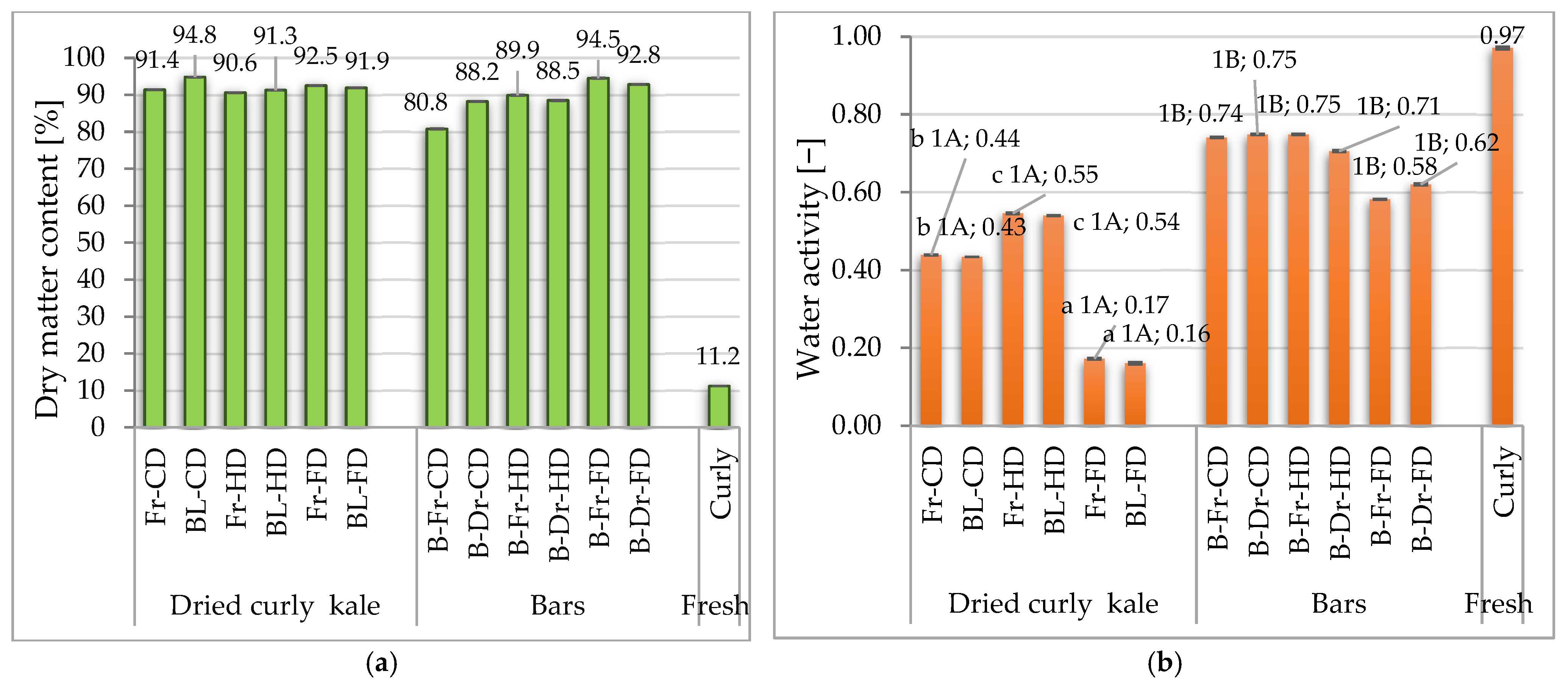
2.1.1. Dry Matter Content and Water Activity
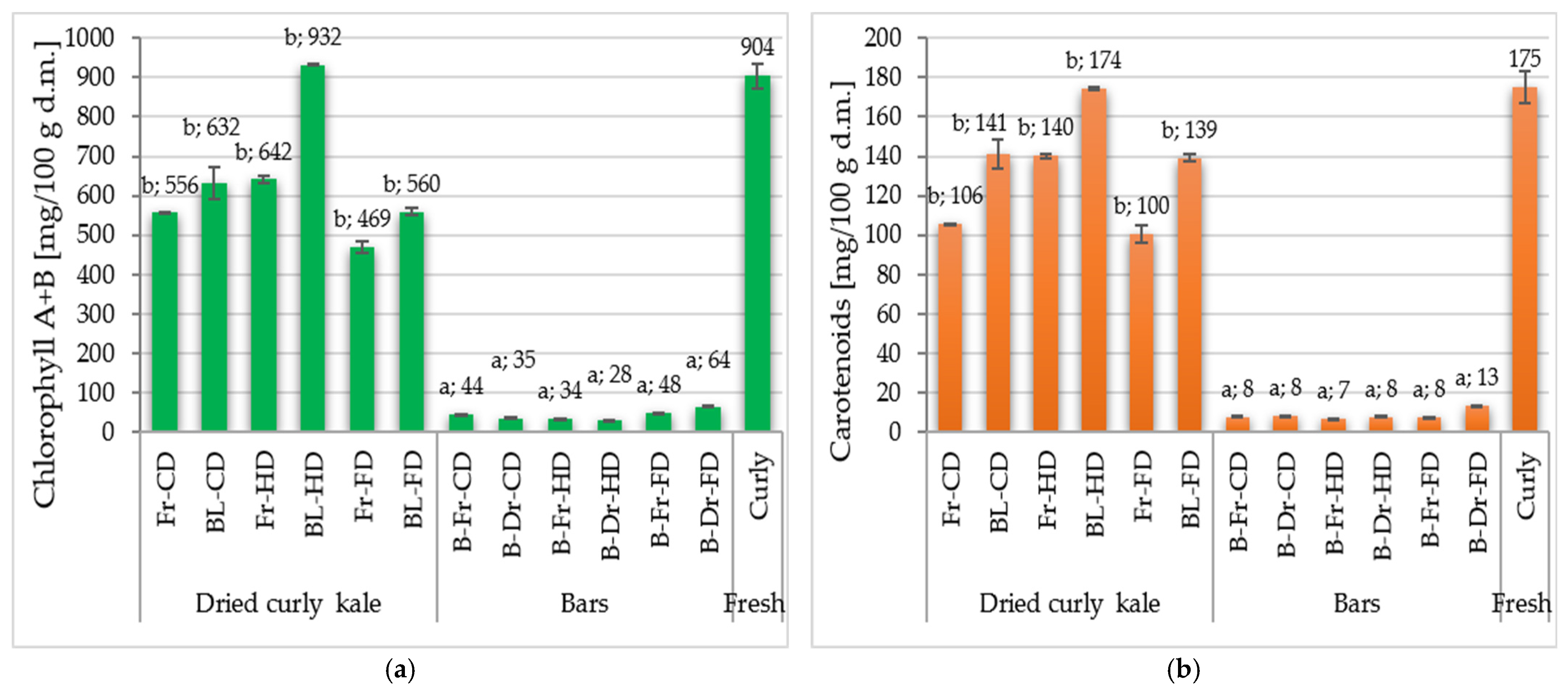
2.1.2. Chlorophyll A + B and Carotenoids Content
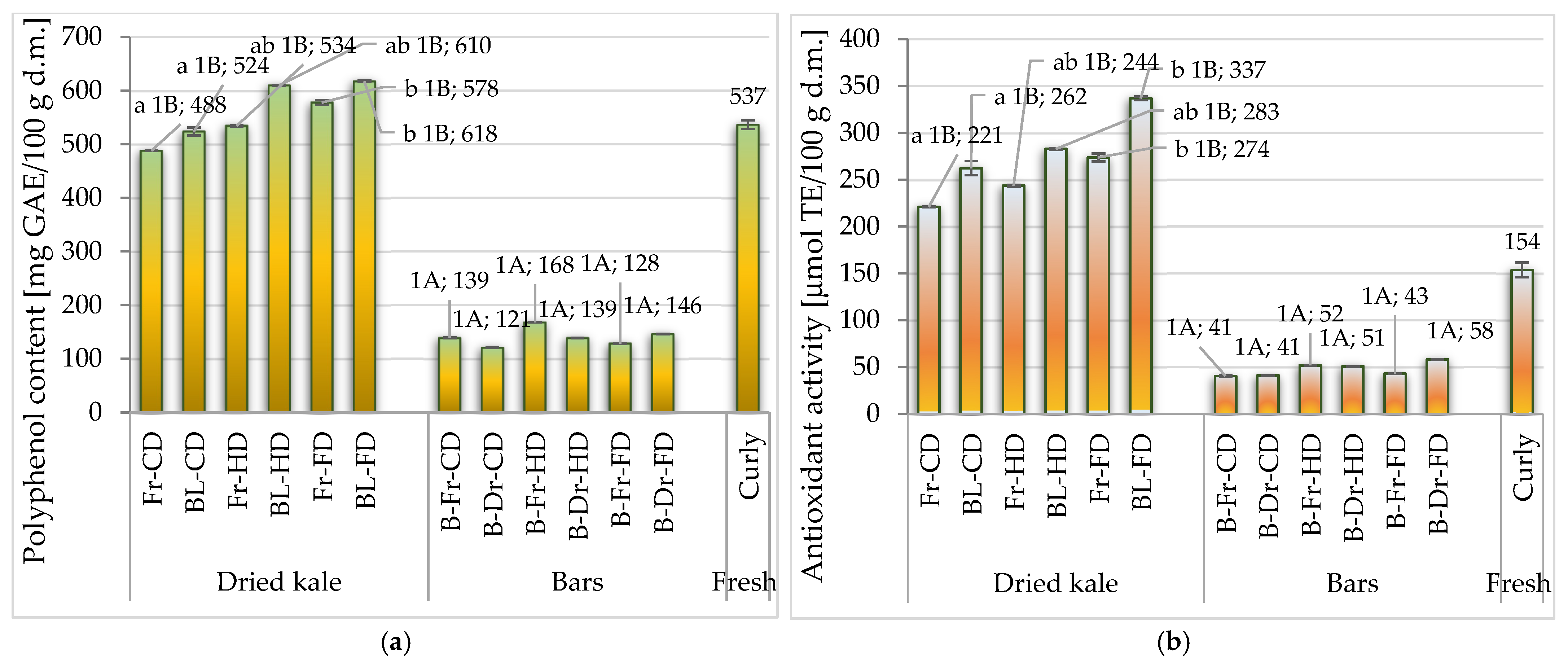
2.1.3. Polyphenol Content and Antioxidant Activity
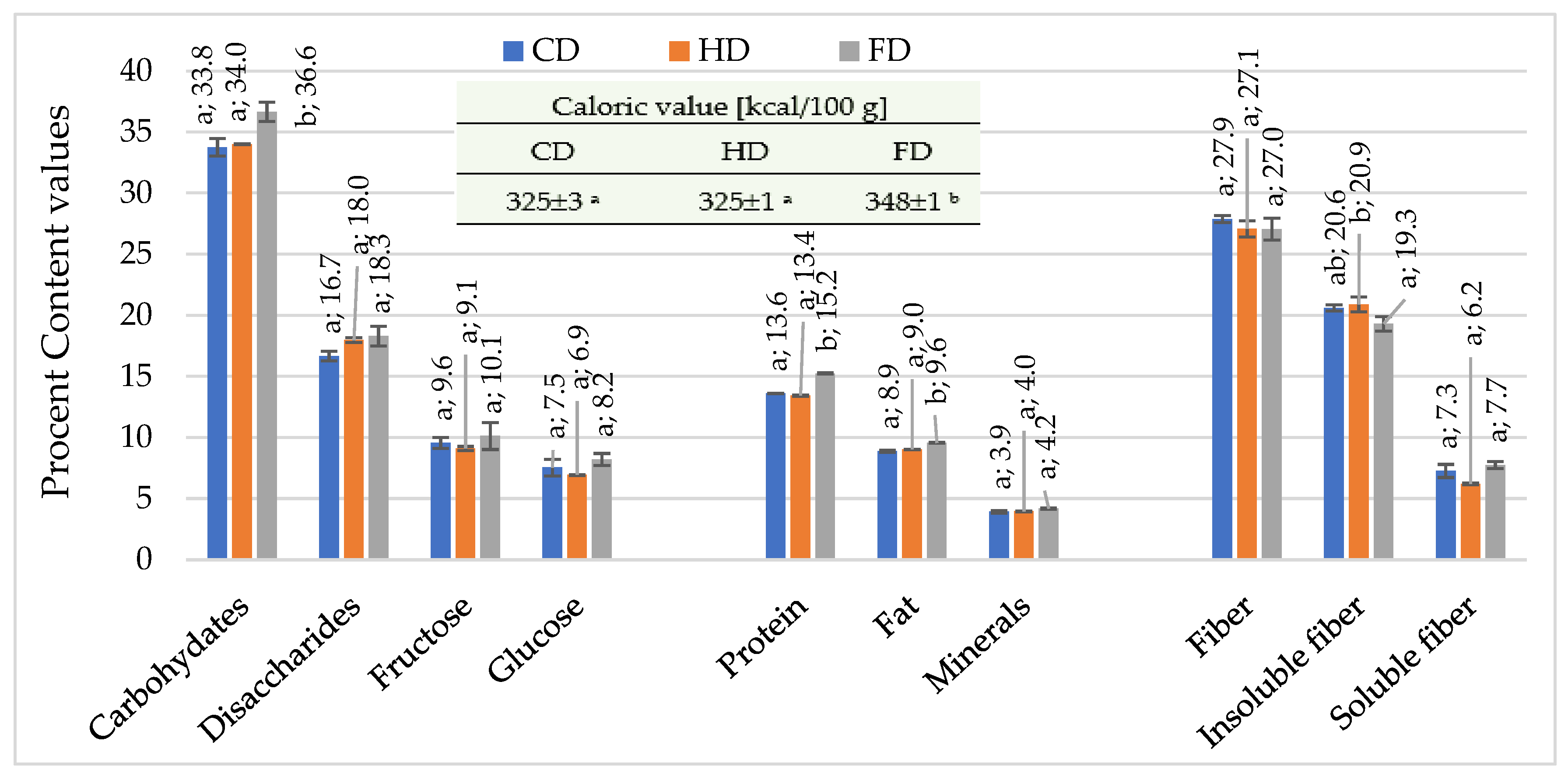
2.1.4. Nutritional Value of Selected Bars
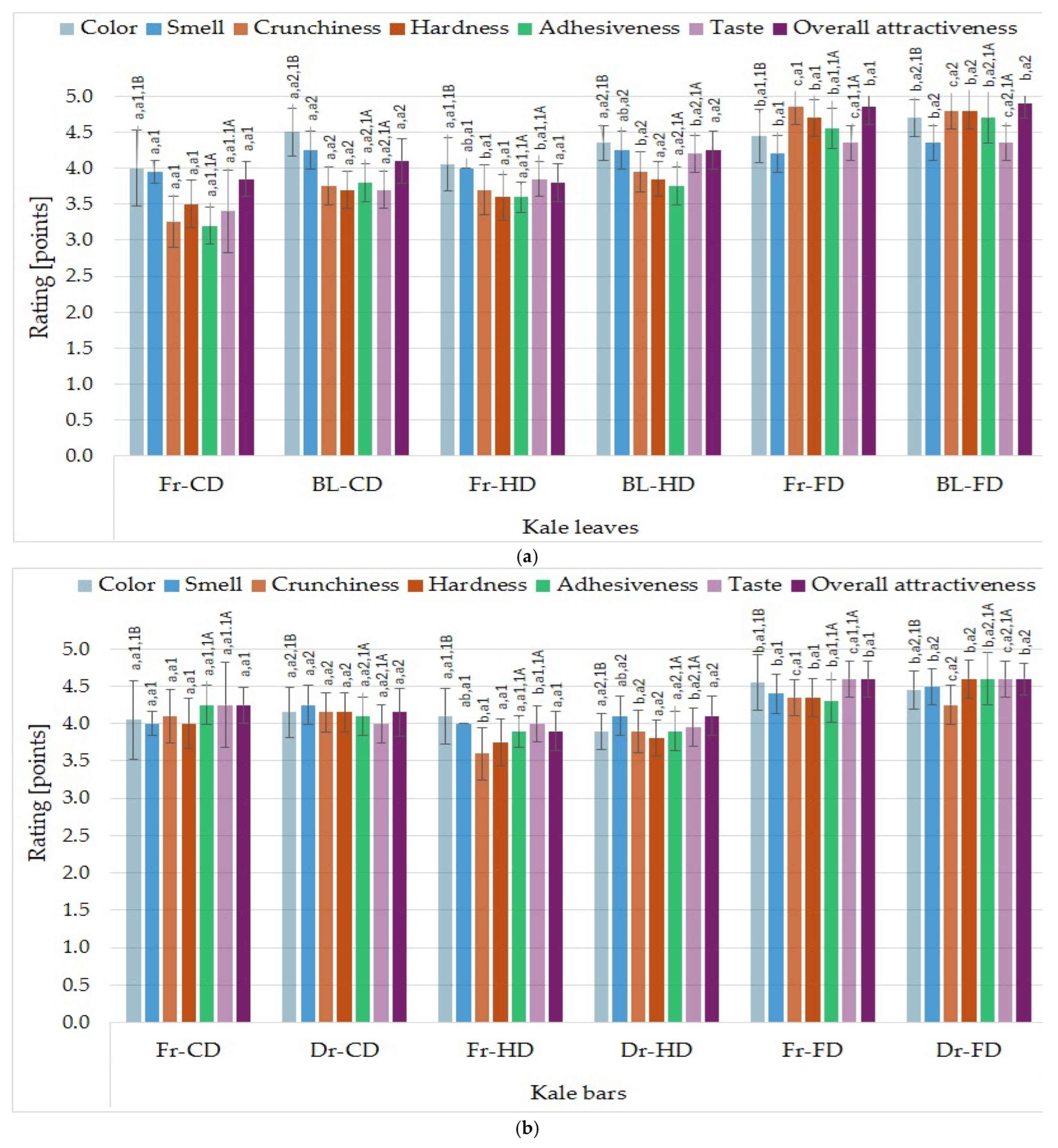
2.2. Sensory Evaluation
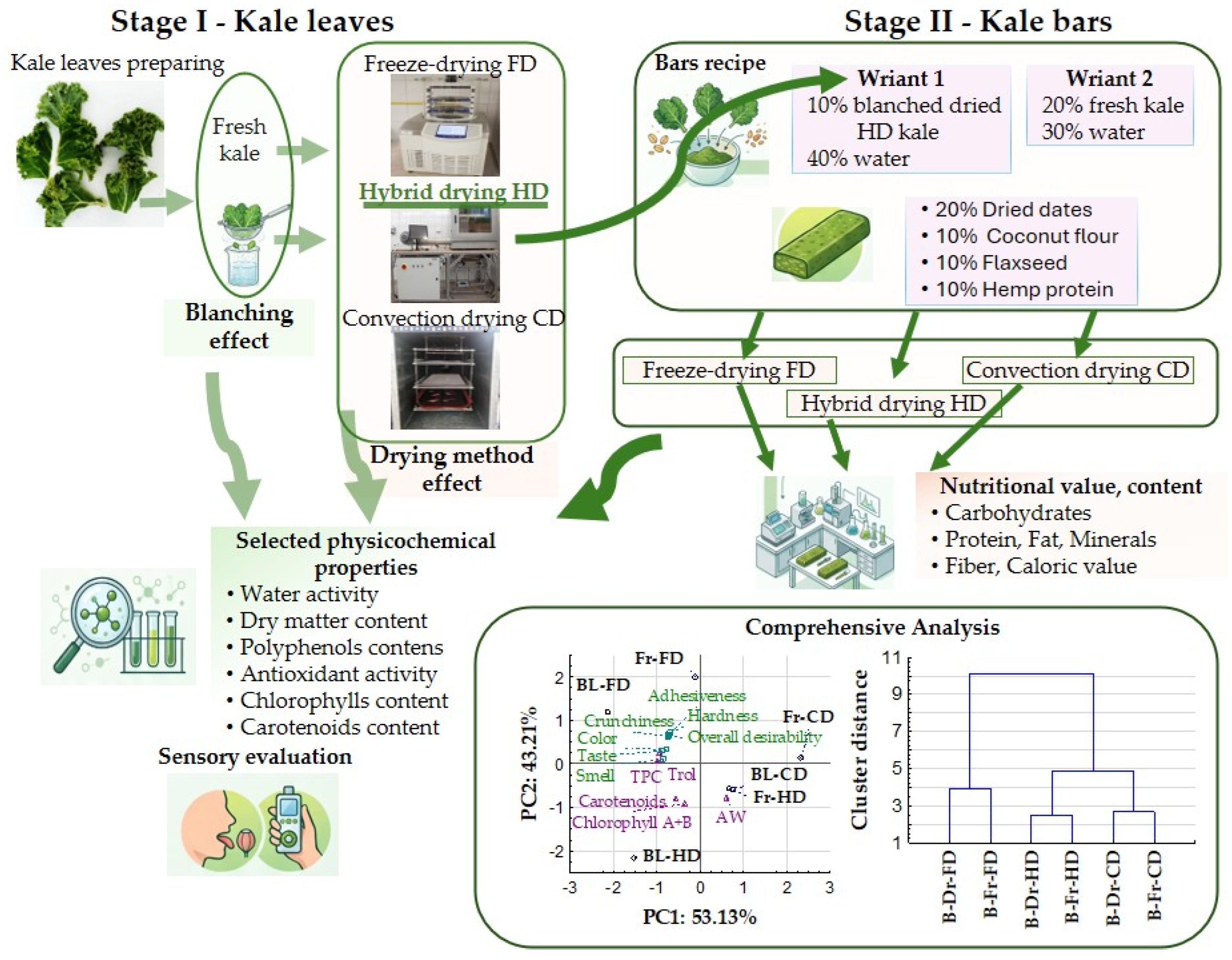
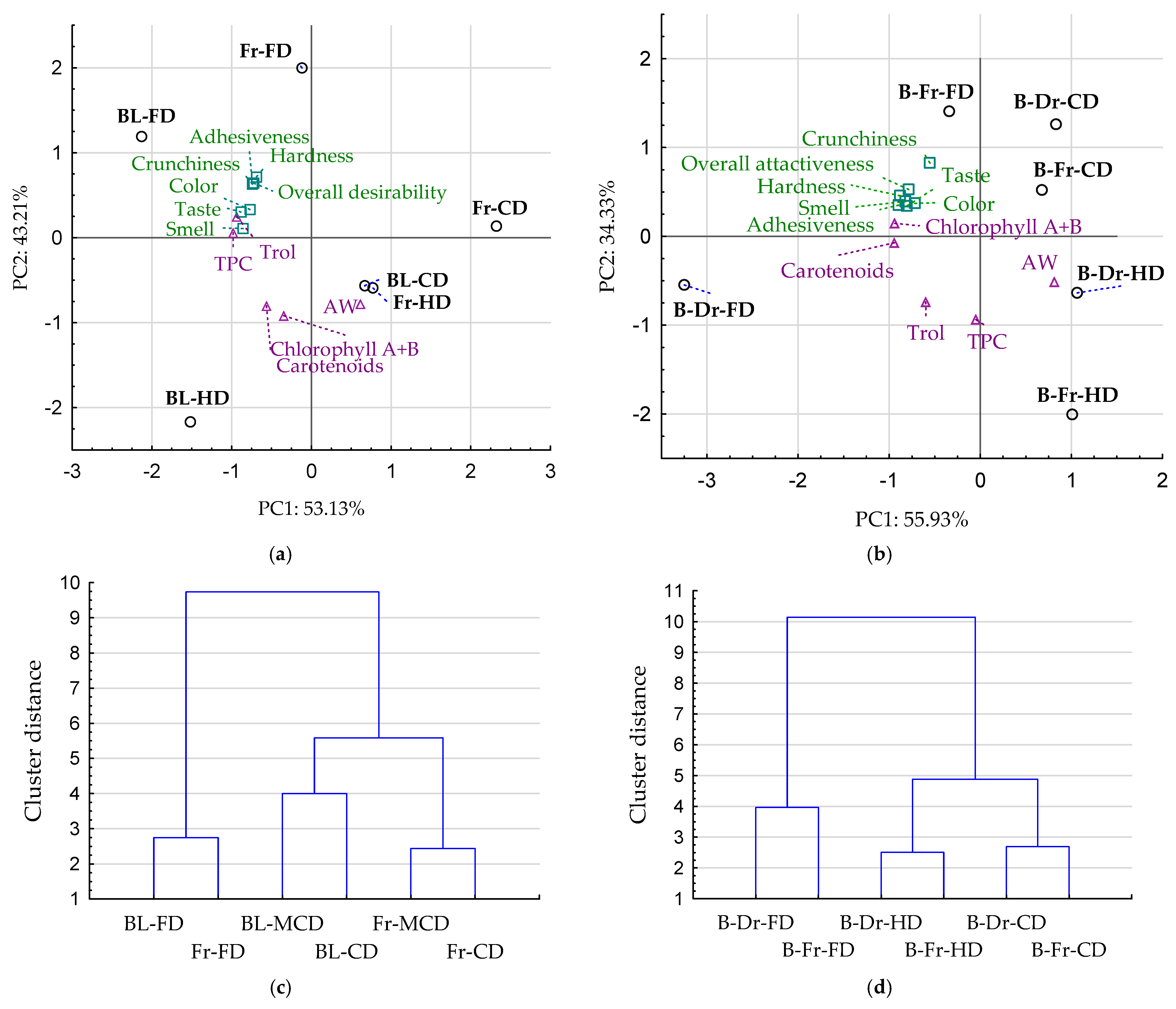
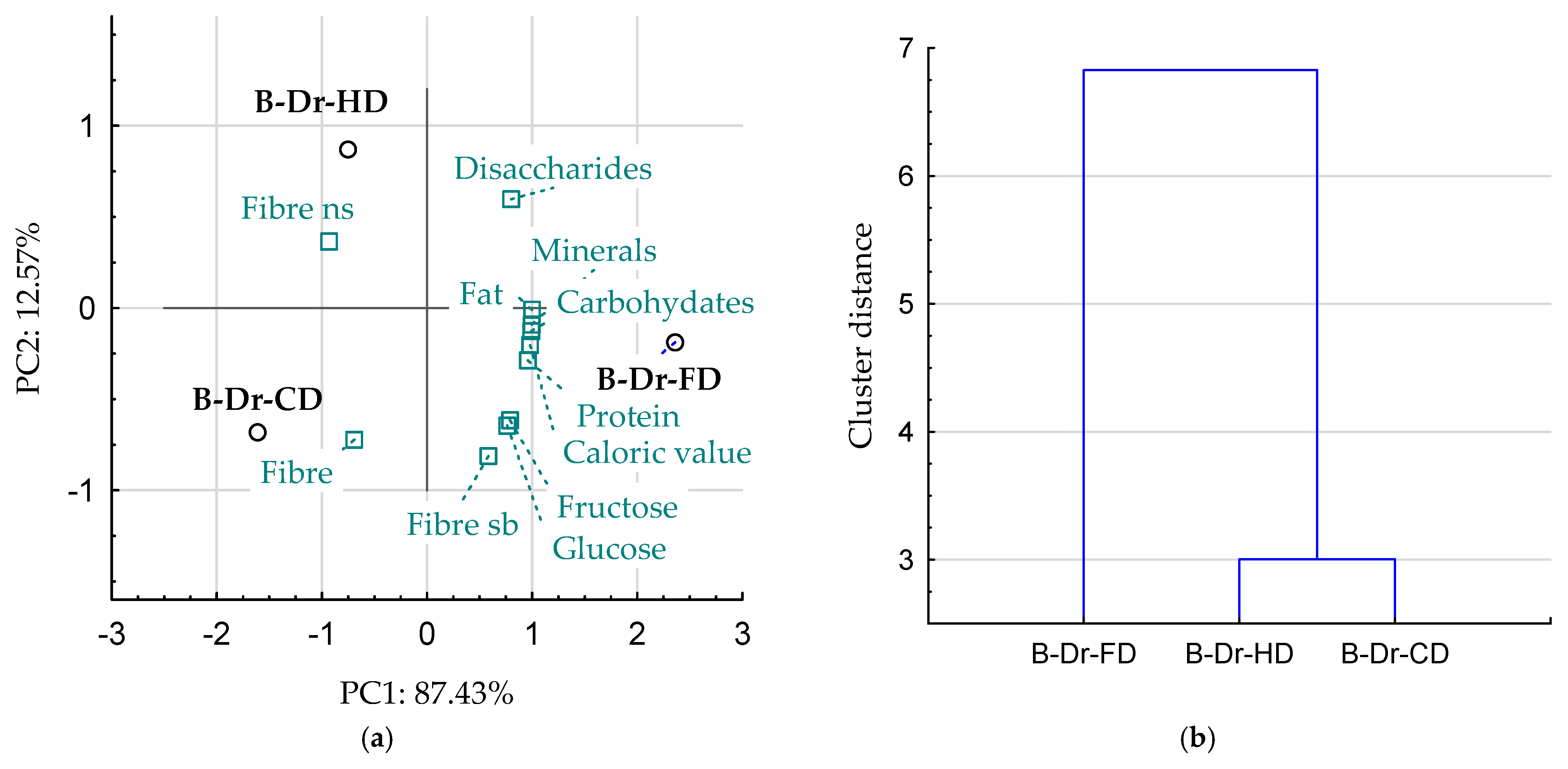
2.3. Comprehensive Analysis and Discussion
3. Materials and Methods
3.1. Material and Technological Methods
3.1.1. Convection Drying
3.1.2. Convection–Infrared–Ultrasonic Drying (Hybrid Drying, HD)
3.1.3. Freeze-Drying
3.2. Analytical Methods
3.3. Sensory Evaluation of Kale Snacks and Bars
3.4. Statistical Analysis
4. Conclusions
Author Contributions
Funding
Institutional Review Board Statement
Informed Consent Statement
Data Availability Statement
Conflicts of Interest
References
- Xin, D.; Lian, M.; Wang, M.; Zhang, X.; Xiao, Z.; Hu, X.; Liu, S.; Cao, Y.; Wang, J. Textural and Quality Characteristics of Freeze-Dried Purple Cabbage Crisps Treated with Ultrasound-Assisted, Freeze–Thaw Processing. Food Bioprocess Technol. 2026, 19, 223. [Google Scholar] [CrossRef] [Scilit]
- Chobot, M.; Kozłowska, M.; Ignaczak, A.; Kowalska, H. Development of drying and roasting processes for the production of plant-based pro-healthy snacks in the light of nutritional trends and sustainable techniques. Trends Food Sci. Technol. 2024, 149, 104553. [Google Scholar] [CrossRef] [Scilit]
- Kowalska, H.; Kowalska, J.; Ignaczak, A.; Masiarz, E.; Domian, E.; Galus, S.; Ciurzyńska, A.; Salamon, A.; Zając, A.; Marzec, A. Development of a high-fibre multigrain bar technology with the addition of curly kale. Molecules 2021, 26, 3939. [Google Scholar] [CrossRef] [Scilit] [PubMed]
- Kowalska, H.; Masiarz, E.; Ignaczak, A.; Marzec, A.; Hać-Szymańczuk, E.; Salamon, A.; Cegiełka, A.; Żbikowska, A.; Kowalska, J.; Galus, S. Advances in multigrain snack bar technology and consumer expectations: A review. Food Rev. Int. 2022, 39, 93–118. [Google Scholar] [CrossRef] [Scilit]
- Kowalska, H.; Masiarz, E.; Hać-Szymańczuk, E.; Żbikowska, A.; Marzec, A.; Salamon, A.; Kozłowska, M.; Ignaczak, A.; Chobot, M.; Sobocińska, W.; et al. The Influence of Recipe Modification and the Technological Method on the Properties of Multigrain Snack Bars. Molecules 2025, 30, 3160. [Google Scholar] [CrossRef] [Scilit] [PubMed]
- Pinto, V.R.A.; de Oliveira Freitas, T.B.; de Souza Dantas, M.I.; Lucia, S.M.D.; Melo, L.F.; Minim, V.P.R.; Bressan, J. Influence of package and health-related claims on perception and sensory acceptability of snack bars. Food Res. Int. 2017, 101, 103–113. [Google Scholar] [CrossRef] [Scilit] [PubMed]
- Ayad, A.A.; Williams, L.L.; El-Rab, D.A.G.; Ayivi, R.; Colleran, H.L.; Aljaloud, S.; Ibrahim, S.A. A review of the chemical composition, nutritional and health benefits of dates for their potential use in energy nutrition bars for athletes. Cogent Food Agric. 2020, 6, 1809309. [Google Scholar] [CrossRef] [Scilit]
- Barakat, H.; Almutairi, A.S. The organoleptic and nutritional characteristics of innovative high-fiber khalas date-based bar. Ital. J. Food Sci. 2024, 36, 13. [Google Scholar] [CrossRef] [Scilit]
- Muleya, M.; Bailey, E.F.; Bailey, E.H. A comparison of the bioaccessible calcium supplies of various plant-based products relative to bovine milk. Food Res. Int. 2024, 175, 113795. [Google Scholar] [CrossRef] [Scilit] [PubMed]
- Stübler, A.S.; Lesmes, U.; Heinz, V.; Rauh, C.; Shpigelman, A.; Aganovic, K. Digestibility, antioxidative activity and stability of plant protein rich products after processing and formulation with polyphenol rich juices: Kale and kale–strawberry as a model. Eur. Food Res. Technol. 2019, 245, 2499–2514. [Google Scholar] [CrossRef] [Scilit]
- Šamec, D.; Urlić, B.; Salopek-Sondi, B. Kale (Brassica oleracea var. acephala) as a superfood: Review of the scientific evidence behind the statement. Crit. Rev. Food Sci. Nutr. 2019, 59, 2411–2422. [Google Scholar] [CrossRef] [Scilit] [PubMed]
- Favela-González, K.M.; Hernández-Almanza, A.Y.; De la Fuente-Salcido, N.M. The value of bioactive compounds of cruciferous vegetables (Brassica) as antimicrobials and antioxidants: A review. J. Food Biochem. 2020, 44, e13414. [Google Scholar] [CrossRef] [Scilit] [PubMed]
- Słupski, J.; Gębczyński, P.; Korus, A.; Lisiewska, Z. Effect of the method of preparation for consumption on calcium retention, calcium: Phosphorus ratio, nutrient density and recommended daily allowance in fourteen vegetables. Int. J. Food Sci. Nutr. 2014, 65, 458–464. [Google Scholar] [CrossRef] [Scilit] [PubMed]
- Shahinozzaman, M.; Raychaudhuri, S.; Fan, S.; Obanda, D.N. Kale Attenuates Inflammation and Modulates Gut Microbial Composition and Function in C57BL/6J Mice with Diet-Induced Obesity. Microorganisms 2021, 9, 238. [Google Scholar] [CrossRef] [Scilit] [PubMed]
- Łukaszyk, A.; Kwiecień, I.; Kanik, A.; Blicharska, E.; Tatarczak-Michalewska, M.; Białowąs, W.; Czarnek, K.; Szopa, A. Nutritional, therapeutic, and functional food perspectives of kale (Brassica oleracea var. acephala): An integrative review. Molecules 2025, 30, 4214. [Google Scholar] [CrossRef] [Scilit] [PubMed]
- Biegańska-Marecik, R.; Radziejewska-Kubzdela, E.; Marecik, R. Characterization of phenolics, glucosinolates and antioxidant activity of beverages based on apple juice with addition of frozen and freeze-dried curly kale leaves (Brassica oleracea L. var. acephala L.). Food Chem. 2017, 230, 271–280. [Google Scholar] [CrossRef] [Scilit] [PubMed]
- Oliveira, S.M.; Ramos, I.N.; Brandao, T.R.S.; Silva, C.L.M. Effect of air-drying temperature on the quality and bioactive caracterisation of dried galega kale (Brassica oleracea L. var acephala). Food Process. Preserv. 2015, 39, 2485–2496. [Google Scholar] [CrossRef] [Scilit]
- Araújo, A.C.; Oliveira, S.M.; Ramos, I.N.; Brandão, T.R.; Silva, C.L. Influence of pretreatments on quality parameters and nutritional compounds of dried galega kale (Brassica oleracea L. var. acephala). Food Bioprocess Technol. 2016, 9, 872–881. [Google Scholar] [CrossRef] [Scilit]
- Frlin, M.; Miškec, K.; Šola, I. Thermal Processing Techniques Differentially Modulate Phytochemicals, Antioxidant Potential, and Genoprotective Effects of Kale (Brassica oleracea var. acephala) and Chard (Beta vulgaris L. var. cycla). Plants 2025, 14, 3808. [Google Scholar] [CrossRef] [Scilit] [PubMed]
- Ptak, S.; Zarski, A.; Kapusniak, J. Technological, economic and health aspects of application of microwave radiation in food processing. Food Sci. Technol. Qual. 2020, 27, 47–62. [Google Scholar] [CrossRef] [Scilit]
- Menon, A.; Stojceska, V.; Tassou, S.A. A systematic review on the recent advances of the energy efficiency improvements in non-conventional food drying technologies. Trends Food Sci. Technol. 2020, 100, 67–76. [Google Scholar] [CrossRef] [Scilit]
- El-Mesery, H.S.; Ali, M.; Qenawy, M.; Adelusi, O.A. Application of artificial intelligence to predict energy consumption and thermal efficiency of hybrid convection-radiation dryer for garlic slices. Eng. Appl. Artif. Intell. 2024, 138, 109338. [Google Scholar] [CrossRef] [Scilit]
- Bhattacharjee, S.; Mohanty, P.; Sahu, J.K.; Sahu, J.N. A critical review on drying of food materials: Recent progress and key challenges. Int. Commun. Heat Mass Transf. 2024, 158, 107863. [Google Scholar] [CrossRef] [Scilit]
- Kelesoglu, A.; Kaynakli, O.; Unver, U. Vacuum assisted intermittent microwave-infrared hybrid drying of apple slices: Synergistic energy and quality benefits. Appl. Therm. Eng. 2026, 302, 132097. [Google Scholar] [CrossRef] [Scilit]
- Mierzwa, D.; Szadzińska, J. The microwave-assisted convective drying of kale (Brassica oleracea L. var. sabellica L.) using continuous and changeable power radiation. J. Food Process Eng. 2019, 42, e13004. [Google Scholar] [CrossRef] [Scilit]
- Ignaczak, A.; Woźniak, Ł.; Kozłowska, M.; Kowalska, H. Evaluation of Water Status and Thermal Characteristics of Dried Carrot Half-Slices in Correlation with Physicochemical and Sensory Properties. Molecules 2026, 31, 1789. [Google Scholar] [CrossRef] [Scilit] [PubMed]
- Kumar, C.; Karim, M.A. Microwave-convective drying of food materials: A critical review. Crit. Rev. Food Sci. Nutr. 2019, 59, 379–394. [Google Scholar] [CrossRef] [Scilit] [PubMed]
- Zhou, S.; Chen, W.; Chitrakar, B.; Fan, K. Ultrasound technology for enhancing drying efficiency and quality of fruits and vegetables: A review. Food Bioprocess Technol. 2024, 17, 4506–4536. [Google Scholar] [CrossRef] [Scilit]
- Kowalski, S.J.; Pawłowski, A.; Szadzińska, J.; Łechtańska, J.; Stasiak, M. High power airborne ultrasound assist in combined drying of raspberries. Innov. Food Sci. Emerg. Technol. 2016, 34, 225–233. [Google Scholar] [CrossRef] [Scilit]
- Maddai Barough, H.; Sharifi, A. Investigation of the characteristics of chlorophyll extracted from vegetable wastes and its application as a stable natural food colorant. J. Food Sci. Technol. 2026, 23, 170. [Google Scholar] [CrossRef]
- Ebrahimi, P.; Shokramraji, Z.; Tavakkoli, S.; Mihaylova, D.; Lante, A. Chlorophylls as Natural Bioactive Compounds Existing in Food By-Products: A Critical Review. Plants 2023, 12, 1533. [Google Scholar] [CrossRef] [Scilit] [PubMed]
- Vargas, L.; Kapoor, R.; Nemzer, B.; Feng, H. Application of different drying methods for evaluation of phytochemical content and physical properties of broccoli, kale, and spinach. LWT 2022, 155, 112892. [Google Scholar] [CrossRef] [Scilit]
- Korus, A. Effect of preliminary and technological treatments on the content of chlorophylls and carotenoids in kale (Brassica oleracea L. var. acephala). J. Food Process. Preserv. 2013, 37, 335–344. [Google Scholar] [CrossRef] [Scilit]
- Alasalvar, C.; Chang, S.K.; Kris-Etherton, P.M.; Sullivan, V.K.; Petersen, K.S.; Guasch-Ferré, M.; Jenkins, D.J. Dried fruits: Bioactives, effects on gut microbiota, and possible health benefits—An update. Nutrients 2023, 15, 1611. [Google Scholar] [CrossRef] [Scilit] [PubMed]
- Ibrahim, A.S.; Sukor, R.; Anwar, F.; Murugesu, S.; Selamat, J.; Raseetha, S. Nutritional, nutraceutical attributes, microbiological and chemical safety of different varieties of dates—A review. Future Foods 2024, 10, 100421. [Google Scholar] [CrossRef] [Scilit]
- Korus, A. Effect of pre-treatment and drying methods on the content of minerals, B-group vitamins and tocopherols in kale (Brassica oleracea L. var. acephala) leaves. J. Food Sci. Technol. 2022, 59, 279–287. [Google Scholar] [CrossRef] [Scilit] [PubMed]
- Dziki, D.; Polak, R.; Rudy, S.; Krzykowski, A.; Gawlik-Dziki, U.; Różyło, R.; Miś, A.; Combrzyński, M. Simulation of the process kinetics and analysis of physicochemical properties in the freeze drying of kale. Int. Agrophysics 2018, 32, 49–56. [Google Scholar] [CrossRef] [Scilit]
- Satheesh, N.; Fanta, S.W. Kale: Review on nutritional composition, bio-active compounds, anti-nutritional factors, health beneficial properties and value-added products. Cogent Food Agric. 2020, 6, 1811048. [Google Scholar] [CrossRef] [Scilit]
- European Commission. Regulation (EC) No. 1924/2006 of the European parliament and of the council of 20th December 2006 on nutrition and health claims made on foods. OJ L. 2006, 404, 9–25. [Google Scholar]
- Ropero, A.B.; Borrás, F.; Rodríguez, M.; Beltrá, M. Nutritional description of processed foods with fibre-related nutrition claims in Spain: The BADALI Project. Nutrients 2023, 15, 3656. [Google Scholar] [CrossRef] [Scilit] [PubMed]
- Walsh, S.K.; Armet, A.M.; Nikolaeva, D.D.; Mota, J.F.; Lucey, A.J.; Oliero, M.; Walter, J. Optimizing Dietary Fiber Intake: Strategies for Human Nutrition and Food Science. Annu. Rev. Food Sci. Technol. 2026, 17, 25–50. [Google Scholar] [CrossRef] [Scilit] [PubMed]
- Ma, Y.; Yi, J.; Jin, X.; Li, X.; Feng, S.; Bi, J. Freeze-drying of fruits and vegetables in food industry: Effects on phytochemicals and bioactive properties attributes-a comprehensive review. Food Rev. Int. 2023, 39, 6611–6629. [Google Scholar] [CrossRef] [Scilit]
- Thamkaew, G.; Sjöholm, I.; Galindo, F.G. A review of drying methods for improving the quality of dried herbs. Crit. Rev. Food Sci. Nutr. 2021, 61, 1763–1786. [Google Scholar] [CrossRef] [Scilit] [PubMed]
- Di Cesare, L.F.; Forni, E.; Viscardi, D.; Nani, R.C. Changes in the chemical composition of basil caused by different drying procedures. J. Agric. Food Chem. 2003, 51, 3575–3581. [Google Scholar] [CrossRef] [Scilit] [PubMed]
- Harpaz-Saad, S.; Azoulay, T.; Arazi, T.; Ben-Yaakov, E.; Mett, A.; Shiboleth, Y.M.; Hörtensteiner, S.; Gidoni, D.; Gal-On, A.; Goldschmidt, E.E.; et al. Chlorophyllase is a rate-limiting enzyme in chlorophyll catabolism and is posttranslationally regulated. Plant Cell 2007, 19, 1007–1022. [Google Scholar] [CrossRef] [Scilit] [PubMed]
- Ihl, M.; Monsalves, M.; Bifani, V. Chlorophyllase inactivation as a measure of blanching efficacy and colour retention of artichokes (Cynara scolymus L.). LWT Food Sci. Technol. 1998, 31, 50–56. [Google Scholar] [CrossRef] [Scilit]
- Hu, X.; Khan, I.; Jiao, Q.; Zada, A.; Jia, T. Chlorophyllase, a common plant hydrolase enzyme with a long history, is still a puzzle. Genes 2021, 12, 1871. [Google Scholar] [CrossRef] [Scilit] [PubMed]
- Wang, Y.; Li, Y.; Pan, S.; Qin, M.; Yuan, Y.; Li, C.; Liu, Y. Effects of infrared radiation parameters on drying characteristics and quality of rice: A systematic review. Food Bioprocess Technol. 2025, 18, 6813–6835. [Google Scholar] [CrossRef] [Scilit]
- Nowacka, M.; Rybak, K.; Trusinska, M.; Karwacka, M.; Matys, A.; Pobiega, K.; Witrowa-Rajchert, D. Chosen Biochemical and Physical Properties of Beetroot Treated with Ultrasound and Dried with Infrared–Hot Air Method. Appl. Sci. 2024, 14, 3507. [Google Scholar] [CrossRef] [Scilit]
- Manyatsi, T.S.; Al-Hilphy, A.R.; Majzoobi, M.; Farahnaky, A.; Gavahian, M. Effects of infrared heating as an emerging thermal technology on physicochemical properties of foods. Crit. Rev. Food Sci. Nutr. 2023, 63, 6840–6859. [Google Scholar] [CrossRef] [Scilit] [PubMed]
- Uwineza, A.; Zhang, X. Application of Freeze-Drying Technology in the Food Industry: A Review. Foods 2026, 15, 790. [Google Scholar] [CrossRef] [Scilit] [PubMed]
- Nowak, D.; Jakubczyk, E. The Freeze-Drying of Foods—The Characteristic of the Process Course and the Effect of Its Parameters on the Physical Properties of Food Materials. Foods 2020, 9, 1488. [Google Scholar] [CrossRef] [Scilit] [PubMed]
- Yao, J.; Chen, W.; Fan, K. Novel efficient physical technologies for enhancing freeze drying of fruits and vegetables: A review. Foods 2023, 12, 4321. [Google Scholar] [CrossRef] [Scilit] [PubMed]
- Leonard, W.; Zhang, P.; Ying, D.; Fang, Z. Hempseed in food industry: Nutritional value, health benefits, and industrial applications. Compr. Rev. Food Sci. Food Saf. 2020, 19, 282–308. [Google Scholar] [CrossRef] [Scilit] [PubMed]
- Israelsen, I.; Groves, B.; Freshour, A.; Shen, C.; Sarker, A.; Jaczynski, J.; Matak, K. Development of a nutrient-dense snack bar: Sensory, nutritional, and physicochemical insights. Appl. Food Res. 2026, 6, 101728. [Google Scholar] [CrossRef] [Scilit]
- Ahmad, A.; Zulfiqar, S.; Chatha, Z.A. Development of roasted flax seed cookies and characterization for chemical and organoleptic parameters. Pak. J. Agric. Sci. 2020, 57, 229–235. [Google Scholar] [CrossRef]
- AOAC 920.15; Official Methods of Analysis of AOAC International, 17th ed. AOAC International: Rockville, MD, USA, 2002.
- PN-EN ISO 20483:2014:02; Determination of Nitrogen Content and Conversion to Protein Content—Kjeldahl Method. Polish Committee for Standardization (PKN): Warsaw, Poland, 2014.
- PN-A-79011-4:1998; Food Concentrates—Methods of Testing—Determination of Fat Content. Polish Committee for Standardization (PKN): Warsaw, Poland, 1998.
- PN-EN ISO 2171:2023-09; Cereal Grains, Pulses and Their Products—Determination of Ash Content by Combustion. Polish Committee for Standardization (PKN): Warsaw, Poland, 2023.
- Ignaczak, A.; Woźniak, Ł.; Salamon, A.; Szczepańska-Stolarczyk, J.; Trych, U.; Chobot, M.; Kowalska, J.; Kowalska, H. Shaping the physicochemical and health-promoting properties of carrot snacks produced by microwave-vacuum drying with preliminary thermal and enriching treatment. Molecules 2024, 29, 5100. [Google Scholar] [CrossRef] [Scilit] [PubMed]
- European Commission. Regulation (EU) 2016/679 of the European Parliament and of the Council. 2016. Available online: https://www.legislation.gov.uk/eur/2016/679/contents (accessed on 23 July 2026).



| Parameters | Cycle 1 | Cycle 2 | Cycle 3 | Cycle 4 |
|---|---|---|---|---|
| Time [min] | 15 | 15 | 15 | 5 |
| Air speed [m/s] | 5 | 2 | 3 | 2 |
| Infrared power [W] | 250 | 0 | 250 | 0 |
| Air temperature [°C] | 80 | 20 | 80 | 20 |
| Distance of infrared radiators from the material surface [cm] | 25 | 25 | 25 | 25 |
| Ultrasonic power [W]/frequency [kHz] | 200/36 | 0 | 200/36 | 0 |
| Sensory Feature | Definition | Point Scale | |
|---|---|---|---|
| Dried Kale (Points) | Bars (Points) | ||
| Color | Color and color saturation of the bars | 1—undesirable, uneven coloring 5—desirable, even, intense | 1—undesirable, uneven coloring 5—desirable, even, and intensified |
| Smell | The intensity and attractiveness of the perceived scent | 1—undesirable or imperceptible 5—desirable, perceptible | 1—undesirable or imperceptible 5—desirable, perceptible |
| Crunchiness | Brittle, easily breaks under slight force. Rubbery is a plastic material | 1—undesirable, rubbery 5—desirable, crunchy | 1—undesirable, rubbery 5—desirable, crumbly |
| Hardness | Hard requires a lot of force to squeeze, while soft requires little force | 1—very hard 5—very soft | 1—very hard 5—very soft |
| Adhesiveness | The degree of particle adhesion to teeth | 1—large 5—small | 1—large 5—small |
| Taste | Felt after biting and/or chewing | 1—undesirable, bitter, earthy 5—desirable, delicate | 1—undesirable, bitter, earthy, sandy 5—desirable, slightly sweet |
| Overall attractiveness | Overall feeling (all characteristics), level of satisfaction | 1—very poor 5—very good | 1—very poor 5—very good |
Disclaimer/Publisher’s Note: The statements, opinions and data contained in all publications are solely those of the individual author(s) and contributor(s) and not of MDPI and/or the editor(s). MDPI and/or the editor(s) disclaim responsibility for any injury to people or property resulting from any ideas, methods, instructions or products referred to in the content. |
© 2026 by the authors. Licensee MDPI, Basel, Switzerland. This article is an open access article distributed under the terms and conditions of the Creative Commons Attribution (CC BY) license.
Share and Cite
Kowalska, H.; Salamon, A.; Wolska-Wilk, J.; Chobot, M.; Kozłowska, M.; Wieczorek, K.; Marzec, A.; Kowalska, J. The Effect of Hybrid Convective–Infrared–Ultrasonic Drying on Selected Properties of Kale and Nutritional Value of Kale Bars. Molecules 2026, 31, 2683. https://doi.org/10.3390/molecules31152683
Kowalska H, Salamon A, Wolska-Wilk J, Chobot M, Kozłowska M, Wieczorek K, Marzec A, Kowalska J. The Effect of Hybrid Convective–Infrared–Ultrasonic Drying on Selected Properties of Kale and Nutritional Value of Kale Bars. Molecules. 2026; 31(15):2683. https://doi.org/10.3390/molecules31152683
Chicago/Turabian StyleKowalska, Hanna, Agnieszka Salamon, Jadwiga Wolska-Wilk, Małgorzata Chobot, Mariola Kozłowska, Klaudia Wieczorek, Agata Marzec, and Jolanta Kowalska. 2026. "The Effect of Hybrid Convective–Infrared–Ultrasonic Drying on Selected Properties of Kale and Nutritional Value of Kale Bars" Molecules 31, no. 15: 2683. https://doi.org/10.3390/molecules31152683
APA StyleKowalska, H., Salamon, A., Wolska-Wilk, J., Chobot, M., Kozłowska, M., Wieczorek, K., Marzec, A., & Kowalska, J. (2026). The Effect of Hybrid Convective–Infrared–Ultrasonic Drying on Selected Properties of Kale and Nutritional Value of Kale Bars. Molecules, 31(15), 2683. https://doi.org/10.3390/molecules31152683