


Survivin-Targeting Antisense Oligonucleotides in Cancer Therapy



Abstract
1. Introduction
2. Survivin (BIRC5): Gene, Protein Structure, and Regulation
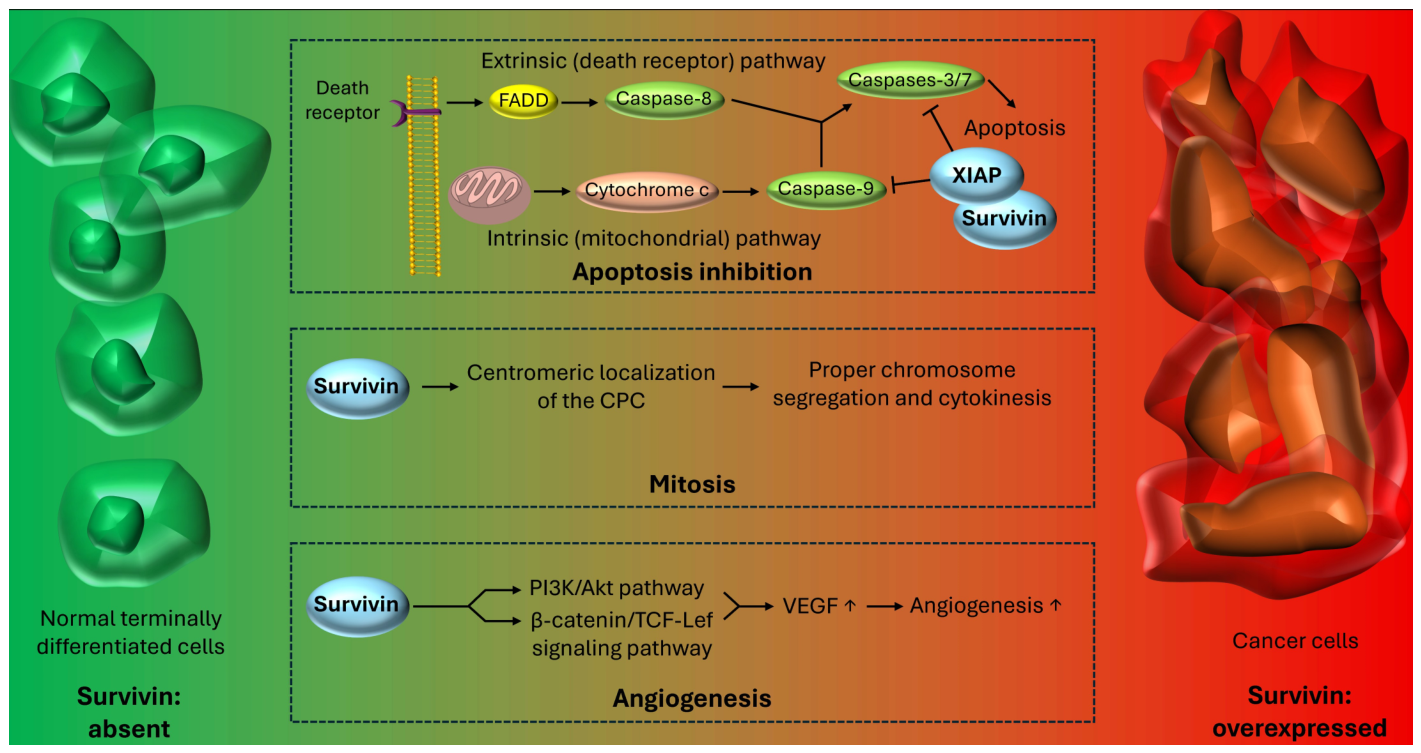
3. Biological Role of Survivin in Cancer
3.1. Anti-Apoptotic Functions
3.2. Role in Mitosis
3.3. Role in Angiogenesis
4. ASO Therapeutics
4.1. ASO Sequence Design
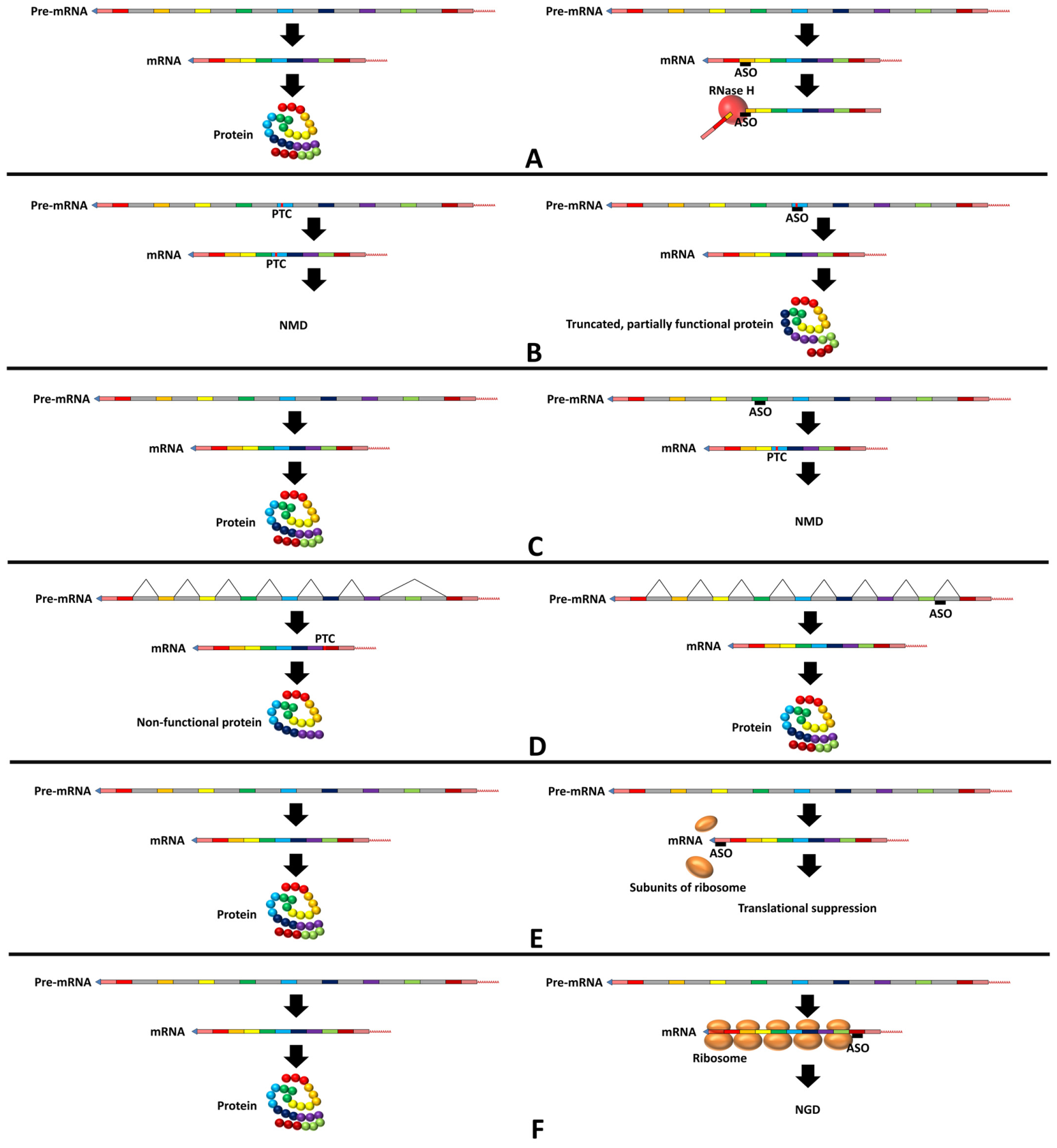
4.2. Mechanism of Action
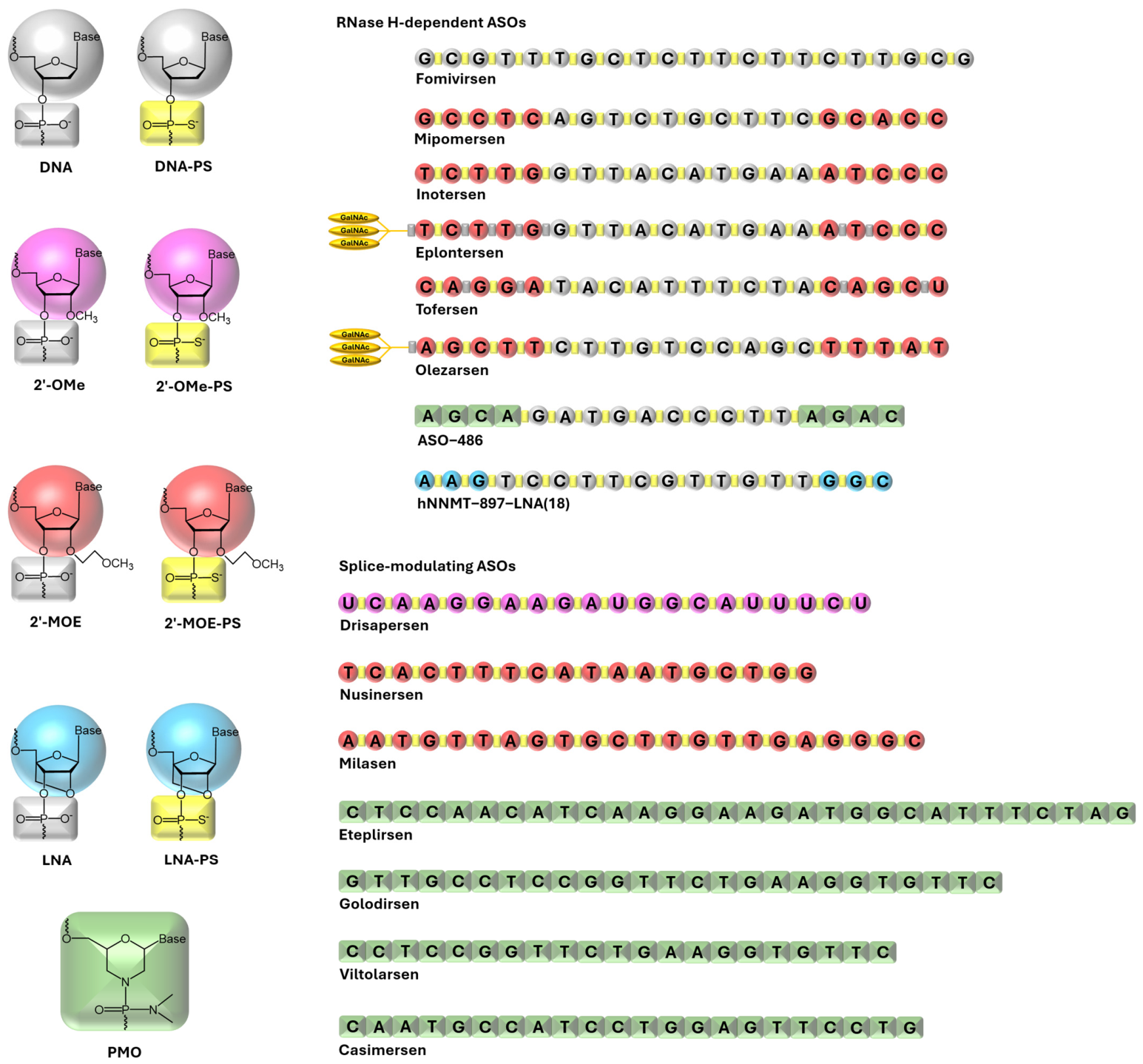
4.3. Chemical Modifications

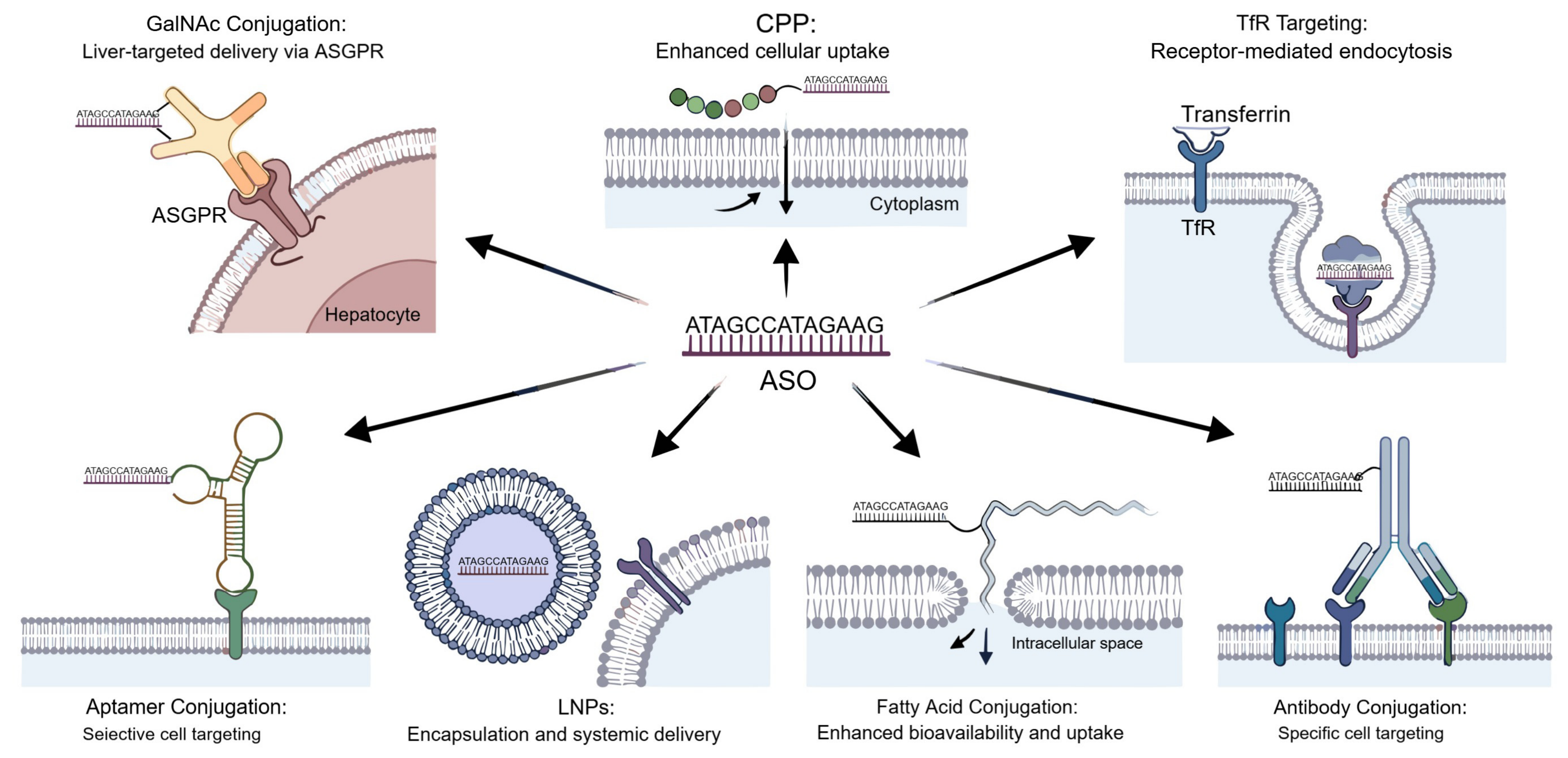
4.4. Delivery Strategies
5. ASOs Targeting Survivin
5.1. Preclinical Studies
5.2. Clinical Trials
6. Clinical Translation Challenges
6.1. Clinical Lessons from Survivin-Targeting ASOs
6.2. Delivery Barriers and Tumor Pharmacology
6.3. Safety Liabilities and Off-Target Effects
6.4. Future Design Strategies
7. Conclusions
Supplementary Materials
Author Contributions
Funding
Institutional Review Board Statement
Informed Consent Statement
Data Availability Statement
Conflicts of Interest
Abbreviations
| Akt | Protein kinase B |
| AOC | Antibody–oligonucleotide conjugate |
| ASGPR | Asialoglycoprotein receptor |
| ASO | Antisense oligonucleotide |
| BIRC5 | Baculoviral inhibitor of apoptosis repeat-containing 5 |
| CAM | Chick chorioallantoic membrane |
| CADD | Computer-aided drug design |
| CDK1 | Cyclin-dependent kinase 1 |
| CHR | Cell cycle genes homology region |
| CDE | Cell cycle-dependent element |
| CPC | Chromosomal Passenger Complex |
| CPP | Cell-penetrating peptide |
| CRM1 | Chromosome region maintenance 1 |
| DMD | Duchenne muscular dystrophy |
| FADD | Fas-associated death domain |
| GalNAc | N-Acetylgalactosamine |
| H3T3ph | Histone H3 Thr-3 phosphorylation |
| IAP | Inhibitor of apoptosis proteins |
| INCENP | Inner centromere protein |
| LNA | Locked nucleic acid |
| LNP | Lipid nanoparticle |
| ML | Machine learning |
| NGD | No-go decay |
| NMD | Nonsense-mediated mRNA decay |
| NNMT | Nicotinamide N-methyltransferase |
| NQO1 | NAD(P)H oxidoreductase 1 |
| PI3K | Phosphatidylinositol 3-kinase |
| PMO | Phosphorodiamidate morpholino oligomer |
| PO | Phosphodiester |
| PS | Phosphorothioate |
| PTC | Premature termination codon |
| Sp1 | Specificity protein 1 |
| STAT3 | Signal transducer and activator of transcription 3 |
| TfR | Transferrin receptor |
| VEGF | Vascular endothelial growth factor |
| XIAP | X-linked inhibitor of apoptosis protein |
| XPO1 | Exportin 1 |
| 2′-MOE | 2′-O-methoxyethyl |
| 2′-Ome | 2′-O-methyl |
References
- Hanahan, D.; Weinberg, R.A. Hallmarks of cancer: The next generation. Cell 2011, 144, 646–674. [Google Scholar] [CrossRef] [PubMed]
- Altieri, D.C. Survivin, versatile modulation of cell division and apoptosis in cancer. Oncogene 2003, 22, 8581–8589. [Google Scholar] [CrossRef] [PubMed]
- Wheatley, S.P.; Altieri, D.C. Survivin at a glance. J. Cell Sci. 2019, 132, jcs223826. [Google Scholar] [CrossRef] [PubMed]
- Raguraman, P.; Balachandran, A.A.; Chen, S.; Diermeier, S.D.; Veedu, R.N. Antisense oligonucleotide-mediated splice switching: Potential therapeutic approach for cancer mitigation. Cancers 2021, 13, 5555. [Google Scholar] [CrossRef] [PubMed]
- Dias, N.; Stein, C.A. Antisense oligonucleotides: Basic concepts and mechanisms. Mol. Cancer Ther. 2002, 1, 347–355. [Google Scholar] [PubMed]
- Chen, S.; Heendeniya, S.N.; Le, B.T.; Rahimizadeh, K.; Rabiee, N.; Zahra, Q.U.A.; Veedu, R.N. Splice-modulating antisense oligonucleotides as therapeutics for inherited metabolic diseases. BioDrugs 2024, 38, 177–203. [Google Scholar] [CrossRef] [PubMed]
- Li, F.; Altieri, D.C. The cancer antiapoptosis mouse survivin gene: Characterization of locus and transcriptional requirements of basal and cell cycle-dependent expression. Cancer Res. 1999, 59, 3143–3151. [Google Scholar] [PubMed]
- Chen, X.; Duan, N.; Zhang, C.; Zhang, W. Survivin and tumorigenesis: Molecular mechanisms and therapeutic strategies. J. Cancer 2016, 7, 314–323. [Google Scholar] [CrossRef] [PubMed]
- Verdecia, M.A.; Huang, H.; Dutil, E.; Kaiser, D.A.; Hunter, T.; Noel, J.P. Structure of the human anti-apoptotic protein survivin reveals a dimeric arrangement. Nat. Struct. Biol. 2000, 7, 602–608. [Google Scholar] [CrossRef] [PubMed]
- Jeyaprakash, A.A.; Klein, U.R.; Lindner, D.; Ebert, J.; Nigg, E.A.; Conti, E. Structure of a Survivin-Borealin-INCENP core complex reveals how chromosomal passengers travel together. Cell 2007, 131, 271–285. [Google Scholar] [CrossRef] [PubMed]
- Kelly, A.E.; Ghenoiu, C.; Xue, J.Z.; Zierhut, C.; Kimura, H.; Funabiki, H. Survivin reads phosphorylated histone H3 threonine 3 to activate the mitotic kinase Aurora B. Science 2010, 330, 235–239. [Google Scholar] [CrossRef] [PubMed]
- Mahotka, C.; Wenzel, M.; Springer, E.; Gabbert, H.E.; Gerharz, C.D. Survivin-ΔEx3 and survivin-2B: Two novel splice variants of the apoptosis inhibitor survivin with different antiapoptotic properties. Cancer Res. 1999, 59, 6097–6102. [Google Scholar] [PubMed]
- Caldas, H.; Honsey, L.E.; Altura, R.A. Survivin 2α: A novel survivin splice variant expressed in human malignancies. Mol. Cancer 2005, 4, 11. [Google Scholar] [CrossRef] [PubMed]
- Wagner, M.; Schmelz, K.; Wuchter, C.; Ludwig, W.D.; Dörken, B.; Tamm, I. In vivo expression of survivin and its splice variant survivin-2B: Impact on clinical outcome in acute myeloid leukemia. Int. J. Cancer 2006, 119, 1291–1297. [Google Scholar] [CrossRef] [PubMed]
- Ryan, B.; O’Donovan, N.; Browne, B.; O’Shea, C.; Crown, J.; Hill, A.D.; McDermott, E.; O’Higgins, N.; Duffy, M.J. Expression of survivin and its splice variants survivin-2B and survivin-ΔEx3 in breast cancer. Br. J. Cancer 2005, 92, 120–124. [Google Scholar] [PubMed]
- Span, P.N.; Tjan-Heijnen, V.C.; Heuvel, J.J.; de Kok, J.B.; Foekens, J.A.; Sweep, F.C. Do the survivin (BIRC5) splice variants modulate or add to the prognostic value of total survivin in breast cancer? Clin. Chem. 2006, 52, 1693–1700. [Google Scholar] [CrossRef] [PubMed]
- Moore, A.S.; Alonzo, T.A.; Gerbing, R.B.; Lange, B.J.; Heerema, N.A.; Franklin, J.; Raimondi, S.C.; Hirsch, B.A.; Gamis, A.S.; Meshinchi, S. BIRC5 (survivin) splice variant expression correlates with refractory disease and poor outcome in pediatric acute myeloid leukemia: A report from the Children’s Oncology Group. Pediatr. Blood Cancer 2014, 61, 647–652. [Google Scholar] [PubMed]
- Wall, N.R.; O’Connor, D.S.; Plescia, J.; Pommier, Y.; Altieri, D.C. Suppression of survivin phosphorylation on Thr34 by flavopiridol enhances tumor cell apoptosis. Cancer Res. 2003, 63, 230–235. [Google Scholar] [PubMed]
- Wheatley, S.P.; Barrett, R.M.; Andrews, P.D.; Medema, R.H.; Morley, S.J.; Swedlow, J.R.; Lens, S.M.A. Phosphorylation by Aurora-B negatively regulates survivin function during mitosis. Cell Cycle 2007, 6, 1220–1230. [Google Scholar] [CrossRef] [PubMed]
- Wang, H.; Holloway, M.P.; Ma, L.; Cooper, Z.A.; Riolo, M.; Samkari, A.; Elenitoba-Johnson, K.S.; Chin, Y.E.; Altura, R.A. Acetylation directs survivin nuclear localization to repress STAT3 oncogenic activity. J. Biol. Chem. 2010, 285, 36129–36137. [Google Scholar] [CrossRef] [PubMed]
- Wang, W.; Lin, H.; Zheng, E.; Hou, Z.; Liu, Y.; Huang, W.; Chen, D.; Feng, J.; Li, J.; Li, L. Regulation of survivin protein stability by USP35 is evolutionarily conserved. Biochem. Biophys. Res. Commun. 2021, 574, 48–55. [Google Scholar] [CrossRef] [PubMed]
- Rodríguez, J.A.; Span, S.W.; Ferreira, C.G.M.; Kruyt, F.A.E.; Giaccone, G. CRM1-mediated nuclear export determines the cytoplasmic localization of the antiapoptotic protein survivin. Exp. Cell Res. 2002, 275, 44–53. [Google Scholar] [CrossRef] [PubMed]
- Dohi, T.; Beltrami, E.; Wall, N.R.; Plescia, J.; Altieri, D.C. Mitochondrial survivin inhibits apoptosis and promotes tumorigenesis. J. Clin. Investig. 2004, 114, 1117–1127. [Google Scholar] [CrossRef] [PubMed]
- Wheatley, S.P.; McNeish, I.A. Survivin: A protein with dual roles in mitosis and apoptosis. Int. Rev. Cytol. 2005, 247, 35–88. [Google Scholar] [CrossRef] [PubMed]
- Altieri, D.C. Survivin and IAP proteins in cell-death mechanisms. Biochem. J. 2010, 430, 199–205. [Google Scholar] [CrossRef] [PubMed]
- Li, F.; Ackermann, E.J.; Bennett, C.F.; Rothermel, A.L.; Plescia, J.; Tognin, S.; Villa, A.; Marchisio, P.C.; Altieri, D.C. Pleiotropic cell-division defects and apoptosis induced by interference with survivin function. Nat. Cell Biol. 1999, 1, 461–466. [Google Scholar] [CrossRef] [PubMed]
- Conde, M.; Michen, S.; Wiedemuth, R.; Klink, B.; Schröck, E.; Schackert, G.; Temme, A. Chromosomal instability induced by increased BIRC5/Survivin levels affects tumorigenicity of glioma cells. BMC Cancer 2017, 17, 889. [Google Scholar] [CrossRef] [PubMed]
- Sanhueza, C.; Wehinger, S.; Castillo Bennett, J.; Valenzuela, M.; Owen, G.I.; Quest, A.F. The twisted survivin connection to angiogenesis. Mol. Cancer 2015, 14, 198. [Google Scholar] [CrossRef] [PubMed]
- Li, Z.; Ren, W.; Zeng, Q.; Chen, S.; Zhang, M.; Zhao, Y.; Cheng, J.; Wang, X. Effects of survivin on angiogenesis in vivo and in vitro. Am. J. Transl. Res. 2016, 8, 270–283. [Google Scholar] [PubMed]
- Fernández, J.G.; Rodríguez, D.A.; Valenzuela, M.; Calderon, C.; Urzúa, U.; Munroe, D.; Rosas, C.; Lemus, D.; Díaz, N.; Wright, M.C.; et al. Survivin expression promotes VEGF-induced tumor angiogenesis via PI3K/Akt enhanced β-catenin/Tcf-Lef dependent transcription. Mol. Cancer 2014, 13, 209. [Google Scholar] [PubMed]
- Sohail, M.; Hochegger, H.; Klotzbücher, A.; Guellec, R.L.; Hunt, T.; Southern, E.M. Antisense oligonucleotides selected by hybridisation to scanning arrays are effective reagents in vivo. Nucleic Acids Res. 2001, 29, 2041–2051. [Google Scholar] [CrossRef] [PubMed]
- Matveeva, O.V.; Mathews, D.H.; Tsodikov, A.D.; Shabalina, S.A.; Gesteland, R.F.; Atkins, J.F.; Freier, S.M. Thermodynamic criteria for high hit rate antisense oligonucleotide design. Nucleic Acids Res. 2003, 31, 4989–4994. [Google Scholar] [CrossRef] [PubMed]
- Leckie, J.; Yokota, T. Integrating machine learning-based approaches into the design of ASO therapies. Genes 2025, 16, 185. [Google Scholar] [CrossRef] [PubMed]
- Kimi, J.; Korczak, P.; Vialet, B.; Roubin, E.; Barthélémy, P.; Campagne, S.; Malard, F. ASOG: AntiSense Oligonucleotide Generator. Comput Struct. Biotechnol. J. 2025, 27, 4145–4150. [Google Scholar] [CrossRef] [PubMed]
- Hwang, G.; Kwon, M.; Seo, D.; Kim, D.H.; Lee, D.; Lee, K.; Kim, E.; Kang, M.; Ryu, J.H. ASOptimizer: Optimizing antisense oligonucleotides through deep learning for IDO1 gene regulation. Mol. Ther. Nucleic Acids 2024, 35, 102186. [Google Scholar] [CrossRef] [PubMed]
- Crooke, S.T.; Baker, B.F.; Crooke, R.M.; Liang, X.H. Antisense technology: An overview and prospectus. Nat. Rev. Drug Discov. 2021, 20, 427–453. [Google Scholar] [CrossRef] [PubMed]
- Trew, I.; Wilton, S.D.; Cale, J.M.; Aung-Htut, M. Expanding the toolbox: Emerging antisense oligonucleotide mechanisms for modulating gene expression. Mol. Ther. Nucleic Acids 2026, 37, 102953. [Google Scholar] [CrossRef] [PubMed]
- Liang, X.H.; Sun, H.; Nichols, J.G.; Crooke, S.T. RNase H1-dependent antisense oligonucleotides are robustly active in directing RNA cleavage in both the cytoplasm and the nucleus. Mol. Ther. 2017, 25, 2075–2092. [Google Scholar] [CrossRef] [PubMed]
- Rinaldi, C.; Wood, M.J.A. Antisense oligonucleotides: The next frontier for treatment of neurological disorders. Nat. Rev. Neurol. 2018, 14, 9–21. [Google Scholar] [PubMed]
- Chen, S.; Le, B.T.; Chakravarthy, M.; Kosbar, T.R.; Veedu, R.N. Systematic evaluation of 2′-Fluoro modified chimeric antisense oligonucleotide-mediated exon skipping in vitro. Sci. Rep. 2019, 9, 6078. [Google Scholar] [PubMed]
- Ward, A.J.; Norrbom, M.; Chun, S.; Bennett, C.F.; Rigo, F. Nonsense-mediated decay as a terminating mechanism for antisense oligonucleotides. Nucleic Acids Res. 2014, 42, 5871–5879. [Google Scholar] [CrossRef] [PubMed]
- Hua, Y.; Sahashi, K.; Hung, G.; Rigo, F.; Passini, M.A.; Bennett, C.F.; Krainer, A.R. Antisense correction of SMN2 splicing in the CNS rescues necrosis in a type III SMA mouse model. Genes Dev. 2010, 24, 1634–1644. [Google Scholar] [CrossRef] [PubMed]
- Baker, B.F.; Lot, S.S.; Condon, T.P.; Cheng-Flournoy, S.; Lesnik, E.A.; Sasmor, H.M.; Bennett, C.F. 2′-O-(2-Methoxy)ethyl-modified anti-intercellular adhesion molecule 1 (ICAM-1) oligonucleotides selectively increase the ICAM-1 mRNA level and inhibit formation of the ICAM-1 translation initiation complex in human umbilical vein endothelial cells. J. Biol. Chem. 1997, 272, 11994–12000. [Google Scholar] [PubMed]
- Liang, X.H.; Nichols, J.G.; Hsu, C.W.; Vickers, T.A.; Crooke, S.T. mRNA levels can be reduced by antisense oligonucleotides via no-go decay pathway. Nucleic Acids Res. 2019, 47, 6900–6916. [Google Scholar] [CrossRef] [PubMed]
- Ersöz, E.; Demir-Dora, D. Unveiling the potential of antisense oligonucleotides: Mechanisms, therapies, and safety insights. Drug Dev. Res. 2024, 85, e22187. [Google Scholar] [CrossRef] [PubMed]
- Le, B.T.; Chen, S.; Veedu, R.N. Evaluation of chemically modified nucleic acid analogues for splice switching application. ACS Omega 2023, 8, 48650–48661. [Google Scholar] [CrossRef] [PubMed]
- Shadid, M.; Badawi, M.; Abulrob, A. Antisense oligonucleotides: Absorption, distribution, metabolism, and excretion. Expert Opin. Drug Metab. Toxicol. 2021, 17, 1281–1292. [Google Scholar] [CrossRef] [PubMed]
- Le, B.T.; Chen, S.; Veedu, R.N. Rational design of chimeric antisense oligonucleotides on a mixed PO-PS backbone for splice-switching applications. Biomolecules 2024, 14, 883. [Google Scholar] [PubMed]
- Chen, S.; Poudel, B.H.; Veedu, R.N. Systematic evaluation of 2′-O-methyl RNA antisense oligonucleotides with limited phosphorothioate linkages for efficient splice switching. Chem. Commun. 2025, 61, 17001–17004. [Google Scholar]
- Freier, S.M.; Altmann, K.H. The ups and downs of nucleic acid duplex stability: Structure–stability studies on chemically modified DNA/RNA duplexes. Nucleic Acids Res. 1997, 25, 4429–4443. [Google Scholar] [PubMed]
- Bennett, C.F.; Swayze, E.E. RNA targeting therapeutics: Molecular mechanisms of antisense oligonucleotides as a therapeutic platform. Annu Rev. Pharmacol. Toxicol. 2010, 50, 259–293. [Google Scholar] [CrossRef] [PubMed]
- Singh, S.K.; Koshkin, A.A.; Wengel, G.; Nielsen, P. LNA (Locked Nucleic Acids): Synthesis and High-Affinity Nucleic Acid Recognition. Chem. Commun. 1998, 455–456. [Google Scholar] [CrossRef]
- Le, B.T.; Adams, A.M.; Fletcher, S.; Wilton, S.D.; Veedu, R.N. Rational design of short locked nucleic acid-modified 2′-O-methyl antisense oligonucleotides for efficient exon-skipping in vitro. Mol. Ther. Nucleic Acids 2017, 9, 155–161. [Google Scholar] [PubMed]
- Summerton, J.; Weller, D. Morpholino antisense oligomers: Design, preparation, and properties. Antisense Nucleic Acids Drug Dev. 1997, 7, 187–195. [Google Scholar] [CrossRef]
- Hara, T.; Meng, S.; Kasahara, Y.; Osawa, T.; Motooka, D.; Sato, H.; Arao, Y.; Saito, Y.; Inoue, K.; Hamano, Y.; et al. Antisense oligonucleotide targeting nicotinamide N-methyltransferase exhibits antitumor effects. Mol. Ther. Nucleic Acids 2025, 36, 102548. [Google Scholar] [CrossRef] [PubMed]
- Chen, S.; Poudel, B.H.; Veedu, R.N. An LNA gapmer antisense oligonucleotide inhibitor of human NNMT. Mol. Ther. Nucleic Acids 2025, 36, 102761. [Google Scholar] [CrossRef] [PubMed]
- Kanatsu, K.; Takahashi, Y.; Sakaguchi, T.; Kim, D.S.; Murota, M.; Shan, M.; Fukami, K.; Itano, W.; Kikuta, K.; Yoshimura, H.; et al. Discovery and characterization of stereodefined PMO-gapmers targeting tau. Mol. Ther. Nucleic Acids 2024, 36, 102404. [Google Scholar] [CrossRef] [PubMed]
- Chen, S.; Poudel, B.H.; Veedu, R.N. A single stereogenic center matters: Development of stereodefined anti-tau PMO-gapmers. Mol. Ther. Nucleic Acids 2025, 36, 102519. [Google Scholar] [CrossRef] [PubMed]
- Ramasamy, T.; Ruttala, H.B.; Munusamy, S.; Chakraborty, N.; Kim, J.O. Nano drug delivery systems for antisense oligonucleotides (ASO) therapeutics. J. Control. Release 2022, 352, 861–878. [Google Scholar] [CrossRef] [PubMed]
- Abaza, T.; Mohamed, E.E.; Zaky, M.Y. Lipid nanoparticles: A promising tool for nucleic acid delivery in cancer immunotherapy. Med. Oncol. 2025, 42, 409. [Google Scholar] [CrossRef] [PubMed]
- Yang, L.; Li, Z.; Huang, X.; Huang, L.; Fu, Y.; Zhao, B.; Zhang, Y.; Ma, L.; Jing, S.; Fu, L.; et al. VPS9D1-AS1 antisense therapy via lipid nanoparticles reprograms cold tumors and enhances immunotherapy in colorectal cancer. J. Control. Release 2025, 384, 113865. [Google Scholar] [CrossRef] [PubMed]
- Schmidt, K.; Prakash, T.P.; Donner, A.J.; Kinberger, G.A.; Gaus, H.J.; Low, A.; Østergaard, M.E.; Bell, M.; Swayze, E.E.; Seth, P.P. Characterizing the effect of GalNAc and phosphorothioate backbone on binding of antisense oligonucleotides to the asialoglycoprotein receptor. Nucleic Acids Res. 2017, 45, 2294–2306. [Google Scholar] [CrossRef] [PubMed]
- Tamura, S.; Tsuji, G.; Demizu, Y. Screening and evaluation of hydrophobic cell-penetrating peptides for antisense oligonucleotide delivery. Bioorg Med. Chem. 2025, 126, 118223. [Google Scholar] [CrossRef] [PubMed]
- McClorey, G.; Banerjee, S. Cell-penetrating peptides to enhance delivery of oligonucleotide-based therapeutics. Biomedicines 2018, 6, 51. [Google Scholar] [PubMed]
- Dugal-Tessier, J.; Thirumalairajan, S.; Jain, N. Antibody-oligonucleotide conjugates: A twist to antibody-drug conjugates. J. Clin. Med. 2021, 10, 838. [Google Scholar] [PubMed]
- Balachandran, A.A.; Poudel, B.H.; Rahimizadeh, K.; Chikkanna, A.; Veedu, R.N. Enhancing the intracellular delivery of antisense oligonucleotides (ASO): A comparative study of aptamer, vitamin E, and cholesterol ASO conjugates. RSC Adv. 2025, 15, 43727–43736. [Google Scholar] [CrossRef] [PubMed]
- Prakash, T.P.; Mullick, A.E.; Lee, R.G.; Yu, J.; Yeh, S.T.; Low, A.; Chappell, A.E.; Østergaard, M.E.; Murray, S.; Gaus, H.J.; et al. Fatty acid conjugation enhances potency of antisense oligonucleotides in muscle. Nucleic Acids Res. 2019, 47, 6029–6044. [Google Scholar] [CrossRef] [PubMed]
- Le, B.T.; Kosbar, T.R.; Veedu, R.N. Novel disulfide-bridged bioresponsive antisense oligonucleotide induces efficient splice modulation in muscle myotubes in vitro. ACS Omega 2020, 5, 18035–18039. [Google Scholar] [CrossRef] [PubMed]
- Menchon, G.; Gaci, A.; Matvere, A.; Aubry, M.; Bore, A.; Gilot, D.; Goyenvalle, A.; Pedeux, R. A genome-wide CRISPR screen unveils the endosomal maturation protein WDR91 as a promoter of productive ASO activity in melanoma. Mol. Ther. Nucleic Acids 2025, 36, 102577. [Google Scholar] [CrossRef] [PubMed]
- Chen, S.; Zheng, T.; Li, D. WDR91, an endosomal maturation protein, promotes antisense oligonucleotide activity. Mol. Ther. Nucleic Acids 2026, 37, 102915. [Google Scholar] [CrossRef] [PubMed]
- Carter, B.Z.; Wang, R.Y.; Schober, W.D.; Milella, M.; Chism, D.; Andreeff, M. Targeting survivin expression induces cell proliferation defect and subsequent cell death involving mitochondrial pathway in myeloid leukemic cells. Cell Cycle 2003, 2, 488–493. [Google Scholar] [CrossRef] [PubMed][Green Version]
- Shinohara, E.T.; Hallahan, D.E.; Lu, B. The use of antisense oligonucleotides in evaluating survivin as a therapeutic target for radiation sensitization in lung cancer. Biol. Proced. Online 2004, 6, 250–256. [Google Scholar] [CrossRef] [PubMed]
- Lu, B.; Mu, Y.; Cao, C.; Zeng, F.; Schneider, S.; Tan, J.; Price, J.; Chen, J.; Freeman, M.; Hallahan, D.E. Survivin as a therapeutic target for radiation sensitization in lung cancer. Cancer Res. 2004, 64, 2840–2845. [Google Scholar] [CrossRef] [PubMed]
- Ansell, S.M.; Arendt, B.K.; Grote, D.M.; Jelinek, D.F.; Novak, A.J.; Wellik, L.E.; Remstein, E.D.; Bennett, C.F.; Fielding, A. Inhibition of survivin expression suppresses the growth of aggressive non-Hodgkin’s lymphoma. Leukemia 2004, 18, 616–623. [Google Scholar] [PubMed]
- Hansen, J.B.; Fisker, N.; Westergaard, M.; Kjaerulff, L.S.; Hansen, H.F.; Thrue, C.A.; Rosenbohm, C.; Wissenbach, M.; Orum, H.; Koch, T. SPC3042: A proapoptotic survivin inhibitor. Mol. Cancer Ther. 2008, 7, 2736–2745. [Google Scholar] [CrossRef] [PubMed]
- Carrasco, R.A.; Stamm, N.B.; Marcusson, E.; Sandusky, G.; Iversen, P.; Patel, B.K. Antisense inhibition of survivin expression as a cancer therapeutic. Mol. Cancer Ther. 2011, 10, 221–232. [Google Scholar] [CrossRef] [PubMed]
- Olsen, A.L.; Davies, J.M.; Medley, L.; Breen, D.; Talbot, D.C.; McHugh, P.J. Quantitative analysis of survivin protein expression and its therapeutic depletion by an antisense oligonucleotide in human lung tumors. Mol. Ther. Nucleic Acids 2012, 1, e30. [Google Scholar] [CrossRef] [PubMed]
- Zhao, X.; Xu, J.; Liang, X.; Wang, Z.; Zhu, Y.; Guo, D.; Wang, J.; Amu, G.; Wang, Q.; Yang, Z.; et al. NQO1-activatable circular antisense oligonucleotides for tumor-cell-specific survivin gene silencing and antitumor therapy. J. Med. Chem. 2025, 68, 4466–4476. [Google Scholar] [CrossRef] [PubMed]
- Chen, J.; Wu, W.; Tahir, S.K.; Kroeger, P.E.; Rosenberg, S.H.; Cowsert, L.M.; Bennett, F.; Krajewski, S.; Krajewska, M.; Welsh, K.; et al. Down-regulation of survivin by antisense oligonucleotides increases apoptosis, inhibits cytokinesis and anchorage-independent growth. Neoplasia 2000, 2, 235–241. [Google Scholar] [PubMed]
- Sapra, P.; Wang, M.; Bandaru, R.; Zhao, H.; Greenberger, L.M.; Horak, I.D. Down-modulation of survivin expression and inhibition of tumor growth in vivo by EZN-3042, a locked nucleic acid antisense oligonucleotide. Nucleosides Nucleot. Nucl. 2010, 29, 97–112. [Google Scholar] [CrossRef]
- Lamers, F.; van der Ploeg, I.; Schild, L.; Ebus, M.E.; Koster, J.; Hansen, B.R.; Koch, T.; Versteeg, R.; Caron, H.N.; Molenaar, J.J. Knockdown of survivin (BIRC5) causes apoptosis in neuroblastoma via mitotic catastrophe. Endocr. Relat. Cancer 2011, 18, 657–668. [Google Scholar] [CrossRef] [PubMed]
- Park, E.; Gang, E.J.; Hsieh, Y.T.; Schaefer, P.; Chae, S.; Klemm, L.; Huantes, S.; Loh, M.; Conway, E.M.; Kang, E.S.; et al. Targeting survivin overcomes drug resistance in acute lymphoblastic leukemia. Blood 2011, 118, 2191–2199. [Google Scholar] [CrossRef] [PubMed]
- Morrison, D.J.; Hogan, L.E.; Condos, G.; Bhatla, T.; Germino, N.; Moskowitz, N.P.; Lee, L.; Bhojwani, D.; Horton, T.M.; Belitskaya-Levy, I.; et al. Endogenous knockdown of survivin improves chemotherapeutic response in ALL models. Leukemia 2012, 26, 271–279. [Google Scholar] [PubMed]
- Thamm, D.H.; Joseph, J.K.; Rose, B.J.; Meuten, T.K.; Weishaar, K.M. Phase-I trial of survivin inhibition with EZN-3042 in dogs with spontaneous lymphoma. BMC Vet. Res. 2020, 16, 97. [Google Scholar] [CrossRef] [PubMed]
- Olie, R.A.; Simões-Wüst, A.P.; Baumann, B.; Leech, S.H.; Fabbro, D.; Stahel, R.A.; Zangemeister-Wittke, U. A novel antisense oligonucleotide targeting survivin expression induces apoptosis and sensitizes lung cancer cells to chemotherapy. Cancer Res. 2000, 60, 2805–2809. [Google Scholar] [PubMed]
- Dai, D.J.; Lu, C.D.; Lai, R.Y.; Guo, J.M.; Meng, H.; Chen, W.S.; Gu, J. Survivin antisense compound inhibits proliferation and promotes apoptosis in liver cancer cells. World J. Gastroenterol. 2005, 11, 193–199. [Google Scholar] [CrossRef] [PubMed]
- Wu, Y.F.; Liang, X.J.; Liu, Y.Y.; Gong, W.; Liu, J.X.; Wang, X.P.; Zhuang, Z.Q.; Guo, Y.; Shen, H.Y. Antisense oligonucleotide targeting survivin inhibits growth by inducing apoptosis in human osteosarcoma cells MG-63. Neoplasma 2010, 57, 501–506. [Google Scholar] [CrossRef] [PubMed]
- Coma, S.; Noe, V.; Lavarino, C.; Adán, J.; Rivas, M.; López-Matas, M.; Pagan, R.; Mitjans, F.; Vilaró, S.; Piulats, J.; et al. Use of siRNAs and antisense oligonucleotides against survivin RNA to inhibit steps leading to tumor angiogenesis. Oligonucleotides 2004, 14, 100–113. [Google Scholar] [CrossRef] [PubMed]
- Sun, Y.; Lin, R.; Dai, J.; Jin, D.; Wang, S.Q. Suppression of tumor growth using antisense oligonucleotide against survivin in an orthotopic transplant model of human hepatocellular carcinoma in nude mice. Oligonucleotides 2006, 16, 365–374. [Google Scholar] [CrossRef] [PubMed]
- Li, Y.; Chen, S.; Rahimizadeh, K.; Zhang, Z.; Veedu, R.N. Inhibition of survivin by 2′-O-methyl phosphorothioate-modified steric-blocking antisense oligonucleotides. RSC Adv. 2024, 14, 13336–13341. [Google Scholar] [PubMed]
- Callies, S.; André, V.; Patel, B.; Waters, D.; Francis, P.; Burgess, M.; Lahn, M. Integrated analysis of preclinical data to support the design of the first in man study of LY2181308, a second generation antisense oligonucleotide. Br. J. Clin. Pharmacol. 2011, 71, 416–428. [Google Scholar] [PubMed][Green Version]
- Talbot, D.C.; Ranson, M.; Davies, J.; Lahn, M.; Callies, S.; Andre, V.; Kadam, S.; Burgess, M.; Slapak, C.; Olsen, A.L.; et al. Tumor survivin is downregulated by the antisense oligonucleotide LY2181308: A proof-of-concept, first-in-human dose study. Clin. Cancer Res. 2010, 16, 6150–6158. [Google Scholar] [PubMed]
- Tanioka, M.; Nokihara, H.; Yamamoto, N.; Yamada, Y.; Yamada, K.; Goto, Y.; Fujimoto, T.; Sekiguchi, R.; Uenaka, K.; Callies, S.; et al. Phase I study of LY2181308, an antisense oligonucleotide against survivin, in patients with advanced solid tumors. Cancer Chemother. Pharmacol. 2011, 68, 505–511. [Google Scholar] [PubMed]
- Erba, H.P.; Sayar, H.; Juckett, M.; Lahn, M.; Andre, V.; Callies, S.; Schmidt, S.; Kadam, S.; Brandt, J.T.; Van Bockstaele, D.; et al. Safety and pharmacokinetics of the antisense oligonucleotide (ASO) LY2181308 as a single-agent or in combination with idarubicin and cytarabine in patients with refractory or relapsed acute myeloid leukemia (AML). Investig. New Drugs 2013, 31, 1023–1034. [Google Scholar] [CrossRef] [PubMed]
- Wiechno, P.; Somer, B.G.; Mellado, B.; Chłosta, P.L.; Cervera Grau, J.M.; Castellano, D.; Reuter, C.; Stöckle, M.; Kamradt, J.; Pikiel, J.; et al. A randomised phase 2 study combining LY2181308 sodium (survivin antisense oligonucleotide) with first-line docetaxel/prednisone in patients with castration-resistant prostate cancer. Eur. Urol. 2014, 65, 516–520. [Google Scholar] [CrossRef] [PubMed]
- Natale, R.; Blackhall, F.; Kowalski, D.; Ramlau, R.; Bepler, G.; Grossi, F.; Lerchenmuller, C.; Pinder-Schenck, M.; Mezger, J.; Danson, S.; et al. Evaluation of antitumor activity using change in tumor size of the survivin antisense oligonucleotide LY2181308 in combination with docetaxel for second-line treatment of patients with non-small-cell lung cancer: A randomized open-label phase II study. J. Thorac. Oncol. 2014, 9, 1704–1708. [Google Scholar] [PubMed]
- Herrington, W.G.; Talbot, D.C.; Lahn, M.M.; Brandt, J.T.; Callies, S.; Nagle, R.; Winearls, C.G.; Roberts, I.S. Association of long-term administration of the survivin mRNA-targeted antisense oligonucleotide LY2181308 with reversible kidney injury in a patient with metastatic melanoma. Am. J. Kidney Dis. 2011, 57, 300–303. [Google Scholar] [PubMed]
- Raetz, E.A.; Morrison, D.; Romanos-Sirakis, E.; Gaynon, P.; Sposto, R.; Bhojwani, D.; Bostrom, B.C.; Brown, P.; Eckroth, E.; Cassar, J.; et al. A phase I study of EZN-3042, a novel survivin messenger ribonucleic acid (mRNA) antagonist, administered in combination with chemotherapy in children with relapsed acute lymphoblastic leukemia (ALL): A report from the therapeutic advances in childhood leukemia and lymphoma (TACL) consortium. J. Pediatr. Hematol. Oncol. 2014, 36, 458–463. [Google Scholar] [PubMed]
- Crooke, S.T.; Wang, S.; Vickers, T.A.; Shen, W.; Liang, X.H. Cellular uptake and trafficking of antisense oligonucleotides. Nat. Biotechnol. 2017, 35, 230–237. [Google Scholar] [CrossRef] [PubMed]
- Juliano, R.L. The delivery of therapeutic oligonucleotides. Nucleic Acids Res. 2016, 44, 6518–6548. [Google Scholar] [CrossRef] [PubMed]
- Dowdy, S.F. Overcoming cellular barriers for RNA therapeutics. Nat. Biotechnol. 2017, 35, 222–229. [Google Scholar] [CrossRef] [PubMed]
- Scharner, J.; Ma, W.K.; Zhang, Q.; Lin, K.T.; Rigo, F.; Bennett, C.F.; Krainer, A.R. Hybridization-mediated off-target effects of splice-switching antisense oligonucleotides. Nucleic Acids Res. 2020, 48, 802–816. [Google Scholar] [PubMed]
- Yoshida, T.; Naito, Y.; Yasuhara, H.; Sasaki, K.; Kawaji, H.; Kawai, J.; Naito, M.; Okuda, H.; Obika, S.; Inoue, T. Evaluation of off-target effects of gapmer antisense oligonucleotides using human cells. Genes Cells 2019, 24, 827–835. [Google Scholar] [CrossRef] [PubMed]
- Shen, X.; Corey, D.R. Chemistry, mechanism and clinical status of antisense oligonucleotides and duplex RNAs. Nucleic Acids Res. 2018, 46, 1584–1600. [Google Scholar] [PubMed]
- Ruan, H.; Dou, D.; Lu, J.; Xiao, X.; Gong, X.; Zhang, X. Off-target effects of oligonucleotides and approaches of preclinical assessments. SLAS Discov. 2025, 35, 100254. [Google Scholar] [CrossRef] [PubMed]
- Lauffer, M.C.; van Roon-Mom, W.; Aartsma-Rus, A. N = 1 Collaborative. Possibilities and limitations of antisense oligonucleotide therapies for the treatment of monogenic disorders. Commun. Med. 2024, 4, 6. [Google Scholar] [PubMed]
- Crooke, S.T.; Liang, X.H.; Crooke, R.M.; Baker, B.F.; Geary, R.S. Antisense drug discovery and development technology considered in a pharmacological context. Biochem Pharmacol. 2021, 189, 114196. [Google Scholar] [CrossRef] [PubMed]


Disclaimer/Publisher’s Note: The statements, opinions and data contained in all publications are solely those of the individual author(s) and contributor(s) and not of MDPI and/or the editor(s). MDPI and/or the editor(s) disclaim responsibility for any injury to people or property resulting from any ideas, methods, instructions or products referred to in the content. |
© 2026 by the authors. Licensee MDPI, Basel, Switzerland. This article is an open access article distributed under the terms and conditions of the Creative Commons Attribution (CC BY) license.
Share and Cite
Poudel, B.H.; Chen, S.; Veedu, R.N. Survivin-Targeting Antisense Oligonucleotides in Cancer Therapy. Molecules 2026, 31, 2283. https://doi.org/10.3390/molecules31132283
Poudel BH, Chen S, Veedu RN. Survivin-Targeting Antisense Oligonucleotides in Cancer Therapy. Molecules. 2026; 31(13):2283. https://doi.org/10.3390/molecules31132283
Chicago/Turabian StylePoudel, Bal Hari, Suxiang Chen, and Rakesh N. Veedu. 2026. "Survivin-Targeting Antisense Oligonucleotides in Cancer Therapy" Molecules 31, no. 13: 2283. https://doi.org/10.3390/molecules31132283
APA StylePoudel, B. H., Chen, S., & Veedu, R. N. (2026). Survivin-Targeting Antisense Oligonucleotides in Cancer Therapy. Molecules, 31(13), 2283. https://doi.org/10.3390/molecules31132283