In Vitro Biological Activities and Phytochemical Analyses of Mespilus germanica L.


Abstract
1. Introduction
2. Results
2.1. Extraction
2.2. Phytochemical Analyses
2.3. Antimicrobial Activity
2.4. Anti-Inflammatory Activity
2.4.1. Human Red Blood Cell (HRBC) Membrane Stabilization
2.4.2. Protein Denaturation
3. Discussion
4. Materials and Methods
4.1. Plant Material
4.2. Phytochemical Analyses
4.3. Antimicrobial Activity
4.3.1. Strains
4.3.2. Antimicrobial Susceptibility Test
4.4. Anti-Inflammatory Activity
4.4.1. Human Red Blood Cell (HRBC) Membrane Stabilization Assay
4.4.2. Protein Denaturation Assay
4.4.3. Statistical Analyses
Supplementary Materials
Author Contributions
Funding
Institutional Review Board Statement
Informed Consent Statement
Data Availability Statement
Acknowledgments
Conflicts of Interest
Abbreviations
| DMSO | Dimethyl sulfoxide |
| MDR | Multidrug resistant |
| PDR | Pandrug resistant |
| COR | Colistin-resistant isolate |
| CO | Colistin |
| CEF | Cefepime |
| DFS | Diclofenac sodium |
| MGL | Mespilus germanica leaf extract |
| MGB | Mespilus germanica stem bark extract |
| MGUF | Mespilus germanica unripe fruit extract |
| MGRF | Mespilus germanica ripe fruit extract |
References
- Voaides, C.; Radu, N.; Birza, E.; Babeanu, N. Medlar—A Comprehensive and Integrative Review. Plants 2021, 10, 2344. [Google Scholar] [CrossRef] [PubMed]
- Popovic-Djordjevic, J.; Kostic, A.Z.; Kamiloglu, S.; Tomas, M.; Micanovic, N.; Capanoglu, E. Chemical composition, nutritional and health related properties of the medlar (Mespilus germanica L.): From medieval glory to underutilized fruit. Phytochem. Rev. 2023, 22, 1663–1690. [Google Scholar] [CrossRef]
- Hacıseferoğulları, H.; Özcan, M.; Sonmete, M.H.; Özbek, O. Some physical and chemical parameters of wild medlar (Mespilus germanica L.) fruit grown in Turkey. J. Food Eng. 2005, 69, 1–7. [Google Scholar] [CrossRef]
- Bibalani, G.H.; Mosazadeh-Sayadmahaleh, M. Medicinal benefits and usage of medlar (Mespilus germanica) in Gilan Province (Roudsar District), Iran. J. Med. Plant Res. 2012, 6, 1155–1159. [Google Scholar] [CrossRef]
- Jalali, H.; Nejad, M.; Ebadi, A.G.; Laey, G. Ethnobotany and Folk Pharmaceutical Properties of Major Trees or Shrubs in Northeast of Iran. Asian J. Chem. 2009, 21, 5632–5638. [Google Scholar]
- Tabatabaei-Yazdi, F.; Alizadeh-Behbahani, B.; Zanganeh, H. The Comparison Among Antibacterial Activity of Mespilus germanica Extracts and Number of Common Therapeutic Antibiotics In Vitro. ZJRMS 2015, 17, 1–6. [Google Scholar] [CrossRef]
- Miser-Salihoğlu, E.; Akaydın, G.; Calıskan-Can, E.; Yardım-Akaydın, S. Evaluation of Antioxidant Activity of Various Herbal Folk Medicine. FABAD J. Pharm. 2010, 35, 59–67. [Google Scholar]
- Baytop, T. Türkiye’de Bitkiler ile Tedavi, 2nd ed.; Nobel Tıp Kitabevleri: İstanbul, Türkiye, 1999; p. 299. [Google Scholar]
- Yeşilada, E.; Sezik, E.; Honda, G.; Takaishi, Y.; Takeda, Y.; Tanaka, T. Traditional medicine in Turkey IX: Folk medicine in North-west Anatolia. J. Ethnopharmacol. 1999, 64, 195–210. [Google Scholar] [CrossRef]
- Shafiee, F.; Khoshvishkaie, E.; Davoodi, A.; Kalantar, A.; Jouybari, H.B.; Ataee, R. The Determination of Blood Glucose Lowering and Metabolic Effects of Mespilus germanica L. Hydroacetonic Extract on Streptozocin-Induced Diabetic Balb/c Mice. Medicines 2018, 5, 1. [Google Scholar] [CrossRef]
- Darbandi, N.; Ramezani, M.; Noori, M. Mespilus germanica Flavonoids Attenuate Cognitive Dysfunction in the Streptozotocin-induced Rat Model of Alzheimer’s Disease. Indian. J. Pharm. Sci. 2018, 80, 668–675. [Google Scholar] [CrossRef]
- Gülbahçe-Mutlu, E.; Taner Saraçoğlu, H.; Arslan, N.; Arslan, E.; Zengin, G. Antioxidant, antimicrobial activity and DNA protective effect of Mespilus germanica (L.). J. Selcuk. Health 2023, 4, 246–255. [Google Scholar]
- Zolnierczyk, A.K.; Pachura, N.; Babelewski, P.; Taghinezhad, E. Sensory and Biological Activity of Medlar (Mespilus germanica) and Quince ‘Nivalis’ (Chaenomeles speciosa): A Comparative Study. Agriculture 2023, 13, 922. [Google Scholar] [CrossRef]
- Sadeghinejad, Z.; Erfani-Moghadam, J.; Khadivi, A. Bioactive content and phenolic compounds of common medlar (Mespilus germanica L.) and Stern’s medlar (M. canescens Phipps). Food Sci. Nutr. 2022, 10, 1988–1993. [Google Scholar] [CrossRef] [PubMed]
- EUCAST. The European Committee on Antimicrobial Susceptibility Testing. Breakpoint Tables for Interpretation of MICs and Zone Diameters. Version 9.0, 2019. Available online: http://www.eucast.org (accessed on 8 August 2025).
- Davoodi, A.; Ebrahimzadeh, M.A.; Fathalinezhad, F.; Khoshvishkaie, E. Antibacterial activity of Mespilus germanica leaf extract. J. Maz. Univ. Med. Sci. 2017, 26, 173–178. [Google Scholar]
- Safari, M.; Ahmady-Asbchin, A. Evaluation of antioxidant and antibacterial activities of methanolic extract of medlar (Mespilus germanica L.) leaves. Biotechnol. Biotechnol. Equip. 2019, 33, 372–378. [Google Scholar] [CrossRef]
- Medzhitov, R. Origin and physiological roles of inflammation. Nature 2008, 454, 428–435. [Google Scholar] [CrossRef]
- Şentürk, N. Kütanoz inflamasyon/Cutanoeous inflammation. Turkderm 2013, 47, 28–36. [Google Scholar] [CrossRef]
- Gouda, N.A.; Alshammari, S.O.; Abourehab, M.A.S.; Alshammari, Q.A.; Elkamhawy, A. Therapeutic potential of natural products in inflammation: Underlying molecular mechanisms, clinical outcomes, technological advances, and future perspectives. Inflammopharmacology 2023, 31, 2857–2883. [Google Scholar] [CrossRef]
- Kayıkçıoğlu, M. The etiopathogenesis of pulmonary hypertension: Inflammation, vascular remodeling/Pulmoner hipertansiyonda etiyopatogenez: Inflamasyon, vasküler yeniden şekillenme. Anatol. J. Cardiol. 2010, 10, 5–8. [Google Scholar] [CrossRef]
- Ambriz-Perez, D.L.; Leyva-Lopez, N.; Gutierez-Grijalva, E.P.; Heredia, J.B. Phenolic compounds: Natural alternative in inflammation treatment: A review. Cogent Food Agric. 2016, 2, 1–14. [Google Scholar] [CrossRef]
- Marques-Rocha, J.L.; Samblas, M.; Milargo, F.I.; Bressan, J.; Martínez, J.A.; Marti, A. Noncoding RNAs, cytokines, and inflammation-related diseases. FASEB J. 2015, 29, 3595–3611. [Google Scholar] [CrossRef] [PubMed]
- Akiyama, H.; Barger, S.; Barnum, S.; Bradt, B.; Bauer, J.; Cole, G.M.; Cooper, N.R.; Eikelenboom, P.; Emmerling, M.; Fiebich, B.L.; et al. Inflammation and Alzheimer’s disease. Neurobiol. Aging 2000, 21, 383–421. [Google Scholar] [CrossRef]
- Grivennikov, S.I.; Greten, F.R.; Karin, M. Immunity, inflammation, and cancer. Cell 2010, 140, 883–899. [Google Scholar] [CrossRef] [PubMed]
- Raccach, M. The antimicrobial activity of phenolic antioxidants in foods: A review. J. Food Saf. 1984, 6, 141–170. [Google Scholar] [CrossRef]
- Bendini, A.; Cerretani, L.; Pizzolante, L.; Toschi, T.G.; Guzzo, F.; Ceoldo, S.; Marconi, A.M.; Andreetta, F.; Levi, M. Phenol content related to antioxidant and antimicrobial activities of Passiflora spp. Extracts. Eur. Food Res. Technol. 2006, 223, 102–109. [Google Scholar] [CrossRef]
- Salawu, S.O.; Ogundare, A.O.; Ola-Salawu, B.B.; Akindahunsi, A.A. Antimicrobial activities of phenolic containing extracts of some tropical vegetables. Afr. J. Pharmacol. 2011, 5, 486–492. [Google Scholar]
- Negi, P.S. Plant extracts for the control of bacterial growth: Efficacy, stability and safety issues for food application. Int. J. Food Microbiol. 2012, 156, 7–17. [Google Scholar] [CrossRef]
- Muhammad, H.; Qasim, M.; Ikram, A.; Versiani, M.A.; Tahiri, I.A.; Yasmeen, K.; Abbasi, M.W.; Azeem, M.; Ali, S.T.; Gul, B. Antioxidant and antimicrobial activities of Ixora coccinea root and quantification of phenolic compounds using HPLC. S. Afr. J. Bot. 2020, 135, 71–79. [Google Scholar] [CrossRef]
- Güçlü, S.F.; Koyuncu, F.; Atay, E. Organic acid, phenolic acid and flavonoids of medlar during different maturation stages. Akad. Ziraat Derg. 2022, 11, 207–212. [Google Scholar] [CrossRef]
- Stankovic, J.S.K.; Micanovic, N.; Grozdanic, N.; Kostic, A.Z.; Gasic, U.; Stanojkovic, T.; Popovic-Djordjevic, J.B. Polyphenolic Profile, Antioxidant and Antidiabetic Potential of Medlar (Mespilus germanica L.), Blackthorn (Prunus spinosa L.) and Common Hawthorn (Crataegus monogyna Jacq.) Fruit Extracts from Serbia. Horticulturae 2022, 8, 1053. [Google Scholar] [CrossRef]
- Yunusa, U.M.; Ozturk Urek, R. Phenolic composition, antioxidant, and cytotoxic effects on HeLa and HepG2 cancer cell lines of Mespilus germanica grown in Turkey. Nat. Prod. Res. 2023, 38, 1972–1976. [Google Scholar] [CrossRef] [PubMed]
- Patra, I.; Dewi, A.P.; Fawzi, M.; Hussam, F.; Obayes, I.K.; Jamal, M.A.; Hammoodi, H.A.; Abbass, Z.R.; Dadras, M.; Narimanizad, F. Effects of Dietary Medlar (Mespilus germanica L.) Extract on Growth Performance, Innate Immune Characteristics, Antioxidant Status, and Responses to Crowding Stress in Rainbow Trout (Oncorhynchus mykiss). Aquac. Nutr. 2023, 2, 7613330. [Google Scholar] [CrossRef] [PubMed]
- Ahmady-Asbchin, S.; Safari, M.; Moradi, H.; Sayadi, M. Antibacterial effects of methanolic and ethanolic leaf extract of Medlar (Mespilus germanica) against bacteria isolated from hospital environment. Arak Med. Univ. J. 2013, 16, 1–13. [Google Scholar]
- Shariatifar, N.; Rahimnia, R.; Jamshidi, A.M.; Pirali Hamedani, M.; Shoeibi, S. Effect of Ethanolic Extract of Mespilus germanica on Cutaneous Leishmaniasis in BALB/c Mice. J. Med. Plants 2011, 10, 76–81. [Google Scholar]
- Denizkara, A.; Atik, I.; Atik, A.; Akarca, G. Biological Activities of Medlar (Mespilus germanica) Extracts Obtained Using Different Solvents. Rec. Agric. Food Chem. 2021, 1, 19–26. [Google Scholar] [CrossRef]
- Baradaran, A.A.V.; Motevalian, M.; Sadeghi Hasanabadi, H. The anti-inflammatory effect of aqueous and ethanolic extract of the fruit of Mespilus germanica. In Proceedings of the Iranian Congress of Physiology and Pharmacology, Tehran, Iran, 3–6 November 2009. [Google Scholar]
- Liu, C.; Zhang, Y.; Dai, B.; Ma, Y.; Zhang, Q.; Wang, Y.; Yang, H. Chlorogenic acid prevents inflammatory responses in IL 1β stimulated human SW 1353 chondrocytes, a model for osteoarthritis. Mol. Med. Rep. 2017, 16, 1369–1375. [Google Scholar] [CrossRef]
- Chen, D.; Pan, D.; Tang, S.; Tan, Z.; Zhang, Y.; Fu, Y.; Lü, G.; Huang, Q. Administration of chlorogenic acid alleviates spinal cord injury via TLR4/NF κB and p38 signaling pathway anti inflammatory activity. Mol. Med. Rep. 2018, 17, 1340–1346. [Google Scholar] [CrossRef]
- Hwang, S.J.; Kim, Y.W.; Park, Y.; Lee, H.-J.; Kim, K.-W. Anti-inflammatory effects of chlorogenic acid in lipopolysaccharide-stimulated RAW 264.7 cells. Inflamm. Res. 2014, 63, 81–90. [Google Scholar] [CrossRef]
- Shin, H.S.; Satsu, H.; Bae, M.-J.; Zhao, Z.; Ogiwara, H.; Totsuka, M.; Shimizu, M. Anti-inflammatory effect of chlorogenic acid on the IL-8 production in Caco-2 cells and the dextran sulphate sodium-induced colitis symptoms in C57BL/6 mice. Food Chem. 2015, 168, 167–175. [Google Scholar] [CrossRef]
- Zhang, H.; Deng, A.; Zhang, Z.; Yu, Z.; Liu, Y.; Peng, S.; Wu, L.; Qin, H.; Wang, W. The protective effect of epicatechin on experimental ulcerative colitis in mice is mediated by increasing antioxidation and by the inhibition of NF-κB pathway. Pharmacol. Rep. 2016, 68, 514–520. [Google Scholar] [CrossRef]
- Vasconcelos, P.C.P.; Seito, L.N.; Stasi, L.C.; Hiruma-Lima, C.A.; Pellizzon, C.H. Epicatechin Used in the Treatment of Intestinal Inflammatory Disease: An Analysis by Experimental Models. Evid. Based Complement. Altern. Med. 2012, 2012, 508902. [Google Scholar] [CrossRef] [PubMed]
- Wang, H.; Cao, Z. Anti-inflammatory Effects of (-)-Epicatechin in Lipopolysaccharide Stimulated Raw 264.7 Macrophages. Trop. J. Pharm. Res. 2014, 13, 1415–1419. [Google Scholar] [CrossRef]
- Lou, Z.; Wang, H.; Zhu, S.; Ma, C.; Wang, Z. Antibacterial Activity and Mechanism of Action of Chlorogenic Acid. J. Food Sci. 2011, 76, 398–403. [Google Scholar] [CrossRef] [PubMed]
- Li, G.; Wang, X.; Xu, Y.; Zhang, B.; Xia, X. Antimicrobial effect and mode of action of chlorogenic acid on Staphylococcus aureus. Eur. Food Res. Technol. 2014, 238, 589–596. [Google Scholar] [CrossRef]
- Çetin-Karaca, H.; Newman, M.C. Antimicrobial Efficacy of Natural Phenolic Compounds against Gram Positive Foodborne Pathogens. J. Food Res. 2015, 4, 14–27. [Google Scholar] [CrossRef]
- Xu, S.; Shang, M.-Y.; Liu, G.-X.; Xu, F.; Wang, X.; Shou, C.-C.; Cai, S.-Q. Chemical Constituents from the Rhizomes of Smilax glabra and Their Antimicrobial Activity. Molecules 2013, 18, 5265–5287. [Google Scholar] [CrossRef]
- Shin, J.-S.; Chung, H.-S. Antibacterial Activities of Phenolic Components from Camellia sinensis L. on Pathogenic Microorganisms. Prev. Nutr. Food Sci. 2007, 12, 135–140. [Google Scholar] [CrossRef]
- Prakash, M.; Basavaraj, B.V.; Chidambara Murthy, K.N. Biological functions of epicatechin: Plant cell to human cell health. J. Funct. Foods 2019, 52, 14–24. [Google Scholar] [CrossRef]
- Kurtul, E.; Eryilmaz, M.; Sarialtin, S.Y.; Teki̇n, M.; Acikara, Ö.B.; Çoban, T. Bioactivities of Alchemilla mollis, Alchemilla persica and their active constituents. Braz. J. Pharm. Sci. 2022, 58, e18373. [Google Scholar] [CrossRef]
- Aidoo, D.B.; Konja, D.; Henneh, I.T.; Ekor, M. Protective effect of bergapten against human erythrocyte hemolysis and protein denaturation in vitro. Int. J. Inflam. 2021, 2021, 1–7. [Google Scholar] [CrossRef]



| The Parts of the Plant | Dry Weight of Plant Material (g) | Extract Weight (g) | Extraction Yield (%) |
|---|---|---|---|
| Leave | 167.26 | 75.57 | 45.18 |
| Stem bark | 151.88 | 12.73 | 8.38 |
| Unripe fruit | 212.92 | 32.73 | 15.38 |
| Ripe fruit | 174.68 | 49.09 | 28.10 |
| Leaf | Stem Bark | Unripe Fruit | ||||
|---|---|---|---|---|---|---|
| Extract (µg/mg) | Dry Plant Material (mg/100 g) | Extract (µg/mg) | Dry Plant Material (mg/100 g) | Extract (µg/mg) | Dry Plant Material (mg/100 g) | |
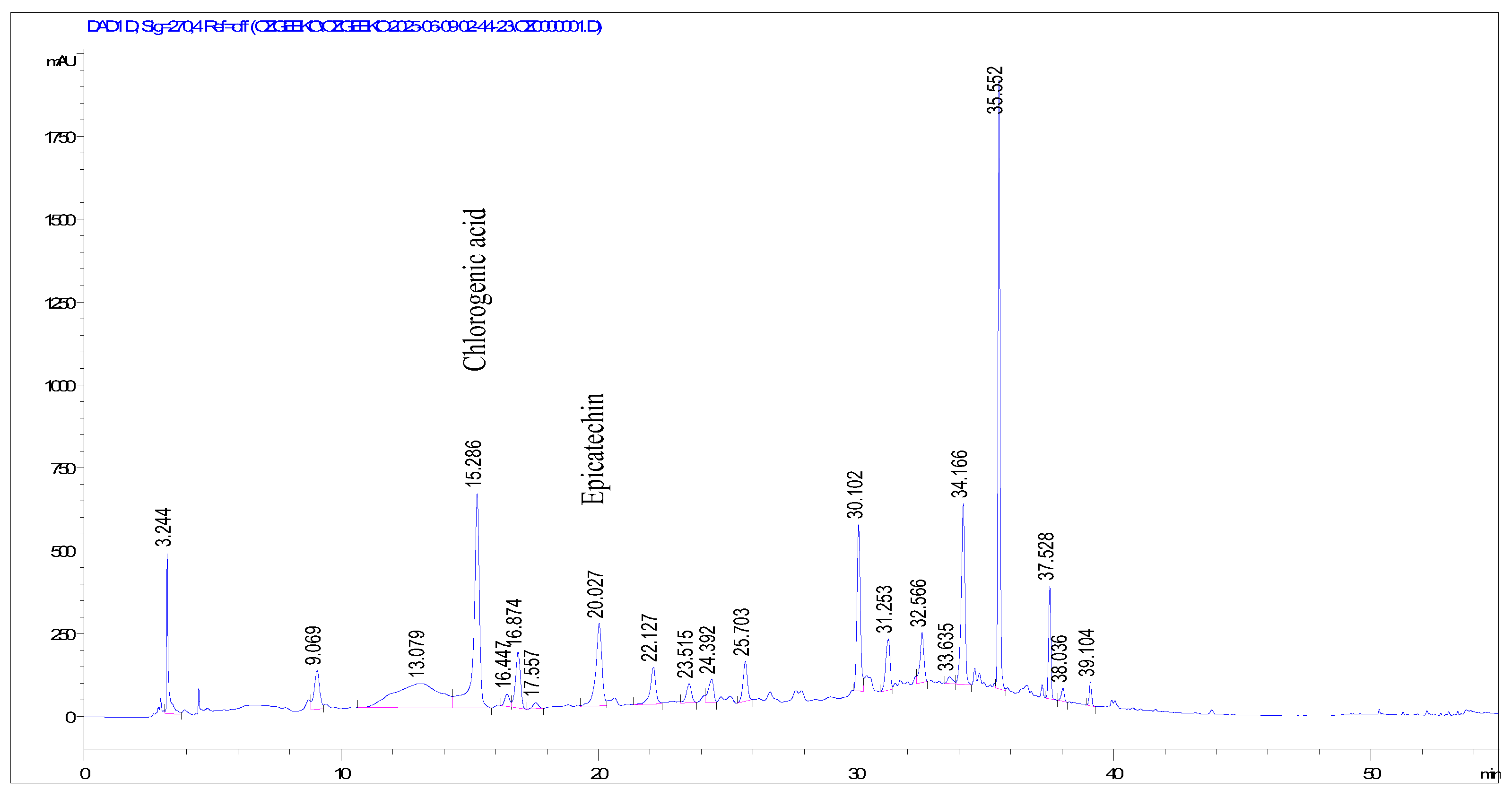
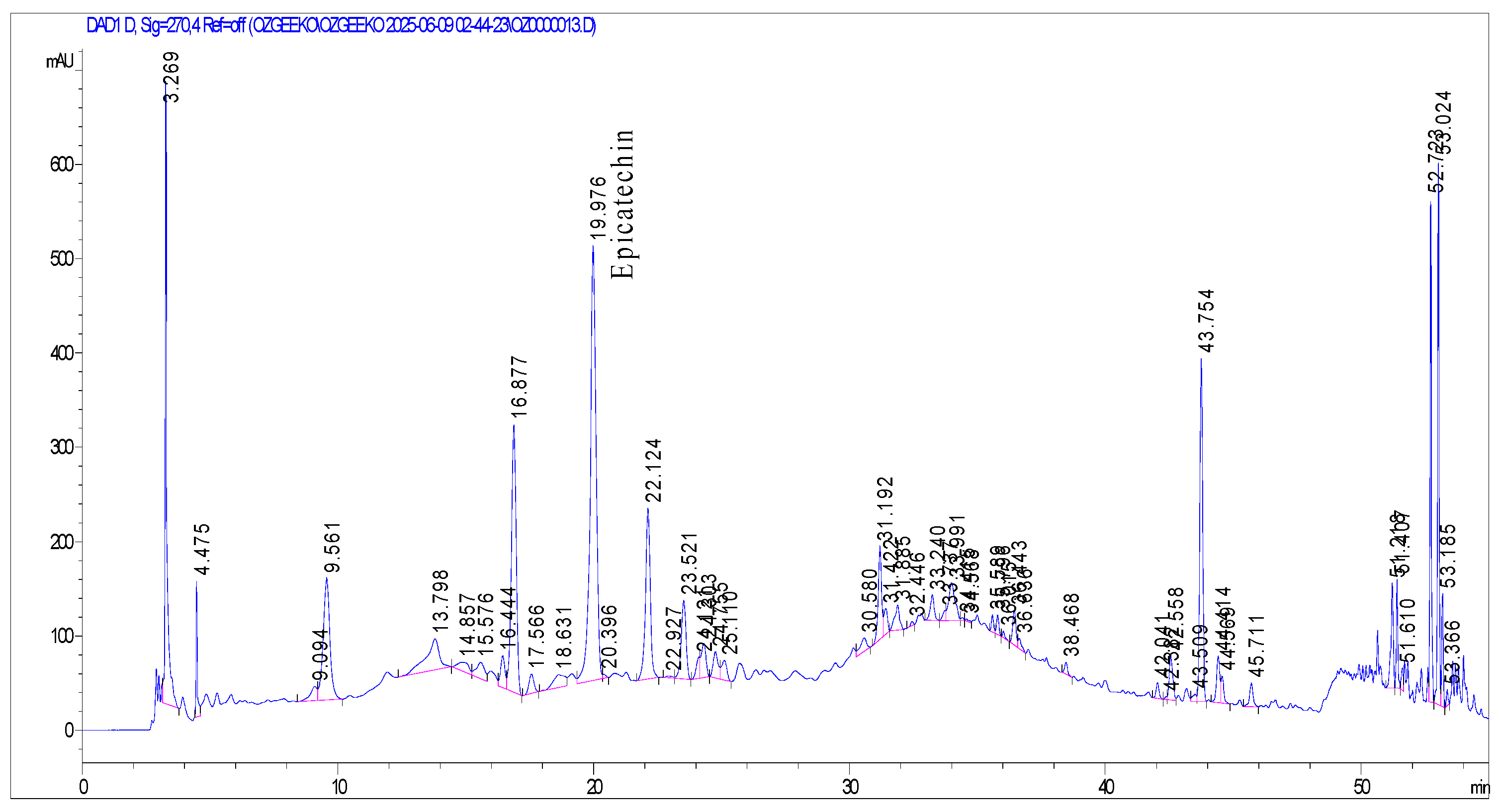
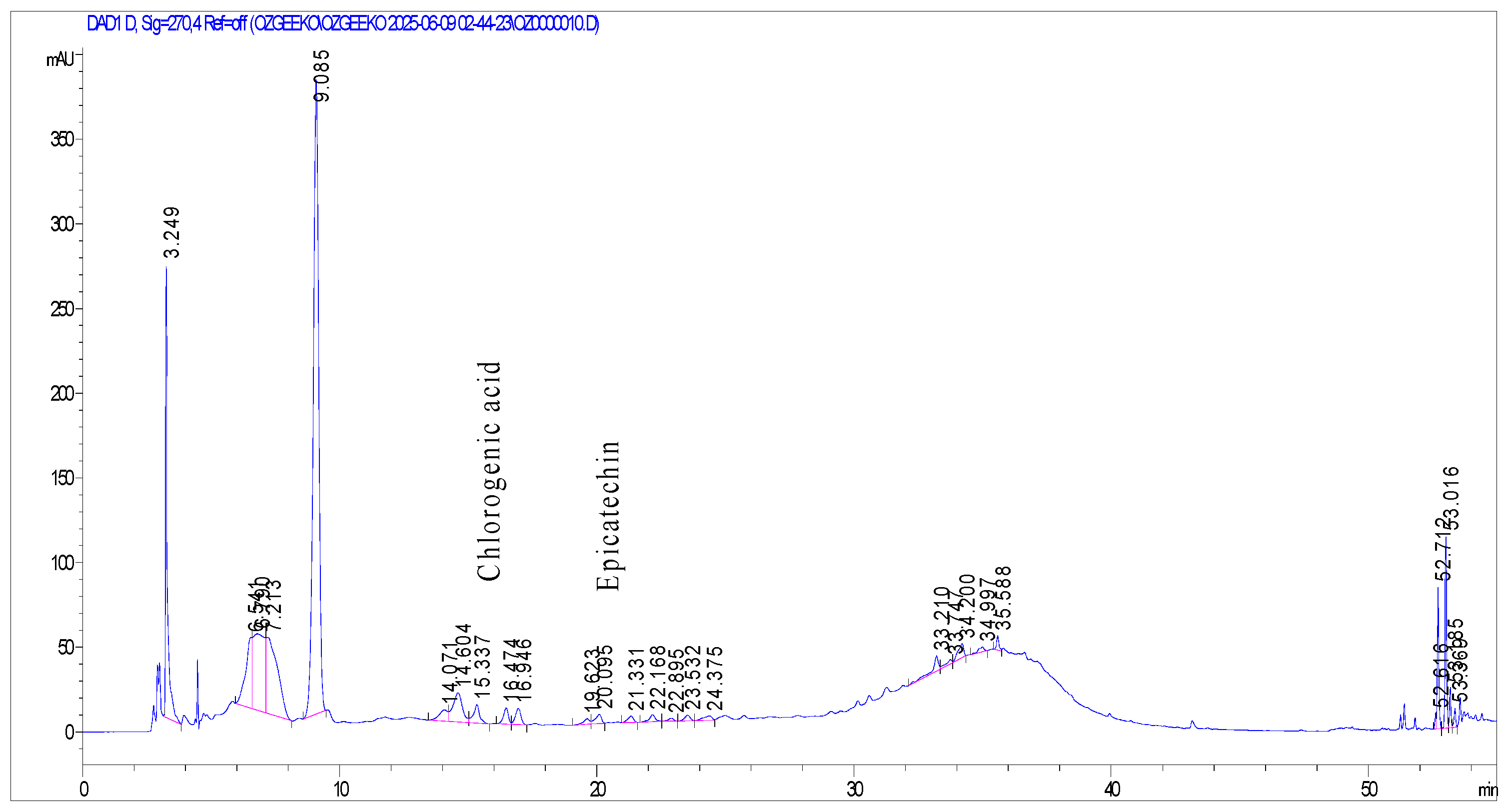
| Epicatechin | 10.4965 ± 0.1128 | 0.4743 ± 0.0051 | 35.9395 ± 0.3519 | 0.3011 ± 0.0030 | 0.0809 ± 0.0029 | 0.00124 ± 0.00004 |
| Chlorogenic acid | 39.8006 ± 0.0986 | 1.7983 ± 0.0045 | - | - | 0.2087 ± 0.0005 | 0.0032 ± 0.0000 |
| Minimum Inhibitory Concentrations (MIC-µg/mL) | |||||||||||||
|---|---|---|---|---|---|---|---|---|---|---|---|---|---|
| E. coli ATCC 25922 | E. coli COR 13946 | A. baumannii ATCC 19606 | E. faecalis ATCC 29212 | S. aureus ATCC 29213 | P. aeruginosa ATCC 27853 | P. aeruginosa COR | MDR1 | MDR2 | MDR3 | PDR1 | PDR2 | PDR3 | |
| MGB | 16 | 16 | 64 | 4 | 16 | 16 | 16 | 64 | 64 | 64 | 32 | 64 | 64 |
| MGL | 64 | 64 | 16 | 32 | 8 | 32 | 32 | 64 | 32 | 32 | 32 | 64 | 64 |
| MGUF | 64 | 64 | 16 | 64 | 32 | 64 | 64 | 16 | 32 | 32 | 32 | 32 | 32 |
| MGRF | 64 | 64 | 16 | 128 | >128 | 32 | 32 | 32 | 32 | 32 | 32 | 32 | 32 |
| CO | 0.0625 | 0.0625 | 0.0625 | 0.0625 | 0.0625 | 0.0625 | 8 | 2 | 8 | 8 | 8 | 32 | 64 |
| CEF | 0.125 | 2 | 0.125 | 1 | 2 | 1 | 2 | 2 | 4 | 16 | 16 | 32 | 32 |
| Stabilization (%) | |||||
|---|---|---|---|---|---|
| Concentration (µg/mL) | MGL | MGB | MGUF | MGRF | DFS |
| 25 | - | - | - | - | 17.26 a,b,c |
| 50 | - | - | - | - | 48.73 h,i,j,k,l |
| 100 | - | - | - | - | 58.03 k,l,m |
| 800 | 30.52 c,d,e,f,g | 9.75 a | 40.15 f,g,h,i,j | - | - |
| 1000 | 37.52 e,f,g,h,i | 34.26 e,f,g,h | 49.39 i,j,k,l | 19.42 a,b,c,d | - |
| 1200 | 41.75 f,g,h,i,j | 43.92 g,h,i,j | 60.60 l,m | 24.06 a,b,c,d,e | - |
| 1400 | 30.19 a,b | 54.48 j,k,l,m | 65.03 m | 33.00 d,e,f,g | - |
| 1600 | 28.45 b,c,d,e,f | 25.02 b,c,d,e | - | - | - |
| IC50 ± SEM (µg/mL) | |||||
| IC50 (µg/mL) | - | 1300.43 ± 10.60 | 1011.868 ± 30.39 | - | 75.91 ± 1.60 |
| Stabilization (%) | |||||
|---|---|---|---|---|---|
| Concentration (µg/mL) | MGL | MGB | MGUF | MGRF | DFS |
| 25 | - | - | - | - | 30.40 f |
| 50 | 5.52 a,b | 4.99 a | - | - | 75.98 j |
| 100 | 13.00 c,d | 12.63 b,c,d | - | - | 99.20 l |
| 250 | 21.04 e | 21.95 e | - | - | - |
| 500 | 58.70 i | 59.70 i | 8.00 a,b,c | - | - |
| 600 | - | - | 16.56 d,e | - | - |
| 700 | - | - | 30.02 f | - | - |
| 800 | - | - | 40.60 g | - | - |
| 900 | - | - | 74.74 j | - | - |
| 1000 | 97.06 l | 93.74 k,l | 94.90 k,l | 41.31 g | - |
| 1200 | - | - | - | 49.11 h | - |
| 1400 | - | - | - | 70.67 j | - |
| 1600 | - | - | - | 87.85 k | - |
| 1800 | - | - | - | 95.36 l | - |
| 2000 | - | - | - | 96.86 l | - |
| IC50 ± SEM (µg/mL) | |||||
| IC50 (µg/mL) | 491.63 ± 0.02 | 499.58 ± 0.02 | 783.21 ± 3.57 | 1120.34 ± 0.84 | 34.70 ± 1.50 |
Disclaimer/Publisher’s Note: The statements, opinions and data contained in all publications are solely those of the individual author(s) and contributor(s) and not of MDPI and/or the editor(s). MDPI and/or the editor(s) disclaim responsibility for any injury to people or property resulting from any ideas, methods, instructions or products referred to in the content. |
© 2025 by the authors. Licensee MDPI, Basel, Switzerland. This article is an open access article distributed under the terms and conditions of the Creative Commons Attribution (CC BY) license.
Share and Cite
Kurtul, E.; Öztürk, Ş.; Tekin, S.; Yılmaz, Ö.; Bahadır-Acıkara, Ö. In Vitro Biological Activities and Phytochemical Analyses of Mespilus germanica L. Molecules 2026, 31, 50. https://doi.org/10.3390/molecules31010050
Kurtul E, Öztürk Ş, Tekin S, Yılmaz Ö, Bahadır-Acıkara Ö. In Vitro Biological Activities and Phytochemical Analyses of Mespilus germanica L. Molecules. 2026; 31(1):50. https://doi.org/10.3390/molecules31010050
Chicago/Turabian StyleKurtul, Ekin, Şükran Öztürk, Selen Tekin, Özge Yılmaz, and Özlem Bahadır-Acıkara. 2026. "In Vitro Biological Activities and Phytochemical Analyses of Mespilus germanica L." Molecules 31, no. 1: 50. https://doi.org/10.3390/molecules31010050
APA StyleKurtul, E., Öztürk, Ş., Tekin, S., Yılmaz, Ö., & Bahadır-Acıkara, Ö. (2026). In Vitro Biological Activities and Phytochemical Analyses of Mespilus germanica L. Molecules, 31(1), 50. https://doi.org/10.3390/molecules31010050