.jpg)


Studies on the Complexation of Platinum(II) by Some 4-Nitroisothiazoles and the Cytotoxic Activity of the Resulting Complexes

 , , , and
Abstract
1. Introduction
2. Results and Discussion
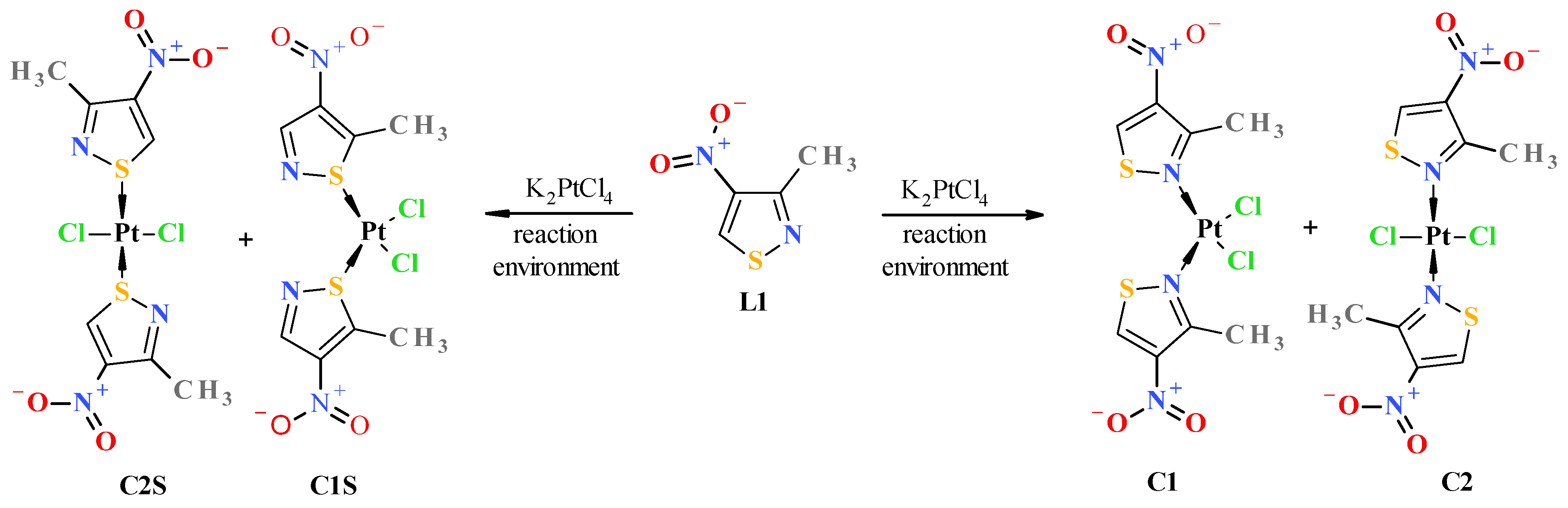
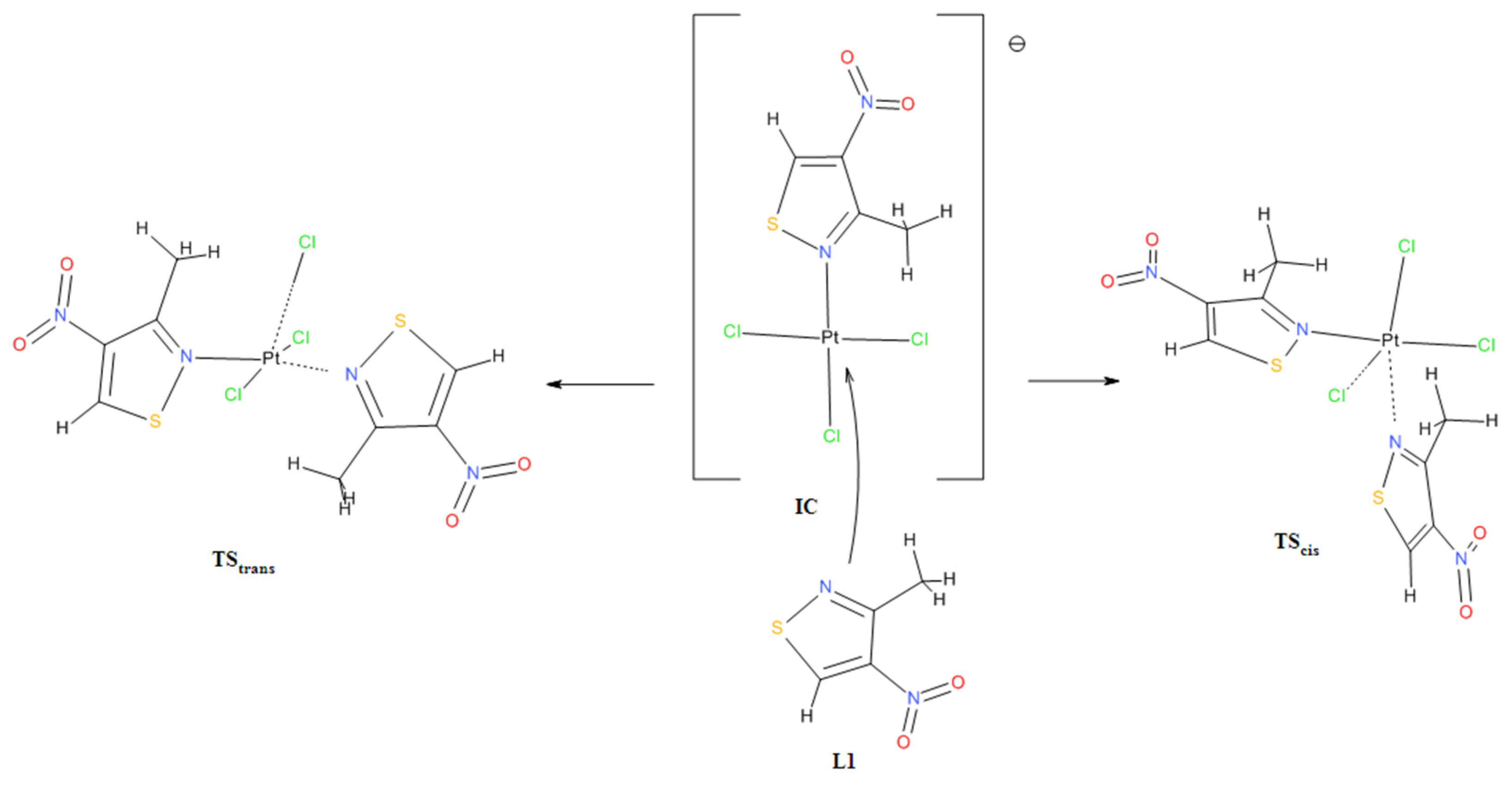
2.1. Theoretical Considerations on the Complexation of 4-Nitroisothiazoles by Platinum Ion Pt2+
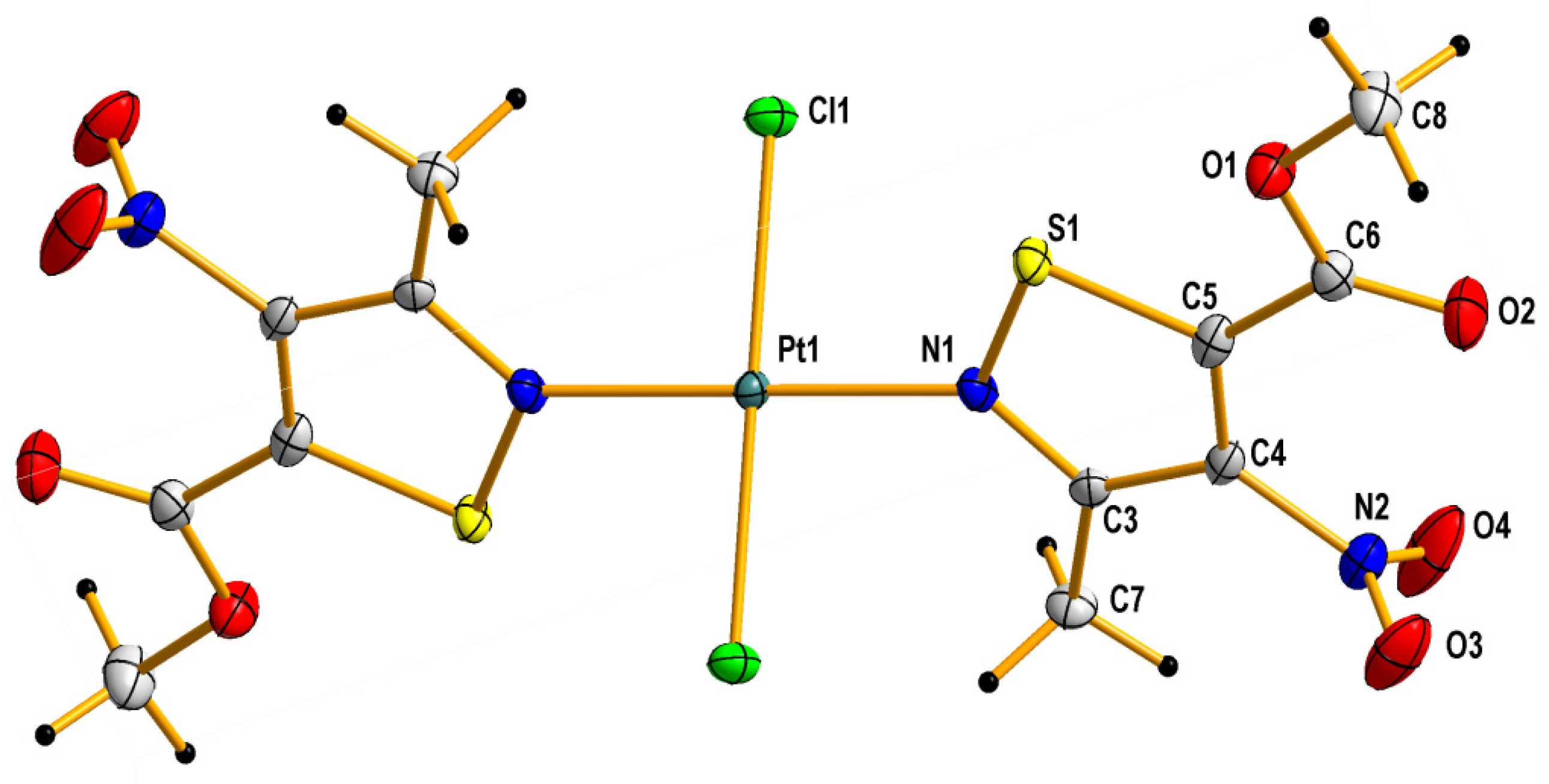
2.2. Reactions of Nitroisothiazoles with Potassium Tetrachloroplatinate and Structural Analysis of Resulting Pt-Complexes
2.3. In Vitro Cytotoxic Activity
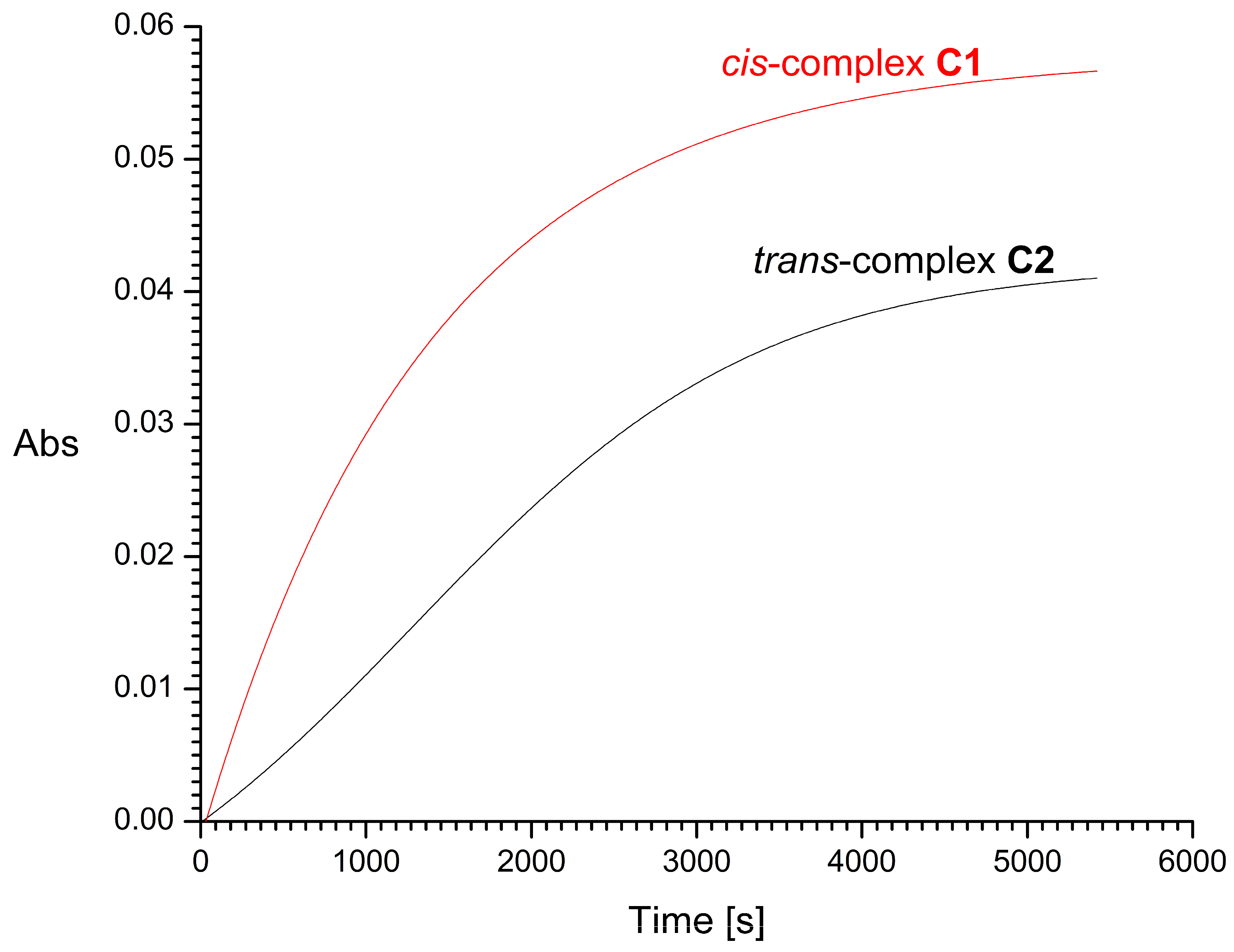
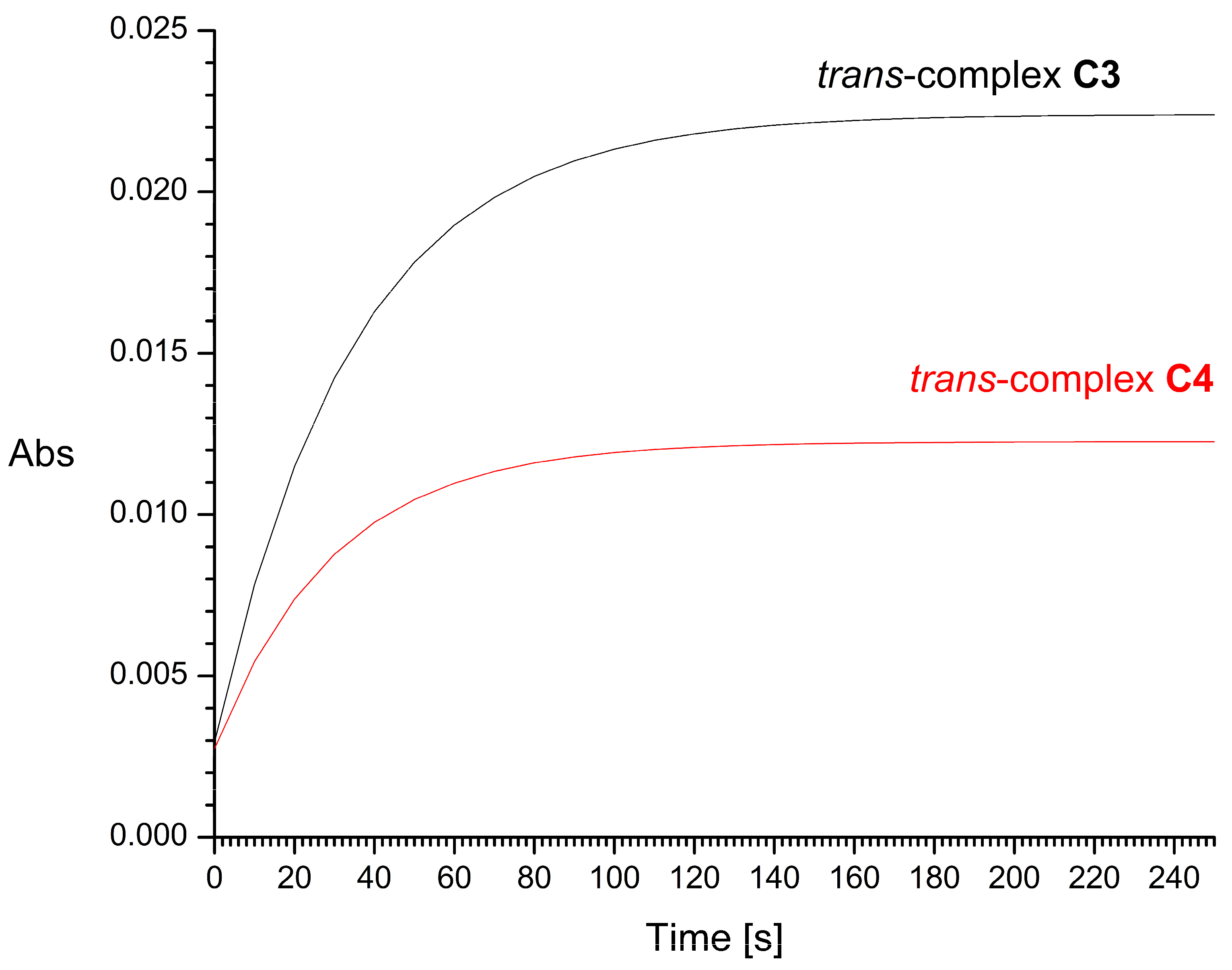
2.4. Reactivity with L-Glutathione (GSH)
3. Methods and Materials
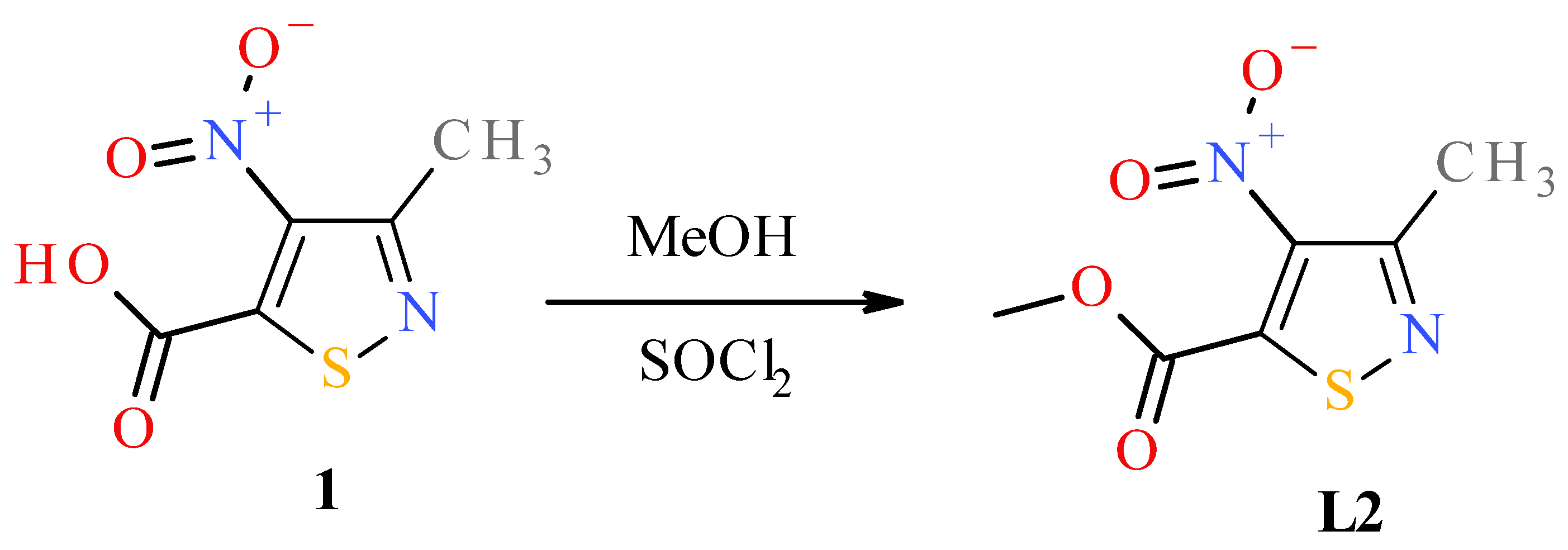
3.1. Synthesis of 4-Nitroisothiazole Ligands
Preparation of Methyl 3-Methyl-4-nitro-5-isothiazolecarboxylate (L2)
3.2. Reactions of Nitroisothiazoles with Potassium Tetrachloroplatinate
3.2.1. General Description of the Reactions of Nitroisothiazoles with K2PtCl4
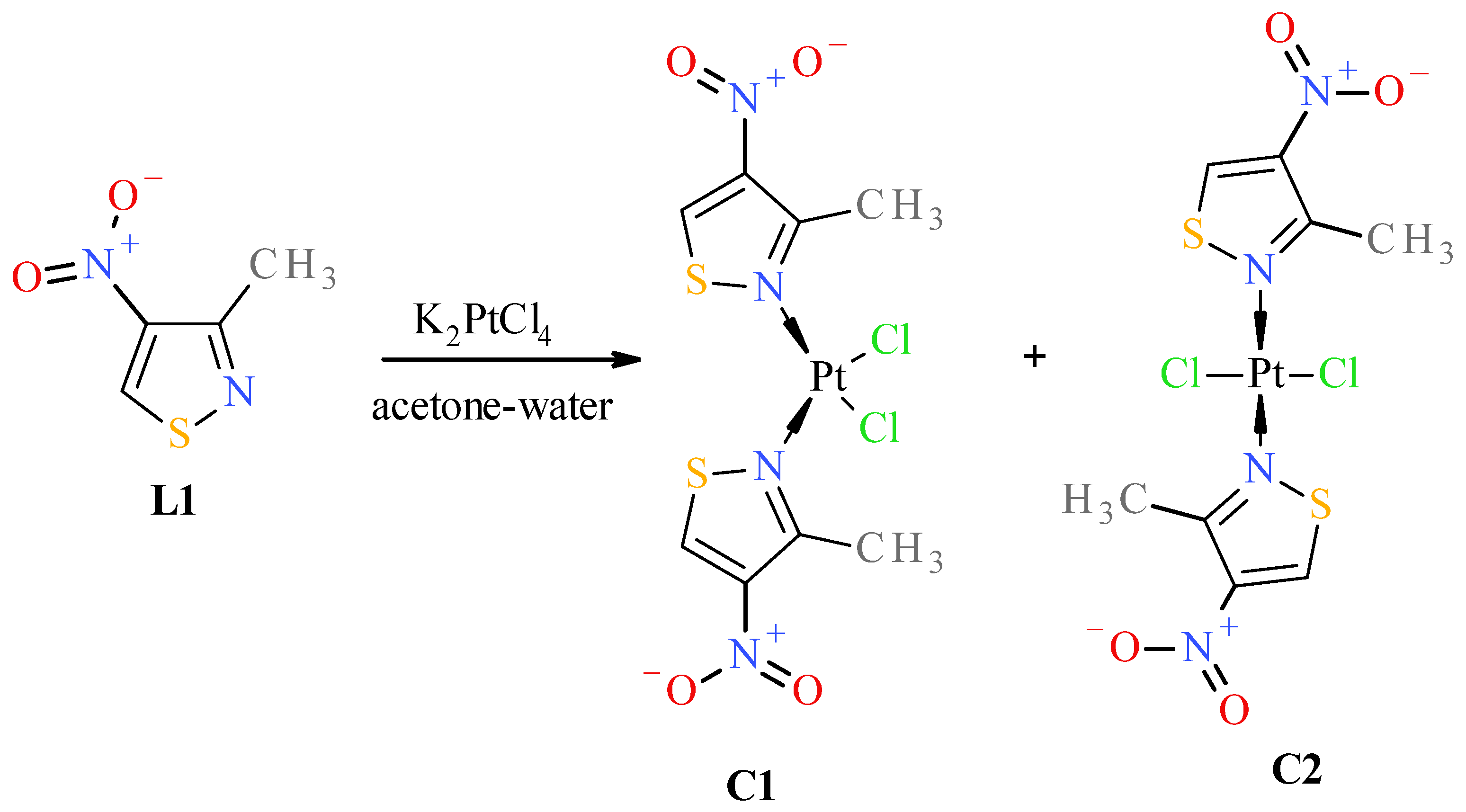
3.2.2. Complexation with 3-Methyl-4-nitroisothiazole (L1) Resulting in cis and trans-Dichlorobis(3-methyl-4-nitroisothiazole)platinum(II) (C1 and C2) (Mmol = 554.28908 g/mol)
- Spectral analysis for the cis complex C1:
- Spectral analysis for the trans complex C2:
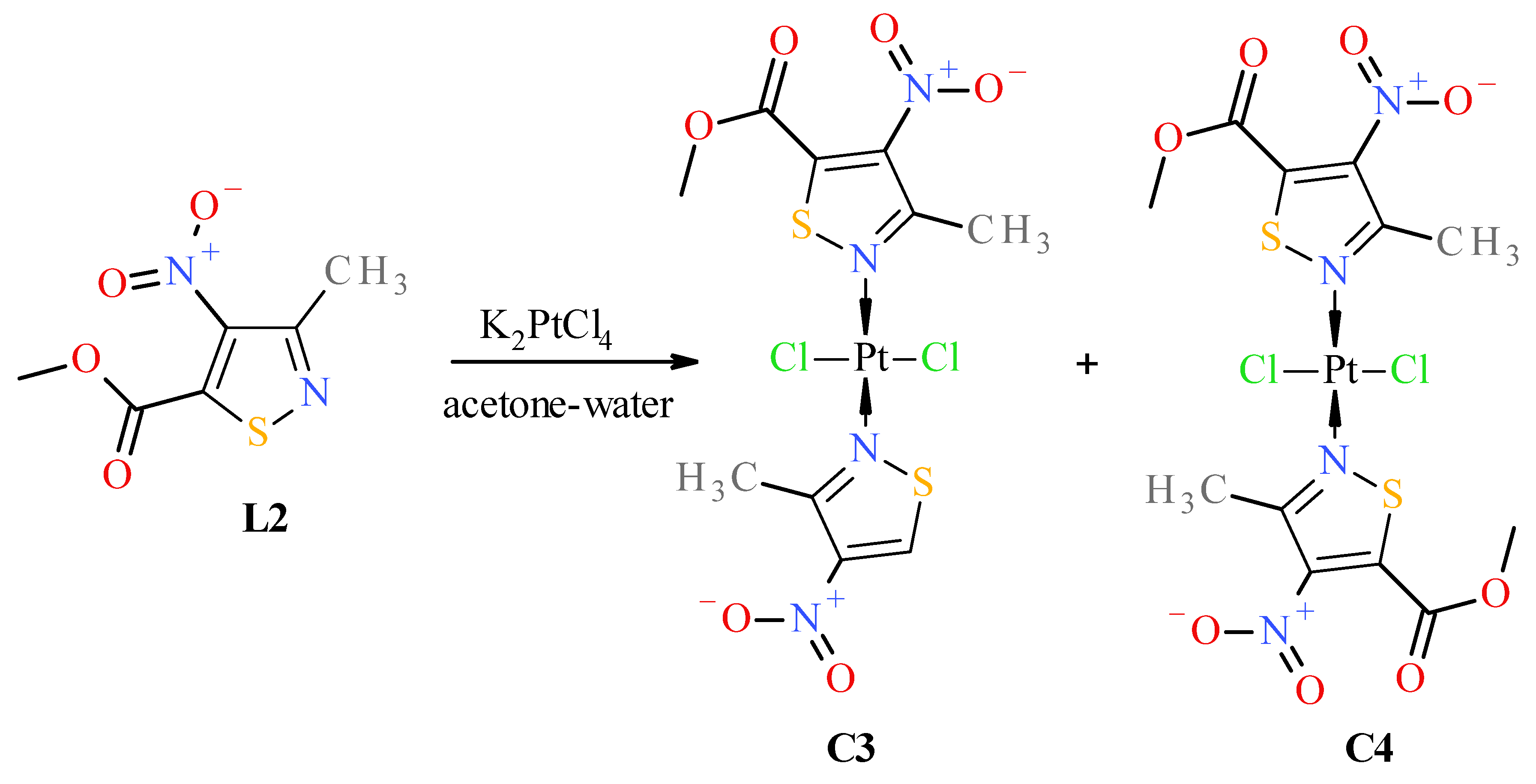
3.2.3. Complexation with Methyl 3-Methyl-4-nitroisothiazole-5-carboxylate (L2) Resulting in trans-Dichlorobis(3-methyl-4-nitro-5-(methoxycarbonyl)isothiazole)platinum(II) (C4) (Mmol = 670.36124 g/mol) and trans-Dichloro-3-methyl-4-nitroisothiazole 3-Methyl-4-nitro-5-(methoxycarbonyl)isothiazole Platinum(II) (C3) (Mmol = 612.32516 g/mol)
- Spectral analysis for the trans complex C3:
- Spectral analysis for the trans complex C4:
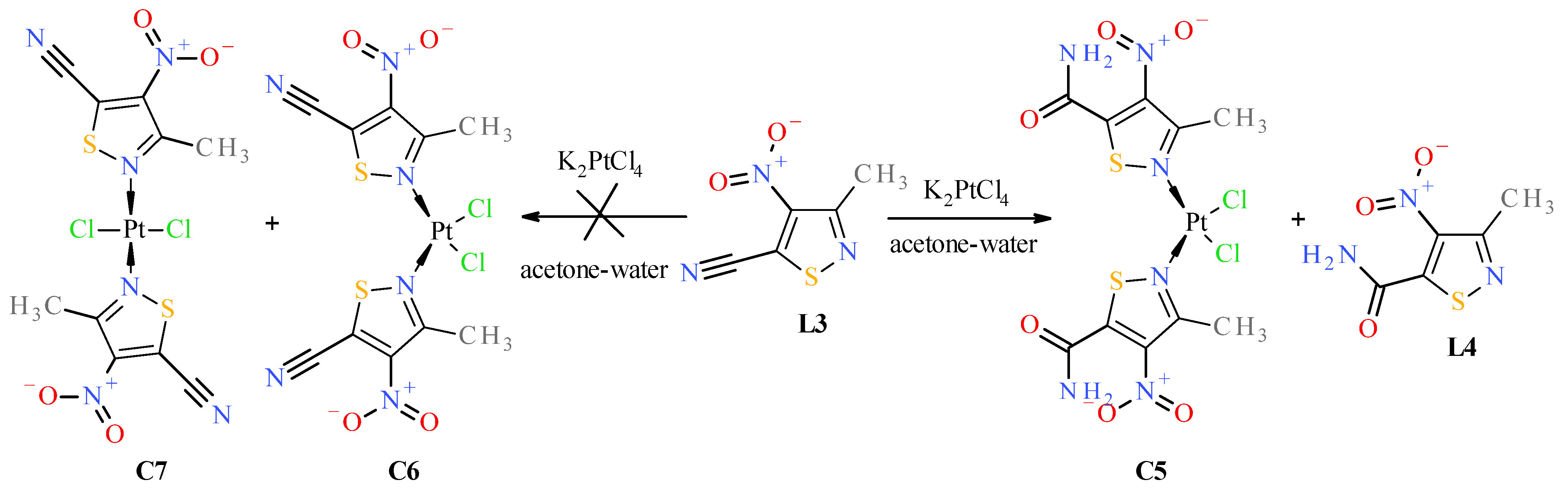
3.2.4. Complexation with 3-Methyl-4-nitroisothiazole-5-carbonitrile (L3) Resulting in cis-Dichlorobis(3-methyl-4-nitroisothiazole-5-carboxamide)platinum(II) (C5) (Mmol = 640.33864 g/mol)
- Spectral analyses for the cis complex C5:
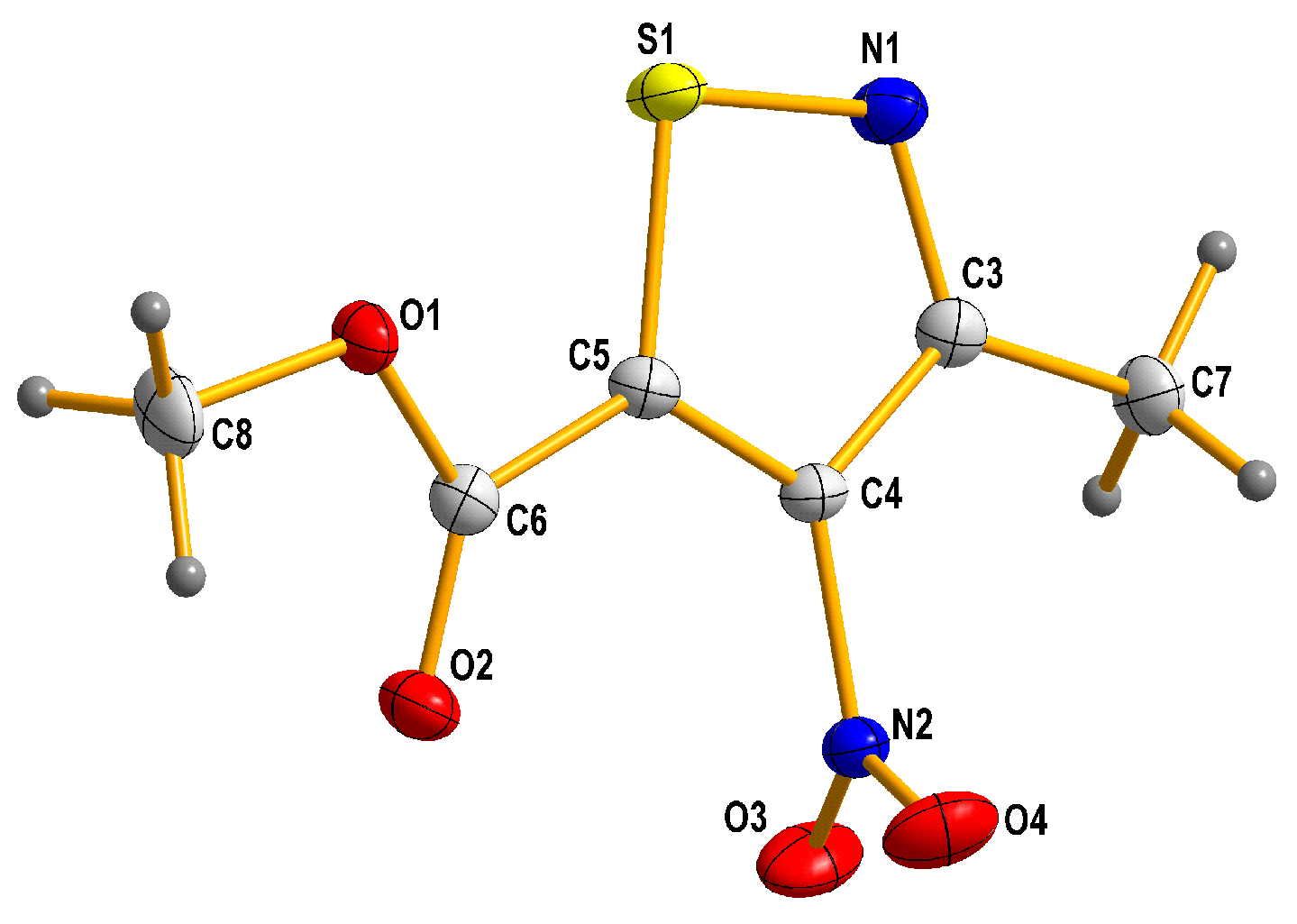
3.3. Single Crystal X-Ray Structure Determination of Methyl 3-Methyl-4-nitro-5-isothiazolecarboxylate (L2) and Complex C4
3.4. Computational Details
3.5. Reaction with L-Glutathione
3.6. Cell Culture Used for Testing
3.7. Preparation of Stock Solutions of Tested Compounds to In Vitro Studies
3.8. In Vitro Cytotoxicity Test Through Sulforhodamine B Assay
3.9. Statistical Analysis
4. Conclusions
Supplementary Materials
Author Contributions
Funding
Institutional Review Board Statement
Informed Consent Statement
Data Availability Statement
Acknowledgments
Conflicts of Interest
References
- Rosenberg, B.; van Camp, L.; Krigas, T. Inhibition of Cell Division in Escherichia coli by Electrolysis Products from a Platinum Electrode. Nature 1965, 205, 698–699. [Google Scholar] [CrossRef] [PubMed]
- Dilruba, S.; Kalayda, G.V. Platinum-based drugs: Past, present and future. Cancer Chemother. Pharmacol. 2016, 77, 1103–1124. [Google Scholar] [CrossRef]
- Kostova, I. Platinum complexes as anticancer agents, Recent Pat. Anticancer Drug Discov. 2006, 1, 1–22. [Google Scholar] [CrossRef] [PubMed]
- Qi, L.; Luo, Q.; Zhang, Y.; Jia, F.; Zhao, Y.; Wang, F. Advances in toxicological research of the anticancer drug cisplatin. Chem. Res. Toxicol. 2019, 32, 1469–1486. [Google Scholar] [CrossRef]
- Harrap, K.R.; Jones, M.; Wilkinson, C.R.; Clink, H.M.; Sparrow, S.; Mitchley, B.C.V.; Clarke, S.; Veasey, A. Antitumor, toxic and biochemical properties of cisplatin and eight other platinum complexes. In Cisplatin; Elsevier: Amsterdam, The Netherlands, 1980; pp. 193–212. [Google Scholar]
- Kelland, L. The resurgence of platinum-based cancer chemotherapy. Nat. Rev. Cancer 2007, 7, 573–584. [Google Scholar] [CrossRef]
- Shimada, M.; Itamochi, H.; Kigawa, J. Nedaplatin: A cisplatin derivative in cancer chemotherapy. Cancer Manag. Res. 2013, 5, 67–75. [Google Scholar] [CrossRef]
- Neidle, S.; Ismail, I.M.; Sadler, P.J. The structure of the antitumor complex cis-(diammino)(1,1-cyclobutanedicarboxylato)-Pt(II): X ray and nmr studies. J. Inorg. Biochem. 1980, 13, 205–212. [Google Scholar] [CrossRef]
- Jakupec, M.A.; Galanski, M.S.; Keppler, B.K. Tumour-inhibiting platinum complexes—State of the art and future perspectives. Rev. Physiol. Biochem. Pharmacol. 2003, 146, 1–54. [Google Scholar] [CrossRef]
- Kawai, Y.; Taniuchi, S.; Okahara, S.; Nakamura, M.; Gemba, M. Relationship between cisplatin or nedaplatin-induced nephrotoxicity and renal accumulation. Biol. Pharm. Bull. 2005, 28, 1385–1388. [Google Scholar] [CrossRef]
- Woynarowski, J.M.; Faivre, S.; Herzig, M.C.S.; Arnett, B.; Chapman, W.G.; Trevino, A.V.; Raymond, E.; Chaney, S.G.; Vaisman, A.; Varchenko, M.; et al. Oxaliplatin-induced damage of cellular DNA. Mol. Pharmacol. 2000, 58, 920–927. [Google Scholar] [CrossRef] [PubMed]
- Cassidy, J.; Misset, J.-L. Oxaliplatin-related side effects: Characteristics and management. Semin. Oncol. 2002, 29, 11–20. [Google Scholar] [CrossRef]
- Welink, J.; Boven, E.; Vermorken, J.B.; Gall, H.E.; van der Vijgh, W.J. Pharmacokinetics and pharmacodynamics of lobaplatin (D-19466) in patients with advanced solid tumors, including patients with impaired renal of liver function. Clin. Cancer Res. 1999, 5, 2349–2358. [Google Scholar] [CrossRef]
- Wang, D.; Lippard, S.J. Cellular processing of platinum anticancer drugs. Nat. Rev. Drug Discov. 2005, 4, 307–320. [Google Scholar] [CrossRef]
- Todd, R.C.; Lippard, S.J. Inhibition of transcription by platinum antitumor compounds. Metallomics 2009, 1, 280–291. [Google Scholar] [CrossRef] [PubMed]
- Yu, C.; Wang, Z.; Sun, Z.; Zhang, L.; Zhang, W.; Xu, Y.; Zhang, J.J. Platinum-Based Combination Therapy: Molecular Rationale, Current Clinical Uses, and Future Perspectives. J. Med. Chem. 2020, 63, 13397–13412. [Google Scholar] [CrossRef] [PubMed]
- Mastalarz, H.; Mastalarz, A.; Wietrzyk, J.; Milczarek, M.; Kochel, A.; Regiec, A. Synthesis of Platinum(II) Complexes with Some 1-Methylnitropyrazoles and In Vitro Research on Their Cytotoxic Activity. Pharmaceuticals 2020, 13, 433. [Google Scholar] [CrossRef]
- Mastalarz, H.; Mastalarz, A.; Wietrzyk, J.; Milczarek, M.; Kochel, A.; Regiec, A. Studies on the complexation of platinum(II) by some 4-nitroisoxazoles and testing the cytotoxic activity of the resulting complexes. Molecules 2023, 28, 1284. [Google Scholar] [CrossRef] [PubMed]
- Kasherman, Y.; Sturup, S.; Gibson, D. Is Glutathione the Major Cellular Target of Cisplatin? A Study of the Interactions of Cisplatin with Cancer Cell Extracts. J. Med. Chem. 2009, 52, 4319–4328. [Google Scholar] [CrossRef]
- Gilmour, D.W.; Sadler, P.J. New Metal Complexes of 4-Nitrosubstituted Pyrazoles, Imidazoles and Isothiazoles. GB(UK) Patent GB2122194A, 11 January 1984. [Google Scholar]
- Skov, K.A.; Farrell, N.P.; Chaplin, D.J. Platinum Complexes with One Radiosensitizing Ligand. US Patent US4921963A, 1 May 1990. Canadian Patent CA1299179, 21 April 1992. [Google Scholar]
- Pearson, R.G. Hard and soft acids and bases, HSAB, part 1: Fundamental principles. J. Chem. Educ. 1968, 45, 581–586. [Google Scholar] [CrossRef]
- Pearson, R.G. Hard and soft acids and bases, HSAB, part II: Underlying theories. J. Chem. Educ. 1968, 45, 643–648. [Google Scholar] [CrossRef]
- Frisch, M.J.; Trucks, G.W.; Schlegel, H.B.; Scuseria, G.E.; Robb, M.A.; Cheeseman, J.R.; Scalmani, G.; Barone, V.; Petersson, G.A.; Nakatsuji, H.; et al. Gaussian 16; Revision C.02; Gaussian, Inc.: Wallingford, CT, USA, 2019. [Google Scholar]
- Marenich, A.V.; Cramer, C.J.; Truhlar, D.G. Universal solvation model based on solute electron density and a continuum model of the solvent defined by the bulk dielectric constant and atomic surface tensions. J. Phys. Chem. B 2009, 113, 6378–6396. [Google Scholar] [CrossRef]
- Feller, D.J. The Role of Databases in Support of Computational Chemistry Calculations. J. Comput. Chem. 1996, 17, 1571–1586. [Google Scholar] [CrossRef]
- Schuchardt, K.L.; Didier, B.T.; Elsethagen, T.; Sun, L.; Gurumoorthi, V.; Chase, J.; Li, J.; Windus, T.L. Basis Set Exchange: A Community Database for Computational Sciences. J. Chem. Inf. Model. 2007, 47, 1045–1052. [Google Scholar] [CrossRef]
- Paschoal, D.; Marcial, B.L.; Lopes, J.F.; De Almeida, W.B.; Dos Santos, H.F. The Role of the Basis Set and the Level of Quantum Mechanical Theory in the Prediction of the Structure and Reactivity of Cisplatin. J. Comput. Chem. 2012, 33, 2292–2302. [Google Scholar] [CrossRef]
- Foresman, J.B.; Frisch, J.E. Exploring Chemistry with Electronic Structure Methods, 3rd ed.; Gaussian, Inc.: Wallingford, CT, USA, 2015. [Google Scholar]
- Regiec, A.; Wojciechowski, P. Synthesis and experimental versus theoretical research on spectroscopic and electronic properties of 3-methyl-4-nitroisothiazole. J. Mol. Struct. 2019, 1196, 370–388. [Google Scholar] [CrossRef]
- Allen, A.D.; Theophanides, T. Platinum(II) complexes: Infrared spectra in the 300–800 CM−1 region. Can. J. Chem. 1964, 42, 1551–1554. [Google Scholar] [CrossRef]
- Wiglusz, K.; Trynda-Lemiesz, L. Platinum drugs binding to human serum albumin: Effect of non-steroidal anti-inflammatory drugs. J. Photochem. Photobiol. A Chem. 2014, 289, 1–6. [Google Scholar] [CrossRef]
- Cherian, M.G. The significance of the nuclear and cytoplasmic localization of metallothionein in human liver and tumor cells. Environ. Health Perspect. 1994, 102, 131–135. [Google Scholar] [CrossRef]
- Potęga, A. Glutathione-Mediated Conjugation of Anticancer Drugs: An Overview of Reaction Mechanisms and Biological Significance for Drug Detoxification and Bioactivation. Molecules 2022, 27, 5252. [Google Scholar] [CrossRef]
- Hagrman, D.; Goodisman, J.; Souid, A.-K. Kinetic Study on the Reactions of Platinum Drugs with Glutathione. J. Pharmacol. Exp. Ther. 2004, 308, 658–666. [Google Scholar] [CrossRef]
- Suchánková, T.; Vojtíšková, M.; Reedijk, J.; Brabec, V.; Kašpárková, J. DNA and glutathione interactions in cell-free media of asymmetric platinum(II) complexes cis- and trans-[PtCl2(isopropylamine)(1-methylimidazole)]: Relations to their different antitumor effects. J. Biol. Inorg. Chem. 2009, 14, 75–87. [Google Scholar] [CrossRef]
- Holland, A.; Slack, R.; Warren, T.F.; Buttimore, D. 1337. Isothiazoles. Part IX. Isothiazolopyrimidines. J. Chem. Soc. 1965, 7277–7282. [Google Scholar] [CrossRef]
- Sheldrick, G.M. Crystal structure refinement with SHELXL. Acta Crystallogr. Sect. C Struct. Chem. 2015, 71, 3–8. [Google Scholar] [CrossRef]
- Sheldrick, G.M. A Short History of SHELX. Acta Cryst. 2008, A64, 112–122. [Google Scholar] [CrossRef]
- Putz, H.; Brandenburg, K. Diamond-Crystal and Molecular Structure Visualization; Crystal Impact GbR: Bonn, Germany, 2021. Available online: http://www.crystalimpact.com/diamond (accessed on 20 January 2023).
- Becke, A.D. Density-functional thermochemistry. IV. A new dynamical correlation functional and implications for exact-exchange mixing. J. Chem. Phys. 1996, 104, 1040–1046. [Google Scholar] [CrossRef]
- Lee, C.T.; Yang, W.T.; Parr, R.G. Development of the Colle-Salvetti correlation-energy formula into a functional of the electron density. Phys. Rev. B 1988, 37, 785–789. [Google Scholar] [CrossRef]
- Neumaier, L.; Schilling, J.; Bardow, A.; Gross, J. Dielectric constant of mixed solvents based on perturbation theory. Fluid Phase Equilibria 2022, 555, 113346. [Google Scholar] [CrossRef]
- Ochterski, J.W. Thermochemistry in Gaussian; Gaussian, Inc.: Pittsburgh, PA, USA, 2000; Volume 264, pp. 1–19. [Google Scholar]
- Skehan, P.; Storeng, R.; Scudiero, D.; Monks, A.; McMahon, J.; Vistica, D.; Warren, J.T.; Bokesch, H.; Kenney, S.; Boyd, M.R. New Colorimetric Cytotoxicity Assay for Anticancer-Drug Screening. J. Natl. Cancer Inst. 1990, 82, 1107–1112. [Google Scholar] [CrossRef]
- Nevozhay, D. Cheburator Software for Automatically Calculating Drug Inhibitory Concentrations from In Vitro Screening Assays. PLoS ONE 2014, 9, e106186. [Google Scholar] [CrossRef]
- Van Beusichem, M.; Farrell, N. Activation of the Trans Geometry in Platinum Antitumor Complexes. Synthesis, Characterization, and Biological Activity of Complexes with the Planar Ligands Pyridine, N-Methylimidazole, Thiazole, and Quinoline. Crystal and Molecular Structure of trans -Dichlorobis (thiazole) platinum (II). Inorg. Chem. 1992, 31, 634–639. [Google Scholar] [CrossRef]
- Ishikawa, T.; Ali-Osman, F. Glutathione-associated cis-diamminedichloroplatinum(II) metabolism and ATP-dependent e flux from leukemia cells. Molecular characterization of glutathione-platinum complex and its biological significance. J. Biol. Chem. 1993, 268, 20116–20125. [Google Scholar] [CrossRef] [PubMed]
- Kishimoto, T.; Yoshikawa, Y.; Yoshikawa, K.; Komeda, S. Different Effects of Cisplatin and Transplatin on the Higher-Order Structure of DNA and Gene Expression. Int. J. Mol. Sci. 2019, 21, 34. [Google Scholar] [CrossRef] [PubMed]
- Wei, H.; Liu, Q.; Lin, J.; Jiang, P.; Guo, Z. Fast displacement of S,N-chelated L-methionine in platinum(II) complexes by biological thiols. Inorg. Chem. Commun. 2004, 7, 792–794. [Google Scholar] [CrossRef]
- Peleg-Shulman, T.; Yousef Najajreh, Y.; Gibson, G. Interactions of cisplatin and transplatin with proteins. Comparison of binding kinetics, binding sites and reactivity of the Ptprotein adducts of cisplatin and transplatin towards biological nucleophiles. J. Inorg. Biochem. 2002, 91, 306–311. [Google Scholar] [CrossRef] [PubMed]



| DFT Method Functional/Basis Sets | Difference Between Formation Gibbs Energies of cis-Complexes N-Pt (C1) and S-Pt (C1S) ΔΔfG [kcal/mol] | Differences Between Formation Gibbs Energies of trans-Complexes N-Pt (C2) and S-Pt (C2S) ΔΔfG [kcal/mol] | ||
|---|---|---|---|---|
| Environment | ||||
| Vacuum | Water Acetone Mixture | Vacuum | Water Acetone Mixture | |
| B3LYP/DZP * | −34.5 | −41.1 | −40.7 | −44.0 |
| B3LYP/aug-cc-pVTZ/DZP *# | −32.4 | −40.1 | −42.4 | −45.0 |
| B3LYP-GD3 ‡/aug-cc-pVTZ/DZP *# | −33.9 | −40.7 | −44.1 | −47.4 |
| B3LYP/aug-cc-pVTZ/Pt-mDZP *# | −30.0 | −36.3 | −39.3 | −43.8 |
| mPW1PW91/6-311++G(df,pd)/dhf-qzvpp *# | −23.4 | −30.4 | −29.9 | −33.4 |
| PBE1PBE/6-311++G(df,pd)/LANL2TZf *# | −26.9 | −32.9 | −32.5 | −36.2 |
| B3LYP/6-311++G(df,pd)/DZP *# | −41.8 | −48.2 | −46.5 | −47.5 |
| mPW1PW91/Def2TZVPD */dhf-qzvpp *# | −19.4 | −25.9 | −25.4 | −29.1 |
| PBE1PBE/Def2TZVPD */LANL2TZf *# | −21.2 | −28.0 | −26.6 | −30.8 |
| B3LYP/Def2TZVPD */DZP *# | −31.0 | −38.0 | −36.7 | −40.0 |
| Environment | The Gibbs Energy of the trans-to-cis Isomer Conversion (C2 Versus C1) ΔGisom. [kcal/mol] | Equilibrium Constant of trans-cis Isomerization Kisom. |
|---|---|---|
| Vacuum | 7.05 | 1.490 × 10⁵ |
| Acetone | 2.59 | 7.938 × 10 |
| Water–Acetone (2:1 vol.) | 1.75 | 1.913 × 10 |
| Water | 0.18 | 1.344 |
| Compound | Rf | ||
|---|---|---|---|
| Eluent: Chlorofom:Acetone | |||
| Ratio 9:1 Vol. | Ratio 9:7 Vol. | Ratio 1:1 Vol. | |
| C1 | 0.054 | 0.442 | 0.726 |
| C2 | 0.355 | 0.756 | 0.833 |
| C3 | 0.645 | 0.814 | 0.845 |
| C4 | 0.828 | 0.849 | 0.863 |
| C5 | 0.005 | 0.215 | 0.655 |
| Compound | Cancer Cells | Normal Cells | |||||
|---|---|---|---|---|---|---|---|
| MCF-7 (Breast) | ES-2 (Ovarian) | A549 (Lung) | BALB/3T3 | ||||
| Normoxia | Hypoxia | Normoxia | Hypoxia | Normoxia | Hypoxia | Normoxia | |
| C1(cis) | 4.59 ± 1.57 ** | 8.45 ± 2.25 | 7.29 ± 1.42 | 6.37 ± 1.69 | 31.41 ± 18.76 | inactive | 7.31 ± 0.82 |
| C2(trans) | 6.16 ± 0.78 ** | 9.07 ± 5.07 | 2.14 ± 2.21 | 1.10 ± 0.34 | 6.34 ± 1.47 | 6.52 ± 2.28 | 1.14 ± 0.28 |
| C3(trans) | 5.25 ± 1.01 ** | 7.13 ± 1.93 | 3.90 ± 2.68 | 4.02 ± 2.47 | 5.74 ± 0.65 | inactive | 2.94 ±3.06 |
| C4(trans) | 6.94 ± 2.25 | 7.68 ± 4.45 | 3.89 ± 1.62 | 5.44 ± 1.64 | 40.30 ± 19.93 * | inactive | 5.99 ± 1.28 |
| C5(cis) | 57.57 ± 7.69 * | 67.34 ± 28.34 * | 62.48 ± 22.70 * | 50.10 ± 7.97 * | 66.20 ± 1.15 * | inactive | 64.16 ± 15.83 * |
| Cisplatin | 14.42 ± 1.40 | 9.74 ± 5.84 | 9.85 ± 4.68 | 6.28 ± 2.19 | 12.49 ± 1.64 | 14.75 ± 1.93 | 8.10 ± 5.61 |
| Compound/Drug | Half-Time, t1/2 |
|---|---|
| Carboplatin | 16.7–32.7 h [35] |
| cis-Pt(NO2Pyraz)2Cl2 ‡ [17] | 83 min [17] |
| Cisplatin | 60 min [35], 66 min [36] |
| Oxaliplatin | 44 min [35] |
| cis-Pt(NO2Isoxazol)2Cl2 # [18] | 42 min [18] |
| trans-complex C2 | 29 min |
| trans-Pt(NO2Isoxazol)2Cl2 # [18] | 18 min [18] |
| cis-complex C1 | 16 min |
| trans-Pt(NO2Pyraz)2Cl2 ‡ [17] | 13 min [17] |
| Transplatin | 4 min [36] |
| trans-complex C3 | 20 s |
| trans-complex C4 | 10 s |
Disclaimer/Publisher’s Note: The statements, opinions and data contained in all publications are solely those of the individual author(s) and contributor(s) and not of MDPI and/or the editor(s). MDPI and/or the editor(s) disclaim responsibility for any injury to people or property resulting from any ideas, methods, instructions or products referred to in the content. |
© 2025 by the authors. Licensee MDPI, Basel, Switzerland. This article is an open access article distributed under the terms and conditions of the Creative Commons Attribution (CC BY) license.
Share and Cite
Regiec, A.; Wietrzyk, J.; Milczarek, M.; Kochel, A.; Mastalarz, H. Studies on the Complexation of Platinum(II) by Some 4-Nitroisothiazoles and the Cytotoxic Activity of the Resulting Complexes. Molecules 2026, 31, 34. https://doi.org/10.3390/molecules31010034
Regiec A, Wietrzyk J, Milczarek M, Kochel A, Mastalarz H. Studies on the Complexation of Platinum(II) by Some 4-Nitroisothiazoles and the Cytotoxic Activity of the Resulting Complexes. Molecules. 2026; 31(1):34. https://doi.org/10.3390/molecules31010034
Chicago/Turabian StyleRegiec, Andrzej, Joanna Wietrzyk, Magdalena Milczarek, Andrzej Kochel, and Henryk Mastalarz. 2026. "Studies on the Complexation of Platinum(II) by Some 4-Nitroisothiazoles and the Cytotoxic Activity of the Resulting Complexes" Molecules 31, no. 1: 34. https://doi.org/10.3390/molecules31010034
APA StyleRegiec, A., Wietrzyk, J., Milczarek, M., Kochel, A., & Mastalarz, H. (2026). Studies on the Complexation of Platinum(II) by Some 4-Nitroisothiazoles and the Cytotoxic Activity of the Resulting Complexes. Molecules, 31(1), 34. https://doi.org/10.3390/molecules31010034