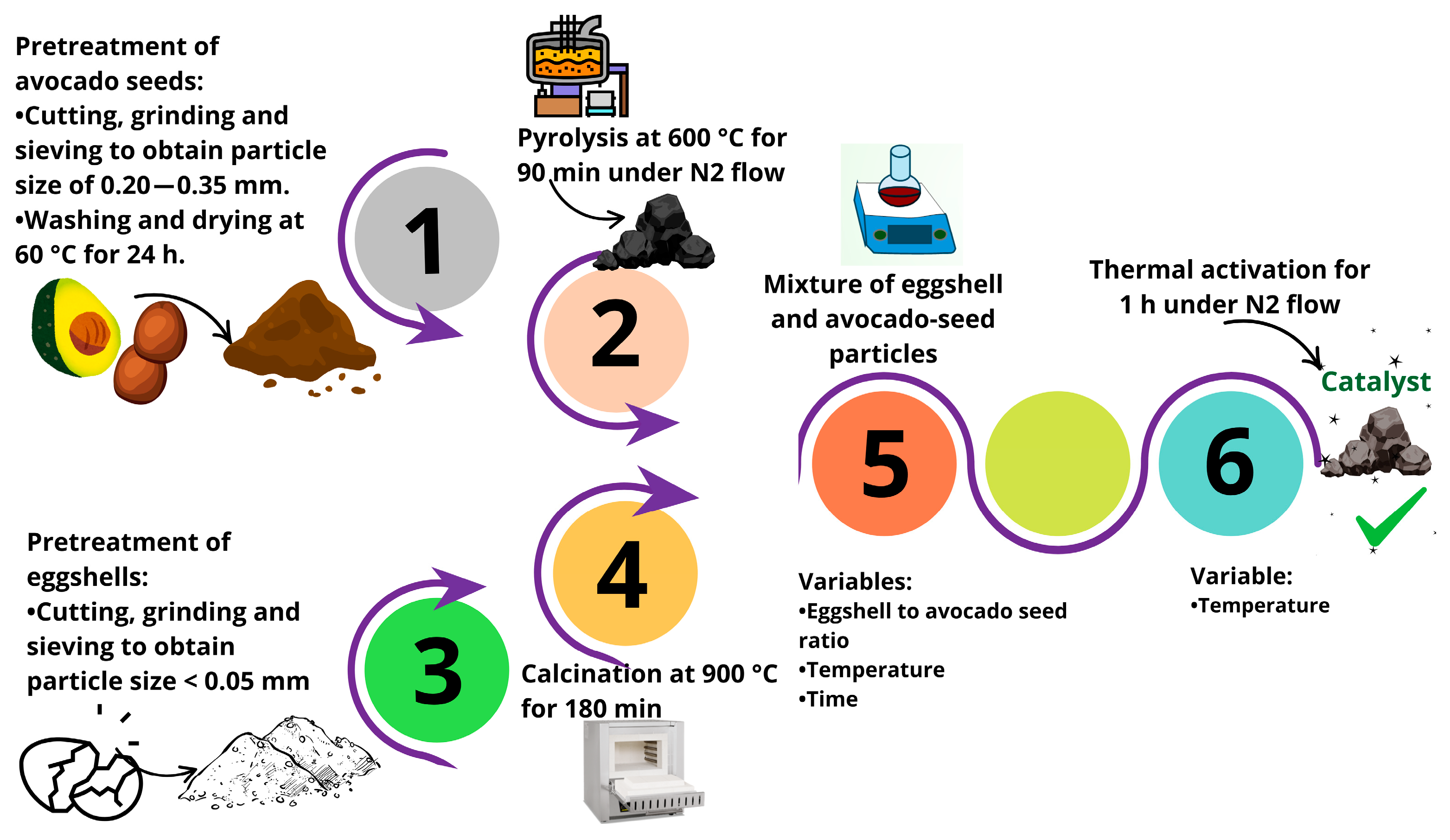
2.1. Preparation and Performance Tailoring of Eggshell-/Char-Based Catalyst to Obtain TFATE
The catalytic performance of nine eggshell-/char-based catalysts in the production of TFATE is shown in
Table 1. Levels of TFATE formation ranged from 47 to 70%, with the best performance observed for non-optimized catalyst C2, while catalyst C9 showed the worst catalytic properties for the tested reactive system. This difference was attributed to the variation in the catalyst synthesis conditions.
In particular, the catalysts with the highest levels of TFATE production were samples C2, C4, and C8, where two of them were activated at 900 °C. In contrast, the catalysts with the lowest levels of TFATE formation were samples C1, C7, and C9, which were activated at 700–800 °C. Consequently, these results suggest that the activation temperature was a critical factor to favor TFATE formation, which could be attributed to the fact that calcium oxide is formed at ≥800 °C [
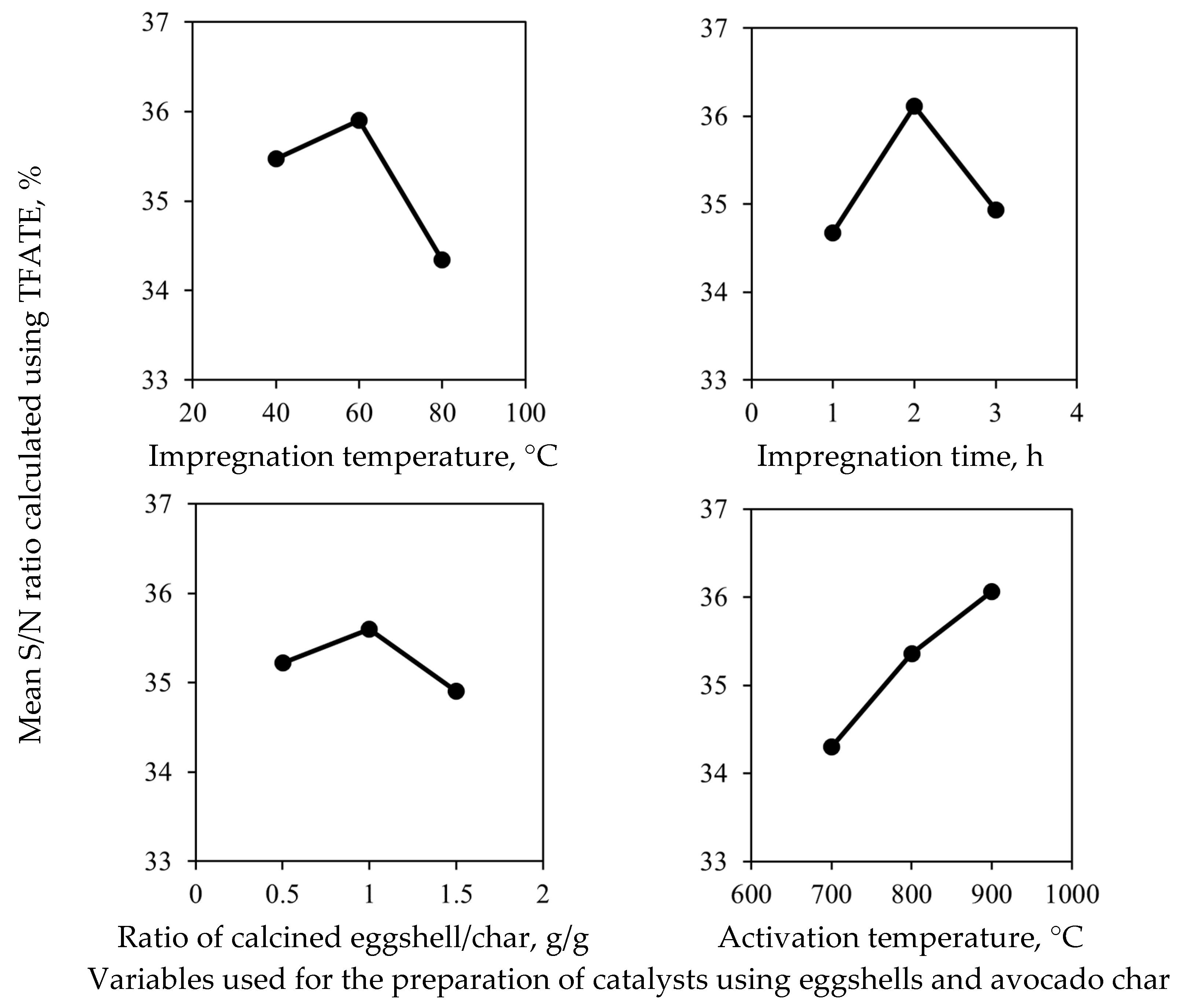
32]. Overall, the relevance of tested synthesis variables to tailor the catalyst performance was as follows: activation temperature > impregnation temperature > impregnation time >> eggshell/char ratio, see
Figure 2 and
Table 2.
The Signal/Noise (S/N) ratio analysis confirmed that the activation temperature had a statistically significant effect on the catalytic properties of eggshell-/carbon-based materials used for obtaining TFATE, where the catalytic properties increased with the activation temperature, see
Figure 2 and
Table 2.
This phenomenon can be explained by the formation of CaO at high temperatures, which gives the eggshell/char composite its catalytic activity. Previous transesterification studies have demonstrated the high catalytic efficiency of CaO, indicating that the cost of this material is lower than that of other catalysts [
10]. For instance, Vanthana et al. [
32] reported that high temperatures (>800 °C) for long periods (>3 h), or 900 °C for shorter periods (1 h), favor the formation of CaO.
Therefore, it can be concluded that the activation temperature was the main variable for the synthesis of this eggshell/char composite because of the conversion of CaO on the catalyst surface. On the other hand, the statistical analysis also showed that the variables involved in the mixing of calcined eggshells and avocado char in the aqueous solution also affected the catalytic properties of the eggshell-/char-based material to obtain the biolubricant, although their trend was nonlinear, see
Figure 2. These two variables affect the distribution of calcium particles on the char surface (i.e., the catalyst support).
Therefore, their best values were identified to favor the effective diffusion of the species and an improved distribution of CaO on the char that worked as a catalytic support. In contrast, the eggshell/char ratio did not significantly affect biolubricant yield. Based on these facts, the best catalyst synthesis conditions to maximize TFATE formation were defined as follows: mixing of calcined eggshells and char in aqueous solution was performed at 60 °C for 2 h with an eggshell/char ratio of 1/1 (g/g), and the eggshell-/char-based composite was activated at 900 °C for 1 h.
2.2. Kinetics for TFATE Production Using the Best Eggshell/Char Catalyst, Reaction Condition Analysis, and Catalyst Reuse
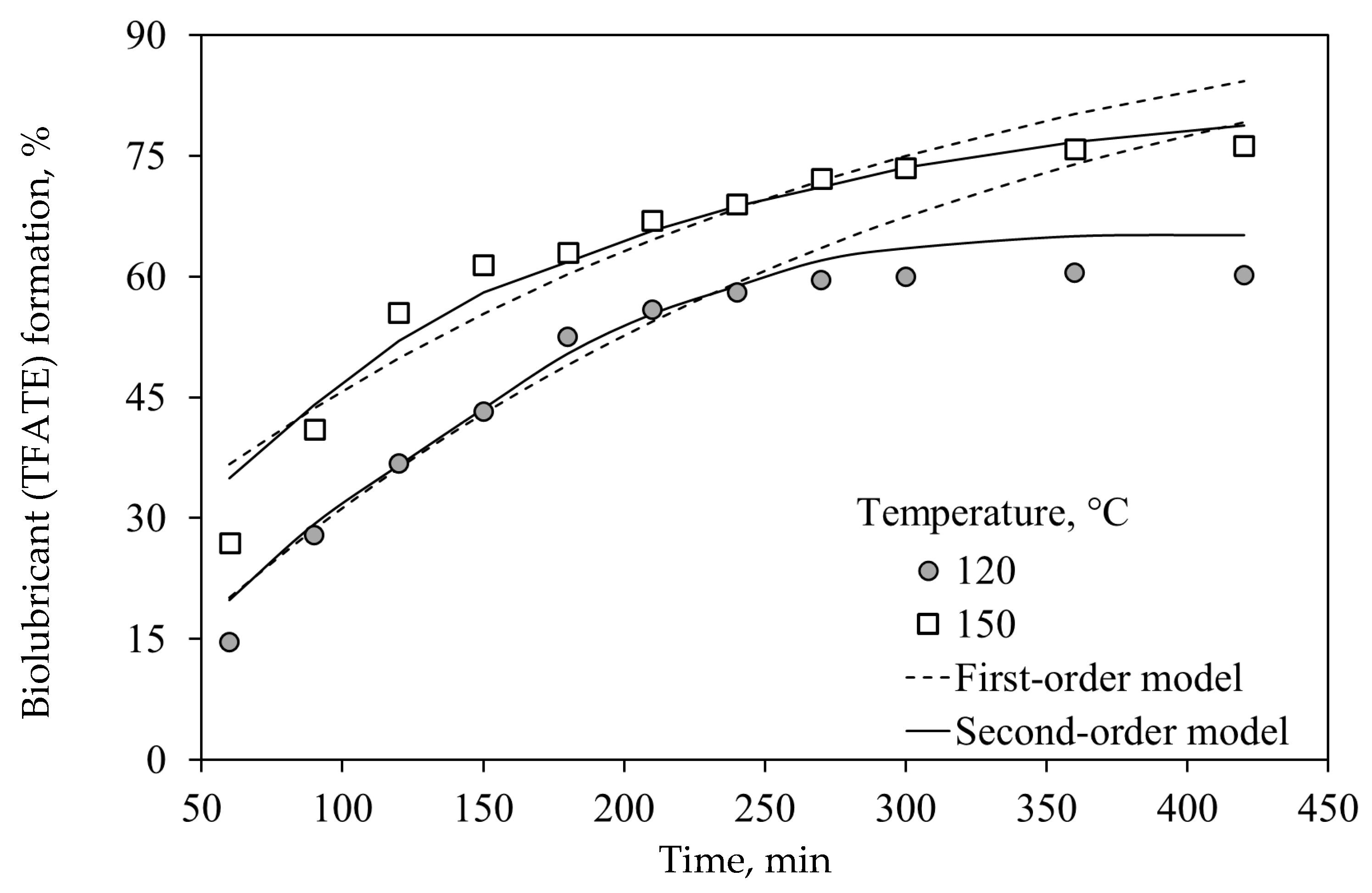
TFATE reaction kinetics using the best eggshell/char catalyst at 120 and 150 °C are shown in
Figure 3. No notable changes were observed in TFATE formation after 240 min of reaction at 120 °C, whereas the equilibrium for this reactive system was achieved at 300 min at 150 °C. These results suggest that transesterification requires long reaction times to achieve the highest levels of biolubricant formation. For comparison, the FAME reaction can achieve equilibrium in 60 min at 50–70 °C using heterogeneous biomass-based catalysts [
33]. This trend could be due to the use of polyols (e.g., trimethylolpropane), which are solid at room temperature and make transesterification more complex compared to the use of other alcohols. Therefore, this reactive system requires extreme reaction conditions: first, for the alcohol to be in liquid form, and then to start the reaction [
8]. Similar findings were discussed by Maximo et al. [
34], who concluded that the use of branched alcohols had a predominant effect on the reaction rate via steric hindrance, thus slowing its rate.
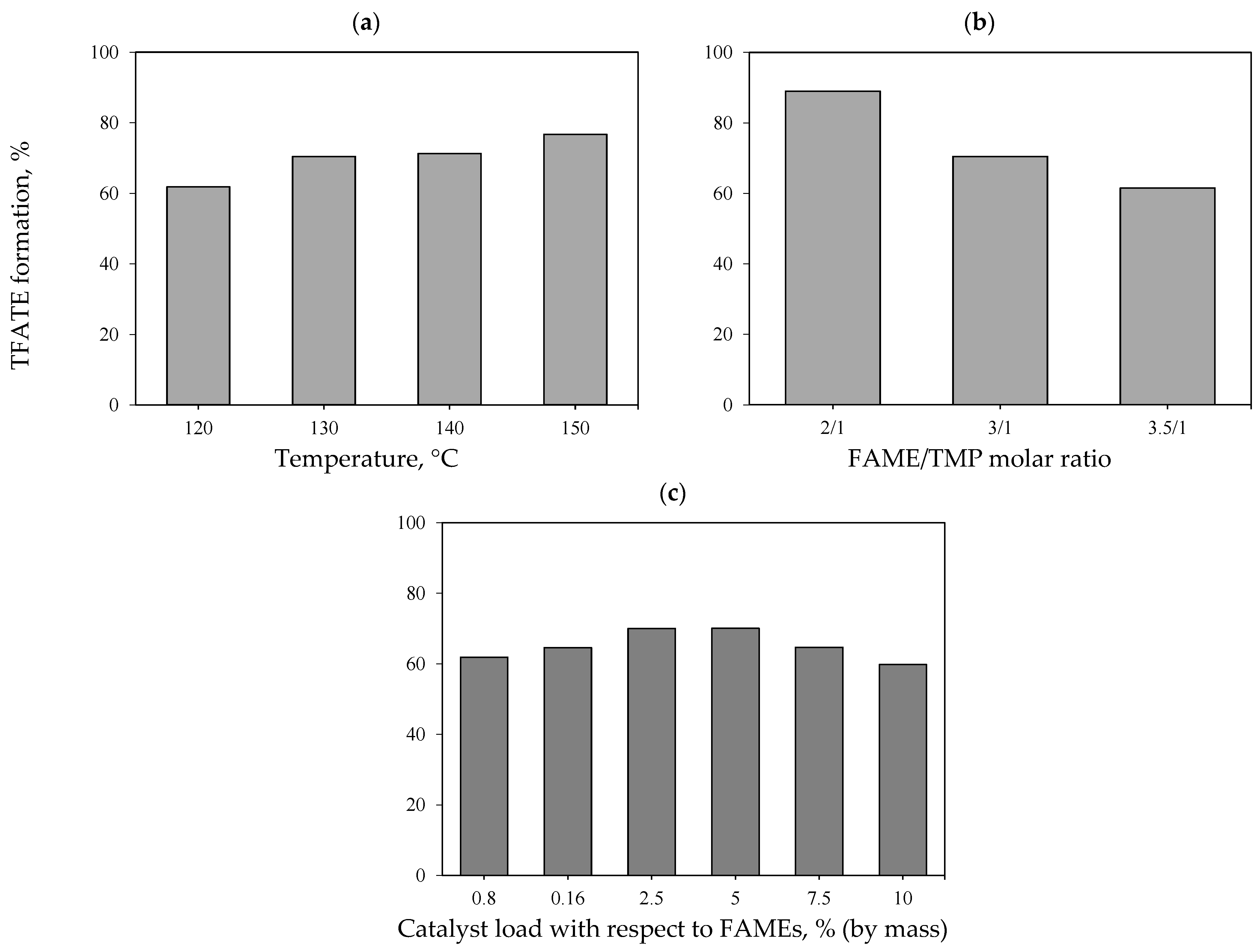
It was also determined that an increase in the reaction temperature had a direct effect on the transesterification rate and biolubricant yield, see
Figure 4a. In particular, the transesterification to produce TFATE using eggshell-/char-based catalyst was endothermic, which agrees with previous studies [
35]. Because an endothermic reaction requires heat, the reaction temperature increase promotes a higher conversion of reactants into products. An increase of 27% in TFATE production was observed when comparing the reaction at 150 °C (TFATE yield: 76%) with that at 120 °C (TFATE yield: 61%). The calculated transesterification rate constants increased when the reaction temperature changed from 120 to 150 °C (see
Table 3), confirming its favorable impact on TFATE formation.
Specifically, the first-order rate constants were 3.74 × 10
−3 and 3.88 × 10
−3 min
−1, while the second-order rate constants were 7.39 × 10
−3 and 10.25 × 10
−3 L/mmol·min at 120 and 150 °C, respectively. The second-order kinetic model was the best option to describe the experimental transesterification data with R
2 = 0.97–0.98. Consequently, the calculated activation energy of this reactive system was 15 kJ/mol. Note that activation energy values of <30 kJ/mol suggest that the reaction rate may be restricted by diffusion or mass transfer processes [
35,
36,
37], indicating the need to overcome a barrier to achieve the mixing of reagents for starting biolubricant formation.
Similar findings were documented by Menkiti et al. [
36] in TFATE synthesis using jatropha oil, TMP, and calcium hydroxide as a catalyst. These authors calculated an activation energy of 14 kJ/mol via a second-order kinetic model. Encinar et al. [
37] also reported analogous results in TFATE production using canola oil, TMP, and sodium methoxide (catalyst) with an activation energy of 7 kJ/mol via second-order reaction kinetics.
The effect of the FAME/TMP molar ratio on biolubricant yield is shown in
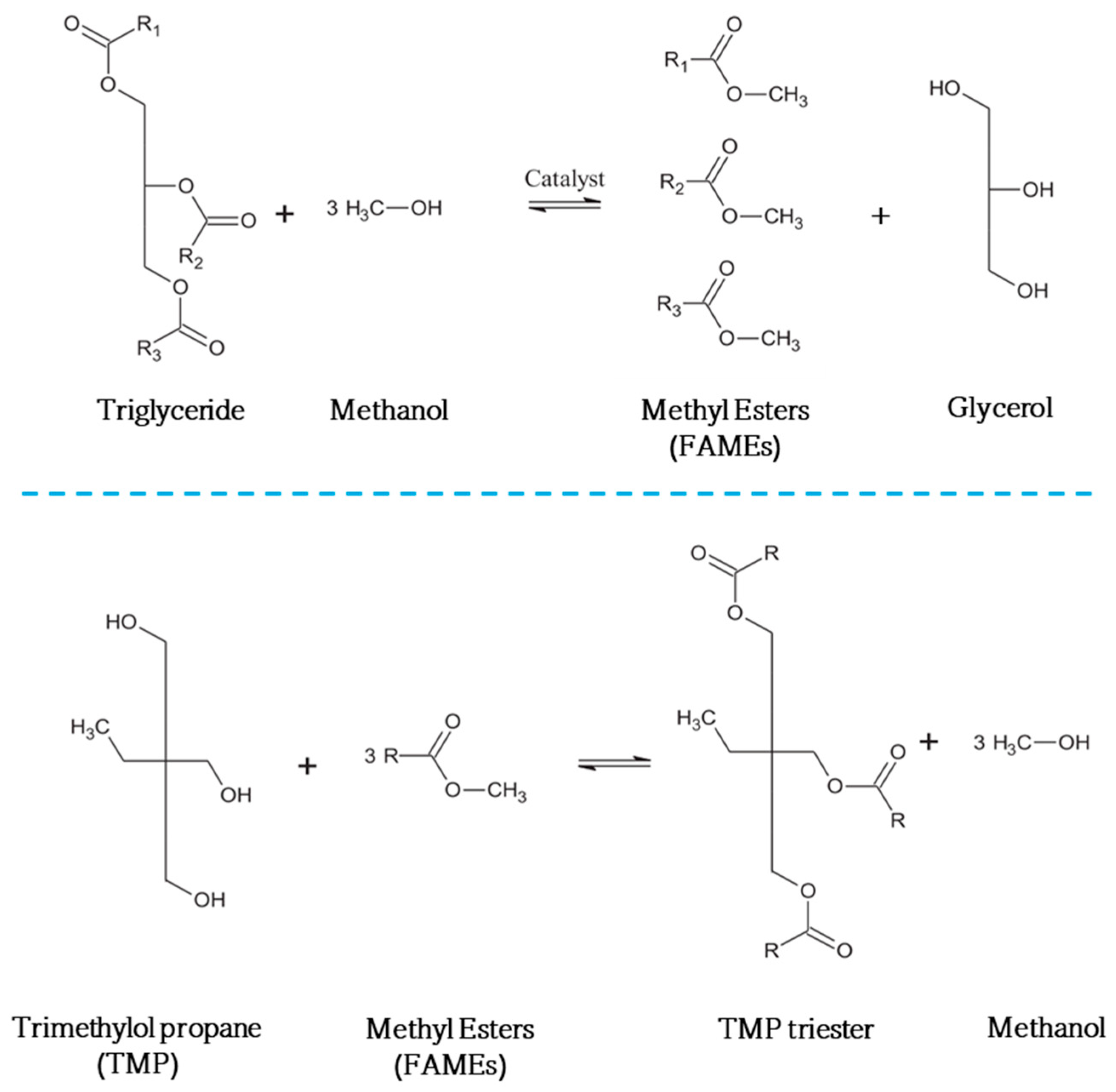
Figure 4b, where a maximum TFATE formation of 90% was obtained using a FAME/TMP molar ratio of 2/1. This operating variable exhibited an inverse correlation; that is, as the proportion of FAME increased compared to that of TMP, the biolubricant yield decreased. This phenomenon was associated with the intrinsic reaction characteristics, which have a 3/1 stoichiometry of FAME/TMP [
37], meaning that alcohol reduction affected the complete conversion to biolubricant due to stoichiometric limitations. This result agreed with the study performed by Ghafar et al. [
21] on the production of a biolubricant from waste cooking oil, TMP, and CaO obtained from the calcination of clam shells. These authors reported that biolubricant formation decreased from 97 to 89% when the FAME/TMP molar ratio was increased from 3/1 to 4/1. These results prove that excess FAME content shifts the reaction equilibrium back towards reactant formation. This could also result in TFATE reduction due to catalyst dilution caused by an excessive amount of FAMEs. Note that Encinar et al. [
8] determined that the excessive use of alcohol favors the reaction towards product formation. However, it was found that FAME/TMP ratios < 1/1 generated operational difficulties for removing excess alcohol, which was absorbed into the biolubricant, thus complicating its characterization analysis and quantification.
On the other hand, the impact of the catalyst loading on the reaction yield is shown in
Figure 4c. A clear trend of increasing biolubricant yield as the catalyst concentration increased was observed within the range of 0.8 to 2.5% (by mass). No significant changes were observed after reaching a catalyst load of 2.5% (by mass). In fact, the biolubricant yield decreased when the catalyst concentration exceeded 5% (by mass). High catalyst concentrations hindered effective mixing between the reactants, product, and catalyst itself, which favored the reversible reaction [
38]. For illustrative purposes,
Table 4 shows a comparison of TFATE formation using various catalysts and reagents under different operating conditions. Levels of TFATE formation reported in the literature range from 88 to 97%. These results indicate that the novel eggshell/char composite reported in this manuscript is a low-cost, competitive catalyst.
The calcium leaching test using methanol indicated that 0.056 mg of Ca was released from this catalyst per gram of methanol, which represents only 0.018% of the total Ca content of the tested catalyst.
Table 5 shows the levels of TFATE formation during five reaction cycles and the corresponding calcium content found in the biolubricant. These results showed that catalyst deactivation resulted in 48% TFATE formation in the fifth reaction cycle. It is important to note that the fresh catalyst contained a calcium content of 334.8 mg/g, while the calcium leached into the biolubricant ranged from 0.038 to 0.092 mg/g during the five reaction cycles, with a total leached Ca amount of 0.332 mg/g.
Therefore, only 0.1% of the total calcium content of the catalyst was leached during these experiments. Because low calcium leaching into TFATE occurred, it can be speculated that catalyst deactivation was due to the presence of reagents and reaction products that blocked the catalyst active sites [
39].
Similar catalyst deactivation results were reported by Etim et al. [
40]. These preliminary findings suggest that a better regeneration catalyst route should be proposed to recover the catalytic properties of eggshell-/char-based composite.
2.3. Characterization of Avocado Biomass, Catalysts, and Reaction Products
The biomass extraction results indicated that ~20% (by mass) of avocado seeds was extracted using water. The washing liquid from this agricultural waste showed a carbohydrate content of 4.99 mg/mL, while the structural carbohydrate and lignin contents were as follows: 79.8% cellulose, 2.6% hemicellulose, 2.1% acid-soluble lignin, and 10.1% acid-insoluble lignin. The remaining percentage is associated with lipids, proteins, and polyphenolic compounds [
26]. This composition analysis confirmed that avocado seeds can be used in the catalyst preparation [
41], and also suggests their potential for other bioenergy applications, including biogas production via anaerobic digestion as well as biofuel production such as biodiesel and bioethanol [
26]. Thermogravimetric analysis (TGA) results of the avocado-seed sample are shown in
Figure S1, where a mass decrease of 52.9% at 280–390 °C was observed. This thermal behavior can be explained by the fact that the degradation temperature of cellulose, which is the main component of avocado seeds, is close to this temperature range. The elemental analysis of avocado seeds indicated that their composition included oxygen (48.54%), carbon (44.25%), and hydrogen (6.59%), besides trace elements such as nitrogen, sulfur, and silicon, see
Table 6. This elemental content was consistent with reported values for other lignocellulosic biomass samples [
42,
43].
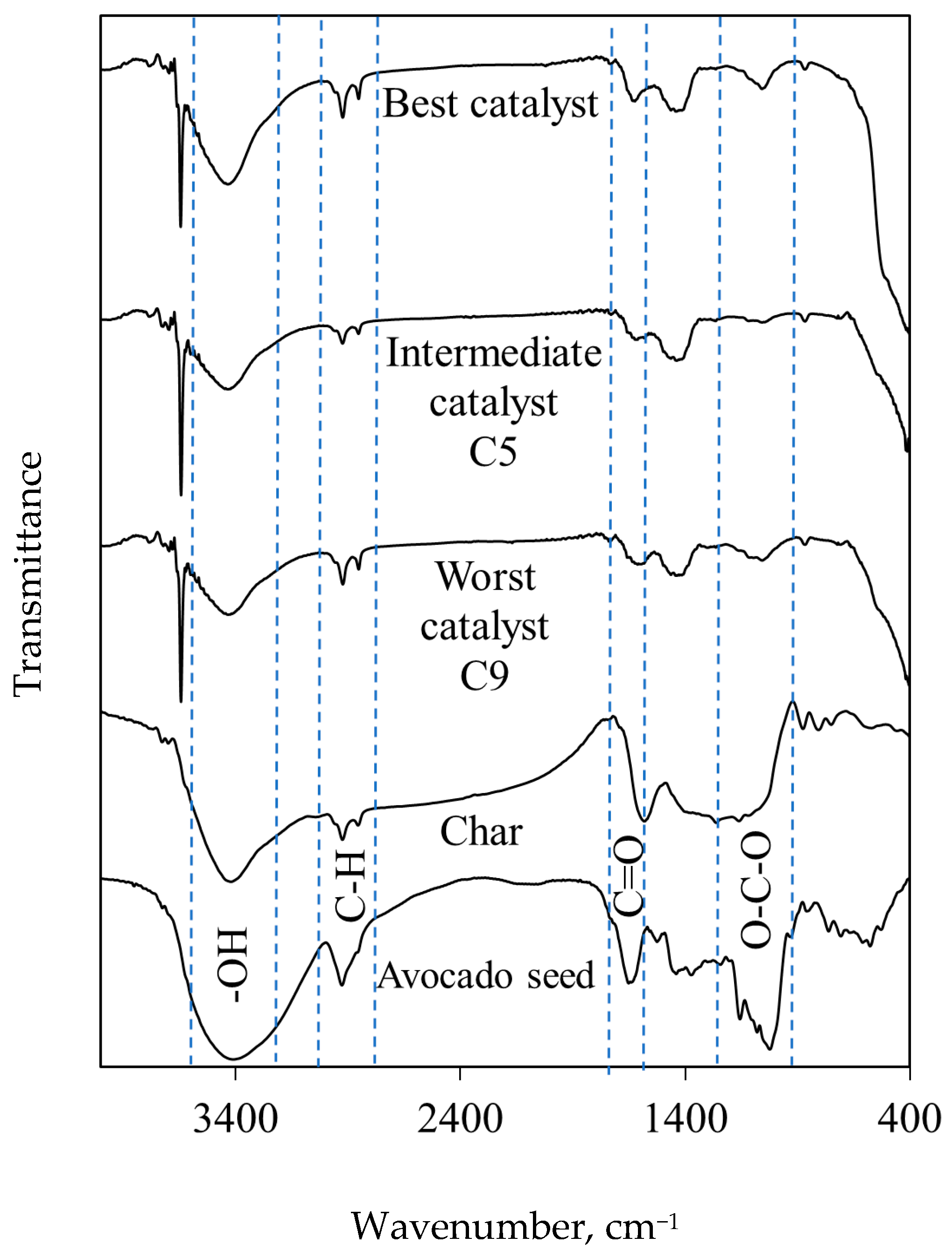
The Fourier-transform infrared spectroscopy (FTIR) spectrum of the avocado seeds is displayed in
Figure 5, where the absorption bands of typical functional groups found in the lignocellulosic biomass were observed [
43]. The wide absorption band at ~3400 cm
−1 was ascribed to OH groups present in alcohols [
44,
45], while the absorption bands of C-H aliphatic vibrations were located at 2970–2850 cm
−1 [
43]. The absorption bands between 1660 and 1510 cm
−1 were related to OH group vibrations (e.g., aldehydes and carboxylic acids), the C=O of the carbonyl group, cellulose cyclic C-C structures, and lignin aromatic C=C groups. The absorption bands identified at 1350–1060, ~1015, and ~910 cm
−1 correspond to C-O vibrations in primary, secondary, and tertiary alcohols, as well as the glycosidic bonds contained in cellulose and hemicellulose [
42,
43,
46,
47]. The absorption bands of vibrations linked to cyclic structures were found between 700 and 600 cm
−1 [
48,
49]. The X-ray diffractogram of the avocado-seed sample confirmed the presence of a semi-crystalline structure, see
Figure 6. The main diffraction peaks were located at 12.97, 17.01, 22.45, and 34.0 °2Ɵ, which were related to the crystalline phases of cellulose [
42,
50]. Note that the wide halo centered at 20 °2Ɵ suggests the presence of amorphous fractions of lignin.
The elemental analysis of the avocado-based char sample is shown in
Table 6. A significant increase in the carbon content in this sample was observed after the biomass pyrolysis (i.e., from 44 to 84%). This behavior is usually observed in lignocellulosic biomass pyrolysis, mainly due to the devolatilization of aliphatic functional groups and the aromatization/carbonization of char [
51,
52].
FTIR spectrum of avocado char shows the loss, decrease, and shrinkage in various absorption bands that were identified during the biomass analysis, see
Figure 5. These changes were especially associated with the absorption bands of OH and C-O vibrations located at ~ 3400, 1400, and 1150–1000 cm
−1, which were caused by material structural changes because of the pyrolysis process. The thermal biomass decomposition results in the material structure being reorganized and recombined via the breakage of glycosidic linkages, compound volatilization, aromatization, condensation, and other reactions [
42,
51,
52,
53].
On the other hand, the FTIR spectra of the catalyst samples contained a sharp absorption band at ~3640 cm
−1 associated with the hydroxyl group of Ca(OH)
2 [
26,
54], and a broad absorption band at ~3420 cm
−1 attributed to the OH vibration of functional groups present on char such as phenols and alcohols of cellulose, hemicellulose, and lignin [
54]. For illustration, the FTIR spectra of the best catalyst and samples C9 (with the worst performance) and C5 (with intermediate performance) are shown in
Figure 5. In the wavenumber region of 1650–1420 cm
−1, the absorption band of the vibration COO- of the Ca–carboxylate coordination type was observed [
54]. The absorption band located at ~1056 cm
−1 was related to the C-O stretching vibration of alcohols [
26,
54]. It is important to remark that the intensity of absorption bands displayed in these spectra was relatively higher for the best catalyst, except for the absorption band at ~3640 cm
−1 related to Ca(OH)
2. This finding may be attributed to the strong interactions between the functional groups on char and calcium species [
54,
55].
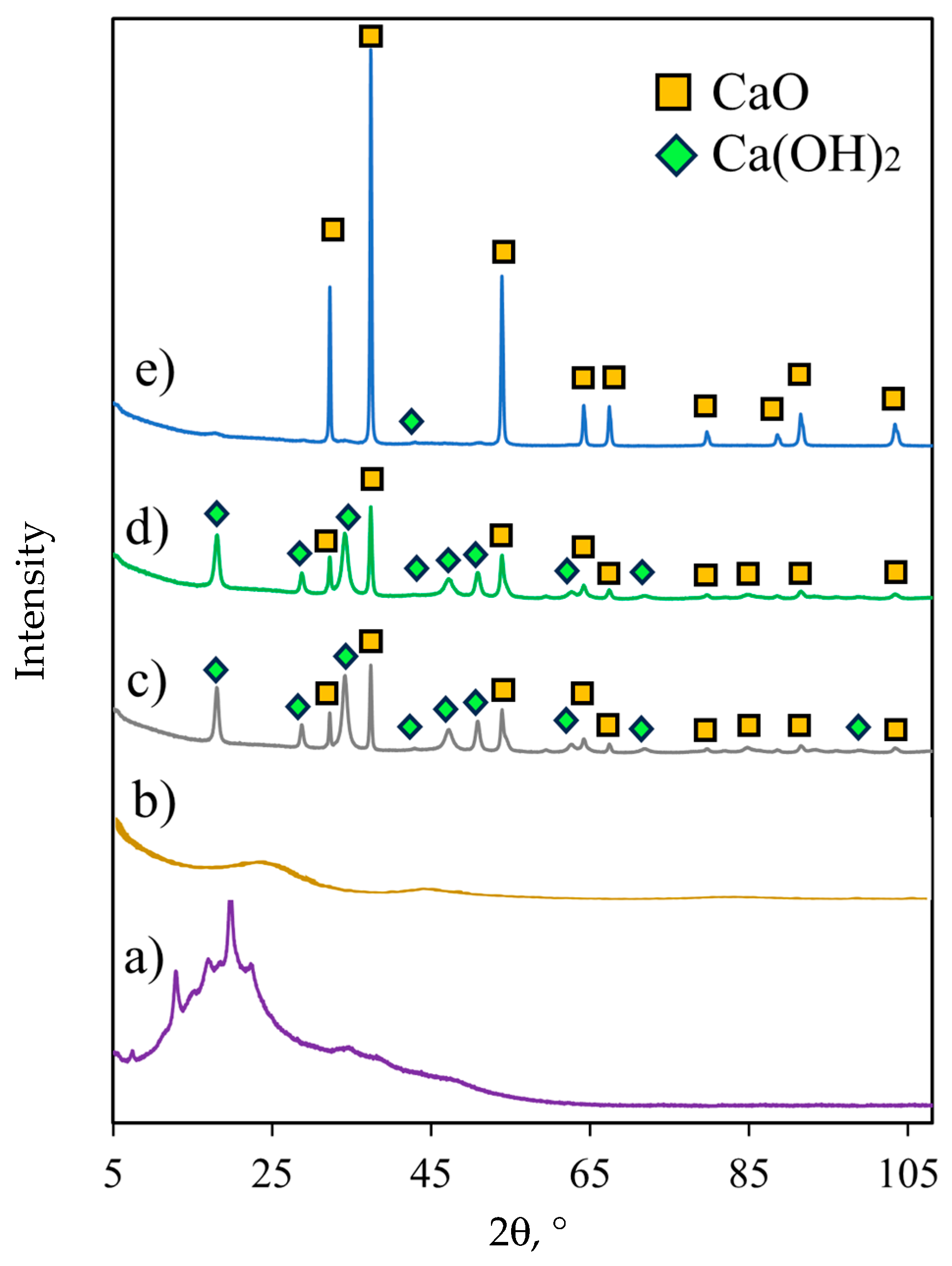
The X-ray diffraction (XRD) patterns of selected catalyst samples are shown in
Figure 6. The diffractogram of avocado char displays two broad peaks at 25 and 45 °2Ɵ, associated with both the graphitic structure and amorphous carbon [
56]. After the impregnation of this char with the calcium solution, the appearance of a crystalline structure was evident. The peaks corresponding to calcium hydroxide and calcium oxide were identified in the catalyst samples at different proportions, according to the activation temperature. The PDF-2 database indicated that the peaks at 18, 28, 34, 47, 50, 62, 71, and 84 °2Ɵ were related to calcium hydroxide (ICDD: 00-044-1481). On the other hand, the characteristic peaks of calcium oxide (ICDD: 00-043-1001) appeared at 32, 37, 53, 64, 67, 79, 88, 91, and 103 °2Ɵ [
57]. A semi-quantitative analysis showed that the best catalyst sample contained 99% of CaO and 1% of Ca(OH)
2, while the worst catalyst (sample C9) contained 45% of CaO and 55% of Ca(OH)
2. As stated, the activation temperature of eggshell/char composite was paramount to confer higher catalytic properties [
32]. The XRD results indicate that the crystalline structure of the catalyst is associated with its catalytic activity.
Table 7 provides the elemental composition of selected catalyst samples, demonstrating that the superficial Ca content (42.8%) of the best catalyst was higher than that of the worst catalyst (24.9%). Other elements such as Al, Mg, Si, S, and Cu were found in amounts lower than 1%. This result reaffirmed that calcium is fundamental for the catalytic properties of eggshell-/char-based composites, with a direct correlation to TFATE formation. On the other hand, the BET surface areas of the tested catalysts ranged from 50 to 70 m
2/g. The analysis shows that this parameter did not play a relevant role in determining catalyst performance.
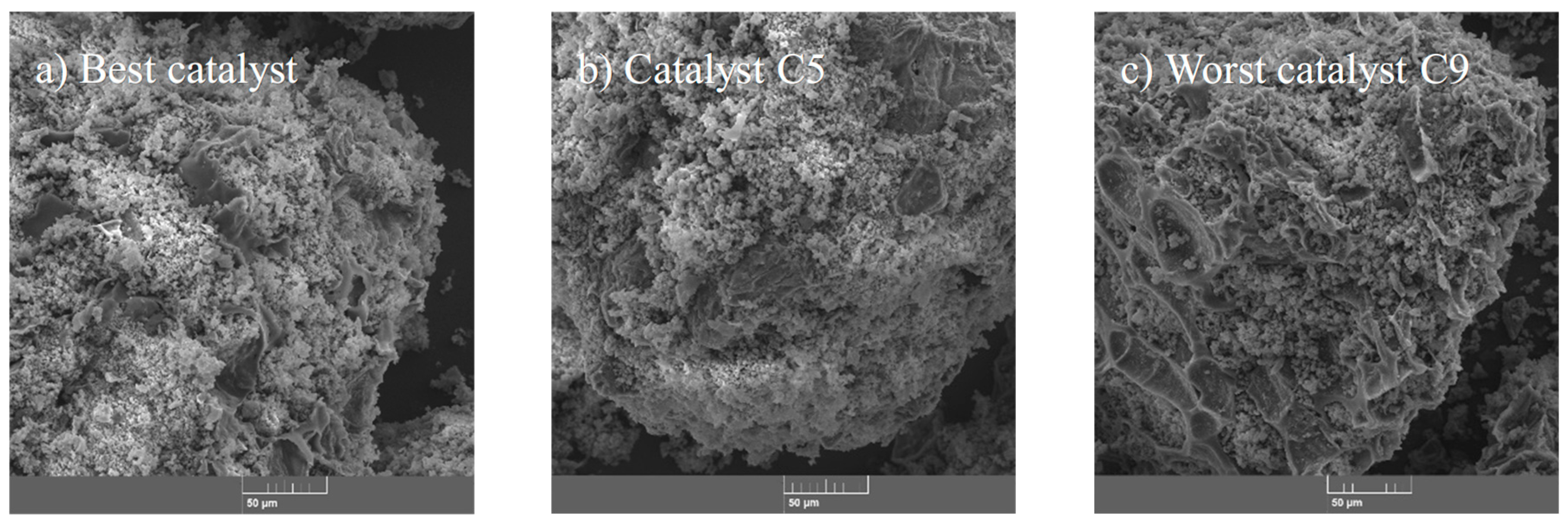
SEM micrographs of different catalyst samples are shown in
Figure 7. All samples had a compact, eroded, and irregular shape. It is worth noting that the best catalyst presented a more saturated surface with Ca particles with homogeneous distribution, while the intermediate and worst catalyst samples showed a smooth surface with cavities of char exposed, and fewer Ca particles were observed according to the EDS mapping results (
Figure S2). Overall, Ca concentration in the tested samples followed the tendency: best catalyst > intermediate catalyst > worst catalyst.
Table 8 shows the fatty acid composition of FAMEs, where oleic acid was the main compound with 90.84%, followed by palmitic acid with 4.66%. Herein, it is convenient to recall that the profile of fatty acids present in oils is a critical factor that influences the final properties of the biolubricant. Oleic acid (C18:1) contains one unsaturation in its chain, which is important for biolubricant oxidative stability because it is less susceptible to oxidation compared to linoleic (C18:2) and linolenic (C18:3) acids, thus contributing to the stability of the final products obtained via transesterification [
37].
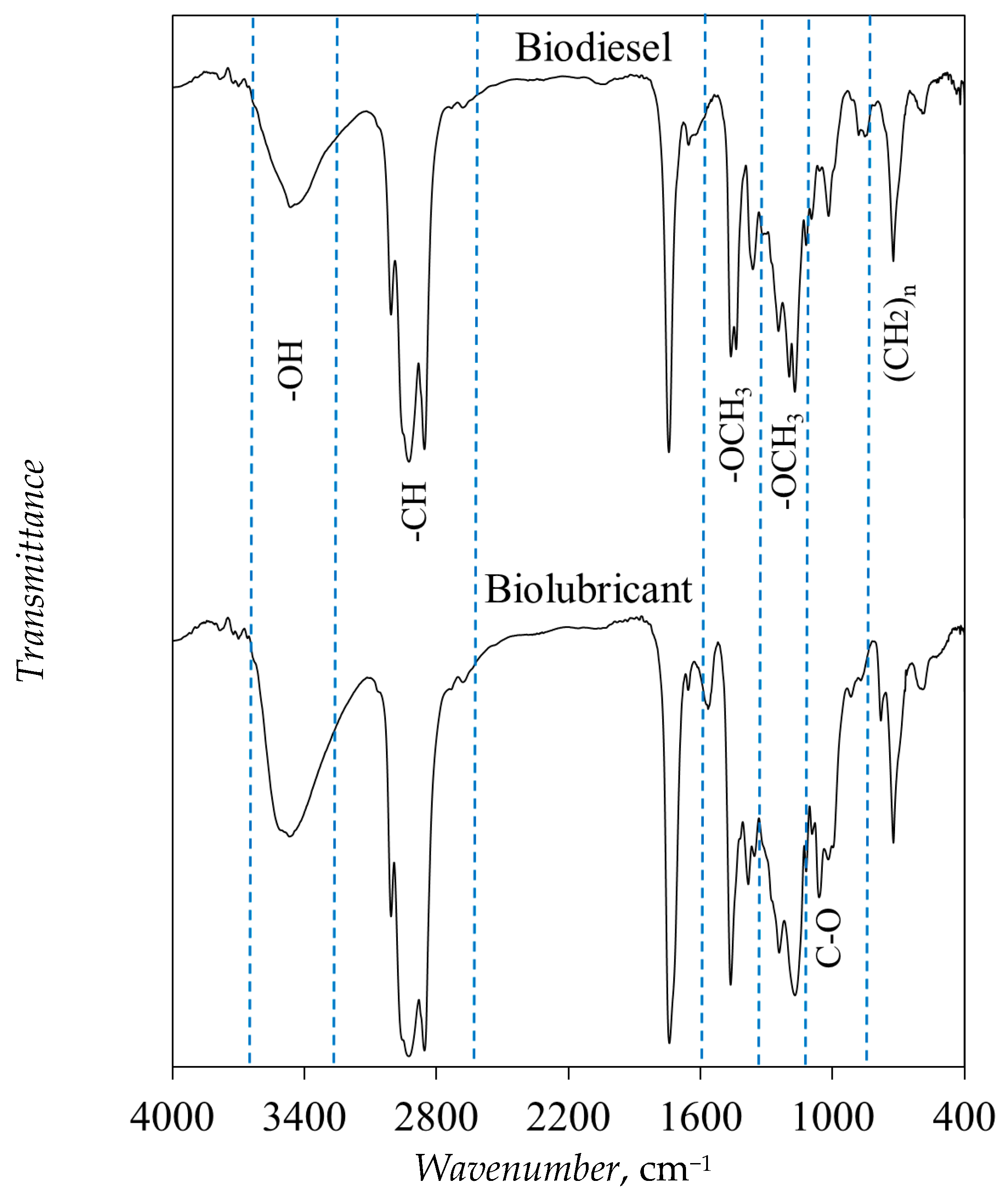
FTIR spectra of the biodiesel (FAME) and biolubricant (TFATE) are displayed in
Figure 8. The FAME spectrum shows the existence of an absorption band of hydroxyl group (-OH) in the esterified oils [
58]. The characteristic absorption bands in the region of 3000–2850 cm
−1 corresponded to the stretching vibrations of the C-H bond [
58]. A distinctive absorption band located at ~1740 cm
−1, related to the stretching vibration of the C=O double bond in the ester, was observed [
59].
The absorption band of the bending vibrations of the C-H ester bond was identified at ~1461 cm
−1 [
58]. Notable absorption bands were identified at ~1170 and ~1118 cm
−1, which were associated with the antisymmetric, asymmetric, and symmetric C-O-C bond, indicating the existence of fatty acid chains [
10,
58,
59]. The absorption bands attributable to the alkyl chain were observed at ~1363 and ~723 cm
−1 [
58,
60]. Two sharp bands at ~1437 and ~1196 cm
−1 were associated with the bending and stretching vibrations of -OCH
3 of esters [
58]. In the TFATE spectrum, the appearance of a new absorption band at ~1056 cm
−1 confirmed the formation of the C-O bond of TFATE [
61]. Also, the disappearance of the absorption bands located at ~1437 and ~1196 cm
−1, related to the methoxy group, implied the successful conversion of FAMEs into TFATE [
58]. Similar results have been reported by Shrivastava et al. [
60].
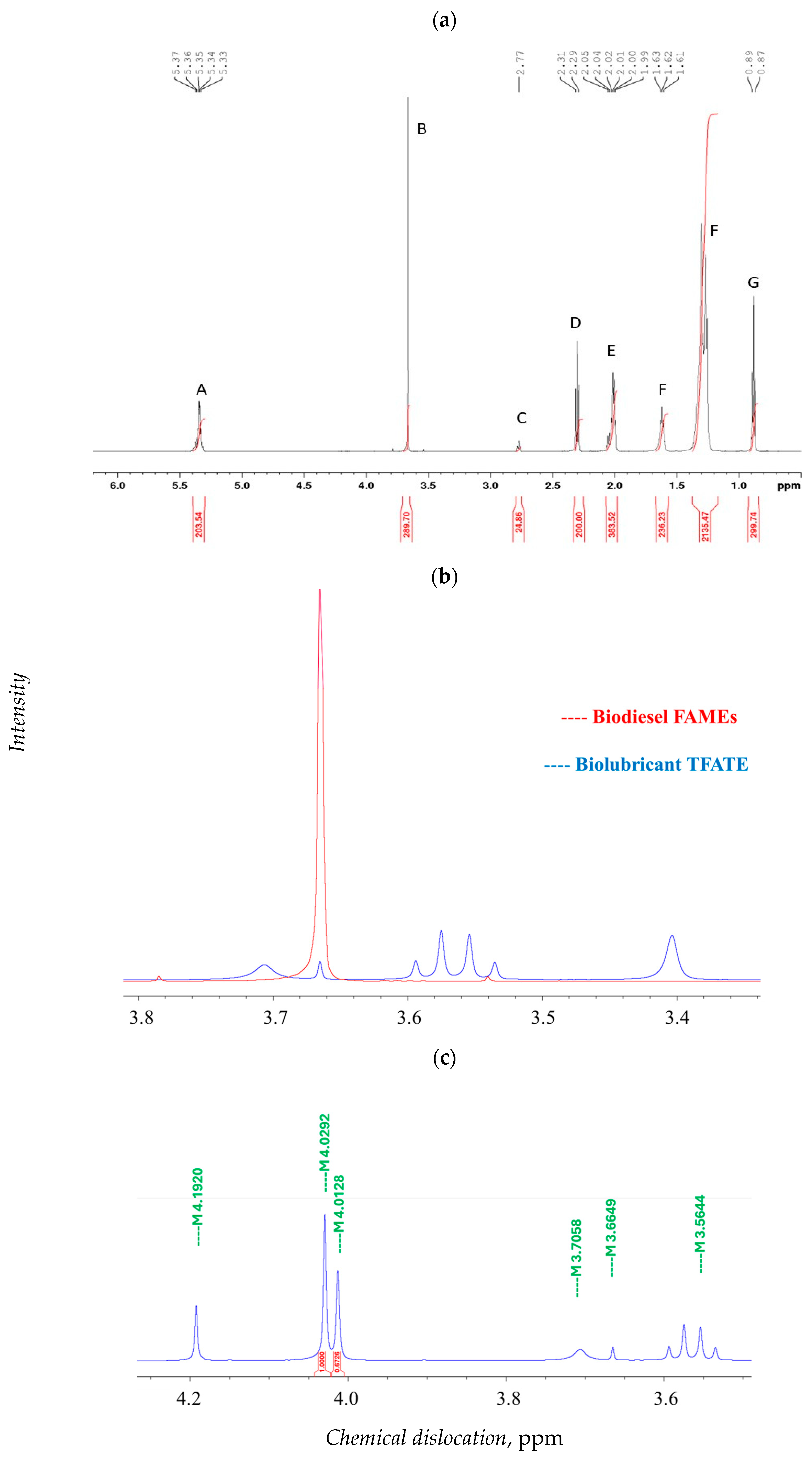
Finally, the conversion of safflower oil into FAMEs and, in turn, into TAFE was confirmed by the Hydrogen Nuclear Magnetic Resonance (
1H NMR) spectra, see
Figure 9. First,
Figure 9a and
Table S1 show the spectrum and the main peak positions contained in safflower oil. A range of 0.85–2.3 ppm was related to the aliphatic chain of the fatty acids with the acid proton CH
2C=O located at 2.3 ppm [
60]. The -CH=CH- proton signal was located at the 5.35 ppm position, indicating unsaturated fatty acids [
60].
Figure 9b reports the spectra of the peak located at 3.66, characteristic of FAMEs, which diminished in the TFATE spectrum confirming the conversion, although with some residual FAME molecules.
Figure 9c indicates the presence of signals around 3.6 and 4.8 ppm, which was due to the outcome of hydrogen bonds to unreacted hydroxyls that support the synthesis of mono- and di-substituted trimethyl propanol esters. In this case, the formation of tri- and di-esters of trimethyl propanol with dislocations at 4.01 and 4.03 ppm, respectively, was observed. The -CH
2-O- proton of alcohol that results from the replacement of OH of TMP by the fatty acid chain of the methyl derivative was located at 4.19 ppm [
60]. The diesters of TMP are reaction intermediates and, using the methodology of Nie et al. [
62], it was possible to quantify TFATE conversion, the results of which were 31% for this study. As a reference, Aziz et al. [
63] obtained 66.6% TFATE conversion using microwave-assisted pyrolysis at 130 °C, indicating that this conversion depended on the limiting reagent (i.e., TMP).




 ,
,