Article

Controlled Formation of α- and β-Bi2O3 with Tunable Morphologies for Visible-Light-Driven Photocatalysis


by
Thomas Cadenbach
1,*,
María Isabel Loyola-Plúa
1,
Freddy Quijano Carrasco
2,
Maria J. Benitez
3,
Alexis Debut
4 and
Karla Vizuete
4
1
Instituto de Energía y Materiales, Departamento de Ingeniería Ambiental, Colegio Politécnico de Ciencias e Ingenierias, Universidad San Francisco de Quito, Quito 170901, Ecuador
2
Departamento de Ingeniería Química, Colegio Politécnico de Ciencias e Ingenierias, Universidad San Francisco de Quito, Quito 170901, Ecuador
3
Departamento de Física, Facultad de Ciencias, Escuela Politécnica Nacional, Ladrón de Guevara E11-253, Quito 170517, Ecuador
4
Departamento Ciencias de la Vida y la Agricultura, Centro de Nanociencia y Nanotecnología, Universidad de las Fuerzas Armadas ESPE, Av. Gral. Rumiñahui s/n, Sangolquí 171103, Ecuador
*
Author to whom correspondence should be addressed.
Molecules 2025, 30(15), 3190; https://doi.org/10.3390/molecules30153190

Submission received: 17 June 2025 / Revised: 10 July 2025 / Accepted: 24 July 2025 / Published: 30 July 2025
(This article belongs to the Special Issue Green Catalysis Technology for Sustainable Energy Conversion)

Abstract

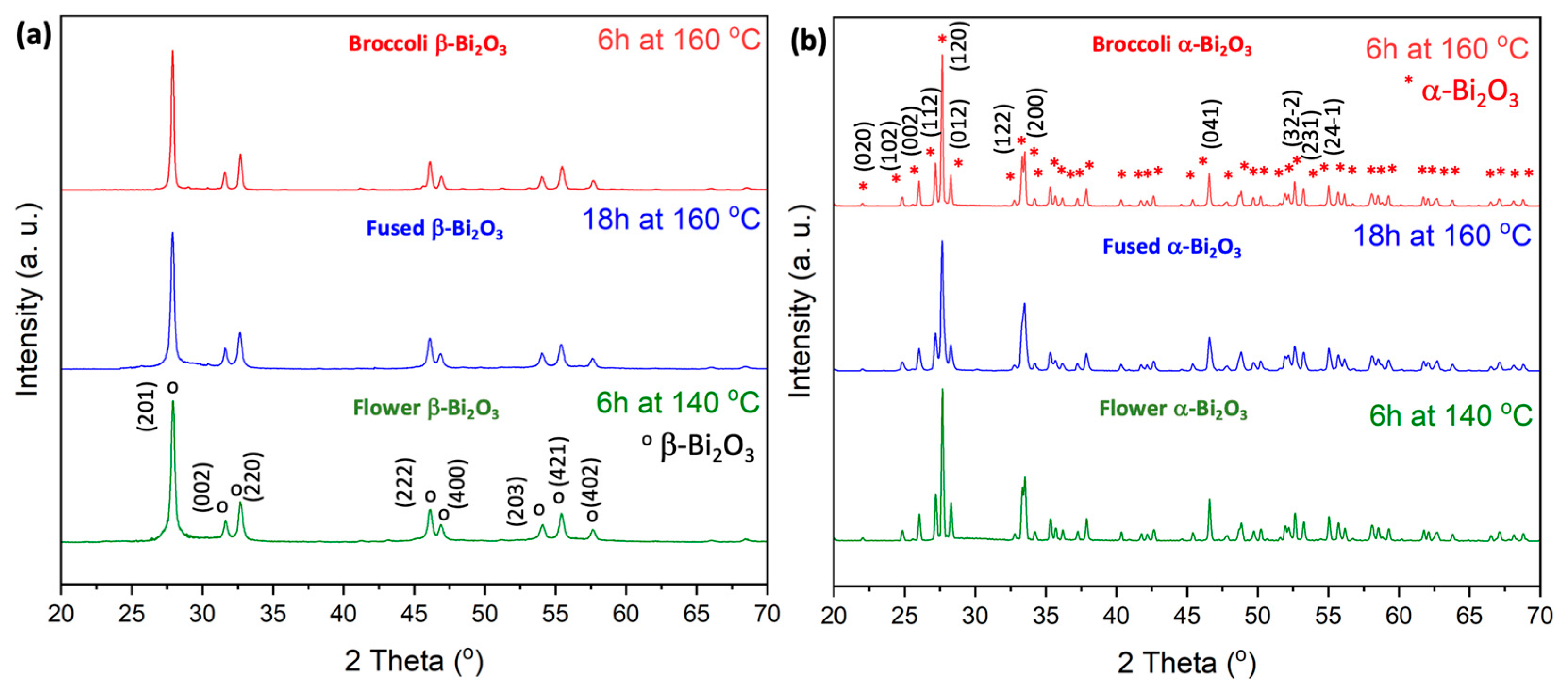
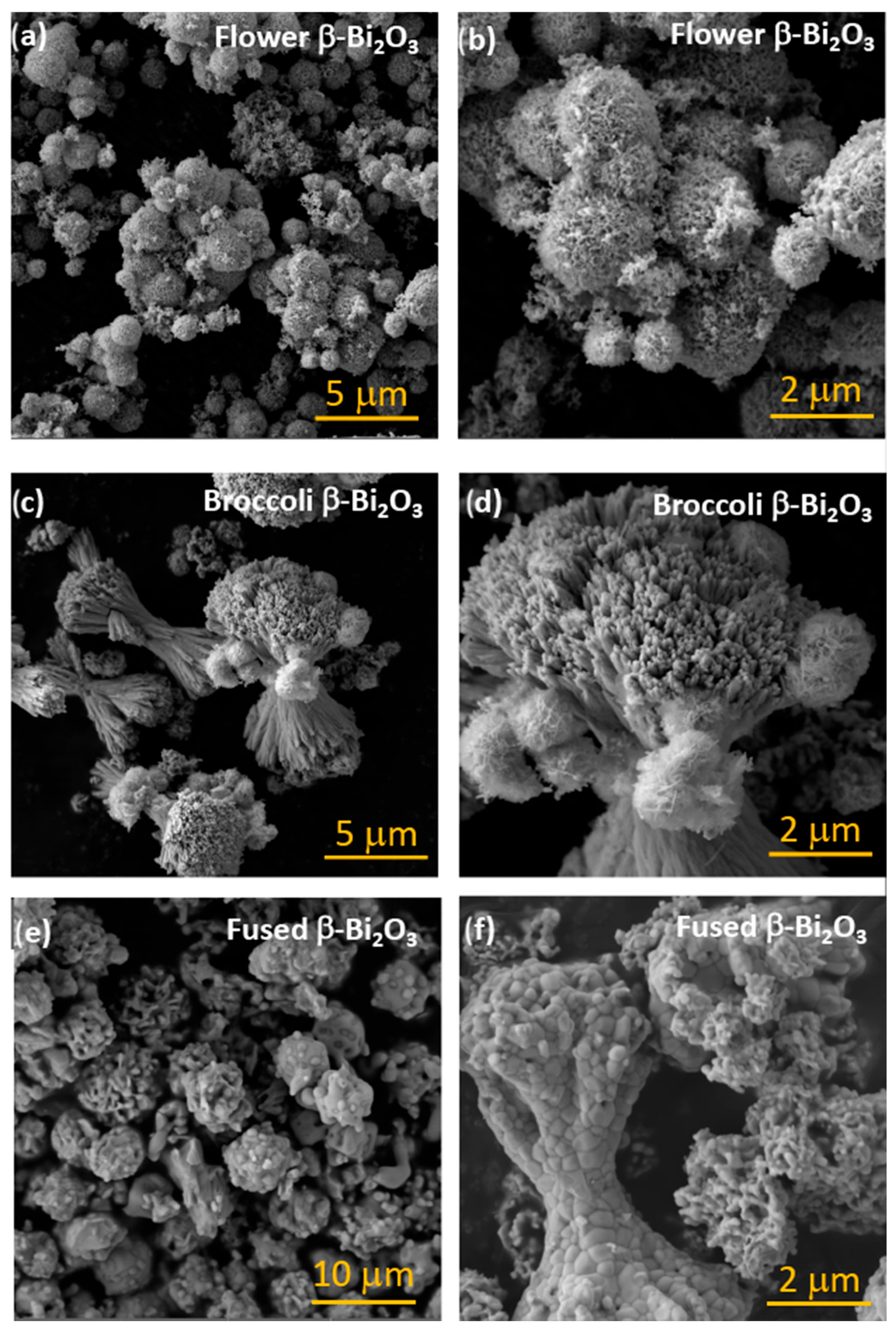
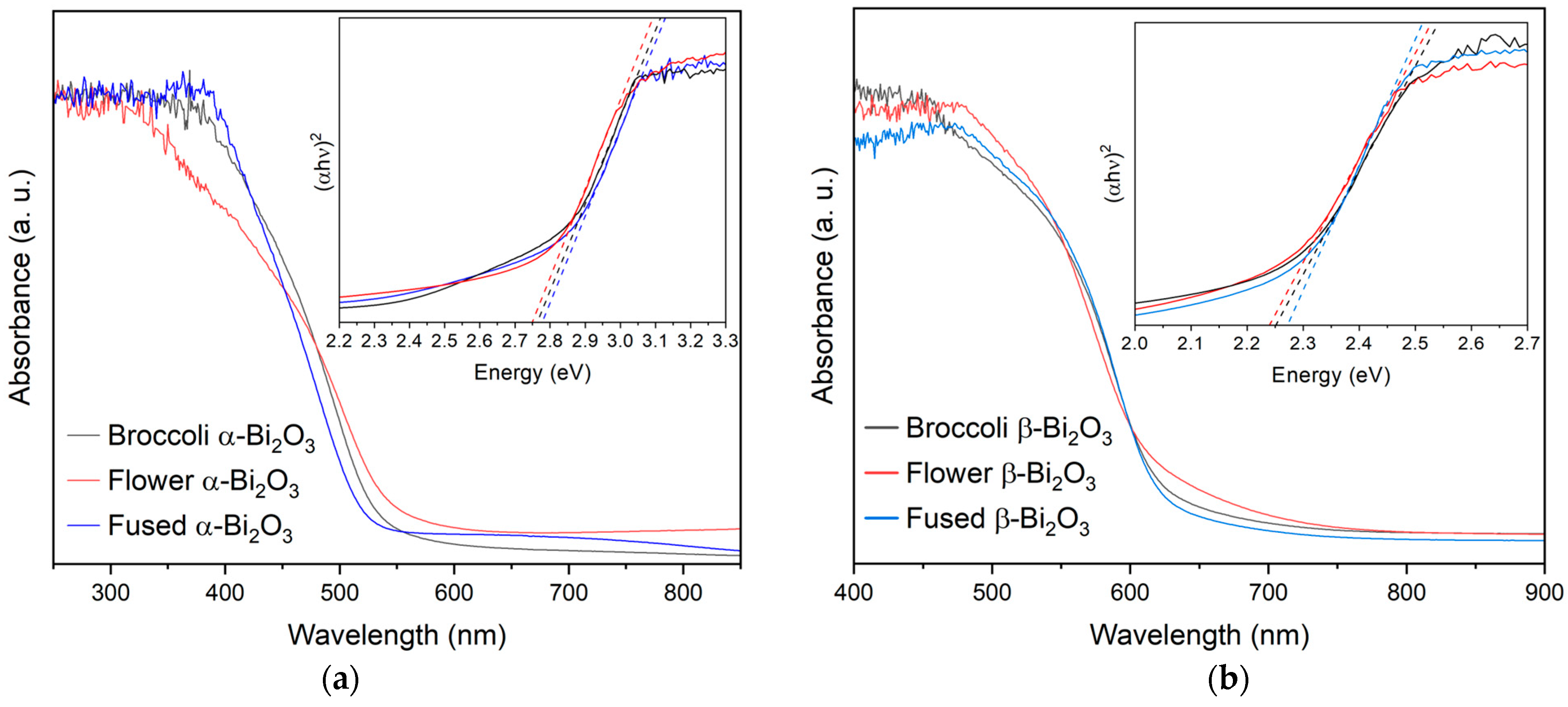
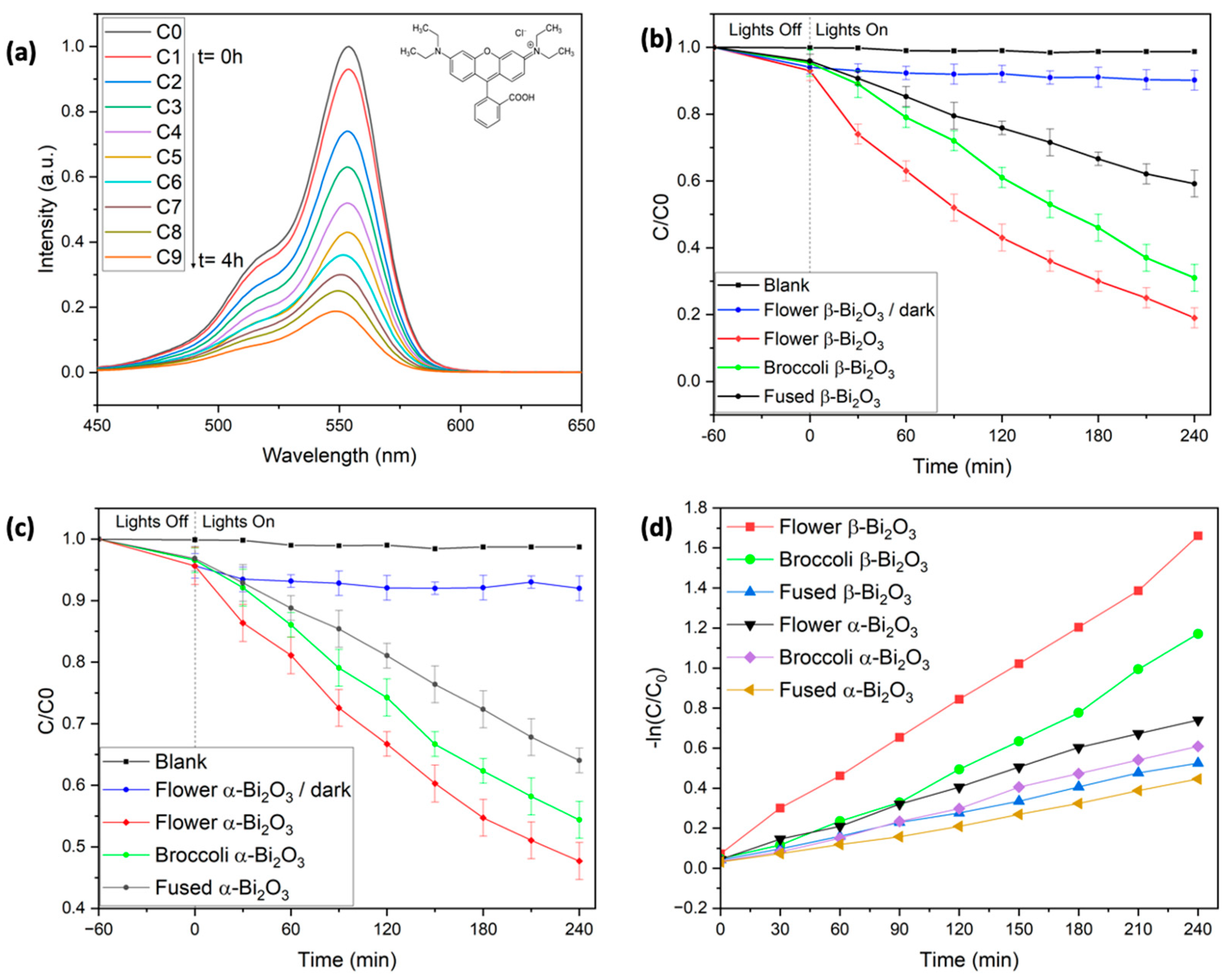
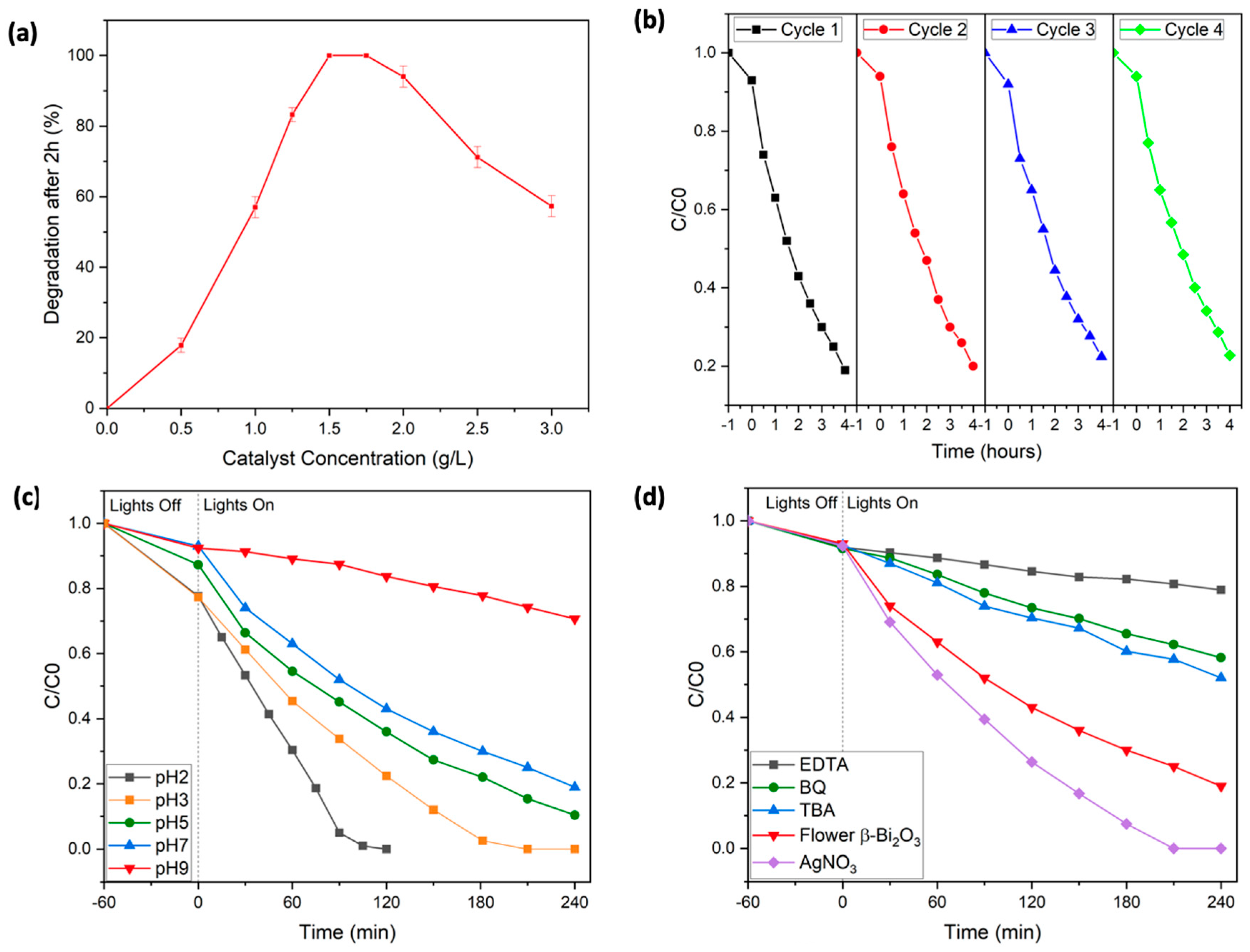
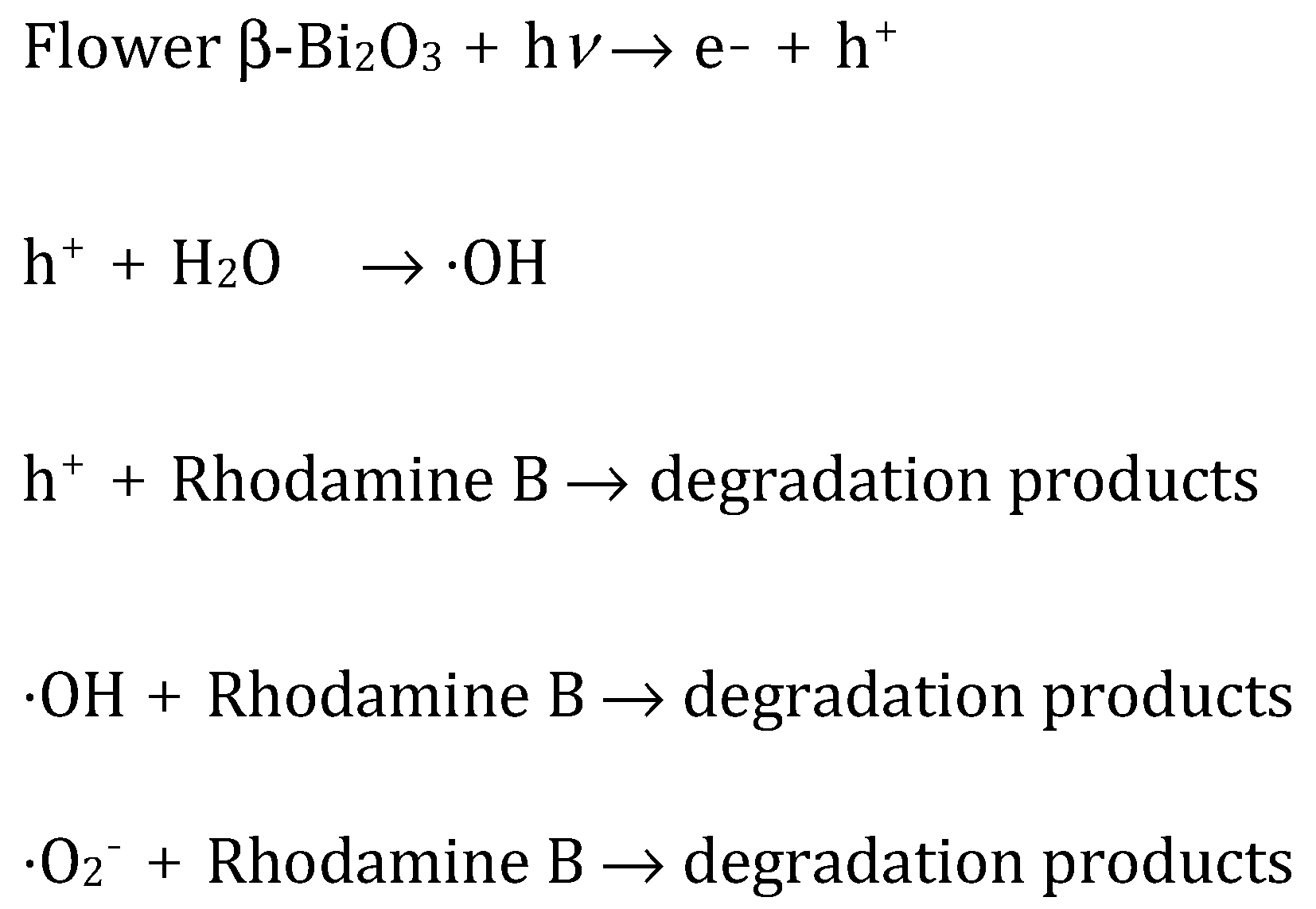
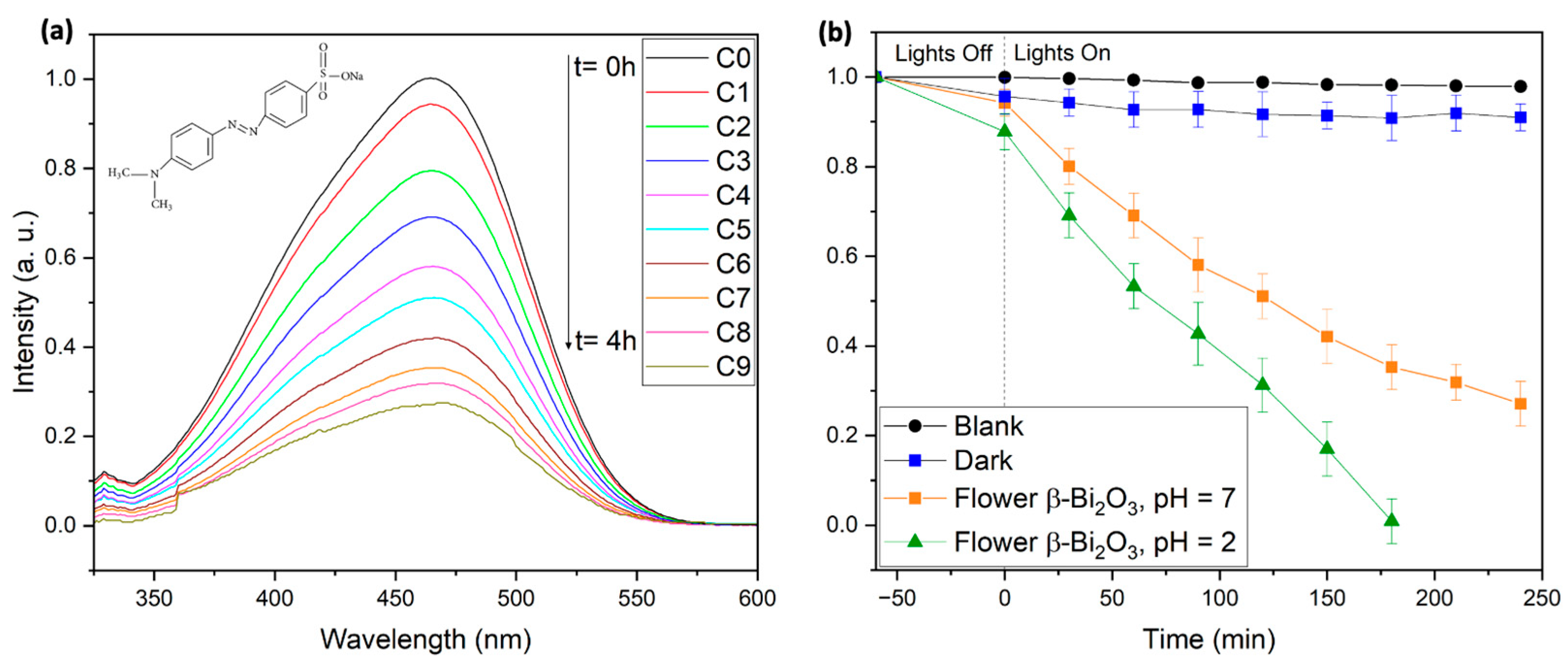
Water pollution caused by increasing industrial and human activity remains a serious environmental challenge, especially due to the persistence of organic contaminants in aquatic systems. Photocatalysis offers a promising and eco-friendly solution, but in the case of bismuth oxide (Bi2O3) there is still a limited understanding of how structural and morphological features influence photocatalytic performance. In this work, a straightforward hydrothermal synthesis method followed by controlled calcination was developed to produce phase-pure α- and β-Bi2O3 with tunable morphologies. By varying the hydrothermal temperature and reaction time, distinct structures were successfully obtained, including flower-like, broccoli-like, and fused morphologies. XRD analyses showed that the final crystal phase depends solely on the calcination temperature, with β-Bi2O3 forming at 350 °C and α-Bi2O3 at 500 °C. SEM and BET analyses confirmed that morphology and surface area are strongly influenced by the hydrothermal conditions, with the flower-like β-Bi2O3 exhibiting the highest surface area. UV–Vis spectroscopy revealed that β-Bi2O3 also has a lower bandgap than its α counterpart, making it more responsive to visible light. Photocatalytic tests using Rhodamine B showed that the flower-like β-Bi2O3 achieved the highest degradation efficiency (81% in 4 h). Kinetic analysis followed pseudo-first-order behavior, and radical scavenging experiments identified hydroxyl radicals, superoxide radicals, and holes as key active species. The catalyst also demonstrated excellent stability and reusability. Additionally, Methyl Orange (MO), a more stable and persistent azo dye, was selected as a second model pollutant. The flower-like β-Bi2O3 catalyst achieved 73% degradation of MO at pH = 7 and complete removal under acidic conditions (pH = 2) in less than 3 h. These findings underscore the importance of both phase and morphology in designing high-performance Bi2O3 photocatalysts for environmental remediation.
Keywords: photocatalysis; emerging pollutants; bismuth oxide; hydrothermal; morphology control photocatalysis; emerging pollutants; bismuth oxide; hydrothermal; morphology control