Article

Two-Dimensional Polarized Blue P/SiS Heterostructures as Promising Photocatalysts for Water Splitting


1
Department of Physics, School of Science, Guangdong University of Petrochemical Technology, Maoming 525000, Guangdong, China
2
School of New Energy and Environmental Protection Engineering, Foshan Polytechnic, Foshan 528137, China
3
School of Physical Science and Technology, Guangxi University, Nanning 530004, China
4
Shenzhen Key Laboratory of Advanced Thin Films and Applications, Key Laboratory of Optoelectronic Devices and Systems of Ministry of Education and Guangdong Province, State Key Laboratory of Radio Frequency Heterogeneous Integration, College of Physics and Optoelectronic Engineering, Shenzhen University, Shenzhen 518060, China
*
Authors to whom correspondence should be addressed.
Molecules 2024, 29(18), 4355; https://doi.org/10.3390/molecules29184355

Submission received: 29 July 2024 / Revised: 9 September 2024 / Accepted: 10 September 2024 / Published: 13 September 2024

Abstract

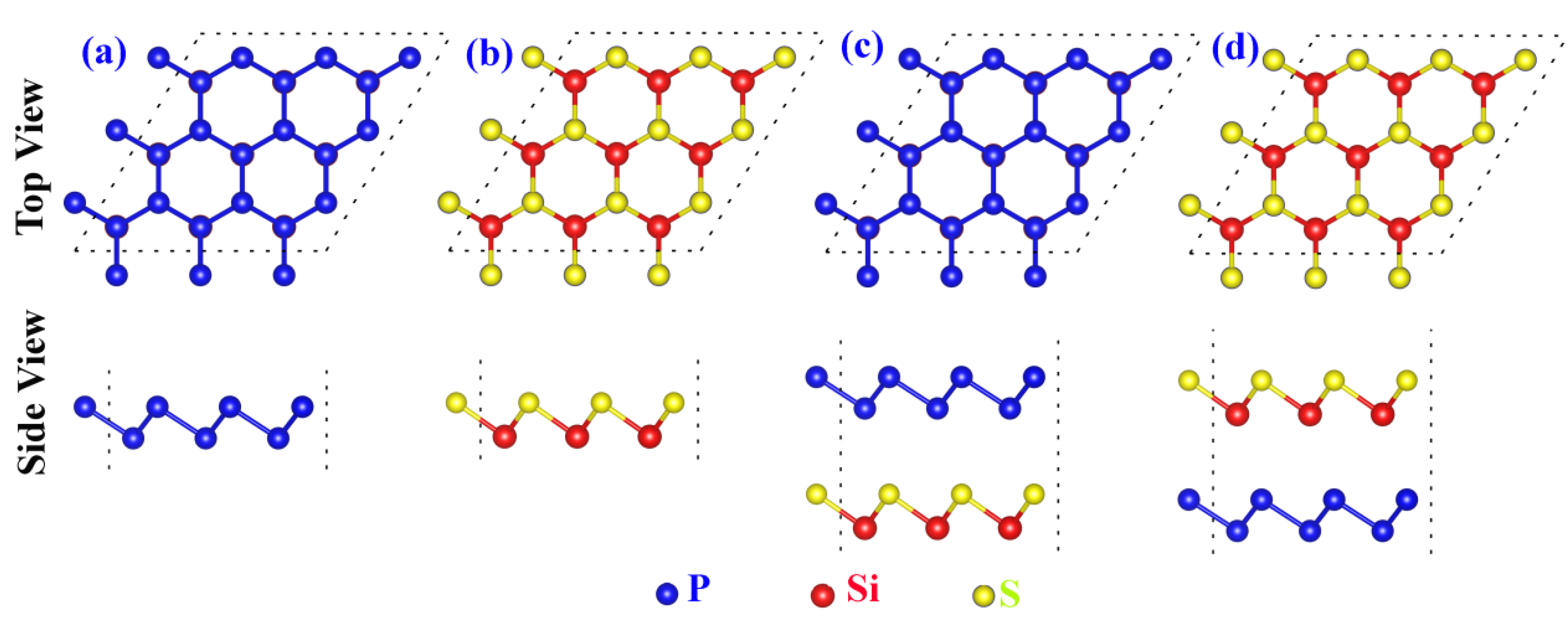
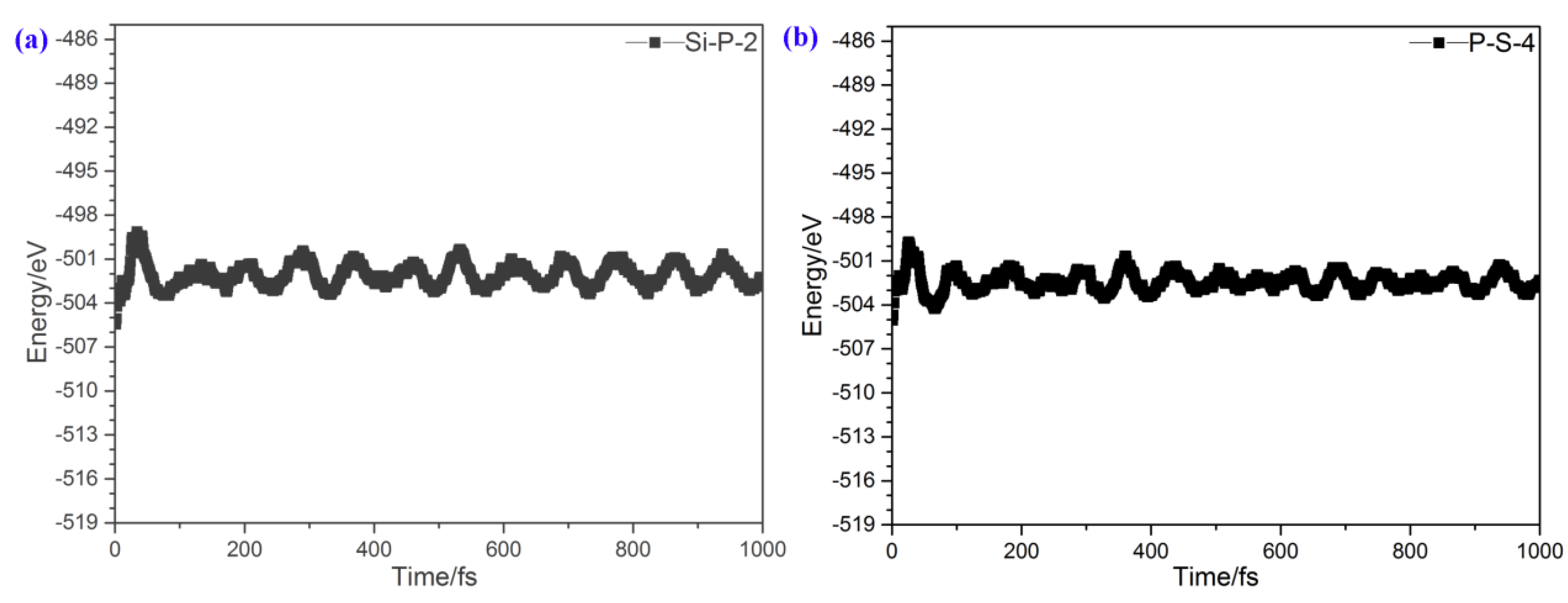
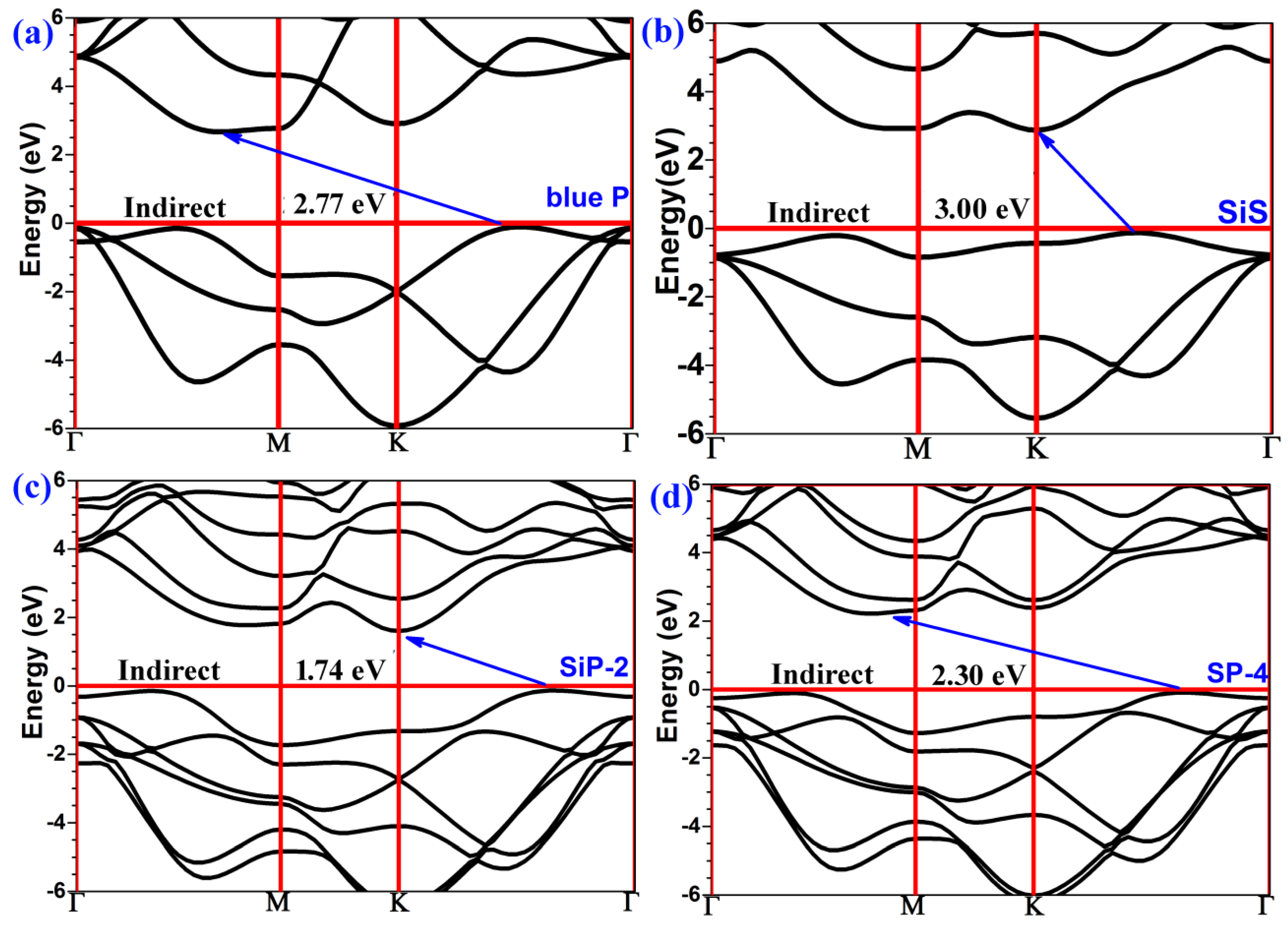
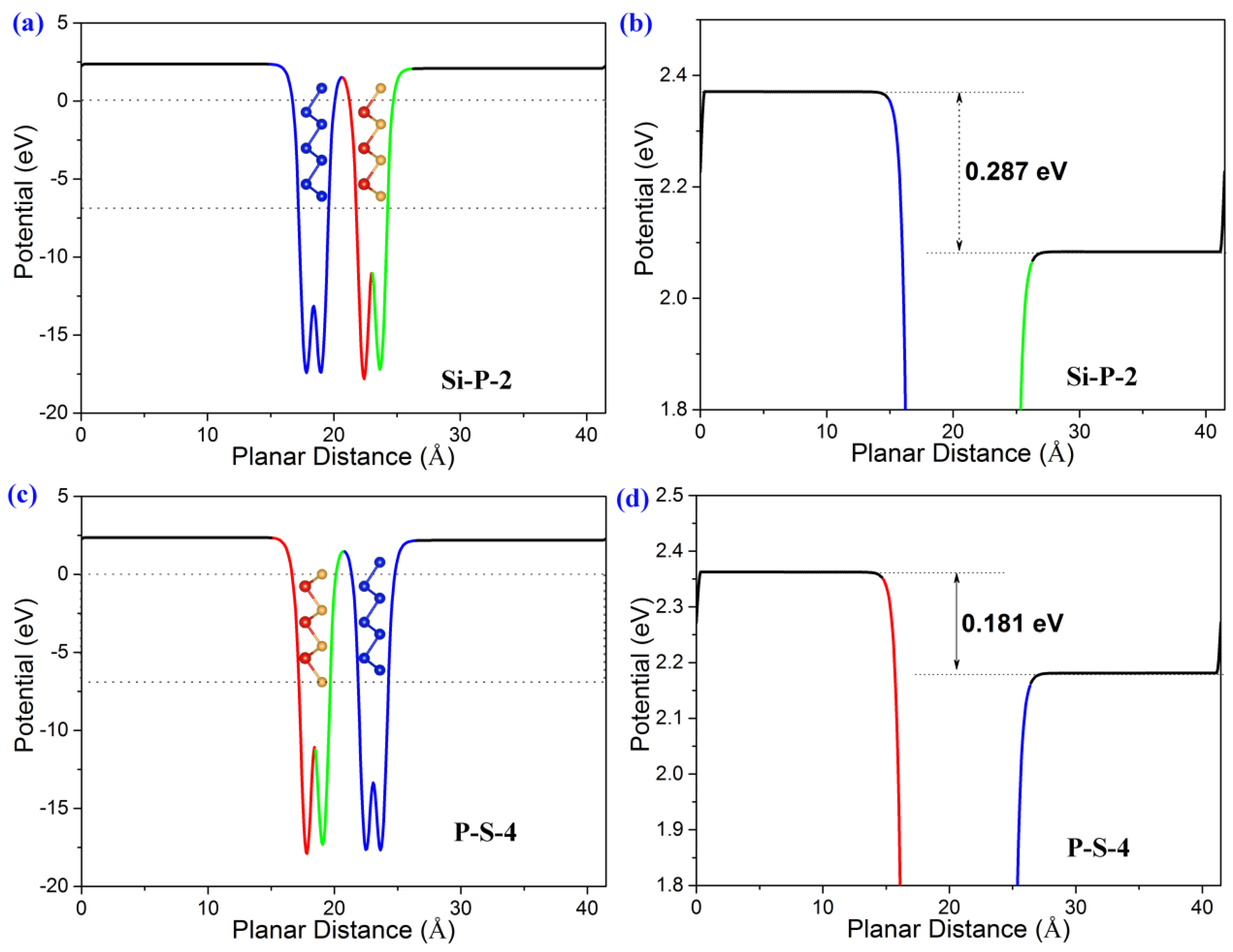
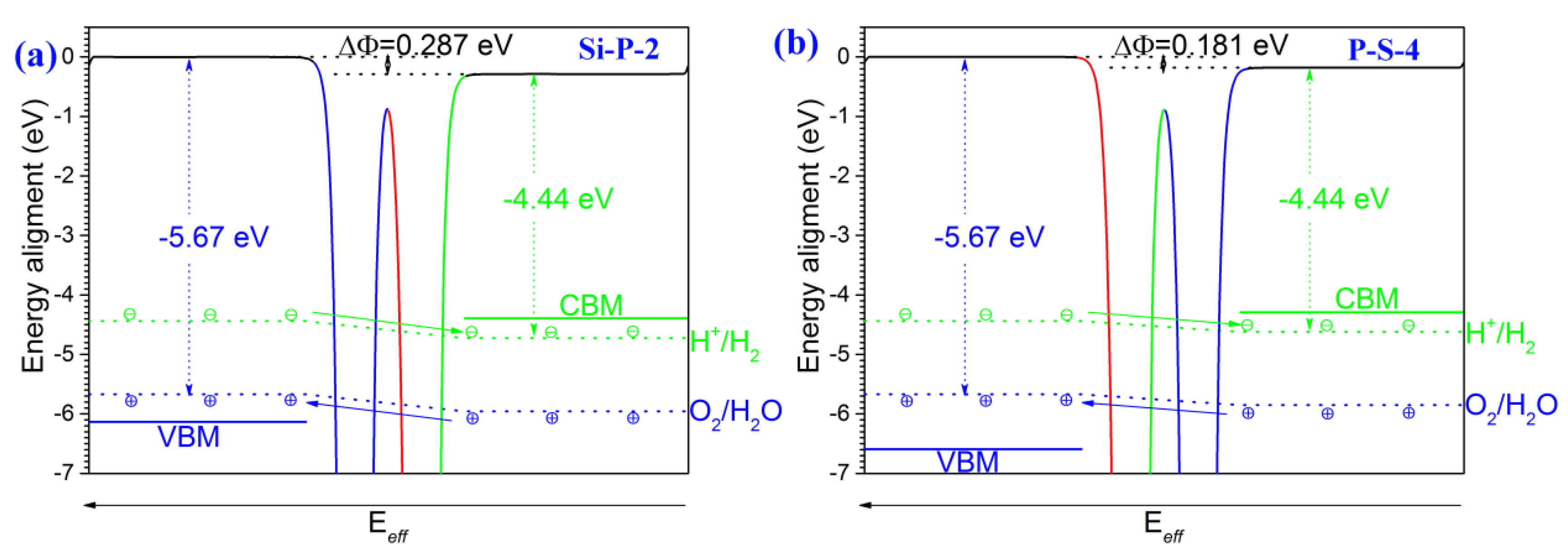
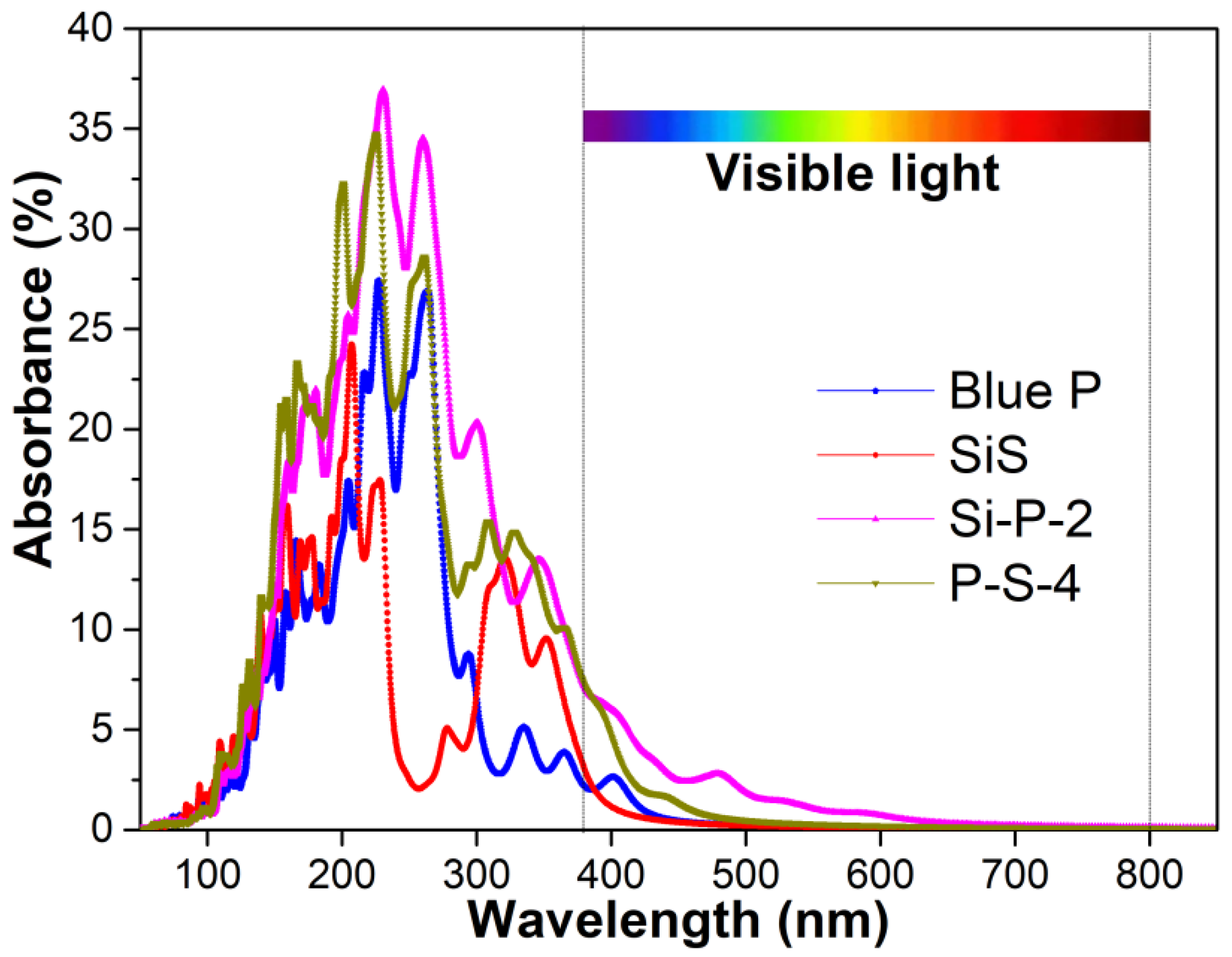
Two-dimensional (2D) polarized heterostructures with internal electric fields are potential photocatalysts for high catalytic performance. The Blue P/SiS van der Waals heterostructures were formed from monolayer Blue P and polar monolayer SiS with different stacking interfaces, including Si-P and P-S interfaces. The structural, electronic, optical and photocatalytic properties of the Blue P/SiS heterostructures were studied via first-principle calculations. The results showed that the Si-P-2 or P-S-4 stacking order contributes to the most stable heterostructure with the Si-P or P-S interface. The direction of the internal electric field is from the 001 surface toward the 001¯ surface, which is helpful for separating photo-generated electron–hole pairs. The bandgap and electrostatic potential differences in the Si-P-2(P-S-4) heterostructures are 1.74 eV (2.30 eV) and 0.287 eV (0.181 eV), respectively. Moreover, the Si-P-2(P-S-4) heterostructures possess suitable band alignment and wide ultraviolet and visible light spectrum regions. All results suggest that 2D polarized Blue P/SiS heterostructures are potential novel photocatalysts for water splitting under a wide ultraviolet and visible light spectrum region.
Keywords: blue P/SiS heterostructures; internal electric field; photocatalytic water splitting; first-principle calculations blue P/SiS heterostructures; internal electric field; photocatalytic water splitting; first-principle calculations