Review

Bioactive Compounds from Medicinal Plants as Potential Adjuvants in the Treatment of Mild Acne Vulgaris


by
Mariateresa Cristani
and
Nicola Micale
*
Dipartimento di Scienze Chimiche, Biologiche, Farmaceutiche ed Ambientali, Università di Messina, Viale F. Stagno D’Alcontres 31, I-98166 Messina, Italy
*
Author to whom correspondence should be addressed.
Molecules 2024, 29(10), 2394; https://doi.org/10.3390/molecules29102394

Submission received: 30 April 2024 / Revised: 15 May 2024 / Accepted: 17 May 2024 / Published: 19 May 2024

Abstract

In recent years, there has been a growing interest in the use of medicinal plants and phytochemicals as potential treatments for acne vulgaris. This condition, characterized by chronic inflammation, predominantly affects adolescents and young adults. Conventional treatment typically targets the key factors contributing to its development: the proliferation of Cutibacterium acnes and the associated inflammation. However, these treatments often involve the use of potent drugs. As a result, the exploration of herbal medicine as a complementary approach has emerged as a promising strategy. By harnessing the therapeutic properties of medicinal plants and phytochemicals, it may be possible to address acne vulgaris while minimizing the reliance on strong drugs. This approach not only offers potential benefits for individuals seeking alternative treatments but also underscores the importance of natural remedies of plant origin in dermatological care. The primary aim of this study was to assess the antimicrobial, antioxidant, and anti-inflammatory properties of plants and their phytochemical constituents in the management of mild acne vulgaris. A comprehensive search of scientific databases was conducted from 2018 to September 2023. The findings of this review suggest that medicinal plants and their phytochemical components hold promise as treatments for mild acne vulgaris. However, it is crucial to note that further research employing high-quality evidence and standardized methodologies is essential to substantiate their efficacy and safety profiles.
Keywords: mild acne vulgaris; bioactive compounds; plant extracts; phytochemicals; skin diseases; natural products; alternative medicine; adjuvants mild acne vulgaris; bioactive compounds; plant extracts; phytochemicals; skin diseases; natural products; alternative medicine; adjuvants
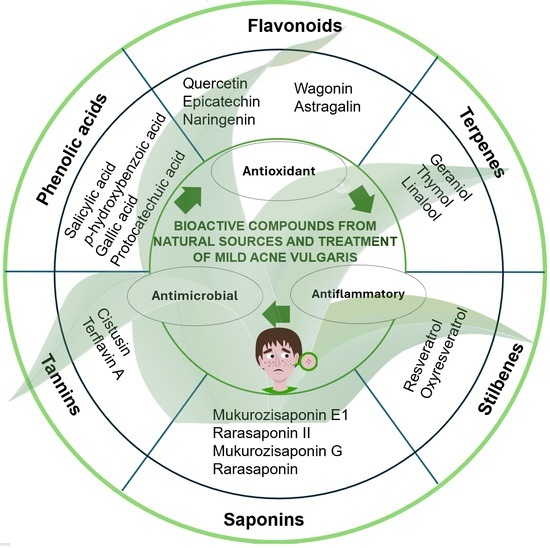
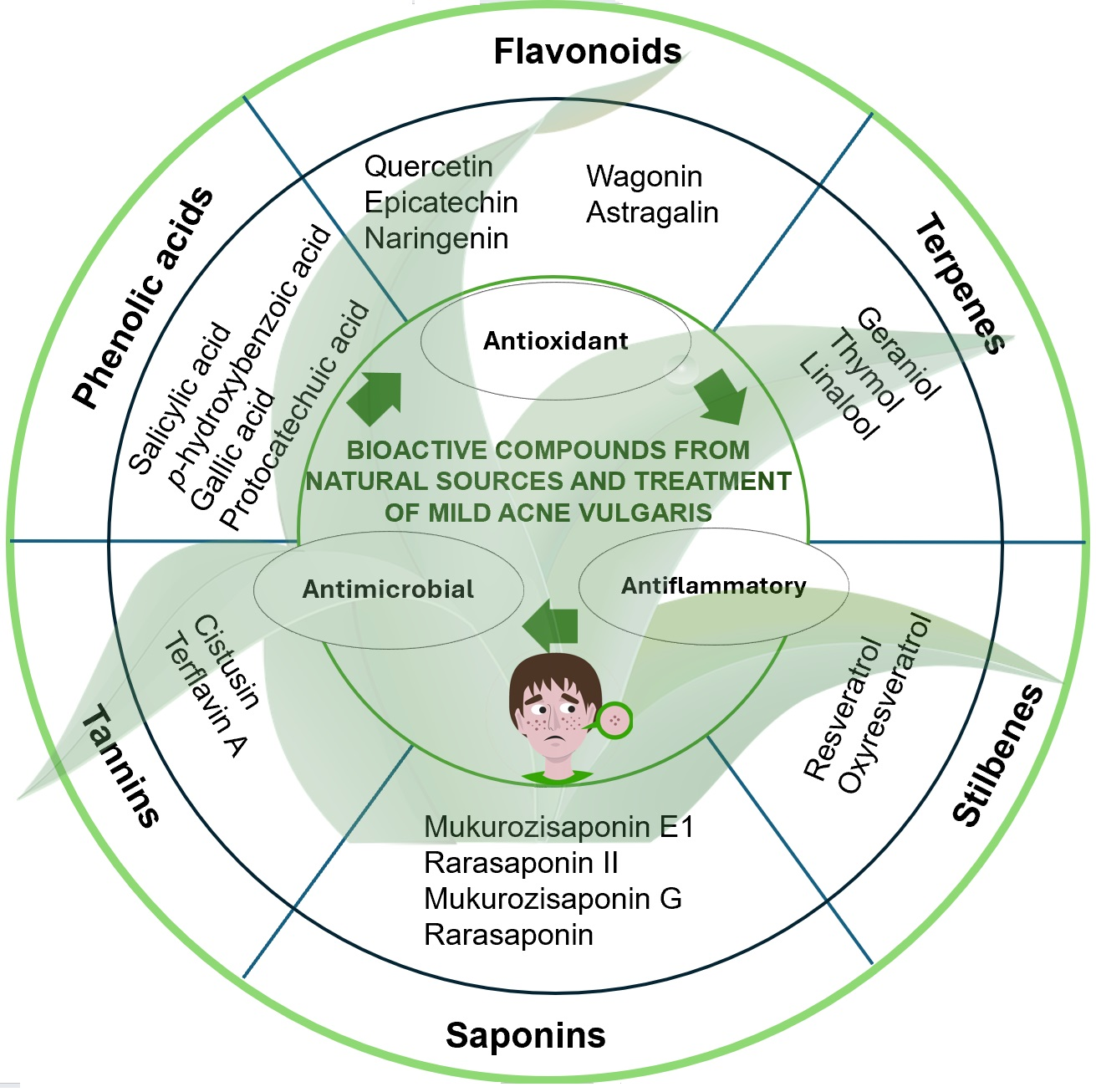
Graphical Abstract