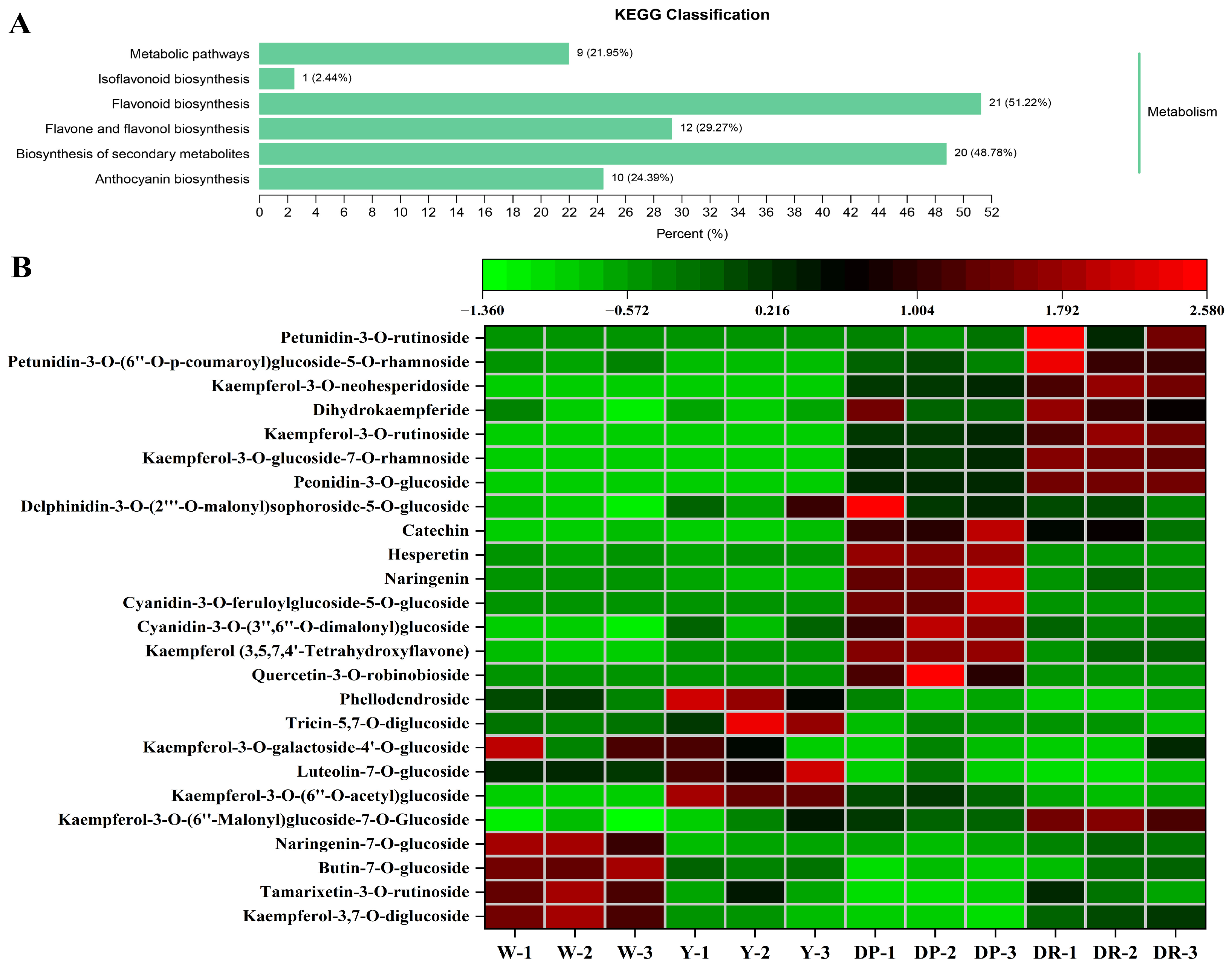
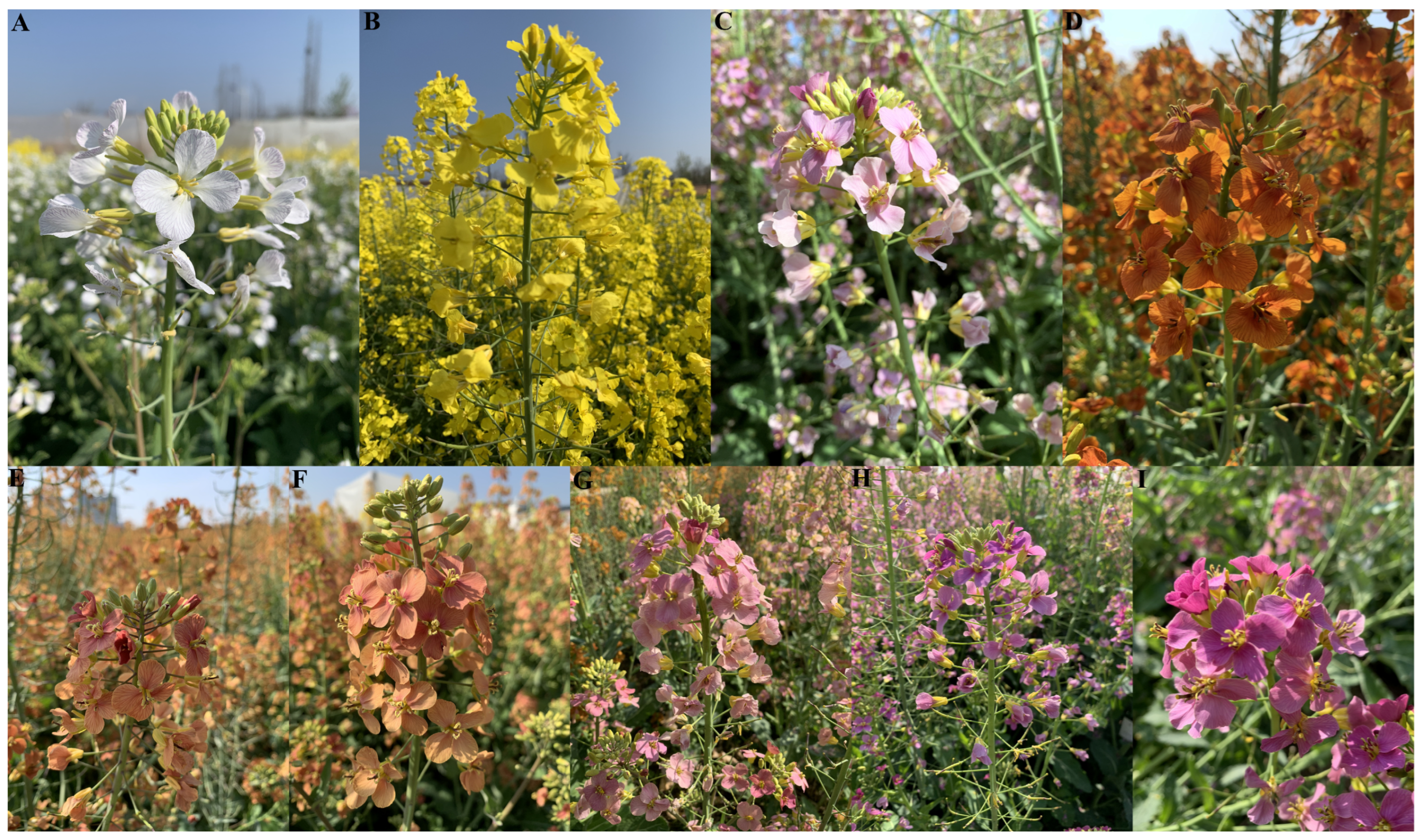
Characterization Variation of the Differential Coloring Substances in Rapeseed Petals with Different Colors Using UPLC-HESI-MS/MS
 ,
, Abstract
Share and Cite
Zeng, H.; Zheng, T.; Li, Y.; Chen, Q.; Xue, Y.; Tang, Q.; Xu, H.; Chen, M. Characterization Variation of the Differential Coloring Substances in Rapeseed Petals with Different Colors Using UPLC-HESI-MS/MS. Molecules 2023, 28, 5670. https://doi.org/10.3390/molecules28155670
Zeng H, Zheng T, Li Y, Chen Q, Xue Y, Tang Q, Xu H, Chen M. Characterization Variation of the Differential Coloring Substances in Rapeseed Petals with Different Colors Using UPLC-HESI-MS/MS. Molecules. 2023; 28(15):5670. https://doi.org/10.3390/molecules28155670
Chicago/Turabian StyleZeng, Haitao, Tao Zheng, Ying Li, Qiao Chen, Yan Xue, Qi Tang, Hao Xu, and Mengjiao Chen. 2023. "Characterization Variation of the Differential Coloring Substances in Rapeseed Petals with Different Colors Using UPLC-HESI-MS/MS" Molecules 28, no. 15: 5670. https://doi.org/10.3390/molecules28155670
APA StyleZeng, H., Zheng, T., Li, Y., Chen, Q., Xue, Y., Tang, Q., Xu, H., & Chen, M. (2023). Characterization Variation of the Differential Coloring Substances in Rapeseed Petals with Different Colors Using UPLC-HESI-MS/MS. Molecules, 28(15), 5670. https://doi.org/10.3390/molecules28155670