Article

β-Cyclodextrin as the Key Issue in Production of Acceptable Low-Cholesterol Dairy Products
Faculty of Chemical and Food Technology, Institute of Food Science and Nutrition, Slovak University of Technology in Bratislava, Radlinského 9, 812 37 Bratislava, Slovakia
*
Author to whom correspondence should be addressed.
Molecules 2022, 27(9), 2919; https://doi.org/10.3390/molecules27092919

Submission received: 25 March 2022 / Revised: 25 April 2022 / Accepted: 30 April 2022 / Published: 3 May 2022
(This article belongs to the Special Issue Cyclodextrin Chemistry and Toxicology II)

Abstract

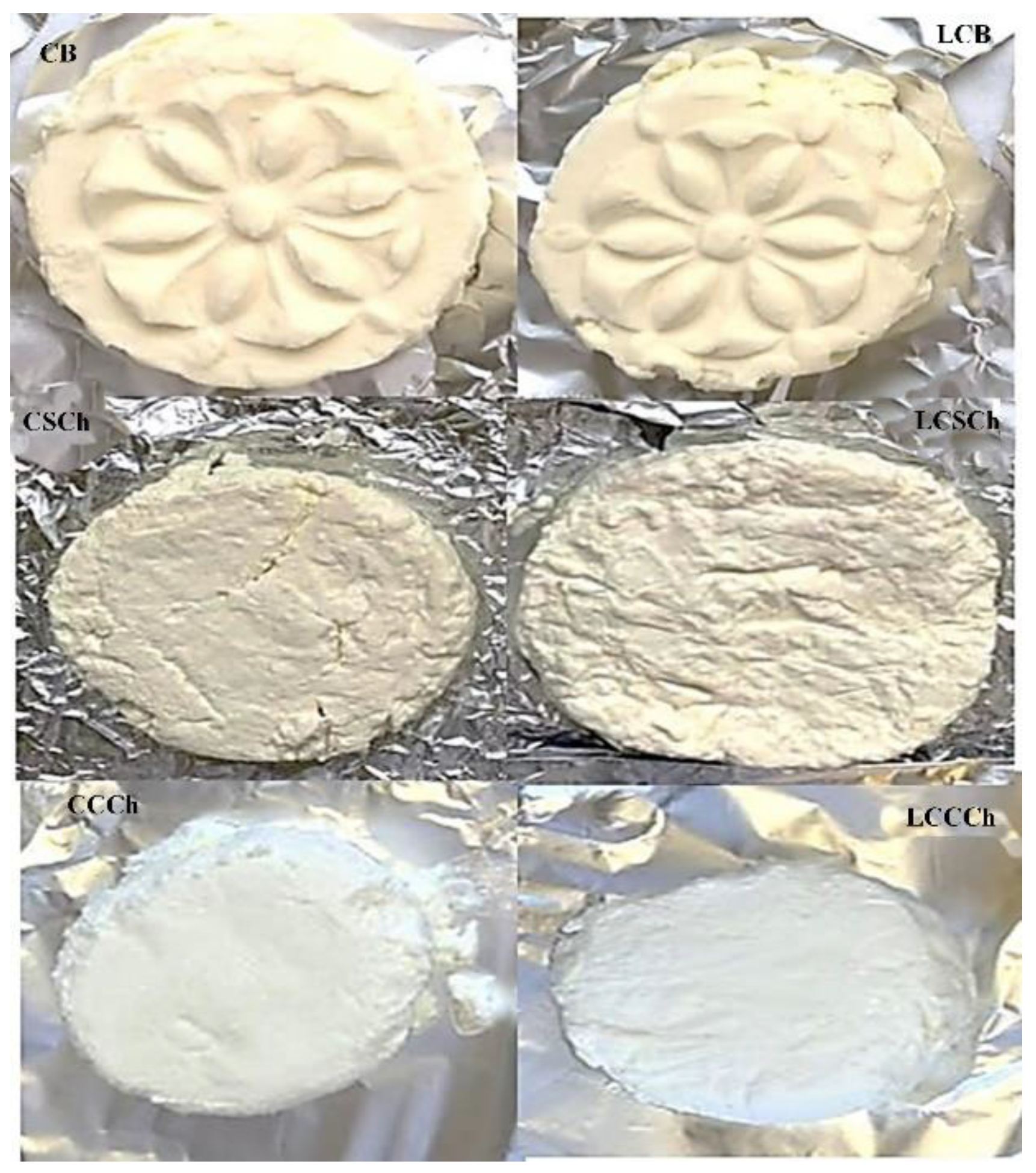
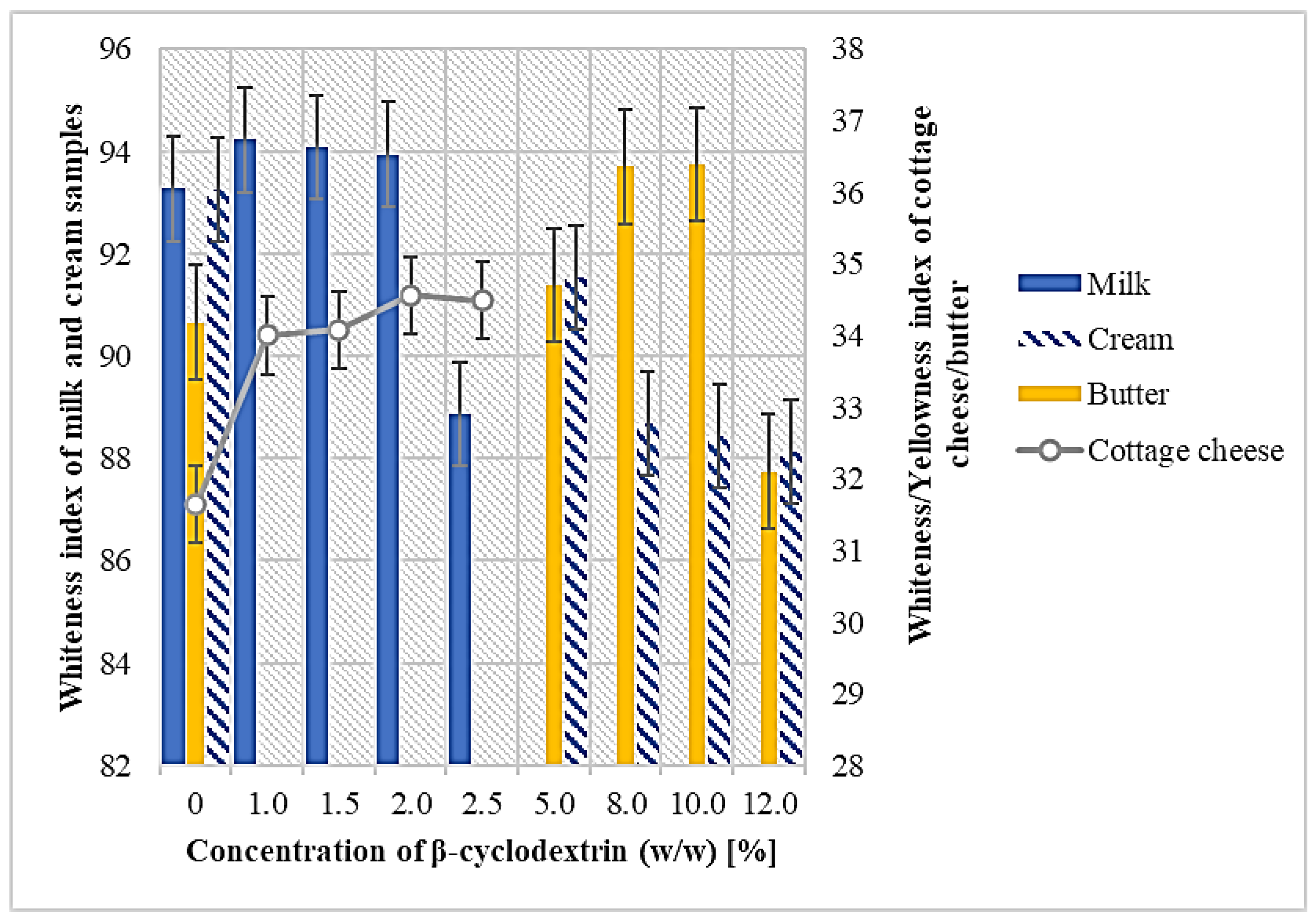
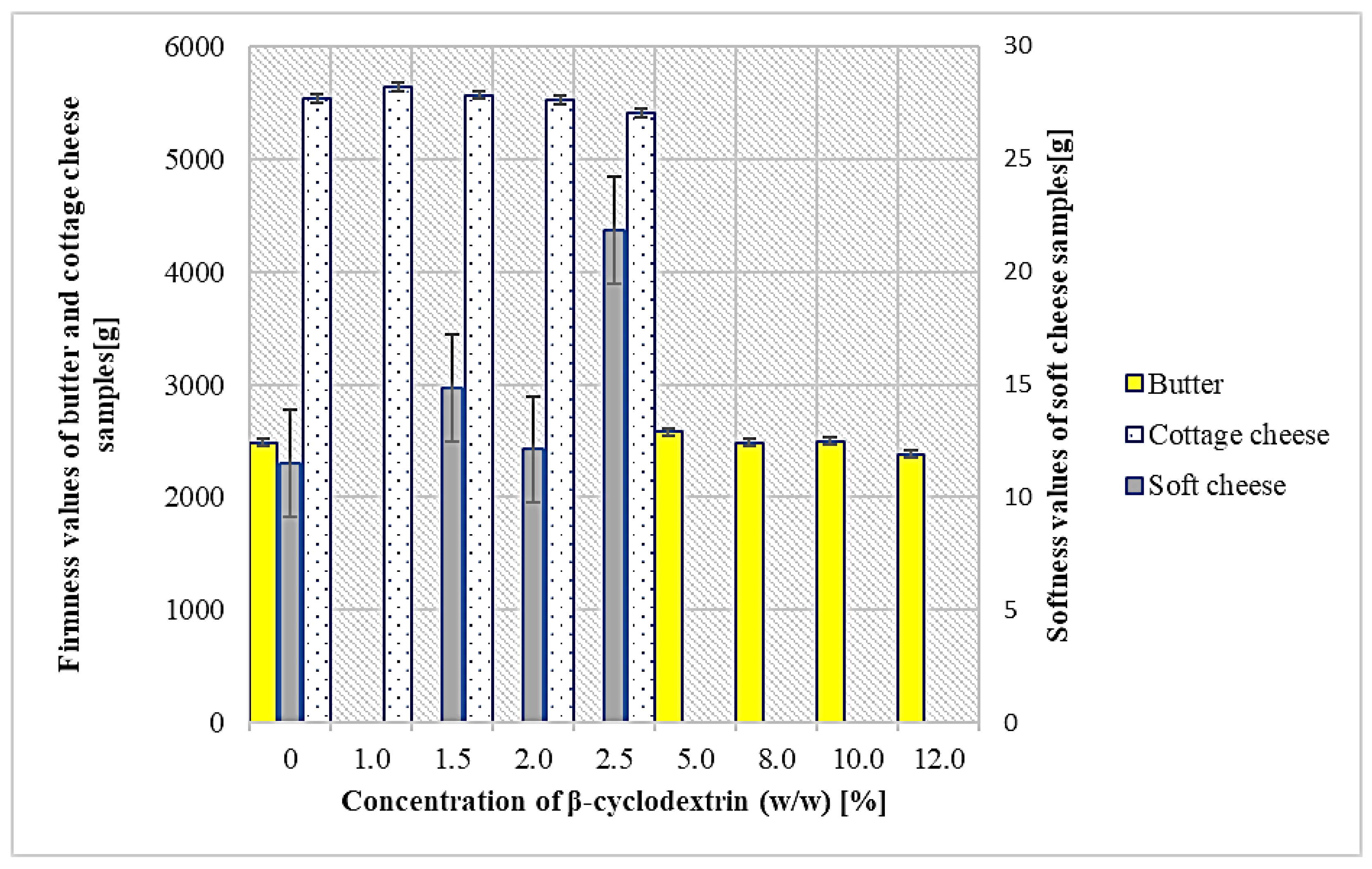
The application of cyclodextrins in food technology is extensive due to their unique ability to form complexes with many bioactive substances. Consumption of dairy products is associated with an increased risk of cardiovascular diseases (CVD) due to its high content of saturated fatty acids and cholesterol, so the production of low-cholesterol content products would be one of the critical steps in CVD prevention with regards to lowered total daily cholesterol intake. To maintain consumer acceptance, organoleptic profiles of such products should be, in the optimal case, the same with comparison to original ones. So, this study deals with the development of set low cholesterol foods (milk, cream, butter, soft cheese, cottage cheese) by β-cyclodextrin treatment and the characterization of their organoleptic profiles such as color and textural characteristics. During the experiments, high effectivity of cholesterol removal was reached as follows: milk–97.3%, cream–95.6%, butter–95.6%, cottage cheese–97.9%, soft cheese–97.7%, while color differences varied from 0.25 to 1.13 and textural characteristics were not influenced by cholesterol removal as well. So, it can be concluded that the proposed procedure is enabled to be substantial for the production of a new assortment of low-cholesterol dairy products with considerable health benefits toward the incidence of CVD.
Keywords: cholesterol; β-cyclodextrin; milk; dairy products; color; texture; functional foods; healthy foods cholesterol; β-cyclodextrin; milk; dairy products; color; texture; functional foods; healthy foods