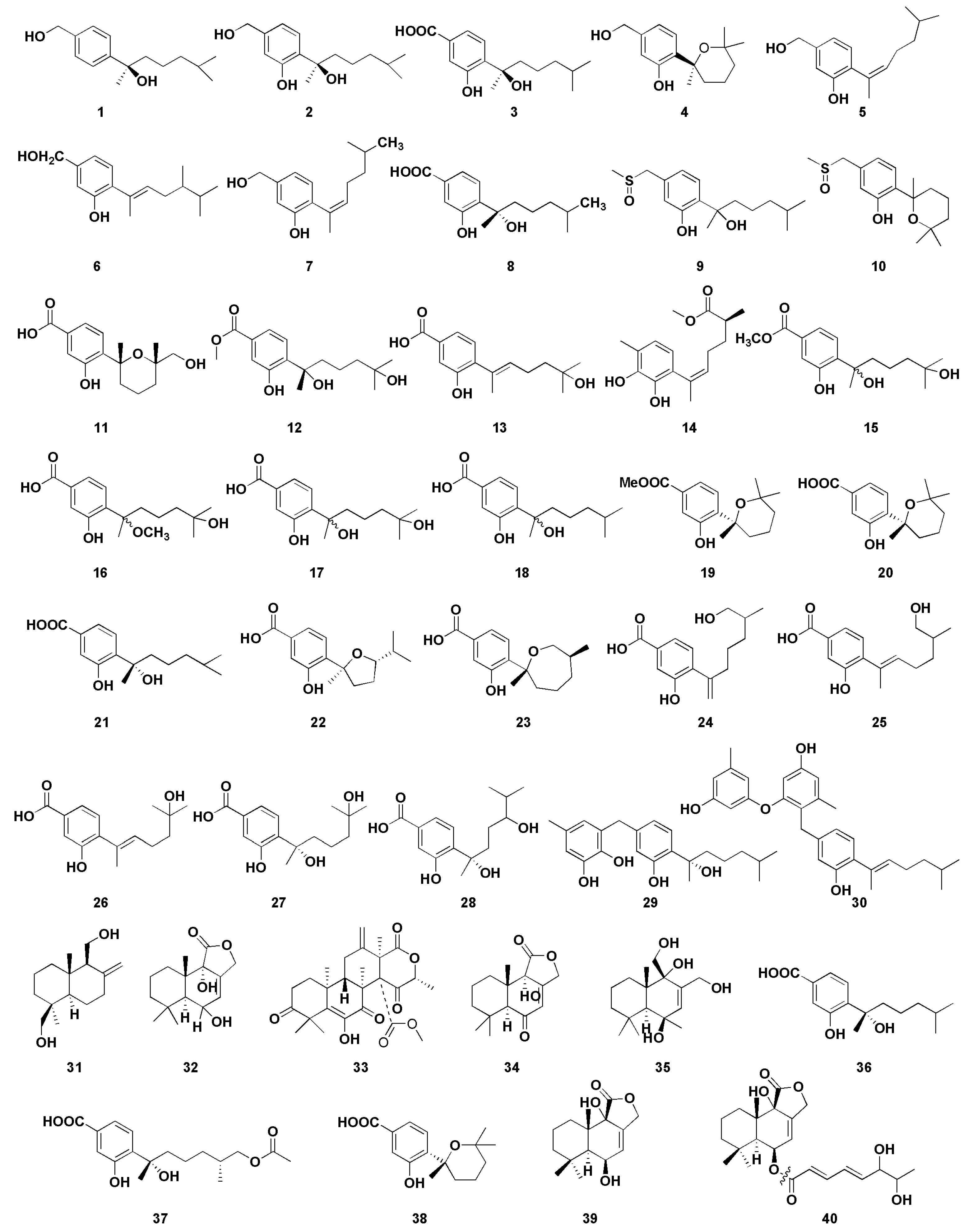
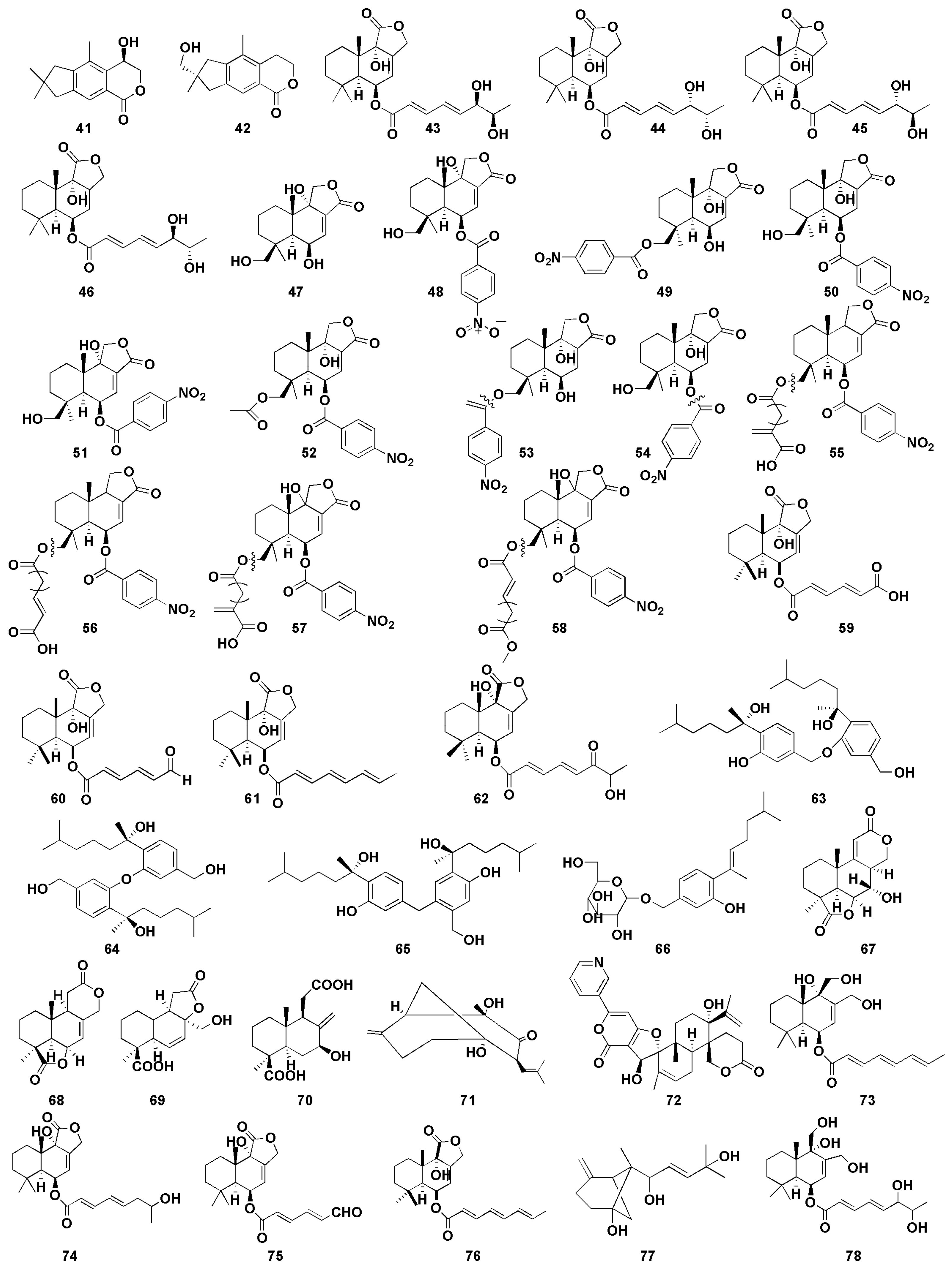
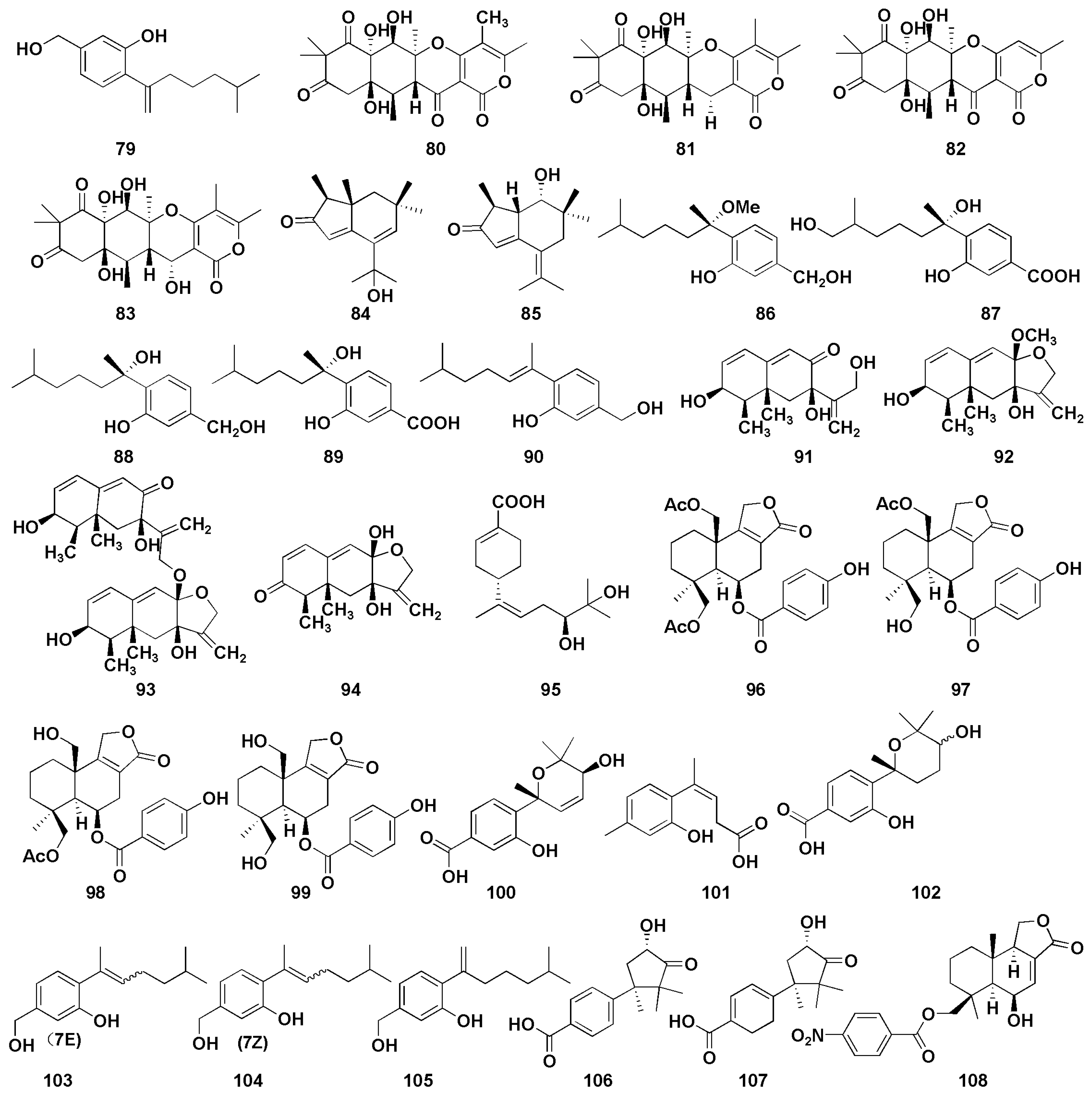
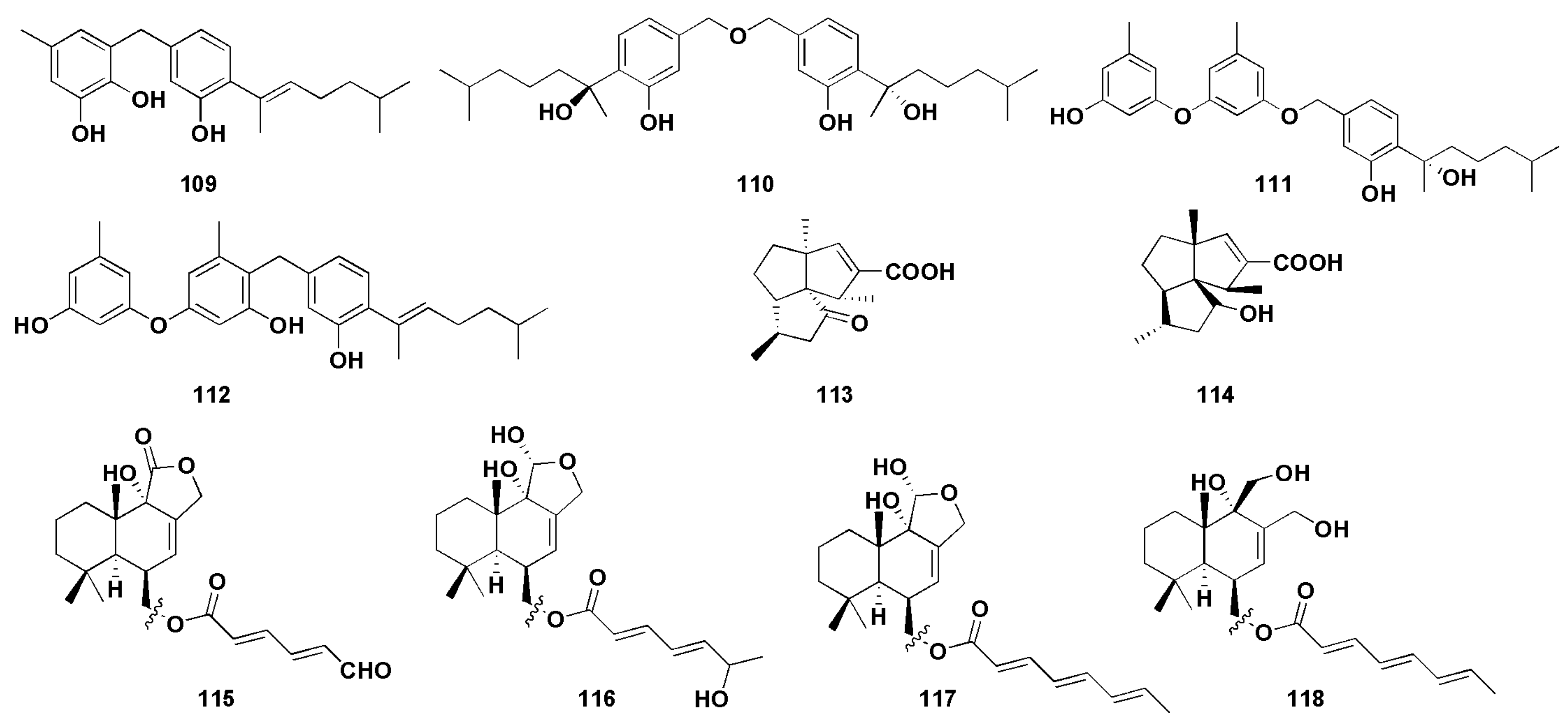
Research Advances of Bioactive Sesquiterpenoids Isolated from Marine-Derived Aspergillus sp.


Abstract
Share and Cite
Sun, L.; Wang, H.; Yan, M.; Sai, C.; Zhang, Z. Research Advances of Bioactive Sesquiterpenoids Isolated from Marine-Derived Aspergillus sp. Molecules 2022, 27, 7376. https://doi.org/10.3390/molecules27217376
Sun L, Wang H, Yan M, Sai C, Zhang Z. Research Advances of Bioactive Sesquiterpenoids Isolated from Marine-Derived Aspergillus sp. Molecules. 2022; 27(21):7376. https://doi.org/10.3390/molecules27217376
Chicago/Turabian StyleSun, Lixiang, Huannan Wang, Maocai Yan, Chunmei Sai, and Zhen Zhang. 2022. "Research Advances of Bioactive Sesquiterpenoids Isolated from Marine-Derived Aspergillus sp." Molecules 27, no. 21: 7376. https://doi.org/10.3390/molecules27217376
APA StyleSun, L., Wang, H., Yan, M., Sai, C., & Zhang, Z. (2022). Research Advances of Bioactive Sesquiterpenoids Isolated from Marine-Derived Aspergillus sp. Molecules, 27(21), 7376. https://doi.org/10.3390/molecules27217376