Communication

Antioxidant Potential of Flower Extracts from Centaurea spp. Depends on Their Content of Phenolics, Flavonoids and Free Amino Acids


1
Department of Horticulture, West Pomeranian University of Technology in Szczecin, 71-459 Szczecin, Poland
2
Center of Bioimmobilisation and Innovative Packaging Materials, West Pomeranian University of Technology in Szczecin, 71-270 Szczecin, Poland
*
Author to whom correspondence should be addressed.
Molecules 2021, 26(24), 7465; https://doi.org/10.3390/molecules26247465

Submission received: 18 November 2021 / Revised: 5 December 2021 / Accepted: 8 December 2021 / Published: 9 December 2021

Abstract

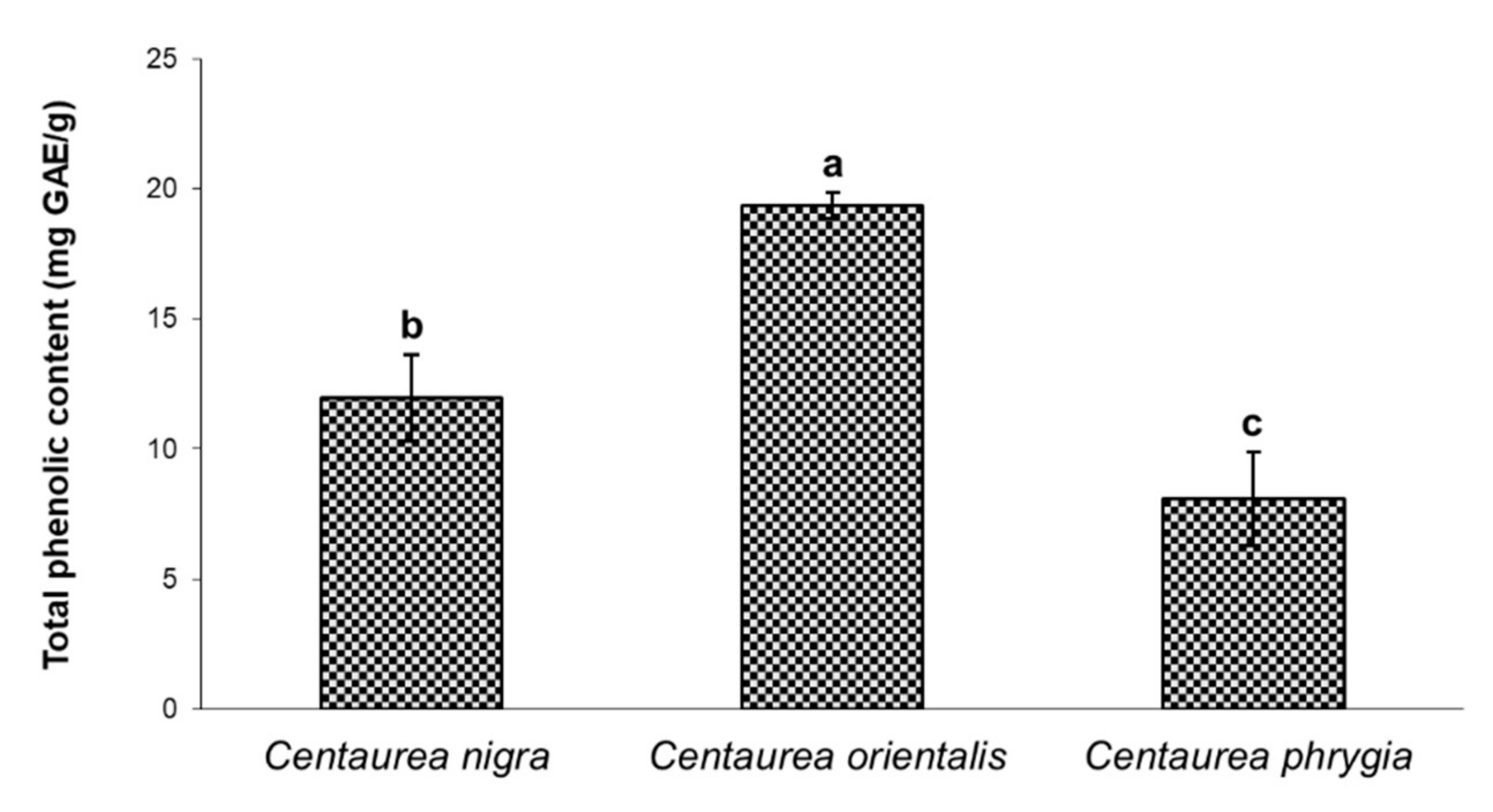
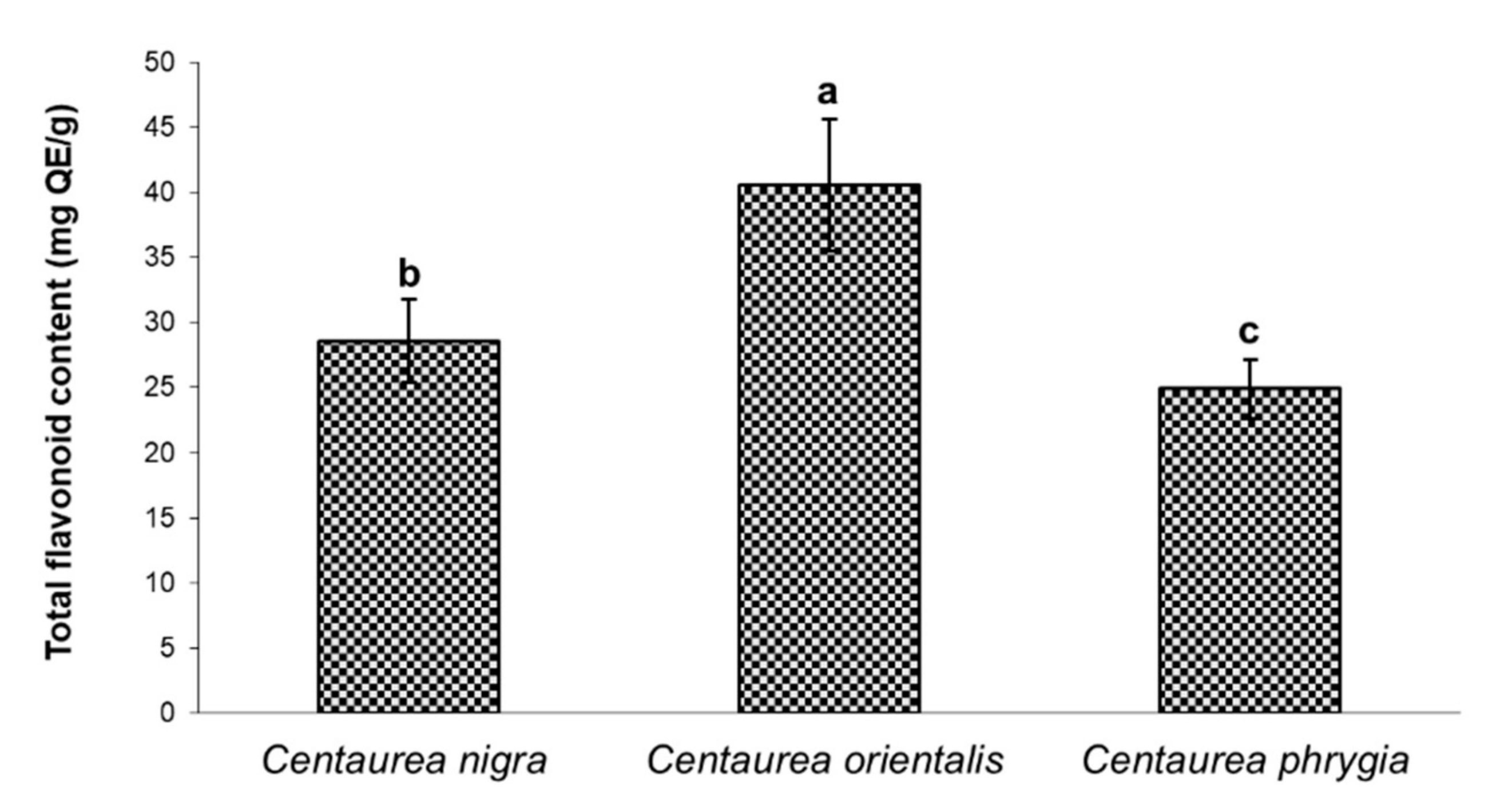
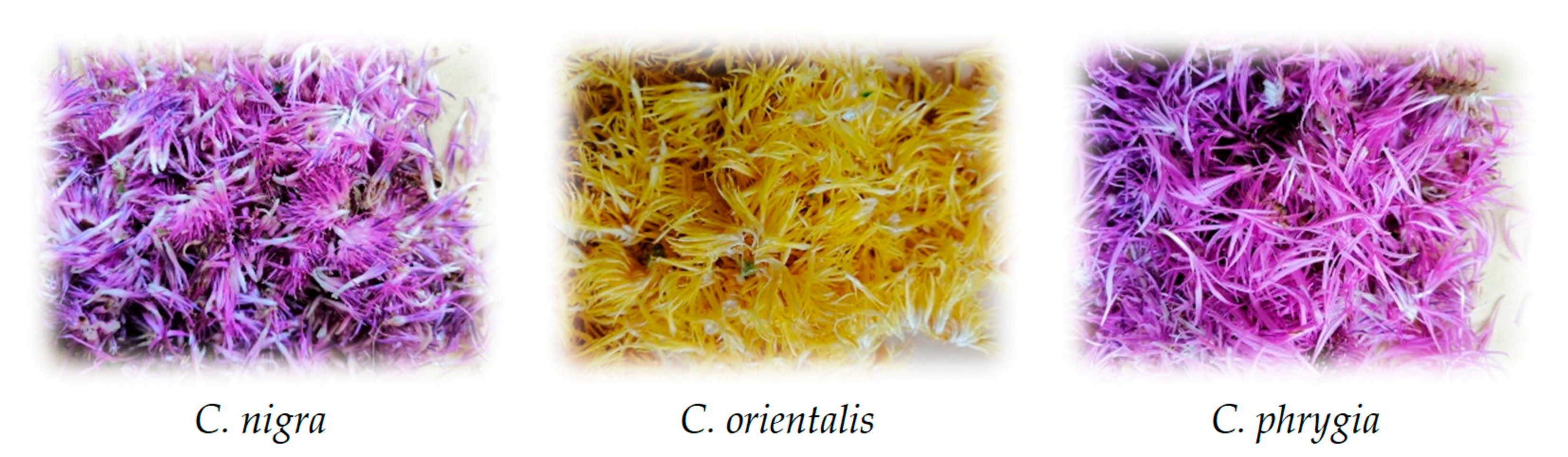
Scientists intensely search for new sources of antioxidants, perceived as important health-promoting agents. Some species of the large genus Centaurea provide raw materials for the pharmaceutical and cosmetic industries, as well as produce edible flowers. This is the first study that determines the content of total polyphenols, flavonoids, reducing sugars, free amino acids and the antioxidant potential in the flower extracts of C. nigra L., C. orientalis L. and C. phrygia L. The total polyphenol and flavonoid content is the highest in the extract of C. orientalis, and the lowest in that of C. phrygia. Similarly, C. orientalis shows the greatest scavenging activity on DPPH (1,1-diphenyl-2-picryl-hydrazyl), ABTS [2,2′-azobis(3-ethylbenzothiazoline-6-sulfonate)] and Fe3+ reducing power assays, whereas the lowest activity is found for C. phrygia. The highest content of reducing sugars is found in C. nigra, while C. orientalis has the highest levels of free amino acids. We find a strong positive correlation between total phenolics and flavonoids and the antioxidant capacity of all three Centaurea species. Moreover, the content of free amino acids strongly and positively correlates with the levels of total phenolics and flavonoids, antioxidant activity assessed by DPPH and ABTS assays and Fe3+ reducing power. Summing up, C. orientalis exhibits the strongest antioxidant potential of the investigated Centaurea species. This species could potentially be a natural source of antioxidant substances for the pharmacy, cosmetics and food industries. The content of free amino acids may be used as a marker of the antioxidant status of Centaurea species.
Keywords: Centaurea; antioxidants; plant natural products; antioxidant properties Centaurea; antioxidants; plant natural products; antioxidant properties