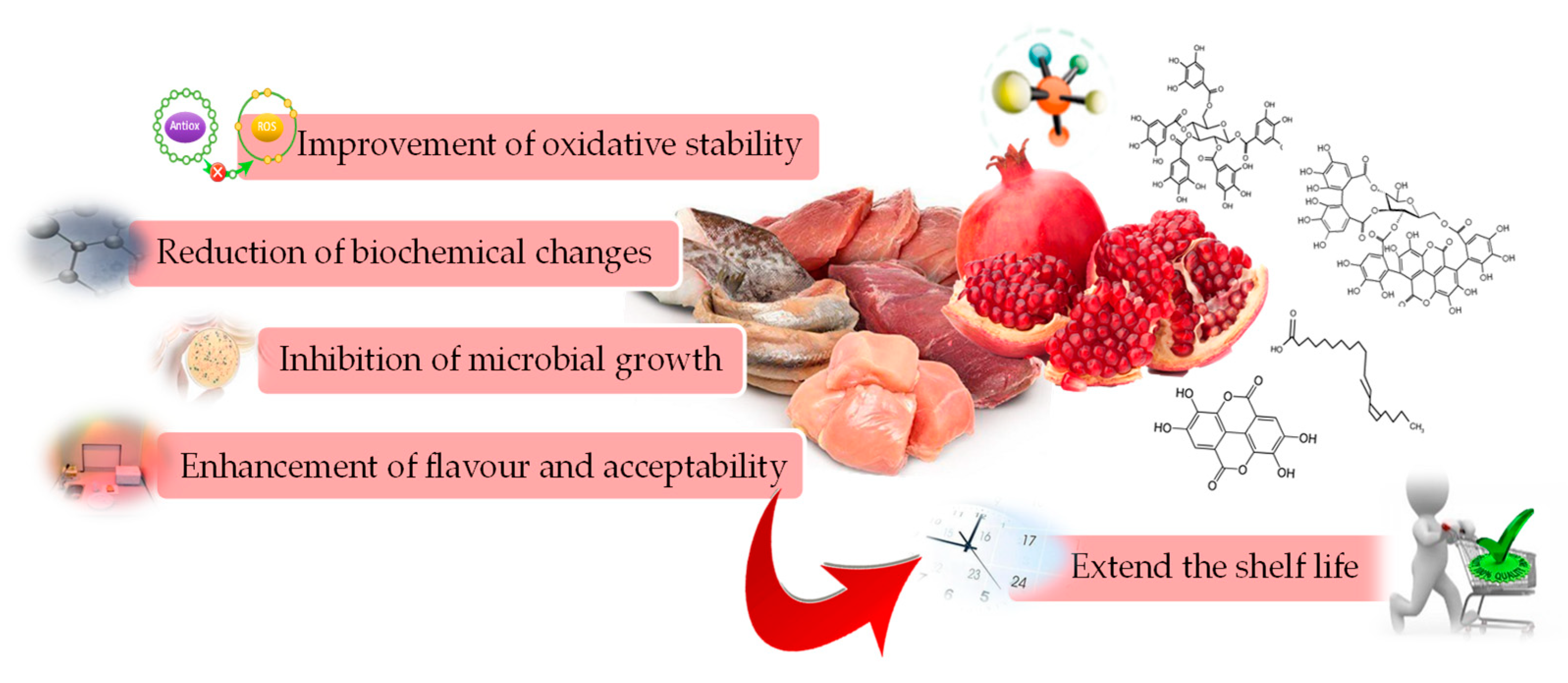

Application of Pomegranate by-Products in Muscle Foods: Oxidative Indices, Colour Stability, Shelf Life and Health Benefits
 , ,
, ,  ,
,  and
and 
Abstract
1. Introduction
2. Pomegranate Fruit and Its By-Products
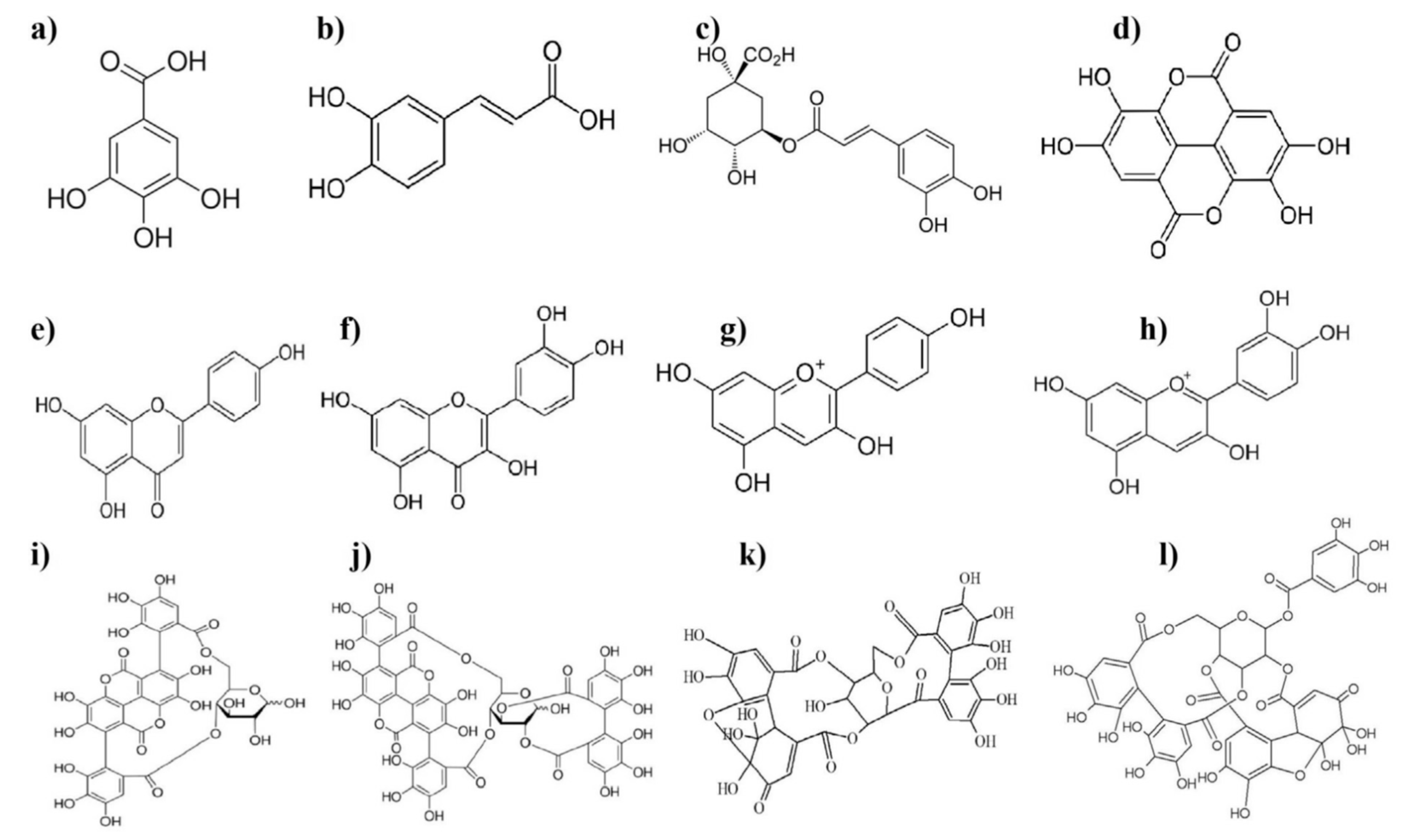
3. Polyphenolic and Flavonoid Compounds in Pomegranate Fruit By-Products
4. Antioxidant Activity of Pomegranate Wastes at Cellular Levels
5. Antimicrobial Activity
5.1. Antibacterial Activity
5.2. Antifungal Activity
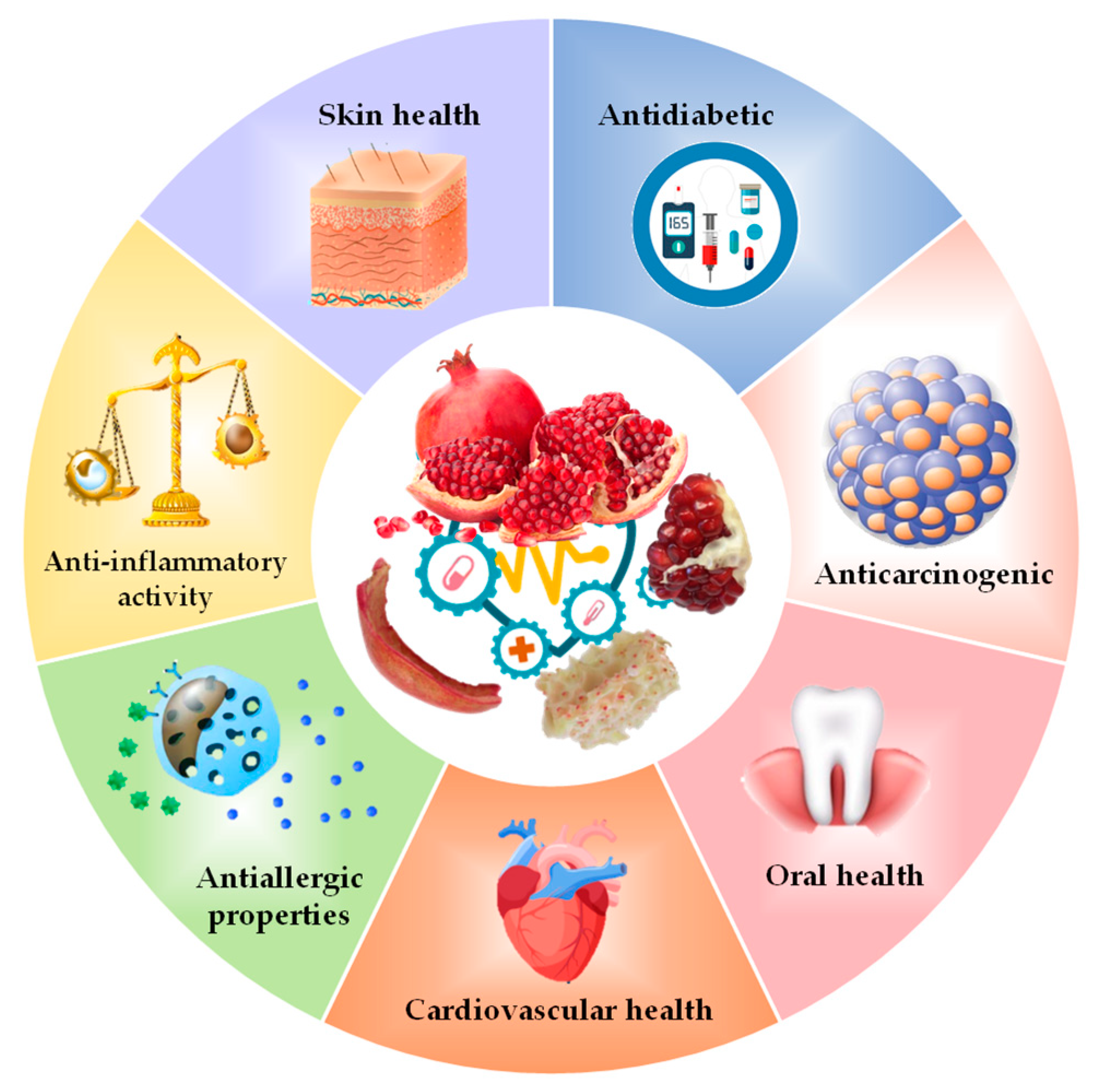
6. Health Benefits
6.1. Gut Modulation and Prebiotic Effect

| Pomegranate Fruit | Health Complication/Patient Type | Effect after Pomegranate Supplementation | Ref. | |
|---|---|---|---|---|
| Whole fruit extract | Obesity | Lesser
| Higher
| [77] |
| Juice | Patient undergoing haemodialysis | Lesser
| Higher
| [42] |
| Juice | Type 2 diabetes | Lowered Serum erythropoietin | [78] | |
| Microencapsulation | Women with acute coronary syndrome |
| [79] | |
| Pericarp extract | Type 2 diabetes | Lesser
| Higher
| [80] |
| Pericarp extract | Dyslipidaemia | Lesser
| Higher
| [81] |
| Juice | Active adults | Visual memory skills maintenance | [82] | |
| Juice | Type 2 diabetes | Lesser blood pressure | [83] | |
| Juice | Active healthy men |
| [84] | |
| Seed oil | Type 2 diabetes | Lesser blood sugar | [85,86] | |
| Juice | Endurance-based athletes | Lesser body fat and protein degeneration | [87] | |
6.2. Antidiabetic and Antiosteoporotic Activity
6.3. Pomegranate Role in Dermatology
6.4. Anticarcinogenic Activity
6.5. Role in Cardiovascular Problems
6.6. Protection against Neurodegenerative Diseases
7. Pomegranate By-Products as Functional Food Component
8. Pomegranate in Muscle Food Applications
8.1. Effect on Physicochemical Properties of Muscle Foods
8.2. Effect on Colour Attributes of Muscle Foods
8.3. Effect on Oxidative Changes of Muscle Foods
8.4. Effect on Microbiological Quality and Shelf Life of Muscle Foods
8.5. Effect on Sensory Acceptability of Muscle Foods
9. Conclusions and Future Perspectives
Author Contributions
Funding
Institutional Review Board Statement
Informed Consent Statement
Acknowledgments
Conflicts of Interest
References
- Gálvez, F.; Maggiolino, A.; Domínguez, R.; Pateiro, M.; Gil, S.; De Palo, P.; Carballo, J.; Franco, D.; Lorenzo, J.M. Nutritional and meat quality characteristics of seven primal cuts from 9-month-old female veal calves: A preliminary study. J. Sci. Food Agric. 2019, 99. [Google Scholar] [CrossRef] [PubMed]
- Gálvez, F.; Domínguez, R.; Maggiolino, A.; Pateiro, M.; Carballo, J.; De Palo, P.; Barba, F.J.; Lorenzo, J.M. Meat quality of commercial chickens rearing in different production systems: Industrial, range and organic. Ann. Anim. Sci. 2019. [Google Scholar] [CrossRef]
- Gálvez, F.; Domínguez, R.; Pateiro, M.; Carballo, J.; Tomasevic, I.; Lorenzo, J.M. Effect of gender on breast and thigh turkey meat quality. Br. Poult. Sci. 2018. [Google Scholar] [CrossRef] [PubMed]
- Das, A.K.; Das, A.; Nanda, P.K.; Madane, P.; Biswas, S.; Zhang, W.; Lorenzo, J.M. A comprehensive review on antioxidant dietary fibre enriched meat-based functional foods. Trends Food Sci. Technol. 2020, 99, 323–336. [Google Scholar] [CrossRef]
- El-Hadary, A.E.; Taha, M. Pomegranate peel methanolic-extract improves the shelf-life of edible-oils under accelerated oxidation conditions. Food Sci. Nutr. 2020, 8, 1798–1811. [Google Scholar] [CrossRef]
- Das, A.K.; Nanda, P.K.; Bandyopadhyay, S.; Banerjee, R.; Biswas, S.; McClements, D.J. Application of nanoemulsion-based approaches for improving the quality and safety of muscle foods: A comprehensive review. Compr. Rev. Food Sci. Food Saf. 2020, 19, 2677–2700. [Google Scholar] [CrossRef]
- Das, A.K.; Nanda, P.K.; Das, A.; Biswas, S. Hazards and Safety Issues of Meat and Meat Products. Food Saf. Hum. Health 2019, 145–168. [Google Scholar] [CrossRef]
- Hygreeva, D.; Pandey, M.C. Novel approaches in improving the quality and safety aspects of processed meat products through high pressure processing technology—A review. Trends Food Sci. Technol. 2016, 54, 175–185. [Google Scholar] [CrossRef]
- Domínguez, R.; Pateiro, M.; Gagaoua, M.; Barba, F.J.; Zhang, W.; Lorenzo, J.M. A comprehensive review on lipid oxidation in meat and meat products. Antioxidants 2019, 8, 429. [Google Scholar] [CrossRef]
- Gullón, B.; Gagaoua, M.; Barba, F.J.; Gullón, P.; Zhang, W.; Lorenzo, J.M. Seaweeds as promising resource of bioactive compounds: Overview of novel extraction strategies and design of tailored meat products. Trends Food Sci. Technol. 2020, 100, 1–18. [Google Scholar] [CrossRef]
- Turgut, S.S.; Soyer, A.; Işıkçı, F. Effect of pomegranate peel extract on lipid and protein oxidation in beef meatballs during refrigerated storage. Meat Sci. 2016, 116, 126–132. [Google Scholar] [CrossRef] [PubMed]
- Madane, P.; Das, A.K.; Pateiro, M.; Nanda, P.K.; Bandyopadhyay, S.; Jagtap, P.; Barba, F.J.; Shewalkar, A.; Maity, B.; Lorenzo, J.M. Drumstick (Moringa oleifera) flower as an antioxidant dietary fibre in chicken meat nuggets. Foods 2019, 8, 307. [Google Scholar] [CrossRef]
- Banerjee, D.K.; Das, A.K.; Banerjee, R.; Pateiro, M.; Nanda, P.K.; Gadekar, Y.P.; Biswas, S.; McClements, D.J.; Lorenzo, J.M. Application of enoki mushroom (Flammulina velutipes) stem wastes as functional ingredients in processed meat. Foods 2020, 9, 432. [Google Scholar] [CrossRef] [PubMed]
- de Carvalho, F.A.L.; Lorenzo, J.M.; Pateiro, M.; Bermúdez, R.; Purriños, L.; Trindade, M.A. Effect of guarana (Paullinia cupana) seed and pitanga (Eugenia uniflora L.) leaf extracts on lamb burgers with fat replacement by chia oil emulsion during shelf life storage at 2 °C. Food Res. Int. 2019, 125, 108554. [Google Scholar] [CrossRef] [PubMed]
- Pateiro, M.; Barba, F.J.; Domínguez, R.; Sant’Ana, A.S.; Mousavi Khaneghah, A.; Gavahian, M.; Gómez, B.; Lorenzo, J.M. Essential oils as natural additives to prevent oxidation reactions in meat and meat products: A review. Food Res. Int. 2018, 113, 156–166. [Google Scholar] [CrossRef] [PubMed]
- Lorenzo, J.M.; Vargas, F.C.; Strozzi, I.; Pateiro, M.; Furtado, M.M.; Sant’Ana, A.S.; Rocchetti, G.; Barba, F.J.; Dominguez, R.; Lucini, L.; et al. Influence of pitanga leaf extracts on lipid and protein oxidation of pork burger during shelf-life. Food Res. Int. 2018, 114, 47–54. [Google Scholar] [CrossRef]
- Lorenzo, J.M.; Pateiro, M.; Domínguez, R.; Barba, F.J.; Putnik, P.; Kovačević, D.B.; Shpigelman, A.; Granato, D.; Franco, D. Berries extracts as natural antioxidants in meat products: A review. Food Res. Int. 2018, 106, 1095–1104. [Google Scholar] [CrossRef] [PubMed]
- Bekhit, A.E.-D.A.; Hopkins, D.L.; Fahri, F.T.; Ponnampalam, E.N. Oxidative processes in muscle systems and fresh meat: Sources, markers, and remedies. Compr. Rev. Food Sci. Food Saf. 2013, 12, 565–597. [Google Scholar] [CrossRef]
- Bao, Y.; Ertbjerg, P. Effects of protein oxidation on the texture and water-holding of meat: A review. Crit. Rev. Food Sci. Nutr. 2019, 59, 3564–3578. [Google Scholar] [CrossRef]
- Lund, M.N.; Heinonen, M.; Baron, C.P.; Estevez, M. Protein oxidation in muscle foods: A review. Mol. Nutr. Food Res. 2011, 55, 83–95. [Google Scholar] [CrossRef]
- Chauhan, P.; Pradhan, S.R.; Das, A.; Nanda, P.K.; Bandyopadhyay, S.; Das, A.K. Inhibition of lipid and protein oxidation in raw ground pork by Terminalia arjuna fruit extract during refrigerated storage. Asian-Australas. J. Anim. Sci. 2019, 32, 265–273. [Google Scholar] [CrossRef] [PubMed]
- Fernandez-Lopez, J.; Fernandez-Gines, J.M.; Aleson-Carbonell, L.; Sendra, E.; Sayas-Barbera, E.; Perez-Alvarez, J.A.; Fernández-López, J.; Fernández-Ginés, J.M.; Aleson-Carbonell, L.; Sendra, E.; et al. Application of functional citrus by-products to meat products. Trends Food Sci. Technol. 2004, 15, 176–185. [Google Scholar] [CrossRef]
- Hygreeva, D.; Pandey, M.C.; Radhakrishna, K. Potential applications of plant based derivatives as fat replacers, antioxidants and antimicrobials in fresh and processed meat products. Meat Sci. 2014, 98, 47–57. [Google Scholar] [CrossRef] [PubMed]
- Madane, P.; Das, A.K.; Nanda, P.K.; Bandyopadhyay, S.; Jagtap, P.; Shewalkar, A.; Maity, B. Dragon fruit (Hylocereus undatus) peel as antioxidant dietary fibre on quality and lipid oxidation of chicken nuggets. J. Food Sci. Technol. 2020, 57, 1449–1461. [Google Scholar] [CrossRef]
- Basiri, S. Evaluation of antioxidant and antiradical properties of Pomegranate (Punica granatum L.) seed and defatted seed extracts. J. Food Sci. Technol. 2013, 52, 1117–1123. [Google Scholar] [CrossRef]
- Agregán, R.; Franco, D.; Carballo, J.; Tomasevic, I.; Barba, F.J.; Gómez, B.; Muchenje, V.; Lorenzo, J.M. Shelf life study of healthy pork liver pâté with added seaweed extracts from Ascophyllum nodosum, Fucus vesiculosus and Bifurcaria bifurcata. Food Res. Int. 2018, 112, 400–411. [Google Scholar] [CrossRef]
- Smaoui, S.; Hlima, H.B.; Mtibaa, A.C.; Fourati, M.; Sellem, I.; Elhadef, K.; Ennouri, K.; Mellouli, L. Pomegranate peel as phenolic compounds source: Advanced analytical strategies and practical use in meat products. Meat Sci. 2019, 158. [Google Scholar] [CrossRef]
- Quideau, S.; Deffieux, D.; Douat-Casassus, C.; Pouységu, L. Plant polyphenols: Chemical properties, biological activities, and synthesis. Angew. Chem. Int. Ed. 2011, 50, 586–621. [Google Scholar] [CrossRef]
- Pathak, P.D.; Mandavgane, S.A.; Kulkarni, B.D. Valorization of Pomegranate Peels: A Biorefinery Approach. Waste Biomass Valorization 2017, 8, 1127–1137. [Google Scholar] [CrossRef]
- Gullón, P.; Astray, G.; Gullón, B.; Tomasevic, I.; Lorenzo, J.M. Pomegranate Peel as Suitable Source of High-Added Value Bioactives: Tailored Functionalized Meat Products. Molecules 2020, 25, 2859. [Google Scholar] [CrossRef]
- Morsy, M.K.; Mekawi, E.; Elsabagh, R. Impact of pomegranate peel nanoparticles on quality attributes of meatballs during refrigerated storage. LWT Food Sci. Technol. 2018, 89, 489–495. [Google Scholar] [CrossRef]
- Natalello, A.; Priolo, A.; Valenti, B.; Codini, M.; Mattioli, S.; Pauselli, M.; Puccio, M.; Lanza, M.; Stergiadis, S.; Luciano, G. Dietary pomegranate by-product improves oxidative stability of lamb meat. Meat Sci. 2020, 162, 108037. [Google Scholar] [CrossRef]
- Zago, G.R.; Gottardo, F.M.; Bilibio, D.; Freitas, C.P.; Bertol, C.D.; Dickel, E.L.; Dos Santos, L.R. Pomegranate (Punica granatum L.) peel lyophilized extract delays lipid oxidation in tuscan sausages. Cienc. Rural 2020, 50. [Google Scholar] [CrossRef]
- Zhuang, S.; Li, Y.; Jia, S.; Hong, H.; Liu, Y.; Luo, Y. Effects of pomegranate peel extract on quality and microbiota composition of bighead carp (Aristichthys nobilis) fillets during chilled storage. Food Microbiol. 2019, 82, 445–454. [Google Scholar] [CrossRef] [PubMed]
- Yuan, G.; Lv, H.; Tang, W.; Zhang, X.; Sun, H. Effect of chitosan coating combined with pomegranate peel extract on the quality of Pacific white shrimp during iced storage. Food Control 2016, 59, 818–823. [Google Scholar] [CrossRef]
- Tarkhasi, A. Effect of Edible Coating Containing Pomegranate Peel Extract on Quality and Shelf Life of Silver Carp (Hypophthalmichthys molitrix) Fillet during Refrigerated Storage. J. Food Ind. Microbiol. 2016, 2. [Google Scholar] [CrossRef]
- Kandylis, P.; Kokkinomagoulos, E. Food applications and potential health benefits of pomegranate and its derivatives. Foods 2020, 9, 122. [Google Scholar] [CrossRef]
- Kaderides, K.; Mourtzinos, I.; Goula, A.M. Stability of pomegranate peel polyphenols encapsulated in orange juice industry by-product and their incorporation in cookies. Food Chem. 2020, 310. [Google Scholar] [CrossRef]
- Zarezadeh Mehrizi, R.; Emam-Djomeh, Z.; Shahedi, M.; Keramat, J.; Rezaei, K.; Loni, E. Phenolic Compounds and Antioxidant Activity of Dried Peel of Iranian Pomegranate. J. Food Qual. Hazards Control 2017, 4, 103–108. [Google Scholar]
- De Oliveira, F.L.; Arruda, T.Y.; da Silva Lima, R.; Casarotti, S.N.; Morzelle, M.C. Pomegranate as a natural source of phenolic antioxidants. J. Food Bioact. 2020, 9. [Google Scholar] [CrossRef]
- Singh, B.; Singh, J.P.; Kaur, A.; Singh, N. Antimicrobial potential of pomegranate peel: A review. Int. J. Food Sci. Technol. 2019, 54, 959–965. [Google Scholar] [CrossRef]
- Barati Boldaji, R.; Akhlaghi, M.; Sagheb, M.M.; Esmaeilinezhad, Z. Pomegranate juice improves cardiometabolic risk factors, biomarkers of oxidative stress and inflammation in hemodialysis patients: A randomized crossover trial. J. Sci. Food Agric. 2020, 100, 846–854. [Google Scholar] [CrossRef] [PubMed]
- Parmar, H.S.; Kar, A. Medicinal Values of Fruit Peels from Citrus sinensis, Punica granatum, and Musa paradisiaca with Respect to Alterations in Tissue Lipid Peroxidation and Serum Concentration of Glucose, Insulin, and Thyroid Hormones. J. Med. Food 2008, 11, 376–381. [Google Scholar] [CrossRef] [PubMed]
- Hassan, N.A.; El-Halwagi, A.A.; Sayed, H.A. Phytochemicals, antioxidant and chemical properties of 32 pomegranate accessions growing in Egypt. World Appl. Sci. J. 2012, 16, 1065–1073. [Google Scholar]
- Rowayshed, G.; Salama, A.; Fadl, M.A.; Hamza, S.A.; Emad, A. Nutritional and Chemical Evaluation for Pomegranate (Punica granatum L.) Fruit Peel and Seeds Powders By Products. Middle East J. Appl. Sci. 2013, 3, 169–179. [Google Scholar]
- Venkitasamy, C.; Zhao, L.; Zhang, R.; Pan, Z. Pomegranate. In Integrated Processing Technologies for Food and Agricultural By-Products; Academic Press: Cambridge, MA, USA, 2019; pp. 181–216. ISBN 9780128141397. [Google Scholar]
- Bonesi, M.; Tundis, R.; Sicari, V.; Loizzo, M.R. The Juice of Pomegranate (Punica granatum L.): Recent Studies on Its Bioactivities. In Quality Control in the Beverage Industry; Elsevier: Amsterdam, The Netherlands, 2019; pp. 459–489. [Google Scholar]
- Banihani, S.; Swedan, S.; Alguraan, Z. Pomegranate and type 2 diabetes. Nutr. Res. 2013, 33, 341–348. [Google Scholar] [CrossRef]
- Valko, M.; Leibfritz, D.; Moncol, J.; Cronin, M.T.D.; Mazur, M.; Telser, J. Free radicals and antioxidants in normal physiological functions and human disease. Int. J. Biochem. Cell Biol. 2007, 39, 44–84. [Google Scholar] [CrossRef]
- Brigelius-Flohé, R. Tissue-specific functions of individual glutathione peroxidases. Free Radic. Biol. Med. 1999, 27, 951–965. [Google Scholar] [CrossRef]
- Rauter, A.P.; Dias, C.; Martins, A.; Branco, I.; Neng, N.R.; Nogueira, J.M.; Goulart, M.; Silva, F.V.M.; Justino, J.; Trevitt, C.; et al. Non-toxic Salvia sclareoides Brot. extracts as a source of functional food ingredients: Phenolic profile, antioxidant activity and prion binding properties. Food Chem. 2012, 132, 1930–1935. [Google Scholar] [CrossRef]
- Sosa, V.; Moliné, T.; Somoza, R.; Paciucci, R.; Kondoh, H.; LLeonart, M.E. Oxidative stress and cancer: An overview. Ageing Res. Rev. 2013, 12, 376–390. [Google Scholar] [CrossRef]
- McCune, L.M.; Kubota, C.; Stendell-Hollis, N.R.; Thomson, C.A. Cherries and Health: A Review. Crit. Rev. Food Sci. Nutr. 2010, 51, 1–12. [Google Scholar] [CrossRef] [PubMed]
- Pereira, M.C.; Steffens, R.S.; Jablonski, A.; Hertz, P.F.; de Rios, A.O.; Vizzotto, M.; Flôres, S.H. Characterization and Antioxidant Potential of Brazilian Fruits from the Myrtaceae Family. J. Agric. Food Chem. 2012, 60, 3061–3067. [Google Scholar] [CrossRef] [PubMed]
- Cásedas, G.; Les, F.; Choya-Foces, C.; Hugo, M.; López, V. The Metabolite Urolithin-A Ameliorates Oxidative Stress in Neuro-2a Cells, Becoming a Potential Neuroprotective Agent. Antioxidants 2020, 9, 177. [Google Scholar] [CrossRef] [PubMed]
- Finegold, S.M.; Summanen, P.H.; Corbett, K.; Downes, J.; Henning, S.M.; Li, Z. Pomegranate extract exhibits in vitro activity against Clostridium difficile. Nutrition 2014, 30, 1210–1212. [Google Scholar] [CrossRef] [PubMed]
- Dey, D.; Debnath, S.; Hazra, S.; Ghosh, S.; Ray, R.; Hazra, B. Pomegranate pericarp extract enhances the antibacterial activity of ciprofloxacin against extended-spectrum β-lactamase (ESBL) and metallo-β-lactamase (MBL) producing Gram-negative bacilli. Food Chem. Toxicol. 2012, 50, 4302–4309. [Google Scholar] [CrossRef]
- Pateiro, M.; Munekata, P.E.S.; Sant’Ana, A.S.; Domínguez, R.; Rodríguez-Lázaro, D.; Lorenzo, J.M. Application of essential oils as antimicrobial agents against spoilage and pathogenic microorganisms in meat products. Int. J. Food Microbiol. 2021, 337, 108966. [Google Scholar] [CrossRef]
- Akhtar, S.; Ismail, T.; Fraternale, D.; Sestili, P. Pomegranate peel and peel extracts: Chemistry and food features. Food Chem. 2015, 174, 417–425. [Google Scholar] [CrossRef]
- Asadishad, B.; Hidalgo, G.; Tufenkji, N. Pomegranate materials inhibit flagellin gene expression and flagellar-propelled motility of uropathogenic Escherichia coli strain CFT073. FEMS Microbiol. Lett. 2012, 334, 87–94. [Google Scholar] [CrossRef]
- Rodríguez-Pérez, C.; Quirantes-Piné, R.; Uberos, J.; Jiménez-Sánchez, C.; Peña, A.; Segura-Carretero, A. Antibacterial activity of isolated phenolic compounds from cranberry (Vaccinium macrocarpon) against Escherichia coli. Food Funct. 2016, 7, 1564–1573. [Google Scholar] [CrossRef]
- Abdollahzadeh, S.; Mashouf, R.; Mortazavi, H.; Moghaddam, M.; Roozbahani, N.; Vahedi, M. Antibacterial and antifungal activities of Punica granatum peel extracts against oral pathogens. J. Dent. (Tehran) 2011, 8, 1–6. [Google Scholar]
- Gould, S.W.; Fielder, M.D.; Kelly, A.F.; Naughton, D.P. Anti-microbial activities of pomegranate rind extracts: Enhancement by cupric sulphate against clinical isolates of S. aureus, MRSA and PVL positive CA-MSSA. BMC Complement. Altern. Med. 2009, 9, 23. [Google Scholar] [CrossRef] [PubMed]
- Gullon, B.; Pintado, M.E.; Fernández-López, J.; Pérez-Álvarez, J.A.; Viuda-Martos, M. In vitro gastrointestinal digestion of pomegranate peel (Punica granatum) flour obtained from co-products: Changes in the antioxidant potential and bioactive compounds stability. J. Funct. Foods 2015, 19, 617–628. [Google Scholar] [CrossRef]
- de Souza Vasconcelos, L.C.; Sampaio, M.C.C.; Sampaio, F.C.; Higino, J.S. Use of Punica granatum as an antifungal agent against candidosis associated with denture stomatitis. Verwendung von Punica granatum als Antimykotikum gegen Candidose in Verbindung mit Zahnprothesen-Stomatitis. Mycoses 2003, 46, 192–196. [Google Scholar] [CrossRef] [PubMed]
- Voravuthikunchai, S.P.; Sririrak, T.; Limsuwan, S.; Supawita, T.; Iida, T.; Honda, T. Inhibitory Effects of Active Compounds from Punica granatum Pericarp on Verocytotoxin Production by Enterohemorrhagic Escherichia coli O157: H7. J. Health Sci. 2005, 51, 590–596. [Google Scholar] [CrossRef]
- Tehranifar, A.; Selahvarzi, Y.; Kharrazi, M.; Bakhsh, V.J. High potential of agro-industrial by-products of pomegranate (Punica granatum L.) as the powerful antifungal and antioxidant substances. Ind. Crops Prod. 2011, 34, 1523–1527. [Google Scholar] [CrossRef]
- Foss, S.R.; Nakamura, C.V.; Ueda-Nakamura, T.; Cortez, D.A.; Endo, E.H.; Dias Filho, B.P. Antifungal activity of pomegranate peel extract and isolated compound punicalagin against dermatophytes. Ann. Clin. Microbiol. Antimicrob. 2014, 13, 32. [Google Scholar] [CrossRef] [PubMed]
- Li Destri Nicosia, M.G.; Pangallo, S.; Raphael, G.; Romeo, F.V.; Strano, M.C.; Rapisarda, P.; Droby, S.; Schena, L. Control of postharvest fungal rots on citrus fruit and sweet cherries using a pomegranate peel extract. Postharvest Biol. Technol. 2016, 114, 54–61. [Google Scholar] [CrossRef]
- Al-Zoreky, N.S. Antimicrobial activity of pomegranate (Punica granatum L.) fruit peels. Int. J. Food Microbiol. 2009, 134, 244–248. [Google Scholar] [CrossRef]
- Matthaiou, C.M.; Goutzourelas, N.; Stagos, D.; Sarafoglou, E.; Jamurtas, A.; Koulocheri, S.D.; Haroutounian, S.A.; Tsatsakis, A.M.; Kouretas, D. Pomegranate juice consumption increases GSH levels and reduces lipid and protein oxidation in human blood. Food Chem. Toxicol. 2014, 73, 1–6. [Google Scholar] [CrossRef]
- Derakhshan, Z.; Ferrante, M.; Tadi, M.; Ansari, F.; Heydari, A.; Hosseini, M.S.; Conti, G.O.; Sadrabad, E.K. Antioxidant activity and total phenolic content of ethanolic extract of pomegranate peels, juice and seeds. Food Chem. Toxicol. 2018, 114, 108–111. [Google Scholar] [CrossRef]
- Li, Z.; Summanen, P.H.; Komoriya, T.; Henning, S.M.; Lee, R.-P.; Carlson, E.; Heber, D.; Finegold, S.M. Pomegranate ellagitannins stimulate growth of gut bacteria in vitro: Implications for prebiotic and metabolic effects. Anaerobe 2015, 34, 164–168. [Google Scholar] [CrossRef] [PubMed]
- Bialonska, D.; Ramnani, P.; Kasimsetty, S.G.; Muntha, K.R.; Gibson, G.R.; Ferreira, D. The influence of pomegranate by-product and punicalagins on selected groups of human intestinal microbiota. Int. J. Food Microbiol. 2010, 140, 175–182. [Google Scholar] [CrossRef] [PubMed]
- Bialonska, D.; Kasimsetty, S.G.; Schrader, K.K.; Ferreira, D. The Effect of Pomegranate (Punica granatum L.) Byproducts and Ellagitannins on the Growth of Human Gut Bacteria. J. Agric. Food Chem. 2009, 57, 8344–8349. [Google Scholar] [CrossRef] [PubMed]
- Valero-Cases, E.; Nuncio-Jáuregui, N.; Frutos, M.J. Influence of Fermentation with Different Lactic Acid Bacteria and in Vitro Digestion on the Biotransformation of Phenolic Compounds in Fermented Pomegranate Juices. J. Agric. Food Chem. 2017, 65, 6488–6496. [Google Scholar] [CrossRef] [PubMed]
- Hosseini, B.; Saedisomeolia, A.; Wood, L.G.; Yaseri, M.; Tavasoli, S. Effects of pomegranate extract supplementation on inflammation in overweight and obese individuals: A randomized controlled clinical trial. Complement. Ther. Clin. Pract. 2016, 22, 44–50. [Google Scholar] [CrossRef]
- Banihani, S.A.; Shuaibu, S.M.; Al-Husein, B.A.; Makahleh, S.S. Fresh pomegranate juice decreases fasting serum erythropoietin in patients with type 2 diabetes. Int. J. Food Sci. 2019, 2019, 1–5. [Google Scholar] [CrossRef]
- Estrada-Luna, D.; Carreón-Torres, E.; Bautista-Pérez, R.; Betanzos-Cabrera, G.; Dorantes-Morales, A.; Luna-Luna, M.; Vargas-Barrón, J.; Mejía, A.M.; Fragoso, J.M.; Carvajal-Aguilera, K.; et al. Microencapsulated Pomegranate Reverts High-Density Lipoprotein (HDL)-Induced Endothelial Dysfunction and Reduces Postprandial Triglyceridemia in Women with Acute Coronary Syndrome. Nutrients 2019, 11, 1710. [Google Scholar] [CrossRef]
- Grabež, M.; Škrbić, R.; Stojiljković, M.P.; Rudić-Grujić, V.; Paunović, M.; Arsić, A.; Petrović, S.; Vučić, V.; Mirjanić-Azarić, B.; Šavikin, K.; et al. Beneficial effects of pomegranate peel extract on plasma lipid profile, fatty acids levels and blood pressure in patients with diabetes mellitus type-2: A randomized, double-blind, placebo-controlled study. J. Funct. Foods 2020, 64, 103692. [Google Scholar] [CrossRef]
- Haghighian, M.K.; Rafraf, M.; Moghaddam, A.; Hemmati, S.; Jafarabadi, M.A.; Gargari, B.P. Pomegranate (Punica granatum L.) peel hydro alcoholic extract ameliorates cardiovascular risk factors in obese women with dyslipidemia: A double blind, randomized, placebo controlled pilot study. Eur. J. Integr. Med. 2016, 8, 676–682. [Google Scholar] [CrossRef]
- Siddarth, P.; Li, Z.; Miller, K.J.; Ercoli, L.M.; Merril, D.A.; Henning, S.M.; Heber, D.; Small, G.W. Randomized placebo-controlled study of the memory effects of pomegranate juice in middle-aged and older adults. Am. J. Clin. Nutr. 2019. [Google Scholar] [CrossRef]
- Sohrab, G.; Roshan, H.; Ebrahimof, S.; Nikpayam, O.; Sotoudeh, G.; Siasi, F. Effects of pomegranate juice consumption on blood pressure and lipid profile in patients with type 2 diabetes: A single-blind randomized clinical trial. Clin. Nutr. ESPEN 2019, 29, 30–35. [Google Scholar] [CrossRef] [PubMed]
- Achraf, A.; Hamdi, C.; Turki, M.; Abdelkarim, O.; Ayadi, F.; Hoekelmann, A.; Yaich, S.; Souissi, N. Natural pomegranate juice reduces inflammation, muscle damage and increase platelets blood levels in active healthy Tunisian aged men. Alex. J. Med. 2018, 54, 45–48. [Google Scholar] [CrossRef]
- Khajebishak, Y.; Payahoo, L.; Alivand, M.; Hamishehkar, H.; Mobasseri, M.; Ebrahimzadeh, V.; Alipour, M.; Alipour, B. Effect of pomegranate seed oil supplementation on the GLUT-4 gene expression and glycemic control in obese people with type 2 diabetes: A randomized controlled clinical trial. J. Cell. Physiol. 2019, 234, 19621–19628. [Google Scholar] [CrossRef] [PubMed]
- Khajebishak, Y.; Payahoo, L.; Hamishehkar, H.; Alivand, M.; Alipour, M.; Solhi, M.; Alipour, B. Effect of pomegranate seed oil on the expression of PPAR-γ and pro-inflammatory biomarkers in obese type 2 diabetic patients. Nutr. Food Sci. 2019, 49. [Google Scholar] [CrossRef]
- Fuster-Muñoz, E.; Roche, E.; Funes, L.; Martínez-Peinado, P.; Sempere, J.M.; Vicente-Salar, N. Effects of pomegranate juice in circulating parameters, cytokines, and oxidative stress markers in endurance-based athletes: A randomized controlled trial. Nutrition 2016, 32, 539–545. [Google Scholar] [CrossRef]
- Katz, S.R.; Newman, R.A.; Lansky, E.P. Punica granatum: Heuristic Treatment for Diabetes Mellitus. J. Med. Food 2007, 10, 213–217. [Google Scholar] [CrossRef]
- Medjakovic, S.; Jungbauer, A. Pomegranate: A fruit that ameliorates metabolic syndrome. Food Funct. 2013, 4, 19–39. [Google Scholar] [CrossRef]
- Chukwuma, C.I.; Mashele, S.S.; Akuru, E.A. Evaluation of the in vitro ⍺-amylase inhibitory, antiglycation, and antioxidant properties of Punica granatum L. (pomegranate) fruit peel acetone extract and its effect on glucose uptake and oxidative stress in hepatocytes. J. Food Biochem. 2020, 44. [Google Scholar] [CrossRef]
- Makino-Wakagi, Y.; Yoshimura, Y.; Uzawa, Y.; Zaima, N.; Moriyama, T.; Kawamura, Y. Ellagic acid in pomegranate suppresses resistin secretion by a novel regulatory mechanism involving the degradation of intracellular resistin protein in adipocytes. Biochem. Biophys. Res. Commun. 2012, 417, 880–885. [Google Scholar] [CrossRef]
- Sudha, P.; Zinjarde, S.S.; Bhargava, S.Y.; Kumar, A.R. Potent α-amylase inhibitory activity of Indian Ayurvedic medicinal plants. BMC Complement. Altern. Med. 2011, 11. [Google Scholar] [CrossRef]
- Spilmont, M.; Léotoing, L.; Davicco, M.-J.; Lebecque, P.; Miot-Noirault, E.; Pilet, P.; Rios, L.; Wittrant, Y.; Coxam, V. Pomegranate Peel Extract Prevents Bone Loss in a Preclinical Model of Osteoporosis and Stimulates Osteoblastic Differentiation in Vitro. Nutrients 2015, 7, 9265–9284. [Google Scholar] [CrossRef] [PubMed]
- Kim, Y.H.; Choi, E.M. Stimulation of osteoblastic differentiation and inhibition of interleukin-6 and nitric oxide in MC3T3-E1 cells by pomegranate ethanol extract. Phyther. Res. 2009, 23, 737–739. [Google Scholar] [CrossRef]
- Iwatake, M.; Okamoto, K.; Tanaka, T.; Tsukuba, T. Punicalagin attenuates osteoclast differentiation by impairing NFATc1 expression and blocking Akt- and JNK-dependent pathways. Mol. Cell. Biochem. 2015, 407, 161–172. [Google Scholar] [CrossRef] [PubMed]
- Liu, C.; Guo, H.; DaSilva, N.A.; Li, D.; Zhang, K.; Wan, Y.; Gao, X.-H.; Chen, H.-D.; Seeram, N.P.; Ma, H. Pomegranate (Punica granatum) phenolics ameliorate hydrogen peroxide-induced oxidative stress and cytotoxicity in human keratinocytes. J. Funct. Foods 2019, 54, 559–567. [Google Scholar] [CrossRef]
- Afaq, F.; Zaid, M.A.; Khan, N.; Dreher, M.; Mukhtar, H. Protective effect of pomegranate-derived products on UVB-mediated damage in human reconstituted skin. Exp. Dermatol. 2009, 18, 553–561. [Google Scholar] [CrossRef]
- Aslam, M.N.; Lansky, E.P.; Varani, J. Pomegranate as a cosmeceutical source: Pomegranate fractions promote proliferation and procollagen synthesis and inhibit matrix metalloproteinase-1 production in human skin cells. J. Ethnopharmacol. 2006, 103, 311–318. [Google Scholar] [CrossRef] [PubMed]
- Henning, S.M.; Yang, J.; Lee, R.P.; Huang, J.; Hsu, M.; Thames, G.; Gilbuena, I.; Long, J.; Xu, Y.; Park, E.H.; et al. Pomegranate Juice and Extract Consumption Increases the Resistance to UVB-induced Erythema and Changes the Skin Microbiome in Healthy Women: A Randomized Controlled Trial. Sci. Rep. 2019, 9. [Google Scholar] [CrossRef]
- Rettig, M.B.; Heber, D.; An, J.; Seeram, N.P.; Rao, J.Y.; Liu, H.; Klatte, T.; Belldegrun, A.; Moro, A.; Henning, S.M.; et al. Pomegranate extract inhibits androgen-independent prostate cancer growth through a nuclear factor- B-dependent mechanism. Mol. Cancer Ther. 2008, 7, 2662–2671. [Google Scholar] [CrossRef]
- An, J.; Guo, Y.; Wang, T.; Pantuck, A.J.; Rettig, M.B. Pomegranate extract inhibits EMT in clear cell renal cell carcinoma in a NF-κB and JNK dependent manner. Asian J. Urol. 2015, 2, 38–45. [Google Scholar] [CrossRef]
- Adaramoye, O.; Erguen, B.; Nitzsche, B.; Höpfner, M.; Jung, K.; Rabien, A. Punicalagin, a polyphenol from pomegranate fruit, induces growth inhibition and apoptosis in human PC-3 and LNCaP cells. Chem. Biol. Interact. 2017, 274, 100–106. [Google Scholar] [CrossRef]
- Yao, X.; Cheng, X.; Zhang, L.; Yu, H.; Bao, J.; Guan, H.; Lu, R. Punicalagin from pomegranate promotes human papillary thyroid carcinoma BCPAP cell death by triggering ATM-mediated DNA damage response. Nutr. Res. 2017, 47, 63–71. [Google Scholar] [CrossRef] [PubMed]
- Aqil, F.; Munagala, R.; Vadhanam, M.V.; Kausar, H.; Jeyabalan, J.; Schultz, D.J.; Gupta, R.C. Anti-proliferative activity and protection against oxidative DNA damage by punicalagin isolated from pomegranate husk. Food Res. Int. 2012, 49, 345–353. [Google Scholar] [CrossRef] [PubMed]
- Ahmadiankia, N. Molecular targets of pomegranate (Punica granatum) in preventing cancer metastasis. Iran. J. Basic Med. Sci. 2019, 22, 977–988. [Google Scholar] [CrossRef] [PubMed]
- Basu, A.; Penugonda, K. Pomegranate juice: A heart-healthy fruit juice. Nutr. Rev. 2009, 67, 49–56. [Google Scholar] [CrossRef] [PubMed]
- Wang, P.; Zhang, Q.; Hou, H.; Liu, Z.; Wang, L.; Rasekhmagham, R.; Kord-Varkaneh, H.; Santos, H.O.; Yao, G. The effects of pomegranate supplementation on biomarkers of inflammation and endothelial dysfunction: A meta-analysis and systematic review. Complement. Ther. Med. 2020, 49, 102358. [Google Scholar] [CrossRef]
- Chen, G.; Wu, D.; Guo, W.; Cao, Y.; Huang, D.; Wang, H.; Wang, T.; Zhang, X.; Chen, H.; Yu, H.; et al. Clinical and immunologic features in severe and moderate Coronavirus Disease 2019. J. Clin. Investig. 2020. [Google Scholar] [CrossRef]
- Liu, X.; Cao, K.; Lv, W.; Feng, Z.; Liu, J.; Gao, J.; Li, H.; Zang, W.; Liu, J. Punicalagin attenuates endothelial dysfunction by activating FoxO1, a pivotal regulating switch of mitochondrial biogenesis. Free Radic. Biol. Med. 2019, 135, 251–260. [Google Scholar] [CrossRef]
- Morzelle, M.C.; Salgado, J.M.; Telles, M.; Mourelle, D.; Bachiega, P.; Buck, H.S.; Viel, T.A. Neuroprotective Effects of Pomegranate Peel Extract after Chronic Infusion with Amyloid-β Peptide in Mice. PLoS ONE 2016, 11, e0166123. [Google Scholar] [CrossRef]
- Mizrahi, M.; Friedman-Levi, Y.; Larush, L.; Frid, K.; Binyamin, O.; Dori, D.; Fainstein, N.; Ovadia, H.; Ben-Hur, T.; Magdassi, S.; et al. Pomegranate seed oil nanoemulsions for the prevention and treatment of neurodegenerative diseases: The case of genetic CJD. Nanomed. Nanotechnol. Biol. Med. 2014, 10, 1353–1363. [Google Scholar] [CrossRef]
- Choi, S.J.; Lee, J.-H.; Heo, H.J.; Cho, H.Y.; Kim, H.K.; Kim, C.-J.; Kim, M.O.; Suh, S.H.; Shin, D.-H. Punica granatum Protects against Oxidative Stress in PC12 Cells and Oxidative Stress-Induced Alzheimer’s Symptoms in Mice. J. Med. Food 2011, 14, 695–701. [Google Scholar] [CrossRef]
- Subash, S.; Braidy, N.; Essa, M.M.; Zayana, A.-B.; Ragini, V.; Al-Adawi, S.; Al-Asmi, A.; Guillemin, G.J. Long-term (15 mo) dietary supplementation with pomegranates from Oman attenuates cognitive and behavioral deficits in a transgenic mice model of Alzheimer’s disease. Nutrition 2015, 31, 223–229. [Google Scholar] [CrossRef] [PubMed]
- Rojanathammanee, L.; Puig, K.L.; Combs, C.K. Pomegranate Polyphenols and Extract Inhibit Nuclear Factor of Activated T-Cell Activity and Microglial Activation In Vitro and in a Transgenic Mouse Model of Alzheimer Disease. J. Nutr. 2013, 143, 597–605. [Google Scholar] [CrossRef] [PubMed]
- Feng, Y.; Yang, S.; Du, X.; Zhang, X.; Sun, X.; Zhao, M.; Sun, G.; Liu, R. Ellagic acid promotes Aβ42 fibrillization and inhibits Aβ42-induced neurotoxicity. Biochem. Biophys. Res. Commun. 2009, 390, 1250–1254. [Google Scholar] [CrossRef] [PubMed]
- Ho, L.; Ferruzzi, M.G.; Janle, E.M.; Wang, J.; Gong, B.; Chen, T.; Lobo, J.; Cooper, B.; Wu, Q.L.; Talcott, S.T.; et al. Identification of brain-targeted bioactive dietary quercetin-3- O -glucuronide as a novel intervention for Alzheimer’s disease. FASEB J. 2013, 27, 769–781. [Google Scholar] [CrossRef] [PubMed]
- Loren, D.J.; Seeram, N.P.; Schulman, R.N.; Holtzman, D.M. Maternal Dietary Supplementation with Pomegranate Juice Is Neuroprotective in an Animal Model of Neonatal Hypoxic-Ischemic Brain Injury. Pediatr. Res. 2005, 57, 858–864. [Google Scholar] [CrossRef]
- Morzelle, M.C.; Salgado, J.M.; Massarioli, A.P.; Bachiega, P.; de Rios, A.O.; Alencar, S.M.; Schwember, A.R.; de Camargo, A.C. Potential benefits of phenolics from pomegranate pulp and peel in Alzheimer’s disease: Antioxidant activity and inhibition of acetylcholinesterase. J. Food Bioact. 2019, 5, 181. [Google Scholar] [CrossRef]
- Bastide, N.M.; Naud, N.; Nassy, G.; Vendeuvre, J.L.; Taché, S.; Guéraud, F.; Hobbs, D.A.; Kuhnle, G.G.; Corpet, D.E.; Pierre, F.H.F. Red Wine and Pomegranate Extracts Suppress Cured Meat Promotion of Colonic Mucin-Depleted Foci in Carcinogen-Induced Rats. Nutr. Cancer 2017, 69, 289–298. [Google Scholar] [CrossRef]
- Horbańczuk, O.K.; Kurek, M.A.; Atanasov, A.G.; Brnčić, M.; Rimac Brnčić, S. The Effect of Natural Antioxidants on Quality and Shelf Life of Beef and Beef Products. Food Technol. Biotechnol. 2019, 57, 439–447. [Google Scholar] [CrossRef]
- Martínez, L.; Castillo, J.; Ros, G.; Nieto, G. Antioxidant and antimicrobial activity of rosemary, pomegranate and olive extracts in fish patties. Antioxidants 2019, 8, 86. [Google Scholar] [CrossRef]
- Sandhya, S.; Khamrui, K.; Prasad, W.; Kumar, M.C.T. Preparation of pomegranate peel extract powder and evaluation of its effect on functional properties and shelf life of curd. LWT Food Sci. Technol. 2018, 92, 416–421. [Google Scholar] [CrossRef]
- Turgut, S.S.; Işıkçı, F.; Soyer, A. Antioxidant activity of pomegranate peel extract on lipid and protein oxidation in beef meatballs during frozen storage. Meat Sci. 2017, 129, 111–119. [Google Scholar] [CrossRef] [PubMed]
- Tayel, A.A.; El-Tras, W.F.; Moussa, S.H.; El-Sabbagh, S.M. Surface decontamination and quality enhancement in meat steaks using plant extracts as natural biopreservatives. Foodborne Pathog. Dis. 2012, 9, 755–761. [Google Scholar] [CrossRef] [PubMed]
- Vaithiyanathan, S.; Naveena, B.M.; Muthukumar, M.; Girish, P.S.; Kondaiah, N. Effect of dipping in pomegranate (Punica granatum) fruit juice phenolic solution on the shelf life of chicken meat under refrigerated storage (4 °C). Meat Sci. 2011, 88, 409–414. [Google Scholar] [CrossRef] [PubMed]
- Devatkal, S.K.; Naveena, B.M. Effect of salt, kinnow and pomegranate fruit by-product powders on color and oxidative stability of raw ground goat meat during refrigerated storage. Meat Sci. 2010, 85, 306–311. [Google Scholar] [CrossRef] [PubMed]
- El-Nashi, H.B.; Fattah, A.F.A.K.A.; Rahman, N.R.A.; El-Razik, M.M.A. Quality characteristics of beef sausage containing pomegranate peels during refrigerated storage. Ann. Agric. Sci. 2015, 60, 403–412. [Google Scholar] [CrossRef]
- Abdel Fattah, A.A.; Abdel-Rahman, N.R.; Abd El-Razik, M.M.; El-Nashi, H.B. Utilization of Pomegranate Peels for Improving Quality Attributes of Refrigerated Beef Burger. Curr. Sci. Int. 2016, 5, 427–441. [Google Scholar]
- Kanatt, S.R.; Chander, R.; Sharma, A. Antioxidant and antimicrobial activity of pomegranate peel extract improves the shelf life of chicken products. Int. J. Food Sci. Technol. 2010, 45, 216–222. [Google Scholar] [CrossRef]
- Bazargani-Gilani, B.; Aliakbarlu, J.; Tajik, H. Effect of pomegranate juice dipping and chitosan coating enriched with Zataria multiflora Boiss essential oil on the shelf-life of chicken meat during refrigerated storage. Innov. Food Sci. Emerg. Technol. 2015, 29, 280–287. [Google Scholar] [CrossRef]
- Sharma, P.; Yadav, S. Effect of incorporation of pomegranate peel and bagasse powder and their extracts on quality characteristics of chicken meat patties. Food Sci. Anim. Resour. 2020, 40, 388–400. [Google Scholar] [CrossRef]
- Lytou, A.E.; Nychas, G.-J.E.; Panagou, E.Z. Effect of pomegranate based marinades on the microbiological, chemical and sensory quality of chicken meat: A metabolomics approach. Int. J. Food Microbiol. 2018, 267, 42–53. [Google Scholar] [CrossRef]
- Aly, A. Utilization of Pomegranate Peels to Increase the Shelf Life of Chicken Burger during Cold Storage. Egypt. J. Food Sci. 2019, 47, 1–10. [Google Scholar] [CrossRef]
- Dua, S.; Bhat, Z.F.; Kumar, S. Pomegranate (Punica granatum) rind extract as an efficient alternative to synthetic preservatives in fat-rich meat products. Nutr. Food Sci. 2016, 46, 844–856. [Google Scholar] [CrossRef]
- Firuzi, M.R.; Niakousari, M.; Eskandari, M.H.; Keramat, M.; Gahruie, H.H.; Mousavi Khaneghah, A. Incorporation of pomegranate juice concentrate and pomegranate rind powder extract to improve the oxidative stability of frankfurter during refrigerated storage. LWT 2019, 102, 237–245. [Google Scholar] [CrossRef]
- Shahamirian, M.; Eskandari, M.H.; Niakousari, M.; Esteghlal, S.; Hashemi Gahruie, H.; Mousavi Khaneghah, A. Incorporation of pomegranate rind powder extract and pomegranate juice into frozen burgers: Oxidative stability, sensorial and microbiological characteristics. J. Food Sci. Technol. 2019, 56, 1174–1183. [Google Scholar] [CrossRef]
- Habib, H.; Siddiqi, R.A.; Dar, A.H.; Dar, M.A.; Gul, K.; Rashid, N.; Siddiqi, U.S. Quality characteristics of carabeef nuggets as affected by pomegranate rind powder. J. Food Meas. Charact. 2018, 12, 2164–2173. [Google Scholar] [CrossRef]
- Saleh, E.A.; Morshdy, A.E.M.; Hafez, A.E.S.E.; Hussein, M.A.; Elewa, E.S.; Mahmoud, A.F.A. Effect of pomegranate peel powder on the hygienic quality of beef sausage. J. Microbiol. Biotechnol. Food Sci. 2017, 6, 1300–1304. [Google Scholar] [CrossRef]
- Pal, J.; Raju, C.V.; Lakshmisha, I.P.; Pandey, G.; Raj, R.; Singh, R.R. Antioxidant activity of pomegranate peel extract and its effect on storage stability of cooked meat model system of Indian mackerel (Rastrelliger kanagurta) stored at 4±2 °C. Biochem. Cell. Arch. 2017, 17, 183–187. [Google Scholar]
- Berizi, E.; Shekarforoush, S.S.; Hosseinzadeh, S. Effects of methanolic pomegranate peel extract on the chemical, sensory, textural, and microbiological properties of gutted rainbow trout (Oncorhynchus mykiss) during frozen storage. J. Food Prot. 2016, 79, 1700–1706. [Google Scholar] [CrossRef]
- Öztürk, F.; Gündüz, H.; Sürengil, G. Effects of alginate based coatings with pomegranate peel extract othe microbial quality of mackerel fillets. Tarim Bilim. Derg. 2018, 24, 445–452. [Google Scholar]
- Essid, I.; Tajine, S.; Gharbi, S.; Bellagha, S. Use of pomegranate peel and artichoke leaf extracts to improve the quality of marinated sardine (Sardinella aurita) fillets. J. Food Sci. Technol. 2020, 57, 713–722. [Google Scholar] [CrossRef]
- Ganjian, S.; Javadian, S.R.; Keshavarz, M. Influence of encapsulated pomegranate peel extract on the chemical and microbial quality of silver carp (Hypophthalmichthys molitrix Val. 1844) fillet during refrigerating storage. Iran. J. Fish. Sci. 2020, 19, 994–1005. [Google Scholar] [CrossRef]
- Ismail, T.; Suleman, R.; Akram, K.; Hameed, A.; Llah, I.u.; Amir, M.; Akhtar, S. Pomegranate (Punica granatum L.) Peel Extracts Inhibit Microbial Growth and Lipid Oxidation in Minced Shrimps Stored at 4 °C. J. Aquat. Food Prod. Technol. 2019, 28, 84–92. [Google Scholar] [CrossRef]
- Devatkal, S.K.; Narsaiah, K.; Borah, A. Antioxidant effect of extracts of kinnow rind, pomegranate rind and seed powders in cooked goat meat patties. Meat Sci. 2010, 85, 155–159. [Google Scholar] [CrossRef] [PubMed]
- Mehdizadeh, T.; Tajik, H.; Langroodi, A.M.; Molaei, R.; Mahmoudian, A. Chitosan-starch film containing pomegranate peel extract and Thymus kotschyanus essential oil can prolong the shelf life of beef. Meat Sci. 2020, 163. [Google Scholar] [CrossRef] [PubMed]
- Naveena, B.M.; Sen, A.R.; Kingsly, R.P.; Singh, D.B.; Kondaiah, N. Antioxidant activity of pomegranate rind powder extract in cooked chicken patties. Int. J. Food Sci. Technol. 2008, 43, 1807–1812. [Google Scholar] [CrossRef]
- Viuda-Martos, M.; Ruiz-Navajas, Y.; Martin-Sánchez, A.; Sánchez-Zapata, E.; Fernández-López, J.; Sendra, E.; Sayas-Barberá, E.; Navarro, C.; Pérez-Álvarez, J.A. Chemical, physico-chemical and functional properties of pomegranate (Punica granatum L.) bagasses powder co-product. J. Food Eng. 2012, 110, 220–224. [Google Scholar] [CrossRef]
- Hunt, M.C.; Kropf, D.H. Color and appearance. In Restructured Meat and Poultry Products, Advanced in Meat Research; Pearson, A.M., Ed.; Van Nostrand: New York, NY, USA, 1987; Volume 3, pp. 125–159. [Google Scholar]
- Wang, Z.; He, Z.; Emara, A.M.; Gan, X.; Li, H. Effects of malondialdehyde as a byproduct of lipid oxidation on protein oxidation in rabbit meat. Food Chem. 2019, 288, 405–412. [Google Scholar] [CrossRef]
- Sariçoban, C.; Yilmaz, M.T. Effect of thyme/cumin essential oils and butylated hydroxyl anisole/butylated hydroxyl toluene on physicochemical properties and oxidative/microbial stability of chicken patties. Poult. Sci. 2014, 93, 456–463. [Google Scholar] [CrossRef]
- Fourati, M.; Smaoui, S.; Ben Hlima, H.; Ennouri, K.; Chakchouk Mtibaa, A.; Sellem, I.; Elhadef, K.; Mellouli, L. Synchronised interrelationship between lipid/protein oxidation analysis and sensory attributes in refrigerated minced beef meat formulated with Punica granatum peel extract. Int. J. Food Sci. Technol. 2020, 55, 1080–1087. [Google Scholar] [CrossRef]
- Durmuş, M.; Ozogul, Y.; Köşker, A.R.; Ucar, Y.; Esmeray, K.B.; Ceylan, Z.; Ozogul, F. The function of nanoemulsion on preservation of rainbow trout fillet. J. Food Sci. Technol. 2020, 57, 895–904. [Google Scholar] [CrossRef]
- Guyon, C.; Meynier, A.; de Lamballerie, M. Protein and lipid oxidation in meat: A review with emphasis on high-pressure treatments. Trends Food Sci. Technol. 2016, 50, 131–143. [Google Scholar] [CrossRef]
- Pateiro, M.; Vargas, F.C.; Chincha, A.A.I.A.; Sant’Ana, A.S.; Strozzi, I.; Rocchetti, G.; Barba, F.J.; Domínguez, R.; Lucini, L.; do Amaral Sobral, P.J.; et al. Guarana seed extracts as a useful strategy to extend the shelf life of pork patties: UHPLC-ESI/QTOF phenolic profile and impact on microbial inactivation, lipid and protein oxidation and antioxidant capacity. Food Res. Int. 2018, 114, 55–63. [Google Scholar] [CrossRef] [PubMed]
- Das, A.K.; Rajkumar, V.; Verma, A.K. Bael pulp residue as a new source of antioxidant dietary fiber in goat meat nuggets. J. Food Process. Preserv. 2015, 39, 1626–1635. [Google Scholar] [CrossRef]
- Das, A.K.; Rajkumar, V.; Nanda, P.K.; Chauhan, P.; Pradhan, S.R.; Biswas, S. Antioxidant efficacy of litchi (Litchi chinensis Sonn.) pericarp extract in sheep meat nuggets. Antioxidants 2016, 5, 16. [Google Scholar] [CrossRef]
- Falowo, A.B.; Fayemi, P.O.; Muchenje, V. Natural antioxidants against lipid–protein oxidative deterioration in meat and meat products: A review. Food Res. Int. 2014, 64, 171–181. [Google Scholar] [CrossRef]
- Naveena, B.M.; Sen, A.R.; Vaithiyanathan, S.; Babji, Y.; Kondaiah, N. Comparative efficacy of pomegranate juice, pomegranate rind powder extract and BHT as antioxidants in cooked chicken patties. Meat Sci. 2008, 80, 1304–1308. [Google Scholar] [CrossRef]
- Aliyari, P.; Kazaj, F.B.; Barzegar, M.; Gavlighi, H.A. Production of functional sausage using pomegranate peel and pistachio green hull extracts as natural preservatives. J. Agric. Sci. Technol. 2019, 22, 159–172. [Google Scholar]
- Negi, P.S.; Jayaprakasha, G.K.; Jena, B.S. Antioxidant and antimutagenic activities of pomegranate peel extracts. Food Chem. 2003, 80, 393–397. [Google Scholar] [CrossRef]
- Zhang, W.; Xiao, S.; Ahn, D.U. Protein Oxidation: Basic Principles and Implications for Meat Quality. Crit. Rev. Food Sci. Nutr. 2013, 53, 1191–1201. [Google Scholar] [CrossRef]
- Jongberg, S.; Lund, M.N.; Skibsted, L.H. Protein oxidation in meat and meat products. Challenges for antioxidative protection. In Global Food Security and Wellness; Springer: New York, NY, USA, 2017; pp. 315–337. ISBN 9781493964963. [Google Scholar]
- Hughes, J.M.; Oiseth, S.K.; Purslow, P.P.; Warner, R.D. A structural approach to understanding the interactions between colour, water-holding capacity and tenderness. Meat Sci. 2014, 98, 520–532. [Google Scholar] [CrossRef]
- Stadtman, E.R.; Levine, R.L. Free radical-mediated oxidation of free amino acids and amino acid residues in proteins. Amino Acids 2003, 25, 207–218. [Google Scholar] [CrossRef] [PubMed]
- Estevez, M. Protein carbonyls in meat systems: A review. Meat Sci. 2011, 89, 259–279. [Google Scholar] [CrossRef] [PubMed]
- Hayrapetyan, H.; Hazeleger, W.C.; Beumer, R.R. Inhibition of Listeria monocytogenes by pomegranate (Punica granatum) peel extract in meat paté at different temperatures. Food Control 2012, 23, 66–72. [Google Scholar] [CrossRef]
- Chemat, F.; Abert Vian, M.; Fabiano-Tixier, A.S.; Nutrizio, M.; Režek Jambrak, A.; Munekata, P.E.S.; Lorenzo, J.M.; Barba, F.J.; Binello, A.; Cravotto, G. A review of sustainable and intensified techniques for extraction of food and natural products. Green Chem. 2020, 22, 2325–2353. [Google Scholar] [CrossRef]


| Parameters | Pomegranate Peel | Pomegranate Seed Powder |
|---|---|---|
| Moisture (%) | 13.7 | 5.8 |
| Protein (%) | 3.1 | 13.7 |
| Fat (%) | 1.8 | 29.6 |
| Ash (%) | 3.3 | 1.5 |
| Fibre (%) | 11.2 | 39.4 |
| Carbohydrates (%) | 80.5 | 13.5 |
| Calcium (mg/100 g) | 338.50 | 229.20 |
| Potassium (mg/100 g) | 146.40 | 434.40 |
| Sodium (mg/100 g) | 66.43 | 33.03 |
| Phosphorus (mg/100 g) | 117.90 | 481.10 |
| Iron (mg/100 g) | 5.93 | 10.88 |
| Vitamin C (mg/100 g) | 12.90 | 3.02 |
| Vitamin E (mg/100 g) | 3.99 | 1.35 |
| Total polyphenol (mg/g GAE) | 53.65 (WE) | 7.94 (WE) |
| 85.60 (ME) | 11.84 (ME) | |
| Total flavonoids (mg/g TE) | 21.03 (WE) | 3.30 (WE) |
| 51.52 (ME) | 6.79 (ME) | |
| Total anthocyanins (mg/g CGE) | 51.02 (WE) | 19.62 (WE) |
| 102.02 (ME) | 40.84 (ME) | |
| Hydrolysable tannins (mg/g TAE) | 62.71 (WE) | 32.86 (WE) |
| 139.63 (ME) | 29.57 (ME) |
| Pomegranate Plant Parts | Chemical Constituents |
|---|---|
| Pomegranate juice from the succulent testa | Glucose, ascorbate, ellagic acid, anthocyanins, caffeic acid, catechin, quercetin, amino acids and minerals. |
| Seed oil | Punicic acid, ellagic acid, sterols, phytoestrogens |
| Peel (pericarp) | Phenolic punicalagins, gallic acid, catechin, flavones, etc.; Flavonoids (catechin, flavan-3-ol, epicatechin, quercetin, kaempferol, rutin, kaempferol 3-O-glycoside, kaempferol 3-O-rhamnoglycoside, naringin epigallocatechin 3-gallate, luteolin, and luteolin 7-O-glycoside); Ellagitannins (punicalagin, punicalin, corilagin, gallagyldilacton, tellimagrandin, casuarinin, pedunculagin, granatin A, and granatin B); Pelletierine alkaloids (pelletierine); caffeic acid; p-coumaric acid; chlorogenic acid; quinic acid; polyphenols (saponins, ellagic tannins, ellagic acid, and gallic acid); anthocyanidins; additionally, triterpenoids, steroids, glycosides, carbohydrate, vitamin C, ascorbic acid, and tannins |
| Leaves | Tannins, flavone glycosides, luteolin, apigenin |
| Flowers | Gallic acid, urosolic acid, triterpenoid compounds, including maslinic and asiatic acid |
| Bark and roots | Punicalin, punicalagin, piperidine alkaloids, ellagitannins |
| Muscle Foods | Pomegranate Products and Level of Use | Parameters Studied and Storage Conditions | Key Findings | Ref. |
|---|---|---|---|---|
| Meat and Meat Products | ||||
| Turkish meatballs | Lyophilized water extract of pomegranate in meatballs—0.5 and 1% | Lipid and protein oxidation of meatballs stored at refrigerated conditions (4 ± 1 °C) for 8 days |
| [11] |
| Beef meatballs | Lyophilized pomegranate peel nanoparticles—1 and 1.5% | Antioxidant and antimicrobial effects of meat balls during storage at 4 ± 1 °C up to 15 days |
| [31] |
| Tuscan sausages | Pomegranate peel extract—0.025, 0.5 and 0.1% | Lipid stability of fresh Tuscan sausages stored at a mean temperature of 5 ± 1 °C for 30 days |
| [33] |
| Beef meatballs | Concentrated and freeze-dried aqueous extract of pomegranate peel (PP)—0.5% and 1.0% | Antioxidant effect of PP in beef meatballs during 6 months of frozen storage at −18 ± 1 °C |
| [123] |
| Beef meat steak | Pomegranate peel extract —250 µg/mL | Decontamination of meat steak surfaces and sensory attributes after 7 days of storage at 4 °C |
| [124] |
| Raw chicken breasts | Pomegranate fruit juice—0.02% | Physicochemical and sensory attributes of samples packed and stored at 4 °C for 28 days |
| [125] |
| Raw ground goat meat | Pomegranate seed powder—2% | Color and oxidative stability of raw ground goat meat stored aerobically at 4 °C ± 1 °C for 6 days |
| [126] |
| Beef sausage | Pomegranate peel powder —1%, 2%, and 3% | Keeping quality and sensory attributes of sausages during storage at (4 ± 2 °C) for 12 days |
| [127] |
| Beef burger | Pomegranate peel powder —1%, 2%, and 3% | Keeping quality and safety characteristics of burger during a storage period at 4 ± 1 °C for 12 days. |
| [128] |
| Chicken products (chicken chilly and chicken lollipop) | Pomegranate peel extract —0.01%, 0.05%, and 0.1% | Antioxidant and antimicrobial potential of products during chilled storage conditions |
| [129] |
| Chicken breast meat | Pomegranate juice—2% | Chemical, sensorial, and microbiological analyses of chicken breast meat stored at 4 °C for 20 days |
| [130] |
| Chicken meat patties | Pomegranate peel powder (2 g), pomegranate aril bagasse powder (PABP, 4 g), pomegranate peel powder aqueous extract (6 g) and pomegranate aril bagasse powder aqueous extract (9 g) | Quality characteristics and shelf life of chicken patties during storage |
| [131] |
| Chicken breast fillets | Pomegranate juice (70%) based marinades | Microbiological and sensory analyses of samples marinated at 4 °C for 3 h and aerobically stored at 4 and 10 °C for 9 days |
| [132] |
| Chicken burgers | Pomegranate peels—10%, 20%, and 30% (w/w) | Microbial load and shelf life of chicken burgers during cold storage (4 ± 1 °C) for 2–10 days |
| [133] |
| Fat rich mutton products (Tabaq-Maz) | Pomegranate rind extract (PRE)—0.5%, 1.0%, and 1.5% | Microbiological profile and sensory evaluation of mutton products dipped in PRE for 30 s and packaged in low density polyethylene pouches and stored at 4 ± 1 °C for 21 days |
| [134] |
| Frankfurter | White and red pomegranate juice concentrates and pomegranate rind powder extract (equivalent to 10 mg gallic acid at 100 g sample) | Oxidation indices, pH, microbial quality and color of frankfurter samples during storage at 4 °C for 60 days |
| [135] |
| Frozen meat burgers | Pomegranate rind powder extract (PRPE) and pomegranate juice (PJ)—100 ppm | Oxidative stability, sensorial and microbiological characteristics of burgers stored at −18 °C for 90 days |
| [136] |
| Buffalo meat (carabeef) nuggets | Pomegranate rind powder (PRP)—2, 4 and 6% | Physicochemical, sensory attributes, and antioxidant capacity of nuggets packed under aerobic and vacuum conditions and stored at refrigerator temperature for up to 14 days |
| [137] |
| Beef sausage | Pomegranate peel powder (PPP)—2.5% and 5% | Physicochemical and microbiological effects of PPP on beef sausage stored at –18 ± 2 °C for 8 weeks |
| [138] |
| Fish and shellfish products | ||||
| Bighead carp (Aristichthys nobilis) fillets | Aqueous pomegranate peel extract (APPE) and ethanolic pomegranate peel extract (EPPE) (equivalent 0.5 mg GAE/mL) | Changes in microbiota and quality of fillets aerobic packaged in high-density polyethylene bags and stored at 4 °C for 8 days |
| [34] |
| Silver carp (Hypophthalmichthys molitrix) fillet | Pomegranate peel extract (PPE)—5% or 10% | Quality and shelf life of PPE coated silver carp fillet during refrigerated storage |
| [36] |
| Ultra-frozen skinless hake fillets (Merluccius capensis) | Pomegranate extract—200 ppm | Physicochemical and microbiological characteristics of samples aerobically packed and stored at 4 °C until 11 days. |
| [121] |
| Minced meat of Indian mackerel (Rastrelliger kanagurta) | Pomegranate peel extract (PPE)—1000, 1500, and 2000 ppm | Effect on lipid oxidation in cooked meat stored at 4 ± 2 °C for 8 days |
| [139] |
| Gutted rainbow trout (Oncorhynchus mykiss) | Dipping fish in methanolic pomegranate peel extract (MPPE)—1, 2, or 4% (w/v) | Microbiological, chemical, sensory, and textural characteristics of samples stored at 18 °C for 6 months |
| [140] |
| Mackerel fish (Scomber scombrus) fillet | Pomegranate peel extract (PPE)—2.5%, 5%, 7.5%, or 10% in 3% alginate solution | Antibacterial effect of PPE coating in fillets against food borne pathogens stored at 4 ± 1 °C for 13 days |
| [141] |
| Sardine (Sardinella aurita) fillets | Pomegranate peel extracts (PPE)—5% | Biochemical, microbiological and sensorial quality of PPE marinated fillets stored for 90 days |
| [142] |
| Silver carp (H. molitrix) fillet | Encapsulated and unencapsulated pomegranate peel extract—0.5% and 1% | Effects of extract on the antimicrobial and antioxidant activities of fillets stored at 4 °C |
| [143] |
| Pacific white shrimp (Litopenaeus vannamei) | Pomegranate peel extract (PPE)—1.5% | Effect of PPE on the melanosis and quality of shrimp during 10 days of iced storage |
| [35] |
| Minced shrimp meat | Pomegranate peel ethanolic extracts (PoPetx)—0.05, 0.1, or 0.2 g/10g meat | In situ efficacy of hydroalcoholic PPE in controlling microbial growth and lipid oxidation of shrimp meat stored at 4 °C for 28 days |
| [144] |
Publisher’s Note: MDPI stays neutral with regard to jurisdictional claims in published maps and institutional affiliations. |
© 2021 by the authors. Licensee MDPI, Basel, Switzerland. This article is an open access article distributed under the terms and conditions of the Creative Commons Attribution (CC BY) license (http://creativecommons.org/licenses/by/4.0/).
Share and Cite
Das, A.K.; Nanda, P.K.; Chowdhury, N.R.; Dandapat, P.; Gagaoua, M.; Chauhan, P.; Pateiro, M.; Lorenzo, J.M. Application of Pomegranate by-Products in Muscle Foods: Oxidative Indices, Colour Stability, Shelf Life and Health Benefits. Molecules 2021, 26, 467. https://doi.org/10.3390/molecules26020467
Das AK, Nanda PK, Chowdhury NR, Dandapat P, Gagaoua M, Chauhan P, Pateiro M, Lorenzo JM. Application of Pomegranate by-Products in Muscle Foods: Oxidative Indices, Colour Stability, Shelf Life and Health Benefits. Molecules. 2021; 26(2):467. https://doi.org/10.3390/molecules26020467
Chicago/Turabian StyleDas, Arun K., Pramod Kumar Nanda, Nilabja Roy Chowdhury, Premanshu Dandapat, Mohammed Gagaoua, Pranav Chauhan, Mirian Pateiro, and Jose M. Lorenzo. 2021. "Application of Pomegranate by-Products in Muscle Foods: Oxidative Indices, Colour Stability, Shelf Life and Health Benefits" Molecules 26, no. 2: 467. https://doi.org/10.3390/molecules26020467
APA StyleDas, A. K., Nanda, P. K., Chowdhury, N. R., Dandapat, P., Gagaoua, M., Chauhan, P., Pateiro, M., & Lorenzo, J. M. (2021). Application of Pomegranate by-Products in Muscle Foods: Oxidative Indices, Colour Stability, Shelf Life and Health Benefits. Molecules, 26(2), 467. https://doi.org/10.3390/molecules26020467