Review

The Botanical, Chemical and Ethnobotanical Diversity of Southern African Lamiaceae
Department of Botany and Plant Biotechnology, University of Johannesburg, Auckland Park, P.O. Box 524, Johannesburg 2006, South Africa
*
Author to whom correspondence should be addressed.
Molecules 2021, 26(12), 3712; https://doi.org/10.3390/molecules26123712

Submission received: 20 May 2021 / Revised: 11 June 2021 / Accepted: 11 June 2021 / Published: 18 June 2021

Abstract

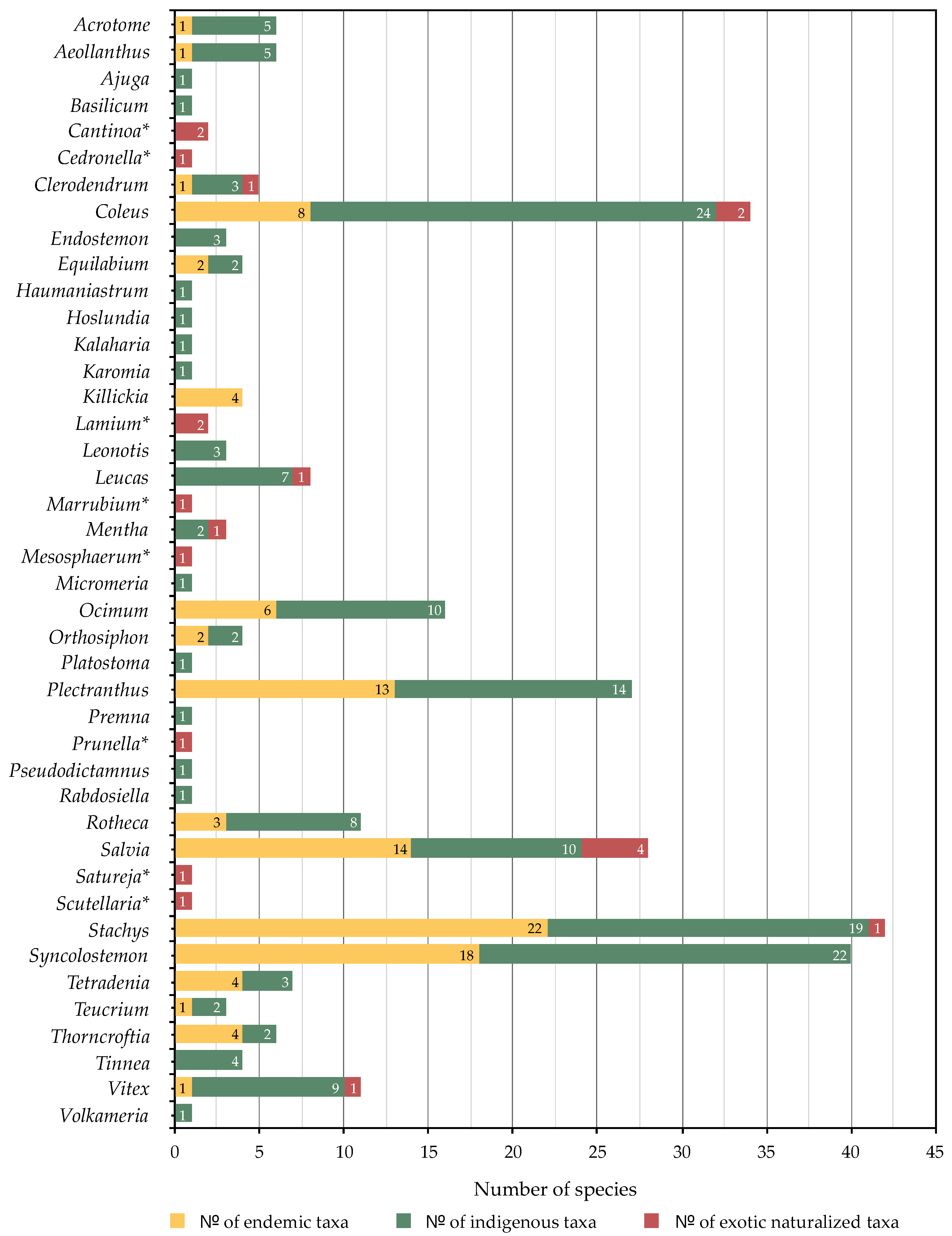
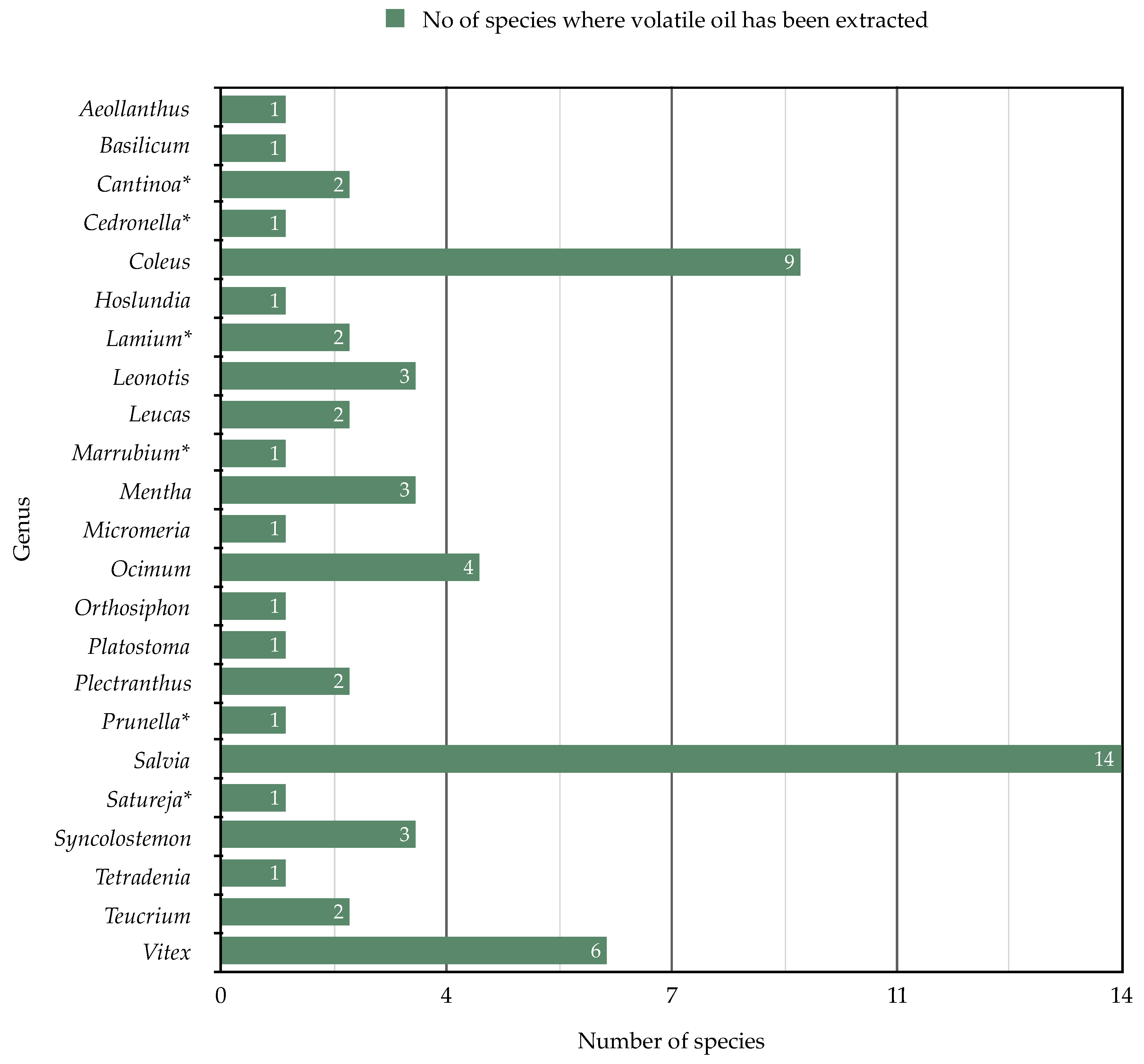
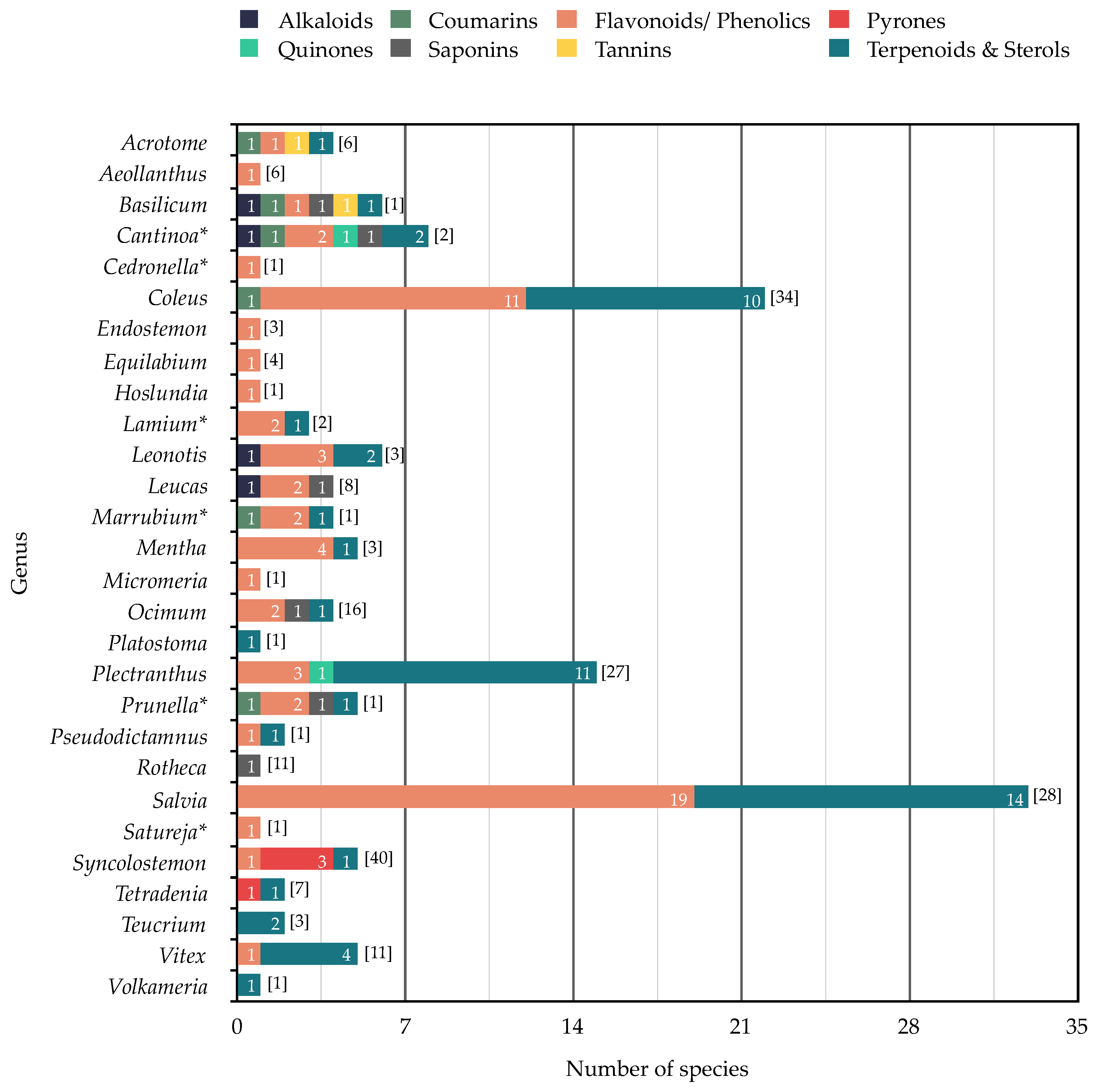
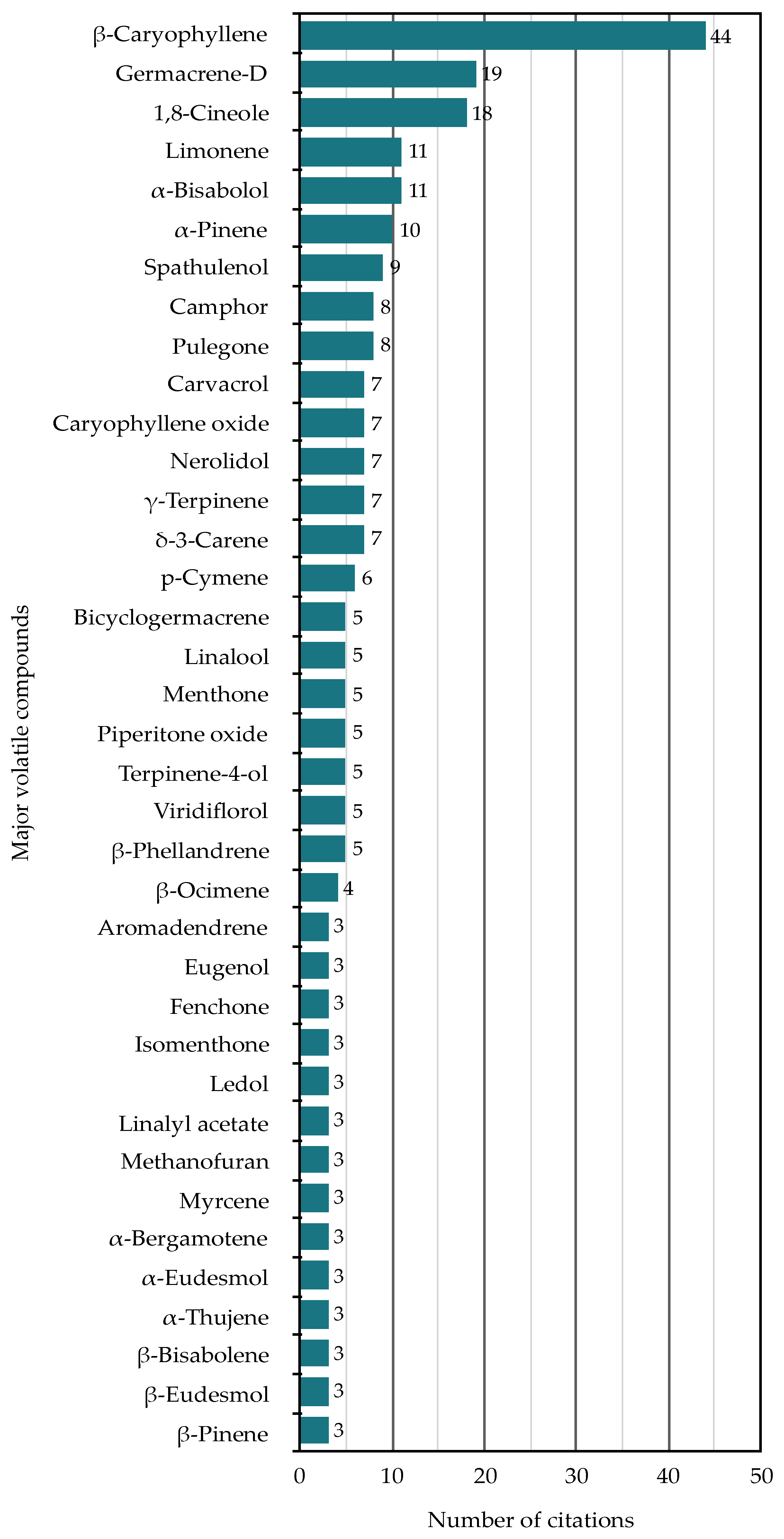
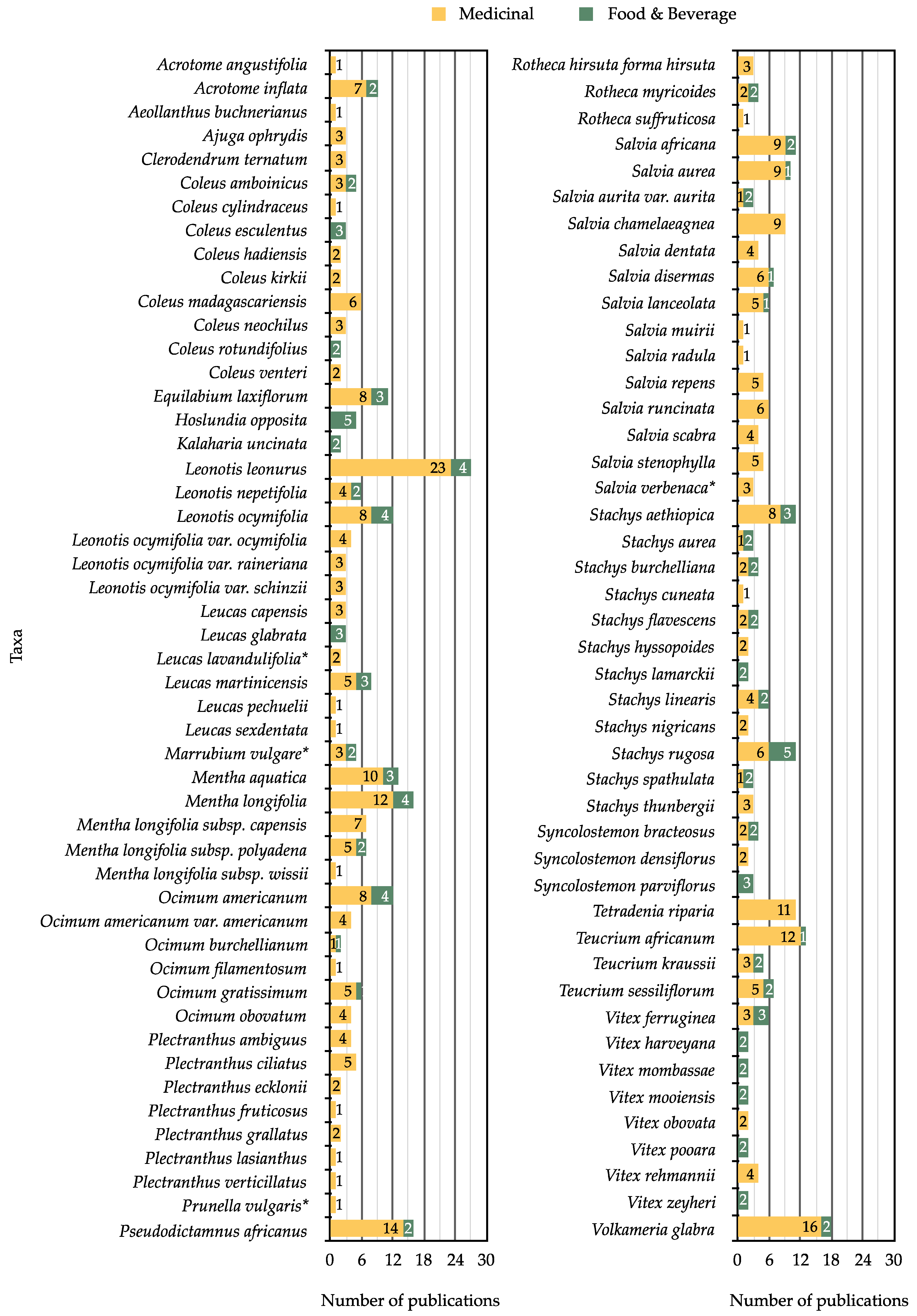
The Lamiaceae is undoubtedly an important plant family, having a rich history of use that spans the globe with many species being used in folk medicine and modern industries alike. Their ability to produce aromatic volatile oils has made them valuable sources of materials in the cosmetic, culinary, and pharmaceutical industries. A thorough account of the taxonomic diversity, chemistry and ethnobotany is lacking for southern African Lamiaceae, which feature some of the region’s most notable medicinal and edible plant species. We provide a comprehensive insight into the Lamiaceae flora of southern Africa, comprising 297 species in 42 genera, 105 of which are endemic to the subcontinent. We further explore the medicinal and traditional uses, where all genera with documented uses are covered for the region. A broad review of the chemistry of southern African Lamiaceae is presented, noting that only 101 species (34%) have been investigated chemically (either their volatile oils or phytochemical characterization of secondary metabolites), thus presenting many and varied opportunities for further studies. The main aim of our study was therefore to present an up-to-date account of the botany, chemistry and traditional uses of the family in southern Africa, and to identify obvious knowledge gaps.
Keywords: Lamiaceae; diversity; southern Africa; volatile oils; essential oils; phytochemistry; traditional medicines; useful plants; medicinal plants; food plants Lamiaceae; diversity; southern Africa; volatile oils; essential oils; phytochemistry; traditional medicines; useful plants; medicinal plants; food plants