Article

Modification of Sensory Expression of 3-Isobutyl-2-methoxypyrazine in Wines through Blending Technique


1
Center for Viticulture & Enology, College of Food Science and Nutritional Engineering, China Agricultural University, Beijing 100083, China
2
Key Laboratory of Viticulture and Enology, Ministry of Agriculture and Rural Affairs, Beijing 100083, China
3
Xinjiang CITIC Guoan Wine Co. Ltd., Manasi, Changji 832200, China
*
Author to whom correspondence should be addressed.
Molecules 2021, 26(11), 3172; https://doi.org/10.3390/molecules26113172

Submission received: 12 April 2021 / Revised: 21 May 2021 / Accepted: 21 May 2021 / Published: 26 May 2021
(This article belongs to the Special Issue Wine Chemistry: The Key behind Wine Quality—2nd Edition)

Abstract

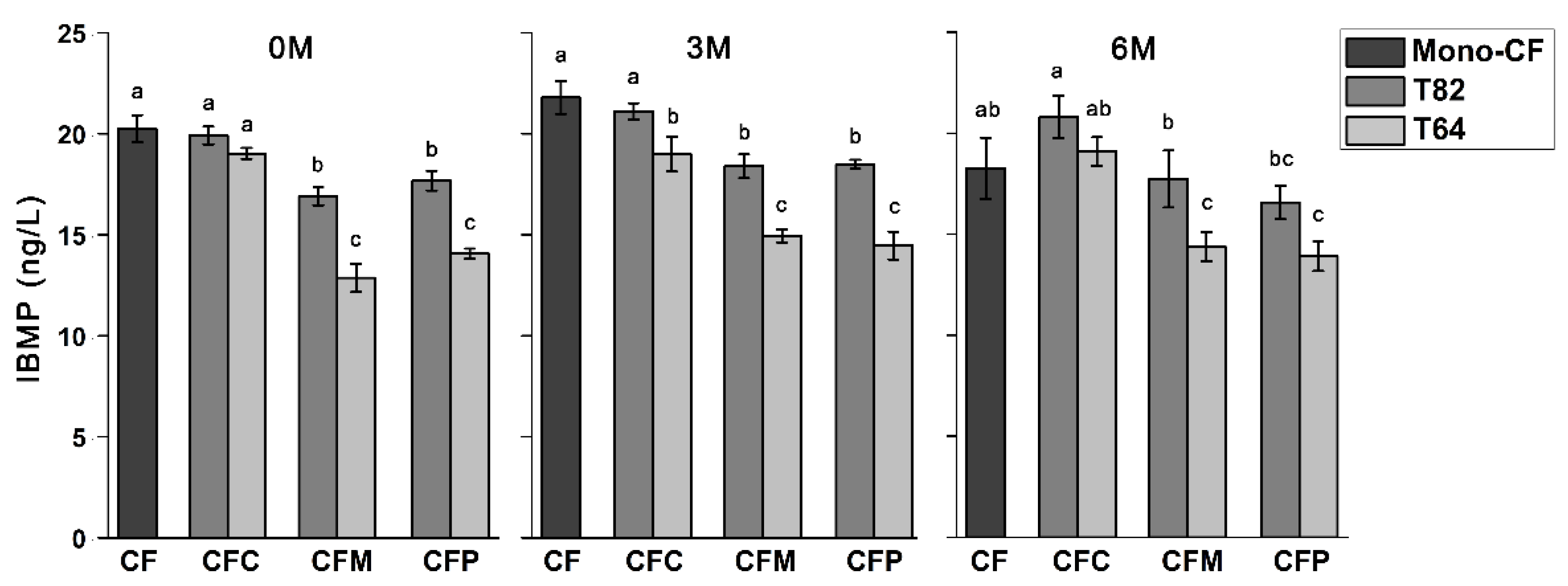
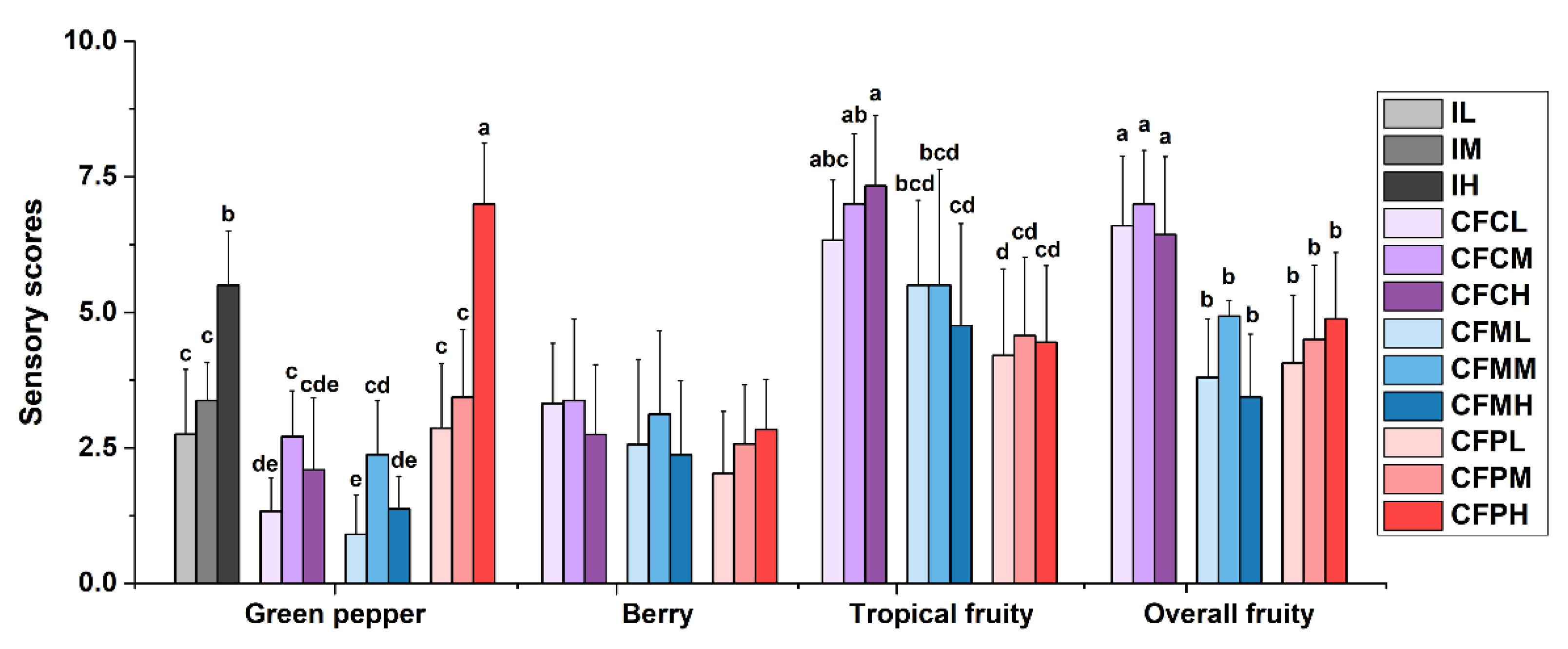
Sensory interactions exist between 3-alkyl-2-methoxypyrazines and various volatiles in wines. In this study, the binary blending of Cabernet Franc wines containing high levels of MPs and three monovarietal red wines with two proportions was conducted after fermentation. Volatiles were detected by gas chromatography-mass spectrometry (GC-MS), and wines were evaluated by quantitative descriptive analysis at three-month intervals during six-month bottle aging. Results showed blending wines exhibited lower intensity of ‘green pepper’, especially CFC samples blended by Cabernet Sauvignon wines with an even higher concentration of 3-isobutyl-2-methoxypyrazine (IBMP). Based on Pearson correlation analysis, acetates could promote the expression of ‘tropical fruity’ and suppress ‘green pepper’ caused by IBMP. Positive correlation was observed among ‘green pepper’, ‘herbaceous’, and ‘berry’. The concentration balance between IBMP and other volatiles associated with ‘green pepper’ and fruity notes was further investigated through sensory experiments in aroma reconstitution. Higher pleasant fruity perception was obtained with the concentration proportion of 1-hexanol (1000 μg/L), isoamyl acetate (550 μg/L), ethyl hexanoate (400 μg/L), and ethyl octanoate (900 μg/L) as in CFC samples. Blending wines with proper concentration of those volatiles would be efficient to weaken ‘green pepper’ and highlight fruity notes, which provided scientific theory on sensory modification of IBMP through blending technique.
Keywords: 3-isobutyl-2-methoxypyrazines; volatile compounds; GC-MS; wine blending; bottle aging; sensory interaction; aroma modification 3-isobutyl-2-methoxypyrazines; volatile compounds; GC-MS; wine blending; bottle aging; sensory interaction; aroma modification