Article

Subcritical Water Extraction of Valuable Metals from Spent Lithium-Ion Batteries
Department of Chemical Engineering, National Taiwan University of Science and Technology, 43 Keelung Road, Section 4, Taipei 106, Taiwan
*
Author to whom correspondence should be addressed.
Molecules 2020, 25(9), 2166; https://doi.org/10.3390/molecules25092166

Submission received: 22 April 2020 / Revised: 29 April 2020 / Accepted: 30 April 2020 / Published: 6 May 2020
(This article belongs to the Special Issue Subcritical Water Extraction of Bioactive Compounds)

Abstract

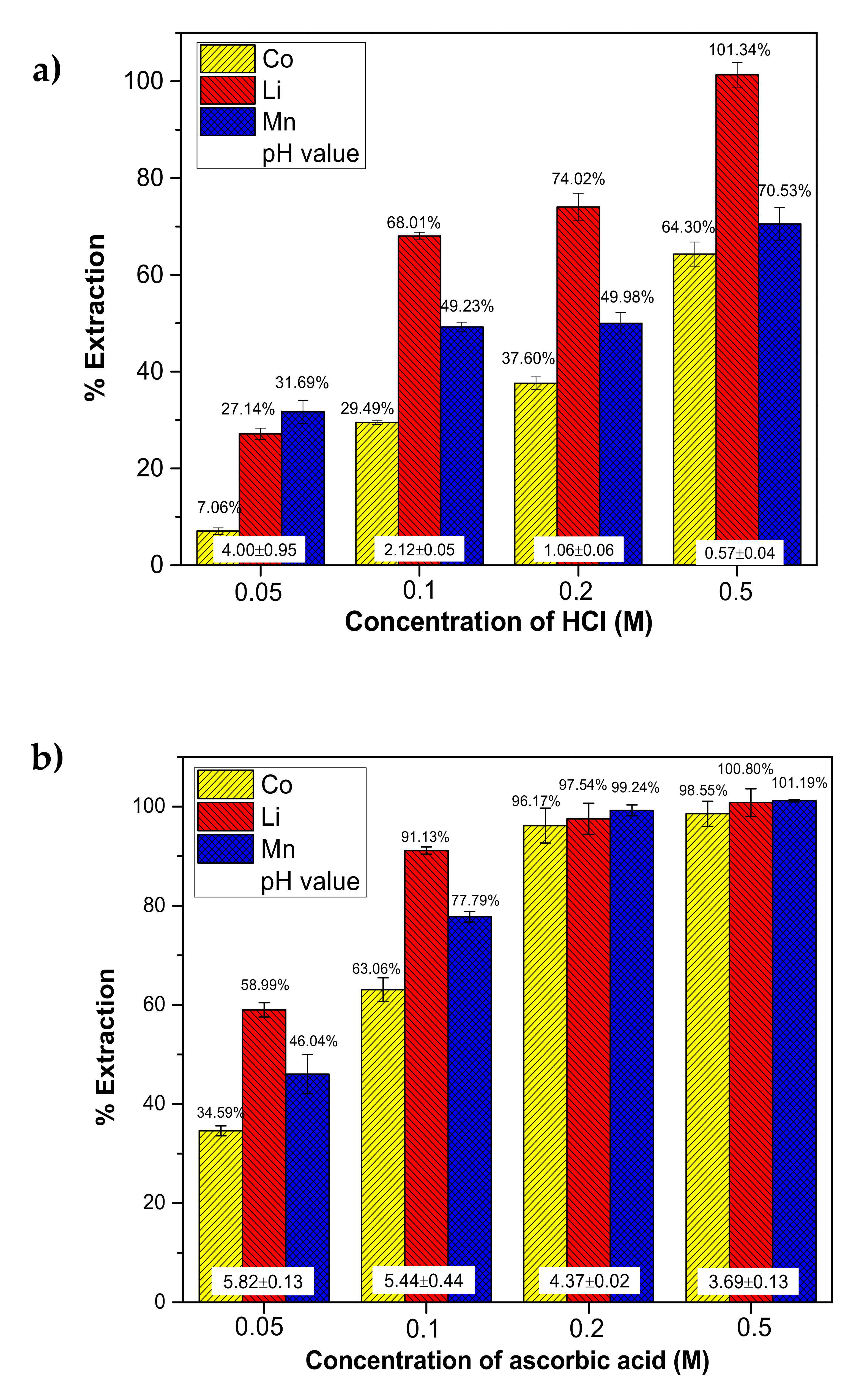
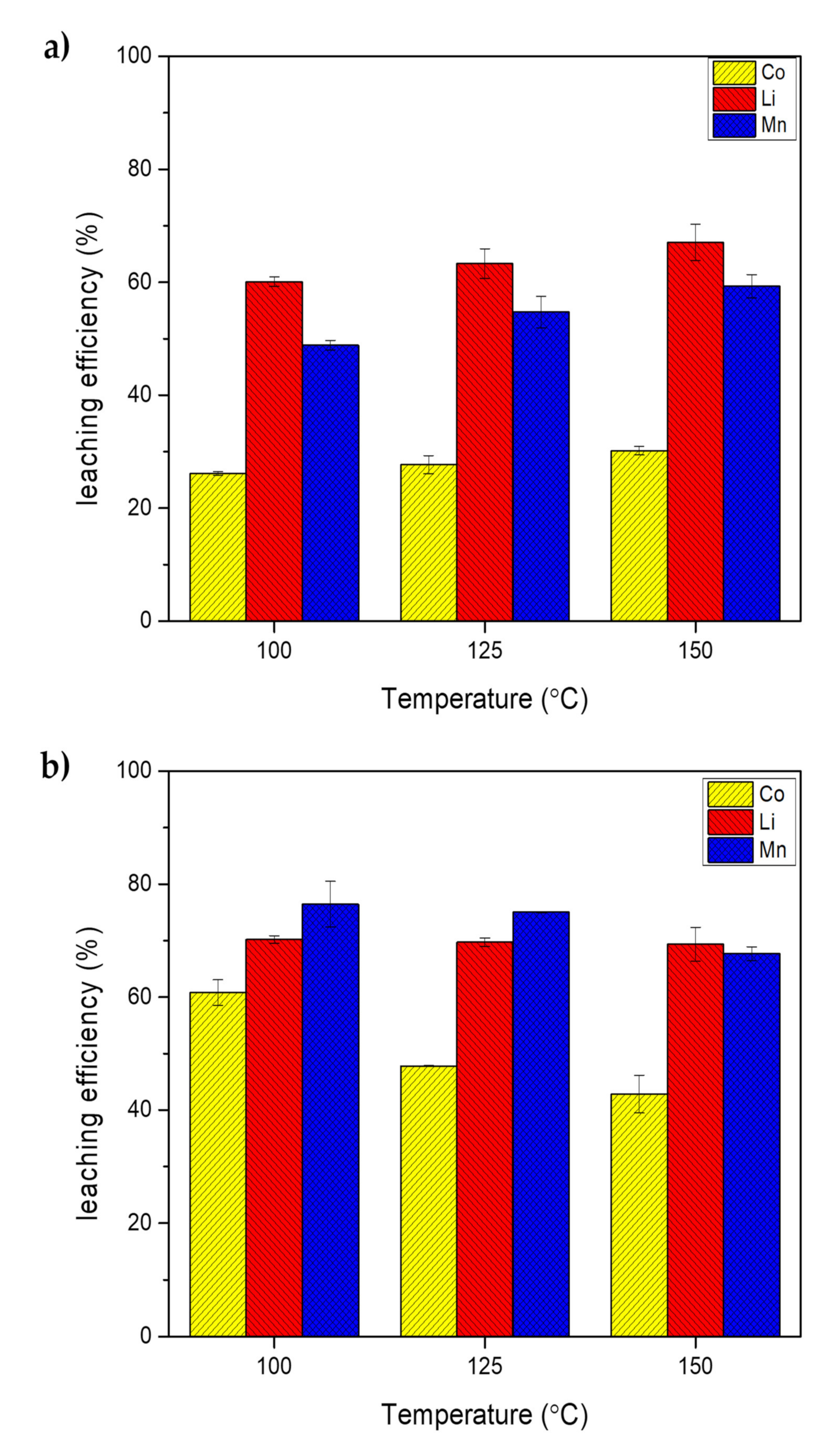
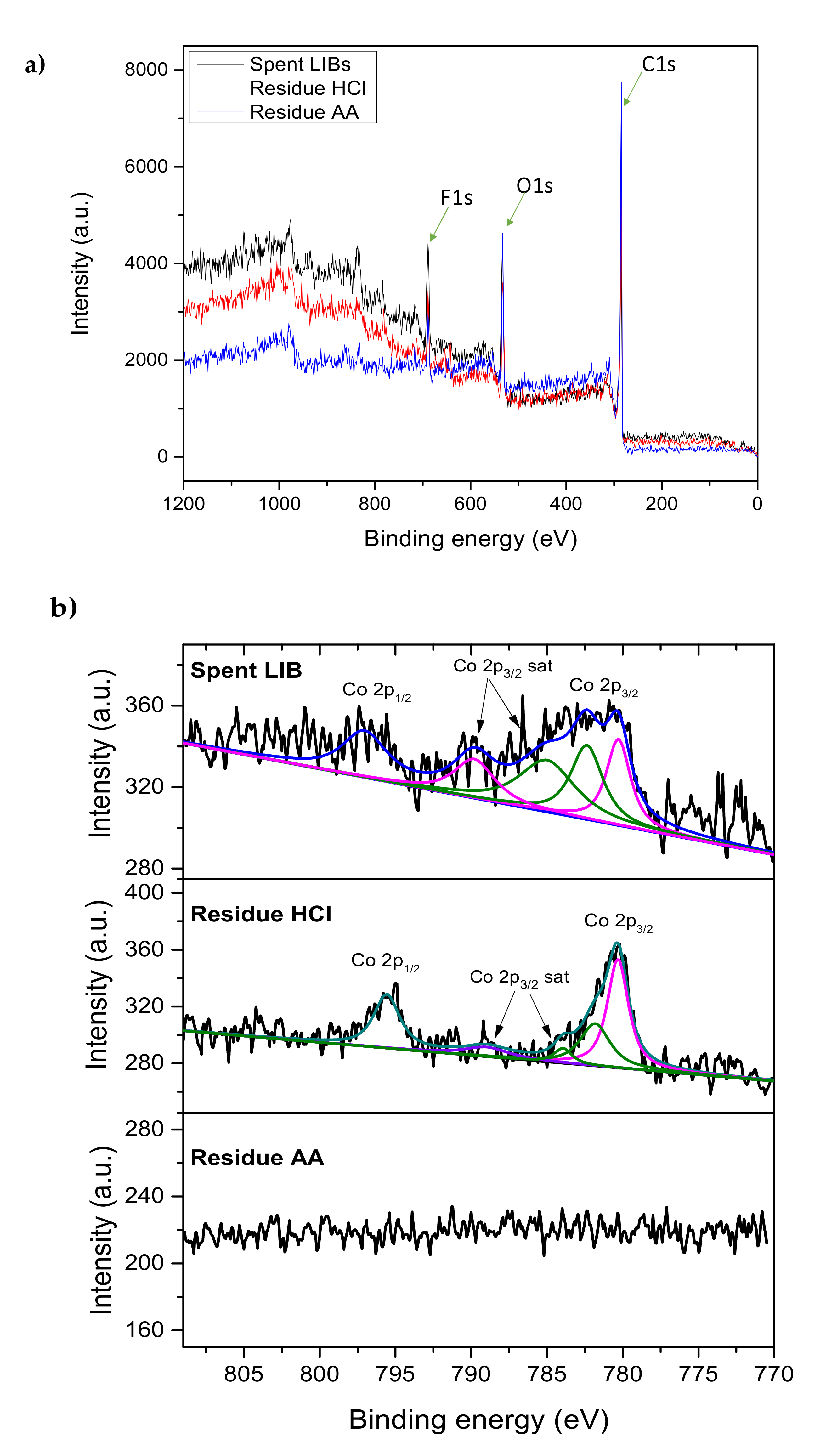
The leaching of valuable metals (Co, Li, and Mn) from spent lithium-ion batteries (LIBs) was studied using subcritical water extraction (SWE). Two types of leaching agents, hydrochloric acid (HCl) and ascorbic acid, were used, and the effects of acid concentration and temperature were investigated. Leaching efficiency of metals increased with increasing acid concentration and temperature. Ascorbic acid performed better than HCl, which was attributed to ascorbic acid’s dual functions as an acidic leaching agent and a reducing agent that facilitates leaching reactions, while HCl mainly provides acidity. The chemical analysis of leaching residue by X-ray photoelectron spectroscopy (XPS) revealed that Co(III) oxide could be totally leached out in ascorbic acid but not in HCl. More than 95% of Co, Li, and Mn were leached out from spent LIBs’ cathode powder by SWE using 0.2 M of ascorbic acid within 30 min at 100 °C, initial pressure of 10 bar, and solid-to-liquid ratio of 10 g/L. The application of SWE with a mild concentration of ascorbic acid at 100 °C could be an alternative process for the recovery of valuable metal in spent LIBs. The process has the advantages of rapid reaction rate and energy efficiency that may benefit development of a circular economy.
Keywords: ascorbic acid; hydrochloric acid (HCl); leaching; Li-ion batteries (LIBs); subcritical water extraction (SWE); waste ascorbic acid; hydrochloric acid (HCl); leaching; Li-ion batteries (LIBs); subcritical water extraction (SWE); waste