

Microplastics and Human Health

A topical collection in Microplastics (ISSN 2673-8929).

Viewed by 717

Editors

Department of Chemical and Environmental Engineering, Technical University of Cartagena (UPCT), Paseo Alfonso XIII, s/n, 30202 Cartagena, Spain
Interests: microplastics in wastewater treatment plants; microplastics in human health; marine litter; biodegradation and weathering of microplastics; pollution monitoring
Special Issues, Collections and Topics in MDPI journals

E-Mail Website
Guest Editor
1. Department of Respiratory Medicine, Hospital General Universitario de Elche, Elche, Spain
2. Department of Medicine, Miguel Hernández University of Elche, Elche, Spain
Interests: microplastics and human health; environmental pollution and health; the health effects of climate change; respiratory diseases; occupational lung diseases

Topical Collection Information

Dear Colleagues,

Microplastics are a pressing global concern due to their pervasive presence in the environment and their documented entry into the human body. This Topic Collection focuses on advancing scientific understanding of microplastic exposure, toxicological pathways, and potential health consequences in humans. We welcome original research articles, reviews, communications, and opinion papers addressing the current distribution of microplastics across the food chain, and their ingestion and inhalation routes.

Special attention will be given to studies exploring the interaction of microplastics with physiological, biochemical, and clinical parameters, as well as investigations on the role of lifestyle factors and environmental exposure patterns in shaping individual microplastic burdens.

We also encourage submissions on the behavior, degradation, transformation, and toxicity of microplastics within the human body, alongside novel analytical techniques to detect, quantify, and characterize microplastics in biological samples. Contributions involving forensic investigations and microplastics detected during autopsies are also of interest. This Collection aims to bring together multidisciplinary insights to clarify the potential health risks associated with environmental microplastic exposure and to support evidence-based public health policies.

Dr. Javier Bayo
Dr. Carlos Baeza
Guest Editors

Manuscript Submission Information

Manuscripts should be submitted online at www.mdpi.com by registering and logging in to this website. Once you are registered, click here to go to the submission form. All submissions that pass pre-check are peer-reviewed. Accepted papers will be published continuously in the journal (as soon as accepted) and will be listed together on the collection website. Research articles, review articles as well as short communications are invited. For planned papers, a title and short abstract (about 250 words) can be sent to the Editorial Office for assessment.

Submitted manuscripts should not have been published previously, nor be under consideration for publication elsewhere (except conference proceedings papers). All manuscripts are thoroughly refereed through a single-anonymized peer-review process. A guide for authors and other relevant information for submission of manuscripts is available on the Instructions for Authors page. Microplastics is an international peer-reviewed open access quarterly journal published by MDPI.

Please visit the Instructions for Authors page before submitting a manuscript. The Article Processing Charge (APC) for publication in this open access journal is 1200 CHF (Swiss Francs). Submitted papers should be well formatted and use good English. Authors may use MDPI's English editing service prior to publication or during author revisions.

Keywords

  • microplastic pollution
  • human exposure
  • internal dose
  • ingestion
  • inhalation
  • airborne microplastics
  • environmental exposure
  • quantitative assessment
  • human health impact
  • toxicity and transformation
  • microplastics in biological samples
  • forensic microplastic analysis

Published Papers (2 papers)

2026

20 pages, 354 KB  
Article
Concurrent Assessment of Micro- and Nanoplastics and Bisphenol A in Non-Dialysis Chronic Kidney Patients and Hemodialysis Patients: Results from a Cross-Sectional Human Biomonitoring Study Focusing on Sex-Related Patterns
by Maria Fiore, Lorenzo Lo Cicero, Eloise Pulvirenti, Luca Zanoli, Marco Palella, Federica Bivona, Chiara Timperanza, Maria Valentina Longo, Alfina Grasso, Antonio Cristaldi, Chiara Copat, Montse Marquès, Ana González-Ruiz, Paolo Maria Riccobene, Sabrina Carola Carroccio, Gea Oliveri Conti, Margherita Ferrante and Pasquale Mario Fatuzzo
Microplastics 2026, 5(3), 159; https://doi.org/10.3390/microplastics5030159 - 11 Aug 2026
Viewed by 79
Abstract
Patients with chronic kidney disease (CKD), particularly those receiving hemodialysis (HD), may be more vulnerable to exposure to micro- and nanoplastics (MNPs) and bisphenol A (BPA) because of impaired renal clearance and frequent contact to plastic-based medical devices. This study aimed to assess [...] Read more.
Patients with chronic kidney disease (CKD), particularly those receiving hemodialysis (HD), may be more vulnerable to exposure to micro- and nanoplastics (MNPs) and bisphenol A (BPA) because of impaired renal clearance and frequent contact to plastic-based medical devices. This study aimed to assess and compare the levels of blood MNPs and urinary BPA in HD patients, non-dialysis CKD patients, and healthy subjects with a focus on sex-related differences and the potential role of hemodialysis as an additional source of exposure. A cross-sectional human biomonitoring study was conducted. Blood and urine samples were collected to quantify BPA using gas chromatography–mass spectrometry (GC–MS) and MNPs using scanning electron microscopy coupled with an Energy-Dispersive X-ray Detector (SEM-EDX). Descriptive statistics included medians, interquartile ranges (IQRs), 95% confidence intervals, frequencies, and percentages. Blood MNP levels were higher in HD [9889 (4525–14,939) p/mL] and non-dialysis CKD patients [9234 (3354–15,429) p/mL] than in healthy subjects [5755 (2488–9042) p/mL]. Urinary MNP levels were also higher in non-dialysis CKD patients [1231 (0–8281) p/mL] than in healthy subjects [411 (0–1636) p/mL]. Urinary MNPs were smaller in non-dialysis CKD patients than in healthy subjects. In contrast, urinary BPA levels were lower in non-dialysis CKD patients [0.16 (0.12–0.16)] than in healthy subjects [0.98 (0.60–2.36)]. Sex-specific patterns were observed. Females had higher blood MNP levels than males among HD patients (median 9907 vs. 9063 p/mL) and healthy subjects (6627 vs. 4131 p/mL), whereas the opposite pattern was observed in non-dialysis CKD patients (10,083 vs. 7340 p/mL). Overall, these findings suggest an increased systemic burden of MNPs and altered BPA elimination in non-dialysis CKD and HD patients. The observed sex-specific patterns suggest that biological sex may contribute to differences in internal exposure within this vulnerable population. Full article
15 pages, 7032 KB  
Article
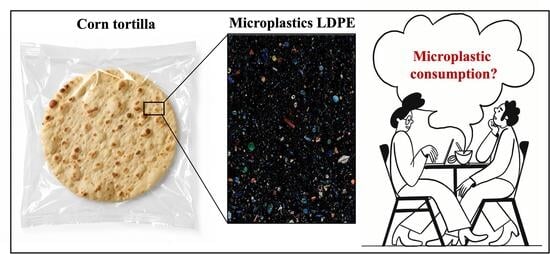
Identification of Microplastics in Corn Tortillas in Morelos, Central Mexico
by Israel Mejía-Vigueras, Martha Lucia Arenas-Ocampo, Antonio R. Jiménez-Aparicio, Francisco Rodríguez-González, Daniel Tapia-Maruri, Argelia López-Bonilla and Amalinali Portillo-Ayala
Microplastics 2026, 5(3), 147; https://doi.org/10.3390/microplastics5030147 - 24 Jul 2026
Viewed by 262
Abstract
Tortillas are an essential food in Mexico, and they are usually packaged in low-density polyethylene (LDPE) bags, but these packages can release microplastics (MPs) into the food. On the other hand, MPs have been associated with conditions such as the release of toxic [...] Read more.
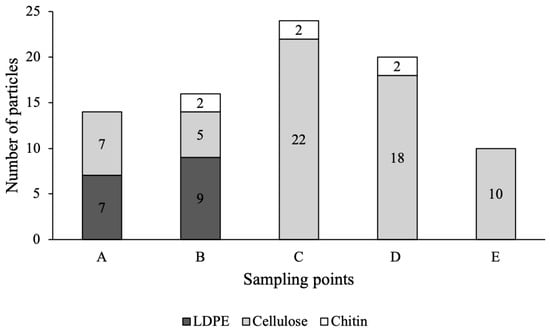
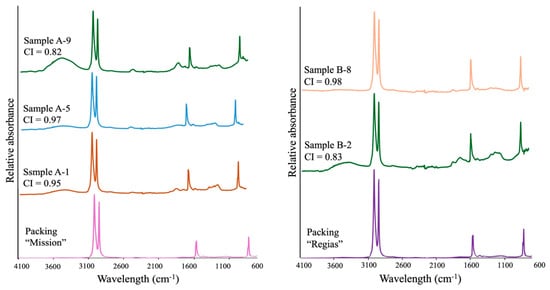
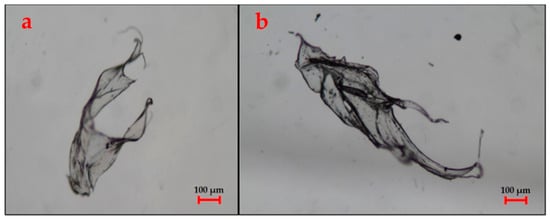
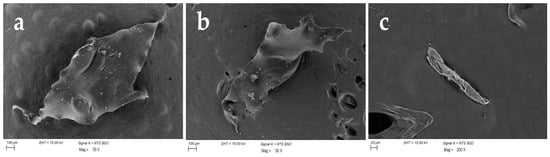
Tortillas are an essential food in Mexico, and they are usually packaged in low-density polyethylene (LDPE) bags, but these packages can release microplastics (MPs) into the food. On the other hand, MPs have been associated with conditions such as the release of toxic substances, damage to mitochondrial membranes, and the generation of oxidative stress and inflammation, among others. Currently, there are no studies on the presence of MPs in corn tortillas, so the objective of this work was to study samples of tortillas acquired at five points of sale in central Mexico, namely, supermarkets (A and B) and tortilla shops (C, D, and E), as well as to evaluate the presence of MPs and their identification by Fourier-transform infrared spectroscopy (FTIR), optical microscopy, and scanning electron microscopy (SEM). In addition, an abundance interval and an estimate of the consumption rate were established considering the available information on per capita consumption of tortillas in Mexico. The results show that the samples of tortillas purchased at sampling points A and B presented MPs in the form of films with an abundance between 155.56 and 177.78 MPs/kg of tortilla; however, no microplastics were identified in the samples of tortillas acquired at sites C, D, and E. The analysis suggests that the identified MPs may have come from the plastic bags in which tortillas are packaged. In addition, it was established that the daily consumption rate of microplastics per person is 2.48 to 5.15 pieces. Full article
Show Figures

Graphical abstract

Back to TopTop