Article

Pilot-Scale Evaluation of Coral Reef Media for pH Buffering and Nutrient Supply in Koi-Lettuce Aquaponics

Department of Food Biotechnology and Environmental Science, Kangwon National University, 192-1 Hyoja-dong, Chuncheon-si 24341, Republic of Korea
*
Author to whom correspondence should be addressed.
Water 2026, 18(4), 459; https://doi.org/10.3390/w18040459
Submission received: 16 January 2026 / Revised: 2 February 2026 / Accepted: 7 February 2026 / Published: 10 February 2026
(This article belongs to the Special Issue Aquaculture, Fisheries, Ecology and Environment)

Abstract

Nutrient deficiencies and pH fluctuations are among the major issues identified in most aquaponic studies. Studies have mainly used chemical fertilizers and pH adjusters to resolve these issues; however, a sustainable and environment friendly permanent solution is needed. In this novel pilot study, we incorporated coral carbonate media into a koi carp-lettuce aquaponic system-A (APA) to provide a continuous release of Ca2+, Mg2+, Fe, and P and to support accumulation in plant and fish biomass while maintaining neutral pH, in order to compare with the control aquaponic-B (APB). In APA, mean FCR, SGR, and PER were recorded as 1.57 kg feed·kg fish−1, 0.58%·day−1, and 1.77 kg feed·kg fish−1 protein, respectively, in comparison with the control APB which showed mean FCR, SGR, and PER as 3.45 kg feed·kg fish−1, 0.27%·day−1, and 0.80 kg fish·kg protein−1, respectively. Also, the mean plant mass obtained during this 28-day study was 5.28 and 4.40 kg with a fish weight gain of 0.51 and 0.22 kg for APA and APB, respectively. In this pilot-scale study (n = 2 independent systems per treatment), the observed plant and fish biomass in APA were 20.9% and 10.1% higher respectively than APB; these values show descriptive differences observed in this study. Nutrient analysis was found to show higher release and accumulation of key nutrients in APA. This study examined a low-chemical, sustainable approach for aquaponics by using reusable coral carbonate media to maintain neutral pH and to improve nutrient availability and productivity.

1. Introduction

Tackling food security amidst rising population pressures, climate change, and land degradation poses a significant global challenge [1]. Aquaponics is an integrated food production system that combines aquaculture and hydroponics for improved productivity, and sustainability [2,3]. Aquaponics reduces water consumption, minimizes the discharge of nutrient rich wastewater, and produces both fish and plants simultaneously [4]. Irrespective of being a productive and sustainable system, aquaponics often faces some constraints of nutrient imbalances, pH instability, and frequent reliance on chemical supplementations which ultimately impact on the system performance and sustainability [2,5]. A major limitation in aquaponics is the essential nutrient deficiency which hinders fish and plant growth. Among the macro- and micronutrients are calcium (Ca2+), magnesium (Mg2+), iron (Fe), and phosphorus (P), etc. [5,6]. The aquaponic main nutrient source is through fish feed [7]; however, plants require a high availability of nutrients especially Ca2+, Mg2+, and Fe [2,5,8,9] which are insufficiently available. Numerous studies have discussed Fe, Ca2+, Mg2+ insufficiencies and limited P availability as the key reason for limited plant and fish growth [10,11,12,13,14]. These challenges stem from inadequate nutrient management strategies and a low feed conversion ratio in the species being cultivated [8,15]. To resolve these constraints, most aquaponic operations rely on chemical additions [16,17].
Equally critical is pH stability, which regulates nutrient solubility and microbial performance. pH fluctuations in aquaponic systems are very crucial for system productivity. pH is the central parameter for all three biological components of the aquaponic system [18]. Oxidation of ammonia (NH4+–N) results in release of hydrogen ions (H+) which results in a gradual drop of pH in the system which affects the efficiency of nutrient solubility [19,20]; fish and plant health, and also limits the nitrification process [11,21]; resulting in overall inefficiency of the system. Therefore, most aquaponic operations require regular addition of alkaline chemicals to adjust the system pH [15,16,22]. These alkaline chemical additions (KOH, Ca(OH)2, dolomite, or carbonate salts) usually result in an imbalance of nutrients, raise the overall system cost, and affect the sustainability of the system [23,24,25].
An emerging approach is to use naturally available carbonate sources which can fulfill nutrient requirement along with pH neutrality [26,27]. In this study, we attempted to incorporate coral carbonate media material in the biofilter zone in a coupled aquaponic system to stabilize the system pH through gradual dissolution of carbonates to support nitrification and nutrient availability, particularly Ca2+, Mg2+, Fe, and P, which can ultimately improve plant and fish biomass production compared to a controlled aquaponic system without coral carbonate media addition. This first of its kind pilot-scale study focused on the feasibility and overall performance of an aquaponic system with coral carbonate media incorporation (APA) in comparison to a conventional control system (APB). We aimed to evaluate whether coral carbonate media can help in keeping the pH neutral through CaCO3/MgCO3 dissolution, without chemical buffering, and to quantify the release and distribution of mainly Ca2+ and Mg2+, as well as support the release and accumulation of Fe and P in the water, plants, fish, and sludge of the system. We compared the overall performance of both systems (APA vs. APB) in terms of fish and plant production.

2. Materials and Methods

2.1. System Design

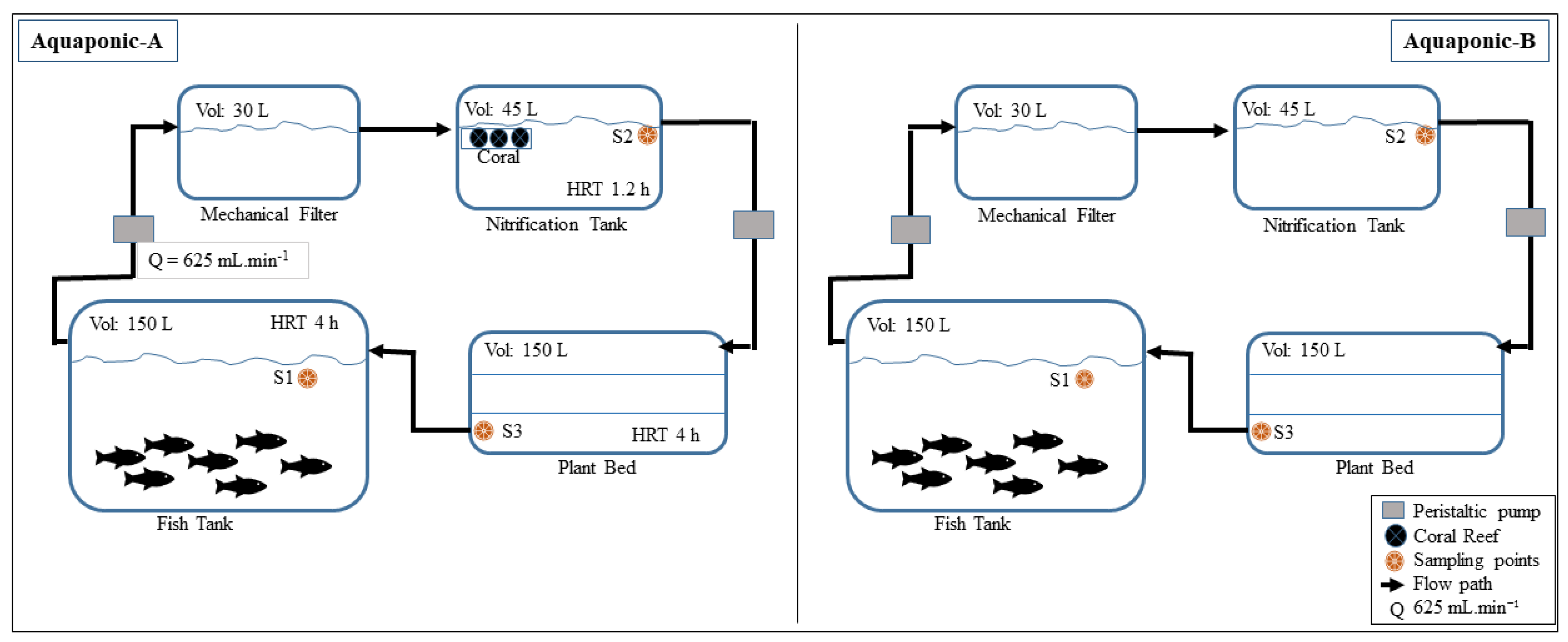
The pilot-scale comparative study spanning over two months (1 month acclimation + 28-day experiment) was carried out in a controlled environment at Kangwon National University in South Korea. A coupled aquaponic system, utilizing koi fish (Cyprinus rubrofuscus var. koi) and lettuce (Lactuca sativa L. var. longifolia), was established with a fish tank (two independent replicate tanks per treatment) each having a volume of 150 L, a mechanical filter of 30 L, an aerobic (nitrification) tank of 45 L, and a deep water culture (DWC) plant grow bed of approximately 150 L (Figure 1). Chemical resistant (pH 3–11) polyurethane foam media (97.4% porosity) with a large effective surface area was used in the nitrification tank. Both systems were operated for approximately one month prior to the experimental period to allow for biofilter maturation, hydraulic stabilization, and fish acclimatization. The formal experimental period (Day 0) commenced with the introduction of plant saplings into the grow beds.
To evaluate the impact of incorporating coral carbonate media into the aquaponic system, two analogous systems were created. One system, which included coral carbonate media, was designated as APA, while the other as control, lacking these components, was referred to as APB (control). The water flow rate was established at 650 mL·min−1, resulting in a hydraulic retention time (HRT) of 4 h for the fish tank to ensure sufficient water turnover, sustainable electricity consumption, enough time for nitrification, and to avoid turbidity accumulation. Air stones were introduced into both the fish tank and the aerobic tank to ensure adequate oxygen levels (DO > 6 mg·L−1) for the fish and nitrifying bacteria. No water was intentionally discharged or replaced during the study except for water replenishment to balance water loss due to evaporation and sample collections, etc.
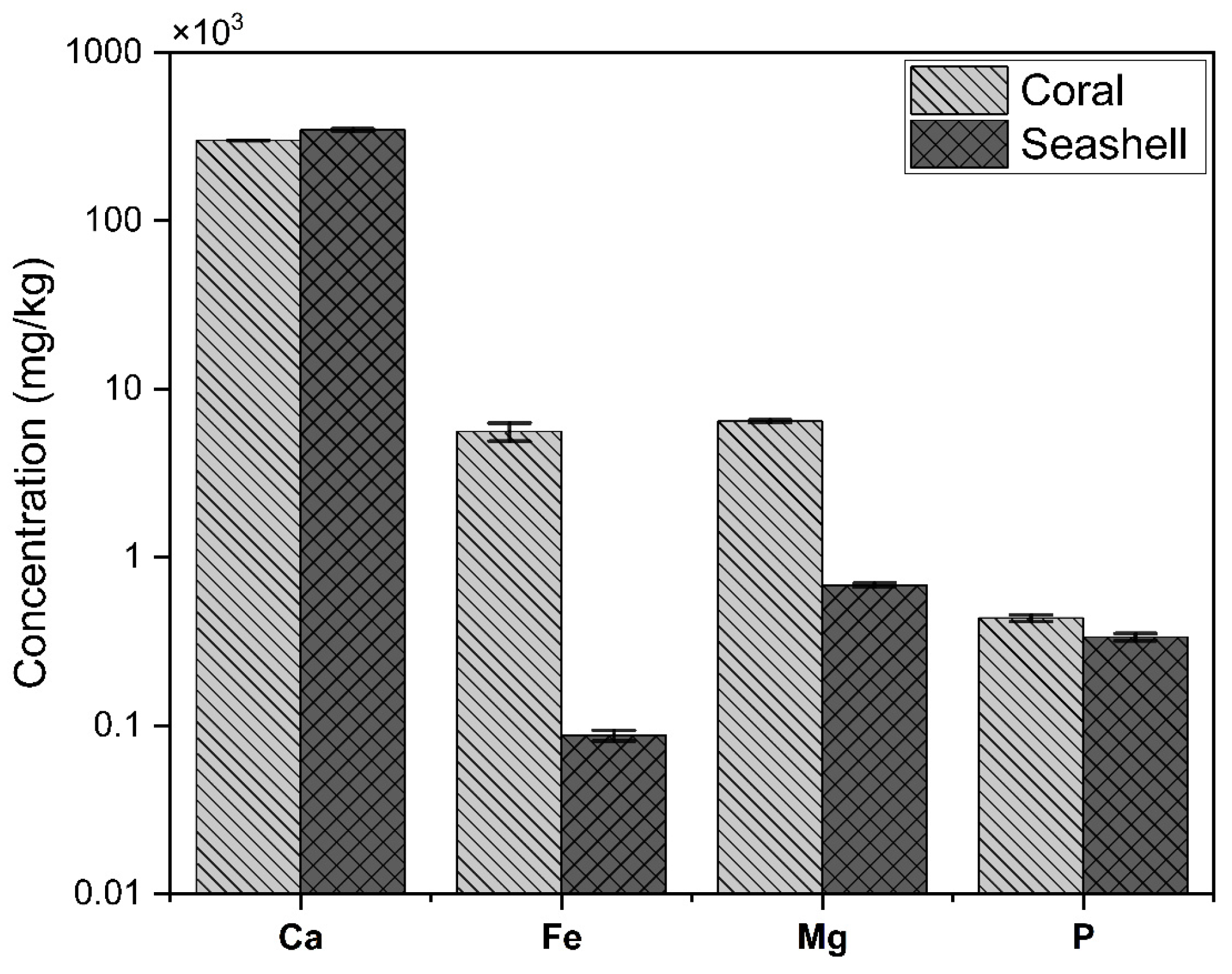
Our research was centered on a coupled aquaponic system where water circulates from the fish tank to the mechanical filter and is then pumped to the nitrification tank. In the nitrification tank, we incorporated coral carbonate media for the release and transportation of Ca2+ and Mg2+ as well as to support the release and accumulation of Fe, SRP, and other essential nutrients to the plant bed. ICP analysis has shown favorable trends of coral carbonate media containing substantial amounts of Ca2+, Mg2+, Fe, and SRP, (Figure 2) which can be gradually released and accumulated in the aquaponic system to meet nutrient demands while also regulating the pH of the water.

2.2. Fish and Plant Stocking

Initially, lettuce seeds were planted in growing trays, and after a period of 3 to 4 weeks, when the seedlings reached a size of 6 leaves per plant (with an average leaf length of 5.5 cm) having initial fresh weight around 2–3 g, 84 saplings (Table 1) were transferred to the hydroponic (DWC) systems of both APA and APB after removing the soil from their roots, utilizing foam plugs. The hydroponic to fish tank volume ratio was kept at 1:1 [6,28]; however, the plant growth area (hydroponic) to fish tank volume ratio was 18.94 m2·m−3 to provide supportive nutrient uptake capacity, prevention of nitrate accumulation, and maintain N and P mass balance. The photoperiod consisted of 12 h of natural sunlight from 7 a.m. to 7 p.m., supplemented with LED lighting.
The initial fish stocking density was around 18.9 kg·m−3 [21,24,29,30]; this range of stocking density was selected as it is widely reported and it allows stable nitrification, acceptable oxygen demand, and avoids chronic ammonia stress. Fish were provided with commercial feed daily at 9:00 a.m. and 6:00 p.m., amounting to a total of 1% of their body weight. Tap water (pH 6.45, NH4+–N < 0.05 mg·L−1, NO2–N < 0.02 mg·L−1, NO3–N < 0.91 mg·L−1) was used in the system and the temperature was controlled at around 25 °C by adding heaters. The dry weight-based composition of fish feed is detailed in Table 2.
Fish growth was analyzed by measuring fish weight at Day 0 and Day 28 to determine the weight gain, feed conversion ratio (FCR), specific growth rate (SGR), and protein efficiency ratio (PER). Plant growth was analyzed by measuring plant weight, leaf length and width, number of leaves, root length, and the SPAD chlorophyll index. Leaf chlorophyll was measured using a portable SPAD meter (SPAD 502), Konica Minolta, Japan. Fifteen plants for each replicate system were randomly selected, three healthy leaves of each plant were analyzed, and three measurements at different positions for each leaf were taken and averaged to obtain a representative SPAD value per plant.

2.3. pH Control

In APB, the pH level significantly decreased due to nitrification, prompting the addition of KOH to regulate the pH whenever it dropped below 5.5, as the use of NaOH is not advisable [16,31,32]. The addition of KOH was not at regular intervals but whenever required based on the pH drop. The addition of Ca(OH)2 was not feasible as our primary focus was on the release of Ca2+ from the coral carbonate media. It is important to note that the introduction of 3M KOH into the APB system resulted in an increased concentration of K+, which is a vital nutrient for plant growth. As KOH increases the pH while providing K+, it could have confounded the comparison by improving plant growth through K+ nutrition; therefore, to equalize K+ concentration in both systems (APA and APB), an equimolar amount of KCl was added to APA whenever KOH was dosed in APB thereby equalizing the K+ loading in both systems.

2.4. Coral Carbonate Media Addition and Characterization

Commercially processed coral carbonate media, (3–5 mm) granules size, were purchased from Mimineaqua, Incheon, South Korea. These coral media are naturally present in the sea and collected and processed for further use for different fields. In the APA system, before use, coral carbonate media was rinsed with tap and distilled water only to remove loose debris and fine particles, oven dried, and then sieved to obtain a uniform particle size. From an ecological standpoint, the inclusion of this material reflects the potential for sustainable upcycling of naturally derived coral debris rather than active coral extraction, aligning with the broader objectives of eco-conscious aquaponic system design and nutrient recovery.
Both coral and seashells are recognized as excellent sources of Ca2+, Mg2+, and other nutrients, and they are commonly utilized for pH adjustments across various sectors. However, our choice to use coral over seashells was established by our analytical results (Figure 2) by crushing, rinsing with distilled water, oven drying until constant weight, and then analyzing by using ICP-OES followed by digestion, indicating that coral contains higher levels of Mg2+, Fe, and P. Although the concentration of Ca2+ was slightly higher in seashells, the difference was not substantial enough to warrant their use, leading us to select coral for our experiment (Figure 2). We only characterized seashells for composition comparison with coral carbonate media, and they were not tested in this experiment. In this study, 2 kg (dry weight) of coral carbonate media was added to the nitrification tank (45 L) of the APA system. The coral media occupied around 2.3–2.6 L (5–6%) of the nitrification tank. Media was contained in an inert mesh enclosure, perforated, and positioned downstream of the biofilter foam for continuous contact with water. These coral carbonate media can be reused continuously for longer periods of time spanning up to several months.

2.5. Analysis

Water, coral, fish, plant, and sludge analysis were conducted to evaluate nutrient release in water and uptake by fish and plants. Sludge analysis was done to check nutrient precipitation. Sludge samples were collected from the settled sludge from the mechanical filter at the end of the experiment, representing final accumulated sludge.

2.6. Water Quality

Measurements of dissolved oxygen (DO), pH, temperature, and turbidity were conducted in situ on a daily basis at approximately 1:00 pm. Water samples were collected on alternate days to analyze NH4+–N, NO2–N, NO3–N, Cl, PO43−–P, and SO42− using Ion Chromatography (Metrohm-861 Advanced Compact IC-Switzerland—Herisau, Switzerland). pH was analyzed using the pH meter S20 seven easy (Mettler Toledo, Mumbai, India) for DO, and for temperature we used a DO meter HI9147 (HANNA Instruments, Bedfordshire, UK). Additionally, weekly samples were taken for the analysis of Ca2+, Fe, Mg2+, P using ICP-OES (iCAP 6300 Thermo-Scientific—Cambridge, United Kingdom) to assess nutrient release in APA with coral carbonate media, compared to APB. Phosphorus in aquaponic systems is found in various operationally defined pools. Soluble reactive phosphorus (SRP), quantified in this context as dissolved orthophosphate (PO43−–P), signifies the fraction that is immediately reactive in water. Total phosphorus (TP) includes both the dissolved and particulate forms, which consist of phosphorus associated with the sludge and biomass. Bioavailable phosphorus denotes the portion of TP that can be utilized by plants and fish within the relevant time frames, extending beyond the dissolved SRP alone. In this research, SRP was directly quantified in the system’s water, while TP and bioavailable phosphorus (P) were assessed through a comprehensive analysis of the distribution of phosphorus in water, sludge, and biomass.

2.7. Fish, Plant, and Sludge Nutrient Analysis

Initial (Day 0) and final (Day 28) samples of fish, and plants were randomly collected, and sludge was collected at the end of the study from the mechanical filter to evaluate nutrient accumulation in both the APA and APB systems. The initial and final samples of fish, plants, and sludge were first dried at 105 °C in an oven to eliminate moisture until a constant mass was reached. The dried samples were crushed to 40 mesh size for further pretreatment, digestion, and then filtered through 0.45 µm membranes before ICP.

2.8. Data Analysis

Data are presented as descriptive summaries of two independent system-level replicates (n = 2). Because each treatment (APA and APB) was operated using fully independent replicate systems (n = 2), inferential statistical analyses were not performed. Variability was interpreted in terms of system–system variation, and results are discussed in terms of observed trends rather than statistically significant treatment effects. All analyses and graph constructions were performed using OriginPro 2025.

3. Results

We primarily focused on comparing fish and plant growth in APA with coral carbonate media against APB (control) without coral carbonate media. Various studies have indicated nutrient deficiencies in Ca2+, Fe, P, and Mg2+ [5,8,9,33,34,35]; so in our study we mainly focused on availability, release, and accumulation of Ca2+, Fe, Mg2+, and P in aquaponic systems [15].
In this research, APA with coral carbonate media consistently exhibited higher values than APB (control) system in terms of system productivity, overall for pH stability, nutrient release, fish and plant biomass production, nutrient accumulation, and sustainability. On the other hand, the APB system showed progressive acidification due to nitrification enforcing the use of 3M KOH addition to maintain the system operating condition. Data are presented in Table 1.

3.1. Fish Growth Performance

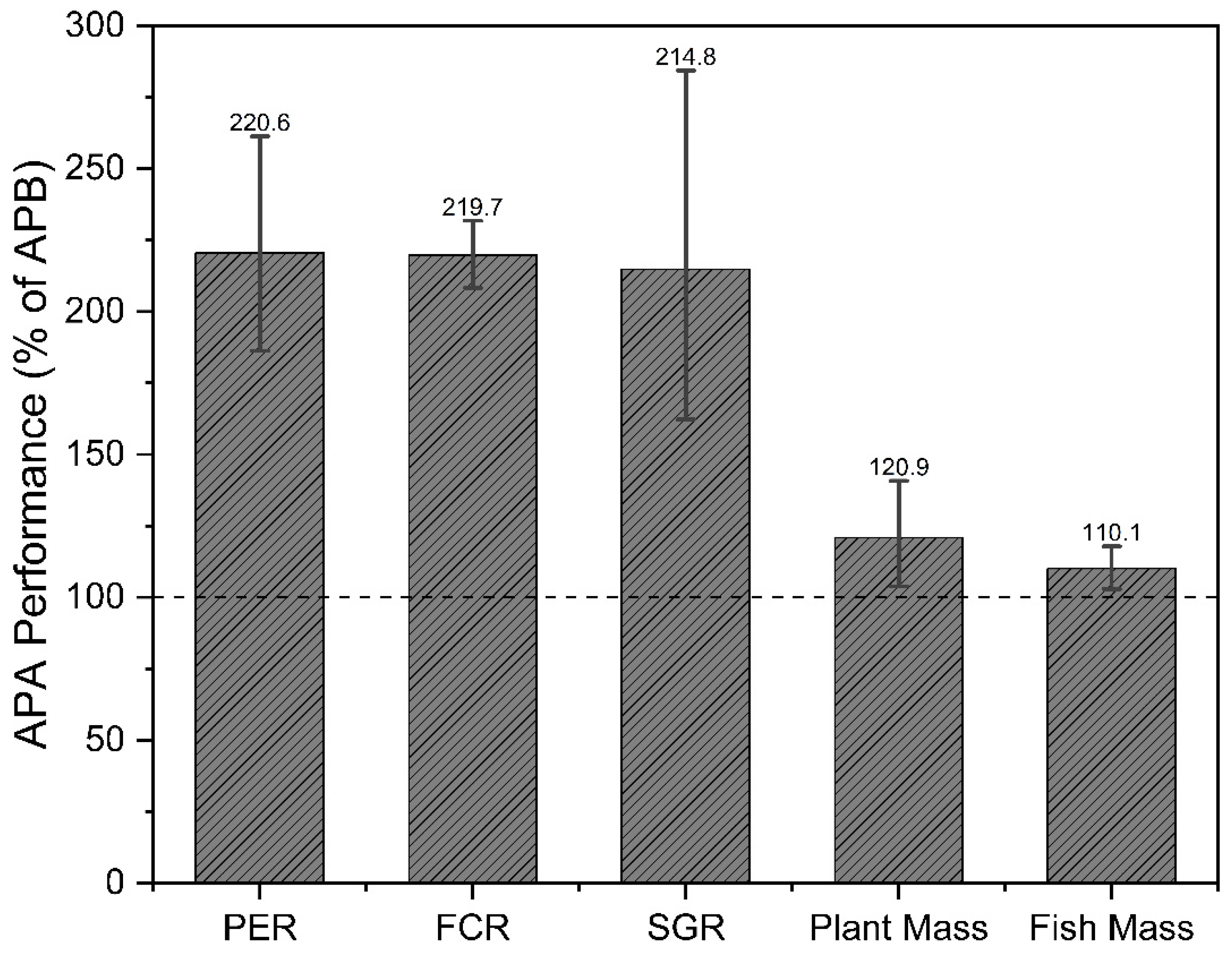
Fish production parameters displayed noticeable differences between APA and APB. APA fish gained mean 0.51 kg while APB fish gained 0.22 kg over the study period of 28 days. APA exhibited a lower Feed Conversion Ratio (FCR) of 1.57 vs. 3.45 and productive Specific Growth Rate (SGR) 0.58 vs. 0.27 compared with the APB system. The Protein Efficiency Ratio (PER) also showed higher values for APA (1.77 vs. 0.80) as presented in Figure 3. No fish mortality was reported in either system and DO (>6 mg·L−1) and temperature (25 ± 1 °C) remained stable during system operation.

3.2. Plant Production

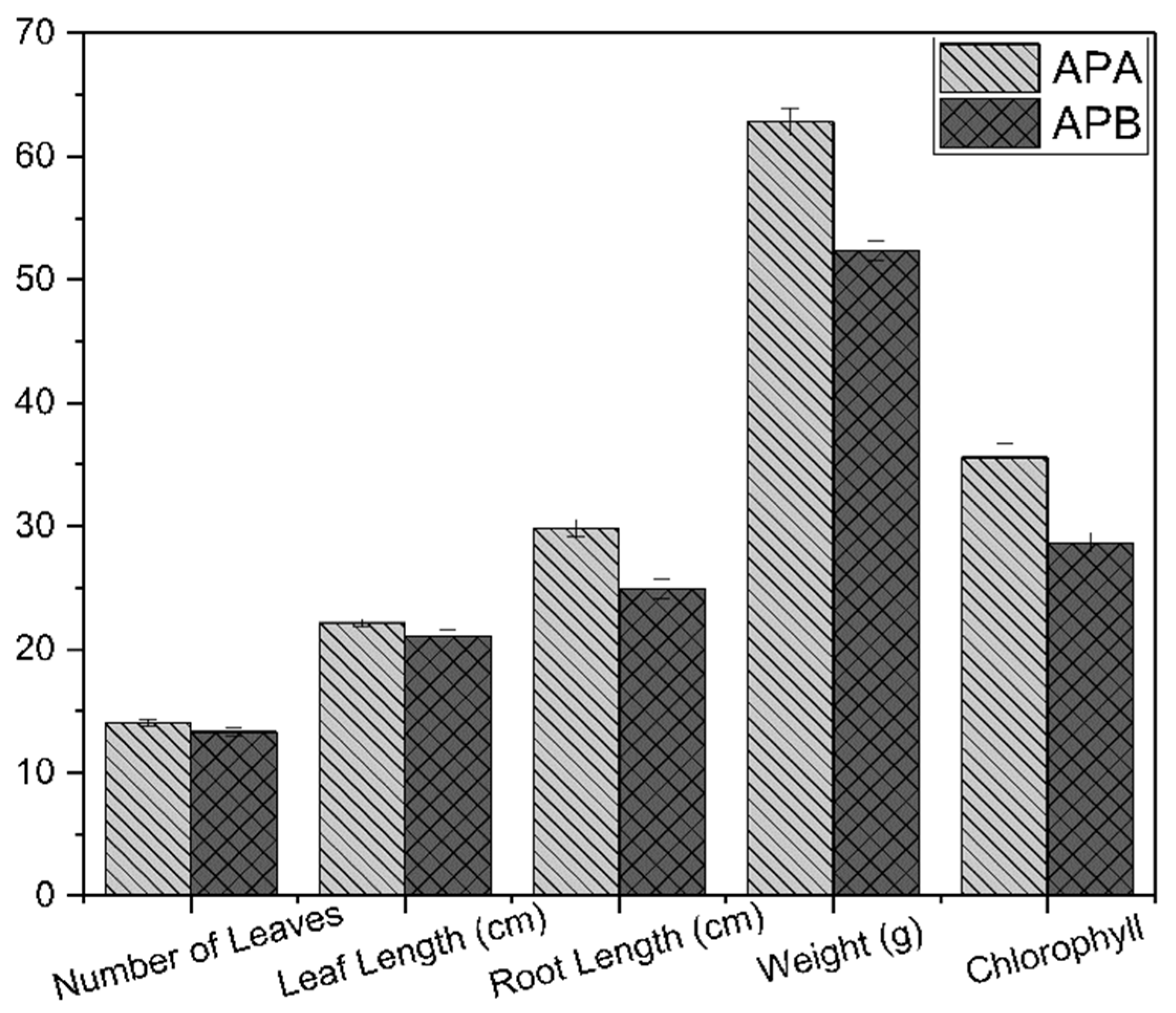
Plant productivity metrics were higher in APA than APB. Total fresh biomass obtained after 28 days of study was 5.28 kg in APA and 4.40 in APB corresponding to the average weight per plant 62.86 g for APA and 52.02 g for APB. Plant growth indicators of leaf length, number of leaves, root length, and chlorophyll content were higher in APA plants.

3.3. pH Dynamics

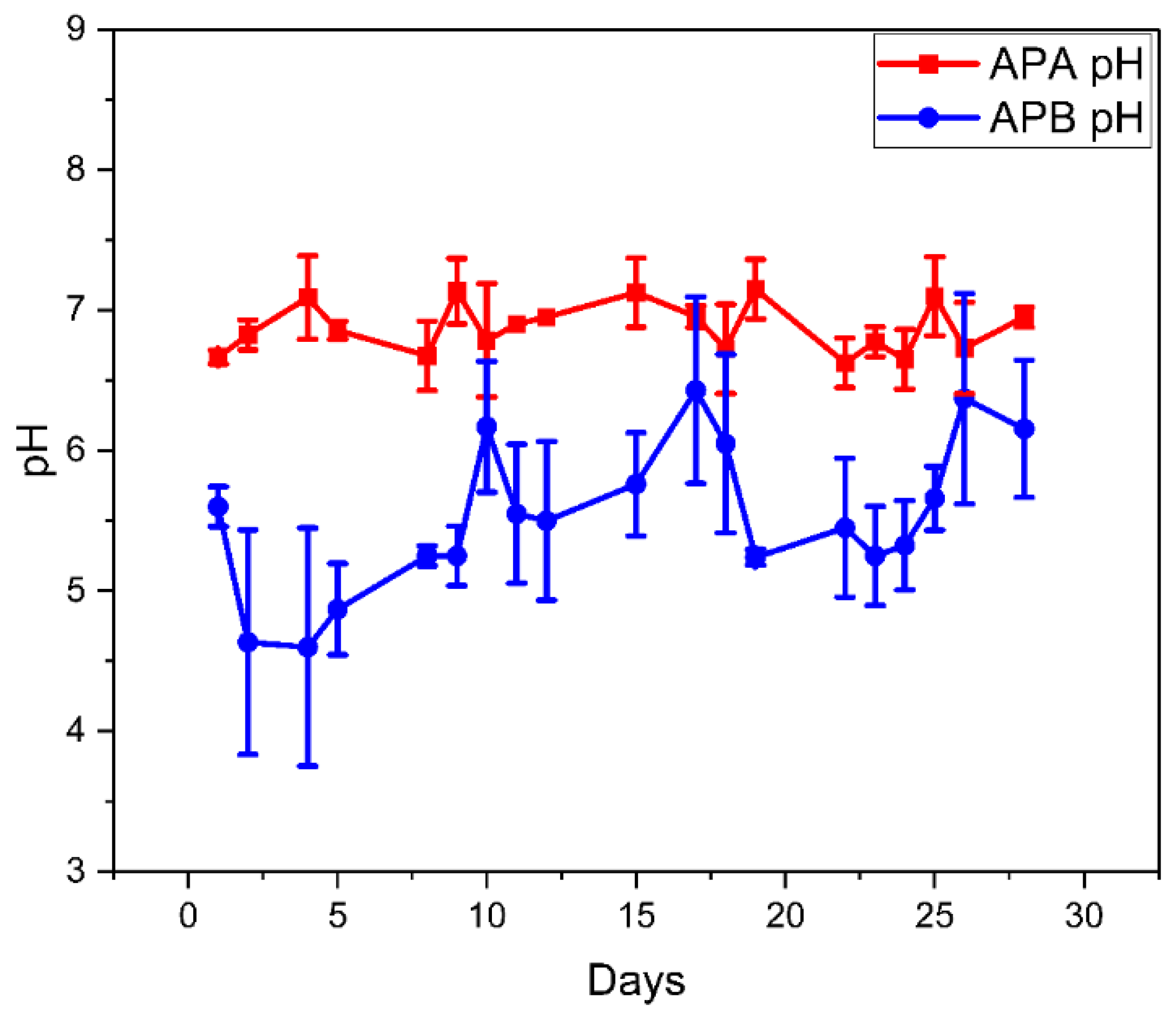
As shown in Figure 4, the pH of the APA system was maintained throughout the study period without adding any chemical buffer. Stable pH in APA is consistent with carbonate release from coral carbonate media which helps in pH buffering without chemical addition. On the other hand, APB exhibited recurrent decline in pH that required intermittent alkaline (KOH) additions to maintain the pH within operational range. APA showed an overall similar trajectory of pH, maintaining it in the narrow range of 6.8–7.2.

3.4. Temporal Dynamics of Nutrient Concentrations in System Water

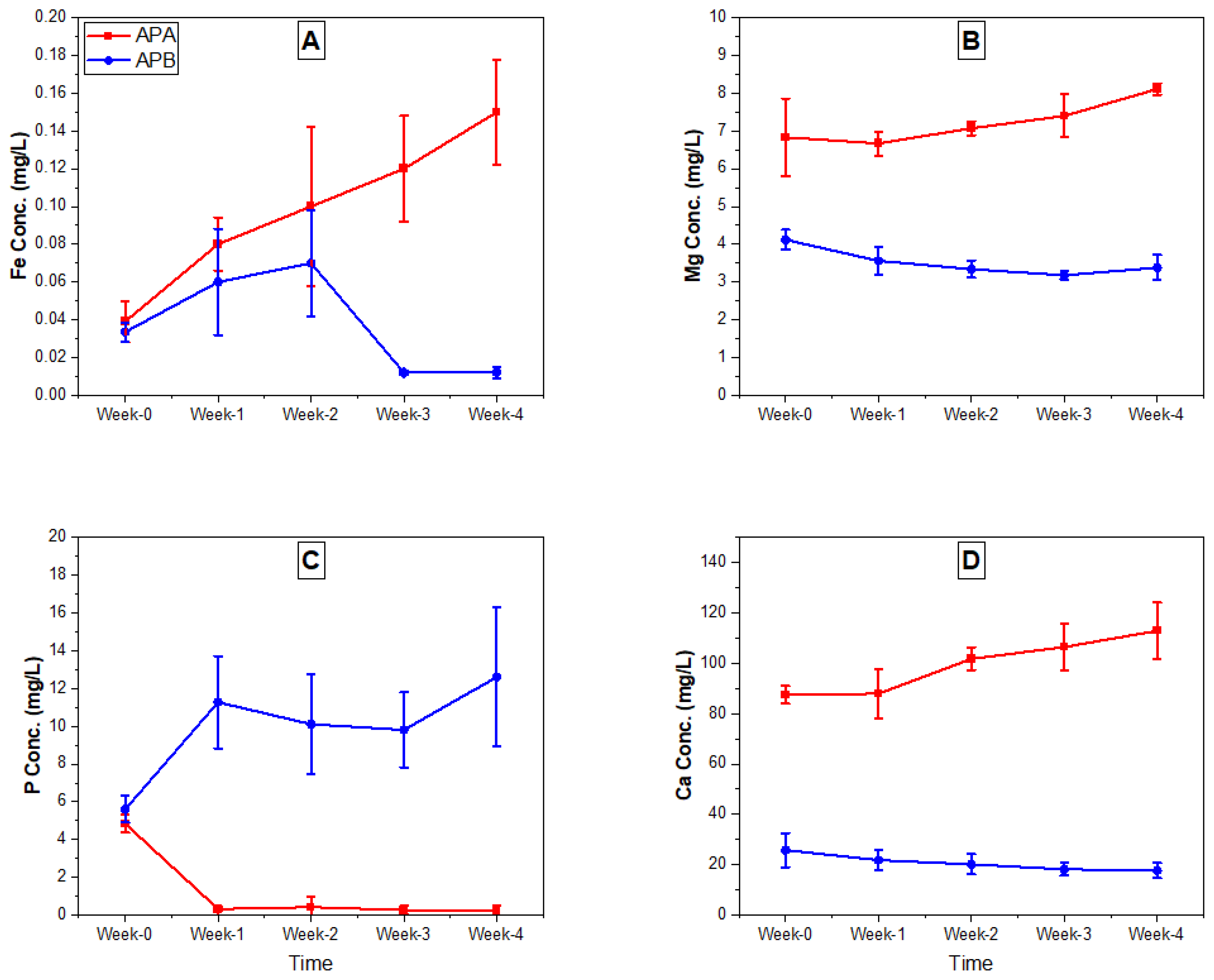
Concentrations of Ca2+ and Mg2+ increased steadily in APA water overtime as shown in the weekly water analysis (Figure 5B,D), depicting the consistent dissolution of coral in the APA system. However, APB showed lower concentrations of Ca2+ and Mg2+ over the time. Fe concentrations were lower overall in both the systems (Figure 5A), which is normal in aquaponics due to rapid oxidation and precipitation. However, fish, plant tissue and sludge analysis showed that Fe was mobilized and accumulated by fish and plants. In APA, concentrations of SRP were almost zero during the study indicating strong precipitation or uptake by fish and plants (Figure 5C). In APB, SRP concentrations were slightly higher which shows the absence of Ca2+ associated precipitation and lower assimilation due to unstable pH in the system.
Overall, weekly analysis of the system water suggests that addition of coral carbonate media was associated with increased Ca2+ and Mg2+ while incorporating P and Fe into the biomass and precipitate. SRP concentrations declined sharply in APA owing to enhanced uptake and the precipitation processes [15,36]. The weekly assessment of APA and APB showed the concentration of Fe in the water was not significantly elevated since the analyses were conducted weekly; yet, the results for plants indicated higher concentrations in APA, suggesting that Fe was released from the fish feed and coral carbonate media in sufficient quantities, thereby supporting our objective of Fe release for plants (Figure 5A). Fe2+ was also released in APA; however, usually its oxidation results in its conversion to Fe3+ [37]; which is unavailable for plant uptake and precipitates with P in the system.
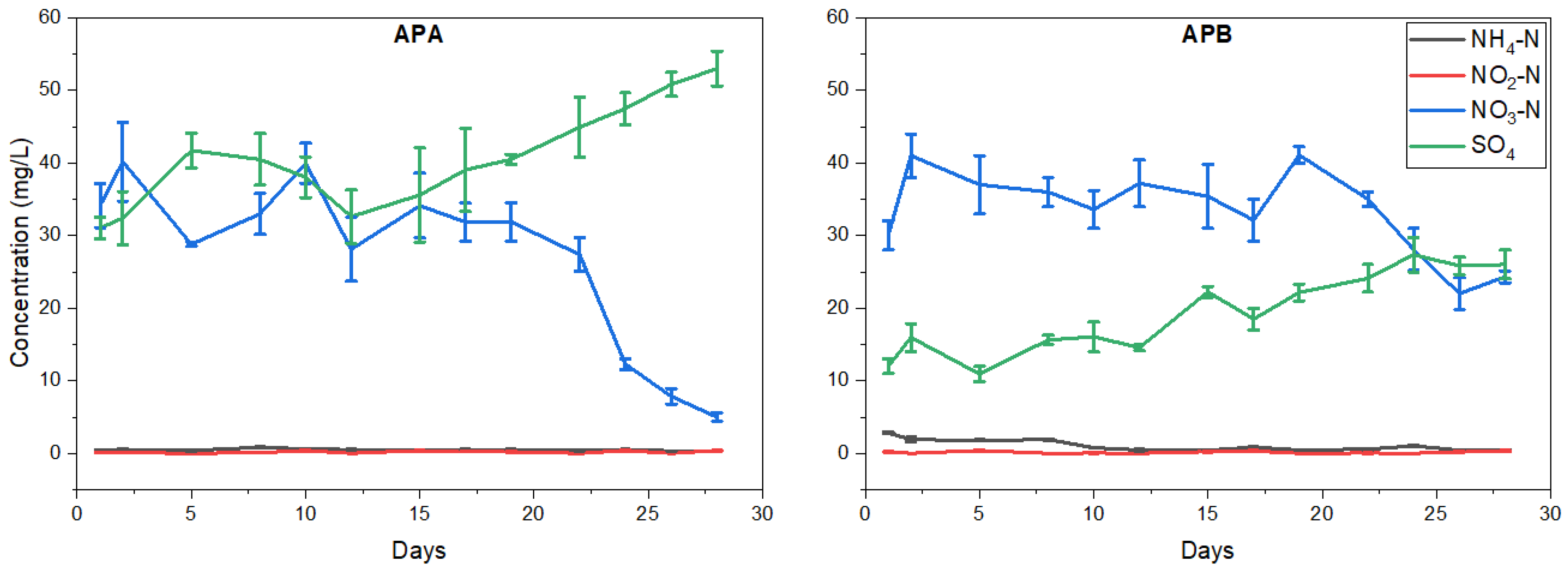
Ammonia (NH4+–N) remained below 1.0 mg·L−1 in APA; however, in APB initially NH4+–N was slightly higher but after 8 days it dropped below 1.0 mg·L−1, and both systems reflected good nitrification. Nitrite (NO2–N) was detected below 0.6 mg·L−1 in both systems throughout the study period. NO3–N accumulated initially in APA and went up to 40.16 mg·L−1 but as the plants grew their N accumulation increased and NO3–N concentration was decreased until the end of the experiment where it reached around 5 mg·L−1 in APA. On the other hand, APB NO3–N was not removed at a similar rate reflecting irregular accumulation by the plants. SO42− showed a gradual increase in both systems showing fish feed derived sulfur oxidation.

3.5. Nutrient Analysis in Fish, Plant, and Sludge

Elemental composition analysis showed a notable distribution of Ca2+, Mg2+, P, and Fe in fish plant and sludge of the APA and APB systems.
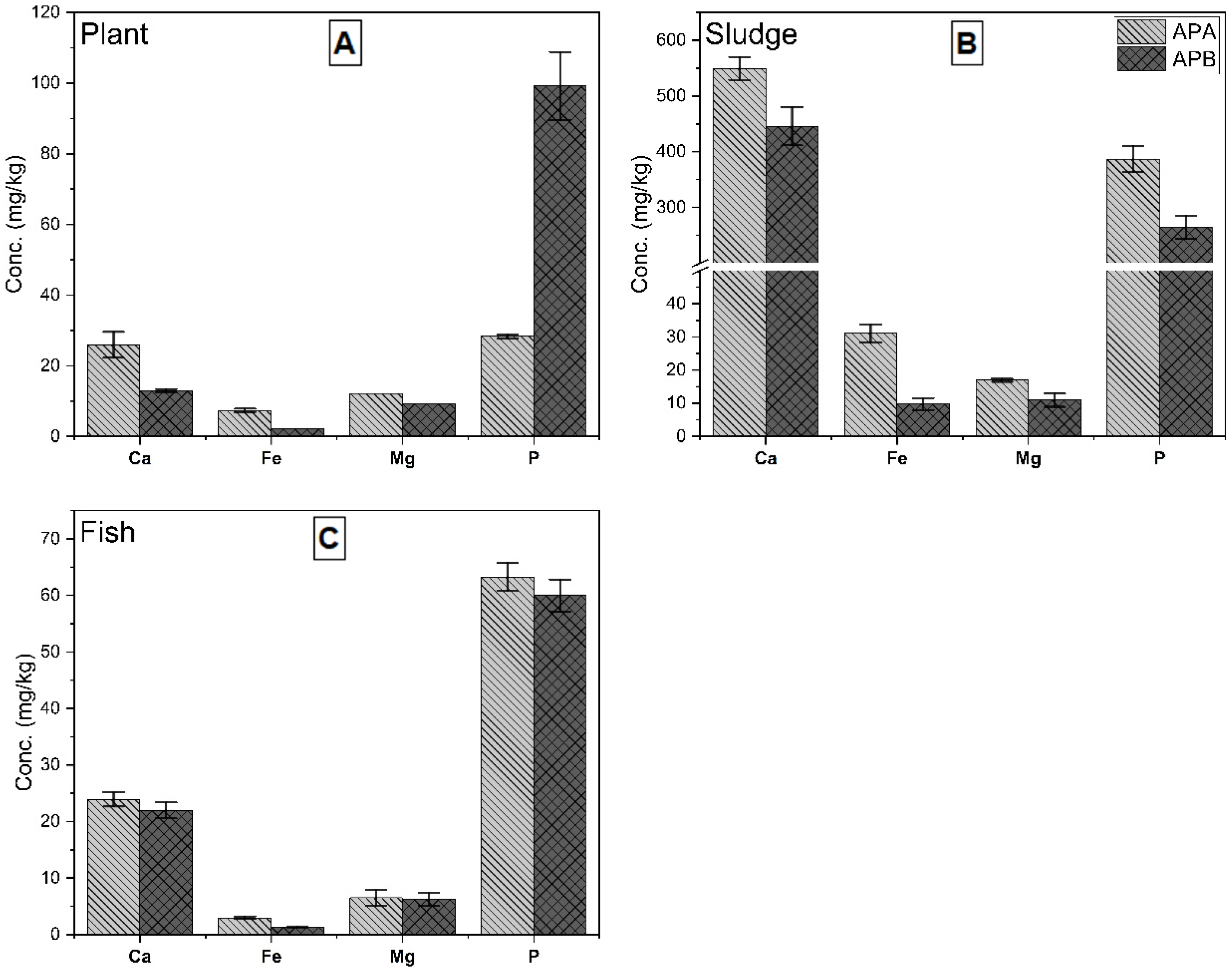
APA plants accumulated higher amounts of Ca2+, Mg2+, and Fe concentrations as compared to APB, showing higher uptake by plants under stable pH conditions. However, P concentrations were slightly lower in APA plants, which is reflected by higher precipitation of SRP in the Ca2+ rich environment [15,36]. Fish tissue analysis showed an almost similar trend in nutrient accumulation in both APA and APB fish; however, slightly higher Ca2+ and P concentrations were shown in APA fish, consistent with improved FCR compared to APB.
Sludge of the APA system showed a noticeable amount of P and Fe which showed that higher Ca2+ concentrations favored the formation of Ca2+–P and Fe–P precipitates. The Ca2+ higher concentration in APA sludge also indicated higher dissolution of corals. Concentrations of Mg2+ were almost similar in sludge of both the APA and APB systems. Overall, these analyses showed that inclusion of coral carbonate media improved the nutrient cycling in the system by enhancing the availability of Ca2+ and Mg2+, however, promoting Fe and P transfer into the biomass of fish and plants (Figure 6).
APA exhibited an overall improved trend of system performance when nutrient release and availability and biomass production are considered together. Coral carbonate media released Ca2+, Mg2+, and alkalinity which ultimately enhanced nutrient accumulation and improved fish and plant biomass. These results provide preliminary indications of a promising system performance for the aquaponic system. The water analyses results of APA and APB for parameters NH4+–N, NO2–N, NO3–N, and SO42− are shown in Figure 7 and the plant growth indicators of system APA and APB are presented in Figure 8.

3.6. Unit Productivity

The coral carbonate media based APA system gave 20% higher plant productivity per m2 than APB while reducing the chemical cost for pH control input and nutrient supplements. The unit productivity (UP) of plants serves as a crucial metric for evaluating the financial and environmental impacts, as well as the production cycles of the system. This can be determined by calculating the total production per cycle relative to the area utilized for planting. In this study, we employed a 2.84 m2 area for 84 lettuce plants over 28 days, yielding a total plant mass of 5.28 kg of lettuce in the AP system. The calculated productivity values were 1.86 kg·m−2·cycle−1 and 1.55 kg·m−2·cycle−1 for APA and APB, respectively. Assuming 12 production cycles annually, the system productivity would amount to 22.32 and 18.60 kg·m−2·year−1 for APA and APB, respectively. APA showed around 20% higher annual productivity in terms of plant production.

4. Discussion

Aquaponics fundamentally consists of three components: fish, plants, and microbes, with pH being a critical parameter for all these elements. Optimal fish growth occurs at a pH close to neutral, while plant growth is maximized at a pH range of 6.0 to 6.5, as this pH level ensures the highest bioavailability of nutrients for plants. The availability of most nutrients for plants is significantly influenced by pH [22,28,38,39,40]. In aquaponics, the predominant bacteria are nitrifying bacteria, which facilitate the conversion of ammonia into beneficial nitrate for plants, thriving optimally at a pH range of 7.0 to 8.0 [22,40].
To achieve optimal efficiency in an aquaponic system, it is essential to maintain the pH level consistently throughout the study duration. Typically, the process of nitrification leads to a decrease in pH, which can adversely affect the growth of both plants and fish within the system. Refs. [16,21] have employed the regular addition of chemicals (such as CaCO3, NaCO3, etc.) to stabilize the pH, thereby promoting maximum growth of fish and plants [31,41]. Nevertheless, the reliance on external chemical additions increases the operational inputs and management complexity, motivating the interest in passive buffering strategies that reduce the need for repeated chemical intervention. In this study, we prioritized the use of minimal chemicals to ensure the process remained sustainable and environmentally friendly. By incorporating coral carbonate media into the APA, we successfully maintained the pH around neutral throughout the study period, resulting in improved system efficiency regarding nitrification, as well as fish and plant growth, in contrast to APB, where pH levels fluctuated throughout the study.
Chemical pH control in the APB system was achieved using KOH rather than Ca-based alkaline agents. This choice was intentional, as the objective of the study was to evaluate calcium supplied specifically through coral carbonate dissolution. The use of CaCO3 or Ca(OH)2 in APB would have introduced direct chemical Ca2+ supplementation, confounding the assessment of calcium availability as a treatment outcome. Accordingly, Ca2+ input was allowed to differ between treatments as an intrinsic consequence of the buffering strategy, while potassium input was controlled through equimolar KCl addition in APA. It is important to note that a sudden increase in pH from approximately 4.0 to 7.0 is not advisable, as it may induce pH shock in fish, potentially leading to their death [42]. Addition of KOH also raised the concentration of potassium (K+) in APB, which is a crucial nutrient for plant growth. The elevated K+ concentration in APB could have compromised the comparison between APA and APB. To equalize the K+ concentration in both systems, we added equimolar KCl, simultaneously and in equal amounts to APA, ensuring an accurate comparison between the two systems.
We evaluated various parameters of plant growth performance, including the number of leaves, leaf length, root length, plant weight, chlorophyll content, and nutrient accumulation by plants [15,16]; and in all evaluated parameters the APA showed higher values than the APB. Fish growth was evaluated based on several parameters such as FCR, SGR, PER, fish weight, and nutrient accumulation by fish. The fish in the APA exhibited higher values than the APB, showing an economical FCR, PER, and SGR of 1.57 kg feed·kg fish−1, 1.76 kg fish·kg protein−1, and 0.58%·day−1, respectively, in contrast to APB, which recorded 3.4 kg feed·kg fish−1, 0.80 kg fish·kg protein−1, and 0.27%·day−1 for FCR, PER, and SGR, respectively. The results for APA were promising, corroborated by other studies, such as [15]; which showed an FCR of 1.76 in a lettuce based aquaponic system, ref. [43] found an FCR of 1.6 and 2.0, another Nile tilapia based aquaponic system ref. [23] showed an FCR of 1.49 and SGR of 1.17%. A koi-carp based aquaponic study ref. [44] mentioned FCR, PER, and SGR of 3.31, 0.84 and 1.0%, respectively, ref. [45] described FCR, PER, and SGR of 4.22, 0.67, and 0.91% respectively, in a koi carp based aquaponic study. Ref. [46] reported FCR and SGR values of 1.17 and 0.6, respectively. These studies were conducted under varying aquaponic design conditions, including stocking density, plant density, and species of fish and plants, thus preventing a comprehensive comparison and conclusion. When viewed in this contextual framework, the performance metrics obtained in the APA system fall within the range commonly reported for carp-based aquaponic and recirculating aquaculture systems. This suggests that the incorporation of coral carbonate media did not compromise feed utilization or growth efficiency and may support stable system performance. These comparisons are intended to highlight relative system performance and operational feasibility rather than to establish direct equivalence with longer-term or differently configured studies.
The recommended concentrations of Ca2+ should not exceed 120 mg·L−1 [47]; within the system, as higher levels may impede the uptake of other essential nutrients due to precipitation. In our system [47,48];, the concentrations remained significantly below the recommended levels of Ca2+, which were sufficient for both plant and fish uptake, as well as for maintaining the pH balance in the system. Another study suggested the addition of Ca2+ and Mg2+ as vital nutrients necessary for aquaponics [42]; recommending to add Ca2+ and Mg2+ as essential nutrients required in aquaponics.
Nevertheless, numerous studies have suggested the incorporation of CaCO3 to regulate pH levels, and Ca2+ will also be absorbed by plants within the system [49,50]. Additionally, KOH or CaMg(CO3)2 is recommended as a solution for pH regulation in the system, serving as a source of Ca2+, Mg2+, and K+ for plant uptake [51]; however, these chemical solutions are not environmentally friendly. In our research, we successfully maintained adequate levels of Ca2+, Mg2+, and a neutral pH in the system without the addition of any chemical fertilizers or substances.
Iron is one of the most frequently reported nutrients that is deficient in aquaponic systems, typically being bioavailable at lower pH levels [37]. Several studies have documented Fe deficiency [2,9,16,25,40,50]; with most recommending the addition of chelated iron as a nutrient in the system [37]. Fe inputs are usually derived from fish feed; however, system conditions strongly influence their availability. In this study both APA and APB received matching amounts of fish feed; however, Fe accumulation was observed in APA plant biomass and sludge suggesting that coral media likely support the enhancement of Fe redistribution through Fe release. Although water analysis revealed a very low concentration of Fe, the analyses of plants, fish, and sludge displayed adequate accumulation, indicating no deficiency in the system without the introduction of any chemical source of Fe.
Numerous studies have examined the mass balance of nitrogen and phosphorus in aquaponic systems [5,15]. Phosphorus is a crucial nutrient in aquaponic systems, essential for plant growth. A significant challenge in aquaponic systems is the precipitation of SRP, particularly when pH levels are near neutral [5,15,40]. In our research, SRP was precipitated due to a pH level of around neutral, as well as the presence of Ca2+ and Fe in the system which led to the removal of SRP from the system, as illustrated in the analysis results of the APA sludge. Nevertheless, the analysis of plants and fish, which indicated a greater assimilation of P, showed that the APA system accumulated a sufficient amount for the growth of plants and fish.

5. Conclusions

This comparative research aimed to assess an innovative sustainable approach to address nutrient deficiencies in aquaponic plants by incorporating coral carbonate media into the nitrification tank of the aquaponic system. The pH was maintained at a neutral level through the use of coral carbonate media, eliminating the necessity for other chemical additives. A comparative analysis between the aquaponic systems APA, and APB as a control, revealed that the growth metrics for both plants and fish were observed to be higher in the APA system, which maintained an overall neutral pH without the addition of chemicals or fertilizers. The incorporation of coral carbonate media resulted in elevated levels of Ca2+, Mg2+, SRP, and Fe in the APA system, although SRP and Fe were predominantly precipitated due to chemical interactions and were found in greater concentrations within the sludge. The availability of nutrients, along with the health of plants and fish, and most of the parameters measured in this study, improved the outcomes observed with the addition of coral carbonate media. A significant concentration of Ca2+ and P was detected in the sludge of both APA and APB, suggesting the need for future research to evaluate long-term reuse of coral carbonate media, microbial community adaptation, and the environmental footprint through life-cycle assessment to explore different scenarios for the efficient utilization of nutrients released within the aquaponic system. Also, focus should be on recovering and reusing the nutrients trapped in the sludge through nutrient recovery methods. Our experimental findings indicate trends that suggest utilization for potential positive outcomes in larger and long-term studies. This study suggests that coral carbonate media may offer a sustainable and productive option for pH buffering and nutrient support in aquaponic systems, warranting further research.

Author Contributions

Conceptualization and methodology, S.E.H.M. and S.-E.O., methodology, S.E.H.M. and S.-E.O., software W.K., formal analysis, S.E.H.M. and A.S. Data curation, S.S., visualization, S.P., validation, F.H., writing original draft, S.E.H.M., review and editing, supervision, funding acquisition, and resources, S.-E.O. All authors have read and agreed to the published version of the manuscript.

Funding

This work was carried out with the support of the “Cooperative Research Program for Agriculture Science and Technology Development (Project No. RS-2023-00227531)” Rural Development Administration, Republic of Korea.

Data Availability Statement

All the data used is presented in the manuscript. The data generated and analyzed in this study are available from the corresponding author upon reasonable request.

Conflicts of Interest

The authors declare no conflicts of interest.

References

  1. FAO. The State of World Fisheries and Aquaculture 2022; FAO: Rome, Italy, 2022. [Google Scholar]
  2. Goddek, S.; Joyce, A.; Kotzen, B.; Burnell, G.M. (Eds.) Aquaponics Food Production Systems: Combined Aquaculture and Hydroponic Production Technologies for the Future; Springer Nature: Berlin/Heidelberg, Germany, 2019. [Google Scholar]
  3. Groenveld, T.; Kohn, Y.Y.; Gross, A.; Lazarovitch, N. Optimization of Nitrogen Use Efficiency by Means of Fertigation Management in an Integrated Aquaculture-Agriculture System. J. Clean. Prod. 2019, 212, 401–408. [Google Scholar] [CrossRef]
  4. Froehlich, H.E.; Gentry, R.R.; Halpern, B.S. Global Change in Marine Aquaculture Production Potential Under Climate Change. Nat. Ecol. Evol. 2018, 2, 1745–1750. [Google Scholar] [CrossRef]
  5. Tellbüscher, A.A.; van Hullebusch, E.; Gebauer, R.; Mráz, J. Assessing the Fate and Behaviour of Plant Nutrients in Aquaponic Systems by Chemical Equilibrium Modelling: A Meta-Analytical Approach. Water Res. 2024, 264, 122226. [Google Scholar] [CrossRef]
  6. Lam, S.S.; Ma, N.L.; Jusoh, A.; Ambak, M.A. Biological Nutrient Removal by Recirculating Aquaponic System: Optimization of the Dimension Ratio Between the Hydroponic & Rearing Tank Components. Int. Biodeterior. Biodegrad. 2015, 102, 107–115. [Google Scholar] [CrossRef]
  7. Palm, H.W.; Knaus, U.; Appelbaum, S.; Goddek, S.; Strauch, S.M.; Vermeulen, T.; Haïssam Jijakli, M.; Kotzen, B. Towards Commercial Aquaponics: A Review of Systems, Designs, Scales and Nomenclature. Aquac. Int. 2018, 26, 813–842. [Google Scholar] [CrossRef]
  8. Choi, K.Y.; Kim, K.H.; Shawon, M.R.A.; Lee, H.-J.; Yoon, Y.J. Effect of Nutrition Supplement on Water Quality and Growth of Geranium in Aquaponic System. Hortic. Sci. Technol. 2025, 43, 84–98. [Google Scholar] [CrossRef]
  9. Rakocy, J.E.; Charlie, S.; Bailey, D.S.; Shultz, R.C.; Thoman, E.S. Aquaponic Production of Tilapia and Basil: Comparing a Batch Staggered Cropping System. In Proceedings of the South Pacific Soilless Culture Conference-SPSCC 648, Palmerston North, New Zealand, 10–13 February 2003; pp. 63–69. Available online: https://uvi.edu/files/documents/Research_and_Public_Service/AES/Aquaculture/Tilapia_and_Basil.pdf (accessed on 15 January 2026).
  10. Dwiardani, K.H.; Prayogo; Rahardja, B.S. Utilization of Nitrosomonas sp and Nitrobacter sp Probiotic Towards Total Suspended Solid and Ammonia Level in Nile Tilapia Culturing Using Aquaponic System. IOP Conf. Ser. Earth Environ. Sci. 2021, 679, 012067. [Google Scholar] [CrossRef]
  11. Graber, A.; Junge, R. Aquaponic Systems: Nutrient Recycling from Fish Wastewater by Vegetable Production. Desalination 2009, 246, 147–156. [Google Scholar] [CrossRef]
  12. Kloas, W.; Groß, R.; Baganz, D.; Graupner, J.; Monsees, H.; Schmidt, U.; Staaks, G.; Suhl, J.; Tschirner, M.; Wittstock, B.; et al. A New Concept for Aquaponic Systems to Improve Sustainability, Increase Productivity, and Reduce Environmental Impacts. Aquac. Environ. Interact. 2015, 7, 179–192. [Google Scholar] [CrossRef]
  13. Lunda, R.; Roy, K.; Másílko, J.; Mráz, J. Understanding Nutrient Throughput of Operational RAS Farm Effluents to Support Semi-Commercial Aquaponics: Easy Upgrade Possible Beyond Controversies. J. Environ. Manag. 2019, 245, 255–263. [Google Scholar] [CrossRef] [PubMed]
  14. Wortman, S.E. Crop Physiological Response to Nutrient Solution Electrical Conductivity and pH in an Ebb-and-Flow Hydroponic System. Sci. Hortic. 2015, 194, 34–42. [Google Scholar] [CrossRef]
  15. Yang, T.; Kim, H.-J. Comparisons of Nitrogen and Phosphorus Mass Balance for Tomato-, Basil-, and Lettuce-Based Aquaponic and Hydroponic Systems. J. Clean. Prod. 2020, 274, 122619. [Google Scholar] [CrossRef]
  16. Atique, F.; Lindholm-Lehto, P.; Pirhonen, J. Is Aquaponics Beneficial in Terms of Fish and Plant Growth and Water Quality in Comparison to Separate Recirculating Aquaculture and Hydroponic Systems? Water 2022, 14, 1447. [Google Scholar] [CrossRef]
  17. Savidov, N.A.; Hutchings, E.; Rakocy, J.E. Fish and plant production in a recirculating aquaponic system: A new approach to sustainable agriculture in canada. Acta Hortic. 2007, 742, 209–221. [Google Scholar] [CrossRef]
  18. Resh, H.M. Hydroponic Food Production: A Definitive Guidebook for the Advanced Home Gardener and the Commercial Hydroponic Grower, 8th ed.; CRC Press: Boca Raton, FL, USA, 2022. [Google Scholar]
  19. Bartelme, R.P.; Oyserman, B.O.; Blom, J.E.; Sepulveda-Villet, O.J.; Newton, R.J. Stripping Away the Soil: Plant Growth Promoting Microbiology Opportunities in Aquaponics. Front. Microbiol. 2018, 9, 8. [Google Scholar] [CrossRef] [PubMed]
  20. Folorunso, E.A.; Roy, K.; Gebauer, R.; Bohatá, A.; Mraz, J. Integrated Pest and Disease Management in Aquaponics: A Metadata-Based Review. Rev. Aquac. 2021, 13, 971–995. [Google Scholar] [CrossRef]
  21. Suhl, J.; Dannehl, D.; Kloas, W.; Baganz, D.; Jobs, S.; Scheibe, G.; Schmidt, U. Advanced Aquaponics: Evaluation of Intensive Tomato Production in Aquaponics vs. Conventional Hydroponics. Agric. Water Manag. 2016, 178, 335–344. [Google Scholar] [CrossRef]
  22. Wang, Y.-J.; Yang, T.; Kim, H.-J. pH Dynamics in Aquaponic Systems: Implications for Plant and Fish Crop Productivity and Yield. Sustainability 2023, 15, 7137. [Google Scholar] [CrossRef]
  23. Nozzi, V.; Graber, A.; Schmautz, Z.; Mathis, A.; Junge, R. Nutrient Management in Aquaponics: Comparison of Three Approaches for Cultivating Lettuce, Mint and Mushroom Herb. Agronomy 2018, 8, 27. [Google Scholar] [CrossRef]
  24. Ru, D.; Liu, J.; Hu, Z.; Zou, Y.; Jiang, L.; Cheng, X.; Lv, Z. Improvement of Aquaponic Performance Through Micro- and Macro-Nutrient Addition. Environ. Sci. Pollut. Res. 2017, 24, 16328–16335. [Google Scholar] [CrossRef]
  25. Saha, S.; Monroe, A.; Day, M.R. Growth, Yield, Plant Quality and Nutrition of Basil (Ocimum basilicum L.) Under Soilless Agricultural Systems. Ann. Agric. Sci. 2016, 61, 181–186. [Google Scholar] [CrossRef]
  26. Ericson, J.A.; Ragg, N.L.C. Effects of Crushed Mussel, Perna Canaliculus, Shell Enrichment on Seawater Carbonate Buffering and Development of Conspecific Larvae Exposed to Near-Future Ocean Acidification. J. World Aquac. Soc. 2022, 53, 271–289. [Google Scholar] [CrossRef]
  27. Recirculating Aquaculture Tank Production Systems: Aquaponics—Integrating Fish and Plant Culture-Oklahoma State University. Available online: https://extension.okstate.edu/fact-sheets/recirculating-aquaculture-tank-production-systems-aquaponics-integrating-fish-and-plant-culture.html (accessed on 2 February 2026).
  28. Maucieri, C.; Nicoletto, C.; Junge, R.; Schmautz, Z.; Sambo, P.; Borin, M. Hydroponic Systems and Water Management in Aquaponics: A Review. Ital. J. Agron. 2018, 13, 1012. [Google Scholar] [CrossRef]
  29. Hu, Z.; Lee, J.W.; Chandran, K.; Kim, S.; Sharma, K.; Brotto, A.C.; Khanal, S.K. Nitrogen Transformations in Intensive Aquaculture System and Its Implication to Climate Change Through Nitrous Oxide Emission. Bioresour. Technol. 2013, 130, 314–320. [Google Scholar] [CrossRef]
  30. Li, C.; Zhang, B.; Luo, P.; Shi, H.; Li, L.; Gao, Y.; Lee, C.T.; Zhang, Z.; Wu, W.-M. Performance of a Pilot-Scale Aquaponics System Using Hydroponics and Immobilized Biofilm Treatment for Water Quality Control. J. Clean. Prod. 2019, 208, 274–284. [Google Scholar] [CrossRef]
  31. Giri, A.; Pandey, N.; Mallik, S.; Das, P.; Bisht, H.; Pandey, P. Performance Evaluation of Hydroponic Grow-Outs in An Innovative Coldwater Aquaponic System Featuring Rainbow Trout and Lettuce. Asian Fish. Sci. 2024, 37, 149–158. [Google Scholar] [CrossRef]
  32. Timmons, M.; Guerdat, T.; Vinci, B. Recirculating Aquaculture, 4th ed.; Ithaca, NY, USA, 2018. [Google Scholar]
  33. Goddek, S.; Delaide, B.; Mankasingh, U.; Ragnarsdottir, K.V.; Jijakli, H.; Thorarinsdottir, R. Challenges of Sustainable and Commercial Aquaponics. Sustainability 2015, 7, 4199–4224. [Google Scholar] [CrossRef]
  34. Rakocy, J.; Bailey, D.; Shultz, R.; Thoman, E. Update on Tilapia and Vegetable Production in the UVI Aquaponic System. 2010. Available online: https://www.researchgate.net/publication/237308635_Update_on_tilapia_and_vegetable_production_in_the_UVI_aquaponic_system (accessed on 15 January 2026).
  35. Rakocy, J.E. Update on Tilapia and Vegetable Production in the UVI Aquaponic System. In Aquaculture Production Systems; Tidwell, J.H., Ed.; Wiley: Hoboken, NJ, USA, 2012; pp. 344–386. [Google Scholar]
  36. Zhu, Z.; Yogev, U.; Keesman, K.J.; Gross, A. Onsite Anaerobic Treatment of Aquaponics Lettuce Waste: Digestion Efficiency and Nutrient Recovery. Aquac. Int. 2021, 29, 57–73. [Google Scholar] [CrossRef]
  37. Kasozi, N.; Tandlich, R.; Fick, M.; Kaiser, H.; Wilhelmi, B. Iron Supplementation and Management in Aquaponic Systems: A Review. Aquac. Rep. 2019, 15, 100221. [Google Scholar] [CrossRef]
  38. Rakocy, J.E. Aquaponics—Integrating Fish and Plant Culture. In Aquaculture Production Systems; John Wiley & Sons, Ltd.: Hoboken, NJ, USA, 2012; pp. 344–386. [Google Scholar]
  39. Aquaculture Production Systems, 1st ed.; Tidwell, J.H., Ed.; Wiley: Hoboken, NJ, USA, 2012; Available online: https://download.e-bookshelf.de/download/0000/4076/98/L-G-0000407698-0002356040.pdf (accessed on 15 January 2026).
  40. Yavuzcan Yildiz, H.; Robaina, L.; Pirhonen, J.; Mente, E.; Domínguez, D.; Parisi, G. Fish Welfare in Aquaponic Systems: Its Relation to Water Quality with an Emphasis on Feed and Faeces—A Review. Water 2017, 9, 13. [Google Scholar] [CrossRef]
  41. Teng, L.; Watari, T.; Fujimoto, T.; Sato, N.; Sato, T.; Enoki, Y.; Adlin, N.; Hatamoto, M.; Yamaguchi, T. Performance Comparison of Down-Flow Hanging Sponge Reactor and Moving Bed Bioreactor for Aquaponic Systems. Bioresour. Technol. Rep. 2024, 28, 101963. [Google Scholar] [CrossRef]
  42. Sallenave, R. Important Water Quality Parameters in Aquaponics Systems; College of Agricultural, Consumer and Environmental Sciences: Las Cruces, NM, USA, 2016. [Google Scholar]
  43. Hu, Z.; Lee, J.W.; Chandran, K.; Kim, S.; Brotto, A.C.; Khanal, S.K. Effect of Plant Species on Nitrogen Recovery in Aquaponics. Bioresour. Technol. 2015, 188, 92–98. [Google Scholar] [CrossRef] [PubMed]
  44. Nuwansi, K.K.T.; Verma, A.K.; Rathore, G.; Chandrakant, M.H.; Prabhath, G.P.W.A.; Peter, R.M. Effect of Hydraulic Loading Rate on the Growth of Koi Carp (Cyprinus carpio var. koi.) and Gotukola (Centella asiatica (L.)) Using Phytoremediated Aquaculture Wastewater in Aquaponics. Aquac. Int. 2020, 28, 639–652. [Google Scholar] [CrossRef]
  45. Nuwansi, K.K.T.; Verma, A.K.; Rathore, G.; Prakash, C.; Chandrakant, M.H.; Prabhath, G.P.W.A. Utilization of Phytoremediated Aquaculture Wastewater for Production of Koi Carp (Cyprinus carpio var. koi) and Gotukola (Centella asiatica) in an Aquaponics. Aquaculture 2019, 507, 361–369. [Google Scholar] [CrossRef]
  46. Pasch, J.; Appelbaum, S.; Palm, H.W.; Knaus, U. Growth of Basil (Ocimum basilicum) in Aeroponics, DRF, and Raft Systems with Effluents of African Catfish (Clarias gariepinus) in Decoupled Aquaponics (s.s.). AgriEngineering 2021, 3, 559–574. [Google Scholar] [CrossRef]
  47. Ropokis, A.; Ntatsi, G.; Rouphael, Y.; Kotsiras, A.; Kittas, C.; Katsoulas, N.; Savvas, D. Responses of Sweet Pepper (Capsicum annum L.) Cultivated in a Closed Hydroponic System to Variable Calcium Concentrations in the Nutrient Solution. J. Sci. Food Agric. 2021, 101, 4342–4349. [Google Scholar] [CrossRef]
  48. Jones, J.J.; Shaw, C.; Chen, T.; Staß, C.M.; Ulrichs, C.; Riewe, D.; Kloas, W.; Geilfus, C. Plant Nutritional Value of Aquaculture Water Produced by Feeding Nile Tilapia (Oreochromis niloticus) Alternative Protein Diets: A Lettuce and Basil Case Study. Plants People Planet 2024, 6, 362–380. [Google Scholar] [CrossRef]
  49. Harika, N.; Verma, A.K.; Krishnani, K.K.; Hittinahalli, C.M.; Reddy, R.; Pai, M. Supplementation of Potassium in Aquaculture Wastewater and Its Effect on Growth Performance of Basil (Ocimum basilicum L.) and Pangasius (Pangasianodon hypophthalmus) in NFT-Based Aquaponics. Sci. Hortic. 2024, 323, 112521. [Google Scholar] [CrossRef]
  50. Wongkiew, S.; Hu, Z.; Lee, J.W.; Chandran, K.; Nhan, H.T.; Marcelino, K.R.; Khanal, S.K. Nitrogen Recovery via Aquaponics–Bioponics: Engineering Considerations and Perspectives. ACS EST Eng. 2021, 1, 326–339. [Google Scholar] [CrossRef]
  51. Roy, K.; Kajgrova, L.; Mraz, J. TILAFeed: A Bio-Based Inventory for Circular Nutrients Management and Achieving Bioeconomy in Future Aquaponics. New Biotechnol. 2022, 70, 9–18. [Google Scholar] [CrossRef]
Figure 1. Zero-discharge recirculating aquaponic system design; Aquaponics-A (APA) with coral carbonate media and Aquaponics-B (APB) as control.
Water 18 00459 g001
Figure 2. Elemental composition (Ca2+, Fe, Mg2+, P) of coral and seashell media expressed in mg·kg−1 (logarithmic scale). Error bars represent the mean of two independent system level replicates (n = 2).
Water 18 00459 g002
Figure 3. Comparative performance of APA and APB for PER, FCR, SGR, plant mass and fish mass. Bars represents APA performance expressed as a percentage of APB (dashed line = 100%, indicating similar performance). Error bars represent the mean of two independent system level replicates (n = 2).
Water 18 00459 g003
Figure 4. Temporal variation of pH in APA (blue) and the control system APB (red) over a 28-day period. Alkaline additions in APB were applied intermittently in response to declining pH rather than at fixed intervals.
Water 18 00459 g004
Figure 5. Temporal variations in (A) Fe, (B) Mg2+, (C) SRP, and (D) Ca2+ concentrations in the APA (red) and APB (blue) over 4 weeks. Values represent the mean of two independent system level replicates (n = 2).
Water 18 00459 g005
Figure 6. Elemental composition of (A) plant biomass, (B) sludge, and (C) fish tissue in APA and APB. Error bars represent the mean of two independent system level replicates (n = 2) for Ca2+, Fe, Mg2+, and P concentrations.
Water 18 00459 g006
Figure 7. Concentrations of NH4+–N, NO2–N, NO3–N, SO42− for APA and APB.
Water 18 00459 g007
Figure 8. Comparison of APA and APB for plant growth parameters.
Water 18 00459 g008
Table 1. Fish and plant growth comparison in APA and APB.
ParametersAPAAPB
Initial Fish Weight (kg) (Total biomass per tank)2.87 2.86
Final Fish Weight (kg)3.38 3.07
Weight gain (kg)0.51 0.22
Stocking Density (kg·m−3)19.118.9
KOH 3M (mL) (Total input) 500
KCl 3M (mL) (Total input)500
Fish tank volume (L)150150
Plant bed volume (L)150150
Fish Feed (g)803.6795.2
SGR (%·day−1)0.58 0.27
FCR (kg feed·kg fish−1)1.57 3.45
PER (kg fish gain·kg protein−1)1.77 0.80
Number of plants8484
Plant bed area to fish tank volume ratio—AVR (m2·m−3)18.9418.94
Plant Density (plants·m−2)29.629.6
Water replenishment (L·day−1)2.852.85
Plant yield (kg)5.28 4.40
Avg. plant weight (g)62.8652.02
Unit Productivity—Plants (kg·m−2·year−1)22.3218.6
Table 2. Fish feed analysis results showing concentrations of different nutrients.
ParametersConcentration (mg·kg−1)Fish FeedPercentage
B7.71Animal Protein36.00%
Ca11,677Vegetable Protein31.00%
Fe285Wheat flour26%
K6236Fats and Oils3.00%
Mg1910Supplementary feed container4.00%
Mn62.5Fish feed composition based on the feed content provided by manufacturer
Mo0.88
P12,282
Disclaimer/Publisher’s Note: The statements, opinions and data contained in all publications are solely those of the individual author(s) and contributor(s) and not of MDPI and/or the editor(s). MDPI and/or the editor(s) disclaim responsibility for any injury to people or property resulting from any ideas, methods, instructions or products referred to in the content.